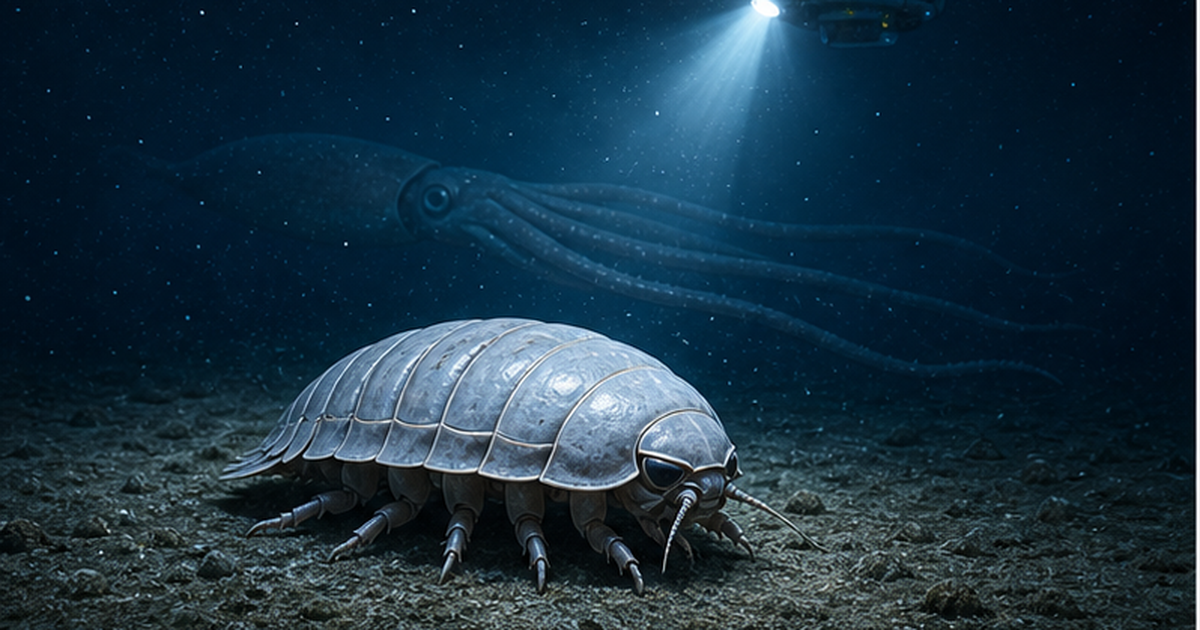
A pill bug in your garden reaches only about 1.5 cm at its largest. Yet the giant isopod, a member of the same order Isopoda, grows past 40 cm on the deep seafloor, and large individuals approach 50 cm. A land spider spans at most about 30 cm with its legs outstretched, while the Japanese spider crab walking the floor of Suruga Bay exceeds 3 m. This gap is not simply a matter of a few large species happening to exist.
Naturalists in the nineteenth century had already noticed that, within the same taxonomic group, deep-sea species tend to grow larger than their shallow-water relatives. Today the phenomenon is called deep-sea gigantism (also known as abyssal gigantism), and it remains one of the classic unsolved puzzles of marine biology. The reason it is unsolved is simple: several hypotheses compete to explain it, and none of them has yet proved decisive.
This article first sets out what kind of environment the deep sea is, then works through the four main hypotheses for gigantism in turn. It then confronts head-on the opposite evidence — that many deep-sea animals actually get smaller — before turning to the giants raised by Japanese waters and the threats they now face. Precisely because the question is still open, there is a great deal of pleasure to be had in thinking it through.
What you'll learn in this article
- What deep-sea gigantism actually means, and how it differs from the human disease called gigantism
- The substance and the limits of the four leading hypotheses — cold, oxygen, food scarcity, and predation pressure plus time
- Why a giant isopod could fast for more than five years, and how a bigger body becomes more fuel-efficient
- The opposite evidence: in the deep sea, more animals shrink than grow
- The giants raised by Japanese waters, including the Yokozuna slickhead and the Japanese spider crab of Suruga Bay
- Three pressures now threatening deep-sea giants: falling oxygen, bottom trawling, and deep-sea mining
What Deep-Sea Gigantism Is: The Definition, and the World's Giants
Let us start by pinning down the term. Deep-sea gigantism is not the name of a disease. It has nothing to do with human gigantism caused by a pituitary disorder; the words merely resemble each other. What it refers to is a descriptive concept from ecology and evolutionary biology: the tendency, within a given taxonomic group, for the maximum body size of deep-sea species to be statistically larger than that of their shallow-water relatives. The crucial point is that this is a pattern observed at the level of species and populations, not a case of individuals growing abnormally.
The hunch that something unexpected lived in the deep sea became a scientific claim in the nineteenth century. At the time the prevailing view was the "azoic hypothesis", which held that no life existed below about 550 m and that the deep sea was a barren space beyond the reach of living things. That view was overturned by the British Challenger expedition, which circled the world's oceans from 1872 to 1876. Among the countless unknown organisms its dredges and trawls hauled up from the depths were crustaceans far larger than their shallow-water counterparts. The question of deep-sea gigantism has therefore gone unanswered for some 150 years.
Gigantism stands out in only some taxonomic groups
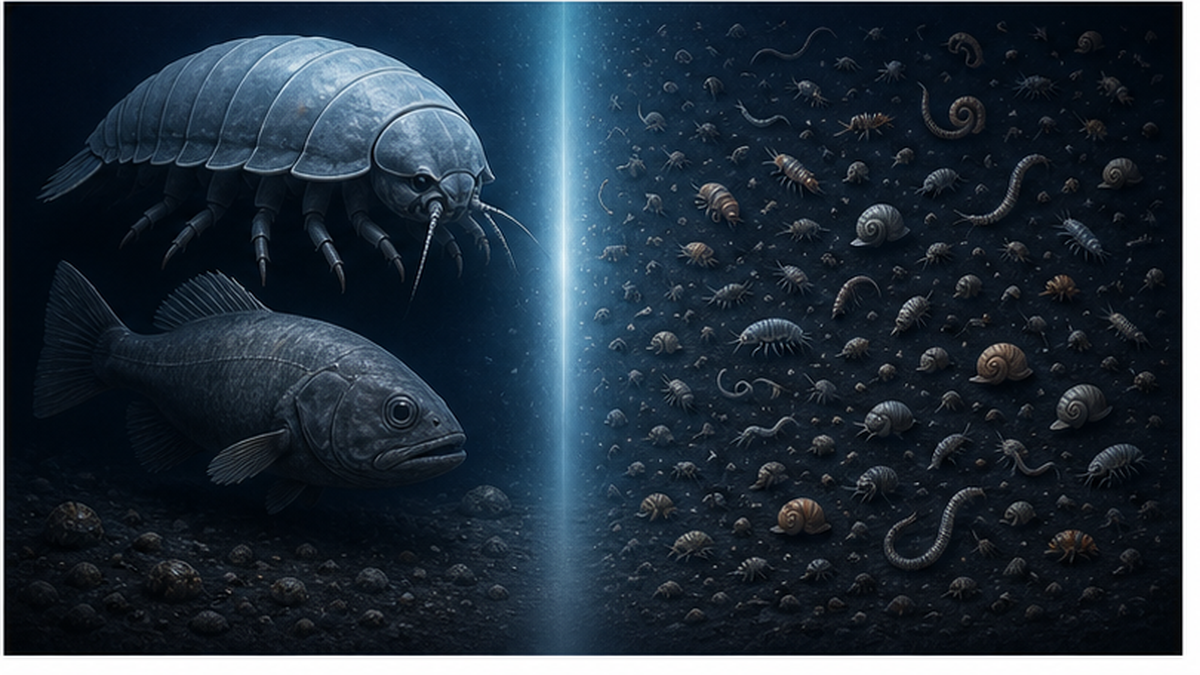
The deep sea conjures images of nothing but giants, but that impression is skewed by a conspicuous minority. Clear gigantism is limited to crustaceans such as isopods and amphipods, to cephalopods, and to some fishes, echinoderms and polychaetes. What actually makes up most of the biomass on the deep seafloor are tiny benthic organisms less than a millimetre long. The coexistence of this "exceptionally large minority" with an overwhelming majority of small creatures is exactly what makes the phenomenon both fascinating and difficult.
Another point worth holding onto is not to compare the wrong things. Deep-sea gigantism is meaningful only when comparisons are made within phylogenetically close groups. The blue whale is the largest animal in Earth's history, but it is not a deep-sea species, and its size is not explained by deep-sea gigantism. A garden pill bug against a giant isopod; a shallow-water amphipod against a deep-sea supergiant amphipod — only when you line up relatives like this does the relationship between depth and body size come into view.
The world's most representative deep-sea giants
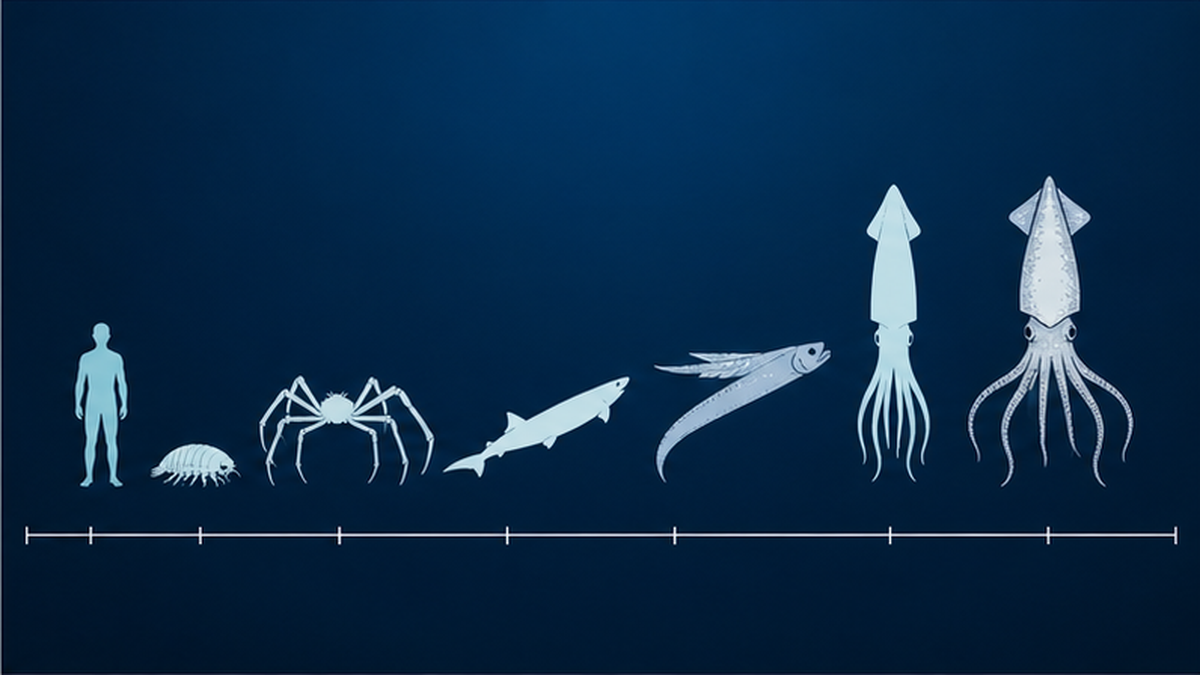
Let us look at the actual cast of characters. The table below lists the species whose names always come up in discussions of deep-sea gigantism, together with their sizes and depth ranges. Every one of them is on a completely different scale from the members of its group that live in shallow water.
| Animal | Scientific name | Approximate maximum size | Main depth range |
|---|---|---|---|
| Colossal squid | Mesonychoteuthis hamiltoni | About 7 m total length (estimated) | Around 1,000 m in the Southern Ocean |
| Giant squid | Architeuthis dux | About 13 m total length (including tentacles) | 300–1,000 m |
| Japanese spider crab | Macrocheira kaempferi | Over 3 m across the outstretched legs | 200–500 m |
| Giant isopod | Bathynomus giganteus | Close to 50 cm in body length | 200–1,000 m |
| Yokozuna slickhead | Narcetes shonanmaruae | Over 250 cm total length (filmed record) | 2,000–2,600 m |
| Greenland shark | Somniosus microcephalus | Around 5 m total length | Surface to 2,200 m |
The squid first filmed alive a century after it was described
The colossal squid, arguably the emblem of deep-sea gigantism, is regarded as the largest living invertebrate by mass; adults are thought to reach an estimated 7 m in total length and close to 500 kg. And yet, for a very long time, no one had ever seen this enormous squid alive in the sea. All that was known came from the stomach contents of sperm whales and from carcasses caught by chance in fishing gear.
That gap was filled on 9 March 2025. At a depth of 600 m off the South Sandwich Islands in the South Atlantic, the remotely operated vehicle SuBastian, launched from the Schmidt Ocean Institute's research vessel Falkor (too), captured a translucent juvenile just 30 cm long. As clear as spun glass, it arrived exactly a century after the species was first described. How adults swim, what they eat and how they grow to that size all remain unknown.
Watch the first footage of a colossal squidFirst Confirmed Footage of a Colossal Squid—and it's a Baby!The Schmidt Ocean Institute's record of the first live footage of a juvenile colossal squid, filmed at 600 m off the South Sandwich Islands in March 2025.🔗 schmidtocean.orgAmong the other giant deep-sea cephalopods, the biology of the giant squid — beginning with its enormous 27 cm eyes — is gradually coming to light. We cover it in detail in our article on the mysteries of the giant squid.
The Stage for Gigantism: Cold, Pressure, Darkness and Chronic Hunger
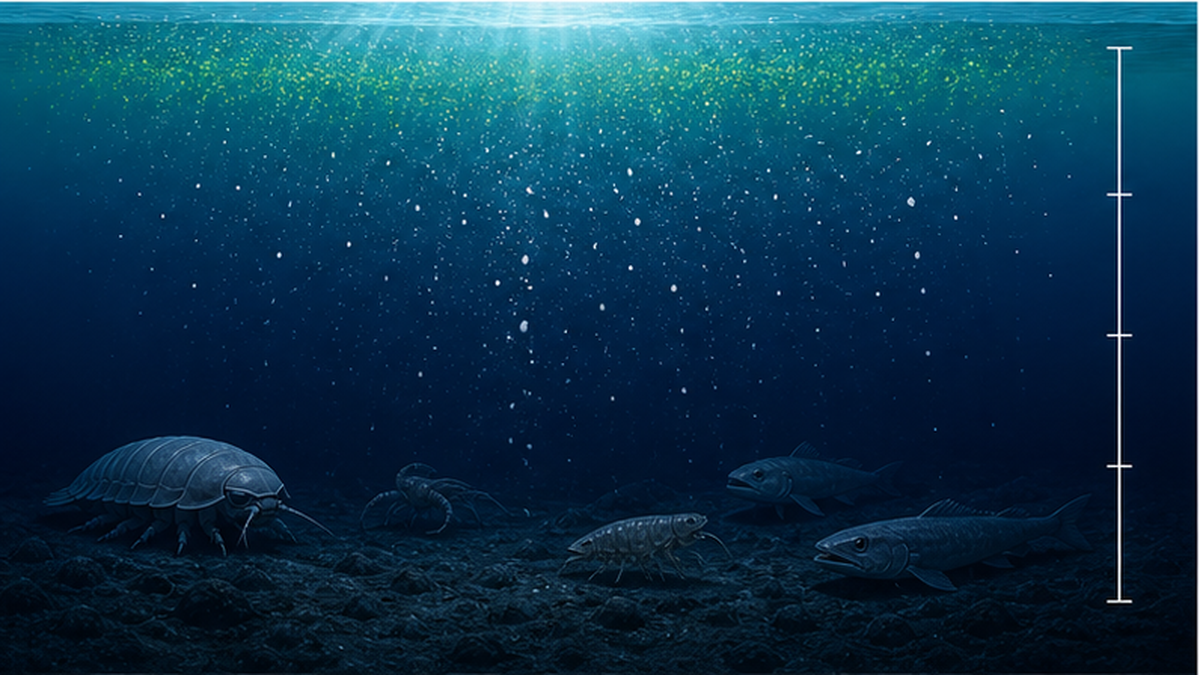
Before asking why gigantism happens in the deep sea, it is worth grasping how unusual the stage itself is. Water deeper than 200 m covers roughly two-thirds of Earth's surface, and the mean depth of the ocean is about 3,800 m. In other words, the largest habitat on the planet is not the bright, warm world we live in but the dark, cold deep sea.
Water temperature stays at 1–4 °C all year
Below about 1,000 m, water temperature settles at roughly 1–4 °C almost everywhere in the world. Even beneath tropical seas, the deep water is filled with cold water that sank near Antarctica. Seasonal variation is almost absent. For ectotherms, this stable cold is a condition that fundamentally shapes how their metabolism works.
Pressure rises by one atmosphere every 10 m
In water, pressure increases by roughly one atmosphere for every 10 m of depth: about 100 atmospheres at 1,000 m, about 600 at 6,000 m. Deep-sea animals do not so much endure this pressure as live without feeling it, because their body fluids are balanced against the surrounding water. Even so, high pressure affects the three-dimensional structure of proteins and the fluidity of cell membranes, so deep-sea organisms make their own adjustments at the molecular level.
No light means no food of their own making
Below 200 m, light usable for photosynthesis has all but vanished, and past 1,000 m sunlight does not reach at all. If phytoplankton cannot grow, there is no starting point for the food web. Deep-sea animals live on particles of organic matter sinking from the surface — marine snow — and on the occasional carcass of a large animal. Of the organic matter produced at the surface, only a fraction reaches the deep seafloor; estimates generally put it at a few per cent or less.
It is precisely because this world is dark that bioluminescence evolved. We cover the mechanism that underpins deep-sea communication and hunting in our article on deep-sea bioluminescence.
The largest environment on Earth is also the least known
For all its vastness, the deep sea remains a place humans barely know. According to the tally of the international seabed mapping project, only about a quarter of the seafloor had high-resolution bathymetric coverage by the mid-2020s. As for what lives there, we have grasped only a small part. Behind the endless debate over deep-sea gigantism lies a blunt fact: there simply are not enough samples. Deep-sea animals are easily crushed or killed while being hauled up in nets, and opportunities to observe them alive are limited.
Four constraints deep-sea animals live with
- Cold: 1–4 °C year-round. The metabolic rate of ectotherms is tightly bound to water temperature
- Pressure: about 100 atmospheres at 1,000 m, affecting proteins and cell membranes
- Darkness: photosynthesis is impossible, so there is no local primary production
- Hunger: food can only be waited for as it falls from above, and both its amount and timing are unreliable
Hypothesis 1 — Cold: Slowing Metabolism and Raising the Ceiling on Body Size
The oldest explanation treats cold as the cause of gigantism. Support came from the fact that similar enlargement is seen not only in the deep sea but also in cold polar waters — so-called polar gigantism. Cold places have large animals; that shared pattern seems too consistent to be coincidence.
The metabolism of ectotherms is governed by water temperature
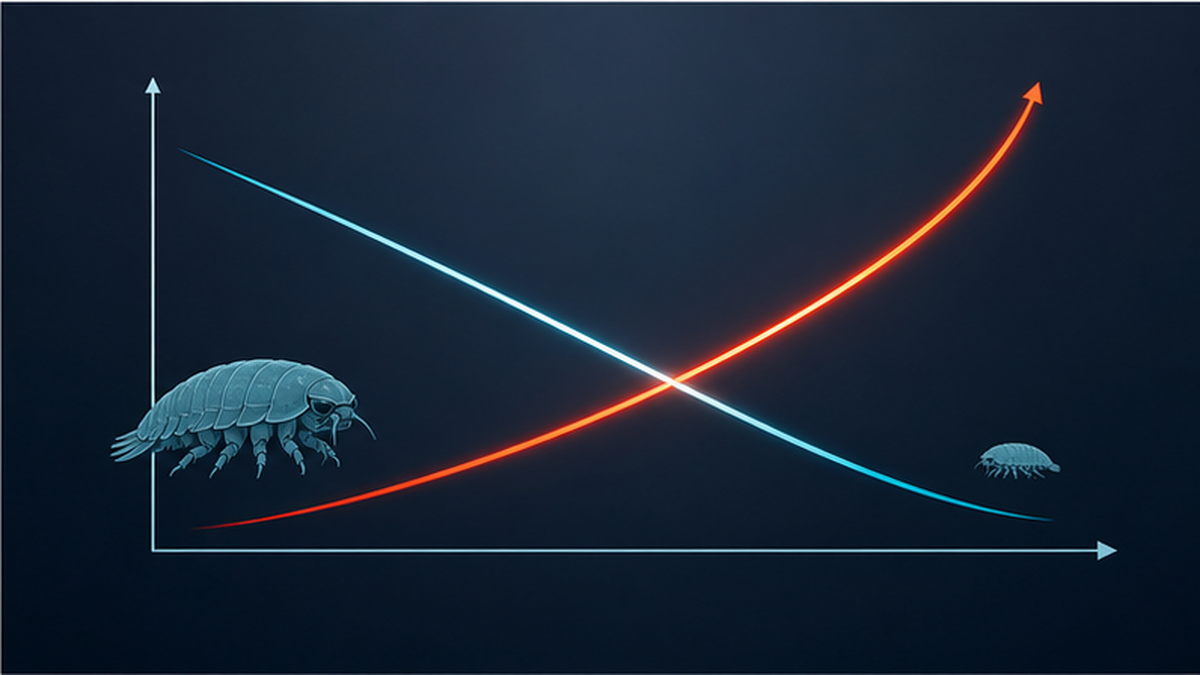
Almost all deep-sea crustaceans and fishes are ectotherms. Their body temperature matches the surrounding water, and the speed of their biochemical reactions — their metabolic rate — rises and falls with it. A drop of 10 °C cuts metabolic rate to roughly a half or a third. A slower metabolism means less energy is needed to maintain the same body. In the food-poor deep sea, this is a decisive advantage.
Bergmann's rule and the temperature-size rule
The rule of thumb that "animals in colder regions are larger" is known as Bergmann's rule. However, it was originally formulated for endotherms such as mammals and birds, and rested on the idea that a smaller surface area relative to volume makes it harder to lose heat. Applying that reasoning directly to deep-sea animals, which do not generate their own body heat, is in fact a stretch.
Ectotherms, on the other hand, follow a different empirical pattern known as the temperature-size rule: individuals reared at low temperatures grow more slowly but end up larger, a trend reported widely from insects to fishes. Arguments that explain deep-sea gigantism through cold now tend to lean on this temperature-size rule rather than on Bergmann's rule itself.
The idea that the cells themselves get bigger
Another route connecting cold to body size is the cell size hypothesis. In ectotherms, individuals that develop and grow at lower temperatures tend to have larger individual cells, a pattern reported from nematodes to insects to amphibians. If cells are larger, the same number of them makes a larger body. The idea is that cold shifts the balance between cell division and cell growth, and that this accumulates into individual size. How far the hypothesis applies to giant deep-sea crustaceans, however, has yet to be adequately tested.
The price paid for size is time
Cold also slows growth. A deep-sea animal takes far longer than its shallow-water relatives to become large. Deep-sea gigantism is therefore the flip side of growing fast and breeding early: it is the outcome of growing slowly, living long and maturing late. This question of time connects deeply with the fourth hypothesis discussed later.
Key points of the cold hypothesis
- In cold water, metabolic rate falls and the cost of maintaining a body drops
- The fact that the same enlargement appears in polar regions is circumstantial evidence for the hypothesis
- However, Bergmann's rule was originally a rule of thumb about heat budgets in endotherms
- Because cold also slows growth, getting large requires a long time
Hypothesis 2 — Oxygen: Cold Water Holds More of It
The oxygen hypothesis takes the cold hypothesis one step further. The colder the water, the more oxygen dissolves in it, so cold deep water carries a generous supply. And if metabolism is low, the amount of oxygen required falls too. Supply is high and demand is low — the thought is that this combination loosens the constraints on growing large.
The relationship shown by 1,853 amphipod species
Strong empirical support came from a study by Chapelle and Peck published in Nature in 1999. They gathered body-length data on 1,853 species of benthic amphipods from twelve sites worldwide, from polar to tropical and from marine to freshwater, and examined the relationship between the maximum potential size attainable in each environment and the amount of oxygen dissolved in that water. The result was clear: a pattern emerged in which maximum size is capped by oxygen availability.
Why the effect is strongest in crustaceans
There is a reason this explanation fits crustaceans well. Most of them breathe through gills and circulate body fluid through an open circulatory system, so they lack the highly efficient oxygen transport of vertebrates. The larger the body grows, the harder it becomes to deliver oxygen to tissues deep inside it. Conversely, if the surrounding water is rich in oxygen, that physical constraint eases and a larger body can be sustained. The concentration of giant crustaceans such as giant isopods and supergiant amphipods in deep and polar waters fits this story well.
The oxygen-carrying pigment matters too. Crustaceans and molluscs use haemocyanin, a blue pigment built around copper rather than iron. Haemocyanin carries oxygen less efficiently than vertebrate haemoglobin, but it binds oxygen more tightly at low temperatures. Cold deep water is therefore not only rich in oxygen but also within the temperature band where crustacean respiratory pigment performs best. The fact that their bodies are filled with blue blood and the fact that they grow large in the deep sea are quietly connected.
The oxygen minimum zone as a band where gigantism cannot happen
That said, oxygen is not abundant everywhere in the deep sea. At roughly 200–1,000 m, a band of markedly low oxygen called the oxygen minimum zone forms across much of the world ocean. Organic matter sinking from the surface consumes oxygen as bacteria break it down, while almost no fresh oxygen reaches that depth. In this layer, not just size but the range of species able to live there is restricted. If the oxygen hypothesis is correct, body-size trends should differ inside and outside the oxygen minimum zone, and such reports do exist.
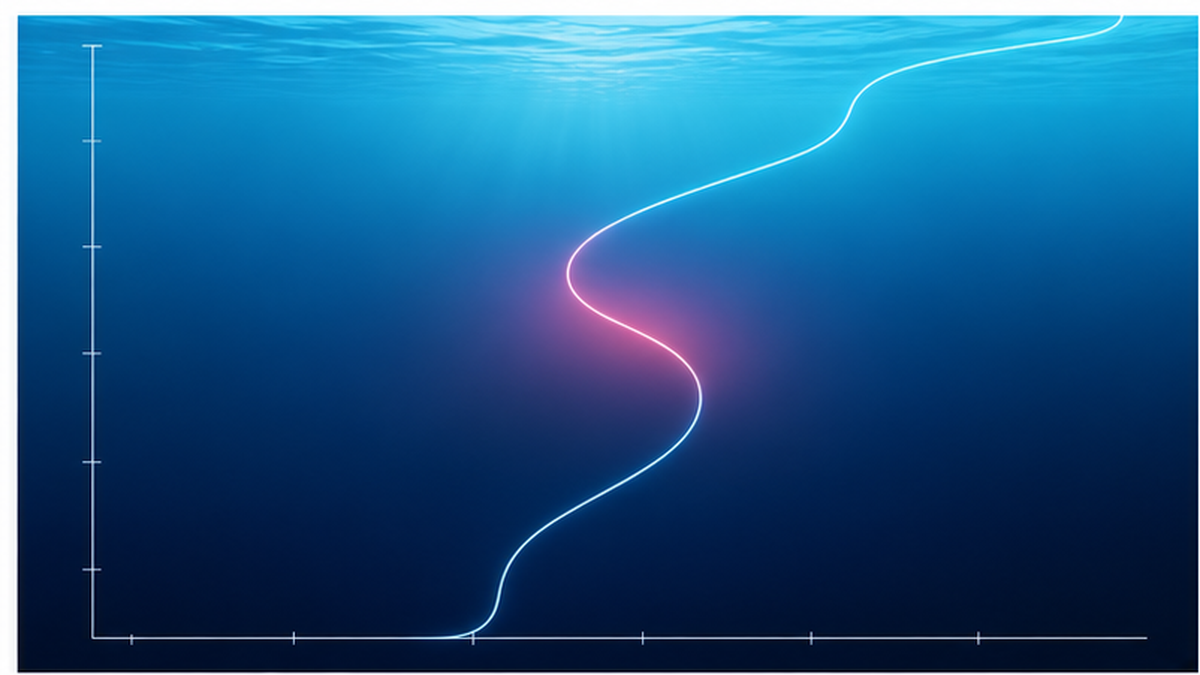
Falling oxygen in the ocean is not a distant issue for deep-sea life. We examine the deoxygenation now advancing across the world ocean through warming and eutrophication in our article on ocean deoxygenation and dead zones.
Hypothesis 3 — Food Scarcity: The Paradox That Bigger Means More Fuel-Efficient
Where there is almost nothing to eat, staying small would seem the better choice. Yet if you follow the energy budget carefully, the story is not that simple. This is where Kleiber's law enters.
Metabolism scales with body mass to the three-quarter power
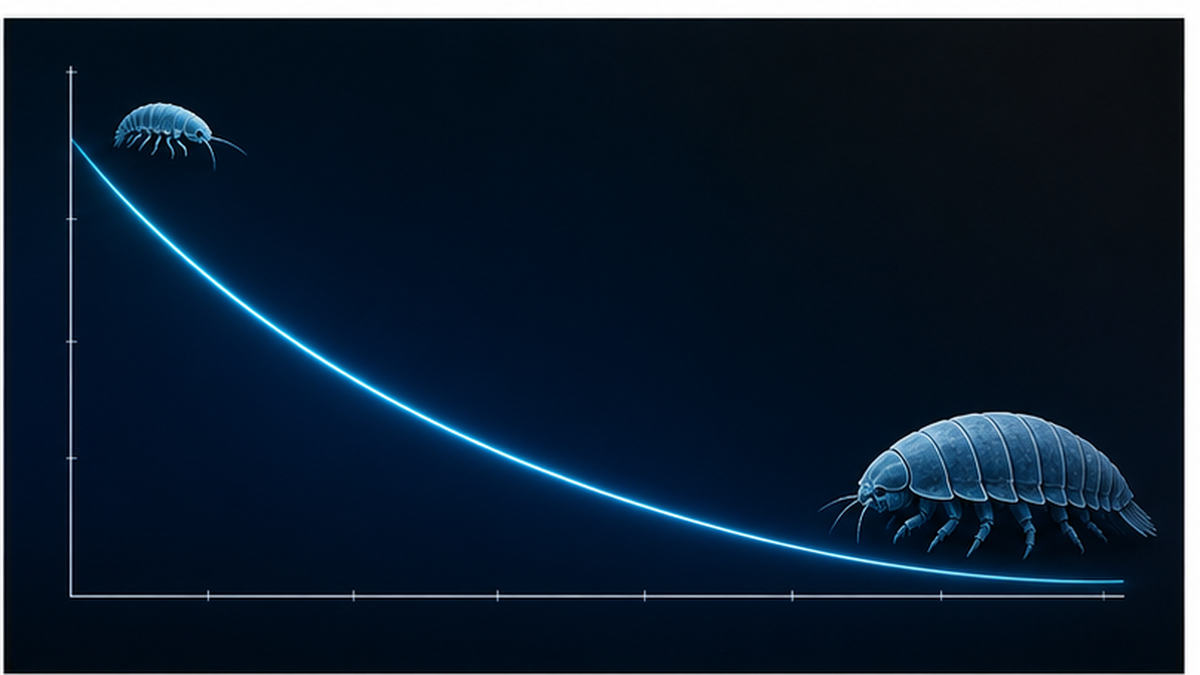
Kleiber's law is the empirical rule that an animal's metabolic rate scales with roughly the 0.75 power of its body mass. A sixteenfold increase in mass raises energy demand not sixteenfold but only eightfold. Put the other way round, the energy needed per kilogram of body mass falls as the body gets larger. That is why a mouse must eat almost constantly to stay alive while an elephant can devote only part of its day to feeding.
In a deep sea where you never know when your next meal will arrive, this fuel efficiency matters enormously. A large body is also a storehouse capable of banking energy in fat and liver — and its consumption per kilogram is lower. Growing large therefore works as insurance for holding out until the next meal, whenever it comes.
The giant isopod that lived five years and 43 days without eating
A Japanese aquarium demonstrated, quite unexpectedly, just how powerful that insurance is. The giant isopod known as "No.1", kept at Toba Aquarium in Mie Prefecture, ate a single roughly 50 g horse mackerel on 2 January 2009 and never touched food again. Even so it lived on, leaving an astonishing record of 5 years and 43 days without eating (1,869 days) before it died on 14 February 2014. A post-mortem found no solid undigested matter in its stomach at all — only a pale brown liquid.
What it used as an energy source for more than five years is still not understood in detail. But the episode showed with unmatched clarity that the deep-sea survival strategy of combining low metabolism with a large body produces endurance far beyond our intuition.
Betting on the occasional windfall
Deep-sea food supply has another characteristic. Apart from the steady trickle of marine snow, there is an irregular supply: enormous parcels such as whale carcasses that fall only rarely. The specialised ecosystem known as a whale-fall community can persist for decades. For a resource that arrives seldom but in bulk, a large body that can travel quickly, eat a great deal and make it last is advantageous. Footage of giant isopods swarming over a carcass captures exactly this strategy in action.
The price gigantism carries
Growing large, however, is not an unconditionally good bet. Building a large body takes a long time, and the animal must survive throughout. Later maturity means fewer opportunities to leave offspring over a lifetime. Even a slight worsening of the food supply can make a large body impossible to maintain. Deep-sea giants are a design without slack, premised on a stable environment. That fragility becomes a direct weakness the moment humans reach into the deep sea. It is precisely why slow-growing, long-lived deep-sea fishes fail to recover for decades once they are overfished.
Key points of the food scarcity hypothesis
- Under Kleiber's law, metabolic cost per unit of body mass falls as size increases
- A large body also serves as an energy store, allowing long periods of starvation to be survived
- For irregular, bulky food such as whale falls, a large and long-lived strategy fits well
- The giant isopod's 5-year-43-day fast is an extreme example of this strategy
Hypothesis 4 — Predation Pressure and Time: Growing Large by Growing Slowly
The fourth hypothesis focuses not on why animals can get large but on why they are allowed to. One reason bodies do not get large in shallow water is that they are eaten before they can. In the deep sea, that pressure weakens.
In darkness, being large pays
The deep sea has a low density of life, so finding another animal at all is difficult. For predators, the cost of searching for prey is high; for prey, being found is unlikely. At the same time, finding a mate becomes hard. This difficulty of encounter favours large, strong individuals, because they can range widely and make the most of rare meetings. The deep-sea anglerfish arrived at the extraordinary solution of extreme sexual dimorphism and fusion for the same reason (we cover it in detail in our article on anglerfish reproduction).
The hand holding the ceiling down is lifted
Weak predation pressure also means a low probability of dying part-way through growth. If an animal can survive long enough, a strategy of taking time over growth becomes viable. In shallow water the reverse holds: because the chance of being eaten before growing large is high, maturing and breeding early pays. On this view, deep-sea gigantism is less an active advantage of being large than the result of removing the pressure that had been holding size down.
The weapons of deep-sea giants make sense under the same condition of never missing a single encounter. The tips of a colossal squid's tentacles carry rows of sharp, swivelling hooks — a structure absent in its close relatives, thought to be equipment for pinning prey down for certain. The round sucker scars left on sperm whales, and the vast numbers of squid beaks found in their stomachs, are the clearest evidence that giant predators do meet in the dark of the deep sea. In a world of low density, whether a single encounter can be settled outright is the difference between life and death.
392 years — the Greenland shark embodies deep time
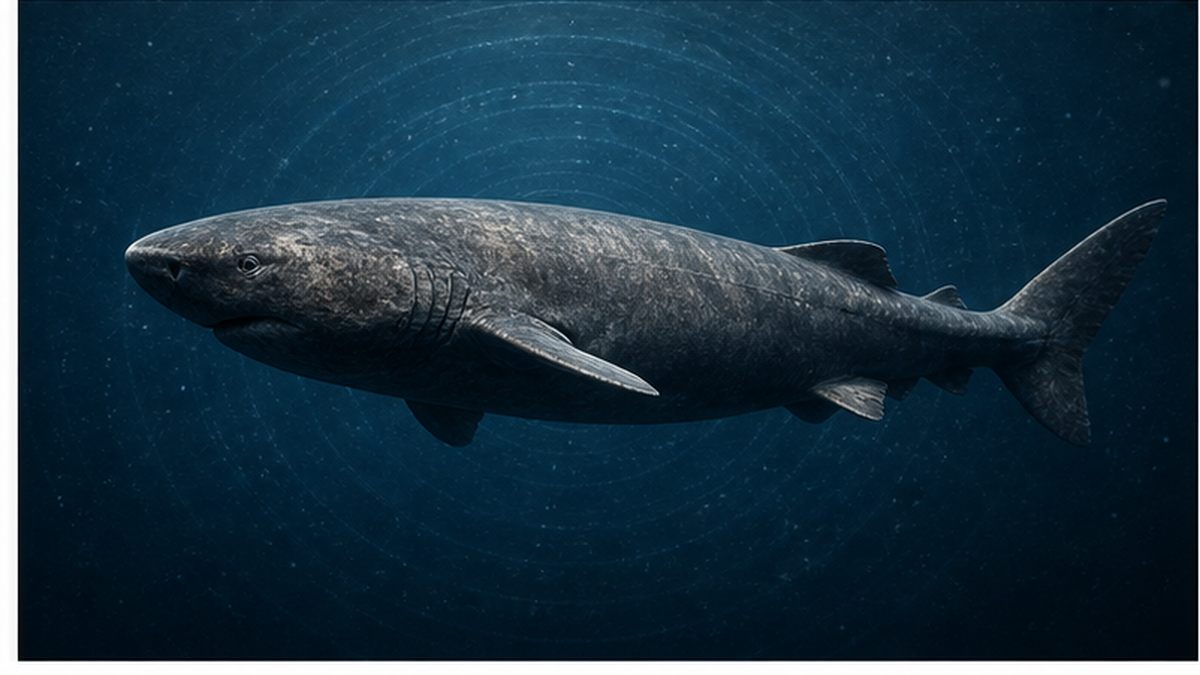
Nothing speaks more eloquently of the power of time than the Greenland shark, which lives in the cold deep waters of the North Atlantic and Arctic Ocean. In a study published in Science in 2016, Nielsen and colleagues radiocarbon-dated the eye lens nuclei — a metabolically inert tissue — of 28 females measuring 81–502 cm. They estimated the species' lifespan at at least 272 years, with the largest individual put at 392 years old (uncertainty range 272–512 years). It is the longest lifespan recorded for any vertebrate, far ahead of the bowhead whale's 211 years in second place.
The Greenland shark grows only about a centimetre a year and is thought to take roughly 150 years to reach sexual maturity. Deep-sea giants become large precisely by refusing to hurry — the size of their bodies is also the length of the time that has passed.
Facing the Counter-Evidence: More Deep-Sea Animals Shrink Than Grow
So far we have lined up the hypotheses that explain gigantism, but honesty requires touching on the evidence pointing the other way. In fact, a great many studies show that most deep-sea benthic animals are smaller than their shallow-water relatives. This phenomenon is called deep-sea miniaturization.
The same food scarcity leads to the opposite conclusion
What is striking is that food scarcity is also used to explain miniaturization. The hypothesis put forward by Thiel held that in chronically food-limited environments the high energy consumption of large individuals cannot be supported, so the mean body size of the community falls. Making the body smaller lowers total metabolism and reduces energy requirements — an equally coherent logic. The fact that both gigantism and miniaturization can be derived from the same premise is a major reason this debate remains unsettled.
The island rule operates in the deep sea too
A powerful framework for reconciling the contradiction is the island rule. It originally described the phenomenon in island faunas whereby small species grow larger and large species grow smaller, converging on intermediate sizes. In 2006 McClain and colleagues tested this pattern in deep-sea gastropods and reported a similar convergence of body size toward the middle. On this view, gigantism and miniaturization are not opposites but the two ends of the same convergence, differing only in their starting points.
The depth–size relationship varies by taxonomic group
The actual data are messier still. In one group of snails, size increases with depth; in another it decreases; and in some taxa there is no correlation with depth at all. Deep-sea gigantism is not a monolithic law running through all deep-sea life. It is merely a tendency shown by particular groups under particular conditions — and that is roughly where current understanding is settling.
| Hypothesis | Substance | Supporting evidence | Weaknesses and objections |
|---|---|---|---|
| 1. Cold hypothesis | Low water temperature lowers metabolism and raises the upper limit on body size | Similar gigantism is seen in polar regions | Bergmann's rule is really about heat budgets in endotherms |
| 2. Oxygen hypothesis | Cold water dissolves more oxygen, easing the oxygen constraint on growing large | Maximum size tracked oxygen levels across 1,853 amphipod species (Chapelle & Peck 1999) | In Antarctic sea spiders, hypoxia tolerance was reported not to track body size |
| 3. Food scarcity hypothesis | Larger animals have lower metabolic cost per unit mass and withstand starvation better | Kleiber's law; the giant isopod's 5-year-43-day fast | Miniaturization can be derived from the very same premise |
| 4. Predation pressure and time hypothesis | Few predators and slow growth allow animals to survive until they are large | The Greenland shark's lifespan of more than 272 years | It explains why animals can grow large, but not well why being large is an advantage |
Why has no conclusion been reached? One reason is the difficulty of studying deep-sea animals alive and in their natural state. Hauling them up in nets damages their bodies, and changing pressure and temperature changes their physiology. Very few species can be kept in captivity, and fewer still have had their growth rates or lifespans measured directly. What we mostly hold in our hands is body-length data from specimens that are already dead. Trying to read causation — why they are large — out of that may be an unreasonable task in the first place. As observations from remotely operated vehicles accumulate, the question is entering a new phase.
Simplifications to watch out for
- "All deep-sea animals are large" is false: most of the biomass consists of creatures a few millimetres long or less
- The explanation that "high pressure makes them large" has no scientific support
- No single cause of gigantism has been identified; multiple factors are thought to be intertwined
The Giants Raised by Japanese Waters: Suruga Bay and the Yokozuna Slickhead
Deep-sea gigantism is not a story confined to distant countries. The waters around the Japanese archipelago are among the world's richest for deep-sea life, and Suruga Bay is the prime example. Thanks to a seafloor that plunges away from the bay mouth, it reaches 2,500 m while still being a bay — the deepest in Japan — so deep-sea giants live just off the coast.
And it is not only Suruga Bay. East of the archipelago lies the Japan Trench, deeper than 8,000 m, and to the south the Izu-Ogasawara Trench continues. Sagami Bay, too, is a gateway to the deep, holding a submarine canyon 1,500 m deep inside the bay itself. On top of that, the Kuroshio and Oyashio currents — utterly different in character — meet around Japan, and large quantities of organic matter sink into the deep from highly productive surface waters. Steep topography, deep trenches, abundant sinking organic matter: few seas anywhere pack the conditions for raising deep-sea giants into so small an area.
The "grand champion of the deep" found in 2021
From that same Suruga Bay, an entirely new giant deep-sea fish emerged. Four specimens of the family Alepocephalidae collected in 2016 at depths of 2,171–2,572 m measured 122–138 cm in length and 14.8–24.9 kg — far larger than any other fish in the family. Research confirmed they were a new species, and in 2021 it was named Yokozuna slickhead (Narcetes shonanmaruae), borrowing the title of the highest rank in sumo to mark it as the largest of its family.
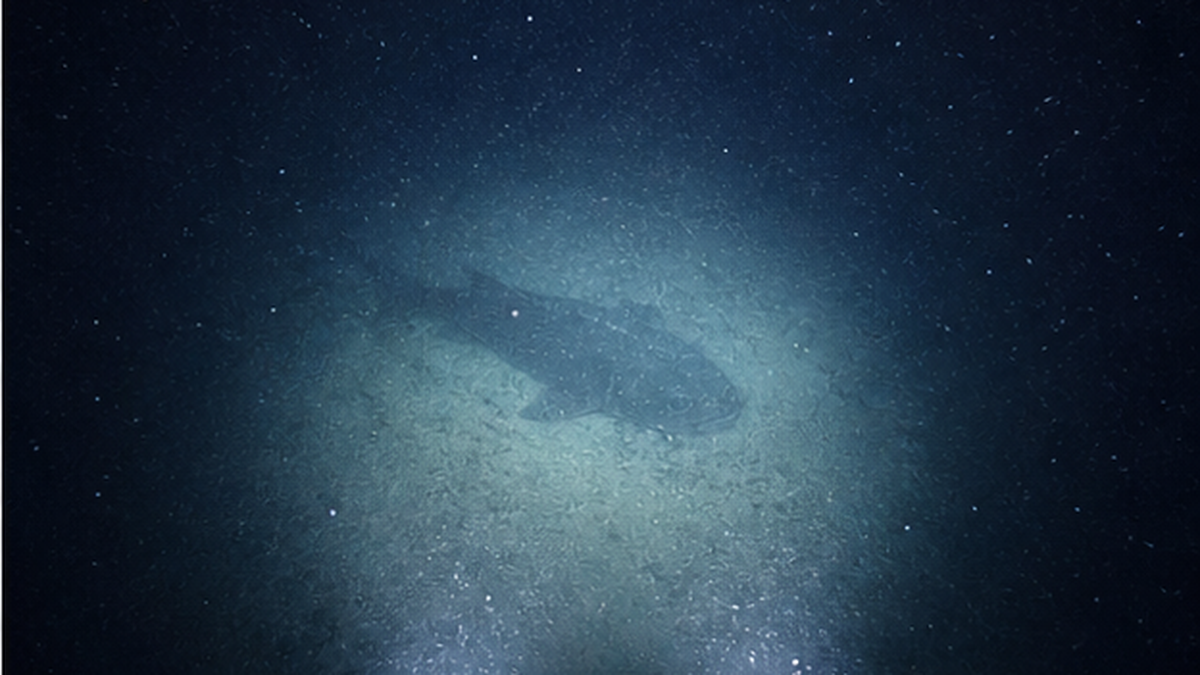
Fish otoliths were found in its stomach contents, and it was also caught on lines baited with fish, showing that it is piscivorous. Analysis of its trophic level returned a very high value, and it is inferred to be the apex predator of the deep parts of Suruga Bay. A survey in October 2021 went further, filming a huge individual over 250 cm long. A fish far taller than a person is swimming in the depths just off the coast of Shizuoka.
Read JAMSTEC's survey recordBehind the filming of the Yokozuna slickhead, apex predator of the deep sea — Vol. 1 (in Japanese)JAMSTEC researchers describe finding the new giant deep-sea fish below 2,000 m in Suruga Bay and filming an individual over 250 cm long.🔗 jamstec.go.jpThe Japanese spider crab, the largest living arthropod
The other star of Suruga Bay is the Japanese spider crab. Its carapace alone is only 30–40 cm across, but with its long legs outstretched the span exceeds 3 m, approaching 4 m in large individuals. It is the largest arthropod alive on Earth today, walking slowly across the seafloor at depths of 200–500 m. Shizuoka Prefecture leads Japan in landings of the species, and it has long been a local speciality in places such as the Heda district of Numazu.
New species are still being found
The discovery of deep-sea giants is an ongoing process. In 2025 a new giant isopod, Bathynomus vaderi, was described from deep water off Quy Nhơn in Vietnam. Measuring 32.5 cm and weighing over a kilogram, it was named for the resemblance of its head to Darth Vader's helmet in the Star Wars films. It had been sold as food in local markets, yet remained scientifically undescribed. There is still a great deal we do not know about the giants of the sea.
What Threatens the Giants, and What We Can Do
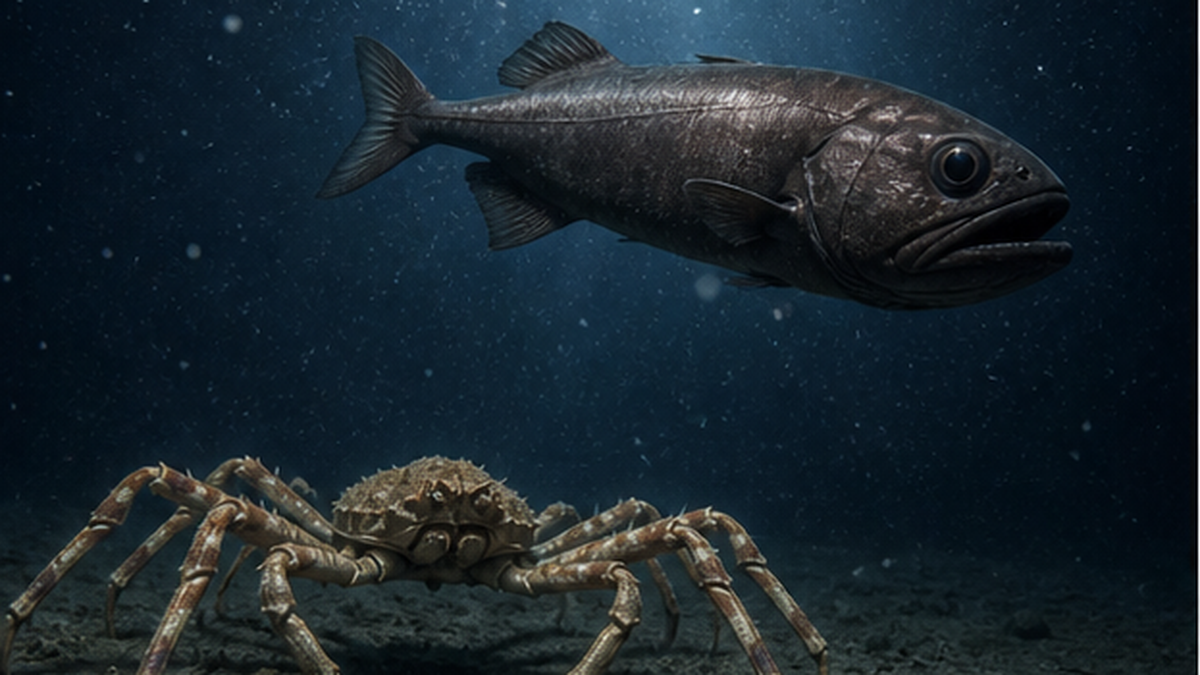
Deep-sea gigantism is by no means a comfortable luxury for the animals concerned. It is a razor-thin solution honed over centuries under the harsh constraints of cold, low nutrients and low oxygen. That is exactly why the damage is severe when those preconditions break down.
The ocean is losing oxygen
As warming raises surface water temperature, the amount of oxygen that dissolves in water falls, and surface and deep water mix less readily, thinning the supply of oxygen to depth. Declining dissolved oxygen and an expanding oxygen minimum zone are already being observed across the world ocean. If the oxygen hypothesis is correct, this is a change that directly pushes down the ceiling on body size for large deep-sea crustaceans.
Bottom trawling and the new pressure of deep-sea mining
Physical interference with the deep sea is intensifying as well. Fishing gear dragged across the deep seafloor destroys in one pass structures that took decades to centuries to form. For slow-growing, long-lived deep-sea animals, recovering a lost population requires spans of time far beyond the human sense of it. In addition, the commercial development of deep-sea mining for manganese nodules containing cobalt and nickel has recently become a realistic prospect. The effects of sediment stirred up by mining and settling over wide areas are still barely understood.
New international rules for protecting life on the high seas
Many deep-sea giants live in high-seas waters that fall under no national jurisdiction. For a long time, there was effectively no international mechanism for protecting high-seas biodiversity. The agreement adopted in 2023 to fill that gap — on marine biological diversity of areas beyond national jurisdiction, known as the BBNJ Agreement — makes it possible to designate marine protected areas on the high seas and sets out environmental impact assessment procedures. It could become the first substantial guardian of deep-sea ecosystems. Its effectiveness depends on ratification and implementation by individual states, but there is no doubt the deep sea has taken a step away from being "a place nobody protects because nobody owns it".
Preventing loss before discovery
Both the Yokozuna slickhead and Bathynomus vaderi were named only in the 2020s. No one knows how many deep-sea species are disappearing before they are ever described. What we can do to protect the giants of the deep may feel remote, but it is in fact tied to everyday choices.
What you can do today for the giants of the deep
- Know that deep-sea fishes (Patagonian toothfish, splendid alfonsino, orange roughy and the like) grow extremely slowly, and choose certified seafood
- Pay attention to shops and producing regions that handle fish caught by methods other than bottom trawling
- Act on climate change — the root cause of the ocean's oxygen decline is warming
- Visit deep-sea exhibits at aquariums and museums, and learn about the institutions carrying out the research
- Follow the international debate over deep-sea mining
Summary of this article
- Deep-sea gigantism is the statistical tendency, within a taxonomic group, for deep-sea species to be larger than shallow-water relatives. It is not a disease
- The main hypotheses are cold, oxygen, food scarcity, and predation pressure plus time — each explains only part of the picture
- The giant isopod's 5-year-43-day fast and the Greenland shark's lifespan of over 272 years are extreme examples of this strategy
- Meanwhile miniaturization is also widespread in the deep sea, and the island rule has been proposed as a framework covering both
- Japanese waters, including the Yokozuna slickhead and Japanese spider crab of Suruga Bay, are among the world's great stages for deep-sea giants
- Ocean deoxygenation, bottom trawling and deep-sea mining are shaking the very conditions these animals depend on
References and sources
- Japan Agency for Marine-Earth Science and Technology (JAMSTEC) – Behind the filming of the Yokozuna slickhead, apex predator of the deep sea — Vol. 1 (in Japanese)
- Nature (Chapelle & Peck, 1999) – Polar gigantism dictated by oxygen availability — empirical support for the oxygen hypothesis from 1,853 amphipod species
- Science (Nielsen et al., 2016) – Eye lens radiocarbon reveals centuries of longevity in the Greenland shark — lifespan estimates for the Greenland shark
- PeerJ (McClain et al., 2015) – Sizing ocean giants — a re-examination of body size in 25 marine megafauna species using measured data
- ZooKeys (Ng, Sidabalok & Nguyen, 2025) – The description of Bathynomus vaderi, a new supergiant isopod from Vietnam
- Schmidt Ocean Institute – First Confirmed Footage of a Colossal Squid — the first live footage of a juvenile colossal squid (2025)
- Journal of Experimental Biology (Moran & Woods, 2012) – Why might they be giants? Towards an understanding of polar gigantism — a review of gigantism hypotheses
- McClain, Boyer & Rosenberg (2006) – The island rule and the evolution of body size in the deep sea — testing the island rule in the deep ocean
- Toba Aquarium – Notice regarding the giant isopod "No.1" — the record of a 5-year-43-day fast (in Japanese)
- Shizuoka Prefecture – Japan's top prefecture for Japanese spider crab landings — the crab and its fishery in Suruga Bay (in Japanese)
* Listed in order of reliability: government/academic institutions > peer-reviewed papers > specialized organizations > reliable media