⚡ In short
Around 3,000 described species. The dazzling colours of nudibranchs — snails that abandoned their shells — advertise a chemical arsenal borrowed from their food: toxins taken from sponges, stinging cells stolen from jellyfish, even chloroplasts harvested from algae. Here is the science, from the latest aposematism research to solar-powered sea slugs.
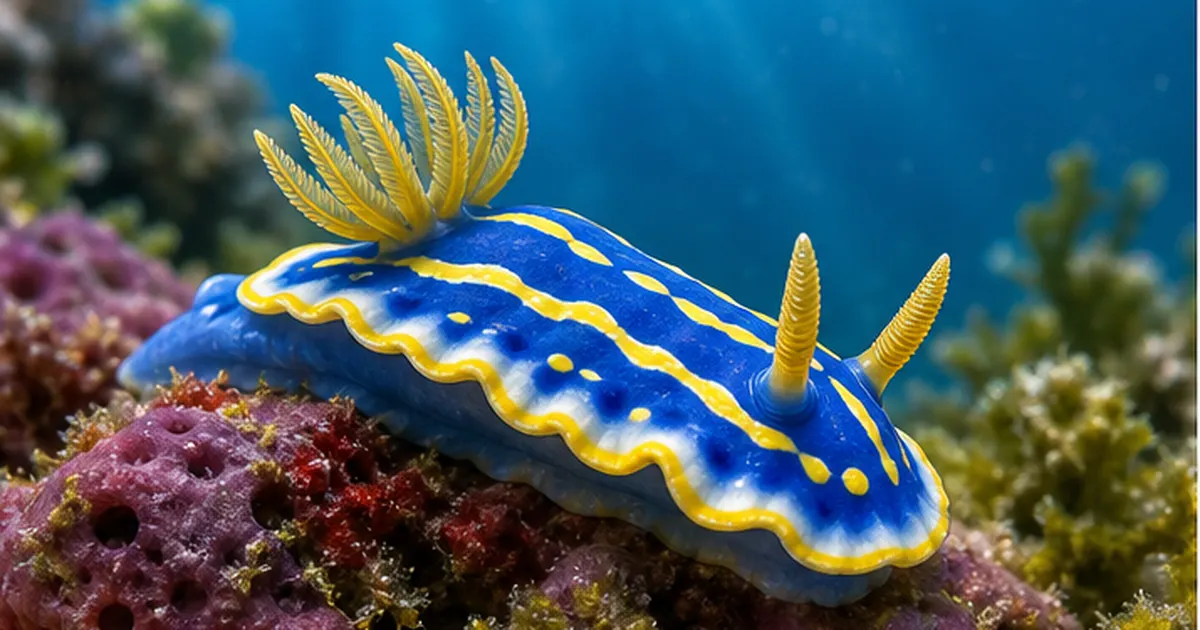
A body only a few centimetres long, creeping slowly across bare rock, marked with fluorescent blue, lemon yellow and deep crimson. Divers call them the jewels of the sea. But why would an animal in a predator-filled ocean advertise itself so loudly instead of hiding?
The heart of the answer is that their weapons are borrowed. Most nudibranchs take toxins and stinging cells straight out of the sponges, hydroids, jellyfish and soft corals they eat, and repurpose them as their own defences. The bright colours are a signboard reading "I taste terrible and I am dangerous" — and the substance behind that claim is not manufactured in-house, it is sourced at mealtimes.
Some species go further still, housing algal chloroplasts or zooxanthellae inside their own tissues and photosynthesising. This article works through the colour and the lifestyle of these animals from primary sources: from research on the evolution of warning colouration, to the molecular details of chemical defence, to the Japanese discovery of a sea slug that comes back to life from its head alone.
What you'll learn in this article
- Why "sea slug" is not the name of a single taxonomic group, and how the body of a nudibranch is built
- How vivid colour works as a warning signal (aposematism), and the recent finding that toxicity and distastefulness do not track each other
- The chemical defence system that borrows toxins from sponges and stinging cells from jellyfish
- Sea slugs that host zooxanthellae or chloroplasts and photosynthesise, including one that regrows an entire body from its head alone
- The season and water temperature that give you the best chance of finding them, and how to watch without touching
What exactly is a sea slug? Snails that gave up the shell
The first thing to understand is that "sea slug" is not a formal taxonomic group. It is a convenient nickname for marine gastropods that, over the course of evolution, lost their shell entirely or reduced it drastically and buried it inside the body — animals grouped together by appearance rather than ancestry.
Under that nickname sit lineages that are in fact quite distantly related. The most diverse and the most photogenic is the order Nudibranchia. Alongside it sit the Sacoglossa, famous for taking up chloroplasts; the Cephalaspidea, which retain a thin internal shell; and the Aplysiida, which include the sea hares. This is why two animals both called "sea slugs" can differ completely in what they eat and how they use toxins.
Where the name "naked gills" comes from
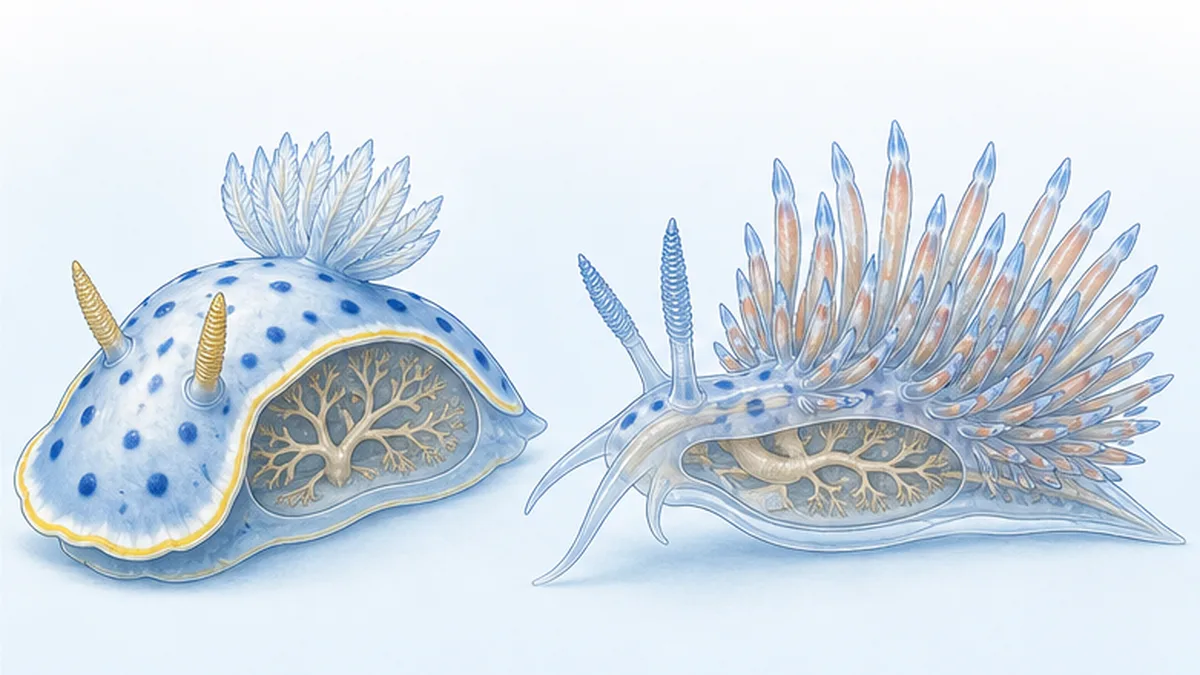
The scientific name Nudibranchia combines the Latin nudus (naked) and branchia (gills). Most snails keep their gills tucked inside the mantle cavity under the shell; a sea slug that has thrown the shell away has no choice but to carry its gills out in the open.
The shape of those exposed gills is the first thing that divides Nudibranchia in two. The dorids (Doridina) spread a ring of feathery secondary gills near the rear of the back and pull them into the body when startled. The cladobranchs (Cladobranchia), which include the aeolids, have no secondary gills at all; instead the whole back is covered in projections called cerata, which double as the respiratory surface. Branches of the digestive gland run up inside those cerata — and, as we will see, they become the centre of the animal's defence.
About 3,000 species worldwide, and Japanese waters are full of them
Estimates of how many nudibranch species have been described range from about 2,300 to 3,000, and that spread is itself a symptom of how actively the taxonomy is still being revised. WoRMS, the World Register of Marine Species, currently organises Nudibranchia into fourteen direct children, and new species and rearrangements are added almost every year. In 2023, seven "cryptic" species that are effectively indistinguishable by eye were described together from New Caledonia in the South Pacific.
Japan is no exception. The field notes published by the Coastal Branch of the Natural History Museum and Institute, Chiba, list 189 species from the coast of Chiba Prefecture alone — fifty more than the 139 in the previous edition. If a single prefecture is gaining species at that rate, a considerable number of undescribed species must still be sitting on the seabed around Japan as a whole.
| Group | Key features | Main food | Typical colouration |
|---|---|---|---|
| Dorids | Secondary gills at the rear of the back; flattened body | Sponges | Often vivid, heavily patterned |
| Aeolids | Cerata covering the back; no secondary gills | Hydroids, sea anemones | Translucent with bright accents |
| Sacoglossans | Single-row radula; retain chloroplasts | Green algae (they suck out the cell contents) | Green, leaf-like camouflage |
| Sea hares | Thin internal shell; large bodied | Seaweed | Drab brown; purple ink |
Basic terms worth knowing
- Rhinophores: the paired projections on the head. Chemosensory organs used to locate food and assess the water
- Secondary gills: the feathery gills at the rear of the back, retracted rapidly when the animal senses danger
- Cerata: the dorsal projections of aeolids, serving respiration, digestion and defence at once
- Radula: the rasp-like feeding organ. Its shape is a key character in classification
Why so bright? The science of warning colouration
Across the animal kingdom there is a strategy of advertising to predators, through conspicuous colours and patterns, that you are toxic or that you taste appalling. It is called aposematism, or warning colouration. The red and black of a ladybird and the blue and yellow of a poison dart frog are the familiar examples, and the vivid colours of nudibranchs have long been explained the same way.
What warning colouration requires
For a warning signal to work, three conditions have to hold. The animal must genuinely be distasteful or toxic. Predators must be able to learn and remember the colour. And enough individuals must share that colour for the learning opportunity to recur. When all three line up, the benefit outweighs the cost of being conspicuous.
Nudibranchs are strong candidates on all three counts. They move extremely slowly, so fleeing is barely an option. They gave away their hard shell. What remains is to announce that they are foul and dangerous, and body colour is the cheapest possible signboard for the job.
Toxicity and distastefulness do not match
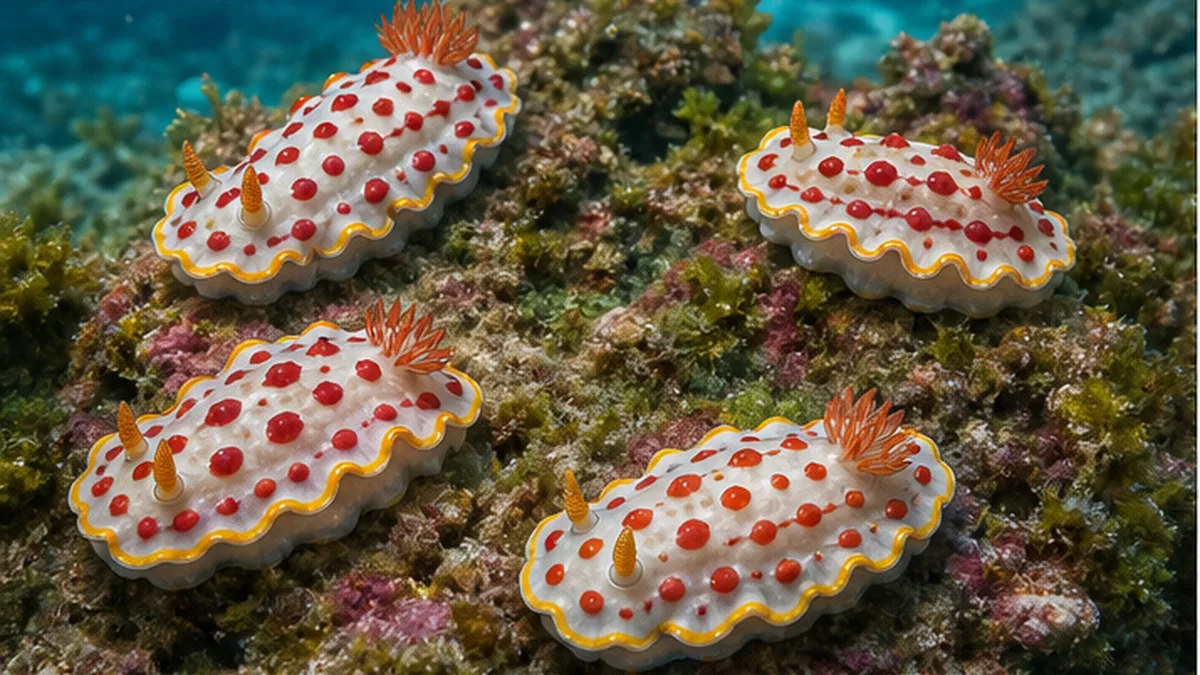
The picture is not that simple, though. A 2018 study by Winters and colleagues in Proceedings of the Royal Society B examined a group of red-spotted nudibranchs that co-occur along the east coast of Australia, combining visual modelling with chemical analysis.
The result was that these animals look essentially identical from the point of view of a fish predator, and that this colour pattern had evolved independently several times in distantly related lineages — a mimicry ring. Yet chemical analysis showed that the defensive compounds differed completely between species. More striking still: the level of distastefulness was fairly constant across species, while toxicity varied enormously.
That suggests the signboard is not necessarily advertising lethal poison so much as unpalatability. A deterrent strong enough to make a predator spit the animal out immediately is enough for the signal to work, and lethal toxicity may be doing something else entirely. The same group reported in 2022 that nudibranch chemical defences fall into distinct ecological modes — some acting as weapons and others as deterrents.
Underwater, they are less conspicuous than you think
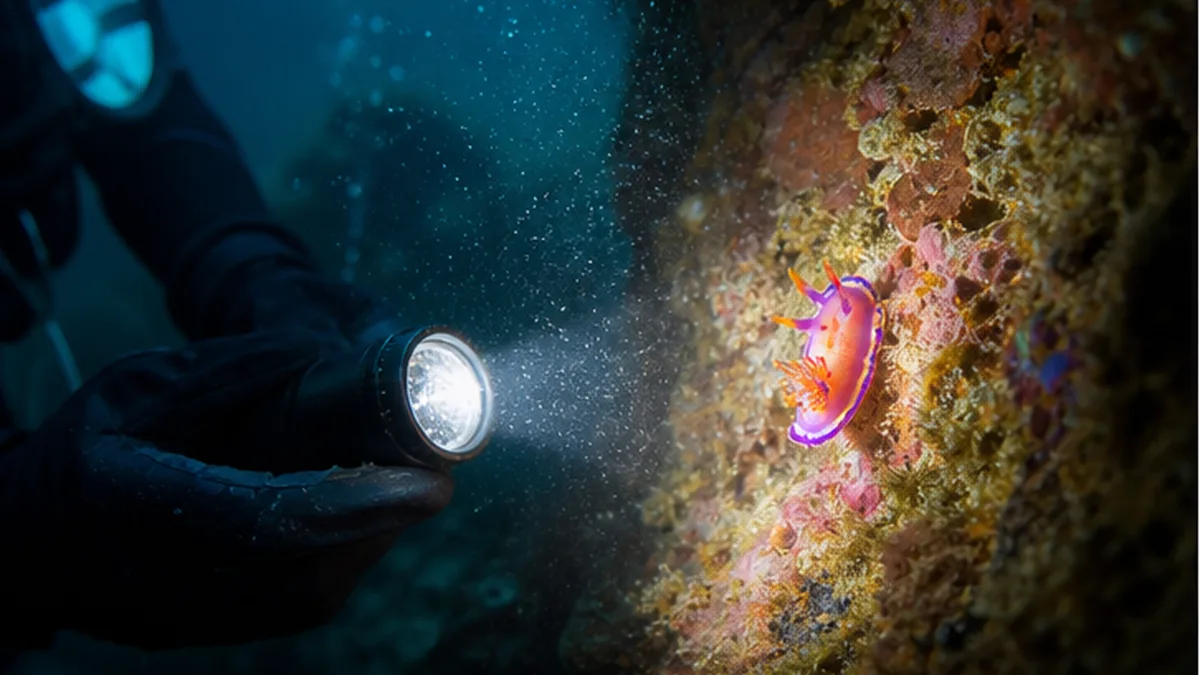
There is one more thing to keep in mind: the colours we see are not the colours as they appear underwater. Seawater absorbs the red end of the spectrum first, so below about ten metres red sinks towards black unless a diver adds a light. A crimson nudibranch that leaps off the page in a field guide can be surprisingly well hidden against rock in natural light.
Nudibranch colouration is therefore not a straight choice between warning and camouflage. It is a context-dependent signal whose meaning shifts with the visual system of the viewer, the way light reaches the animal, and the background it sits against. That is precisely why modelling fish vision, as the study above did, matters so much.
Key points about warning colouration
- Conspicuousness is a strategy favoured by animals that can neither flee nor hide
- Species that look alike can carry completely different defensive chemistry
- Distastefulness and toxicity are separate axes; the signboard mainly guarantees the former
- How gaudy an animal looks to us is not how gaudy it looks to a fish underwater
Borrowing toxins from food: how chemical defence works
So where does the substance behind the signboard come from? Many dorids specialise on sponges. Sponges can neither move nor flee, and evolution has equipped them with formidable chemical weaponry. Nudibranchs carry that weaponry into their own bodies without neutralising it.
Latrunculin A: picking out a single toxin
The classic example of a borrowed toxin is latrunculin A, a sixteen-membered macrolide that blocks the polymerisation of actin, the protein that forms the cell's internal scaffolding. It originates in the sponge Cacospongia mycofijiensis.
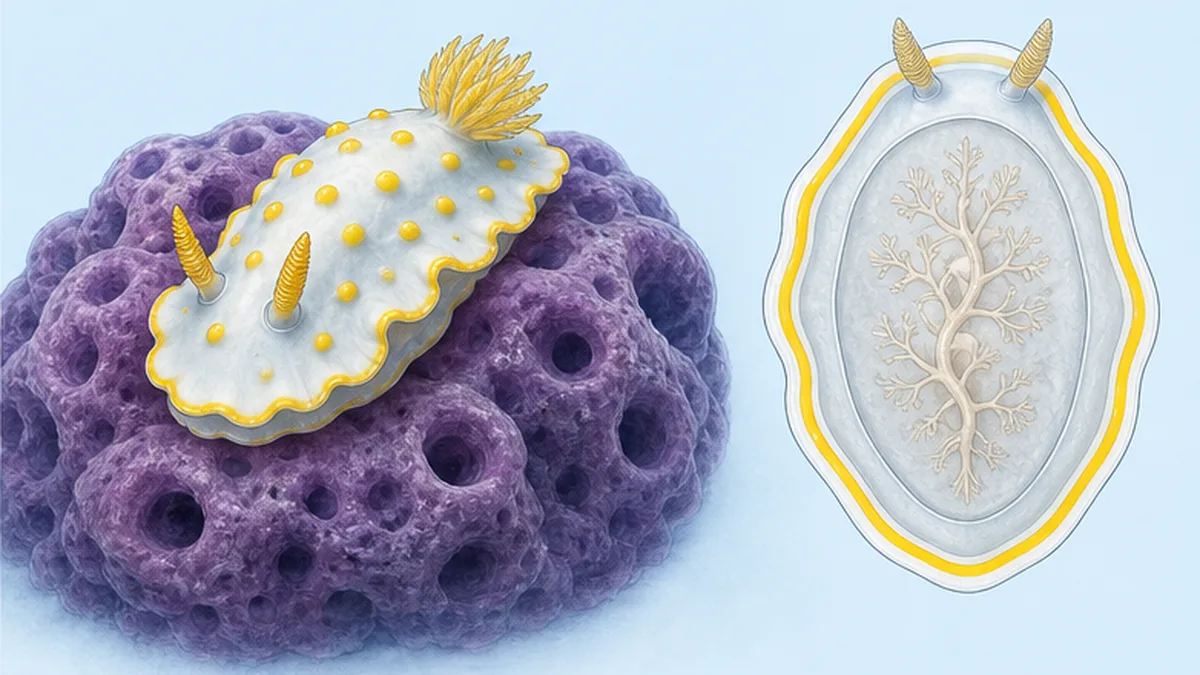
A 2015 PLOS ONE study titled "Choose Your Weaponry" examined several closely related nudibranchs in the genus Chromodoris and revealed a remarkable selectivity. The viscera contained a broad mixture of secondary metabolites — but the rim of the mantle, the part a predator's mouth touches first, held latrunculin A and essentially nothing else. Mass spectrometry imaging visualised the compound accumulating throughout the mantle tissue, in the mucus glands, and especially in the vacuoles of specialised storage structures in the mantle.
Even the placement is optimised
This arrangement is no accident. When a fish nips at a nudibranch, the edge of the body goes into its mouth first. Concentrate the deterrent there and the predator learns "foul" before it can inflict a fatal wound. Holding a diverse chemical library in the viscera while displaying one carefully chosen compound on the outside shows that chemical defence is a question of placement as much as of quantity.
Storing a diet-derived toxin is not unique to sea slugs. Pufferfish do not manufacture tetrodotoxin either; they accumulate and concentrate it from what they eat. The ocean has produced the "do not synthesise, simply borrow" lineage of defence several times over, quite independently.
Why doesn't it poison the slug? Still unsolved
Latrunculin A stops actin from polymerising. Actin maintains cell shape, drives muscle contraction and underpins intracellular transport, so it should be just as lethal to the nudibranch as to anything else. Why isn't it?
One leading hypothesis is that the nudibranch's own actin is structurally modified so that the toxin binds poorly, and the actin sequences of Chromodoris species are being investigated on exactly that basis. Another is that the toxin is never left loose in the cytoplasm but is sequestered in membrane-bound storage vesicles. Which mechanism dominates is still unclear as of 2026. It sits at the intersection of marine natural product chemistry and molecular biology, and it is very much live research.
| Source | Representative substance | Sea slugs that take it up | Effect |
|---|---|---|---|
| Sponges | Latrunculin A | Chromodoris species and others | Inhibits actin polymerisation; strongly cytotoxic |
| Soft corals | Diterpenes | Phyllodesmium species | Deters predators |
| Cnidarians (hydroids, jellyfish) | Nematocysts themselves | Aeolids generally | Sting physically and chemically |
| Green algae | Chloroplasts | Sacoglossans such as Elysia marginata | Supply photosynthetic products |
"Toxic" does not automatically mean dangerous to people, but keep your hands off
Nudibranch chemical defences are aimed mainly at fish and other predators, and touching most species will not poison a human. But species that store stinging cells and will sting you on contact certainly exist, as the blue dragon described below demonstrates. Unless you can identify the species with certainty, do not handle a sea slug you find in the sea with bare hands.
Stealing a jellyfish's weapons: recycling stinging cells
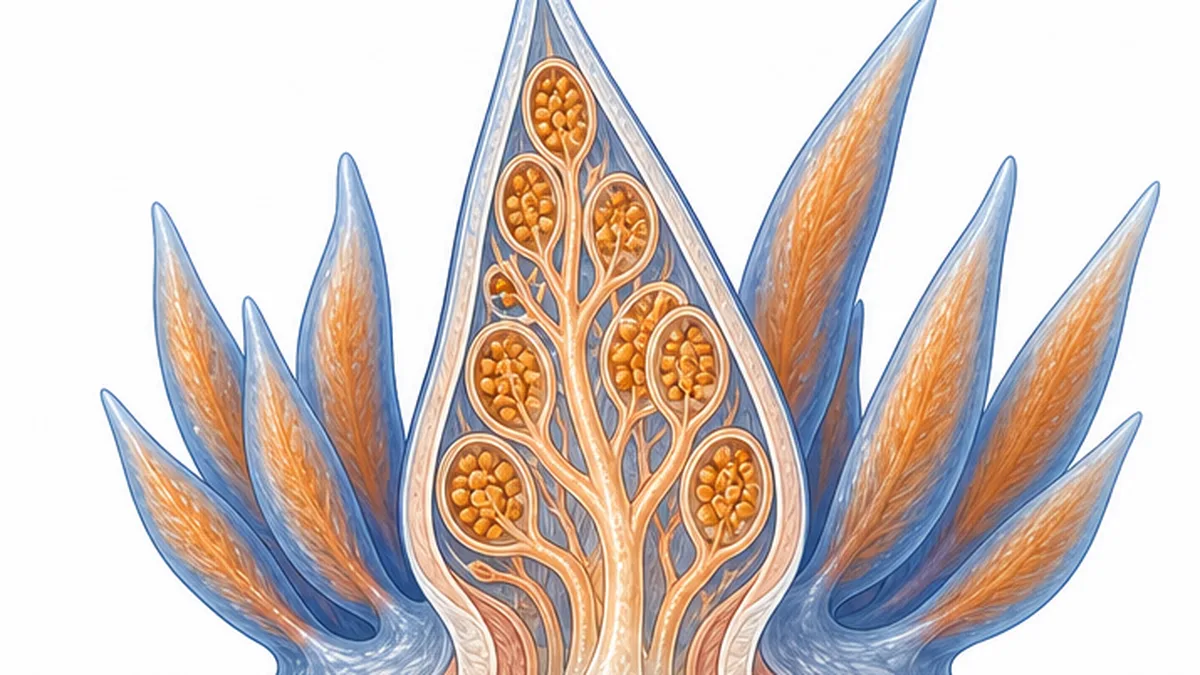
Aeolid defence goes beyond the level of chemistry. These animals eat cnidarians — hydroids, sea anemones and jellyfish — and pass the nematocysts (stinging capsules) through the gut without triggering them, then move them to the tips of the cerata for storage. Stolen stinging cells of this kind are called kleptocnidae.
The cnidosac
The sequence runs like this. Swallowed cnidarian tissue travels through the branched gut into diverticula of the digestive gland that extend up inside the cerata. There, undischarged nematocysts are sorted out and transferred into a muscular sac at the tip of each ceras called the cnidosac, where they are held. When the animal senses danger it releases them, and in some cases sheds the entire ceras by autotomy.
As Goodheart and colleagues set out in Invertebrate Biology in 2017, this capacity has evolved independently in several lineages of cnidarian-eating molluscs. Keeping an organelle from a devoured animal functional and redeploying it as your own weapon is a feat with few parallels anywhere in the animal kingdom. If the mucus that protects a clownfish from anemone stings represents the art of not being stung, aeolids took the other road: taking the weapon without being stung.
The blue dragon that drifts across the open ocean
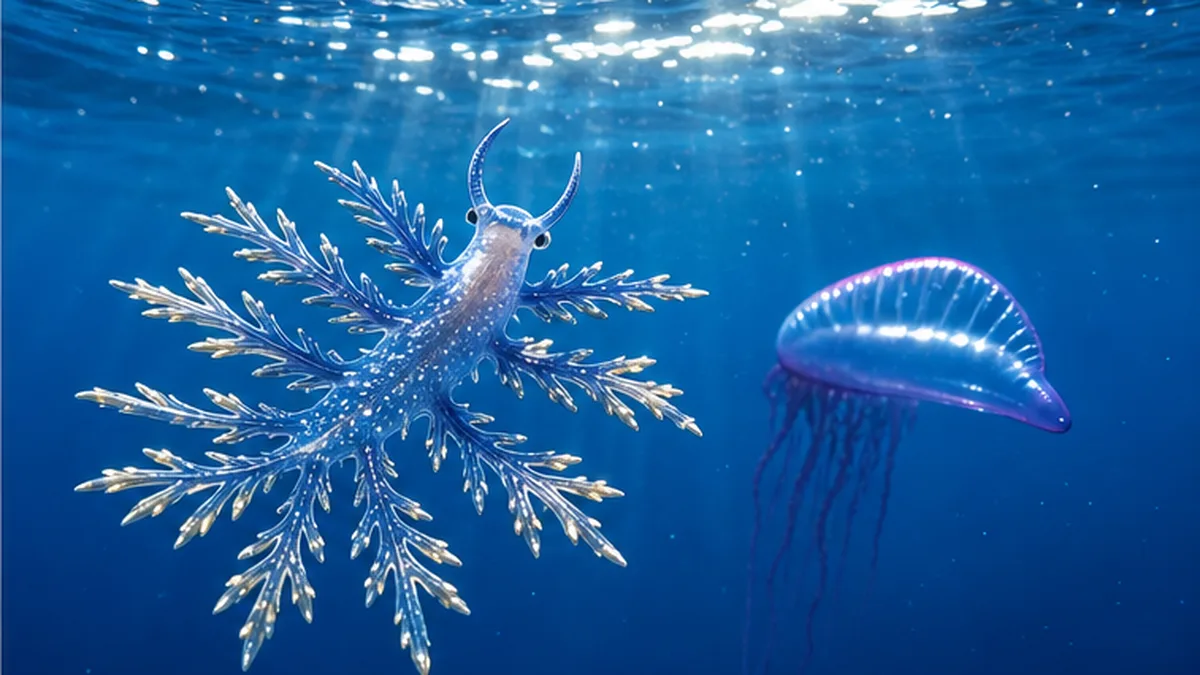
The most extreme practitioner of this strategy is the blue dragon, Glaucus atlanticus. Where most sea slugs crawl on the seabed, this one holds a bubble of air in its stomach and drifts at the surface of the open ocean, upside down. Its blue-and-silver body is countershaded: blue against the sea when seen from above, bright against the sky when seen from below.
Its food consists of surface-drifting cnidarians such as the Portuguese man o' war (Physalia), the blue button and by-the-wind sailor. The man o' war is notorious for causing severe pain and serious symptoms in humans, yet Glaucus eats it and stores its nematocysts in its cerata. Because it selects and accumulates those capsules, a very small animal can be a genuinely hazardous one.
It washes up in Japan when the wind is right. According to the JAMSTEC marine life database BISMaL and records from the International Coastal Research Center of the Atmosphere and Ocean Research Institute at the University of Tokyo, individuals 20–37 mm long have been recorded stranded on the shore at Katsuura in Chiba Prefecture. It is blue, beautiful and small enough to sit in your palm — and if you pick it up, it will sting you.
There is even second-hand theft
Nematocyst theft has an extra tier. A 2025 report in Doklady Biological Sciences on Coryphella trophina confirmed that this species preys on other nudibranchs, and showed that by eating animals that had already stolen nematocysts, it steals those same capsules a second time and uses them for its own defence. Cnidarian to nudibranch to nudibranch: a two-stage handover of weaponry.
Take a predator's weapon, then take it again from whoever took it first. In the world of sea slugs, defensive equipment is effectively resold along the food chain.
If you find a blue sea slug on the beach
- Never touch or pick it up. Nematocysts can retain the ability to fire even in a dead animal
- They are often found near stranded Portuguese man o' war; watch the surrounding sand as well
- If stung, rinse with seawater (do not rub or use fresh water) and seek medical attention promptly
- Photograph it without touching, and warn any children nearby
Solar-powered sea slugs: living in partnership with algae
After toxins and stinging cells comes the borrowing of energy itself. Some sea slugs house photosynthetic partners inside their own bodies and run on sunlight — animals that behave, in part, like plants. They are described as solar-powered.
Aeolids that live with zooxanthellae
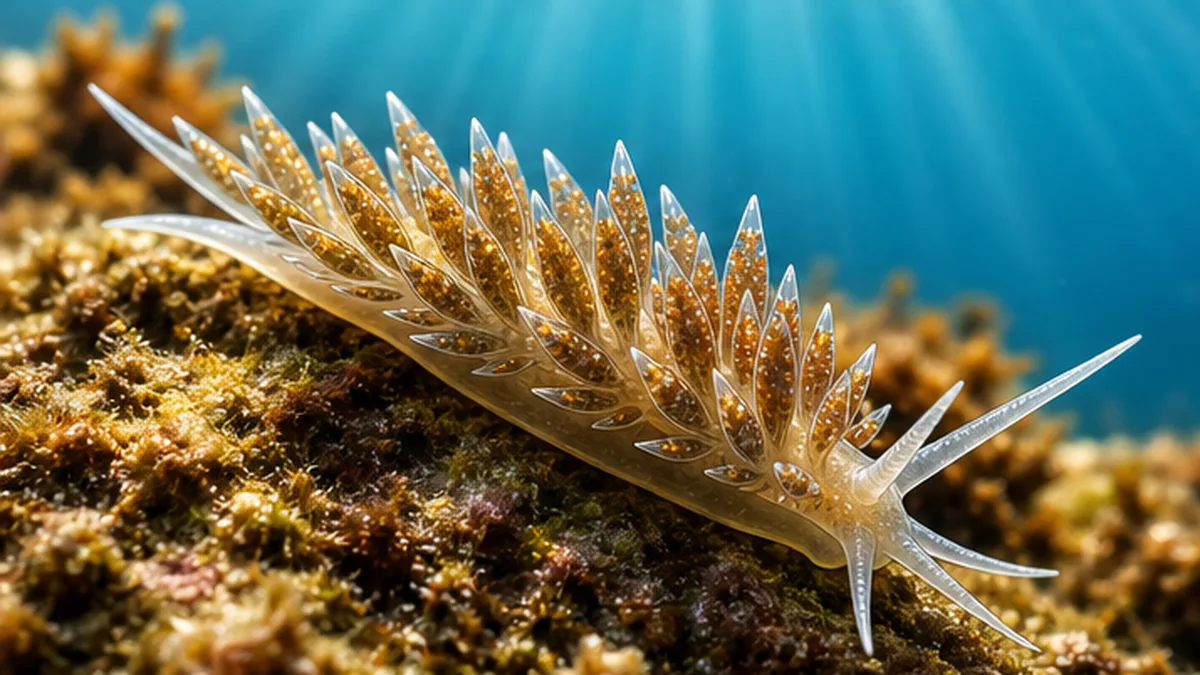
The best-known case is Pteraeolidia semperi. A 2023 study in iScience described in detail how finely branched tubules run throughout this animal's body, with zooxanthellae (Symbiodiniaceae) held inside the cells of those tubules. The study also identified isolated "carrier" cells associated with the digestive gland containing both zooxanthellae and lipid droplets, suggesting that the algae pass photosynthetic products to the host in the form of lipids.
Zooxanthellae are best known as the partners corals host in their tissues in exchange for nutrition. A sea slug has reinvented, independently and in a completely different lineage, a symbiosis that corals spent a very long time building. In the related genus Phyllodesmium, five species kept in culture for between 70 and 270 days all maintained stable, long-term retention of their zooxanthellae.
Sacoglossans steal the chloroplasts alone
The Sacoglossa took a different route. Using a single-row radula they puncture green algae and suck out the cell contents. In doing so, some species take up the chloroplasts alone without digesting them, incorporate them into their own cells, and keep them functional for months. The phenomenon is called kleptoplasty.
Isolating an organelle rather than a whole cell and keeping it working is not trivial. Maintaining a chloroplast should require proteins encoded in the alga's nuclear genome, and how a sea slug that holds no such nucleus keeps them running for months has been debated for a long time.
Coming back to life from the head alone: a discovery from Japan
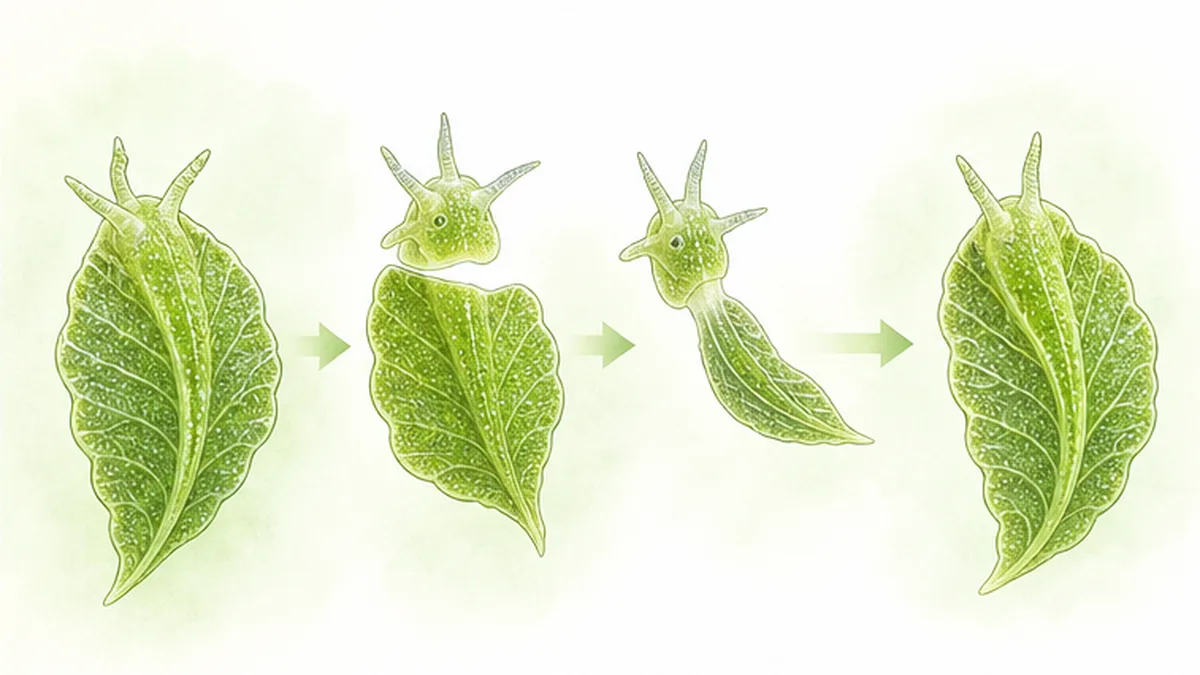
Where this photosynthetic capacity pays off turned out to be somewhere nobody expected. Sayaka Mitoh and Professor Yoichi Yusa of Nara Women's University published "Extreme autotomy and whole-body regeneration in photosynthetic sea slugs" in Current Biology in 2021 (volume 31, R233–R234), reporting an unprecedented form of self-amputation and regeneration in two sacoglossan species, Elysia marginata and Elysia atroviridis.
These animals sever their own bodies at the neck. What they discard is almost the entire trunk including the heart — over 80% of body weight. Only the head remains. Yet within hours the detached head begins to feed on algae; regeneration of the heart starts after roughly a week; and among young individuals, about one in three regrew a complete body, heart included, in around twenty days. The discarded trunk, by contrast, never regenerates a head.
The researchers suggest that photosynthesis by kleptoplasts may be what keeps the head alive after it loses its trunk. Even with most of the digestive tract gone, chloroplasts inside the body can supply energy from light for long enough to see regeneration through. The borrowed organelle may be an insurance policy on life itself.
Autotomy and regeneration in brief
- The species are the sacoglossans Elysia marginata and Elysia atroviridis — not nudibranchs in the strict sense
- What is discarded is over 80% of body weight, including the heart; only the head remains
- The head resumes feeding within hours, and heart regeneration begins after about a week
- Around a third of young individuals regenerate a full body in roughly 20 days; the trunk never regrows a head
- The researchers propose that photosynthesis supports the animal through regeneration
The other side of conspicuousness: mimicry and camouflage
So far we have looked at the strategy of standing out. There is a second direction in sea slug colouration: disappearing completely. By species count, the inconspicuous nudibranchs may well be the majority.
Three kinds of mimicry
Mimicry built on warning colouration comes in three broad forms. In Batesian mimicry, a harmless species copies the appearance of a toxic one and rides on its reputation. In Müllerian mimicry, several genuinely defended species converge on a shared pattern and share the cost of teaching predators. The mimicry ring described earlier is a complex assemblage in which both are mixed together.
As the Winters study showed, the red-spotted assemblage contained both strongly and weakly toxic species. Under a single shared pattern, honest advertising and a degree of free-riding may coexist — and because predators cannot tell them apart, that ambiguity persists.
Becoming the food itself
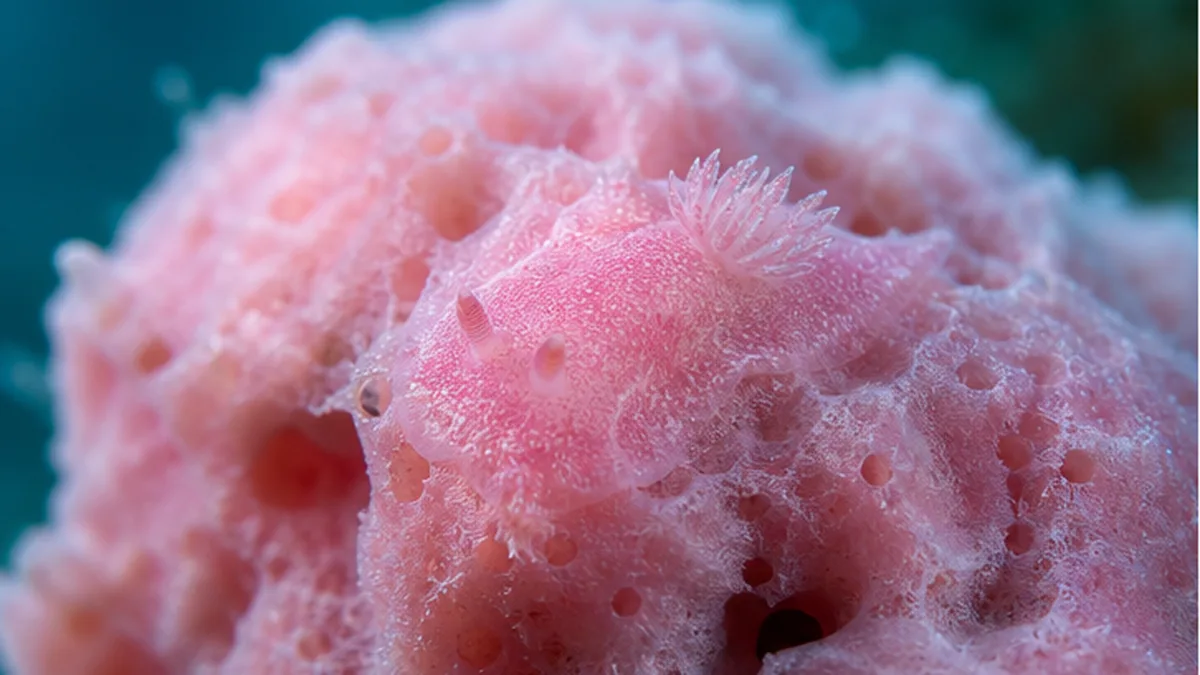
There is a more direct kind of concealment too. Because many sea slugs spend their entire lives on one particular food organism, they can vanish simply by wearing its colour and texture. A pink dorid sits on a pink sponge; an aeolid whose cerata copy the branch shape of a hydroid colony lives among those branches. Some species repurpose pigments straight out of their food, so that eating and acquiring camouflage become the same act.
Marine animals have found very different solutions to the same problem of matching the background. An octopus changes colour and texture in an instant using chromatophores, whereas a sea slug achieves the same end slowly, through diet. It is far slower — but the energy cost is not remotely comparable.
| Strategy | Appearance | What it requires | Examples |
|---|---|---|---|
| Warning colouration | Colours that leap out from the background | Genuinely being distasteful or toxic | Many chromodorid nudibranchs |
| Batesian mimicry | Close resemblance to a defended species | The model being more abundant than the mimic | Undefended mimic species |
| Müllerian mimicry | Several defended species converging | All being distasteful and co-occurring | The red-spot mimicry ring |
| Camouflage | Matching the colour and texture of the substrate | Strong dependence on one food organism | Sponge- and hydroid-feeding species |
Life and death: hermaphrodites, fussy eaters, short lives
Stepping away from colour for a moment, it is worth looking at how sea slugs live and reproduce. Here too they have arrived at distinctive solutions, shaped by the constraint of moving very slowly.
Every individual is both male and female
Sea slugs are simultaneous hermaphrodites. Any mature individual can mate with any other of its species, and in most cases both partners transfer sperm at the same time. For an animal that moves slowly and rarely meets a partner in a wide ocean, that is powerful insurance: no time wasted checking a partner's sex, and no encounter in which only one party gets to reproduce.
The reproductive opening sits on the right side of the body, so a mating pair adopts a distinctive posture, drawn together right side to right side. If you see two individuals pressed against each other and motionless on a dive, they are most likely mating — an event that can last a long time in some species.
Egg masses laid in spirals
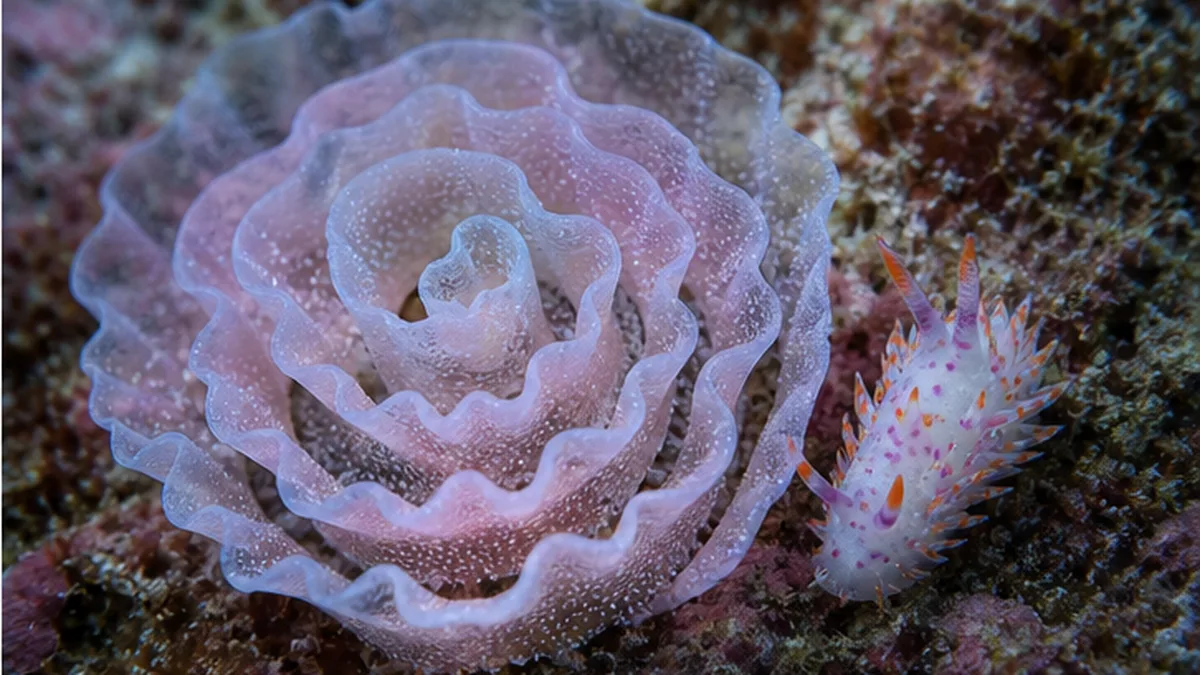
The egg mass is, in most species, a beautiful ribbon wound into a spiral. The animal attaches one end to rock or sponge and rotates its body as it lays. Colour and coiling differ between species, and experienced divers can sometimes identify the parent from the egg mass alone.
What hatches is usually a planktonic veliger larva. Intriguingly, at this stage the animal does have a proper snail shell. It drifts as plankton, disperses on currents, and sheds the shell when it settles somewhere with suitable food and metamorphoses into a sea slug. The evidence of its snail ancestry appears only in the first few weeks of life.
Fussy eaters with startlingly short lives
A defining feature of the Nudibranchia is extreme dietary specialisation. Most species eat only one thing. A given dorid may take a single species of sponge; a given aeolid, a single species of hydroid. That specialisation is inseparable from the mechanism that converts food chemistry into defence: change the food and both the defence and the colour stop working.
The price is that sea slugs are extraordinarily difficult to keep alive in captivity. Even public aquariums struggle, because the sponges and hydroids they eat cannot be supplied reliably. "It was cute, so I took it home" is, in practice, a way of killing the animal.
Their lives are short in any case, ranging by species from under a month to about a year, with most finishing within twelve months. Considering that the elaborate chemical defences and the photosynthetic symbioses are all assembled for a few months to a year of life, the scale of evolution's investment is remarkable.
The typical life cycle of a sea slug
- A shelled veliger larva hatches from a spiral egg mass
- It drifts as plankton and disperses on ocean currents
- It settles where suitable food occurs, metamorphoses and sheds the shell
- It grows on that specific food, accumulating defensive compounds or nematocysts
- As a hermaphrodite it mates and lays an egg mass; most die within a year
Going to find them: season, place and etiquette
Sea slugs offer one of the most accessible pleasures of finding things in the seas around Japan. Unlike whales or migratory fish, anyone with the right gear can encounter new species repeatedly, in the same location. Dives organised purely around hunting for sea slugs are no longer unusual.
Winter to spring is the peak, and temperature is the key
This may be surprising, but the sea slug season is the cold half of the year. Observation records kept by dive operators in Izu indicate that numbers rise sharply from January to March, when the water sits at 14–16°C, and a single dive can turn up dozens of species. Conversely, once the water approaches 20°C they disappear abruptly — a pattern reported again and again.
The likely explanation is that many species time their growth and reproduction to the cold season. In early spring they come up into water as shallow as two metres, which puts them within reach of snorkelling. Sites such as Osezaki in western Izu, where sea slugs are abundant both in the shallow bay and on the open coast, are well known as easy ground for beginners.
How to find them
- Search the food, not the animal: work over sponges, hydroid colonies and bryozoan patches. The slug will be on its food
- Move slowly: spending several minutes on one square metre beats swimming around
- Look for egg masses: a spiral ribbon means the parent is probably close by
- Let your eye adjust: the first one is the hardest. After that they suddenly become visible
- Don't dismiss the shallows: in early spring they occur at 2–5 m, under rocks and in tide pools
Don't touch, don't move, don't take home
Watching sea slugs comes with a minimum set of rules. First, do not touch them. Beyond the risk of being stung by a species storing nematocysts, a sea slug's body surface is protected only by mucus and a thin epithelium; pressing it with a finger damages it. Second, do not move them. Prise one off its feeding ground for a photograph and you have taken away its food. Given how narrow their diets are, an individual relocated elsewhere has no guarantee of surviving.
And third, do not take them home. As described above, keeping one in an environment where its food cannot be reproduced means near-certain starvation. The urge to keep something beautiful close is entirely natural — but with sea slugs, the only version that works is taking home the photograph.
Things you can start doing today
- Never handle one you find in the sea; photograph it from a distance
- Do not prise them off rock or relocate them; many cannot survive away from their feeding ground
- Keep observation records — date, place, water temperature, species. They have real value as citizen science
- Aim for the cold season; 14–16°C is the guide
- If you see a blue sea slug on the beach, leave it alone and warn the people around you
What sea slug research opens up: from drug discovery to climate indicators
These small, vividly coloured molluscs are not only there to be admired. The compounds they concentrate in their tissues, and the way their distributions shift, are becoming an important source of information for us.
A concentrating device for marine natural products
Just as latrunculin A inhibits actin polymerisation, many of the compounds sea slugs accumulate act powerfully on fundamental cellular machinery. Turn that around and they become candidate anticancer agents. Reviews of sea slug-derived marine natural products with antitumour activity continue to be published.
The role sea slugs play here is that of a concentrating device. Harvesting large volumes of sponge from the sea to obtain a target compound carries heavy environmental costs, and yields are low. A sea slug, by contrast, selects one compound and stockpiles it at high concentration in one part of its body. Working out which sea slug stores what, and where, can be a shortcut to promising compounds. Any practical application, of course, depends on synthetic supply — it must never translate into overharvesting wild animals.
The taxonomy is far from finished
Sea slug classification has been shaken up considerably by the spread of DNA analysis. Cryptic species that look identical but are genetically distinct keep turning up, while animals long treated as separate species sometimes prove to be colour variants of one. The seven species described from New Caledonia in 2023 are a textbook case: a species group indistinguishable on morphology alone, separated for the first time using molecular data.
Japanese waters are in the same position. The fact that regional field guides gain dozens of species with each revision shows that we have not yet catalogued the marine life on our own doorstep. There is no shortage of cases in which a photograph taken by a diver, with its accompanying record, triggered the discovery of a new species.
Small indicators of a changing sea
Finally, sea slugs have value as indicators of environmental change. Extreme dietary specialisation means being tightly bound to the distribution of particular sponges and hydroids. Change the water temperature and the food changes; change the food and the cast of sea slugs changes with it. Because they live only about a year, environmental change shows up quickly through the turnover of generations.
The observation records accumulated by dive operators and citizen science projects around the country are, in that light, a valuable dataset. Impressions from the field — "we haven't seen that species this year", "southern species are turning up further north" — become, over the long run, evidence for shifts in species distributions driven by warming. Time spent peering at bare rock in search of small jewels is also time spent building a record of the sea.
Summary of this article
- "Sea slug" is a nickname, not a taxon; the order Nudibranchia alone accounts for around 3,000 described species
- Vivid colour functions as a warning signal, but recent work found distastefulness roughly constant across species while toxicity varied widely
- Defensive compounds are not made in-house but taken from food; Chromodoris species store sponge-derived latrunculin A selectively along the mantle rim
- Aeolids take undischarged nematocysts from jellyfish and hydroids and store them in the cnidosac at the ceras tip; second-hand theft has also been reported
- Some species host zooxanthellae or chloroplasts and photosynthesise; Elysia marginata regrows an entire body from the head after discarding over 80% of its weight
- Watch in the cold season. Not touching, not moving and not taking them home is the minimum condition for seeing them again
References and sources
- Nara Women's University – Press release: extreme autotomy and regeneration discovered in photosynthetic sea slugs (Sayaka Mitoh and Yoichi Yusa, Current Biology 2021)
- Current Biology – Mitoh & Yusa (2021) Extreme autotomy and whole-body regeneration in photosynthetic sea slugs. 31: R233–R234
- Proceedings of the Royal Society B – Winters et al. (2018) Toxicity and taste: unequal chemical defences in a mimicry ring
- Journal of Animal Ecology – Winters et al. (2022) Weapons or deterrents? Nudibranch molluscs use distinct ecological modes of chemical defence against predators
- PLOS ONE – Choose Your Weaponry: Selective Storage of a Single Toxic Compound, Latrunculin A, by Closely Related Nudibranch Molluscs
- Invertebrate Biology – Goodheart & Bely (2017) Sequestration of nematocysts by divergent cnidarian predators: mechanism, function, and evolution
- iScience (PMC) – The highly developed symbiotic system between the solar-powered nudibranch Pteraeolidia semperi and Symbiodiniacean algae
- JAMSTEC BISMaL – Biological Information System for Marine Life: Glaucus atlanticus
- International Coastal Research Center, AORI, University of Tokyo – Account and stranding records of Glaucus atlanticus
- WoRMS – World Register of Marine Species — Nudibranchia
* Listed in order of reliability: government/academic institutions > peer-reviewed papers > specialized organizations > reliable media