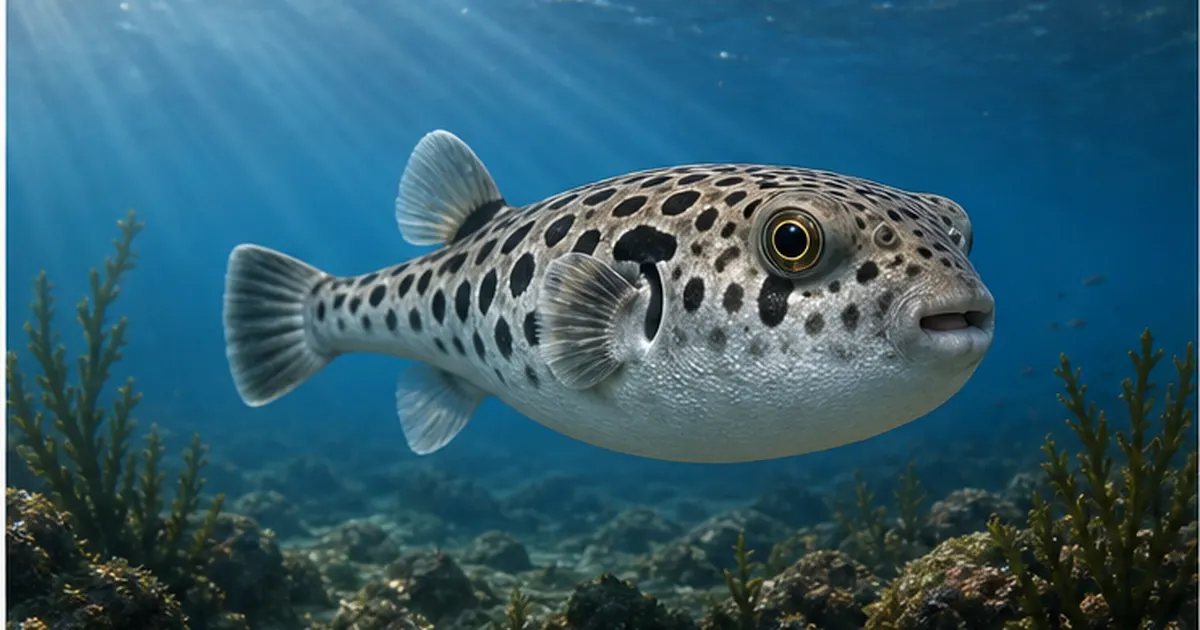
The pufferfish served at Japanese winter tables is the centrepiece of something the world rarely sees: a culture that deliberately eats a deadly poisonous fish. Its toxin, tetrodotoxin (TTX), has an estimated human lethal dose of just 1–2 milligrams. Far less than a sugar cube — less than would fit on the tip of an ear pick — is enough to stop a person breathing.
And yet one thing about this poison is widely misunderstood. Pufferfish do not make their own toxin. Trace it back and you arrive at bacteria living on the seafloor. The toxin they produce travels through the food chain, passing through flatworms, sea snails and starfish, until it accumulates in a pufferfish's liver and ovaries. That is the picture half a century of research has assembled. Fish raised on toxin-free feed, in fact, remain non-toxic.
This article works through the identity of the tetrodotoxin molecule and how it acts, why pufferfish themselves are immune, the research on non-toxic aquaculture, Japan's licensing system and rules on edible parts, and finally a new problem created by rising sea temperatures: hybrid pufferfish. Our sources are primary materials from Japan's Ministry of Health, Labour and Welfare, the Food Safety Commission and university research. We close at the frontier of efforts to turn this deadly poison into a painkiller.
What you will learn
- How powerful tetrodotoxin is, and exactly where and how it stops the nervous system
- That pufferfish do not synthesise the toxin themselves but accumulate it from a bacterial origin via the food chain
- Why a fish full of poison is unharmed by it — the resistance evolution provided
- Why farmed pufferfish are non-toxic, and why their livers still cannot legally be eaten
- The 22 approved species and their edible parts, and the prefecture-by-prefecture licensing system
- The new risk of hybrid pufferfish created by warming seas, and the research turning poison into medicine
What is tetrodotoxin — a lethal dose smaller than an ear pick holds
Tetrodotoxin (TTX) is the small molecule behind pufferfish poison. Its name derives from the scientific name of the pufferfish family, Tetraodontidae ("four teeth"). In 1909 the Japanese pharmaceutical scientist Yoshizumi Tahara extracted a crude crystalline toxin from pufferfish ovaries and gave it this name. Pure crystals were obtained in the 1950s, and the complex three-dimensional structure was determined in 1964 — several Japanese groups and an overseas group reported the structure almost simultaneously, in a race that has become part of the history of natural product chemistry.
The strength of the poison in numbers
According to the "Risk Profile of Natural Toxins" published by Japan's Ministry of Health, Labour and Welfare, the median lethal dose (LD50) of TTX in mice is 8.7 micrograms per kilogram of body weight by intravenous administration and 10 micrograms per kilogram intraperitoneally. The human lethal dose is estimated at 1–2mg in TTX equivalents. Even for a 50kg adult, around 2mg is life-threatening.
You will often see it described as "roughly 1,000 times more toxic than potassium cyanide". That comparison simply lines up figures obtained by different routes of administration in different species, and carries no rigorous meaning. What matters is not the multiple but the property behind it: a minuscule quantity shuts down the working of the nervous system.
| Item | Value | Source / note |
|---|---|---|
| Mouse LD50 (intravenous) | 8.7 µg/kg | MHLW Risk Profile of Natural Toxins |
| Mouse LD50 (intraperitoneal) | 10 µg/kg | Same |
| Estimated human lethal dose | 1–2 mg | As TTX. Varies with body size and condition |
| Threshold for unfitness as food | Above 10 MU per gram of tissue | MU = mouse unit. 10 MU corresponds to about 2.2 µg of TTX |
The mouse unit (MU) as a measuring stick
Pufferfish toxin is quantified not only by chemical analysis but also by a biological unit, the mouse unit (MU). One MU is defined as the amount of toxin that kills a 20g mouse in 30 minutes, and any pufferfish tissue exceeding 10 MU per gram is judged unfit for consumption. Ten MU converts to roughly 2.2 micrograms of TTX by weight.
Toxicity is graded by strength: 10–100 MU per gram is classed as weakly toxic, 100–1,000 MU as strongly toxic, and above 1,000 MU as extremely toxic. In the ovaries and livers of tiger pufferfish, individuals in the extremely toxic class are not unusual.

Where the toxin sits, and how much of it
Within a single fish, toxin concentration differs enormously between parts. Toxicity is generally highest in the ovaries and liver, followed by the skin and intestines. In most edible species almost no toxin is detected in the muscle. This uneven distribution is precisely what underpins the regulatory approach of defining edible parts in fine detail.
More troublesome still, toxicity fluctuates widely with season and with the individual. Ovarian toxicity tends to rise as spawning approaches, and individuals from the same fishing ground and the same species vary. That is why "I ate the same fish I caught here last year and was fine" guarantees nothing about this year. Toxicity cannot be judged by sight, by smell or by taste.
The basics
- TTX is not broken down by cooking. Boiling or grilling leaves the toxin intact
- It dissolves poorly in water and is relatively stable in acid. No home preparation can "remove the poison"
- The amount of toxin varies greatly by individual, season and body part, and cannot be judged from appearance
Why it works — plugging the electrical doorway of the nerve
The action of tetrodotoxin is startlingly simple, and precise. It lodges itself exactly into the mouth of a pore called the voltage-gated sodium channel, found in the membranes of nerve cells and skeletal muscle, and blocks the passage of sodium ions. That alone is enough to stop the body moving.
Nerves signal by letting sodium flood in
When a nerve transmits a signal, sodium channels in the cell membrane open for an instant and sodium ions outside the cell rush in. That influx reverses the electrical potential across the membrane, and the change propagates from one point to the next. This is the action potential, and it is what allows us to move a finger or draw a breath.
TTX binds to the outer, extracellular mouth of the channel. It neither destroys the channel nor enters the cell; it simply plugs the opening. With sodium unable to enter, no action potential arises and nerve excitation cannot travel. Sensation fades, muscles stop responding, and eventually the muscles that drive breathing stop too.

Some nerves stop, others do not
Sodium channels come in several subtypes, and TTX affects them differently. Nav1.4, abundant in skeletal muscle, and Nav1.7, abundant in peripheral sensory nerves, are highly sensitive to TTX; Nav1.5 in cardiac muscle and Nav1.8 and Nav1.9 involved in pain sensation are known as "TTX-resistant" types. The fact that consciousness can persist to the end in pufferfish poisoning — and the reason a painkiller application is plausible, as discussed later — both stem from this property of selecting which targets it acts on.
Poisoning advances through four stages
Ministry of Health materials organise the symptoms of pufferfish poisoning into the following four stages. Symptoms can appear as soon as 20 minutes after ingestion, and usually within three hours.
- Stage 1: mild numbness of the lips and tip of the tongue, spreading to the fingertips. Walking becomes unsteady
- Stage 2: incomplete motor paralysis; shortly after vomiting, movement becomes impossible
- Stage 3: complete paralysis of the whole body, with skeletal muscle going slack. Blood pressure falls and speech becomes difficult
- Stage 4: loss of consciousness and respiratory arrest
Fully conscious, yet unable to move
What is often described in pufferfish poisoning is the terrifying state of being fully conscious while unable to move. This is explained by TTX's difficulty in reaching the central nervous system, acting mainly on peripheral nerves and muscle. Even with the whole body paralysed, the patient hears the voices around them, yet can neither answer nor gesture. In the past there were even cases mistaken for death.
Seen the other way round, because the brain itself is not destroyed, oxygen keeps reaching it as long as breathing is supported mechanically. TTX is gradually excreted from the body, so with time nerve function returns. That is why treatment of pufferfish poisoning concentrates not on "removing the poison" but on "keeping the patient alive until the poison clears".
If you feel numbness, call emergency services without hesitating
- There is no antidote to TTX. Treatment centres on supportive care such as artificial ventilation
- If breathing is supported mechanically through several hours to about 24 hours, many patients recover without lasting damage
- In other words, how quickly you reach medical care decides the outcome. Do not wait and see
- If you feel numbness in the mouth or fingertips, dizziness or nausea after eating pufferfish, call for an ambulance immediately
Pufferfish do not make the poison — the food chain delivers it
For a long time it was assumed that pufferfish synthesised the toxin inside their own bodies. A series of studies, led largely from Japan, overturned that assumption. Today the established understanding is that TTX is of marine bacterial origin and that pufferfish take it in through their food.
The proof: raise them on clean feed and they stay clean
The decisive evidence was a simple experiment. Pufferfish reared artificially on feed containing no toxin remained non-toxic as they grew. Conversely, when TTX was administered orally to those non-toxic individuals, toxin accumulated — chiefly in the liver — and they became toxic. If pufferfish could produce the poison themselves, merely changing the feed could not have made them harmless.
As the source of the toxin, marine bacteria of genera such as Vibrio and Pseudomonas have been reported to produce TTX and its analogues. The bacterial toxin is taken up by plankton and benthic organisms, passes through flatworms, sea snails and starfish, and is concentrated in the bodies of the pufferfish that eat them. That is the food-chain scenario of toxification.

Pufferfish are not the only ones carrying it
That TTX is not exclusive to pufferfish is clear from the roster of organisms that contain it. In the sea and on land, creatures from utterly separate lineages carry the same compound. What they share is that none of them necessarily makes it themselves.
| Organism | Group | Notes |
|---|---|---|
| Tiger pufferfish, vermiculated pufferfish and others | Fish of the family Tetraodontidae | Many species accumulate high concentrations in liver and ovaries |
| Blue-ringed octopus | Cephalopod (octopus) | Carries TTX in its salivary glands; a bite is dangerous |
| Toxic goby (Yongeichthys criniger) | Fish of the family Gobiidae | Found around Japan's southwestern islands. Must never be eaten |
| Trumpet snails and other gastropods | Gastropods | Thought to derive it from starfish prey |
| Newts | Amphibians | TTX-bearing species exist in freshwater and on land too |
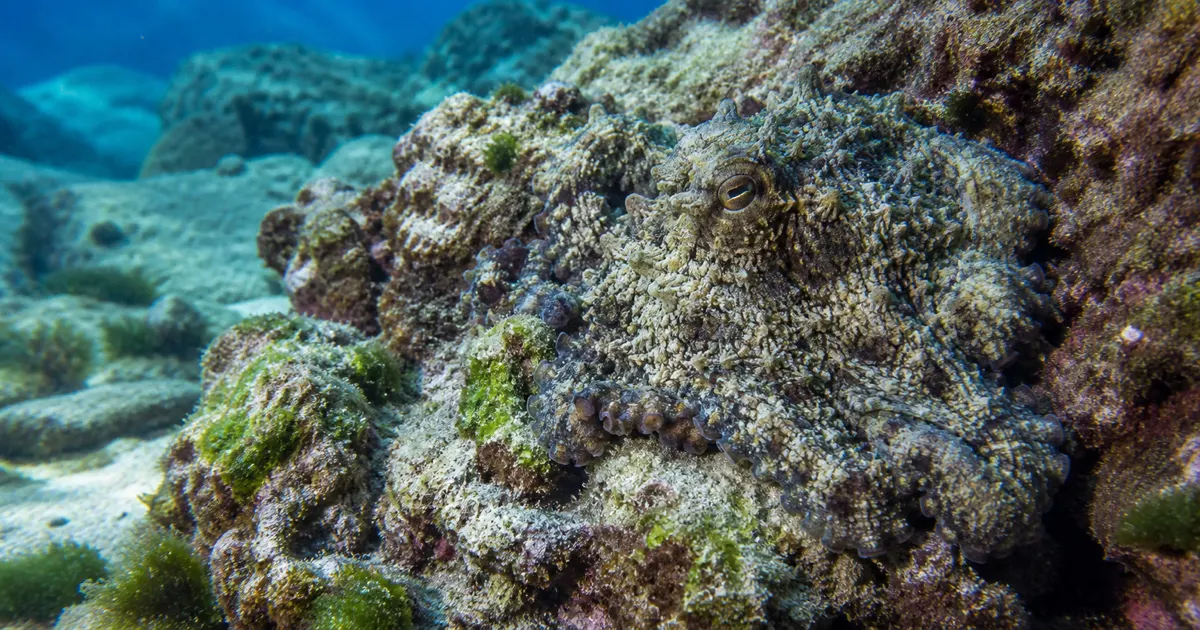
The blue-ringed octopus, for instance, small and beautiful as it looks, carries TTX in its salivary glands, and poisonings from its bite have been reported. How skilfully octopuses have adapted to their environments is explored in the remarkable secrets of octopus mimicry and intelligence. Poison, too, is one form such adaptation can take.
Much about the toxin remains unexplained
The food-chain account does not, however, explain everything. How TTX taken into a pufferfish is absorbed, transported, selectively stored in the liver and ovaries, and excreted — much of that molecular-level pathway remains unknown. Which prey organisms are the principal suppliers may also differ by sea area and by season.
When and how the toxin begins to build up
Pufferfish carry no toxin at birth. From the juvenile stage they take it in little by little through their food, storing it in the liver and elsewhere as they grow. Because intake continues, toxin keeps accumulating, so even within a species toxicity differs according to the feeding environment of the habitat. The stark difference between wild and farmed tiger pufferfish is nothing other than a difference in this "dietary history".
Pufferfish are also unusual in being able to retain ingested TTX almost without breaking it down. A compound that is foreign matter to most animals is kept intact, kept from leaking, and held for long periods in specific organs. Only with that capability can trace amounts of toxin from food accumulate to a level sufficient for defence. Toxification is not passive accumulation but an active phenomenon supported by the body's machinery.
Why the pufferfish itself is unharmed — resistance as an evolutionary answer
Watching a pufferfish swim calmly with a deadly poison in its liver raises an obvious question: why do its own nerves not stop? The answer is that pufferfish have evolved a body the poison cannot act on.
The sodium channel's keyhole has been altered
TTX can bind to the mouth of the sodium channel because the channel has a binding site shaped to fit it exactly. In the pufferfish sodium channel, some of the amino acids forming that binding site have been substituted, and TTX is reported to fit poorly as a result. Change the shape of a keyhole and no key, however finely made, will turn. Similar resistance has been found in newts that carry TTX and in some predators of pufferfish.
What is striking is that this mutation has arisen independently in both the poison-bearing side and the poison-eating side. Toxic organisms needed to avoid self-poisoning; predators needed to eat toxic prey. Each arrived at the same solution of remodelling the keyhole. In evolutionary biology this is called convergent evolution.

Proteins that carry the toxin safely
Resistance alone does not explain how the toxin is neatly gathered into the liver and ovaries. Proteins that bind TTX and transport it have been reported in pufferfish blood, and they are thought to provide a mechanism for holding the toxin in a harmless form while delivering it to particular organs. In other words, the fish deliberately redistributes the toxin it takes from its food.
What is the poison actually for?
For a pufferfish, the primary meaning of the toxin is plainly defence against predators. A predator that once takes a pufferfish into its mouth and suffers for it will avoid that shape thereafter. Combined with the ability to inflate, the pufferfish displays a double signboard: hard to swallow, and dangerous if you do.
Some research also points to the possibility that TTX contained in the eggs plays a role in reproductive behaviour — the view that the toxin acts as a chemical signal. Debate continues among researchers on this point, however, and it cannot be called established. The ecological meaning of the toxin is still under examination.
Experiments have also confirmed that toxic individuals are more readily avoided by predators. Predators detect TTX with sensation in the mouth and spit the prey out before swallowing. For the pufferfish, then, the toxin is not a "weapon of revenge" that works after being eaten but a warning device that makes the attacker think again the moment it enters the mouth.
Inflating is an extension of the same idea. Puff the body into a sphere to make swallowing difficult, and if attacked anyway, the toxin does its work. With this two-layered defence, the pufferfish has held a secure position in coastal ecosystems despite being no great swimmer.
A fish that has poison put into it
The pufferfish is not the manufacturer of the poison but, so to speak, its warehouse. Chemicals produced by ocean bacteria and carried up by small creatures are received by a body uniquely able to handle them safely, and repurposed for defence. The story of pufferfish toxin is not the story of one fish but of an entire marine food web.
Why farmed pufferfish are non-toxic — and why the liver still cannot be eaten
The discovery that "pufferfish become toxic from their food" leads straight to a practical question. If you raise them on toxin-free feed, could you produce non-toxic pufferfish? Verification along exactly those lines has in fact been carried out.
About 5,000 fish examined, no toxicity detected
A research group at Nagasaki University collected about 5,000 tiger pufferfish farmed in net enclosures across seven major producing prefectures — Nagasaki, Saga, Kumamoto, Kagoshima, Ehime, Wakayama and Shizuoka — and tested them for toxicity. No toxicity was detected in any individual. The result shows that if fish are raised on formulated feed and contact with toxic prey organisms is cut off, tiger pufferfish can be produced that are non-toxic right down to the liver.
Later work reported that non-toxic individuals can also be obtained in land-based recirculating tanks and in aquaculture using artificial seawater, and knowledge has accumulated on how to manage the farming environment to prevent toxification. The scientific outlook for detoxified production is, in itself, fairly well established.

"Farmed, so the liver is safe" does not follow
Here is the crucial point. Even though detoxified production is possible in research terms, under Japan's current system the sale and serving of pufferfish liver is not permitted even for farmed fish. There are several reasons.
- The molecular mechanism by which pufferfish accumulate toxin is not fully understood, so conditions guaranteeing non-toxicity cannot be assured with certainty
- Small prey organisms may move in and out through the netting of a pen, and closing the environment completely is far from easy
- If farmed fish become mixed with wild ones in distribution, consumers cannot tell them apart
- Individual variation in toxicity is inherently large, making it difficult to guarantee the safety of the whole from a small number of tests
In the past local governments pushed for permission to serve the liver of farmed tiger pufferfish, but the national government has declined on the grounds that safety confirmation is insufficient. Between "it was non-toxic in the laboratory" and "every individual reaching the market is non-toxic" lies a very wide gap.
What non-toxic pufferfish research is aiming at
Behind the continuing research lies value as a resource. The liver of the tiger pufferfish is rich in lipids and highly regarded as an ingredient. Being able to use safely a part that is currently discarded would directly improve yields for the aquaculture industry. Nagasaki University has also conducted research examining the use of non-toxic farmed tiger pufferfish liver as food, along with its nutritional and functional properties.
What is needed to change the rules, however, is not proof that "it can be made non-toxic" but a system that can guarantee that every individual reaching the market is without exception non-toxic. Management standards for the rearing environment, testing methods for each shipment lot, distribution controls preventing confusion with wild fish — safety must be underwritten not by science alone but by systems. The distance between research results and regulatory change is also an expression of caution proportionate to the size of the risk.
Farmed or wild, never eat the liver
- The claim that "it is farmed, so the liver is fine" is backed neither by law nor by scientific verification
- Liver and ovaries are parts classed as extremely toxic in many species. Most past fatalities involved eating them
- Asking a restaurant for the liver is itself asking the establishment to break the law
Japan's safety management — 22 species, edible parts, and licensed handlers
Japan has kept its tables safe while routinely eating a deadly poisonous fish because of a carefully designed safety regime. Its framework is a two-tier structure: the state defines which species and parts may be eaten, and prefectures restrict who may prepare them.
The 1983 notice that defined the "22 species"
The 1983 notice "On Ensuring the Hygiene of Pufferfish" (Kannyu No. 59) set out, in table form, the species and parts of pufferfish recognised as posing no risk to human health when properly processed. Twenty-two species were approved as food. Alongside tiger pufferfish, striped pufferfish, purple pufferfish, vermiculated pufferfish and yellowfin pufferfish of the family Tetraodontidae, the list includes porcupinefish of the family Diodontidae such as the long-spine porcupinefish, spotted burrfish and porcupinefish.
What matters is that the permitted parts differ by species. In many species the muscle is edible; skin and testes are permitted for some species and not others; liver and ovaries are prohibited in almost every species. Handling can even change for the same species depending on the sea area where it was caught. The table has been revised repeatedly, and the latest content should be checked in materials published by local governments.
| Part | General handling | Notes |
|---|---|---|
| Muscle (flesh) | Edible in many species | The part used for sashimi, hotpot and deep-frying |
| Skin | Permitted or not depending on species | Some species distinguish outer skin from inner skin |
| Testes (milt) | Permitted or not depending on species | Distinguishing them from ovaries demands high skill |
| Liver | Prohibited in principle for all species | Many individuals fall into the extremely toxic class |
| Ovaries | Prohibited in principle for all species | One of the parts most likely to reach the highest toxicity |
| Eyes, gills, viscera | Prohibited | Must be reliably separated and discarded during processing |

Both the name and the standard differ by prefecture
The qualification to prepare pufferfish is not a national licence but a system based on prefectural ordinances. Even the name differs: Yamaguchi Prefecture has "pufferfish processors", Tokyo has "pufferfish chefs", Osaka has "registered pufferfish handlers". Examination content, the difficulty of the practical test, and whether qualifications from other prefectures are recognised all vary between authorities.
This regional variation is recognised as a problem now that distribution is nationwide. In 2019 the Ministry of Health, Labour and Welfare issued a notice asking each prefecture to review its ordinances, setting a direction towards nationally levelled standards for the knowledge and skills of pufferfish handlers.
What the practical examination tests
In Hyogo Prefecture's practical examination, for instance, candidates must not only process a tiger pufferfish but also identify the organs. Can they correctly identify brain, eyeballs, gills and liver, and reliably separate the toxic parts? The ability to tell instantly whether the organ in front of them is a testis or an ovary is a skill that bears directly on human life.
Why pufferfish eaten at a restaurant is safe
From the consumer's side, safety with pufferfish is secured almost entirely by choosing where to eat. Most local authorities require restaurants and retailers handling pufferfish to notify or obtain permission and to employ qualified staff, and systems are in place allowing distribution only in "dressed" form with the toxic parts removed. Not a few authorities specify in their ordinances even the records of processing and the method of disposing of toxic parts.
At the same time, pufferfish now reaches households in many forms: processed products, mail order, hometown-tax gift returns. In principle the toxic parts have been removed by the time it arrives, but as long as the chance of an individual obtaining a whole fish is not zero, the principle of "do not prepare it yourself" does not change. The safety of pufferfish rests on limiting who holds the knife.
What the system protects
- Species identification: mistake a similar-looking species and the premise for edible parts collapses
- Separation of parts: not even a small remnant or contamination via utensils is acceptable
- Disposal management of toxic parts: the system covers what happens after separation
- Restrictions on whole-fish distribution: keeping toxic parts out of amateur hands
Poisonings still happen — and warming seas are breeding "hybrid pufferfish"
With the system in place, accidents have fallen sharply. There were years when close to 100 people died nationwide, but as local ordinances were developed, recent pufferfish poisoning has settled at around 10 incidents and 10 to 15 patients a year. Even so, it has not reached zero.
What twelve years of statistics tell us
| Year | Incidents | Patients | Deaths |
|---|---|---|---|
| 2014 | 27 | 33 | 1 |
| 2015 | 29 | 46 | 1 |
| 2016 | 17 | 31 | 0 |
| 2017 | 19 | 22 | 0 |
| 2018 | 14 | 19 | 0 |
| 2019 | 15 | 18 | 1 |
| 2020 | 20 | 26 | 1 |
| 2021 | 13 | 19 | 0 |
| 2022 | 10 | 11 | 1 |
| 2023 | 9 | 10 | 0 |
| 2024 | 10 | 10 | 0 |
| 2025 | 10 | 15 | 0 |
Over the ten years from 2014 to 2023 the fatality rate of pufferfish poisoning was 2.1%, an outstandingly high figure among food poisonings. And the causes converge on much the same points.
- Amateur preparation of fish caught by the eater (the most common)
- Confusing toxic and non-toxic species, or similar species with one another
- Illegal serving of liver in response to a customer's request
- Whole pufferfish reaching the hands of unqualified people
In other words, almost all poisoning today occurs outside the system. Accidents involving fish handled by licensed processors through regular channels are extremely rare.
Rising sea temperatures changed distribution and interbreeding
To this a new kind of risk has been added: hybrid pufferfish. Yellowfin pufferfish, originally abundant on the Sea of Japan side, extended their range northward as sea temperatures rose, crossed the Tsugaru Strait and advanced to the Pacific side. There their spawning season overlapped with that of the vermiculated pufferfish living there, and interbreeding began. Surveys by Japan's National Fisheries University confirmed that from around 2012–2013 hybrids began to be landed in large numbers at once along the coasts of eastern Japan. One catch survey on the Pacific side reported that more than 20% of about 1,250 fish were hybrids.
The northward shift of fish distribution is hardly confined to pufferfish. It is under way simultaneously in yellowtail, Spanish mackerel, Pacific saury and other species that have long supported Japanese tables (see fish distributions are moving north and warming seas and vanishing fish). What is distinctive about pufferfish is that the shift translated directly into a food safety problem.

The problem of a fish whose toxic parts are unknown
What makes hybrids so difficult is that the rules on edible parts cannot be applied. The national table defines parts species by species, but where the two parent species have different edible parts, almost nothing is known about what applies to their hybrid. Distinguishing them by appearance is difficult, and specialists point out that there is no reliable criterion for doing so. In practice, workers sort by markings and other visual clues and have no choice but to discard anything doubtful.
Reliable identification requires DNA analysis. Examining the genotype of the mitochondrial genome reveals which species the mother belonged to. The Ministry of Health, Labour and Welfare surveys hybrid occurrence nationwide on a regular basis and provides information to pufferfish handlers through the prefectures. A planetary-scale change — global warming — has reached all the way to the hands holding the knife. Hybrid pufferfish are a concrete example.
There is more than one hybrid pairing
The problem is not limited to the vermiculated–yellowfin combination. In Tokyo Bay, individuals believed to be hybrids of tiger pufferfish and purple pufferfish have been observed, and in Miyazaki, Kumamoto and elsewhere there are reports of subtropical species such as the pufferfish Lagocephalus lunaris that did not originally occur in those waters. As the sea warms, the ranges of species that never previously overlapped are coming together, and new combinations keep appearing.
From a food hygiene standpoint this is a situation the system never anticipated. The national table is designed to "define parts species by species", and its central premise was that species can be reliably identified. The rise in hybrids shakes that premise itself. Hence the need for continuous monitoring of hybrid occurrence and for getting that information to handlers on the ground.
Principles for anglers
- Never fillet a pufferfish you caught yourself, never give it away, never judge it on the spot
- Even if the markings look familiar, it may be a hybrid. Identification by appearance is hard even for specialists
- If you want it prepared, take it to an establishment with a qualified handler
- "People have always eaten it here" is not evidence. Distributions and species composition keep changing
Turning poison into medicine — the frontier of tetrodotoxin research
The ability to stop nerve signals precisely becomes a powerful tool when the purpose is changed, because pain too is a signal carried by nerves. Research into using TTX as a painkiller has in fact advanced as far as clinical trials.
A TTX-derived painkiller that reached clinical trials
The leading example is Halneuron, developed by Canada's Wex Pharmaceuticals and now being advanced by the US company Dogwood Therapeutics. It targets chemotherapy-induced neuropathic pain (CINP) that persists as a side effect of cancer treatment, and a Phase 2b trial involving 222 patients has been conducted. Positioned as a non-opioid analgesic, it has received fast track designation from the US FDA. Trial information is published on ClinicalTrials.gov under identifier NCT05359133.
Numbness and pain that linger long after cancer treatment respond poorly to existing analgesics and severely damage patients' quality of life. TTX's property of acting selectively on particular sodium channel subtypes carries real meaning in this field. It remains, however, a substance whose therapeutic and toxic ranges lie close together, so dose design and safety assessment are the central focus of development.

TTX as a standard tool of neuroscience
Long before any pharmaceutical application, TTX has been in daily use in basic research. Because it can selectively block sodium channels alone, it has become the standard reagent for confirming whether a given neural activity depends on sodium channels. The very vocabulary of classifying channel subtypes as "TTX-sensitive" or "TTX-resistant" is a mark this poison has left on neuroscience.
The practical problem of supplying the toxin
Total synthesis of TTX has been achieved, but the route is long and unsuited to bulk supply. Research-grade material is often purified from wild pufferfish, and culturing the producing bacteria has also been explored. How to secure a stable supply of compounds made by marine organisms is a challenge common to bringing marine natural products into medicine.
The ocean is also a treasure house for drug discovery
TTX is not a special case. Like the analgesic derived from cone snail venom, powerful bioactive substances held by marine organisms have repeatedly served as starting points for medicines. Molecules honed by living things in order to survive have high selectivity for their targets and structures that artificial design would struggle to reach. The diversity of marine life is, directly, a diversity of compounds.
If so, protecting marine ecosystems is also protecting the raw materials of future medicine. An organism that has not even been named yet may hold the key to the next analgesic or antibiotic. The research history of pufferfish toxin teaches us that nature, kept at arm's length as "dangerous", has all along been a teacher of precise chemistry.
Summary of this article
- TTX is a deadly poison with an estimated human lethal dose of 1–2mg; it blocks the mouth of the sodium channel and causes paralysis. There is no antidote, and treatment is supportive care sustaining respiration
- Pufferfish do not make the toxin. Toxin of marine bacterial origin travels through the food chain and accumulates in their bodies. Raised on toxin-free feed, they remain non-toxic
- Pufferfish themselves have an altered sodium channel binding site, having evolved a body the poison cannot act on
- No toxicity was detected in about 5,000 farmed fish, but because the accumulation mechanism is unexplained, eating the liver remains prohibited
- Only 22 species and their designated parts may be eaten. Handler qualification is a prefectural system, with national levelling promoted from 2019
- Poisonings have fallen to around 10 a year, but the fatality rate of about 2.1% is high, and most cases stem from amateur preparation
- Warming seas pushed yellowfin pufferfish north to interbreed with vermiculated pufferfish; hybrids of unknown edible parts are a new risk
- TTX has advanced to Phase 2b trials as the analgesic Halneuron and is also used as a standard reagent in neuroscience
References and sources
- Ministry of Health, Labour and Welfare, Japan – Risk Profile of Natural Toxins: Fish: Pufferfish toxin (toxicity, symptoms, the 10 MU/g threshold)
- Ministry of Health, Labour and Welfare, Japan – Risk Profile of Natural Toxins (overview of natural toxins in fish, shellfish and other organisms)
- Osaka Prefecture – Know and prevent pufferfish poisoning (annual national statistics on pufferfish poisoning)
- Osaka Prefecture – Which pufferfish species and parts may be eaten (the 22 species and their edible parts)
- Tokyo Metropolitan Government, Bureau of Public Health – The dangers of amateur pufferfish cookery
- A-PLAT, Climate Change Adaptation Information Platform (National Institute for Environmental Studies) – Pufferfish hybridisation caused by rising sea temperatures, and monitoring to prevent poisoning from misidentification
- Food Safety Commission of Japan – Hazard summary sheet (pufferfish toxin): toxicity, producing organisms and accumulation mechanisms
- Pharmaceutical Society of Japan – Tetrodotoxin (mechanism of action and sodium channel blockade)
- National Museum of Nature and Science, Tokyo – Pufferfish toxin (commentary in the fish research database)
- ClinicalTrials.gov (US National Library of Medicine) – NCT05359133: Phase 2b trial of tetrodotoxin for chemotherapy-induced neuropathic pain
* Ordered by reliability: government and academic institutions > peer-reviewed papers > specialist organisations > trusted media