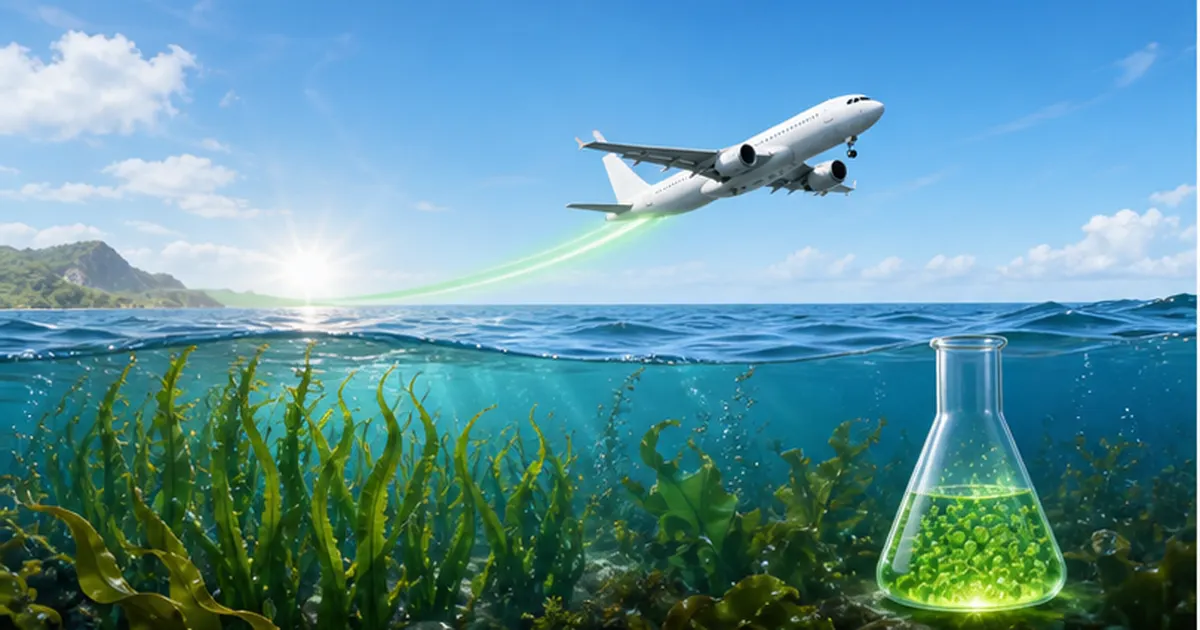
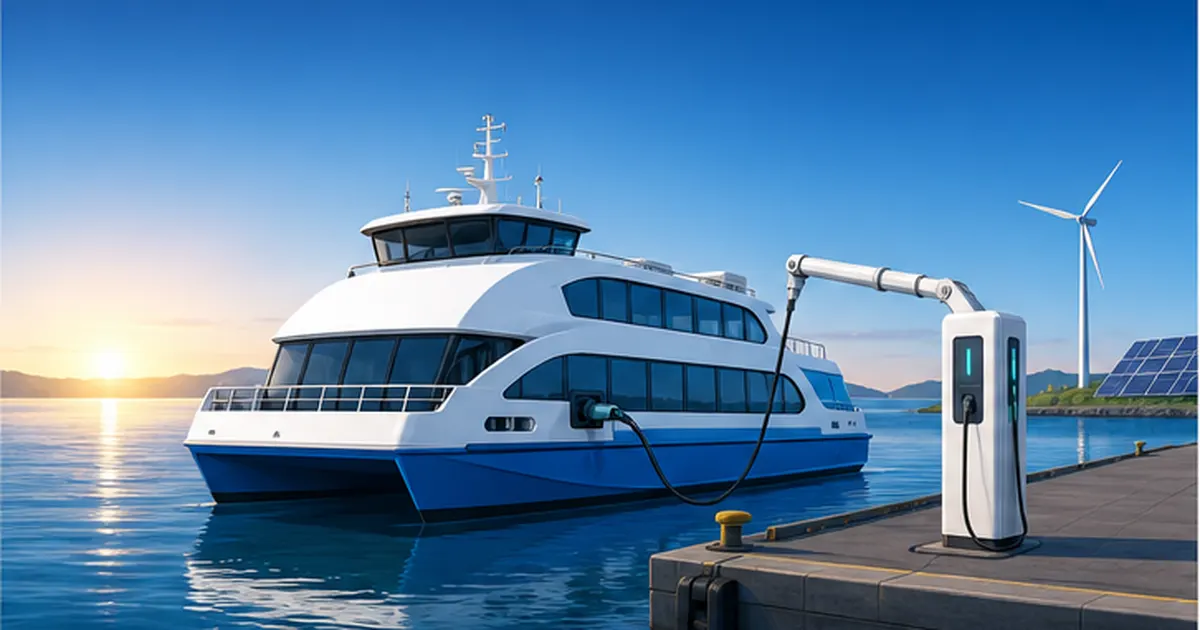
Every time a boat heads out to sea, the cost of filling the fuel tank eats into the operation's margins — a complaint heard at fishing ports across Japan. Crude oil price swings hit fishing businesses directly, and fuel has become the single hardest cost to manage. At the same time, fishing boats running on diesel engines are an emissions source that cannot be ignored on the path to a decarbonized society.
These two challenges — the urgent cost pressure of fuel efficiency and the environmental demand for decarbonization — overlap, and that is where hybrid boats, electric boats, and fuel-efficient navigation technologies have taken root. From a rapid-charging electric fishing boat demonstration held in Tsushima, Nagasaki Prefecture in 2011, to hybrid propulsion systems developed by marine equipment makers, to public support programs run by Japan's Fisheries Agency — quiet progress is being made on the ground.
This article first checks the real numbers behind fishing boat fuel consumption and CO2 emissions, then organizes, using primary sources, how hybrid boats work, real-world electrification demonstrations, fuel-efficient navigation technology, public subsidy programs that respond to fuel price spikes, and the next stage: hydrogen fuel cells. We look at where this field stands today from two angles at once — fishing as a livelihood, and the ocean as an environment to protect.
What you'll learn in this article
- How large fishing-boat fuel consumption and CO2 emissions really are, nationwide
- How hybrid and electric fishing boats work, and Japan's history of demonstration projects
- How public support programs help fishers cope with fuel price spikes
- Technologies behind fuel-efficient navigation, such as satellite fishing-ground search and group operations
- How marine equipment makers and local regions are advancing small-boat electrification
- What comes next for fishing-boat decarbonization, including hydrogen fuel cells
Fuel Price Spikes Squeeze Fishing — Why Decarbonization Matters Now
Fishing methods that burn more fuel — offshore fishing and purse-seine fishing among them — are hit hardest when crude oil prices swing. Japan's Fisheries Agency has repeatedly documented how price spikes in fuel and other fishing inputs affect business operations, noting that fuel costs are one of the most volatile and hardest-to-manage items in a fishing operation's budget. Fishing is a structurally high-risk industry: on top of the natural uncertainty of weather and catch volume, it must also absorb cost swings driven by an external factor — fuel prices.
At the same time, as long as fishing boats run on diesel engines, they remain a continuous source of CO2. In its policy on carbon neutrality, the Fisheries Agency states that it will promote more efficient fishing-ground search via satellite, group operations, and adoption of energy-saving equipment to cut fuel use, while also advancing research into hybrid battery-engine propulsion and R&D on hydrogen fuel cells for small fishing boats. Within Japan's national 2050 carbon-neutrality target, fisheries is one of the sectors expected to cut emissions with no exceptions.
"Cost" and "Environment" Point the Same Way
What matters here is that fuel efficiency — an urgent cost concern for fishers — and decarbonization — a social demand — point in the same direction: reducing the sheer amount of fuel used. That is why hybridization, electrification, and fuel-efficient navigation are increasingly framed not as "environmental sacrifice" but as "investment to protect the business." Equipment investment carries upfront costs, so adoption will take time, but given how often fuel-price swings shake up operations, interest in technology that structurally cuts fuel consumption is likely to keep growing.
This fuel-cost burden is also something younger people considering a career in fishing cannot ignore. As the workforce ages and shrinks, it becomes harder to commit to an industry whose future is hard to see. The structure of fuel costs is not unrelated to the separate challenge of a shrinking pool of successors in fishing.
Unlike maintenance costs for gear or hull, fuel is a cost item that fishers themselves have little room to adjust. Turning off the engine stops fuel use, but it also stops the operation itself. That is exactly why both technology that structurally cuts fuel use, and programs that soften the pain of price swings, are indispensable safeguards for fishing businesses.
The Double Uncertainty Fishing Operators Face
Fishing operators face two risks of a different nature at the same time: the natural uncertainty of catch volume, and the market-driven uncertainty of fuel prices. Catch volume can be managed to some degree through resource management and fishing-method adjustments, but fuel prices are swayed by international conditions and cannot be fully addressed through individual effort alone. This is precisely the structural reason both public fuel-price support programs and technology investment to cut fuel use are needed — as discussed later in this article.
Three Technology Areas Covered in This Article
- Hybrid fishing boats: combine engine and battery to improve fuel efficiency
- Electric fishing boats: run on battery and motor alone, with zero CO2 emissions
- Fuel-efficient navigation: improve operations themselves, through satellite fishing-ground search, group operations, and more
The Real Numbers Behind Fishing-Boat Fuel Use and CO2
Based on a fishery economic survey, Japan's Fisheries Research and Education Agency (formerly the Fisheries Research Agency) estimates the country's fishing fleet consumes roughly 2.12 million kiloliters of fuel per year. Fishing boats are numerous, and while individual small boats use relatively little fuel, the industry's ship types and fishing methods are so diverse that even estimating the overall picture requires specialized calculation. Fuel consumption varies widely by fishing method, since boat size, engine output, and cruising distance differ greatly between them.
According to a report compiled by Japan's Ministry of Economy, Trade and Industry, the agriculture, forestry and fisheries sector as a whole emitted 47.9 million tons of CO2 in fiscal 2022 — 4.2% of Japan's total emissions. This figure includes greenhouse gas houses and agricultural machinery, but fishing-boat fuel use accounts for part of it as well. How much this sector alone can cut emissions depends on how quickly new technology is adopted. The agriculture, forestry and fisheries sector's share of total emissions is smaller than that of industry or energy, but because it performs the irreplaceable function of producing food, what's needed is not simply cutting output, but improving technology so the same catch can be achieved with less fuel.
Which Fishing Methods Use More Fuel, and Which Use Less
Even within "fishing," fuel consumption differs greatly between methods that cruise long distances offshore and methods like coastal set-net fishing with short cruising distances. Generally, methods that cruise long distances offshore at high speed consume the most fuel in absolute terms, and tend to see the biggest benefit from hybridization and fuel-efficient navigation technology. Conversely, small coastal boats with short cruising distances and lower power output are considered the segment most likely to benefit from electrification, discussed later in this article.
Three Approaches to Cutting Fuel Use
Approaches to reducing fishing-boat fuel consumption fall broadly into three categories: changing the power source itself through "hybridization and electrification"; reducing the distance or time traveled on the same power through "fuel-efficient navigation"; and "operational efficiency" measures such as routine maintenance and reducing hull drag. The following chapters look at real-world efforts, focusing especially on hybridization/electrification and fuel-efficient navigation.

A Challenge Shared Across Shipping, Not Just Fishing
Cutting fuel use and CO2 emissions isn't a challenge unique to fishing boats. The shipping industry as a whole, including cargo and passenger vessels, is pursuing fuel efficiency and alternative fuels amid tightening emissions regulations from the International Maritime Organization (IMO). Fishing-boat decarbonization can be understood as fisheries' own contribution within this broader shipping-industry trend.
How Hybrid Fishing Boats Work — Combining Engine and Battery
Hybrid ship propulsion systems fall broadly into two types. In the "series" type, the engine drives a generator that produces electricity, which is stored in a battery and used to power a motor for propulsion. In the "parallel" type, the engine directly drives the propeller, with the motor assisting output at startup and low speeds. Both types share the advantage of absorbing fuel-consumption swings better than a conventional engine-only vessel.
| System | How It Works | Characteristics |
|---|---|---|
| Series type | Engine generates electricity, stored in a battery and used to drive the motor | Enables zero-emission, motor-only operation in harbors and similar areas |
| Parallel type | Engine drives the propeller directly, with the motor assisting output | Effective at improving fuel efficiency at startup and low speed |
What the Battery Actually Does
The biggest advantage of adding a battery is its ability to absorb the uneven load placed on the engine by changing weather and sea conditions. In harbors or areas where little propulsive force is needed, the boat can run on the motor alone, enabling zero-emission operation. Marine equipment makers are advancing R&D in this area as well — Kawasaki Heavy Industries, for instance, develops hybrid/electric propulsion systems for ships.
See this systemKawasaki Heavy Industries: Hybrid/Electric Propulsion SystemsA page introducing hybrid and electric propulsion systems under development in the marine equipment field🔗 khi.co.jpElectrification Is Also Advancing in the Pleasure Boat World
In 2024, Yanmar announced the commercialization of "YF12e," a hybrid system for pleasure boats. Fishing boats and pleasure boats serve different purposes, but they share much of the same underlying hybrid-propulsion technology for small vessels, and this kind of private-sector R&D is expected to feed into fishing-boat applications as well. The pleasure boat market has different price and performance expectations than fishing, so new technology tends to be deployed there first — and the control and battery-management know-how developed in that market is expected to migrate to fishing boats over time.
See this technologyYanmar: Developing the YF12e Hybrid System for Pleasure BoatsA technical explanation of the hybrid system for pleasure boats commercialized in 2024🔗 yanmar.comWhy Hybrid Is Called a "Bridge Technology"
Full electrification still faces a major hurdle discussed later: building out charging infrastructure. Hybridization, by contrast, keeps the engine while improving fuel efficiency, so it can be adopted without dramatically changing how an existing boat is used. As the industry moves toward electric and hydrogen fuel cell fishing boats over time, hybridization is positioned as a practical "bridge technology."

Which System to Choose Depends on the Voyage Pattern
Whether the series or parallel type is better suited depends on a boat's voyage pattern. Boats that spend a lot of time cruising slowly in harbors or coastal waters benefit more from the zero-emission operation the series type offers; boats centered on high-speed offshore cruising tend to suit the parallel type's engine-led efficient operation. Which system can be chosen, and how large the conversion project is, also differs between building a new boat and retrofitting an existing one.
Electric Fishing Boat Demonstrations — "Raicho S" in Tsushima
Japan's pioneering demonstration of an electric fishing boat took place at Mametsu Fishing Port in Tsushima, Nagasaki Prefecture, in 2011, testing a rapid-charging electric fishing boat called "Raicho S." The vessel measured 8.04m long and 2.24m wide, with a gross tonnage of 1.3 tons, 25kW of output, and an 18kWh battery. Ten public and private organizations, including Tokyo Electric Power Company, took part, with Tokyo University of Marine Science and Technology also involved in testing.
Rapid Charging via the CHAdeMO Standard
The demonstration adopted "CHAdeMO," Japan's unified rapid-charging standard for electric vehicles. The goal was to confirm, in real-world fishing-port operation, that unlike conventional heavy-oil-powered boats, an electric boat pollutes no seawater and emits zero CO2 while cruising. Japan's Nikkei newspaper also reported on the demonstration, noting the boat could cruise 30km on a 30-minute charge. Repurposing an existing automotive rapid-charging standard was also a practical touch, avoiding the need to build dedicated charging infrastructure from scratch.
A Special Zone for Comprehensive Reform
Awaji City in Hyogo Prefecture has pursued fishing-boat electrification to green its fishing industry as part of its "Awaji Eco-Future Island" comprehensive special zone project. Region-based demonstrations rooted in real fishing operations play an important role in exploring how electrification should look, tailored to local fishing methods and waters, rather than imposing a single nationwide approach.
What a Decade of Hindsight Reveals
More than a decade after the Tsushima demonstration, electric fishing boats are still far from commonplace at ports nationwide. Constraints such as battery capacity, range, and the state of charging infrastructure make the shift from demonstration to practical use difficult. Still, this early demonstration data has fed directly into the R&D of marine equipment makers and the design of public support programs discussed later.

Early Demonstration Data Still Matters Today
The Tsushima demonstration took place as early as 2011, when battery technology was still far less mature than it is now. Even so, the record of actually operating a fishing boat with CHAdeMO rapid charging at a real port, with a concrete spec of 25kW output and an 18kWh battery, has become valuable foundational data for later R&D on hybrid and electric fishing boats. Technology keeps advancing, with battery energy density and charging speed both improving since then — meaning a similar demonstration run today would likely see further gains in range and operational efficiency.
Fuel-Efficient Navigation — Satellite Fishing-Ground Search and Group Operations
Beyond electrifying or hybridizing the power source itself, there's another way to cut fuel consumption: "fuel-efficient navigation." Japan's Fisheries Agency positions the use of satellite data to search fishing grounds more efficiently, along with "group operations" in which multiple boats coordinate, as one pillar of its fuel-reduction strategy. For fishers for whom equipment investment is difficult, rethinking how they operate is a relatively accessible energy-saving measure.
Satellite Search Cuts Out "Wasted Cruising"
Cruising offshore for long hours simply to search for schools of fish is itself a major source of fuel consumption. By using satellite data on sea surface temperature and currents to narrow down likely fishing grounds in advance, boats can cut wasted cruising distance and, as a result, improve fuel efficiency. Much of the IoT and AI technology discussed under smart fisheries serves this same purpose — cutting the time and cost of searching. Adding data as a new decision-making tool, alongside the experience and intuition fishers have long relied on, has the potential to improve both fuel consumption and catch efficiency.
Group Operations Share Fuel and Effort
In group operations, multiple boats divide roles and work together, which can reduce total cruising distance and fuel consumption compared with a single boat covering a wide area alone. Splitting roles — for instance, designating some boats for searching and others for catching — can raise fuel efficiency across the whole fleet. Alongside adopting energy-saving equipment, rethinking how operations themselves are run is an important pillar supporting fishing-boat decarbonization.
Fuel-Efficient Navigation Pays Off Immediately
Hybridization and electrification require major upfront investment in hull and engine conversion, whereas adopting satellite fishing-ground search or switching to group operations can begin relatively quickly using an existing boat. Combining long-term equipment investment with short- to medium-term operational improvements offers a realistic path to better fuel efficiency.

Fuel Savings Go Hand in Hand with Catch Efficiency
Fuel-efficient navigation isn't only about using less fuel. Shortening the time spent searching for fishing grounds frees up more time for actual catching, improving both fuel efficiency and catch efficiency. A growing view frames investment in energy-saving technology not simply as cost-cutting, but as a business decision about how to use limited operating time.
Public Support for Fuel Price Spikes — Safety Nets and Equipment Subsidies
Japan's public response to fuel price spikes did not begin suddenly in recent years. In March 2022, the government announced emergency measures in response to fuel price spikes, expanding support for fishers adopting energy-saving equipment. In October of the same year, it added roughly 33 billion yen in the fiscal 2022 second supplementary budget to continue that support. The Safety Net Program and the higher subsidy rate discussed below both build on this accumulated response.
Sharp swings in fuel prices are more than individual fishers can absorb through effort alone. That's the purpose of the "Fishery Management Safety Net Program." Under this program, fishers and fish farmers contribute funds in advance alongside the national government, at a 1:1 ratio; when the quarterly average price of crude oil or feed exceeds a benchmark — the average of the middle five of the last seven quarters — compensation is paid out from the reserve. Requiring fishers to contribute their own share keeps the program sustainable while cushioning the impact of price swings.
Higher Subsidy Rates for Energy-Saving Equipment
Support for adopting energy-saving equipment has also been strengthened. In the fiscal 2023 Energy-Saving Equipment Support Program, the subsidy rate was raised from 50% to 66.7%, with a total budget of 8.5 billion yen. The aim is to make it easier for fishers to invest in equipment such as fuel-efficient engines and energy-saving operational devices. Raising the subsidy rate is thought to be intended to ease fishers' upfront investment burden amid continued fuel price spikes, encouraging the switch to energy-saving equipment.
How the Two Programs Differ
The Safety Net Program exists to "cushion the pain when fuel prices rise," while the Energy-Saving Equipment Support Program exists to "reduce the amount of fuel used in the first place." The former is a symptomatic response to price-volatility risk; the latter is a structural measure that cuts fuel consumption itself. Together, they form a two-pronged design supporting fishing businesses.
| Program | How It Works | Who It's For |
|---|---|---|
| Fishery Management Safety Net Program | Fishers and the government each contribute funds 1:1; compensation is paid when fuel prices exceed a benchmark | Fishers and fish farmers preparing for fuel/feed price-spike risk |
| Energy-Saving Equipment Support Program (FY2023) | Subsidizes energy-saving equipment at a 66.7% rate (total budget: 8.5 billion yen) | Fishers adopting fuel-efficient engines and energy-saving operational devices |
When Compensation Is Triggered
- Calculate the quarterly average price of crude oil or feed
- Compare it against the average of the middle five of the last seven quarters
- If the average price exceeds the benchmark in a given quarter, compensation is paid from the reserve
Small-Boat Electrification Spreads — Companies and Regions in Action
Electrification isn't limited to fishing boats. Companies such as EV Boat Sales Co., Ltd. are pursuing small-boat electrification from an SDGs perspective. In sectors demanding zero-emission operation, Europe in particular has led on electrifying ferries and passenger vessels, with large ships mainly shifting to hybrid propulsion or LNG fuel, while small and midsize vessels tend to move toward electric propulsion more readily. This pattern — where the realistic decarbonization path depends on vessel size — is also relevant to Japan's small vessels, fishing boats included.
Technology Choices Fit to Japan's Fishing Grounds
Japan's coastal fishing varies widely by region, in both boat type and operating style. Rather than pushing electrification or hybridization uniformly nationwide, the more realistic path discussed is to electrify small coastal boats first, given their short cruising distances and modest power needs, while prioritizing hybridization and fuel-efficient navigation for large offshore and deep-sea boats. Rather than trying to cover every boat with a single technology, it's more realistic to mix and match technologies by vessel type and fishing method.
Charging Infrastructure: The Next Hurdle
Expanding electric fishing boats runs into an unavoidable issue: charging infrastructure at fishing ports. As with the CHAdeMO standard adopted in the Tsushima demonstration, there is momentum to reuse existing rapid-charging standards, but building out charging equipment across fishing ports nationwide will still take time and money. This is one reason hybrid fishing boats are valued as a "bridge technology" — it reflects the current state of charging infrastructure.
The Role of Region-by-Region Demonstrations
Efforts like the Awaji Eco-Future Island project, where a specific region concentrates demonstration work as a comprehensive special zone, carry real significance as a step before nationwide rollout. As demonstration data accumulates on local conditions — port scale, mooring methods, existing power infrastructure — the challenges of expanding to other regions become visible in advance.
What Private-Sector R&D Brings to the Table
The fact that companies specializing in small-boat electrification, such as EV Boat Sales, and major marine equipment makers like Kawasaki Heavy Industries and Yanmar, are each advancing technology for different vessel types and uses matters a great deal for fishing-boat decarbonization. As private companies open up their own markets alongside public demonstration projects, the environment for fishers to adopt these technologies — in terms of both options and cost — is gradually improving.
Comparing Japan with Overseas — Why "Bridge Technology" Matters Here
Electrifying and decarbonizing small vessels isn't a challenge unique to Japan. In Europe especially, electrification of small and midsize vessels such as ferries and passenger boats has led the way, while large cargo ships mainly respond through hybridization or a shift to LNG fuel. The pattern — where the realistic decarbonization approach depends on vessel size and cruising distance — holds true across countries and vessel types.
Countries where fishing is close to a core industry, such as Norway and Iceland, also face the twin challenge of fuel price spikes and decarbonization. Each country weighs hybridization, electrification, and fuel-efficient navigation differently depending on its fishing methods and waters — there's no single "correct answer," a point Japan shares with the rest of the world.
Fixed Routes vs. Unpredictable Fishing Grounds
Ferries run fixed routes on a regular schedule, which makes it easier to concentrate charging infrastructure investment at specific ports. Fishing boats, by contrast, change their cruising areas depending on fishing-ground conditions, and may dock at different ports on different days. This difference is thought to be one reason electrifying fishing boats is harder than electrifying passenger vessels.
Why "Mixing Technologies" Is the Realistic Strategy
Unlike passenger vessels running fixed routes, fishing boats have highly varied operating patterns. Rather than replacing everything with a single technology, a strategy of growing multiple technologies in parallel — electrifying small coastal boats, hybridizing offshore boats, and eventually adopting hydrogen fuel cells — fits Japan's fishing industry structure well.
Key Differences Between Overseas and Japan
- Europe: electrification of ferries and passenger vessels leads the way; large ships mainly shift to LNG or hybrid propulsion
- Japan's fishing boats: operating areas shift day to day, making it hard to directly apply a fixed-route electrification model
- That's why a "mix" — electrifying small coastal boats while hybridizing offshore boats in parallel — is the realistic approach
The Future of Fishing-Boat Decarbonization — Hydrogen Fuel Cells as the Next Step
In its policy on carbon neutrality, Japan's Fisheries Agency states it is advancing R&D on hydrogen fuel cells for small fishing boats, alongside research into hybrid battery-engine propulsion. The reasoning: hydrogen fuel cells could address the charging-time and range limitations that electric fishing boats currently face.
Decarbonizing the "catching" stage represented by fishing boats is just one part of the fisheries industry's broader effort. Looking at it alongside decarbonizing the seafood cold chain after the catch is landed, a picture emerges of an entire supply chain — from ocean to table — working to reduce fuel and electricity use.
A hydrogen fuel cell generates its own electricity and uses it to power a motor, and refueling is expected to take less time than a rapid EV charge. That said, fitting a hydrogen storage tank and fuel cell stack onto a small fishing boat still raises unresolved questions around hull design and cost, and the Fisheries Agency's own policy positions this as still being in the R&D stage.
A Phased Rollout of Technology
Fishing-boat decarbonization isn't aiming to leap straight to "every boat electric." Cutting fuel use through fuel-efficient navigation, improving fuel efficiency through hybridization, electrifying small coastal boats, and eventually adopting hydrogen fuel cells — this phased approach to rolling out technology is also what the Fisheries Agency's own policy lays out. Each technology suits a different cruising distance and vessel type, and fishers will choose the technology that fits their own way of operating.
What "Decarbonization" Means for Fishers
For fishers, decarbonization isn't only about cutting environmental impact. Combined with public support such as the fuel-price Safety Net Program and equipment subsidies, it can structurally reduce fuel cost — a highly volatile expense — and help stabilize the business itself. Protecting the ocean environment that nurtures fish, and protecting fishing as a livelihood, sit on the same technological continuum here.
What Readers Can Do
Fishing-boat decarbonization isn't a challenge for fishers and policymakers alone. As consumers choosing seafood, understanding this technology investment and public support helps sustain the fishing industry as a whole over the long run. The FAQ section below revisits the full picture of fishing-boat decarbonization.

Summary: The Big Picture of Fishing-Boat Decarbonization
- Fuel-cutting approaches expand in stages: fuel-efficient navigation → hybridization → electrification → hydrogen fuel cells
- Fuel-price safety nets and energy-saving equipment subsidies are helping drive technology investment
- The best-fit technology varies by vessel type, fishing method, and waters — mixing multiple technologies is the realistic approach
References
- Fisheries Agency of Japan: "Response to Carbon Neutrality" – Policy on satellite fishing-ground search, hybrid propulsion, and hydrogen fuel cells
- Fisheries Agency of Japan: "Fishery Management Safety Net Program" – Compensation program for fuel and feed price spikes
- Fisheries Agency of Japan: "Impact of and Response to Rising Fuel and Other Input Prices" – Analysis of fuel price spikes' effect on fishing businesses
- Fisheries Agency of Japan: "Progress of the Eco-Friendly Fishing Port Demonstration at Mametsu Fishing Port" – Report on the "Raicho S" electric propulsion boat demonstration
- Nikkei: "Electric Fishing Boat Travels 30km on a 30-Minute Charge, Public-Private Demonstration Planned" – News coverage of the Tsushima electric fishing boat demonstration
- Ministry of Economy, Trade and Industry: "Progress and Direction of Global Warming Countermeasures in Agriculture, Forestry and Fisheries" – FY2022 CO2 emissions data for agriculture, forestry and fisheries (September 2024)
- Japan Fisheries Research and Education Agency: "Estimate of Fuel Consumption and CO2 Emissions of Japan's Fishing Fleet" – Estimate of the fishing fleet's total annual fuel consumption
- Kawasaki Heavy Industries: "Hybrid/Electric Propulsion Systems" – Hybrid propulsion technology for marine equipment
- Yanmar: "Developing the YF12e Hybrid System for Pleasure Boats" – Hybrid propulsion technology for small vessels (2024)
- Awaji Eco-Future Island Project: "Greening Fisheries Through Fishing Boat Electrification" – Fishing-boat electrification under a comprehensive special zone project
※ Listed in order of reliability: government/academic institutions > peer-reviewed papers > specialized institutions > reputable media