⚡ In short
Japan's fishing industry faces a shrinking workforce and a changing climate. This article explains the Fisheries Agency's "Smart Fisheries" policy, from ICT buoys and automatic feeders to drone-based red tide detection, using real company and municipal case studies with primary-source data.
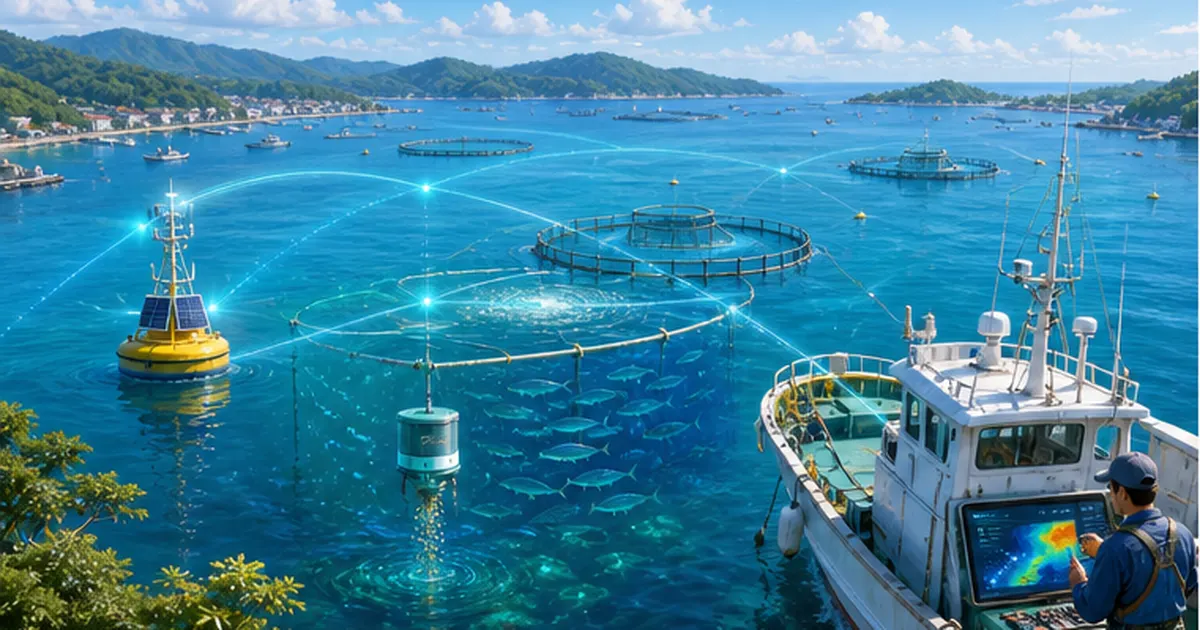
Rising fuel costs, a shrinking workforce, and ocean environmental change driven by climate change — Japan's fishing industry stands at a major turning point. The Fisheries Agency's answer to these challenges is "Smart Fisheries," which brings advanced technologies such as ICT, IoT, and AI into fishing and aquaculture.
The Fisheries Agency defines "Smart Fisheries" as "a next-generation fishing industry that achieves both the sustainable use of fishery resources and the sustainable growth of the fishing industry, through the use of advanced technologies such as ICT and IoT," and has been running its "Smart Fisheries Promotion Project" from fiscal 2020 through fiscal 2026. Behind this policy is a severe shortage of workers: the number of fishery workers in fiscal 2022 fell 4.8% year on year to 123,100, and the number of new entrants also declined to 1,691 from the previous year. This is not a problem unique to Japan — the FAO's "The State of World Fisheries and Aquaculture (SOFIA) 2024" report found that aquaculture accounted for 57% of global aquatic animal production in 2022, surpassing wild capture for the first time. Raising productivity with limited resources and labor is a challenge shared worldwide.
This article explains the full picture of Smart Fisheries — from ICT buoys and satellite data in coastal and offshore fishing, to automatic feeding systems in aquaculture, drone- and AI-based red tide detection, and real-world adoption cases by companies and local governments — grounded in verified figures and primary sources.
What you'll learn in this article
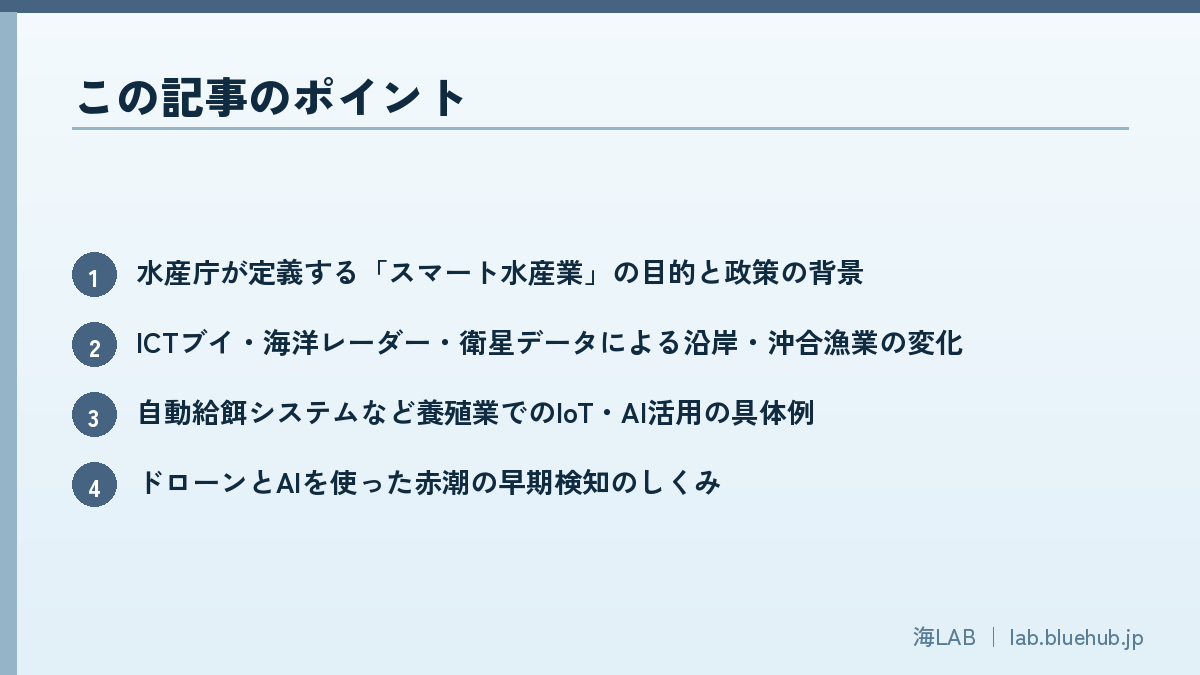
- The purpose and policy background behind the Fisheries Agency's "Smart Fisheries"
- How ICT buoys, ocean radar, and satellite data are changing coastal and offshore fishing
- Concrete examples of IoT and AI use in aquaculture, including automatic feeding systems
- How drones and AI enable early detection of red tide
- Real implementation cases from Kura Sushi and local governments
- Challenges to wider adoption, such as cost and workforce training
What Is Smart Fisheries? The Fisheries Agency's Definition and Goals
Many people are hearing the term "Smart Fisheries" for the first time. Let's start by looking at how the government defines the concept and what it aims to achieve.
Defining a "next-generation fishing industry" built on ICT and IoT
Japan's Fisheries Agency defines Smart Fisheries on its official website as "a next-generation fishing industry that achieves both the sustainable use of fishery resources and the sustainable growth of the fishing industry, through the use of advanced technologies such as ICT and IoT." The key point is that it aims to achieve two goals simultaneously that might seem to conflict: "sustainable use of resources" and "growth as an industry." Rather than mere mechanization or labor saving, the core idea is turning the experience and intuition that individual fishers have built up into visible data that can be shared and used.
To put this policy into practice, the Fisheries Agency updated its "Guidelines for Data Utilization in the Fisheries Sector" and "Guidance on Data Utilization through Platforms in the Fisheries Sector" in August 2023. Establishing rules for who collects which data and how far it can be shared may seem like a minor detail, but it is just as important a foundation as the technology itself.
The policy background: a shrinking, aging workforce
This policy is being pursued urgently because the workforce supporting the fishing industry is shrinking fast. According to the Fisheries Agency's white paper, the number of fishery workers in fiscal 2022 fell 4.8% from the previous year to 123,100. The number of new entrants also dropped to 1,691 in fiscal 2022, down from 1,744 the previous year. While the share of workers aged 65 and over has been rising, the share of younger workers aged 39 and under has also been increasing in recent years, suggesting the seeds of generational change. Still, a shortage of successors for fishing businesses remains a serious challenge overall.
To maintain — or even increase — output with fewer people, it is essential to have systems that let even inexperienced newcomers work at a consistent level of quality. By "visualizing" and automating tasks through ICT, IoT, and AI, the technology effectively substitutes for veteran skill, which is expected to lower the learning curve and the barrier to entry for new workers.
A global trend: aquaculture growth and smart technology
The need for these technologies is not limited to Japan. According to the FAO's "The State of World Fisheries and Aquaculture (SOFIA) 2024," global aquatic animal production reached about 223.2 million tonnes in 2022, of which aquaculture accounted for 130.9 million tonnes — 57% of the total — surpassing wild capture (94.4 million tonnes) for the first time. The challenge of producing efficiently and sustainably within limited ocean areas, rather than relying solely on wild stocks, is a shared concern worldwide, and countries everywhere are focused on advancing management through sensors and AI.
- Labor shortages from a shrinking, aging fishery workforce
- Rising fuel prices increasing the cost of going out to sea
- Harder-to-predict fishing grounds and resources due to environmental change
- Difficulty passing down the experience and intuition of veteran fishers
- Growing demand worldwide for efficiency and sustainability as aquaculture production expands
What is the "Smart Fisheries Promotion Project"?
- Duration: fiscal 2020 through fiscal 2026
- Goal: achieving both sustainable use of fishery resources and industry growth through ICT, IoT, and other advanced technologies
- Related projects: the Smart Fisheries Adoption Promotion Project, the Catch Data Digitalization Promotion Project, and others
- Foundational work: development of data utilization guidelines and guidance (updated August 2023)
The Fisheries Agency's "Smart Fisheries Promotion Project," running from fiscal 2020 through fiscal 2026, is designed not to end with a one-off demonstration but to embed the technology in the field over multiple years. Many technologies never move past the demonstration stage, so the fact that a relatively long seven-year period was set aside is itself a sign of the emphasis placed on real-world adoption.
Quick glossary
- ICT: Information and Communication Technology — the broad set of technologies that support collecting, transmitting, and sharing data
- IoT: Internet of Things — connecting "things" such as sensors and buoys to a network so data is collected automatically
- AI: Artificial Intelligence — technology that analyzes and classifies accumulated data, for example through image analysis or prediction
The term "Smart Fisheries" itself has only come into wide use in the past few years, but the introduction of ICT into the fishing industry has a longer, gradual history — from marine radio to fish finders. What sets today's policy apart is that individual devices no longer just display information on their own; the data they collect is stored in the cloud as a foundation that multiple stakeholders can share and analyze. When data moves beyond an individual's hands and is shared with fishery cooperatives, research institutions, and sometimes producers in other regions, one person's experience becomes knowledge for the whole community.
ICT and AI Technologies Transforming Coastal and Offshore Fishing
In the field, technologies that use data to support decisions once made by experience and intuition — where to fish, when to go out — are spreading. Let's look at what's being used in coastal fishing and in offshore and distant-water fishing.
Real-time ocean conditions from ICT buoys and ocean radar
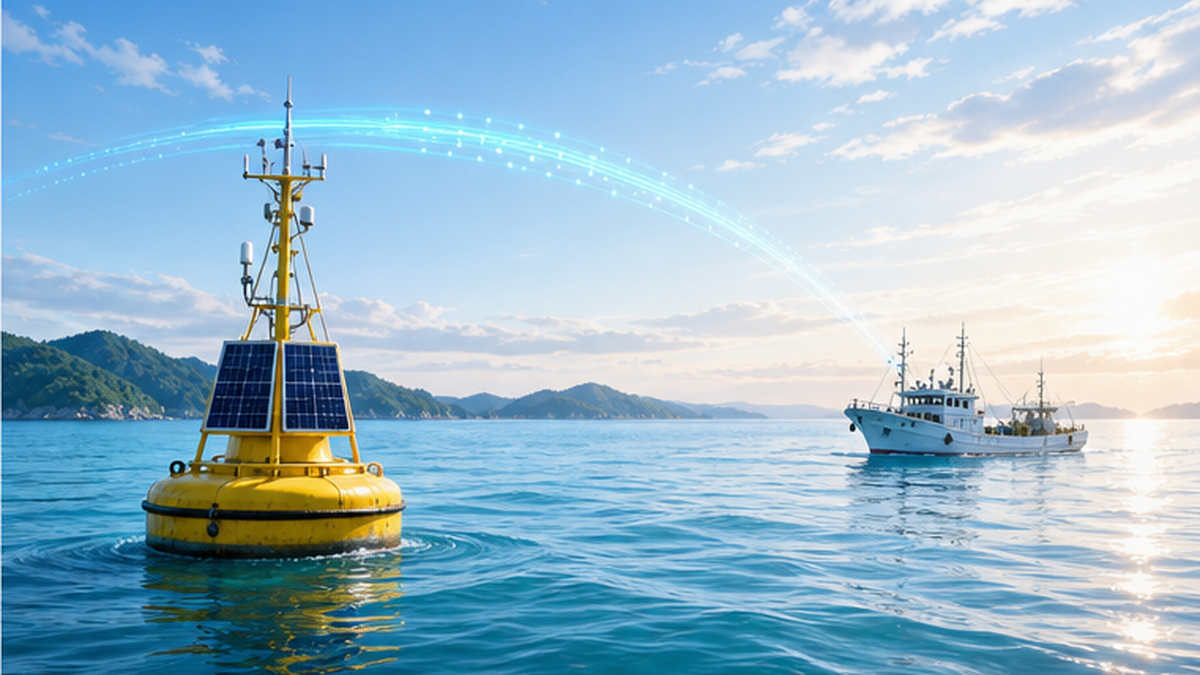
The Fisheries Agency's fiscal 2024 white paper cites "real-time publication of environmental information via automatic ocean observation buoys" and "observation using ocean radar" as technologies for coastal fishing. In Miyazaki Prefecture, ocean radar covers an area roughly 100 km offshore, allowing currents and sea conditions to be tracked across a wide area. Being able to check offshore conditions in advance from a screen on land or aboard ship — conditions that fishers previously could only confirm by actually taking a boat out — is a significant change.
In Ishinomaki Bay, Miyagi Prefecture, a demonstration project using smart buoys is also underway for set-net fishing and salmon fishing. Sensor data is combined with open data so fishers can check it on their smartphones as a reference for planning departures — an approach that also helps cut unnecessary trips and fuel costs.
Fishing ground prediction using satellite data and AI
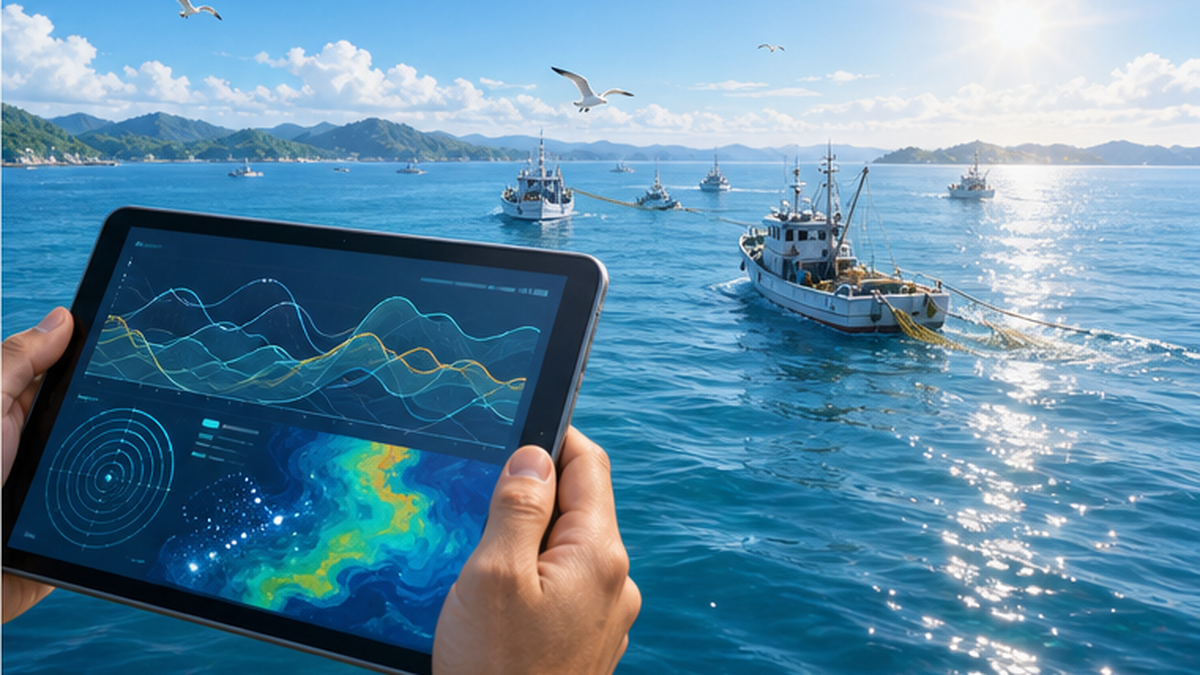
In offshore and distant-water fishing, "fishing ground formation prediction" that combines satellite data with AI analysis is being developed. The Fisheries Agency's white paper describes how sea surface temperature data from JAXA's (Japan Aerospace Exploration Agency) climate-monitoring satellite "Shikisai" is used, among other things, to monitor conditions at aquaculture sites. Sea surface temperature and current patterns are closely linked to fish migration, and being able to observe them continuously and over a wide area from satellites is a powerful tool for reaching fishing grounds efficiently with limited fuel.
Development is also underway on technologies that streamline the actual fishing work itself, not just the search for fishing grounds — for example, automatic pole-and-line fishing machines for skipjack tuna vessels. The fact that both the "searching" and "catching" stages are becoming more digital and automated is a defining feature of Smart Fisheries today.
| Type of fishing | Key technology | Purpose |
|---|---|---|
| Coastal fishing | ICT buoys, ocean radar | Real-time tracking of water temperature, currents, and sea conditions |
| Offshore / distant-water fishing | Satellite data + AI fishing ground prediction | Efficient fishing ground selection with reduced fuel use |
| Set-net fishing | Onshore monitoring systems | Labor savings through remote confirmation of catch by species |
| Skipjack pole-and-line fishing | Automatic fishing machines | Labor savings and improved safety in fishing operations |
Before these technologies spread, fishers relied on years of experience — a sense that "this season, this tide, the fish gather here" — to choose fishing grounds. That judgment still matters, but as climate change shifts water temperature and current patterns away from historical norms, real-time data plays a growing role in supplementing experience. Combining a veteran's intuition with data analysis is the goal behind these technologies — raising the accuracy of decisions rather than replacing judgment altogether.
The satellite data behind fishing ground prediction includes several indicators beyond sea surface temperature, such as "chlorophyll concentration," which indicates the amount of phytoplankton, and "sea surface height," which reflects changes in ocean elevation. Combining these makes it possible to estimate, even before a boat leaves port, where phytoplankton — food for fish — is likely to gather, and where warm and cold currents meet to form productive fishing grounds known as tidal fronts. Experienced fishers have long found these fronts by feel; satellite data now backs up that instinct and helps pass the skill on to less experienced crew members.
An observation network like Miyazaki's ocean radar, covering a wide area of roughly 100 km offshore, provides information that no single vessel's sensors could gather alone. When multiple fishers can reference the same data, it helps avoid the inefficiency of boats crowding into a limited fishing ground, cutting waste in both fuel costs and labor time.
Smart Aquaculture: Automatic Feeding and Water Quality Management
Aquaculture plays a key role in stable seafood supply, but feeding and water quality management have traditionally required a great deal of labor and experience. IoT and AI are now being woven into this work.
The spread of AI-powered automatic feeding systems
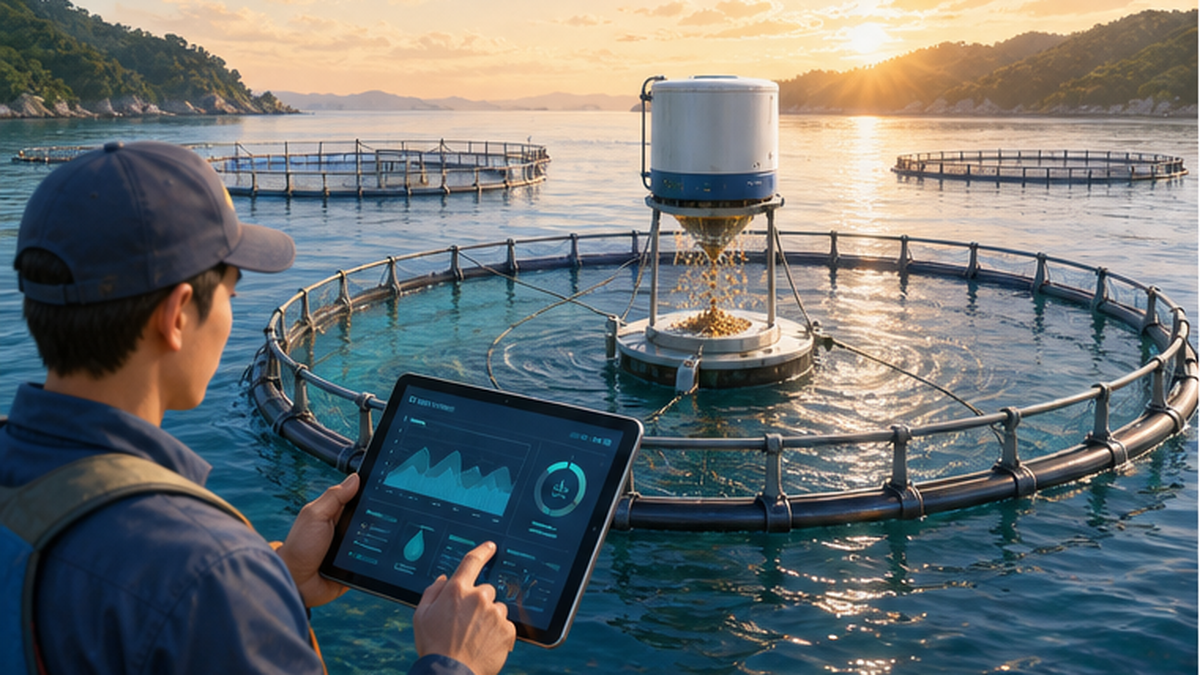
In aquaculture, automatic feeding systems linked to underwater cameras and water temperature or dissolved oxygen sensors are becoming more common. By detecting feeding behavior with sensors and supplying only the necessary amount at the optimal time, these systems are expected to reduce feed waste and water quality degradation from overfeeding while accelerating growth. Feeding is one of the most labor- and time-intensive tasks in aquaculture, required at fixed times every morning and evening, so the labor-saving effect of automation is considered especially significant.
Overfeeding is not just a waste of money. Uneaten feed sinks to the seabed, and as it decomposes it can degrade water quality and contribute to the eutrophication that fuels red tide. Adjusting feed amounts based on real-time monitoring of feeding behavior protects not only business efficiency but also the marine environment around the farm.
Remote monitoring via water temperature, oxygen, and salinity sensors
In Maizuru, Kyoto Prefecture, the Kyoto Fisheries Cooperative's Maizuru Torigai (cockle) division and KDDI, among others, ran a demonstration from July 2023 in Maizuru Bay to visualize the growing environment for the local specialty "Tango torigai" using IoT sensors. Containers of juvenile shellfish were sunk at depths of 3m, 6m, 9m, and 11m, with IoT sensors on a lift mechanism measuring water temperature, dissolved oxygen, chlorophyll, and salinity hourly and storing the data in the cloud. Tango torigai takes about a year to raise, and since conditions vary by depth, this made it possible to verify — with data rather than experience alone — "which depth is best suited to growth in a given year."
The goal of the demonstration is to turn the accumulated data into a manual for aquaculture practices and share optimal conditions across farmers. Converting know-how that once depended on individual experience into organizational knowledge is a first step toward a system where quality can be maintained even as the workforce changes.
Three benefits of automatic feeding
- Prevents over- and under-feeding, improving growth rate and yield
- Reduces water quality degradation and environmental impact from leftover feed
- Cuts the labor and time required for feeding
Traditional feeding followed a "fixed time, fixed amount" approach, hand-fed on a set schedule. But fish appetite changes daily with water temperature, weather, and growth stage, so this often diverged from actual feeding needs. Systems that fine-tune feed amounts based on sensed feeding behavior are expected to close this gap and optimize feed costs — one of the largest expenses in aquaculture management.
Faster growth rates seen in demonstration projects elsewhere
In Ainan, Ehime Prefecture, Umitron Inc. ran a demonstration trial for red sea bream farming in fiscal 2018 and 2019 using its smart feeder "UMITRON CELL" together with "UMITRON FAI (Fish Appetite Index)," an AI that judges fish appetite. One year into the trial, fish showed roughly 0.4 kg more growth than the control group, and the time needed to reach a body weight of 1 kg or more was shortened by more than four months, according to the report. This was implemented as a concrete solution to challenges facing Ainan — a farming region with a mild climate and rias coastline — including rising feed costs and a shrinking workforce.
In Nasa Bay, Kaiyo Town, Tokushima Prefecture, KDDI and others have been working on a smart oyster farming project since December 2018. Water temperature and air temperature sensors, turbidity sensors, and cage-motion sensors are connected via LTE networks, tracking the environmental changes and plankton intake oysters experience from seed to market size. The IoT system launched in March 2020, with plans to eventually build machine-learning inference models. The aim is a system where even newcomers with little aquaculture experience can turn a profit from their first year.
| Region | Species | Key technology | Result / feature |
|---|---|---|---|
| Goto City, Nagasaki | Bluefin tuna | Drone water sampling + AI image analysis | Red tide detection to notification cut to about 15 minutes |
| Maizuru, Kyoto | Tango torigai | Lift-mounted IoT sensors | Hourly measurement of water temperature, dissolved oxygen, etc. by depth |
| Mie Prefecture (Ise Bay) | Nori seaweed | IoT observation buoy "Umilog" | Color-loss prediction; deployed at 40 sites and sold nationwide |
| Ainan, Ehime | Red sea bream | Smart feeder "UMITRON CELL" | About 0.4kg more growth in a year; growth period cut by 4+ months |
| Kaiyo, Tokushima | Oysters | Water temperature, turbidity, motion sensors | Tracking growth environment data at the individual level |
| Osaka (Kura Sushi) | Hamachi / bluefin tuna | Smart feeders + long-term contracts | Building an in-house production system for organic hamachi |
The benefits of automated, optimized feeding go beyond a farm's own finances. Feed costs are among the largest expenses in aquaculture management, according to Fisheries Agency and industry data. As in the Ainan demonstration, growing fish to market size faster within the same time frame shortens how long farming space and cages are occupied, potentially allowing more production cycles from the same facilities.
Drone and AI-Based Red Tide Detection: The Goto City Case
One of the biggest risks in aquaculture is "red tide" — an abnormal bloom of harmful plankton that can cause mass fish die-offs. In Nagasaki Prefecture, a demonstration project is using AI and drones to confront this threat.
Bluefin tuna farming and red tide risk
Goto City, Nagasaki Prefecture, is known for bluefin tuna farming, but bluefin tuna is said to be less tolerant of red tide than other species, making early detection critical to farm management. If damage is only noticed after red tide has already set in, it can be too late — and traditionally, fishers had no choice but to rely on the time-consuming work of periodically sampling water and checking plankton type and density by eye or under a microscope. Nagasaki University, System5, KDDI, and Goto City took on this challenge with an IoT system demonstration in 2019.
Cutting detection time to about 15 minutes — the KDDI and Nagasaki University trial
The demonstration combined drone-based water sampling at multiple locations and depths with deep-learning image analysis to identify harmful plankton. It reportedly succeeded in cutting the time from water sampling to red tide detection and fisher notification — previously much longer — to about 15 minutes using the IoT system. Drones were also used to grasp the spread of red tide from the air, with detection results shared with fishers quickly via the cloud.
Manual sampling and microscope inspection take time to travel and analyze, and when red tide spreads quickly, response can fail to keep up. Combining simultaneous multi-point sampling by drone with automatic AI-based identification allows coverage of a wider area in less time than a person could cover by boat — a major value of this system.
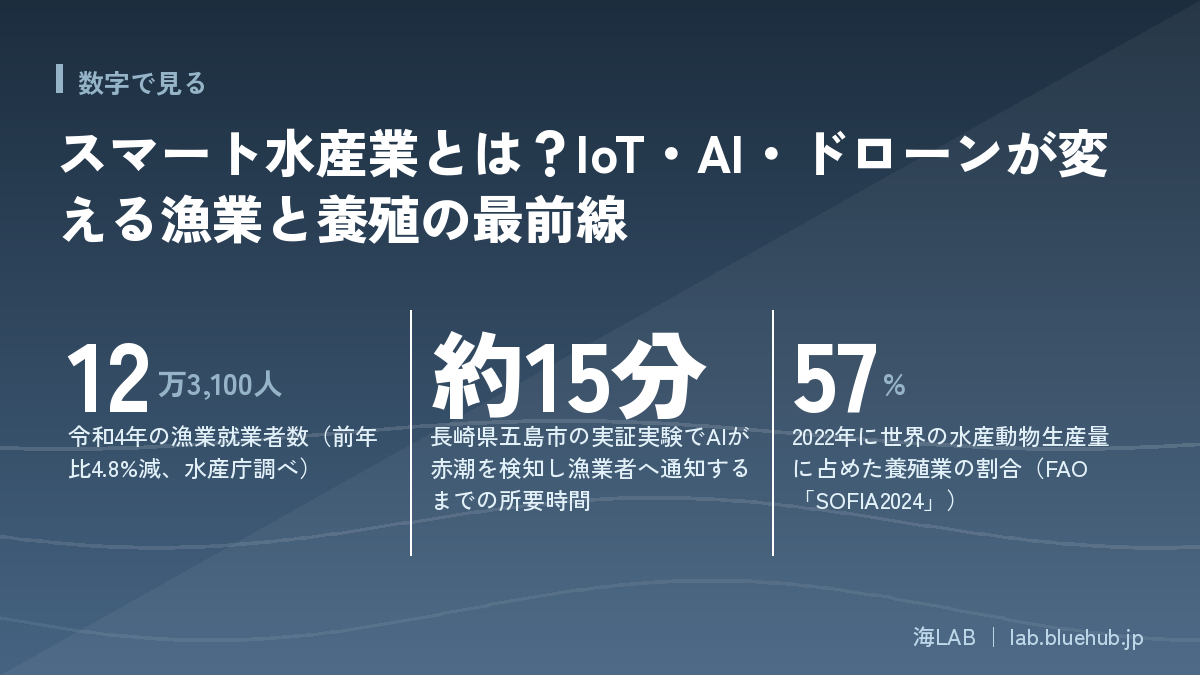
The time from water sampling to red tide detection and fisher notification was cut to about 15 minutes using the IoT system
— KDDI Corporation news release (January 22, 2019)
Several types of plankton can cause red tide, some of which are highly toxic and can kill fish within a short time. Identifying the plankton species requires specialized knowledge and microscope observation, and this work was often outsourced to research institutions or specialized testing labs. Deep-learning image analysis is drawing attention as a technology that can bring this kind of specialized identification work closer to the field and speed it up.
Red tide countermeasures don't end with detection alone. Even with early detection, damage can only be prevented if it is followed by real action, such as moving cages to safer waters or activating oxygen supply equipment. What the Goto City demonstration aimed for was not just more advanced observation technology, but shortening the whole chain from detection to notification to give fishers more time to respond. However precise the detection technology, its value diminishes if information takes too long to reach fishers — making notification speed itself a key measure of the technology's worth.
Corporate Entry: Kura Sushi's "KURA Osakana Farm" Venture
Smart Fisheries is expanding not only through government and fishers but also through the entry of restaurant and retail companies.
Producing organic hamachi and fully farmed bluefin tuna
Kura Sushi, the conveyor-belt sushi chain, established a new seafood-specialized subsidiary, "KURA Osakana Farm Co., Ltd.," in November 2021. Aimed at sustainable fishing and stable seafood supply, the company uses AI and ICT-driven "smart aquaculture" to produce "organic hamachi" free of antibiotics and hormones, and also ships bluefin tuna raised through contract farming. It has drawn attention as an example of a restaurant company itself moving upstream into production and investing in technology.
Cutting feed loss and labor with smart feeding
KURA Osakana Farm has partnered with aquaculture tech company Umitron Inc. to introduce the AI- and IoT-powered smart feeder "UMITRON CELL." By capturing fish feeding behavior and underwater conditions with sensors and cameras, and feeding remotely at the optimal timing and amount, the system aims to reduce the manual labor of feeding — one of the most labor-intensive parts of aquaculture — while cutting feed waste and accelerating growth. Production is outsourced to external producers, while the company stabilizes producer income by purchasing the entire output under long-term contracts.
Behind the plate a customer sees at a store, there is a system running that lets staff check feeding status remotely from a smartphone or computer. This is also an example of a business model that combines a downstream company's sales strength with an upstream farm's technology needs, making it easier to plan for a return on investment.
Behind restaurant companies moving upstream into farming lies a business challenge: securing a stable seafood supply. Fluctuations in wild stocks and international competition for resources make it increasingly difficult to reliably source fish of the desired quality and quantity. By building their own production base, companies can reduce this risk while using smart technology to lower both production costs and environmental impact — an example of how the relationship between the restaurant industry and fisheries is changing.
When a chain-wide company like Kura Sushi engages in smart aquaculture, the data gathered on the farm becomes easier to use for quality control and communicating production information. Consumer interest in "how the fish was raised" has been growing in recent years, and farming methods backed by data on feed amounts and water quality can serve as evidence for the added value of production free of antibiotics and hormones.
Regional Initiatives: Mie Prefecture's "Umilog" Ocean Visualization
Local governments and regional companies are also developing their own systems to protect key local seafood products.
The "Umilog" IoT ocean observation system
Starting around 2019, Mie Prefecture's Fisheries Research Institute, Toba National College of Maritime Technology, and local companies jointly developed the IoT ocean observation monitoring system "Umilog," which is used for nori (seaweed) farming in Ise Bay and elsewhere. The observation device comes standard with four sensors — water temperature, water level, imaging, and GPS — with salinity, dissolved oxygen, and chlorophyll sensors available as options. Data is transmitted every 30 minutes over mobile phone networks, allowing real-time checks from a computer or smartphone.
Predicting nori color loss and guiding farming decisions
Nori farmers use Umilog data to decide when to start farming, adjust net height during abnormal tides, and predict nori color loss from plankton growth data. Color loss significantly affects product value, so catching early signs is directly tied to business outcomes. Camera images are also used to monitor nori growth and investigate the causes of feeding damage; within about a year of introduction, monitoring devices had been installed at 40 sites across Ise Bay and Kumano Sea.
The way Umilog — developed jointly by a prefectural research institute, a technical college, and local companies — grew into a nationally sold product is a notable model for how region-specific technology can spread as a general-purpose product. Development that started from a local challenge has grown into something applicable to farmers in other regions too.
Umilog's main features
- Standard sensors for water temperature, water level, imaging, and GPS; salinity, dissolved oxygen, and chlorophyll sensors optional
- Automatic data transmission every 30 minutes; real-time checks from smartphone or PC
- Also used for nori color-loss prediction and investigating feeding damage
It's also worth noting that Umilog was developed through an academia-industry-government collaboration between a prefectural research institute, a technical college, and local companies. Combining the research institute's scientific knowledge, the companies' expertise in device development and manufacturing, and the practical needs of fishers on the ground allowed it to grow beyond a mere experiment into a nationally sold product. The process by which development starting from a local challenge grows into a general-purpose product offers a useful reference for promoting Smart Fisheries in other regions.
One reason systems like Umilog could be developed and adopted at low cost is that they use existing infrastructure — mobile phone networks — rather than requiring new dedicated communication satellites or specialized wireless equipment. Being able to exchange data over the same network as a smartphone was an important way to keep adoption costs down. For small and mid-sized regional farmers, designs that lower the initial investment hurdle are a key factor in how quickly the technology spreads.
How Smart Fisheries Supports Sustainability
Having looked at individual technologies, it's clear their goal isn't efficiency alone. At the core is a sustainability perspective — protecting fishery resources themselves and passing them on to the next generation.
Labor savings and securing the next generation of workers
The Fisheries Agency lists "achieving profitable fishing through labor savings" and "reducing fishing costs" as benefits of Smart Fisheries. As systems take over labor-intensive tasks like feeding and monitoring, businesses can be maintained with fewer people, and the barrier to entry is expected to lower for new workers. In particular, letting newcomers reference data for tasks like judging fishing grounds and managing water quality — skills that traditionally took years of experience to master — can have a major effect.
Preventing overfishing and bycatch through better resource management
Systems that monitor set-net catches from land, and technologies that help avoid bycatch, reduce excess catch and the capture of non-target species. When AI fishing ground prediction enables more efficient operations with lower fuel use, it also reduces environmental impact. Data-driven resource management is also an effort to build a foundation for sustaining the fishing industry over the long term by preventing resource depletion from overfishing.
These efforts go beyond improving individual businesses — they can also serve as a data foundation for understanding resource trends across an entire sea area. In the future, it's been suggested that multiple fishery cooperatives and local governments could share data to support broader resource management and coordination of fishing grounds.
From a sustainability standpoint, the data itself from fishing and farming operations is valuable for future resource assessments. If digital records of when, where, and how much seafood was caught or raised accumulate over time, researchers and regulators can better track changes in resources and use the data to design systems like total allowable catch limits. The fact that technology aimed at individual business efficiency ultimately contributes to the resource management of the ocean as a whole is one of the most important implications of Smart Fisheries.
From a resource-management perspective, bycatch-prevention technology also plays a role worth noting. "Bycatch" — catching species other than the intended target — not only wastes resources unnecessarily but also burdens fishers with the work of sorting and releasing unwanted catch. Being able to monitor net contents in real time from land can inform operational decisions, such as avoiding times or locations where bycatch is common.
Challenges and the Road Ahead
Smart Fisheries holds great promise, but several barriers remain to widespread adoption in the field.
Adoption costs and building rules for data use
Installing sensors and systems requires upfront investment, which is a heavy burden for small operations. As with the Fisheries Agency's update to its "Guidelines for Data Utilization in the Fisheries Sector" in August 2023, establishing rules for who can use collected data and how is a challenge that needs to progress alongside the technology itself. Rather than each fisher or farmer installing equipment independently, approaches like those in Mie and Kyoto Prefectures — where local governments or fishery cooperatives support demonstration projects and share results across the region — are one way to spread out the cost burden.
Workforce training and closing the digital divide
For older fishers, operating new devices and apps is not always easy. The Fisheries Agency has held discussions to bridge technology and the field through bodies such as the "Council on Opening the Future of Smart Fisheries" (May 2019–March 2020), but building the training and support systems needed to close the digital divide across regions and generations will be key to further adoption. Efforts to reduce the burden on users are also visible in each case — for example, simple screen designs that are easy to check on a smartphone, or systems that send an alert only when something is abnormal, without requiring users to constantly check the data.
- The cost of installing and maintaining sensors and communication equipment
- Establishing rules around the rights and use of collected data
- Training and support systems that include older fishers
- Meeting technology needs that differ by region and type of fishing
Three keys to wider adoption
- Spread out cost burdens through demonstration support from local governments and fishery cooperatives
- Design simple screens and alerts that reduce the burden on users
- Turn regional knowledge into manuals and expand it to other regions
Looking ahead, AI-based image recognition and sensor technology are already widely used in industries like agriculture and manufacturing, and costs are trending down year by year. If challenges specific to the fisheries sector — such as equipment durability in the harsh marine environment, and securing communication in offshore areas with weak signal coverage — can be overcome, more fishers and aquaculture operators should be able to adopt these technologies without excessive strain.
Beyond the technical challenges, building a framework to properly evaluate results will also be an important issue going forward. Demonstrations like those in Ainan and Goto City, which showed concrete figures for growth improvement and time savings, carry persuasive weight for expanding to other regions. At the same time, results vary by sea area and species, so continuing to run demonstrations tailored to local conditions and sharing the results transparently will be key to building trust in Smart Fisheries as a whole.
References
- Fisheries Agency of Japan, "Smart Fisheries" – Definition and policy overview
- Fisheries Agency, FY2024 White Paper on Fisheries – Development and use of technology to promote Smart Fisheries
- Fisheries Agency, FY2023 White Paper on Fisheries – Trends in fishery employment
- KDDI Corporation news release (January 22, 2019) – IoT system demonstration to establish a bluefin tuna farming base in Goto
- Kura Sushi, "KURA Osakana Farm" – Initiatives for revitalizing the fishing industry
- Smart Fisheries Navi – Visualizing ocean health anytime with "Umilog" (Ise Bay nori farming)
- KDDI Corporation news release (August 24, 2023) – Visualizing conditions via IoT for stable supply of Maizuru's "Tango torigai"
- Umitron Inc. press release – Completion of a two-year research agreement with Ainan, Ehime; achieving faster growth in farmed red sea bream with smart feeding
- KDDI Corporation, "be CONNECTED." – Smart oyster farming project (Nasa Bay, Kaiyo Town, Tokushima Prefecture)
- SeafoodSource (coverage of the FAO "SOFIA 2024" report) – Global aquaculture production surpassed wild catch for the first time
※ Ordered by reliability: government and academic institutions > peer-reviewed papers > specialized organizations > reputable media