⚡ The answer in 30 seconds
- Japan's EEZ holds hydrothermal deposits, nodules and rare-earth mud, but it is at the survey and testing stage and commercial mining has not begun.
- In February 2026, rare-earth mud was reportedly sampled from about 5,600 m off Minamitorishima, with a full-scale test planned for February 2027.
- Deep-sea mining brings habitat destruction, mud clouds and noise, and nodules take millions of years to grow, so recovery is hard.
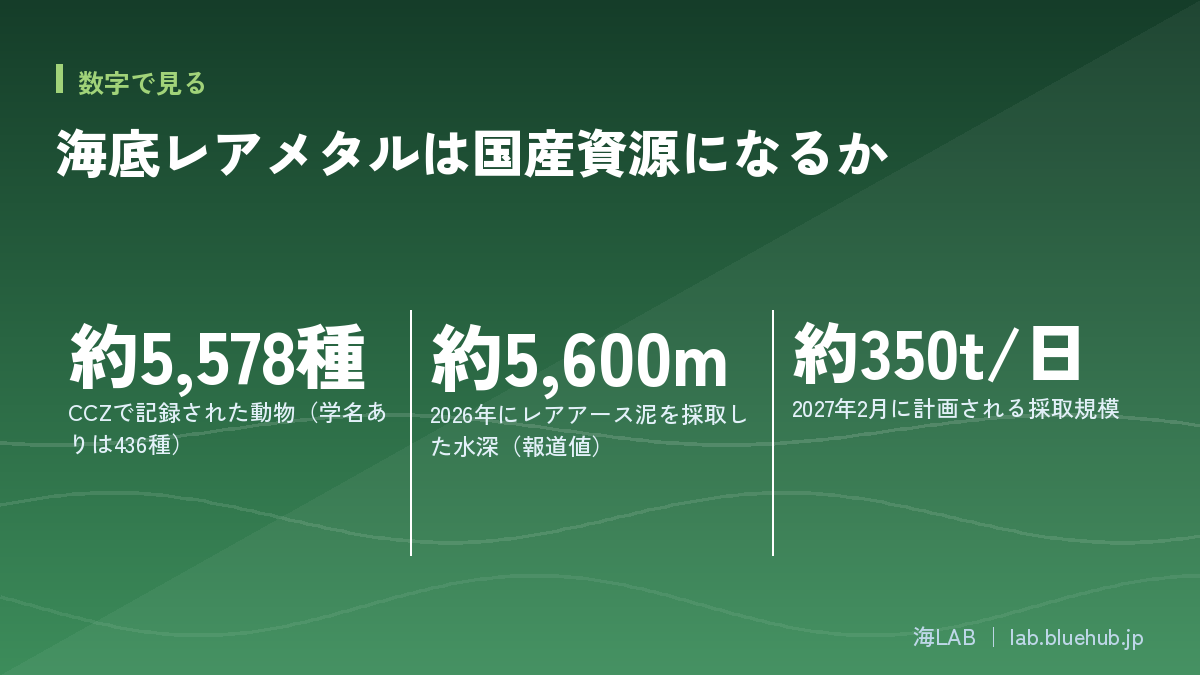
- Of about 5,578 animal species in the CCZ, only 436 have scientific names, so baseline data for impact assessment are lacking.
Rare metals are essential for smartphones and electric vehicles. As a new source of supply, the deep seafloor around Japan is drawing attention.Can resources lying on the seabed really become "domestic resources"?
In 2026 it was announced that mud had been successfully sampled at a depth of about 5,600 m off Minamitorishima, raising expectations. Yet the deep sea is the least explored environment on Earth, and most of the creatures living there have not even been named.
This article sorts out, based on public information, the current state of manganese nodules, seafloor hydrothermal deposits and rare-earth mud, and the risks deep-sea mining poses to ecosystems.
What you will learn
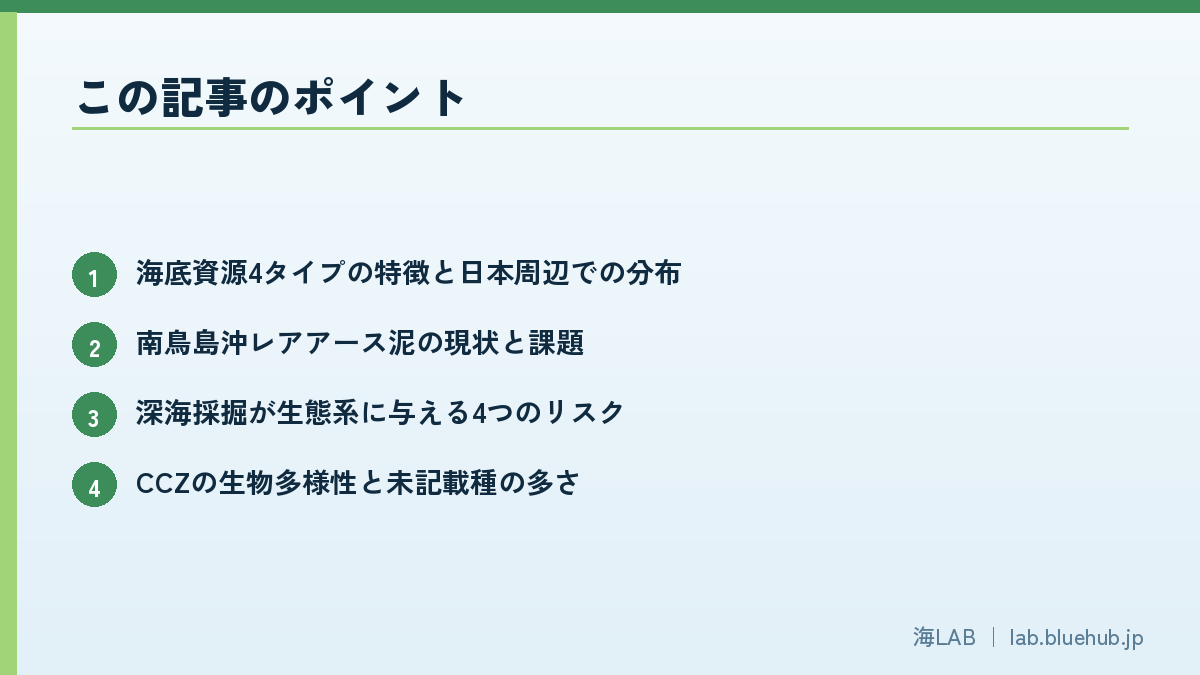
- The four types of seabed resources and where they occur around Japan
- Current status and challenges of rare-earth mud off Minamitorishima
- Four ecological risks of deep-sea mining
- Biodiversity of the CCZ and the many undescribed species
- International rules: the ISA, the United States and others
- How to think about resources, including alternatives
What are seabed resources? Four types Japan is watching
Japan, poor in land resources, and its "mines under the sea"
Japan relies on imports for most of its metal resources. Modern technologies such as smartphones, electric-vehicle motors, wind turbines and semiconductors depend on metals including rare earths, cobalt, nickel, copper and zinc. Yet supplies tend to be concentrated in particular countries, and prices and availability swing widely with international affairs. This is why attention has turned to the resources lying on the seabed of Japan's vast exclusive economic zone (EEZ).
Japan's land area is about 380,000 square kilometers, but its territorial waters and EEZ together form one of the largest sea areas in the world. On its seabed, diverse resources have been confirmed, including methane hydrate, seafloor hydrothermal deposits, cobalt-rich crusts, manganese nodules and rare-earth mud.
The four types of seabed mineral resources
| Type | Main components | Where it forms | Typical depth |
|---|---|---|---|
| Seafloor hydrothermal deposits | Copper, lead, zinc, gold, silver, etc. | Hydrothermal vent areas around undersea volcanoes and ridges | Hundreds to thousands of m |
| Manganese nodules | Manganese, nickel, cobalt, copper | On flat deep-sea sediments | About 4,000-6,000 m |
| Cobalt-rich crusts | Cobalt, nickel, platinum, etc. | Rock on slopes and summits of seamounts | About 800-2,400 m |
| Rare-earth mud | Heavy rare earths such as yttrium | Deep-sea sediment (mud) | About 5,000-6,000 m |
In this article we focus on the high-profile Manganese nodules, Seafloor hydrothermal deposits, rare-earth mud, looking at both the hope for domestic resources and the risks deep-sea mining poses to ecosystems.
Why expectations for "domestic resources" have grown
The idea of "resource security", reducing dependence on imports, has become more important in recent years. If resources are found in domestic waters, the risk of supply concentration might be eased. At the same time, the deep sea is one of the least explored environments on Earth, and many of its creatures have no names. Placing how easy resources are to extract and how irreversible the environmental harm is on the same table is the theme of this article.
Key points of this article
- Seabed resources come in four types: hydrothermal deposits, nodules, crusts and rare-earth mud
- Both the expected value and the impact on deep-sea ecosystems must be considered
- Japan is currently at the "testing and survey stage"; commercial mining has not begun
Manganese nodules: "metal stones" lying on the deep seafloor
What manganese nodules are
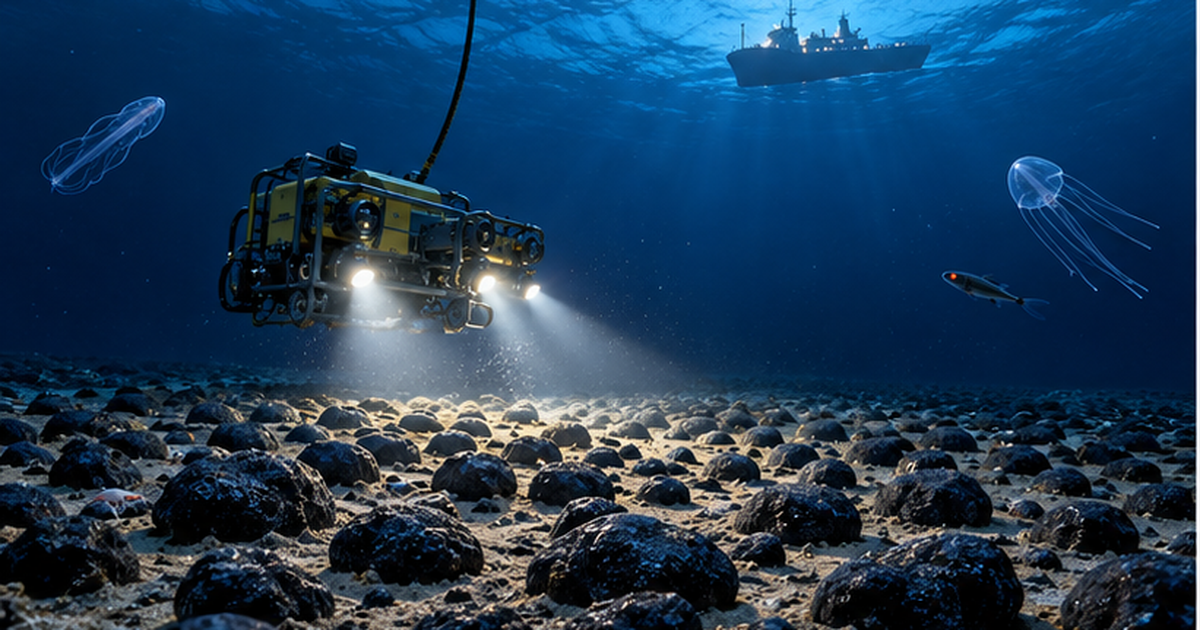
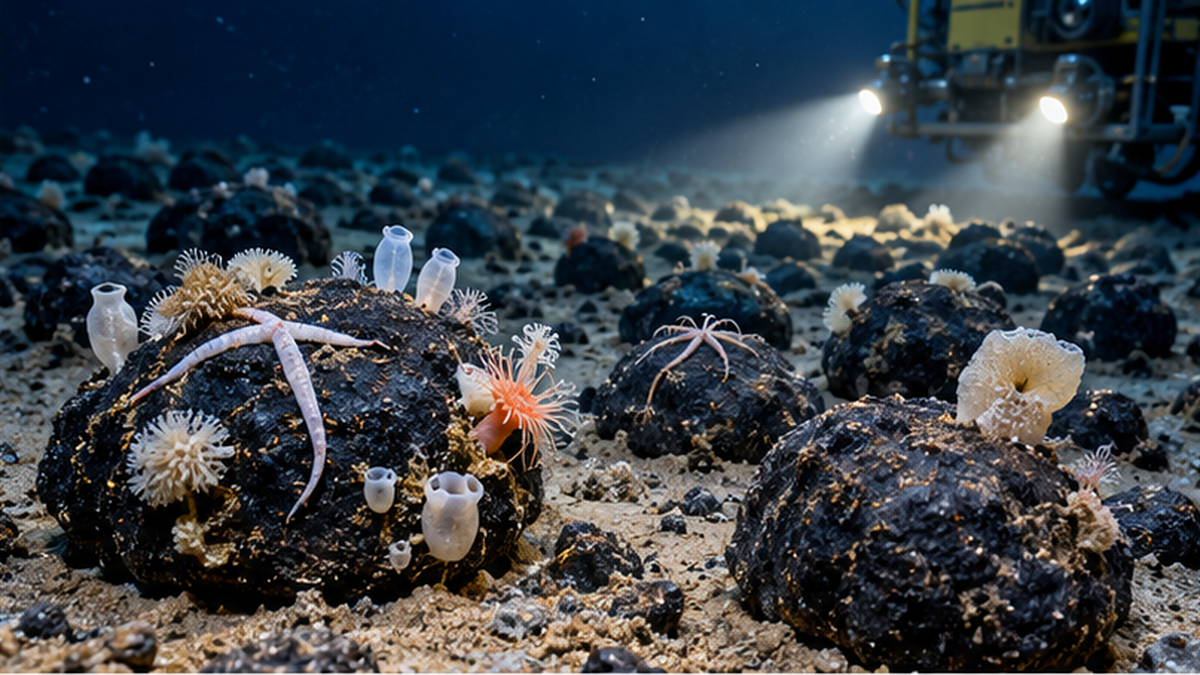
Manganese nodules are blackish lumps about the size of potatoes, scattered across the mud of the deep seafloor. Metal components in seawater and sediment gradually adhere around a small rock fragment or shell piece, building up layers like an onion. Growth is extremely slow, at roughly a few millimeters to a few tens of millimeters per million years, it is said.
Besides manganese, nodules contain nickel, cobalt and copper. Because they hold metals used in electric-vehicle batteries, international interest has grown.
The world's largest source: the Clarion-Clipperton Zone
Commercial interest is concentrated most in the Clarion-Clipperton Zone (CCZ), which spreads across the Pacific between Hawaii and Mexico. It covers an area more than ten times the size of Japan's land, and the International Seabed Authority (ISA) has granted exploration contracts to states and companies.
Nodules in Japan's EEZ too
In Japan too, areas with dense manganese nodules have been reported within the EEZ around Minamitorishima. It was reported that the University of Tokyo group that discovered rare-earth mud also confirmed in 2016 that nodules rich in cobalt, manganese and nickel are widely distributed. However, these are at the survey stage and mining is not planned.
Nodules are also "homes for living things"
Besides being lumps of metal, nodules are one of the few hard footholds in the deep sea. On a seafloor of soft mud, sponges, coral relatives and sea squirts live attached to nodule surfaces. Collecting and lifting nodules means taking away these animals' homes entirely. Considering that nodules take millions of years to grow, a lost habitat will not return on a human timescale.
Trivia: how fast nodules grow
- They grow far more slowly than hair, at a pace of tens of thousands of times less than a millimeter a year
- A nodule 10 cm across holds millions of years of time
Seafloor hydrothermal deposits: the "black smokers" of the Okinawa Trough
How hydrothermal deposits form
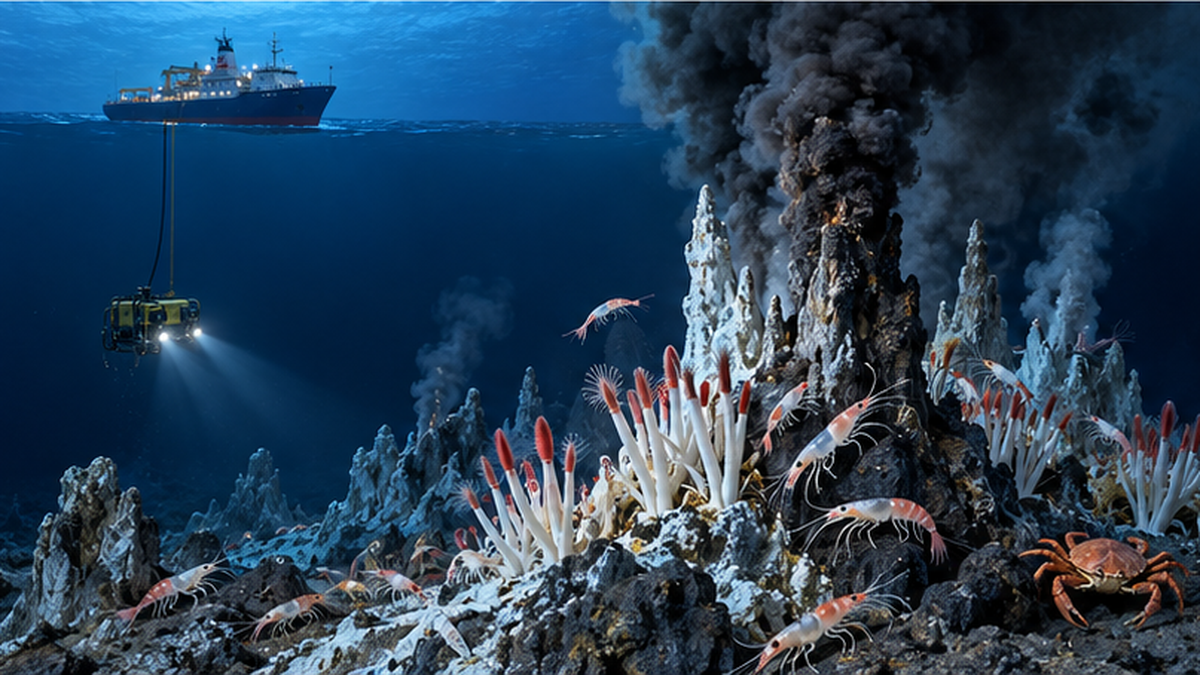
Where undersea volcanic activity is strong, seawater seeps deep underground, is heated to hundreds of degrees by magma, and gushes out again carrying dissolved metals. When this hot water meets cold seawater, the metals precipitate at once as sulfide particles, forming chimney-like structures and deposits piled around them. These are seafloor hydrothermal deposits, which can contain gold and silver as well as copper, lead and zinc.
Around Japan: the Okinawa Trough and the Izu-Ogasawara area
In Japan, promising deposits have been confirmed in places such as the Iheya North Knoll in the Okinawa Trough. At about 1,000-1,600 m, the depth is shallow compared with other deep-sea resources. According to materials from the Ministry of Economy, Trade and Industry, ore bodies larger than first expected are anticipated at the Iheya area.
The world-first ore-lifting test of 2017
From August to September 2017, JOGMEC (Japan Organization for Metals and Energy Security) conducted a pilot test of mining and ore lifting in waters off Okinawa. From a seafloor about 1,600 m deep, it succeeded for the first time in the world in continuously lifting a flow of ore mixed with seawater. The test also revealed many remaining issues, such as heavy wear on the lifting pump and the need to improve equipment durability and optimize operation.
Hydrothermal vent life is a world of its own
Around hydrothermal vents live bacteria that use chemical energy, such as hydrogen sulfide in the hot water, rather than sunlight. On this foundation live relatives of deep-sea mussels, vent crabs and tube worms, forming unique ecosystems found nowhere else. If mining changes the vents and surrounding terrain, direct modification of habitat is assumed even in the environmental impact assessment framework.
However, ecosystems differ completely between "dead" hydrothermal deposits that have ended their activity and active vent areas still spouting hot water. Which deposits to target and how to avoid active areas are important points for environmental consideration.
Rare-earth mud: a world-first challenge off Minamitorishima
The 2011 discovery and a new resource called "mud"
Rare-earth mud drew attention with a study published in 2011 by a University of Tokyo research group, which showed that mud on the deep Pacific seafloor contains rare earths at high concentration. On land, rare earths are mined in a few biased regions, but deep-sea mud spreads over wide areas, so its discovery in Japan's EEZ around Minamitorishima greatly raised expectations for "domestic resources".
2026: mud successfully sampled from about 5,600 m
In a Cabinet Office-led project, the deep-sea drilling vessel Chikyu of the Japan Agency for Marine-Earth Science and Technology (JAMSTEC) carried out a mud sampling test off Minamitorishima in January-February 2026. According to reports, on February 2, 2026 it was announced that mud had been successfully sampled from a seafloor about 5,600 m deep. Sucking deep-sea mud up to a ship is a challenge with few precedents in the world.
As a next step, a full-scale test to sample about 350 tons of mud per day is planned for February 2027. Note that reports give the sampling depth as both "about 5,600 m" and "about 6,000 m", so the exact figure should be checked in primary sources.
Composition analysis and hurdles to commercialization
In summer 2026, a report on the composition analysis of the sampled mud was published. According to a report by Daiichi Life Research Institute, about 54% of the total rare earths are medium and heavy rare earths, such as yttrium, gadolinium and dysprosium. Medium and heavy rare earths are an important group of elements used in high-performance magnets and electronic parts.
However, this test focused on confirming connection and operation, and does not prove continuous industrial-scale operation. Challenges remain: understanding the distribution of enriched zones, the cost of mining and refining, and assessing environmental impacts. Government materials also list four main challenges: mining technology, profitability, resource assessment and environmental impact.
| Period | Event |
|---|---|
| 2011 | University of Tokyo group announces deep-sea rare-earth mud |
| 2017 | Pilot ore-lifting test of seafloor hydrothermal deposits off Okinawa (a world first) |
| 2023 | Checklist of CCZ animal species published |
| 2025 | ISA fails to finalize mining regulations / US pushes ahead by executive order |
| February 2026 | Rare-earth mud sampling test off Minamitorishima announced as successful |
| February 2027 (planned) | Full-scale sampling test of about 350 tons per day planned |
As a related article, environmental pollution spreading in the deep sea is also covered in Plastic Pollution in the Deep Sea.
Four ecological risks of deep-sea mining
Risk 1: direct destruction of habitat
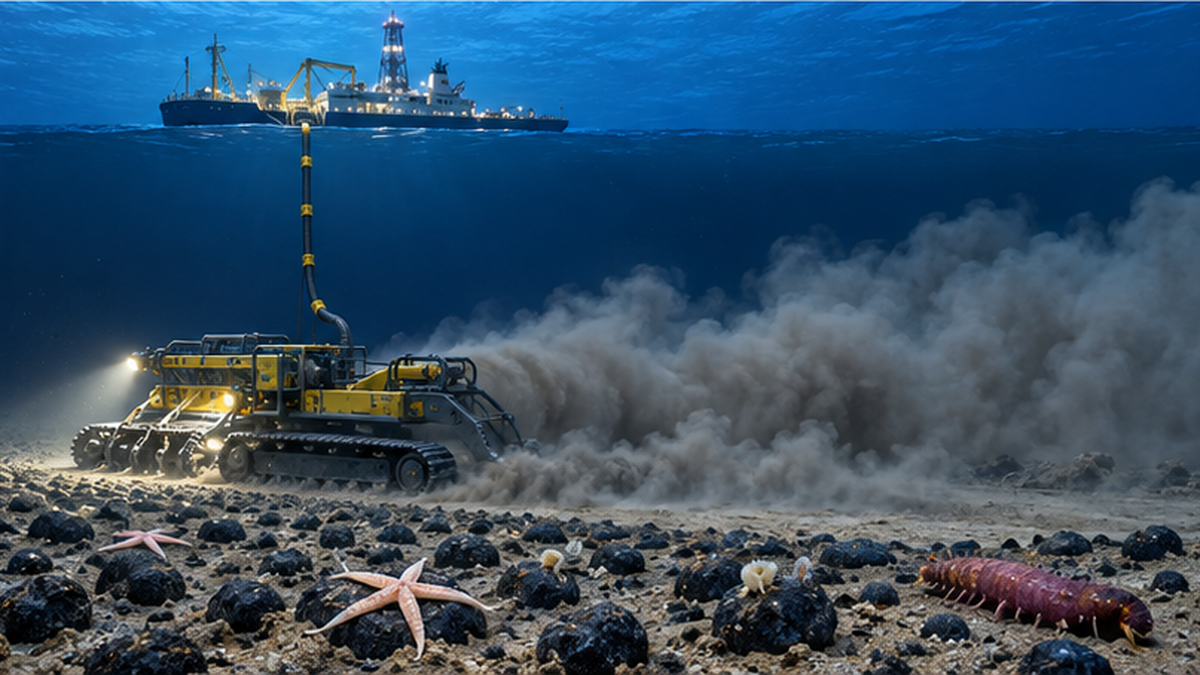
When mining machines run across the seafloor and collect nodules and ore, the creatures living there are caught up or lose their homes. Animals attached to nodules are removed along with them. At hydrothermal sites too, habitats of unique creatures may be altered.
Risk 2: sediment plumes (clouds of mud)
Mining stirs up seafloor mud, and fine particles spread like clouds. These are called plumes, which drift near the seafloor, are carried far away, and may eventually settle and hinder the breathing and feeding of living things. If wastewater from onboard ore processing is returned to the sea, impacts on midwater ecosystems are also a concern.
Risk 3: noise, light and vibration
Heavy machinery noise and bright lights are brought into the quiet, pitch-dark deep sea. Many deep-sea animals are sensitive to sound and light, and effects on movement and breeding are a concern. However, research on how deep-sea noise affects organisms is still scarce, and much remains unclear.
Risk 4: the time needed to recover
In the DISCOL experiment conducted by a German team in 1989 off Peru in the South Pacific, the seafloor was plowed to imitate nodule mining and then monitored. Surveys continued in 1992, 1996 and 2015, and a 2016 paper, "Return to DISCOL", reported the state 26 years after the experiment. Because change is slow in the deep sea, traces of impact may remain for a long time, so recovery cannot be judged without tracking over decades.
Much about the deep sea is unknown
- Most creatures are undescribed, and there is not enough baseline data to predict impacts
- Ecosystems of nodules and hydrothermal areas, once lost, may not return on a human timescale
- There is still not enough data to say confidently that "the impact is small"
For how deep-sea creatures adapt to extreme environments, see also How Deep-Sea Creatures Adapt.
Biodiversity revealed in the CCZ
5,578 species, most of them animals without names
In 2023, a research team including Muriel Rabone of the Natural History Museum, London, published in the journal Current Biology a checklist compiling animal records confirmed in the CCZ. Collecting more than 100,000 past survey records, it found about 5,578 species of animals, of which only 436 species had formal scientific names. That is, about 90% are scientifically undescribed, and about 92% of the estimated species may be new to science.
Furthermore, only 6 of the recorded species have been found in seas outside the CCZ. This suggests that CCZ life is highly distinctive and may not be replenished from elsewhere once lost.
| Indicator | Figure (2023 checklist) |
|---|---|
| Animal species recorded | About 5,578 species |
| Species with formal scientific names | 436 species |
| Share undescribed (possibly new species) | About 88-92% |
| Species also found outside the CCZ | 6 species |
Development plans moving ahead of research
Researchers point out that before assessing the impacts of mining, we first need to know what lives there. With so many unnamed creatures, it is difficult even to prove "what declined" if impacts occur. In Japan's EEZ around Minamitorishima too, accumulated baseline surveys are needed.
International rules and national moves
Who owns the high-seas seabed? The International Seabed Authority (ISA)
Mineral resources of the high-seas seabed ("the Area"), beyond national jurisdiction, are positioned as the "common heritage of mankind" under the UN Convention on the Law of the Sea. Managing their development is the International Seabed Authority (ISA), headquartered in Jamaica. The ISA grants exploration contracts, but regulations for commercial mining (the mining code) have been debated for a long time, and it was reported that they were not finalized even at the July 2025 session.
The United States
In April 2025, US President Donald Trump signed an executive order aimed at strengthening access to critical minerals, signaling a policy of advancing seabed mineral development. In the same month, the US company The Metals Company also reportedly applied to the US National Oceanic and Atmospheric Administration (NOAA) for a commercial mining permit, citing delays in ISA negotiations. ISA Secretary-General Leticia Carvalho has expressed concern about one country unilaterally authorizing resources in international waters.
Japan's position
Japan's efforts are mainly surveys and tests within its own EEZ. It has been reported that in March 2026 Japan and the United States signed a memorandum of cooperation on deep-sea mining, but it is not legally binding and is described as a framework for sharing scientific and technical information. Within the domestic EEZ, Japanese law can be used for environmental impact assessment, but as with development on the high seas, the need to reconcile it with environmental protection remains.
Difference between the high seas and the EEZ
- EEZ: the coastal state manages resource development and environmental protection
- High-seas seabed: managed internationally by the ISA, and benefits are regarded as shared by all humanity
Weighing expectations against risks
What we could gain from resources
- Reduced import dependence: possibly easing concentration on particular countries
- Securing metals needed for growth industries such as batteries and magnets
- Accumulation of domestic industry, jobs and technology
What the environment and society could lose
- Unique deep-sea species and the possibility of undiscovered ones
- Indirect effects on fishery resources and the ocean's carbon cycle
- Irreversible environmental change that does not recover over the long term
Considering alternatives at the same time
Before relying on deep-sea mining, other options matter too: using urban mines, which recover metals from used batteries and electronics, developing battery technologies that use fewer resources, and making products last longer. Securing domestic resources and protecting the environment should be considered not as one or the other, but by combining multiple means.
What we can do
- Use smartphones and appliances longer, and recycle small appliances
- Read deep-sea mining news from both environmental and resource perspectives
- Take an interest in environmental impact assessment information published by governments and research institutions
Action tips
- Take unused small appliances to municipal collection points or recycling boxes
- Talk about resource and environment topics with family and friends
Conclusion: "can we take it?" and "should we take it?" are different questions
Seabed resources hold attractive potential for Japan. In 2026 rare-earth mud was successfully sampled, and a full-scale test is planned for 2027. But this is the stage of confirming whether it can be taken; the questions of whether the environmental impact is acceptable and whether it is profitable have yet to be answered.
Given that most deep-sea creatures still have no names, careful surveys and transparent disclosure of information are essential. To balance technological challenge with environmental care, it matters that each of us keeps paying attention.
Summary of this article
- Seabed resources include hydrothermal deposits, nodules, crusts and rare-earth mud; Japan is at the survey and testing stage
- Main risks are habitat destruction, plumes, noise and slow long-term recovery
- In the CCZ, only 436 of about 5,578 species have scientific names
- International rules are undecided, and national moves are running ahead
- Consider alternatives (urban mines, recycling) together
References and sources
- Cabinet Office, Cross-ministerial Strategic Innovation Promotion Program (SIP) materials - Maritime security platform and rare-earth mud
- Agency for Natural Resources and Energy: Seafloor Hydrothermal Deposits - Overview of seafloor hydrothermal deposits
- Agency for Natural Resources and Energy: Seafloor Hydrothermal Deposits pamphlet - Development mechanism and resource amounts
- Ministry of the Environment: Environmental Impact Assessment Information Support Network - Framework for environmental impact assessment of hydrothermal deposits
- International Seabed Authority (ISA) - Management of the high-seas seabed and mining-code discussions
- Rabone et al. (2023) Current Biology - Checklist of CCZ animal species
- US Congressional Research Service (CRS): Seabed Mining in the Clarion-Clipperton Zone - Seabed mining in the CCZ and US moves
- Pew Charitable Trusts - CCZ protected areas (APEIs) and mining regulations
- Gibson Dunn: Japan-US memorandum of cooperation on deep-sea mining - Overview of the March 2026 Japan-US memorandum
- GEOMAR (DISCOL experiment) - Follow-up surveys of a simulated deep-sea mining experiment
* Listed in order of reliability: government agencies and academic institutions > peer-reviewed papers > specialist organizations > reliable media