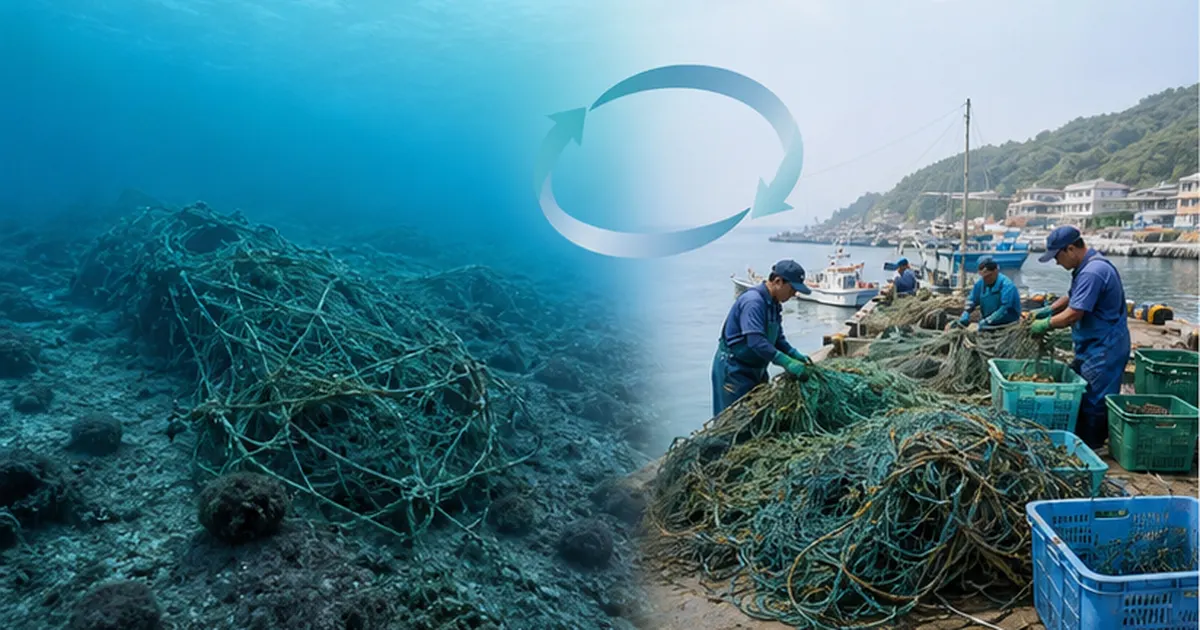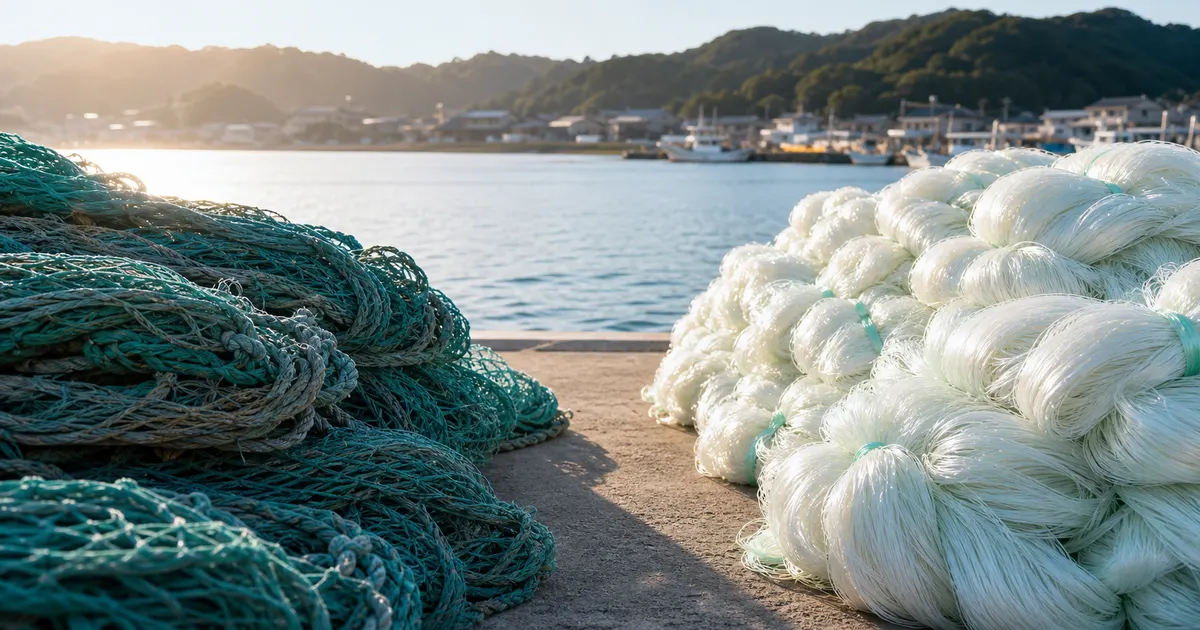
Have you ever seen faded fishing nets piled up in a corner of a harbor? In Japan, it used to be standard practice for these tools - which once supported the bounty of the sea - to be treated as "industrial waste" once they reached the end of their working life. In recent years, however, these used fishing nets have begun to take on an entirely new value, not as an "urban mine" but as an "ocean resource."
There are two reasons for this. First, most fishing nets are made of high-quality nylon, a good raw material that is easy to regenerate into fiber or resin pellets. Second, fishing gear that has drifted out to sea - so-called "ghost gear" - has become one of the largest causes of marine plastic pollution, and the social need to collect and recirculate it is rapidly growing.
This article walks through, step by step and backed by domestic and international case studies and reliable figures, what technologies turn used fishing nets into regenerated fiber and resin, who collects them and how, and how the reduction of derelict fishing gear links up with ghost gear countermeasures.
What You'll Learn in This Article
- That most fishing nets are made of a single thermoplastic resin such as nylon, making them, in fact, a "high-quality resource" well suited to recycling
- The difference between the two main methods for regenerating used fishing nets: material recycling and chemical recycling
- Case studies such as ECONYL, NetPlus, and REAMIDE, in which discarded fishing nets are reborn as high-quality regenerated nylon and resin pellets
- How collection schemes (cooperation among fishers, fishery cooperatives, local governments, and companies) hold the key to making recycling work
- How the reduction of derelict fishing gear connects with ghost gear countermeasures (prevention, mitigation, remediation)
- The practical challenges that stand in the way of recycling, such as mixed materials, biofouling, and securing sufficient collection volumes
Why Used Fishing Nets Are Attracting Attention Now
Fishing takes place every day all around the world, and each time it does, enormous quantities of nets, ropes, and floats are put to use at sea. Every piece of gear eventually grows old, tears, and reaches the end of its life. The question is what happens after it is "used up." Some of it is properly brought back to shore and disposed of, while some is swept away by storms or accidents and never seen again.
Fishing gear left behind in the ocean is called ghost gear. Estimates from the UN Food and Agriculture Organization (FAO) and others suggest that roughly 640,000 tonnes of fishing gear flows into the world's oceans every year. That is the equivalent of tens of thousands of large trucks' worth of material joining the ocean every year, never to be collected by anyone. For more detail, see our explainer article on the ghost gear problem.
Fishing Gear Makes Up the "Heavy" Part of Marine Plastic Debris
When people think of plastic waste in the ocean, many probably picture plastic bottles or shopping bags. However, research shows that by weight, fishing gear accounts for 46-70% of large marine plastic debris. Nets and ropes are each heavy, durable, and long-lasting individually - which is precisely why they leave such a large footprint once they remain in the ocean.
Nets left in the sea continue to entangle fish, crabs, sea turtles, seabirds, whales, and other animals, entirely without any fisher intending it. This is called "ghost fishing." Battered further by ultraviolet light and waves, the nets gradually break apart into microplastics that work their way into ecosystems and food webs. The carcasses of trapped animals can even attract other creatures, which then get caught in the same net - a tragic chain that can continue for years. Nets made of nylon or polyethylene barely decompose in the natural environment, and are thought to remain in the ocean for decades, even centuries.
The scale of the problem is also confirmed from another angle. A study published in the academic journal Science Advances in 2022 used interviews with fishers around the world and operational data to estimate that roughly 2% of the fishing gear in use is lost at sea every year. Specifically, that amounts to approximately 14 billion longline hooks, 25 million pots and traps, and about 740,000 kilometers of longline rope entering the ocean every single year. The lost longline rope alone totals around 740,000 kilometers a year - a length long enough to travel almost to the moon and back. The researchers warn that if this rate of loss continues, the volume of fishing gear accumulating in the ocean will become enormous.

The Shift from "Discarding" to "Utilizing"
Against this backdrop, the global watchword has evolved beyond "don't let it into the sea, and collect it if it does" to include "recirculate what has been collected as a resource." Rather than incinerating or landfilling used fishing nets, the idea is to turn them back into fiber or resin, again and again. That is the core of this article's theme: fishing net recycling.
Japan is no exception to this problem. According to fixed-point surveys by the Ministry of the Environment, roughly 12,000-13,000 tonnes of plastic waste washes up on Japan's coasts every year, and within that, fishing nets and ropes are a major category alongside beverage bottles. Even limiting the scope to inner bays and inland seas, where the influence of foreign-origin waste is smaller, some surveys find that fishing-related items make up roughly 10-20% of the washed-up plastic debris. For Japan, surrounded by sea on all sides and home to a thriving fishing industry, fishing net recycling is very much everyone's own problem.
Key Points of This Article
- An estimated 640,000 tonnes of fishing gear flows into the ocean every year
- Fishing gear accounts for 46-70% (by weight) of large marine plastic debris
- Used fishing nets can be regenerated as a high-quality nylon resource
- Recycling only works when collection, sorting, regeneration, and use are all connected
What Are Fishing Nets Made Of? A Material Surprisingly Suited to Recycling
Before diving into recycling itself, it helps to first understand what fishing nets are actually made of - that makes it much easier to see why they can be regenerated at all. The materials used vary by application, but the following thermoplastic resins (plastics that soften when heated and can be reshaped) are the most common.
| Main Material | Characteristics | Common Applications |
|---|---|---|
| Nylon (polyamide) | Strong, resistant to stretching, hard to see underwater. The most valuable raw material for regenerated nylon | Gillnets, set nets, some trawl nets |
| Polyethylene (PE) | Lightweight and floats on water. Inexpensive and easy to handle | Ropes, floating nets |
| Polypropylene (PP) | Lightweight, resistant to chemicals. Common in ropes | Ropes, fish-attracting devices |
| Polyester | Highly weather-resistant, resists stretching | Some netting and ropes |
Why Nylon Is Called a "Treasure Trove"
Among these, nylon is the one that draws particular attention from the recycling world. Nylon is chemically stable and highly durable, and when a substantial volume of the same material can be secured, it makes an extremely high-quality regenerated fiber or resin. Waste fishing nets have an ideal property as a recycling feedstock: a high-quality, single material - nylon - arriving in bulk at a fixed location, the harbor.
Unlike the mixed plastic waste that comes out of ordinary households, fishing nets are reasonably uniform by type, so if they can be collected and sorted well, they can readily be turned into high-value-added material. That is exactly why major trading companies and chemical manufacturers are competing to enter this field.
It's also worth knowing that there are two representative types of nylon: "nylon 6" and "nylon 66." Nylon 6 in particular can be broken down relatively easily, through a chemical reaction, back into its raw monomer, caprolactam - a trait that pairs well with the chemical recycling described later. The fact that most of the nylon used in fishing nets is of this type is one more reason waste fishing nets are so prized as feedstock for regenerated nylon.

Yet the Reality Is "Not So Simple"
That said, real-world waste fishing nets are not so straightforward. Even a single net often combines multiple materials - the netting itself may be nylon, the floats PE, the sinkers lead or resin, and the ropes PP. On top of that, nets used at sea for years accumulate shellfish and seaweed, along with sand and salt. This means you can't simply "melt it down as is" - the sorting and washing processes described later are indispensable.
In short, fishing nets are a somewhat unusual feedstock that combines the strength of "high-quality nylon arriving in bulk as a single material" with the weakness of "multiple materials and biofouling mixed together." Keeping this dual nature in mind makes it easier to understand why collection and sorting processes are given so much weight, and why companies are racing to develop new technology. In the next chapter, let's take a look at that regeneration technology itself.
What Is Thermoplastic Resin?
Thermoplastic refers to a type of plastic that softens when heated and hardens again as it cools. This property is what allows it to be crushed, melted, and reshaped over and over. Nylon, polyethylene, and polypropylene are all in this family, and it is the very foundation that lets fishing nets "be reborn again and again."
Technologies for Regenerating Waste Fishing Nets: Two Types of Recycling
Methods for turning collected fishing nets into new materials fall broadly into two categories: material recycling and chemical recycling. Each has its strengths and weaknesses, and the choice depends on the condition of the net and the quality being targeted.
Material Recycling: Crushing, Melting, and Reshaping
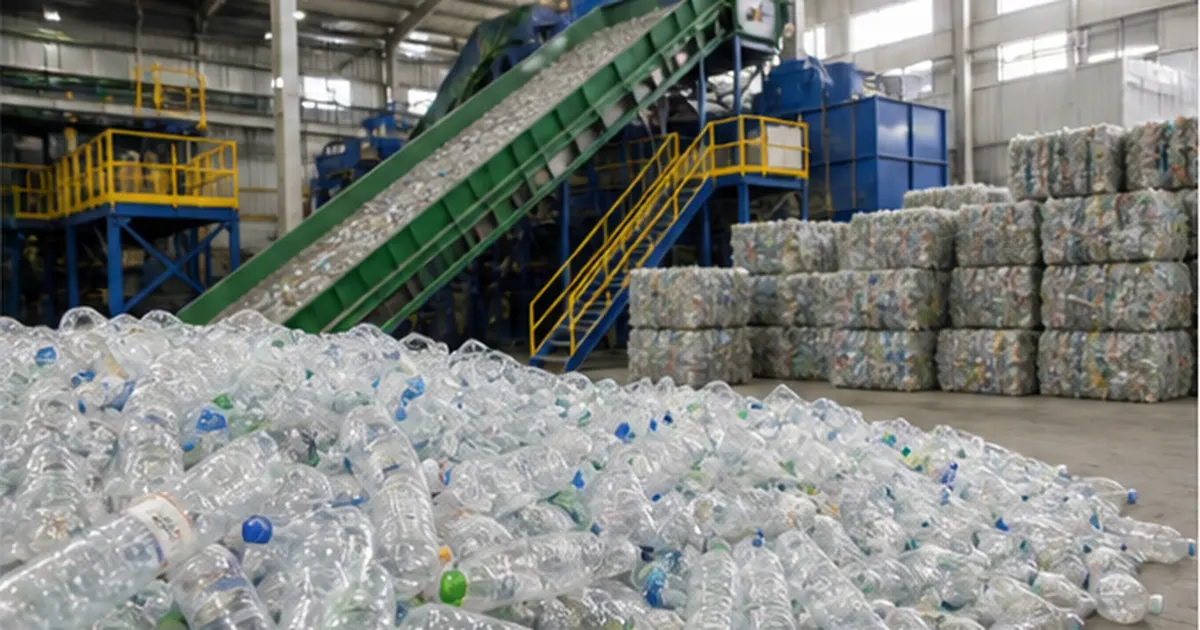
Material recycling washes and sorts the collected nets, shreds them finely, heats and melts them, and processes the result into resin pellets (small granular raw material). These pellets can then be used for injection molding or spinning, turning them into plastic parts or fiber. Because the plastic is not broken down chemically - only reshaped - the process is relatively simple and energy-efficient.
On the other hand, every cycle of heating and reshaping causes slight molecular damage, and strength and color tend to degrade little by little. As a result, rather than being restored to the very same top-quality thread it once was, this method is widely used as pellets for miscellaneous goods, parts, and blended fibers.
Chemical Recycling: Breaking It Down to the Molecule to Make It "Like New"
Chemical recycling uses a chemical reaction to break nylon all the way down to its raw monomer, removes the impurities, and then re-polymerizes it to make nylon anew. In the case of nylon 6, this means breaking it down to the raw material caprolactam. It takes more time and energy, but the result is quality indistinguishable from virgin (brand-new) nylon, and in theory the material can be circulated endlessly - its greatest strength.
As explained above, material recycling gradually loses quality with repeated cycles, but chemical recycling has no such weakness. Because it is broken all the way down to the molecular level and impurities are removed, color, dirt, and even slight degradation can be completely reset. The more a net has been worn down through use at sea, the more this "rebuild it from scratch" approach proves its worth. It is this mechanism that allows a global brand like ECONYL to maintain its high quality.
| Aspect | Material Recycling | Chemical Recycling |
|---|---|---|
| Processing concept | Crush, melt, and reshape | Break down to the molecule and rebuild |
| Resulting quality | Tends to degrade gradually | Can be restored to virgin-equivalent quality |
| Energy and cost | Relatively low | Tends to be higher |
| Main uses | Resin pellets, miscellaneous goods, blended fibers | High-quality regenerated nylon fiber |

In recent years, specialized technology has also emerged that melts and compresses mixed plastics into pellets without first separating them by type. This is opening up a path to putting composite plastic materials - which previously had no option but incineration or landfilling - to use as a resource. Technology that reduces the burden of sorting has the potential to fundamentally change how "nets with mixed materials," long a headache on the ground, are handled. In fact, efforts are now underway to make prototype bottles from resin regenerated out of discarded fishing nets - an application that used to be difficult.
Rather than one method being superior to the other, the two complement each other. Nylon nets in good condition can go to high-quality chemical recycling, while nets mixed with multiple materials or heavily soiled can go to material recycling - sorting them this way allows resources to circulate without waste. For more on how plastic does or doesn't break down in the natural environment, see our article on plastic degradation.
The Difference from Thermal Recycling
Fishing gear that is too dirty to turn back into material is sometimes sent instead to "thermal recycling," which burns it to recover heat energy. However, because the material itself is lost in this process, it is the last resort from a circularity standpoint. The basic approach is always to first look for a way to use it as material.
The Frontline of Regenerated Nylon in the World and Japan
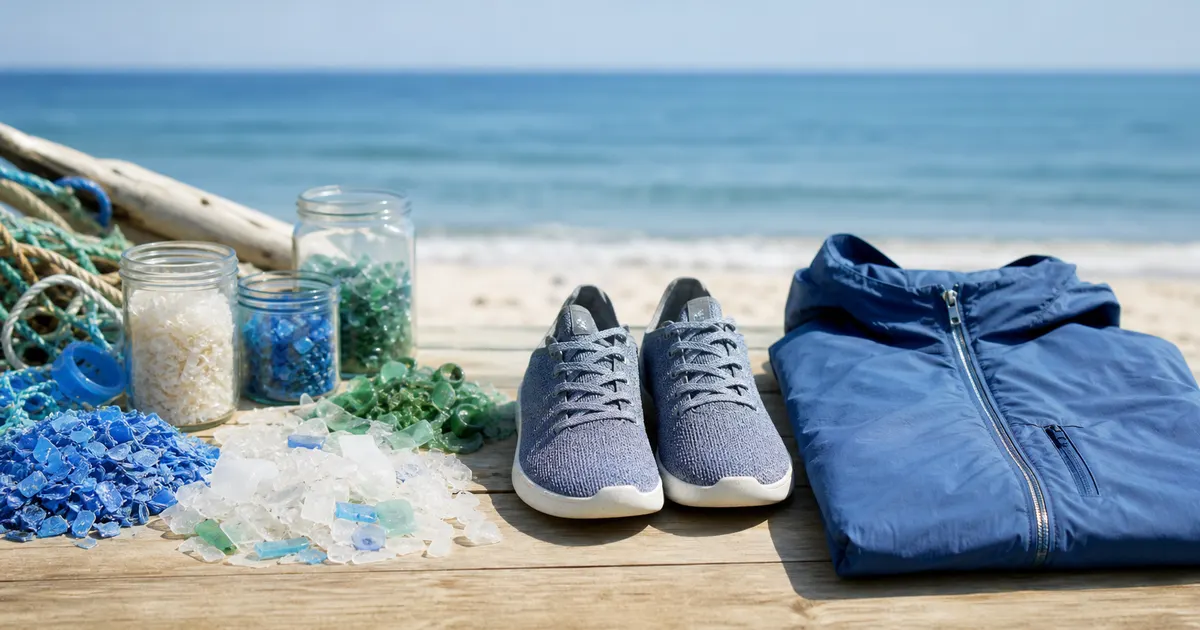
Now that we have a picture of the technology, let's look at actual representative examples of materials born from waste fishing nets. Regenerated nylon derived from fishing nets is already starting to appear in clothing, bags, and everyday items close to us.
ECONYL: A Global Brand of Circular Nylon
ECONYL, offered by Italy's Aquafil, is regenerated nylon made 100% from waste materials such as discarded fishing nets and worn-out carpets. It follows a four-stage process - Rescue, Regenerate, Remake, and, through brands, Reimagine - and uses chemical recycling to restore the material to quality indistinguishable from virgin nylon. According to Aquafil, it can cut global-warming impact (CO2 emissions) by up to roughly 90% compared with virgin nylon, and it has been adopted by many brands, including Gucci, Burberry, and H&M.
In Japan, Itochu Corporation has formed a partnership and capital tie-up with Aquafil, and in 2024 it teamed up with domestic fishing net makers Momoi Fishnet and Kinoshita Fishnet to begin jointly developing and selling fishing nets made using recycled nylon. Used nets are regenerated, and that same material is used to make new nets - a genuine "net to net" cycle. This is a clear real-world example of the ideal of recycling: a closed loop in which the same product is reborn again and again.
Behind ECONYL's success lies strong backing from the fashion industry. For an apparel sector long criticized for its environmental footprint, regenerated nylon that turns waste into feedstock without sacrificing quality has become a signature material for demonstrating sustainability. Its adoption by everyone from luxury brands to mass retailers has created a market where "regenerated nylon sells," and that market has become the economic backbone supporting fishing net collection.
NetPlus: Domestic Collection That Started in Chiba
Toyota Tsusho has entered the business of turning waste fishing nets into "NetPlus," a 100% regenerated nylon material, and began a test collection of waste fishing nets in the Sotobo area of Chiba Prefecture starting in July 2023. The initiative washes and sorts the nets domestically before turning them into regenerated nylon material, and it is building out a collection framework in partnership with local fishers. NetPlus originally originated in Chile, South America, as a material born from fishing net collection there, and has been used in items such as sunglasses, skateboards, and outdoor gear. Its defining feature is bringing know-how established overseas into the field in Japan, taking on the challenge of domestic collection.
The Diverse Efforts of Domestic Manufacturers
- Refinverse (REAMIDE): Manufactures regenerated nylon resin using waste fishing nets and offcuts from automotive airbags as feedstock, and has expanded into materials such as buttons
- Mitsubishi Chemical (KILAVIS RC): Announced nylon yarn blended with regenerated nylon resin made from domestically discarded fishing nets in 2021, and has since built out mass-production capacity
- Regenerated nylon derived from waste fishing nets: Products are now emerging that claim to cut CO2 emissions by roughly 85% compared with virgin material
What these examples have in common is that they are not simply "good for the environment" - they also hold up in terms of product quality and design. The era in which regenerated nylon was expected to be somewhat inferior in quality is already fading. Maintaining performance on par with virgin material while sourcing feedstock from fishing nets recovered from the sea - this "balance of quality and environmental benefit" is precisely the driving force that will keep regenerated nylon from being a passing trend and instead root it as an established industry.
Uses as resin pellets are also expanding. Beyond fiber (yarn), the material can be molded into miscellaneous goods, everyday items, and automotive parts, so nets can be sorted according to their condition and quality into "nets suited to yarn" and "nets suited to pellets," making full use of the resources collected without waste. A single net might, in one form, become part of a swimsuit, and in another, the hardware or a button on a bag. This diversity of applications supports the goal of circulating collected material without waste.

Representative Examples Worth Remembering
- ECONYL (Aquafil / Italy): High-quality circular nylon made through chemical recycling
- NetPlus (Toyota Tsusho): 100% regenerated nylon advancing domestic collection in Sotobo, Chiba
- REAMIDE (Refinverse) / KILAVIS RC (Mitsubishi Chemical): Regenerated nylon materials developed in Japan
Collection Schemes: How Are Fishing Nets Gathered?
No matter how advanced the regeneration technology, recycling cannot function unless waste fishing nets - the raw material - are collected steadily. This, in fact, is where fishing net recycling faces its biggest test. More than the technology itself, the framework of "who collects it, where, and how" determines success or failure.
Where Waste Fishing Nets Come From, and How They Flow
Waste fishing nets begin their journey when fishers bring nets that are no longer usable back to shore. In Japan, up to now, most such nets have been handed over to waste disposal contractors as industrial waste, commonly ending up landfilled or incinerated. Making recycling work requires switching this "discard flow" into a "collect-as-resource flow." What makes this difficult is that fishing operations are busy, leaving little room to spend extra effort on sorting and storage. That is precisely why it is essential to design a system, from the perspective of those on the ground, that can be sustained without excessive burden.
- Fishers bring used nets and ropes ashore and store them
- The nets are gathered at collection points (fishery cooperatives, ports, dedicated yards, etc.)
- They are sorted by material, and biofouling and foreign matter are removed
- They are cut and washed, then transported to a regeneration plant
- They are turned into new material through material or chemical recycling
A Model That Keeps the Cycle Turning by "Buying Up" Nets
To keep collection going, it matters that fishers have some benefit from handing nets over. For example, recycling programs (such as the NET RE-VALUE PROGRAM) that buy waste fishing nets directly from fishers locally, nationwide, have partner companies regenerate the collected nets after sorting, cutting, and washing them. Material that fishers once paid to have disposed of as waste instead becomes a source of income. This shift in mindset is the key to stabilizing collection volumes. This matters especially in rural fishing communities, where the burden of disposal costs, or simply the lack of a nearby disposal contractor, is a persistent concern - so the mere existence of an option to "sell it" or "have it taken off your hands by bringing it in" carries real significance.
Looking overseas, the UK runs a framework called the Net Regeneration Scheme, which offers the fishing industry free net-recycling collection points, and the GGGI supports similar projects in various countries. What these efforts have in common is that they pair "ease of bringing nets in," so fishers face no extra burden handing nets over, with a "reliable receiving point" that is certain to take them. More than technology, it is this steady work of logistics and relationship-building that forms the foundation making recycling function in the real world.

National Guidelines Provide a Boost
Supporting these efforts institutionally is the Ministry of the Environment's "Guidelines for the Treatment of Fishery-Related Waste" (revised May 2020). Because fishery-related waste includes items subject to different treatment standards, the guidelines state that advancing recycling and reuse requires not mixing waste together when disposing of it, but sorting it based on how it will be treated. Sorting is precisely the first step that determines the quality of everything that follows in recycling.
Four Conditions for a Collection Scheme to Work
- A collection point and storage system that makes it easy for fishers to hand over nets
- Sorting and washing by material that can be done on-site without excessive burden
- A financial or effort-based benefit for those handing nets over
- A regeneration or use destination reliably connected to receive the collected material
Linking the Reduction of Derelict Fishing Gear with Ghost Gear Countermeasures
Fishing net recycling does not stand complete on its own. It only delivers its full effect when it joins hands with ghost gear countermeasures aimed at not letting fishing gear into the ocean in the first place. Both are needed: the "exit," collecting and regenerating gear, and the "entrance," preventing it from being lost.
The Three Pillars of Countermeasures: Prevention, Mitigation, Remediation
International frameworks for ghost gear countermeasures broadly present three approaches. This is a way of thinking shared in common by organizations working at a global scale, such as the Global Ghost Gear Initiative (GGGI, founded in 2015), the FAO, and WWF.
| Countermeasure | Content | Specific Examples |
|---|---|---|
| Prevention | Not letting fishing gear into the ocean in the first place | Marking gear, thorough inspection and storage, moving gear ahead of bad weather |
| Mitigation | Reducing the damage even if gear is lost | Use of biodegradable materials, designing gear that is easier to recover |
| Remediation | Removing what is already in the ocean | Seafloor cleanups, recovery of drifted nets, and recycling |
Recycling mainly supports the third pillar, "remediation," but its role does not end there. Because there is a reliable outlet through which collected nets can be turned into money or material, fishers and local governments find it easier to take on seafloor cleanups and the recovery of drifted nets. This creates a virtuous cycle: the wider the outlet for recycling grows, the greater the incentive to collect becomes.
In the "mitigation" field, research into the gear itself is also progressing. Examples include trials using biodegradable materials for part of a net so that, even if it is lost, it does not keep fishing indefinitely, and efforts to design "recycling-friendly gear" by standardizing materials from the outset so that it is easier to collect and recycle. The Fisheries Agency of Japan is also backing projects to study such gear as part of its sustainable plastic-use measures. Keeping recycling in mind from the design stage dramatically smooths the path to circularity.
What Fishers Can Do Out at Sea
In 2019, the Fisheries Agency of Japan compiled "Future Efforts on the Issue of Plastic Resource Circulation in Fisheries," which fed into that same year's "Action Plan for Marine Plastic Litter Countermeasures." At sea, this calls for inspecting gear and storing it onboard before and after operations, moving gear ahead of bad weather, and marking gear to show ownership; on land, it calls for gear maintenance and proper disposal and recycling. In Japan, an estimated 20,000 tonnes of fishery-related plastic is used every year, of which around 2,000 tonnes is estimated to be lost without being properly managed - and it is the accumulation of these on-the-ground efforts that determines how much escapes into the sea.

Marking is another effort not to be overlooked. Attaching a mark to gear that identifies its owner makes it easier to trace "whose gear it is, and from which fishing ground" if it is lost. This not only clarifies accountability but also becomes data for understanding the true scale of losses and building countermeasures. The GGGI and FAO continue to push for such gear marking to become an international standard. A single small mark can be the first step toward making the flow of fishing gear across the entire ocean visible.
The damage from gear left in the ocean is not limited to the animals it entangles. Nets that sink to the seafloor can smother coral reefs, destroying the habitat itself. The reality of debris accumulating on the ocean floor is also covered in our article on deep-sea debris. Only when both wheels - the entrance of prevention and the exit of recycling - turn together does the burden on the ocean truly begin to lighten. Having an outlet that turns collected material into a circulating resource, rather than treating collection as the end point, is the driving force that moves the entire ghost gear countermeasure forward.
Barriers to Recycling, and Ways to Overcome Them
The story so far has been largely positive, but fishing net recycling still faces many challenges. Why doesn't a material that should be a "high-quality nylon resource" circulate easily? Let's lay out the real barriers faced on the ground.
Barrier 1: Mixed Materials
As noted earlier, a single piece of fishing gear often mixes nylon, PE, PP, lead, metal, and more, and using it as regenerated nylon requires separating it by material. This sorting relies heavily on manual labor, which takes time and manpower - that is, cost. In recent years, sensors that can distinguish materials and technology that can process mixed materials without separating them (such as methods that melt and compress them into pellets) have been under development, but they remain a work in progress.
Barrier 2: Dirt and Biofouling
Nets used at sea for years become thickly coated with shells, seaweed, sand, and salt. The washing process needed to remove these consumes water and energy, and directly affects the quality of the regenerated material. The dirtier a net is, the more effort is required, squeezing the economics of recycling. In addition, nets degrade under sunlight and seawater, often weakening the material itself. Nets in poor condition are less suited to high-quality regeneration, and this judgment call also affects both cost and quality. That is precisely why collecting nets promptly, before they are left in the sea for long periods, matters for preserving their value as material as well.
Barrier 3: Volumes Scattered Across Many Locations
Because fishing nets are generated in small amounts from ports all across the country, it is difficult to efficiently gather a volume sufficient to run a recycling plant in one place. If transportation costs pile up, even valuable resources fail to pay off. In Japan, the reality is that a large-scale, sustainable system covering everything from collection through recycling has not yet fully taken shape.
| Challenge | What's the Problem | Ways to Overcome It |
|---|---|---|
| Mixed materials | Sorting takes time and cost | Development of sorting technology and mixed-material regeneration methods |
| Dirt / biofouling | Washing requires water and energy | Efficient washing processes, prioritizing collection of nets in good condition |
| Scattered volumes | Consolidation incurs transport costs | Building regional collection points, promoting collection through buy-up programs |
| Profitability | Processing costs tend to exceed sale price | Developing high-value-added uses, partnering with brands |

The barrier of profitability cannot be overlooked either. Collection, transport, sorting, and washing all require labor and energy, yet regenerated nylon is not always cheaper than virgin material - it can, in fact, end up more expensive because of the extra effort involved. What bridges this gap is the presence of brands and consumers who value the environmental benefit enough to deliberately choose regenerated material. In other words, fishing net recycling is sustained not only by technology and logistics but also by demand - by whether there are people willing to pay for that value.
Even so, the situation is steadily advancing. As trading companies and chemical manufacturers enter the field and brands actively adopt regenerated nylon, the outlet of "collect it and it will sell" has widened. A wider outlet drives more collection, and more collection brings down the unit cost. How far this virtuous cycle can be scaled up is the challenge ahead. For a broader view of protecting the ocean environment as a whole, our article on marine protected areas is also worth reading.
"It's Fine Because It Can Be Recycled" Is Not Enough
Even as regeneration technology advances, it does not mean every piece of fishing gear that drifts into the ocean can be collected. Recycling is only ever part of the solution. Not letting gear into the sea in the first place, and rethinking the sheer volume being used, remain indispensable to a genuine solution.
What We Can Do, and What Lies Ahead
Fishing net recycling is not a story that belongs solely to distant fishers and factories. Our own choices, even living far from the sea, can genuinely help push this cycle forward. To close, let's lay out what we can do as consumers and what the road ahead looks like.
The surest shortcut to protecting the ocean is not waiting for someone far away to make an effort, but shifting our own choices, even a little, toward the ocean's side. Choosing one product made of regenerated material. That accumulation is what keeps the collection sites on the ground turning.
- Umi LAB Editorial Team
The story of fishing net recycling is built on a relay of many people passing the baton: fishers on the ground at sea, manufacturers refining the technology, brands choosing the materials, and the consumers who pick up the finished products. If any one link is missing, the cycle stops working smoothly. Put the other way around, the small step of "choosing" that each of us takes is our own reliable leg of that relay.
A Step We Can Take as Consumers
- Choose regenerated nylon products: Consciously choose bags, swimwear, clothing, and everyday items made with regenerated materials derived from fishing nets, such as ECONYL or NetPlus
- Check the labeling: Look for labels or certifications such as "recycled nylon" or "derived from ocean plastic" when shopping
- Learn, and share: Share the topic of ghost gear and fishing net recycling with family and friends, and help widen the circle of interest
- Pick it up at the beach, and take it home: Try joining a beach cleanup and experience firsthand what it's like to properly collect drifted nets and rope
Toward a Circular Ocean Going Forward
The ideal is a "closed loop" in which used nets become nylon fiber again, which then becomes new fishing nets or products, circulating between the sea and society over and over. Itochu's "net to net" initiative shows one form this can take. Pieces connecting the entrance to the exit are gradually falling into place: research into biodegradable materials, the design of gear that is easier to collect, and digital technology that can distinguish materials.
What matters is not to over-trust recycling as a "magic solution." No matter how advanced regeneration technology becomes, it will never be possible to collect every piece of gear that has drifted into the sea, and recycling itself consumes energy and costs money. That's exactly why prevention - not letting gear into the sea in the first place - should come first, followed by reliably circulating whatever does get lost or used up. Keeping to this order may look like the long way around, but it is the surest way to protect the ocean. For more on the role the ocean's carbon absorption plays, such as blue carbon, see our article on blue carbon.
There is also a tailwind on the institutional front. Around the world, discussions are underway to build international frameworks to prevent marine plastic pollution, and momentum is growing to rethink the entire life cycle of plastics, including fishing gear. Within Japan too, mechanisms that push the cycle forward - guidelines requiring sorting, and studies into gear that is easier to recycle - have gradually been put in place. Once the four gears of technology, collection, demand, and institutions mesh together, fishing net recycling should shift from a handful of advanced examples into simply "the obvious choice."
Living off the bounty of the sea also means taking responsibility for the gear all the way to the end of its life. Fishing net recycling is a hopeful, real-world example showing that we can shift our thinking, in the face of the enormous challenge of marine plastic pollution, from "discarding" to "utilizing." For how warming affects fisheries, see our article on ocean warming and fisheries as well.

Conclusion: Fishing Nets, from "Ocean Waste" to "Ocean Resource"
Recycling used fishing nets is one practical answer to the problem of marine plastic pollution. While an estimated 640,000 tonnes of fishing gear flows into the ocean every year and accounts for much of the large marine plastic debris, nylon - the main material in fishing nets - is also a high-quality resource well suited to regeneration. By collecting, sorting, and regenerating nets through material or chemical recycling, nets can be reborn again and again as fiber or resin pellets.
What holds the key is not just excellent technology but "a mechanism for collecting" and "an outlet for use." When collection schemes are in place, brands choose regenerated materials, and prevention, mitigation, and remediation for ghost gear work together with recycling, the burden on the ocean visibly lightens. Each of our own individual choices, too, is a real force supporting that cycle.
Fishing nets that once had nowhere to go in a corner of a harbor are now being reborn as clothing, bags, and even new nets again. That is not something achieved by technological progress alone. It has taken shape through the quiet accumulation of will: fishers working to keep gear out of the sea, companies and local governments building the systems to collect it, and each individual who deliberately chooses regenerated material. Fishing net recycling is a genuine step toward turning an ocean problem from "someone else's responsibility" into "everyone's cycle."
Summary of This Article
- An estimated 640,000 tonnes of fishing gear flows into the ocean every year, accounting for 46-70% (by weight) of large marine plastic debris
- Nylon, the main material in fishing nets, is a high-quality resource that is easy to regenerate into fiber or resin pellets
- There are two regeneration methods, material recycling and chemical recycling, chosen according to the net's condition
- Regenerated nylon has become practical both in Japan and abroad, through examples such as ECONYL, NetPlus, REAMIDE, and KILAVIS RC
- Collection schemes (buy-up programs, sorting, building collection points) hold the key to making recycling work
- The effect is maximized only when combined with reduction of derelict fishing gear and ghost gear countermeasures (prevention, mitigation, remediation)
- There are also things consumers can do, such as choosing regenerated materials
References and Sources
- Ministry of the Environment, Japan - Guidelines for the Treatment of Fishery-Related Waste (Revised), May 2020
- Fisheries Agency of Japan - Marine Plastic Litter Countermeasures (Efforts in Fisheries)
- Ministry of the Environment, Japan - Estimates of Marine Plastic Waste Outflow from Japan
- UN Food and Agriculture Organization (FAO / GFCM) - Ghost gear (abandoned, lost, or discarded fishing gear and marine plastic pollution)
- Science Advances (Richardson et al., 2022) - Global estimates of fishing gear lost to the ocean each year
- WWF Japan - Ghost gear prevention measures and regional projects
- Global Ghost Gear Initiative (GGGI) - International initiative for ghost gear countermeasures
- Itochu Corporation - Joint Development and Sale of Fishing Nets Using Recycled Nylon (2024)
- Toyota Tsusho Corporation - Entry into the Fiber Recycling Business for Waste Fishing Nets, a Leading Cause of Marine Plastic Pollution
- Mitsubishi Chemical Corporation - Launch of Sales of Nylon Yarn Using Resin Made from Recycled Fishing Nets (2021)
* Sorted by reliability: government/academic institutions > peer-reviewed papers > specialized organizations > reliable media