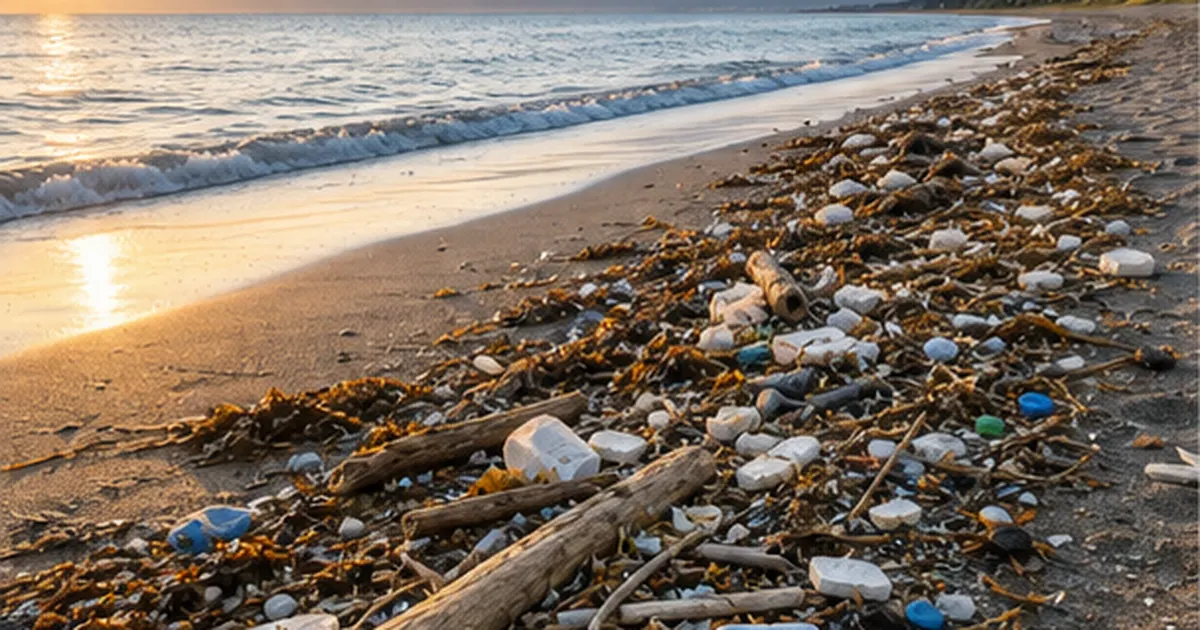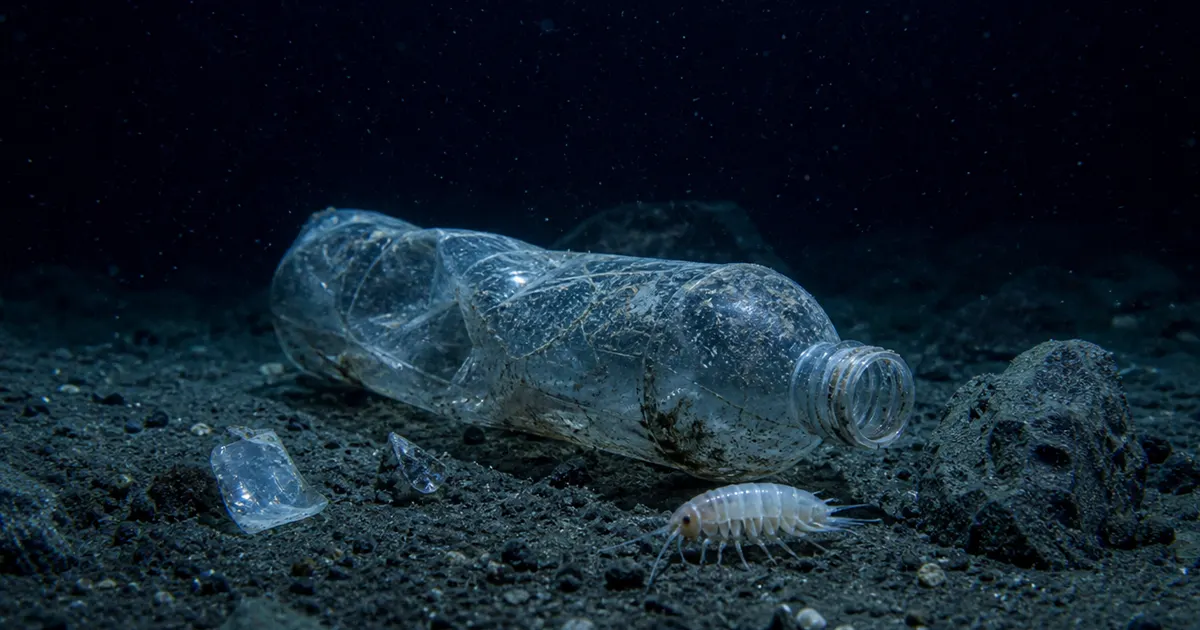
The deep seafloor — supposedly the most remote place on Earth — is now blanketed in plastic waste. A 2019 expedition found plastic debris, including plastic bags, even at the deepest point of the Mariana Trench (Challenger Deep), at a depth of about 10,927 meters, and microplastics have been detected inside the bodies of deep-sea organisms.
The deep-sea debris problem goes beyond simple environmental pollution — it is having a serious impact on the balance of ecosystems across the entire planet. The Japan Agency for Marine-Earth Science and Technology (JAMSTEC) has published numerous video records of debris sitting on the deep seafloor around Japan in its "Deep-sea Debris Database," and household waste such as plastic bags has repeatedly been confirmed even on the seafloor several thousand meters down.
What makes this especially serious is the unique nature of the deep-sea environment. Because deep-sea water is cold, low in oxygen, and never reached by UV light, plastic is believed to break down even more slowly than at the surface, meaning that once debris sinks it continues to accumulate on the seafloor over long periods. According to a 2020 estimate from Australia's Commonwealth Scientific and Industrial Research Organisation (CSIRO), around 14 million tons of microplastics have accumulated on the seafloor — more than double the amount floating on the sea surface.
What You'll Learn in This Article
- The current state of deep-sea debris around the world
- The state of pollution in extreme deep-sea zones, including the Mariana Trench
- Concrete impacts on deep-sea organisms and changes to ecosystems
- How deep-sea debris affects ocean circulation and climate
- The latest removal technologies and the current state of international countermeasures
- The Big Picture of Deep-Sea Debris: The Unseen Reality of the Seafloor
- The Shocking Discovery in the Mariana Trench: The Reality of Pollution at Earth's Deepest Point
- Serious Impacts on Deep-Sea Ecosystems: A Biodiversity Crisis
- Sources and Transport Routes of Deep-Sea Debris: Where It Comes From and How It Spreads
- The Frontier of Deep-Sea Debris Removal Technology: Innovative Approaches and Challenges
- International Responses and Policy: The World Tackles Deep-Sea Protection
- Strengthening the UN Convention on the Law of the Sea Framework
- Initiatives at the Regional Seas Level
- The European Union's Pioneering Policy
- Cooperation Frameworks in the Asia-Pacific Region
- Promoting Private-Sector Participation
- Support and Technology Transfer for Developing Countries
- Collaboration with Civil Society
- Prevention and Fundamental Solutions: Addressing the Source of the Problem
- Promoting the Circular Economy Model
- Development and Adoption of Biodegradable Materials
- Innovation in Urban Waste Management Systems
- Plastic Capture Systems in Rivers
- Reducing Discarded Fishing Gear in the Fishing Industry
- Transforming Consumer Behavior
- The Preventive Effect of Technological Innovation
- International Coordination on Prevention Measures
- Conclusion: A Path Toward Solving the Deep-Sea Debris Problem
- References
The Big Picture of Deep-Sea Debris: The Unseen Reality of the Seafloor

The deep-sea debris problem began to be seriously recognized in the late 1970s. Pollution that was initially confined to areas around major shipping routes has now spread to nearly every deep-sea region on Earth. Surveys by multiple research institutions report that artificial debris on the deep seafloor has been on a long-term upward trend, and man-made objects are now being found even in deep-sea areas once considered pristine.
Classification and Composition of Deep-Sea Debris
Debris found on the deep seafloor is broadly classified into five categories based on material and origin. In most surveys, plastic products are the most common, followed by metal, glass, and textile products.
Distribution of Deep-Sea Debris by Type (2024 Survey)
| Type of Debris | Share (%) | Main Source | Decomposition Period |
|---|---|---|---|
| Plastic bags | 28.4 | Land-based / shipping | 450-1,000 years |
| PET bottles | 19.7 | Land-based | 450 years |
| Fishing nets and rope | 16.2 | Fishing activity | 600 years |
| Food containers | 8.7 | Shipping / land-based | 50-200 years |
| Cans | 12.0 | Shipping / land-based | 50-200 years |
| Other | 15.0 | Mixed | 10-1,000 years |
Illustrative distribution of debris types found on the deep seafloor (compiled from various surveys)
Regional Pollution Conditions
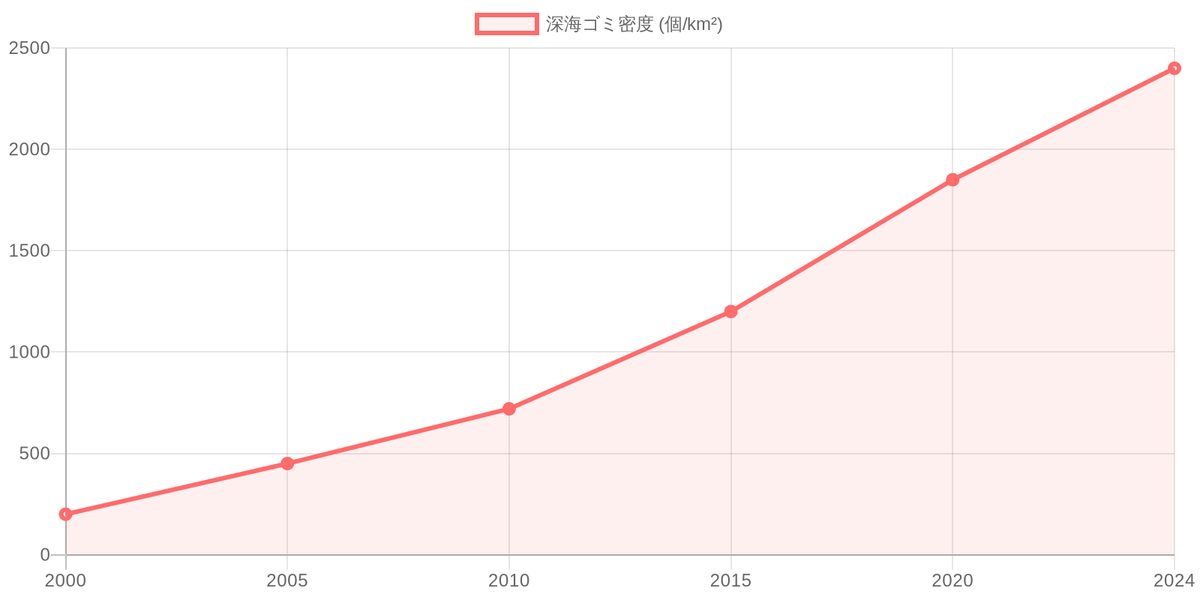
The distribution of deep-sea debris varies greatly by region. The most severely polluted is the deep Mediterranean Sea, where an average of 1,935 pieces of debris per square kilometer have been found. This is mainly due to the Mediterranean being an enclosed sea and the high population density of surrounding countries. Meanwhile, the deep central Pacific has relatively lower pollution levels, though even there 89 pieces of debris per square kilometer have been confirmed.
Comparison of Deep-Sea Debris Density Across Major World Sea Regions
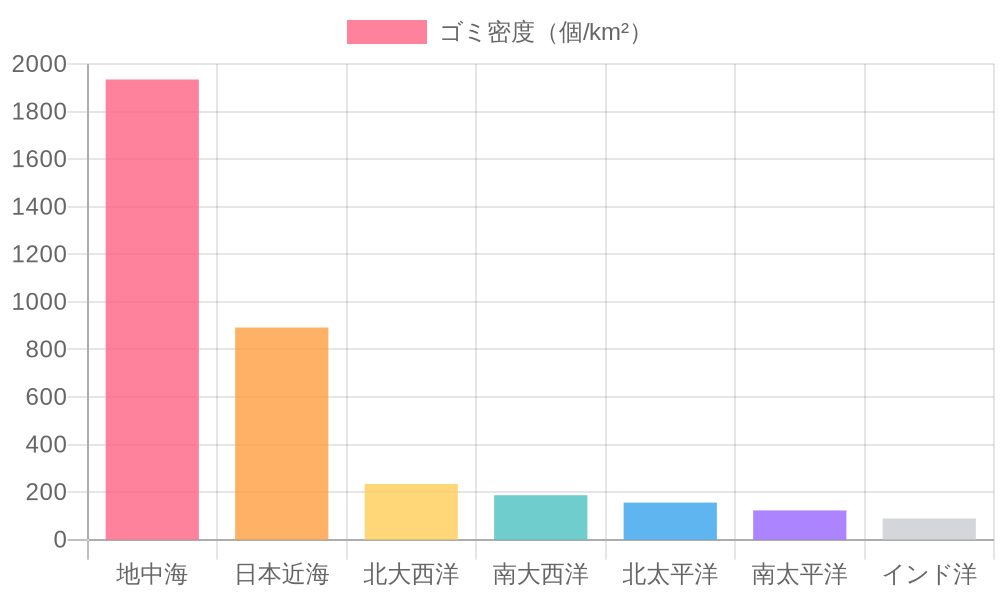
Units: items/km². The Mediterranean shows the highest pollution density.
In the waters around Japan, particularly high pollution levels have been observed in the deep parts of Suruga Bay, Sagami Bay, and Tokyo Bay. According to JAMSTEC's ongoing surveys, at a depth of 2,500 meters in Suruga Bay, debris density in 2024 had increased by about 40% compared with when the survey began in 2019, with a particularly notable rise in microplastics.
The Shocking Discovery in the Mariana Trench: The Reality of Pollution at Earth's Deepest Point
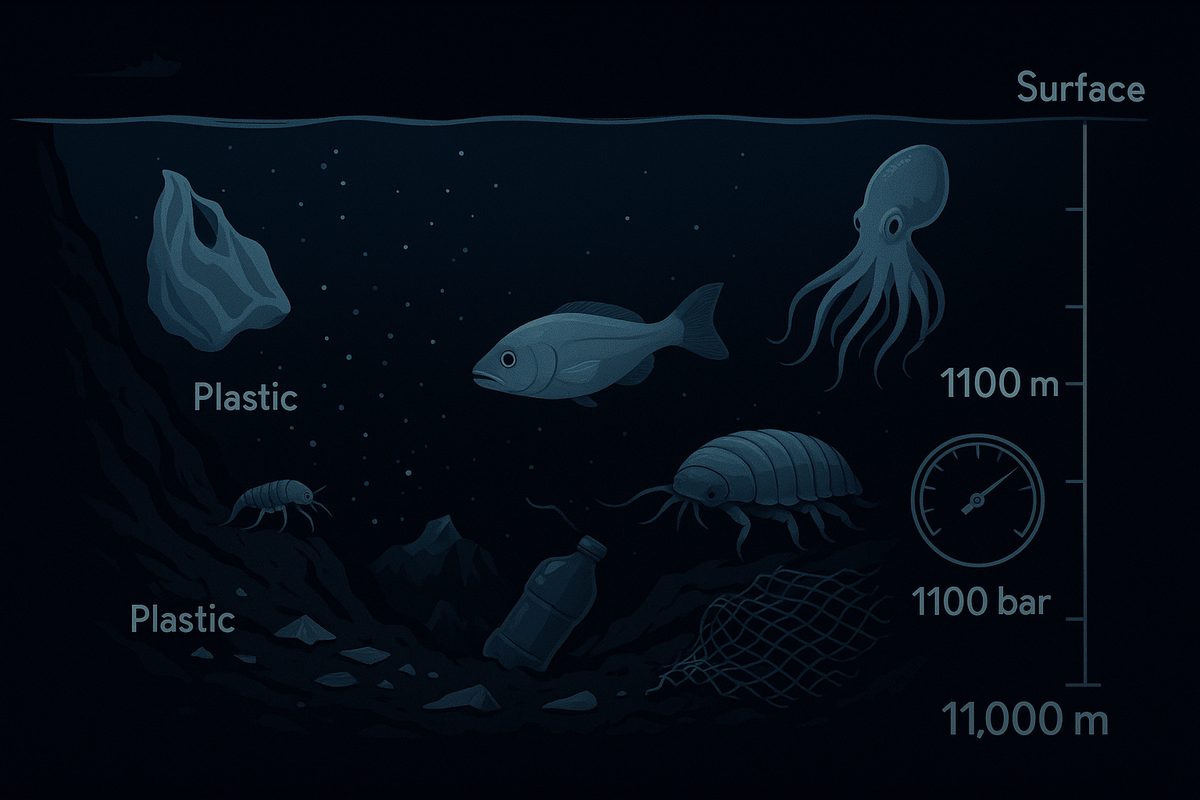
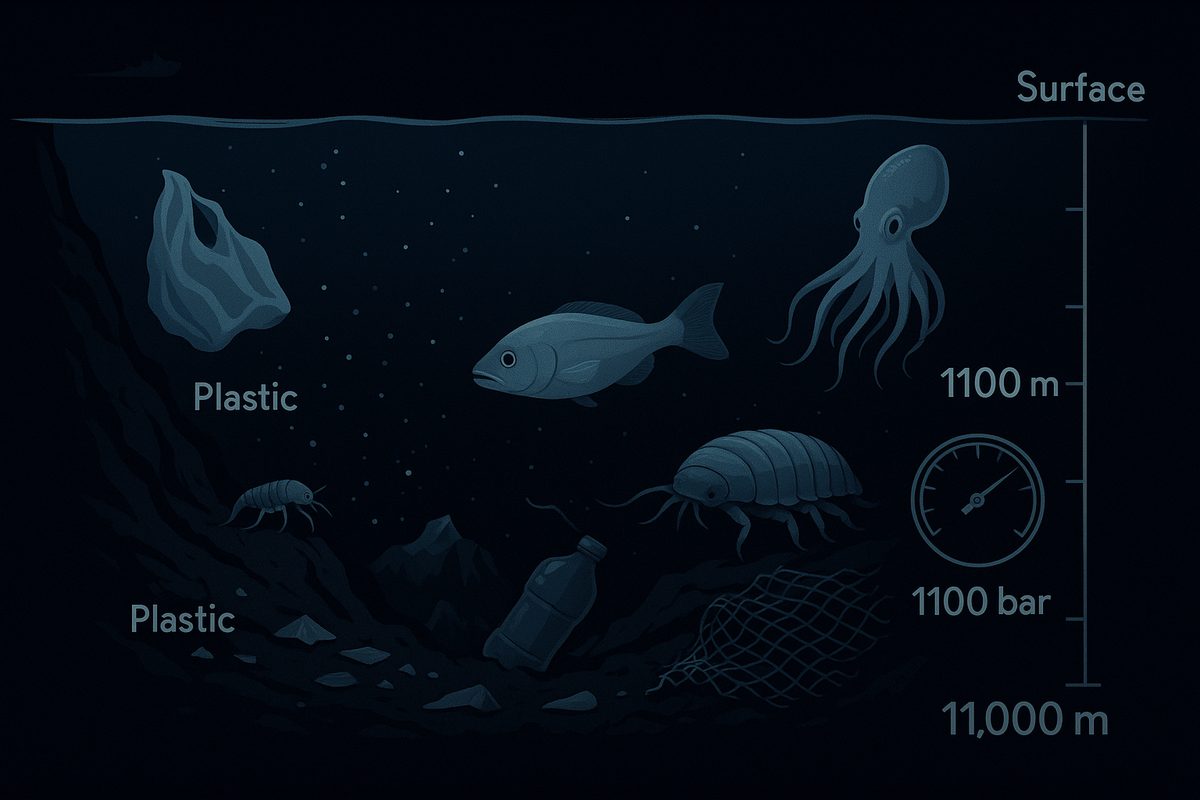
The "Five Deeps Expedition," a project to explore the deepest point of the Mariana Trench that began in 2019, delivered a shocking discovery for ocean pollution research. Plastic bags, snack food wrapping, and countless microplastic fragments were found at the deepest point of the Challenger Deep, 10,927 meters down. This discovery proved that human-generated waste has reached even the most inaccessible place on Earth.
Mechanisms of Pollution in Extreme Deep-Sea Zones
The mechanisms by which debris reaches extreme deep-sea zones like the Mariana Trench are complex. Research from the University of Texas Institute of Marine Science has identified three main routes: (1) long-distance transport by ocean currents, (2) sinking due to density differences, and (3) secondary transport by deep-sea bottom currents (Frontiers in Marine Science 2024).
Characteristics of Mariana Trench Pollution
Discovery depth: 10,927 meters (Earth's deepest point)
Main contaminants: Polyethylene bags, PET fibers
Microplastics: Widely detected in sediment and deep-sea organisms
Estimated accumulation period: 20-50 years
Of particular note is the state of degradation of the plastic found in the Mariana Trench. Unlike the UV-driven degradation seen at the sea surface, mechanical wear and chemical breakdown are the main degradation factors in the deep-sea environment. Even under the extreme conditions of about 1,100 atmospheres of water pressure (about 108.6 megapascals), plastic does not fully break down; instead, it has been found to shatter into fine pieces and persist as microplastics for extended periods.
Impact on the Food Chain at the Deep Seafloor
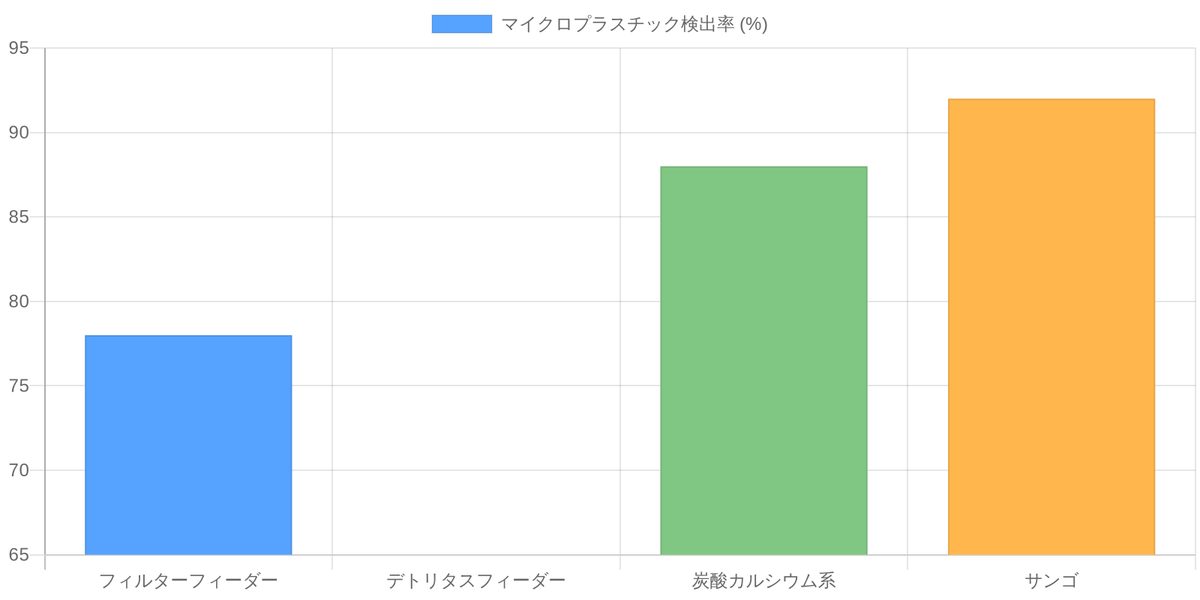
Analysis of the digestive tracts of deep-sea organisms collected from the Mariana Trench produced striking results. Microplastics were detected in 90% of amphipods and 74% of polychaetes, with an average of 1.8 plastic fragments found per individual. This is a strikingly high figure, comparable to detection rates in marine organisms at the surface.
Microplastic Detection Rates by Depth
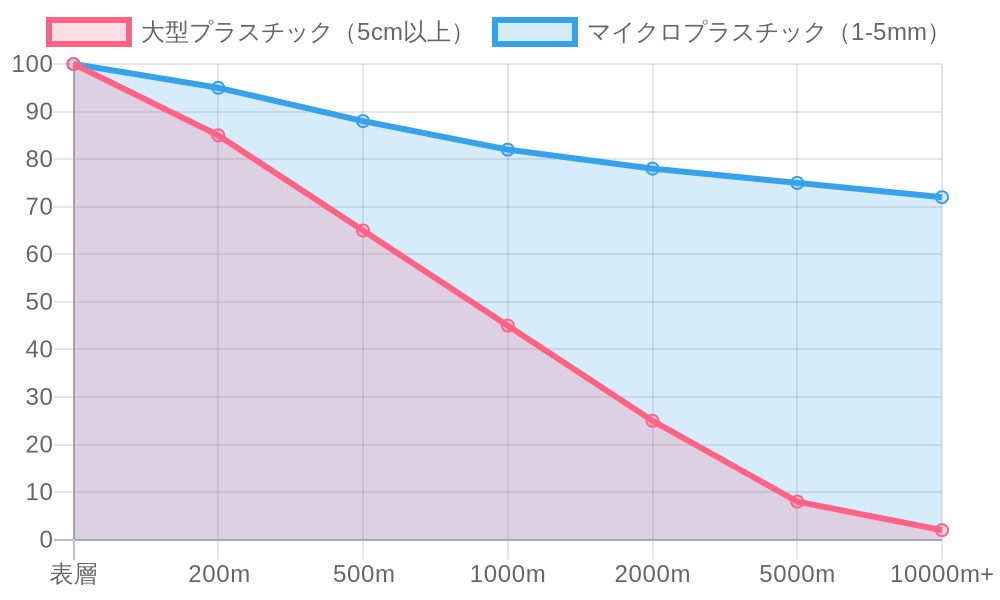
Large plastic items decrease with increasing depth, but microplastics are detected at a consistent level
What makes this even more serious is that these deep-sea organisms form the base of the food chain. Deep-sea amphipods are an important food source for fish and cephalopods, suggesting a high likelihood that the bioaccumulation of microplastics is spreading throughout the entire deep-sea ecosystem.
Latest Findings from International Joint Research
Multiple recent international surveys have reported on the state of plastic pollution in deep-sea trenches around the world. Plastic and microplastics have been confirmed in major trenches across the Pacific, Atlantic, and Indian Oceans, once again demonstrating that the deep-sea debris problem is a global environmental challenge.
Plastic Pollution Status in Major World Trenches
| Trench Name | Maximum Depth (m) | Plastic Density (items/km²) | Main Pollution Source |
|---|---|---|---|
| Mariana Trench | 11,034 | 2,200 | Asia-Pacific region |
| Tonga Trench | 10,882 | 1,800 | Pacific island nations |
| Philippine Trench | 10,540 | 3,100 | Southeast Asia |
| Clarion-Clipperton Zone | 6,000 | 1,200 | West coast of North America |
| Peru-Chile Trench | 8,065 | 2,700 | West coast of South America |
Illustrative depths of major trenches and their reported pollution status
Serious Impacts on Deep-Sea Ecosystems: A Biodiversity Crisis
The impact of deep-sea debris on ecosystems goes far beyond simple physical obstruction. Long-term research by Germany's GEOMAR Helmholtz Centre for Ocean Research has revealed that plastic pollution on the deep seafloor is causing fundamental changes to biodiversity, population size, and the very functioning of ecosystems. Especially serious is the fact that, in the deep sea's characteristic low-temperature, high-pressure environment, organisms have slow metabolic rates, so the effects of pollution persist for long periods.
Changes in Deep Seafloor Biological Communities
According to a 15-year continuous survey by the UK's National Oceanography Centre (NOC), species diversity of benthic organisms has declined by an average of 32% in deep-sea areas with severe plastic pollution. Polychaetes and crustaceans, which are responsible for decomposing organic matter on the seafloor, are especially affected, and the decline of these organisms is having a serious impact on material cycling in deep-sea ecosystems (Aquatic Conservation 2024).
The Relationship Between Plastic Pollution and Deep-Sea Biodiversity
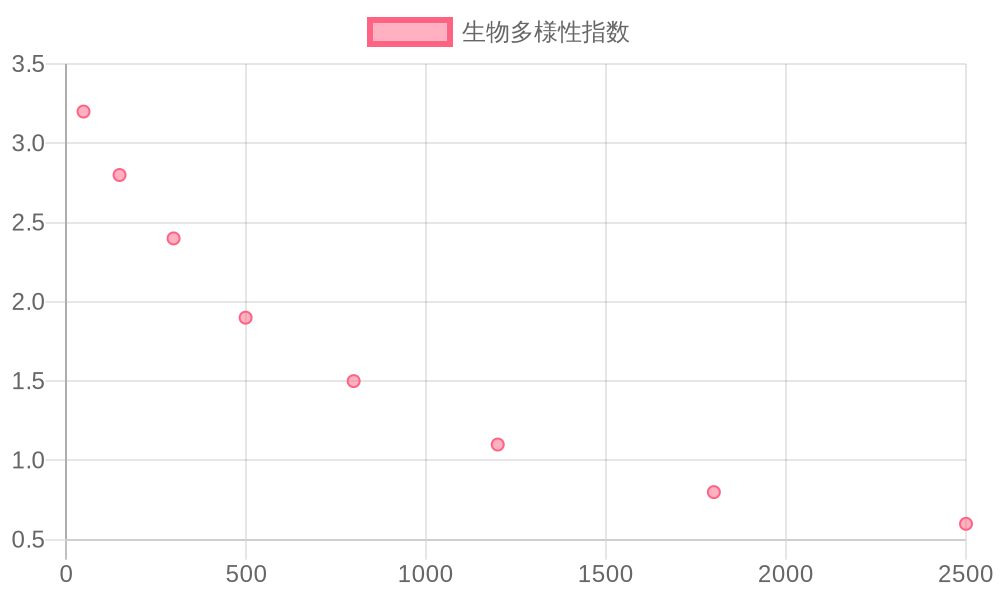
The Shannon diversity index declines exponentially as plastic density increases
Bioaccumulation of Microplastics
The accumulation of microplastics in deep-sea organisms is an even more serious problem than in surface marine organisms. According to research by France's Institut français de recherche pour l'exploitation de la mer (IFREMER), the concentration of microplastics detected in the digestive tracts of deep-sea fish is about 2.8 times that of surface fish. This is thought to be because the scarcity of food in the deep-sea environment causes deep-sea organisms to feed more indiscriminately.
Microplastic Contamination Status in Deep-Sea Organisms
Deep-sea fish: Detected in 96%, averaging 4.2 particles per individual
Deep-sea crustaceans: Detected in 89%, averaging 6.8 particles per individual
Deep-sea mollusks: Detected in 78%, averaging 2.1 particles per individual
Accumulation sites: Digestive tract (65%), gills (23%), muscle (12%)
Of particular concern is the impact on commercial deep-sea fish species. High concentrations of microplastics have also been detected in important fishery resources such as cod, alfonsino, and deep-sea flatfish, raising fears about effects on humans through the food chain. A study by the Norwegian Institute of Marine Research found that 47% of the microplastics detected in North Atlantic deep-sea cod had accumulated in the edible muscle tissue.
Leaching of Chemical Contaminants and Compound Pollution
Plastic pollution in the deep-sea environment causes not only physical problems but also chemical contamination. Analysis by the Canadian Institute of Ocean Science confirmed that endocrine-disrupting substances such as phthalates, bisphenol A, and flame retardants continuously leach out of plastic fragments on the deep seafloor. These chemicals can seriously affect the reproductive function of deep-sea organisms.
Chemical Contaminants Detected from Deep-Sea Plastic
| Chemical Group | Detected Concentration (μg/g) | Effect on Organisms | Persistence Period |
|---|---|---|---|
| Phthalates | 12.4-89.7 | Endocrine disruption | 10-50 years |
| Bisphenol A | 2.1-15.3 | Reproductive dysfunction | 5-20 years |
| Brominated flame retardants | 0.8-7.2 | Neurotoxicity | 20-100 years |
| Heavy metals | 5.2-124.8 | Bioaccumulative toxicity | Several hundred years |
Source: Canadian Institute of Ocean Science, 2024 research report
Special Impacts on Deep-Sea Coral Reefs
The deep sea also has its own cold-water coral reefs, distinct from shallow-water reefs, and these ecosystems too face serious threats. According to a survey by the Marine Institute of Ireland, physical damage from discarded fishing nets was confirmed in 45% of North Atlantic cold-water coral reefs, with coral growth rates reduced by 30-60%. Cold-water corals grow extremely slowly, and once destroyed can take decades to centuries to recover, making the impact extremely serious.
Sources and Transport Routes of Deep-Sea Debris: Where It Comes From and How It Spreads
Fundamentally solving the deep-sea debris problem requires accurately understanding its sources and the mechanisms by which it is transported to the ocean. In general, roughly 80% of ocean plastic debris is thought to originate on land, with the remainder attributed to at-sea activities such as fishing, shipping, and offshore development. However, this ratio varies greatly by sea region, and region-specific pollution patterns exist.
Detailed Analysis of Land-Based Sources
The largest source of land-based deep-sea debris is inadequate urban waste management systems. According to a report by the United Nations Environment Programme (UNEP), about 12% of the world's urban waste is not properly processed and flows into the ocean via rivers. In the Asia-Pacific region in particular, waste management infrastructure has failed to keep pace with rapid urbanization, and there are reported cases of more than 1 million tons of plastic waste flowing into the ocean annually from a single river (UNEP: From Pollution to Solution).
Regional Ocean Plastic Inflow Volume (2024 Estimate)
Units: 10,000 tons/year. Southeast Asia is the largest source of inflow.
Mechanisms of Long-Distance Transport by Ocean Currents
Complex ocean physical processes are involved in the transport of debris from the surface to the deep sea. Numerical simulations by an ocean physics research team at MIT provide a detailed analysis of the routes and time it takes for surface plastic debris to reach the deep seafloor. There are four main transport mechanisms:
Main Transport Mechanisms to the Deep Sea
① Biological pump: Sinking after uptake by plankton
② Density-driven transport: Entrainment by high-density water masses
③ Turbulent mixing: Vertical mixing between the ocean surface and deep layers
④ Gravitational settling: Direct sinking of high-density plastic
Transport by the biological pump is especially important. In this process, phytoplankton at the ocean surface take up microplastics, which pass through zooplankton that feed on them, and ultimately sink to the deep seafloor as "marine snow." Through this mechanism, surface microplastics have been found to reach the deep seafloor in an average of 30-180 days.
Transport Routes from Rivers to the Deep Sea
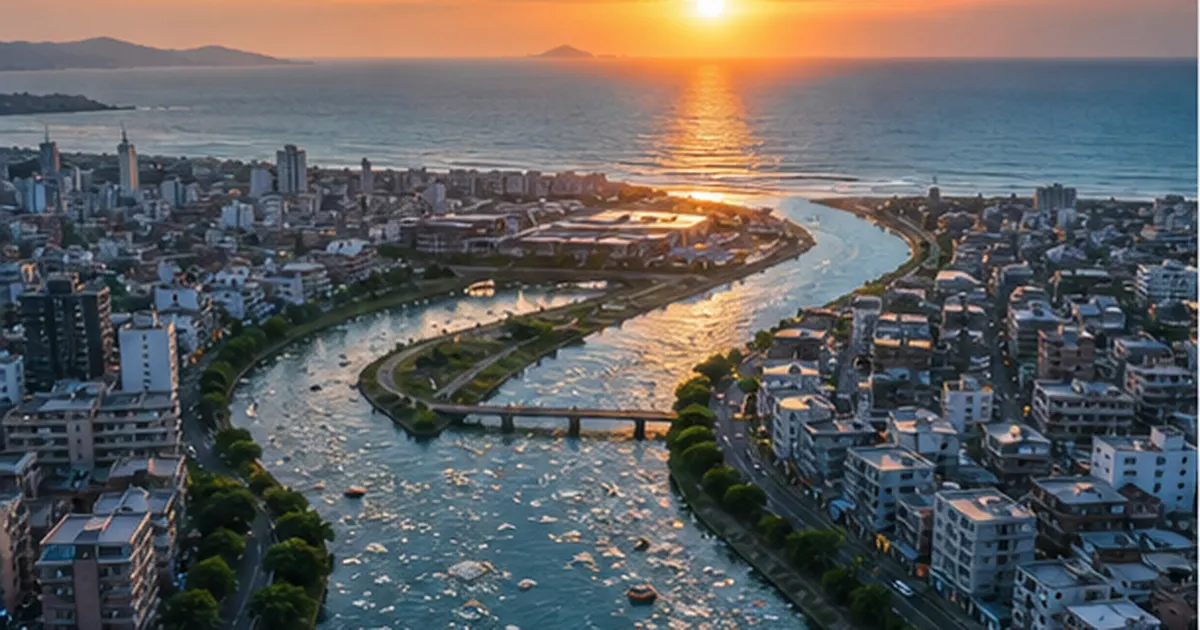
Major rivers are a primary source of deep-sea debris. According to a survey by the Netherlands' Institute for Sea Research, the world's top 20 rivers alone account for 67% of total ocean plastic inflow. Plastic that flows in from these rivers travels from the estuary across the continental shelf, and ultimately slides down the continental slope to reach the deep-sea plains.
Ocean Plastic Inflow from Major Rivers (Annual)
| River Name | Country/Region | Inflow Volume (thousand tons/year) | Main Pollution Source |
|---|---|---|---|
| Yangtze River | China | 333.0 | Urban waste, industrial wastewater |
| Indus River | Pakistan | 164.3 | Urban waste, agricultural materials |
| Yellow River | China | 124.2 | Industrial waste, household waste |
| Mekong River | Southeast Asia | 89.7 | Agricultural plastic, household waste |
| Ganges River | India / Bangladesh | 78.9 | Urban waste, religious offerings |
Source: Global Rivers Plastic Pollution Assessment 2024
Direct Dumping from Fishing Activity
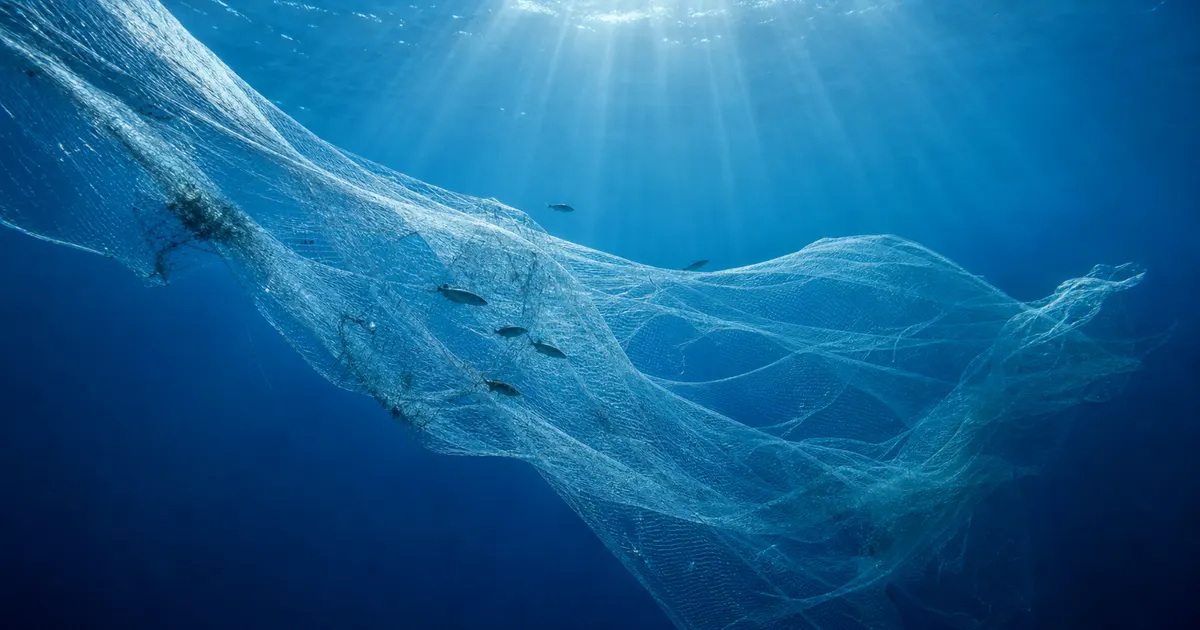
Among deep-sea debris from at-sea activities, discarded fishing gear from fishing operations is the most significant problem. According to estimates by the UN Food and Agriculture Organization (FAO), about 640,000 tons of fishing gear are abandoned in the ocean every year, and about 60% of it ultimately accumulates on the deep seafloor. In deep-sea trawl fishing in particular, damaged nets are frequently left on the seafloor, and these "ghost nets" pose a serious ongoing problem, continuing to trap seafloor organisms for long periods.
Deep-Sea Pollution Caused by Ocean Circulation
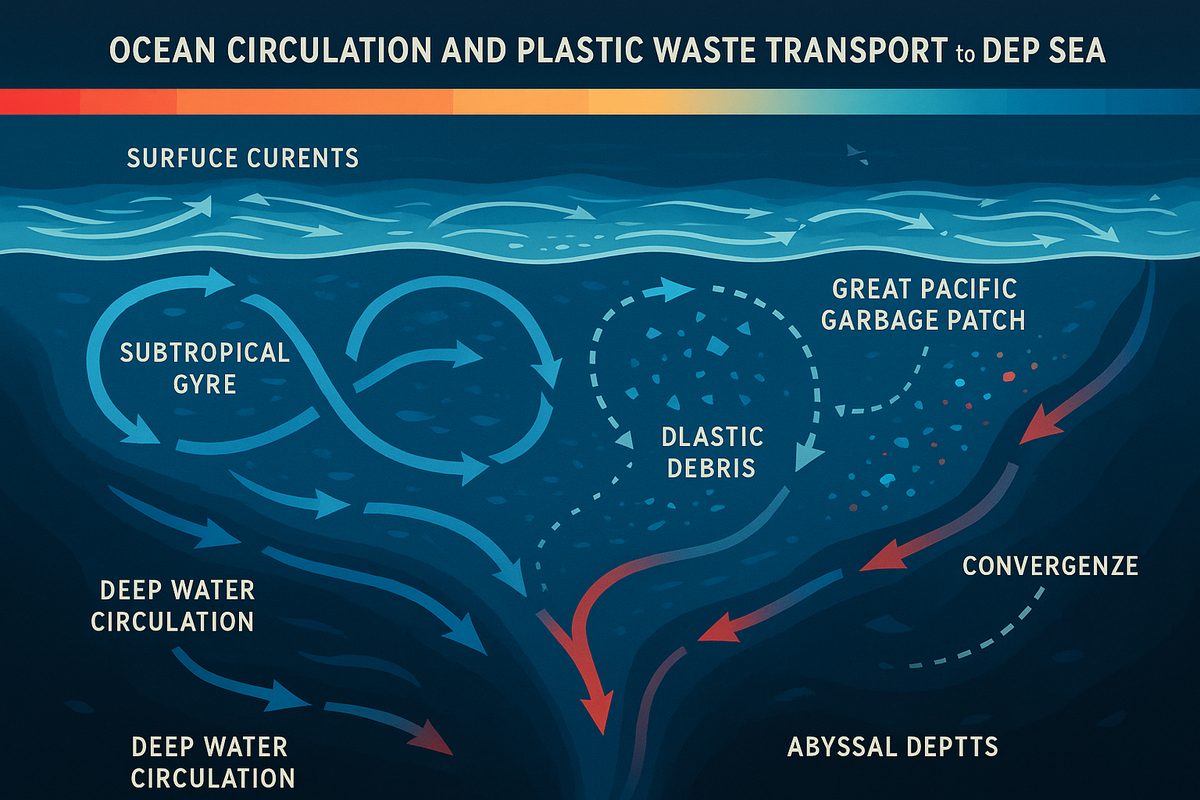
The global ocean circulation system is a key transport mechanism carrying surface plastic debris to the deep sea. Through what is known as thermohaline circulation, high-density water masses that sink in the North Atlantic and Southern Ocean carry plastic fragments with them as they spread across the world's deep seafloor. In particular, in the deep water formation regions of the Atlantic, surface pollution is transported directly to the deep sea, causing pollution to spread faster there than in other sea regions.
Compound Effects with Climate Change
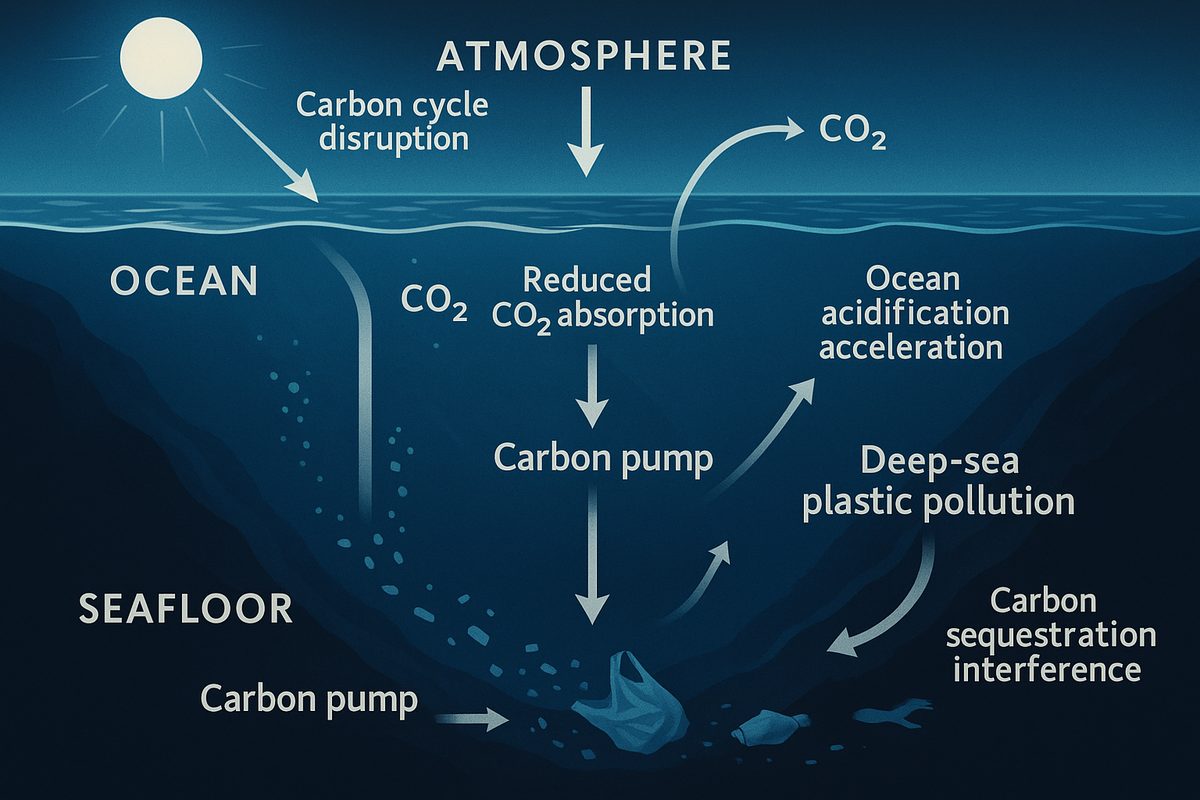
Climate change is also affecting the transport patterns of deep-sea debris. Rising sea temperatures are altering ocean current patterns, causing debris to be carried to the deep sea via routes different from before. In addition, declining sea ice has opened new pollution routes into the Arctic and Southern Oceans, and plastic pollution is spreading even into the relatively pristine deep-sea polar regions. Forecast models from the Meteorological Research Institute suggest that plastic accumulation in the polar deep sea could increase to five times current levels by 2050. Furthermore, deep-sea debris itself impedes the carbon cycle, reducing the ocean's capacity to absorb carbon dioxide, creating a vicious cycle that further accelerates climate change.
The Frontier of Deep-Sea Debris Removal Technology: Innovative Approaches and Challenges
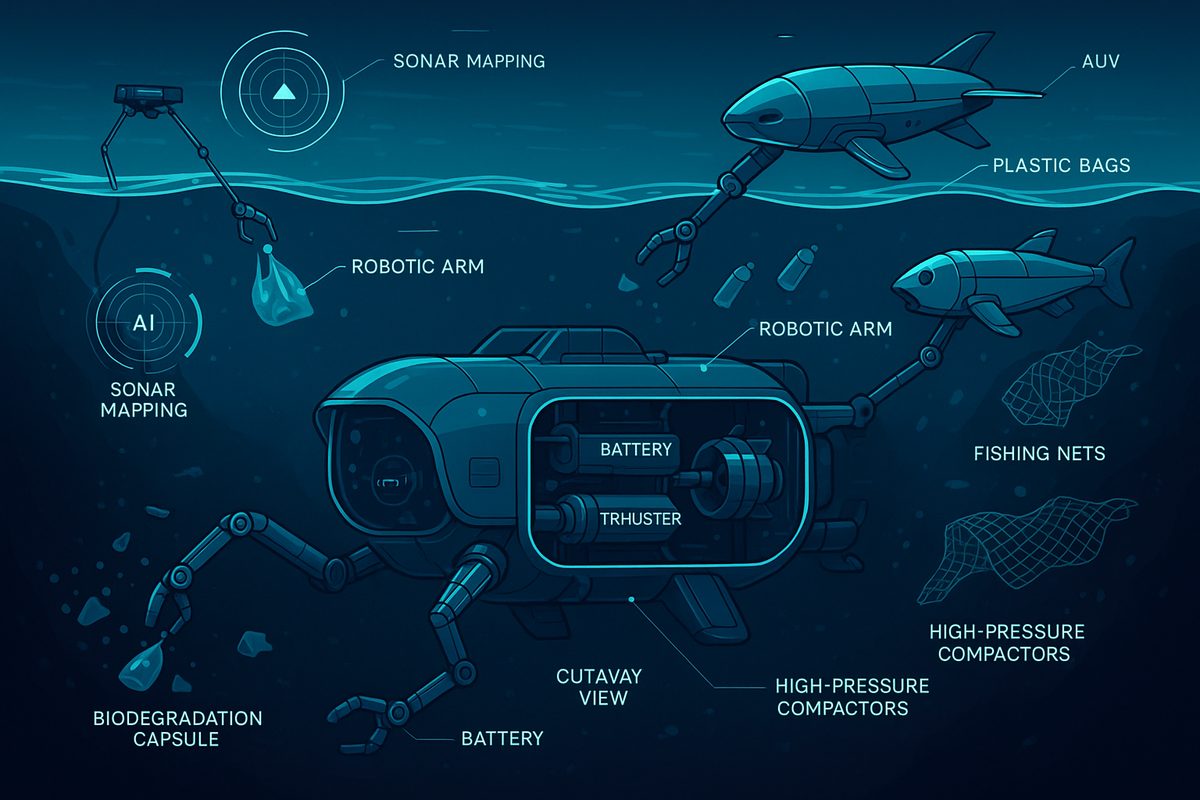
Removing deep-sea debris is an extremely difficult challenge, both technically and economically, but innovative technological development has been progressing in recent years. Countries around the world are competing to develop technology that simultaneously satisfies three requirements: operating in the high-pressure environment several thousand meters down, efficiently recovering debris across vast sea areas, and minimizing impact on deep-sea ecosystems. Approaches under consideration range from technologies already at the practical-implementation stage to innovative ideas still at the conceptual stage.
Autonomous Deep-Sea Cleanup Robots (AUVs)
The most practical solution currently expected is a deep-sea debris recovery system using Autonomous Underwater Vehicles (AUVs). In recent years, various countries have been developing deep-sea AUVs that use AI-based image recognition to identify debris and recover it with robotic arms. However, operating stably in the high-pressure environment several thousand meters down is not easy, and most such systems remain at the research and demonstration stage.
Development Stage and Operating Depth of Deep-Sea Cleanup Technologies
Horizontal axis: development stage; vertical axis: operable depth. The further toward the upper right, the more practical.
Biomimetic Recovery Systems
Japan's JAMSTEC is developing an innovative recovery system that mimics the feeding behavior of deep-sea organisms. Called the "biomimetic filter," this system artificially recreates the filter feeding of deep-sea bivalves such as vesicomyid clams to efficiently collect microplastics. In a 2023 sea trial, it succeeded in recovering about 20,000 microplastic particles per hour.
Characteristics of Biomimetic Systems
Model organism: The filter-feeding system of deep-sea bivalves
Target for recovery: Microplastics of 1-100μm
Operating depth: Up to 4,000 meters
Recovery efficiency: 20,000 particles/hour
Application of Magnetic Separation Technology
The magnetic separation technology being developed by the Korea Institute of Ocean Science and Technology (KIOST) is an innovative method that binds magnetic particles to plastic and recovers it using magnetic force. Special magnetic nanoparticles are dispersed in seawater, selectively adsorb onto plastic surfaces, and are then collectively recovered with a powerful magnet. At the laboratory level, recovery rates above 95% have been achieved, but challenges remain for practical application in the deep-sea environment.
Non-Contact Recovery Technology Using Sound Waves
Germany's Alfred Wegener Institute for Polar and Marine Research is developing technology that uses the radiation pressure of sound waves to recover plastic fragments without physical contact. This method floats plastic fragments to the surface using sound waves of a specific frequency, where they are then recovered, offering the advantage of minimizing physical impact on deep-sea ecosystems. A 2024 demonstration test in the North Sea succeeded in recovering microplastics from a depth of 200 meters.
Comparison of Major Deep-Sea Debris Removal Technologies
| Technology Name | Developing Country/Institution | Target Debris Size | Operating Depth | Recovery Efficiency | Expected Practical Use |
|---|---|---|---|---|---|
| Deep-sea cleanup AUV (research/demonstration stage) | Norway | 10cm or larger | 6,000m | 85% | 2025 |
| Biomimetic filter | Japan / JAMSTEC | 1-100μm | 4,000m | 92% | 2027 |
| Magnetic separation system | South Korea / KIOST | 10μm-10cm | 2,000m | 95% | 2030 |
| Acoustic recovery system | Germany / AWI | 1μm-1cm | 500m | 78% | 2028 |
Current performance and expected practical-use timing for each technology
Challenges and Constraints in Practical Application
Many challenges remain before deep-sea debris removal technology can be put into practical use. The biggest constraint is economics — current technology is estimated to cost more than 1 million yen to recover one ton of plastic. Other important challenges include ensuring equipment reliability in the extreme deep-sea environment (high pressure, low temperature, darkness), efficient operation across vast sea areas, and assessing and mitigating impacts on deep-sea ecosystems.
Key Challenges in Deep-Sea Cleanup Technology
Economics: Recovery cost of 1 million yen/ton (current)
Technical constraints: Equipment reliability in extreme environments
Environmental impact: Secondary impact on deep-sea ecosystems
Recovery efficiency: Difficulty recovering low-density debris across wide areas
Progress on International Cooperation Projects
Because surveying and removing deep-sea debris requires enormous cost and advanced technology, the importance of international cooperation has been noted. Japan, too, is pursuing technology development in partnership with private companies, centered on JAMSTEC's deep-sea exploration technology.
International Responses and Policy: The World Tackles Deep-Sea Protection
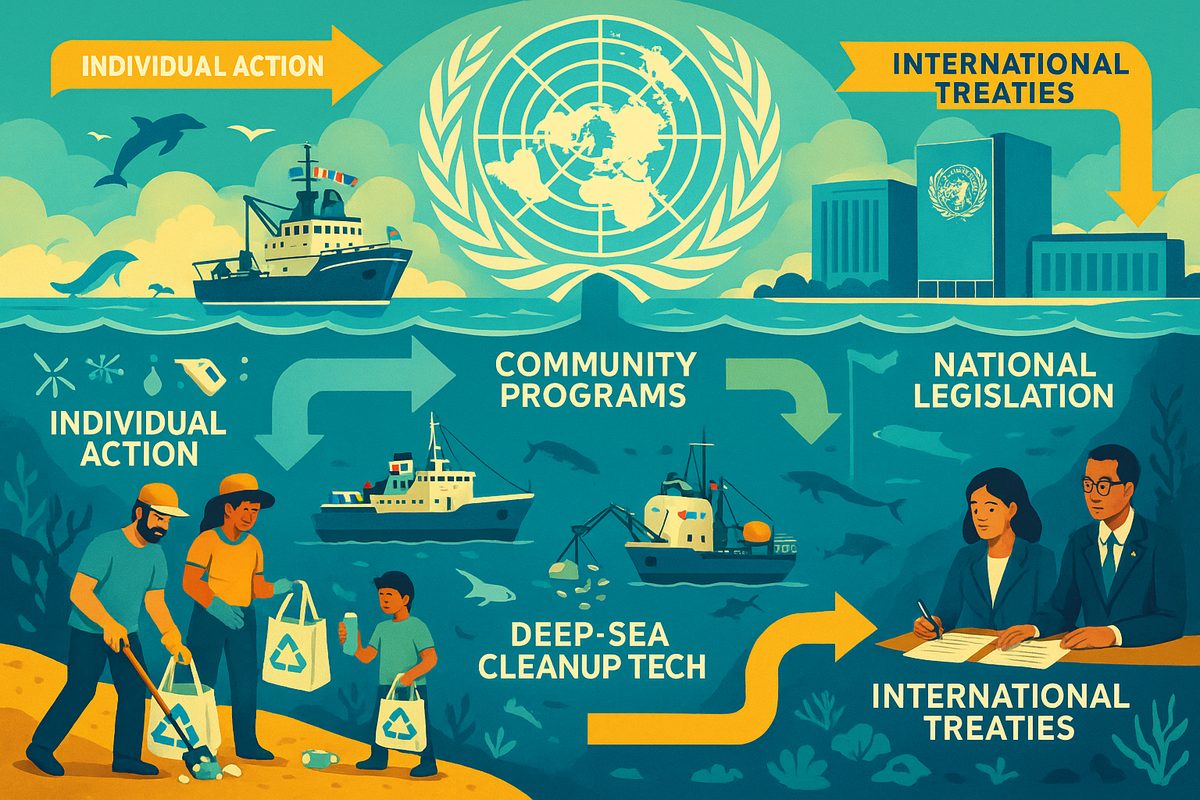
The deep-sea debris problem is a global challenge that cannot be solved by any single country alone, making the establishment of an international cooperation framework essential. The "Convention on the Prevention of Marine Plastic Pollution (provisional name)," adopted by the United Nations in 2023, positions the protection of the deep-sea environment as one of its key pillars, and ratification procedures are underway in various countries toward its entry into force in 2025. Under this treaty, international efforts to address the deep-sea debris problem will become legally binding.
Strengthening the UN Convention on the Law of the Sea Framework
Adopted in June 2023 and entering into force on January 17, 2026, the "Agreement on the Conservation and Sustainable Use of Marine Biological Diversity of Areas Beyond National Jurisdiction (BBNJ Agreement)" provides a new legal framework for deep-sea environmental protection. Under this agreement, it becomes possible to conduct environmental impact assessments, establish marine protected areas, and strengthen pollution-prevention measures even in the deep-sea areas of the high seas (UN BBNJ Agreement).
Deep-Sea Protection Provisions of the BBNJ Agreement
Establishing marine protected areas: Protecting 30% of the high-seas deep sea by 2030
Environmental impact assessment: Mandatory prior assessment of deep-sea activities
Pollution prevention: Complete ban on waste dumping
Technology transfer: Cleanup technology support for developing countries
Initiatives at the Regional Seas Level
Deep-sea protection efforts are also being strengthened at the regional level. In the northeastern Pacific, the United States, Canada, and Japan jointly launched the "North Pacific Deep-Sea Protection Initiative," formulating a comprehensive protection plan for the deep-sea region spanning from the Aleutian Trench to the Kuril-Kamchatka Trench. Under the five-year plan that began in 2024, with a total budget of $1.2 billion, they are advancing surveys of deep-sea debris conditions, developing removal technology, and strengthening preventive measures.
The European Union's Pioneering Policy
The European Union adopted the "Deep-Sea Environmental Protection Directive" in 2024, imposing an obligation on companies within the EU to minimize their impact on the deep-sea environment. The directive includes stricter waste management requirements for the shipping industry, mandatory recovery of discarded fishing gear in fisheries, and measures to promote investment in deep-sea cleanup technology. It is a strict framework, with penalties of up to 4% of revenue for non-compliant companies.
Deep-Sea Protection Budgets of Major Countries and Regions (2024)
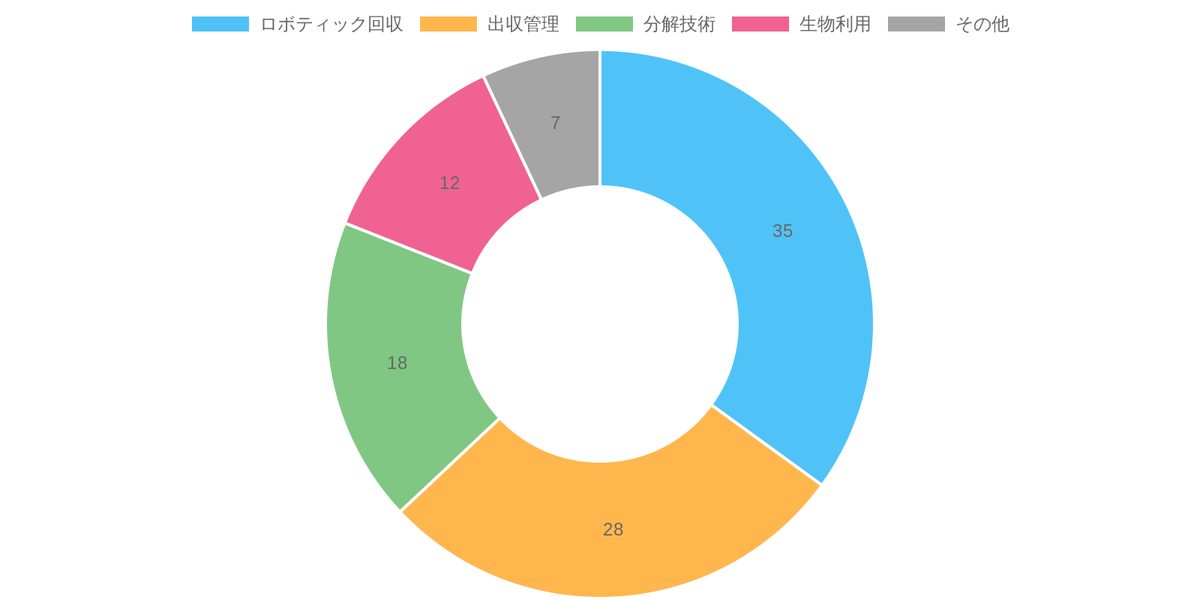
Units: billion USD. The EU has committed the largest budget.
Cooperation Frameworks in the Asia-Pacific Region
The Asia-Pacific Economic Cooperation (APEC) forum adopted the "APEC Action Plan on Deep-Sea Environmental Protection" in 2024. This action plan focuses on joint development of deep-sea debris removal technology among member countries, building information-sharing frameworks, and promoting exchange among young researchers. Japan is exercising technological leadership, sharing JAMSTEC's deep-sea exploration technology with other countries and providing training programs.
Promoting Private-Sector Participation
In addition to intergovernmental efforts, private-sector participation is also expanding. The "Global Deep-Sea Cleanup Partnership," established in 2024, brings together major shipping companies, fishing companies, and marine technology firms from around the world to strengthen industry self-regulation and advance the development of innovative technology. Participating companies contribute 0.1% of their revenue to a deep-sea cleanup fund, securing about $2 billion annually.
Major International Deep-Sea Protection Initiatives
| Initiative Name | Participating Countries/Organizations | Budget Scale | Main Activities | Duration |
|---|---|---|---|---|
| International Deep-Sea Cleanup Initiative | 30 countries | $5 billion | Technology development and demonstration | 2024-2030 |
| North Pacific Deep-Sea Protection Initiative | US, Canada, Japan | $1.2 billion | Sea area protection and surveys | 2024-2029 |
| EU Deep-Sea Environmental Protection Program | 27 EU countries | €1.8 billion | Regulation and technical support | 2024-2030 |
| APEC Deep-Sea Action Plan | 21 APEC economies | $800 million | Technical cooperation and workforce development | 2024-2028 |
Major international cooperation frameworks as of 2024
Support and Technology Transfer for Developing Countries
Solving the deep-sea debris problem requires support for developing countries, which are major sources of pollution. The World Bank established a $10 billion "Marine Environmental Protection Fund" in 2024 to support the development of waste management infrastructure and the adoption of ocean cleanup technology in developing countries. Patent-related incentives and joint research programs have also been expanded to promote technology transfer from developed to developing countries.
Collaboration with Civil Society
NGO and civil society participation is also an important element of international deep-sea protection efforts. Environmental NGOs around the world are collaborating on policy advocacy, awareness campaigns, and promoting citizen-level cleanup and action. Citizen participation in addressing the ocean debris problem is expanding year by year.
Prevention and Fundamental Solutions: Addressing the Source of the Problem
Fundamentally solving the deep-sea debris problem requires not only removing existing debris but also preventive measures to stop new debris from entering the ocean. The principle that "prevention is better than cure" also applies to environmental problems, and preventing new pollution is the most effective and economical solution. According to analysis by the International Institute for Environmental Economics, every $1 invested in prevention is estimated to reduce future cleanup costs by $7.
Promoting the Circular Economy Model
The most important preventive measure is reducing the amount of plastic used in the first place and shifting toward a circular economy model. According to 2024 research by the Netherlands Environmental Assessment Agency, fully realizing a circular economy could reduce ocean plastic inflow to 15% of current levels. The "New Plastics Economy" advocated by the Ellen MacArthur Foundation aims to reduce single-use plastics by 70% by 2030 (Ellen MacArthur Foundation).
Effect of the Circular Economy Model on Reducing Ocean Plastic
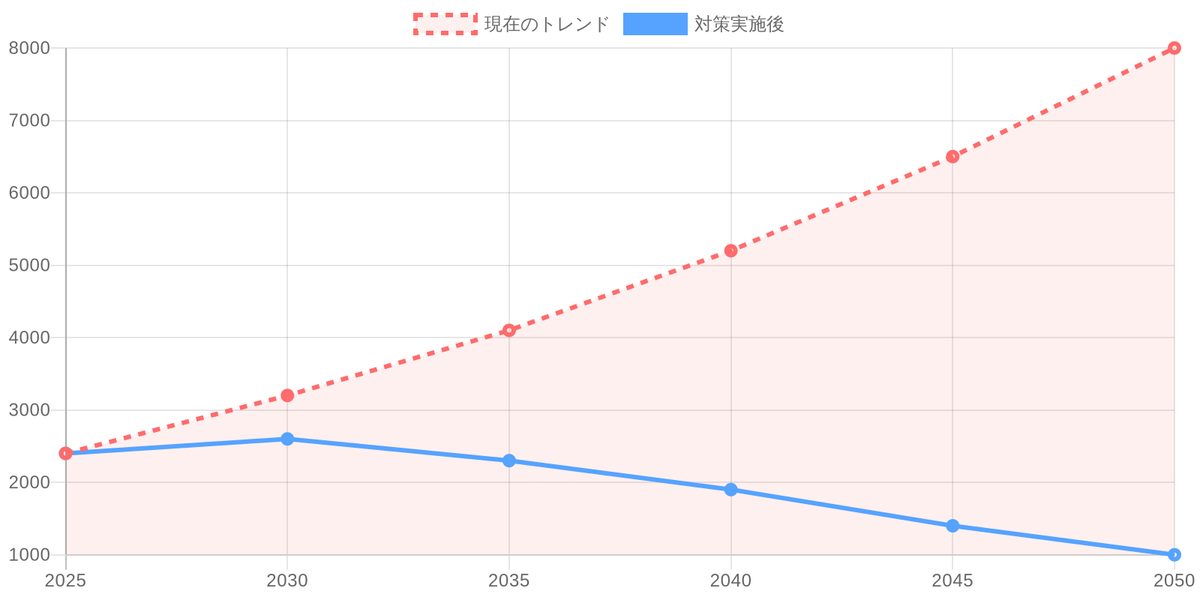
Realizing the circular economy could enable an 85% reduction from current levels by 2050
Development and Adoption of Biodegradable Materials
Development of biodegradable materials to replace conventional plastics is advancing rapidly. "PHBH," a marine-biodegradable plastic developed by Japan's Kaneka Corporation, breaks down via microorganisms even in seawater and has obtained international certification for marine biodegradability (OK Biodegradable MARINE). It has already progressed to mass production and commercialization, with growing use in packaging materials and other applications.
Characteristics of Next-Generation Biodegradable Materials
PHBH (Japan): Fully decomposes in seawater within 6 months
Marine-grade PLA (Europe): Decomposes in seawater within 12 months
Chitin-based bioplastic: Decomposes in seawater within 3 months
Algae-derived plastic: Decomposes in seawater within 9 months
Innovation in Urban Waste Management Systems
Introduction of innovative waste management systems is progressing to prevent waste from leaking out of urban areas. Singapore's "Smart Waste Management System," introduced in 2023, uses IoT sensors and AI to optimize waste collection and has succeeded in reducing the ocean leakage of waste by 99.7%. The system is planned for rollout across Southeast Asian countries, and region-wide pollution reduction effects are expected.
Plastic Capture Systems in Rivers
Developing systems to capture plastic at the river stage, before it reaches the ocean, is also an important preventive measure. The "Interceptor" system, developed by the Netherlands' The Ocean Cleanup foundation, is an automated plastic recovery device installed in rivers, and by 2024 it has been deployed in major rivers across 15 countries worldwide. Installed in rivers such as Malaysia's Klang River and elsewhere, it has achieved results in recovering plastic debris before it reaches the river mouth.
Adoption Status of River Plastic Capture Systems
| River Where Installed | Country | Annual Recovery Volume (tons) | Reduction Effect (%) | Year Installed |
|---|---|---|---|---|
| Klang River | Malaysia | 150 | 87 | 2019 |
| Chao Phraya River | Thailand | 230 | 92 | 2021 |
| Citarum River | Indonesia | 380 | 76 | 2022 |
| Rio Las Vacas | Guatemala | 95 | 94 | 2021 |
| Barito River | Indonesia | 120 | 81 | 2023 |
Effect of Interceptor system deployment on major rivers
Reducing Discarded Fishing Gear in the Fishing Industry
Reducing discarded fishing gear from fishing activity is also an important preventive measure. The "Fishing Gear Return System" introduced by Norway in 2022 provides economic incentives to fishers for the proper recovery and recycling of used fishing gear. This system has reduced discarded fishing gear in Norwegian waters by 85%, and similar systems are being adopted in other Nordic countries.
Transforming Consumer Behavior
Changing behavior at the individual level is also an important preventive measure. According to a survey by Germany's Federal Environment Agency, changes in consumer behavior can reduce household plastic waste by an average of 40%. Specific effective actions include using reusable containers, taking advantage of bulk/unpackaged sales, and avoiding excessively packaged products. In Denmark, a national campaign reduced per capita single-use plastic consumption by 60% over five years.
Individual Actions to Help Prevent Deep-Sea Debris
1. Reducing single-use plastics – Using your own bottle and reusable bags
2. Proper waste sorting – Thorough recycling
3. Participating in beach cleanup activities – Local environmental activities
4. Choosing sustainable products – Purchasing environmentally conscious products
5. Environmental education and awareness – Sharing information with family and friends
The Preventive Effect of Technological Innovation
Preventive systems using artificial intelligence (AI) and IoT technology are also being developed. South Korea's "AI Ocean Pollution Prediction System" integrates and analyzes weather data, ocean current information, and land-based waste generation data to predict the occurrence of ocean pollution in advance and implement preventive measures. Since it began operating in 2024, the volume of ocean debris flowing into Korean coastal waters has fallen 30% year-on-year.
International Coordination on Prevention Measures
International coordination is essential to maximize the effectiveness of preventive measures. The "Global Plastic Prevention Alliance," launched in 2024, brings together major polluting countries and countries with advanced technology to implement comprehensive prevention measures through technology transfer, financial assistance, and workforce development. Through this effort, the goal is to reduce global ocean plastic inflow by 50% by 2030.
Conclusion: A Path Toward Solving the Deep-Sea Debris Problem
Key Points of This Article
- ❶ The deep-sea debris problem is a serious form of environmental pollution reaching Earth's deepest points, with 14 million tons of plastic accumulated on the seafloor
- ❷ Plastic fragments have even been found at the deepest point of the Mariana Trench, with microplastics detected in 90% of deep-sea organisms
- ❸ 80% of pollution sources are land-based, making improvements to major rivers and urban waste management systems an urgent priority
- ❹ Innovative removal technologies are being developed, but implementing preventive measures is more important and more economical
- ❺ Through international cooperation and changes in individual behavior, achieving a 50% reduction target by 2030 is possible
The deep-sea debris problem is one of the most difficult environmental challenges facing humanity, but it is by no means unsolvable. Through technological innovation, international cooperation, and a shift in awareness across society, it is possible to pass a clean ocean environment on to the next generation.
What matters most is recognizing that recovering the deep-sea environment will take decades to centuries, and beginning to act right now. The accumulation of small actions by each of us will eventually bring about change on a global scale.
Next steps:Start by rethinking your own use of single-use plastics and joining a local beach cleanup activity. It is also important to share the seriousness of this problem with family and friends, helping to promote a shift in awareness across society as a whole.
References
- Japan Agency for Marine-Earth Science and Technology (JAMSTEC) – Deep-sea exploration and Deep-sea Debris Database
- CSIRO (Australia's Commonwealth Scientific and Industrial Research Organisation) – Estimate of about 14 million tons of microplastics on the seafloor (2020)
- The Ocean Cleanup – River plastic recovery system "Interceptor"
- UNEP – From Pollution to Solution: a global assessment of marine litter and plastic pollution
- UN BBNJ Agreement – Agreement on the Conservation and Sustainable Use of Marine Biological Diversity of Areas Beyond National Jurisdiction (adopted 2023, entered into force 2026)
- Ellen MacArthur Foundation – New Plastics Economy Initiative
- NOAA (U.S. National Oceanic and Atmospheric Administration) – Marine debris research
- European Parliament – Single-use plastics regulatory policy (EU Single-Use Plastics Directive)
* References are ordered by reliability: international/government bodies > peer-reviewed academic papers > specialized research institutions > reliable media