⚡ In short
In Japan's FY2023 national survey, 93% of the 87,725 pieces of human-made litter collected at 76 beaches were plastic. What arrives, where it comes from, and why it lands on certain shores.
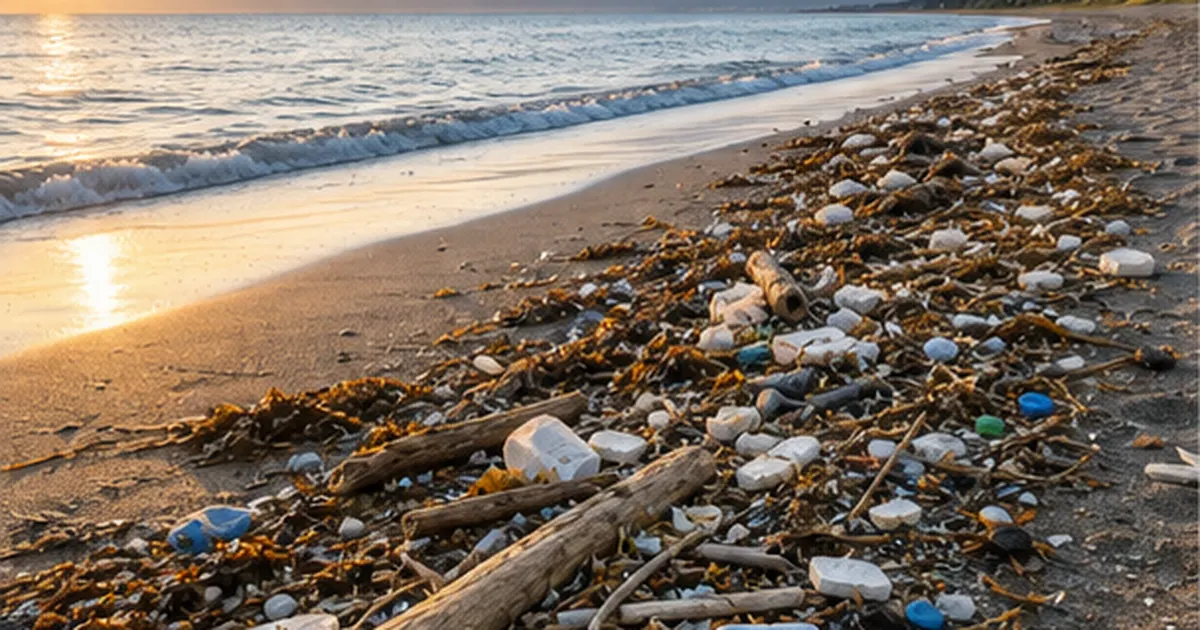
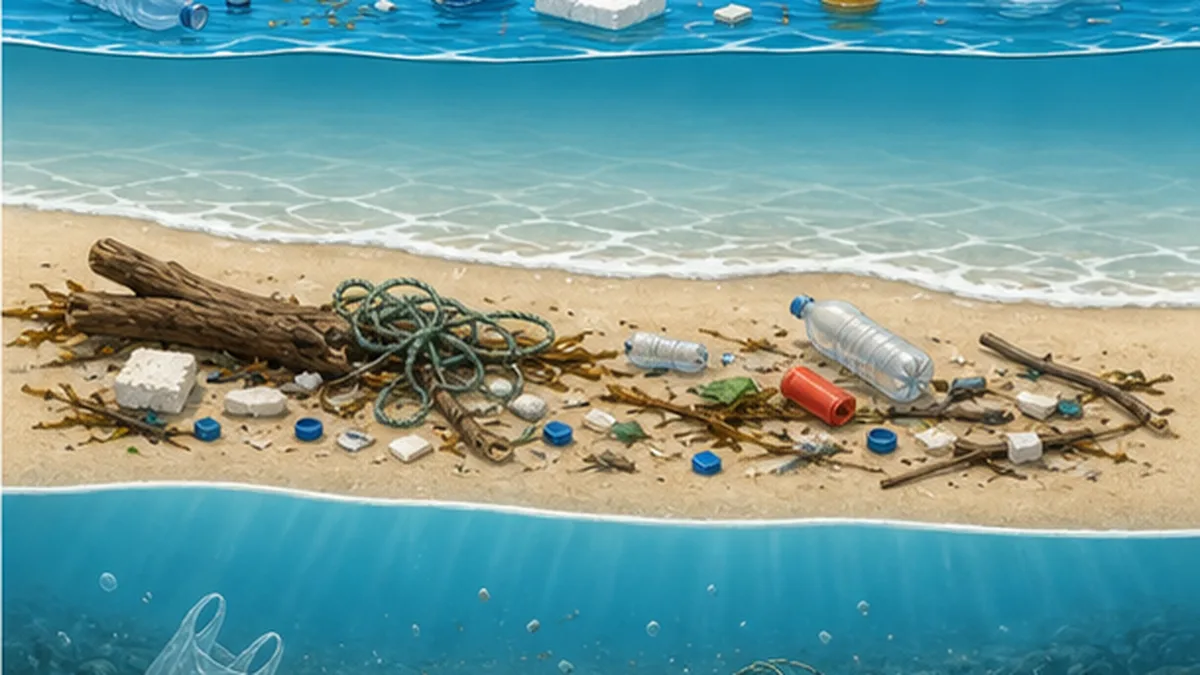
Walk along the water's edge and you notice a thin line drawn across the sand. Seaweed and driftwood mixed with colorful fragments, piled up in a band — that is the strandline of beach litter. Something discarded in a distant sea, carried by tide and wind, has arrived at your feet. Beach litter is where the problems of the ocean show themselves in their most immediate form.
In the FY2023 beach litter composition survey published by Japan's Ministry of the Environment in March 2025, human-made litter collected at 76 sites across 39 prefectures was sorted and counted piece by piece. The total came to 87,725 items weighing 7,852 kg, of which 93% by count and 72% by weight was plastic. Look closer and the top of the list is dominated not by the plastic bottles and shopping bags we picture first, but by items from fisheries — oyster-culture pipes and rope.
This article follows that primary data to ask what arrives, where it comes from, and why it lands on a particular beach. It then looks at the other meaning of a beach cleanup: nationwide campaigns that draw more than 260,000 participants, and citizen-science efforts that turn collected litter into scientific data. Protecting the ocean begins with both picking things up and counting them.
What You Will Learn in This Article
- Why the composition of beach litter looks completely different by count than by weight
- The split between land-based sources (packaging) and sea-based sources (fishing gear), and how to tell them apart
- The physics of how currents, seasonal winds, and shoreline orientation decide which beaches collect debris
- The concrete burden beach litter places on ecosystems, fisheries, tourism, and local government budgets
- Japan's Marine Litter Act, the subsidy system behind cleanups, and who actually pays
- How to turn a beach cleanup from a picking-up activity into a data-generating one
What Is Beach Litter? The Big Picture in Numbers
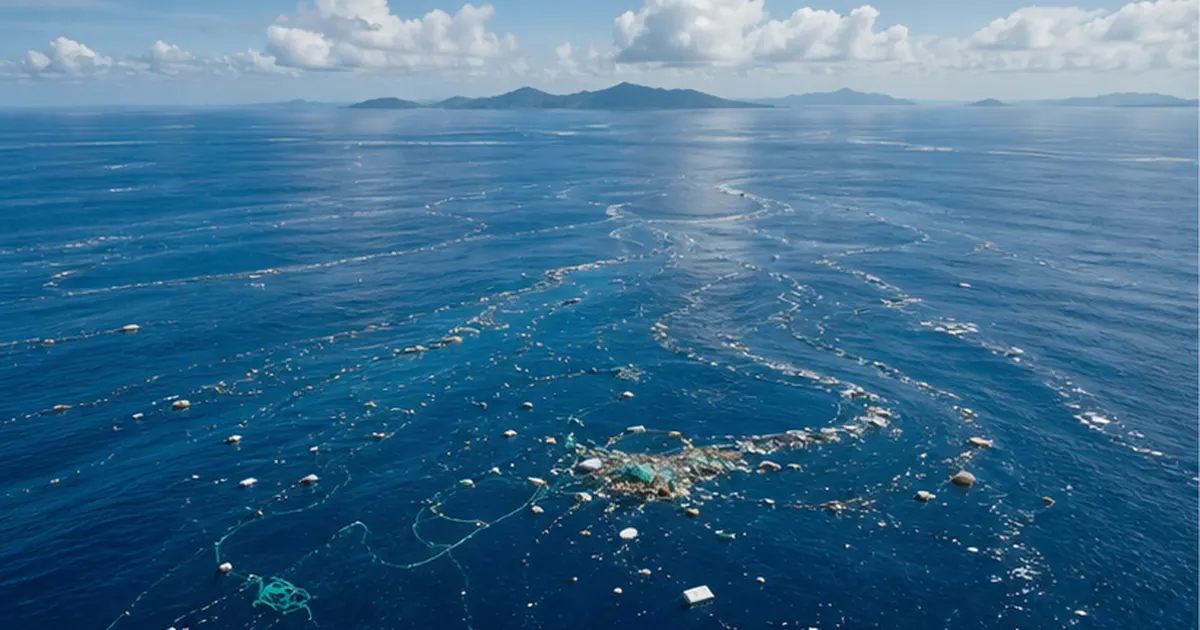
Beach litter is waste that has drifted through the sea and washed ashore. Marine litter is broadly divided into three categories: beach litter stranded on shorelines, floating litter drifting on or below the surface, and seafloor litter that has sunk to the bottom. Of these, beach litter is the only kind people can see with their own eyes and collect by hand, which also makes it a valuable sample for inferring what is happening out at sea.
Since FY2015 the Ministry of the Environment has run continuous monitoring at beaches selected around straits and along shores influenced by the Kuroshio, Tsushima Warm Current, and Oyashio. The method is straightforward: choose beaches that are rarely cleaned, then collect and classify every piece of litter 2.5 cm or larger within a 50 m survey stretch. FY2023 covered 76 sites in 39 prefectures (78 sites in FY2022, 89 in FY2021).
How Much Litter Is Actually Collected Nationwide
The volume of beach litter (including natural material) actually recovered by local governments and civic groups averages roughly 30,000 tonnes a year. Year-to-year variation is large: about 33,000 tonnes in both FY2015 and FY2016, about 55,000 tonnes in FY2017, and about 32,000 tonnes in FY2018. In years with many typhoons or heavy rainfall, rivers flush out driftwood and debris all at once and recovery volumes spike.
The volume of plastic waste newly flowing out from Japan into the ocean, meanwhile, was estimated in the Ministry of the Environment's FY2024 review at 13,000 to 31,000 tonnes per year. That figure was built by accumulating estimates source by source and item by item, and it does not diverge greatly from a separate estimate derived from macro statistics (2,300 to 24,000 tonnes). The ministry itself states clearly that these are not confirmed values but provisional formulas and figures, and refinement continues.
Three Things to Keep in Mind When Reading the Numbers
- Recovery volume and outflow volume are different things. The 30,000 tonnes recovered includes an accumulated stock that flowed out in past years
- Survey sites are chosen among rarely cleaned beaches, so they tend to show more debris than popular swimming beaches
- Always distinguish figures that include natural material (driftwood, seaweed) from those covering human-made litter only
Japan's Place in the World
Japan has roughly 35,000 km of coastline, most of it facing open ocean or marginal seas. Surrounded by three major currents — the Kuroshio, the Tsushima Warm Current, and the Oyashio — and positioned downwind and downstream of densely populated East Asia, its shores receive both domestic and foreign litter. Put another way, Japan's beaches are a mirror of plastic circulation across the whole region.
For that reason, tackling beach litter cannot be completed by domestic waste policy alone. The Osaka Blue Ocean Vision proposed by Japan — aiming to reduce additional pollution by marine plastic litter to zero by 2050 — was shared by 87 countries and regions as of September 2022, and in March 2022 the fifth United Nations Environment Assembly agreed to establish an intergovernmental negotiating committee for a legally binding instrument on plastic pollution. A single rope picked up on a beach is continuous with those negotiating tables.
What Arrives: Two Different Faces in Count and Weight
The single most important point about beach litter composition is that the conclusion changes completely depending on whether you count pieces or weigh them. Small light items dominate by count; large heavy items dominate by weight. Looking at only one of them leads to the wrong priorities.
By Count: Oyster-Culture Parts Take the Top Spot
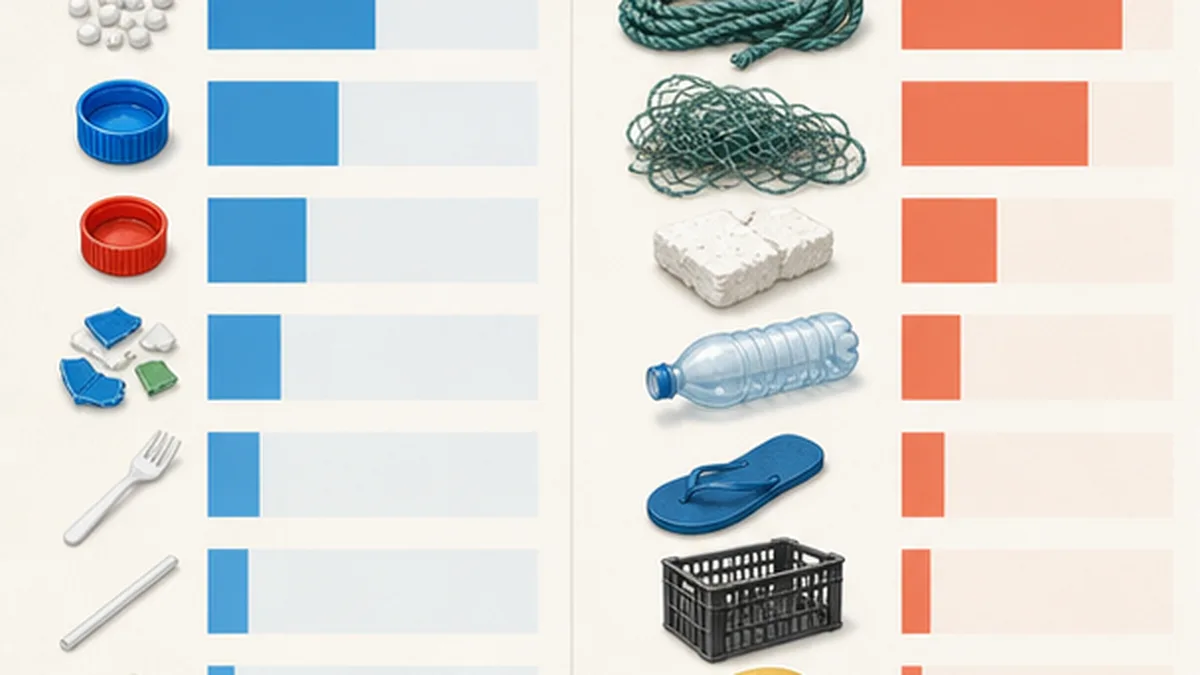
In the FY2023 national survey, the most numerous item was the oyster-culture spacer tube (about 1.5 cm long) at 15,594 pieces, or 17.8% of the total — its second consecutive year at number one. Second was the oyster-culture pipe (10-20 cm long) at 11,084 pieces (12.6%), and third plastic rope and cord at 10,129 pieces (11.5%). All three leading items are fishing gear.
The consumer items most of us picture appear next: bottle caps and lids in fourth (9,698 pieces, 11.1%) and beverage PET bottles under 1 L in fifth (6,430 pieces, 7.3%). Caps outnumber the bottles themselves because they are light, float readily, and are small enough to be missed during cleanups.
| Rank | Item | Count | Share |
|---|---|---|---|
| 1 | Oyster-culture spacer tube (approx. 1.5 cm, fishing gear) | 15,594 | 17.8% |
| 2 | Oyster-culture pipe (10-20 cm, fishing gear) | 11,084 | 12.6% |
| 3 | Plastic rope and cord (fishing gear) | 10,129 | 11.5% |
| 4 | Bottle caps and lids | 9,698 | 11.1% |
| 5 | Beverage PET bottles (under 1 L) | 6,430 | 7.3% |
| 6 | Other plastics | 4,549 | 5.2% |
| 7 | Plastic bags (opaque and transparent) | 4,487 | 5.1% |
By Weight: Wood First, Rope Second
Weigh the same survey and the landscape changes. First is wood (timber and similar) at 1,819 kg, 23.2% of the total — largely processed lumber and building material fragments believed to have washed out of rivers. Second is plastic rope and cord at 1,404 kg (17.9%), third hard plastic fragments at 868 kg (11.1%), fourth fishing nets at 741 kg (9.4%), and fifth polystyrene floats and buoys at 636 kg (8.1%).
Bottle caps, at 11.1% by count, do not appear in the top ten by weight at all. Conversely, nets and buoys barely register by count yet loom large by weight. In other words, there is a double structure: packaging dominates the labor of picking up, while fishing gear dominates the volume that must be processed.
Fragments: The Awkward Category
It is worth noting that categories such as hard plastic fragments and sheet or bag fragments rank high. Plastic is broken into ever smaller pieces by ultraviolet light and wave action, but it does not chemically break down and disappear. Once a fragment can no longer be identified, tracing its source or recycling it by material becomes nearly impossible.
Continue that fragmentation and you reach microplastics under 5 mm. Standard composition surveys targeting items 2.5 cm and larger do not capture them, yet they are unquestionably present, mixed into the sand. The mechanics of fragmentation are covered in how marine plastic breaks down, and the current state of research on human health is covered in the health impact of microplastics.
Why Picking Up Small Pieces Matters
Collecting large items is more satisfying. But leaving small fragments means the next wave breaks them down further, past the point of recovery. When time is short, prioritizing items that are about to become too small to pick up raises your long-term recovery efficiency.
Where It Comes From: Land, Sea, and Across Borders
Beach litter sources divide broadly into things that came from land and things generated at sea. The Ministry of the Environment's composition survey classifies plastic litter into sea-based (fishing gear), packaging, products, and other, giving data that feeds directly into source-reduction planning.
Sea-Based Sources: 47% by Count, 44% by Weight
In FY2023, sea-based sources were the largest category at 41,251 pieces (47%) by count and 3,430 kg (44%) by weight. Next came packaging at 27,771 pieces (32%) and 732 kg (9%). Products such as toothbrushes accounted for 6,553 pieces (7%) and only 47 kg (1%).
Here too, count and weight diverge. Packaging makes up a third of all pieces but only 9% of the mass. Thin, light packaging washes ashore in enormous numbers, while in terms of processing burden the fishing gear weighs far more heavily.
| Source category | Count | Count share | Weight | Weight share |
|---|---|---|---|---|
| Sea-based (fishing gear, buoys, etc.) | 41,251 | 47% | 3,430 kg | 44% |
| Packaging | 27,771 | 32% | 732 kg | 9% |
| Products (household goods, etc.) | 6,553 | 7% | 47 kg | 1% |
| Other (fragments, urethane, etc.) | 5,762 | 7% | 1,405 kg | 18% |
Rivers Are the Route from Land to Sea
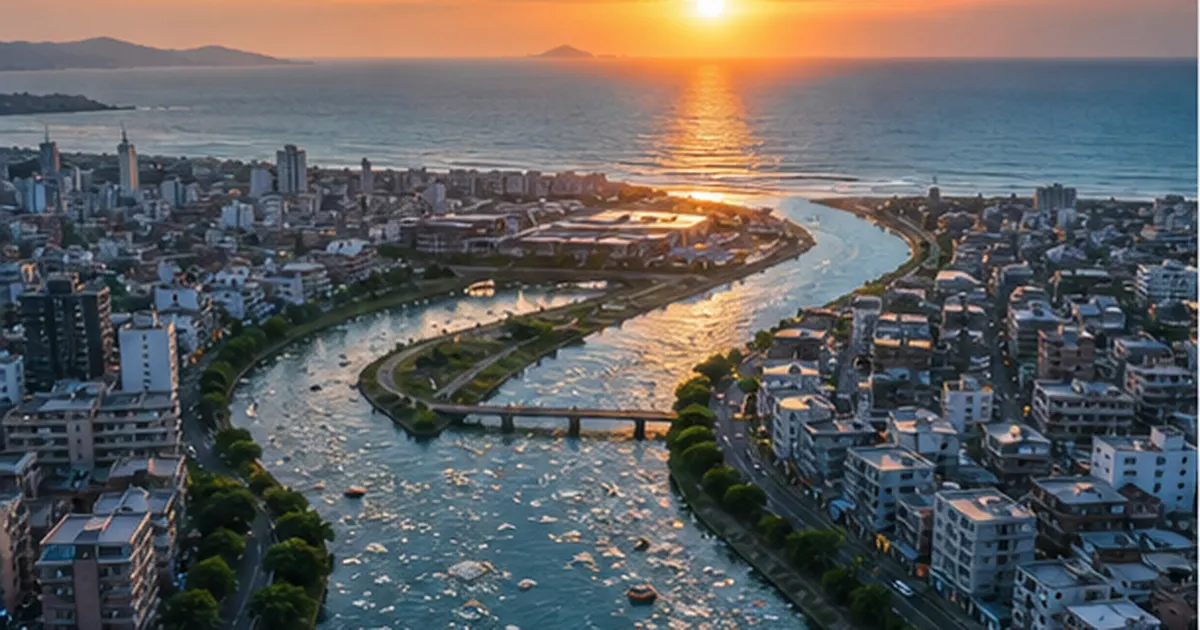
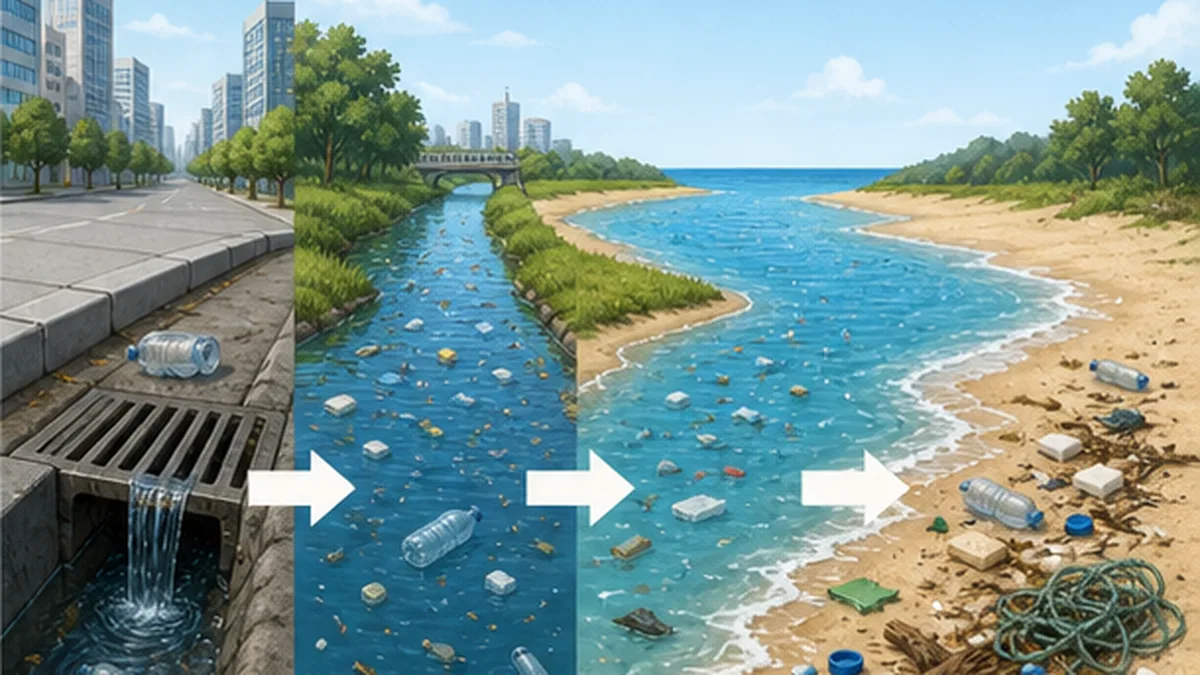
Most packaging and household litter is discarded in towns, enters drains and irrigation channels, reaches rivers, and exits to the sea at the river mouth. Beyond deliberate littering, the pathways are everywhere in daily life: scattering from collection points, items dropped at outdoor events, recyclables blown away in strong wind. A bottle dropped in an inland town far from any coast may be at sea within days.
That structure means the entry point for countermeasures is not the beach but the town. Cleanups along rivers and city streets are in fact the most efficient form of marine litter control, stopping waste before it reaches the sea. Recovering litter once it is at sea costs orders of magnitude more than picking it up on land.
What the Language on Bottles Reveals About Borders
One distinctive method in these surveys is reading the language printed on PET bottle labels. In FY2023, of 6,901 bottles collected nationwide, the language could be identified on 4,140. Okinawa Prefecture yielded the most identifiable bottles at 519.
The results split sharply by region. In the Kuroshio region, Chinese and Taiwanese labeling exceeded 80% in Okinawa and Kagoshima, while Japanese labeling exceeded 80% in the other prefectures. The enclosed Seto Inland Sea was dominated by Japanese labeling in most prefectures, with the notable exception of Okayama, where Korean-labeled products made up over 90%. By coastal zone, Japanese labeling accounted for the majority in the lower Tsushima Warm Current, the Oyashio region, the lower Kuroshio, and the Seto Inland Sea, while Chinese and Taiwanese labeling was most common in the upper Kuroshio, and Japanese and Chinese-Taiwanese labeling were about equal in the upper Tsushima Warm Current.
More striking still are fishing floats. For these, Chinese and Taiwanese labeling was the most common in every region, exceeding 50%. Even within a single category called beach litter, the geography of the source differs by item — and this one comparison makes that plain.
Beware the Oversimplification That It All Comes from Abroad
- In many regions domestic litter accounts for the majority; a blanket claim of foreign origin does not hold nationwide
- Even on the same beach, sources differ by item (bottles mostly domestic, floats mostly foreign)
- Litter that flows out of Japan washes up on other countries' shores too. The responsibility runs both ways
Why That Beach? The Physics of Currents, Winds, and Landforms
Anyone who walks the coast notices that a beach piled high with debris can sit only a few kilometers from one that is startlingly clean. The difference is not how litter was discarded but the physical conditions that determine what gets delivered there.
Three Currents Do the Delivering
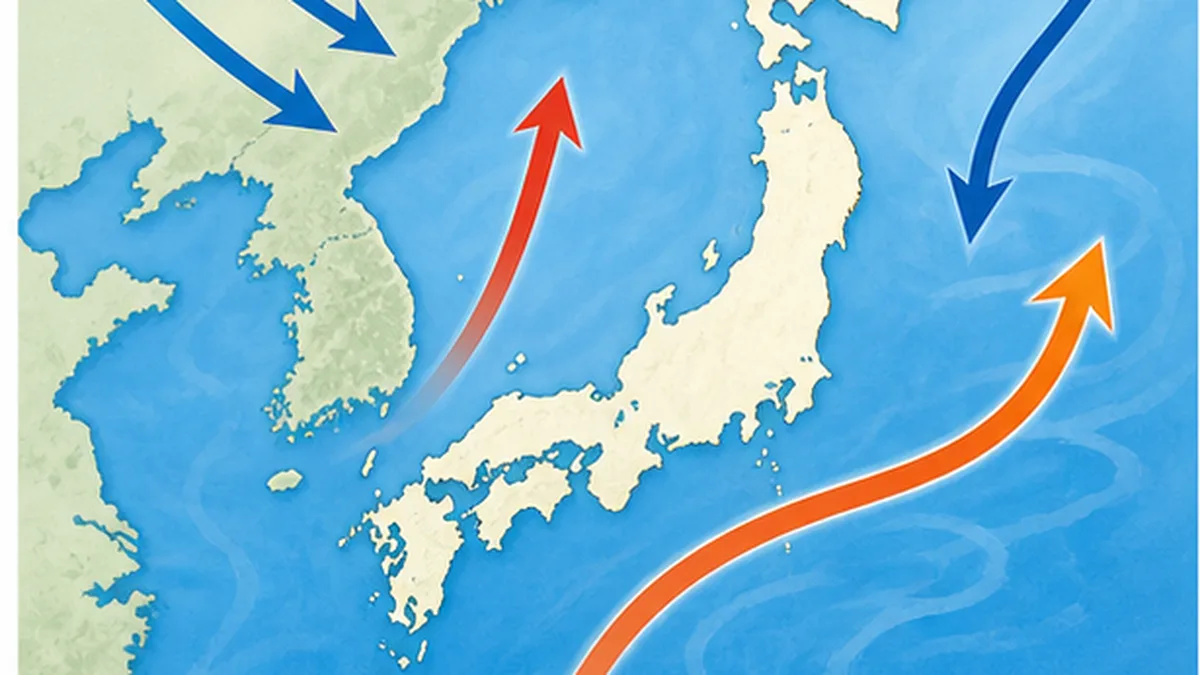
Japan's waters are shaped by three main flows: the Kuroshio, carrying warm water from the south; the Tsushima Warm Current, which enters through the Tsushima Strait and sends warm, saline water along the surface of the southern Sea of Japan; and the Oyashio, bringing cold water from the north. The Ministry of the Environment organizes its survey sites around these regions precisely because currents are the delivery routes for drifting debris.
Regional data bear this out. In the Oyashio region, plastic rope and cord accounted for a striking 43.7% of debris by weight, and the top three items were all fishing gear or wood. In northern waters, fisheries and natural material — not consumer packaging — are the main characters of the strandline.
Winter Winds Bury the Sea of Japan Coast
Alongside currents, wind matters enormously. Debris that rides high in the water, such as capped PET bottles and polystyrene, is pushed more by wind than by the water beneath it. In winter, northwesterly monsoon winds sweep across the Japanese archipelago, so debris concentrates on shores that open to the north and west. The dramatic winter surge in litter on the Sea of Japan coast comes from that combination of wind and the Tsushima Warm Current.
That also means cleanup planning should account for season. Cleaning before the summer swimming season protects visitor experience, but if the goal is to reduce the standing volume of debris, collecting right after a large stranding event — winter to spring on the Sea of Japan side — does more to prevent it washing back out.
Landforms That Trap, Landforms That Don't
Even within one current region, landforms create differences. Generally, debris accumulates where the following conditions combine.
- Enclosed shapes such as the head of a bay or an inlet, where what enters cannot easily leave
- Eddies and slack water forming on the lee side of a headland
- Areas near river mouths, with direct supply from land
- Beaches open to the ocean and facing the prevailing wind head-on
- Gaps among rocks and wave-dissipating blocks, which waves never flush out once debris enters
Rock crevices and tetrapod gaps are particularly troublesome: visible but hard to reach by hand, and left to bake under ultraviolet light until they fragment. When planning a cleanup, assume these left-behind pockets exist from the outset and bring the right tools — tongs, long-handled grabbers, and sturdy sacks — to raise your recovery rate.
Four Factors That Govern How Much Washes Ashore
- Currents: which water mass reaches that coast (Kuroshio, Tsushima Warm Current, Oyashio)
- Wind: the direction of prevailing winds and how much of the debris sits above the waterline
- Landform: how enclosed the bay is, where headlands sit, distance from a river mouth
- Season and weather: strengthening monsoon winds, and mass river discharge during typhoons and heavy rain
What Beach Litter Damages: Ecosystems and Livelihoods
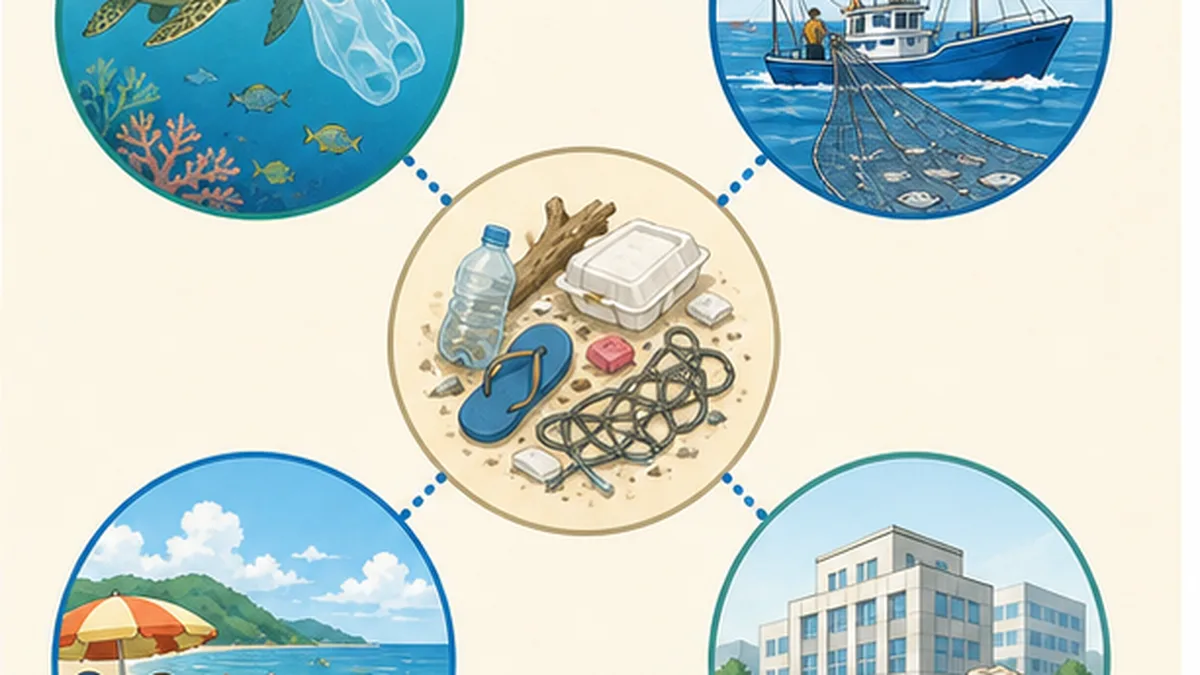
Beach litter is not merely a matter of scenery. The Ministry of the Environment lists the anticipated harms as impacts on the marine environment including ecosystems, obstruction of vessel navigation, damage to tourism and fisheries, and degradation of coastal living conditions. Let us take them one at a time.
Direct Harm to Wildlife
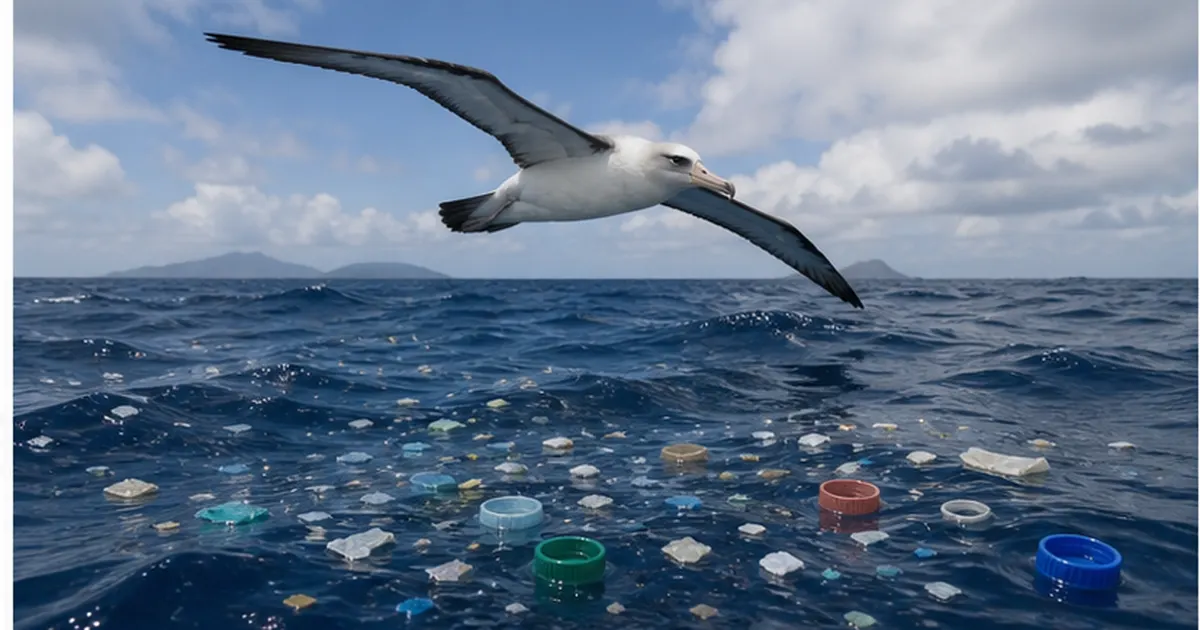
The most serious impacts are ingestion, when animals eat debris, and entanglement, when they become trapped and cannot move. Sea turtles struggle to distinguish plastic bags from jellyfish, and seabirds mistake floating fragments for food. Cases of whales and seabirds with stomachs packed full of plastic have been reported repeatedly in Japan and abroad.
The gravest problem is discarded or lost fishing gear. Nets and rope hold their shape underwater for years and continue to catch fish and turtles unintentionally. This phenomenon, known as ghost gear, connects directly to the fact that nets and rope rank near the top of the weight data discussed above.
Blows to Fisheries and Tourism
Drifting rope and sheeting tangle in propellers and cause navigation trouble. When large amounts of debris enter a set net, sorting takes time and the net itself is damaged. Debris driven onto aquaculture facilities breaks rafts and delays work. Fishers are victims and, in the case of gear-derived litter, also connected to the source — a duality that makes the problem harder to solve while giving practitioners real leverage over it.
Tourism impacts matter too. For swimming beaches and dive sites the landscape itself is the product, and beach litter directly reduces visitor numbers and satisfaction. In many regions, cleanup is a permanent line item in the cost of maintaining a destination.
The Hidden Burden on Local Government Budgets
Easily overlooked is the cost of collecting and processing beach litter. Debris soaked with sand and seawater is heavy, and its salt content damages incinerators. Mixed with wood, it must also be sorted. Many locations can only be worked by hand, and haulage distances are long. On islands and in depopulated regions, the population and budget available are limited relative to the volume that arrives, so the burden falls harder still.
The national government therefore provides subsidies to support municipalities, as described in the next section, but a share of the cost still falls locally. For any municipality with a coastline, beach litter is a fixed annual expense that arrives without fail.
In recent years there has been growing concern about the effects of microplastics in the ocean on ecosystems.
― Ministry of the Environment, On the Problem of Marine Litter
Who Cleans It Up: Law and Institutions
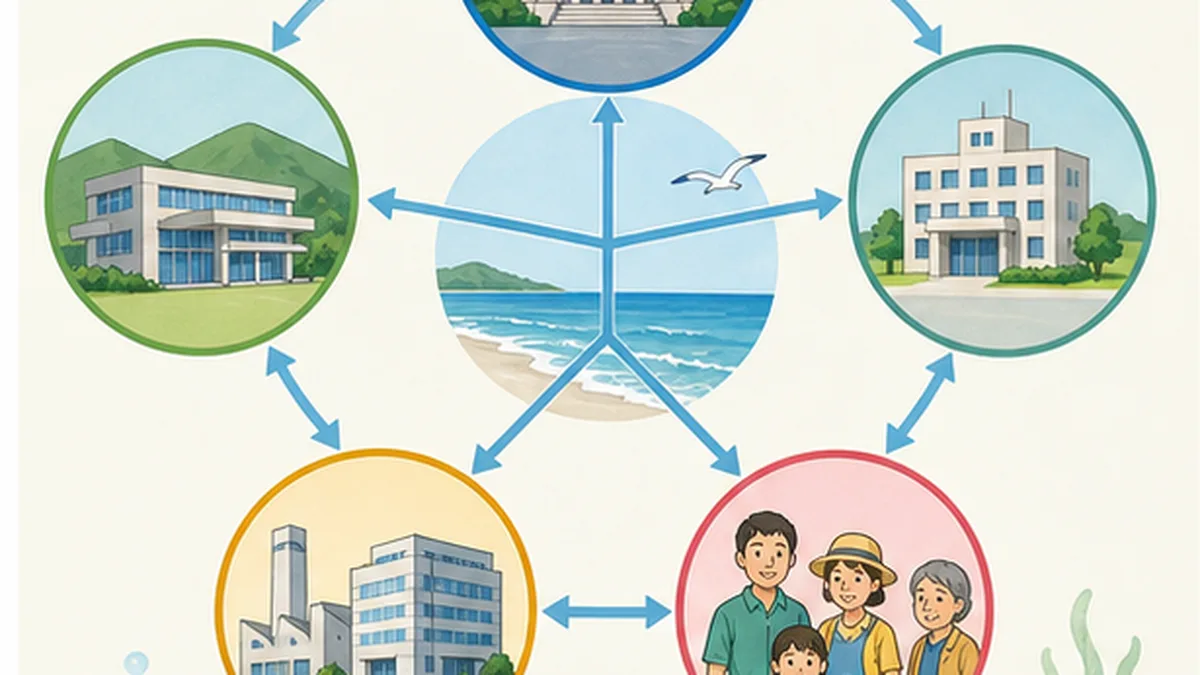
Beach litter is waste whose owner cannot be identified. Since the person who discarded it cannot be traced, ordinary waste management frameworks do not apply. Japan therefore has a law dedicated to the problem.
The Marine Litter Act (Enacted 2009, Amended 2018)
The Act on Promoting the Treatment of Marine Litter on Beaches was promulgated and came into force on 15 July 2009. It set out the responsibilities of coastal managers and local governments, national support, and the drafting of regional plans, establishing the basic framework for beach litter policy.
In June 2018 an amendment came into force, renaming the law to reflect the conservation of good coastal landscapes and environments and of the marine environment. That amendment newly specified measures on microplastics, requiring businesses to endeavor to curb the use of microplastics in products and to reduce discharges of waste plastics. It shifted the center of gravity from recovery alone toward source reduction.
The Subsidy System Behind Municipalities
The Regional Beach Litter Countermeasure Promotion Project provides the financial backing for the prefectures and municipalities that actually do the collecting and processing. A national subsidy for regional environmental conservation is granted and applied to collection, processing, and source-reduction work. Subsidy rates vary by project content and region, but the national share is generally 70% to 90% of project cost (in some cases 95% or 100%). This arrangement sustains recovery of roughly 30,000 tonnes a year nationwide.
Under the law, prefectures may also draw up regional plans. Because the realities of stranding, the availability of people, and the state of processing facilities all differ by area, the system allows priorities to be set regionally rather than uniformly across the country. Reading your own prefecture's regional plan will show you which stretches of local coast have been designated as priority zones.
| Actor | Main role |
|---|---|
| National government (Ministry of the Environment, etc.) | Basic policy, financial support through subsidies, surveys and estimates, international negotiation |
| Prefectures | Drafting regional plans, subsidizing municipalities, wide-area coordination |
| Municipalities and coastal managers | Actual collection, haulage, and processing; hosting cleanup activities |
| Businesses | Curbing plastic use and discharge; proper management and recovery of fishing gear |
| Citizens and NPOs | Cleanup activities, cooperation with composition surveys, practicing and communicating source reduction |
Where Does the Collected Litter Go?
Most recovered beach litter is treated as municipal waste and incinerated or landfilled. In recent years, however, there is growing movement to separate items whose material can be identified — nets and buoys in particular — and turn them into recycled feedstock. The path from used fishing nets to recycled nylon is covered in our complete guide to fishing net recycling.
Beach Cleanups: A Widening Circle Across Japan
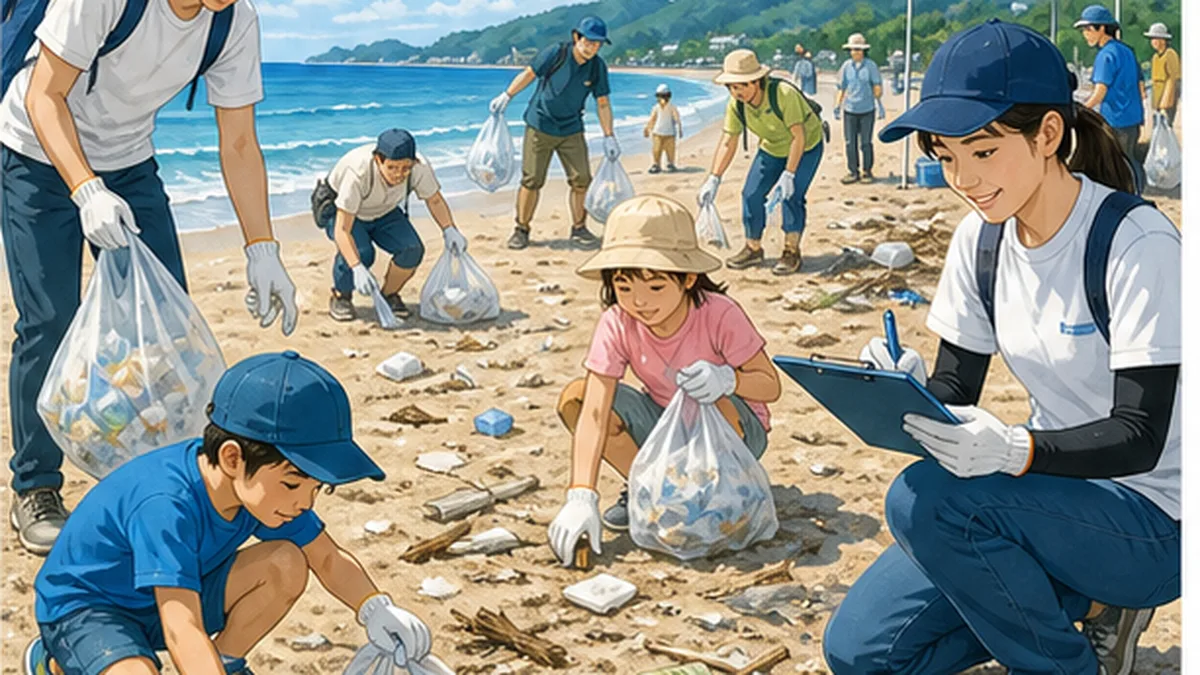
Institutions create the framework and municipalities handle processing, but the overwhelming majority of people actually picking litter off the sand are ordinary citizens. Corporate volunteer programs, school activities, neighborhood associations, surfers and divers — the base of participation widens every year.
Umi-Gomi Zero Week: A Nationwide Simultaneous Cleanup
Umi-Gomi Zero Week, run jointly by the Ministry of the Environment and The Nippon Foundation, is a nationwide simultaneous cleanup campaign. In 2025 the intensive period ran from 30 May (Japan's zero-waste day) to 8 June (World Oceans Day), and more than 260,000 people took part at roughly 1,000 locations nationwide. The choice to begin on zero-waste day and end on World Oceans Day is itself a message that town litter and ocean litter are continuous.
The value of a campaign at that scale lies less in the volume recovered than in creating an entry point for participation. Anyone who picks up litter on a beach even once a year starts looking at packaging differently in the supermarket. The important point is that action changes awareness, in that order.
The International Coastal Cleanup, Running Since 1990
The organization that has led this field longest in Japan is JEAN. In 1990 JEAN took part in the International Coastal Cleanup (ICC) for the first time in Japan. The ICC is an international activity in which people at coastlines, riverbanks, and lakeshores around the world collect and survey litter at the same time using the same method.
What distinguishes the ICC is that it does not end with picking up. Participants use a data card to count and record what they collect by item. The Japanese-language data card combines the global standard ICC survey items with items specific to Japan and can be used on coasts, riverbanks, and lakeshores as well as on land and underwater. In the autumn 2018 campaign, 6,570 participants at 146 venues collected and recorded 167,423 items across 107 km.
What to Know Before Your First Cleanup
What trips up first-time participants is the practical side: safety and sorting. Keeping the following in mind makes the day go smoothly.
- Bring rubber-coated gloves rather than cotton work gloves; glass shards, fish hooks, and syringes are all found on beaches
- Wear thick-soled shoes. Avoid sandals
- Do not touch hazardous items yourself — medical waste, syringes, oil-coated containers, unidentified drums or jerricans. Report them to the organizer
- Leave natural material such as driftwood and seaweed in place as a rule; it is part of the ecosystem
- Sort according to the local processing categories. Follow the organizer's instructions above all
- Guard against heat illness and check the tide table (do not enter rocky areas at high tide)
Items You Must Never Touch on a Beach
- Jerricans or drums with unidentified contents (they may hold strong acids or alkalis)
- Medical waste such as syringes
- Metal objects shaped like shells or ordnance (possible unexploded ordnance; move away and call the police immediately)
- Containers coated with strongly foul-smelling liquid
Beyond Picking Up: How Data Changes Marine Litter Policy
Every figure introduced in this article exists because someone counted litter on a beach, one piece at a time. A cleanup on its own leaves only a fleeting result — it looks cleaner. Take records, however, and it becomes evidence that moves policy.
When a Composition Survey Changed Policy
Oyster-culture spacer tubes and pipes are the clearest example. The fact that they occupy the first and second ranks by count only became visible through painstaking composition surveys. If the intuitive image of marine litter as bottles and shopping bags had gone unchallenged, effort would have concentrated on packaging alone and never reached the concrete, high-impact measure of preventing aquaculture materials from escaping.
Likewise, the bottle-language survey showed that some beaches call for domestic action while others require international cooperation. Data is what makes it possible to argue about where limited budgets should go. When the Ministry of the Environment revised its survey guidelines in June 2023 and added fishing tackle as a new mandatory category, that too reflected issues surfaced by accumulated data.
How Apps Changed Citizen Science
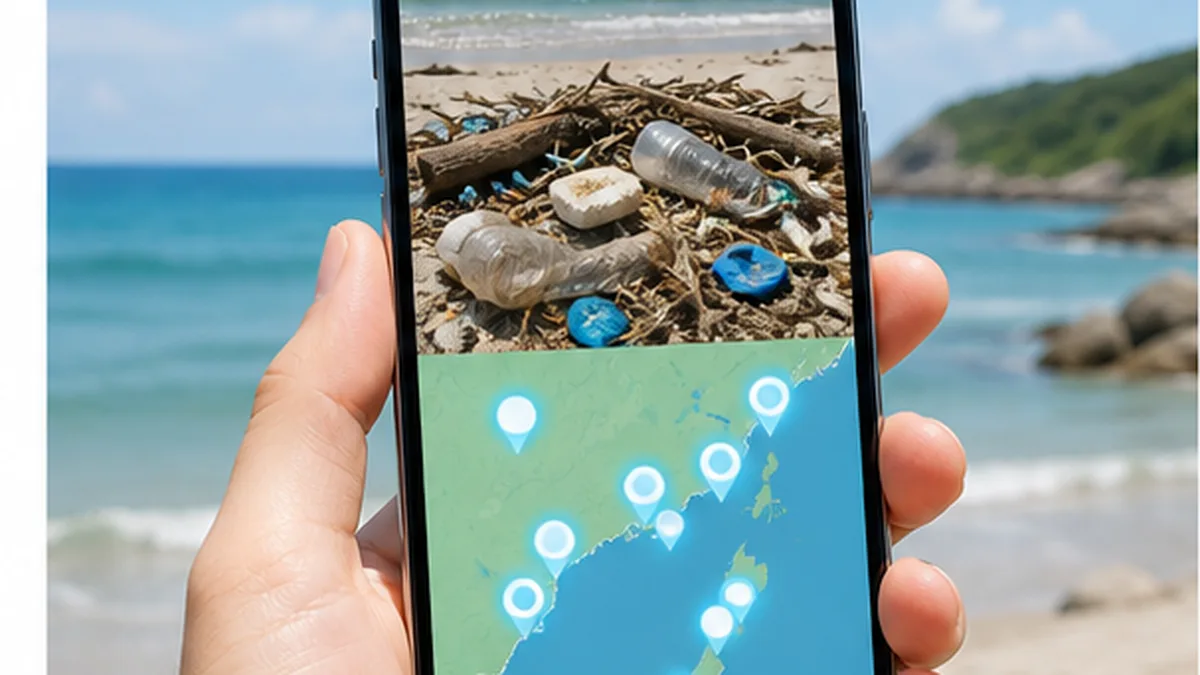
In recent years, tools for easy recording on a smartphone have spread. The litter-picking social network Pirika is used in more than 130 countries and regions, and the company announced that the cumulative count of litter picked passed 400 million on 20 February 2025. Simply photographing and posting what you collect builds a body of geotagged data.
The same company has developed Albatross, a device for quantitatively sampling microplastics in water. The Albatross Model 5 was developed jointly with the Tokyo University of Science, and as a project supported by The Nippon Foundation's Umi to Nippon Project, surveys were carried out at 38 sites across rivers and bays in the Kanto and Kansai regions and in New York City, with the results published. Making invisible pollution visible is what connects public interest to research.
From Recovery to Material Circulation
The question of what to do with what is collected is also advancing. Marine plastic is degraded by ultraviolet light and salt and arrives as a mixture of materials, making it harder to recycle than plastic from land. Even so, uses matched to material properties are spreading — recycled nylon from fishing nets, and resins that turn mixed marine plastic's speckles into a design feature. Specific product examples appear in recycled products made from ocean plastic.
Recycling is not a cure-all, however. Add up collection, haulage, washing, and sorting and in most cases the cost exceeds virgin material. That is precisely why narrowing the inflow — source reduction — has to accompany work on the outflow. Picking up and never letting it escape in the first place: neither alone is enough.
Three Steps to a Cleanup That Leaves Data
- Before you start: define the area (for example a 50 m stretch). Records without a defined area cannot be compared
- While you work: count by item. Use an existing format such as the ICC data card or an app like Pirika
- Afterward: report the numbers to the organizer, JEAN, or your local government. They only mean something once they accumulate
What You Can Do Tomorrow: Choices That Stop the Outflow
Finally, here is what a reader can actually do. The point is to combine three things — pick up, prevent outflow, and tell others — at whatever scale is sustainable for you.
Pick Up: Make the First Step Light
You do not need to join a large organized cleanup. Take a bag on your usual walk and pick up what catches your eye. Even if you never go to the coast, picking up along a nearby riverbank or around storm drains stops litter before it reaches the sea. As we saw, stopping it on land is overwhelmingly cheaper.
If you want to go further, look up the schedules for Umi-Gomi Zero Week or JEAN's cleanup campaigns. Tools and sorting rules are usually provided, so first-timers can take part with confidence.
Prevent Outflow: Small Design Choices in Daily Life
Recall the composition survey results and specific everyday actions come into focus.
- Do not discard bottle caps loose — caps rank fourth by count. Put them securely in the sorting bin
- Do not leave bags of recyclables outdoors on windy days; scattering is a major outflow route
- After outdoor events, barbecues, and fireworks, do a final check for light packaging that blows away easily
- At the beach, avoid bringing items that fly in the wind (plastic bags, food trays, straws)
- Reduce single-use packaging in the first place: refills, reusable bottles, and buying by weight
For anyone working in fisheries or aquaculture, preventing gear from escaping is the single largest contribution available. Reliably collecting offcuts of spacer tubes, pipes, and rope during work; never leaving damaged material in the water; sharing recovery routes for used gear within the region. Because these items top the rankings, operational improvements on the ground have outsized effect.

Tell Others: Carry the Numbers With You
Conversations about marine litter tend to be driven by distressing photographs, but what actually moves people to act are concrete numbers. Facts such as 93% of pieces being plastic, the top three items all being fishing gear, and Japan's outflow running at 13,000 to 31,000 tonnes a year convey the structure of the problem without relying on emotion.
At the same time, the ocean is not only something to protect but something to enjoy. Watch a cleanup that has continued for years and you see that participants keep coming back less out of obligation than because they love that particular stretch of shore. Having a place you love, and returning to it again and again — that may be the most durable marine litter measure of all.
Three Things to Do This Week
- Walk fifteen minutes along a nearby river or beach and fill just one bag
- Search for and read your prefecture's regional plan for beach litter countermeasures
- Look up the date of the next cleanup event and put it in your calendar (Umi-Gomi Zero Week runs late May to early June each year)
References and Sources
- Ministry of the Environment, Japan – Results of the FY2023 Beach Litter Composition Survey (March 2025)
- Ministry of the Environment, Japan – FY2024 Review: Estimating Japan's Outflow of Marine Plastic Litter
- Ministry of the Environment, Japan – Marine Litter Status Surveys (methods and results for beach, floating, and seafloor litter)
- Ministry of the Environment, Japan – Materials on the Marine Litter Act (law, basic policy, and guidance for regional plans)
- Ministry of the Environment, Japan – On the Problem of Marine Litter (November 2020: survey methods and overview of impacts)
- Ministry of the Environment, Japan – Announcement of Umi-Gomi Zero Week 2025, a joint project with The Nippon Foundation
- JEAN – The International Coastal Cleanup (ICC) and its data card surveys
- Umi-Gomi Zero Week – Official site of the nationwide simultaneous cleanup campaign (The Nippon Foundation, Umi to Nippon Project)
- Pirika, Inc. / Pirika Association – The Pirika litter-picking social network and the Albatross microplastic survey service
- Ministry of the Environment, Japan – Regional Beach Litter Countermeasure Promotion Project (overview of the municipal subsidy scheme)
* Listed in order of reliability: government and academic institutions > peer-reviewed papers > specialist organizations > trusted media