⚡ In short
Every year, an estimated 58,000 cubic meters of debris washes ashore on Tsushima Island, and 80% of recovered fuel containers bear Korean-language markings. Why do ocean currents and typhoons carry marine debris across borders? Drawing on primary sources, this article traces the ADRIFT project that tracked 2011 tsunami debris, the science of tracing debris origins, and international cooperation under the G20 Osaka Blue Ocean Vision.
Every year, the coast of Tsushima Island in Nagasaki Prefecture is buried under debris equivalent to 160 Olympic-sized swimming pools. Plastic bottle labels are printed in Hangul and simplified Chinese, and kerosene containers carry warning labels in Korean. The sea has no borders — so why does so much debris from other countries pile up on this particular coastline?
The answer lies in ocean currents, wind, and typhoons — natural forces that act as an "invisible conveyor belt," carrying plastic debris from one continent to another. The circulation of currents such as the Tsushima Current and the Kuroshio, seasonal prevailing winds, and the temporary surges brought by typhoons combine to carry debris discarded on land hundreds to thousands of kilometers to distant shores. During the 2011 Great East Japan Earthquake, part of the debris swept into the sea by the tsunami reached Hawaii and the west coast of North America, demonstrating to the world the threat of debris drifting across borders. What's more, drifting debris carries not only "trash" but sometimes living organisms attached to it, potentially affecting ecosystems far away.
This article traces "where drifting debris comes from and where it goes," drawing on primary sources: nationwide surveys by Japan's Ministry of the Environment, on-the-ground data from Tsushima, drift simulation research by JAMSTEC, the international ADRIFT project that tracked tsunami debris, and the international cooperation framework based on the G20 Osaka Blue Ocean Vision. Understanding how these natural phenomena work can also be a starting point for reframing someone else's distant problem as our own.
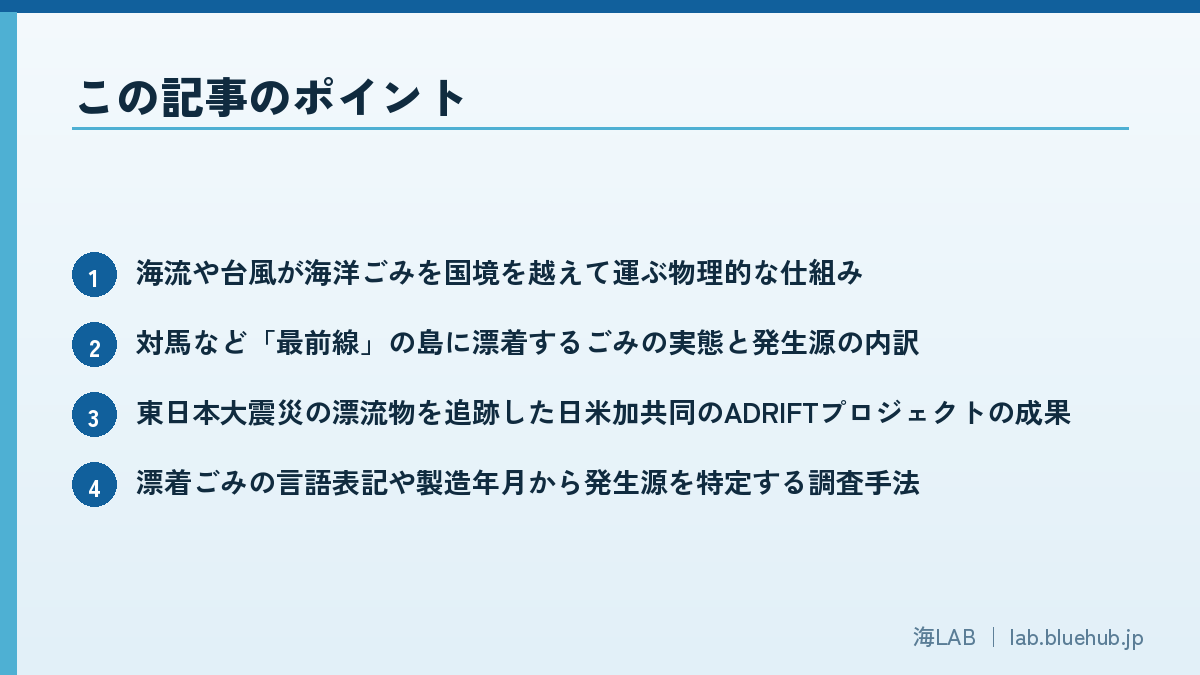
What you'll learn in this article
- The physical mechanisms by which ocean currents and typhoons carry marine debris across borders
- The reality of debris washing up on "frontline" islands like Tsushima and the breakdown of its origins
- The achievements of the ADRIFT project, a joint Japan-US-Canada effort that tracked debris from the 2011 tsunami
- Investigative methods for identifying the origin of debris from its language markings and manufacturing dates
- International cooperation frameworks like the G20 Osaka Blue Ocean Vision, and what we can do
The "Borderless Debris" Washing Up on Tsushima
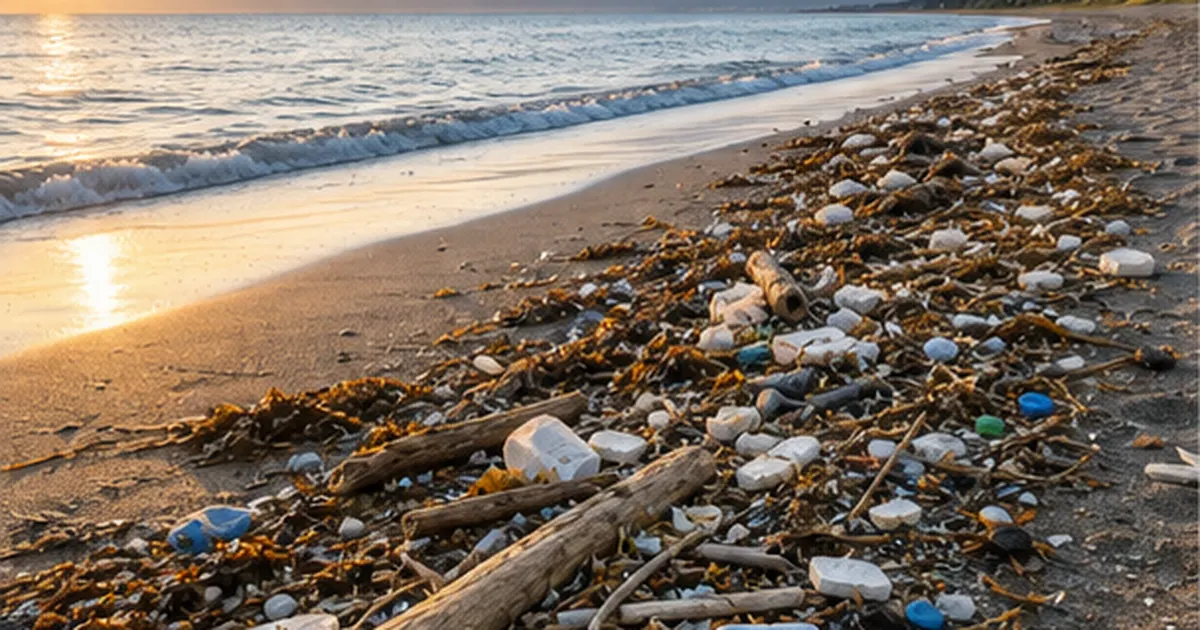
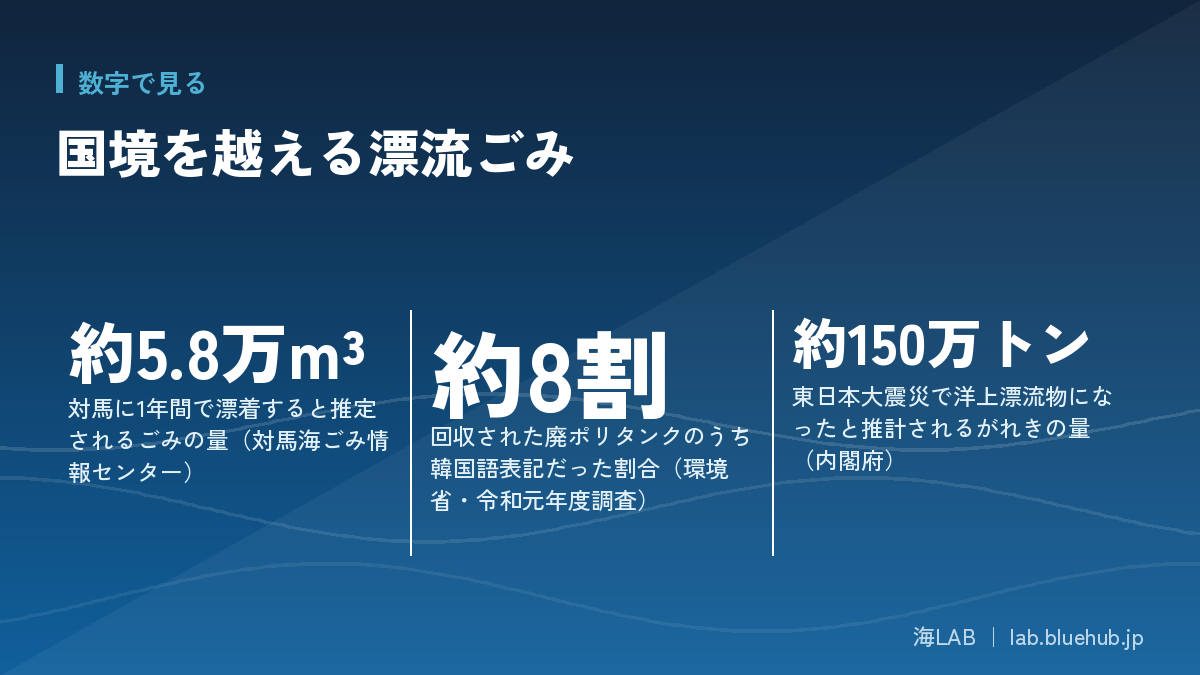
Located between Japan and the Korean Peninsula, Tsushima City in Nagasaki Prefecture is known as one of the areas in Japan most severely affected by marine debris. According to estimates by the Tsushima Marine Litter Information Center, an estimated 58,000 cubic meters of debris washes ashore on Tsushima every year — equivalent to 160 Olympic-sized swimming pools, or 627 large buses. Walking along the island's coastline, it is not uncommon to find places where debris is more conspicuous than the sand itself.
58,000 cubic meters a year — 160 pools' worth of debris
Tsushima is an island with a population of only about 30,000, yet its coastline is constantly battered by debris carried from the continent by the Tsushima Current. Some reports suggest the collected debris amounts to nearly a third of the island's general waste processing volume, placing an enormous burden on residents and local government. Much of the debris consists of plastic products from daily life and industry — plastic bottles, styrofoam, fishing gear, and kerosene containers. Because the volume of debris is disproportionately large relative to the population, local cleanup efforts alone cannot keep up, and a system of cooperation among government, NPOs, and volunteers from across the country continues to be built.
Impact on residents' lives, fishing, and tourism
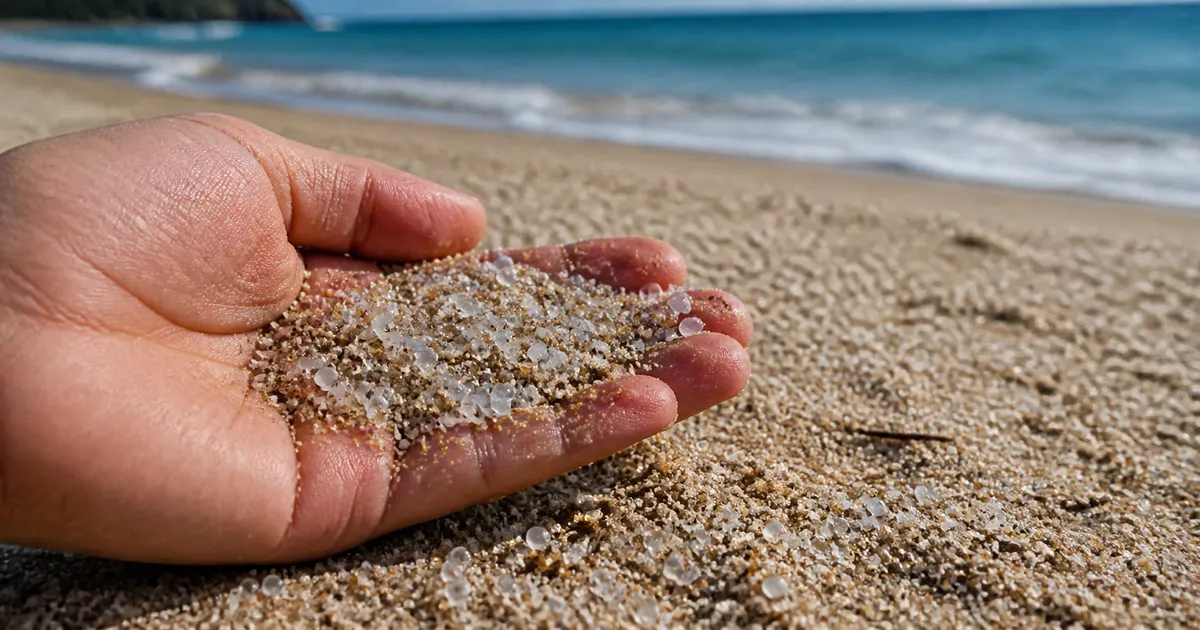
Drifted debris not only spoils the scenery but causes real harm. Styrofoam fragments break down into microplastics under waves and ultraviolet light, making them nearly impossible to collect. In fishing communities, drifting fishing gear (so-called "ghost gear") has been reported to become tangled in propellers or damage other fishing equipment. For tourism, too, a beach buried in debris can deter visitors to an island that markets itself on its beautiful coastline. Tsushima City continues ongoing beach cleanup and processing operations, drawing on national and prefectural subsidy programs to address the situation. The cost of processing collected debris is also a burden that cannot be overlooked. Debris mixed with foreign materials is time-consuming to sort, and incineration or landfill disposal often requires processing steps different from ordinary household waste. In areas where processing facilities and transport are limited due to the geographic constraints of being an island, this burden weighs especially heavily.
Plastic bottle labels reveal the source
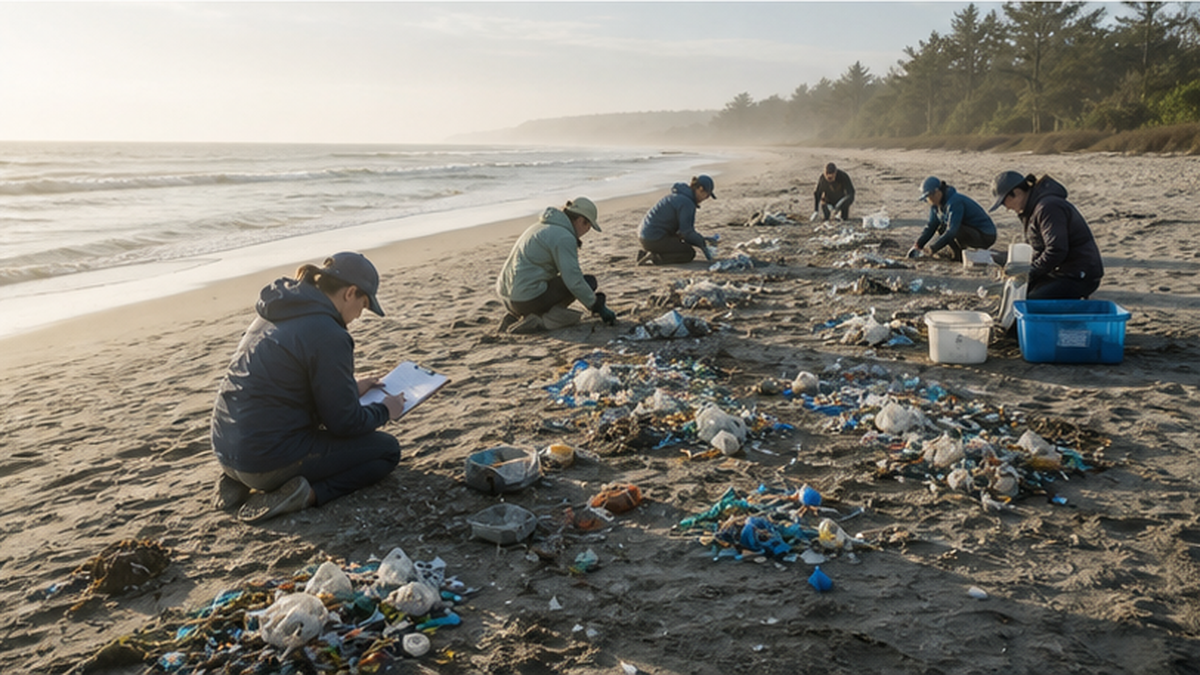
The Tsushima Marine Litter Information Center continues a citizen-participation survey that classifies the origin of debris based on clues such as the text printed on plastic bottles (Chinese characters only suggest China, Hangul suggests Korea, and so on). Interestingly, even within the same island, the tendency of origin differs by location — Japanese-made bottles are more common on Neso Beach on the eastern side, while Chinese-made bottles are more common on Kamitsuki Beach on the western side. This is because ocean currents and wind direction, influenced by the terrain, finely sort where debris ends up. Local junior high school students and corporate volunteers participate in these classification surveys, which also function as a form of environmental education.
| Survey site (Tsushima) | Location | Predominant country of origin |
|---|---|---|
| Neso Beach | Eastern Tsushima | Japan |
| Kamitsuki Beach | Western Tsushima | China |
About the Tsushima Marine Litter Information Center
A local hub that surveys the reality of debris washing ashore on Tsushima, conducts cleanup activities, and shares information. It continues citizen-science efforts such as beach cleanups run jointly with schools and companies, and surveys classifying plastic bottles by country of origin.
The existence of such local hubs matters far beyond Tsushima alone — it is significant for "frontline" islands and peninsulas nationwide that face heavy debris landings. Having an organization that continuously gathers data makes visible, for the first time, year-on-year changes and trends driven by typhoons and seasons that one-off news reports cannot capture. It is a way of using citizen science to fill in the on-the-ground reality that government statistical surveys alone cannot fully capture. Similar landings of foreign-origin debris, though not on the same scale as Tsushima, have been confirmed in island and coastal areas of Kyushu and the San'in region facing the Sea of Japan, suggesting that Tsushima's case is not a peculiarity of a single island but reflects a structure common across the Sea of Japan coast as a whole.
Why Marine Debris Crosses Borders — Ocean Currents as an "Invisible Conveyor Belt"
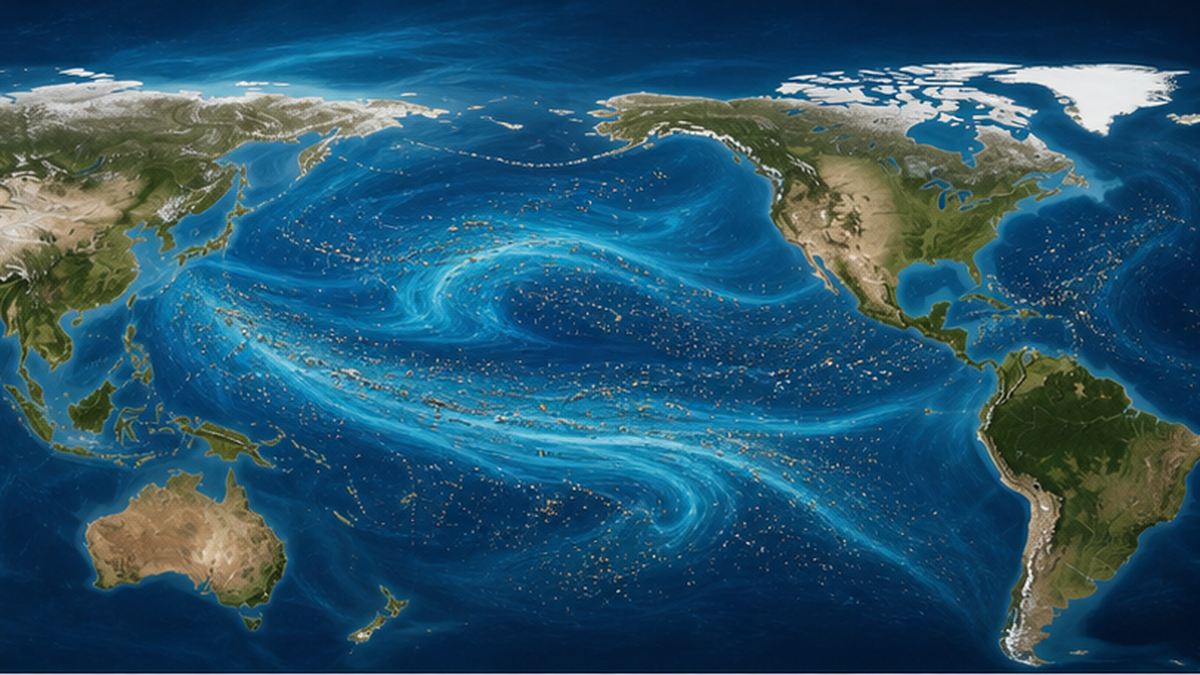
The concentration of debris on places like Tsushima is no coincidence. Around the Japanese archipelago, multiple ocean currents intertwine in complex ways — the Tsushima Current, which flows north from off the Philippines into the Sea of Japan, the Kuroshio, which flows north along the Pacific side, and the Oyashio — together acting as a "transport belt" that carries floating objects along set routes.
The circulation created by the Tsushima Current and the Kuroshio
The Tsushima Current is believed to be a major route carrying debris that has flowed out from the coasts of mainland China and the Korean Peninsula to the shores of northern Kyushu, Tsushima, and the San'in region. Meanwhile, the Kuroshio, which flows along the Pacific side, carries debris from Japan's coastal waters out to off the Boso Peninsula, then continues east as the Kuroshio Extension, meandering as it crosses the North Pacific. The Kuroshio is a warm current, part of the North Equatorial Current originating near the Philippines, that flows north along Japan's southern coast; the Tsushima Current branches off from the Kuroshio, passing through the Tsushima Strait into the Sea of Japan. The fact that debris carried by the same Kuroshio system follows completely different routes on the Pacific side versus the Sea of Japan side is an important premise for thinking about marine debris countermeasures. Because the speed and direction of currents also change with the seasons, debris released from the same source at different times can end up on very different shores. This complexity is what makes source countermeasures for marine debris far from straightforward.
Accumulation zones revealed by JAMSTEC simulations
The Japan Agency for Marine-Earth Science and Technology (JAMSTEC) predicts that large plastic debris carried by the Kuroshio accumulates in the "Kuroshio Extension recirculation area" off the Boso Peninsula, and has run supercomputer simulations to test this. The research suggests that relatively large debris gathering in this recirculation area tends not to keep drifting but instead sinks almost straight down, indicating a possible "debris dumping ground" forming on the seafloor. JAMSTEC's ocean current forecasting project also incorporates observational data into ocean circulation models and moves virtual particles along simulated currents to research the future movement of drifting objects such as discarded plastic.
See the researchJAMSTEC — Tackling the Ocean Plastic ProblemAn introduction to research using supercomputer drift simulations and other methods to scientifically clarify the movement of marine debris.🔗 jamstec.go.jpHow weight affects how debris is carried
Even within "drifting debris," the way debris is carried varies greatly depending on material and size. Lightweight debris that floats near the surface, such as styrofoam and plastic bottles, is strongly affected by wind and tends to ride wind-driven surface currents. Heavier items that tend to sink below the surface, such as fishing nets and large waste items, are more affected by the ocean current itself than by wind, moving with deeper layers of flow. This difference is one reason why lightweight debris such as plastic bottles is so conspicuous on Tsushima.
- Tsushima Current: carries debris from the continent to the Sea of Japan coast
- Kuroshio / Kuroshio Extension: carries debris on the Pacific side eastward, gathering it in the recirculation area off Boso
- Oyashio: involved in the spread of fishery-related debris along the Tohoku and Hokkaido coasts
- Seasonal winds / westerlies: influence the movement of lightweight debris near the surface, such as styrofoam
The debris beneath the surface is invisible
The debris washed ashore and visible to the eye is only a fraction of marine debris as a whole. In contrast to lightweight debris floating near the surface, heavier materials or debris that has absorbed seawater and sunk accumulates on the seafloor, making it difficult to grasp visually. The "debris dumping ground on the seafloor of the Kuroshio Extension recirculation area" revealed by JAMSTEC's simulations is precisely evidence of this invisible portion, showing that beach cleanups alone cannot capture the full picture of the marine debris problem.
Typhoons and Storms Bring "Sudden Mass Landings"
If ocean currents represent "slow transport," carrying debris over months to years, typhoons can be described as "short, concentrated transport," pushing large amounts of debris onto shore all at once over just a few days. Beach cleanup crews across the country, including on Tsushima, frequently report that far more debris than usual washes ashore after a typhoon approaches and passes.
Debris surges after a typhoon passes
As an intense low-pressure system, a typhoon brings raging winds and swells that push debris drifting offshore onto the coast all at once. High waves also dig up old debris that had settled on the seafloor or beach and wash it back out to sea, so the amount of debris tends to surge sharply after typhoon season. In areas along typical typhoon paths, such as Kyushu and Okinawa, responding to this "post-typhoon surge" is a key variable in beach cleanup planning. Many cleanup organizations flexibly rearrange their schedules based on the empirical rule that debris volumes can multiply several times over in the days before and after a typhoon approaches.
How far wind-driven currents and high waves can carry debris
The "wind-driven current" generated by sustained strong winds over the sea surface moves faster than ordinary ocean currents, significantly shifting surface debris in a short time. If a wide-ranging, powerful wind like a typhoon blows for several days, debris can move a distance that would normally take weeks in just a few days. Because the heavy rain brought by typhoons also increases the inflow of new debris from rivers, typhoons simultaneously accelerate both "the supply of new debris" and "the movement of existing debris." Because typhoon paths and intensity vary greatly from year to year, the amount of drifting debris also fluctuates significantly year to year, and beach cleanup organizations and local governments try to identify trends by accumulating records over multiple years.
Typhoon season is peak season for drifted debris
- Debris drifting offshore is pushed onto the coast all at once
- Old debris that had settled can flow back out to sea
- New inflow from rivers also increases due to heavy rain
- Post-typhoon beach cleanups require more manpower and time than usual
In areas that see multiple typhoons approach or make landfall every year, such as Okinawa, Amami, and southern Kyushu, this "post-typhoon surge" is built into the annual cleanup cycle. Fixed-point observations comparing debris volumes before and after typhoon season also serve as basic data for distinguishing current-driven landings from typhoon-driven landings. Because the number and paths of typhoons vary from year to year, it would be premature to simplistically conclude that "the source country's discharge has increased" just because debris surged in a given year — a perspective that separates weather conditions from the effectiveness of source countermeasures is essential.
What Japan's FY2019 Environment Ministry Survey Reveals About Debris Origins
Beyond observations in specific areas like Tsushima, nationwide statistics also confirm that "marine debris crosses borders." In a marine debris survey conducted in fiscal year 2019 (Reiwa 1), Japan's Ministry of the Environment confirmed a total of 13,821 discarded fuel containers and similar items on the coasts of 19 prefectures, from Hokkaido to Okinawa.
13,821 discarded containers across 19 prefectures
This survey compiled information provided by prefectural governments, and the Ministry of the Environment itself notes that because survey methods differ by region, there are limits to its statistical rigor. Even so, the fact that container landings were confirmed across a wide area centered on the Sea of Japan coast shows that marine debris is not a localized phenomenon but a nationwide problem. Fuel containers are highly airtight, and if they flow into the sea with air still trapped inside, they tend to keep floating and drifting for long periods, which is why they are often used in surveys as a marker for sources that traveled long distances.
What language markings reveal about origin
Of the 13,821 items confirmed, text could be read on just over 70% — 10,038 items. Of these, 7,989 items (about 80% of those readable) bore Korean-language markings, and 549 bore Chinese-language markings. Containers are durable vessels used for storing and transporting kerosene and other fuel, and because they tend to float and drift over long distances at sea, they are often used as a clue for estimating the distribution of debris sources. Conversely, the remaining roughly 30% whose text could not be read either had printing worn away or discolored by ultraviolet light and wave action, or were plain products without any text to begin with — meaning these were items that washed ashore without their origin being identifiable. The actual share of foreign-origin debris could be even larger than the readable figures suggest.
| Item | Count |
|---|---|
| Total discarded containers confirmed | 13,821 |
| Number with readable text | 10,038 (about 70%+) |
| Of which, Korean-language markings | 7,989 (about 80% of readable items) |
| Of which, Chinese-language markings | 549 |
What this survey shows is not a peculiarity of a single region like Tsushima, but a structure common across a wide area of the Sea of Japan coast. Although survey methods differ by region and simple comparisons aren't possible, as data accumulates across prefectural boundaries, a nationwide picture begins to emerge for the first time — showing which currents carry debris from which sources to which regions. The Ministry of the Environment accumulates these survey results and uses them as basic material for domestic countermeasures and international negotiations.
Tracking Debris from the 2011 Tsunami — The ADRIFT Project
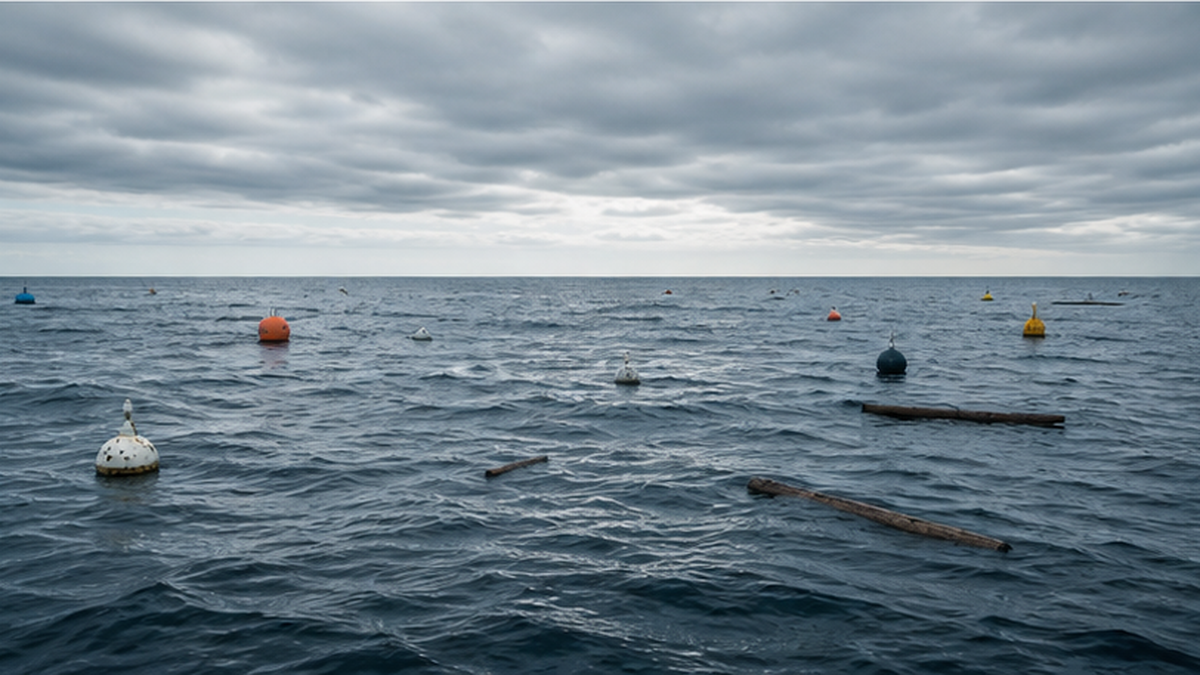
The phenomenon that most strongly impressed upon the world the way marine debris crosses borders was the Great East Japan Earthquake of 2011. Some of the debris generated by the tsunami crossed the Pacific Ocean and reached the distant shores of Hawaii and the North American continent.
5 million tons into the Pacific, 1.5 million tons adrift
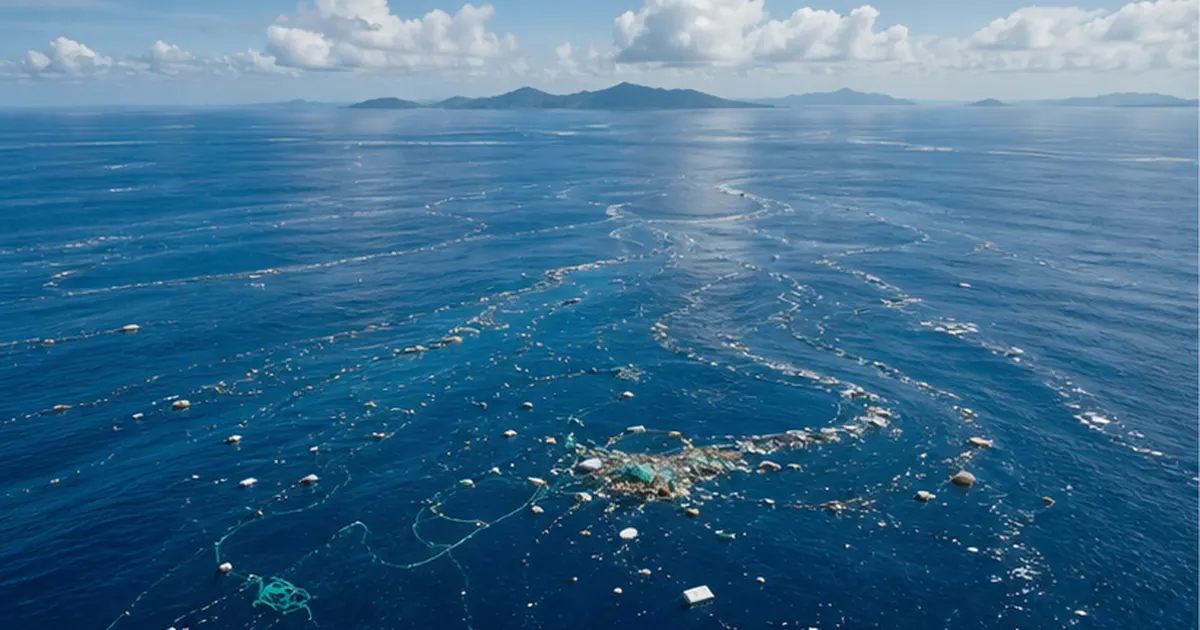
According to estimates by Japan's Cabinet Office, the total volume of debris generated in the three most disaster-affected prefectures exceeded 20 million tons, of which roughly 5 million tons flowed into the Pacific Ocean due to the tsunami. Of that outflow, about 70% (roughly 3.5 million tons) settled on the seafloor near the Japanese coast, while the remaining approximately 30% — roughly 1.5 million tons — is estimated to have become floating ocean debris. This figure of 1.5 million tons cannot be directly compared to the estimated annual volume of debris washing ashore on Tsushima (about 58,000 cubic meters), but it illustrates that a single disaster released a volume of drifting debris into the Pacific on an entirely different scale from a typical year's landings.
Reaching Hawaii and the North American west coast, and international joint research
Over the three years from FY2014 to FY2016, Japan's Ministry of the Environment, through the North Pacific Marine Science Organization (PICES), carried out the "Assessment of Debris-Related Impacts from the Tsunami Project" (ADRIFT Project) with researchers from Japan, the United States, and Canada. The project pursued research along four pillars: model simulations reproducing the dispersal patterns of ocean drift debris, monitoring and behavioral analysis of actual debris landings, surveys of the diversity of organisms attached to the debris, and risk assessments of marine invasive species carried along with the debris.
64 items confirmed by NOAA as tsunami debris
The US National Oceanic and Atmospheric Administration (NOAA)'s Marine Debris Program worked closely with the Japanese government and local consulates to identify whether items that washed ashore originated from the tsunami. As of September 2015, 64 items of debris had been officially confirmed as debris from the Great East Japan Earthquake. Unique information left on the items — such as hull registration numbers and manufacturer markings — helped identify their origin.
Rafting organisms and invasive species risk
What tsunami debris brought was not just "trash." According to a study published in the journal Science by a team of US researchers, between 2012 and 2017, 634 pieces of tsunami debris carrying living organisms native to Japanese coastal waters were confirmed on the shores of North America and Hawaii, and a total of 289 species were found among them. These spanned diverse taxonomic groups, including mollusks, crustaceans, annelid worms, and sea cucumbers, which survived an unprecedented long-distance "rafting" journey of 7,000 kilometers across the Pacific. Notably, about 65% of the confirmed species had never before been recorded on the North American Pacific coast, raising concerns that they could become established as invasive species and affect native ecosystems. This is precisely the knowledge that led the ADRIFT project to make surveying the diversity of attached organisms and assessing invasive species risk one of its core pillars. The research team has described this phenomenon as "an unprecedented scale of transoceanic movement of marine organisms in recorded history." While it has always been possible for organisms attached to floating driftwood or pumice to travel long distances, artificial objects such as plastic boat hulls and floating docks — which neither corrode nor decompose easily — become "sturdy rafts" that allow organisms to survive and keep drifting for extended periods. This research shows that marine debris is not merely a matter of scenery or ecotoxicity, but something that could potentially rewrite biogeography itself.
Some of the debris generated by the disaster became floating ocean debris, crossing the Pacific Ocean and reaching the Hawaiian Islands and the coasts of North America.
— Cabinet Office, "Q&A on Ocean Debris from the Great East Japan Earthquake"
The Science of Tracing Debris Back to Its Source
Efforts like the plastic bottle surveys on Tsushima and the ADRIFT project — identifying the origin of debris one item at a time — provide the basic data that underpins marine debris countermeasures.
Identification by language, manufacturing date, and composition
The most basic method is identification based on the language and script printed on containers and packaging. Text written only in Hangul suggests a Korean origin, while text only in simplified Chinese suggests a Chinese origin. In addition, the format of expiration dates and manufacturing dates, country codes in barcodes, and information such as product names and manufacturer logos are also important clues for narrowing down the source. For durable goods like containers, it is sometimes possible to identify the country of manufacture from an engraved company name or model number.
Next-generation methods: DNA and isotope analysis
For debris where text cannot be read, or has deteriorated too much to be legible, scientific analytical methods are used as a supplement. For example, research is underway to examine the DNA of organisms attached to debris to estimate the sea area where they lived, indirectly narrowing down the drift route, and to estimate the manufacturing lot or region from the chemical properties of the plastic material itself (the type of resin and composition of additives). Although these methods are still in development, they hold the potential to reveal the origin of debris that cannot be identified through visual inspection or language information alone. Combined with ocean current simulation research like JAMSTEC's, this could also lead to reconstructing drift routes — working backward to determine "when and where debris entered the sea, and when and where it landed."
The difficulty of turning findings into policy
Even once a source is identified, translating that into countermeasures is not easy. Because this is an inherently cross-border problem, countermeasures require the cooperation of the other country, along with diplomatic coordination and frameworks for funding and technical support. Only when on-the-ground data collection by hubs like the Tsushima Marine Litter Information Center, national-level statistics like those from the Ministry of the Environment, and international policy discussions like the G20 function together as a whole can source countermeasures become truly effective. It is also worth noting that classification by language markings is only a simplified estimate — since exported goods or secondhand products may be used in another country before being discarded, one cannot simply conclude "language on the label = country of origin of the discharge." Even so, by accumulating a large number of samples, the general distribution of sources becomes statistically meaningful data.
- Language and script (Hangul / simplified Chinese / Japanese, etc.)
- Format of manufacturing dates and expiration dates
- Country codes in barcodes, manufacturer logos, engraved numbers
- DNA analysis of attached organisms to estimate habitat
- Chemical properties of the plastic material (resin type, additives)
Combining these methods makes it possible to gather multiple lines of evidence even from a single piece of debris. For example, if the DNA of organisms attached to a Hangul-labeled plastic bottle matches species common along the Korean coast, the estimate of its origin becomes more reliable. Conversely, if the labeled language and the organisms' habitat don't match, it may suggest the item was an export or secondhand good used in another country before being discarded. This kind of multi-angle cross-checking, built up over time, is improving the precision of marine debris countermeasures. Beyond research institutions, photographs and count data recorded by local hubs like the Tsushima Marine Litter Information Center also play an important role as primary material underpinning this kind of scientific analysis.
The Framework for International Cooperation — The G20 Osaka Blue Ocean Vision
Because marine debris is a cross-border problem that cannot be solved by any single country's measures alone, international frameworks have been developed. A prime example is the "Osaka Blue Ocean Vision," shared at the G20 Osaka Summit in June 2019. As long as currents like the Tsushima Current and the Kuroshio carry debris across borders, no matter how thoroughly Japan alone cleans its beaches, drifted debris will not decrease unless outflow from upstream countries decreases as well. That is precisely why a mechanism was needed to bring scientific source-identification data into diplomatic and international cooperation settings, connecting it to concrete reduction targets and technical cooperation.
Toward zero additional marine plastic pollution by 2050
The Osaka Blue Ocean Vision is a goal shared among G20 countries: to reduce additional pollution by marine plastic debris to zero by 2050. Under the accompanying "G20 Implementation Framework for Actions on Marine Plastic Litter," countries confirmed they would work cooperatively on promoting international cooperation, promoting innovation in areas such as waste management, sharing scientific knowledge, and engaging diverse stakeholders while raising awareness. This framework has been shared with countries beyond the G20 as well, leading to broader cooperation across international society.
The MARINE Initiative and support for developing countries in Asia
To help realize the vision, the Japanese government launched the "MARINE Initiative," named for its four pillars: Management of Wastes, Recovery of marine litter, Innovation, and Empowerment. Given that much of the global outflow of plastic debris into the ocean has been attributed to emerging and developing countries, technical cooperation and human resource development support for countries with underdeveloped waste management infrastructure are emphasized. Japan also collaborates with the United Nations Environment Programme (UNEP) and the International Environmental Technology Centre (UNEP-IETC) to promote information sharing and joint projects both domestically and internationally.
Given indications that a large share of marine debris outflow originates from emerging and developing countries in East and Southeast Asia, countries that endorse the Osaka Blue Ocean Vision are also working to strengthen their own waste management systems, such as improving waste collection rates and developing recycling facilities. Through the MARINE Initiative, Japan serves as a point of contact for technical cooperation and human resource development support to these countries.
Domestic support: the Plastic Resource Circulation Act
Alongside international cooperation, Japan has also developed domestic legal frameworks to reduce the source of plastic waste itself. The "Act on Promotion of Resource Circulation for Plastics," which took effect in April 2022, requires manufacturers, local governments, and consumers to work together on resource circulation across the entire lifecycle of plastic products, from design through disposal and recycling. Reducing the debris that flows into the sea requires both wheels turning together: domestic measures to reduce the plastic waste generated by rivers and cities in the first place, and international cooperation to address debris after it has crossed borders.
See the Ministry's countermeasures pageMinistry of the Environment, Japan — Marine Debris CountermeasuresThe Japanese government's comprehensive portal for marine debris countermeasures, publishing survey results, legal frameworks, and international cooperation efforts.🔗 env.go.jpIt is important not to view Japan solely as a "victim country." Tsushima's survey also confirmed sites, such as Neso Beach, where Japanese-made debris was the most common, meaning debris that flowed out from within Japan may well be polluting the shores of other countries via the Tsushima Current and the Kuroshio. International cooperation on marine debris proceeds not on the simplistic binary of "perpetrator country / victim country," but on the premise that every coastal nation is simultaneously a source and a recipient.
Three pillars of international cooperation
- Transferring waste management and recycling technology to developing countries
- Joint research on the collection and processing of marine debris
- International sharing of scientific knowledge and monitoring data
What We Can Do — Reducing Debris at Its Source
We cannot stop ocean currents or typhoons. That is precisely why reducing debris "at its source," before it ever enters the sea, shapes the future of distant shorelines. While much of the debris washing ashore on Tsushima is of foreign origin, surveys there have also confirmed beaches where Japanese-made debris predominates — a reminder that we must not forget the possibility that debris flowing out from within Japan is polluting the shores of other countries. Reducing marine debris is also directly linked to United Nations Sustainable Development Goal 14, "Life Below Water," which calls for preventing and significantly reducing marine pollution of all kinds.
Choosing not to generate plastic waste
Individual actions — reducing plastic bags and single-use containers, not littering, and managing outdoor debris and plastic products so they aren't blown or washed away by wind — all reduce the amount of debris that eventually flows into the sea via rivers. Durable products like fuel containers require particular care in outdoor storage and disposal, since once they flow into the sea they tend to keep drifting for a long time without breaking down. Before typhoon season, it's also worth inspecting whether plastic items left in yards or at fishing ports might be blown away or washed out — a simple, effective precaution.
The role of citizen science and beach cleanups
Activities like those of the Tsushima Marine Litter Information Center, where citizens and students classify plastic bottles by country of origin, may seem modest but become important data that makes the reality of debris sources visible. Participating in beach cleanups is itself a countermeasure, but recording and sharing the types of debris collected and the languages found on them can also become primary data that supports discussions of international cooperation among government agencies and research institutions. Even for those living far inland, cleaning up riverbanks and choosing to reduce plastic waste in daily life are ways to participate in the same kind of source-reduction effort.
As long as natural phenomena like ocean currents and typhoons carry debris across borders, this problem cannot be addressed through "complete domestic countermeasures" alone. A single plastic bottle washed up on a Tsushima beach may have been discarded by someone in a faraway country — and at the same time, debris that flows out from our own daily lives may just as easily wash up on someone else's shore. Translating the simple fact that the ocean is all connected into concrete source-reduction actions is the foundation for the future of marine debris countermeasures. For more on how plastic debris that reaches the coast breaks down, see our article on the decomposition process of ocean plastic debris. For how debris flows from cities into the sea in the first place, see plastic debris flowing from rivers to the ocean, and for the reality of beach cleanups, see the true nature of beach litter — together, these give a fuller picture of the journey from generation to landing.
Summary
- Marine debris crosses borders, carried by ocean currents and typhoons
- An estimated 58,000 m³ of debris washes ashore on Tsushima each year, much of it of foreign origin
- Debris from the 2011 tsunami was tracked internationally through the ADRIFT project
- Research into identifying debris origins through language markings and scientific analysis is advancing
- International cooperation frameworks such as the G20 Osaka Blue Ocean Vision exist
- Choosing not to generate waste on land protects the future of distant shorelines
References & Sources
- Ministry of the Environment, Japan – Marine Debris (Drifting, Beached, and Seafloor Litter) Countermeasures
- Ministry of the Environment, Japan – Results of the FY2019 Marine Debris Survey (language-marking survey of discarded containers)
- Ministry of the Environment, Japan – Response to Ocean Debris from the Great East Japan Earthquake (ADRIFT Project)
- Cabinet Office, Japan – Q&A on Ocean Debris from the Great East Japan Earthquake (estimated outflow volumes)
- Smithsonian Environmental Research Center – Tsunami-driven rafting: Transoceanic species dispersal (report of 289 species on tsunami debris; Carlton et al., Science 2017)
- Ministry of the Environment, Japan – G20 Implementation Framework for Actions on Marine Plastic Litter (Osaka Blue Ocean Vision)
- Ministry of the Environment, Japan – On the Act on Promotion of Resource Circulation for Plastics (effective April 2022)
- JAMSTEC (Japan Agency for Marine-Earth Science and Technology) – JAMSTEC's Efforts on the Ocean Plastic Problem (drift simulations)
- JAMSTEC (Japan Agency for Marine-Earth Science and Technology) – Ocean Current Forecasting Project (4D Virtual Earth Project)
- Tsushima Marine Litter Information Center – Why We Tackle the Marine Debris Problem (estimated annual landing volume)
- Tsushima Marine Litter Information Center – What Plastic Bottle Classification by Country Reveals About the Sources of Debris Reaching Tsushima
※ Listed in order of reliability: government and academic institutions > peer-reviewed papers > specialized organizations > trusted media