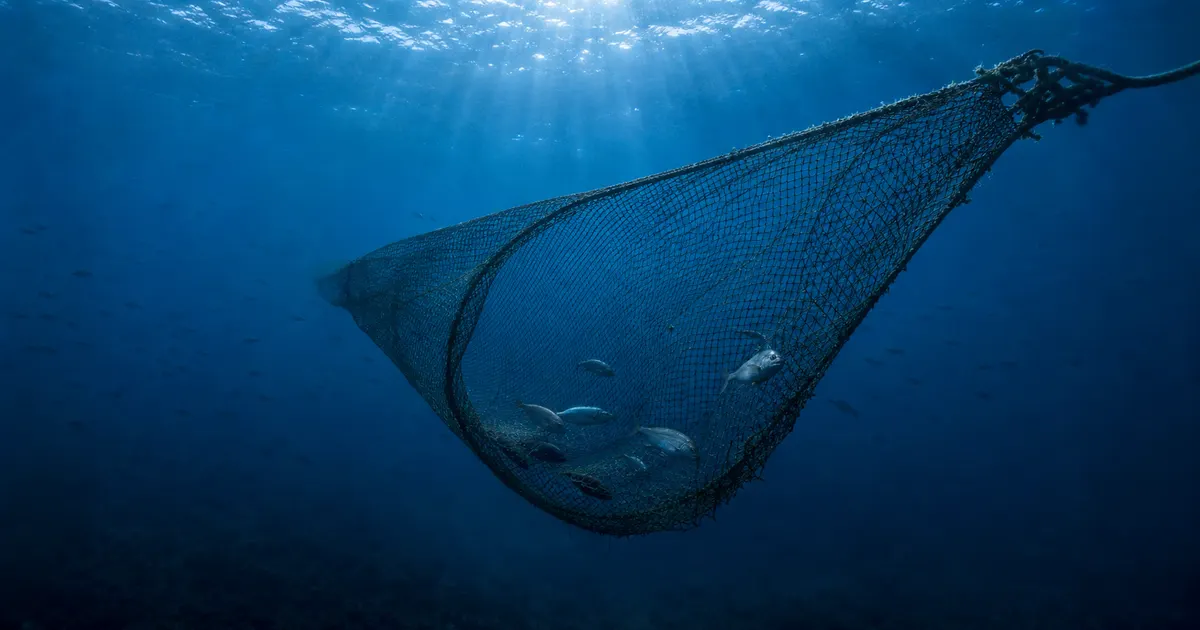
Even as autumn arrives, Pacific saury no longer appears on the dinner table. This once-cheap "everyday fish," available for under a dollar a piece, has become so expensive it's now called a luxury item, and in some years it vanishes from store shelves altogether. One cause is the quiet but steady rise in ocean temperature. According to the Japan Meteorological Agency, sea surface temperatures around Japan have risen 1.33°C over the past 100 years, continuing to warm at more than twice the global average rate.
The ocean is a giant "buffer" that has absorbed more than 90% of the excess heat generated by global warming. This has kept the rise in air temperature on land in check, but the cost has been accumulating inside the sea. Even a change of just a few degrees Celsius in water temperature can throw fish migration routes, spawning, and growth badly out of sync. The Pacific saury shortage, the collapse of Japanese flying squid catches, and yellowtail now being caught in Hokkaido are all branches growing from the same root.
This article traces the story from the "cause" — the rapid warming of the waters around Japan — through the "effects" of catch declines and northward shifts by species, to the "adaptation" of resource management and rethinking aquaculture, using data from reliable sources including the Ministry of the Environment, the Japan Meteorological Agency, the Fisheries Agency, JAMSTEC, and the IPCC. Changes in the ocean are, quite literally, changes to our dinner table.
What You'll Learn in This Article
- Why waters around Japan are warming more than twice as fast as the global average — the mechanism and the latest observational data
- The scientific reasons why Pacific saury, Japanese flying squid, and salmon — staples of the dinner table — have become scarce
- The phenomenon of fish distributions shifting northward, exemplified by yellowtail and Spanish mackerel
- The damage high temperatures cause to scallop farming and other aquaculture, along with secondary damage from red tides and oxygen depletion
- The concept of "adaptation" through resource management based on the revised Fisheries Act and MSY (Maximum Sustainable Yield)
- Choices we as consumers can make for sustainable seafood consumption
Waters Around Japan Are Warming at "Twice the World's Speed"
The first thing to understand is that ocean warming is "less visible" than warming on land, but it is by no means smaller. According to the Japan Meteorological Agency's "Climate Change in Japan 2025," the annual average sea surface temperature around Japan has risen at a rate of +1.33°C per 100 years over the roughly 100 years leading up to 2024. This is more than double the global average rate of sea surface temperature rise (+0.62°C per 100 years), and comparable to the rate of rise in Japan's land air temperature (+1.40°C per 100 years).
What's more, the rise is accelerating in recent years. In 2024, the annual average sea surface temperature around Japan recorded its highest value since statistics began, setting a new record. Preliminary 2025 figures also show temperatures about 1.0°C above average, on track to be the third-highest since records began in 1908. The fact that the top-ranking years are clustered in the recent past is itself telling evidence of the warming trend.
Sea surface temperature (SST) refers to the water temperature near the ocean's surface, observed globally by ships, drifting buoys, and infrared sensors on satellites. The Japan Meteorological Agency has accumulated this data for more than 100 years and publishes it as annual and regional deviations from the average. It is precisely because of this long, consistent record that we can distinguish "just a hot year by chance" from "a consistent upward trend." And the data for waters around Japan shows a clear, steadily rising trend.

The Ocean Has Become an "Escape Route for Heat"
Why does ocean warming matter so much? According to assessments by the IPCC (Intergovernmental Panel on Climate Change), more than 90% of the excess energy accumulated in the Earth's climate system between 1971 and 2010 has been absorbed by the ocean. The rise in atmospheric temperature is merely "the tip of the iceberg" — beneath it, an enormous amount of heat has been stored in the sea.
This stored heat manifests as sea level rise from thermal expansion of seawater, declining dissolved oxygen, and shifts in the distribution of ecosystems. Changes in water temperature are also closely tied to ocean current patterns, and the tug-of-war between warm and cold currents governs fish migration. We cover changes in ocean currents themselves in detail in our article on rising sea temperatures and changing ocean currents, which is worth reading alongside this one. Warming also overlaps with other ocean problems, such as plastic waste, placing a compounded burden on marine ecosystems. Our article on the deep-sea trash problem is also a useful reference on the reality of trash sinking into the sea.
Another troublesome aspect of the ocean storing heat is the sheer "length of its memory." The atmosphere turns over in a matter of days, but the ocean's heat capacity is orders of magnitude greater, so once it warms, it doesn't cool easily. In other words, even if we cut greenhouse gas emissions now, the heat already stored in the ocean will linger for some time to come. Ocean warming is a phenomenon with tremendous inertia, and for decades to come we will need to rebuild our fisheries and diets around the assumption of this already-warmed sea.
Key Points of This Section
- Sea surface temperatures around Japan have risen +1.33°C over 100 years, more than twice the global average rate
- 2024 set a new record high since statistics began, and 2025 is on track for the third-highest on record
- The ocean is a giant buffer that has absorbed more than 90% of the excess heat from global warming
| Indicator | Rate of Rise (per 100 years) | Notes |
|---|---|---|
| Sea surface temperature around Japan | +1.33°C | More than double the global average |
| Global average sea surface temperature | +0.62°C | Global average |
| Japan's land air temperature | +1.40°C | For reference |
What's important is that we shouldn't dismiss "just about 1°C" as trivial. Fish are ectotherms (cold-blooded), and their body temperature, metabolism, and spawning timing depend heavily on water temperature. Just as a 1°C rise in human body temperature feels like a debilitating fever, for marine creatures a change of more than 1°C in the annual average is a major event that can redraw the very boundaries of where they can live.
What's more, the figure of "+1.33°C on annual average" is just that — an average. In the actual ocean, extreme high-temperature events (marine heatwaves) occur in summer, with temperatures 3-4°C above normal, and this single blow can kill off or drive away large numbers of fish and shellfish. Both the "chronic stress" of a gradually rising average and the "acute shock" of extreme high temperatures are now bearing down on Japan's seas simultaneously. It is this two-pronged nature that makes ocean warming a far more troublesome problem than the numbers alone suggest.
Why Are Waters Around Japan Warming So Fast?
The world's oceans are not warming uniformly. Behind the exceptionally fast warming of waters around Japan lie several overlapping geographical and oceanographic reasons. First, the Japanese archipelago faces marginal seas surrounded by land that warms easily, which trap heat more readily than the open ocean. Semi-enclosed seas like the Sea of Japan exchange water with the open ocean only slowly, so once they warm, the heat has a harder time escaping.
The Kuroshio Current: A "Heating System"
The biggest factor is the presence of the Kuroshio Current, one of the world's great warm currents. The Kuroshio carries warm tropical water along Japan's southern coast, and its extension, the Kuroshio Extension, reaches as far as waters off Tohoku. In recent years, this Kuroshio Extension has increasingly bulged further north than usual, so that warm water now lingers even in areas where the cold Oyashio Current should normally flow south. Changes in the strength of this warm current are a major factor in the warming of waters around Japan.
The waters east of Japan form a globally rare "tidal front" (or mixing zone) where the warm Kuroshio and cold Oyashio currents collide. This area, where cold and warm water mix, is rich in nutrients, supporting abundant plankton and drawing the fish that feed on them, making it a prime fishing ground. Japan's abundance of fisheries resources such as Pacific saury, salmon, and mackerel owes much to this tidal front. That is precisely why, when the balance of power between the Kuroshio and Oyashio shifts, Japan's fisheries are affected right down to their roots.

Marine Heatwaves: The Ocean's "Extreme Heat Days"
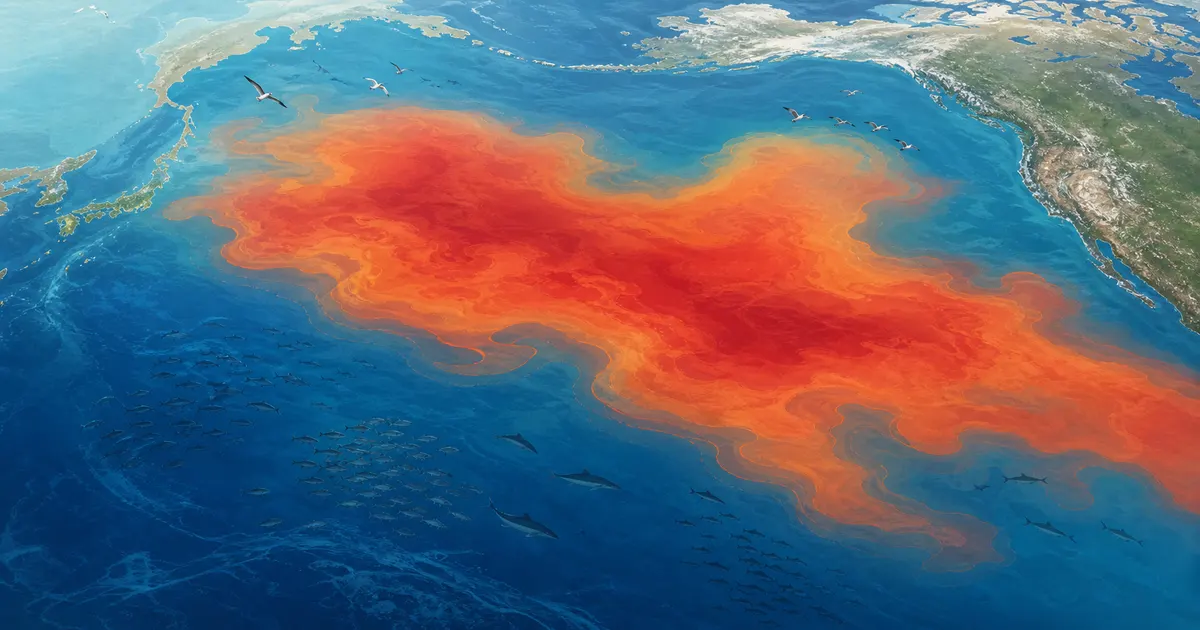
One phenomenon drawing attention in recent years is the marine heatwave. This is when sea surface temperature stays extremely high compared to normal for anywhere from several days to several months — essentially the ocean's equivalent of a heatwave. Observations by JAMSTEC (Japan Agency for Marine-Earth Science and Technology) found that in 2023, a marine heatwave 3-4°C above normal occurred across a wide area of waters around Japan.
This marine heatwave doesn't stay confined to the sea. According to a 2024 study published by the Japan Meteorological Agency, the University of Tokyo, Hokkaido University, and JAMSTEC, the record marine heatwave that persisted in waters off northern Japan in 2023 was likely a major contributor to that year's hottest summer on record in northern Japan (with average summer temperatures 3.0°C above normal). The high sea surface temperatures hindered the formation of low clouds, increasing solar radiation, while the ocean directly warmed the atmosphere and increased water vapor, strengthening the greenhouse effect. A feedback loop between sea and land is at work here, with the warmed ocean fueling extreme heat on land. The abnormal summer heat we feel and the changes unfolding in the ocean are, in fact, two sides of the same coin.
The impact of marine heatwaves on fish isn't limited to water temperature alone. Sudden high temperatures change the types and amounts of plankton, shifting the entire distribution of the organisms fish feed on. When food becomes scarce, fish cannot grow or spawn properly, or they leave for another area in pursuit of food. Marine heatwaves undermine fishing grounds on two fronts: the "environment" of water temperature and the "food chain" of prey.
Also not to be overlooked is ocean acidification and deoxygenation, which are progressing alongside rising water temperature. As the ocean absorbs atmospheric carbon dioxide, it becomes more acidic, harming organisms such as shellfish, crustaceans, and coral that build shells or skeletons. As water temperature rises, the amount of oxygen that can dissolve in it also decreases. Marine life is being exposed simultaneously to multiple stressors: temperature, acidity, and oxygen. Rather than viewing rising sea temperature as a standalone phenomenon, grasping it as part of this whole set of environmental changes is essential to understanding the full picture of the problem.
- Marginal sea geography: surrounded by land that warms easily, trapping heat
- Northward shift of the Kuroshio Extension: warm water now lingers in areas that should be cold-current territory
- Frequent marine heatwaves: extreme high-temperature events 3-4°C above normal
- Sea-land interaction: the warmed ocean amplifies extreme heat on land
What Is a Marine Heatwave?
A phenomenon in which sea surface temperature in a particular area stays significantly above normal for a long period. It causes coral bleaching, mass fish migration and die-offs, and red tides, directly damaging fisheries and aquaculture. In recent years, both the frequency and intensity of these events have been increasing.
Such high temperatures are fatal for creatures that cannot move, like coral. Indeed, large-scale coral bleaching was confirmed in Okinawa and elsewhere in 2024. For the impact on marine ecosystems as a whole, please also see our articles on coral bleaching and ocean acidification and coral.
The Pacific Saury Shortage: A Decade That Erased an "Everyday Fish"
Pacific saury is the most symbolic embodiment of the impact of rising sea temperatures. Catches of this "everyday fish," which once graced autumn dinner tables, have collapsed over the past decade or so. Tracing statistics from the National Federation of Saury Stick-held Dip Net Fishery Cooperative Associations and the Fisheries Agency reveals just how dramatic the change has been.
| Year | National Catch (approximate) | Notes |
|---|---|---|
| 2008 | About 343,000 tons | Recent peak |
| 2019 | About 46,000 tons | Start of a record shortage |
| 2022 | About 17,000 tons | Lowest since the 1960s |
| 2023 | About 24,000 tons | Slight recovery |
| 2024 | About 36,000 tons | About 11% of the peak |
The roughly 17,000 tons caught in 2022 was the lowest level since the stick-held dip net fishing method became widespread in the 1960s. Although catches recovered slightly in 2023 and 2024, even the roughly 36,000 tons caught in 2024 is only about 11% of the peak year (2008). It's no wonder that Pacific saury, once available for under a dollar a fish, has become a "luxury fish" costing several dollars each. The star of the autumn dinner table has, before we knew it, turned into a treat reserved for special occasions.
The shortage has changed not just the volume of catches but the "quality" of the fish as well. Recent Pacific saury are noted to be noticeably thinner and smaller than in the past. As migration routes have changed, the fish arrive at fishing grounds without passing sufficiently through nutrient-rich waters, making them prone to poorer fat content. Fewer fish, and each one smaller — this double blow is squeezing the finances of producing regions.
The damage to the producing regions that support the saury fishery is also severe. In fishing ports that have long relied on saury as a mainstay — such as Nemuro and Kushiro in Hokkaido, and Ofunato in Iwate — the sharp decline in catches is hitting the local economy directly, from processing plants to transport and restaurants. If the fish don't come, the boats don't go out; if the boats don't go out, the bustle of the port disappears too. The Pacific saury shortage is no longer just a problem for a single fish species — it has become a question about the sustainability of the local communities that were built around it.
Why Pacific Saury Stopped Coming to Japan
The main cause of the shortage is not overfishing alone — the shift in migration routes due to changing sea temperatures plays a major role. Pacific saury prefer cold Oyashio-system water, but as noted earlier, the warm Kuroshio Extension has pushed north as far as southern Tohoku, and the cold Oyashio no longer extends far enough to reach Japan's coast. As a result, saury schools no longer approach Japan's coast and instead migrate south far offshore. Fishing boats are forced to travel much farther out to sea to pursue the fish, driving up fuel costs and making it harder to maintain freshness. Changes in the ocean are even pushing up the cost structure of the fishery itself.

Further complicating the problem is international competition for catches. Because Pacific saury also migrate through the high seas outside Japan's exclusive economic zone (EEZ), competition with fishing fleets from China, Taiwan, and elsewhere is fierce. The international catch, once as high as 600,000 tons a year, fell to a historic low of about 93,000 tons in 2021, and the resource assessment described the stock as "depleted." Even if Japan holds back on coastal fishing, the resource cannot be protected if other countries overfish on the high seas. Managing fish that migrate across borders presents a difficulty that no single country's efforts alone can solve.
Belated International Management
The North Pacific Fisheries Commission (NPFC) has set catch quotas to help the stock recover; the 2025 total allowable catch (TAC) was set at about 202,500 tons, down 10% from the previous year (of which 121,500 tons is on the high seas). Japan also set its 2025 domestic catch quota at about 95,600 tons, down roughly 10% from the previous year — the first time it has fallen below 100,000 tons since the quota system began in 1997. However, organizations such as WWF Japan point out that "the quota cuts are still insufficient," and whether the stock will get on a recovery track remains uncertain.
Three Factors Behind the Pacific Saury Shortage
- Rising sea temperature: the northward push of warm water has shifted migration routes offshore
- International fishing competition: competition with multinational fishing fleets on the high seas
- Resource depletion: years of high fishing pressure have reduced the number of mature fish
What the story of Pacific saury teaches us is that when multiple factors — rising sea temperature, international competition for resources, and overfishing — become intertwined, a stock can collapse in the blink of an eye. Conversely, recovery requires tackling all three factors at once. Even if we can't lower the water temperature, setting catch quotas through international cooperation and having every country comply with them can at least control the factor of "humans overfishing." Pacific saury is a mirror reflecting both the difficulty and the possibility of resource management in the age of climate change.
Japanese Flying Squid and Salmon: Fish Quietly Vanishing from the Table
Pacific saury isn't the only fish in short supply. Japanese flying squid, the "king of squid," and salmon, familiar to us as autumn-run salmon, have also been hit hard by rising sea temperatures. In both cases, the early stages of spawning and growth are extremely sensitive to water temperature, so environmental changes directly affect stock size.
Down 94% in 20 Years: Japanese Flying Squid
The decline in Japanese flying squid catches has been even more abrupt than for Pacific saury. Catches of about 300,000 tons in 2000 fell to about 18,000 tons in the 2024 fishing season — a decline of roughly 94% in a little over 20 years. A fish deeply rooted in Japanese food culture — eaten as sashimi, grilled squid, salted squid (shiokara), and dried squid (surume) — is now becoming a scarce, high-priced item.

Japanese flying squid spawn on the seafloor from the East China Sea to the Sea of Japan, and the water temperature at which hatched larvae are most likely to survive is said to be roughly 19.5-23°C. However, when warming pushes spawning-ground temperatures outside this optimal range, large numbers of eggs and larvae die. If this fails at the "entry point" of spawning, the entire year's stock is thinned out. In addition, fishing pressure in the Sea of Japan remains high, and there are persistent voices pointing to lax resource management.
Japanese flying squid are also "short-lived" creatures, completing their entire life cycle in about a single year. A short lifespan means that when conditions are good, numbers can surge quickly, but when conditions are bad, they can crash just as quickly. Unlike longer-lived fish, which have the buffer of mature adults "riding out a bad year and carrying over to the next," squid have no such margin, so if spawning-ground temperatures stay high for several years, the stock is prone to sudden collapse. It can be said to have a life history that is structurally vulnerable to climate change.

The Salmon That Don't Come Back
Chum salmon are known for "natal river homing" — born in rivers, they migrate to the sea and return years later to spawn in the same river where they were born. They are an important resource for Hokkaido and Tohoku, but in recent years the number of mature fish returning has kept declining. Catches in 2021 fell to about 54,000 tons, a near-record-low level.
The main cause of the shortage is thought to be rising coastal water temperatures at the time when hatchery-released juveniles migrate to sea. Salmon fry prefer cold water around 5-13°C, but when warming causes the coast to heat up earlier in spring, juveniles are exposed to high temperatures before they have grown and adapted sufficiently, lowering their survival rate. Just a few weeks at the sea's entrance determines the catch years later.
Japan's salmon stock has long been supported by hatchery-and-release programs that raise juveniles and release them into rivers. The fact that the number of returning adults is declining despite billions of juveniles being released by hand every year strongly suggests the problem lies not in the rivers but in the sea. No matter how carefully juveniles are raised in rivers, if the sea itself has changed, the fish won't come back. Warming is shaking the very propagation mechanism that has worked effectively until now.
What Pacific saury, Japanese flying squid, and salmon — this trio of scarce fish — have in common is that they were all once "cheap, everyday fish." Grilled salted saury, salted squid, salmon fillets — none of these were special-occasion feasts; they were common people's fish that supported daily dinner tables. The fact that all three are becoming harder to afford at once means that rising sea temperature is gradually eroding the foundation of our food culture. Fewer fish doesn't just mean items disappearing from store shelves; it means the memories of daily life and the sense of the seasons are fading too.
- Japanese flying squid: high temperatures at spawning grounds (East China Sea to Sea of Japan) reduce larvae (optimal temperature 19.5-23°C)
- Salmon: coastal warming when juveniles migrate to sea lowers early survival rates
- Common thread: the "entry points" of the life cycle — spawning and migration to sea — are sensitive to water temperature
The "Bottleneck" in a Fish's Life Cycle
Most fish are most vulnerable to environmental change during their egg and larval stages. Because even a slight shift in water temperature during this period can drastically reduce the number that survive, the timing of spawning and migration to sea becomes a "bottleneck" that determines stock size. Rising sea temperature strikes precisely at this weak point.
Fish Are Moving North: Distribution Shifts and "Winners and Losers"
Rising sea temperature doesn't just "reduce" fish populations. Fish distributions themselves are shifting northward, following the water temperature range suited to their habitat. Fish that prefer cold water are seeing their habitat shrink, while fish that prefer warm water are advancing into northern seas. This change is creating "winners" and "losers" within Japan's fisheries.
An Era When Yellowtail Is Caught in Hokkaido
Yellowtail is the symbol of this shift. Originally a warm-water fish caught in western Japan and Honshu, its stock is now at record levels, and it is being caught in large volumes in Hokkaido. Spanish mackerel has similarly expanded its range northward and is now seen in Tohoku and Hokkaido as well. As fish unfamiliar to local areas increase while the fish that used to be the mainstay can no longer be caught, the landscape of fisheries is being redrawn.
This northward shift isn't just about fish. The distribution of plankton and small organisms that fish feed on, and even the location of seaweed-rich "kelp forests" (moba), also shift north in response to water temperature. In warmer waters, fish and sea urchins that eat seaweed become more active, and cases of kelp forests disappearing, a phenomenon called "isoyake" (barren rocky shore), have been reported to be spreading. Because marine ecosystems move together as a single pyramid, rising temperatures push up every level of the food chain at once. Kelp forests are also spawning and nursery grounds for many fish, and their loss creates a vicious cycle that further thins overall fish stocks.
For living things to respond to changes in water temperature through "evolution" takes many generations, but the speed of warming far outpaces that. So instead of changing their bodies, many fish try to survive by changing their location — that is, by moving north. Unlike deep-sea creatures that adapted to extreme environments over millions of years, the means available to fish facing rapid warming are almost entirely limited to "fleeing." The northward shift in distribution is also a desperate evacuation by living creatures.

However, it can't be said that "since fish are now caught in the north, it's a wash." Catching newly arrived species requires appropriate fishing gear, processing, distribution, and sales channels, and regions cannot adapt to new species immediately. It isn't easy for a producing area that has long relied on salmon or kelp to suddenly transform into a yellowtail-producing area. Even if fish move north, if the people and equipment to support that shift don't keep pace, local fisheries will wither. In addition, fish unfamiliar to consumers are harder to sell, and a "wasted treasure" situation easily arises where fish are caught but fetch no good price. Overcoming this shift in species requires both those who catch fish and those who eat them to change at the same time.
The "Losers" Have Little Room to Escape
For cold-water fish, there is a limit to how far north they can go. Beyond the northern tip of the Japanese archipelago lie other countries' EEZs and the open ocean, and there is a limit to how far Japan's fisheries can follow. Fish that prefer cold water, such as Pacific saury, salmon, and Japanese flying squid, are precisely the ones "running out of room to escape." The northward shift in distribution is a blessing for some fish, but at the same time it is a sign of exit for many traditional stocks.
What's more, even the "winning" warm-water fish are not necessarily secure. Even if their range expands and catches temporarily boom, if warming continues to progress, it will eventually be their turn to be pushed further north. Under rising sea temperatures, no fish is guaranteed to remain a "winner" forever. Fisheries and food culture alike are being forced to confront an uncertain sea where the composition of fish species keeps turning over on a scale of just a few years.
| Category | Main Species | Trend |
|---|---|---|
| Warm-water (advancing) | Yellowtail, Spanish mackerel | Distribution shifting north, increasing in northern Japan |
| Cold-water (retreating) | Pacific saury, salmon, Japanese flying squid | Habitat shrinking, shortages severe |
| Resident species vulnerable to heat | Scallops, kelp | Die-offs and poor growth from summer high temperatures |
For migratory fish and shellfish, impacts have been assessed including changes in distribution and spawning areas around Japan, and an increase in areas where surface aquaculture becomes unsuitable due to rising water temperature.
— Fisheries Agency of Japan, climate change adaptation materials
Questions Posed by the Northward Shift in Distribution
- If the fish being caught changes, processing, distribution, and food culture all need to be rebuilt too
- Cold-water fish have little room to escape in northern seas, making stock declines prone to worsening
- Even warm-water fish may eventually be pushed further north as warming continues
The Blow to Aquaculture: Scallops, Red Tides, and Oxygen Depletion
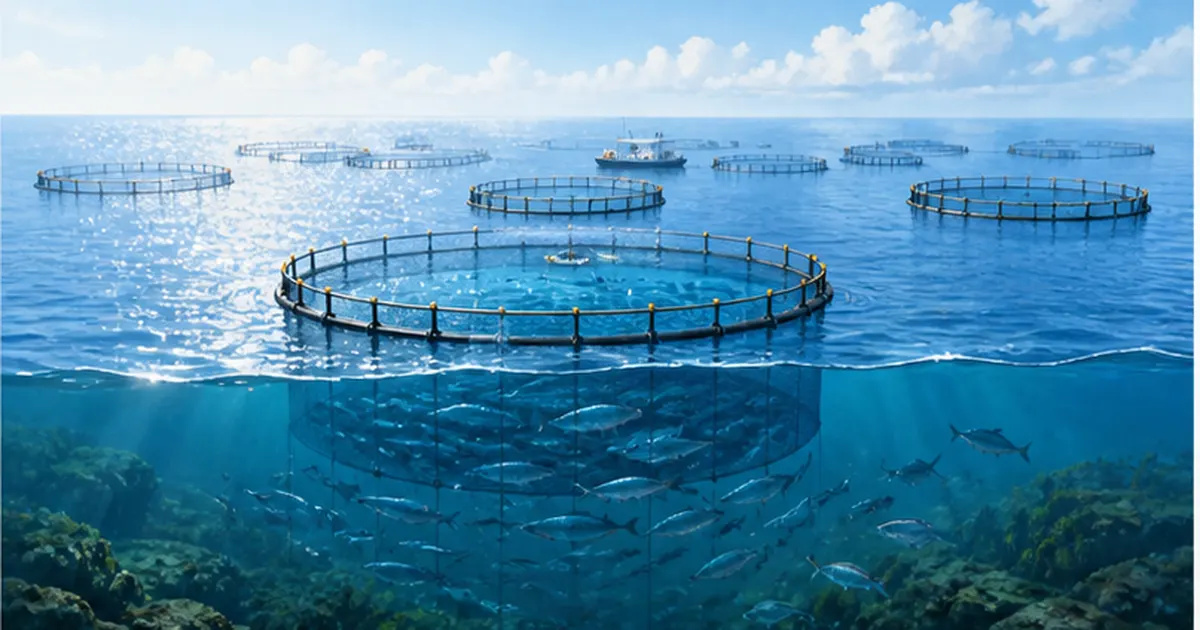
The damage from rising sea temperature extends not only to migratory fish but also to farmed creatures that cannot move. Organisms fixed in place in net pens or on aquaculture racks cannot escape high temperatures, making them, if anything, even more prone to severe damage. Japan's aquaculture industry now finds itself on the front line of climate change.
Scallop Seedlings Are Dying
In Hokkaido's mainstay scallop aquaculture, mass die-offs of juvenile scallops due to high water temperature have been reported. In spring 2023, about 180 million juvenile scallops are said to have died, dealing a major shock to producing regions. Scallops are shellfish that prefer cold water, and when high summer temperatures persist, poor growth and die-offs occur readily. For aquaculture operations that have assumed stable production, wild swings in water temperature are a matter of survival.
The scallop damage shows that aquaculture is an "industry with a time lag." If juveniles die, the harvest that generation was supposed to produce two to three years later, once it reached shipping size, disappears entirely. The impact of high temperature punches a hole not just in that year's sales but in production plans years down the road. And because dead juveniles cannot be brought back, the damage "hits later" — it isn't the kind of thing that, like bad weather, can be made up for the following year.

Secondary Damage from Red Tides and Oxygen Depletion
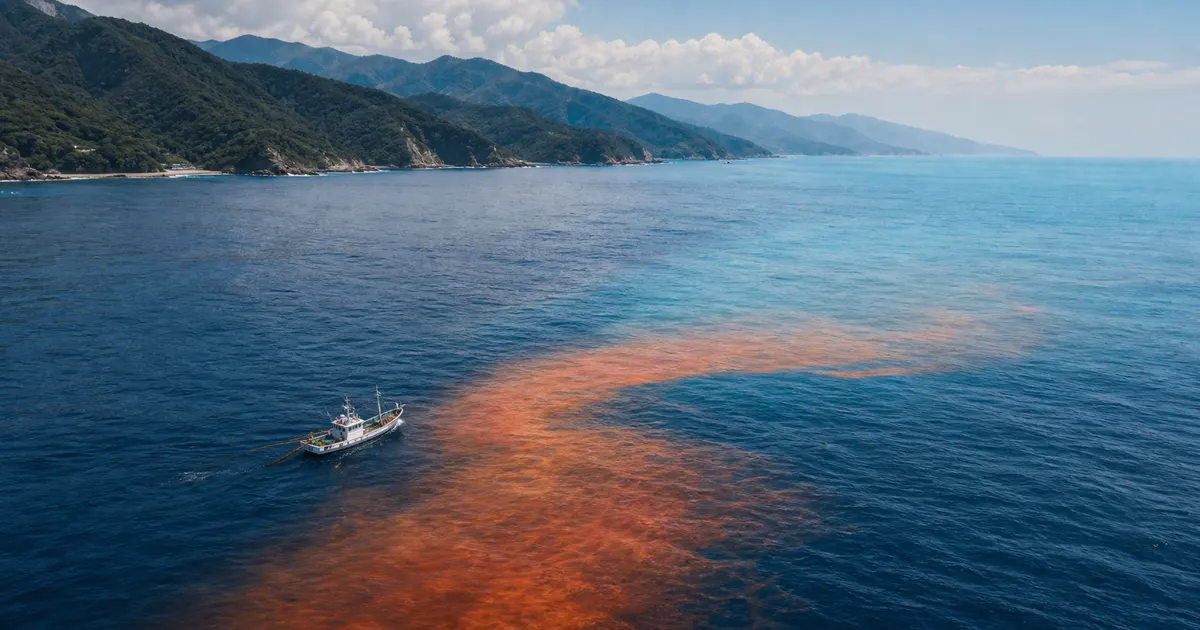
High water temperature also promotes red tides (abnormal plankton blooms) and oxygen-depleted water masses. As water temperature rises, phytoplankton tend to proliferate, and as they decompose, oxygen in the water is consumed, suffocating fish and shellfish. Hokkaido has seen a string of major damage from warming and red tides, including cases where scallop die-offs and shortages of kelp and salmon occurred simultaneously. A single high-temperature event can trigger multiple types of damage in a chain reaction.

Farmed fish, unable to move freely in search of food the way wild fish can, also bear the heavy cost of feed. As water temperature rises, fish metabolism increases and they eat more feed, while at the same time they become more prone to disease from oxygen shortage and stress. Caught in this double bind of rising feed costs and heightened die-off risk, aquaculture operators are forced into difficult decisions. The impact of losing the "given" of stable water temperature is broader and deeper than one might imagine.
- Direct damage: die-offs and poor growth of juvenile shellfish and farmed fish due to high temperature
- Red tides: rising water temperature causes abnormal plankton blooms that contaminate fishing grounds
- Oxygen depletion: decomposing organic matter strips away oxygen, suffocating fish and shellfish
- Compound disasters: a single high-temperature event triggers a chain of multiple types of damage
Aquaculture has been expected to serve as a pillar of food supply as a "controllable fishery," but that expectation was premised on stable water temperature. Now that the ocean is warming beyond what was assumed, suitable aquaculture areas themselves are shifting north, and existing producing regions may become unusable. The Fisheries Agency, too, has assessed that rising water temperature is expanding the areas unsuitable for surface aquaculture, and reorganizing producing regions is becoming an unavoidable theme.
One breakthrough measure attracting attention is "land-based aquaculture," where water temperature is easier to control, along with a shift toward heat-tolerant varieties and species. Compared with the conventional method of floating net pens in the sea, land-based aquaculture, which manages water temperature and quality in onshore tanks, is less susceptible to marine heatwaves. However, equipment investment and energy costs are substantial, and not everyone can make the transition right away. Shifting to climate-resilient aquaculture is a long road with many challenges to overcome on both the technology and cost fronts.
The Vulnerability Aquaculture Faces
Creatures in net pens or on aquaculture racks cannot escape high temperatures. Moreover, because they are densely packed in one place, when a red tide or oxygen depletion occurs, damage expands rapidly. There is a paradox here: the more aquaculture has been premised on "stable production," the more vulnerable it is to wild swings in water temperature.
How Do We Respond? The Front Lines of Resource Management and Adaptation
Rising sea temperature is a global-scale problem, and Japan alone cannot lower the temperature of the ocean. That is precisely why "adaptation" — minimizing damage on the assumption that change will continue — matters so much. Its pillars are science-based resource management and the reassessment of aquaculture and producing regions.
The First Fisheries Act Reform in 70 Years, and MSY
Japan made a major shift in its approach to resource management with the revised Fisheries Act, which took effect in 2020. Previously, management centered on "entry-point regulation" that restricted fishing gear and the number of operating days, but the new system is founded on managing the catch itself, through the total allowable catch (TAC). The goal is to maintain and restore stocks to a level that can achieve MSY (Maximum Sustainable Yield), the largest catch obtainable over the long term without depleting the resource.
Specifically, based on stock assessments, a "target management reference level" and a "limit management reference level" to prevent overfishing are set, and the TAC is determined accordingly. Species currently subject to TAC transitioned to MSY-based management starting in the 2021 fishing season, with mackerel species implementing it earlier, from the 2020 fishing season. Rather than scrambling once fish have already declined, setting scientific benchmarks and acting proactively — that is the idea behind the new resource management approach.
In the age of climate change, this approach to resource management will also need updating. MSY is calculated on the premise that "the environment is stable," but in a sea where water temperature keeps shifting, that very premise becomes shaky. A catch quota that was appropriate in one year might be an overcatch the next. That is precisely why "adaptive management," regularly incorporating the latest observational data into stock assessments and flexibly revising quotas to account for environmental change, will become increasingly important going forward.
What Are MSY and TAC?
MSY (Maximum Sustainable Yield) is the theoretical upper limit on the catch that can be taken every year without depleting the resource. TAC (Total Allowable Catch) is the upper limit on catches set annually for each species, based on that concept. Aligning TAC with MSY aims to prevent overfishing and make stocks last longer.
Designing Fishing Grounds and Aquaculture Around Warming
Alongside resource management, another form of adaptation is redesigning fishing grounds and aquaculture with warming built in. The Fisheries Agency has developed guidelines for fishing-ground development that respond to climate change, and is advancing the development of heat-tolerant aquaculture varieties, reassessment of suitable aquaculture locations, and strengthened monitoring of red tides and oxygen depletion. Building processing and sales channels that make use of newly arrived northward-shifted species is also a realistic adaptation strategy for producing regions to survive.
Science and technology also play a major role. Thanks to satellite observation of sea surface temperature, automated observation buoys that drift through the ocean measuring temperature and salinity (Argo floats), and increasingly sophisticated ocean condition forecasting models, the accuracy of anticipating "when, where, and which fish will arrive" has improved. If fishers use this information, they can reduce wasted trips to sea and allocate fuel and labor more efficiently. "Forecasting and staying ahead" of ocean change is also a legitimate form of adaptation.
That said, adaptation has its limits. Resource management is hard to make effective once fish have already declined too far, and relocating aquaculture to suitable areas takes substantial investment and time. The fundamental solution is, after all, to reduce greenhouse gas emissions and curb ocean warming itself. Adaptation (preparing for change) and mitigation (efforts to stop warming) are two wheels of the same cart, and neither alone can fully protect the ocean's bounty.

What Consumers Can Do
Fishers and government agencies aren't the only ones carrying out adaptation. Our choices as consumers are also a force for protecting fish stocks. A "food-mileage"-style approach of choosing seasonal fish, or whichever fish happen to be abundant at the time, spreads out fishing pressure that would otherwise concentrate on particular species. Looking for labels like MSC, MEL, and ASC (for aquaculture), which certify sustainable fisheries, is also effective. Thinking about ocean change as something personal, starting from the dinner table, may seem like a roundabout path to resource recovery, but it is a solid step forward.
Actively eating the yellowtail now being caught in Hokkaido, or trying a different seasonal fish instead of your usual Pacific saury — small choices like these accumulate to gently update our food culture in step with a changing ocean. Rather than clinging to "traditional fish," the flexibility to enjoy whatever bounty today's ocean nurtures may be the smart way to eat seafood in the age of climate change. Consumers embracing new fish also helps support the efforts of producing regions trying to make the most of newly arrived, northward-shifted species.
- Actively choose seasonal fish or whichever fish is currently abundant (including newly arrived, northward-shifted species)
- Look for sustainability certification labels such as MSC, MEL, and ASC
- Don't insist on fish that are in short supply, and understand that price is a signal of resource status
- Keep paying attention to news about ocean conditions and resource management

Three Actions You Can Start Today
- When shopping, try paying attention to seasonal fish and sustainability certification labels
- Try looking into "why this fish is expensive" from the perspective of resource conditions
- Try bringing up news about sea temperature and fisheries with family and friends
Conclusion: Changes in the Ocean Are Changes at the Table
Waters around Japan are warming at more than twice the global average speed, and the effects — the Pacific saury shortage, the collapse of Japanese flying squid catches, declining salmon returns, the northward shift of fish, and damage to aquaculture — have already reached our dinner tables. Rising sea temperature is not a story about the distant future; it is a reality unfolding right now.
As we've traced in this article, rising sea temperature connects "cause," "effect," and "adaptation" along a single line. The rapid warming of waters around Japan and marine heatwaves are the cause, producing the effects of shortages of cold-water fish and the northward shift of warm-water fish, in response to which resource management and rethinking aquaculture are being explored as adaptation. News items that seem unrelated — Pacific saury is expensive, yellowtail is caught in Hokkaido, scallops died — are all events within the same larger current.
At the same time, we are not powerless. By building up "adaptation" — science-based resource management, designing fishing grounds and aquaculture around the assumption of warming, and the choices each of us makes as consumers — we can soften the damage and pass the ocean's bounty on to the next generation. Correctly understanding the changes in the ocean is the first step. Our article on deep-sea creature adaptation, which describes how deep-sea creatures have adapted to extreme environments, may also offer a hint into the resilience of ocean life.
Summary of This Article
- Sea surface temperatures around Japan have risen +1.33°C over 100 years, more than double the global average. 2024 set a new record high
- Pacific saury is down to 11% of its peak, and Japanese flying squid down 94% over 20 years. Cold-water fish are losing their "room to escape"
- Yellowtail and Spanish mackerel are moving north, creating "winners and losers" in fisheries
- Scallop aquaculture die-offs, red tides, and oxygen depletion show that aquaculture too is being hit directly by high temperatures
- MSY/TAC-based resource management under the revised Fisheries Act, and adaptation premised on continued warming, are the pillars of the response
- Choosing seasonal fish and certification labels, among other choices, means consumers too can help protect fish stocks
References and Sources
- Japan Meteorological Agency - Ocean health check chart: long-term trends in sea surface temperature (waters around Japan) / Climate Change in Japan 2025
- Japan Meteorological Agency - Special diagnostic report: 2024 annual average sea surface temperature around Japan sets a new record high
- Fisheries Agency of Japan - Fisheries White Paper: Changes in the marine environment in Japan's coastal waters and beyond
- Fisheries Agency of Japan - On new resource management (revised Fisheries Act, MSY, TAC)
- Fisheries Agency of Japan - Guidelines on fishing-ground development measures responding to climate change
- JAMSTEC (Japan Agency for Marine-Earth Science and Technology) - Kuroshio-Oyashio Watch: recent marine heatwaves and cold spells
- The University of Tokyo Research Center for Advanced Science and Technology - The influence of the marine heatwave on northern Japan's hottest summer on record in 2023 becomes clearer
- National Federation of Saury Stick-held Dip Net Fishery Cooperative Associations - Annual Pacific saury catch statistics
- WWF Japan - Report on the 2025 North Pacific Fisheries Commission results: cuts to mackerel and Pacific saury catch quotas
- Japan Meteorological Agency - Knowledge of climate and the ocean: on the accumulation of heat in the ocean (IPCC assessment)
* Listed in order of reliability: government/academic institutions > peer-reviewed papers > specialized organizations > reliable media