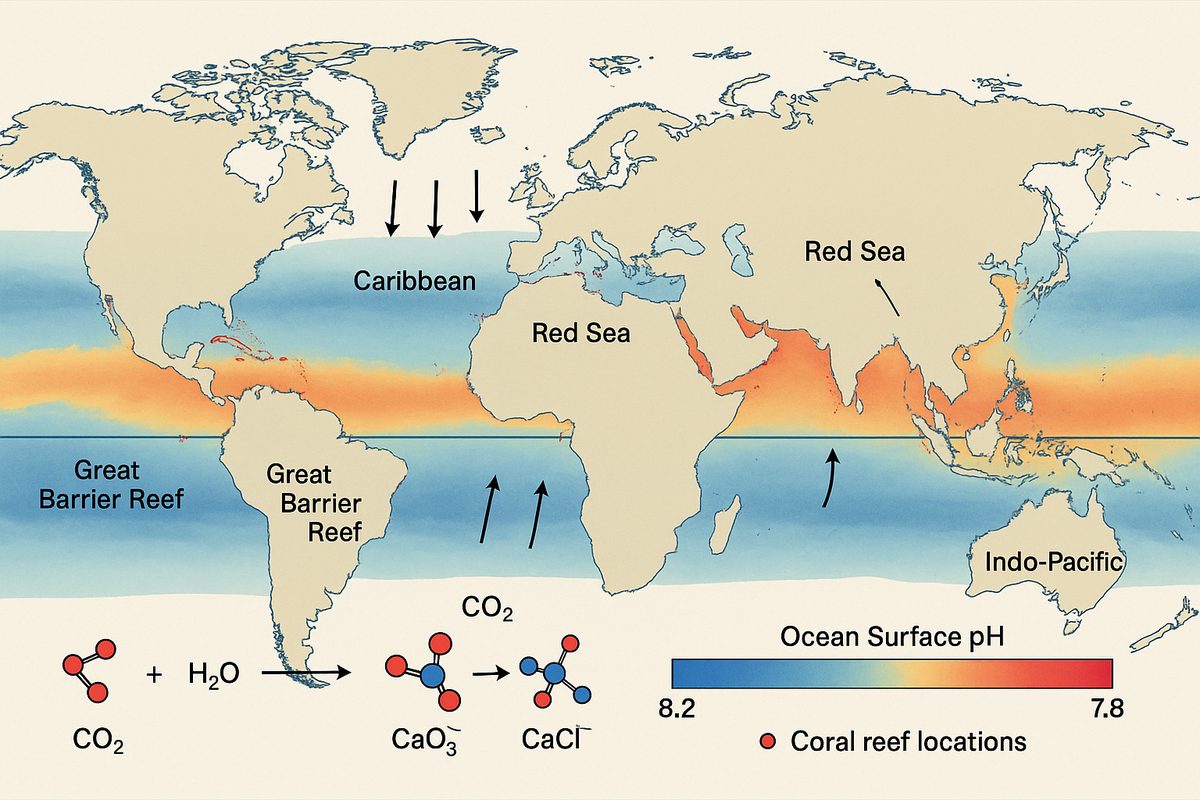
Did you know that the carbon dioxide we emit every day is quietly eating away at beautiful coral reefs on the other side of the world? Through a phenomenon called ocean acidification, the pH of the sea surface has fallen from 8.2 to below 8.1 over the past 100 years, and its impact is intensifying on coral reefs around the globe.
Ocean acidification is known as "the ocean's other CO2 problem" and stands alongside global warming as a major environmental issue. The ocean, which has absorbed about 30% of the carbon dioxide emitted into the atmosphere, is undergoing a chemical transformation as the price of that absorption. This change poses a serious threat to the survival of calcifying organisms, coral chief among them.
In the latest 2024 research, a University of Tokyo research team actually confirmed the impact on the calcification process in coral reefs around Japan, and the IPCC Sixth Assessment Report projects further pH decline through the end of this century. From the Great Barrier Reef to the beautiful coral reefs of Okinawa, this quiet crisis is unfolding on a global scale.
What you'll learn from this article
- The chemical mechanism and progression of ocean acidification
- The concrete impact on coral reef calcification and the latest research findings
- The current state of acidification in coral reefs around the world
- Future projections from the latest IPCC report
- Concrete measures and actions we can take
- What is ocean acidification: the chemical change CO2 causes in the sea
- The discovery of ocean acidification and the history of research
- Pteropods: the tiny sea snails supporting the marine ecosystem
- Coccolithophores: the complex impact on marine primary producers
- Foraminifera: indicator organisms essential to paleoclimate research
- Shellfish and crustaceans: direct impact on fisheries
- Amplification of impact through the food chain
- The special situation in the deep sea
- International efforts and policy frameworks
- Technological solutions: the state and challenges of carbon removal technology
- Establishing and strengthening the management of marine protected areas
- Concrete actions individuals can take
- Ocean acidification measures you can take right now
- Choosing sustainable seafood
- Supporting scientific research and participating in citizen science
What is ocean acidification: the chemical change CO2 causes in the sea

Ocean acidification is the phenomenon in which the pH of seawater falls as atmospheric carbon dioxide (CO2) dissolves into it. The name "acidification" often causes the misconception that seawater is becoming acidic, but in reality it refers to the process by which seawater remains mildly alkaline while that alkalinity gradually weakens.
Basic facts about ocean acidification
Before the Industrial Revolution, the pH of seawater was about 8.2, but it has now fallen to below 8.1. Because the pH scale is logarithmic, a decline of 0.1 means the concentration of hydrogen ions has increased by about 26%.
The ocean functions as the largest carbon reservoir on Earth and has absorbed about 30% of the carbon dioxide emitted by humanity (IPCC Sixth Assessment Report). This ocean absorption of carbon dioxide plays an important role in mitigating the rise of atmospheric CO2 concentration, but at the same time it is bringing serious impacts to the marine environment.
The discovery of ocean acidification and the history of research
The concept of ocean acidification is relatively new, and serious research only began in the late 1990s. According to long-term observational data from the Japan Meteorological Agency, the pH of surface seawater in the open ocean has been continuously declining at a rate of -0.0010 to -0.0030 per year since the late 1980s (JMA Ocean Acidification Data).
Observational data on ocean acidification
| Observation site | Rate of pH decline (annual) | Observation period | Characteristics |
|---|---|---|---|
| Subarctic North Pacific | -0.0051±0.010 | Since the 1980s | Largest around a depth of 200-300m |
| Near Hawaii | -0.0030 | Since 1988 | Largest decline at a depth of 250m |
| Tsugaru Strait | -0.0030 to -0.0051 | Since 2012 | Rapid decline in the waters near Japan |
| Subtropical surface waters | -0.0010 to -0.0030 | Since the 1980s | A global-scale trend |
Source: Japan Meteorological Agency, JAMSTEC, IPCC Sixth Assessment Report
What deserves particular attention is that more than half of the pH change over the past 100 years has been concentrated in the past 40 years. This coincides with the sharp increase in fossil fuel consumption by humanity, showing a strong link between ocean acidification and human activity.
The mechanism of ocean acidification: a detailed look at how pH falls
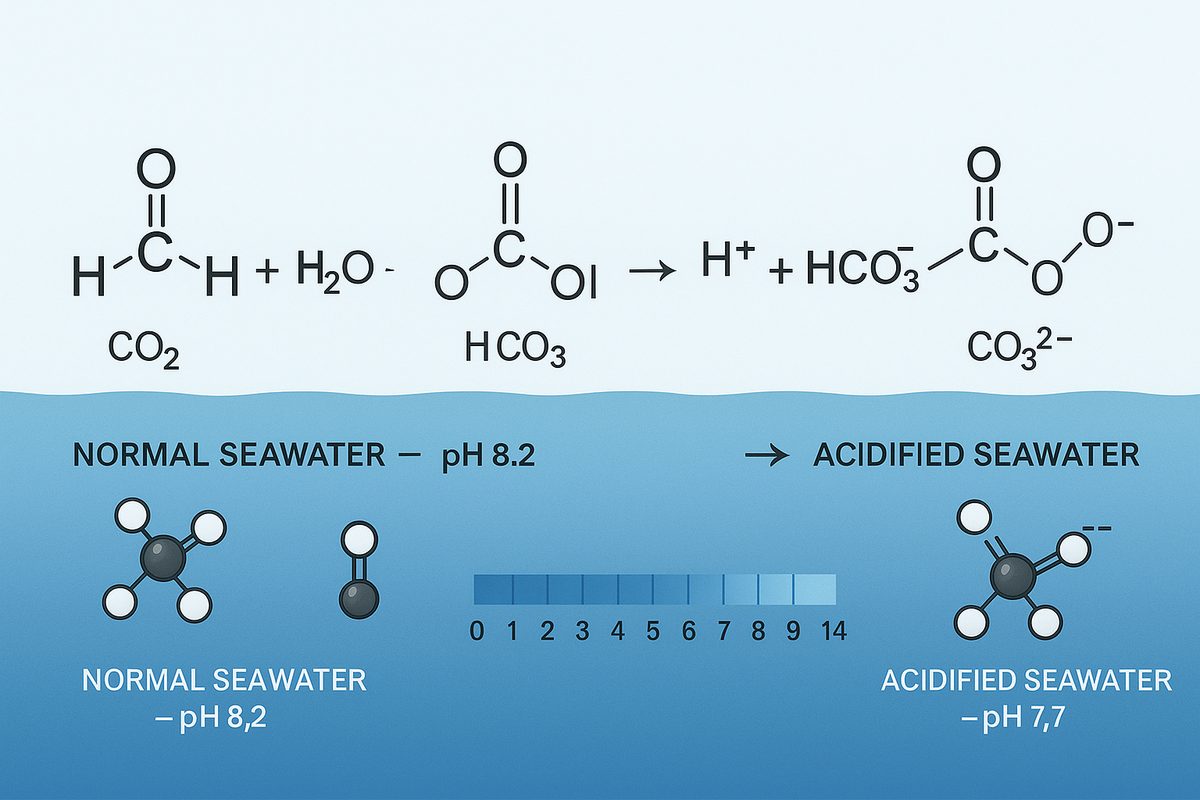
To understand the mechanism of ocean acidification, we need to know the chemical reaction that occurs when carbon dioxide dissolves into seawater. This chemical reaction proceeds through several stages and ultimately increases the concentration of hydrogen ions in seawater.
The detailed chemical process
The chemical reaction equations of ocean acidification
Stage 1: CO₂ + H₂O → H₂CO₃ (formation of carbonic acid)
Stage 2: H₂CO₃ → H⁺ + HCO₃⁻ (formation of bicarbonate ions and hydrogen ions)
Stage 3: HCO₃⁻ → H⁺ + CO₃²⁻ (formation of additional hydrogen ions and carbonate ions)
This reaction increases the concentration of hydrogen ions (H⁺) in seawater while simultaneously decreasing the concentration of carbonate ions (CO₃²⁻). Because carbonate ions are the raw material for the calcium carbonate (CaCO₃) that coral and other marine organisms use to build their skeletons and shells, this decrease directly affects calcifying organisms.
The equilibrium state of carbonate chemistry
In seawater, these chemical species are constantly seeking equilibrium. According to research by the National Institute for Environmental Studies, the current distribution of carbonate chemical species in seawater is as follows (National Institute for Environmental Studies):
Distribution of carbonate chemical species in seawater
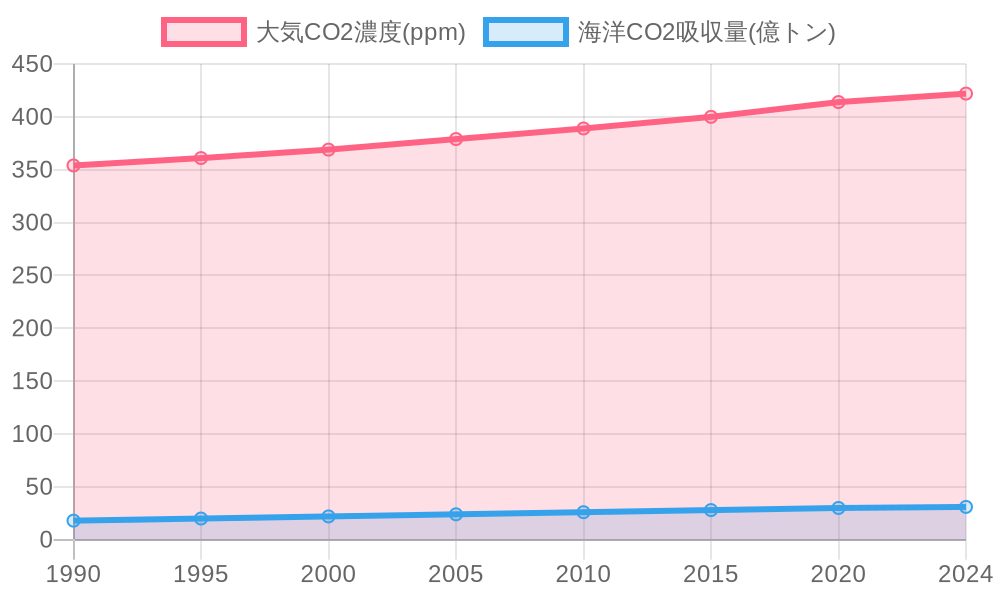
Graph showing changes in ocean absorption as atmospheric CO2 increases
Regional and depth-related differences
The rate at which ocean acidification progresses varies greatly by region and depth. In the Arctic and Antarctic regions, the low temperatures increase the solubility of carbon dioxide, making acidification especially likely to advance. In addition, in the western subarctic North Pacific around Japan, CO₂ released through biological respiration is also accelerating acidification.
Progress of acidification by sea region
| Sea region | Current pH | Change since pre-industrial times | Main contributing factors |
|---|---|---|---|
| Arctic Ocean | 7.9-8.0 | -0.15 | Low temperature, sea ice melt |
| Subarctic North Pacific | 8.0-8.1 | -0.12 | High biological productivity |
| Equatorial Pacific | 8.0-8.1 | -0.10 | Upwelling |
| Southern Ocean | 8.0-8.1 | -0.11 | Low temperature, strong winds |
Source: IPCC Sixth Assessment Report, JAMSTEC observational data
In particular, in deep waters, CO₂ absorbed at the surface is carried by physical circulation, and combined with additional oxygen consumption and CO₂ release from biological respiration, acidification is progressing even more rapidly than at the surface in some sea areas.
Serious impact on coral reefs: the reality of impaired calcification
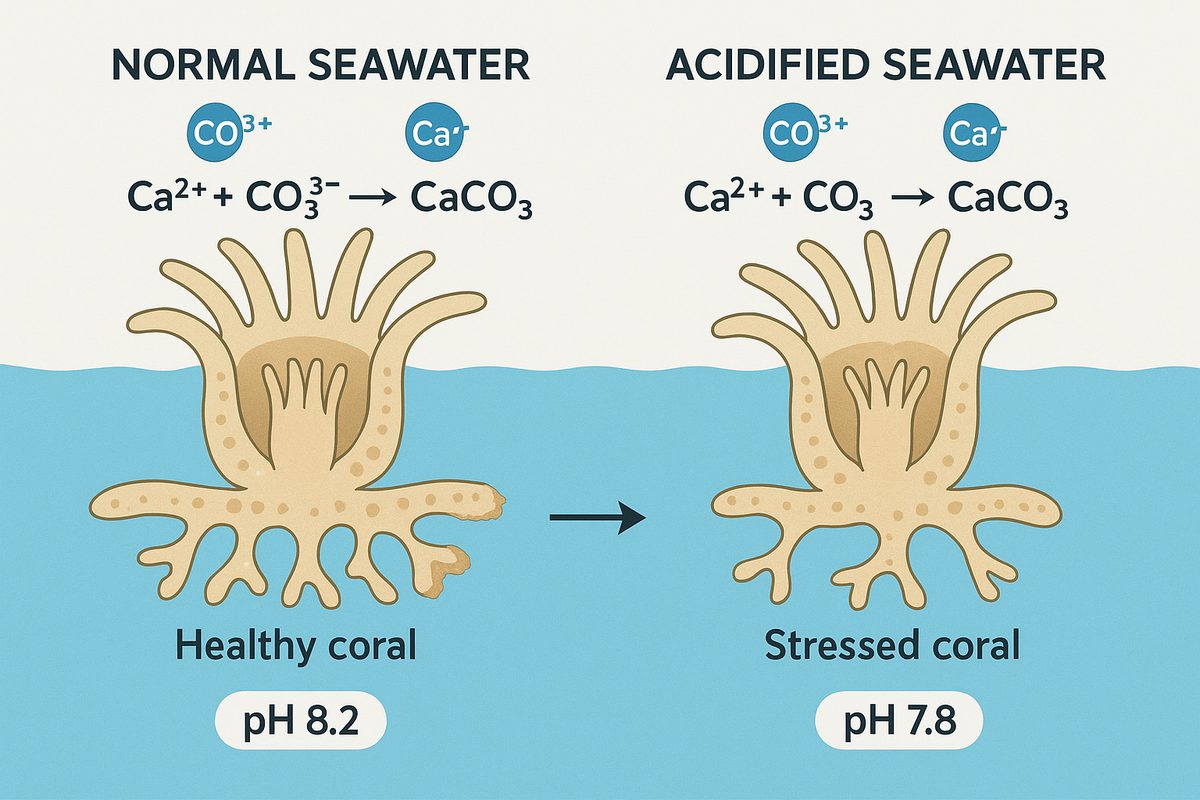
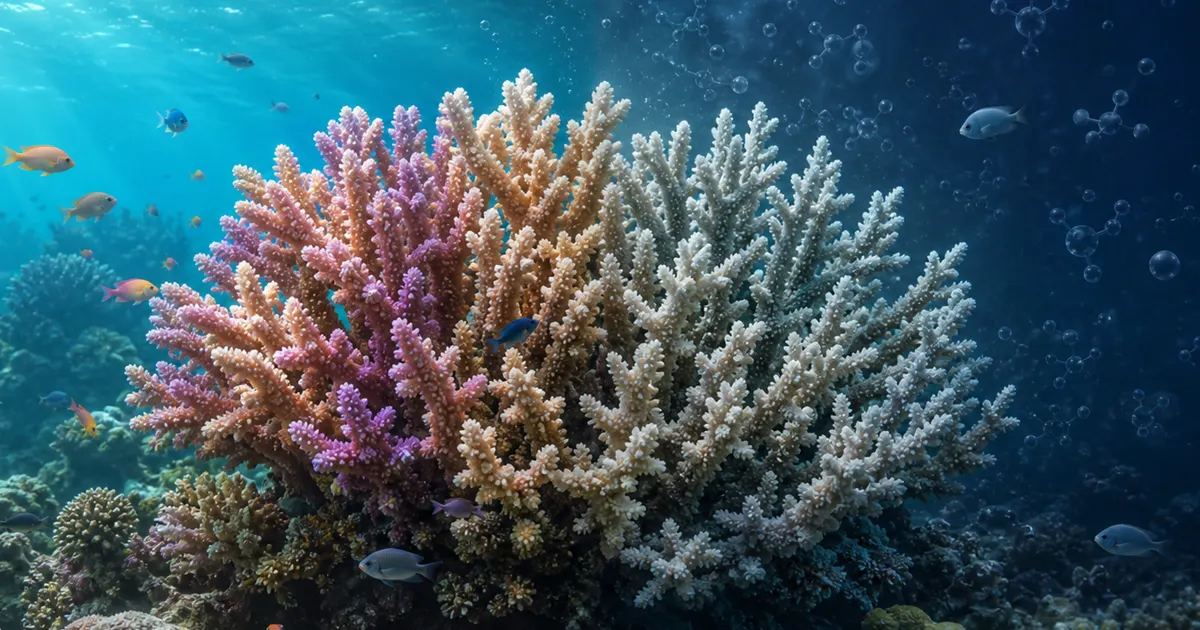
Coral reefs are among the most biodiverse ecosystems on Earth, but their survival is under serious threat from impaired calcification caused by ocean acidification. Calcification is the process by which coral combines calcium ions (Ca²⁺) and carbonate ions (CO₃²⁻) in seawater to form a skeleton of calcium carbonate (CaCO₃).
The scientific mechanism of the calcification process
Coral calcification takes place in a special space called the calcifying fluid, located at the base of each polyp (individual). Groundbreaking research from the University of Tokyo's Atmosphere and Ocean Research Institute revealed that ocean acidification is also lowering the pH of this calcifying fluid (University of Tokyo research announcement).
Conditions required for calcification
Chemical reaction equation: Ca²⁺ + CO₃²⁻ → CaCO₃
Required condition: Calcium carbonate saturation state (Ω) > 1.0
Ideal condition: Ω > 3.0 (average value under natural conditions)
The calcium carbonate saturation state (Ω: omega) is an index showing how easily calcium carbonate dissolves in seawater. When this value falls below 1.0, calcium carbonate begins to dissolve naturally, making it difficult for coral to form its skeleton. It has been reported that in many tropical sea areas, the Ω value has already fallen from around 3.0 to about 2.5.
Laboratory proof of impaired calcification
The impact of ocean acidification on coral calcification has been clearly demonstrated at the laboratory level. In a long-term experiment observing coral calcification rates for about four years in a tank environment close to acidic conditions, calcification rates were confirmed to drop by as much as 40% compared with a normal alkaline ocean environment.
The relationship between pH change and coral calcification rate
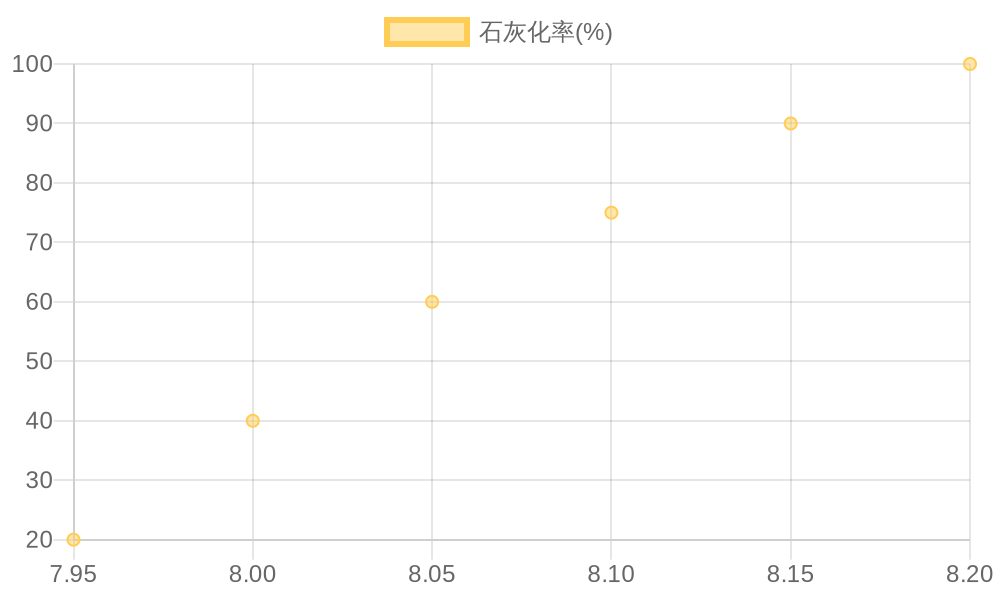
Relative calcification rate based on pH 8.2 (current). At pH 7.8, it drops by about 40%
Differences in impact by coral species
Not all coral is affected by ocean acidification in the same way. Because of differences in crystal structure, calcium carbonate has two main forms: aragonite and calcite. Because many corals build their skeletons from the aragonite form of calcium carbonate, they dissolve more easily and are more strongly affected by ocean acidification.
Calcium carbonate forms of calcifying organisms and sensitivity to acidification
| Organism group | Calcium carbonate form | Sensitivity to acidification | Saturation threshold |
|---|---|---|---|
| Reef-building coral | Aragonite | Very high | Ω > 3.0 |
| Pteropods (marine sea snails) | Aragonite | Very high | Ω > 1.0 |
| Foraminifera | Calcite | Moderate | Ω > 1.0 |
| Coccolithophores | Calcite | Low | Ω > 1.0 |
Source: Ocean acidification research literature review
Impact at the ecosystem level
Impaired coral calcification is not merely a problem for individual coral. Coral reefs form the foundation of an ecosystem so diverse that they are called "rainforests of the sea," and about 25% of marine life depends on them for survival. Reduced calcification undermines the structural stability of the reef as a whole, triggering cascading effects on the fish and invertebrates that live there.
Cascading impact on coral reef ecosystems
Decline in calcification rate → Impaired coral growth → Weakening of reef structure → Loss of habitat → Loss of biodiversity → Decline in fishery resources → Reduced coastal protection function
What the latest research reveals: measured data from Japan's coral reefs
Groundbreaking research published in 2024 by the University of Tokyo's Atmosphere and Ocean Research Institute was the first in the world to demonstrate that ocean acidification is actually beginning to affect the calcification process in Japan's coral reefs. This research is innovative in that it went a step beyond conventional laboratory-level studies to quantitatively measure long-term change under natural conditions.
An innovative method using boron isotope analysis
The research team analyzed the boron isotope ratio (¹¹B/¹⁰B) contained in the skeletons of massive Porites coral living around Chichijima (Ogasawara Islands) and Kikaijima (Amami Islands). This method is a cutting-edge technique that can accurately reconstruct the seawater pH at the time the coral was calcifying (University of Tokyo research announcement).
The principle behind boron isotope analysis
What is measured: The ¹¹B/¹⁰B ratio in coral skeletons
What it indicates: Seawater pH at the time of calcification
Time resolution: Past environments can be reconstructed on a year-by-year basis
Advantage: Quantitative assessment of long-term change under natural conditions
The serious changes observed
The analysis revealed that the boron isotope ratio has been declining rapidly in recent years at both sites. This is decisive evidence that the seawater pH decline caused by ocean acidification is also lowering the pH of coral's calcifying fluid, and is beginning to affect the calcification process.
Changes in ocean pH near Japan
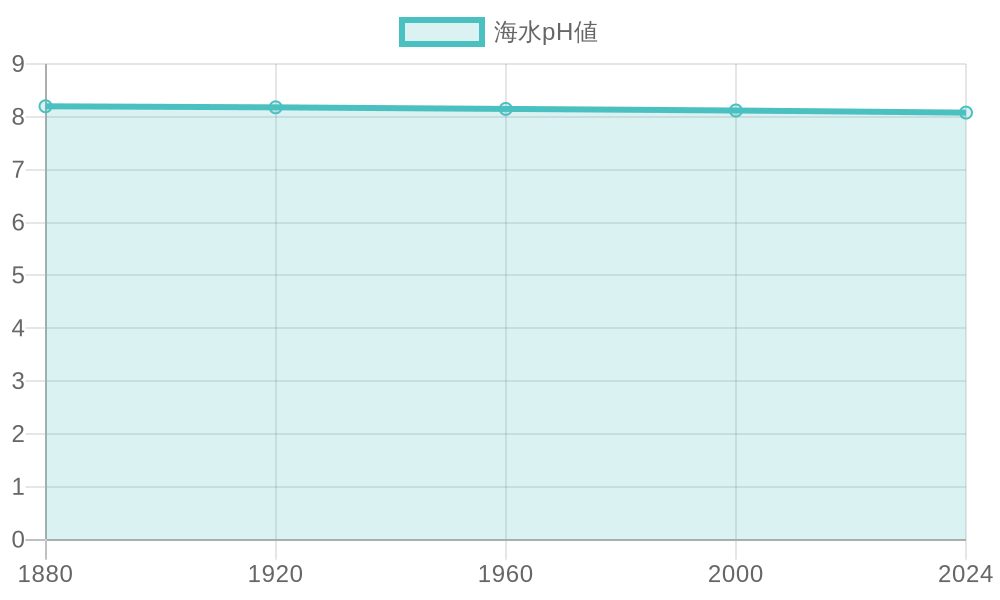
A marked decline trend at both sites since the 1990s, accelerating especially from the late 2000s
Continuous monitoring by JAMSTEC
The Japan Agency for Marine-Earth Science and Technology (JAMSTEC) has been continuously monitoring ocean acidification in the Tsugaru Strait since 2012. This monitoring revealed that pH is declining near Japan at a rate of -0.0030 to -0.0051 per year, a rate that is high even by global standards (JAMSTEC research report).
Observational data on ocean acidification near Japan
| Observation site | Year observation began | Rate of pH decline (annual) | Change in calcium carbonate saturation state |
|---|---|---|---|
| Tsugaru Strait | 2012 | -0.0030 to -0.0051 | -0.007 to -0.012/year |
| Oyashio region | 1980s | -0.0051±0.010 | Largest at a depth of 200-300m |
| Kuroshio Extension region | 1990s | -0.0020 to -0.0030 | Pronounced at the surface |
| Waters near Okinawa | 2000s | -0.0025 | Measured in coral reef areas |
Source: JAMSTEC, Japan Meteorological Agency, University of the Ryukyus observational data
Impact on the coral reefs of Okinawa and Amami
In the coral reefs of Okinawa and Amami, bleaching from rising seawater temperature is also progressing alongside ocean acidification, and the compound stress on coral is becoming more serious. According to long-term research by the University of the Ryukyus, coral cover (the proportion of the seafloor covered by coral) around Ishigaki Island has declined from over 50% in the 1980s to below 20% today.
The current state of Japan's coral reefs
Okinawa main island: Coral cover 15-25% (over 40% in the 1980s)
Ishigaki Island: Coral cover below 20% (over 50% in the 1980s)
Amami Islands: Coral cover below 10% in some areas
Main causes: Ocean acidification, high water temperature, inflow of pollutants from land
The international significance of these research findings
These research findings from Japan have been highly regarded in the international ocean acidification research community. In particular, by quantitatively demonstrating long-term change under natural conditions—in contrast to previous knowledge, which had been largely based on laboratory-level studies—they are making a major contribution to improving the accuracy of climate change impact assessments and future projections.
The progress of ocean acidification in coral reefs around the world
Ocean acidification is a global phenomenon, and coral reefs around the world are affected to varying degrees. Because the rate of progress and the manner in which impacts appear differ by region, it is important to understand the characteristics of each. About 50% of the world's coral reefs have been lost over the past several decades, and ocean acidification is one of the main causes.
The Great Barrier Reef: a crisis for the world's largest coral reef
Australia's Great Barrier Reef is known as the world's largest coral reef system, but it is a prime example of a reef suffering serious impact from ocean acidification. According to long-term research by the Australian Institute of Marine Science (AIMS), the calcification rate of the Great Barrier Reef has declined by about 14% over the past 30 years (Australian Institute of Marine Science).
The current state of the Great Barrier Reef
Area: About 348,000 square kilometers (roughly the same as the land area of Japan)
Change in coral cover: 1980s: 28% → Current: 13.8%
Decline in calcification rate: Down 14% over the past 30 years
Main threats: Ocean acidification, high water temperature, water pollution, tourism pressure
Coral reefs in the Caribbean: the front line of rapid degradation
Coral reefs in the Caribbean are among the most rapidly degrading in the world. According to a report by the International Coral Reef Initiative (ICRI), coral cover in the Caribbean has declined from over 50% in the 1970s to below 8% today. In this region, in addition to ocean acidification, increased hurricane frequency and nutrient inflow from land are also compounding factors.
Decline in the world's major coral reef regions
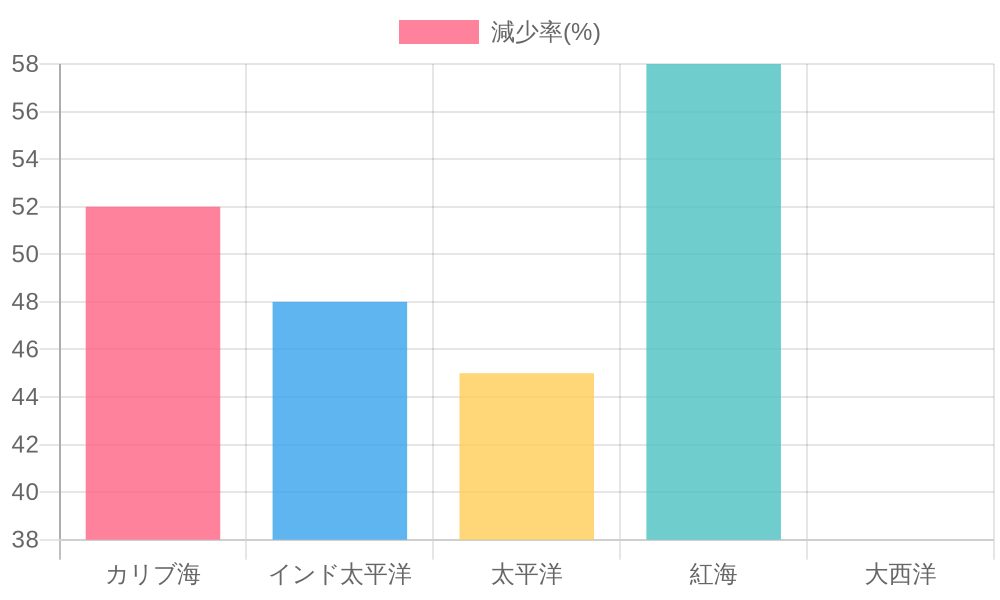
Rate of decline in each region relative to the 1980s. The largest decline is in the Red Sea
The Indo-Pacific coral reef network
The Indo-Pacific region is where about 75% of the world's coral reefs are concentrated, making it a critically important area. In this region, ocean acidification and high-temperature stress are progressing simultaneously due to the influence of the high-temperature waters known as the Western Pacific Warm Pool (WPWP). In particular, in the sea area known as the "Coral Triangle," encompassing Indonesia, the Philippines, and Papua New Guinea, coral reefs with the world's highest levels of marine biodiversity are under threat.
Acidification status in the world's major coral reef regions
| Region | Current aragonite saturation state | Change since 1880 | Main impact |
|---|---|---|---|
| Caribbean Sea | 2.8-3.2 | -0.6 | Coral cover below 8% |
| Great Barrier Reef | 3.0-3.5 | -0.5 | Calcification rate down 14% |
| Central Indian Ocean | 3.2-3.8 | -0.4 | Increased bleaching frequency |
| Western Pacific (waters near Japan) | 2.9-3.4 | -0.5 | Impaired calcification process |
| Red Sea | 3.4-4.0 | -0.3 | Relatively little impact |
Source: Global Ocean Acidification Observing Network (GOA-ON)
The special situation in the Arctic and sub-Arctic regions
In the Arctic and sub-Arctic regions, low temperatures increase the solubility of CO₂, causing ocean acidification to progress more rapidly than in other regions. In particular, along the Alaskan coast and in the Bering Sea, sea areas where the aragonite saturation state seasonally falls below 1.0 have already appeared, raising concerns about the impact on cold-water-adapted coral species and other calcifying organisms.
Serious impact on small island nations
In small island nations of the Pacific and Indian Oceans, coral reefs function as natural breakwaters, playing an important role in protecting islands from coastal erosion. If ocean acidification impairs coral reef growth, combined with sea level rise it threatens the very survival of the islands themselves. In countries such as the Maldives, Tuvalu, and Kiribati, this issue is recognized as a crisis at the level of national survival.
Compound threats facing small island nations
Ocean acidification → Impaired coral reef growth → Weakened natural breakwater function
Sea level rise → Loss of habitable land → Crisis of national survival
High water temperature → Frequent coral bleaching → Loss of ecosystem services
Impact on calcifying organisms overall: threats to marine life beyond coral
The impact of ocean acidification is not limited to coral reefs. The ocean is home to a wide variety of organisms with shells or skeletons made of calcium carbonate, each affected by ocean acidification in its own way. These organisms are important components of the marine food chain, and the impact on them ripples through the entire marine ecosystem.
Pteropods: the tiny sea snails supporting the marine ecosystem
Pteropods are marine sea snails that serve as an important food source for many marine animals. Pteropods living in the Arctic Ocean and Southern Ocean in particular have already been observed with dissolving shells, making them one of the organism groups most directly affected by ocean acidification (Nature journal research report).
Impact on pteropods
Observed phenomenon: Shell dissolution is ongoing in the Arctic Ocean
Critical pH: Marked impact below 7.8
Ecosystem impact: Decline in food source for fish and whales
Economic impact: Ripple effects on fishery resources
Coccolithophores: the complex impact on marine primary producers
Coccolithophores are a type of marine phytoplankton covered in tiny plates of calcium carbonate called coccoliths. While these organisms are important contributors to marine primary production, their calcification also has the effect of lowering the alkalinity of seawater. Research by the National Institute for Environmental Studies has shown that ocean acidification has complex effects on both the calcification and photosynthesis of coccolithophores (National Institute for Environmental Studies).
Foraminifera: indicator organisms essential to paleoclimate research
Foraminifera are single-celled organisms that float in the ocean and possess shells made of calcium carbonate. These organisms have been used as important indicators in paleoclimate research, but ocean acidification may impair their shell formation. In particular, benthic foraminifera living in the deep sea are expected to be greatly affected by the acidification of deep waters.
Comparing sensitivity to acidification among calcifying organism groups
Rate of change in calcification rate relative to pH decline. Pteropods are the most sensitive
Shellfish and crustaceans: direct impact on fisheries
Bivalves such as oysters, mussels, and scallops, as well as crustaceans such as crabs and shrimp, also have shells or exoskeletons made of calcium carbonate and are therefore affected by ocean acidification. In particular, impaired shell formation during the larval stage can seriously affect population maintenance. On the U.S. West Coast, mass die-offs of larvae have been reported in oyster farming, with links to ocean acidification pointed out.
Major calcifying organisms and the impact of ocean acidification
| Organism group | Role in the ecosystem | Main impact of acidification | Impact on humans |
|---|---|---|---|
| Pteropods | Zooplankton | Shell dissolution | Decline in fish stocks |
| Coccolithophores | Primary producers | Change in calcification and photosynthesis | Impact on ocean carbon cycle |
| Foraminifera | Calcium carbonate production | Impaired shell formation | Impact on paleoclimate research |
| Bivalves | Filter feeders | Impaired growth during larval stage | Reduced aquaculture and fishery yields |
| Crustaceans | Decomposers and predators | Increased vulnerability during molting | Direct impact on the fishing industry |
| Echinoderms | Benthic ecosystem | Impaired skeleton formation | Decline in ecosystem services |
Source: Global Ocean Acidification Observing Network (GOA-ON)
Amplification of impact through the food chain
Calcifying organisms play an important role in supporting the foundation of the marine food chain. For example, pteropods are a major food source for many fish, seabirds, and marine mammals, and their decline affects predators higher up the food chain as well. Pink salmon, a species of Alaskan salmon that feeds mainly on pteropods, is a notable example of how ocean acidification can indirectly affect fishery resources.
The special situation in the deep sea
In the deep sea, a pattern of ocean acidification progression different from that at the surface has been observed. In deep waters, acidification progresses as CO₂ absorbed at the surface is carried by physical circulation, but because CO₂ released through biological respiration is also added, change is occurring even more rapidly than at the surface in some locations. The impact on deep-sea cold-water coral and other deep-sea calcifying organisms remains an important research question that has not yet been fully clarified.
Cascading ecosystem effects of ocean acidification
Impact on foundation species → Decline in calcifying organisms
Change in the food chain → Impact on top predators
Change in ecosystem structure → Loss of marine biodiversity
Decline in ecosystem services → Impact on human society
Future projections from the IPCC Sixth Assessment Report
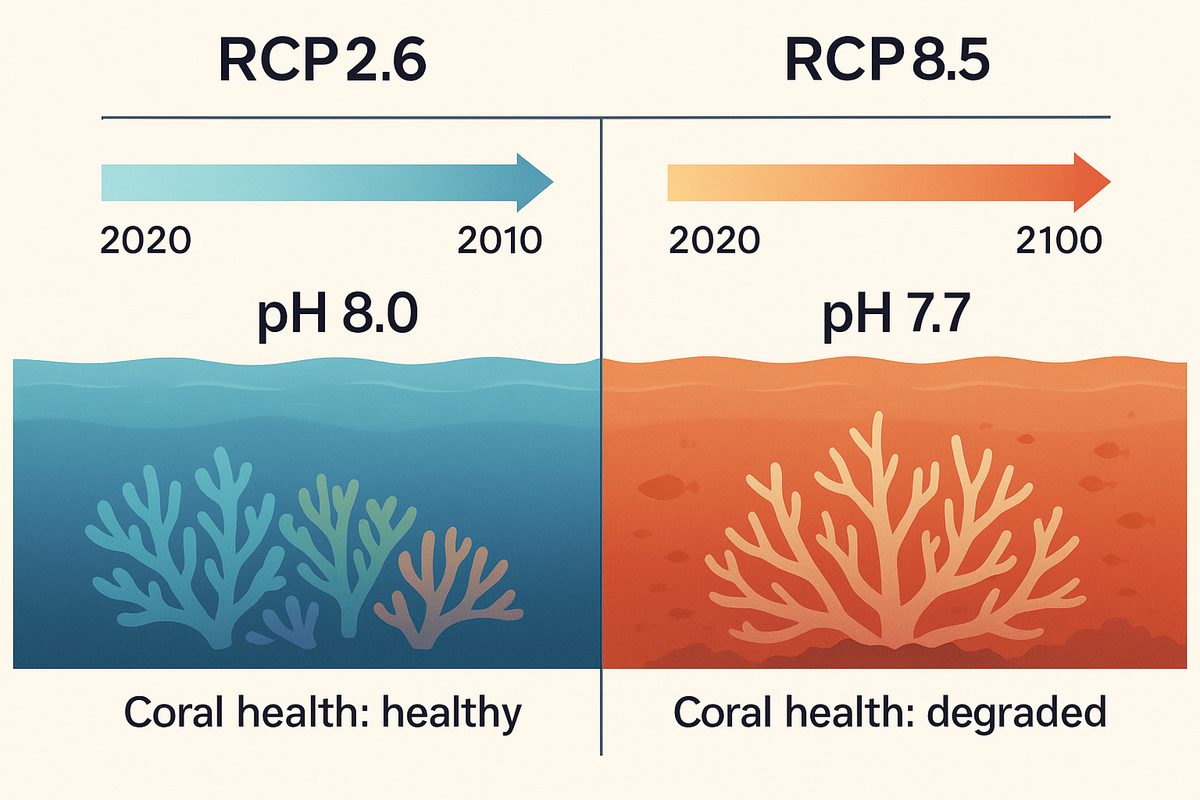
The IPCC Sixth Assessment Report (AR6), published between 2021 and 2023, is the most comprehensive report summarizing the latest scientific findings on ocean acidification. The report presents projections of ocean acidification progress through the end of this century based on various emissions scenarios, and the results issue a serious warning about the future of marine ecosystems.
Future projections by emissions scenario
IPCC AR6 provides future projections under five main scenarios based on Shared Socioeconomic Pathways (SSPs). Even under the most optimistic SSP1-1.9 scenario (achieving the 1.5°C target), ocean acidification continues, while under the most pessimistic SSP5-8.5 scenario, catastrophic changes are projected (IPCC AR6 Working Group I Report).
IPCC AR6 projections of ocean acidification in 2100
| Scenario | Temperature rise | Change in surface seawater pH | Change in aragonite saturation state | Impact on coral reefs |
|---|---|---|---|---|
| SSP1-1.9 | +1.5°C | -0.16 | -15% | Impact in some regions |
| SSP1-2.6 | +2.0°C | -0.20 | -20% | Widespread impact |
| SSP2-4.5 | +2.7°C | -0.28 | -25% | Serious impact |
| SSP3-7.0 | +3.6°C | -0.38 | -35% | Catastrophic impact |
| SSP5-8.5 | +4.4°C | -0.44 | -40% | Near total loss |
Source: IPCC AR6 Working Group I Report (2021)
Detailed regional projections
IPCC AR6 also provides detailed projections at the regional level. In particular, in tropical and subtropical coral reef areas, the sea areas where the aragonite saturation state falls below the 3.0 threshold needed for calcification are projected to expand significantly by the 2050s. In the Arctic Ocean, sea areas where the aragonite saturation state already seasonally falls below 1.0 exist, and further expansion is considered certain.
Projected global average ocean pH change by scenario
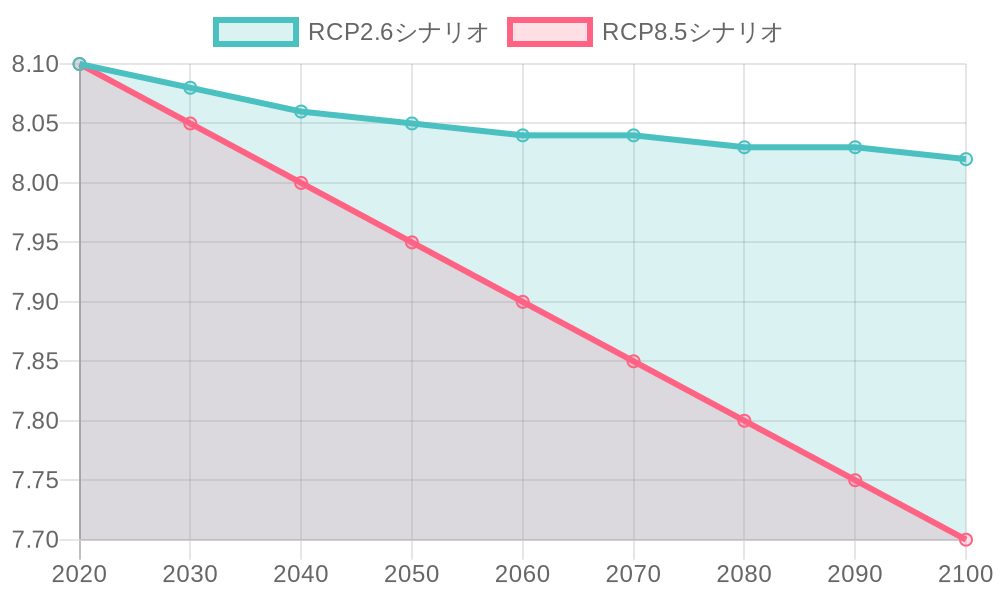
Change in surface seawater pH relative to the year 2000. Decline continues under all scenarios
Irreversibility and tipping points
One particularly important point made in IPCC AR6 is the irreversibility of ocean acidification. Even if atmospheric CO₂ emissions were to stop completely, it would take a timescale of thousands to tens of thousands of years for the CO₂ accumulated in the ocean to return to the atmosphere. It is also emphasized that coral reef ecosystems have tipping points, and that once they collapse, returning to their original state becomes extremely difficult.
The irreversibility of ocean acidification
Ocean residence time of CO₂: 1,000-10,000 years
pH recovery time: Several thousand years or more
Coral reef tipping point: pH 7.8-7.9
Recoverability: Difficult to recover once the ecosystem has collapsed
Assessment of compound impacts
AR6 provides detailed assessment not only of the impact of ocean acidification alone, but also of its compound effects with rising water temperature and ocean deoxygenation. It shows that these factors interact with one another and can produce far more serious consequences than any single factor acting alone. In coral reefs in particular, the simultaneous progression of acidification and bleaching from high water temperature is projected to significantly reduce resilience.
Projected socioeconomic impact
The IPCC AR6 Working Group II Report also assesses the impact of ocean acidification on human society. Global fishery production may decline by up to 25% by 2050, and the impact on shellfish aquaculture and small-scale fisheries in particular is projected to become severe. It is also pointed out that the decline in coastal protection function, combined with sea level rise, will significantly increase coastal disaster risk.
Key conclusions of IPCC AR6
Certainty: Ocean acidification is caused by human activity (very high confidence)
Rate of progress: The fastest in 650,000 years (high confidence)
Future change: Continues under all emissions scenarios (very high confidence)
Ecosystem impact: Widespread and serious impact on calcifying organisms (high confidence)
The effectiveness and limits of mitigation measures
IPCC AR6 also assesses the effectiveness of various mitigation measures. Even under the most ambitious emissions reduction scenario (SSP1-1.9), it is unavoidable that ocean acidification will continue to progress until around the middle of this century. However, in the long term, the effects of emissions reductions clearly emerge, and it is shown that the degree of ocean acidification by 2100 can be significantly reduced.
Measures to prevent ocean acidification and what we can do
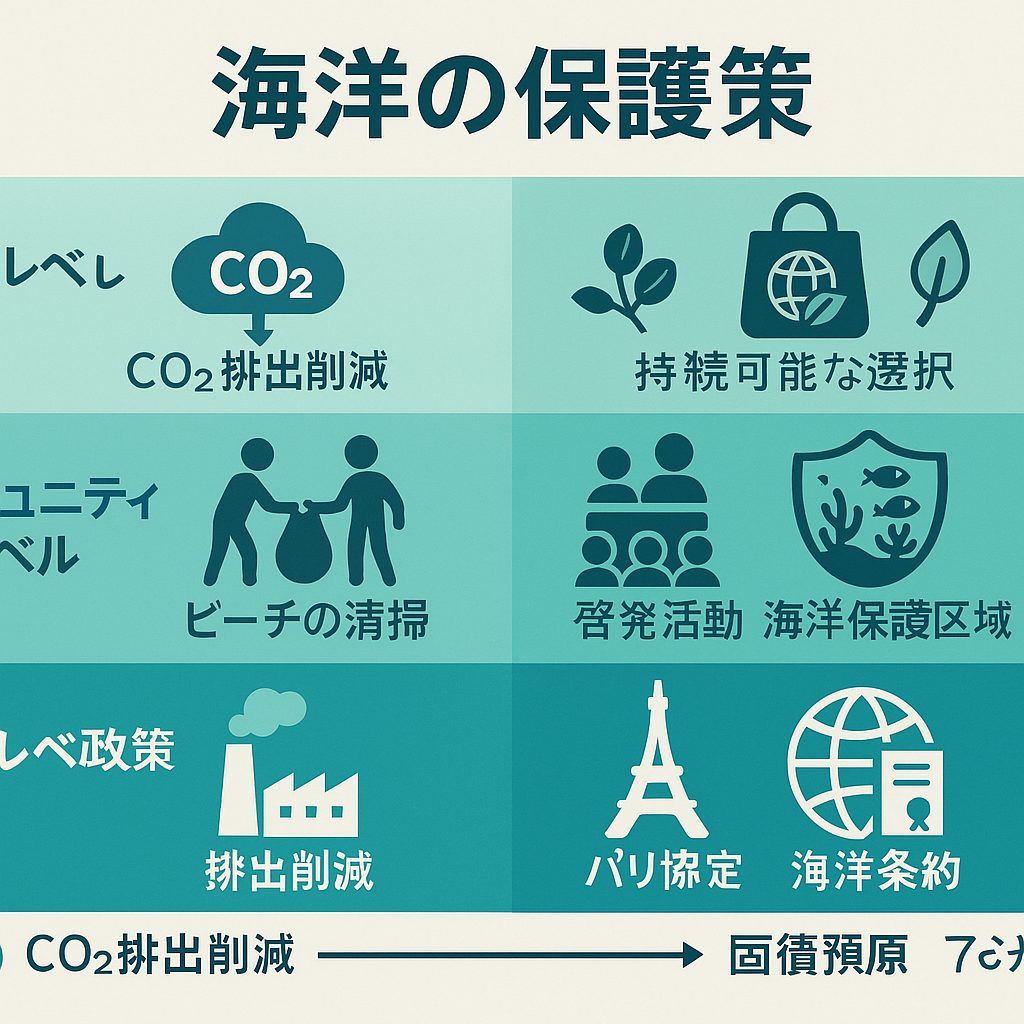
Ocean acidification is a global problem, but solving it requires measures at every scale, from international efforts to individual actions. The fundamental solution is to reduce atmospheric CO₂ concentrations, but adaptation measures to increase the resilience of marine ecosystems are also necessary at the same time. Here we introduce concrete measures grounded in scientific evidence.
International efforts and policy frameworks
Measures against ocean acidification are being advanced within the framework of the United Nations Framework Convention on Climate Change (UNFCCC) and the Paris Agreement. The 2015 Paris Agreement agreed to hold the increase in global average temperature to well below 2°C above pre-industrial levels and to pursue efforts to limit it to 1.5°C. Achieving this goal would have the effect of significantly mitigating the progress of ocean acidification (United Nations Framework Convention on Climate Change).
Major international efforts
Paris Agreement: Significantly mitigates acidification through the 1.5°C target
SDG 14: Explicitly calls for minimizing the impact of ocean acidification
GOA-ON: Global Ocean Acidification Observing Network
IPCC: Integrates scientific findings and provides policy recommendations
Technological solutions: the state and challenges of carbon removal technology
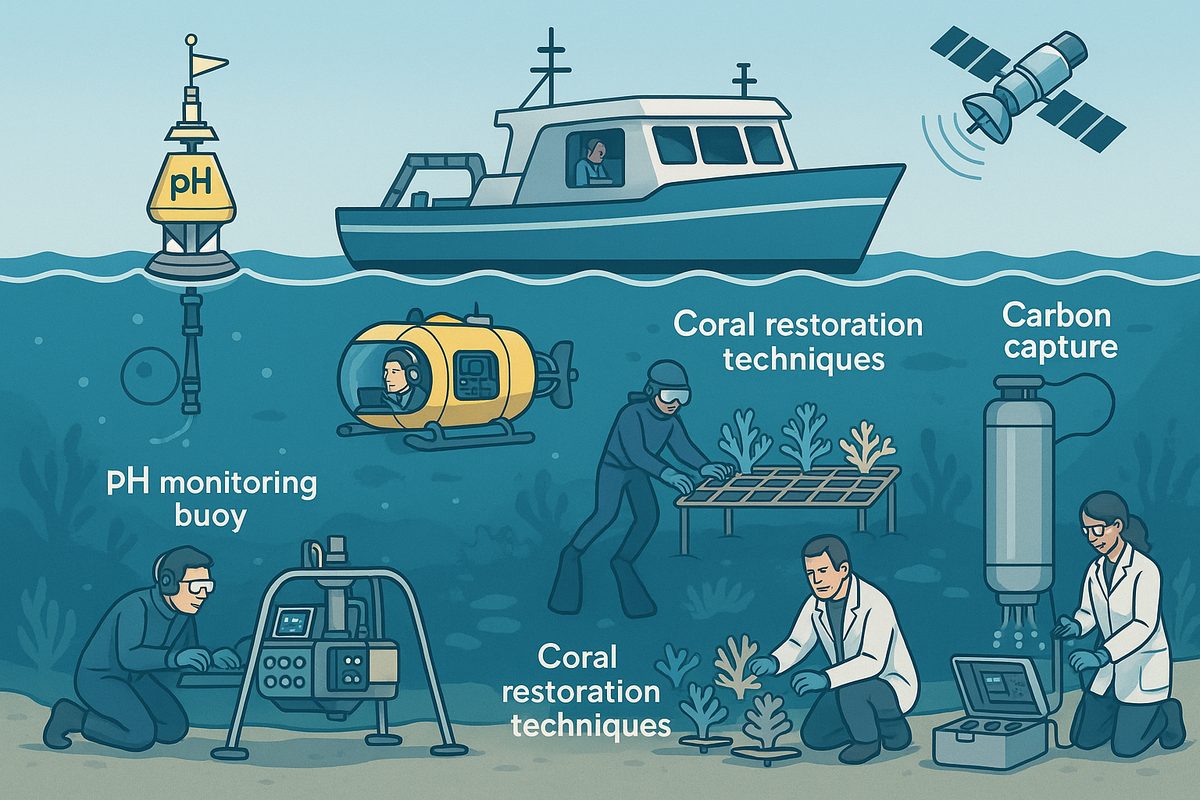
Research is progressing on technological solutions such as Direct Air Capture (DAC), which directly removes CO₂ from the atmosphere, and ocean alkalinization. However, these technologies are still at the experimental stage, and many challenges remain for large-scale deployment. According to analysis by the International Energy Agency (IEA), these technologies are not expected to be put into practical use at a meaningful scale until at least the 2030s (International Energy Agency).
Establishing and strengthening the management of marine protected areas
Establishing and effectively managing Marine Protected Areas (MPAs) is an important adaptation measure to increase the resilience of coral reefs and calcifying organisms. Within protected areas, restrictions on fishing and the inflow of pollutants can reduce stress factors other than ocean acidification and improve the ecosystem's natural resilience. According to the International Union for Conservation of Nature (IUCN), effectively managed marine protected areas have been reported to have coral reef recovery rates 2-3 times higher than areas outside protection.
Categories of effective ocean acidification measures
| Measure category | Specific method | Timescale of effect | Feasibility |
|---|---|---|---|
| Emissions reduction | Introducing renewable energy | Decades | High |
| Carbon removal | Direct Air Capture (DAC) | Immediate | Under technological development |
| Ocean alkalinization | Adding alkaline substances to the ocean | Immediate | Research stage |
| Ecosystem protection | Establishing marine protected areas | Years to decades | High |
| Pollution reduction | Reducing loads from land | Years | High |
| Adaptation measures | Developing acid-tolerant varieties | Years to decades | Moderate |
Source: IPCC Sixth Assessment Report, ocean policy research institutions
Concrete actions individuals can take
Because the fundamental cause of ocean acidification lies in rising atmospheric CO₂ concentration, individual carbon reduction actions have a direct effect. According to a survey by Japan's Ministry of the Environment, the annual CO₂ emissions per person in Japan are about 10 tons, roughly twice the global average. Through changes in individual behavior, it is possible to significantly reduce these emissions.
Annual CO2 reduction from individual actions
The effect of annual CO2 reduction through individual action. Sustained effort is important
Ocean acidification measures you can take right now
- Reviewing energy use: switching to renewable energy, adopting energy-efficient appliances
- Choosing transportation: using public transportation, switching to electric vehicles, reducing air travel
- Improving diet: choosing sustainable seafood, reducing food waste
- Changing consumption habits: thorough recycling and reuse, reducing unnecessary consumption
- Political participation: expressing support for policies and politicians who prioritize climate action
Choosing sustainable seafood
To protect fishery resources affected by ocean acidification, it is important to choose seafood caught through sustainable fishing practices. Choosing products certified by the Marine Stewardship Council (MSC) or the Aquaculture Stewardship Council (ASC) can reduce the burden on marine ecosystems. Choosing local products can also reduce CO₂ emissions from transportation.
Supporting scientific research and participating in citizen science
Supporting ocean acidification research and participating in citizen science projects are also important contributions. For example, the "Floating Forests" project engages citizen scientists in monitoring ocean change using satellite imagery. Participating in local beach cleanup activities can also contribute to reducing marine plastic pollution.
The urgency of taking action
Time remaining to achieve the 1.5°C target: About 6 years (until 2030)
Required rate of emissions reduction: 7.6% per year (in the 2020s)
Irreversibility of ocean acidification: Thousands of years to recover
Importance of action: Actions taken over the next decade are decisive
Summary: responding to the quiet crisis of ocean acidification
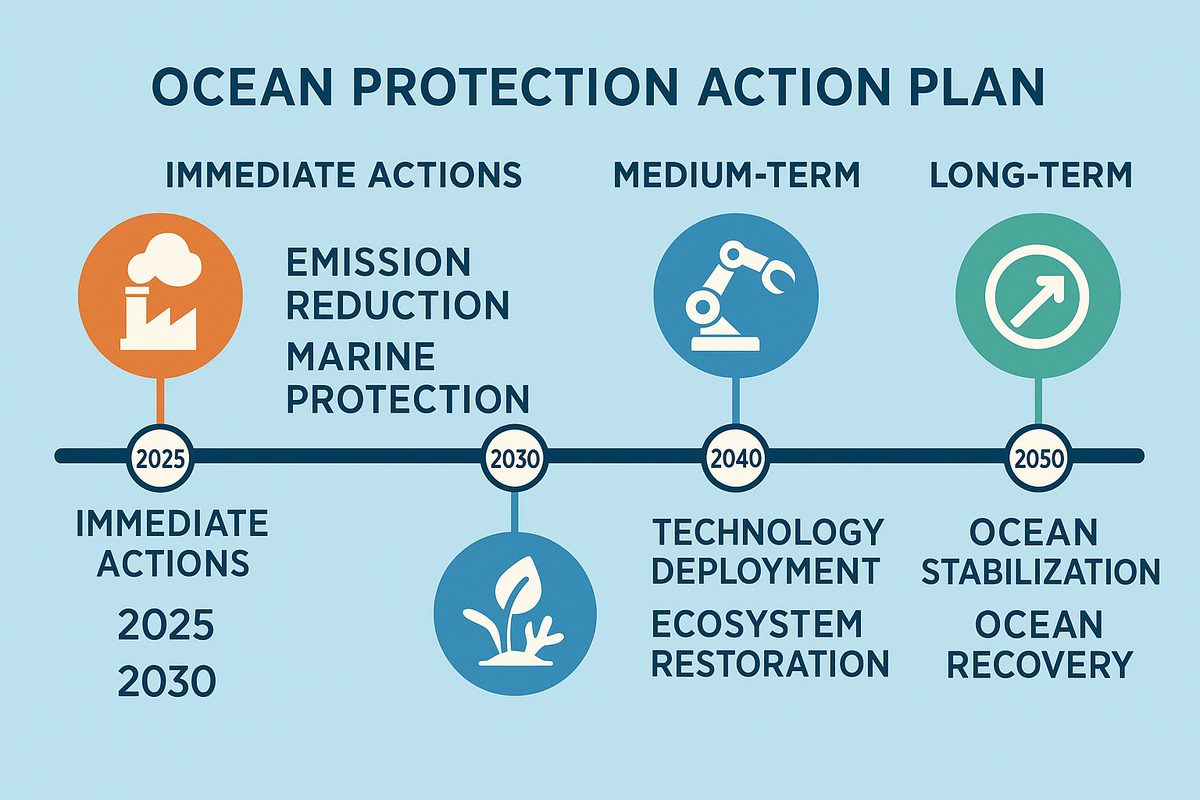
Key points of this article
- ❶ Ocean acidification is a serious environmental problem in which CO₂ emissions since the Industrial Revolution have lowered seawater pH by 0.1
- ❷ Coral reef calcification rates have fallen by 40%, and the impact has actually been observed in the waters near Japan as well
- ❸ 50% of the world's coral reefs have already been lost, and diverse calcifying organisms such as pteropods are being affected
- ❹ IPCC projections show pH decline continuing even in the best-case scenario, with coral reefs nearly disappearing in the worst case
- ❺ Reducing CO₂ emissions is essential for a fundamental solution, and individual behavior change is also an important contribution
As "the ocean's other CO₂ problem," ocean acidification stands alongside global warming as one of the greatest environmental challenges of the 21st century. This chemical change in the ocean, occurring over the past 100 years—an instant on a geological timescale—is the fastest in 650,000 years, and marine ecosystems have not had time to adapt.
However, there is no need for despair. The accumulation of scientific knowledge is making the nature of the problem and its solutions clearer. If the Paris Agreement's 1.5°C target can be achieved, it is possible to significantly mitigate the progress of ocean acidification and protect much of the marine ecosystem, including coral reefs. Achieving this requires action from governments, businesses, and each of us as individuals.
Next step: First, understand your own carbon footprint, and start by reviewing your energy use and transportation choices. Then, through choosing sustainable seafood and participating in ocean conservation activities, it is important to start taking action right now to pass on a beautiful ocean to the next generation.
References
- IPCC Sixth Assessment Report, Working Group I – The physical science basis of climate change
- University of Tokyo Atmosphere and Ocean Research Institute – The threat of ocean acidification closing in on coral
- Japan Meteorological Agency – Knowledge on ocean acidification
- Japan Agency for Marine-Earth Science and Technology (JAMSTEC) – IPCC Sixth Assessment Report
- National Institute for Environmental Studies – The impact of ocean acidification
- Nature – Extensive dissolution of live pteropods
- Australian Institute of Marine Science (AIMS) – Great Barrier Reef research
- United Nations Framework Convention on Climate Change – The Paris Agreement
- International Energy Agency (IEA) – Carbon removal technology report
- Ministry of the Environment, Japan – Ocean environmental policy
* References are listed in order of reliability: government and academic institutions > peer-reviewed papers > specialized organizations > reputable media