Fishing brings the sea's bounty to our tables, but it also supports our daily lives while sometimes catching creatures it never meant to. Whales and dolphins tangled in nets, sea turtles that swallow longline hooks, seabirds that drown after diving for bait — this "unintentional capture" is called bycatch. Bycatch isn't limited to any one sea region; it occurs in nearly every fishery on Earth, making it one of the largest environmental challenges facing the fishing industry.
Its scale is beyond imagination. An estimated 300,000 or more whales, dolphins, and other cetaceans die from bycatch worldwide every year, and sea turtles and seabirds are also lost by the hundreds of thousands annually. The UN Food and Agriculture Organization (FAO) estimates that about 10% of the world's catch — roughly 9.1 million tonnes a year — goes unused and is thrown back into the sea. That is how much life beyond the targeted fish is being lost.
Yet bycatch is not an "unavoidable side effect." Devices that let animals escape from nets, hooks that are hard to swallow, ropes that keep seabirds away — practical solutions that greatly reduce the damage are already in use around the world. This article first examines the scale of bycatch and its impact on ecosystems using reliable data, then walks through cutting-edge countermeasures — including those from Japan — and what we as consumers can do.
What you'll learn in this article
- What bycatch is, how it differs from "discards," and its global scale
- How many whales and dolphins, sea turtles, and seabirds are lost to which fishing methods
- How bycatch affects endangered species, marine food webs, and genetic diversity
- Technologies for letting animals escape — TEDs, circle hooks, tori lines, pingers, ropeless gear, and more
- Wisdom from Japanese fishers for avoiding bycatch, and what consumers and companies can do
What is bycatch? — When untargeted lives get caught in nets
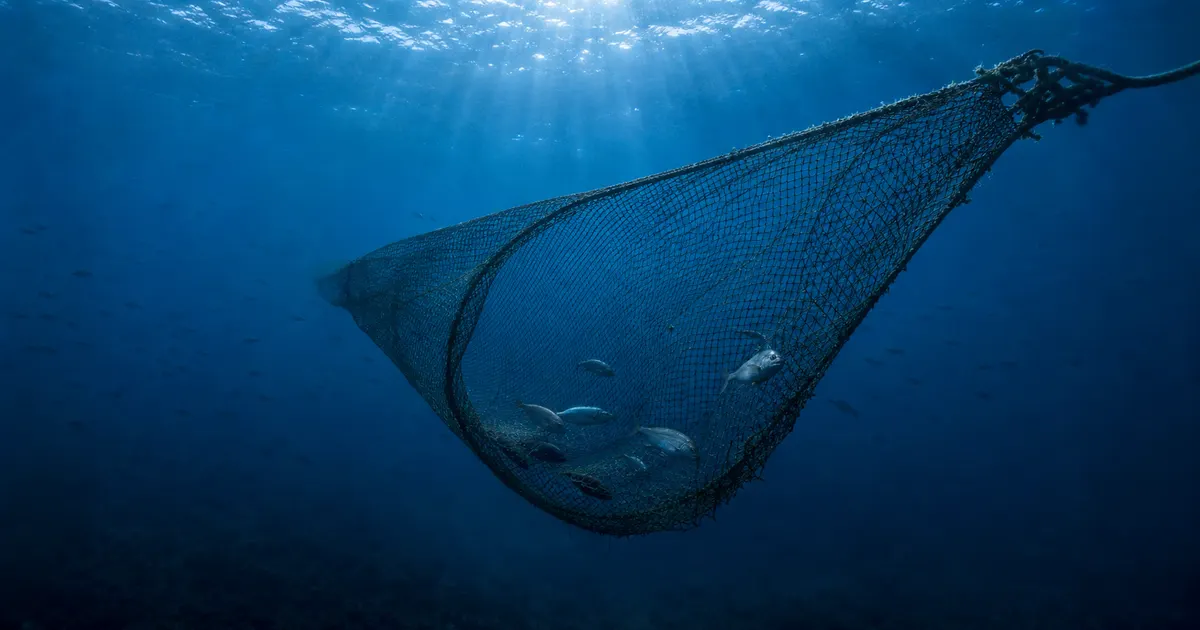
Bycatch refers to creatures that are unintentionally caught alongside the target species during fishing. A sea turtle caught on a longline meant for tuna, small fish and juveniles swept up in a trawl net set for shrimp, a dolphin tangled in a bottom gillnet — all of these are examples of bycatch. Even individuals of the target species are broadly discussed as bycatch when they are thrown back into the sea because they are too small to sell, restricted by regulation, or damaged.
Most animals caught as bycatch are simply thrown back into the sea. This "discarded catch" is called a discard. Bycatch and discards overlap considerably but are technically different. Bycatch refers to "catching something unintended," while a discard refers to "returning what was caught to the sea without using it." An animal caught as bycatch does not become a discard if it is brought ashore and used, but creatures that cannot be sold — such as cetaceans, seabirds, and sea turtles — are often thrown back injured or already dead.
Why bycatch is "hard to see"
The seriousness of bycatch lies in the fact that much of it happens out of sight. Most dolphins and sea turtles that die entangled in nets are never brought ashore and never recorded. Only a small fraction of fishing vessels carry observers, so in many operations no one accurately knows what is being caught, or how much. The reason so many published estimates from researchers use the phrase "at least" is that the real scale is very likely larger.
In other words, bycatch is the kind of environmental problem where the real damage is larger than the numbers that show up in statistics. That is precisely why it matters to grasp the scale from the limited data available and to evaluate the effectiveness of countermeasures. In recent years, "electronic monitoring" — cameras installed on fishing vessels that automatically record operations — has been spreading, gradually shedding light on bycatch that had previously gone unseen.
Target species or not — the line is surprisingly hard to draw
Bycatch tends to conjure images of "a rare animal caught by chance," but in reality it happens routinely and on a massive scale. A trawl net set for shrimp, for example, scoops up unsellable small fish, juveniles, crabs, and starfish together, and much of it is thrown back into the sea. Even catch of the target species is discarded — and so counted as bycatch in the broad sense — if it is smaller than the regulated size, exceeds a quota, or has lost freshness. Once you accept the premise that "almost no fishery catches only what it is aiming for, neatly," it becomes clear that bycatch is not a rare accident but a challenge built into the very structure of fishing.
At the same time, discarding large quantities of juveniles also erodes future fishery resources. Bycatch is both an ecosystem protection issue and a matter of protecting fishers' own future catches. This dual nature — that what is being protected is not only wildlife but also the sustainability of fishing itself — is one reason so many stakeholders are involved in tackling bycatch.

Three key points in this article
- Bycatch occurs in nearly every fishery worldwide, and the real toll is likely larger than the statistics show
- Slow-breeding animals — cetaceans, sea turtles, seabirds — suffer the greatest impact on their populations
- Escape devices and gear modifications can greatly reduce bycatch while keeping the catch intact
Bycatch is not merely a matter of "waste." For species on the brink of extinction, it can be the single greatest threat to their very survival. In the next section, let's first confirm the scale of the problem with numbers.
Bycatch by the numbers — how many lives are lost every year
Measuring the full scope of bycatch precisely is difficult, but lining up estimates from international bodies and researchers reveals just how large the numbers are. Here we organize the data for three representative groups — cetaceans, sea turtles, and seabirds — along with the overall volume of discards.
Whales and dolphins (cetaceans) — over 300,000 a year
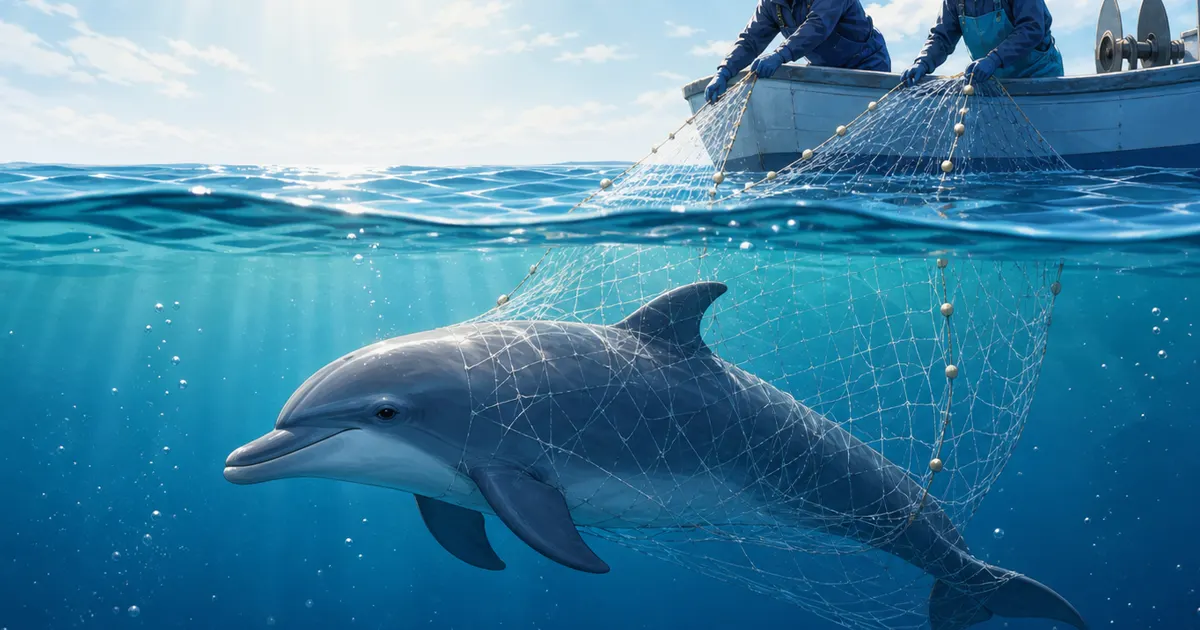
The International Whaling Commission (IWC) and environmental groups estimate that at least 300,000 whales, dolphins, and porpoises die from bycatch worldwide every year. Bycatch is now considered one of the leading causes of death for cetaceans. Gillnets in particular — set like walls in the water — are especially dangerous, since dolphins that navigate by sound often fail to notice them, becoming entangled and drowning because they cannot surface to breathe.
Sea turtles — hundreds of thousands of victims every year
Sea turtles are also major victims of bycatch. An estimated several hundred thousand sea turtles are caught worldwide every year in longlines, gillnets, and trawl nets. Because sea turtles breathe air, becoming entangled in a net and unable to reach the surface causes them to drown. The threats sea turtles face are covered in more detail in our article on the life cycle and conservation of sea turtles.
Seabirds — hundreds of thousands lost to longlines and gillnets
The toll on seabirds is also severe. International NGO figures put seabird bycatch deaths at 160,000 to 320,000 a year from longline fishing and about 400,000 a year from gillnet fishing. For long-lived birds like albatrosses, which lay only one egg every few years, losing this many adult birds every year is a blow that directly threatens the survival of the population.
Discards overall — about 10% of the world's catch
Looking at "discarded catch" as a whole, including bycatch, the FAO estimates that, averaged over 2010-2014, about 10.8% — roughly 9.1 million tonnes — of the world's annual catch of about 84.6 million tonnes was discarded. That is about half of the estimate from the late 1980s, a decline driven by tighter regulation and improved gear, but it still represents an enormous amount of lives and resources being returned to the sea.
What matters here is that the damage from bycatch is heavily skewed by fishing method and sea region. Even though the figure is "about 10% discarded" overall, some fisheries have discard rates of only a few percent, while others — such as shrimp trawling — discard more than half of what they catch. In other words, the most effective way to reduce bycatch is to focus countermeasures on the fishing methods and regions where the damage is concentrated. Rather than regulating every fishery uniformly, it is more realistic and more effective to identify exactly "where, what, and how much" is being lost, and to concentrate efforts there. That is precisely why understanding the characteristics of each fishing method, covered in the next section, is the starting point for thinking about countermeasures.
| Group | Estimated annual toll | Main fishing methods responsible |
|---|---|---|
| Whales and dolphins (cetaceans) | 300,000+ | Gillnets, driftnets, etc. |
| Sea turtles | Hundreds of thousands | Longlines, trawls, gillnets |
| Seabirds | 160,000-320,000 (longline) / ~400,000 (gillnet) | Longlines, gillnets |
| Discards overall | ~9.1 million tonnes (about 10% of total catch) | Trawling in general, longlines, etc. |

Why do the numbers have such a wide range?
Bycatch estimates carry a wide range because few fishing vessels carry observers and measured data is limited. Since most dead animals are never brought ashore, they go unrecorded, and experts consider published figures to be a lower bound on the real toll. What matters more than the size of the numbers themselves is understanding the structure — which animals are being lost to which fishing methods — as the first step toward countermeasures.
Sharks and rays ("cartilaginous fish") also suffer heavily
Bycatch discussions tend to focus on mammals, seabirds, and sea turtles, but sharks and rays (cartilaginous fish) are also caught in large numbers by longlines and gillnets. These animals, too, grow slowly and produce few young, making them highly vulnerable to the effects of bycatch. Practices such as finning — removing only the fins and discarding the rest of the body — have become a problem, closely linking bycatch to the broader issue of overfishing. In waters where large numbers of untargeted sharks are caught, the health of the entire resource base can suffer.
Seen this way, bycatch is not just a story about a few "unfortunate animals" — it is a cross-cutting issue affecting marine life as a whole. Fish, mammals, birds, turtles, invertebrates — bycatch takes untargeted lives across every taxonomic category. The next section looks at why this damage occurs, starting from the mechanics of each fishing method.
Why bycatch happens — understanding each fishing method
Which animals get caught, and how often, varies greatly depending on the fishing method. Understanding the cause is itself a clue to the solution. Let's look at four representative methods.
Gillnets and driftnets — the most dangerous for cetaceans
A gillnet is a thin-threaded net set in the water like a wall, catching fish by the gills as they swim through. Because the net is nearly transparent and hard to see, dolphins, porpoises, and sea turtles often fail to notice it and become entangled, drowning as a result. Driftnets — long nets set adrift in the sea — pose a similar risk, and are considered globally the single biggest cause of cetacean bycatch. Research analyzing bycatch of toothed whales also identifies gillnets as the largest single factor.
Dolphins and porpoises swim using echolocation, emitting ultrasonic pulses and listening for the echoes to navigate. However, thin-threaded gillnets are thought to reflect sound poorly, making them hard for sonar to detect. With a wall in the water that is invisible to the eye and hard to detect by sound alike, even highly capable dolphins cannot always avoid becoming entangled. The mechanics of dolphin echolocation are covered in detail in our article on dolphin echolocation.
Longlines — sea turtles and seabirds pay the price
A longline is a fishing method in which many hooks hang from a single main line, targeting tuna and swordfish. While the line is being set and the baited hooks are still near the surface, seabirds dive for the bait, get hooked, and are dragged underwater. Sea turtles are also harmed, either swallowing a hook along with the bait or becoming entangled in the line. Because changing the shape of the hook or the timing of setting the line can reduce the damage, this is also the fishing method where countermeasures — described later — are most advanced.
Trawling (bottom trawls) — an outsized discard rate in shrimp fisheries
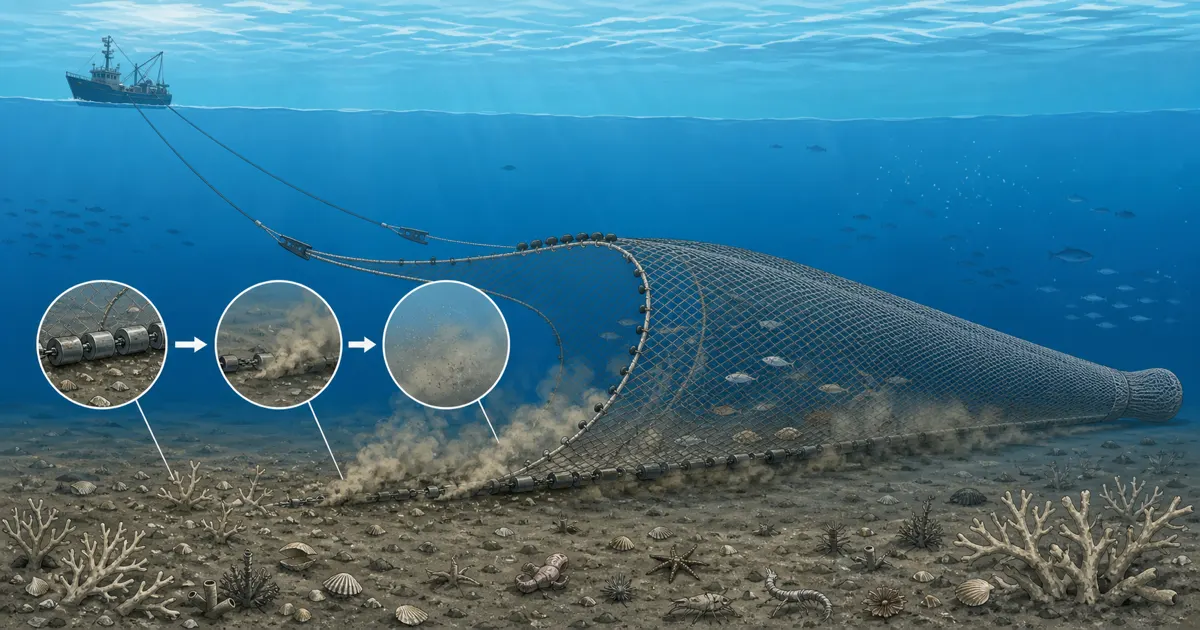
A trawl net is a bag-shaped net towed by a boat, scooping up fish and shrimp near the seabed in bulk — its weakness is that large quantities of non-target species get caught along with the target. Shrimp trawling in particular has a strikingly high discard rate, with cases where most of what is caught cannot be sold and is thrown away. FAO-related estimates suggest that shrimp trawling accounts for a substantial share of the world's bycatch, and it has long been recognized as a major cause of sea turtle bycatch as well. There are reports of fishing grounds where, for every kilogram of shrimp caught, several times that weight in small fish is caught as bycatch and discarded — making this method stand out even in terms of the ratio between target catch and bycatch.
Furthermore, trawls that drag along the seabed can also destroy the very habitat of the creatures living in the sand, mud, and rocky reefs below. Bycatch places a burden on marine ecosystems not only through direct deaths but also through this kind of habitat disturbance. That is why countries are increasingly adopting management measures such as widening the mesh size to let smaller animals escape, and avoiding areas or seasons where bycatch is heaviest.
Set nets — a challenge even in a fishing method familiar to Japan
Set nets, widely used along Japan's coasts, guide migrating fish into a net enclosure and are considered a relatively low-impact fishing method. Even so, dolphins, finless porpoises, and sea turtles sometimes wander in, and bycatch in set nets and trawls is a conservation concern for finless porpoises in Japanese coastal waters. The fact that animals caught this way have a chance of being released alive is an important point when thinking about bycatch countermeasures.
- Gillnets/driftnets: Cetaceans and sea turtles become entangled in nets that are hard to see, and drown
- Longlines: Seabirds dive for bait while the line is being set, and sea turtles swallow hooks
- Trawls: Large amounts of non-target species are swept up, resulting in high discard rates
- Set nets: Some animals wander in, but there is a chance they can be released alive

Impact on ecosystems — endangered species and the marine food web
The animals most vulnerable to bycatch — whales, sea turtles, and seabirds — are slow to mature and produce few offspring. Once their numbers decline, recovery is slow, and deaths from bycatch can push an entire population toward the brink of survival. Let's look at two symbolic cases.
The vaquita — driven to the brink by gillnets
The vaquita, found only in Mexico's Gulf of California, is the marine mammal closest to extinction on Earth. An estimated 600 or so remained in 1997, but their numbers plummeted after becoming entangled in illegal gillnets set for the prized totoaba fish. A 2024 survey confirmed only 6 to 8 individuals remaining. Not whaling, not pollution — a single cause, gillnet bycatch, drove one species to the very edge of extinction. It is a painful lesson.
What the vaquita's tragedy shows is that bycatch countermeasures are also a race against time — a question of whether action comes "in time." Although gillnets were banned, illegal fishing targeting the totoaba's swim bladder has continued unabated, and the ban has failed to be effectively enforced. Once a population has shrunk this far, even a single bycatch death has consequences for the species' survival. This small dolphin is a stark reminder of how crucial it is to act before it is too late.
North Atlantic right whale — entanglement blocks reproduction
The North Atlantic right whale, with only about 370 individuals estimated to remain, is another endangered species in the northwest Atlantic. Entanglement in the ropes of gear used to catch crabs and lobsters is a constant threat, and some reports suggest that more than 80% of surviving individuals have been entangled at least once in their lives. Dragging entangled rope for a long time saps a whale's strength, preventing it from reproducing, and it can also die slowly from exhaustion caused by its wounds. Bycatch doesn't just cause "instant death" — it also grinds down a population's reproductive capacity over time.
With only about 70 reproductive females believed to remain in this species, even a single female losing the ability to give birth because of entanglement opens a significant hole in the population's capacity to recover. If deaths and reproductive impairment from bycatch outpace the species' natural capacity to grow, the population can only keep shrinking. Experts describe rope entanglement as "a hellish problem" — a challenge that is as difficult to solve as it is urgent.
A similar story with finless porpoises in Japan's coastal waters
This pattern is not confined to distant seas. Finless porpoises living along Japan's coast, including in the Seto Inland Sea, have also seen their numbers decline, and bycatch in set nets and trawls is considered a conservation concern. Combined with coastal development and pollution, bycatch may be quietly reducing the numbers of this familiar marine mammal close to home as well. The bycatch of endangered species is not just a story from famous cases overseas — it is happening right next to us, too.
Bycatch is now the most serious threat facing many cetaceans. Entangling gear such as gillnets accounts for a large share of that damage.
— Summarized from the position of the International Whaling Commission (IWC)
Ripple effects on the food web and genetic diversity
When a particular animal is lost in large numbers, the impact does not stop with that species alone. Marine creatures are connected through predator-prey relationships, so when a top predator declines, the prey it once kept in check can multiply excessively, or the chain can collapse in other ways if part of it is lost. Furthermore, when population numbers shrink, genetic diversity within the group is also lost, weakening resistance to environmental change and disease. Bycatch is also a matter of biodiversity, in the sense that the decline of a single species ripples out to affect the balance of the entire ocean. The importance of marine biodiversity is also covered in our article on Marine Protected Areas (MPAs).
It is also becoming clear that large animals such as whales, dolphins, and sea turtles play special roles within ecosystems. Whales, for example, dive deep to feed and then defecate near the surface, transporting nutrients that help phytoplankton grow. That phytoplankton, in turn, produces oxygen through photosynthesis and absorbs carbon dioxide. In other words, losing large marine animals to bycatch could weaken the ocean's very capacity to store carbon and generate abundance. Bycatch countermeasures are not just about saving one animal in front of us — they also protect the health of the ocean as a whole.

Slower-breeding animals are more at risk
Whales, sea turtles, and albatrosses take several years to over a decade to reach sexual maturity, and produce few offspring at a time. Unlike fish, which can lay huge numbers of eggs to recover their numbers, when mature individuals of these species are lost to bycatch every year, the population shrinks slowly but surely. This is exactly why such species need especially robust bycatch countermeasures.
Ways to let animals escape — the frontier of fishing gear innovation
Bycatch is not an "unavoidable side effect." Solutions that keep the targeted catch while reducing bycatch alone are already in practical use around the world. Here we introduce four representative technologies. All of them share the feature of significantly reducing damage without stopping fishing.
TEDs (Turtle Excluder Devices) — building an "emergency exit" into the net
A TED (Turtle Excluder Device) is a metal grid fitted partway along a shrimp trawl net that stops large sea turtles from moving further into the net, letting them escape through an opening just in front of the grid. Developed in the 1970s by the U.S. NOAA (National Oceanic and Atmospheric Administration), TEDs are now mandatory in many countries' shrimp fisheries. It's a classic success story in bycatch reduction — catching the shrimp as usual while letting only the sea turtles escape. When first introduced, fishers pushed back, worried that "even the shrimp will escape and reduce the catch," but adjusting the grid spacing and the position of the escape opening has proven that sea turtles can be protected while minimizing the impact on the catch.

Circle hooks — hooks that are hard to swallow
In longline fishing, simply changing the shape of the hook can reduce harm to sea turtles. A circle hook, whose tip curves inward, tends to catch on the edge of the mouth rather than being swallowed deep into the throat, making it easier to remove without injuring the turtle. Fishing trials led jointly by Japan and the United States confirmed the effectiveness of circle hooks in reducing bycatch mortality, and their use is now being required by regional fisheries management organizations as well. Findings such as the discovery that simply switching bait from squid to fish changes sea turtles' response are also accumulating, as research continues into combining small improvements to reduce harm.
Tori lines, weighted branch lines, and night setting — three ways to protect seabirds
There are three pillars of seabird countermeasures: the "tori line" (streamer line), a line with hanging streamers trailed from the stern to keep birds away from the bait; the "weighted branch line," which uses added weight to sink the bait quickly; and "night setting," which sets the line at night when birds are less active. In high-latitude tuna longline fisheries, using two or more of these together is mandatory, and combining them yields a high level of effectiveness.
Pingers and ropeless gear — warning with sound, and removing the rope
Gillnets are fitted with "pingers" (acoustic deterrent devices) that emit sound to warn dolphins of danger. Development is also progressing on "ropeless gear" (on-demand gear), which eliminates the surface rope that causes entanglement and instead releases a buoy to the surface only when needed; some fisheries in Canada have already begun adopting it. These technologies are seen as a potential trump card for protecting species prone to heavy entanglement damage, such as the North Atlantic right whale. In Canada, there is also a move toward requiring the use of "low breaking-strength rope," which breaks more easily when entangled — an innovation that lets even large whales break free if they do get caught.
These technologies are not a cure-all. Some dolphins grow accustomed to the sound of pingers, and ropeless gear is expensive and will take time to become widespread — challenges that have been pointed out. That is exactly why it matters not to rely on a single technology, but to combine multiple countermeasures suited to each sea region and target species, verifying their effectiveness and improving them along the way. Rather than "install it and be done," continuing to check effectiveness with real-world data is what moves bycatch countermeasures forward.

| Countermeasure | Species protected | Mechanism |
|---|---|---|
| TED (Turtle Excluder Device) | Sea turtles | A grid and escape opening in the net let them out |
| Circle hooks | Sea turtles | A hook shape that is hard to swallow |
| Tori lines, weighted branch lines, night setting | Seabirds | Keep birds from the bait / sink it quickly / set the line at night |
| Pingers | Dolphins | Warn of the net's presence with sound |
| Ropeless gear | Large cetaceans | Removes the surface rope to prevent entanglement |
Backing it up with rules — the push for international regulation
Rules that spread these technologies are just as important as the technologies themselves in reducing bycatch. Regional fisheries management organizations (RFMOs), which manage tuna and other species, require longline fisheries to adopt seabird avoidance measures and circle hooks. In addition, under its Marine Mammal Protection Act, the United States has introduced import regulations requiring that imported seafood be produced with bycatch reduction measures comparable to U.S. standards. In effect, seafood from countries without adequate bycatch measures becomes harder to bring into the U.S. market. This kind of market-based pressure is a powerful driver, encouraging fisheries worldwide to adopt countermeasures.
Japan, too, has advanced guidelines to reduce bycatch of endangered species and has introduced avoidance measures in longline fishing. Regulation can be a burden on those working in the field, but making rules is essential to expanding the highest-impact measures from "a handful of dedicated fishers" to "an industry-wide standard." When technology, on-the-ground ingenuity, and rules all work together, bycatch visibly declines.
"Stopping fishing" isn't the only answer
Most bycatch countermeasures don't ban fishing outright — they take an approach of slightly modifying gear or methods. Because they protect fishers' livelihoods while reducing harm, they tend to be readily accepted on the ground and to last. The key is finding effective innovations and spreading them widely.
Japan's challenge — wisdom from fishers for avoiding bycatch
Bycatch countermeasures aren't only a story from distant countries. Japanese fishers and researchers have also developed solutions from on-the-ground ingenuity that have become globally recognized. Here we introduce some Japan-born initiatives.
Tori-poles — a seabird deterrent born on the deck
In Japan's tuna longline fishery, fishers themselves developed the "tori-pole" technique — trailing a line with streamers from a long pole set up at the stern to keep seabirds away from the bait. It is simple to set up and highly effective, and its effectiveness has been demonstrated in reports from fisheries research institutions. This is a great example of on-the-ground wisdom growing into an internationally standard countermeasure, rather than a regulation imposed from above. It is a genuine point of pride for Japanese fisheries that an innovation born from fishers who face seabirds every day out on the water is now valued as a tool for protecting seabirds worldwide.

Finless porpoises and set nets — coastal waters seeking coexistence
Finless porpoises living in Japan's coastal waters have long faced set-net bycatch as a conservation concern in areas such as the Seto Inland Sea. At the same time, set nets are also a fishing method with the potential for animals to be released alive. In one area of the Seto Inland Sea, there are reports of a long-standing coexistence between fishers and finless porpoises, which gather to feed on leftover fish when the set net is hauled up — showing the potential for coastal fisheries and marine mammals to find common ground. Such places offer a hint for reframing bycatch not as "conflict" but as a matter of "coexistence and ingenuity."

Low-cost ingenuity — the idea behind the "bottle pinger"
One hurdle to bycatch countermeasures is cost. Commercial pingers are expensive, but recent research has been exploring "bottle pingers" — attaching empty bottles or plastic bottles to a net to make sound underwater and warn dolphins of danger. An international joint study reported in 2026 found that attaching bottles to bottom-set gillnets in Brazil brought dolphin bycatch down to zero in some cases. Such low-cost innovations have the potential to be used in many fishing grounds, including in developing countries, and are drawing attention. Alongside expensive, cutting-edge equipment, ingenuity that makes use of everyday materials is also a promising option for reducing bycatch.
Fishing gear that has drifted out to sea also continues to generate bycatch on its own. The problem of "ghost gear" — abandoned or lost fishing nets that keep catching animals underwater — is explained in detail in our article on ghost gear and ghost fishing. Efforts to collect and reuse fishing nets after use are also worth a look in our article on fishing net recycling. Alongside countermeasures for gear currently in use, tackling ghost gear is an equally important part of reducing the "invisible traps" left behind in the sea.
Bycatch countermeasures born in Japan
- Tori-pole: on-the-ground ingenuity that grew into an international seabird protection measure
- Set nets × finless porpoises: the potential of coastal fishing to release animals alive
- Bottle pinger: a new, low-cost idea for protecting dolphins
What consumers and companies can do — the responsibility to choose and to reduce
Reducing bycatch isn't only the job of fishers and researchers. The choices each of us makes as we buy and eat fish, and the sourcing policies of companies that handle seafood, are also powerful forces that can change fishing practices on the ground.
Choosing certification labels — MSC and ASC
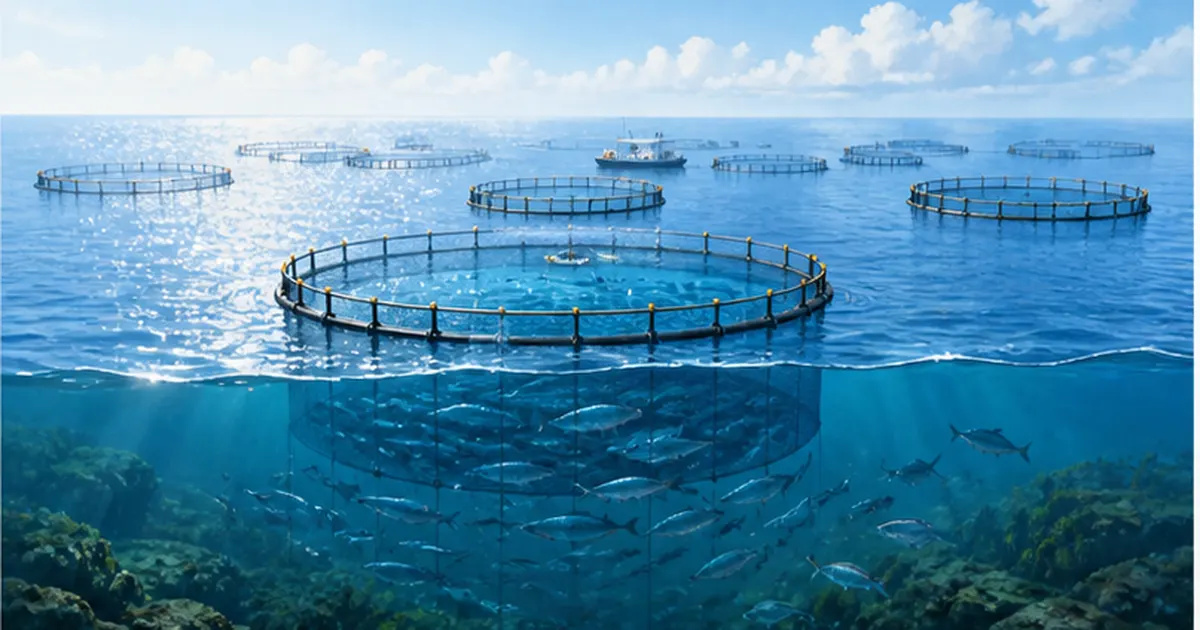
When choosing seafood at the supermarket, certification labels serve as a guide. Wild fish carry the "MSC certification" ocean ecolabel, and farmed seafood carries ASC certification — both are awarded to fisheries and aquaculture operations that limit their environmental impact, including bycatch. Choosing products with these labels supports producers working to address bycatch. Availability in Japanese retail is expanding, and our article on Aeon Topvalu's MSC and ASC certification introduces concrete examples. Certification doesn't guarantee "zero bycatch," but it matters because it comes with a system for continuously assessing and improving impacts, including bycatch.
Corporate sourcing policy — the case of Nissui
The sourcing policies of companies that handle large volumes of seafood have an outsized impact. Nissui, for example, has made sustainable use of fisheries resources a key theme, promoting the use of MSC- and ASC-certified seafood and conducting resource surveys of wild seafood handled by its own group. The company has also stated that it is working with overseas group companies to develop fishing methods with a smaller environmental footprint. These efforts are one example of trying to curb environmental impacts, including bycatch, starting at the sourcing stage. When companies raise their sourcing standards, more fisheries work to meet those standards, and fishing practices on the ground change as a result. It is only when consumers, retailers, processors, and fishers are all connected that bycatch countermeasures can function across the entire supply chain.
Don't leave food on the plate — consumption that cuts discards
The problem of bycatch and discards is closely tied to food loss in seafood as well. Not wasting the fish that was caught, and actively eating off-spec or underutilized fish, makes effective use of a limited catch and eases the pressure to overfish. See also our article on seafood food loss for more on this issue.
Know it, share it — interest itself becomes a force
Bycatch is a problem that draws little attention precisely because it is hard to see. That's exactly why simply having more people "know about" this issue becomes a driving force for progress. Talking about it on social media, discussing where fish comes from and how it was caught at the family dinner table, looking into marine life together with children — these small actions shift consumer choices and build the public opinion that moves companies and fisheries. Once you learn about the journeys whales make as they migrate the oceans, a natural desire to protect them from bycatch tends to follow. If you're interested, take a look at our article on the mystery of whale migration as well.
Bycatch countermeasures only move forward when fishers, researchers, companies, government, and consumers — each from their own position — add up what they can do. No single person can solve it all, but by the same token, it is also a problem that everyone can play a small part in addressing. Knowing about it first — that is where it all begins.
- Choose environmentally responsible seafood, such as MSC- and ASC-certified products
- Take an interest in products and information from companies working on bycatch reduction
- Make use of underutilized and off-spec fish, and reduce food left uneaten
- Learn about bycatch and ghost gear, and share what you learn with others

Four things you can do starting today
- Look for MSC, ASC, and other certification labels while shopping
- Eat seasonal and underutilized fish, and reduce food left uneaten
- Talk about bycatch and ghost gear with family and friends
- Learn about organizations working on marine conservation, and support their efforts
Conclusion — turning bycatch into a visible, solvable problem
Bycatch is one of the largest environmental challenges facing the fishing industry, occurring routinely in fisheries around the world. More than 300,000 whales and dolphins, along with hundreds of thousands of sea turtles and seabirds, are lost every year, and about 10% of the world's catch is discarded back into the sea unused. Cases like the vaquita, where a single cause — bycatch — has driven a species to the brink of extinction, illustrate just how serious this problem is.
At the same time, bycatch is by no means "an unavoidable side effect." Innovations such as TEDs, circle hooks, tori lines, pingers, and ropeless gear prove that damage can be greatly reduced without stopping fishing. On-the-ground wisdom — like the tori-pole and bottle pinger born from Japanese fishers — can even change global standards. And our own consumption choices, choosing certified products and not wasting fish, are also a real force for reducing bycatch.
Summary of this article
- Bycatch means untargeted animals getting caught in fishing gear; the real toll is likely larger than the statistics show
- Cetaceans lose over 300,000 a year, sea turtles and seabirds hundreds of thousands, and about 10% of the world's catch is discarded
- Slow-breeding endangered species suffer the greatest impact, with ripple effects on the food web and genetic diversity
- TEDs, circle hooks, tori lines, pingers, and ropeless gear can greatly reduce the damage
- Choosing certified seafood and not wasting fish helps support fisheries working on bycatch countermeasures
The first step to reducing bycatch is to know that it exists. If more and more people come to understand this problem happening out of sight in the ocean, and turn that understanding into choices and action, it will help protect untargeted lives and pass on a rich ocean to the next generation.
References and sources
- International Whaling Commission (IWC) - Bycatch and entanglement of cetaceans in fishing gear
- Food and Agriculture Organization of the United Nations (FAO) - Discards and Bycatch in Capture Fisheries
- NOAA Fisheries - Vaquita Conservation and Abundance
- NOAA Fisheries - North Atlantic Right Whale — Vessel Strikes and Entanglement
- WWF Japan - Bycatch — an environmental issue in fisheries that must be solved
- Fisheries Agency / Japan Fisheries Research and Education Agency - Status of International Fisheries Resources: Sea Turtles (overview)
- Japan Fisheries Research and Education Agency (FRA) - Tori-pole: A seabird bycatch avoidance method developed by Japanese fishers
- BirdLife International Tokyo - Toward fisheries that are safe for seabirds: global efforts and solutions
- Marine Stewardship Council (MSC) - What is bycatch? How to manage it
- Nissui - Sustainable use of wild fisheries resources / seafood ecolabels
* Listed in order of reliability: government/academic institutions > peer-reviewed papers > specialized organizations > reliable media