⚡ In short
Shark finning — slicing off the fins and dumping the body at sea — has driven a global collapse of shark populations. Around 80 million sharks die in fisheries every year, and 37% of shark and ray species are threatened with extinction. This article covers the ecosystem impacts of losing apex predators, the landmark CITES CoP19 trade rules, and Kesennuma's full-utilization tradition, all backed by scientific data.
Shark fin is one of the most prized delicacies in Chinese cuisine. Behind it lies a practice that has decimated sharks worldwide: shark finning — slicing the fins off a captured shark and throwing the still-living body back into the sea. Recent research estimates that fisheries still kill about 80 million sharks every year, and that more than one in three shark and ray species is threatened with extinction.
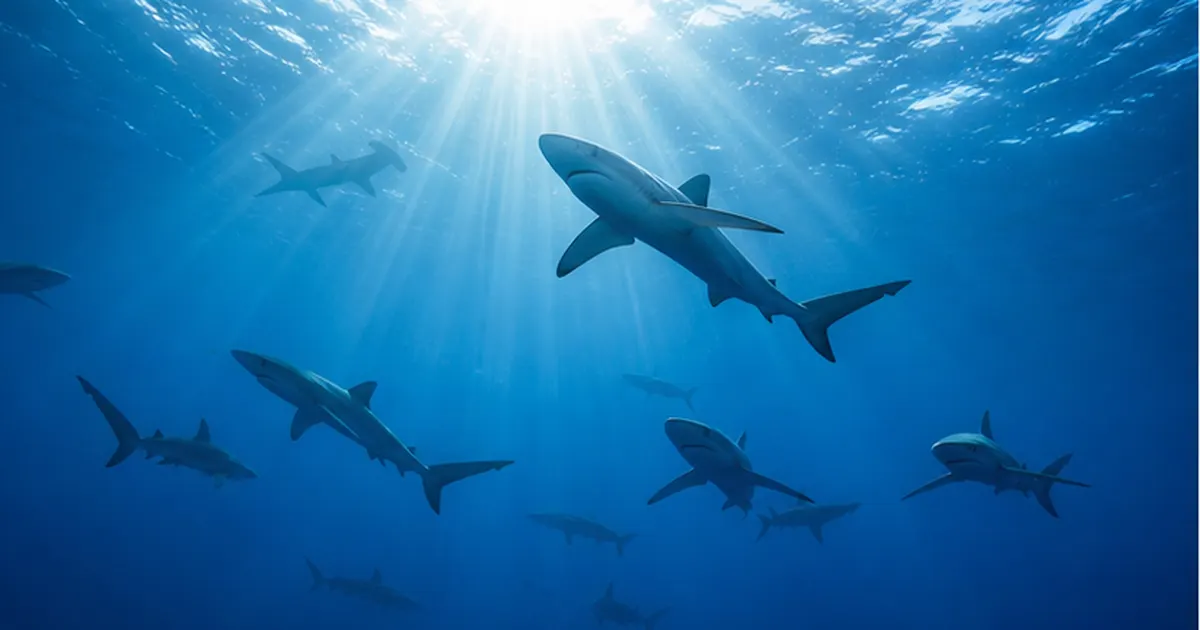
Sharks have lived in the ocean for over 400 million years as predators at the top of the food chain. If that apex disappears rapidly, the impact will not stop with sharks. The behavior of their prey changes, seagrass meadows and coral reefs change, and studies around the world are beginning to show that the effects can ripple all the way to fisheries and even the climate.
This article walks through the basics of what shark finning is, the scientific estimates of annual shark deaths, the ecosystem consequences of losing an apex predator, the fin trade centered on Hong Kong, the historic tightening of trade rules under CITES, and the "full utilization" culture rooted in Kesennuma, Japan — all grounded in primary sources.
What you'll learn in this article
- What shark finning is and why only the fins are taken
- The science behind the estimate that 80–100 million sharks are killed every year
- What happens to marine ecosystems when apex predator sharks disappear (trophic cascades)
- The state and limits of international rules, from CITES CoP19 to national finning bans
- Japan's management framework and the "full utilization" tradition of Kesennuma, a major shark-fin producer
- Choices and actions consumers can start taking today
What Is Shark Finning? Taking the Fins and Discarding the Body at Sea
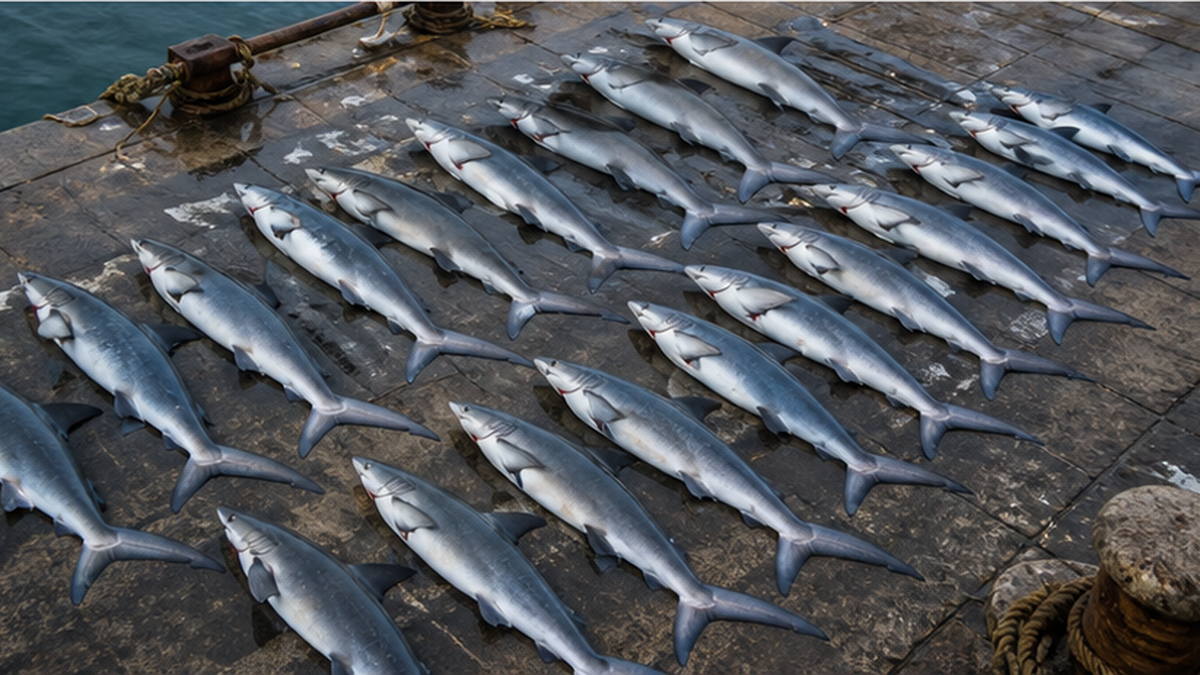
Shark finning is the practice of cutting off a captured shark's fins — dorsal, pectoral, and caudal — and discarding the rest of the body at sea. Dried shark fin commands high prices as a luxury ingredient in Chinese cuisine, while shark meat is cheap, spoils quickly, and takes up space. Some fishing vessels have therefore filled their limited holds with valuable fins alone, dumping the bodies overboard.
Why Only the Fins Are Taken
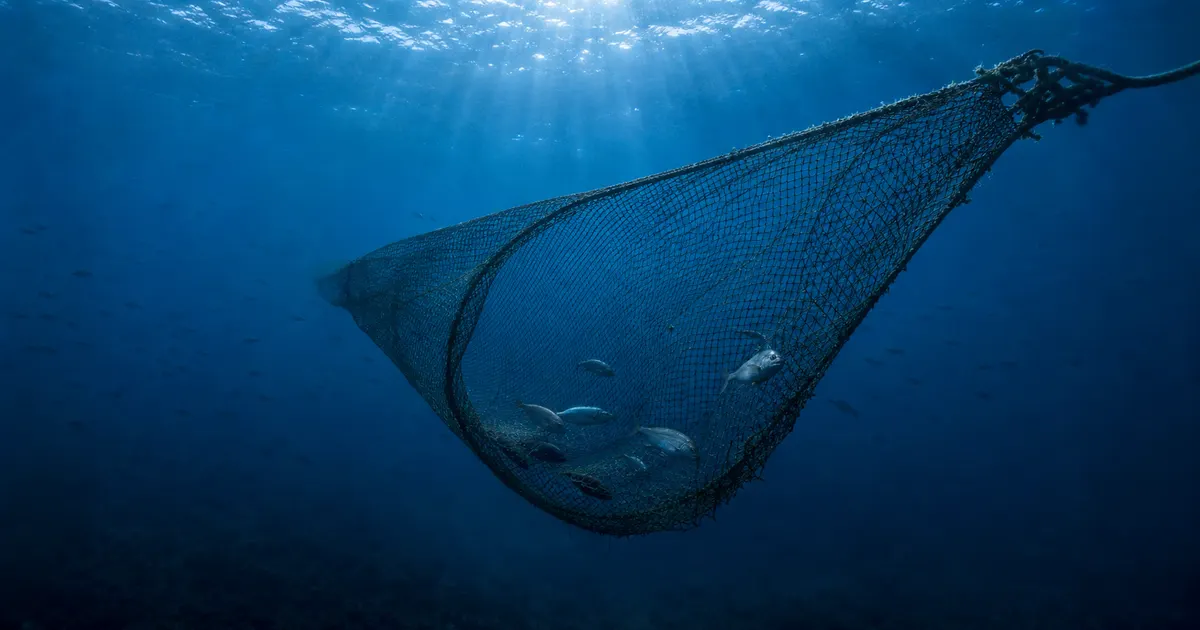
Finning is rooted in the structure of distant-water fisheries. Longline vessels targeting tuna and billfish also hook large numbers of sharks they were not aiming for (bycatch). With freezer space and ice in short supply, cutting off the light, compact, high-value fins pays better than stowing low-value shark bodies — and this economic logic is the single biggest reason finning spread across the world's oceans. For the broader problem of unintended animals caught in fishing gear, see our article "What Is Bycatch?".
- Dried fins are light, keep well, and take up almost no hold space
- Shark meat is cheap and perishable, so it has been treated as cargo "not worth" precious freezer space
- Strong demand for shark fin as a luxury food makes fins worth orders of magnitude more per kilogram than shark meat
What Happens to a Shark That Loses Its Fins
Most sharks whose fins are removed are thrown back into the sea still alive. But a shark cannot swim without its fins. Many open-ocean sharks can only breathe by swimming continuously to push water over their gills, so a shark that sinks to the bottom suffocates, or dies of blood loss, starvation, or predation. This is why the practice has drawn intense international criticism on animal-welfare grounds.
Let us sort out the terminology here. "Catching sharks" (shark fishing) and "finning" are not the same thing. Finning refers specifically to cutting off the fins at sea and discarding the body. A fishery that lands the whole shark and uses both fins and meat is not finning. This distinction matters both for understanding the "full utilization" practiced in Kesennuma, Japan, introduced later, and for reading how each country's regulations work.
When Did Finning Become a Global Problem?
Shark fin soup itself is a traditional dish long prized in China. But demand exploded from the 1980s onward, when China's rapid economic growth put a banquet dish once reserved for the wealthy within reach of a fast-growing middle class. At the same time, advances in fishing gear and freezing technology allowed vessels to catch sharks across the world's oceans and bring home only the fins. Through the 1990s and 2000s, as researchers and environmental groups documented the scale of sharks being discarded at sea, finning became a target of international criticism and governments began to regulate it. Finning, in other words, is a distinctly modern environmental problem born of rising dining-table demand combined with distant-water fisheries that regulation could not keep up with.
What Is Wrong with Finning
- Animal welfare: sharks have their fins cut off while alive and are dumped at sea unable to swim
- Resource management: no record remains of which species were caught in what numbers, making stock assessment and management impossible
- Ecosystems: predators at the top of the food chain crash, with effects rippling across the ocean
- Waste: most of the animal is discarded for fins that make up only a small fraction of its body weight

How Many Sharks Are Killed Worldwide Each Year?
"100 Million a Year" — the Startling 2013 Estimate
You may have heard the figure "100 million sharks killed every year." It comes from an estimate published in the journal Marine Policy in 2013 by Dr. Boris Worm of Dalhousie University in Canada and colleagues. Adding estimates of unreported catches, finning deaths, and dead discards to the catch officially reported to the UN Food and Agriculture Organization (FAO), they arrived at about 100 million sharks in 2000 and about 97 million in 2010 (with a possible range of 63 to 273 million). That works out to roughly three sharks killed every second.
Regulations Grew Tenfold — and Deaths Still Rose
A follow-up study by the same team, published in Science in January 2024, delivered a shock. Global shark deaths from fishing rose from about 76 million in 2012 to about 80 million in 2019, of which roughly 25 million were threatened species — even though regulations against finning increased about tenfold over the same period. Mortality fell 7% in high-seas fisheries but rose 4% in coastal fisheries, and most deaths occurred not on the high seas but inside national waters.
| Year estimated | Estimated deaths | Source |
|---|---|---|
| 2000 | ~100 million | Worm et al. (2013, Marine Policy) |
| 2010 | ~97 million | Same as above |
| 2012 | ~76 million | Worm et al. (2024, Science) |
| 2019 | ~80 million (incl. ~25 million of threatened species) | Same as above |
What makes this grave is that the toll exceeds how fast sharks can replenish. The 2013 study, analyzing life-history data for 62 shark species, estimated that populations can sustain an exploitation rate of at most 4.9% per year on average, while the actual rate was estimated at 6.4–7.9%. Like a household that spends more than it earns, a harvest that outpaces recovery will, if continued, inevitably collapse the resource.
The wide ranges in these estimates exist because shark catch statistics themselves are incomplete. In the catches countries report to the FAO, a large share is lumped together as unidentified "sharks," making it impossible to track exactly which species is taken in what quantity. Whatever is finned and discarded never enters the statistics at all. "What cannot be counted accurately cannot be protected" — this is why researchers keep pressing for species-level reporting requirements and strict fins-attached landings: to recover the data on which resource management must be built.
Why Finning Bans Alone Do Not Reduce Deaths
- Rules requiring fins to be landed attached to the body stop the act of cutting fins off at sea — but not the catching of sharks itself
- Markets for shark meat, cartilage, and liver oil have grown, and researchers suggest whole-animal use may have become a new incentive to catch sharks
- What the research team found effective were bans on catching or retaining specific species, and science-based catch quotas
Why Sharks Are So Vulnerable to Overfishing: Slow-Growing by Design
Late to Mature, Few Offspring
Though both are "fish," sharks live by a completely different strategy from sardines or cod. A single sardine lays tens of thousands of eggs and, in good conditions, populations can explode within a few years. Most sharks, which are cartilaginous fishes, instead take around a decade to reach sexual maturity, carry pregnancies lasting months to nearly two years, and give birth to only a few to a few dozen pups at a time. They are "slow-type" animals closer to humans: few offspring, carefully raised.
- Blue shark: prolific for a shark (dozens of pups per litter) and fast-growing, making it comparatively resilient to fishing
- Spiny dogfish: gestation of about two years — among the longest of any vertebrate
- Whale shark: estimated to take about 30 years to reach maturity
- Greenland shark: estimated to mature at about 150 years, with a lifespan possibly reaching 400 years
Shark reproduction is astonishingly varied. Some species lay egg cases attached to seaweed; others hatch eggs inside the mother and give birth to live young; still others nourish embryos through a placenta-like organ, much like mammals. What they share is that every one of these modes produces few offspring at a time. Unlike the many bony fishes that play a numbers game, sharks poured their evolutionary resources into a strategy of parents investing time in large, well-developed young. For an apex predator with almost no natural enemies this was rational — until humans arrived as a "new predator," at which point it became a fatal weakness.
Animals with this life history need decades to recover once their numbers fall. For how fishing that ignores a species' rate of increase destroys stocks, see our article "Why Overfishing Collapses Fish Stocks".
The Red List's Warning: More Than One in Three Species Threatened
A reassessment published in 2021 by the International Union for Conservation of Nature (IUCN) specialist group found that of the world's 1,199 species of sharks and rays (chondrichthyans), 37% — 391 species — are threatened with extinction (Critically Endangered, Endangered, or Vulnerable). That is among the worst figures for any vertebrate group, and the leading cause is overfishing.
For sharks and rays of the open ocean, the picture is even darker. According to a study published in Nature in 2021, oceanic shark and ray abundance fell 71% in the half-century from 1970 to 2018, while relative fishing pressure rose 18-fold. Three-quarters of oceanic species are threatened. The oceanic whitetip — once called one of the most abundant large predators in the open ocean — is now Critically Endangered, and the hammerheads, whose fins are especially valuable, have likewise been driven to high extinction risk.
And "shark" is no single thing: more than 500 shark species are known worldwide, from palm-sized species to whale sharks exceeding 10 meters, each with its own way of life. The seas around Japan are a hotspot of shark diversity, with more than 100 species recorded. Because extinction risk differs so much between species, it is essential to assess and manage each species' stock individually rather than lumping them together as "sharks."
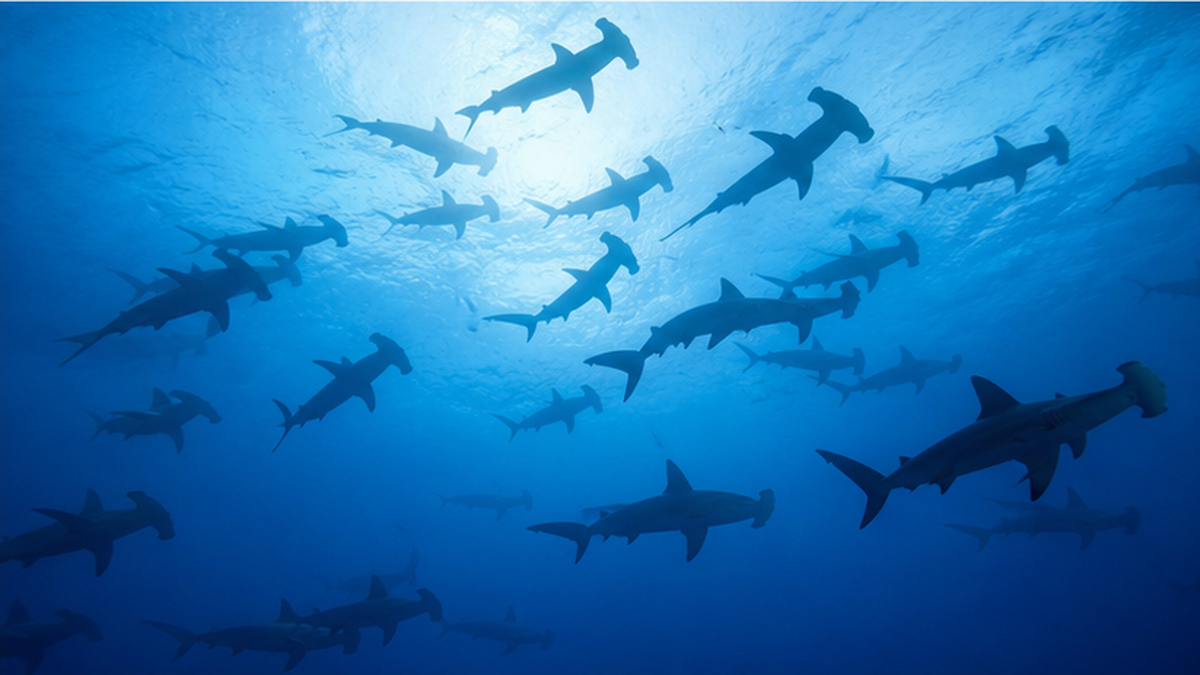
What Happens to the Ocean When Apex Predators Vanish: Trophic Cascades
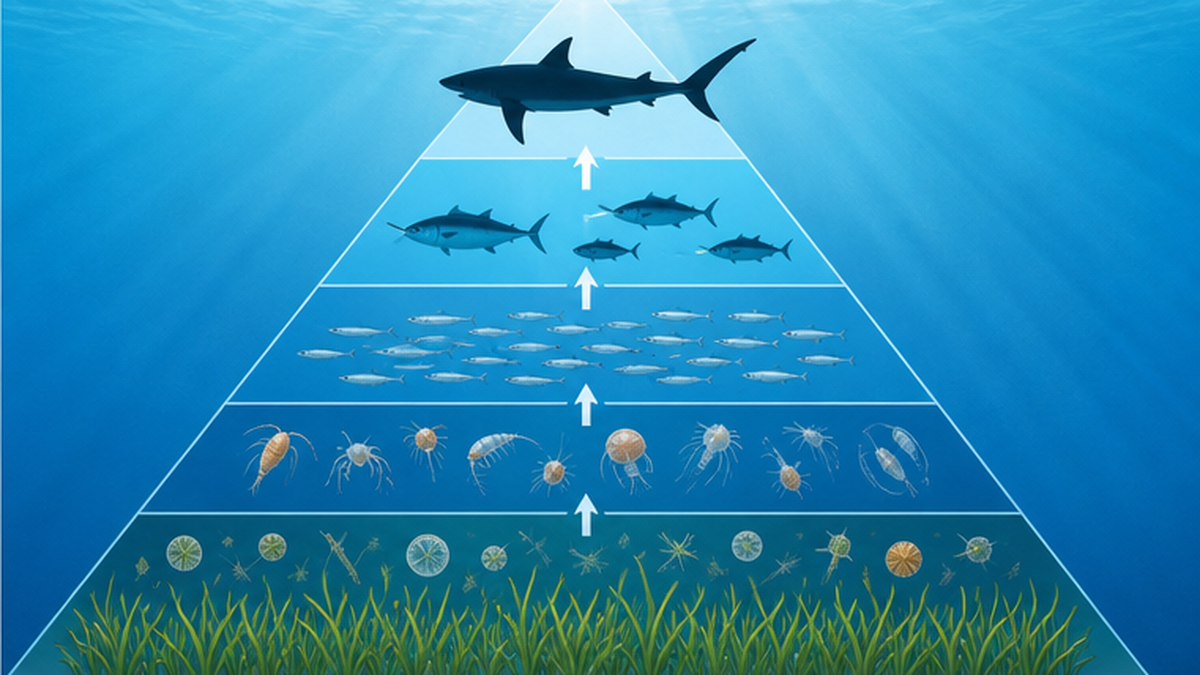
A Chain Reaction from the Top of the Food Web
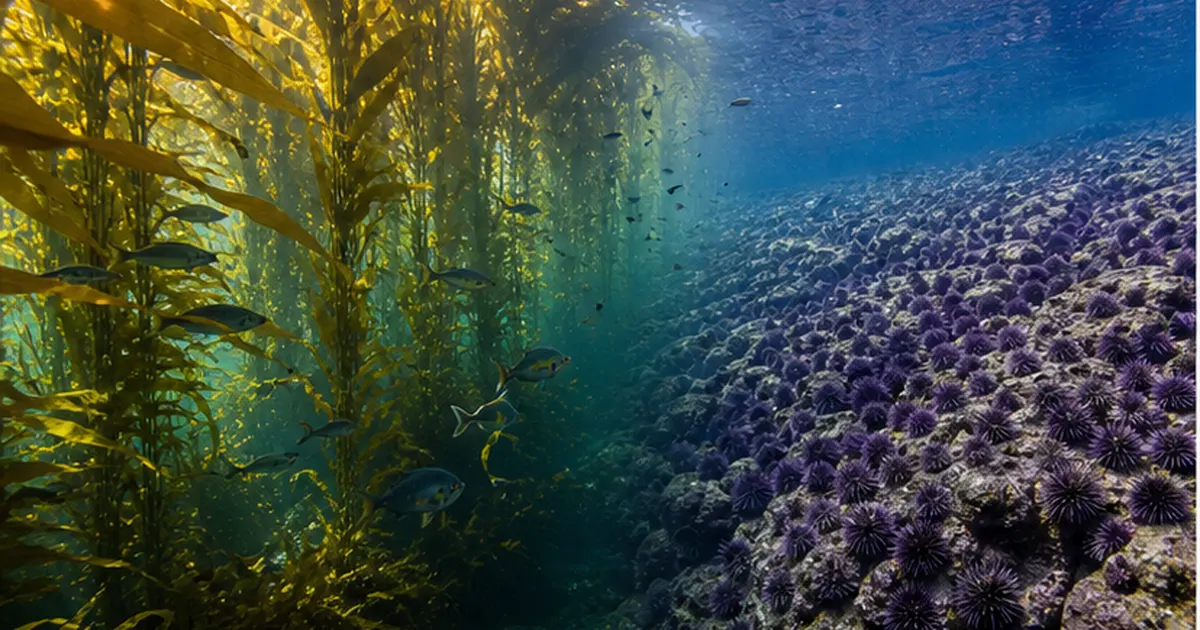
Remove a top predator from an ecosystem and the effects propagate down the food chain, from prey to the prey's prey. This is called a trophic cascade. A famous example is the North Pacific chain in which sea otter declines let urchins explode and mow down kelp forests (see "Why the Sea Otter Is a Keystone Species"). Sharks likewise hold the balance of marine ecosystems from the top of the food chain.
The Mere Presence of Tiger Sharks Protects Seagrass: the Shark Bay Studies
The signature research on sharks' ecological role comes from Shark Bay, Western Australia. Long-term studies there show that in seasons when tiger sharks are abundant, dugongs and green turtles graze cautiously at the edges of seagrass banks, where escape is easier, and avoid stripping the interior. In other words, before any shark actually eats anything, the mere presence of sharks disciplines the behavior of grazers and prevents overgrazing of the seagrass meadows. Researchers call this the "ecology of fear."
Seagrass meadows are nurseries and spawning grounds for fish — and they are also the mainstay of "blue carbon" ecosystems that lock atmospheric carbon into the seabed. If shark declines unleash runaway grazing, meadow loss could even release that stored carbon. This is why shark conservation is not unrelated to climate action.
There are also reports suggesting ripple effects on fisheries. Along the U.S. Atlantic coast, a 2007 paper in Science reported that where large sharks had declined, the mid-sized rays they preyed on increased, and heavy predation by those rays may have damaged scallop and other shellfish fisheries. Later studies have disputed this causal chain, and the scientific debate continues. Even so, it drew wide attention as a case study of how losing apex predators can touch fisheries that seem to have nothing to do with sharks.
On Coral Reefs, the Effects Are More Complex
At the same time, science must be reported without exaggeration. In ecosystems with complex, diverse food webs such as coral reefs, evidence for cascades driven by shark loss is mixed, and reviews such as a 2021 paper in Ecology note that effects vary by place and species. But "we do not yet fully understand the impact" does not mean "it is safe to lose them." Many researchers warn that the greatest risk is losing an apex predator woven into marine ecosystems over 400 million years before we finish understanding its role.

Where Do the Fins Go? The International Trade Centered on Hong Kong
About Half the World's Trade Passes Through Hong Kong
The hub of the international trade in dried shark fin is Hong Kong. About half of the global fin trade is estimated to pass through the city, and between 2000 and 2011 Hong Kong imported an average of roughly 10,000 tonnes of fins a year (about 10,490 tonnes). Its dried-seafood streets still display fins of every size, and shark fin soup has long marked the prestige of wedding banquets and formal dinners.
Behind the special status of shark fin in the Chinese-speaking world lies a long culinary history. Shark fin already appears in Ming-dynasty texts, and in the Qing dynasty it was counted among the "eight treasures" of imperial cuisine. The fin itself has almost no taste; what is prized is the distinctive collagen texture and the painstaking preparation that embodies the sincerity of hospitality. Because serving shark fin soup at weddings and business banquets expressed respect and status, demand is bound up not just with taste but deeply with culture and face — one reason regulation alone cannot extinguish it.
Japan is no bystander to this trade. Much of the high-quality dried shark fin produced in places like Kesennuma is exported to Hong Kong and mainland China, making Japan one of the world's fin suppliers. That is precisely why complying with CITES export permits and building supply chains with documented origins are live issues for Japan's own fishing industry.
Imports Have More Than Halved in a Decade
Hong Kong's fin imports fell by half, from about 10,210 tonnes in 2007 to about 4,979 tonnes in 2017. One turning point came in 2013, when the Chinese government banned shark fin from official banquets as part of its austerity campaign. On top of that, growing environmental awareness — especially among younger generations — cooled demand, and many of the world's airlines and container lines announced they would no longer carry shark fin, further shrinking the trade.
| Period / year | Hong Kong shark fin imports |
|---|---|
| 2000–2011 (annual average) | ~10,490 tonnes |
| 2007 | ~10,210 tonnes |
| 2017 | ~4,979 tonnes |
Smaller but Not Gone: Fins of Threatened Species Still on Sale
The trade has shrunk, but it has not disappeared. DNA surveys of fins sold in Hong Kong's retail markets have repeatedly detected regulated species, including threatened ones, and customs authorities continue to make large smuggling seizures. As long as demand remains, trade will keep trying to slip through the net — which is why both the enforcement of trade rules described below and consumers' own choices matter.

International Regulation and Conservation: How CITES Redrew the Map
CITES CoP19: About 90% of the Fin Trade Now Regulated
In November 2022, at the 19th Conference of the Parties (CoP19) to CITES in Panama, a decision changed the history of shark conservation. Fifty-four species of requiem sharks — the mainstay of the fin trade — and the entire hammerhead family were added to Appendix II. An Appendix II listing is not a total trade ban: it means exports require a government permit certifying the trade will not threaten the species' survival. Even so, the decision expanded the share of fin-trade species under regulation from about 25% to about 90% at a stroke.
Listing sharks under CITES took two decades of groundwork. The first to be listed were the giant, docile plankton-feeders: the whale shark and basking shark at the 2002 conference, followed by the great white in 2004. Coverage then expanded to commercially valuable species such as the oceanic whitetip and hammerheads in 2013, before the sweeping extension to the whole requiem shark family at CoP19 in 2022. It is the story of a long-standing objection — that commercially fished species do not belong in the convention — crumbling in the face of sharks' dire stock status.
Visit the official siteCITES Official WebsiteThe convention regulating international trade in endangered wild fauna and flora. Trade in species listed in its Appendices requires export permits.🔗 cites.orgThe Spread of the "Fins Naturally Attached" Principle
Laws banning finning itself have also spread worldwide over the past two decades. The approach many countries have adopted is the "fins naturally attached" principle: landing detached fins is prohibited, and sharks must be landed with their fins still on the body. Because the correspondence between fins and carcass is visible at a glance, the rule leaves few loopholes for monitoring.
- United States: after the Shark Finning Prohibition Act of 2000, the Shark Conservation Act of 2010 required fins naturally attached for essentially all landings
- EU: banned finning in 2003, then removed the exemption permits with Regulation (EU) No 605/2013, enforcing fins naturally attached for all vessels
- Regional fisheries management organizations: tuna RFMOs and others have adopted finning rules such as fin-to-carcass weight ratios and fins-attached landings
- Bans on sale itself: many U.S. states and Canada go further, banning the trade and sale of shark fins outright
The Limits of Regulation — and the Next Move
Here it is worth recalling the conclusion of the 2024 Science paper discussed above. Finning regulations spread across the globe, yet total shark deaths did not fall. In other words, regulating how fins are cut does not change the structure that overfishes sharks. What the study found effective were bans on catching or retaining particular species, science-based catch quotas, and protected waters where shark fishing is prohibited (shark sanctuaries). Making CITES listings more than paper promises will also hinge on exporting countries' stock assessments and how they run their permit systems.
Measures Proven to Actually Protect Sharks
- Bans on catching or retaining threatened species on board (mandatory release)
- Catch quotas grounded in scientific stock assessment
- Protected waters and sanctuaries where shark fishing is prohibited
- Enforcement of trade rules and smuggling crackdowns using tools such as DNA testing
- Reducing bycatch by switching to gear and methods that catch fewer sharks
Japan and Sharks: Kesennuma's Culture of "Full Utilization"
Kesennuma, Japan's Top Shark-Landing Port
When people in Japan hear "shark fin," many think of Kesennuma in Miyagi Prefecture. Kesennuma boasts Japan's largest shark landings: about 80% of the sharks landed there are blue sharks and about 15% are salmon sharks. As a base for tuna longlining, the town developed processing techniques to use every part of the sharks caught on the lines, and Kesennuma shark fin came to be rated among the finest in the world.
Fins, Meat, Skin, Cartilage — Nothing Is Wasted
- Fins: dried shark fin for soup and braised whole-fin dishes
- Meat: raw material for hanpen, kamaboko, and other fish-paste products; also fried or simmered in home cooking
- Skin: leather goods such as bags and wallets with a distinctive texture
- Cartilage and backbone: raw material for health foods such as chondroitin and collagen
- Everything else: used as fishmeal, fertilizer, and more
This is the Japanese tradition known as "full utilization." Its essential difference from finning is that the whole shark is landed at port, recorded, and used without waste. Because data remain on which species were landed in what tonnage, the foundation for resource management holds. A fishery that discards the body for its fins and a fishery that uses the entire animal are opposite undertakings, even though both "make shark fin."
Kesennuma's shark industry was devastated by the Great East Japan Earthquake of 2011. The tsunami destroyed much of the fish market and processing plants, and fin production was briefly cut off. Yet the processors rebuilt their factories and revived fin production along with shark landings. Today Kesennuma promotes shark fin as a point of local pride while also working to inform consumers about shark stock status and the reality of full utilization. The recovery of the "shark town" has been the recovery of its fishing industry itself.
The town's food culture even has a local dish that epitomizes full utilization. The heart of the salmon shark, called "moka no hoshi" (star of the moka shark), is a local delicacy eaten as sashimi. Mild in flavor and served with sesame oil and salt or ginger soy sauce, this dish embodies the town's ethos of honoring every last part of each shark.
Japan's Management Framework and International Rules
In response to the FAO's International Plan of Action (IPOA-Sharks), Japan adopted its National Plan of Action for the Conservation and Management of Sharks in 2001 (most recently revised in December 2023). Its pillars are: no finning, full utilization of captured sharks, and collection and reporting of catch data by species. Japan also complies with shark conservation measures set by tuna RFMOs and with the CITES import-export permit system.
Read the plan (PDF)Japan's National Plan of Action for the Conservation and Management of Sharks (Fisheries Agency)Japan's plan adopted in 2001 under the FAO International Plan of Action (IPOA-Sharks). It prohibits finning and mandates full utilization and catch data collection (revised December 2023).🔗 jfa.maff.go.jpFinning and Full Utilization Are Different Things
Shark fin as an ingredient is not the problem in itself; how the fins are taken and whether the fishery is managed is the heart of the issue. Fins from finning — where the body is dumped at sea — and fins from managed fisheries with full utilization have entirely different backstories, even though both are shark fin. Checking origin and provenance is the first step consumers can take.

What We Can Do: Knowing Is the First Step
Choices We Can Make as Consumers
The shark problem is not only about people who eat shark fin soup. Shark-derived ingredients appear in surprisingly familiar products: cartilage supplements, the moisturizer squalane made from liver oil, leather goods. You need not aim for perfection with every purchase, but pausing to ask "where did this come from?" gradually reshapes what the market demands.
- Check the origin and provenance of shark fin products (are they from managed, full-utilization fisheries?)
- Look at ingredient labels on foods and cosmetics containing shark-derived components (shark cartilage, squalane, etc.)
- Make a habit of choosing seafood carrying sustainable-fisheries certification labels
- For banquets and ceremonies, plant-based "shark fin style" alternatives are increasingly available
Beyond the "Man-Eater" Image
Thanks partly to the movies, sharks carry the image of man-eating monsters. Yet shark attacks kill roughly ten people worldwide in a typical year — while humans kill about 80 million sharks a year. The numbers say plainly which side is the threat to which. Encountering real sharks at aquariums and museums, and learning about their 400-million-year evolutionary history and ecological role, is a solid first step toward conservation.
The Value of a Living Shark: the Tourism Alternative
Sharks have value beyond being caught and sold. At dive destinations around the world, swimming-with-sharks tours draw crowds and sustain local economies. In 2009 the Pacific nation of Palau became the first country to declare its entire waters a shark sanctuary — informed by calculations that the lifetime tourism revenue a single shark generates far outstrips, by orders of magnitude, the one-time price of catching it. A living shark is a "swimming tourism asset" that pays a region over and over — an approach spreading worldwide that refuses to pit conservation against the economy.
Shark finning can feel like something happening in distant seas, yet it connects to our lives through a bowl of soup, a supplement capsule, a wallet. Behind the figure of 80 million sharks a year stand 400 million years of evolution and the marine ecosystems that have turned around this apex predator. Learn the facts, check origins when you choose, and tell the people around you — those small accumulations become the force that changes the future of sharks and the sea.
Actions You Can Start Today
- When choosing shark fin or shark-derived products, check their origin and provenance
- Learn the reality of sharks and their ecological role, and share it with family and friends
- Follow research institutions and NGOs working on shark research and conservation
- Visit shark exhibits and educational programs at aquariums and science museums
Key Takeaways
- Shark finning cuts off the fins and dumps the body at sea — internationally condemned on both animal-welfare and resource-management grounds
- About 80 million sharks die in fisheries each year; deaths have not fallen even as finning regulations grew roughly tenfold (Science, 2024)
- 37% of shark and ray species are threatened; oceanic sharks and rays have declined 71% since 1970
- Losing apex predators can cascade through ecosystems, reaching seagrass meadows and blue carbon
- CITES CoP19 in 2022 put about 90% of fin-trade species under export permits; catch regulation and enforcement are now the key
- Kesennuma's "full utilization" is the opposite of finning; checking origins is the consumer's first step

References and sources
- Fisheries Agency of Japan – National Plan of Action for the Conservation and Management of Sharks (adopted 2001, revised December 2023)
- CITES Secretariat – CoP19 Proposal 37: listing requiem sharks in Appendix II
- NOAA (U.S. National Oceanic and Atmospheric Administration) – Shark Management Laws: the fins-naturally-attached principle under the Shark Conservation Act of 2010
- EUR-Lex (EU law database) – Regulation (EU) No 605/2013: enforcing the finning ban via fins naturally attached
- Worm, B. et al. (2024) Science – Global shark fishing mortality still rising despite widespread regulatory change: the ~80 million annual estimate
- Pacoureau, N. et al. (2021) Nature – Half a century of global decline in oceanic sharks and rays: the 71% decline
- Dulvy, N.K. et al. (2021) Current Biology / IUCN Red List – Reassessment of 1,199 chondrichthyan species: 37% threatened
- Worm, B. et al. (2013) Marine Policy – Global catches, exploitation rates, and rebuilding options for sharks: the ~100 million annual estimate
- TRAFFIC – Shark product trade in Hong Kong and mainland China: Hong Kong import statistics
- Burkholder, D.A. et al. (2013) Journal of Animal Ecology – Tiger sharks and trophic cascades in the Shark Bay seagrass ecosystem
* Listed in order of reliability: government/academic institutions > peer-reviewed papers > specialized organizations > reliable media