⚡ In short
Ballast water — the seawater ships carry as a stabilizing weight — moves around the world at a scale of billions of tons a year, carrying an estimated 7,000 species along with it. This article explains devastating cases such as zebra mussels in the Great Lakes and the cholera outbreak in South America, Japan's role in the problem, and the Ballast Water Management Convention that made treatment systems mandatory.
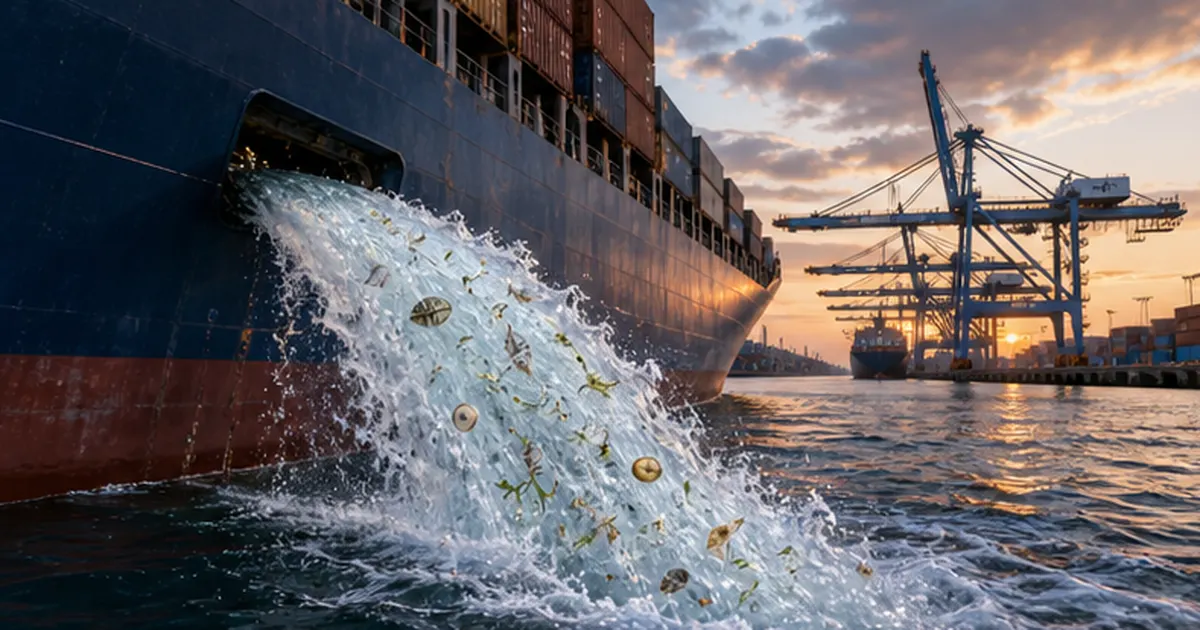
When a cargo ship or tanker unloads at port, the vessel becomes too light and unstable. To prevent this, ships pump seawater into tanks in their hulls — this is ballast water. It is essential to the shipping industry that carries nearly 90% of world trade, yet this 'seawater counterweight' contains countless organisms sucked in along with the harbor water: plankton, larvae of shellfish and fish, seaweed spores, and even bacteria.
If the port where the water is loaded differs from the port where it is discharged, these organisms are 'relocated' to seas thousands of kilometers away. According to materials from the International Maritime Organization (IMO), about 7,000 species are carried in ballast water, and cases of transported species multiplying explosively in their destination seas — destroying ecosystems and inflicting serious damage on fisheries and infrastructure — have been reported around the world.
This article carefully explains how ballast water carries invasive species, damage cases around the world, Japan's deep involvement, and the Ballast Water Management Convention (BWM Convention) that entered into force in 2017 along with the mandatory treatment systems — the full story of the 'invisible passengers' that ships carry.
What you will learn in this article
- What ballast water is and why ships need seawater as a counterweight
- How and at what scale ballast water carries invasive species and pathogens around the world
- Serious damage cases worldwide, from zebra mussels in the Great Lakes to the cholera outbreak in South America
- The fact that Japan both receives invasive species and sends them out to the world
- The Ballast Water Management (BWM) Convention, the D-2 standard, and how treatment systems work — and their remaining challenges
What Is Ballast Water? The 'Seawater Counterweight' That Keeps Ships Stable
Ballast is a weight used to stabilize a ship. In the age of sailing ships, stones and gravel were used, but modern steel ships use seawater, which can be freely loaded and unloaded with pumps. This is ballast water. It is stored in dedicated ballast tanks built into the bottom and sides of the hull; large cargo ships can carry tens of thousands of tons of seawater, and very large tankers sometimes more than 100,000 tons.
Stone and gravel ballast took enormous labor to load and unload, but as steel hulls and pumping technology spread in the late 19th century, exchanging seawater became the norm. Interestingly, even in the era of stone ballast, plant seeds and small animals hidden among the stones were carried to foreign lands. The movement of living things with ballast is an old yet ever-new problem that has accompanied the entire history of shipping.
Why Do Ships Carry Seawater?
A fully loaded ship sits deep in the water under the weight of its cargo, keeping the propeller and rudder well submerged for stable sailing. But once the cargo is unloaded, the hull rides too high — the propeller can spin uselessly at the surface, and strong winds can push the vessel dangerously toward capsizing. The solution: take on seawater at the port where cargo is unloaded, and discharge it at the next port where cargo is loaded. This is the basic cycle of ballast water use.
For example, a ship carrying iron ore from Australia to Japan unloads the ore in Japan, pumps Japanese harbor water into its ballast tanks, sails back to Australia, and discharges the Japanese seawater just before loading ore again. In other words, seawater from a Japanese port — organisms and all — is released into Australian waters.
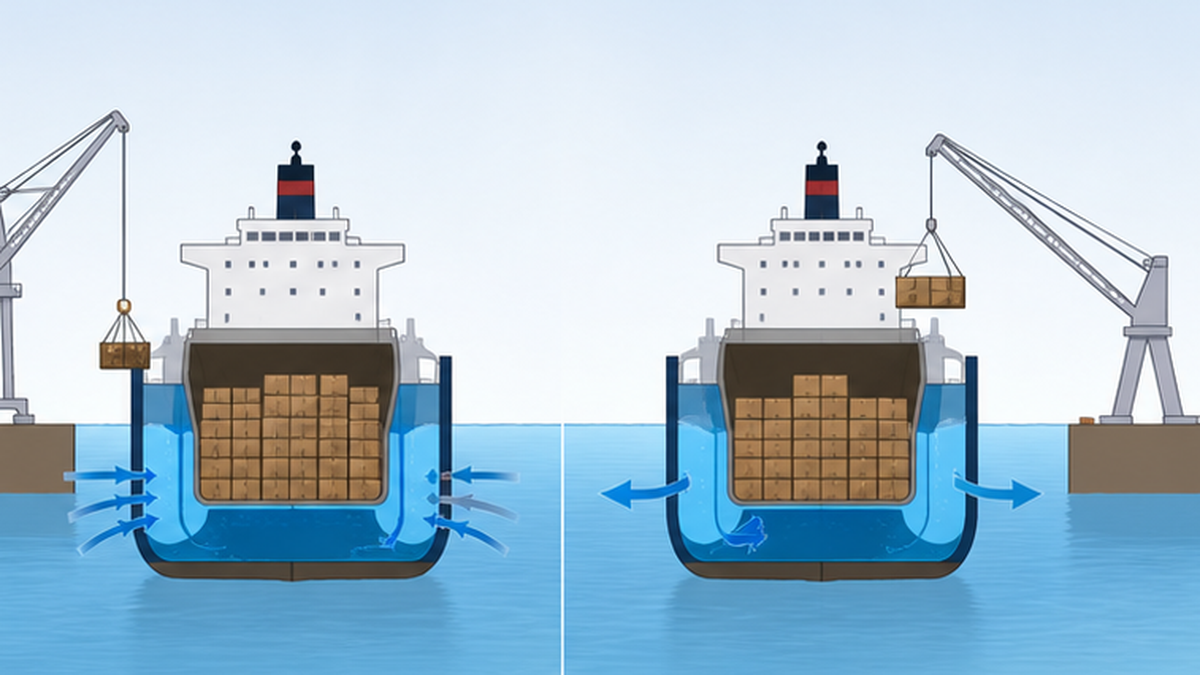
How Much Water Is Moving Around the World?
Estimates vary, but the world's shipping industry moves 3 to 12 billion tons of ballast water every year — billions of tons even by conservative estimates. Lake Biwa, Japan's largest lake, holds about 27.5 billion tons of water; every year, seawater equivalent to roughly one-tenth to nearly half of that volume is carried from port to port on a planetary scale.
Behind this lies the expansion of world trade. Ships carry the great majority of internationally traded cargo, with container ships, bulk carriers, and tankers crossing the oceans day and night. As ships have become larger and faster and voyages shorter, the odds that organisms arrive at their destination alive have risen. Creatures that once died in the tanks during long voyages now reach foreign ports in good health aboard today's faster vessels.
Key Points
- Ballast water is the 'seawater counterweight' essential for stabilizing an empty ship
- It is loaded at the unloading port and discharged at the loading port — seawater moves from port to port
- The volume reaches billions of tons a year: a vast 'water transport' operating behind world trade
The Ocean's Moving Service: How Ballast Water Carries Living Things
Loading ballast water means pumping up harbor seawater in bulk. Harbors are nutrient-rich and dense with life, so enormous numbers of organisms are sucked in with the water. According to IMO materials, about 7,000 species are being carried in the world's ballast tanks on any given day — a list that spans bacteria and viruses, plankton, and the larvae of shellfish, crabs, and fish.
What Kinds of Organisms Get Sucked In?
- Phytoplankton and zooplankton (including cysts — dormant cells — of the toxic dinoflagellates that cause red tides)
- Drifting larvae of shellfish, barnacles, crabs, and sea stars (adults may be sessile, but larvae drift in the water)
- Small fish and juveniles, seaweed spores and fragments
- Pathogenic bacteria such as cholera bacteria, and viruses
The crucial point is that many marine organisms spend their egg and larval stages drifting in the water column. Even mussels and barnacles that cling motionless to rocks, or crabs and sea stars that walk the seafloor, drift as plankton in their larval days. If they are sucked into a ballast tank at this stage, they can survive a voyage of days to weeks even in the harsh, lightless tank.
What Happens in the Sea Where They Are Discharged?
Most organisms that survive the voyage and are discharged in a foreign port die from differences in water temperature and salinity or lack of food. But a small fraction adapt to the new environment and become established. This is where the problem begins. The receiving waters often lack the predators that eat these organisms or the competitors that keep their numbers in check, so a species inconspicuous in its home waters can multiply explosively. This is the birth of an 'invasive alien species'.
Eradicating a marine invasive species once it has settled is even harder than on land. In the sea, you can hardly set removal nets or apply chemicals. That is why border control — managing ballast water so organisms are not introduced in the first place — is regarded as the single greatest line of defense.
An often-overlooked factor is the sediment that accumulates at the bottom of the tanks. Mud and sand sucked in with the ballast water settle on the tank floor, and this sediment can harbor cysts (dormant cells) of toxic plankton and juvenile shellfish. Cysts withstand drying and darkness, and can germinate years later when conditions are right, triggering red tides — which is why the Ballast Water Management Convention regulates the management and disposal of sediments as well as the water itself.
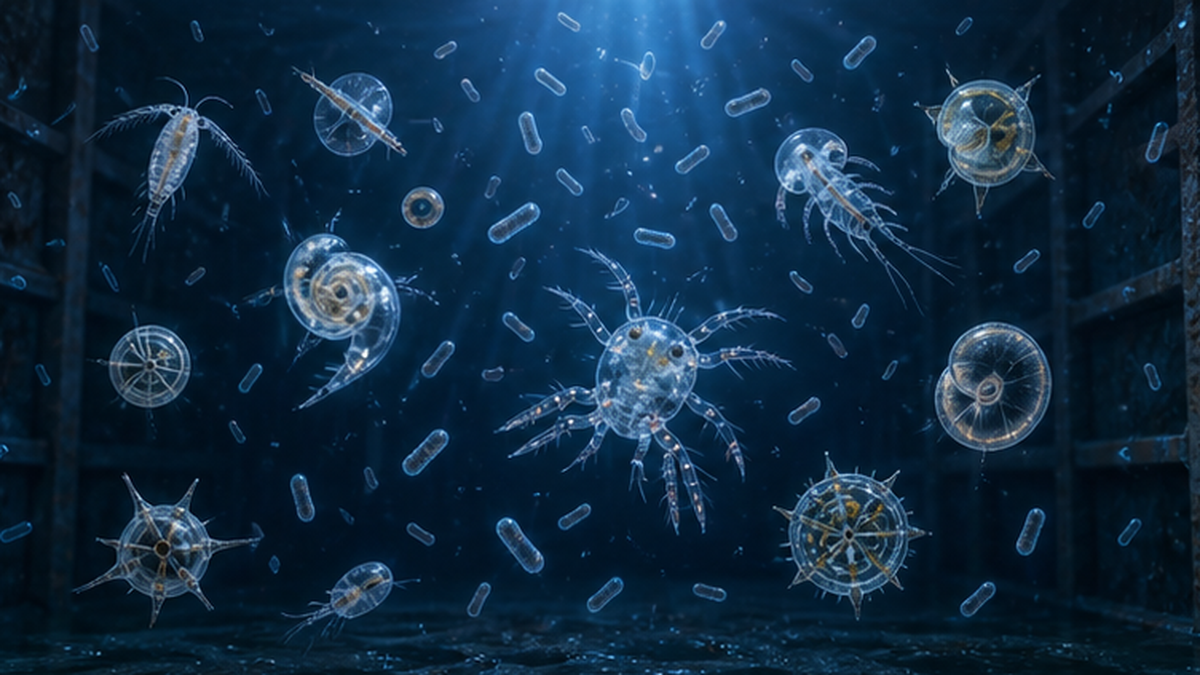
Why Larvae Are the Problem
Many marine organisms have a drifting larval stage even if their adults cannot move, and ballast water carries these larvae wholesale. What looks like plain seawater can hold countless organisms in a single ship's tanks.
Serious Damage Cases Around the World
The movement of organisms via ballast water is not merely an academic question of ecology. It has caused real, serious harm around the world: collapsed fisheries, shut-down infrastructure, and even infectious disease that cost human lives. Here are three internationally well-known cases.
Zebra Mussels in the Great Lakes — The Small Shellfish That Stopped Power Plants
In the mid-1980s, the zebra mussel, a bivalve native to the Black Sea region of Europe, invaded the North American Great Lakes. According to Japan's Ministry of the Environment, larvae mixed into ballast water are thought to have crossed the Atlantic around 1985. This thumbnail-sized mussel attaches in dense masses to any hard surface, and by around 1988 it had multiplied abnormally, clogging the water intakes of power plants and water treatment facilities and forcing shutdowns.
Beyond smothering and decimating native bivalves, the cost of cleaning and replacing intake pipes across North America has been enormous — U.S. researchers have estimated the damage and control costs at on the order of one billion dollars per year. Zebra mussels continue to spread from the Great Lakes into the Mississippi River basin, making this the emblematic case that brought the 'ballast water problem' to world attention.
The South American Cholera Outbreak — A Pathogen Carried by Ballast Water
In 1991, a major cholera outbreak began in port cities in Peru. It was the first epidemic in Latin America in about a century; the infection spread to countries across South America, and more than one million people were infected and more than 10,000 died. A leading hypothesis holds that cholera bacteria carried in ships' ballast water contaminated harbor waters and seafood, which then infected the people who ate it. Ballast water carries not only shellfish and plankton but also invisible pathogens.
The shock this case delivered to the international community was profound. The invasive species issue was elevated at a stroke from 'a problem of ecosystems and fisheries' to 'a problem of public health' — and it is said to have been one of the direct catalysts for the later Ballast Water Management Convention explicitly setting discharge limits for pathogenic bacteria: cholera bacteria, E. coli, and enterococci (the D-2 standard described below).
The Northern Pacific Seastar in Tasmania — A Predator That Crossed from Japan
In southeastern Tasmania, Australia, the northern Pacific seastar, native to the North Pacific including Japanese waters, was discovered in the 1980s. Its larvae are considered highly likely to have been carried in ballast water from ships departing Japan. With no natural predators there, it has multiplied enormously, devouring bivalves indiscriminately — dealing a blow to scallop and other shellfish fisheries and threatening the breeding of the critically endangered spotted handfish — a grave threat to the native ecosystem.
Invasions Continuing Around the World
The cases IMO cites do not end there. The European green crab, native to Europe, has invaded coastlines worldwide including North America, Australia, and South Africa, preying on native shellfish and crabs and damaging fisheries. Toxic plankton carried in ballast water and sediments have caused shellfish poisoning and mass fish kills in receiving waters. In the reverse direction, a comb jelly native to the Americas invaded the Black Sea and devoured the zooplankton, accelerating the collapse of the anchovy fishery — a case famous as an example of 'an entire marine ecosystem transformed'.
| Case | Organism / Pathogen | Origin → Invaded Area | Main Damage |
|---|---|---|---|
| Zebra mussels in the Great Lakes | Zebra mussel (bivalve) | Black Sea and Caspian Sea coasts → North American Great Lakes | Clogged water intakes, shutdowns of power and water treatment plants, collapse of native mussels |
| South American cholera outbreak (1991) | Cholera bacteria | Asia → Peruvian coast | More than 1 million infected, more than 10,000 dead |
| Seastar in Tasmania | Northern Pacific seastar | North Pacific including Japan → Tasmania | Damage to shellfish fisheries, threat to endangered species |
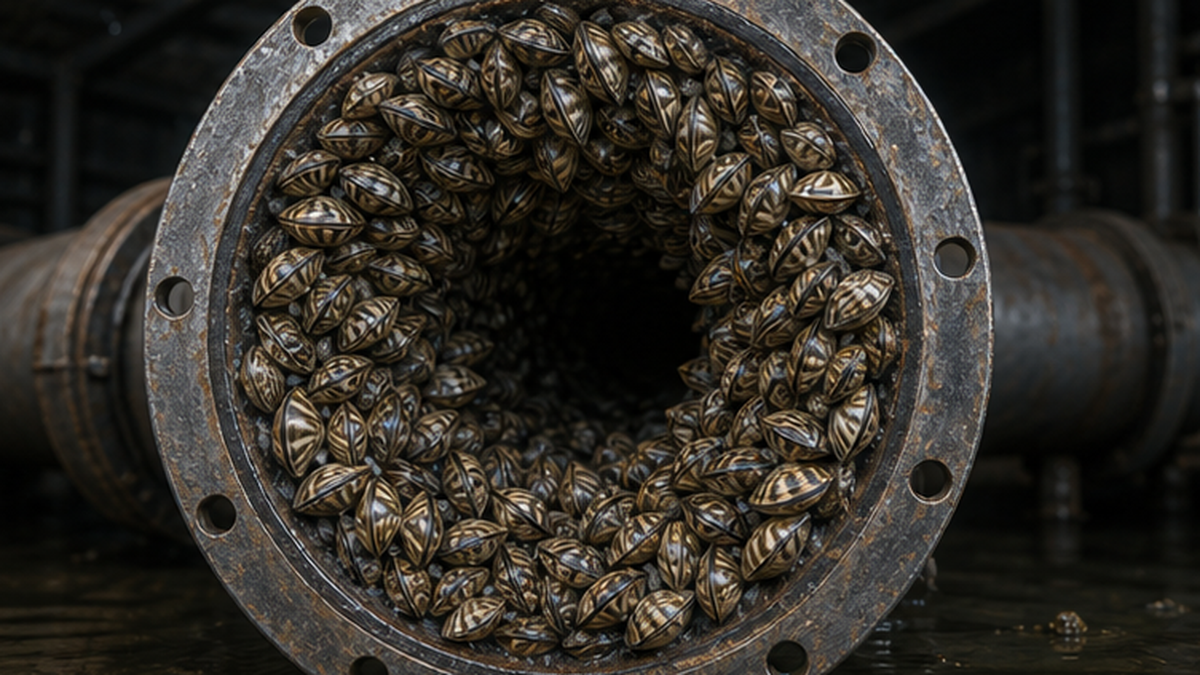
The Damage Goes Beyond 'Ecosystems'
- Infrastructure damage: clogged intakes, with control costs estimated at up to a billion dollars a year
- Fisheries damage: native shellfish and fish collapse under predation and competition, making fisheries unviable
- Health damage: the movement of pathogens such as cholera bacteria has been linked to epidemic outbreaks
Invasive Species That Came to Japan — The Receiving Side
As one of the world's great trading nations, Japan receives an enormous number of ships, and foreign seawater has long arrived as ballast water. Together with hull fouling (biofouling), many marine invasive species have already become established along Japan's coasts. Let's look at some representative examples.
The Mediterranean Mussel — From the Port of Kobe in 1932 to the Whole Country
The Mediterranean mussel, a bivalve native to the Mediterranean coasts of Europe, spread worldwide by attaching to ships' hulls and through larvae mixed into ballast water. In Japan it was first discovered at the Port of Kobe in 1932 and spread to ports and breakwaters nationwide by around the 1950s. The sight of mussels crusting quay walls is now commonplace, but the species competes with native shellfish and fouls the water intake facilities of power plants, making it the emblematic marine invasive species of Japan.
The Hard Clam — Tokyo Bay's 'Newcomer' That Became a Local Specialty
The hard clam (honbinos clam), native to the Atlantic coast of North America, was discovered in 1998 at the Makuhari artificial beach on Tokyo Bay (Chiba City). Its larvae are thought to have arrived in ballast water from North America or attached to ships' hulls. It has since been confirmed in the Keihin Canal, the Port of Chiba, off Funabashi, and even Osaka Bay, and is now thoroughly established in the muddy bottom of Tokyo Bay.
Remarkably, this clam has become a fishery resource supporting Chiba Prefecture's fishing industry. Tolerant of low oxygen, it thrives even in a Tokyo Bay where the Manila clam has sharply declined, and it is now shipped from Funabashi and elsewhere as a 'new Edomae specialty'. It exemplifies the complexity of the invasive species problem — sometimes species cause harm, and sometimes they become woven into the local economy. Note, however, that this was an exceptional case that happened to prove edible and usable; it does not justify introducing alien species.
Along Japan's coasts, many other invasive species believed to have been carried by ships have been confirmed, including the bay barnacle and relatives of the European green crab. For the full picture of marine invasive species in Japan, see our article on where marine alien species come from.
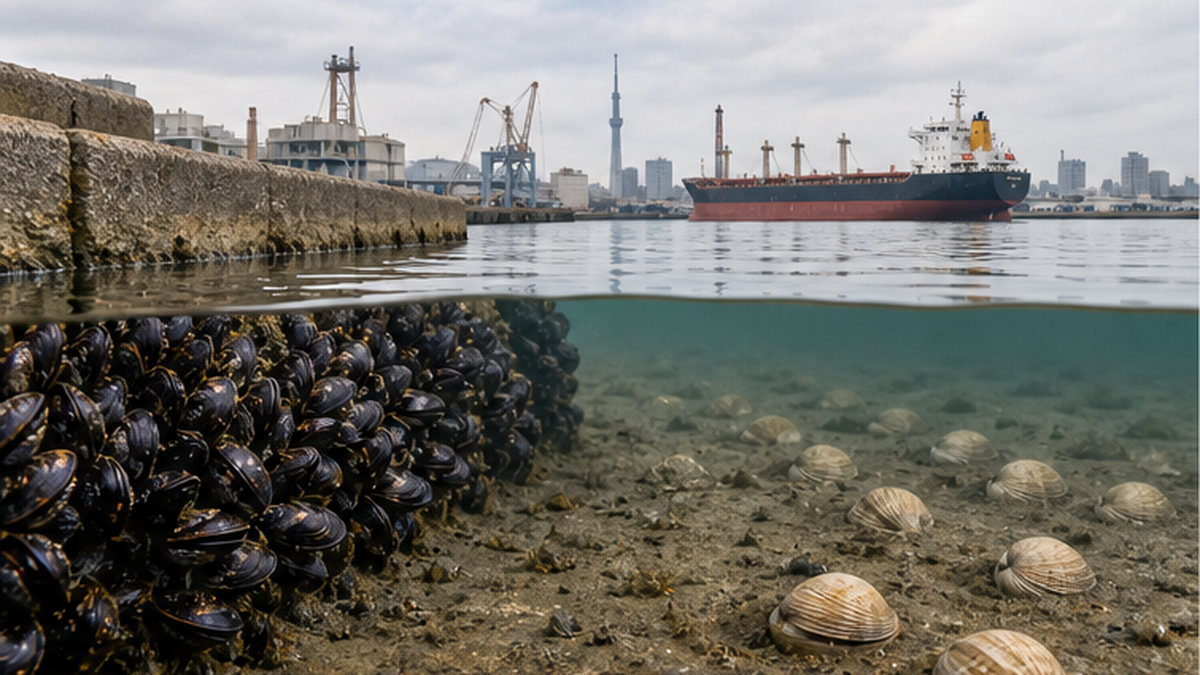
Invasive Species Are Not 'Evil Creatures'
The organisms themselves are simply living where they were carried; the root cause of the problem is human activity. Some, like the hard clam, are even used as a resource, but their ecological impacts are unpredictable — 'do not introduce them' remains the golden rule.
Japan Is Also a 'Sender' — Wakame Seaweed, Feared Around the World
Invasive species tend to evoke images of things 'coming in from abroad', but Japan has simultaneously been a sender of invasive species to the world. Ballast water loaded in Japanese ports has carried creatures of the Japanese sea across the globe. Its symbol is a staple of the Japanese dinner table: wakame seaweed.
The Wakame in Your Miso Soup Is One of the 'World's 100 Worst Invasive Alien Species'
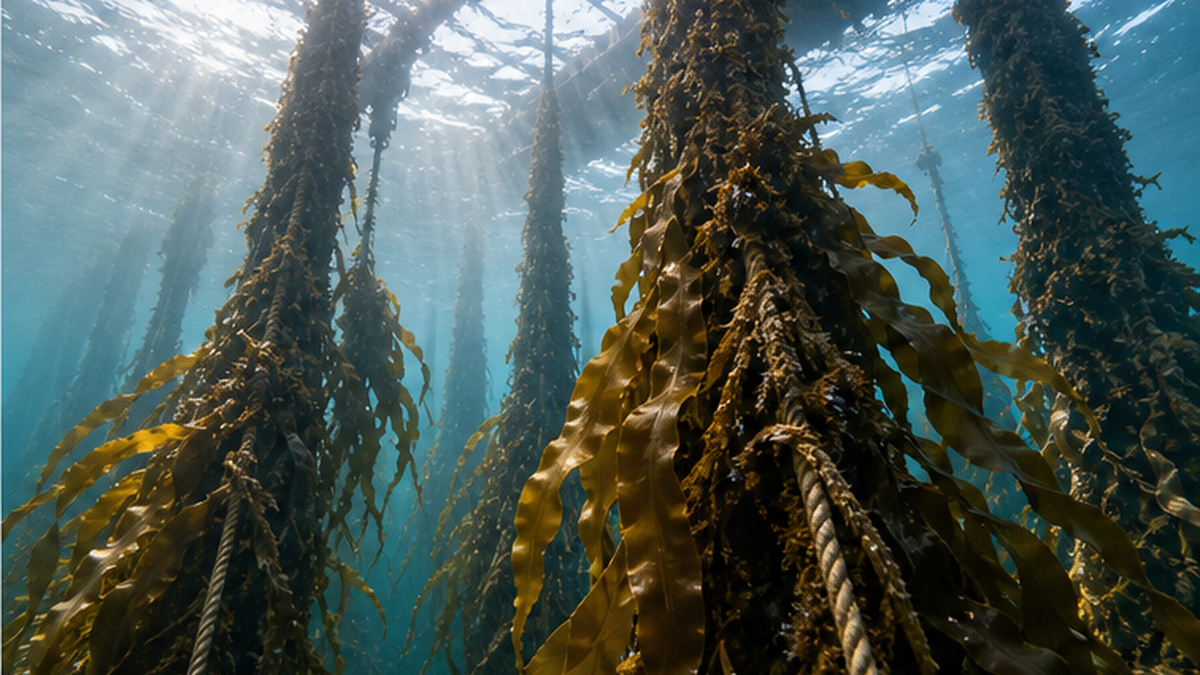
Wakame is a seaweed native to the waters around Japan and the Korean Peninsula, yet it holds the dubious honor of a place on the '100 of the World's Worst Invasive Alien Species' list compiled by the specialist group of the International Union for Conservation of Nature (IUCN). Carried as spores in ballast water, it has now been confirmed breeding in Australia, New Zealand, the coasts of France and other parts of Europe, and the Americas.
- Confirmed in Tasmania in the 1980s, then spread along Australian and New Zealand coasts
- Established on Atlantic and Mediterranean coasts of Europe
- Real damage reported overseas: it fouls the equipment of oyster, mussel, and scallop farms and hinders their growth
- It competes with native seaweed beds for light and habitat, raising concerns of ecosystem change
A 'blessing of the sea' that Japan even farms for food is, overseas, a nuisance targeted for eradication. In countries without a culture of eating wakame, there is little use for the overgrown seaweed. The very same organism can have a completely different value depending on which sea it inhabits.
The Northern Pacific Seastar Also Crossed from Japan
The northern Pacific seastar in Tasmania, introduced in the previous chapter, is also a 'made-in-Japan' invader believed to have crossed from Japanese waters. A sea star that is an ordinary presence in Japan's seas has become a major menace to shellfish fisheries in southern-hemisphere waters that lack its predators. A defining feature of the ballast water problem is that victim and culprit are not fixed roles: every shipping nation inevitably sends organisms to every other, which is precisely why a common global rule — not any single country's regulation — was needed.
Key Points
- Wakame, native to Japan, is listed among IUCN's '100 of the World's Worst Invasive Alien Species'
- The northern Pacific seastar in Tasmania is also believed to have been carried from Japanese waters
- All shipping nations 'exchange' invasive species with one another — a common global rule is indispensable
The Ballast Water Management (BWM) Convention — The Birth of a Global Rule
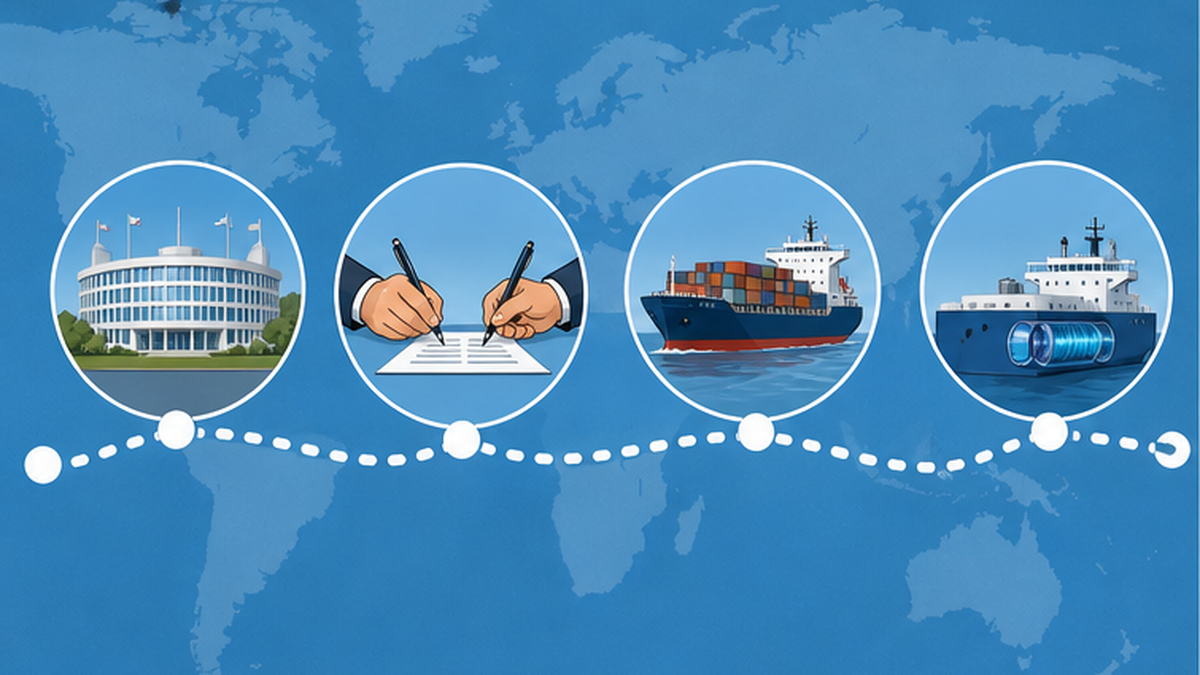
The international response to the ballast water problem has been forged at the International Maritime Organization (IMO), a specialized agency of the United Nations. After discussions dating back to the 1980s, the International Convention for the Control and Management of Ships' Ballast Water and Sediments (the Ballast Water Management Convention, or BWM Convention) was finally adopted in February 2004.
Why It Took 13 Years from Adoption to Entry into Force
For the convention to take effect, two conditions had to be met: ratification by at least 30 states whose combined merchant fleets represent at least 35% of world gross tonnage. Because installing a treatment system costs tens of millions to hundreds of millions of yen per ship, the impact on the shipping industry was heavy and ratifications came slowly. Japan ratified in 2014, after amending its domestic law (the Act on Prevention of Marine Pollution and Maritime Disaster).
The turning point came in September 2016, when Finland's ratification finally satisfied the tonnage condition, and one year later, on September 8, 2017 — thirteen years after adoption — the convention entered into force. It was a historic milestone: a common 'ballast water rule' for the world's shipping.
From the D-1 Standard to the D-2 Standard — Two Stages of Regulation
The convention sets two standards. The first stage, the D-1 standard (ballast water exchange), requires ships, in principle, to exchange at least 95% of their tank volume in open ocean at least 200 nautical miles from land and in water at least 200 meters deep. It exploits the fact that coastal organisms cannot survive in the open ocean and open-ocean organisms rarely establish near coasts — a stopgap measure. But the operation is dangerous in rough weather and cannot remove organisms completely.
The ultimate goal is therefore the D-2 standard (ballast water performance standard). It obliges ships to kill or remove organisms in the ballast water with treatment systems, keeping the concentration of organisms at discharge below strict numerical limits.
| Target | D-2 Limit |
|---|---|
| Organisms 50 μm or larger (zooplankton, etc.) | Fewer than 10 individuals per m³ |
| Organisms 10–50 μm (phytoplankton, etc.) | Fewer than 10 individuals per mL |
| Toxigenic cholera bacteria | Fewer than 1 cfu per 100 mL |
| E. coli | Fewer than 250 cfu per 100 mL |
| Intestinal enterococci | Fewer than 100 cfu per 100 mL |
September 2024 — Treatment Systems on Every Applicable Ship
For existing ships, installation was phased in at each vessel's periodic survey (the IOPP certificate renewal survey), on a schedule under which all applicable ships had to carry treatment systems and meet the D-2 standard by September 8, 2024. For ships in international service, the era has arrived in which, without a treatment system, the world's ports are effectively closed to them.
Japan's Response — Domestic Law and Inspection Systems
In step with ratification, Japan amended the Act on Prevention of Marine Pollution and Maritime Disaster, establishing the obligation for Japanese-flagged ships to install ballast water treatment equipment and a framework for inspecting foreign ships. Treatment systems are installed after approval and survey by the Ministry of Land, Infrastructure, Transport and Tourism and classification societies such as ClassNK, and ships sail with certificates attesting compliance with the convention. For Japan — a major shipping nation and also a leading shipbuilding and marine equipment country — the convention is both a regulation and an opportunity to contribute to the world through environmental technology.
Milestones of the BWM Convention
- February 2004: The Ballast Water Management Convention is adopted at IMO
- 2014: Japan ratifies the convention (implemented domestically via the marine pollution prevention law)
- September 2016: Finland's ratification fulfills the entry-into-force conditions (30 states, 35% of tonnage)
- September 8, 2017: The convention enters into force — international ballast water management becomes binding
- September 8, 2024: Deadline for all applicable ships to install treatment systems (D-2 standard)
How Do Ballast Water Treatment Systems Kill Organisms?
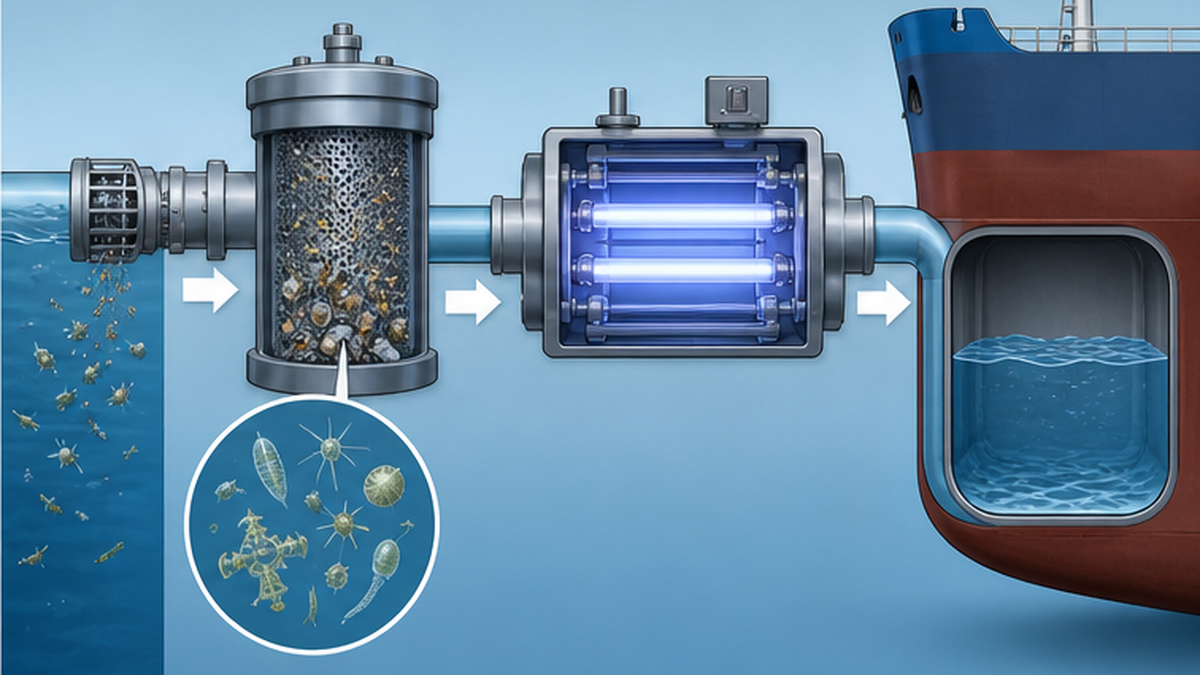
To meet the D-2 standard, ships carry ballast water treatment systems (ballast water management systems). Because tens of thousands of tons of seawater must be processed at high speed to match the ship's schedule, manufacturers around the world have developed a range of methods, and type-approved systems are now in practical use. The mainstream design is a two-stage combination of 'filter plus disinfection'.
Stage 1: Filtering Out the Larger Organisms
As ballast water is taken on board, it first passes through a fine filter (around 50 μm) that physically removes relatively large organisms such as zooplankton and larvae, along with mud and sand. The filtered-out organisms are returned to the sea on the spot — the harbor they came from — minimizing impact on the ecosystem.
Stage 2: Killing the Microscopic Organisms with UV or Chlorine
For the phytoplankton and bacteria that slip through the filter, two disinfection methods dominate. The ultraviolet (UV) method passes seawater between powerful UV lamps, damaging the organisms' DNA so they cannot reproduce. Because no chemicals are used, its environmental burden at discharge is small. The other is the electrolysis (chlorination) method, which electrolyzes seawater to generate disinfecting agents such as hypochlorous acid that kill the organisms in the tank. It handles large volumes well, but requires a neutralization step for residual chlorine before discharge.
| Method | Mechanism | Characteristics |
|---|---|---|
| Filter | Physical filtration through roughly 50 μm mesh | Removes larger organisms and mud; used as the first stage in most systems |
| Ultraviolet (UV) | UV light damages DNA and blocks reproduction | Chemical-free with low environmental burden; less effective in turbid water |
| Electrolysis (chlorine) | Electrolyzing seawater generates hypochlorous acid that kills organisms | Strong for large volumes; requires neutralization before discharge |
| Chemical injection | Disinfectant is injected to kill organisms | Relatively simple equipment; requires chemical management and neutralization |
Installed Only After Rigorous Approval Testing
Not just any manufacturer's system can be installed. Under IMO's guidelines and code, only systems that have obtained 'type approval' — demonstrating in land-based and shipboard tests that they can meet the D-2 standard — are permitted on board. Methods that use chemicals (active substances) such as chlorine additionally require approval procedures by IMO's expert committee regarding environmental impact at discharge. These are demanding pieces of environmental equipment, required to perform reliably in seas of differing temperature, turbidity, and salinity around the world.
In the global market for treatment systems, Japanese marine equipment manufacturers and shipbuilding-related companies also develop and supply type-approved systems, drawing on Japan's strengths in filter and ultraviolet technology. It is a large market covering every ocean-going ship in the world — and at the same time a front line of environmental technology protecting marine ecosystems.
Treatment Does Not Mean Zero
The D-2 standard does not reduce organism discharge to 'zero'; it lowers concentrations to levels that sharply cut the risk of establishment. That is exactly why continuous correct operation of the systems — and verification through port state inspections — matters.
Remaining Challenges — A Sea the Convention Alone Cannot Protect
The entry into force of the BWM Convention and the spread of treatment systems are major steps forward for marine invasive species control. But the problem is not solved. Let's take stock of what remains.
Hull Fouling (Biofouling) Is Outside the Convention
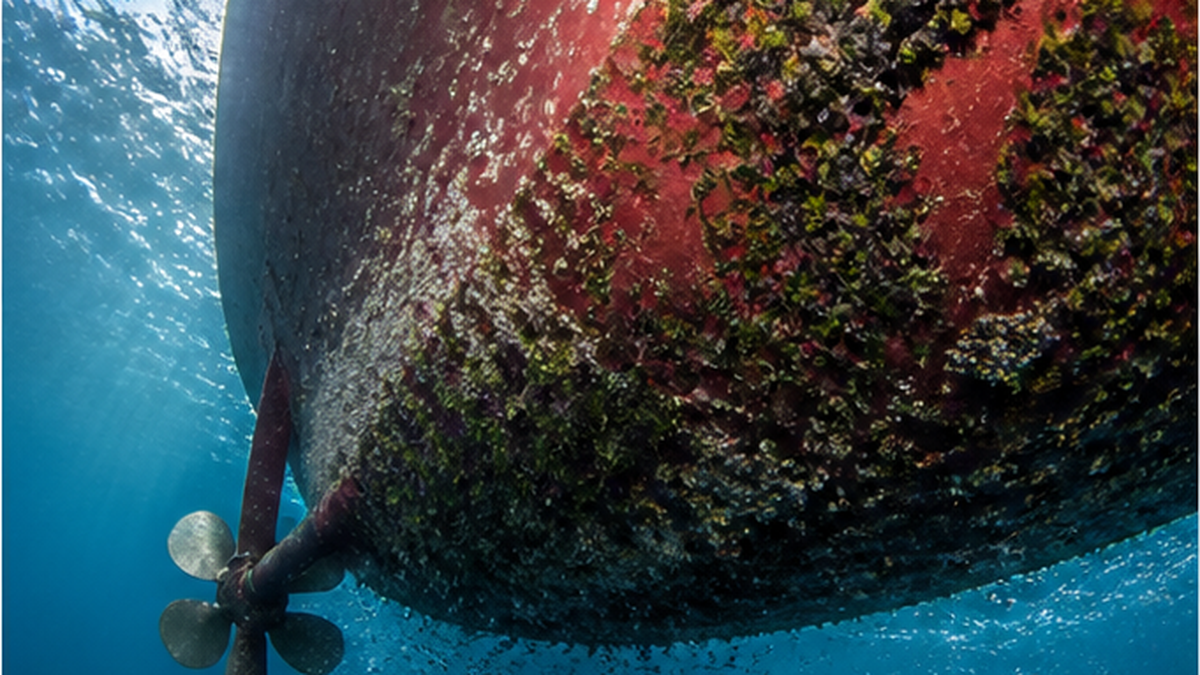
Ballast water is not the only route by which ships carry alien species. 'Biofouling' — organisms attaching directly to the hull, rudder, and propeller — is an invasion pathway as significant as ballast water. Many mussels and barnacles are thought to have spread mainly by hull fouling. Biofouling falls outside the BWM Convention; IMO has issued guidelines for fouling management to encourage countermeasures, but they are not legally binding obligations like the convention. Because fouling also directly worsens fuel efficiency (and thus increases CO2 emissions), antifouling coatings and hull-cleaning technologies are under active development.
Reliable Operation and Verification Systems
Merely installing a treatment system means nothing unless it is operated correctly and actually meets the D-2 standard. Field-specific operational issues have been pointed out: UV effectiveness drops in turbid harbors, and equipment needs freeze protection in cold seas. Building inspection regimes under port state control (PSC) and developing rapid on-site analysis technology to measure organism concentrations are the keys to making the convention truly effective.
Interactions with Climate Change
Rising sea temperatures may help alien species establish where temperature barriers once stopped them. And as Arctic sea ice retreats and use of Arctic shipping routes between Asia and Europe grows, seas that previously had little contact will be linked by shipping lanes, creating new risks of biological transfer. Invasive species control is a moving target, inseparable from climate change and the decarbonization of international shipping.
Supporting Developing Countries and International Cooperation
Ballast water measures achieve little if only ships of developed countries comply. Together with the United Nations Development Programme (UNDP) and the Global Environment Facility (GEF), IMO ran the GloBallast Programme, helping developing countries build monitoring capacity in their ports and draft legislation. The oceans are connected: if management is lax at any single port, that port becomes the new gateway for invasion. Getting every port in the world in step — unglamorous as it sounds, that is the essence of ballast water control.
Three Remaining Challenges
- Hull fouling (biofouling) still lacks a legally binding international rule
- Inspection and analysis systems to verify treatment effectiveness are only half built
- Warming seas and new shipping routes keep generating fresh invasion risks
Conclusion — Living with Invisible Passengers, and What We Can Do
The ballast water problem arises where two indispensable values collide: the shipping that sustains world trade, and the ocean's ecosystems. Since we cannot do away with ships, the answer forged over twenty years in the Ballast Water Management Convention is to minimize biological transfer through technology and international rules. In an ocean where billions of tons of seawater and some 7,000 species are in constant motion, whether we can nurture this framework into something truly effective will shape the future of marine biodiversity.
The Connection to Our Daily Lives
Ballast water may seem like a distant shipping industry matter, but it is directly linked to our consumption. Buying imported goods means ships coming from across the sea — and those ships arrive with ballast water and hull-fouling risks. We cannot stop trading, of course, but understanding the structure of the problem and supporting the companies and institutions advancing countermeasures is a roundabout yet reliable form of support.
There is hope in this story, too. The fact that an international convention grew out of the lessons of zebra mussels and cholera, and that within twenty years treatment systems reached the world's entire fleet, shows that international society can act on planet-scale environmental problems when it cooperates. Imperfect as it is, the sequence of 'noticing, making rules, and answering with technology' stands as a model applicable to other issues, from climate change to ocean plastics.
- Follow news on marine invasive species and build accurate knowledge (the species are not 'villains' — human activity is the cause)
- Do not move organisms or seawater between different waters when fishing or enjoying marine leisure (even a bucket of water can act as a tiny 'ballast tank')
- If you find an unfamiliar organism, report it to prefectural fisheries or environment departments or research institutions
- Learn about the companies working on treatment systems, antifouling technology, and other technologies that protect the sea
Surrounded by rich seas, Japan remains a party to this problem — as a receiver of invasive species, as a sender, and as a leading shipping and shipbuilding nation. To hand down the world-class marine biodiversity of Japan's seas to the next generation, let us deepen society's understanding of the 'invisible passengers' that ships carry.
Summary of This Article
- Ballast water is a seawater counterweight essential to ship stability, yet it moves around the world at billions of tons a year — organisms included
- Serious real-world damage has occurred: zebra mussel infrastructure damage, the South American cholera outbreak, the seastar in Tasmania
- Japan has received species such as the Mediterranean mussel while sending out others such as wakame
- Under the BWM Convention, in force since 2017, all applicable ships had to install treatment systems by September 2024
- Challenges remain — hull fouling, inspection regimes, interactions with warming — and public understanding and attention underpin progress
References
- International Maritime Organization (IMO) – Ballast Water Management (official explanation)
- International Maritime Organization (IMO) – Invasive Aquatic Species (case explanations)
- Ministry of Land, Infrastructure, Transport and Tourism, Japan – Cabinet decision on installation deadlines for ballast water treatment equipment on existing ships (press release)
- Ministry of the Environment, Japan – Guide to designated invasive alien species: zebra mussel and quagga mussel
- Ministry of the Environment, Japan – Current status of the Ballast Water Management Convention (council document)
- National Institute for Environmental Studies, Japan – Environmental technology explainer: ballast water treatment technology
- ClassNK (Nippon Kaiji Kyokai) – The Ballast Water Management Convention (requirements and type approval)
- Sasakawa Peace Foundation, Ocean Policy Research Institute – Ocean Newsletter: entry into force of the BWM Convention and its challenges
* Ordered by reliability: government and academic institutions > peer-reviewed papers > specialist organizations > trusted media