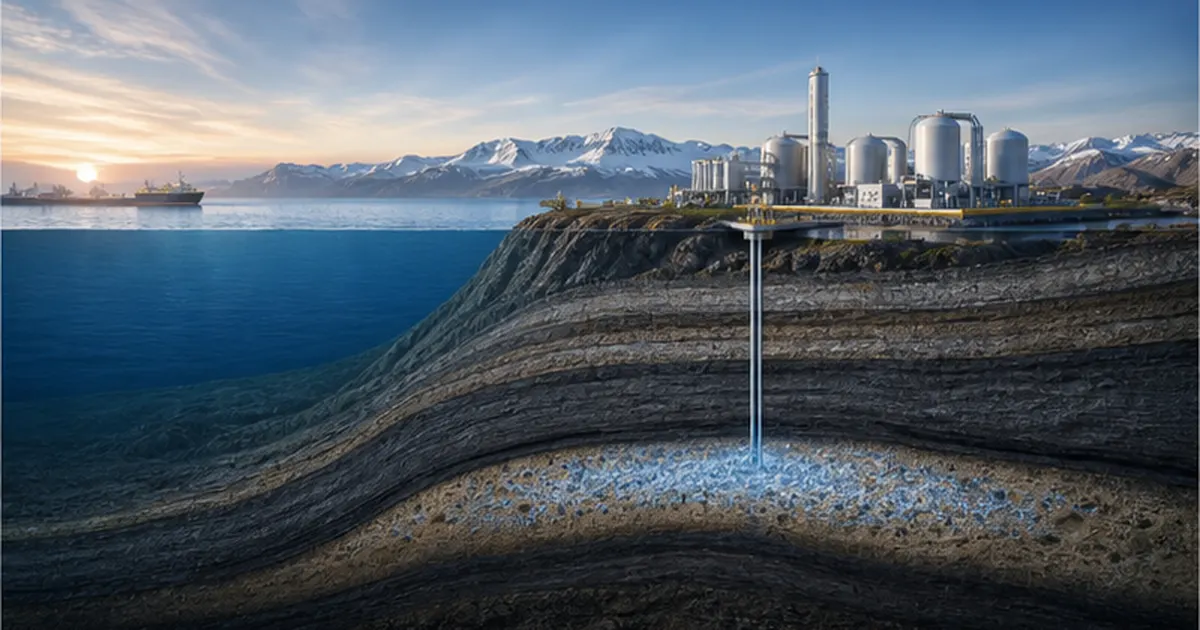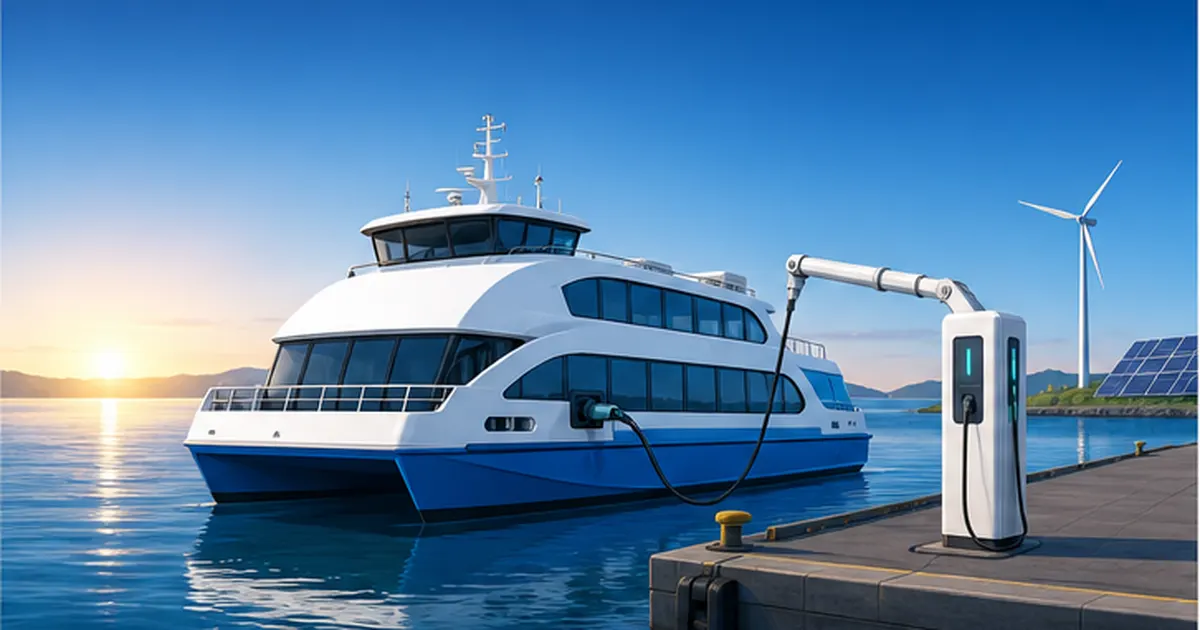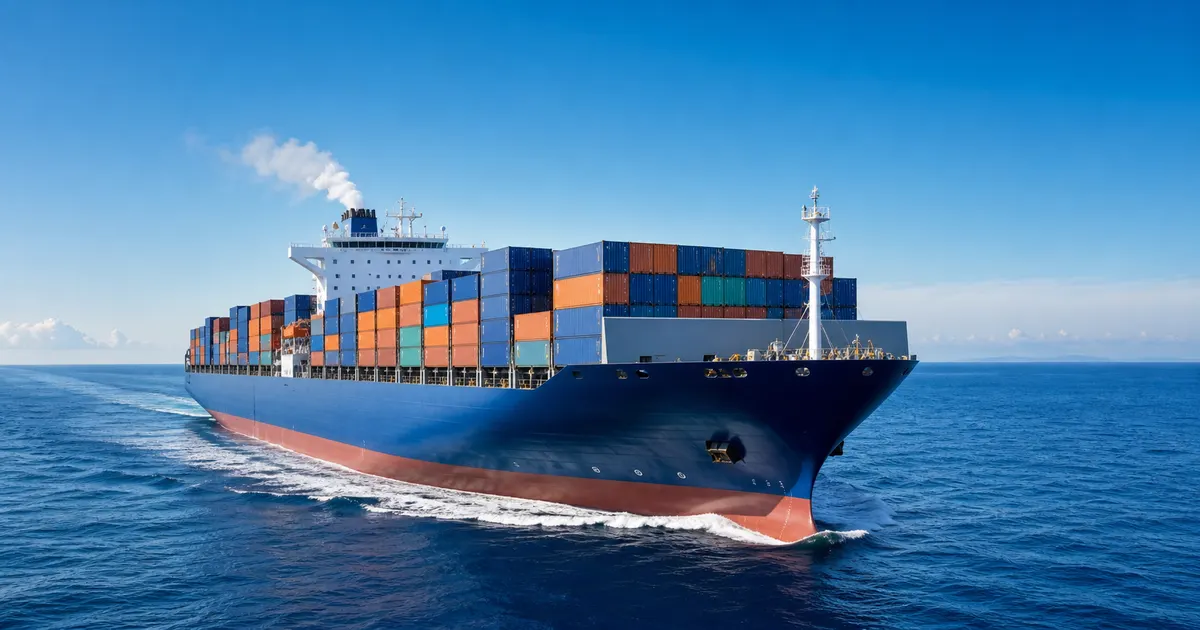
Smartphones, clothing, food, even car parts — much of what we hold in our hands crossed the ocean aboard a massive cargo ship. International shipping, which carries roughly 90% of the world's trade volume, is the "invisible artery of logistics" that underpins modern life at its foundation. And yet, this artery now stands at a major crossroads in the fight against climate change.
CO2 emitted by international shipping accounts for roughly 3% of the world's total. That's a scale comparable to the emissions of an entire country like Japan — if "shipping" were a nation, it would rank among the world's largest emitters. What's more, once a ship is built, it stays in service for 20 or 30 years, and hauling heavy cargo over long distances demands enormous amounts of energy. Because ships can't simply be electrified the way cars can, shipping has long been considered, alongside steel and aviation, a leading example of a "hard-to-abate sector."
Now, a major turning point has arrived for this difficult sector. The International Maritime Organization (IMO), the United Nations' specialized agency for shipping, has set a target of net-zero emissions around 2050, and the world's first carbon pricing scheme for shipping is beginning to take shape. The key lies in shifting to "next-generation fuels" — ammonia, which produces no CO2 when burned, and methanol, which is relatively easy to handle. This article organizes the full picture, from the regulatory framework to fuel technology to the challenges facing Japan, a leading shipbuilding nation, based on the latest primary sources.
What you'll learn in this article
- Why international shipping accounts for roughly 3% of the world's CO2 emissions and is a "hard-to-abate" industry
- The content of the 2050 net-zero target IMO agreed to in 2023, along with its interim targets for 2030 and 2040
- The "Net-Zero Framework," broadly agreed in 2025, and how the world's first shipping carbon pricing scheme works
- The strengths and weaknesses of ammonia, methanol, hydrogen, LNG, and biofuels, and their differing CO2 reduction effects
- The potential of ammonia fuel, seen as the frontrunner, and the two major barriers of toxicity and slip
- The zero-emission vessel development underway at MOL, NYK Line, K Line, and Japan's shipbuilding industry
Why Is International Shipping a "Hard-to-Decarbonize" Sector?
Let's start by understanding why decarbonizing international shipping draws so much attention, and why it's considered so difficult at the same time. Ships are actually the most "environmentally friendly" mode of transport in terms of CO2 emitted per ton of cargo carried, when compared with cars or airplanes. But because the volume of cargo they handle is on an entirely different scale, their total emissions end up being enormous.
Roughly 3% of the world's CO2 — emissions on the scale of an entire country
According to an IMO study, CO2 from international shipping reached roughly 740 million tons as of 2018 (roughly 1.07 billion tons CO2-equivalent for shipping overall), accounting for about 2.9% (roughly 3%) of the world's total CO2 emissions. That's a scale comparable to the emissions of an entire country like Germany. Demand for sea transport is expected to keep growing alongside the global economy, and without countermeasures, emissions are projected to expand even further.
The ocean itself is deeply affected by these emissions. Much of the CO2 that accumulates in the atmosphere dissolves into the sea, acidifying seawater and damaging coral and shellfish. For more detail, see our articles on ocean acidification and coral reefs and warming and its impact on fisheries. For an industry whose stage is the ocean itself, decarbonization is also a matter of protecting its own business foundation.
Why ships can't simply be "electrified"
Decarbonizing passenger cars is increasingly centered on electric vehicles (EVs), but that same idea doesn't translate to ocean-going ships. A long-distance voyage crossing the Pacific requires an enormous amount of energy, and trying to supply all of it from batteries would leave the ship crammed with batteries, with no room left for the cargo it's actually meant to carry. For ships, having liquid fuel that can store energy "small and light" is absolutely critical.
- Long distance, high output: ocean-going vessels sometimes sail for weeks without refueling, so the total energy required is on an entirely different scale
- Long service life: ships typically remain in service for 20-30 years, meaning vessels built today will still be sailing in the 2050s
- International scope: because ships operate on the high seas, no single nation's regulations can fully govern them, making common global rules essential
- Fuel infrastructure: without a supply network capable of refueling (bunkering) at ports worldwide, widespread adoption is impossible
Traditionally, heavy fuel oil has been widely used as ship fuel. While cheap and easy to handle, burning it produces not only CO2 but also air pollutants such as sulfur oxides (SOx). Sulfur content regulations have already been tightened since 2020, but how to reduce CO2 itself was long left on the back burner. It was only in the 2020s that the international community finally began tackling that homework in earnest.
Ever-growing sea transport, and a looming deadline
Alongside global population growth and economic expansion, demand for sea transport has climbed steadily over the past several decades. From iron ore, coal, and grain to crude oil and container cargo, roughly 80-90% of world trade by volume travels by ship. Although efficiency gains have improved fuel consumption per vessel, the total volume being transported keeps growing, so the industry's overall emissions have proven stubbornly difficult to reduce. Layered on top of this is the problem of ships' long service lives. Because vessels being newly built today will still be operating into the 2050s, there is an urgent reality: if the industry is serious about reaching "net zero by 2050," it must start building ships compatible with next-generation fuels right now, or it will be too late. Even though the target year feels distant, the deadline for taking action is already close at hand.

Key points from this section
- International shipping emits roughly 3% of the world's CO2, a scale comparable to an entire country
- Because of their long distances, high output, and long service lives, ships are a "hard-to-decarbonize" sector that resists electrification
- The key lies in shifting from heavy fuel oil to next-generation liquid fuels that produce no CO2
IMO's 2023 GHG Strategy: the Path to Net Zero by 2050
The rules governing international shipping are set by the International Maritime Organization (IMO), a specialized agency of the United Nations. Because ships operate on the high seas, no single country's regulations can fully govern them, making it essential to build common global targets. The historic agreement that did just that was the "2023 GHG Reduction Strategy," adopted in July 2023.
"Net zero by around 2050" spelled out for the first time
The central pillar of this strategy is that, for the first time, IMO clearly set a goal of bringing GHG emissions from international shipping to net zero by around 2050. The previous target had only called for "a 50% cut by 2050 compared with 2008 levels," but this was raised significantly to align with the Paris Agreement's 1.5°C goal. This marked the moment the world's shipping industry was given a clear final destination to aim for.
Interim targets (checkpoints) for 2030 and 2040
2050 is still a distant future. That's why the strategy also set "interim checkpoints" to measure progress along the way, using 2008 emissions as the baseline. To keep the numbers from being taken out of context, the targets are structured in two tiers — a "minimum (at least)" level and a "striving for" level.
| Milestone | Total GHG emissions reduction target (vs. 2008) | Position |
|---|---|---|
| 2030 | At least 20% reduction, striving for 30% | First checkpoint |
| 2040 | At least 70% reduction, striving for 80% | Second checkpoint |
| Around 2050 | Net zero | Final target |
Alongside this, a concrete numerical target was also set for adopting "zero or near-zero (essentially zero-emission) fuels, energy, and technologies" to make up at least 5-10% of shipping's total energy use by 2030. The aim is not simply to cut CO2, but to actively drive the adoption of next-generation fuels themselves. The strategy also includes a target of improving "carbon intensity" — CO2 emissions per unit of transport work — by at least 40% by 2030.
As a mechanism to translate these overall targets into requirements for actual ships, IMO has already introduced rules such as the "EEXI" (Energy Efficiency Existing Ship Index) and "CII" (Carbon Intensity Indicator). EEXI rates a ship's designed energy efficiency, while CII rates, on an A-to-E five-tier scale each year, how efficiently a ship actually operated — ships with poor ratings are required to submit an improvement plan. Between the "ideal" represented by the targets and the "day-to-day operational constraints" imposed by EEXI and CII, the shipping industry as a whole is being pushed, step by step, toward lower carbon emissions.

Why "net zero" rather than simply "zero"
The target is framed not as "zero" but as "net zero." This reflects the idea that whatever emissions inevitably remain will be offset through the use of next-generation fuels and other means, bringing the net balance to zero. The wording also includes phrases like "by or around 2050" and "taking into account different national circumstances," which are characteristic of a realistic agreement that leaves room for consideration of developing countries.
What is IMO?
IMO stands for the International Maritime Organization, the United Nations specialized agency that sets international rules on ship safety and the protection of the marine environment. Headquartered in London, it has around 170 member states and territories. Discussions on the marine environment mainly take place at the Marine Environment Protection Committee (MEPC).
The Net-Zero Framework, and the World's First Shipping Carbon Pricing Scheme
Setting a target alone doesn't change ships. What's needed is an actual "mechanism (regulation)" that reduces emissions in practice. That's what IMO put forward with the "IMO Net-Zero Framework," broadly agreed at the 83rd session of MEPC in April 2025. It drew attention as the world's first attempt to impose a common global fuel standard and carbon charge across an entire industry sector.
Two pillars: a fuel standard and carbon pricing
This framework consists of two major mechanisms. It applies to large ships over 5,000 gross tons, and is expected to take effect from 2028, following formal adoption in 2027.
- A fuel GHG intensity standard (Global Fuel Standard): this measures the GHG produced from producing to burning a fuel (Well-to-Wake) per unit of energy, and tightens the allowable limit year by year. The baseline value is 93.3 gCO2eq/MJ, set at 2008 levels.
- Carbon pricing (charges): ships pay a fee per ton (CO2-equivalent) for emissions that exceed the standard. The funds collected go into a pooled fund, used for rewards to ships using zero or near-zero fuels, among other things.
A two-tier charge of $100-380 per ton
The level of the charge is split into two tiers depending on how far a ship exceeds the standard. For "dirty" emissions well above the standard, a charge of $380 per ton was set, and for more modest overages, $100 per ton, for the period from 2028 to 2030. Conversely, ships that switch to zero or near-zero fuels can receive rewards from the fund — an economic design meant to make it so that "emitting costs you, switching pays off."
| Category | Fee per ton (CO2-equivalent) | Aim |
|---|---|---|
| Well above standard (Tier 2) | $380 | Discourage use of high-emission fuels |
| Modest overage (Tier 1) | $100 | Provide a stable revenue source for the fund |
| Switching to zero/near-zero fuel | Reward (support from the fund) | Encourage the shift to next-generation fuels |

A difficult path to adoption, pushed back a year
How the money collected through the charges is spent is also a key point of debate. Discussions are underway on allocating the accumulated funds not just to rewards for ships using zero/near-zero fuels, but also to supporting decarbonization in developing-country shipping, developing fuel and port infrastructure, and research and development. Embedded in this is the philosophy of using funds collected from the shipping of emission-heavy developed nations to support a fair, worldwide transition (a "just transition").
That said, this framework has not had smooth sailing. Formal adoption, originally planned for autumn 2025, ran into difficulty due to opposition from oil-producing nations and others, and a decision was made to push back adoption by roughly a year. Environmental groups have criticized the standard as "too lax to meet the 1.5°C goal," while oil-producing nations have pushed back that "the burden is too heavy" — opinion is sharply divided. The details of the rules remain under negotiation, and the final shape will depend on how future international negotiations unfold. Even so, the significance of the international community signaling a direction toward applying a common global carbon price across the entire shipping industry should not be underestimated.
Note: the system remains in flux
The charge levels and timing of application under the Net-Zero Framework could change depending on the outcome of international negotiations. The figures in this article are based on what had been agreed and reported as of 2025 — please check IMO's official announcements for the latest status.
The Full Picture of Alternative Fuels: Ammonia, Methanol, Hydrogen, LNG, and Bio-fuels
So what fuels could replace heavy fuel oil? There is no single "silver bullet" fuel — each option comes with its own tradeoffs. Here, we organize the main candidates by their CO2 reduction effect, ease of handling, and challenges. Shipping companies now face the difficult choice of which fuel to bet on.
Five main candidates and their characteristics
| Fuel | CO2 reduction effect | Strengths | Main challenges |
|---|---|---|---|
| LNG (liquefied natural gas) | Roughly 25% reduction | Mature technology, existing supply network | Methane slip, still a fossil fuel |
| Methanol | Roughly 10% reduction (fossil-derived) to essentially zero (green) | Liquid at room temperature, easy to handle, commercialization progressing | Low energy density, toxicity and flammability |
| Ammonia | Zero at point of combustion | Carbon-free, produces no CO2, easy to mass-produce | Strong toxicity, N2O and slip, low ignitability |
| Hydrogen | Zero at point of combustion | Carbon-free, produces no CO2 | Large volume, requires ultra-low-temperature storage, high cost |
| Bio-fuel | Significant reduction (depends on feedstock) | Can be used in existing engines with little modification | Limited supply, sustainability of feedstock |
What matters here is that "even the same fuel can have a completely different CO2 reduction effect depending on how it's made." Methanol and ammonia, for instance, still produce CO2 during manufacturing if made from fossil fuels. Only when they are "green fuels" — made from hydrogen derived from renewable energy, along with captured CO2 or nitrogen from the air — do they achieve genuine decarbonization. That's exactly why the framework evaluates emissions not just at the moment of combustion, but across the entire process "from production to burning" (Well-to-Wake).

Why "carbon-free" fuels are the true frontrunner
Methanol (CH3OH) contains carbon (C) in its molecule, so burning it always produces CO2. Green methanol can offset this by using CO2 captured during production, but securing enough CO2 or bio-based raw material as feedstock becomes a challenge. Ammonia (NH3) and hydrogen (H2), on the other hand, contain no carbon at all in their molecules. In other words, burning them produces no CO2 in principle. This single fact is the biggest reason ammonia and hydrogen are considered the true frontrunners for the "ultimate zero-carbon fuel."
This shift in fuel is also directly connected to efforts to protect ocean ecosystems. For more on the carbon the ocean absorbs, see our article on blue carbon, and for how changes in sea temperature affect ocean circulation, see our article on sea temperature and ocean currents.
It's also worth understanding the concept of "color" in the context of decarbonization. Even for the same hydrogen, hydrogen made from fossil fuels without capturing the CO2 produced during manufacturing is called "gray hydrogen," hydrogen where that CO2 is captured and stored is called "blue hydrogen," and hydrogen made by splitting water using electricity from renewable energy is called "green hydrogen." Ammonia and methanol inherit this same color classification from the hydrogen used to produce them. Genuine decarbonization comes only from green (and to some extent blue) fuel, and adapting ships to next-generation fuels needs to advance hand in hand with cleanly mass-producing that fuel — the two wheels of the same cart.

Three points worth remembering
- The CO2 reduction effect depends not just on "what you burn" but on "how it was made"
- Ammonia and hydrogen contain no carbon and produce no CO2 when burned — the leading candidates
- Methanol and biofuels lead the way as realistic solutions "usable right now"
Ammonia-Fueled Ships: the Leading Zero-Carbon Candidate and Its Barriers
Among the many candidates, ammonia is considered the leading contender for ocean-going vessels. Its strengths lie in the fact that it has already been manufactured and transported in large quantities worldwide as a raw material for fertilizer, meaning the foundation of a supply network already exists, along with the fact that it is relatively inexpensive and easy to mass-produce. However, there are two major barriers that must be cleared before it can be put into practical use.
Strengths: zero carbon, mass-producible, existing infrastructure
Ammonia is a gas at room temperature, but it becomes liquid with a bit of cooling or pressure, allowing it to be stored relatively compactly. It's easier to handle than transporting hydrogen directly, and it's also expected to serve as a "carrier" for hydrogen. Japan's Ministry of Land, Infrastructure, Transport and Tourism has positioned ammonia as a potential mainstay fuel for international shipping, citing its relatively low cost and the ease of scaling up production. There is already a foundation of infrastructure for handling ammonia worldwide — dedicated carrier ships, tanks, and pipelines — meaning the industry isn't starting completely from zero as ammonia becomes more widely adopted as a fuel.
Barrier one: strong toxicity
The biggest challenge is ammonia's toxicity. Inhaling it at high concentrations can be life-threatening for humans, and even small amounts have a strong, irritating odor that harms the eyes and throat. Throughout the entire process — storing it in tanks as fuel, feeding it to the engine, and refueling at port — preventing any accidental leaks becomes the lifeline of the safety design. Multiple layers of safety measures are essential to protect crew members: double piping, leak detection, and emergency shutoff systems.
Barrier two: difficulty igniting and "slip"
Ammonia is inherently difficult to ignite, so special measures are needed to burn it. Methods that mix in a small amount of a different fuel as a kind of pilot flame have been developed. What's even more troublesome is the problem of "ammonia slip" — unburned ammonia passing straight through into the exhaust — along with the generation of nitrous oxide (N2O), a greenhouse gas roughly 300 times more potent than CO2. Even if no CO2 is produced, leaving these unaddressed would undermine the effectiveness of the whole effort as a climate measure, making removal via exhaust after-treatment systems critically important.

The world's first practical vessel comes from Japan
Japan was the first in the world to take on this difficult challenge. In August 2024, NYK Line completed "Sakigake," the world's first commercial ammonia-fueled tugboat. In July 2024, it also succeeded in the world's first "truck-to-ship" bunkering, refueling ammonia directly from a tanker truck to the vessel. By 2025, it had completed roughly three months of demonstration operation, confirming that CO2 emissions could be cut by more than 90%. This is no longer laboratory talk — it is happening at real ports, on real seas.
Following the small tugboat, the next step is large vessels operating on ocean routes. A business consortium centered on NYK Line has signed a construction contract for a 40,000-cubic-meter-class ammonia-fueled ammonia gas carrier (AFMGC), targeting completion around November 2026. This vessel — one that "burns ammonia as fuel while carrying ammonia as cargo" — is a symbolic entity where fuel and cargo are one and the same substance, serving as a litmus test for getting the ammonia supply chain itself up and running. On the refueling side too, a "bunkering boom" (fueling arm) for safely transferring ammonia from ship to ship has been developed and received the world's first Approval in Principle (AiP) from ClassNK (Nippon Kaiji Kyokai), showing that ships, refueling equipment, and safety standards are advancing together in step.
Because ammonia is relatively inexpensive and its manufacturing technology makes scaling up easy, it is expected to become a mainstay fuel for international shipping.
— Materials on decarbonization technology from Japan's Ministry of Land, Infrastructure, Transport and Tourism
What is "ammonia slip"?
This refers to the phenomenon in which ammonia that the engine fails to fully combust escapes directly into the exhaust gas. Because both ammonia itself and N2O (nitrous oxide) have strong environmental impacts, how effectively they can be suppressed through combustion optimization and exhaust after-treatment has become a key technical focus in bringing ammonia-fueled ships into practical use.
Methanol-Fueled Ships: the Realistic Solution Already in Motion
If ammonia is the "future frontrunner," methanol is the "realistic solution already in motion." Its toxicity challenges are comparatively smaller than ammonia's, and because it can be handled as a liquid at ordinary temperature and pressure, it's a major advantage that existing refueling infrastructure can be adapted for it relatively easily. Practical adoption accelerated rapidly once the world's largest shipping company committed to large-scale orders.
Liquid at room temperature, ease of handling is its greatest weapon
Methanol has the enormously convenient property, for a ship fuel, of being liquid at ordinary temperature and pressure. It requires no special ultra-low-temperature equipment or high-pressure tanks, and it's easy to refuel at port. That's exactly why, among next-generation fuels, it was the first to power large commercial vessels into actual service. That said, its energy density by volume is less than half that of heavy fuel oil, meaning a much larger fuel tank is needed to achieve the same range — a weakness that reduces the amount of cargo a ship can carry. With a flash point as low as 12°C and some toxicity as well, it also requires appropriate safety measures.
Maersk opens the era of large methanol-fueled ships
The company that pushed this field forward all at once is the Danish shipping giant Maersk. From 2024 to 2025, the company deployed a series of 18 large dual-fuel methanol-capable vessels, each able to carry over 16,000 containers. Starting with "Ane Maersk," the world's first large green-methanol-fueled ship, one after another entered service. The dual-fuel engines carry a built-in "insurance policy," letting the ships run on conventional fuel when green methanol isn't available — a practical bridge until the fuel supply network is fully in place. Maersk deployed these ships on major routes connecting Asia and Europe, and by running a large number of them on green methanol by the end of the decade, it expects to achieve CO2 reductions on the scale of several million tons a year. The fact that one of the world's largest fleets has actually begun commercial operation on a new fuel showed the world that next-generation fuel has moved from "experiment" to the stage of "business."

Securing "green methanol"
The true value of a methanol-fueled ship is only realized once the methanol it burns is genuinely "green." This means "e-methanol," made from hydrogen derived from renewable energy combined with captured CO2, or "bio-methanol," made from waste or bio-based feedstocks. Fossil-derived methanol only achieves a CO2 reduction of about 10%, so how to secure a stable, large-scale supply of green raw material has become the biggest bottleneck for the widespread adoption of methanol-fueled ships. Building the ship alone means nothing if the fuel isn't green. The fact that Maersk went to the trouble of signing a dedicated green methanol procurement contract just for the maiden voyage of its first green methanol ship speaks to how much of a make-or-break issue securing fuel really is.
Japanese shipyards and ports are also moving to accommodate methanol — Maersk's methanol-fueled ships have held naming ceremonies in Yokohama, showing that Japan is becoming woven into the logistics of this new fuel as well. It's becoming increasingly realistic that, until ammonia establishes itself as the true frontrunner, methanol will play the role of a "bridge," buying time for decarbonization.
Where ammonia and methanol stand
- Methanol = the realistic solution already in motion. Easy to handle, with large commercial vessels already in service
- Ammonia = the future frontrunner. Zero carbon, but overcoming barriers of toxicity and slip
- Securing green feedstock is the biggest challenge shared by both
The Challenge Facing Japan's Shipbuilding and Shipping Industries
For Japan — a leading shipbuilding nation and an ocean nation dependent on shipping for resources — decarbonizing ships is a national-level theme that shapes industrial competitiveness. Government and industry are working together, aiming to be among the first in the world to put zero-emission vessels into practical use.
National backing: a joint public-private roadmap
In October 2021, Japan was among the first to declare its aim of achieving carbon neutrality for international shipping by 2050. Japan's Ministry of Land, Infrastructure, Transport and Tourism has announced financial support totaling roughly 35 billion yen over ten years for developing zero-emission vessel technology, and plans demonstration operations for ammonia-fueled ships around 2026 and hydrogen-fueled ships around 2027. NEDO's (New Energy and Industrial Technology Development Organization) Green Innovation Fund is also providing financial support for developing next-generation vessels.
Efforts by Japan's three major shipping companies
Japan's "big three" shipping companies — NYK Line, Mitsui O.S.K. Lines (MOL), and Kawasaki Kisen Kaisha (K Line) — have all set targets for net-zero GHG emissions by 2050, and are running at the front of the global pack in developing next-generation fuel ships. In addition to NYK Line, which as noted completed the world's first ammonia-fueled tugboat, each company is moving forward with concrete ship-building projects.
- NYK Line: operating "Sakigake," the world's first commercial ammonia-fueled tugboat. Also aiming to complete an ammonia-fueled ammonia carrier (AFMGC) around November 2026
- Mitsui O.S.K. Lines: planning to complete an ammonia-fueled vessel around 2026 as its first net-zero ocean-going ship. Has also obtained design approval for an ammonia-fueled carrier and is progressing demonstration of a hydrogen-fueled multipurpose vessel
- Kawasaki Kisen Kaisha: partnering with Itochu Corporation, Nihon Shipyard, and others to advance joint development toward commercializing ammonia-fueled bulk carriers

The twin engines of "building technology" and "operating technology"
Japan's strength lies in having the shipbuilding industry that constructs ships (Mitsubishi Heavy Industries, Imabari Shipbuilding, Japan Marine United, Nihon Shipyard, and others), the shipping industry that operates them, and engine manufacturers such as Japan Engine Corporation and IHI Power Systems all located within the country. It's also a major strength that ClassNK (Nippon Kaiji Kyokai), a classification society, is responsible for building safety standards. Being able to assemble the entire supply chain domestically — from ships that carry the fuel to ships that burn it to run — has become Japan's weapon in international competition.
What shouldn't be overlooked is development of the "engine," the heart that powers the ship. Because ammonia and hydrogen burn in a fundamentally different way from conventional heavy fuel oil, dedicated engines are essential. Japanese engine manufacturers are developing methods that mix in a small amount of another fuel to aid ignition, as well as technology that optimizes combustion to suppress slip and N2O. Mitsui O.S.K. Lines has begun land-based testing of what would be the world's first hydrogen-fueled engine for large commercial vessels, and Onomichi Zosen is building a hydrogen-fueled multipurpose vessel as a demonstration ship, with plans for a three-year demonstration operation starting in fiscal 2028 now underway. Japan is trying to lead the world not just in "how to produce" fuel, but in the most difficult part of all — "how to burn it safely."

What we can do
- Be aware of the enormous logistics network — "carried by ship" — that lies behind every purchase we make
- Choose companies working on decarbonization, and products transported with environmental consideration in mind
- Recognize that decarbonizing shipping isn't a distant issue — it's directly tied to the future of our lives and the ocean
The Challenges That Remain, and What Comes Next
As we've seen so far, both regulation and technology are advancing significantly. But the road to net zero by 2050 still has several high hurdles remaining. Let's close by organizing the challenges still to be overcome.
Challenge 1: the volume and price of green fuel
The biggest barrier is the simple reality that "there isn't enough green fuel to begin with." Green ammonia and e-methanol, made from green hydrogen derived from renewable energy, still have limited production volumes today, and their prices are far higher than conventional heavy fuel oil. Reaching a point where enough fuel can be supplied stably, at an affordable price, to cover the world's ships will require large-scale capital investment and time. The question is how to untangle the "chicken and egg" relationship between ships (demand) and fuel (supply). This is exactly where IMO's carbon pricing comes into play. By putting a price on emissions and offering rewards for clean fuel, the price gap between costly green fuel and conventional fuel narrows, making it easier for producers to commit to investment. How quickly this virtuous cycle — regulation creating demand, and demand pulling in supply — can be set in motion will be the focus of the 2030s.
Challenge 2: refueling infrastructure at ports worldwide
Ships travel between ports all over the world. Even if a ship can refuel with ammonia at one port, the voyage doesn't work if it can't refuel at its next port of call. Refueling equipment (bunkering hubs) compatible with new fuels needs to be built out like a network across the world's major ports. This isn't something a single company or country can achieve alone — it's a time-consuming undertaking that requires international cooperation and enormous investment.
Challenge 3: developing safety standards and rules
Given the need to handle large quantities of toxic ammonia and highly flammable methanol, establishing rules to protect the safety of crew members and port workers is essential. Internationally unified safety standards — covering ship design standards, refueling procedures, emergency response, and crew training — are being developed. Rules and workforce training need to keep pace with technological progress.

A realistic picture of the transition period
Between now and 2050, shipping likely won't consolidate around a single "winning fuel," but will instead pass through an "era of coexisting fuels," using ammonia, methanol, hydrogen, biofuels, and LNG selectively depending on the route and type of vessel. Dual-fuel engines, and efforts to first cut emissions through energy efficiency, are also important pieces supporting the transition period. There are, in fact, many measures that can be applied to ships already in service today — deliberately reducing speed to dramatically improve fuel efficiency ("slow steaming"), harnessing wind power with sails or rotors ("wind-assisted propulsion"), refining hull shapes to reduce water resistance, and using air bubbles to reduce friction along the hull's bottom. Rather than waiting for a perfect single solution, what's called for is an attitude of stacking up whatever improvements are possible right now.
Decarbonizing shipping is not simply a matter for shipping companies alone. Each of us who makes, buys, and uses the products that ships carry is also part of this vast logistics network. The reality that ocean plastic waste has reached even the deep sea is covered in our article on the problem of deep-sea debris, and figuring out how to build logistics that doesn't pollute the ocean or place a burden on it is a shared challenge in passing the ocean's bounty on to the future. When regulation, technology, and social awareness all point in the same direction, this "hard-to-decarbonize" sector will, bit by bit, turn into a breakthrough.
Even "hard to abate" doesn't mean standing still
Shipping is a "hard-to-decarbonize" industry, alongside steel and aviation — but precisely because it's difficult, regulation, technology, and investment are now moving on a global scale. Being a difficult sector is not a reason to give up on decarbonization — it's a reason this challenge is worth taking on right now.
Conclusion: Decarbonizing Shipping Is a Challenge to Protect the Future of the Ocean and Our Lives
International shipping carries 90% of the world's trade while emitting roughly 3% of the world's CO2. Decarbonizing it is not a topic confined to distant experts — it is a close, urgent challenge tied directly to protecting our own lives and the ocean's ecosystems. IMO's 2050 net-zero target and the world's first carbon pricing scheme have built the regulatory framework, and next-generation fuels like ammonia and methanol are now actually beginning to move as the technology that will make it real.
Among them, carbon-free ammonia is taking on its role as the future frontrunner, while easy-to-handle methanol is playing its part as the realistic solution already in motion. And Japan, as an ocean nation with both shipbuilding and shipping technology assembled domestically, stands at the very front line of this transition, having produced the world's first practical vessel of its kind. Challenges remain in abundance — fuel volume and price, port infrastructure, safety rules — but regulation, technology, and investment are all steadily moving forward.
Article summary
- International shipping emits roughly 3% of the world's CO2, a "hard-to-decarbonize" sector where long distances, high output, and long service lives make electrification difficult
- IMO agreed to net zero around 2050 in 2023, with interim targets of at least 20% reduction by 2030 and at least 70% reduction by 2040
- The "Net-Zero Framework" was broadly agreed in 2025. Its pillars are a fuel standard and the world's first carbon pricing scheme, charging $100-380 per ton (formal adoption has been pushed back)
- Ammonia is the frontrunner (carbon-free, but toxicity and slip remain barriers); methanol is the realistic solution (easy to handle, with large commercial ships already in service)
- NYK Line has realized the world's first commercial ammonia-fueled ship. Japan's three major shipping companies and shipbuilding industry are leading global development
- The biggest challenges are the volume and price of green fuel, refueling infrastructure, and safety rules. The path leads through a transition period of coexisting fuels toward net zero by 2050
References and sources
- International Maritime Organization (IMO) – 2023 IMO Strategy on Reduction of GHG Emissions from Ships
- International Maritime Organization (IMO) – IMO approves net-zero regulations for global shipping
- International Maritime Organization (IMO) – The IMO Net-Zero Framework - FAQs
- Ministry of Land, Infrastructure, Transport and Tourism, Maritime Bureau – Toward achieving carbon neutrality for international shipping by 2050
- Ministry of Land, Infrastructure, Transport and Tourism, Maritime Bureau – Public-private council on carbon neutrality for international shipping by 2050
- NYK Line – News release on the completion of "Sakigake," the world's first commercial ammonia-fueled ship
- NEDO Green Innovation Fund – Demonstration of over 90% CO2 emissions reduction with an ammonia-fueled tugboat
- Maersk (A.P. Moller - Maersk) – Entry into service of "Ane Maersk," the world's first large green methanol vessel
- ClassNK (Nippon Kaiji Kyokai) – Efforts in marine engine and fuel development toward GHG reduction
* Listed in order of reliability: government and academic institutions > peer-reviewed papers > specialized organizations > reputable media