⚡ In short
Biofuels made from seaweed and microalgae are drawing worldwide attention. Requiring no farmland and competing with no food crops, algae absorb CO2 as they grow and can feed into SAF, a sustainable aviation fuel that cuts CO2 by 60-80%. We explain the frontier of cultivation technology and the barriers of mass production and cost.
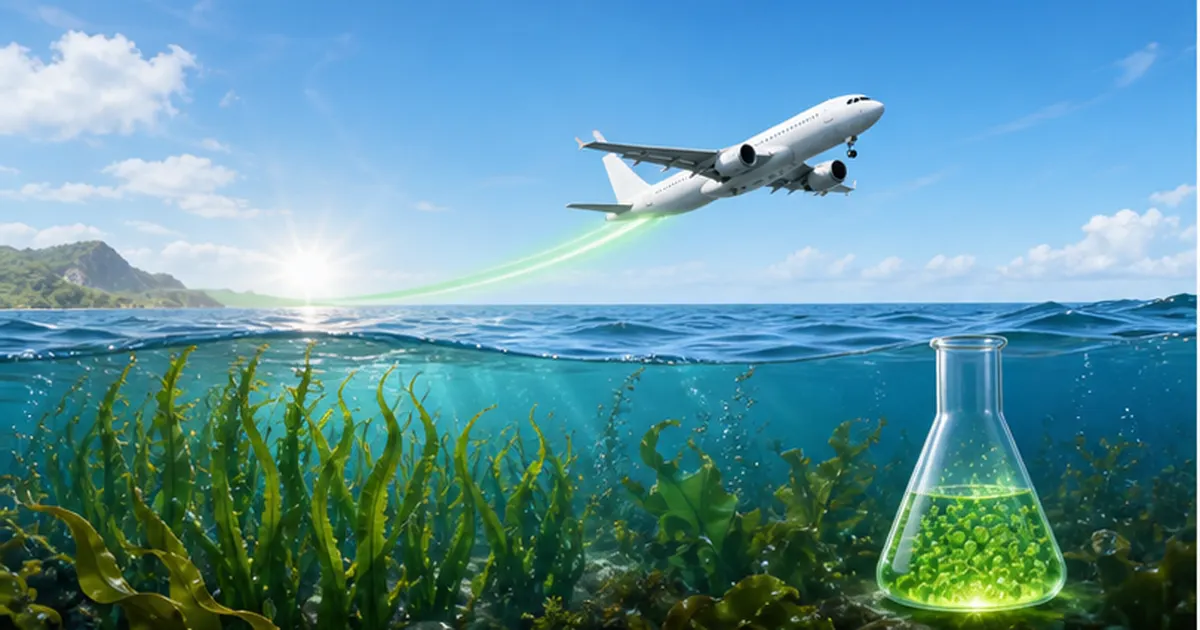
The era in which "algae" fly airplanes has already begun. Tiny green particles drifting on the water—microalgae—and seaweed swaying beneath the sea. These "algae" absorb CO2 through photosynthesis and store oils and sugars in their bodies, which can be pressed or fermented into fuel. And they need no fields, competing with no one for food. Algae can, in principle, sidestep the dilemma that has haunted conventional biofuels made from corn and sugarcane.
In fact, bio-jet fuel derived from microalgae has already met international standards in Japan and been used on scheduled passenger flights. In Malaysia, one of the world's largest algae cultivation facilities—five hectares—is in operation, and NEDO, Japan's national R&D agency, is backing large-scale technology development. As the aviation industry heads toward carbon neutrality by 2050, algae are one of the trump-card candidates for "decarbonizing the sky."
Yet algal biofuel has not yet reached our daily lives. The biggest reason is price. Each step of cultivation, harvesting, and oil extraction adds cost, and the production cost per liter remains far above that of fossil fuels. This article draws on primary sources from government agencies and research institutions to explain how algal biofuel works, its advantages, the frontier of SAF (sustainable aviation fuel) applications, and how researchers are trying to overcome the barriers of mass production and cost.
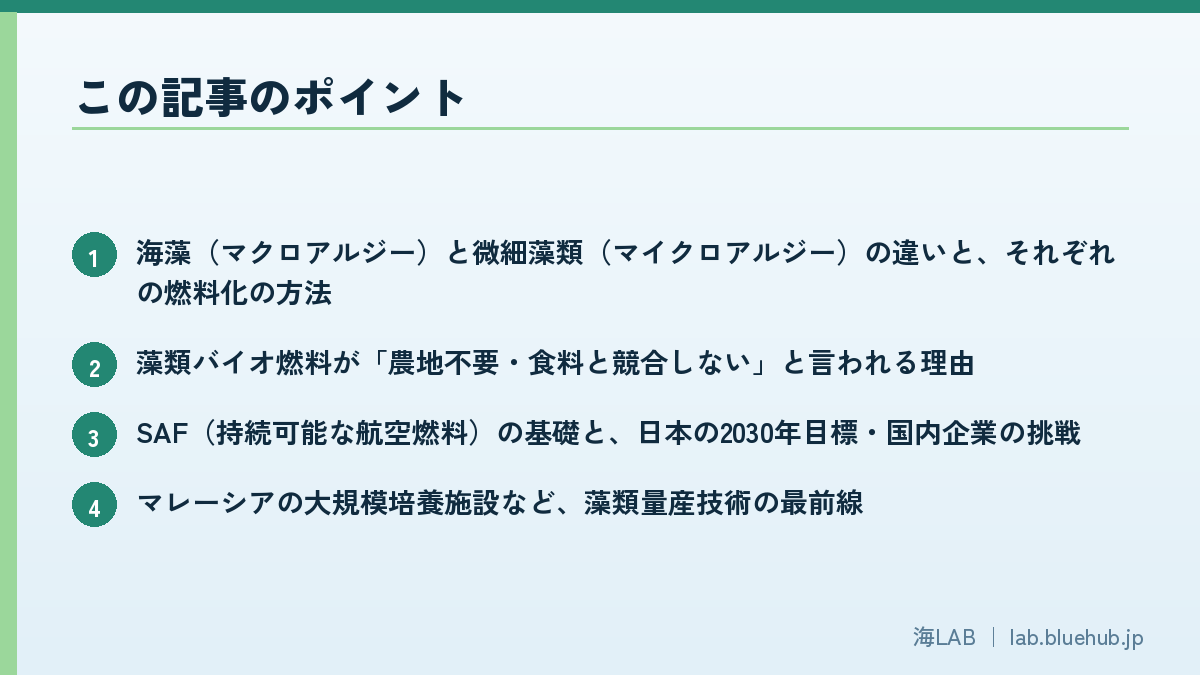
What you'll learn in this article
- The difference between seaweed (macroalgae) and microalgae, and how each becomes fuel
- Why algal biofuel is said to "need no farmland and compete with no food"
- The basics of SAF (sustainable aviation fuel), Japan's 2030 target, and the challenges taken up by Japanese companies
- The frontier of algae mass-production technology, including a large cultivation facility in Malaysia
- The structural reasons why the cost per liter cannot yet beat fossil fuels, and strategies for a breakthrough
- The role of algal fuel in ocean decarbonization and how each of us can get involved
What Is Algal Biofuel? Seaweed vs. Microalgae
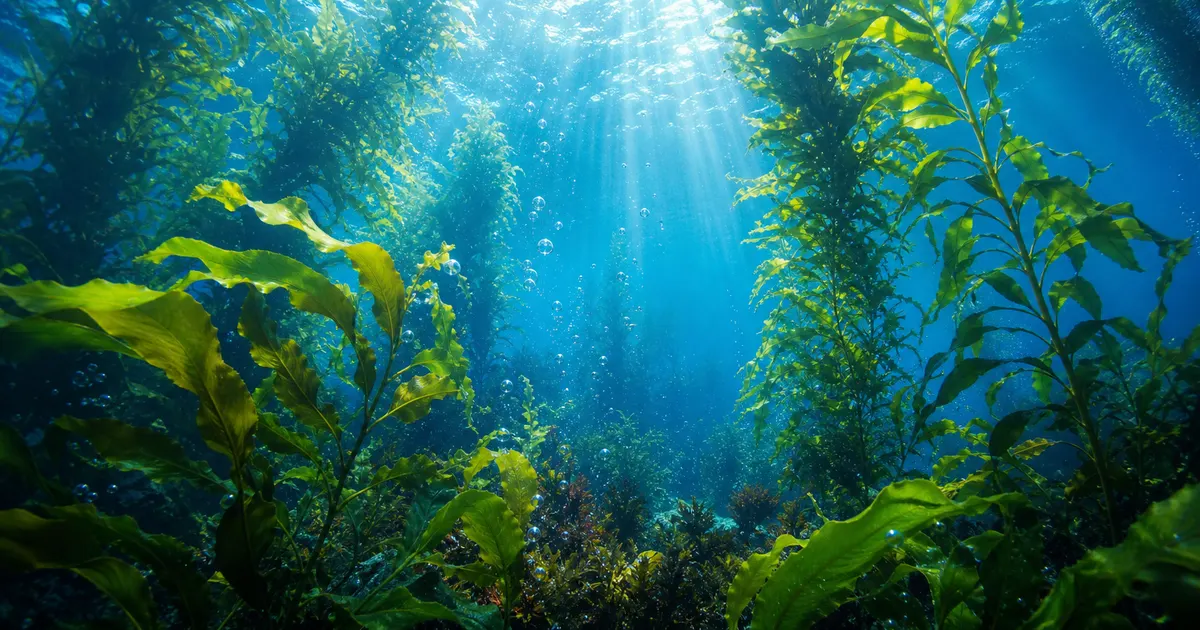
Algal biofuel is a renewable fuel made from the oils and sugars that algae produce through photosynthesis. Although we casually say "algae," the fuel world divides them into two broad groups: seaweed (macroalgae), visible to the naked eye like wakame and kombu kelp, and microalgae, single-celled organisms too small to see without a microscope.
Algae hold a special place in Earth's history. Cyanobacteria, which began photosynthesizing about three billion years ago, filled the primordial Earth with oxygen, and even today roughly half of all photosynthesis on the planet is said to be carried out by marine phytoplankton. In other words, when it comes to converting solar energy into chemical energy, algae are the most proven organisms on Earth. Harnessing that power for humanity's energy problems is the idea behind algal biofuel.
Microalgae: tiny factories that make oil
Microalgae are phytoplankton that drift in the water, and some species store large amounts of oil (lipids and hydrocarbons) in their bodies. Botryococcus, Nannochloropsis, and Euglena are leading examples. Each cell is like a tiny capsule of oil: harvest and press them, and you obtain a liquid resembling crude oil that can be refined into diesel or jet fuel. Because they grow no roots, stems, or leaves, they can channel most of the products of photosynthesis into oil production.
Seaweed: fermenting sugars into ethanol
Seaweed, on the other hand, contains almost no oil but is rich in sugars such as alginate and mannitol. Break these down with enzymes and ferment them with yeasts and microorganisms, and you get bioethanol—a fuel that can be blended into gasoline. Japan is one of the world's leading users of seaweed, with deep expertise in aquaculture, so seaweed-derived ethanol continues to be studied as a fuel candidate befitting a maritime nation.
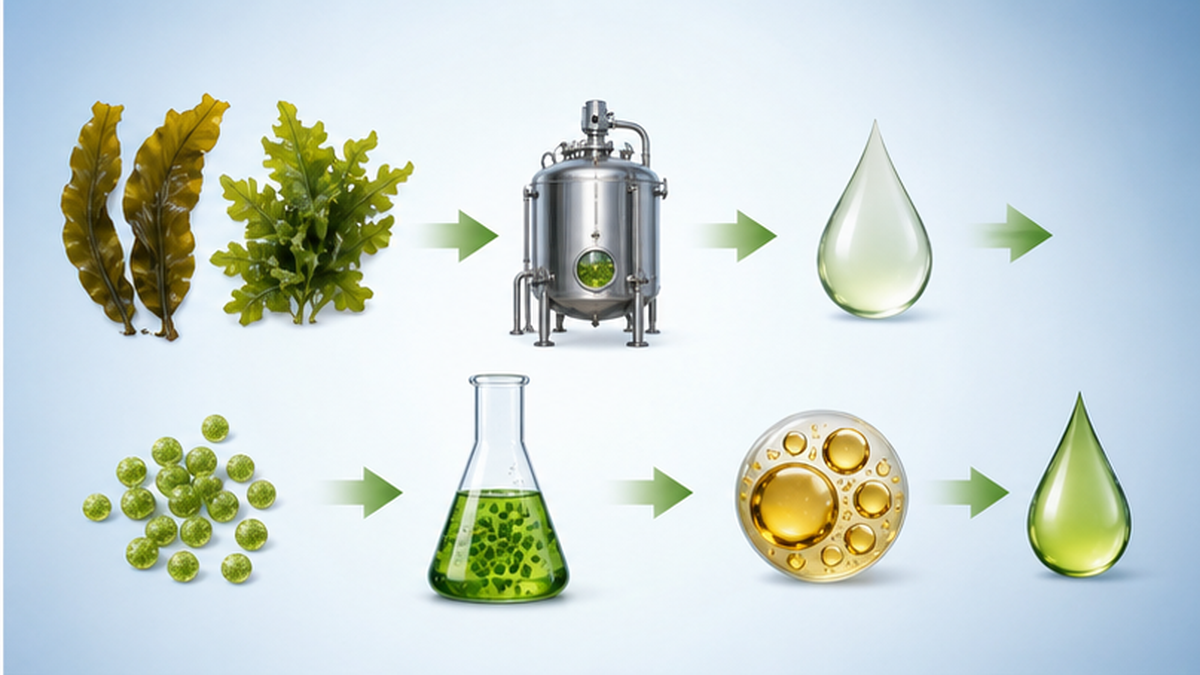
| Item | Seaweed (macroalgae) | Microalgae |
|---|---|---|
| Size | Several cm to tens of meters (kelp, etc.) | Single cells a few micrometers across |
| Main contents | Sugars (alginate, mannitol, etc.) | Oils (lipids and hydrocarbons) |
| Path to fuel | Enzymatic breakdown + fermentation to ethanol | Harvest, oil extraction, refining into diesel or SAF |
| Where they grow | The sea (coastal farms) | Mainly land-based ponds and photobioreactors |
| Japan's strengths | World-class aquaculture expertise | Research track record with Euglena, Botryococcus, and more |
Key points
- Algal biofuel has two routes: "seaweed to ethanol" and "microalgae to oil"
- Some microalgae store oil inside their cells and can supply raw material for jet fuel
- Both grow by absorbing CO2 through photosynthesis, making them renewable energy sources
Why Can Algae Become Fuel? The Star Species That Make Oil
"Oil from algae" may sound strange, yet part of the Earth's crude oil is believed to have formed from the remains of plankton that flourished in ancient seas and transformed underground. In other words, algae are living organisms that perform, in real time, the "oil making" that nature has carried out over hundreds of millions of years. Here are the algae starring in fuel research.
Botryococcus: hydrocarbons remarkably like petroleum
The freshwater green alga Botryococcus is a rare species that secretes a hydrocarbon called botryococcene outside its cells. This substance is structurally similar to squalene, a rare component of shark liver oil, and is considered highly compatible with existing petroleum refining processes. In Japan, IHI has developed technologies for mass cultivation and fuel production using a fast-growing strain (fast-growing Botryococcus).
Euglena: a swimming alga that makes oils
Euglena, familiar from science textbooks as "midorimushi," is a single-celled organism that photosynthesizes while swimming under its own power. The wax-like oils it stores in its cells are well suited to conversion into jet fuel, and the Japanese bio-venture Euglena Co., Ltd. has pursued fuel production alongside its food business. The company built a demonstration fuel plant in Yokohama and has accumulated a track record of supplying its "SUSTEO" biofuel brand to cars, ships, and aircraft.
Nannochloropsis and other seawater heavyweights
Nannochloropsis, which grows in seawater, has a high lipid content and a proven history as feed for fish farming. Being able to cultivate in seawater means no precious freshwater is consumed. Cultivation plants could potentially be built along arid coastlines, and research into fuel, feed, and food applications is under way worldwide.
- Botryococcus: secretes petroleum-like hydrocarbons; IHI researches mass cultivation
- Euglena: oils suited to jet fuel; a pioneer of domestically produced SAF
- Nannochloropsis: grows in seawater, rich in lipids; also active in feed and food
- Chlorella and Spirulina: famous as foods, but their cultivation technology underpins fuel research
A history of research: half a century since the oil crises
Algal fuel research has a long history. Triggered by the oil crises of the 1970s, the U.S. Department of Energy ran a major algae research effort (the Aquatic Species Program), and in Japan algae research was organized into national projects from the 1990s as a CO2-fixation technology. During the oil price surge of the late 2000s, ventures sprang up around the world, and in Japan a large Botryococcus cultivation system was built on Nanatsujima in Kagoshima Prefecture as a NEDO demonstration project, marking a full-scale push toward practical use. Through cycles of boom and stagnation, cultivation technology and selective breeding have steadily advanced.
What matters is that these algae absorb CO2 through photosynthesis. Burning the fuel releases CO2, but only what was taken from the atmosphere as the algae grew. In theory, this creates a "carbon-neutral" energy cycle that adds no net CO2 to the air. Alongside blue carbon—the carbon stored by marine ecosystems—algae are protagonists in the story of "the ocean and carbon."
No Farmland Needed, No Food Competition: Three Advantages of Algal Fuel
Biofuel itself is not a new technology. Brazil uses vast quantities of sugarcane ethanol, and the United States corn ethanol. But "turning food into fuel" has always carried side effects: rising food prices and deforestation. Algae are called "next generation" because they can avoid this problem at its root.
Advantage 1: It takes no farmland
Microalgae grow in ponds and photobioreactors, so they need none of the fertile farmland crops require. Cultivation plants can be built on wasteland, former factory sites, even arid regions. Seaweed grows in the sea and uses almost no land at all. As the world's population keeps growing and competition for farmland intensifies, being a "fuel that doesn't fight over land" is a decisive strength.
Advantage 2: Little competition with food and freshwater
Most fuel algae are not eaten, so diverting them to fuel does not squeeze food supplies. Choose species that grow in seawater or brackish water, and you avoid consuming the freshwater agriculture depends on. Algae are largely free of the ethical dilemma that has always dogged corn ethanol: "Shouldn't that field and water be used to grow food?"
Advantage 3: Productivity per area in a different league
Microalgae multiply quickly—under good conditions, some species more than double in a single day. One estimate finds that meeting half of U.S. transport fuel demand would require 45 million hectares of oil palm plantations, but only 4.5 million hectares of microalgae with 30% hydrocarbon content. Roughly ten times the productivity per unit area—a level no land crop can reach.
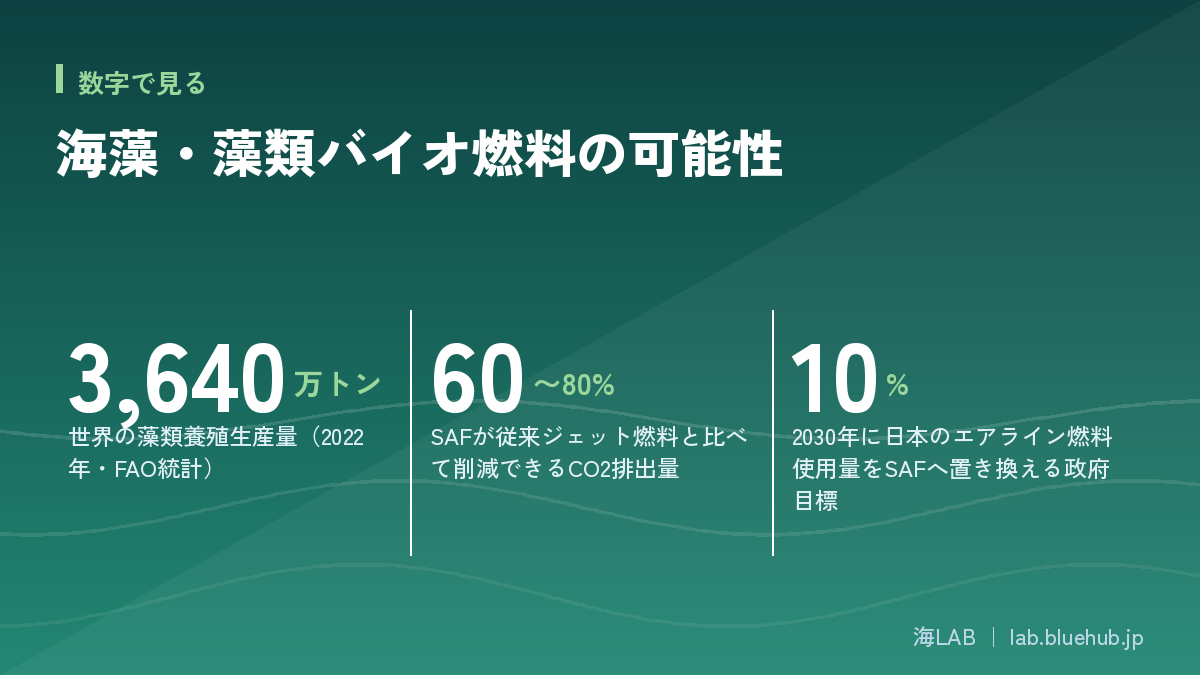
The overwhelming difference in "land efficiency," in numbers
Look at the productivity gap from another angle. Extracting fuel oil from soybeans is slow work: the seeds are only about 20% oil, and each crop takes months to grow. Oil palm is perennial and efficient, but plantation development has drawn international criticism for driving rainforest clearance. Microalgae, by contrast, can be 30-70% oil by dry weight depending on the species, with harvest cycles measured in days. "The possibility of producing oil on a different scale—without cutting forests, without using fields"—this is why researchers worldwide remain captivated.
Algae cultivation comes with a bonus: CO2 can be fed to them directly. Bubble the CO2 from factory or power plant exhaust into the culture tanks, and the algae grow faster while recycling carbon that would have been emitted. Waste treatment and fuel production in one—well-designed algae plants could become hubs of regional resource circulation.
Biofuel "generations" and where algae fit
- 1st generation: from edible crops such as corn and sugarcane (competes with food)
- 2nd generation: from non-food resources such as rice straw, waste cooking oil, and wood scraps
- 3rd generation: from algae (no farmland, high productivity, direct CO2 use possible)
Algae That Fly: Applications in SAF (Sustainable Aviation Fuel)
Nowhere is algal biofuel drawing hotter attention than in aviation. SAF (Sustainable Aviation Fuel) is the general term for jet fuel made from sustainable feedstocks such as waste cooking oil, plants, and algae, and it is said to cut lifecycle CO2 emissions by roughly 60-80% compared with conventional fossil jet fuel.
Why aircraft have no choice but to rely on SAF
Cars are moving to electric vehicles, and ships toward ammonia and methanol fuels. Aircraft are different. Powering a large passenger jet over long distances takes enormous energy, and today's batteries are far too heavy to fly. SAF—a "drop-in fuel" usable with existing jet engines and airport infrastructure—is, for now, virtually the only realistic answer. The International Civil Aviation Organization (ICAO) has set a carbon-neutral goal for 2050, and airlines worldwide are racing to secure SAF.
Aviation accounts for an estimated 2-3% of global CO2 emissions, and with passenger demand recovering from the pandemic and aviation markets expanding in emerging economies, emissions will keep rising unless action is taken. Lighter airframes and more efficient engines continue to improve, but they cannot offset the growth alone. Changing the fuel itself is the realistic pillar for cutting emissions without giving up flight.
Japan's target: 10% by 2030
The Japanese government has set a target of replacing 10% of fuel used by Japanese airlines with SAF by 2030, and a public-private council led by the Ministry of Economy, Trade and Industry and the Ministry of Land, Infrastructure, Transport and Tourism is building a domestic SAF supply system. Mandatory SAF supply obligations for fuel suppliers are also planned under the Act on Sophisticated Methods of Energy Supply Structures. With this enormous demand in view, algae-route technology development is being supported as a national project alongside the waste-cooking-oil route.
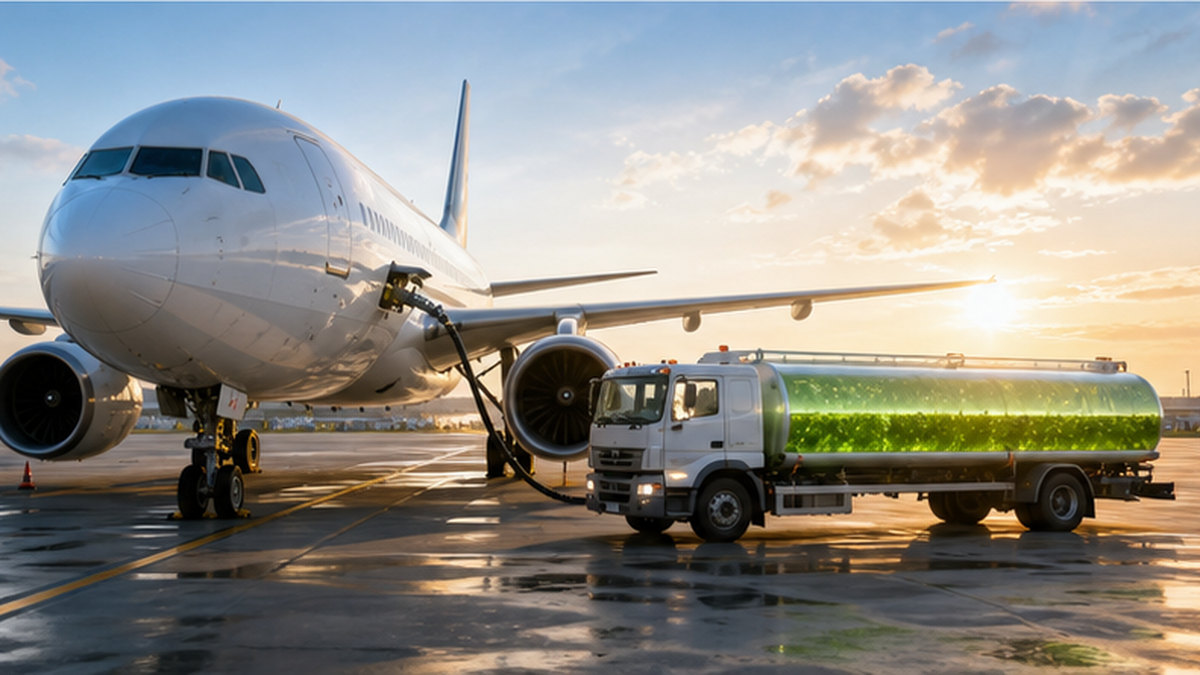
Japanese companies' track record: from certification to scheduled flights
Algal SAF has already moved beyond the "laboratory dream" stage. IHI achieved compliance with the international standard ASTM D7566 (Annex 7) for bio-jet fuel derived from fast-growing Botryococcus, and in 2021 microalgae-derived SAF was supplied to scheduled domestic passenger flights. Euglena Co. has its own flight record with "SUSTEO," an SAF made from euglena-derived oils among other feedstocks, and is planning a large commercial plant. Japan stands in the world's leading group in algal SAF.
We project SAF use in 2030 at 10% of fuel consumption by Japanese airlines, and will work toward its realization.
— Summarized from materials of the Public-Private Council for SAF Promotion (METI and MLIT)
Global currents: CORSIA and EU mandates create demand
Tailwinds for SAF are blowing worldwide. CORSIA (the Carbon Offsetting and Reduction Scheme for International Aviation), the international framework for curbing CO2 from international flights, is phasing in, and in the EU the SAF blending mandate for fuel supplied at EU airports (the ReFuelEU Aviation regulation) starts at 2% in 2025 and is planned to rise to 70% by 2050. SAF is shifting from a fuel "used by those who want to" into one "without which you cannot fly." This assured, expanding demand is exactly what justifies diversifying feedstocks beyond scarce waste cooking oil—that is, investing in the algae route.
To be clear-eyed, though: today's mainstream SAF production is HEFA, a process that hydrotreats waste cooking oil and other fats, and the global supply of algae-derived SAF is still tiny. With the scramble for waste cooking oil already under way, new feedstocks are indispensable for expanding supply from the 2030s onward—and algae are being cultivated as one of the strongest candidates. That is the accurate picture of where things stand.
The Frontier of Cultivation: World-Class Plants and National Projects
What determines the fate of algal fuel is less biology than cultivation engineering—how to grow algae at scale, like a factory. In recent years the frontier has scaled up from experimental pools to genuinely huge plants.
A five-hectare algae factory rises in Malaysia
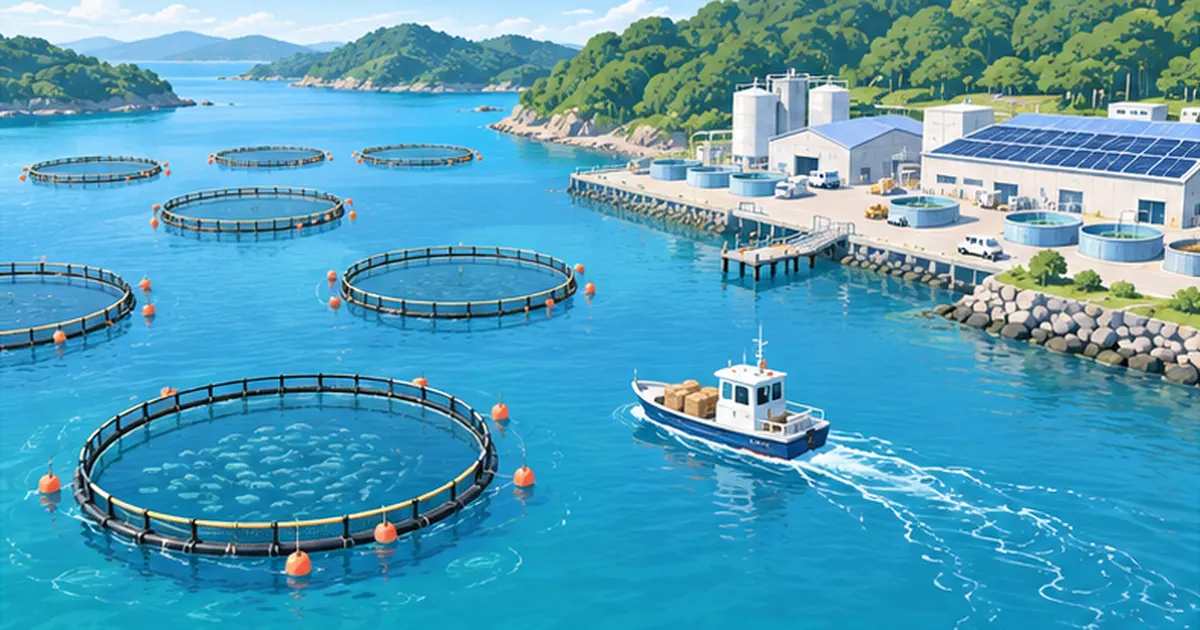
In 2023, the Japanese bio-venture Chitose Group began operating "CHITOSE Carbon Capture Central (C4)," a five-hectare algae production facility of world-leading scale in Sarawak, Malaysia. Transparent plastic bags about 10 cm thick are stood upright in panel-like rows—a "flat-panel" system—while CO2 supplied from an adjacent power plant is bubbled through to cultivate the algae. Using the strong sunlight near the equator, the facility aims for stable year-round production.
NEDO's push toward 100 hectares
This endeavor has been adopted under a fund program totaling some 50 billion yen (the Green Innovation Fund) run by NEDO, Japan's New Energy and Industrial Technology Development Organization, and the next goal is demonstrating economic viability at a 100-hectare scale. MATSURI, the cross-industry project led by Chitose Group, brings together companies from cosmetics, food, feed, and beyond—working to raise algae into "an industrial feedstock to replace petroleum," not just fuel.
Strengths and weaknesses of each cultivation method
| Cultivation method | Features | Challenges |
|---|---|---|
| Open pond (raceway) | Cheap to build, easy to scale in area | Contamination by microbes and other algae; water evaporation |
| Flat-panel | High light-capture efficiency, dense cultivation possible | Higher equipment costs; temperature control needed |
| Tubular photobioreactor | Resistant to contamination, easy to control conditions | Highest construction and operating costs |
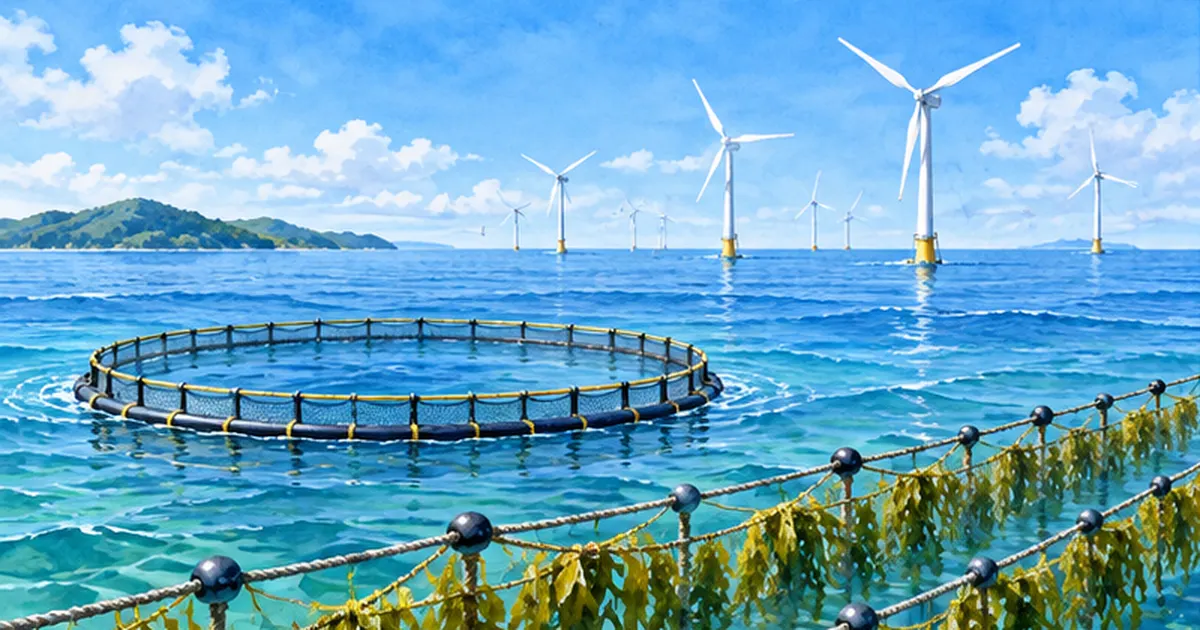
| Sea-surface farming (seaweed) | Needs almost no land, freshwater, or fertilizer | Labor-intensive harvesting; weather and sea conditions |
The invisible technologies behind "growing algae"
On large cultivation sites, the adversary turns out to be other living things. An outdoor culture pond is like a nutrient-rich soup: if unwanted algae or tiny grazers such as rotifers slip in, production can collapse within days. Choosing fast-growing strains to stay ahead, adjusting pH and salinity to make the environment inhospitable to competitors, switching to closed reactors—the maturing of these "algae agriculture" management techniques has been one of the great advances of the past decade.
Just as important as cultivation is harvesting and drying. Algae often make up less than 1% of the culture liquid, and collecting them from all that water, removing the moisture, and pressing out the oil takes real energy. More efficient membrane filtration and centrifugation, techniques for extracting oil from wet biomass—unglamorous but decisive cost-cutting research continues worldwide.
Ethanol from Seaweed: Turning Japan's "Ocean Fields" into Fuel
If microalgae star in "oil," seaweed stars in "sugar." According to FAO (Food and Agriculture Organization of the United Nations) statistics, global algae aquaculture production reached about 36.4 million tonnes in 2022, more than 97% of it from farming, with Asia responsible for the overwhelming majority. Research is under way to apply the technology of this vast "ocean field" to fuel production.
The seas around Japan are especially rich in useful seaweeds—kombu, wakame, nori. The Sanriku coast and Hokkaido have long histories and deep expertise in seaweed farming, with an industrial base spanning seedling production through harvesting and processing. As the food market plateaus, a new outlet in "fuel and materials" could become a meaningful option for coastal economies.
Making ethanol from a kilogram of kelp
Alginate, the main component of seaweed, is hard to ferment—unlike the starch of land plants—and for years "seaweed ethanol" was dismissed as impossible. But a research team including Tohoku University succeeded in extracting ethanol from raw seaweed by cutting it up, breaking it down with multiple enzymes, and applying specially discovered yeasts and microorganisms in stages, confirming that 1 kg of raw makombu kelp can yield 22 g of ethanol. The efficiency is still low, but processing seaweed raw, without drying, is an important advance for the energy balance.
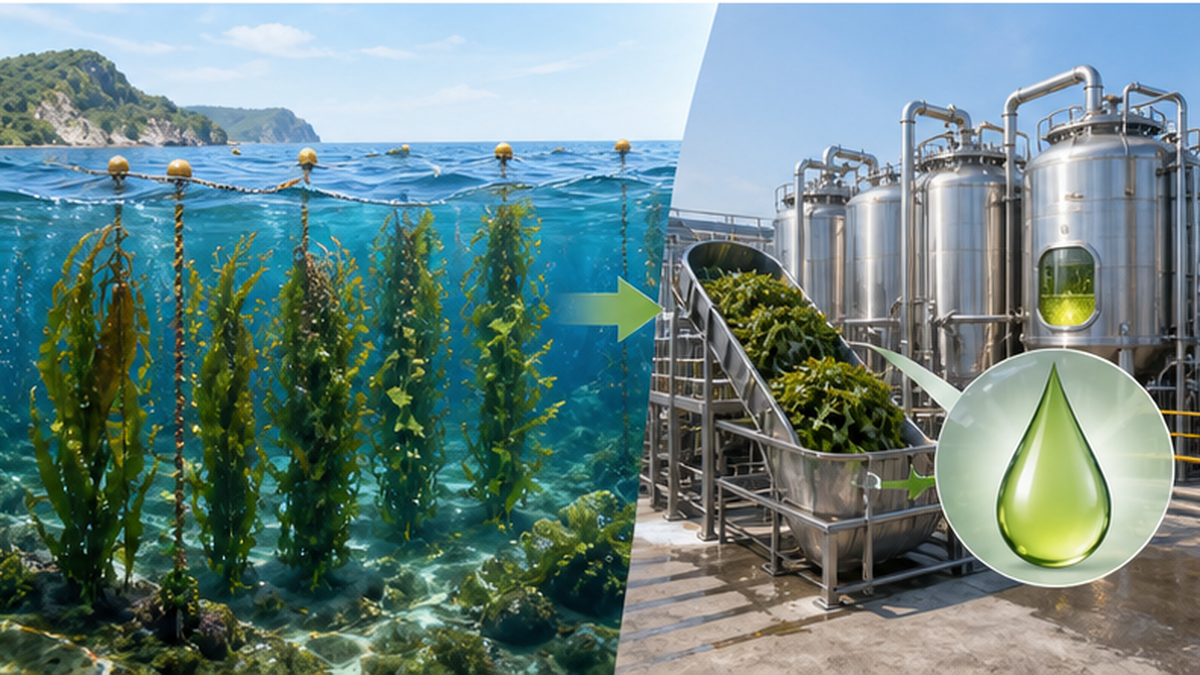
The world's eyes on "marine biomass"
Interest in seaweed fuel is not Japan's alone. In the United States, ARPA-E (the Advanced Research Projects Agency-Energy) has run a program to develop large-scale open-ocean seaweed farming technology, and in Europe research advances on seaweed farming and biorefineries along the North Sea coast. Behind it all lies a shared recognition: land biomass has its limits. If we can use the ocean—70% of the Earth's surface—we are freed from the constraints of land, freshwater, and fertilizer. On the world's research map, seaweed is coming to be positioned as "the third field."
Nuisance seaweed becomes a resource
Part of what makes seaweed ethanol interesting is where the raw material can come from. Seaweed that drifts into power plant cooling-water intakes and is discarded at cost, or drift weed washed up in bulk on beaches—turn these into fuel feedstock and you get waste disposal and energy production in one stroke. Seaweed farming itself absorbs nitrogen and phosphorus, cleaning the sea while taking in CO2. It is a scenario unique to Japan's coasts, overlapping with the recovery of wakame and kombu farming in Sanriku.
Beware of overestimation
- Seaweed ethanol production efficiency is still low; commercialization needs major technical progress
- Expanding seaweed farming too far for fuel could compete with food seaweed and coastal ecosystems
- Claims like "seaweed alone could power Japan" are unrealistic at present
The Wall of Mass Production and Cost: Why Algal Fuel Hasn't Spread
Reading this far, you may wonder why something so good hasn't caught on. The answer is simple: it is still too expensive. The production cost of algae-derived fuel far exceeds fossil fuel per liter, and SAF overall is said to cost three to four times as much as petroleum-derived jet fuel. The algae route ranks among the most expensive within SAF.
Three processes that drive up cost
- Cultivation: beyond construction costs, electricity is needed for stirring water, supplying CO2, and controlling temperature
- Harvesting and dewatering: collecting algae from dilute culture liquid and drying them consumes major energy
- Extraction and refining: getting oil out of the cells and refining it to jet-fuel grade takes equipment and money
Looked at concretely, the difficulty of algal fuel comes down to a battle with dilution. Algae make up a mere 0.1-1% of the culture liquid, meaning that for every liter of fuel, hundreds of times that volume of water must be moved, filtered, and dried. Petroleum is a resource where "drill a hole and concentrated hydrocarbons gush out"; algal fuel is the work of gathering tiny cells scattered through water. How far the multiplying power of living things and the ingenuity of engineering can claw back this physical handicap is where the contest lies.
This wall has repelled even giants. ExxonMobil, the U.S. oil major that invested in algae fuel research for over a decade, was reported to have sharply scaled back its funding of algal biofuel research by 2023—part of a wave of withdrawals dubbed the "algae fuel winter." Between "can be made" technically and "can be sold" economically lies a deep valley.
The breakthrough: don't make money on fuel alone
R&D continues nonetheless because realistic strategies for crossing the cost valley have come into view. The key is co-production (biorefinery): extract the high-value components from algae first, and turn the rest into fuel. In research linked with Mazda, for example, producing fuel from the residue left after extracting functional ingredients (supplement raw materials) has shown the potential to bring fuel down to around 200 yen per liter. Cosmetic ingredients, fish feed, alternative proteins—combining high-value products with fuel to approach profitability is now the global trend.
| Strategy | Description | Example |
|---|---|---|
| Co-production / cascade use | Sell the expensive components first, fuel the rest | Supplement ingredients + fuel; cosmetics + feed + fuel |
| Scale-up | Expand cultivation area to cut unit costs | Large-scale demonstration from 5 ha to 100 ha (NEDO program) |
| Using exhaust CO2 | Feed algae free CO2 from power plants and factories | The C4 facility in Malaysia sited next to a power plant |
| Breeding and selection | Select fast-growing, oil-rich strains | Fast-growing Botryococcus |
| Policy support | Create early demand via mandates and subsidies | Japan's 10% SAF target; supply obligations under the Sophisticated Energy Law |
Another tailwind: carbon now has a price. Under Japan's GX (Green Transformation) policy, an emissions trading system is taking full shape, building a framework in which emitting carbon costs money. As emissions trading and carbon taxes spread, the relative value of "fuels that cut CO2" rises. The price gap with fossil fuels will be closed by the twin wheels of technological progress and policy support.
Not competing with solar and wind, but dividing the work
"Wouldn't solar power be more efficient as renewable energy?" This objection always arises in debates over algal fuel. For generating electricity alone, solar panels on the same area do convert energy more efficiently. But the value of algae lies in storing energy in the form of liquid fuel and in turning carbon itself into products. Aircraft that batteries cannot fly, feedstocks for chemical industries that are hard to electrify—algae aim at the domains electricity cannot easily replace. Not competing with renewable power, but dividing the work and filling in the last pieces of decarbonization: that is algal fuel's realistic position.
The Future of Algal Fuel and What We Can Do
Algal biofuel is not a technology that will line up at gas stations tomorrow. But in fields like aviation, where electrification is hard, its turn will surely come—and Japan runs in the world's leading group in both research and implementation. The 10% SAF target for 2030, cultivation demonstrations at the 100-hectare class, better seaweed-ethanol efficiency—how this decade goes will shape the sky and sea of 2050.
An algae industry expanding beyond "fuel"
We should not forget that algae's potential goes beyond fuel. Growing on CO2, algae can become food, cosmetics, pharmaceutical ingredients, fish feed, and feedstock for biodegradable plastics. Fuel is only one of the outlets. Precisely because there are many outlets, the industry can stand on its own—and fuel costs fall as a result. The growth of the whole algae economy (bioeconomy) will, in a roundabout way, support the decarbonization of the sky.
Knowing and choosing helps the technology grow
Whether a new energy technology crosses the valley depends greatly on public opinion and market support. People who choose flights that use SAF, who pick up algae-derived foods and cosmetics, who put seaweed on the daily table—each choice is small, but together they signal that "demand exists for the algae industry," moving corporate investment and national policy. The characters in a technology's story are not only researchers and companies.
Three ways to get involved starting today
Actions we can take
- Choose and support airlines introducing SAF (each company's SAF initiatives can be checked on its website)
- Support the base of the algae industry by "eating algae"—euglena foods, spirulina, and seaweed
- Bring domestic seaweeds like wakame and kombu to your table, supporting the aquaculture that maintains the coastal "ocean fields"
- Cut waste in electricity and fuel—until SAF spreads, reducing demand itself is the greatest contribution
A single stalk of kelp swaying in the sea, a single invisible algal cell floating at the surface—each keeps fixing CO2 with the power of the sun. The challenge of scaling up that small work with human technology and turning it into the energy that flies through the sky has already begun. The next time you board an airplane, a little of "the power of algae" may be mixed in beneath its wings—that is the era we are living in.
Summary of this article
- Algal biofuel has two routes—"seaweed to ethanol" and "microalgae to oil"—and its greatest advantages are needing no farmland and competing with no food
- Microalgae-derived SAF meets international standards, and Japan already has a record of supplying scheduled passenger flights
- Japan targets replacing 10% of airline fuel with SAF by 2030 and supports large-scale algae cultivation through NEDO fund programs
- The biggest wall is cost: SAF runs three to four times petroleum-based fuel, and the valley is being crossed through co-production, scale-up, CO2 use, and policy support combined
- Algae have many outlets beyond fuel—food, cosmetics, feed—and the growth of the whole industry pushes fuel costs down
References and Sources
- Agency for Natural Resources and Energy – Public-private development and institution-building toward expanded SAF adoption
- Ministry of Economy, Trade and Industry – On the 2030 supply target volume for sustainable aviation fuel (SAF) (subcommittee materials)
- NEDO (New Energy and Industrial Technology Development Organization) – Introduction to the bio-jet fuel production technology development program
- IHI Corporation – Supply of microalgae-derived bio-jet fuel to scheduled domestic flights (FY2021 news)
- Chitose Group – Start of operation of "C4," one of the world's largest algae production facilities (Sarawak, Malaysia)
- Euglena Co., Ltd. – Introduction to the biofuel business (SUSTEO)
- FAO (Food and Agriculture Organization of the United Nations) – The State of World Fisheries and Aquaculture 2024: Aquaculture production
- Ocean Policy Research Institute, Sasakawa Peace Foundation – Bioethanol made from seaweed, a gift of the sea (Ocean Newsletter)
- National Ocean Policy Secretariat, Cabinet Office – CO2 fixation and biomass fuel production by algae (survey material)
* Ordered by reliability: government and academic institutions > peer-reviewed papers > specialized organizations > trusted media