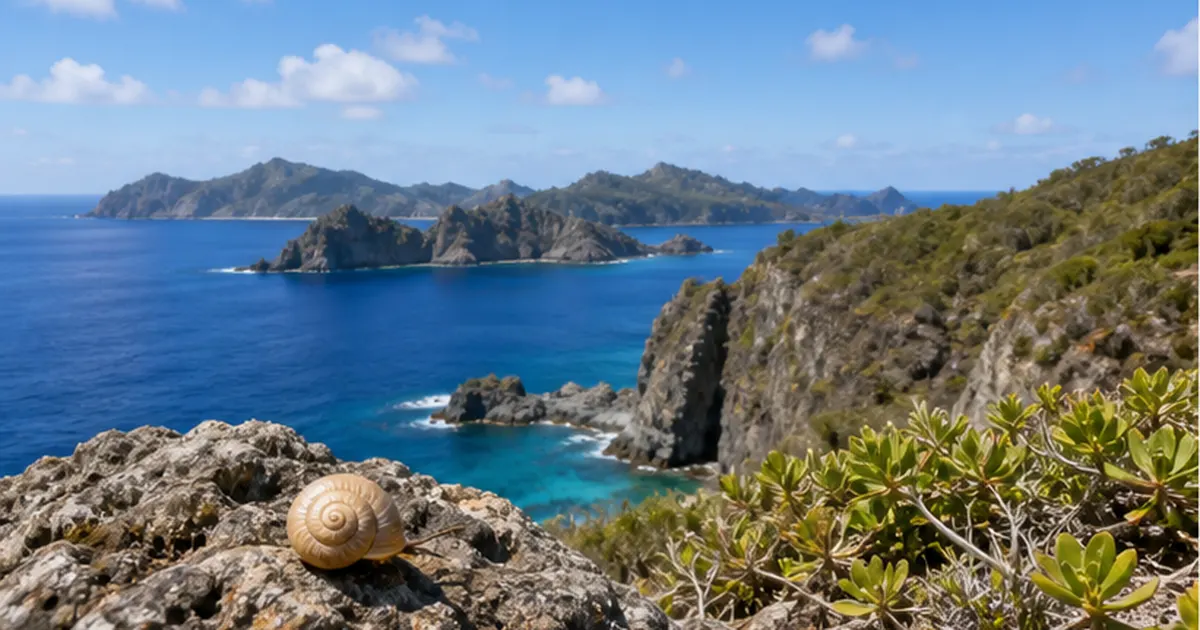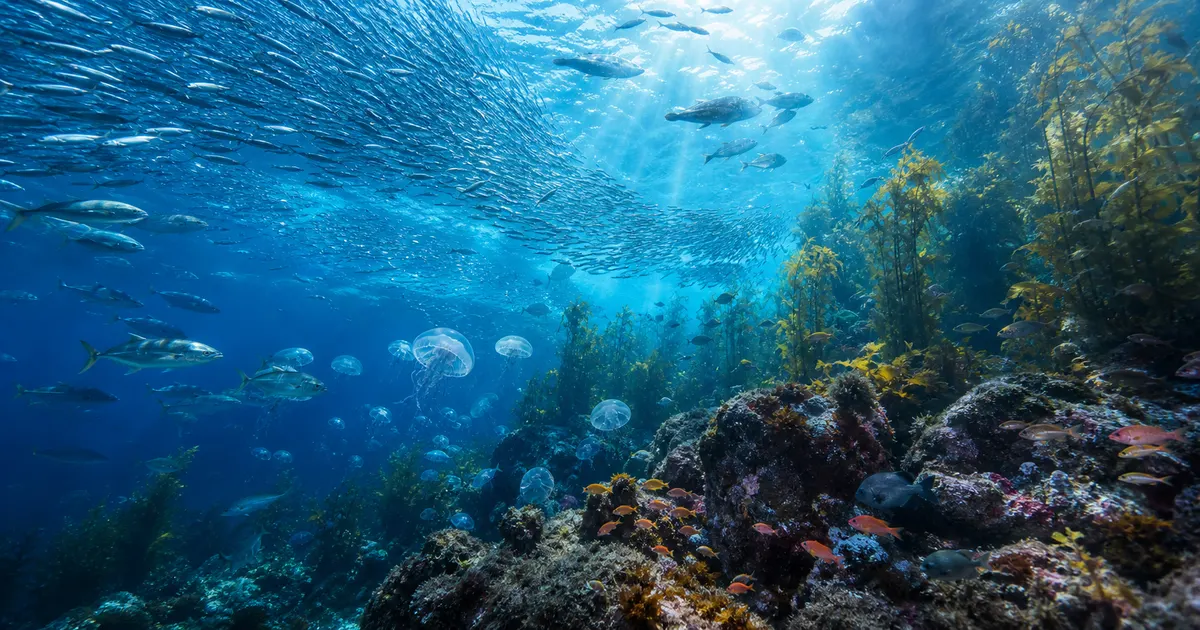
Japan is surrounded by sea on all sides. Did you know that these waters are, in fact, among the most densely packed with life anywhere on Earth? According to analysis by the Japan Agency for Marine-Earth Science and Technology (JAMSTEC) and others, 33,629 species—roughly 14.6% of the world's marine species—have been confirmed in the waters around Japan. And yet this area accounts for just 0.9% of the total volume of the world's oceans. In other words, a seventh of the planet's marine diversity is packed into a remarkably narrow strip of sea.
This richness is no accident. The warm Kuroshio Current flows in from the south, the cold Oyashio Current flows in from the north, and complex seafloor topography overlaps with deep ocean basins—the waters around the Japanese archipelago are a place where these conditions have miraculously come together. And even now, in 2026, new species continue to be discovered one after another in the Nankai Trough and on Pacific seamounts. We still do not know the full picture of this sea.
Drawing on primary sources from Japan's Ministry of the Environment, JAMSTEC, the Fisheries Agency of Japan, and others, this article unpacks, step by step, why the biodiversity of Japan's seas is so remarkably high, how it supports our food and climate, and what is happening to it right now.
What You'll Learn in This Article
- Why Japan's waters achieve the remarkable density of "14.6% of the world's marine life in just 0.9% of ocean volume"
- Why the mixing zone where the warm Kuroshio and cold Oyashio currents collide creates one of the world's best fishing grounds and a hotspot of diversity
- How the deep sea of Suruga Bay, Sagami Bay, and offshore seamounts remains a frontier still yielding new species today
- How biodiversity supports our lives through fisheries, water purification, blue carbon, and other ecosystem services
- The changes now underway in Japan's seas due to rising water temperatures, such as isoyake (kelp forest dieback), coral moving northward, and shifting fish distributions
- The conservation frameworks—such as the 30by30 target—aimed at passing this richness on to the next generation, and what each of us can do
Why Japan's Seas Are a "Biodiversity Hotspot"
"The waters around Japan are a biodiversity hotspot"—this is not a mere impression, but a fact backed by numbers. According to research by JAMSTEC, conducted jointly with Kyoto University, the University of Tokyo, and others, which analyzed a vast body of literature dating back to 1953 (published in the U.S. journal PLOS ONE), 33,629 species of marine life—everything from bacteria to mammals—have been confirmed in the waters around Japan, including its Exclusive Economic Zone (EEZ). This amounts to fully 14.6% of the roughly 230,000 species thought to inhabit the world's oceans.
What's even more astonishing is the "density." The waters around Japan account for just 0.9% of the total volume of the world's oceans. In other words, a seventh of all the world's marine life is concentrated in a space that makes up less than 1% of the ocean. Measured per unit area or per unit volume, Japan's seas boast diversity that ranks among the highest in the world. On a map, Japan may look like a small island nation, but when it comes to marine life, it is unmistakably a "superpower."
The significance of this research lies in more than simply showing a large number of species. It was only by painstakingly combing through the literature published since 1953 that a hazy picture of the whole of Japan's coastal waters began to emerge. Put another way, until then we did not have an accurate grasp of what actually lived in our own country's seas. And as we'll see later, new species continue to be discovered even now—meaning that the figure of 33,629 species is merely a provisional total, "as much as is currently known." The true diversity of Japan's seas is thought to be even greater than this.

What Kinds of Creatures Are Most Abundant
Of the 33,629 confirmed species, the most numerous are mollusks—octopuses, squid, and shellfish—at 8,658 species, followed by crustaceans such as crabs and shrimp at 6,232 species. Fish are also abundant, and Japan stands out for its exceptional variety of fish species compared with other fishing nations. Octopuses and squid, known for their intelligence, are also among the leading players of Japan's seas—their intelligence is covered in more detail in our article on cephalopod intelligence.
| Taxonomic group | Confirmed species (Japanese waters) | Representative species |
|---|---|---|
| Mollusks | About 8,658 species | Octopus, squid, bivalves, snails |
| Crustaceans | About 6,232 species | Crabs, shrimp, hermit crabs |
| Fish | Numerous (among the world's highest) | Tuna, saury, deep-sea fish |
| Marine mammals | About 50 species | Whales, dolphins, seals |
| Total (all groups) | 33,629 species | From bacteria to mammals |
Mammals, too, are not to be overlooked. Of the 127 species of marine mammal found worldwide, about 50 species—including whales and dolphins, seals and sea lions, and sea otters—have been confirmed in Japanese waters. That means roughly four out of every ten marine mammal species on Earth visit or live in the seas around Japan. The ecology of whales and their epic migrations is explored further in our article on the mystery of whale migration.
Mollusks and crustaceans top the list partly because these groups are inherently species-rich, but also because Japan's seas offer an extraordinary variety of "habitats"—from shallows to the deep sea, sandy bottoms, rocky reefs, mudflats, and coral reefs. Living things diversify in step with the number of environments available to them. Intricate ria coastlines, tidal flats, seaweed beds, deep bays, offshore seamounts—the richness of these environments translates directly into the richness of the creatures that inhabit them. Biodiversity is, in a sense, a mirror reflecting environmental diversity.
Key Point
- Japan's waters concentrate about 14.6% of the world's marine species (33,629 species) within just 0.9% of total ocean volume
- Mollusks and crustaceans are especially abundant, and about 40% of the world's marine mammal species are found here
- "More species than the area would suggest" is the hallmark of a biodiversity hotspot
The Kuroshio and Oyashio — A Miraculous Crossroads Created by Two Currents
Why are Japan's seas so diverse? The biggest reason is that two currents with utterly different characters—the warm Kuroshio and the cold Oyashio—meet off the eastern side of the Japanese archipelago. For a deeper understanding of how ocean currents work, see our article on sea temperature and ocean currents.
The Kuroshio from the South — A Gateway to Tropical Diversity
The Kuroshio is one of the world's great warm currents, flowing north along Japan's southern coast from the waters near the Philippines. This Kuroshio/subtropical zone is connected to Southeast Asia's "Coral Triangle," said to be the most biodiverse marine region on Earth. In other words, the Kuroshio acts as a "diversity highway" that carries the rich life of the tropics to the seas of Japan. Its clear, warm water brings coral and southern fish species into Japan's southern seas.
Another crucial role the Kuroshio plays is "transporting" eggs and larvae. Eggs and larvae of creatures born in southern seas ride the Kuroshio to coastlines all across Japan, where they establish new populations. Not only fish but also coral larvae (planulae) and baby sea turtles have used this enormous current to expand their ranges. The Kuroshio functions like a conveyor belt that keeps "refreshing" the diversity of Japan's seas.
The Oyashio from the North — the "Parent Current" That Carries Nutrients
The Oyashio, by contrast, is a cold current flowing south from the Sea of Okhotsk and the North Pacific. Its name is said to derive from the idea of a current "like a parent that raises fish," and it is known for being rich in nutrient salts (nutrients for plankton). This cold, nutrient-rich water fuels massive growth of phytoplankton, which in turn forms the base of a food chain running through zooplankton, small fish, and large fish. The role plankton play in the ocean's primary production is explained in detail in our article on phytoplankton.
What's interesting is that the Kuroshio and Oyashio contribute to "diversity" in contrasting ways. The Kuroshio is clear and low in nutrients, but it carries in a great many "types" of life from the tropics. The Oyashio, on the other hand, has a more limited range of species, but it boosts the sheer "quantity" of life through its overwhelming supply of nutrients. The Kuroshio carries quality (variety), and the Oyashio generates quantity (abundance). When the two meet off eastern Japan, the result is a rare sea that combines both variety and volume—truly a joint work of the two currents.

The Richness of the "Mixing Zone" Where the Two Currents Meet
The waters off eastern Japan, where the Kuroshio and Oyashio collide, are known as the "mixing zone" (shiome, or tidal front). Here, fish that prefer warm water and fish that prefer cold water intermingle, creating a rare stretch of ocean where warm- and cold-water species coexist side by side. Because the nutrient-rich Oyashio overlaps with the diversity-carrying Kuroshio, this mixing zone has become one of the world's best fishing grounds. Many of the fish that sustain Japan's table—saury, bonito, tuna, mackerel, sardine—are blessings of this tidal front.
There is a clear reason fisheries thrive at tidal fronts. Where two water masses of different character meet, the seawater is churned up, bringing nutrients from the depths to the surface and triggering an explosive increase in phytoplankton. Zooplankton, small fish, and large migratory fish then gather to follow this bloom—so that every stage of the food chain becomes concentrated in a single place. It is no coincidence that many of the world's major fishing grounds lie along such boundaries between warm and cold currents, or in areas of upwelling. Japan happens to have one of the finest examples of this right off its own coast.
The waters off eastern Japan, where the Kuroshio and Oyashio collide, are known as the mixing zone. Fish that prefer warm water and fish that prefer cold water coexist here, and diverse organisms inhabit the area, making it one of the world's best fishing grounds.
— Ministry of the Environment, Japan, Marine Biodiversity Conservation Strategy
Ocean Current Trivia
The name "Kuroshio" (literally "black current") comes from the fact that, being low in nutrient salts and highly transparent, it reflects little light and appears a deep indigo—almost black. The "Oyashio," by contrast, appears greenish because it is rich in nutrients and plankton. The color of the sea is, in a way, a mirror reflecting the abundance of the tiny life living within it.
Found Nowhere Else — Endemic Species and Untouched Seas
High diversity cannot be measured by "species count" alone. Japan's seas are also home to a great many endemic species found nowhere else on Earth. Surrounded by ocean, stretching a long way from north to south, and offering environments as varied as warm and cold currents and shallows to deep sea, the Japanese archipelago has been an ideal stage for creatures to evolve in their own unique ways. The National Museum of Nature and Science, Japan, likewise regards Japan as a "biodiversity hotspot" home to a concentration of highly distinctive organisms.
3,000 km from North to South Creates a Diversity of Environments
The Japanese archipelago stretches roughly 3,000 km from north to south, spanning subarctic to subtropical zones. From the drift-ice seas of Hokkaido to the coral reefs of Okinawa, seas belonging to entirely different climate zones coexist within a single country. This breadth of environments has given rise to a diverse array of organisms—and endemic species—each adapted to its own particular sea. The close relationship between clownfish and sea anemones living on coral reefs is also introduced in our article on clownfish–anemone symbiosis.
The key to the emergence of endemic species is geographic "isolation." In an island nation surrounded by sea, it becomes difficult to mix with outside populations, and unique evolution proceeds in step with local conditions. Japan is said to be home to more than 90,000 confirmed species across land and sea, and among them are many species found in no other country. Because of this striking uniqueness, the National Museum of Nature and Science counts Japan as one of the world's "biodiversity hotspots." Marine endemic species are an irreplaceable treasure, produced over a long span of time by the nature of this country called Japan.
- Subarctic seas (around Hokkaido): Drift ice, kelp forests, cold-water fish and shellfish
- Temperate seas (Honshu coast): The mixing zone where the Kuroshio and Oyashio meet, diverse migratory fish
- Subtropical seas (Nansei Islands): Coral reefs, brightly colored fish, southern species
- Deep sea (bays and trenches nationwide): Endemic deep-sea creatures adapted to a world without light

New Species Are Still Being Discovered
The diversity of Japan's seas also stands out for the fact that it has not yet been "fully surveyed." In a deep-sea survey JAMSTEC conducted jointly with the international Ocean Census project, the June 2025 survey of the Nankai Trough and the Shichiyo Seamount Chain (500–700 km southeast of Tokyo) alone turned up 38 new species, plus 28 more strongly suspected of being new. More than 528 lots of biological specimens were collected. With bioluminescent organisms even being found in the pitch-black darkness of the deep sea, Japan's waters remain a "frontier of discovery" well into the 21st century. See also our article on deep-sea bioluminescence.
The fact that a single survey can turn up this many new species tells us, conversely, that we have so far seen only a tiny fraction of Japan's seas. The deep sea in particular is such uncharted territory that it is called, alongside outer space, "the last frontier on Earth." The seafloor covers an immense area, and reaching it requires specialized research vessels and submersibles, so only a very small portion has ever been seen by human eyes. The continued discovery of new species also means that the diversity of Japan's seas remains significantly underestimated.
Highly distinctive creatures can also be found close to shore. The Japanese spider crab, one of the largest crabs in the world, is a signature species of the deep waters around Japan, and Japan's deep sea is a treasure trove of unique creatures, including the dumbo octopus and the giant deep-sea isopod, both adapted to life under crushing pressure. Each of these species is a "living witness" to the evolutionary history that Japan's seas have traveled. To lose them would mean losing a page of natural history that can never be recovered.
The Frontline of New Species Discovery
In November 2025, a new, light-emitting species of zoanthid (Corallizoanthus aureus) was discovered in a deep-sea cave near the Daito Islands of Okinawa. This marked the world's first confirmed case of bioluminescence in a deep-sea cave. Just a few hundred kilometers offshore, creatures that don't even have names yet may be lying in wait on the seafloor.
The Deep-Sea Frontier — Suruga Bay, Sagami Bay, and Seamounts
No discussion of Japan's biodiversity is complete without the deep sea. Surrounded by ocean and blessed with steep seafloor topography, Japan has numerous places where the deep sea begins just a short distance from shore. The deep sea is, quite literally, the "depth" that Japan's seas offer the world.
Japan's Three Great Deep Bays — Suruga, Sagami, and Toyama
Especially famous are Suruga Bay, Sagami Bay, and Toyama Bay, known collectively as Japan's "three great deep bays." Suruga Bay reaches a depth of 500 m just 2 km from the coast, and its deepest point of about 2,500 m makes it the deepest bay in Japan. It is home to numerous precious deep-sea creatures, including the Japanese spider crab, one of the largest crabs in the world, as well as grenadiers and deep-sea sharks. How deep-sea creatures adapt to the dark, cold, high-pressure world is explained in detail in our article on deep-sea creature adaptation.
Sagami Bay is also a special sea. Warm Kuroshio-derived water flows through the surface layer, while cold Oyashio-derived water from the north intrudes at depths of roughly 250–1,000 m. Because warm and cold currents coexist in layers within a single bay, Sagami Bay receives abundant nutrients and has become a treasure trove of diversity, with different creatures living at each depth layer from shallow water to the deep sea. Sagami Bay has been known as a mecca for marine biology research since the Meiji era, and it is an "academic sea" where many new species have been formally described.
These deep bays become treasure troves of life because depth itself creates diverse "layers of environment." The sunlit surface layer, the dimly lit twilight zone, and the pitch-black deep layer—as depth changes, light, water temperature, pressure, and nutrients all change with it, and creatures adapted to each layer live there. In Japan's deep bays, where the seafloor plunges straight down from the coast, this vertical diversity is expressed with particular richness. The abundance of the sea is not only spread out horizontally—it is also stacked layer upon layer going downward.
| Deep bay | Characteristics | Approximate maximum depth |
|---|---|---|
| Suruga Bay (Shizuoka) | Reaches 500 m depth just 2 km from shore; Japan's deepest bay | About 2,500 m |
| Sagami Bay (Kanagawa) | Kuroshio- and Oyashio-derived waters coexist in layers | Over 1,000 m |
| Toyama Bay (Toyama) | Steep submarine canyons; deep-sea delicacies such as "shiroebi" (glass shrimp) | About 1,000 m class |

Seamounts — "Mountains" Rising from the Pacific Seafloor
Scattered across the offshore deep sea are seamounts that rise up from the ocean floor. Upwelling currents around seamounts carry nutrients, turning them into "oases" where creatures gather. In the survey of the Shichiyo Seamount Chain mentioned above, four previously unsurveyed seamounts yielded numerous new species, including five new species of squat lobster. In a methane seep area of the Nankai Trough, where only one to six species had ever been recorded, a total of 80 species—including 33 mollusk species—were confirmed, showing that the diversity of the deep sea far exceeds what we had imagined.
Ecosystems That Don't Depend on Sunlight — the World of Chemosynthesis
Many deep-sea creatures live in a world where the common sense of the surface doesn't apply. Especially striking are the "chemosynthetic ecosystems" found in methane seep areas and hydrothermal vent fields such as those in the Nankai Trough. Here, instead of sunlight, microbes that use methane or hydrogen sulfide seeping from the seafloor as an energy source form the base of the food chain, supporting distinctive communities of clams, crustaceans, tube worms, and more that depend on them. Ecosystems that don't rely on photosynthesis are drawing worldwide attention for how they broaden our understanding of life itself and offer hints for the search for extraterrestrial life. Japan's seas are also a research hub for these otherworldly ecosystems.

Protecting deep-sea biodiversity also has very practical significance. The special enzymes and proteins possessed by deep-sea creatures adapted to extreme environments are drawing worldwide attention as "biological resources" that could offer clues for pharmaceuticals and industrial technology. A creature that doesn't even have a name yet may hold the key to a future drug or new material. Understanding and protecting the deep sea is, in effect, protecting future possibilities themselves. Japan's rich deep sea can be said to be a major asset, both scientifically and industrially.
Why the Deep Sea Is a "Frontier"
- Japan has a rare topography in which the deep sea presses in close to shore
- Suruga Bay, Sagami Bay, and Toyama Bay each have their own distinct deep-sea ecosystems
- Seamounts and methane seep areas concentrate nutrients and have become treasure troves of new species
- Most of the deep sea remains unsurveyed—Japan's seas remain at the frontline of discovery
Biodiversity Supports Fisheries — Our Tables and the Sea
The richness of Japan's seas connects directly to our tables. The exceptional variety of fish species has been an indispensable source of the diverse seafood essential to Japanese cuisine, supporting Japanese food culture itself. Sashimi, sushi, grilled fish, simmered dishes—the culture of enjoying seasonal fish throughout the year is only possible because of seas rich in biodiversity.
The "Abundance of Fish Species" That Diversity Brings
The fact that 33,629 species of marine life live in the waters around Japan directly translates into a "wide breadth of usable fishery resources." From migratory fish such as tuna and bonito, to deep-sea crabs and shrimp, to coastal shellfish and seaweed, the Japanese have incorporated this diversity into their food culture without leaving anything out. If one fish has a poor catch, another can make up for it—diversity also serves as "insurance" for the fishing industry.
This abundance of fish species has also nurtured regional food cultures. Salmon and kelp in Hokkaido, saury in Tohoku, glass shrimp and crab in Hokuriku, sea bream and octopus in the Seto Inland Sea, yellowtail and horse mackerel in Kyushu, brightly colored fish in Okinawa—the fish in season differ from place to place, and this has shaped local cuisines and food landscapes. The depth of Japanese food culture is, at bottom, sustained by the depth of the sea's biodiversity. A "diverse sea" is directly linked to a "diverse table."

Where Japan Stands Today as a "Fisheries Superpower"
Japan was once the world's leading fishing nation. In 1984, its fisheries and aquaculture production reached 12.82 million tons, making it the world's No. 1 "fisheries superpower." In recent years, however, production has declined due to changes in resource conditions and the marine environment, falling to about 3.91 million tons in 2022—12th in the world. To continue "using" this rich sea, sustainable management that protects resources while making use of them has become essential.
| Year | Japan's fisheries and aquaculture production | World ranking |
|---|---|---|
| 1984 | About 12.82 million tons | No. 1 in the world |
| 2022 | About 3.91 million tons | 12th in the world |
Behind this decline in production lies not only overfishing but also the prolonged poor catches of key species such as saury, Japanese flying squid, and salmon caused by rising sea temperatures. How changes in the marine environment are affecting fisheries is covered in detail in our article on warming and fisheries. Rich biodiversity is also a source of resilience against these changes, and protecting it is directly linked to protecting the future of fisheries.
What matters here is the connection between diversity and sustainability. Fisheries that depend on a single species collapse all at once if that species suffers a poor catch. But when a diverse range of fish species exist in healthy numbers, the system can respond flexibly to change, and overall resource stability is maintained. This is precisely why, rather than simply "catching as much as possible," scientifically managing resources so they can continue to be used into the future—and protecting biodiversity itself—is the key to the revival of Japan as a fisheries superpower. Protecting the richness of the sea and protecting fisheries are never in conflict.
Looking at the world as a whole, demand for seafood continues to grow against a backdrop of population increase, and aquaculture is expanding rapidly. Against this backdrop, the value of Japan's seas—which sustainably manage wild resources while preserving rich biodiversity—is only rising. A sea that can reliably supply high-quality, diverse seafood is a national asset from the standpoint of food security as well. Japan taking the lead globally in strengthening resource management is a path that not only protects its own table but also contributes to the sustainability of the world's oceans.
Japan's Fisheries by the Numbers
The waters around Japan are said to be home to 33,629 species, about 14% of all marine life—supporting a variety of fish species that stands out even compared with other fishing nations. Diversity is the foundation of a rich and stable fishing industry.
Invisible Blessings — The Ocean's Ecosystem Services
Food is not the only thing the sea gives us. A sea rich in biodiversity purifies water, regulates climate, protects coastlines from disasters, and soothes the mind—collectively, these functions are called "ecosystem services." These are blessings that usually come with no price tag, yet our lives cannot exist without them. The ocean is also a vast "life-support system," producing much of the planet's oxygen and absorbing enormous amounts of CO2 and heat to stabilize the climate.
The Four Types of Ecosystem Services
- Provisioning services: Products obtained from the sea, such as seafood, seaweed, and raw materials for medicines
- Regulating services: CO2 absorption, water purification, climate moderation, coastal protection
- Cultural services: Recreation, tourism, education, spiritual richness
- Supporting services: Nutrient cycling, oxygen production, habitat provision, and other foundations that support everything else
Blue Carbon — Carbon Stored by the Sea
One area drawing particular attention in recent years is blue carbon. This refers to the carbon that coastal and marine ecosystems—such as seagrass and seaweed beds, tidal flats, and salt marshes—capture through photosynthesis and store for long periods in the seabed and deep sea. In the greenhouse gas inventory Japan reported to the United Nations in April 2024, it became the first country in the world to calculate and report the CO2 absorption of seagrass and seaweed beds. Marine life is becoming a key player in climate change countermeasures. The mechanism of blue carbon is explained in detail in our article on blue carbon ecosystems.

Seaweed beds and tidal flats do more than absorb CO2—they serve as spawning and nursery grounds for fish, purify water quality, and provide habitat for a diverse range of creatures. This is truly a blessing where biodiversity, climate action, and fisheries come together as one. Marine life supports itself through mutual interdependence, and the higher its diversity, the more stably these ecosystem services are provided. Protecting diversity also means protecting these "invisible blessings."
Why does higher diversity make these blessings more stable? Think of a single ecosystem as a machine made up of many parts. If there are many parts (that is, many species), then even if one is lost, another species can take over its role, and the overall function is maintained. Conversely, an ecosystem with few species can lose its function all at once due to a single disturbance. In ecology, this is described as "biodiversity increasing ecosystem stability." The high diversity of Japan's seas is nothing less than a sturdy insurance policy for keeping these blessings alive amid the rough waves of climate change and environmental disruption.
Culture, Tourism, and the Gift of "Learning"
Ecosystem services also include "cultural services" that are hard to quantify. Diving, whale watching, tidepooling, fishing, aquariums—a sea full of diverse creatures is a stage for leisure and tourism, and a resource that enriches local economies. And above all, a rich sea is a source of learning and wonder. A child finds a crab in a tidepool, their eyes lighting up at the mysteries of deep-sea creatures—experiences like these raise the next generation to care about the sea. Protecting biodiversity also means passing on this cultural and emotional richness to the future.
Key Point
- The sea's blessings extend far beyond food, including CO2 absorption, water purification, coastal protection, and tourism
- The carbon stored by seaweed beds and tidal flats—blue carbon—is a key to climate change countermeasures
- Japan was the first in the world to report the CO2 absorption of seaweed beds to the United Nations
- The higher the biodiversity, the more stably these ecosystem services function
Changes Now Underway in Japan's Seas
This world-class sea is now changing rapidly. The single biggest factor is the rise in sea water temperature caused by global warming. In some parts of the waters around Japan, temperatures are rising faster than the global average, and this is significantly disrupting the distribution and ecology of marine life. A delicate balance built up over a long span of time is beginning to collapse in the span of just a few decades.
Fish and Coral Alike Are Moving "North"
As sea temperatures rise, creatures that prefer warm water expand their range northward. Indeed, in areas near the northern limit of reef-building coral distribution, such as Goto and Tsushima in Nagasaki Prefecture and Tateyama in Chiba Prefecture, tropical coral has newly appeared, with cases reported of it moving north at a speed of about 14 km per year. Similarly, southern species of fish and seaweed not previously found are now being spotted in northern waters. The very map of the ecosystem is being rewritten. See also our article on ocean acidification and coral reefs for the effects of acidification caused by rising sea temperatures.

Isoyake — The Disappearing Forests of the Sea
A shift in distribution northward is, in itself, a natural form of adaptation, but the problem is its speed. Even if a creature can move, if the prey it depends on, the environment where it lays its eggs, or the partners it lives in symbiosis with fail to follow, the connections within the ecosystem come unraveled. When a certain fish moves north, the fishery that targeted it, or another creature that fed on it, may be left behind—such "mismatches" are occurring in many places, and food webs and fishing patterns that had remained stable for years are beginning to break down.
Along the coast, "isoyake" (kelp forest dieback) is a serious problem. Isoyake is a phenomenon in which lush seaweed beds disappear, leaving bare rock exposed. Seaweed beds are spawning and nursery grounds for many fish and shellfish, and their loss deals a blow to both biodiversity and fisheries. Mainly in northern Japan, one contributing factor is thought to be that rising sea temperatures keep sea urchins active year-round, allowing them to devour newly sprouted seaweed before it can grow. When the sea's "forests" are lost, the countless creatures that depended on them also lose their place to live. Because seaweed beds are also carriers of blue carbon, isoyake is a doubly and triply compounding loss, also leading to a decline in CO2 absorption capacity.
- Northward shift in distribution: Coral, fish, and seaweed move north, changing native ecosystems
- Poor catches of key species: Prolonged poor catches of saury, Japanese flying squid, salmon, and others
- Spreading isoyake: Seaweed beds disappear, and spawning/nursery grounds and diversity are lost
- Coral bleaching: High water temperatures risk causing coral to lose its symbiotic algae, bleach, and die
High water temperatures also cause coral bleaching. Coral obtains nutrients from symbiotic algae (zooxanthellae) living within its tissue, but when the water becomes too warm, this symbiosis breaks down, the coral turns white, and it eventually dies. The relationship between coral and zooxanthellae and the mechanism of bleaching is explained in detail in our article on coral–zooxanthellae symbiosis.
These changes are not occurring independently—they are linked like a chain. When sea temperatures rise, distributions shift, seaweed beds decline, coral weakens, feeding relationships collapse, and fisheries become unstable—a single trigger spreads through the ecosystem as a whole in a chain reaction. And other stresses, such as ocean acidification and plastic pollution, are pressing in at the same time. This is precisely why efforts to curb warming itself, and efforts to protect marine life, must both be pursued without delay.
A Change That Cannot Be Overlooked
The rise in sea temperature is not a distant future concern—it is happening "right now." The northward shift in distribution, isoyake, poor catches of key species, coral bleaching—these are all intertwined, quietly but surely shaking the foundations of Japan's marine diversity and fisheries.
Carrying This Richness Into the Future — 30by30 and What We Can Do
How should we pass on the diversity of Japan's seas—something the world can be proud of—to the next generation? The framework the international community and Japan are now championing is the "30by30" target. This is a shared global goal to conserve at least 30% each of land and sea by 2030.
30by30 — A Global Promise
In Japan, about 13.3% of the sea was designated as protected area as of 2020, and efforts are underway to reach 30% through the designation of new protected areas and the registration of Other Effective area-based Conservation Measures (OECMs) by companies and communities. Beyond simply "prohibiting entry," Japan's strength also lies in the concept of "satoumi"—maintaining the richness of the sea while people continue to engage with it. How marine protected areas help restore biodiversity is introduced in detail in our article on marine protected areas.
Protecting the sea is by no means an activity "only for the sake of nature." Healthy seaweed beds and fishing grounds enrich fishery resources, absorb CO2, and support tourism and local livelihoods. In other words, conservation is, in the long run, also an investment for people. The reason the world is aiming for the shared target of 30% is precisely because the loss of biodiversity has come to be recognized as a challenge shared by all of humanity, directly linked to food, climate, and the economy. The efforts of Japan, which possesses some of the world's richest seas, carry great international significance.

Restoration Efforts Are Also Underway
Beyond mere protection, efforts to restore seas that have already been lost are progressing in many places—regenerating seaweed beds in areas affected by isoyake, restoring bleached coral reefs, and building satoumi that make use of blue carbon, all aimed at recovering biodiversity. Challenges to restore damaged coral reefs by human hands are introduced in our article on coral reef restoration. These activities are also tied to local fisheries, tourism, and climate action, exploring a path in which both the sea and people can flourish together. Unique initiatives that turn challenges into opportunities are also emerging in various regions, such as harvesting and commercializing overabundant sea urchins to address isoyake while boosting the local economy at the same time.

What We Can Do
- Learn: Understand just how rich Japan's seas are and what is happening to them right now (reading this article is one step toward that)
- Choose: Choose to eat seafood caught through sustainable fisheries (look for certification marks)
- Reduce: Accumulate small daily choices that reduce the causes of warming and plastic waste
- Get involved: Try participating in local marine conservation activities, satoumi-building, or beach cleanups
Actions You Can Take Starting Today
- Choose seasonal and local fish, and keep alive a food culture that enjoys a diverse range of seafood
- Consciously choose seafood carrying sustainability certifications such as MSC/ASC
- Follow ocean news and white papers, and take these changes personally
- Try participating in a beach cleanup or conservation event at least once
Conclusion — As a Nation Proud of Its Seas
Japan's seas hold about 14.6% of the world's marine species—33,629 species—within just 0.9% of the volume of all the world's oceans, making them an unmistakable, world-class biodiversity hotspot. The mixing zone where the Kuroshio and Oyashio meet, the diverse array of environments spread across 3,000 km from north to south, and a deep sea that opens up just off the coast—together, these have given rise to this miraculous richness.
This diversity has colored our tables, regulated our climate, and supported our daily lives. But now, changes are underway—shifting distributions, isoyake, and poor catches—caused by rising sea temperatures. To pass this sea, something the world can be proud of, on into the future, each of us is being asked to act: to learn, to choose, to get involved.
We must not forget that the figure of 33,629 species we have in hand is merely "as much as is currently known." Countless nameless creatures still lie in wait in the deep sea and on seamounts. Japan's seas are an inexhaustible library of nature, offering up new mysteries the more we uncover. Is it not the role entrusted to us, who have lived surrounded by the sea, to protect and decipher each of these volumes before we lose them? We hope this article can serve as a small opportunity to turn your attention to the richness of the sea close at hand.
Article Summary
- Japan's waters are a hotspot holding about 14.6% of the world's marine species (33,629 species) within just 0.9% of ocean volume
- The "mixing zone" where the warm Kuroshio and cold Oyashio currents meet creates world-class diversity and fishing grounds
- The deep sea—Suruga Bay, Sagami Bay, seamounts, and more—remains a frontier where new species are still being found (38 new species in a 2025 survey)
- Biodiversity supports numerous ecosystem services, including fisheries, water purification, and blue carbon
- A northward shift in distribution, isoyake, and coral bleaching caused by rising sea temperatures are underway; conservation and restoration efforts such as 30by30 are urgently needed
References & Sources
- Ministry of the Environment, Japan – Marine Biodiversity Conservation Strategy (Chapter 3: Marine Biodiversity and Ecosystem Services)
- Japan Agency for Marine-Earth Science and Technology (JAMSTEC) – Revealing Japan's Rich Deep-Sea Biodiversity (Nankai Trough and Shichiyo Seamount Chain survey, 38 new species)
- Japan Agency for Marine-Earth Science and Technology (JAMSTEC) – New Bioluminescent Species Discovered in a Deep-Sea Cave off the Daito Islands (Corallizoanthus aureus)
- Fisheries Agency of Japan – FY2024 Fisheries White Paper (Impacts of Marine Environmental Change on the Fishing Industry and Responses)
- Ministry of the Environment, Japan – Blue Carbon (CO2 Absorption by Seaweed Beds and Tidal Flats, Reporting to the United Nations)
- Ministry of the Environment, Japan – The 30by30 Target (Conserving at Least 30% of Land and Sea by 2030)
- National Museum of Nature and Science, Japan – Research on the Structure of Japan's Biodiversity Hotspot (List of Japanese Endemic Species)
- Japan Meteorological Agency – Knowledge of Sea Temperature and Ocean Currents (Oyashio and Kuroshio)
- The University of Tokyo – Is It True That Coral Is Moving North Due to Warming? (Northward Shift, About 14 km/Year)
- Shizuoka Prefecture – The Diverse Life of Suruga Bay (Japan's Deepest Bay, Deep-Sea Creatures)
* Listed in order of reliability: government/academic institutions > peer-reviewed papers > specialized organizations > reliable media