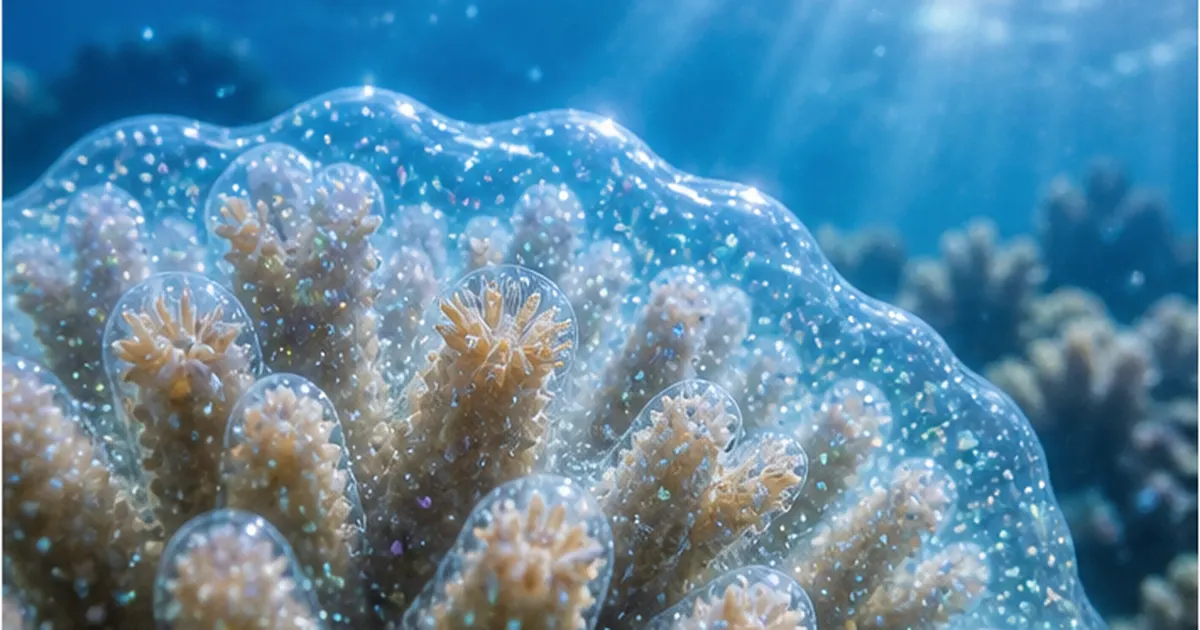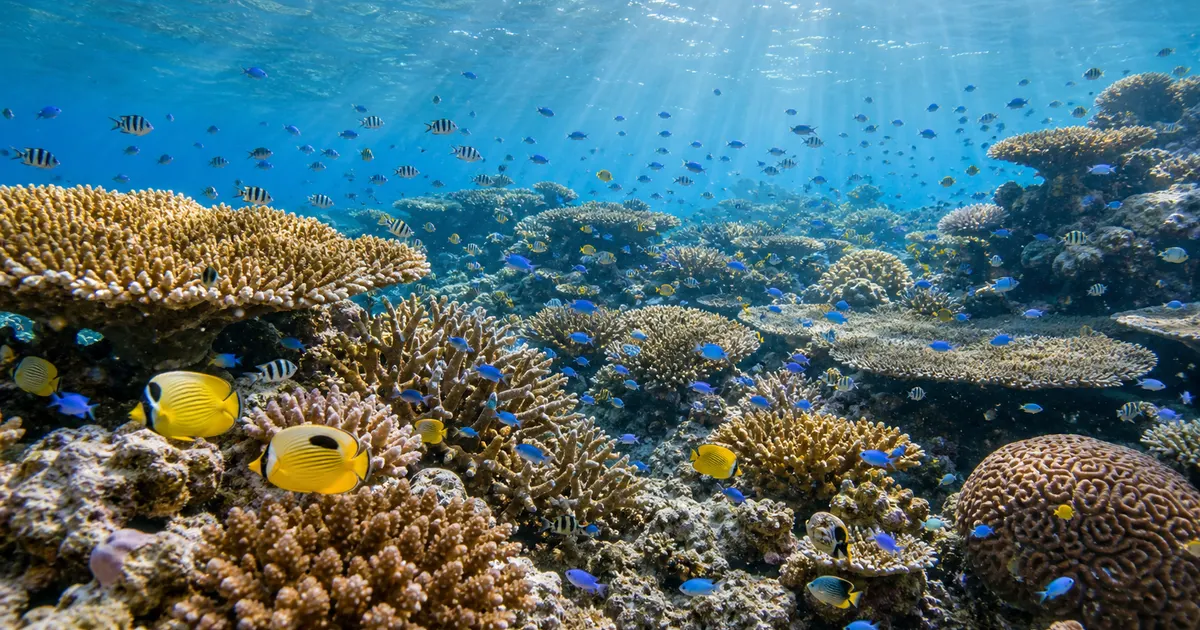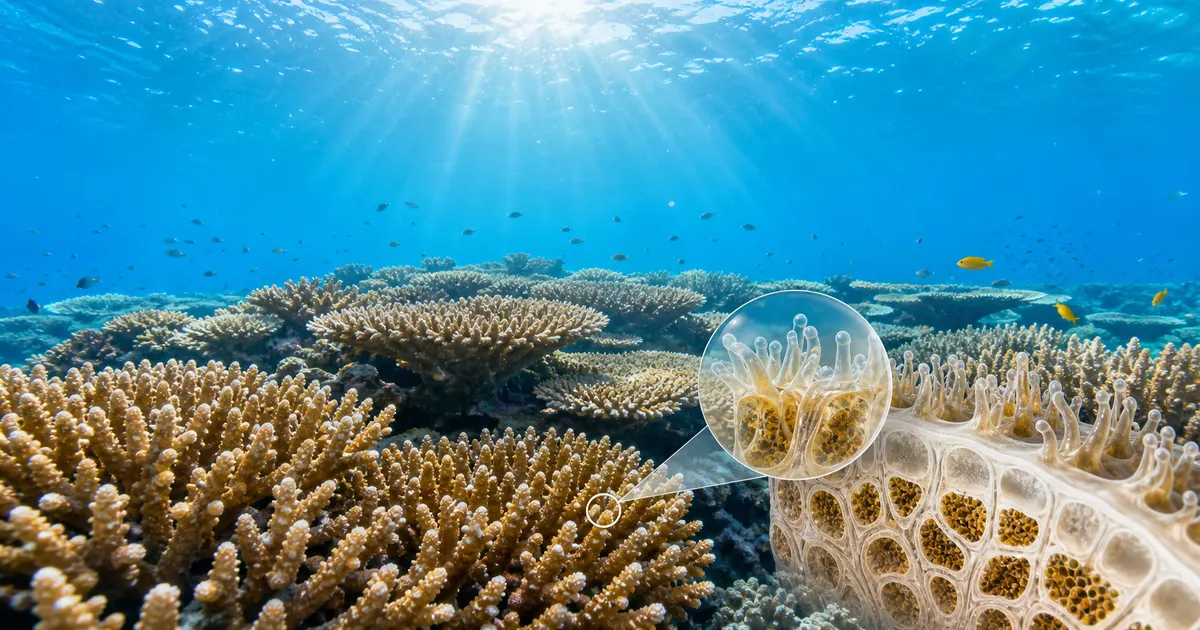
Picture a clear blue sea alive with vividly colored coral. That richness is sustained by a housemate too small to see: inside every coral's tissue live countless microscopic algae called zooxanthellae, packed in and sharing the nutrients they make through photosynthesis. It is this remarkable partnership that makes coral the architect of the "rainforest of the sea."
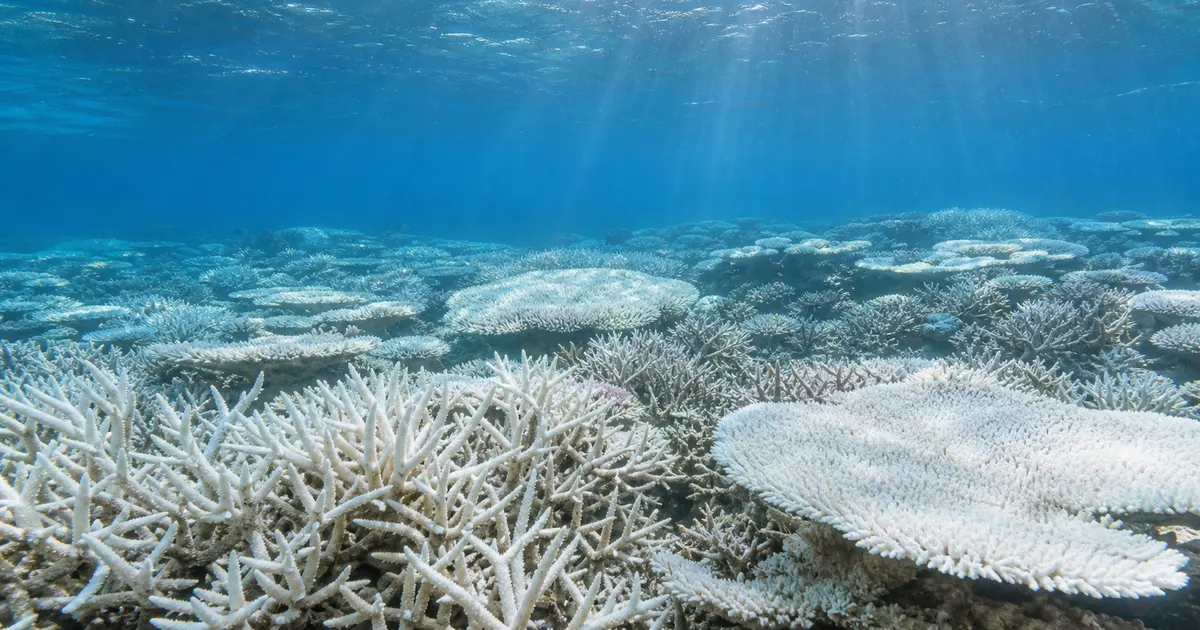
In recent years, though, this partnership has been seen breaking down with alarming ease all over the world. When sea temperatures rise by just a few degrees Celsius, corals lose their zooxanthellae and expose their bare white skeletons — a phenomenon known as "bleaching." During the Fourth Global Bleaching Event of 2023-2025, fully 84% of the world's coral reefs were exposed to heat stress.
This article gently unpacks how coral and zooxanthellae support each other, why high water temperatures break down their partnership, and whether bleached coral can recover — all backed by the latest research data. We'll also look at cutting-edge research into breeding heat-tolerant coral, and think together about what we can do.
What you'll learn in this article
- Although coral is an animal, it gets most of its nutrition from the photosynthesis of the phytoplankton-like algae (zooxanthellae) living inside it
- Zooxanthellae give coral sugars and oxygen, while coral gives zooxanthellae a home, carbon dioxide, and nutrients — a mutually supportive relationship
- Bleaching is a loss-of-color phenomenon that occurs when heat stress disrupts the symbiotic balance and coral loses its zooxanthellae
- Bleaching does not mean immediate death, but if high temperatures persist, coral cannot obtain nutrients and eventually weakens and dies
- The frequency and scale of mass bleaching events — such as the 2016 Sekisei Lagoon event and the 2023-2025 global bleaching event — have surged in recent years
- Restoration research using heat-tolerant zooxanthellae and resilient coral is advancing, but the fundamental solution is to stop the rise in sea temperatures itself
Animal or Plant? How Symbiosis Builds Coral's "Rainforest of the Sea"
Let's start with the basics. Coral is not a plant — it belongs to the same group of animals as jellyfish and sea anemones, the cnidarians. Countless tiny individuals called polyps gather to form a colony, secreting a hard calcium carbonate skeleton on the outside of their bodies. When this skeleton builds up over hundreds or thousands of years, it forms the massive three-dimensional structure we call a coral reef.
What's astonishing about coral reefs is the density of life per unit area. Together, the world's coral reefs cover only about 0.1-0.2% of the Earth's surface, yet they are thought to be home to roughly 25% of all marine species — more than 90,000 species. That is why they are likened to tropical rainforests on land and called the "rainforest of the sea."
Why Only Coral Can Build Massive Reefs
Tropical and subtropical seas are, in fact, "ocean deserts" poor in nutrients. With little nitrogen or phosphorus available, they shouldn't be able to support much life. Yet coral reefs boast explosive diversity precisely because coral has acquired a mechanism for housing algae inside its body and converting sunlight into an energy source. That algae is zooxanthellae — the star of this article.
In other words, coral is an animal that reaps the benefits of photosynthesis like a plant — essentially a creature carrying a "mobile solar panel" inside its body. Just as deep-sea creatures evolved uniquely in a world without light (see our article on deep-sea creature adaptation for more), shallow-water coral has evolved to make the most of available light. This dependence on photosynthesis is why coral can only build large-scale reefs in shallow waters where light reaches. Conversely, some coral species live in the deep sea without zooxanthellae and without relying on photosynthesis (deep-sea coral), but they cannot build massive reefs.
Coral reefs are not only habitats for other creatures — they also support our own lives. A single square kilometer of coral reef is said to produce as much as 15 tons of food per year, and roughly one-fifth of the world's population, in communities across more than 80 countries, is said to depend on coral reefs for income or food. Reefs also act as a "natural breakwater," dissipating offshore waves and protecting coastlines. This small-scale symbiosis between coral and zooxanthellae forms the foundation of benefits on a planetary scale.

Key Points of This Article
- Coral is a cnidarian that hosts algae called zooxanthellae in symbiosis inside its body
- Zooxanthellae's photosynthesis sustains the prosperity of coral reefs in nutrient-poor tropical seas
- This symbiosis is highly vulnerable to high water temperatures, and when it breaks down, bleaching occurs
What Exactly Is "Symbiosis"?
In biology, symbiosis refers to a close living relationship between different species. Coral and zooxanthellae are a textbook example of "mutualism," in which both parties benefit. It's not a case of one side profiting alone — the relationship only works because both sides support each other. That is precisely why it is also such a delicate relationship: if one side falters, the other cannot survive either.
Coral reefs also play a major role in the Earth's carbon cycle and as a starting point for marine food chains. Small fish, shrimp, and crabs grow up in the crevices of coral, larger fish eat them, and people in turn make use of those fish — coral reefs are a "cradle" connecting countless lives. When we consider that the pair of partners at the center of it all is coral and zooxanthellae, the importance of this symbiosis stands out all the more.
From the next section, let's look step by step at exactly what kind of creature this housemate, zooxanthellae, is, and what kind of "deal" the two partners strike. We'll break down technical terms as much as possible, so even readers who aren't confident about biology or ocean topics can read on with peace of mind.
What Are Zooxanthellae? The Microscopic Algae Living Inside Coral
Zooxanthellae are a type of single-celled algae belonging to the dinoflagellate group. They are only about 10 micrometers in diameter (roughly one-hundredth of a millimeter) and are named for their golden-brown to brown pigment. Scientifically, they are classified in the group Symbiodiniaceae.
As many as one million to several million zooxanthellae are thought to live in every square centimeter of coral tissue. Coral appears brown, green, or in vivid fluorescent colors because of a combination of these zooxanthellae's pigments and the fluorescent proteins the coral itself produces. Conversely, coral that has turned completely white through bleaching has lost its zooxanthellae. Incidentally, coral is thought to produce fluorescent proteins partly to act as sunshades protecting itself and its zooxanthellae from overly intense light — so even those vivid colors serve a real purpose.
Zooxanthellae Aren't Coral's Only Partner
Zooxanthellae live in symbiosis not only with coral but with a wide range of marine creatures, including giant clams, sea anemones, jellyfish, and some sea snails. Some types float freely in the sea, while others live inside a host's body. Baby coral (larvae and juvenile polyps) typically begin their symbiosis only after taking in zooxanthellae from the surrounding seawater. They don't have a partner from the moment they're born — they go "partner hunting" as they grow.
How coral takes zooxanthellae into its body and accepts them as symbiotic partners without digesting them has long been one of biology's great mysteries. Normally, when an animal takes a foreign substance into its cells, it gets digested — yet coral gives special treatment to zooxanthellae alone and keeps them alive. Recent genetic research is gradually identifying the molecules that coral and zooxanthellae exchange, as well as the genes involved in establishing symbiosis. As this understanding advances, researchers hope it will also get closer to the root of bleaching — why the symbiosis breaks down under high temperatures.
Incidentally, the term "zooxanthella" comes from the naming of brown granules once found inside animal bodies as "yellow cells" (zooxanthella). For a long time, all zooxanthellae were thought to be the same species, but now that genetic analysis has advanced, we know they are in fact a diverse collection of lineages that merely look similar. It is this very "diversity" that forms the basis for the differences in heat tolerance discussed next.

Zooxanthellae Come in Different "Types"
Recent research has revealed that zooxanthellae comprise multiple genetically distinct groups (lineages once referred to as Clades A through I). What matters is that heat tolerance varies greatly between groups. For example, the genus Durusdinium (formerly Clade D) is often found in coral that has experienced hot summers or bleaching, and is thought to be resistant to temperature stress. This variation becomes a key factor in the heat-tolerant coral research introduced later in this article.
| Item | Details |
|---|---|
| Identity | A single-celled dinoflagellate alga (Symbiodiniaceae) |
| Size | About 10 micrometers in diameter (roughly one-hundredth of a millimeter) |
| Color | Golden-brown to brown (due to pigment) |
| Habitat | Inside coral, giant clams, sea anemones, and other hosts, or free-floating in seawater |
| Role | Supplies nutrients produced through photosynthesis to its host |
| Type variation | Heat tolerance differs by lineage (e.g., genus Durusdinium is heat-resistant) |
Trivia: Coral Health Revealed by Color
Healthy coral takes on a brownish tint from its zooxanthellae's pigment. If it starts looking pale, that's a sign zooxanthellae are beginning to decline. If it turns completely white, bleaching has progressed. This is a useful gauge to keep in mind when observing coral while diving or snorkeling.
How the Symbiosis Works: Nutrient Exchange Powered by Photosynthesis
The relationship between coral and zooxanthellae can be likened to a "landlord and tenant" trading goods. Coral (the landlord) provides zooxanthellae with a safe home and raw materials, and zooxanthellae (the tenant) pay "rent" in return, in the form of nutrients produced through photosynthesis. Let's look at their transaction in concrete terms.
What Zooxanthellae Give to Coral
Zooxanthellae use sunlight to produce organic compounds such as sugars from carbon dioxide and water (photosynthesis), and pass on much of what they produce to their coral host. The nutrients transferred include sugars such as glucose, glycerol, amino acids, and lipids, and it is estimated that up to 90% of the energy coral needs is supplied by the photosynthetic products of its zooxanthellae. Oxygen is also supplied as a byproduct of photosynthesis.
Coral can also catch and eat plankton with its tentacles, but that alone falls far short of the nutrition it needs. It's this photosynthesis-driven "self-sufficiency" that allows coral to build impressive skeletons in nutrient-poor tropical seas. By day it gains energy through its zooxanthellae's photosynthesis, and by night it extends its tentacles to catch plankton — making coral a unique creature that lives by this dual strategy of photosynthesis and predation.
What's fascinating is that this exchange of nutrients isn't just casual "sharing" — it is precisely controlled. Recent research has discovered new pathways by which zooxanthellae release nutrients to their host, and has reported that the zooxanthellae's cell wall supports sustained carbon transfer. The symbiosis isn't left to chance; it is a "mechanism" both partners have refined over a long evolutionary history.

What Coral Gives to Zooxanthellae
What coral provides to zooxanthellae in return is just as important. Zooxanthellae not only gain a safe location inside coral's cells, but also receive carbon dioxide from the coral's respiration and metabolism, plus inorganic nutrient salts such as nitrogen and phosphorus contained in the coral's waste products. Since the surrounding seawater is low in nutrient salts, the interior of coral is, for zooxanthellae, "a prime location for a stable nutrient supply."
- What zooxanthellae give coral: photosynthetic products such as sugars, amino acids, and lipids, plus oxygen
- What coral gives zooxanthellae: a home (a safe place inside its cells), carbon dioxide, and nutrient salts such as nitrogen and phosphorus
- The result: even in nutrient-poor seas, the two partners support each other to achieve high productivity

Photosynthesis Also Speeds Up Skeleton Building
Zooxanthellae's photosynthesis is also known to speed up the formation of coral's calcium carbonate skeleton. This phenomenon, in which skeleton formation progresses faster during daylight hours, is called "light-enhanced calcification." In other words, zooxanthellae don't just supply coral with energy — they accelerate the construction of the massive structure that is the coral reef itself. That said, this calcification is also affected by the chemical state of seawater, and as ocean acidification driven by rising carbon dioxide progresses, it becomes harder for coral to build its skeleton (for more, see our article on ocean acidification and coral reefs).
Key Points of the Symbiosis
- Zooxanthellae's photosynthesis supplies up to 90% of coral's energy
- Coral provides a home, carbon dioxide, and nutrient salts in exchange for nutrients
- Photosynthesis also accelerates skeleton building (calcification), supporting reef growth
Why Does Bleaching Happen? How High Temperatures Destroy the Symbiotic Balance
Even a symbiosis as elaborate as this has a major weakness: it is extremely fragile against high water temperatures. If summer sea temperatures stay just 1-2°C above the seasonal average for a few weeks, the relationship between coral and zooxanthellae begins to break down. This is "bleaching" (coral bleaching). Bleached coral loses its pigment, and its white skeleton shows through its now-transparent tissue, making it appear completely white. Because it looks as if it has been bleached, this is called "bleaching" in English.
Why would coral let go of such a vital partner, one that supplies 90% of its nutrition? The answer lies in the fact that, under high-temperature stress, zooxanthellae transform from a "reliable partner" into a "harmful presence." The very photosynthesis that normally produces nutrients becomes, in the heat, a factory producing substances that harm coral instead. This is where the poignancy and difficulty of the bleaching phenomenon are concentrated.
The Trigger for Bleaching: Reactive Oxygen Species
At the heart of the bleaching mechanism are reactive oxygen species. When water temperatures rise too high, the zooxanthellae's photosynthetic machinery stops functioning normally, generating an excess of cell-damaging reactive oxygen species instead of the nutrients it should be producing. Once a certain temperature is exceeded, so much reactive oxygen is produced that coral cannot neutralize it all, and coral expels its zooxanthellae to protect itself, or the zooxanthellae themselves weaken and leave. This is how zooxanthellae disappear and bleaching is completed.
In other words, bleaching is not simply a sign that coral has "weakened" — it is also an emergency response coral takes to the environmental stress of high temperatures. It is, so to speak, an "emergency brake" on the symbiotic relationship, cutting loose a partner that has turned harmful. But this brake is a double-edged sword, since it also means coral loses its own energy source. There are thought to be several pathways for expelling zooxanthellae: coral actively expelling them, zooxanthellae leaving their home and swimming away, or only the zooxanthellae's pigment breaking down and being lost.
What's important is that the "trigger temperature" for bleaching is not especially high. Many corals head toward bleaching if temperatures stay just about 1°C above their local sea area's usual summer maximum for a few weeks. What looks like a trivial difference to us humans is, for coral, a major event that pushes it past its limit. That is precisely why the gradual, worldwide rise in sea temperatures poses such a fatal threat to coral reefs.

It's Not Just Water Temperature — Intense Sunlight and Typhoon-Free Summers
Water temperature is not the only factor that worsens bleaching. Intense sunlight (high irradiance) also accelerates the disruption of photosynthesis. In summers that are especially sunny and calm, shallow-water temperatures rise and light intensifies, making bleaching more likely to progress. Ironically, typhoons play the role of a "cooler," stirring up the ocean and lowering water temperatures, so in years with fewer typhoons, high temperatures tend to persist and bleaching tends to worsen. In Okinawa in 2024, it was precisely the scarcity of typhoons and the resulting difficulty in cooling the water that drove bleaching.
High water temperature is not the only stress hitting coral reefs in recent years. Rising sea surface temperatures and changing ocean currents are themselves advancing on a global scale (see our article on rising sea temperatures and changing ocean currents), and bleaching can be described as a phenomenon occurring at the front line of that change.
Main Stress Factors That Trigger Bleaching
- High water temperature (1-2°C above average for several weeks) — the biggest factor
- Intense sunlight (high irradiance) — accelerates disruption of photosynthesis
- Fewer typhoons — fewer chances for water temperatures to drop
- Other triggers for bleaching include low salinity, sediment inflow, and deteriorating water quality
Bleaching Involves Not Just "Heat" but "Starvation" Too
Recent research has also revealed that bleaching cannot be explained by high water temperature alone. Research from Kobe University and others has shown that coral can bleach even under conditions of nutrient (food) shortage, suggesting that the symbiotic balance may break down from both heat and starvation. The mechanism of bleaching is still an evolving topic, being gradually updated by ongoing research.
In addition to ocean warming, ocean acidification driven by rising carbon dioxide is another burden on coral. As the ocean acidifies, the materials coral needs to build its skeleton become scarce, slowing growth and making the skeleton more brittle. If coral already weakened by bleaching is also exposed to acidification, the damage is even more severe. Our article on ocean acidification and coral explains in detail this double pressure of warming and acidification bearing down on coral reefs.
Records Keep Being Broken: From the 2016 Sekisei Lagoon Event to Global Bleaching
Bleaching is not a rare event confined to a few localized seas. Over the past few decades, its scale and frequency have been increasing at an accelerating pace. Let's look at the record in Japan and around the world.
The Tragedy of Sekisei Lagoon, Japan's Largest Coral Reef (2016)
Sekisei Lagoon, spreading between Ishigaki Island and Iriomote Island in Okinawa Prefecture, is Japan's largest coral reef area. In the summer of 2016, this sea was hit by record-breaking high temperatures. A survey conducted by Japan's Ministry of the Environment at 35 sites that September found that of 11 coral species, 10 (all except Porites lutea) had bleaching or mortality rates exceeding 98%. Slower-growing species showed higher mortality, and it was noted that recovery of the reef's appearance would take longer than after past bleaching events.
Bleaching in Sekisei Lagoon has repeated since then; a Ministry of the Environment survey found the average bleaching rate reached 92.8% as of September 2022 (it later recovered to 50.2% by December as water temperatures dropped). This reveals a reality in which Japan's once-thriving largest coral reef accumulates damage with each bout of high temperatures. This severity is also covered in detail, following events on the ground in Okinawa, in our article "Coral Devastation in 2024?!" (coral bleaching in Okinawa).
Japan's coral reefs sit almost at the northern edge of the world's coral distribution. As warming raises sea temperatures, coral is beginning to appear, having moved northward, in waters off Honshu where it was previously absent — while in southern seas, bleaching driven by high temperatures is intensifying. These complex changes are happening at the same time. The fact that coral is expanding its range northward is not a blessing from warming; it is also a sign that southern seas are becoming harder for coral to inhabit. Japan's seas can be described as one of the front lines where the effects of global warming are visibly appearing.

The Fourth Global Bleaching Event (2023-2025): The Worst on Record
Then, from 2023 to 2025, the most intense mass bleaching event humanity has ever observed swept across the globe. According to figures compiled by the International Coral Reef Initiative (ICRI) and the U.S. National Oceanic and Atmospheric Administration (NOAA), during this period 84% of the world's coral reefs were exposed to bleaching-level heat stress, and 82 countries and territories were affected. This has been officially recognized as the Fourth Global Bleaching Event.
Compared with past global bleaching events, the worsening trend is obvious at a glance. The affected area was 21% in the first event (1998), 37% in the second (2010), and 68% in the third (2014-2017) — and this time it finally exceeded 80%. Even Australia's Great Barrier Reef, the world's largest coral reef, has experienced five mass bleaching events in the past nine years, and the 2024 bleaching event is reported to have shown the largest spatial extent on record.
What cannot be overlooked is that the "interval" between bleaching events keeps getting shorter. Mass bleaching used to be an abnormal event occurring once every few decades, but now it happens every few years — and in some regions, almost annually. If the next bleaching event arrives before a reef has fully recovered from the last one, coral reefs will steadily retreat. The fact that the area affected by global bleaching events has expanded with each successive event is, more than anything else, eloquent proof that ocean warming is steadily advancing.

| Global Bleaching Event | Period | Share of Coral Reefs Exposed to Heat Stress |
|---|---|---|
| 1st | 1998 | About 21% |
| 2nd | 2010 | About 37% |
| 3rd | 2014-2017 | About 68% |
| 4th | 2023-2025 | About 84% (largest on record) |
A Yardstick for Bleaching: "DHW"
NOAA's Coral Reef Watch measures how much heat stress coral has experienced using an index called DHW (Degree Heating Weeks). This figure represents how many weeks' worth of heat exceeding the normal summer maximum temperature have accumulated; generally, bleaching is likely once it exceeds 4, and widespread mortality is likely once it exceeds 8. During the Fourth Global Bleaching Event, heat stress was observed at levels so extreme that a new, higher tier had to be added to this index.
The Real Weight of Losing Coral Reefs
The decline of coral reefs is not just a story about distant southern seas. Coral reefs support fisheries by serving as spawning grounds and habitats for fish, their beautiful scenery generates tourism such as diving and snorkeling, and they dissipate waves to protect coastlines from typhoons and storm surges. It is estimated that around one billion people worldwide receive some benefit from coral reefs. The breakdown of the coral-zooxanthellae symbiosis means the loss of the foundation for these benefits. The reality that ocean changes overlap with other problems, such as plastic pollution, can also be seen in our article on the deep-sea trash problem.
Bleaching Does Not Equal Death: The Mechanics and Limits of Recovery
Hearing the word "bleaching," people tend to assume "the coral has died," but that's not quite accurate. Bleaching is, strictly speaking, a state in which coral has lost its zooxanthellae and its color, while the coral itself is still alive. If conditions improve — for example, if water temperatures drop — coral can take in zooxanthellae from the seawater again and regain both its color and its nutrient supply. Recovery from bleaching is a perfectly plausible phenomenon.
Recovery Is a Race Against Time
The question is how long coral can hold out while bleached. Coral that has lost its zooxanthellae can no longer receive the photosynthetic products that made up most of its energy. It can get by for a while on lipids and other reserves stored in its body, but the longer high temperatures persist, the more those reserves are depleted, and coral starves, weakens, and eventually dies. In other words, bleaching is not "instant death" but "a crisis with a grace period," and whether water temperatures drop during that grace period determines life or death.

Recovery Has Its Limits, Too
Even if coral recovers once, repeated bouts of bleaching wear it down. It becomes unable to devote energy to growth or reproduction and gradually weakens. In particular, slow-growing massive coral colonies, and old colonies that have died and been lost, can take decades to return to their original state. If the interval between bleaching events becomes shorter than this recovery period, coral reefs take the next hit before they've recovered, heading toward an irreversible decline.
- Even after bleaching, the coral itself does not die immediately (it is simply a state of having lost its zooxanthellae)
- If water temperatures drop, coral can take in zooxanthellae again and recover
- If high temperatures persist, coral runs out of nutrients and weakens or dies
- Recovery takes anywhere from years to decades, and frequent bleaching outpaces that recovery
The skeleton of dead coral eventually becomes covered by algae and other organisms, crumbling into sand. If a coral reef is lost, the fish and countless other creatures that made it their home also lose their place to live. Bleaching is not confined to a problem for a single kind of organism — its effects reach the entire coral reef ecosystem, and even the fisheries, tourism, and disaster-prevention functions that depend on it.
It's also important that heat tolerance and resilience differ by coral species. Generally, fast-growing branching or table-shaped corals bleach and die more easily, while slower-growing massive corals tend to be relatively more heat-tolerant. It has been pointed out that with each mass bleaching event, weaker corals disappear first, gradually changing the very makeup — the species composition — of the reef. Recovery isn't simply about returning to the original numbers; it's about restoring a rich ecosystem with a full diversity of species.
Bleaching is a "cry" from coral, and also an alarm warning humans of just how hot the ocean has become. Whether it can recover depends on how quickly we can halt the rise in sea temperature.
— A summary of consensus among coral reef researchers
Summarizing the Keys to Recovery
- Bleaching is not death — it is a state in which the chance for recovery remains
- What determines life or death is how quickly the high temperatures subside
- Frequent bleaching outpaces the speed of recovery, causing the decline of entire coral reefs
Conditions That Can Support Recovery
A coral reef's ability to recover from bleaching (resilience) is also affected by environmental factors other than water temperature. Clean water with little inflow of nutrients or sediment; coral predators and competing seaweed not being overabundant; and healthy coral remaining nearby to supply larvae — the more these conditions are met, the more easily recovery proceeds after bleaching. Conversely, reefs already weakened by land-based pollution or overfishing have less capacity to bounce back from bleaching. In other words, alongside tackling climate change, protecting the immediate marine environment is also a vital step in saving coral reefs.
The Search for Heat-Tolerant Coral: Research on Resilient Zooxanthellae and Adaptive Evolution
How can we confront this chain of bleaching events? Researchers in Japan and around the world are pouring effort into finding, breeding, and propagating "heat-tolerant coral." Here we introduce cutting-edge efforts, viewed from the perspective of symbiosis.
The Key: "Heat-Tolerant Zooxanthellae"
As mentioned earlier, zooxanthellae come in types that differ in heat tolerance. In particular, the genus Durusdinium (formerly Clade D) is often detected in coral that has experienced hot summers or bleaching, and is considered resistant to temperature stress. Experiments have confirmed that juvenile coral hosting only this type of zooxanthellae show higher survival rates when raised at high temperatures of 30°C. It is also thought that after bleaching, coral can undergo a "partner swap," switching to a more heat-tolerant type of zooxanthellae.
Applying this property, projects run by Japan's Fisheries Agency and others have been developing techniques to artificially raise "heat-tolerant coral" seedlings that host heat-tolerant zooxanthellae. The idea is to increase bleaching-resistant coral by selecting and combining resilient zooxanthellae. That said, it has also been pointed out that heat-tolerant zooxanthellae have downsides, such as being "somewhat weaker at promoting growth," and how to balance resilience against growth remains a topic of ongoing research. The fact that it isn't simply a matter of "stronger is better" is part of the deep complexity of biological symbiosis.

Coral's Own Genetic Resilience and "Assisted Evolution"
Zooxanthellae aren't the only key to resilience. Coral itself also has genetically heat-tolerant individuals and less tolerant ones. Recent research includes reports that reef-building coral's heat tolerance shows no clear trade-off with growth or other traits, raising expectations for "assisted evolution" — breeding from heat-tolerant parent colonies. In Japan, institutions such as the University of Tokyo are also working to unravel the genes involved in the coral-zooxanthellae symbiosis, gradually revealing which genes govern heat tolerance.
Replanting Reefs Through Sexual Reproduction
On-the-ground efforts to restore damaged coral reefs are also progressing. In 2020, companies and others established the "Sexual Reproduction Coral Restoration Support Council" to build a cycle of raising seedlings from coral eggs and replanting them in the sea. Techniques for propagating coral by cutting and transplanting fragments, and for fixing coral onto concrete blocks and other structures to grow it, are also being put into practical use in various regions. In Okinawa, every early summer sees "mass spawning," when coral simultaneously releases eggs and sperm into the sea, and efforts are also underway to take advantage of this natural timing to secure large numbers of seedlings.

- Raising juvenile coral that hosts heat-tolerant zooxanthellae (such as the genus Durusdinium)
- Selecting and breeding genetically heat-tolerant parent coral (assisted evolution)
- Raising seedlings produced through sexual reproduction in intermediate nurseries, then replanting them in the sea
- Monitoring transplanted coral to confirm its bleaching resistance and survival rate
There Is Hope in Research — But Something We Must Not Forget
- Research into heat-tolerant coral is an important trump card for protecting reefs that are being lost
- However, the area that can be replanted by human hands is only a tiny fraction of the vast expanse of coral reefs
- The fundamental solution is to stop the rise in sea temperature itself, the root cause of bleaching
- Both the major challenge of reducing greenhouse gases and the twin efforts of research and restoration are needed
There are also things each of us can do. Some sunscreen ingredients have been identified as harmful to coral, so choosing reef-friendly products helps. When out on the water, avoid stepping on or breaking coral. Don't let trash flow into the sea, and reduce plastic use. And above all, cutting back on wasted electricity and energy to curb greenhouse gas emissions will, in a roundabout way, help ease the rise in sea temperatures and protect the future of coral reefs. Even small actions add up to a great deal of power.
Research into heat-tolerant coral is steadily advancing. But no matter how resilient the coral we cultivate, if the ocean as a whole keeps warming, it will eventually exceed any limit. Researchers unanimously emphasize that such techniques are, at best, a way to buy time, and that a real solution requires tackling climate change itself. Only when the effort to cultivate resilient coral and the effort to cool the ocean come together as twin wheels will light finally shine on the future of coral reefs.
Conclusion: What This Tiny Symbiosis Teaches Us
The story of coral and zooxanthellae teaches us that mutual support between organisms too small to see sustains one of the richest ecosystems on Earth. Zooxanthellae's photosynthesis supplies most of coral's energy, and that bounty has built the "rainforest of the sea," nourishing countless creatures.
Yet this symbiosis is so delicate that even a slight rise in sea temperature can break it down. Bleaching is a sign the symbiosis has failed, and during the 2023-2025 global bleaching event, more than 80% of the world's coral reefs were exposed to heat stress. While bleaching does not mean immediate death, if high temperatures persist, coral cannot recover, and if it happens too often, the damage becomes irreversible.
Research harnessing heat-tolerant zooxanthellae and resilient coral is a ray of hope, but it cannot protect the vast expanse of coral reefs on its own. Problems such as ocean warming, acidification, and plastic pollution are all intertwined, and they connect directly to our own daily lives. Learning about ocean change and each of our individual choices to reduce carbon dioxide ultimately connect to the future of distant coral reefs. Next, we hope you'll continue your learning about the ocean with our articles on rising sea temperatures and changing ocean currents and the breakdown of ocean plastic.
Summary of This Article
- Coral is a cnidarian that obtains up to 90% of its nutrition from the photosynthesis of the zooxanthellae living inside it
- The symbiosis is fragile against high temperatures; when it breaks down, coral loses its zooxanthellae and bleaches (triggered by reactive oxygen species)
- Bleaching is not instant death, but if high temperatures persist, coral starves and dies
- The scale and frequency of bleaching have surged, and the Fourth Global Bleaching Event affected 84% of the world's reefs
- Research into heat-tolerant coral is advancing, but the fundamental solution is to stop rising sea temperatures — that is, climate change itself
The story of the symbiosis that coral and zooxanthellae have built over hundreds of millions of years reminds us of a fundamental truth about life: that living things survive by being connected to one another. The photosynthesis of algae too small to see makes rainbow-colored coral reefs bloom in the blue sea, nourishes countless creatures, and even supports human livelihoods — simply knowing this fact should change, even a little, the way we look at the ocean.
The tiny symbiosis between zooxanthellae and coral shows us, at the same time, the wonder of mutual support and its fragility. Whether we can protect this relationship may ultimately depend on how we humans behave within the larger symbiotic system that is planet Earth. Umi Lab will keep bringing you the wonders and crises of the ocean, gently and backed by solid data.
References and Sources
- Ministry of the Environment, Japan - Kyushu Regional Environment Office - Survey results on coral bleaching in Sekisei Lagoon (2016, 2022, 2024)
- Ministry of the Environment, Japan - Report on the 2016 mass bleaching event (status of Sekisei Lagoon / emergency bleaching countermeasures meeting)
- Fisheries Agency of Japan - Development of seedling production technology for heat-tolerant coral (coral propagation technology development report)
- International Coral Reef Initiative (ICRI) - 84% of the world's coral reefs impacted in the Fourth Global Bleaching Event
- NOAA (U.S. National Oceanic and Atmospheric Administration) - NOAA confirms 4th global coral bleaching event
- National Institute for Basic Biology (NIBB) - An explanation of zooxanthellae symbiotic with coral (Division of Environmental Photobiology)
- WWF Japan - The 2016 mass coral bleaching event and its aftermath
- Nature Conservation Society of Japan (NACS-J) - The mechanism of coral "bleaching" and its relationship with typhoons
- Kobe University - Coral bleaches from heat or hunger (research on the bleaching mechanism)
* Listed in order of reliability: government/academic institutions > peer-reviewed papers > specialized organizations > reliable media