A clear blue sea spreading with colorful coral, surrounded by countless fish dancing in the water — the seas of Okinawa and the Southwest Islands are exactly the "tropical paradise" many people picture. But this beautiful scenery is now quietly, and rapidly, changing. Bleaching caused by rising water temperatures, outbreaks of crown-of-thorns starfish devouring coral, and red soil flowing in from land — multiple threats are pressing in on the coral reefs at once.
This article organizes, based on primary data from the Ministry of the Environment, the Fisheries Agency, and others, why the coral reefs of Okinawa and the Southwest Islands — centered on Japan's largest coral reef, the Sekisei Lagoon — are so rich, and what is happening to them now. It also sheds light on the hopeful side: the balance with tourism, and the conservation activities carried out by local communities.
Coral reefs are not merely a tourism resource. They are a cradle of biodiversity said to be connected to about a quarter of all marine life, they protect our lives from waves, and they support fisheries and culture. Knowing their current state is a first step toward protecting them.
What you will learn from this article
- Why the coral reefs of Okinawa and the Southwest Islands have "some of the richest diversity in the world"
- The symbiosis between coral and zooxanthellae, and the scientific mechanism behind bleaching
- The reality and latest data on the three threats of bleaching, crown-of-thorns starfish, and red soil runoff
- How to think about balancing tourism (diving, snorkeling) with coral conservation
- The conservation efforts led by local communities in places such as Onna Village, Ishigaki Island, and Aka Island
- What each of us can do amid climate change
Among the World's Richest — What Are the Coral Reefs of Okinawa and the Southwest Islands
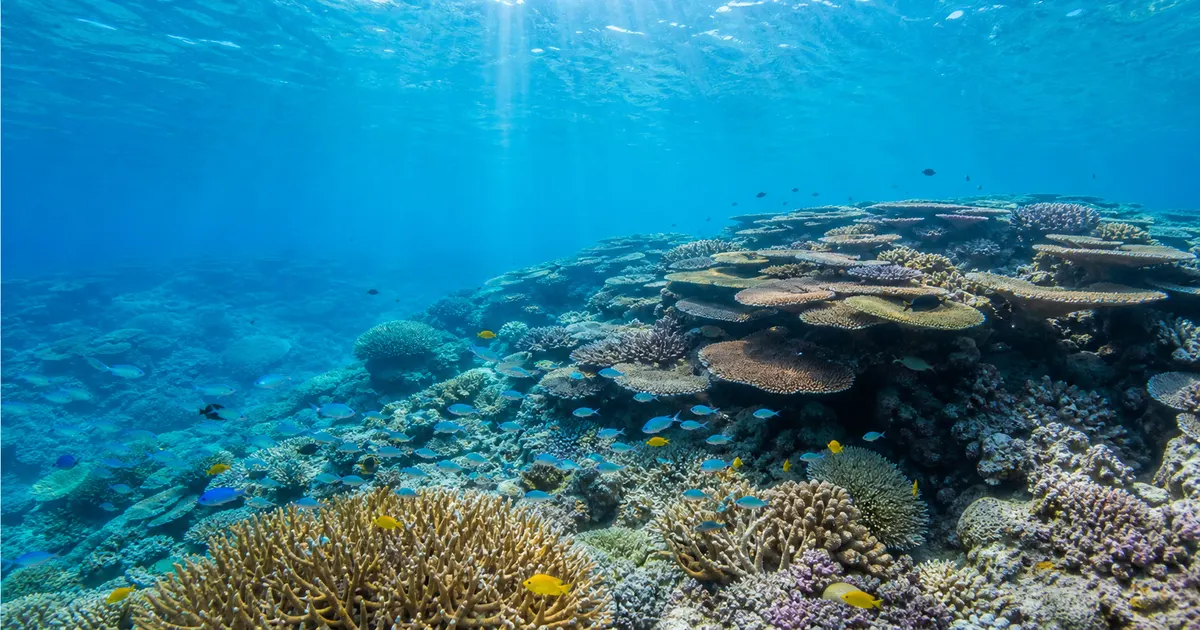
Japan sits at the "northern limit" of the world's coral reef distribution. Reef-building corals are found not only in warm seas such as Okinawa's, but are also scattered across the relatively cooler waters from Kyushu to Honshu; however, rich coral reefs — sea areas where coral has built up landforms over long years — spread mainly across Okinawa and the Southwest Islands (the Ryukyu Islands). Blessed with warm seawater carried by the Kuroshio Current, intricately complex terrain, and clear water, this area nurtures some of the richest biodiversity found anywhere in the world.
Among reef-building corals, the order Scleractinia (stony corals) has the greatest number of species, with more than 300 species confirmed within Japan alone. This is a level of richness second only to the "Coral Triangle" (Southeast Asia to the Western Pacific), the world's central hub of reef-building coral, illustrating just how precious the Southwest Islands are. For an overview of Japan's marine biodiversity as a whole, see also the article on Japan's marine biodiversity.
Several natural conditions overlap to allow the Southwest Islands to nurture such rich coral reefs. First, the Kuroshio Current, a warm current flowing north through the Pacific, carries warm, clear seawater suited to coral growth throughout the year. In addition, the complex coastal terrain formed by the chain of islands creates a diverse range of environments, from the open ocean side with strong wave action to calm inner bays, allowing different coral species adapted to each to divide up the habitat. The fact that these are nutrient-poor (oligotrophic) waters is also an important factor that maintains clarity and supports coral photosynthesis.
There are three types of coral reef
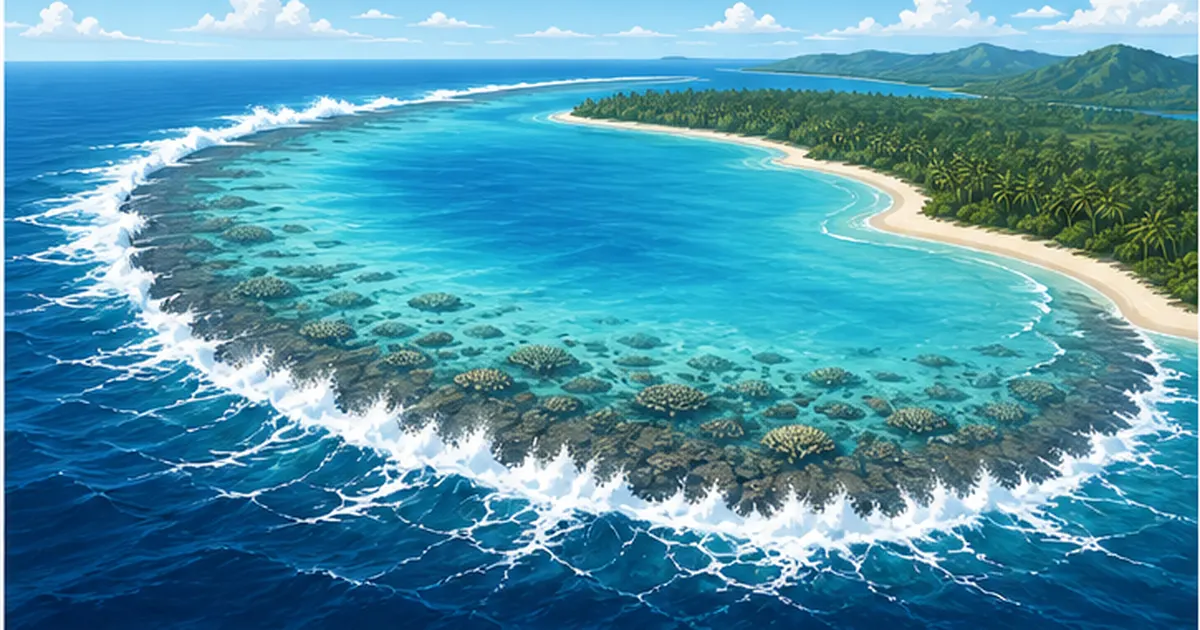
Although we simply say "coral reef," reefs can be broadly divided into three types based on their landform. A fringing reef develops along the coast of an island; a barrier reef develops offshore, away from the coast, like a levee; and an atoll is formed when the central island sinks, leaving only a ring-shaped reef behind. Most of Japan's coral reefs are fringing reefs, and an example like the Sekisei Lagoon, where a reef spreads across the shallow sea between islands, is rare even globally, which is precisely why its biodiversity stands out so much.
The Sekisei Lagoon, Japan's largest coral reef
The symbol of this is the Sekisei Lagoon, spreading between Ishigaki Island and Iriomote Island. Its name was formed by taking the "seki" from "Ishigaki" (石垣) and the "sei" from "Iriomote" (西表). Spread across a vast sea area of roughly 20km east-west and 15km north-south, it is Japan's largest coral reef, home to more than about 360 species of reef-building coral. It is part of Iriomote-Ishigaki National Park, designated in 1972, and is also a target of a national ecological restoration project.
The Sekisei Lagoon is more than just a "treasure trove of coral." It is a spawning and nursery ground for countless creatures such as fish, shrimp, and shellfish, and it also functions as a "source of species," supplying larvae (planulae) to surrounding coral reefs. Whether this area remains healthy is directly tied to the future of the coral reefs across the Yaeyama region, and indeed across the Southwest Islands as a whole.

The great blue coral colony of Shiraho
The coral reefs of the Sekisei Lagoon have also long been deeply connected to local life. The people of Yaeyama have long harvested fish and shellfish from the coral reef's blessings, protected their homes and fields from the wind with stone walls built from coral rock, and woven gratitude toward the sea into their festivals and beliefs. Coral reefs are a natural heritage, and at the same time the very foundation supporting the culture rooted in this land. That is precisely why their decline is not only an ecological crisis, but also a crisis for the region's memory and way of life.
In the sea off Shiraho, on the east coast of Ishigaki Island, lies one of the largest colonies of blue coral in the Northern Hemisphere. Blue coral is a rare coral whose skeleton takes on a bluish tint inside, and this colony is thought to have grown over thousands of years. It is also a symbol of conservation, with a history in which, following a conservation movement sparked in the 1980s by an airport construction plan, the local community, researchers, and citizens joined forces to protect it.
Four blessings coral reefs provide
- Biodiversity — habitat and spawning grounds for a diverse range of creatures, including fish, shellfish, and sea turtles
- Disaster prevention — a "natural breakwater" in which coral reefs weaken waves, protecting coastlines and settlements from high waves and storm surges
- Fisheries — coral reefs are excellent fishing grounds, supporting local food and livelihoods
- Culture and tourism — a foundation for diving, snorkeling, and traditional culture
Coral reefs are also called a "cradle of the sea": despite occupying only about 0.2% of the ocean's surface area, roughly a quarter of all marine creatures are said to depend on coral reefs at some point in their lives. An extraordinary richness is packed into this tiny area.
That richness is not limited to the tropical fish we typically see. Shrimp, crabs, sea slugs, and shellfish hide in the crevices of coral, sea cucumbers and starfish live on the sandy floor, and sea turtles sometimes migrate through in search of food. One fish uses coral as a spawning bed, another uses it as a hideout during its juvenile stage before heading out to the open ocean as it grows — coral reefs are, in themselves, a complex and finely tuned ecosystem in which countless such connections of life overlap in many layers. That is precisely why, if the coral at its center is lost, the effects ripple outward across the entire sea.
What Exactly Is Coral — Symbiosis With Zooxanthellae and How a "Reef" Is Built
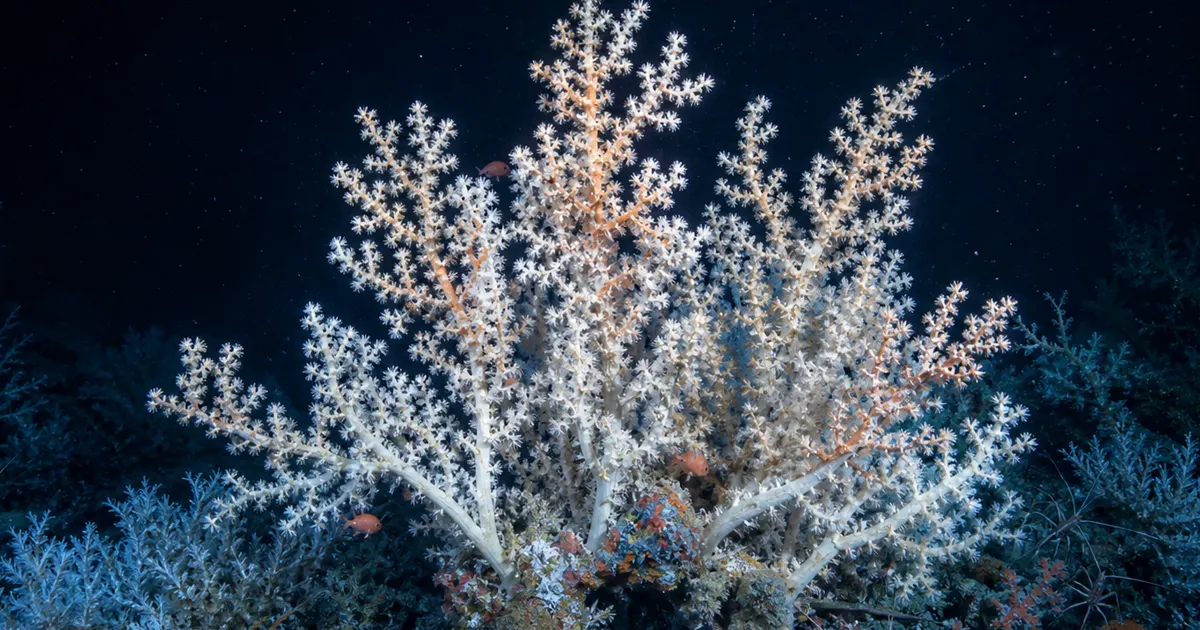
People often ask, "Is coral a plant, or a rock?" but the answer is neither. Coral is a cnidarian — a bona fide "animal," a relative of jellyfish and sea anemones. Countless tiny individuals called polyps, each only a few millimeters across, gather together to form a colony, building up a calcareous skeleton.
Zooxanthellae, the "housemate"
The greatest secret behind coral's richness is its symbiotic relationship with a tiny alga called zooxanthellae, which lives inside its body. Zooxanthellae photosynthesize and share the energy they produce (such as sugars) with the coral. It is said that this alga supplies most of the energy coral needs — in some cases around 90%. Coral's vivid coloring, too, mostly comes from the color of these zooxanthellae.
In return, the coral provides the zooxanthellae with a "safe home" and the carbon dioxide and nutrients they need for photosynthesis. It is thanks to this ingenious symbiosis that coral reefs can thrive in the clear, nutrient-poor (oligotrophic) seas of the south. Conversely, when this relationship breaks down, coral weakens rapidly — that is the "bleaching" discussed later. Coral does not rely solely on nutrients from zooxanthellae; at night it also extends its tentacles and captures drifting zooplankton, showing a "carnivorous" side as well. This dual nutritional strategy is also part of the wisdom that lets coral survive a harsh environment.

How coral builds a "reef"
Coral grows its calcium carbonate skeleton a little each year. Depending on the species, branching Acropora corals can grow anywhere from a few centimeters to more than 10cm a year, and table corals can spread over the area of several tatami mats over several decades. Countless corals build up their skeletons generation after generation, and as coralline algae, shells, and other material fill the gaps, the massive landform we call a "coral reef" takes shape over thousands of years.
| Growth form | Representative example | Characteristics |
|---|---|---|
| Branching | Acropora corals | Grows quickly and provides shelter for fish. Vulnerable to bleaching and physical damage |
| Tabular | Table coral | Spreads horizontally to efficiently capture sunlight. Prone to breaking in typhoons |
| Massive | Porites corals | Grows slowly but is sturdy and long-lived. Relatively resistant to bleaching |
| Encrusting | Montipora corals and others | Spreads to cover rock. Tolerates environmental change well |
This "diversity of form" is precisely what creates the complex three-dimensional structure of a coral reef, providing habitat for countless creatures. Fast-growing Acropora corals are vulnerable to bleaching and typhoons but also recover quickly, while massive Porites corals grow slowly but are sturdy and long-lived. The very fact that diverse types of coral coexist serves as a kind of "insurance" against environmental change. Some large Porites colonies are known to have lived for several hundred years, with a record of growth etched into their skeletons like tree rings. By analyzing these, researchers gain clues for reading past changes in seawater temperature and environment.
Coral does not move, but it is by no means simply passive. It protects itself from strong sunlight with fluorescent proteins, captures plankton when food is scarce, repairs damaged tissue, and can even compete for territory with neighboring coral of a different species. The way it reshapes the very landform of the seafloor over a long span of time makes it truly deserving of the name "architect of the sea."
Coral's mass spawning
Many corals engage in "mass spawning," releasing eggs and sperm into the sea all at once on nights around the full moon in early summer. The sight of pink particles covering the sea surface is fantastical, and the larvae born from this spawning settle in new areas, driving the regeneration of coral reefs. Conservation techniques are also advancing that capture the timing of spawning to collect larvae and raise them as seed stock.
Bleaching — What Happens When the Sea Grows Hot
The greatest threat facing coral reefs is bleaching. Bleaching is a state in which coral under stress expels the zooxanthellae living inside its body, causing the white skeleton to show through the coral's transparent tissue. Because zooxanthellae are coral's main energy source and the source of its color, coral that loses them literally turns "white" and falls into a state of starvation. The scientific mechanism of bleaching is explained in detail in the article on the mechanism of coral bleaching.
Why high water temperature causes bleaching
The seawater temperature suited to coral growth is generally considered to be around 25–29°C. When seawater temperature exceeds 30°C for several weeks, zooxanthellae produce excess reactive oxygen species during photosynthesis, damaging the coral's cells. In order to protect itself, the coral expels the zooxanthellae — which have, in effect, become a "harmful housemate" — from its body. This is the mechanism behind bleaching.
Bleaching does not immediately mean "death." If the water temperature drops, the zooxanthellae can return, and the coral can recover. But if high temperatures persist for a long time, or if bleaching recurs again and again, the coral weakens from a lack of energy and eventually dies. In recent years the frequency and scale of bleaching have increased worldwide, and the fact that coral is not given time to recover is a serious problem.
As an indicator of how much heat stress coral has been exposed to, researchers use a measure called Degree Heating Weeks (DHW). This is a cumulative value showing, over how many weeks, and by how much, the temperature exceeded the normal summer maximum for that sea area. Once the cumulative value exceeds a certain threshold, bleaching begins, and at even higher levels, widespread coral death can occur. By combining satellite observations of sea surface temperature with this indicator, it has now become possible to predict the risk of bleaching several weeks in advance and issue warnings.
Ironically, typhoons, which are also a blessing to coral reefs, can sometimes ease bleaching. As a typhoon churns the sea and brings up cold water from the depths, it can temporarily lower high water temperatures, putting the brakes on bleaching. However, an excessively strong typhoon can physically destroy coral, making it a double-edged sword. It has also been pointed out that when years continue without a typhoon approaching in summer, the water temperature does not drop, and bleaching tends to become more severe.
High water temperature is not the only cause of bleaching
High water temperature is the most representative stressor causing bleaching, but it is not the only one. Excessively strong sunlight, low salinity (from freshwater influx due to heavy rain), and the influx of red soil can all weaken zooxanthellae and trigger bleaching even before water temperature rises. When multiple stresses overlap, coral becomes even more prone to bleaching.

What actually happened in the Sekisei Lagoon
Large-scale bleaching is a real crisis in Japan as well. According to monitoring surveys the Ministry of the Environment has continued at 31 points within the Sekisei Lagoon, the average bleaching rate in September 2022 reached 92.8%. Although it had fallen (recovered) to 50.2% by that December, the average coverage (the proportion of the seafloor covered by coral) also dropped from 21.6% to 17.0%, leaving a major scar.
The subsequent gradual recovery did not last. In September 2024, the average bleaching rate rose again to 84.0%. In the survey that December, the bleaching rate had fallen to 65.5%, but the breakdown showed 34.5% healthy and 38.1% pale, against just 1.8% bleached, while 25.5% had died, and average coverage had fallen to 13.7%. This is thought to reflect the effect of rising water temperatures, and the Ministry of the Environment has assessed that "coral coverage, which had been gradually recovering since the large-scale bleaching of 2022, has declined again."
| Survey period | Average bleaching rate | Average coverage | Notes |
|---|---|---|---|
| September 2022 | 92.8% | 21.6% | Extremely severe large-scale bleaching |
| December 2022 | 50.2% | 17.0% | Partial recovery as water temperature dropped |
| September 2024 | 84.0% | 17.4% | Large-scale bleaching again |
| December 2024 | 65.5% | 13.7% | 25.5% mortality; coverage falls to a record-low level |
The continued decline in coverage is a sign that some coral dies with each bleaching event, and recovery cannot keep pace. Rising seawater temperature is inseparable from global warming. For the effects of ocean warming on fisheries, see also the article on ocean warming and fisheries.
Easily overlooked is that global warming brings coral another, quieter threat: ocean acidification. Some of the carbon dioxide that has increased in the atmosphere dissolves into the sea, gradually tipping seawater toward the acidic side. This depletes the calcium carbonate coral needs to build its skeleton in seawater, making it harder to form. If bleaching from high water temperature is an "acute illness," acidification can be described as a "chronic illness" that gradually saps coral's strength. The simultaneous progression of these two is precisely the scenario experts fear the most.
When coral dies from bleaching, the effects are not limited to the coral itself. Fish that lose the shelter and spawning grounds the coral provided disappear, seaweed proliferates on the skeletons of dead coral, and eventually the entire reef can shift into a different ecosystem covered in brown seaweed. Once this state has taken hold, it becomes difficult to return to the original, rich coral reef even if water temperature returns to normal — this is called a "regime shift," and it is one of the most frightening outcomes that bleaching can bring about.
If rising seawater temperatures and ocean acidification from climate change continue on their current course, it is projected that by around 2070, coral will be able to inhabit almost none of Japan's coastal waters.
— From research projections by the National Institute for Environmental Studies and others
Crown-of-Thorns Starfish Outbreaks — The Spiny Threat That Devours Coral
If bleaching is a "climate threat," the crown-of-thorns starfish is a "biological threat." The crown-of-thorns starfish is a large starfish, 30–40cm in diameter, with more than a dozen arms in some cases and sharp venomous spines, and it lives by eating coral polyps. A single individual is said to be able to devour several square meters of coral in a year, and when they occur in outbreak numbers, a healthy coral reef can turn into a "white graveyard" within a few months.
Why do outbreaks occur?
The mechanism behind crown-of-thorns starfish outbreaks is, in fact, still not fully understood. Leading hypotheses include (1) the "natural fluctuation theory," that populations naturally rise and fall; (2) the "predator decline theory," that predators of the crown-of-thorns starfish (such as the giant triton) have declined due to overharvesting; and (3) the "nutrient increase theory," that nutrient salts flowing in from land increase the plankton that serve as food for the larvae. Of these, the nutrient increase theory is considered the most likely.
The nutrient increase theory matters because it suggests that "loads from land," such as red soil runoff and domestic wastewater, may also be connected to the crown-of-thorns starfish problem. The chain of effects brought about by eutrophication of the sea is also covered in the article on red tides and eutrophication. The threats to coral are not independent of one another — they are intertwined.
The reproductive power of crown-of-thorns starfish
A single female crown-of-thorns starfish is said to release tens of millions of eggs in one spawning event, and when conditions align, its numbers can explode. Because the larvae drift through the water and disperse over a wide area, once an outbreak occurs it is troublesome in that it spreads one after another into surrounding sea areas.

The history and limits of culling
Okinawa and the Southwest Islands have experienced outbreaks and large-scale culling operations many times in the past. For example, records show that in fiscal 1973 alone, roughly 309,000 individuals of crown-of-thorns starfish were culled in Yoron Town alone, and culling operations on a scale of thousands to tens of thousands of individuals continued for several years afterward. Even today, divers carry out culling by hand, and by injecting chemicals such as acetic acid, in various locations.
However, culling has its limits. The personnel and budget available are limited, and it is realistically impossible to protect an entire vast coral reef. For this reason, in recent years there has been a shift toward a strategy of monitoring juvenile starfish to detect outbreaks early and concentrating effort on "priority sea areas that must be protected." Because careless provocation can lead to injuries from the venomous spines, culling needs to be carried out with specialized knowledge and under an organized system.
Interestingly, the crown-of-thorns starfish itself is originally a creature naturally present in the coral reef ecosystem, and it is thought to have played a role in leaving room for other, slower-growing corals to thrive by eating the fast-growing Acropora corals. In other words, the problem is not the existence of the crown-of-thorns starfish itself, but the fact that this balance breaks down and results in an "outbreak." That is precisely why it is important to address the root cause of outbreaks by reducing nutrient inflow from land, not merely relying on culling as a symptomatic treatment. Here too, the threats of bleaching, crown-of-thorns starfish, and red soil are connected beneath the surface.
Never touch a crown-of-thorns starfish with bare hands
The spines of the crown-of-thorns starfish are venomous, and being stung causes intense pain and swelling. Even if you spot one in the sea, never touch it with bare hands, and leave culling to local governments or specialized organizations. Because some pieces can regenerate and multiply if cut, amateur attempts at culling can sometimes backfire.
Red Soil Runoff — A "Land Problem" That Weakens Coral at Sea
Threats to coral are not found in the sea alone. A long-standing problem in Okinawa is red soil runoff. The red soil widely distributed across Okinawa's main island and outlying islands, called "Kunigami mahji," flows from farmland and developed land into the sea whenever it rains. Red soil that flows into the sea clouds the water and settles on top of coral, hindering photosynthesis, weakening zooxanthellae, and leading to bleaching and coral death.
When did this become a problem?
Red soil runoff is said to have become noticeable from around the 1950s and 1960s, as the cultivation of pineapple and sugarcane fields became widespread. Subsequent road construction and resort development added to the problem, and red soil became a symbolic presence clouding Okinawa's seas. The sight of rivers and the sea turning reddish-brown with every rainfall is, for many residents of the prefecture, a familiar symbol of the connection between land and sea.
The turbidity and sedimentation caused by red soil deal a blow not only to coral, but also to fisheries and tourism. A clouded sea diminishes the appeal of diving and snorkeling, and it also affects the creatures of seaweed beds and tidal flats. For conservation of tidal flats and shallow waters, see also the article on tidal flat conservation.
There are broadly two mechanisms by which red soil weakens coral. One is a physical effect: when fine soil particles settle on the coral's surface, the coral expends energy trying to cover them with mucus and shed them off. If this process continues for a long time, the coral becomes exhausted, and if it cannot fully remove the sediment, its tissue can suffocate and die. The other is a light-blocking effect: soil particles suspended in the water weaken sunlight, hindering the photosynthesis of zooxanthellae. This weakens coral even before water temperature rises.

How to stop red soil runoff
In October 1995, Okinawa Prefecture enforced the "Okinawa Prefecture Ordinance for the Prevention of Red Soil Runoff," requiring development projects above a certain scale to install sediment retention ponds and keep the turbidity (suspended solids content) of discharged water below a certain level. In parallel, measures are being advanced on farmland, such as installing "green belts" that cover fields with plants rather than leaving them bare, mulching (covering the soil), and improving field layouts with gentler slopes.
These measures cannot be completed through government regulation alone. Effects emerge only once farmers who cultivate the land, businesses that carry out development, and the tourism operators and residents who use the sea each accumulate what they can do from their own position. In recent years, efforts have also begun in various areas where local farmers, fishers, and researchers work together to investigate how much red soil is flowing from which fields, and to determine priorities for countermeasures. The idea of treating land and sea as a single, unified "watershed," rather than considering them separately, is spreading.
As an indicator for measuring the impact on coral, SPSS (suspended solids content in bottom sediment) is used to show the amount of mud accumulated on the seafloor. Generally, once SPSS exceeds 30kg per square meter, adverse effects on coral growth are said to begin, and lowering this value serves as one benchmark for conservation. Red soil countermeasures are, in effect, an initiative directly connecting the agricultural question of "how to cultivate fields" with the marine question of "how to protect coral" — truly a link between land and sea.
Main measures to reduce red soil runoff
- Green belts — planting a band of vegetation along the edge of a field to physically catch sediment runoff
- Mulching — covering the soil surface even when no crops are growing, to prevent soil from washing away in the rain
- Installing sediment retention ponds — settling and collecting sediment before it flows out, at development sites and elsewhere
- Farming practices — adjusting the timing of tilling and field gradients to reduce the period bare soil is exposed to rain
Balancing With Tourism — Rules for "Using While Protecting"
For Okinawa and the Southwest Islands, coral reefs are a lifeline for tourism. Marine leisure activities such as diving, snorkeling, and glass-bottom boat tours support the local economy and generate much employment. But the pressure of tourism itself also poses a risk of damaging coral. Conservation and use should not be seen as opposing forces, but as a challenge aiming for "balance."
The burden tourism places on coral
When large numbers of people concentrate on popular spots, effects arise such as coral being broken by fins kicking it, coral reefs being destroyed by boat anchors, and some chemical substances contained in sunscreen polluting the sea. Each of these may be small on its own, but accumulated over the course of a year, they become a burden that cannot be ignored.
Things to keep in mind when playing in the sea
- Don't stand on, touch, or climb onto coral — this can cause it to break or weaken
- Don't kick the seafloor with your fins — be especially careful in shallow water, and be mindful of neutral buoyancy
- Choose coral-friendly sunscreen — some ingredients are considered harmful to coral
- Always take your trash back with you — plastic waste injures marine creatures
- Don't take creatures home or feed them — this disrupts the balance of the ecosystem

Ecotourism as an answer
Ecotourism, which reduces the burden on nature while learning about and experiencing its value, has drawn attention in recent years. In sea areas including the Sekisei Lagoon, efforts are spreading in which local diving operators and guides set their own voluntary rules, distribute usage among multiple sites, and guide tourists through coral mass spawning events and monitoring activities. As tourists join the "protecting" side, the number of people supporting conservation grows.
Mechanisms that return part of usage fees to conservation activities, and the installation of mooring buoys (floats to tie up boats instead of using anchors), are also progressing. The very act of "going to see coral" can generate both the funds and the interest needed to protect coral — the idea of making tourism an ally rather than an enemy is key to a sustainable sea.
"Overtourism" (excessive use), in which users concentrate on particular spots, is also a modern challenge facing coral reefs. When boats and people flock to a popular sea area, cumulative pressure is unavoidable no matter how well etiquette is observed. In response, efforts are being explored in various places to create "rules for use," such as limiting the number of users or the time allowed, or distributing use across multiple sites. Someone who is moved by seeing coral, and takes a step forward toward protecting that sea — tourism holds great potential as an entry point for exactly that.
Coral reefs are used not only as fishing grounds, but also for tourism such as diving and for environmental education, making them indispensable to local industry and daily life.
— From materials by the Ministry of the Environment's International Coral Reef Research and Monitoring Center
Communities Take the Lead — Conservation on the Ground in Onna Village, Ishigaki, and Aka Island
Coral reef conservation is not a job for national or local government alone. Rather, it is activities led by local communities, living alongside the sea, that have truly sustained the coral of the Southwest Islands. Here we introduce three representative examples.
Onna Village — the fisheries cooperative plants coral
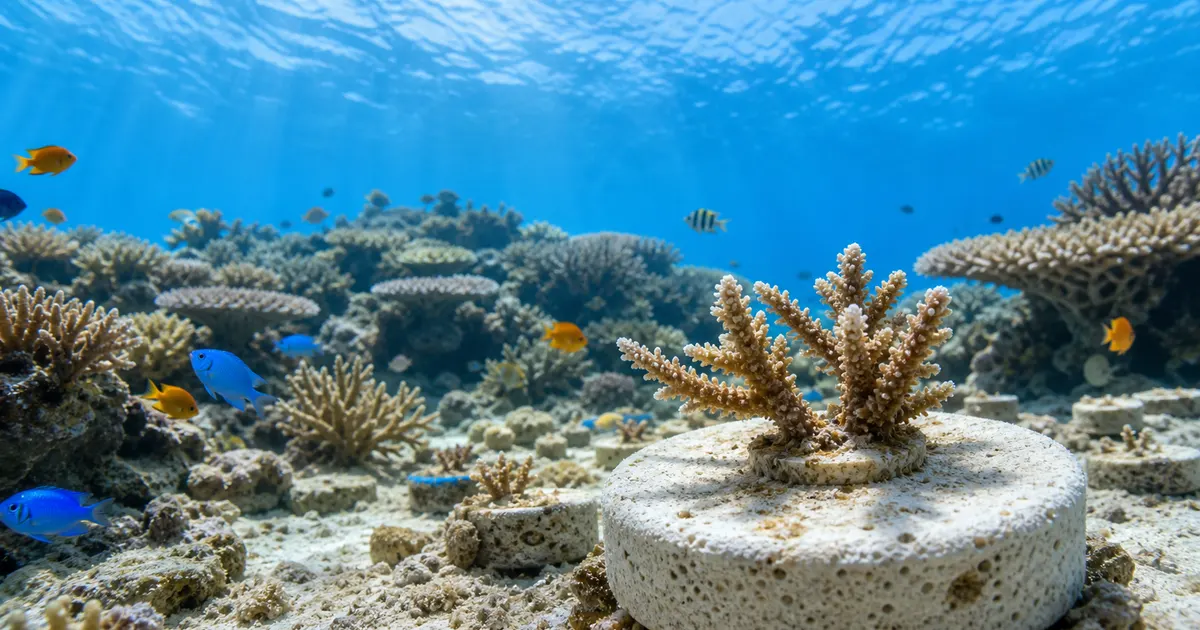
Onna Village, in the central part of Okinawa's main island, is nationally known for community-wide coral restoration. It is said that around 80% of the coral in Onna Village's waters was lost at one point, following the global mass bleaching event of 1998 and other factors, and fish declined, while the local specialty mozuku seaweed also became harder to cultivate. Feeling a sense of crisis, the Onna Village Fisheries Cooperative began coral planting efforts from around 1999. Working together with the village, the chamber of commerce, tourism operators, and others, it has continued growing coral fragments and transplanting them into the sea.
What's interesting is that it became clear that an increase in coral also has a positive effect on the growth of the local specialty mozuku seaweed. Protecting coral, in turn, directly protects the livelihoods of the fishers themselves — Onna Village issued a "Coral Village Declaration" in 2018 and has become a model region for sea stewardship centered on the SDGs. For the role marine ecosystems play in storing carbon (blue carbon), see also the article on blue carbon ecosystems.

Aka Island — growing coral through "sexual reproduction"
The Aka Marine Science Station (operated by the Tropical Biosphere Research Center's foundation) on Aka Island in the Kerama Islands is a research base for coral transplantation technology. There are broadly two methods of transplantation. One is a "method using asexual reproduction," in which fragments are taken from natural coral and grown; the other is a "method using sexual reproduction," in which eggs or larvae born from coral mass spawning are collected and raised as seed stock.
The latter is expected to more easily preserve genetic diversity and contribute to restoring coral reefs that are resilient to environmental change. Aka Island has spent many years establishing a full series of techniques, from spawning to larval settlement, juvenile coral rearing, and replanting into the sea. This accumulation of basic research forms the foundation supporting conservation efforts across many regions. However, transplantation and seed production are, after all, merely "means to assist recovery" — unless the root causes such as bleaching and red soil are reduced, coral will be lost as fast as it is planted. Researchers themselves also repeatedly emphasize that transplantation is not a cure-all, but must go hand in hand with efforts to reduce the threats themselves.
Sekisei Lagoon — a framework of funds and ecological restoration
In the Sekisei Lagoon, Japan's largest coral reef, conservation is advancing under an "ecological restoration" framework involving government, researchers, fishers, tourism operators, and NPOs. An NPO fund supports coral transplantation, crown-of-thorns starfish culling, monitoring, and environmental education, and Ishigaki City is also working on coral reef conservation under the banner of "making both people and coral increasingly abundant." The very mechanism that brings people from diverse positions to the same table is a valuable asset in itself.
What these local activities have in common is the perspective that "protecting coral is also protecting the lives of the people who live there." When coral is abundant, fish increase, and fisheries prosper. When the sea is beautiful, tourists visit, and the community thrives. Children learn from the sea right in front of them and take pride in their hometown. Coral reef conservation is both an environmental issue and a foundation for the sustainability of the community. That is precisely why community-led efforts, rather than measures imposed from outside, wield such strong power.
And we must not forget the power of education. In the Sekisei Lagoon and Onna Village, experiential learning programs continue in which local children take part in planting and monitoring coral. The experience of watching over the growth of coral they planted with their own hands becomes, once that child grows up, a solid motivation to protect the sea. The future of coral reefs lies beyond the accumulation of these small efforts, one by one.
A national framework — the Coral Reef Ecosystem Conservation Action Plan
In 2022, the Ministry of the Environment formulated the "Coral Reef Ecosystem Conservation Action Plan 2022–2030." It sets targets through fiscal year 2030 and lays out a policy for related institutions and communities to work together on challenges such as climate change, land-based loads, and overuse. Conservation moves forward when local, on-the-ground activities mesh with this larger national framework.
Conclusion — What We Can Do for the Future of Coral Reefs
The coral reefs of Okinawa and the Southwest Islands boast some of the richest diversity in the world, while simultaneously facing multiple threats — bleaching, crown-of-thorns starfish, and red soil runoff. In the Sekisei Lagoon, a bleaching rate of 92.8% was recorded in 2022, and large-scale bleaching occurred again in 2024, with coverage continuing to decline. Rising seawater temperature due to climate change, in particular, is the biggest challenge that local efforts alone cannot stop.
The IPCC (Intergovernmental Panel on Climate Change) has pointed out that if the global average temperature rises 1.5°C above pre-industrial levels, 70–90% of the world's coral reefs could be lost, and at a 2°C rise, almost all of them (99% or more) could be lost. There are also projections that if warming and ocean acidification continue on their current course, coral will be able to inhabit almost none of Japan's coastal waters by around 2070. For the problem of oxygen loss in the ocean, see also the article on ocean deoxygenation.
What each of us can do
- Reduce greenhouse gases — choosing energy efficiency and renewable energy is an action that helps protect coral even in distant Okinawa
- Follow the rules when playing in the sea — don't touch coral, take your trash back with you, choose gentle sunscreen
- Support local conservation efforts — support the people carrying out this work by donating to coral funds or joining ecotours
- Learn and share — learning about the current state of coral reefs and sharing it with family and friends is also a solid first step toward conservation
Coral has the power to recover from bleaching if water temperature returns to normal. Crown-of-thorns starfish damage can be limited with an early response, and red soil runoff can be reduced by accumulating countermeasures. The threats are serious, but it is by no means too late. On the ground in these communities, people who live alongside the sea continue, even today, to plant and watch over coral.
What matters is the perspective that these threats do not exist separately, but are intertwined with one another. Global warming triggers bleaching, nutrient salts from land encourage crown-of-thorns starfish outbreaks, and red soil saps coral's strength. Conversely, this also means that our actions — reducing greenhouse gases, curbing loads from land, and observing marine etiquette — have an effect on multiple threats at once. A small choice made in a distant city can, through a long chain of connections, save a single piece of coral in the seas of Okinawa — seen this way, every one of us is connected to coral reefs.

Summary of this article
- Okinawa and the Southwest Islands are home to about 360 coral species, among the richest coral reef regions in the world, symbolized by Japan's largest reef, the Sekisei Lagoon
- Coral obtains energy through symbiosis with zooxanthellae, and bleaching occurs when this relationship breaks down under high water temperature
- The Sekisei Lagoon recorded a 92.8% bleaching rate in 2022 and large-scale bleaching again in 2024, with coral coverage on a declining trend
- Crown-of-thorns starfish outbreaks (with the nutrient increase theory as the leading explanation) and red soil runoff are also major threats spanning land and sea
- Tourism can coexist with conservation if rules are followed, and community-led restoration is progressing in Onna Village, Aka Island, and the Sekisei Lagoon
- Climate change is the biggest challenge. The actions of each individual — energy efficiency, marine etiquette, and supporting local communities — will shape the future
The brilliant blue seas of Okinawa, and the countless forms of life living within them. Whether we can pass this richness on to the next generation depends on the choices we, who live now, make. Protecting coral reefs is not just a story about a distant southern island — it is also about protecting "our own future," connected to climate, food, disaster prevention, and culture. First, know; then, take a small step. Umi LAB will continue to convey the current state of coral reefs, and the hope they hold, backed by solid data.
References and Sources
- Ministry of the Environment, Okinawa Amami Nature Conservation Office – On the results of the December 2024 survey of coral bleaching in the Sekisei Lagoon, Iriomote-Ishigaki National Park
- Ministry of the Environment – On the results of the December 2022 survey of coral bleaching in the Sekisei Lagoon (press release materials)
- Ministry of the Environment – Coral Reef Ecosystem Conservation Action Plan 2022–2030
- Ministry of the Environment, International Coral Reef Research and Monitoring Center – About coral reefs (basic explanation of reef-building coral and its ecology)
- Fisheries Agency – The functions and current state of coral reefs
- Okinawa Prefecture – About crown-of-thorns starfish (2nd edition) / Overview of the Okinawa Prefecture Ordinance for the Prevention of Red Soil Runoff
- Nature Conservation Society of Japan (NACS-J) – The mechanism of coral "bleaching" and its relationship with typhoons
- Onna Village Co-op Coral Forest Liaison Council – Coral restoration efforts by the Onna Village Fisheries Cooperative
- Sekisei Lagoon Portal Website – Overview of the Sekisei Lagoon (area, number of coral species, ecological restoration)
※ Listed in order of reliability: government and academic institutions > peer-reviewed papers > specialized institutions > reliable media