At the bottom of the clear blue sea lies a forest of vividly colored coral — one of the most vibrant habitats on Earth. Yet today, this treasure of the ocean is disappearing rapidly all over the world. Rising sea temperatures cause "bleaching," red soil washes in from the land, and crown-of-thorns starfish multiply out of control — these and other causes have combined to leave coral reefs severely weakened. About 75% of the world's coral reefs are under regional or global threat, and in the ten years from 2009 to 2018 alone, 14% of the world's coral is reported to have been lost.
To confront this crisis, "coral reef restoration technology" — raising coral by hand and returning it to the sea — is being pursued in many places. Approaches vary widely: transplantation and aquaculture that raise and plant broken coral fragments, sexual reproduction that creates new life from eggs and sperm, settlement substrates that let juvenile coral take hold, and even electrodeposition technology that uses electricity to help coral grow.
This article explains, one by one, the major techniques used in coral reef restoration, and introduces — with real figures — what is happening at Japan's restoration sites, including Sekisei Lagoon and Onna Village in Okinawa. And we must not forget one crucial fact: restoration technology also has its "limits." Let's think together about why hope in the technology is not, by itself, enough.
What you'll learn in this article
- How severely coral reefs are declining worldwide and in Japan due to bleaching, red soil runoff, and predation (the latest data)
- Two ways to increase coral — the difference between asexual reproduction, which raises fragments, and sexual reproduction, which raises coral from eggs
- How restoration technologies actually used in the field work, including settlement substrates, seedling production, and electrodeposition
- What restoration looks like on the ground at Sekisei Lagoon and Onna Village in Okinawa, and what results it has achieved
- What restoration technology can and cannot do — why transplantation alone cannot save coral reefs
Why Coral Reefs Are Disappearing — And Why "Restoration" Is Needed
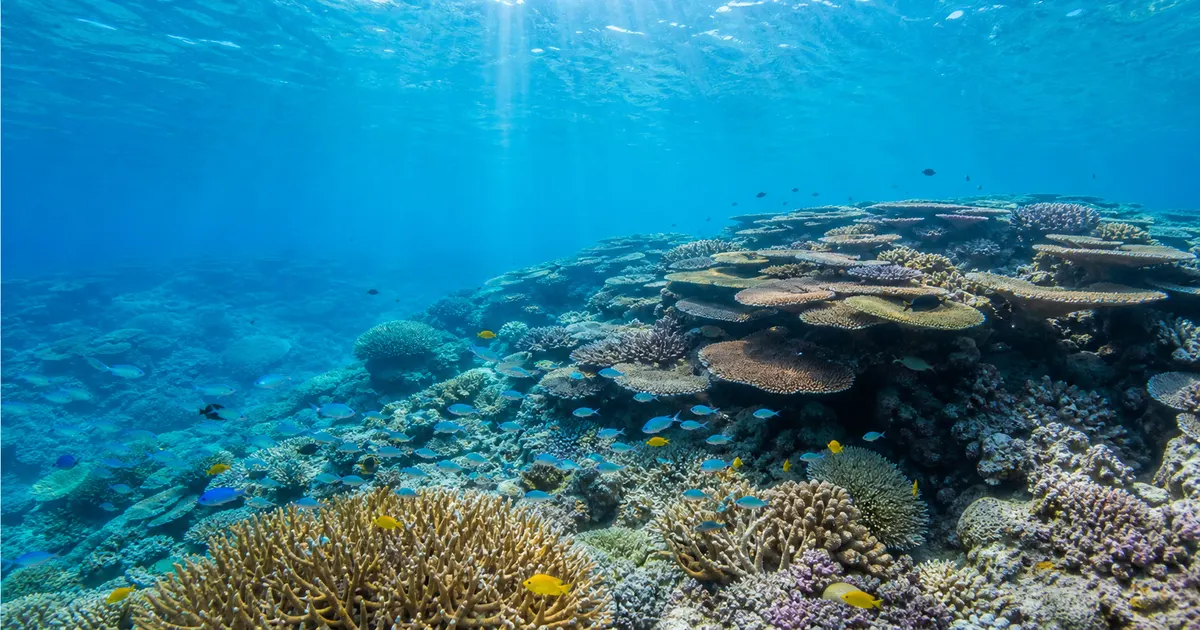
Coral reefs are often called the "rainforests of the sea." The world's coral reefs cover a total area of roughly 600,000 square kilometers — only about 0.1% of the Earth's surface. And yet, more than 90,000 identified species are said to depend on coral reefs. They serve as habitat and spawning grounds for fish, protect coastlines from waves, and support people's livelihoods through tourism and fishing — coral reefs play a role far larger than their small area would suggest.
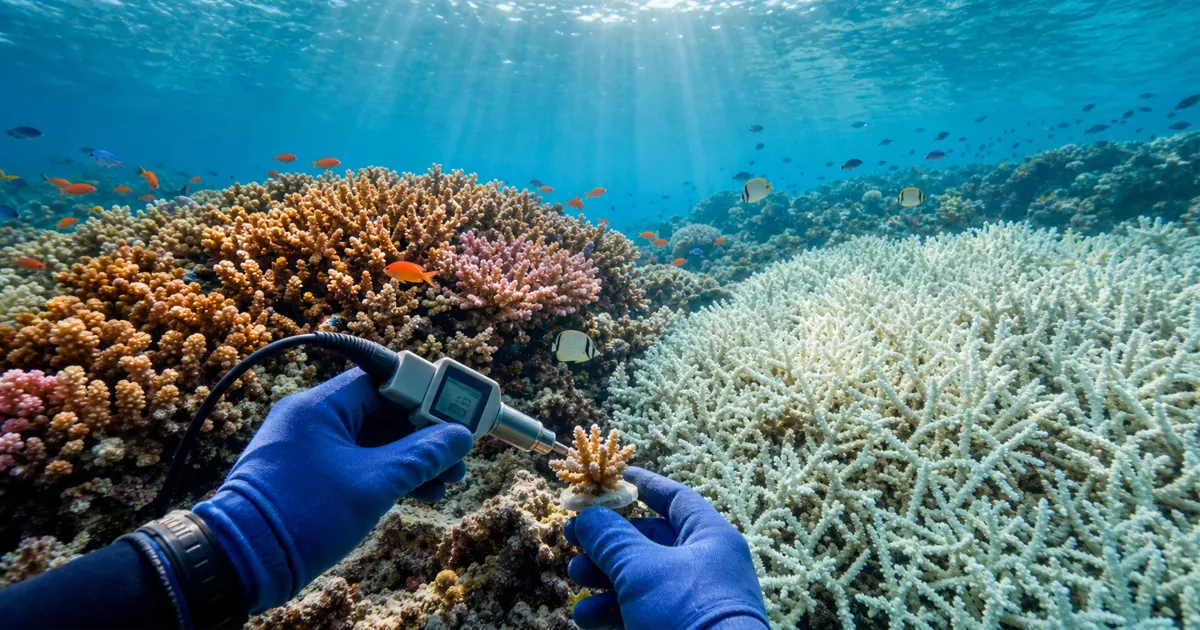
Yet this rich ecosystem is now in crisis. The most serious cause is bleaching, driven by rising sea temperatures. Tiny algae called "zooxanthellae" live symbiotically inside coral tissue, providing nutrients created through photosynthesis. But when sea temperatures rise too high, these zooxanthellae are expelled from the coral, which then appears white and translucent. This is bleaching. If bleaching continues for a long time, the coral — no longer able to receive nutrients — eventually dies. For more on how rising sea temperatures affect coral, see our article on rising sea temperatures and changing ocean currents.
Bleaching and Decline Around the World and in Japan
The world's coral reefs are under mounting pressure every year. According to the Global Coral Reef Monitoring Network (GCRMN), about 14% of the world's coral was lost in the ten years from 2009 to 2018. On Australia's Great Barrier Reef, roughly half of the coral is said to have declined since 1995, and a major bleaching event in 2016 caused severe damage across many reefs.
Japan is no exception. The Nansei Islands, home to most of Japan's coral reefs, have also experienced repeated large-scale bleaching. In addition to rising sea temperatures, multiple factors are driving the decline of coral reefs — including red soil washing in from farmland and other land uses, which smothers coral, and crown-of-thorns starfish, which devour coral. For more on the mechanisms of bleaching and the reality of the damage in Okinawa, see Coral Collapse in 2024!? (Coral Bleaching and Okinawa).

Main Threats to Coral Reefs
- Bleaching caused by rising sea temperatures (the most serious threat)
- Smothering and clouding caused by red soil and sediment runoff from land
- Predation by crown-of-thorns starfish and Drupella snails
- Impaired skeleton formation due to ocean acidification
- Physical destruction from coastal development, land reclamation, and excessive tourism
Facing these compounding threats, the first priority is to reduce the causes themselves. But coral reefs that have already been severely damaged often cannot recover naturally if simply left alone. In particular, in waters where almost no parent coral remains nearby, eggs and larvae are not supplied, and the very trigger for recovery is lost. This is exactly why "restoration technology" — raising coral by hand and returning it to the sea — is drawing so much hope.
The Blessings Coral Reefs Provide
Why go to such lengths to protect coral reefs in the first place? Because coral reefs provide countless blessings directly connected to our lives. They serve as habitat for countless fish, shellfish, shrimp, and sea turtles, supporting fisheries. Their intricate terrain weakens wave energy, acting as a "natural breakwater" that protects coastlines and communities from typhoons and storm surges. They are also a centerpiece of tourism — diving and snorkeling — that enriches local economies. Losing coral reefs means losing all of these blessings at once.
Ocean acidification is another threat that should not be overlooked, as it weakens coral's ability to build its skeleton. As carbon dioxide dissolves into the ocean, seawater gradually becomes more acidic, making it harder for coral to form its calcium carbonate skeleton. For details, see ocean acidification and coral. With bleaching and acidification exerting pressure at the same time, restoring coral reefs becomes even more difficult. Changes in the ocean environment can ultimately affect our own health and diets as well — this is not a distant issue at all.
Two Paths to More Coral — Asexual and Sexual Reproduction
Methods for raising coral by hand and returning it to the sea fall broadly into two categories. One is asexual reproduction, which raises and multiplies fragments of coral. The other is sexual reproduction, which creates new life from eggs and sperm. Each has its strengths and weaknesses, and both are used depending on the purpose and location.
Asexual Reproduction — Raising Coral Through Transplantation and Aquaculture
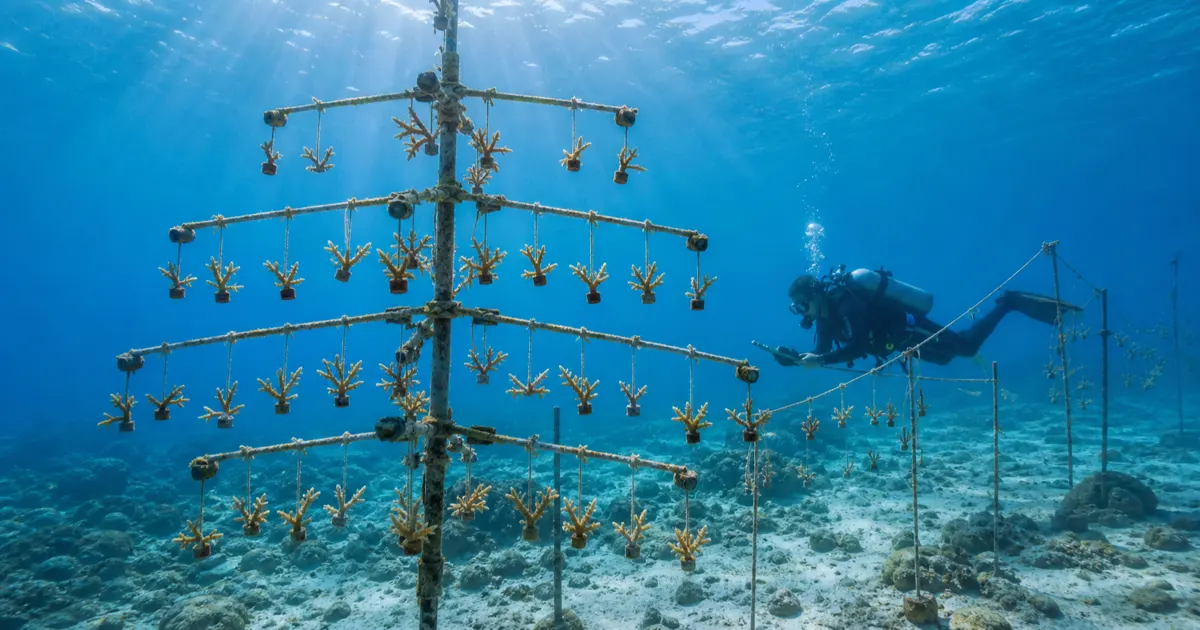
Asexual reproduction involves cutting off a piece of coral, raising it elsewhere, and planting the grown fragment on the seabed once it is large enough. Branching corals have the ability to survive and grow even after breaking, so even a small fragment can be raised into a new colony. This is somewhat similar to taking a "cutting" from a garden shrub. Its major advantage is relatively fast growth and reliable propagation, and most coral aquaculture is built on this method.
At the same time, asexual reproduction has weaknesses. Because the resulting coral are all clones (genetically identical individuals) of the original, genetic diversity tends to be low. When individuals are genetically similar, the risk of mass die-off rises sharply when conditions change — such as during bleaching events or disease outbreaks. For this reason, recent projects have taken steps to secure diversity, such as using multiple parent colonies or combining several species when planting.
Sexual Reproduction — Raising Coral from Eggs to Supply Larvae
Sexual reproduction fertilizes coral eggs and sperm, then raises the resulting baby coral before returning it to the sea. Most coral species undergo "mass spawning" once a year, releasing eggs and sperm together on nights around the full moon in early summer. Fertilized eggs become planula larvae, which swim through the water on their own using cilia. After drifting for one to two weeks, they attach to a hard surface such as rock, and within a few days take the form of a tiny coral called a "polyp."

The greatest advantage of sexual reproduction is that, because the genes of both parents mix together, it can produce coral with high genetic diversity. This raises the chance of producing individuals resilient to environmental change, which is essential for restoring genuinely healthy coral reefs over the long term. In large-scale restoration projects like the one at Sekisei Lagoon, emphasis is placed on making this sexual reproduction method the foundation. However, spawning happens only once a year, and the survival rate of larvae is low, making this method technically difficult and costly.
| Asexual Reproduction (Transplantation/Aquaculture) | Sexual Reproduction (Larval Supply) | |
|---|---|---|
| Method | Cut, raise, and plant fragments | Raise from eggs and sperm |
| Growth speed | Relatively fast | Takes time |
| Genetic diversity | Low (mostly clones) | High (parent genes mix) |
| Resilience to environmental change | Can be uniformly weak | More likely to produce resilient individuals |
| Main challenge | Securing diversity | Spawns once a year; low survival rate |
Key Point
For ease of propagation, asexual reproduction is preferable; for health and diversity, sexual reproduction is preferable. Today's mainstream approach to restoration combines both, rather than relying on just one.
Incidentally, coral mass spawning is a truly mysterious phenomenon. Many reef-building corals release bundles of eggs and sperm into the water all at once, as if by agreement, on a spring-tide night in early summer. The scene resembles cherry blossoms drifting up from the seabed, with pink particles rising toward the surface. This mass spawning is precisely what creates chances for fertilization between corals living far apart, allowing genes to mix widely. Researchers and restoration workers prepare to collect eggs and sperm, waiting for this once-a-year night.
Coral mass spawning is one of the most beautiful reproductive phenomena on Earth — marine life carrying life forward in rhythm with the moon and the tides.
— On the reproductive ecology of coral
Raising Tiny Coral — Settlement Substrates and Seedling Production
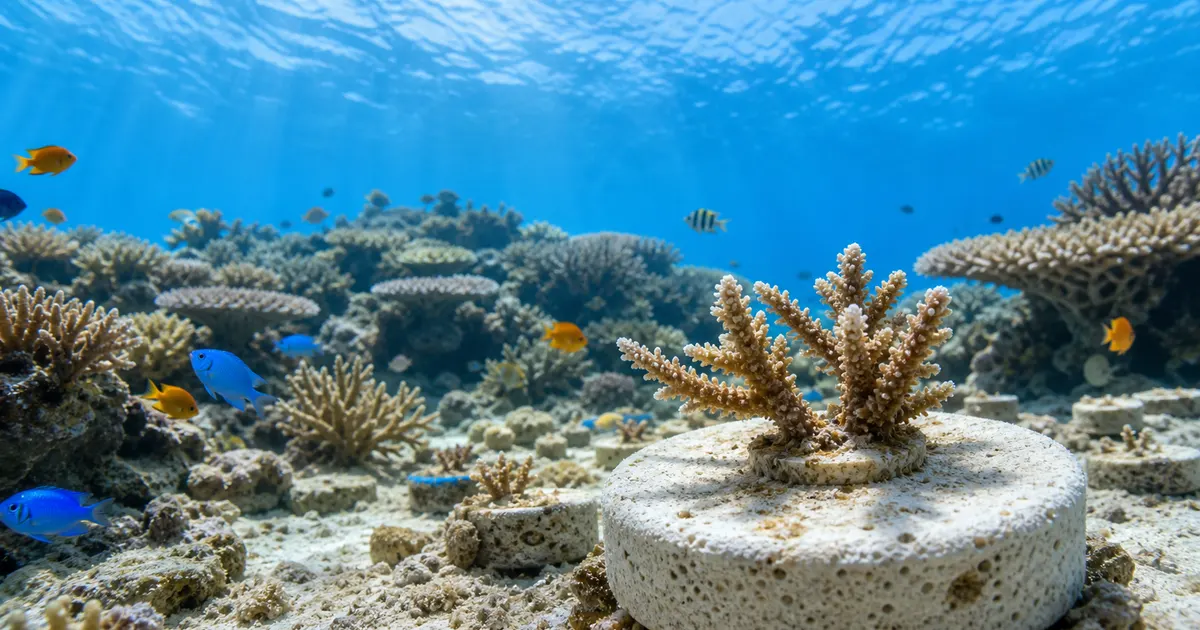
When raising coral through sexual reproduction, the first major hurdle is the question of "where should the larvae settle?" Planula larvae swimming through the water will simply be swept away and die without a stable, hard surface to attach to. This is where settlement substrates come in — structures designed to receive larvae and let them take root.
The Evolution of Settlement Substrates — From a 1% Settlement Rate to Nearly 40%
In early research, unglazed ceramic tiles and similar materials were used as settlement substrates. However, the proportion of larvae that actually settled (the settlement rate) was as low as about 1%. Release 1,000 larvae, and only 10 would take hold — far too inefficient for large-scale restoration.
Researchers therefore refined the materials and surfaces of settlement substrates. Methods were developed using porous ceramic (a material riddled with tiny pores, like that used in plant pots) soaked in a bacterial suspension, and porous ceramic tubes similar to those used in aquarium filtration. These improvements are reported to have raised the settlement rate dramatically, to 11.2–39.1% — roughly a 10- to 40-fold improvement in efficiency. Small innovations in the settlement substrate can make or break the success of restoration.
Settlement substrates also play a role in protecting juvenile coral. Newly settled, tiny coral can easily be killed — eaten by fish or sea urchins, or overgrown by algae. Adding small dimples or grooves to the surface of the substrate gives juvenile coral places to hide from predators. There is also the practical benefit that grown coral can be transported to the sea together with its substrate, making the planting process easier. What began as a single unglazed tile has evolved into settlement substrates carefully engineered down to their material, shape, and surface properties — the unsung workhorse of restoration technology.

Seedling Production — Stably Producing Coral "Seedlings"
Coral that has taken root on a settlement substrate is still barely visible to the naked eye. The process of raising it to a size that can be planted in the sea is called seedling production. In farming terms, this corresponds to raising seedlings in a nursery bed from seed. The Fisheries Agency of Japan has also been advancing technology to efficiently and stably produce coral seedlings through sexual reproduction.
Seedling production combines tank-based rearing (land-based aquaculture) with intermediate rearing in the sea. Water temperature, light, and water flow are managed while protecting the coral from predators and disease. Once the coral has grown to a certain size, it is transported to the seabed and planted — finally bringing "seedlings" into the restoration site. In recent years, there have even been reports of successfully controlling season and light inside tanks to induce coral to spawn in the dead of winter, outside its natural spawning season, opening a path toward stable production not tied to the timing of natural spawning.
- Collect eggs and sperm during mass spawning and fertilize them in a tank
- Let the resulting planula larvae settle on settlement substrates
- Raise the settled juvenile coral in tanks (land-based aquaculture)
- Strengthen the coral through intermediate rearing at an underwater facility
- Plant fully grown coral at the restoration site
What Is a "Seedling"?
In farming and fisheries, a "seedling" is a small living organism raised as the starting point for cultivation. Coral seedling production refers to the work of raising baby coral to a size that can be planted in the sea.
Some innovations in settlement substrates make use of "signals" that attract larvae. Planula larvae do not settle at random; it is known that they use chemical cues released by specific bacteria and crustose coralline algae living on the surface of the substrate to judge "this looks like a good place to grow" before settling. This is precisely why soaking porous ceramic in a bacterial suspension so effectively raises the settlement rate. Adjusting the environment from the perspective of tiny juvenile coral is one of the subtle forms of wisdom behind restoration technology.

Growing Coral with Electricity — Electrodeposition Technology (GMC Technology)
Among coral restoration methods, one of the more surprising is electrodeposition technology. This technique passes a very weak electric current through seawater to create conditions favorable for coral growth. Also known as "mineral accretion," it has been researched abroad as well.
A Technology Born from a Discovery at a Pier
This technology first drew attention in Japan thanks to an unexpected discovery. In 2004, an engineer noticed that a great deal of coral had attached to and was thriving on the wall of a floating pier built near Taketomi Island, close to Ishigaki Island. Upon investigation, it turned out that the weak "cathodic protection" current used to protect the pier's metal from corrosion appeared to be helping the coral grow.
Based on this chance discovery, researchers developed an electrodeposition substrate that makes it easy for juvenile coral to settle, and a coral-growing rack that uses a weak electric current to promote the growth of settled coral. This became the electrodeposition technology known as "GMC technology." Demonstration trials have continued for nearly 20 years around Ishigaki Island and elsewhere, confirming the effect of electrodeposition substrates in promoting coral settlement and accelerating growth.

How Electrodeposition Works, and What It Promises
When electricity is passed through seawater, minerals such as calcium carbonate and magnesium hydroxide gradually precipitate onto the electrode surface. This layer has a composition close to the material of coral's own skeleton, and is thought to ease the burden on coral of building its skeleton. There are also reports that the weak current itself boosts coral's metabolism and growth. Now that ocean acidification is making it harder for coral to build its skeleton, electrodeposition technology is drawing attention as a way to offset this disadvantage.
The current used here is extremely weak — nothing like the strength that would give a person an electric shock. Combined with renewable energy sources such as solar power, it is possible to secure the necessary electricity while keeping the environmental burden low. At demonstration sites such as Ishigaki Island, coral that settled on electrodeposition substrates over many years has been observed to grow faster and larger than coral in areas without a current. The idea of borrowing a natural mechanism to give it a boost is what makes electrodeposition technology so interesting.
A Caution About Electrodeposition Technology
Electrodeposition technology requires electric power, and installing and maintaining the equipment costs money. It is not realistic to run a current through an entire wide sea area. It should be understood as a technology that helps growth only locally, not one that can restore the whole ocean on its own.
Even so, the ability to combine coral restoration with existing artificial structures — ports, piers, seawalls — is a unique strength of electrodeposition technology. If coral can be increased by making use of structures the ocean already has, effective restoration becomes possible even on a limited budget. Knowing where and how to apply the technology is essential.
Another appeal of electrodeposition technology is that the grown skeleton itself becomes part of the structure, gaining strength over time. Overseas, attempts have been made to grow coral on artificial reefs built through electrodeposition and use them as "bridges" connecting damaged sections of coral reef. The nearly 20 years of demonstration data accumulated in Japan are a valuable asset for these efforts around the world as well. That a technology born from a chance discovery has, through steady verification, approached practical use is a reminder of just how fascinating research can be.
Okinawa's Sekisei Lagoon Challenge — Restoring Japan's Largest Coral Reef
No discussion of coral reef restoration in Japan is complete without Sekisei Lagoon, in Okinawa Prefecture. Spread between Ishigaki Island and Iriomote Island, it is Japan's largest coral reef area, once densely covered in vividly colored coral across its seabed. The rich condition it was in when designated part of Iriomote National Park (now Iriomote-Ishigaki National Park) in 1972 serves as the benchmark for restoration.
Repeated Bleaching, and the Start of Restoration by Council
However, Sekisei Lagoon has suffered severe decline from a combination of threats — red soil runoff, bleaching from high water temperatures, and mass outbreaks of crown-of-thorns starfish. In response, local residents, citizen groups, researchers, and government agencies came together in 2006 to form the Sekisei Lagoon Nature Restoration Council, launching a collaborative effort to bring the coral reef back. The Ministry of the Environment, Japan drew up the "Sekisei Lagoon Nature Restoration Master Plan" in 2005, laying out the direction for restoration.
Restoration at Sekisei Lagoon places emphasis on making sexual reproduction, using larvae from coral in surrounding waters, the basic approach. The idea is to restore a coral reef suited to that particular sea by making use of local coral genetics. Methods such as "natural seed collection," which places settlement substrates on the seabed to let larvae settle naturally, have also been adopted, with a key priority being to establish restoration methods for coral communities that remain effective even after large-scale disturbances.

Sekisei Lagoon's Bleaching in Numbers — A Repeating Cycle of Recovery and Setback
Just how severe the situation is for Sekisei Lagoon's coral is well illustrated by figures from the Ministry of the Environment's monitoring surveys. Coral cover (the proportion of the seabed covered by coral), which averaged around 40% in 2013–2015, fell to around 20% after the major bleaching event of summer 2016. An emergency survey at the time found that about 97% of Sekisei Lagoon's coral communities had bleached, and ultimately about 70% died.
After that, coral cover showed signs of recovery, reaching around 30% by 2020, but a major bleaching event occurred again in 2022. A September 2022 survey found an average bleaching rate of 92.8%, with cover down to 21.6%. By December of the same year, the bleaching rate had fallen to 50.2%, but cover had dropped further still, to 17.0%. Recovering, only to be hit by bleaching again — this harsh cycle is the reality faced by coral reefs under global warming.
| Period | Coral Cover | Bleaching / Situation |
|---|---|---|
| Around 2013–2015 | About 40% | Relatively stable |
| 2016 (after bleaching) | About 20% | About 97% bleached, about 70% died |
| 2020 | About 30% | Signs of recovery |
| September 2022 | 21.6% | Serious 92.8% bleaching rate |
| December 2022 | 17.0% | Bleaching rate 50.2%; cover fell further |
The repeated cycle of recovery and bleaching at Sekisei Lagoon confronts us with a pace of warming that restoration technology alone cannot keep up with.
— Based on trends from Ministry of the Environment monitoring surveys
"Collaborative Restoration" Bringing Together People from Many Backgrounds
What stands out about the effort at Sekisei Lagoon is that restoration is not carried out by a single organization, but is a "collaborative" undertaking led by people from many different backgrounds. The Nature Restoration Council includes fishers, dive operators, citizen groups, researchers, and government agencies, each contributing their own knowledge and effort. Those working to prevent red soil runoff by improving farmland, those removing crown-of-thorns starfish, those raising and planting larvae, those collecting monitoring data — their roles differ, but they share the same vision for the sea. Coral reef restoration is not simply a technical problem; it is also a process of building consensus across an entire community.
The Philosophy Behind Sekisei Lagoon's Restoration
- The rich condition at the time of the 1972 national park designation serves as the restoration goal
- Sexual reproduction using larvae from surrounding waters is the basic approach
- Natural seed collection, placing settlement substrates on the seabed, is also used
- The aim is to establish methods that remain effective even after major bleaching events
The Onna Village Model — A Fishing Cooperative Raises a "Village of Coral"
Beyond government agencies and research institutions, there is a place where local fishers themselves are taking the lead in raising coral: Onna Village, on the main island of Okinawa. Here, the Onna Village Fisheries Cooperative has led continuous efforts to cultivate and plant coral since 1998. Known for its "Village of Coral Declaration," Onna Village is recognized as a model case of resident-led coral restoration.
Raising 24,000 Colonies with the "Hibi-Tate" Method
The Onna Village Fisheries Cooperative cultivates coral fragments collected with permission from Okinawa Prefecture on land, then plants the grown coral in the sea. To do this, it developed its own planting method called the "hibi-tate method." Adapted from the "hibi" technique used in seaweed farming, this approach was refined to efficiently raise coral fragments. The cleverness of this method lies in repurposing wisdom about the sea, cultivated by fishers over many years, for coral restoration.
Importantly, only "a portion" of fragments are collected, so as not to kill the original coral. The cut fragments are carefully raised in aquaculture racks on land or in the sea, and only those that have taken root well and grown large are replanted in the sea. This makes possible a form of "coral farming" that produces large amounts of coral from a small initial stock. The idea of not just catching fish but also raising and increasing the coral that forms the very foundation of the sea points the way toward a more sustainable future for fishing.
The results show up in the numbers as well. As of the end of March 2017, the Onna Village Fisheries Cooperative had cultivated about 24,000 colonies of coral, raising a diverse range of 54 species across 15 genera and 11 families. With this much coral growing, the effect of spawning is significant too: the cultivated colonies produce an estimated 5.7 billion eggs per year, and about 2.7 billion larvae are expected to be released into the sea two days after spawning. A "cycle" has emerged, in which the coral that is raised goes on to produce yet more coral.
Onna Village began coral farming in 1998 — the same year a major global bleaching event struck, dealing a heavy blow to the local sea. In the more than 20 years since, despite repeated damage from bleaching, typhoons, and crown-of-thorns starfish, the fishers have persistently continued cultivating and planting coral. Without fanfare, they have year after year raised seedlings, returned them to the sea, and watched over their growth — and this steady accumulation of effort has produced a recovery in coral cover to about 80% of pre-bleaching levels. Onna Village's journey offers hope that, in coral restoration, "there are no shortcuts, but persistence always moves things forward."

Through the Onna Village Fisheries Cooperative's activities so far, roughly 46,000 coral colonies are said to have increased, along with an estimated 1.2 million fish. As coral increases, fish that use it as habitat and spawning grounds gather, and the whole sea comes alive. Despite suffering damage from bleaching and other threats, coral cover in some areas of Onna Village is said to have recovered to about 80% of pre-bleaching levels, showing that this steady, dedicated effort is bearing fruit.
Key Points of the Onna Village Model
- Fishers themselves raise coral and protect it as a marine resource
- Field-born ingenuity, such as the "hibi-tate" method, improves efficiency
- The cultivated coral spawns, creating a virtuous cycle that supplies new larvae
- More coral means more fish, which also benefits the fishing industry
What the Onna Village effort shows is that coral restoration does not belong only to specialist researchers — the people who live by that sea can themselves be the driving force. Protecting the sea directly protects their own livelihoods and work — and this sense of personal stake is what powers restoration activities that last for the long haul.
In recent years, mechanisms for mutual support involving businesses and consumers have also spread. Funds that use a portion of product sales to support coral farming, and programs that let tourists experience planting coral themselves, offer entry points for people far from the sea to take part in restoration too. Coral raised today may spawn years from now, its larvae producing new coral in turn — and this "cycle of life" is now being supported jointly by local communities and society at large. The collaboration at Sekisei Lagoon and the model at Onna Village together show that coral reef restoration in Japan rests on both "technology" and "human connection."

The Power and Limits of Restoration Technology — Why Transplantation Alone Cannot Save Coral Reefs
So far, we've looked at a range of restoration technologies and the sites where they are used. The technology has steadily advanced, and results are emerging in many places. But we must not forget that coral reef restoration technology has clear limits. We need both hope in the technology and a clear-eyed look at reality.
The Survival Rate of Transplanted Coral Is Not High
First, not all planted coral survives. According to a report from the Japanese Coral Reef Society, whether by sexual or asexual reproduction, the three-year survival rate of transplanted coral is below 40%, and can fall below 10% in some locations. Even after all the effort of raising and planting coral, more than half is often lost within a few years. A major cause of this loss is that, during rough weather, dead coral fragments and rubble shift on the seabed and damage growing coral.
There are other downsides to transplantation that should not be overlooked, either. Experts point to damage caused to the original "donor" colony from which coral is collected, the risk of genetic disturbance, the risk of introducing pathogens, and the possibility that transplantation could be used as an excuse for further land reclamation — "it's fine to fill in the reef because we'll transplant the coral elsewhere." Restoration technology is not a cure-all, and its use requires care.
The concern about being used as an "excuse for development" is especially important. When natural coral reefs are reclaimed to build ports or seawalls, the argument "it's fine, because we'll transplant the coral somewhere else" is sometimes used. But given the reality that much transplanted coral is lost within a few years, this does not amount to truly restoring what nature has lost. Restoration technology is meant to be a means of recovering a damaged sea — not a tool to justify new destruction. Holding this line is essential to using the technology responsibly. Ocean problems share something in common with issues like deep-sea trash and plastic: once destroyed, they are extremely difficult to restore. Readers interested in this topic may also want to see our article on deep-sea trash.

The Wall of Scale — Restoration Cannot Keep Pace with Warming
Another major limitation is the problem of scale. No matter how hard people work, the area that can be planted by hand remains limited. The world's coral reefs cover 600,000 square kilometers, and there is simply no way to replant such a vast area by human effort alone. Transplantation requires a great deal of labor, cost, and time, and in reality, restoration cannot keep pace with the speed of loss.
And the biggest wall of all is global warming itself. The IPCC (Intergovernmental Panel on Climate Change) projects that even if the rise in global average temperature is kept below 1.5°C above pre-industrial levels, 70–90% of the world's coral reefs will be lost. If warming reaches 2°C, as much as 99% is projected to disappear. No matter how carefully coral is planted, if sea temperatures keep rising, it will bleach and die again — as the repeated cycle of recovery and setback at Sekisei Lagoon makes clear. For more on ocean warming itself, see our article on rising sea temperatures and changing ocean currents.
Understanding the Limits of Restoration Technology
- The three-year survival rate of transplanted coral is below 40% (below 10% in some locations)
- The area that can be planted by hand is only a tiny fraction of the world's coral reefs
- If warming does not stop, restored reefs will bleach and be lost again
- Transplantation also carries risks such as damage to donor colonies and genetic disturbance
Why Restoration Technology Still Matters
Does this mean restoration technology is meaningless? Not at all. Restoration technology only truly delivers when combined with efforts to address the root cause: global warming. Cutting greenhouse gas emissions to halt rising sea temperatures, preventing red soil runoff, and removing crown-of-thorns starfish to reduce the threats themselves — and, on top of that, using restoration technology to give severely damaged areas a chance to recover. Only when both wheels turn together can coral reefs have a future. Technology buys time; the fundamental solution depends on the choices each of us makes in our daily lives and in society.
Restoration technology also has value beyond its visible results. It gives people a reason to take an interest in coral reefs and reconnect with the ocean. Children watching over the coral they planted, fishers engaged in aquaculture, tourists taking part in hands-on experiences — when each person feels "I too am part of protecting this sea," it shifts awareness across society as a whole. Research continues to evolve as well, from breeding heat-tolerant coral to strategies that prioritize protecting waters that recover more easily after bleaching. Knowing the limits honestly, while still moving forward and doing the work — that is where the real meaning of coral reef restoration lies.

Conclusion — Technology and Society Working Together to Protect Coral Reefs for the Future
Coral reef restoration technology is a crystallization of human ingenuity aimed at recovering a treasure of the ocean that is slipping away. Transplantation and aquaculture that raise fragments, sexual reproduction and larval supply that create new life from eggs, settlement substrates that raise the settlement rate, electrodeposition technology that borrows the power of electricity — a wide range of methods has emerged, and steady results have been achieved at sites like Sekisei Lagoon and Onna Village.
At the same time, we have also seen its limits. Much of the coral that is planted is lost within a few years, and the area that can be replanted by human hands remains tiny. And if warming does not stop, restored reefs will be struck by bleaching once again. Restoration technology is not a magic wand — it is a means of "buying time" that only has meaning when combined with climate action and the conservation of land environments.
That is precisely why the future of coral reefs is not a matter for researchers and fishers alone. Living in ways that reduce carbon dioxide emissions, choosing not to pollute the sea, and staying informed and engaged with the state of coral reefs — each of these actions is connected to coral in a faraway southern sea. Let us protect this rich blue ocean for the next generation, through technology and society working together.
Summary of This Article
- Coral reefs are declining worldwide due to bleaching, red soil, and predation, and even at Japan's Sekisei Lagoon, a cycle of recovery and bleaching continues
- Restoration relies on asexual reproduction (transplantation and aquaculture), which raises fragments, and sexual reproduction (larval supply), which raises coral from eggs; sexual reproduction is emphasized for its genetic diversity
- Technology keeps advancing — improved settlement substrates have raised the settlement rate from 1% to nearly 40%, and electrodeposition technology uses electricity to help coral grow
- Resident-led restoration is achieving results, as seen in the Onna Village Fisheries Cooperative's cultivation of about 24,000 colonies and recovery of coral cover to 80%
- At the same time, the three-year survival rate of transplanted coral is below 40%, and if warming does not stop, restoration cannot keep pace — technology alone cannot save coral reefs
- Restoration technology only truly works when combined with climate action and environmental conservation. The future depends on the choices each of us makes
To learn more about the remarkable adaptability of marine life and ocean issues connected to our own daily lives, please also read our articles on ocean acidification and coral and the adaptations of deep-sea creatures. Umi Lab will continue to share the "now" of the ocean.
References and Sources
- Ministry of the Environment, Japan – Nature restoration (Sekisei Lagoon Nature Restoration Council) project site overview and field reports
- Ministry of the Environment, Japan, Okinawa Amami Nature Conservation Office – Results of the December 2022 survey on coral bleaching at Sekisei Lagoon
- Ministry of the Environment, Japan – Coral Reef Ecosystem Conservation Action Plan 2022–2030
- Fisheries Agency of Japan – Coral reef conservation activities (seedling production, transplantation, removal of predatory species)
- Fisheries Agency of Japan – Report on the development of coral rearing and seedling production technology
- Japanese Coral Reef Society – Current status and challenges of reef-building coral transplantation (Coral Reef Conservation Committee)
- National Institute for Environmental Studies, Japan – Kankyo-Gi No. 53: Protecting and Restoring Coral Reefs
- Journal of the Japanese Coral Reef Society (J-STAGE) – Coral restoration efforts by a fisheries cooperative: the case of Onna Village, Okinawa Prefecture
- MM Bridge Co., Ltd. – Coral restoration and growth promotion technology (GMC technology / electrodeposition)
- WWF Japan – Japan's coral reef ecosystems and their conservation
* Listed in order of reliability: government/academic institutions > peer-reviewed papers > specialist organizations > trusted media