⚡ In short
How are discarded nets and fishing gear collected and turned into yarn, fabric and products? We sort out the estimated 640,000 tonnes lost worldwide, Japan's roughly 20,000 tonnes of gear production, initiatives such as amu and NetPlus, and challenges in policy, sorting, logistics and demand, using primary sources.
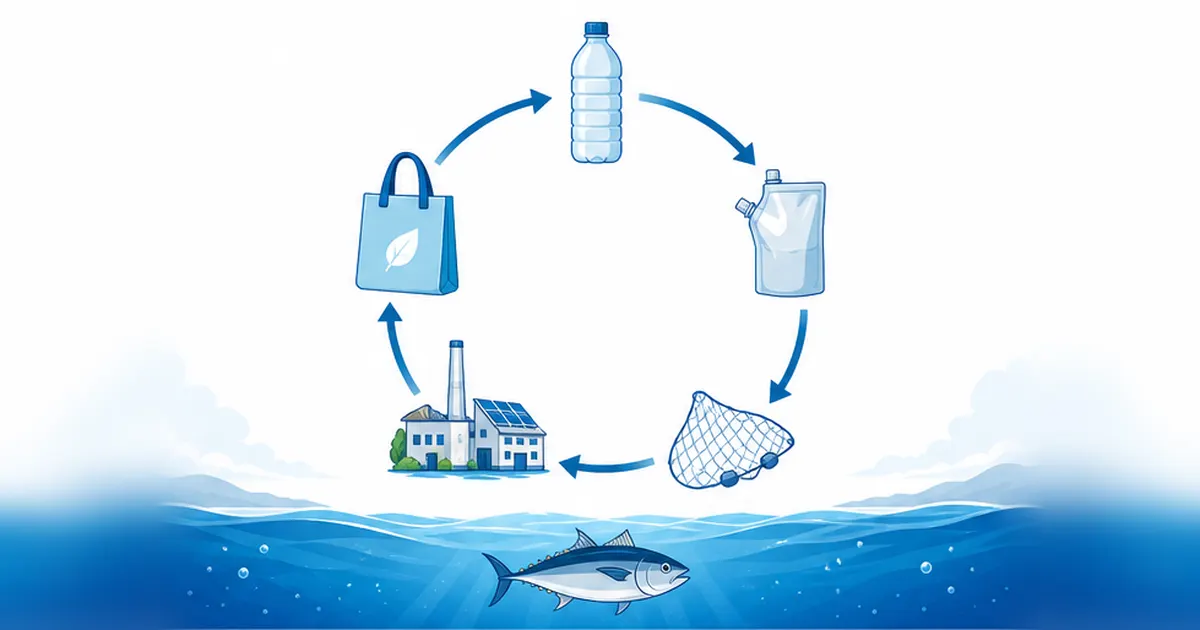
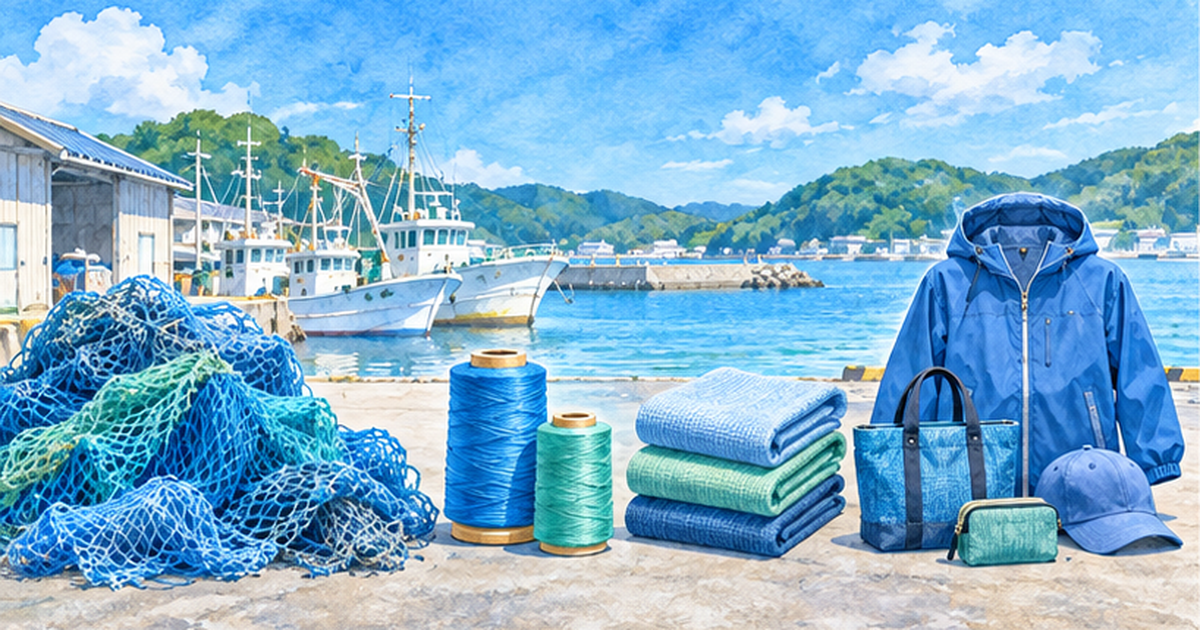
Upcycling discarded fishing nets means washing and sorting used nets, turning them back into raw material, and giving them new value as yarn, fabric and products.An effort to turn the environmental burden of a material that does not rot into a resourceis drawing attention in Japan and abroad.
In Japan, however, discarded nets are treated as industrial waste, and there are many barriers in sorting, transport and demand. Based on publicly available information from government bodies and companies, this article sorts out how products are made and what challenges remain.
Note that figures for production, outflow and disposal mean different things. We read each source as faithfully as possible.
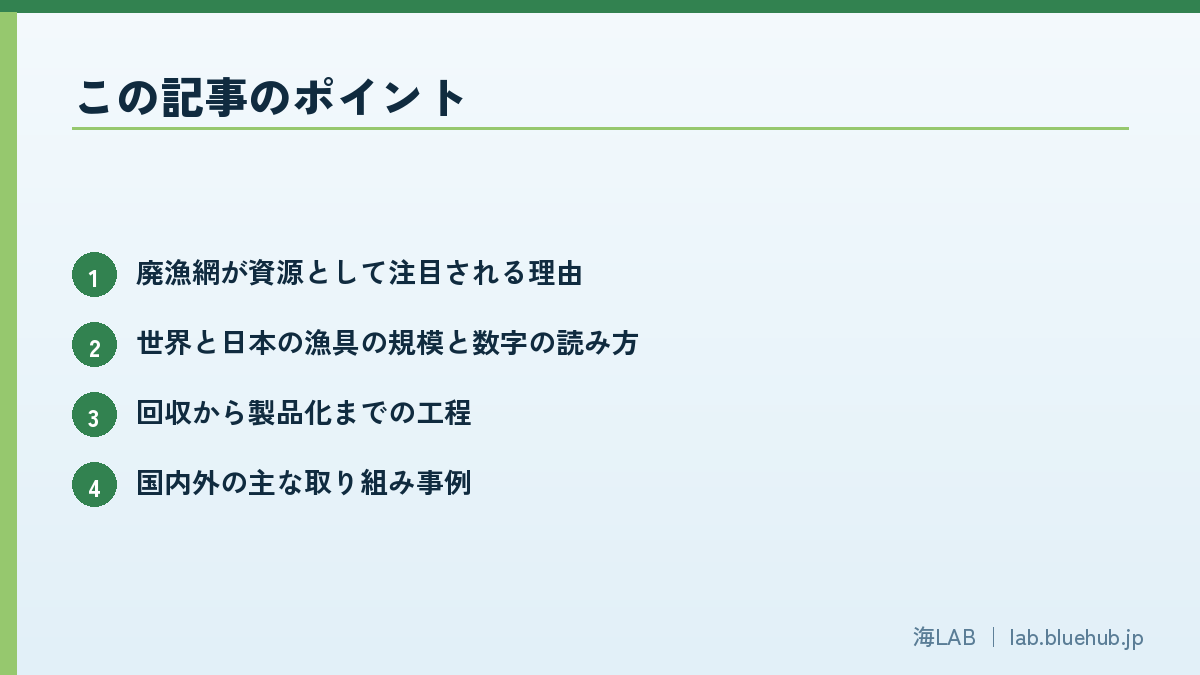
What you will learn
- Why discarded fishing nets are drawing attention as a resource
- The scale of fishing gear in the world and Japan, and how to read the numbers
- The process from collection to product
- Main initiatives in Japan and abroad
- Four challenges that hold upcycling back
- Concrete actions we can take
What are discarded nets and fishing gear? Why they are drawing attention as a resource
Fishing gear such as nets, ropes, traps and floats supports fishing, but once it is used up it becomes a large amount of plastic waste. Most nets today are made of synthetic resins such as nylon (polyamide), polyethylene and polypropylene. Being light, strong and resistant to rot underwater has raised fishing efficiency. That very advantage of not rottingturns into an environmental burden once the gear is used up or lost at sea.
Used nets, on the other hand, are made of relatively uniform materials, and once washed and sorted they can become raw material for recycled resin close to new quality. Nylon 6 in particular is considered easy to recycle because of its chemical properties, and "upcycling" that turns discarded nets back into yarn and fabric is spreading in Japan and abroad. This article sorts out how nets and gear become products, and the challenges behind it.
Main materials used in fishing gear
- Nylon (polyamide): widely used in gill nets, set nets and trawl nets; valued for strength and flexibility
- Polyethylene (PE) and polypropylene (PP): used for ropes, floats and trap nets; light and buoyant
- Polyester and others: used in some nets, sewing thread and ropes
- Metal, lead and FRP: used for weights, frames, and some gear and boats; must be handled separately from resin
Separating "disposal" from "loss at sea"
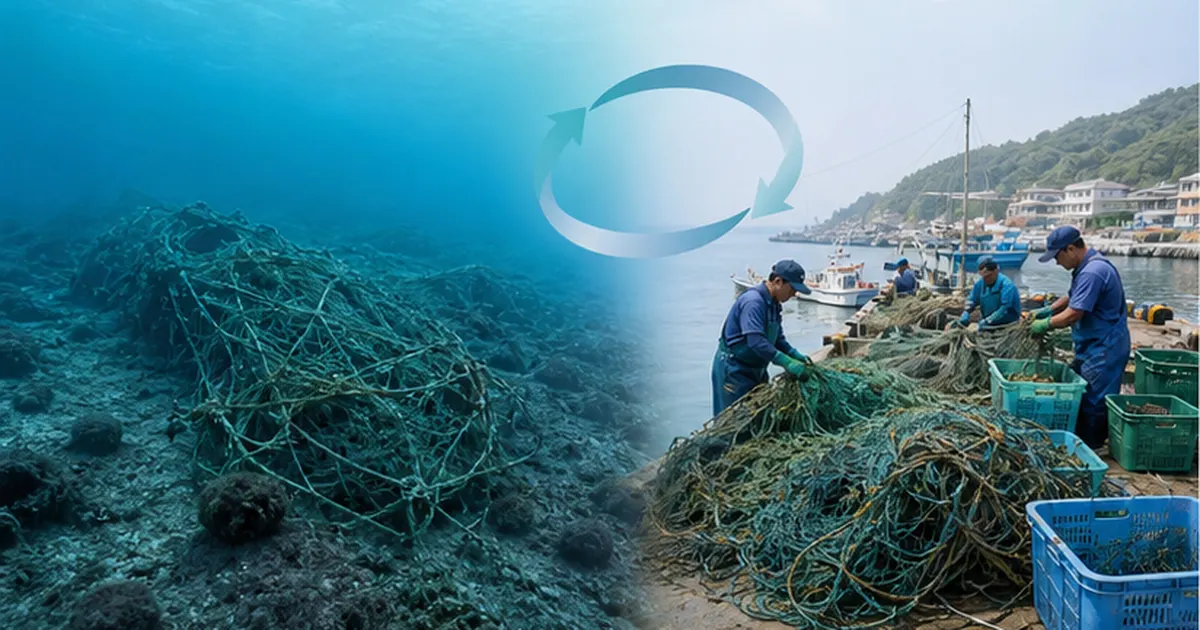
The fishing gear problem is easier to understand when split into two: used gearthat is properly disposed of on land, and lost gearthat is lost at sea. The former is a "resource" that can become recycling material; the latter is an environmental problem as "ghost gear" that keeps catching living things. Upcycling aims to collect the former reliably and turn it into value, which in turn may also reduce the latter.
Key points of this section
- Discarded nets are mostly synthetic resin and can become recycled material if quality is consistent
- Separating "used" from "lost" makes the issues clearer
- Upcycling targets resource circulation and marine debris at the same time
The numbers: scale of the problem in the world and Japan
First, let us check the size of the problem using public estimates. Because numbers differ in what they count, it is important to read them faithfully to the source.
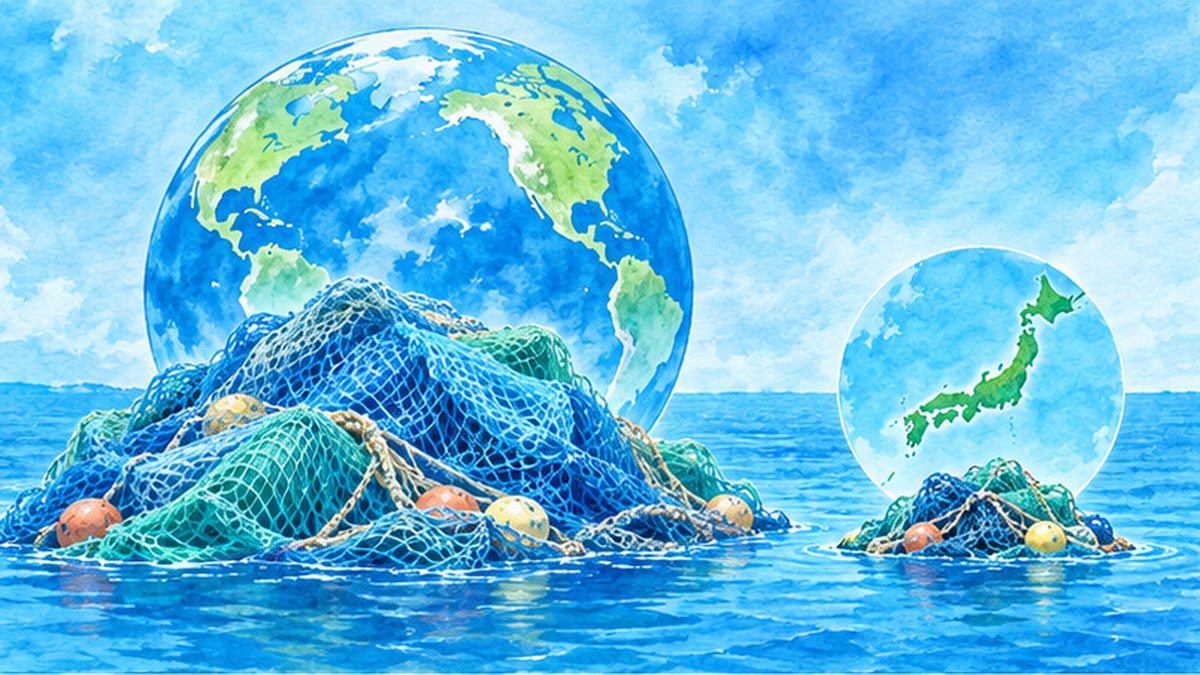
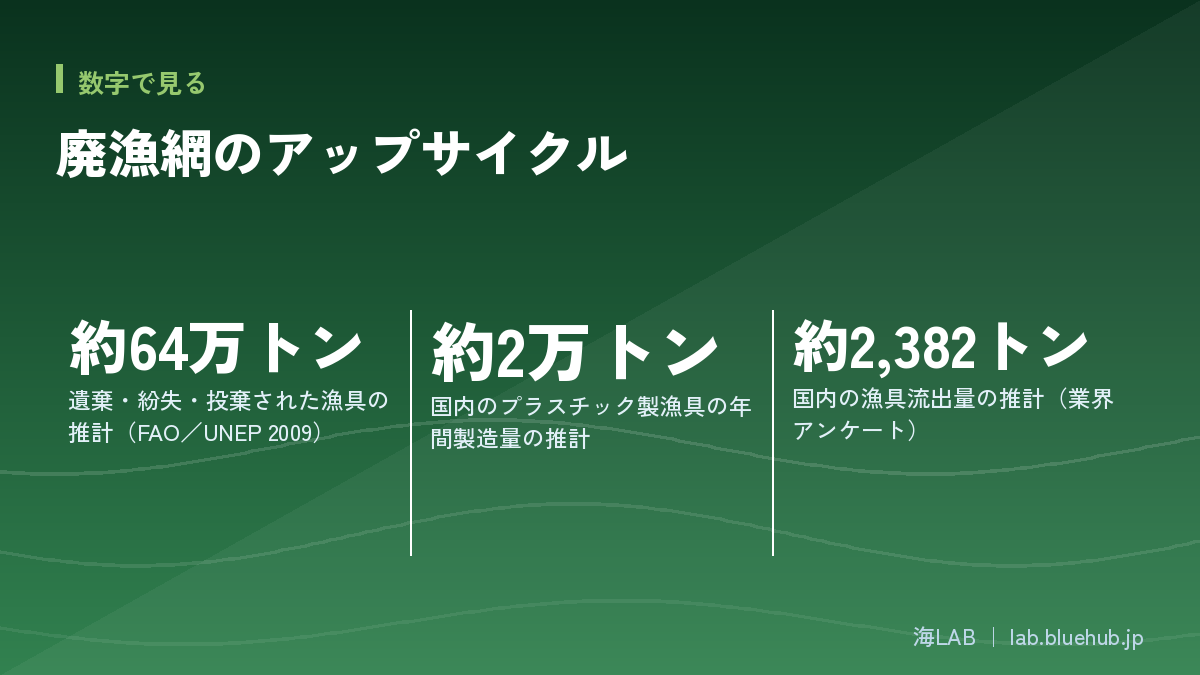
World: an outflow said to exceed 600,000 tonnes a year
A 2009 report by the Food and Agriculture Organization (FAO) and the United Nations Environment Programme (UNEP) estimated that abandoned, lost or discarded fishing gear (ALDFG) accounts for about 10% of all marine litter, equal to about 640,000 tonnes. FAO has repeated this figure in later articles, and a Toyota Tsusho release says "more than 600,000 tonnes of nets and fishing gear flow into the sea every year." However, the 2009 report gave the figure as a share of marine litter, and the word "annual" comes from later introductions. Keep this difference in mind when citing.
Japan: about 20,000 tonnes of plastic fishing gear a year
According to the Fisheries Agency, of the roughly 10 million tonnes of plastic produced and used in Japan each year, about 20,000 tonnes a year (about 0.2% of the total) is made as fishing gear. An estimate based on an industry survey puts the outflow of plastic fishing gear at about 2,382 tonnes. The 20,000 tonnes is an estimate of production and the 2,382 tonnes an estimate of outflow; within the scope we checked, we found no national statistic on the annual amount of discarded nets itself.
| Indicator | Figure | What is counted | Source |
|---|---|---|---|
| World ALDFG | About 640,000 tonnes (about 10% of marine litter) | Estimate of abandoned, lost or discarded gear (2009 report) | FAO/UNEP |
| Japan: gear production | About 20,000 tonnes a year (about 0.2% of all plastic) | Estimated production of plastic fishing gear | Fisheries Agency |
| Japan: gear outflow | About 2,382 tonnes | Estimate of outflow based on an industry survey | Fisheries Agency |
Points to note when reading the numbers
- Production, outflow and disposal are different indicators and cannot be added or subtracted
- Public statistics on national net waste are limited, and estimates have a range
- Check the latest figures in publications by the Fisheries Agency and the Ministry of the Environment
From net to product: collection to recycled material
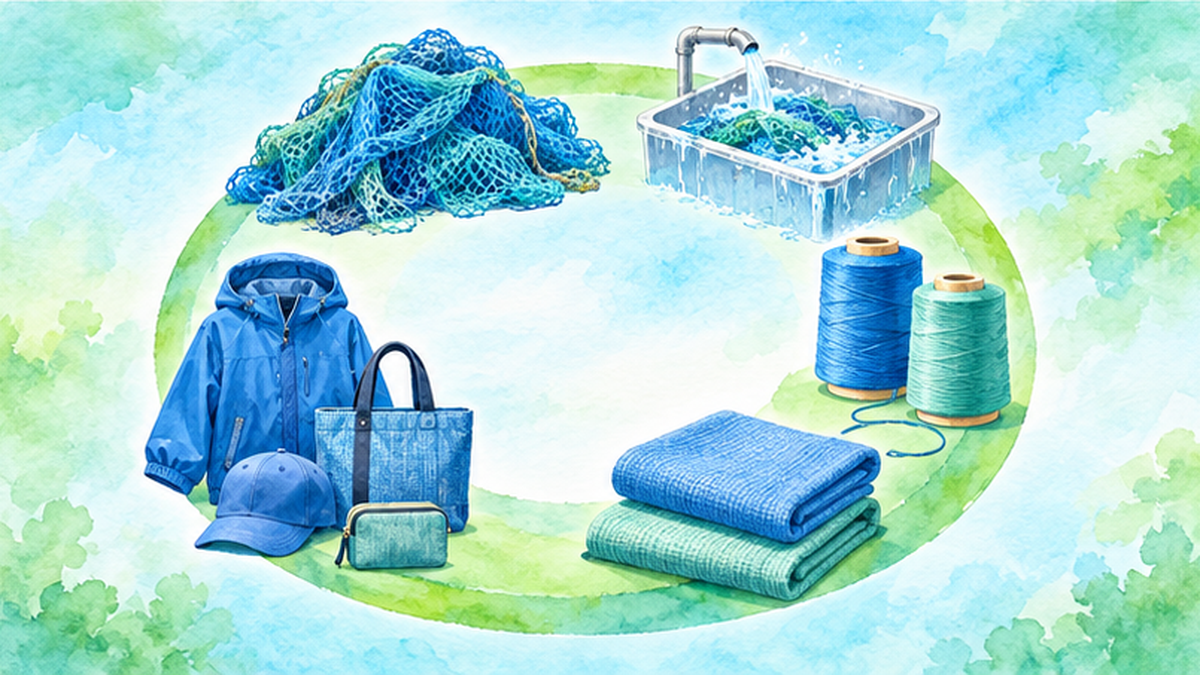
Net upcycling is a chain of steps: "collect → clean → sort → make raw material → make products." Every stage needs labor and money, so making the whole chain profitable is difficult.
Step 1: Collection and purchase
amu, based in Kesennuma, Miyagi Prefecture, buys used nets from fishery cooperatives, fishing companies and gear shops across Japan. According to its introduction, about 10 tonnes of nets were collected in Kesennuma, and it aims for hundreds of tonnes a year in future (note that this is a target, not a result). The idea of turning nets from something you pay to dispose of into raw material that is bought is key to encouraging collection.
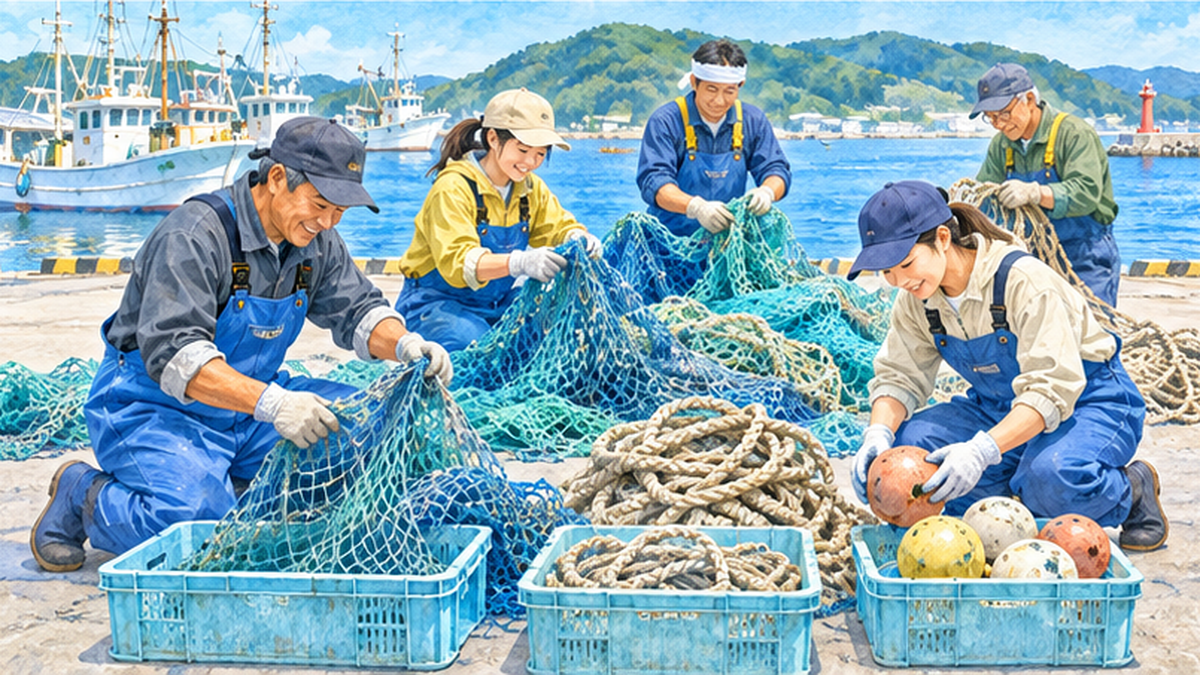
Step 2: Washing, cutting and removing other materials
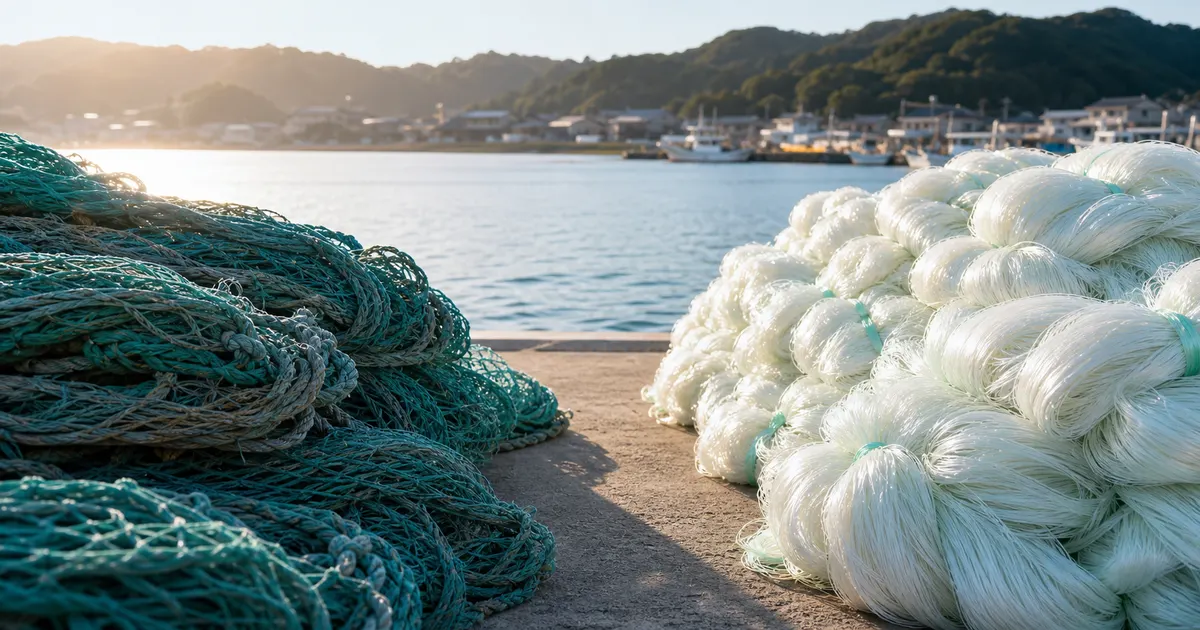
Nets used at sea carry sand, shells, seaweed and salt. They are also mixed with other materials such as ropes, floats, lead weights and metal fittings. In amu's approach, to keep transport costs down, washing and cutting are done in the collection area together with employment support facilities, and other materials such as ropes and floats are removed by hand. This step is hard to automate and depends heavily on human labor.
Step 3: Pelletizing and regenerating the material
Washed and cut nets are melted into small pellets that become raw material for yarn, fabric and molded parts. amu supplies regenerated nylon 6 under the material name "amuca NYLON6" and aims for quality equal to virgin material. If nylon-to-nylon horizontal recycling is achieved, discarded nets can circulate into material of equal value rather than stopping at low-grade uses (downcycling).
- Collection and purchase (cooperatives, fishing companies, gear shops)
- Washing, cutting and manual removal of other materials
- Melting and pelletizing
- Spinning and molding (yarn, fabric, plastic parts)
- Productization and sales
Conditions for making the process work
- Enough volume is collected to keep transport costs down
- A habit of sorting at the source so materials are not mixed
- Companies and consumers who buy recycled material
Initiatives at home and abroad: how companies are responding
This section introduces examples that can be confirmed from public information. For details of products and initiatives, please check each company's latest announcements.
"NetPlus" from the US and Toyota Tsusho's entry
BUREO of California, USA, was founded in 2013. It collects and sorts discarded nets mainly in South America and runs "NetPlus," a brand of nylon made from 100% discarded nets. Toyota Tsusho has invested in the company and entered the net recycling business in Japan in July 2023. It began test collection in the Sotobo area of Chiba Prefecture, and aims to wash and sort nets in Japan, manage traceability, and recycle them overseas. It also plans to expand sales to industrial materials in addition to apparel.
For related reading, see an explanation of products using BUREO's NetPlus and an introduction to goods made from recycled fishing nets.
Making material in Japan: amu
amu is based in Kesennuma and handles everything from buying discarded nets to supplying material. It is notable for focusing on supplying material to other companies rather than selling its own products. By washing and cutting near fishing areas and working with local employment support facilities, it is introduced as a model that considers both the environment and local jobs.
Chemical recycling research in Europe
In Europe, the REDES4VALUE project is researching how to chemically break down discarded polyamide (nylon) nets, recover monomers (the raw-material molecules) and repolymerize them into high-quality material. Methods such as hydrothermal and solvent decomposition are being evaluated, and uses for the recycled material include packaging, agriculture, automobiles and 3D printing. There is hope that materials whose quality tends to drop when simply remelted can keep their quality if returned chemically.
| Initiative | Lead | Features | Status |
|---|---|---|---|
| NetPlus | BUREO (US) / Toyota Tsusho | Regenerated nylon from 100% discarded nets. Plans to wash and sort in Japan and regenerate overseas | Test collection began in the Sotobo area of Chiba in July 2023 |
| amuca NYLON6 | amu (Kesennuma, Miyagi) | Bought from cooperatives and others; washed and cut locally, then pelletized | About 10 tonnes collected in Kesennuma; target of hundreds of tonnes a year |
| REDES4VALUE | European research project | Chemical recycling of polyamide nets (monomer recovery) | Research and evaluation stage |
Challenges: why upcycling is slow to spread
Even if recycling is technically possible, there are barriers to wide adoption in society. This section sorts out the main challenges that can be read from published materials and examples.
Challenge 1: In Japan nets are treated as "industrial waste"
According to a Toyota Tsusho release, discarded nets are generally treated as industrial waste in Japan. Transporting and processing industrial waste requires legal procedures and costs, so for fishers it is something that "costs money to get rid of." To send nets to recycling, there is an institutional challenge of how to cover processing costs and balance them with purchase.
Challenge 2: Sorting and washing effort, and mixed materials
Nets mix nylon, PE, PP and other materials, and ropes and weights are attached. Because chemical recycling suits only polyamide nets, sorting by material is essential first. This work relies heavily on manual labor, and labor and costs grow as volume increases.
Challenge 3: Securing volume and transport costs
Nets are light and bulky, and fishing ports are scattered across the country, so transport costs tend to be high. The Toyota Tsusho release also names as a challenge that no system yet exists to handle collection through recycling on a large and sustained scale. Collection bases need to be expanded in Japan and abroad to build a stable supply.
Challenge 4: Awareness and demand for recycled material
Low public awareness is also a challenge. If recycled material is not chosen, businesses working on collection cannot earn revenue. Corporate procurement policies and consumers choosing products made from discarded nets support demand.
Summary of challenges
- Institutions: balancing industrial-waste treatment and purchase
- On site: mixed materials and manual sorting
- Logistics: transport costs of light, bulky nets
- Demand: building a market that chooses recycled material
Systems and mechanisms: "responsibility" and "incentives" that support collection
Collection will not spread through individual company efforts alone. A system design that decides who pays and who collects is essential.
The idea of extended producer responsibility (EPR)
"Extended producer responsibility (EPR)," which extends responsibility from manufacture to disposal to producers, has been discussed for fishing gear, mainly in Europe. For the discussion in Japan, see the related article on EPR for fishing gear for details.
Basic recommendations to reduce losses
The FAO and UNEP report recommends economic incentives to encourage reporting of lost gear, proper disposal facilities, and mandatory logging of gear losses. Because much gear is lost to storms, strong currents and conflicts with other gear, measures are needed not only against "deliberate dumping" but also against "losses by force majeure."
The role of fishery cooperatives and local governments
According to the Fisheries Agency, cases where federations and cooperatives lead collection and recycling of fishery waste are gradually increasing. Cooperatives have many contacts with fishers and suit the role of collection hubs. Local governments can contribute through subsidies for processing costs and by linking recycling businesses.
- National government: system design, clear processing rules, better surveys
- Local governments: collection points, subsidies and support for working with businesses
- Cooperatives and federations: collection, calls for sorting, coordination with buyers
- Companies: developing collection and recycling technology, procuring recycled material
- Consumers: choosing products made of recycled material
Does upcycling save the ocean? Expectations and limits
Upcycling discarded nets is a promising effort that links resource circulation and marine debris measures. But it is not a cure-all. Let us look calmly at its effects and limits.
Expected benefits
- May reduce improper disposal or abandonment of used nets, and as a result help curb losses
- Reduces the use of new fossil-resource resin
- Gives fishers purchase income, motivating collection
- Cooperation with local welfare facilities can contribute to jobs and regional revitalization
Limits we must not overlook
First, upcycling deals with "collected used gear"; gear that has already flowed into the sea is outside its scope. Recovering lost gear requires separate underwater recovery activities. For related explanations, see the article on the ghost gear problem.
Second, because washing and transport use energy, we need to confirm through an overall assessment of environmental impact (life cycle assessment) that it is truly beneficial. Third, if products made of recycled material are sold only on an image of being "eco-friendly," they may raise expectations beyond reality. Neutral communication based on facts is needed.
Balance of expectations and limits
- Upcycling is effective for turning "used gear" into resources
- Recovering gear already lost and preventing losses need separate measures
- Evaluate environmental effects across the whole process
What we can do: three perspectives for consumers, fishers and companies
The discarded net problem is not only for those in fishing. Our choices when buying products support the collection system through demand for recycled material.
What consumers can do
- When choosing products made of recycled material, check the origin of the material and the collection system on the official website
- Value explanations with concrete figures and sources over labels that merely say "eco-friendly"
- Join coastal cleanups and efforts that support fishing regions
What fishers and cooperatives can do
- Store used gear separated by material
- Share information with local collection and purchase initiatives
- Record gear losses and understand the causes of loss
What companies can do
- Set clear policies for procuring recycled material and create stable demand
- Disclose traceability from collection to product
- Communicate environmental effects without exaggeration
Also, the article on recycling nylon fishing gear can help deepen your understanding of the material side.
One step you can take today
- Check the material label on products you own to see whether they use recycled material
- Find out about collection initiatives by your local cooperative or municipality
- Share this article with people interested in the sea and fisheries
Summary: completing the loop from collection to demand
Upcycling of discarded nets and fishing gear works only when the whole chain connects: collection, washing and sorting, regeneration, productization, and finally purchase. Technology is advancing, but in Japan challenges remain: treatment as industrial waste, sorting effort, transport costs and awareness.
Key points of this article
- Global fishing gear loss is said to be about 640,000 tonnes, but note the differences in what the indicators count
- Japan's plastic fishing gear production is about 20,000 tonnes a year, and the estimated outflow is about 2,382 tonnes
- Initiatives combining purchase and regeneration, such as amu and BUREO/Toyota Tsusho, have begun
- Challenges fall into four: institutions, sorting, logistics and demand
- Upcycling is more effective when combined with loss prevention and underwater recovery
To protect marine resources while making fisheries more sustainable, we need the perspective of "circulating used gear as a resource." Let us support that loop through everyday choices.
References and sources
- FAO "Ghost nets hurting marine environment" – Introduction of the FAO/UNEP report that abandoned and lost gear is about 10% (640,000 tonnes) of marine litter
- Fisheries Agency materials on fishing gear (estimates of production and outflow of plastic gear) – Estimates of about 20,000 tonnes a year and about 2,382 tonnes outflow
- Toyota Tsusho: entry into net recycling business (28 September 2023) – NetPlus, BUREO, test collection in the Sotobo area of Chiba
- REDES4VALUE: regenerating waste nylon fishing nets for industrial uses – European chemical recycling research
- Chemical Recycling of Polyamide Fishing Nets (Recycling Magazine) – Chemical recycling of polyamide fishing nets
- Introduction to amu's initiatives – Purchase and materialization of discarded nets in Kesennuma
- Fisheries Agency publications (notices and guidelines on fisheries) – Administrative materials on fishery waste
* Listed in order of reliability: government and academic institutions > peer-reviewed papers > specialist organizations > reliable media