⚡ In short
Japan had 121,389 fishers in 2023, and 17.0% of its marine fishery management entities disappeared in just five years. Using the Fisheries White Paper and the Fishery Census, this article unpacks why successors are not emerging — and examines three remedies: new-entrant support, smart fishing technology, and umigyo (marine village businesses).
Every fish on the counter at a supermarket was brought back from the sea by somebody. But that "somebody" is disappearing fast. According to the Fisheries Agency's FY2024 Fisheries White Paper, Japan had 121,389 fishers in 2023. Compared with 153,490 in 2017, roughly one fifth of the workforce vanished in just six years.
What is more serious is that it is not only people but the management entities themselves that are disappearing. The 2023 Fishery Census (final figures) puts the number of marine fishery management entities nationwide at 65,662 — down 13,405 entities, or 17.0%, from five years earlier. For individual (family) entities alone the drop is 17.6%. In other words, close to one in six of the "households" that owned boats, belonged to fishery cooperatives and worked their local waters have been lost in five years. The capacity to receive newcomers is shrinking faster than the workforce itself — and that is the essential difficulty of the successor problem.
Rather than settling for "it is aging, so nothing can be done", this article breaks the problem down along four axes: income, housing, information and rights. It then examines how far three remedies — support programmes for new entrants, labour-saving through smart fishing technology, and income diversification through umigyo (marine village business) — actually work, and where they fall short, drawing on official documents and real initiatives. Let us look at what is happening right now to the task of passing Japan's sea livelihoods on to the next generation.
What you will learn
- Exactly how fast the number of fishers and management entities is falling, based on the latest official statistics
- The structural reasons — income, housing, information and rights — why successors do not emerge, which "aging" alone cannot explain
- What national and local support programmes contain, and the practical entry points (employment fairs and training)
- Which parts of the labour shortage smart fishing (ICT and AI) can ease, and which parts it cannot
- Real examples of the shift toward "fishing villages that can earn", including umigyo and local systems for receiving newcomers
- What ordinary consumers and citizens can do to support livelihoods at sea
Where the labour shortage stands, in numbers
When discussing a labour shortage, what matters most is not impressions but actual figures. Let us begin by confirming the "speed of decline" that official statistics show.
121,389 fishers in 2023
According to the Fisheries Agency's FY2024 Fisheries White Paper, there were 121,389 fishers in 2023, down 1.4% from the previous year. Since the figure was 153,490 in 2017 (down 4% year on year), roughly 32,000 people — about 21% — were lost over six years. That is around 5,000 people a year leaving the sea, a scale comparable to the entire workforce of a small rural town.
| Year | Number of fishers | Notes |
|---|---|---|
| 2017 | 153,490 | Down 4% year on year |
| 2022 | 123,100 | Down 4.8% year on year |
| 2023 | 121,389 | Down 1.4% year on year |
One thing to watch is that the rate of decline swings widely from year to year. It plunged 4.8% in 2022 but only 1.4% in 2023. Judging from a single year that the decline has "bottomed out" is risky, because survey methods and external factors such as fuel prices and fish prices are mixed in. The long-term downward slope is what matters.
17% of management entities gone in five years
The situation for management entities is even more severe than for people. According to the Ministry of Agriculture, Forestry and Fisheries' 2023 Fishery Census (as of 1 November 2023, final figures), there were 65,662 marine fishery management entities nationwide, down 13,405 entities, or 17.0%, from five years earlier.
| Category | Entities (2023) | Change from five years earlier |
|---|---|---|
| Marine fishery entities (total) | 65,662 | −13,405 (−17.0%) |
| of which individual entities | 61,386 | −13,140 (−17.6%) |
| Individual entities: full-time | 33,921 | −4,377 (−11.4%) |
| Individual entities: part-time | 27,465 | −8,763 (−24.2%) |
What stands out in this table is that the fall in part-time entities (24.2%) is more than double that of full-time ones (11.4%). Part-time fishing — combining fishing with other work because fishing alone does not pay — was a realistic way for people to stay in their communities. The fact that this layer is collapsing first means the "soft footing" that allowed people to keep fishing is being pulled away first.
Also, since individual entities account for 61,386 of the 65,662 total, corporate entities — companies, cooperatives and joint operations — number only about 4,276 by subtraction. Japan's marine fisheries are still overwhelmingly carried by individual households. Because one retirement in an individual entity means the disappearance of an entire entity, a statistical decline translates very directly into an actual gap on the ground.
Projections pointing to convergence at 70,000
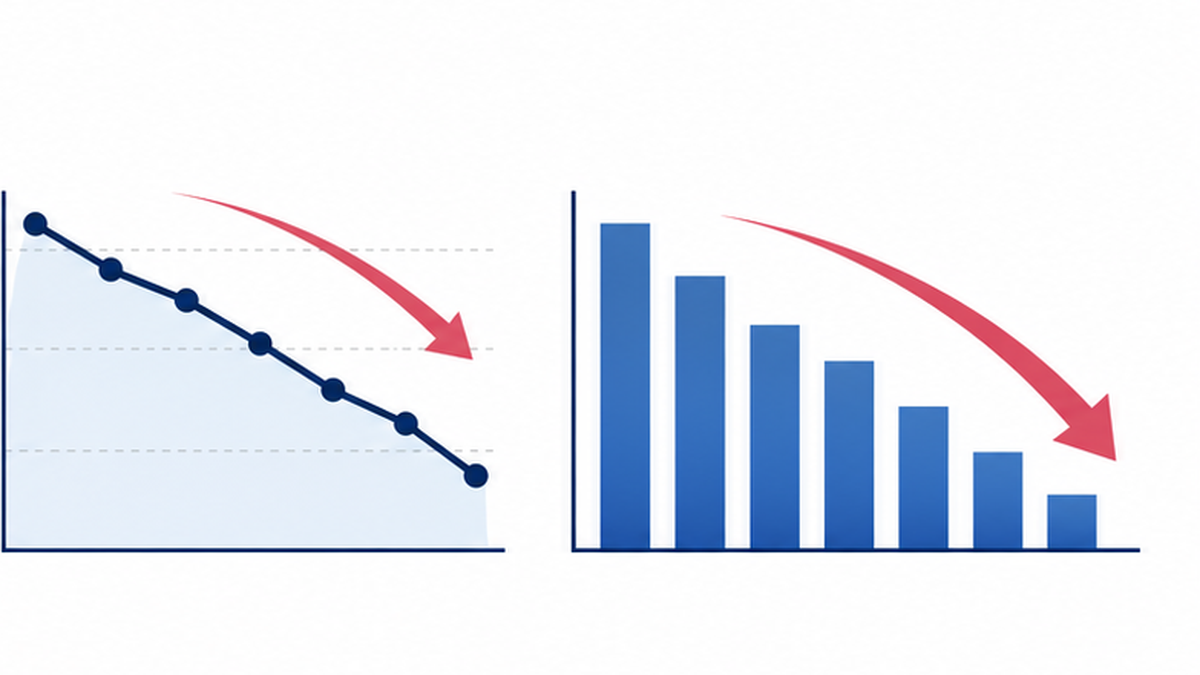
In a column in the FY2018 Fisheries White Paper, the Fisheries Agency presented a mechanical projection: holding the then-current number of new entrants and other conditions fixed, the fisher population would converge to about 103,000 in 2028, about 73,000 in 2048 and about 70,000 in 2068. This is not a prophecy but a warning value showing what happens if nothing changes. Conversely, it also means the line can be moved by increasing new entrants or reducing departures.
Key points of this chapter
- There were 121,389 fishers in 2023, about 21% fewer than six years earlier
- Marine fishery management entities fell 17.0% in five years; part-time individual entities fell fastest at 24.2%
- If conditions do not change, a projection puts the total at about 73,000 in 2048 (FY2018 Fisheries White Paper)
Why successors do not emerge: walls of income, housing and information
People say "young people do not come to the sea", but the reason is not a matter of attitude. There are concrete barriers that can be explained by figures and by institutions.
The reality of 2.19 million yen in fishing income
According to the Fisheries Agency's FY2024 Fisheries White Paper, the average fishing income of individual management entities engaged in coastal boat fishing was 2.19 million yen in 2023, down 330,000 yen from the previous year. Even adding non-fishing revenue, business income came to 2.42 million yen. Since fishing income was 2.52 million yen in 2022, it fell by more than 10% in a single year.
This is the amount left in hand after owning a boat, buying fuel, repairing gear and paying insurance. Moreover, fishing income is strongly buffeted by fish prices and fuel prices, so year-to-year swings are large. For a generation used to a stable monthly salary, that instability is a heavier barrier than the absolute figure.
Working conditions add another hurdle. Boats leave port between midnight and dawn, whether there is work at all depends on the weather, and work at sea always carries danger. Days off are not fixed, and fishers report difficulty making time for family or for their children's school events. If income were high, people might accept it as fair compensation — but at 2.19 million yen, it is hardly surprising if they judge it not worth it. The first step in tackling the labour shortage is improving income and working conditions, not exhorting people to have spirit — that is what the statistics say.
Few entry routes other than inheriting
Japanese coastal fisheries have long been built on the family business as the basic unit. Boats, gear, cooperative membership and tacit knowledge about how to use fishing grounds are handed down from parent to child as a package. The system was efficient, but the flip side is that the route in for someone not born into such a household is narrow.
- Initial investment in a boat and gear is large; even a second-hand vessel can cost from several million to several tens of millions of yen
- Fishing rights and licences are managed locally in limited numbers, and are not automatically granted to newcomers
- Knowledge of what can be caught where and when is not written down; it can only be learned by watching alongside someone
- Many fishing villages have no housing available — vacant houses exist, but no functioning rental market
The successor problem is therefore simultaneously a problem of "no heir" and a problem of outsiders who want in but cannot get in. These two require separate remedies.

When the receiving side shrinks, even willing successors cannot enter
The fact that management entities fell 17% also means that the places that could employ newcomers and the people who could teach them fell by 17%. The labour shortage is a double contraction in which "not enough people" and "not enough capacity to receive people" advance at the same time, and if left alone it accelerates. That is why action is needed while a certain number of entities still remain in each community.
An overlooked chain reaction
Fewer entities → fewer masters who can teach → inability to accept new entrants → still fewer entities: a vicious circle. Measures for the workforce work only when "attracting young people" is paired with "sustaining the side that receives them".
Inside the aging problem: a wave of retirements and a thin youth layer
The word "aging" is used often, but breaking down what is actually happening on the ground reveals which measures should come first.
Older fishers are holding up the front line
The FY2024 Fisheries White Paper notes that, even as the total number of fishers falls, the share aged 65 and over is trending upward. In the Tohoku region, for example, the share aged 65 and over rose from 8.4% in 1973 to 39.2% in 2023, roughly four in ten (regional statistics such as the Tohoku Regional Socio-Economic White Paper). Regional variation exists, but the fact that older fishers sustain the daily landings of coastal fisheries is common nationwide.
A large share of older fishers is in itself a strength in terms of accumulated experience. The problem is the concentration in time: that layer is likely to retire more or less together over the next decade or so. Rather than a gradual decline, a step-shaped drop may be coming.
Those aged 39 and under are increasing, but from a small base
It is often overlooked, but the FY2024 Fisheries White Paper also records that the number of fishers aged 39 and under is trending upward. That young people are increasing while the total falls is evidence that the support programmes and local reception efforts described below are having some effect. Because the base is small, however, the scale is nowhere near enough to fill the gap left by retiring older fishers.
| Perspective | Current situation | Implication |
|---|---|---|
| Aged 65 and over | Share trending upward | Retirements may concentrate over the next decade |
| Aged 39 and under | Increasing, but from a small base | Measures are working, but not at sufficient scale |
| Middle layer (40–64) | The core of the overall decline | The relay runners for skill transfer are thin |
The time limit on passing on skills
Fishing skills range from reading sea conditions to rigging gear, bleeding and chilling fish, and dealing with markets — and much of it has never been put into words. Young people must learn beside veterans while those veterans are still active, and once the chain is broken it is very hard to restore. Seen through the question "how many more years will the people who can teach still be aboard?", the labour shortage is not an issue that can wait.
Locally specific knowledge is the most easily lost of all: which shoal the tide turns on and when, where to take shelter in which wind, what appears every few years. None of this is in any national textbook. Because it is also knowledge for using local waters safely, a break in transmission raises accident risk as well as lowering production. Digital fishing logs and similar tools have begun to record such information, but only the parts that can easily be quantified.
Where new entrants come from: a breakdown of 1,733 people
How many people newly enter fisheries each year? Both hope and difficulty are visible in this figure.
Employed entry versus independent operation
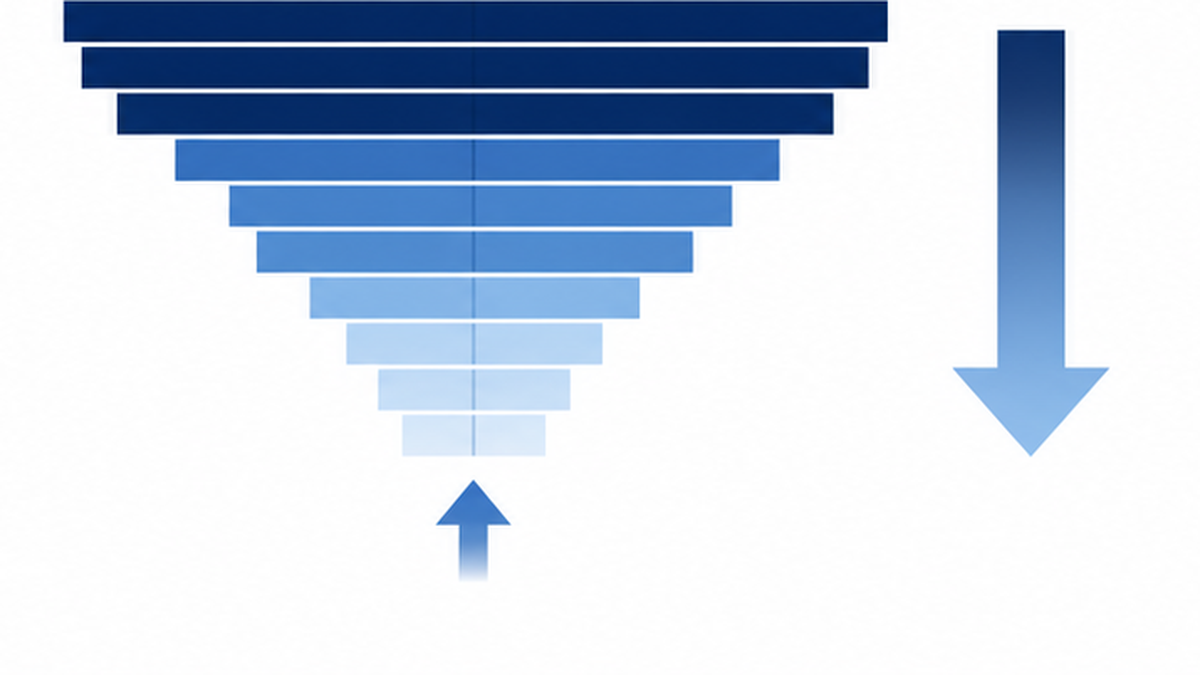
According to the Fisheries Agency, 1,733 people newly entered fisheries in FY2023. Of these, 1,150 entered as employees (up 19% year on year) and 576 as independent operators (down 20%). Since the FY2022 total was 1,691, the overall number rose slightly.
| Fiscal year | Total new entrants | Employed | Independent |
|---|---|---|---|
| FY2021 | 1,744 | 1,076 | 668 |
| FY2022 | 1,691 | 965 | 718 |
| FY2023 | 1,733 | 1,150 | 576 |
An important shift can be read from this table: employed entry is rising while independent operation is falling. More entry through employment by companies or cooperatives is welcome, since the initial investment risk is lower and the door is easier to open. On the other hand, if independent operators decline, the pool of people who will one day own a boat and take responsibility for local fishing grounds thins out. Both the width of the entrance and the path beyond it need to be designed.
Note that about 70% of new entrants are aged 39 or under. It is not that young people do not come to fishing; the accurate reading is that the absolute number who come is insufficient.
The Fishery Employment Support Fair as a doorway
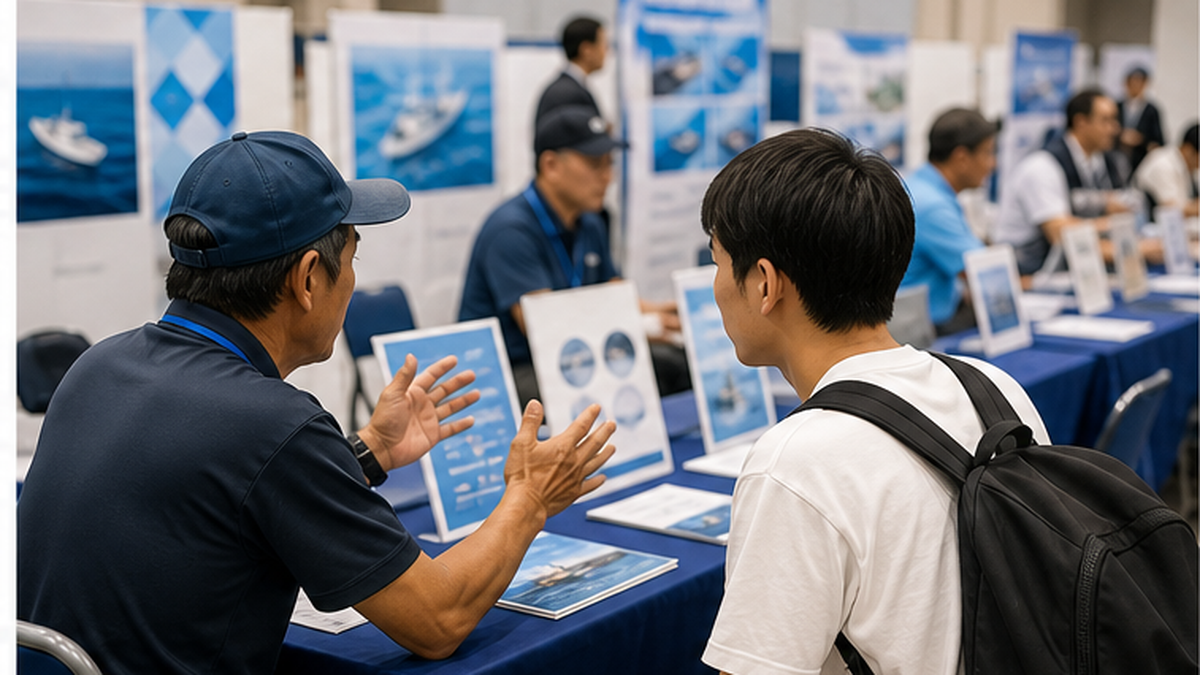
The largest doorway into fisheries from outside is the Fishery Employment Support Fair, held by the National Center for Securing and Developing Fishery Workers in cooperation with the Fisheries Agency. Running since FY2002, it is Japan's only nationwide recruitment consultation event for fishing jobs, where fishers and cooperatives from Hokkaido to Okinawa, from coastal to offshore and distant-water fisheries, exhibit and applicants can speak with them directly.
According to the Center, the "Fishery Employment Support Fair 2026 Summer" held in July 2026 drew 75 visitors in Fukuoka, 122 in Osaka and 257 in Tokyo, for a total of 454 — about 1.3 times the previous year's 342. The Tokyo venue was 1.5 times the previous year. The absolute numbers are not large, but the growth in interest is itself an encouraging sign.
| Session | Venues | Visitors |
|---|---|---|
| February 2025 | Osaka / Tokyo | 123 / 172 |
| July 2025 | Fukuoka / Tokyo / Osaka | 65 / 167 / 110 |
| July 2026 | Fukuoka / Osaka / Tokyo | 75 / 122 / 257 (total 454) |
The Center reports that the fair has now been held more than 110 times in total. In February 2026 it also convened its first network meeting to strengthen cooperation between the public and private sectors and across regions. Rather than each cooperative or fishing company recruiting alone, the receiving side nationwide has entered a stage of sharing information and know-how. Securing successors is now both a competition between regions and a joint effort by the industry as a whole.
The pipeline from fisheries high schools
Japan's fisheries high schools are specialised institutions where students learn marine fishing, aquaculture and food processing, and some operate training vessels for navigation practice. In its statements on the direction of fisheries education, the Fisheries Agency has repeatedly raised the fact that graduates do not necessarily go into the fisheries sector. There is also an entry-level problem: students at general high schools rarely encounter fisheries as a field at all, so it never enters their list of career options.
In recent years, cooperation between employment consultation events and schools has advanced, and fisheries high school graduates have come to be valued on the ground as "people with solid fundamentals". Some schools allow students to obtain boat operator or radio licences while still enrolled, giving a practical head start after employment. Widening the pipeline from education to employment is a measure just as important as distributing subsidies.
How to read the figures
- About 1,700 people enter each year, while the total workforce falls by several thousand a year
- New entry alone therefore cannot compensate; curbing departures and sustaining management entities are needed at the same time
- Rising employed entry shows easier access; falling independent operation signals a thinning of future core fishers
How to use the support programmes: training, funding and housing
If you decide you want to become a fisher, there are programmes you can actually use. This section sets out the framework of public support.
The Comprehensive Support Programme for New Fishery Entrants
The Fisheries Agency's Comprehensive Support Programme for New Fishery Entrants is a national framework that supports would-be fishers in stages. It covers everything from pre-employment information and consultation, through long-term on-site training, to preparation for independent operation. For long-term training of up to three years aimed at independent operation, grants on the order of up to 282,000 yen per month are set, including support for the host side (contents and unit amounts change by fiscal year, so always check the latest call for applications).
- Employment consultation and information: matching through employment fairs and consultation desks
- Long-term training: grants that support living costs while learning practical work under a host fisher
- Preparation for independent operation: leasing of vessels and gear, partial subsidy of fishing expenses, and more
- Retention support: follow-up after employment and training for skill improvement
Additional support from prefectures and municipalities
On top of national schemes, many prefectures run their own. The National Center for Securing and Developing Fishery Workers publishes a list of prefecture-by-prefecture support programmes, covering rent subsidies, interest subsidies for vessel purchase, and living-cost support during training, all varying by region. Whether national, prefectural and municipal schemes can be stacked makes a large difference to the actual burden.
Housing support is particularly effective. In fishing villages there are often many vacant houses but no functioning rental market, and there are real cases of people abandoning entry because "the job is settled but there is nowhere to live". Systems in which local governments secure and arrange housing are unglamorous but play a decisive role.
Fishing rights and licences: the invisible barrier to entry
To operate independently, a fisher needs fishing rights (demarcated fishery rights, common fishery rights and so on) or a fishing licence, depending on the type of fishery. These are managed by local fishery cooperatives and prefectures and are limited in number for resource management purposes. For newcomers they tend to be the last wall remaining even after funding and skills have been assembled.
A symbolic case here is the TRITON PROJECT run by Fisherman Japan, a general incorporated association based in Ishinomaki, Miyagi Prefecture. Since it began in July 2015, entrants from outside the community have obtained demarcated and common fishery rights — a notable step in that the community decided to hand rights to "outsiders". Because the operation of these systems depends on local consensus, an accumulation of such precedents widens the path for the next entrants.
If you want to become a fisher, start here
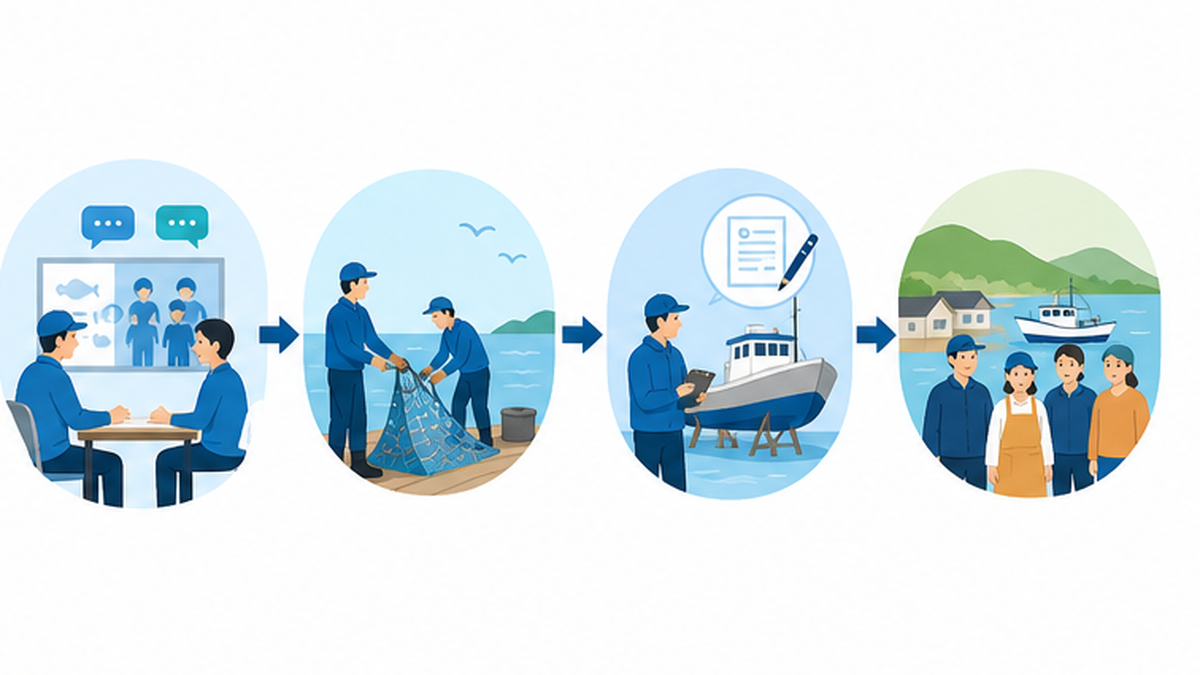
- Check the latest employment fair dates at the National Center for Securing and Developing Fishery Workers (ryoushi.jp)
- Ask the fisheries division of your target prefecture whether it has its own support and housing schemes
- Do not aim straight for independence: first spend one to three years in employed work or long-term training to experience the reality
- When choosing a host, always confirm whether there is someone to teach you and somewhere to live
Can smart fishing technology rescue the industry?
If there are fewer people, reduce the burden on each one — that is the hope placed in smart fishing. But it is not a cure-all.
Turning "experience and intuition" into data
The Fisheries Agency has promoted smart fisheries, building systems in which vessels carry ICT equipment such as digital fishing logs to collect operational and fishing-ground environmental data directly. In September 2020 it convened a committee on field implementation of smart fisheries and launched a "human resources bank for promoting smart fisheries".
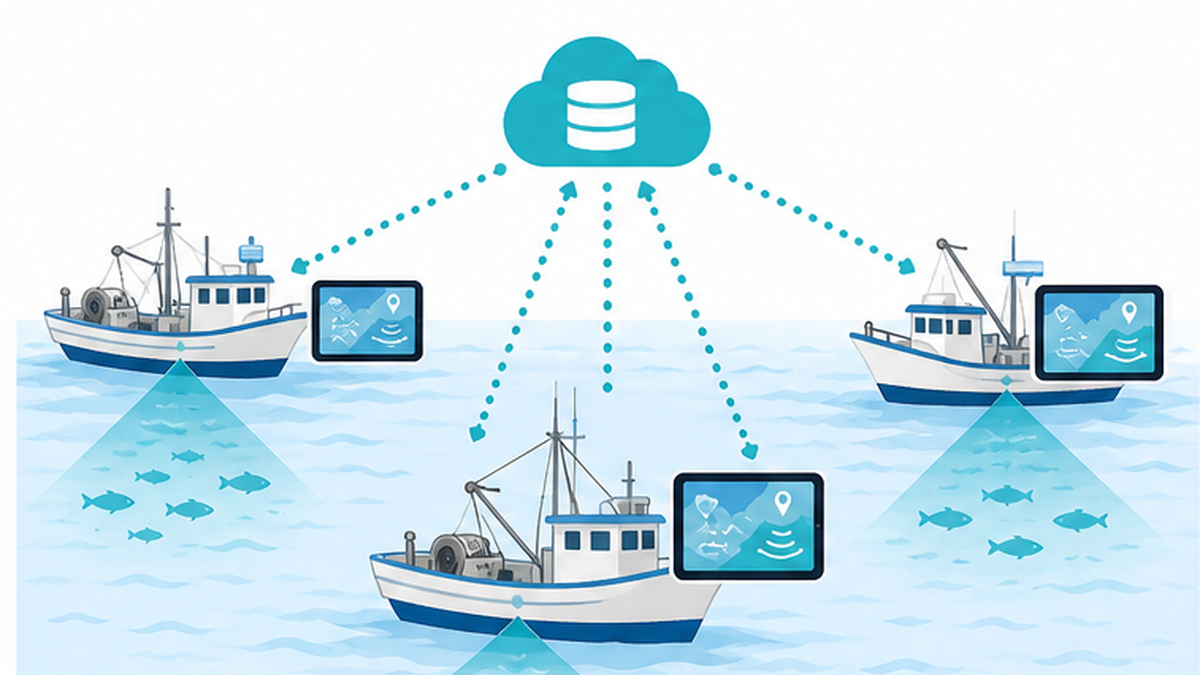
A leading private example is ISANA, the fleet operation support system provided by Lighthouse Inc. In fleet fisheries such as purse seining and trawling, where several vessels work together, it was difficult to grasp other vessels' fish-finder readings and positions. ISANA shares and records fish finder, sonar, on-board camera and positional data across the fleet in real time, so that everyone sees the same screen and the same basis for decisions. Because the records remain, a veteran's judgement can also be reviewed and learned from afterwards.
The company has entered a business partnership with Fisherman Japan, based in Ishinomaki, to advance digital transformation of the local fisheries industry. A workforce-development organisation teaming up with a technology company is a realistic approach that targets skill transfer and labour saving at the same time.
IoT monitoring in aquaculture and coastal waters
Implementation is advancing in aquaculture as well. In Mie Prefecture, an IoT ocean observation and monitoring system called "Umi Log" was developed to grasp fishing-ground conditions in real time, putting data such as water temperature and salinity into a form usable on site. Detecting early signs of red tides or high water temperatures reduces damage and also cuts the number of trips needed for inspection.
This effect of "no longer having to go" is especially important in the context of a labour shortage. Where hands are few, travel time for inspection and checking squeezes the business. If the state of the fishing ground can be seen on a handheld device, limited staff can be directed to work that genuinely requires people. Labour saving is not only about doing work faster but about finding work that need not be done at all.
- Shorter search time for fishing grounds = lower fuel costs and working hours
- Recording of operational data = putting skills into words and speeding up learning by young fishers
- Environmental monitoring = early response to red tides and heat damage, and lighter inspection burdens
- Richer stock assessment data = greater precision in science-based catch management
What smart fishing cannot do
There are limits that should be viewed soberly. First, the cost of introduction. For an individual entity earning 2.19 million yen in fishing income, equipment and service fees are not easy to fund. Without subsidies or shared-use arrangements, only entities with financial strength will adopt them, and gaps may widen.
Second, technology does not increase fish. Catching more efficiently is not sustainable if the stocks themselves are declining. Changes in fish distribution caused by rising sea temperatures are covered in detail in Rising sea temperatures and vanishing fish: poor catches of saury and squid and the future of Japanese fisheries. Third, physical work such as landing, sorting and mending nets still depends heavily on human hands. Labour saving eases the shortage but does not replace people.
Neither over-expect nor give up
Smart fishing has genuine effects in "lowering the burden per person" and "speeding up skill transfer". But if low income, insufficient housing and the barrier of rights are left untouched, it will not solve the labour shortage. It is more accurate to place technology as one of several measures.
Foreign workers and a more diverse workforce
Thinking of the workforce as only "young Japanese men" no longer matches reality. The front line is far more diverse.
Specified Skilled Worker status and the Maruship system
According to the Fisheries Agency's FY2024 Fisheries White Paper, as of the end of December 2024 there were 2,127 foreign nationals with Specified Skilled Worker (i) status in fisheries and 1,361 in aquaculture, plus 2 with Specified Skilled Worker (ii) status in fisheries. In addition, 3,565 foreign crew members work under the Maruship system, in which Japanese fishing vessels are chartered to foreign corporations whose foreign crews then serve aboard.
Adding Specified Skilled Worker (i) (2,127 in fisheries plus 1,361 in aquaculture) and (ii) (2 people) gives about 3,490, and adding the 3,565 under the Maruship system brings the total to roughly 7,000 people. Given that new entrants number around 1,700 a year, this scale cannot be ignored. At the same time, there is a question of whether language support, living support and career paths have kept pace. The stage has been reached where the design must treat these workers not as short-term labour but as members of the community who settle there.
That Specified Skilled Worker (ii) still stands at just 2 people is also telling. Status (ii) has no upper limit on renewals of the period of stay and permits family accompaniment, so it could become a vehicle for long-term settlement. Whether this number grows will determine whether foreign workers remain "temporary labour" or become genuine members of the local workforce.
Women's participation is still at the entrance
Women account for about 10% of fishers, but as of 2023 they made up only 5% of full members of fishery cooperatives and 0.4% of cooperative officers (FY2024 Fisheries White Paper). By contrast, estimates put women at about 36% of shore-based work and about 60% of the seafood processing industry — a picture in which women play a large role in practical work yet are almost absent from decision-making.
| Category | Share of women | Reference year |
|---|---|---|
| Fishers overall | About 10% | FY2024 Fisheries White Paper |
| Full members of fishery cooperatives | 5% | 2023 |
| Officers of fishery cooperatives | 0.4% | 2023 |
Choosing multiple jobs or part-time fishing
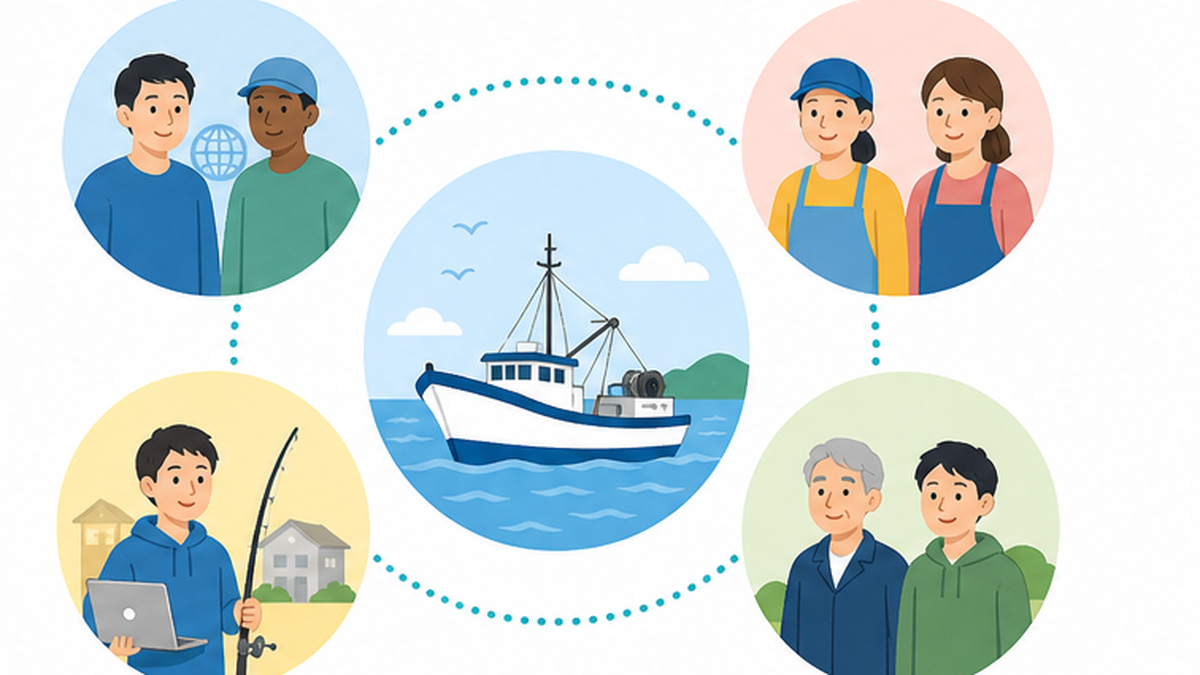
Ways in other than "living your whole life as a full-time fisher" are also spreading: combining processing, tourism guiding or remote work during the off-season, or returning to one's home region to take over part of the family's fishing operation. As seen earlier, part-time entities fell 24.2% in five years — but this can also be read not as a lack of demand for part-time fishing but as a reflection of the disappearance of the other local jobs that made it possible. Rather than looking at fishing alone, we need to think in terms of designing the community's livelihoods as a whole.
Passing sea livelihoods on: redesigning from the community up
Finally, let us look at the most fundamental response to the labour shortage: making the fishing village itself a place that can earn.
Umigyo: earning beyond fishing alone
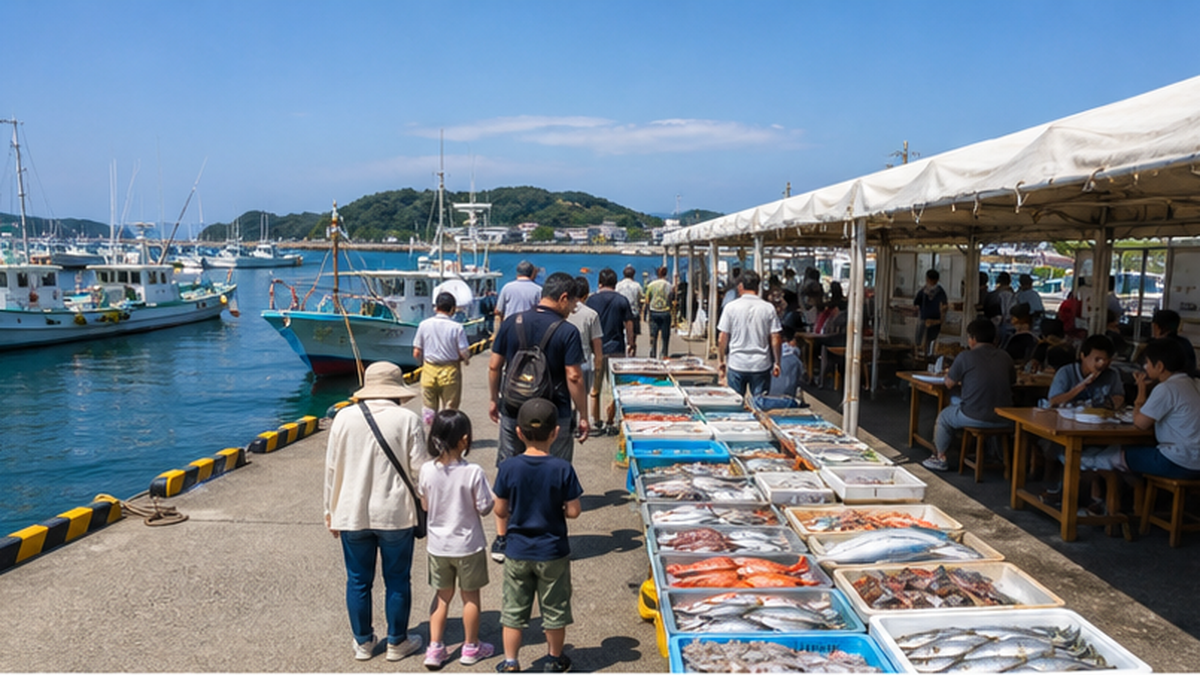
In recent years the Fisheries Agency has put weight behind umigyo (marine village business). It is a collective term for businesses that make use of the value and appeal of local resources in the sea and fishing villages, including direct sales outlets and restaurants at fishing ports, recreational and hands-on fishing, lodging, and seafood processing. The aim is to increase local income and employment opportunities without relying on larger catches.
The Fisheries Agency is aiming for new umigyo initiatives at roughly 500 fishing ports over five years and invites applications for designation as a "district working on umigyo promotion". To the 54 districts announced in March 2024 it added a further 32, bringing the total to 86 districts (Fisheries Agency announcement). In numerical terms that is still only part of the target, but a shift is under way nationwide from seeing a fishing port as "a place where fish are landed" to "a place where people gather".
Umigyo matters for the workforce because it lets communities make up locally for income that fishing alone cannot provide, and because it draws people to fishing villages through doors other than fishing. People who worked at a restaurant or on a hands-on programme sometimes end up going out on boats — such roundabout routes are genuinely emerging. On turning unused fish into products, see also How using unused fish changes our tables and our fisheries: school lunches, processed foods and hometown tax donations.
The Fisheries Agency has set up an "umigyo promotion general consultation desk (umigyo promotion concierge)" to take enquiries from communities that want to start. Practical obstacles — how port facilities may be used, what procedures are required, which subsidies apply — do not move forward if a community must shoulder them alone. That the administrative side has taken a role of walking alongside communities is a meaningful change for the workforce problem too.
Umigyo aims to secure local income and employment opportunities by making maximum use of local resources, amid population decline and aging in fishing villages.
― Fisheries Agency, call for applications for "districts working on umigyo promotion"
Communities that raise their own successors
Fisherman Japan, a general incorporated association in Ishinomaki, Miyagi Prefecture, launched the TRITON PROJECT in July 2015 to connect young people with fishers and develop the next generation. What distinguishes it is that recruitment, consultation and matching are combined with preparing the host environment, providing housing, and running study sessions for skill improvement. According to the organisation, more than 185 people have become new fisheries workers through the project and its nationwide expansion; more than 40 found employment via the TRITON PROJECT, of whom 2 obtained demarcated fishery rights and 1 obtained common fishery rights.
The organisation has been commissioned to run Ishinomaki City's fisheries workforce centre since December 2015, and has since expanded to Hokkaido, Kesennuma and elsewhere. Its design philosophy — not "recruit and done", but preparing housing, skills, rights and companions as a community — offers lessons for other regions. On the relationship between post-disaster fisheries recovery and the workforce, see Thirteen years of fisheries recovery after the Great East Japan Earthquake: rebuilt ports, workforce shortages and the advance of the seafood industry.
What consumers and citizens can do
The labour shortage is not a problem for producers alone, because what buyers do feeds directly into fishers' incomes. Paying a fair price, choosing seasonal or unused fish, visiting producing regions, choosing certified seafood — each is a small action, but together they have the power to move that figure of 2.19 million yen.
What you can do from today
- Consciously choose seasonal and local fish, shifting a little away from "buy it because it is cheap"
- Try direct sales outlets or online shops that handle unused or off-grade fish
- Visit a direct sales outlet or hands-on programme at a port working on umigyo, with your family
- Pass information about employment fairs and fishing village job openings to young people thinking about their careers
- Learn the seafood certification labels (MSC, ASC and others) and look for them in the shop
Summary of this article
- There were 121,389 fishers in 2023, about 21% fewer in six years, while marine fishery management entities fell 17.0% in five years
- Successors do not emerge because of a compound wall: income (2.19 million yen for coastal individual entities), housing, skill transfer and fishing rights
- New entrants number 1,733 a year (about 70% aged 39 or under); employed entry is rising while independent operation falls
- Stacking the national Comprehensive Support Programme for New Fishery Entrants with prefectural schemes is the realistic way in
- Smart fishing helps with burden reduction and skill transfer, but cost and stock problems must be solved separately
- Roughly 7,000 foreign workers already sustain the front line, and women do much of the practical work while remaining rare in decision-making
- Diversifying income through umigyo and building community-wide systems to receive newcomers are the most fundamental ways to keep the workforce
References and sources
- Fisheries Agency – FY2024 Fisheries White Paper, full text
- Fisheries Agency – FY2024 Fisheries White Paper, "(3) Trends among fishery workers" (numbers of fishers, new entrants, foreign workers, share of women)
- Fisheries Agency – FY2024 Fisheries White Paper, "(2) Trends in fishery and aquaculture management" (fishing income of coastal individual entities)
- Ministry of Agriculture, Forestry and Fisheries – Summary of the 2023 Fishery Census (final figures) / decline in management entities
- Fisheries Agency – FY2018 Fisheries White Paper, "(1) Trends among fishery workers" (column on future projections)
- National Center for Securing and Developing Fishery Workers (ryoushi.jp) – Fishery Employment Support Fair and prefecture-by-prefecture support schemes
- Fisheries Agency – Designation of "districts working on umigyo promotion" (4 April 2025)
- Fisheries Agency – FY2022 Fisheries White Paper, "(5) Development and use of technology for promoting smart fisheries"
- Fisherman Japan – TRITON PROJECT (workforce development activities and results)
- Lighthouse Inc. – ISANA fleet operation support system
* Ordered by reliability: government and academic institutions > peer-reviewed papers > specialist bodies > trusted media