⚡ In short
Marine Day traces back to July 20, 1876, when Emperor Meiji returned to Yokohama aboard the lighthouse tender Meiji Maru. This article explains its history: the 1941 Sea Memorial Day, the 1996 holiday, and the 2003 move to the third Monday of July, plus the growth of ocean education.
Why does Marine Day fall in July? The answer lies in a single ship's voyage about 150 years ago.
Marine Day is a holiday on which Japan gives thanks for the blessings of the sea and wishes for the prosperity of the maritime nation. Knowing its origin and history makes the day feel a little different.
This article sorts out, from primary information, the story from its origin to the holiday and the growth of ocean education.
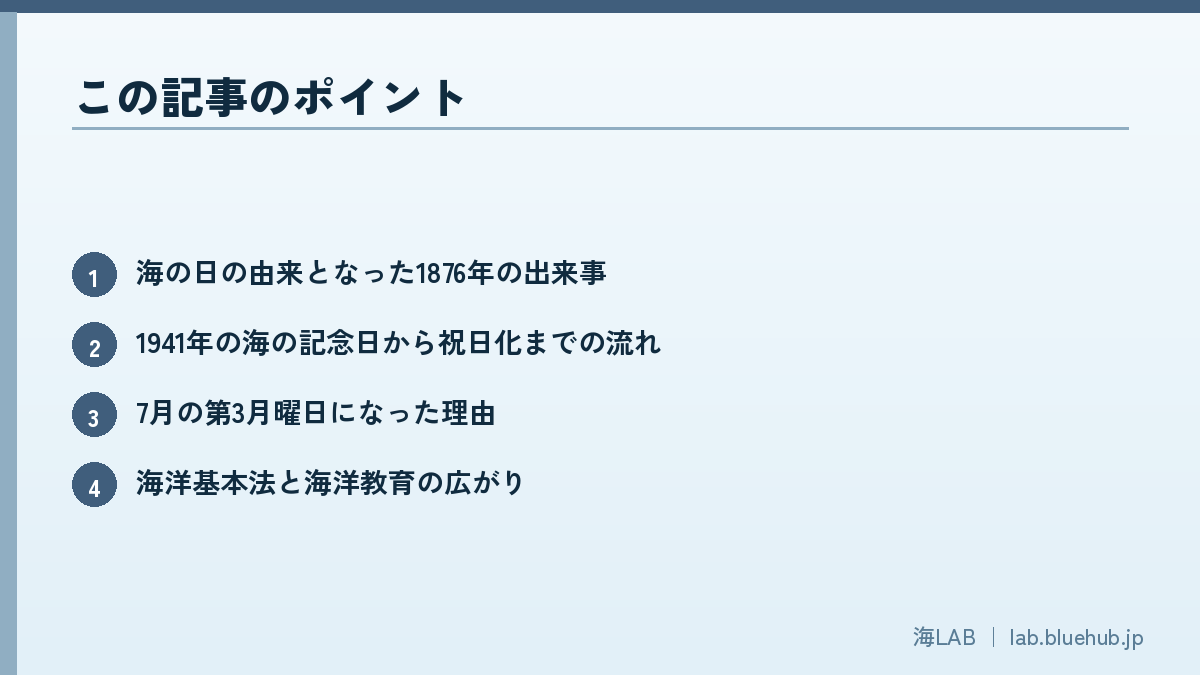
What you will learn
- The 1876 event behind Marine Day
- From the 1941 Sea Memorial Day to the national holiday
- Why it moved to the third Monday of July
- The Basic Act on Ocean Policy and ocean education
- Actions you can take starting today
What is Marine Day? A July holiday to thank the sea
Marine Day is a holiday defined in Japan's national holiday law as a day to "give thanks for the blessings of the sea and wish for the prosperity of the maritime nation Japan." It falls on the third Monday of July, and many people associate it with a three-day weekend, beaches and travel just before summer vacation. Yet surprisingly few can explain why it is in July or why there is a holiday for the sea.
This article follows the story from the Meiji-era event behind the day, through the prewar Sea Memorial Day and the 1995 creation of the holiday, to today's ocean education. We also consider how those of us living in a sea-surrounded country can take the holiday and turn it into action.
The purpose written in the holiday law
Article 2 of the holiday law defines Marine Day as a day to give thanks for the blessings of the sea and wish for the prosperity of the maritime nation. While Mountain Day (August 11) is about gaining an opportunity to be close to mountains and giving thanks for them, Marine Day includes the nation-building perspective of "prosperity of the maritime nation." Behind this is the history of shipping, fisheries, shipbuilding and ports supporting life in Japan.
How it became a movable holiday
| Period | Name / date | Point |
|---|---|---|
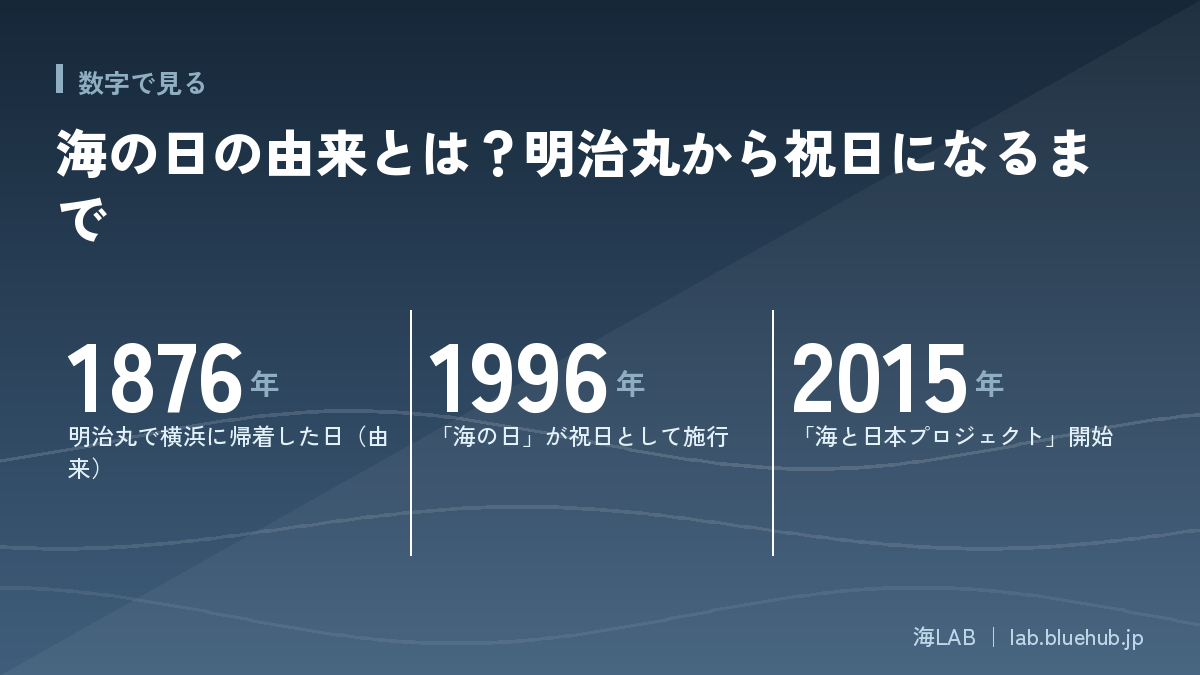
| 1876 | Emperor Meiji returns to Yokohama aboard the Meiji Maru (July 20) | The event that became the origin |
| 1941 | "Sea Memorial Day" (July 20) | A commemorative day proposed by the Ministry of Communications |
| 1996 | "Marine Day" (July 20) | Made a holiday by the 1995 amendment, effective the next year |
| 2003 | Third Monday of July | Moved under the Happy Monday system |
The origin: the 1876 Meiji Maru and a lighthouse tender
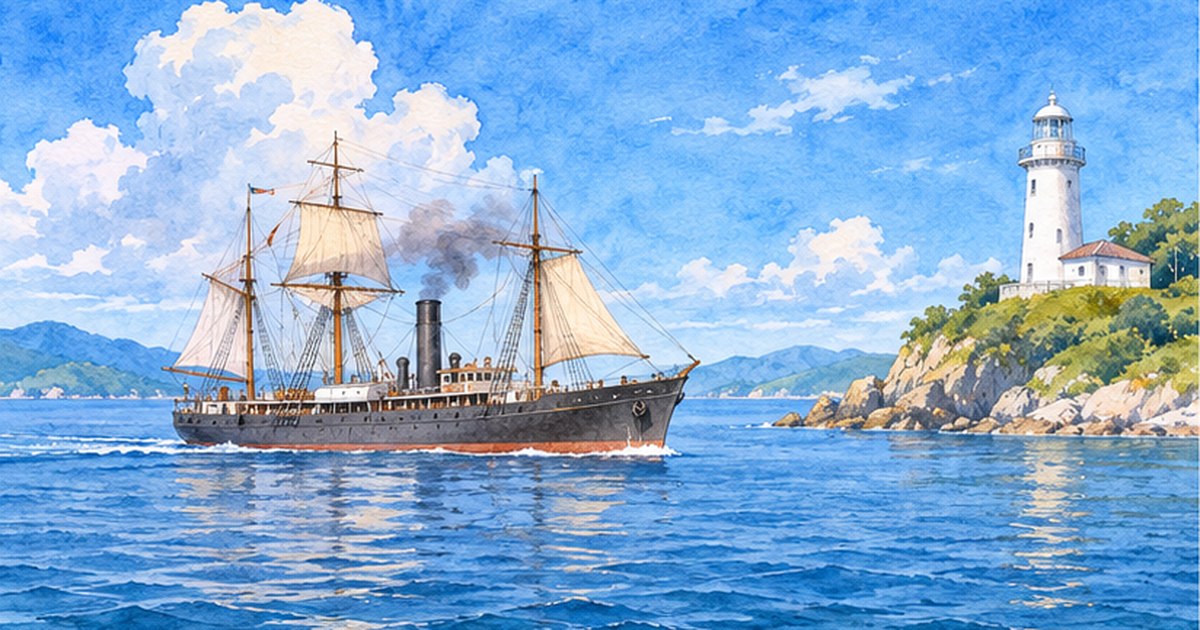
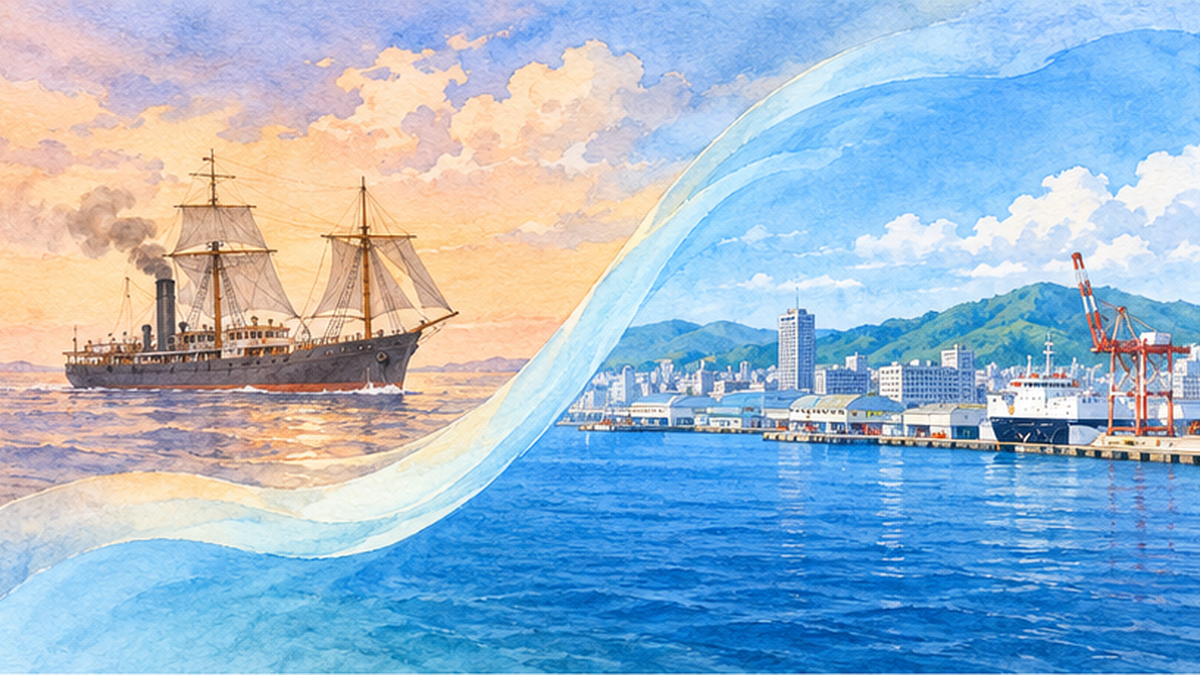
The starting point of Marine Day goes back to July 20, 1876 (Meiji 9). That year Emperor Meiji toured the Tohoku and Hokkaido regions, and on the return trip he sailed from Hakodate to Yokohama aboard the lighthouse tender Meiji Maru. The day he safely arrived in Yokohama was July 20. In a Japan before the railway network was complete, the sea voyage was an event symbolizing the importance of sea routes.
What kind of ship was the Meiji Maru?
The Meiji Maru was an iron ship built in Britain and completed in 1874, originally belonging to the Lighthouse Department responsible for building and maintaining lighthouses. It is now preserved at the Etchujima Campus of the Tokyo University of Marine Science and Technology (Koto Ward, Tokyo) and is designated an Important Cultural Property. It is a precious ship that conveys the course of modern Japanese maritime affairs.
Why lighthouses mattered
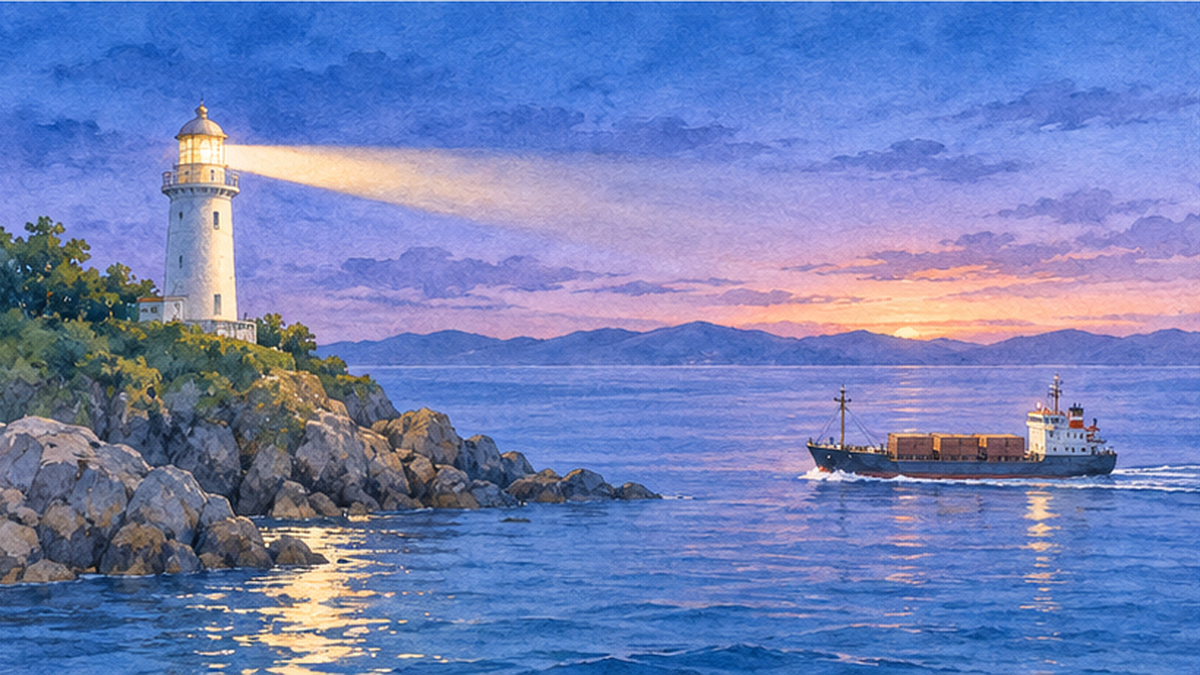
After Japan opened to the world, building lighthouses was urgent so that foreign ships could enter port safely. A lighthouse is a "signpost of the sea" that lets ships confirm their position and avoid running aground at night or in bad weather. The Meiji government invited Western engineers and built lighthouses on capes and islands across the country. The Meiji Maru supported that work and is directly linked to the spirit of Marine Day: "safety at sea" and "the development of shipping."
Key points
- The date comes from Emperor Meiji's arrival in Yokohama on July 20, 1876
- The ship he boarded, the Meiji Maru, survives at the Tokyo University of Marine Science and Technology and is an Important Cultural Property
- Lighthouse construction was a national project that supported Japanese shipping after the opening of the country
Note that sources differ in dates and details. To learn the exact course of events, it is safest to check the Cabinet Office's explanation of holidays and the Sasakawa Peace Foundation's commentary (in Japanese).
1941: the birth of Sea Memorial Day
The move to commemorate the Meiji Maru's arrival took concrete form in the Showa era. In 1941 (Showa 16), at the proposal of Communications Minister Shozo Murata, July 20 was designated "Sea Memorial Day." The Ministry of Communications at the time was the agency in charge of ships, ports and maritime affairs, and was closely tied to shipping, shipbuilding and seafarers.
The aims at the time
The purpose of Sea Memorial Day was to spread maritime thought among the people. For an island nation poor in resources, sea transport is a lifeline. It was expected to deepen understanding of shipping and fisheries and raise interest in seafarers and maritime industries. It is also a fact worth remembering when studying history that it was established against the background of an increasingly wartime era.
Sea Memorial Day after the war
After the war, Sea Memorial Day continued mainly among maritime people, and events promoting maritime thought were held around July 20. However, it was not a legal holiday, and schools and workplaces were not closed. Calls for "a holiday about the sea" continued for years, mainly from seafarer groups, the shipping industry and ocean-related people.
- 1941: July 20 became "Sea Memorial Day"
- After the war: commemorative events continued, mainly among maritime people
- From the 1980s: the movement for a holiday grew
The 1995 holiday law and the 2003 Happy Monday system
Sea Memorial Day became a national holiday in 1995. An amendment to the holiday law created "Marine Day," and from 1996 (Heisei 8) July 20 became a holiday. It is a relatively new holiday among those established after the war.
Background of the holiday
In the 1990s, the small number of holidays compared with major countries and the lack of any summer holiday were debated. Long-standing requests from maritime organizations were added to this, and the holiday is said to have been realized as a "day to give thanks for the blessings of the sea." More days off just before summer vacation were also expected to create opportunities for people to get close to the sea.
Why it moved to the third Monday
The 2000 amendment moved Coming-of-Age Day and Sports Day to Mondays, and the 2001 amendment decided that Marine Day and Respect for the Aged Day would also move to Mondays. Since 2003, Marine Day has been the "third Monday of July." It is part of the "Happy Monday system," which makes long weekends easier and aims to boost tourism and leisure.
Effects of a movable date
- Depending on the year it falls between July 15 and 21
- In most years it does not coincide with the original date, July 20
- Some point out that chances to think of the origin have decreased
On the other hand, a date that is not fixed also means fewer chances to learn about the original event. That is why it is worthwhile to relearn "why this day" each Marine Day.
Japan as a maritime nation in numbers
The phrase "maritime nation Japan" in Marine Day is not a mere slogan; numbers back it up. Japan's land area is only about 380,000 square kilometers, but its territorial waters and exclusive economic zone (EEZ) together cover about 4.47 million square kilometers, among the largest in the world (according to Japan Coast Guard materials).
The sea that supports our lives
- Trade: most of Japan's imports and exports depend on sea transport
- Fisheries: seafood is central to Japanese food culture, and many fishing villages line the coast
- Energy: much crude oil and LNG is carried by ship
- Climate: the sea absorbs CO2 and heat from the atmosphere and stabilizes Earth's climate
Blessings and challenges of the sea
The sea gives us food, resources, transport, tourism and culture, but environmental problems are also becoming serious. Challenges are wide-ranging, including marine plastic pollution, rising sea temperatures, loss of seaweed beds and changes in fish stocks. Marine Day is not only a day to give thanks but also a day to learn about these challenges.
| Perspective | Blessings of the sea | Current challenges |
|---|---|---|
| Food | Seafood, seaweed, salt | Declining stocks, poor catches |
| Daily life | Shipping, tourism, leisure | Marine litter, coastal erosion |
| Environment | Climate stability, CO2 absorption | Rising sea temperatures, acidification |
The Basic Act on Ocean Policy and national efforts
The ideals of Marine Day are also reflected in national policy. In 2007 the Basic Act on Ocean Policy was enacted, creating a framework for promoting ocean measures comprehensively and systematically. Under the law, the Headquarters for Ocean Policy was set up in the Cabinet, and the Basic Plan on Ocean Policy is regularly drawn up and reviewed.
Pillars of the Basic Plan on Ocean Policy
The plan covers ocean security, development and use of ocean resources, conservation of the marine environment, protection of remote islands and human resource development. Promoting ocean education is one of the important pillars. Passing knowledge of and interest in the sea to the next generation is positioned as a national task.
The idea of ocean literacy
In recent years, the ability to understand the sea's influence on people and people's influence on the sea has been called "ocean literacy," and it is increasingly being brought into education. For more, see our article on ocean literacy education and ocean literacy efforts in schools.
The Sea and Japan Project and ocean education
Efforts to raise interest in the sea have spread, using Marine Day as a starting point. A leading example is the "Sea and Japan Project," carried out since 2015 by the Nippon Foundation in cooperation with the Ministry of Land, Infrastructure, Transport and Tourism and the Headquarters for Ocean Policy. It began as a Marine Day event and is now described as an all-Japan effort joined by industry, academia, government and citizens.
What the project aims for
The project aims to have people nationwide, starting with children, take the deteriorating marine environment as "their own issue" and widen the circle of action to hand the sea to the future. Local executive committees have been formed, and events, hands-on learning and outreach are held.
Ocean education in schools and communities
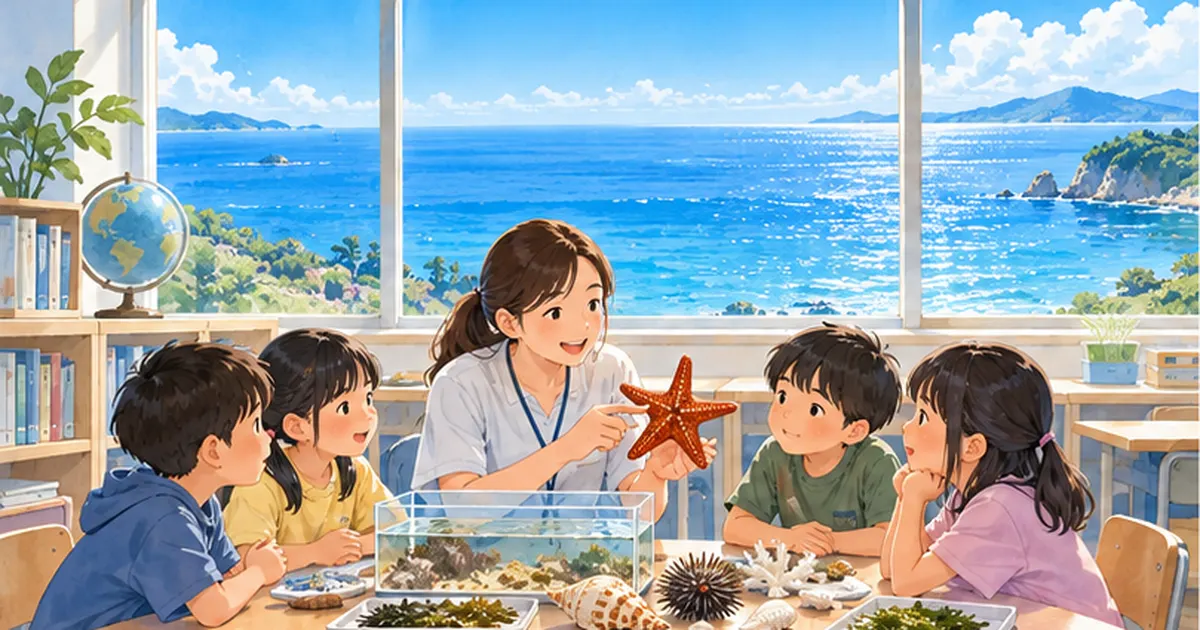
- Hands-on learning and independent research at aquariums and museums
- Fishing experiences and seaside nature observation
- Beach cleanups and marine litter surveys
- Outreach classes and symposiums about the sea
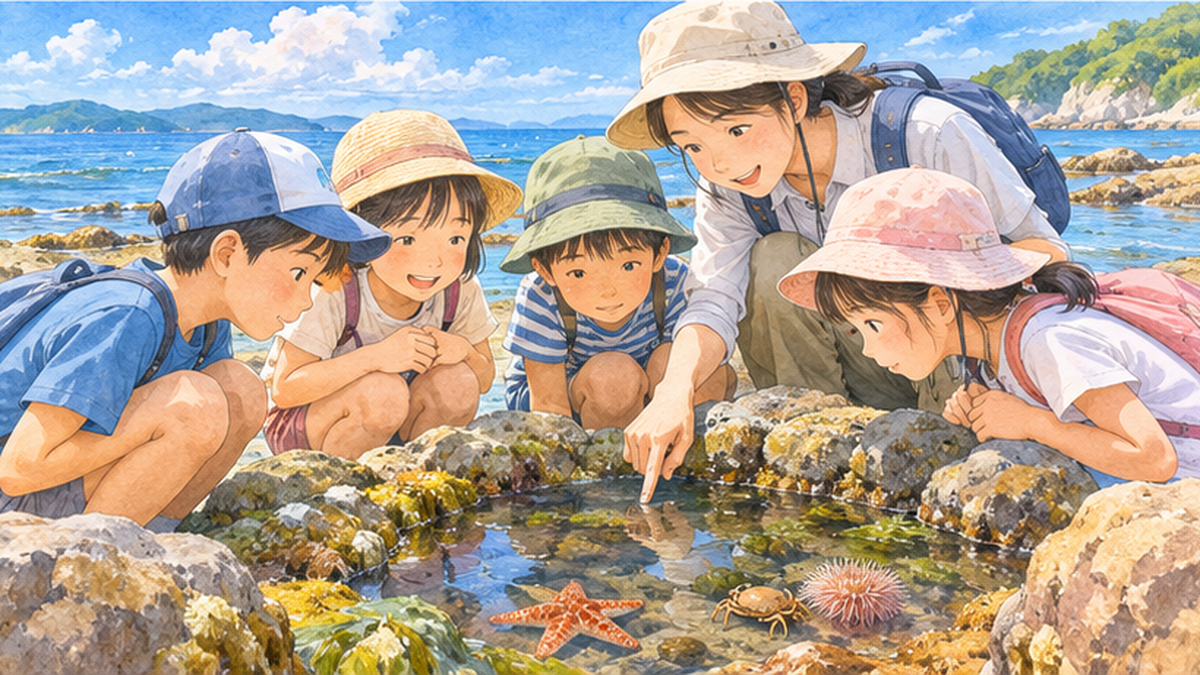
The operator of this site, Chikyu to Nakayoshi (General Incorporated Association), is also developing an ocean-learning platform with support from this Nippon Foundation "Sea and Japan PROJECT." It is one example of efforts to make ocean learning familiar.
Five things you can do on Marine Day
How can we avoid ending the holiday as "just a day off" and use it to rethink our relationship with the sea? Here are actions you can start without strain.
1. Join a beach or riverside cleanup
Much marine litter flows out from rivers and towns. A beach cleanup not only reduces litter but also teaches you what kinds of litter are common. See our beach cleanup article for how to proceed.
2. Encounter ocean learning
Aquariums, ocean museums and research institutes sometimes hold special events around Marine Day. Joining as a family can spark children's interest.
3. Choose sustainable seafood
Certification labels such as MSC and ASC mark seafood that is mindful of resources and the environment. Even just looking for them while shopping lets you take part in protecting the sea.
4. Rethink how you use plastic
Reducing single-use plastic and using your own bottle and bag are familiar actions to cut the sources of marine litter.
5. Join citizen science
There are surveys ordinary people can join, such as marine litter surveys and wildlife observation records. See also citizen science on marine litter.
A step for today
- Look up the state of your local sea or river
- Talk with your family about the origin of Marine Day
- Find one ocean event and consider joining
Summary: knowing the origin makes the day special
Marine Day originates from the day in 1876 when Emperor Meiji returned to Yokohama aboard the lighthouse tender Meiji Maru. It became "Sea Memorial Day" in 1941, a holiday in 1996 after the 1995 amendment, and moved to the third Monday of July in 2003. A single voyage connected to a national holiday over about 150 years.
The sea broadly supports our lives through food, logistics and climate stability. At the same time it faces challenges such as environmental change and pollution. Marine Day is not only for giving thanks but also for learning the state of the sea and starting small actions.
Summary of this article
- The origin is the Meiji Maru's arrival on July 20, 1876
- Sea Memorial Day in 1941, a holiday in 1996
- The third Monday of July since 2003
- It matters to turn gratitude for the sea into action
References and sources
- Cabinet Office: About national holidays – holiday system and purpose
- Sasakawa Peace Foundation, Ocean Policy Research Institute – commentary on Marine Day
- The Sea and Japan Project – official site
- The Nippon Foundation – organizer of the Sea and Japan Project
- MLIT: Marine Day – Marine Day events and maritime information
- Tokyo University of Marine Science and Technology – home of the Meiji Maru
- Japan Coast Guard – information on Japan's territorial waters and EEZ
※ Ordered by reliability: government and academic institutions > peer-reviewed papers > specialist organizations > reliable media