⚡ In short
The riparian forest lining a riverbank shades the water to keep it cool, drops leaves that feed aquatic insects and fish, and holds the bank together with its roots. This article explains how these streamside forests support the whole chain from forest to river to sea.
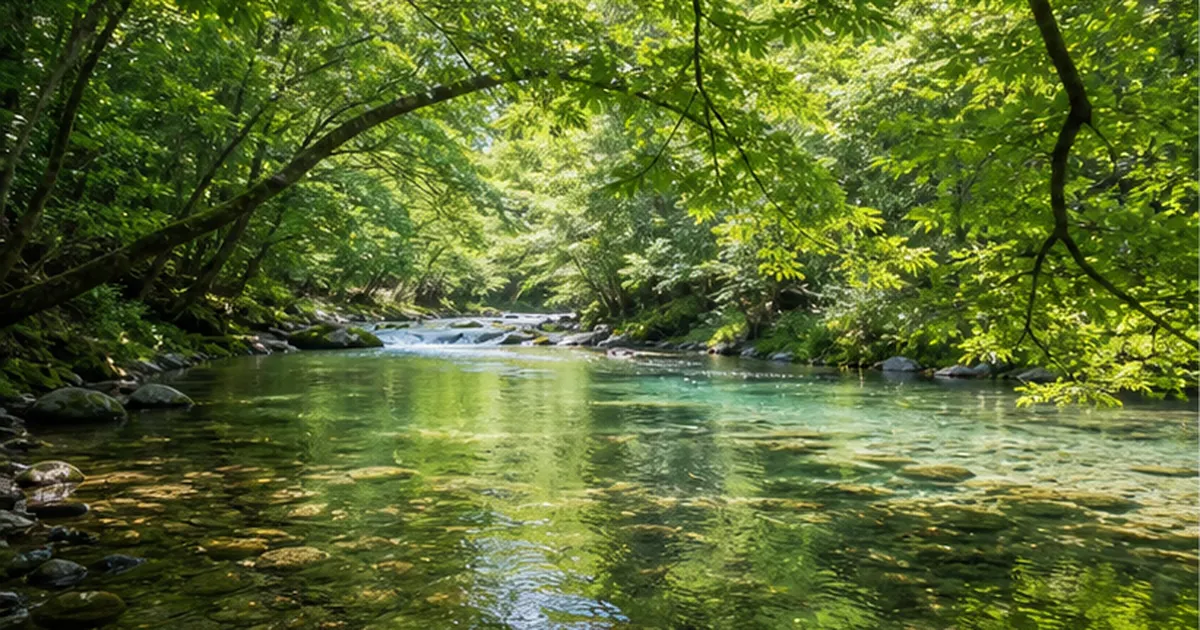
Walk along a river and you may find a spot where trees lean out over the water, their branches forming a canopy above the current. This streamside forest is called a riparian forest. It looks like an unremarkable strip of green, but it quietly manages water temperature, delivers food to wildlife, protects the banks, and even reaches all the way to the sea's bounty — a hidden pillar supporting the river ecosystem.
A riparian forest is not just "trees that happen to grow by a river." Multiple functions work together at once: shading blocks solar radiation, fallen leaves supply organic matter, and root systems bind the soil — together forming the very skeleton of the river ecosystem. These forests have a history of being cleared for flood control, but in recent years their value is being reassessed from the standpoint of both biodiversity and disaster prevention.
This article unpacks the concrete roles riparian forests play, drawing on research data from Japan and abroad, and introduces examples that embody the connection between forest, river, and sea — including the "Forests are Longing for the Sea" tree-planting movement that has continued for more than 30 years in Kesennuma, Miyagi Prefecture.
What you'll learn in this article
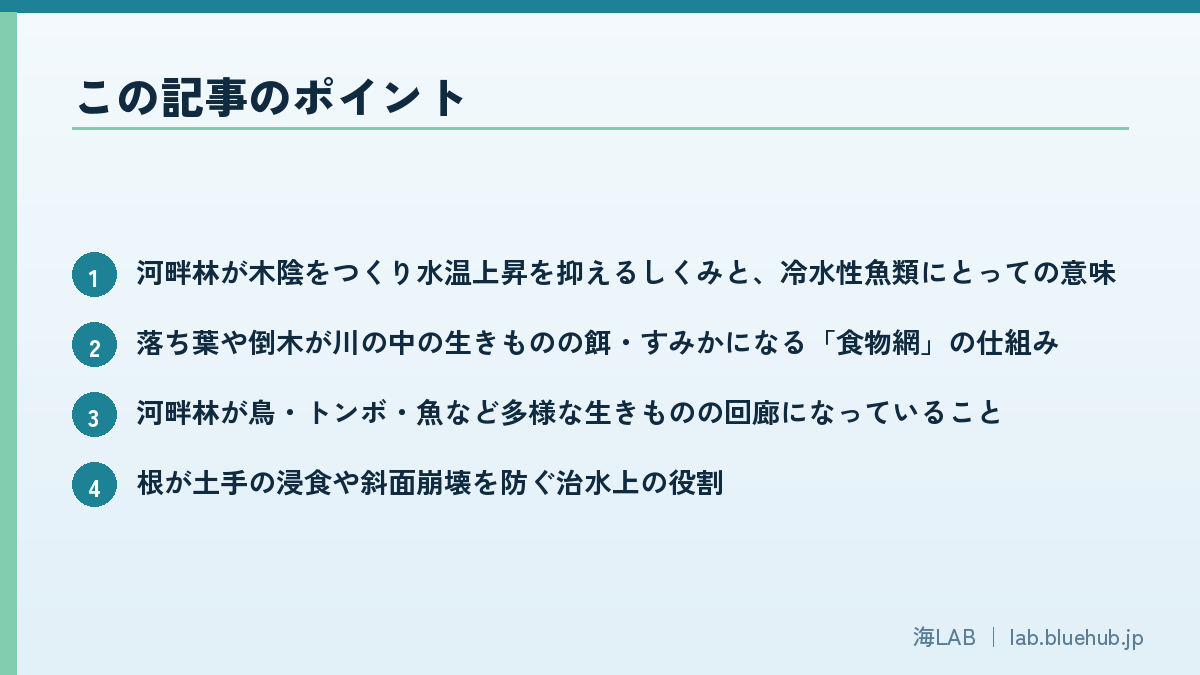
- How riparian forests create shade that suppresses temperature rise, and why that matters for cold-water fish
- How fallen leaves and driftwood become food and habitat for creatures in the river — the mechanics of the "food web"
- How riparian forests act as a corridor for a wide range of wildlife, from birds to dragonflies to fish
- The flood-control role roots play in preventing bank erosion and slope failure
- The forest-river-sea connection, in which humus from fallen leaves carries iron to the ocean and nourishes phytoplankton
- Examples of riparian forest conservation and restoration efforts across Japan, including nature-oriented river improvement
What Is a Riparian Forest? A Green Corridor at the Border of River and Forest
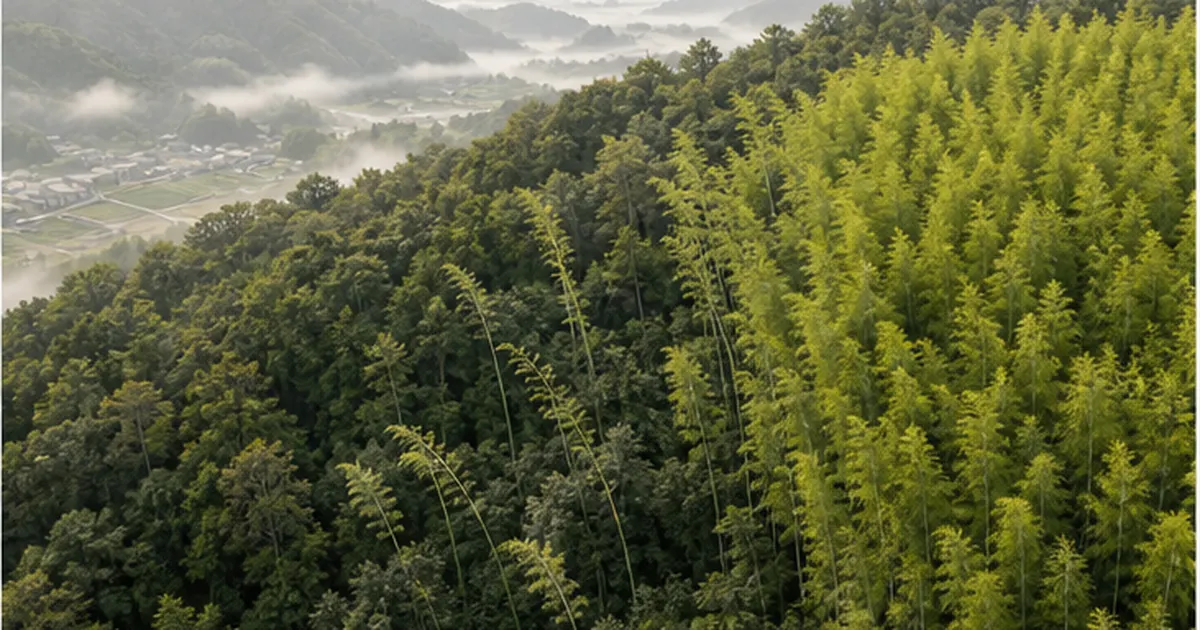
A riparian forest is a belt of trees that spreads out along a river's edge and surrounding area. Reports from Japan's National Institute for Land and Infrastructure Management and the Forestry and Forest Products Research Institute describe it as an "ecotone" connecting river and land, functioning as a continuous green corridor from upstream to downstream that also serves as a migration route and habitat for wildlife. Because it sits where two very different environments — water and land — meet, it tends to support more species than either environment alone, a phenomenon ecologists call the "edge effect."
How it differs from montane riparian forests and waterside forests
Forests that form along mountain streams are sometimes called "montane riparian forests," while the broader term "waterside forest" is used for forested areas along a wider stretch of water. The exact terminology varies among researchers, but all of these form at the boundary between water and land, repeatedly disturbed and regenerated by flooding, resulting in a mosaic of forest stands at different stages of development. This mix of young and mature stands allows the forest to support more diverse wildlife than a forest of a single age class would.
A common feature of rivers worldwide
Streamside tree belts equivalent to riparian forests are a universal landform and ecosystem feature found in rivers around the world, not just in Japan. The tree species vary widely by climate zone — from tropical mangrove forests to temperate deciduous broadleaf forests to boreal conifer forests — but the basic mechanism is shared everywhere: forest at the water-land boundary influences the river's temperature and organic matter supply. As discussed later, many countries in Europe and North America refer to riparian forests as "buffer strips" and have built them into water-quality protection systems.
What kinds of trees grow there
The tree species that make up a riparian forest vary by region and elevation, but they tend to favor moisture-loving species that can withstand flooding, such as willows, alders, zelkova, and Japanese elm. These species have roots that can anchor firmly even in soft, waterlogged soil, and trunks that resist rotting even when submerged during floods. In Aichi Prefecture's riparian forest program, species native to the local vegetation — such as Japanese oak, chinquapin, and hackberry — are selected, with local residents taking part in the planting.
Also an element that shapes a region's distinctive landscape
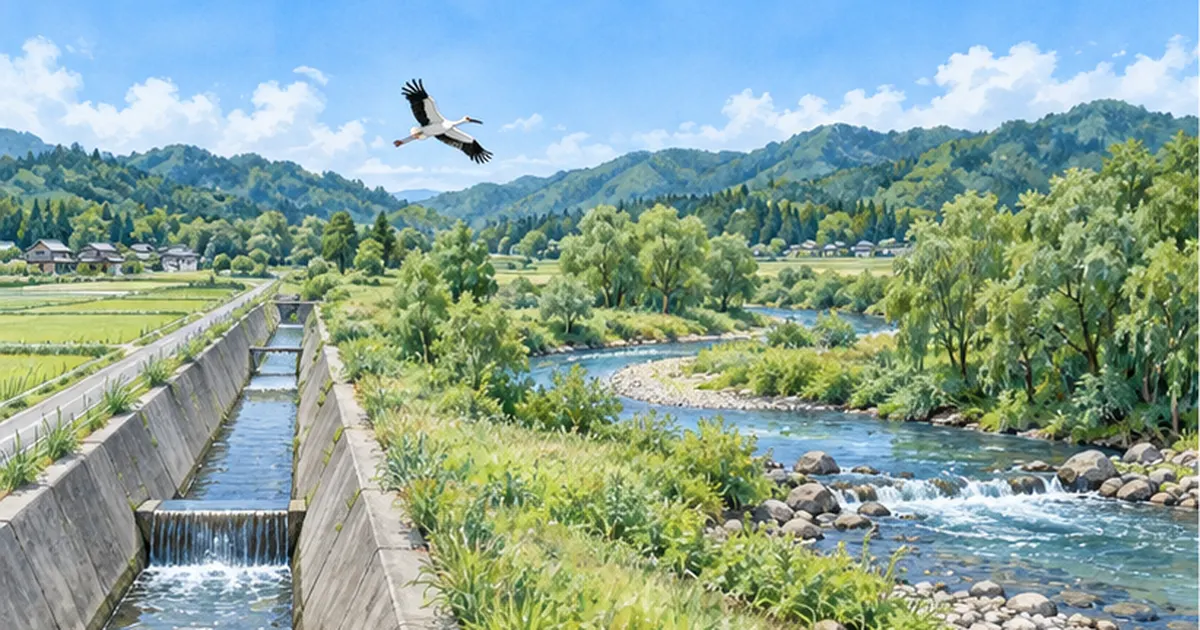
Riparian forests matter not only for ecosystem function but also for landscape value. Materials from Japan's Ministry of Land, Infrastructure, Transport and Tourism on nature-oriented river improvement describe riparian forests as the axis of the transitional zone linking water and greenery — maintaining continuous habitat for wildlife from upstream to downstream while also shaping the distinctive riverside scenery of a region. The riverside trees that change their expression with the seasons also give local residents an accessible place to connect with nature.
Once cleared in the name of flood control
Historically, riparian forests were periodically cleared from a disaster-prevention standpoint, out of concern that trees could become dangerous driftwood during floods and damage bridges or weirs. A report from Hokkaido's Forestry Research Institute notes that, against the backdrop of increasingly frequent torrential rain in recent years, how to manage trees within the river channel is once again being debated. However, excessive clearing destroys habitat for streamside wildlife and undermines the functions of riparian forests described later in this article. In recent years, thinking has shifted toward management that balances clearing with conservation.
Cooling the Water: How Shade Protects Cold-Water Fish Habitats
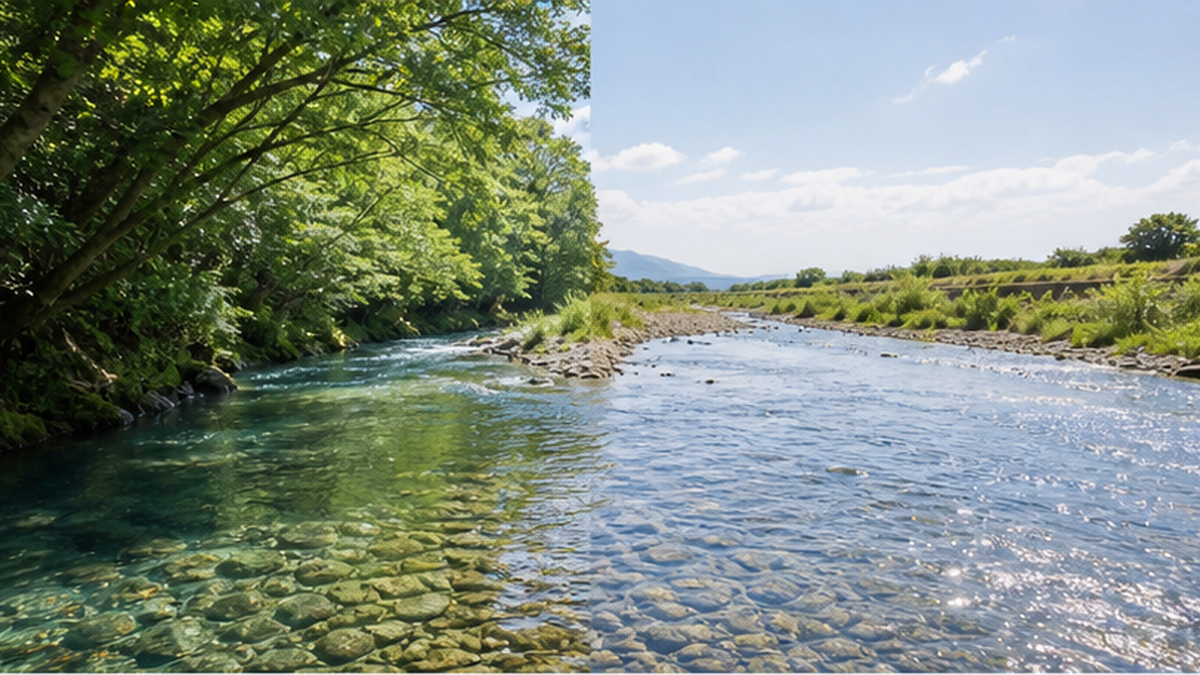
The most obvious function of a riparian forest is blocking solar radiation with its canopy. When the water surface is covered by trees, direct sunlight is blocked and the rise in river water temperature is suppressed. Research published in ScienceDirect also identifies solar radiation as a primary driver of peak summer water temperature, with canopy shading playing a major role in controlling it.
Nearly double the temperature gradient in open sections
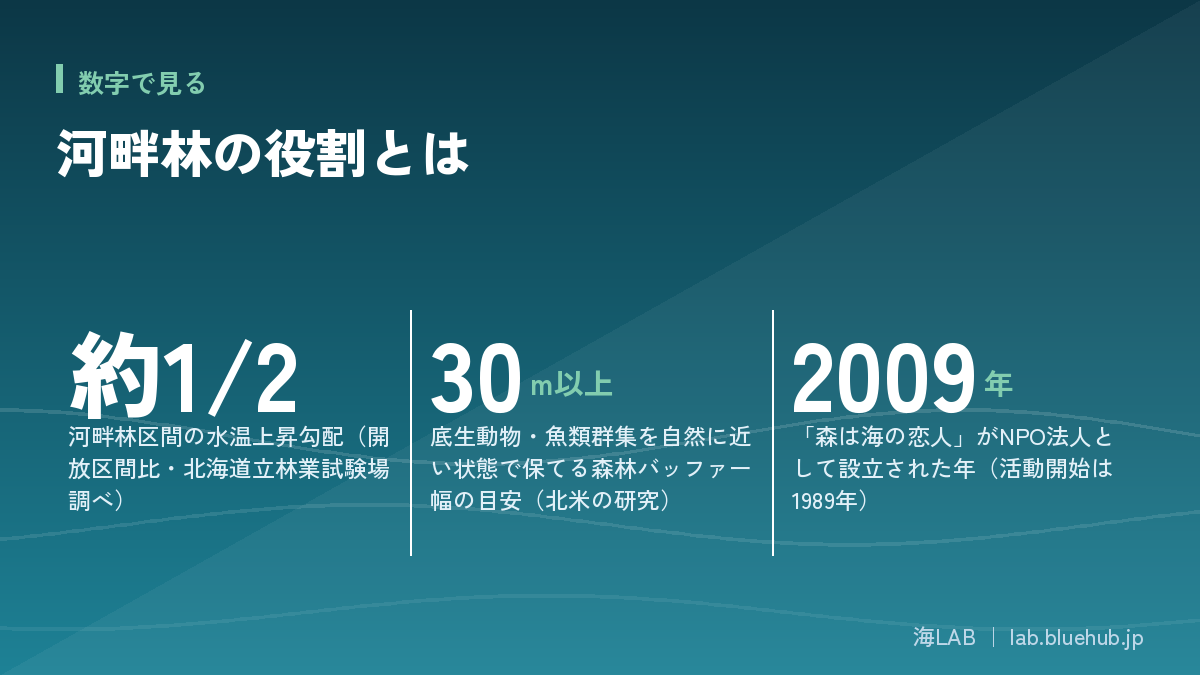
According to Hokkaido's Forestry Research Institute, open river sections with almost no canopy can show a downstream temperature gradient of about 1°C per 100 meters, while sections covered by riparian forest keep this to less than half that rate. Simply passing through a shaded stretch makes a clear difference in the river's water temperature depending on whether shade is present or not.
Another factor that shapes water temperature: groundwater and channel width
Solar radiation is not the only factor that determines water temperature. Groundwater seepage supplies cool water in summer and warm water in winter, acting as a "buffer" that moderates temperature swings in river water. Research identifies shading from riparian vegetation, groundwater inflow, and channel width as the three factors with the greatest influence on river water temperature. Riparian forests handle the shading part of this equation, while the roots of trees and undergrowth also raise the soil's water-holding capacity, indirectly helping stabilize the groundwater supply.
What this means for cold-water fish like masu salmon
Many salmonid species, including masu salmon, experience heightened physiological stress and a shrinking habitable range when water temperatures rise too high. Higher temperatures also reduce the amount of oxygen that can dissolve in water, compounding the impact on wildlife. The shade cast by riparian forests acts as a kind of cooling refuge for these cold-water-loving fish, shaving several degrees off peak summer water temperatures.
Buffer width guidelines from overseas research
North American research suggests that leaving a forest buffer of 30 meters or more along a river can keep benthic invertebrate and fish communities close to a natural state. An assessment study covering the Pacific Northwest of North America also found that protecting forest buffers is effective for stabilizing water temperature and sustaining populations of amphibians that depend on streamside habitat. At the same time, as climate change drives up air temperatures, mitigation from riparian forests alone may not be enough to hold back rising water temperatures, and the need for additional adaptation measures is being discussed.
A 1–2°C difference in water temperature can be enough to drive fish out
- Many salmonid species experience heightened physiological stress when water temperatures rise too high
- Riparian forest shade can shave several degrees off peak summer water temperatures
- Rising water temperature also lowers dissolved oxygen, compounding the impact on wildlife
- As climate change progresses, shade alone may not be enough to hold back rising water temperatures
Fallen Leaves and the Food Web: A "Gift From the Forest" Inside the River
Another key role of riparian forests is supplying organic matter. Leaves that fall onto the water surface in autumn become a valuable nutrient source for aquatic insects and microbes. This is especially true in narrow upstream reaches shaded by dense canopy, where little sunlight reaches the water: organic matter supplied from outside the river, in the form of fallen leaves, is thought to account for a larger share of the energy that sustains the ecosystem than the organic matter produced in-stream by algae through photosynthesis.
From leaf-eaters to fish
Fallen leaves are first used by aquatic insects such as stoneflies and caddisflies — a feeding group known as "shredders" that break leaves into smaller pieces. Their waste and the fragmented leaf material then become food for even smaller organisms and microbes, and this decomposed organic matter, along with the aquatic insects themselves, becomes an important food resource for fish. Terrestrial insects that fall from the trees likewise become food directly consumed by fish.
Broadleaf vs. conifer: leaf litter quality differs
The "quality" of fallen leaves also affects the food web. Broadleaf litter decomposes more readily and tends to become a more usable nutrient source for aquatic insects, whereas conifer litter from species like Japanese cedar and cypress takes longer to break down and is considered less effective at boosting river productivity than broadleaf litter. The tree-species composition of a riparian forest thus influences the richness of life within the river itself.
| What's supplied | Its role inside the river |
|---|---|
| Fallen leaves (broadleaf) | Food for aquatic insects, substrate for microbial decomposition |
| Fallen trees and branches | Complicate the flow to create diverse habitats; shelter for aquatic insects |
| Terrestrial insects falling from the canopy | Direct food resource for fish |
| Shade (canopy) | Suppresses temperature rise and excessive algae growth |
River organisms divide the labor of processing organic matter
In river ecology, aquatic insects are often classified by feeding strategy into functional groups: "shredders" (which break down and eat fallen leaves), "collectors" (which gather fine organic particles drifting in the water), "grazers" (which scrape algae off the surface of rocks), and "predators" (which eat other aquatic insects). Leaves from the riparian forest are typically used first by shredders, and the fragments they produce are then used by collectors — so large organic matter is progressively broken down into finer pieces as it moves from upstream to downstream. Given this longitudinal connectivity within a river, the leaf-supplying capacity of upstream riparian forests is thought to indirectly influence the richness of the downstream ecosystem as well.
Fallen trees make the river's flow more complex
Trees that fall from a riparian forest into the river — known as large woody debris — dam or divert the current, creating a complex mix of riffles and pools. Research examining the relationship between montane riparian forests and aquatic wildlife has found that this physical complexity provides a foundation that accommodates diverse aquatic species with differing habitat requirements. The still pools that form around fallen wood also serve as hiding places for young fish and as refuges during high water.
A Corridor for Wildlife
Riparian forests serve as habitat and migration routes not only for fish but also for a wide range of birds, insects, and amphibians. Because the individual functions of cooling the water, supplying fallen leaves, and protecting the banks with roots all work together, a riparian forest ultimately creates a "place" where diverse wildlife can live. Rather than evaluating any single function in isolation, it is important to understand that a riparian forest's value as an ecosystem emerges only when multiple functions overlap.
A green corridor running from upstream to downstream
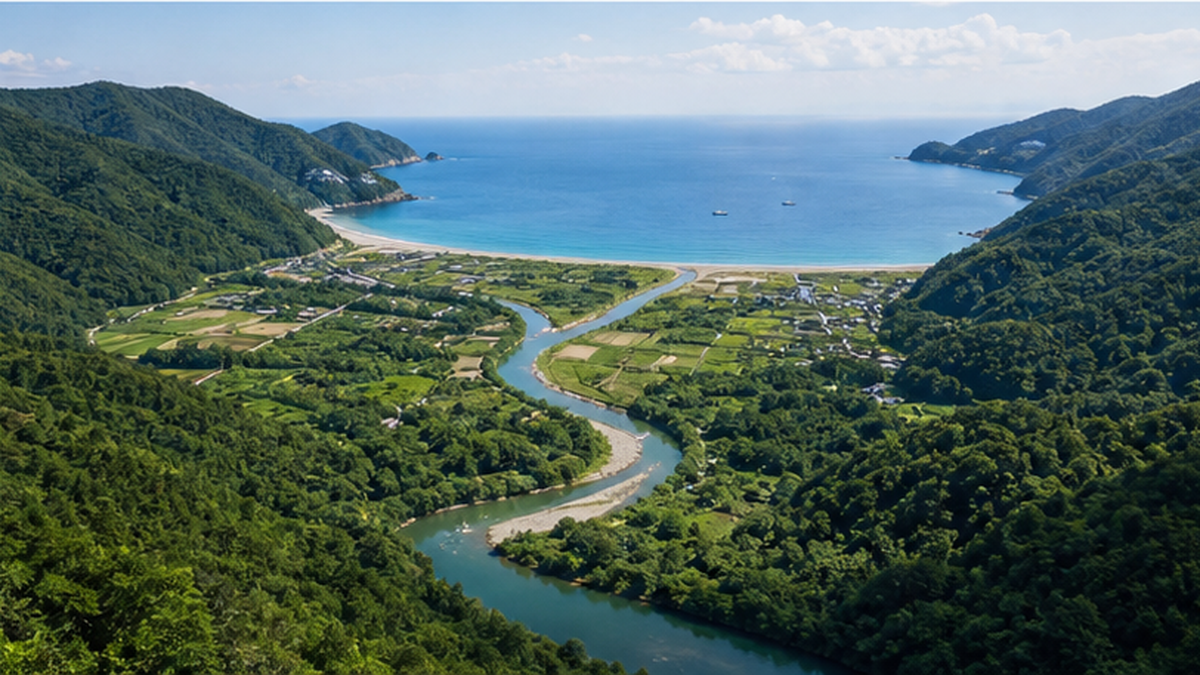
Riparian forests often form a continuous green belt stretching from mountainous upstream areas down to the lowland plains. This continuity gives wildlife a corridor for movement and dispersal even in regions surrounded by urban development or farmland. For water-loving birds such as the common kingfisher, riparian forest also provides a place to nest and forage.
The link to dragonflies and other aquatic insects
The combination of shade from riparian forest and open water or shallows creates an ideal habitat for creatures such as dragonflies, which spend their larval stage underwater before living on land as adults. Japan is home to more than 200 species of dragonfly, and beyond rice paddies and irrigation ponds, waterside areas bordered by riparian forest are also an important habitat base (for more detail, see The Land of Dragonflies: Japan's 200-Plus Species and the Rice Paddies and Ponds That Raise Their Nymphs).
The link to wetlands and floodplains
Riparian forests are often adjacent to floodplains and wetlands that are temporarily submerged during high water, and this combined waterside environment as a whole supports biodiversity. The water-purifying and life-sustaining functions of wetlands are covered in more depth in What Are Ramsar Wetlands? Japan's 54 Sites and the Power of Wetlands to Purify Water and Nurture Life.
Examples of wildlife found in riparian forests
- Fish: masu salmon, char, sculpin, and other cold-water species
- Birds: kingfishers, herons, and other species that forage along the water
- Insects: dragonflies, stoneflies, caddisflies, and other aquatic insects
- Mammals: small and medium-sized mammals that use riparian forest as a travel corridor
Protecting the Banks: The Flood-Control Function of Root Systems
The roots of a riparian forest also serve to firmly grip and stabilize the soil. Materials from Japan's Forestry Agency confirm that this eases bank erosion from floodwater flow and helps suppress shallow slope failures during heavy rain.
How root systems bind the soil
Tree roots spread through the ground, binding soil particles together and increasing soil strength. A Forestry Agency report on tree root systems and shallow-slope-failure prevention explains that roots spreading through the soil help suppress shallow landslides — a shallow slippage of the slope surface that is common during heavy rain. In riparian forests, this same root-binding effect reduces erosion of the riverbank from water flow. The denser the trees and the more intricately their roots intertwine, the greater this soil-holding function tends to be.
Filtering sediment and nutrients
A riparian forest with dense roots and undergrowth also filters sediment and nutrients — such as nitrogen and phosphorus — flowing in from farmland or urban areas, either physically trapping them or absorbing them through plant uptake before they reach the river. Pollution that has no single point source and gradually flows in from a broad area is known as "nonpoint source pollution," and it is difficult to address at a single location the way wastewater treatment can. Securing a buffer zone like a riparian forest across the landscape is internationally recognized as an important countermeasure to nonpoint source pollution, and as discussed later, it is positioned as one of the primary benefits of buffer zones under practices based on the EU Water Framework Directive.
Riparian forests as part of watershed-based flood control
In recent years, Japan's Ministry of Land, Infrastructure, Transport and Tourism and Ministry of Agriculture, Forestry and Fisheries have been promoting a "watershed-based flood control" approach that captures water across the entire watershed rather than controlling floods within the river channel alone. Riparian forest conservation and restoration is positioned as one form of nature-based solution — or "green infrastructure" — within this watershed-based flood control approach. Rather than relying solely on structural measures like levees and dams, the idea is to achieve more resilient, wildlife-friendly flood control by combining them with the natural functions of forests and wetlands.
Restoring riparian forest through nature-oriented river improvement
- Japan's Ministry of Land, Infrastructure, Transport and Tourism positions riparian forest as a continuous green corridor from upstream to downstream within its "nature-oriented river improvement" program
- Examples such as the Motomachi River in Iwate Prefecture combine riparian forest conservation with gently sloped banks to create diverse waterside environments
- In Aichi Prefecture, local residents plant species suited to the local land, such as Japanese oak, chinquapin, and hackberry, to form riparian forest
Riparian Forest Rules Overseas: The Buffer Strip Concept
The value of riparian forest is recognized not only in Japan but also in water and environmental policy around the world. In Europe and North America in particular, the concept of a "riparian buffer" — leaving a strip of forest or grassland of a certain width along a river — has been built into policy as a concrete measure to curb sediment and fertilizer runoff from farmland and protect water quality and ecosystems.
The EU Water Framework Directive and buffer width
The European Union's Water Framework Directive requires member states to protect and restore aquatic ecosystems. In river management practice under this directive, it is considered desirable to establish a continuous buffer of roughly 20–30 meters, made up of multiple zones of trees, shrubs, and grassland, along the entire length of a river in order to effectively reduce diffuse sediment pollution. In intensively farmed lowlands, wider buffers of 10–100 meters can be important, and the underlying principle is that the necessary width depends on the topography of the watershed and the size of the river.
Why "continuity" matters more than "width"
Research from Europe and North America also points to the importance of continuity, not just width. Even if forest is left standing in one section, if sediment or pollutants flow in from a neighboring section, the effect is diluted downstream. This echoes the same idea behind Japan's nature-oriented river improvement, which positions riparian forest as "a green corridor running continuously from upstream to downstream" — an internationally shared understanding in riparian forest policy.
| Region / body | Buffer width guideline | Main focus |
|---|---|---|
| Practice under the EU Water Framework Directive | 20–30m (10–100m in intensively farmed areas) | Curbing sediment/fertilizer runoff, protecting water quality |
| North American ecosystem research | 30m or more | Maintaining natural benthic/fish communities |
| Japan / Hokkaido Forestry Research Institute | Width varies by section (canopy shading emphasized) | Suppressing temperature rise (less than half that of open sections) |
These figures cannot simply be applied as-is to Japanese rivers. Because watershed topography, rainfall patterns, river size, and surrounding land use vary greatly from region to region, Japan's nature-oriented river improvement program does not set a uniform width, instead adopting a basic policy of conserving and restoring riparian forest based on the characteristics of each individual river.
Forests Are Longing for the Sea: How Riparian Forests Sustain Life in the Ocean
The benefits of a riparian forest are not confined to the river itself. Fulvic acid in the humus produced as fallen leaves decompose binds with iron to form "fulvic-acid iron," which flows downriver into the sea. This iron is an essential nutrient for the phytoplankton that form the base of the ocean's food chain.
An oyster farmer struggling with red tide in Kesennuma
Shigeatsu Hatakeyama, who ran an oyster farm in the Karakuwa district of Kesennuma, Miyagi Prefecture, experienced red tide outbreaks in the bay from the late 1960s onward, which discolored his oysters and made them unsellable. Tracing the cause, he found that upstream in the village of Murone (now part of Ichinoseki City) in Iwate Prefecture, a poorly managed monoculture of Japanese cedar plantation was behind the reddish, sediment-laden water flowing into the bay after every rain.
Tree planting that began in 1989, incorporated as an NPO in 2009
In 1989, Hatakeyama proposed the idea to the head of Murone village, and fishers and local residents worked together to plant broadleaf trees, including beech, on Mt. Murone upstream. This "Forests are Longing for the Sea" movement also spread as environmental education, conveying the idea that forest, river, and sea are connected within a single watershed, and it has been featured in elementary and junior high school textbooks. The movement was incorporated as the NPO "Forests are Longing for the Sea" in 2009, and has continuously carried out tree-planting festivals, hands-on learning programs for schools and communities, and watershed wetland conservation, centered on three pillars: forest-building, environmental education, and nature conservation.
Learn more about the activitiesNPO Forests are Longing for the SeaOfficial site introducing the ongoing tree-planting and environmental education activities in Kesennuma and Murone🔗 mori-umi.orgWhat it means for fishers to take part in upstream forest-building
What makes this activity distinctive is that fishers who make their living from the sea are directly involved in forest-building far upstream. A healthy watershed, including its riparian forest, is directly tied to productivity in the sea downstream via the river. Hatakeyama passed away in 2025, but his philosophy has been carried on by his son, Makoto Hatakeyama, and others, and tree-planting and exchange activities continue today in Kesennuma and Murone. The idea of viewing the connection between forest, river, and sea at the watershed scale also overlaps with the "watershed-based flood control" approach in river administration.
A perspective that echoes a national project connecting forest, village, river, and sea
The forest-river-sea connection embodied by "Forests are Longing for the Sea" has grown beyond a single private-sector activity. In 2014, Japan's Ministry of the Environment launched the "Connecting and Supporting Forest, Village, River, and Sea" project, aiming to conserve the connections among forest, village, river, and sea, draw out the benefits each provides, and build a society in which local people sustain those benefits. In 2016, the ministry published a related proposal titled "To Connect and Support Forest, Village, River, and Sea." Within this larger vision, a riparian forest is precisely the point of contact bridging forest and sea along the river's watery path.
Threats to Riparian Forests: Development, Monoculture, and Climate Change
Riparian forests are shrinking and losing quality in many areas. The causes are not singular, and multiple pressures overlap — this is not a problem that can be solved by addressing any one factor alone. Physical loss from development, quality decline from abandoned management, and the long-term pressure of climate change are all progressing at once, which makes conserving riparian forest a difficult challenge.
Bank reinforcement and changing land use
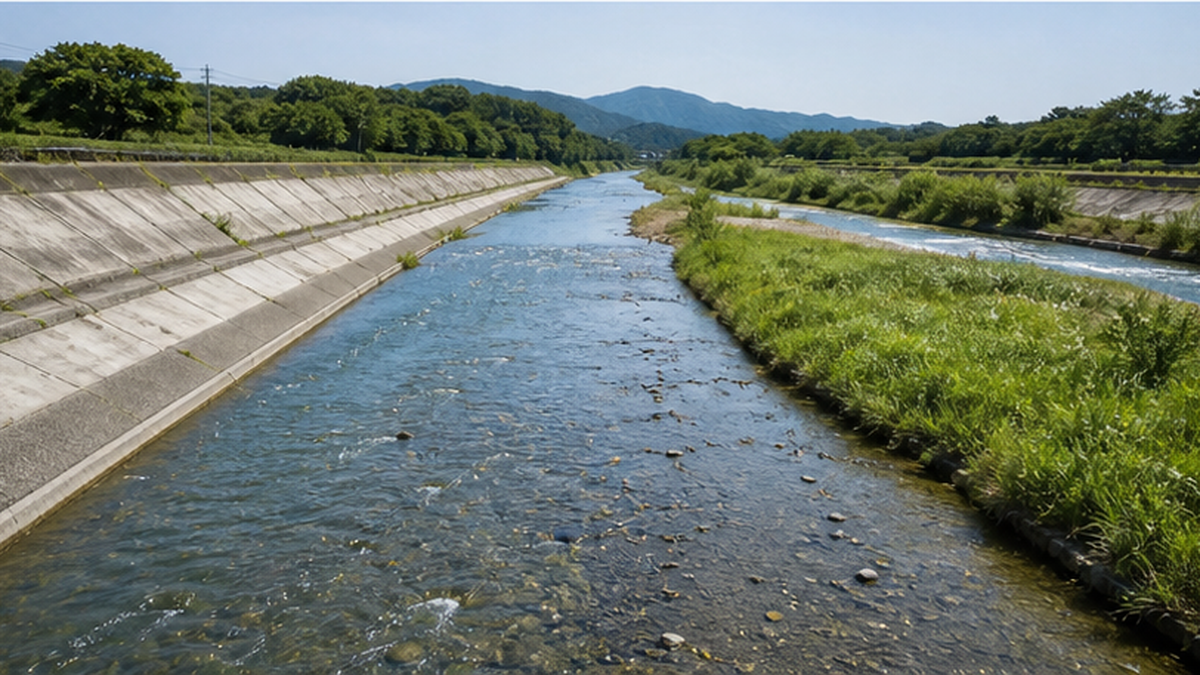
River channel improvement and residential or agricultural development have historically replaced riverside tree belts with concrete embankments or bare ground. In many sections where flood control was prioritized, the ecosystem functions of riparian forest have been sacrificed as a result. This is especially true of small and medium-sized rivers running through urban areas, where riparian forest has largely disappeared in many stretches.
Conversion to single-species plantations
As with the origin story behind "Forests are Longing for the Sea," when a riparian zone becomes covered by a single conifer species such as Japanese cedar and undergrowth and broadleaf trees become sparse, the soil's ability to hold together weakens, making it more prone to erosion during rainfall. Riparian forest with a mix of tree species is considered more stable in terms of both water-source cultivation and soil retention. The broader water-source cultivation function of forests is discussed in more depth in What Headwater Forests Do: How Forests Store Rain and Release It Into Rivers, and the Reality Behind the "Green Dam" Theory.
The pressure of rising water temperatures from climate change
As rising temperatures and shifting precipitation patterns progress, research suggests that the shading effect of riparian forest alone may not be enough to hold back rising water temperatures. A study covering Northern California confirmed that the effect on water temperature differs depending on how riparian buffers are left in place after logging, showing that riparian forest management practices themselves are becoming an important variable in addressing water temperature under climate change. Conserving riparian forest is an important measure, but it cannot offset the effects of climate change on its own — it needs to be combined with other adaptation strategies.
Intensifying rainfall damages riparian forests themselves
Climate change's impact is not limited to water temperature. In recent years, record-breaking floods from torrential rain and typhoons have become more frequent across Japan, and there have been reports of riparian forests themselves being washed away or toppled. Riparian forest is inherently a system that regenerates through repeated disturbance and recovery from flooding, but if extreme rainfall becomes too frequent, young trees may be swept away again before they can establish themselves, raising concern that forest recovery will fail to keep pace. Conserving riparian forest is both a "protector" against climate change and, at the same time, something that must itself "be protected" from climate change's effects.
Efforts Toward Restoration and What You Can Do
As the value of riparian forest is being reassessed, restoration and conservation efforts are moving forward at various levels across Japan.
Nature-oriented river improvement and the ecosystem network proposal
In May 2024, Japan's Ministry of Land, Infrastructure, Transport and Tourism published a proposal titled "On River Improvement Suitable as a Place for Wildlife Habitation, Growth, and Breeding, and the Ideal Ecosystem Network Across the Watershed," setting a policy direction that emphasizes ecosystem connectivity, including riparian forest, in river improvement. The proposal positions the formation of a watershed-wide ecosystem network — not just individual river sections — as an important perspective for future river improvement.
Hope from the recovery of urban rivers
A river's environment is not necessarily lost forever once degraded. Along the Tama River, sewage infrastructure development across the watershed from the 1970s and 1980s onward greatly improved water quality, and fish such as sweetfish, which had once disappeared, began migrating back upstream. The Ministry of Land, Infrastructure, Transport and Tourism and the Ministry of the Environment are also conducting demonstration trials to improve biodiversity in the Tama River estuary, with hopes of forming habitat for the endangered Japanese eel, among other species. Restoring riverside greenery alongside water-quality improvement is by no means an impossible goal, even for urban rivers.
Community tree-planting activities
As in Aichi Prefecture, where local residents plant species suited to the local area, such as Japanese oak, chinquapin, and hackberry, and nurture riparian forest over time, similar efforts are spreading across the country. Like the "Forests are Longing for the Sea" movement in Kesennuma and Murone, in which fishers and local residents take the lead in nurturing the forest-river-sea connection across an entire watershed, this stands as one model for riparian forest conservation.
Riparian forests take decades to mature
Restoring riparian forest does not produce immediate results. Just as the "Forests are Longing for the Sea" tree-planting activities have continued for more than 30 years since starting in 1989, it takes a long time for saplings to grow into a forest capable of casting enough shade to cool the water and supplying an abundant amount of fallen leaves. The activity has continued uninterrupted precisely because the sense that forest, river, and sea are connected as one has been shared across generations. Understanding the value of riparian forest and patiently supporting it over the long haul is essential to this kind of long-running effort.
What individuals can do
Restoring riparian forest is not solely the job of government agencies or specialized institutions. Joining watershed cleanups and tree-planting events, supporting organizations that build forests upstream, and simply valuing the green space along riverbanks are all steps toward protecting riparian forest and the ocean bounty it connects to. Learning where the river running through your own area comes from and where it flows to is also a first step toward becoming more aware of your connection to the watershed.
What you can do to help protect riparian forests
- Join local river cleanups and tree-planting events
- Learn about organizations like "Forests are Longing for the Sea" that connect forest, river, and sea
- Value the green space along riverbanks and riverside areas
- Look into local government and NPO information on riparian forest conservation
Shade that cools the water, fallen leaves that nourish life, roots that protect the banks, and iron that ultimately reaches the sea's bounty. Trace the roles a riparian forest plays one by one, and you begin to see just how much this unremarkable green belt along the riverbank quietly carries. Next time you walk along a river, take a moment to look up at the trees overhead.
Summary of this article
- Riparian forests support the river ecosystem through three functions: shade, fallen leaves, and root systems
- Canopy shade suppresses rising water temperature and protects cold-water fish habitat
- Fallen leaves feed aquatic insects and, through them, become food for fish, supporting the river's food web
- Root systems prevent bank erosion and slope failure, forming part of watershed-based flood control
- Iron from decomposed leaves in upstream riparian forests travels downriver and nourishes phytoplankton in the sea
References & Sources
- National Institute for Land and Infrastructure Management, "Riparian Forest" – Definition and functions of riparian forest
- Hokkaido Research Organization Forestry Research Institute, "The Function and Formation of Riparian Forest" – Water temperature gradient data and riparian forest function
- Hokkaido Forestry Research Institute, "The Ecological Function of Riparian Forest and Large Woody Debris" – Report on the ecological function of fallen trees
- MLIT Water and Disaster Management Bureau, "What Is Nature-Oriented River Improvement" – Concept and examples of nature-oriented river improvement
- MLIT, "Proposal on the Ideal Ecosystem Network" (May 2024) – Policy direction on ecosystem networks in river improvement
- Forestry Agency, "On the Shallow-Slope-Failure Prevention Function of Forest Root Systems" (March 2023) – Explanation of the erosion-prevention function of root systems
- NPO Forests are Longing for the Sea – Activities and history of NPO incorporation
- Cabinet Office NPO Portal, "Forests are Longing for the Sea" – Organizational overview and activity areas
- Sakanato, "Do Fallen Trees Diversify River Flow and Habitat? The Relationship Between Montane Riparian Forests and Aquatic Life" – Introduction to research on montane riparian forests and aquatic life
- Aichi Prefecture, "Nature-Oriented River Improvement in Aichi" – Example of resident-led riparian forest formation
- European Union, "Water Framework Directive" – Overview of the EU Water Framework Directive
- MLIT, Press Release on the "Study Group on Biodiversity in the Tama River Estuary" – Example of water-quality improvement and biodiversity demonstration trials in the Tama River
- Ministry of the Environment, "Connecting and Supporting Forest, Village, River, and Sea Project" – National initiative to conserve the connections among forest, village, river, and sea
※ Listed in order of reliability: government/academic institutions > peer-reviewed papers > specialized organizations > trusted media