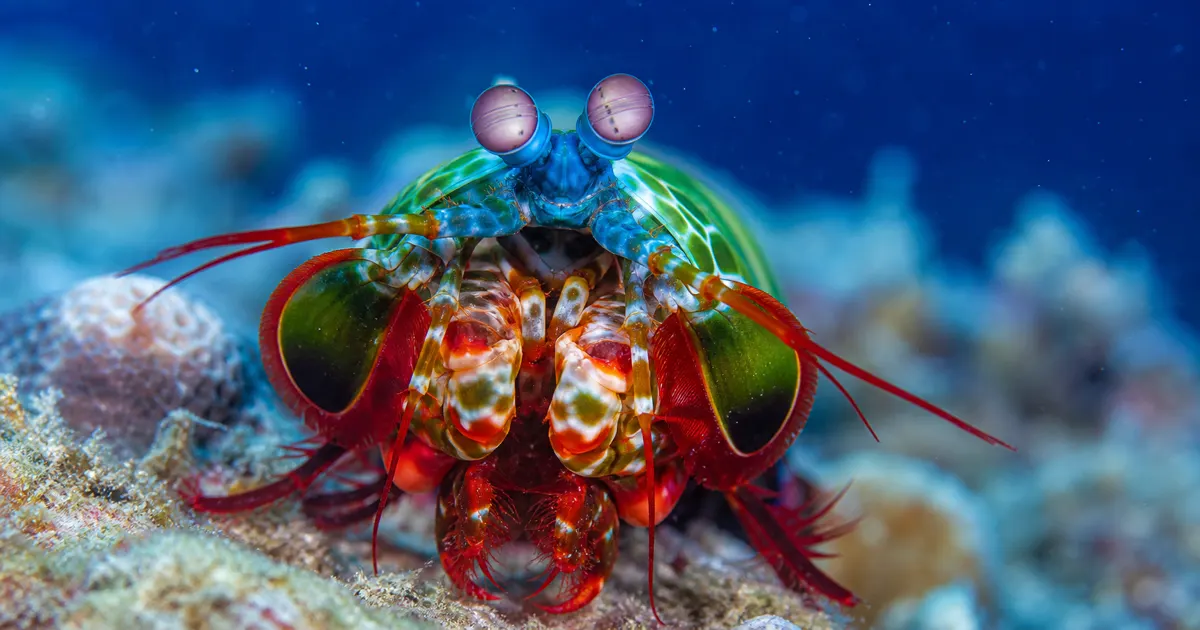
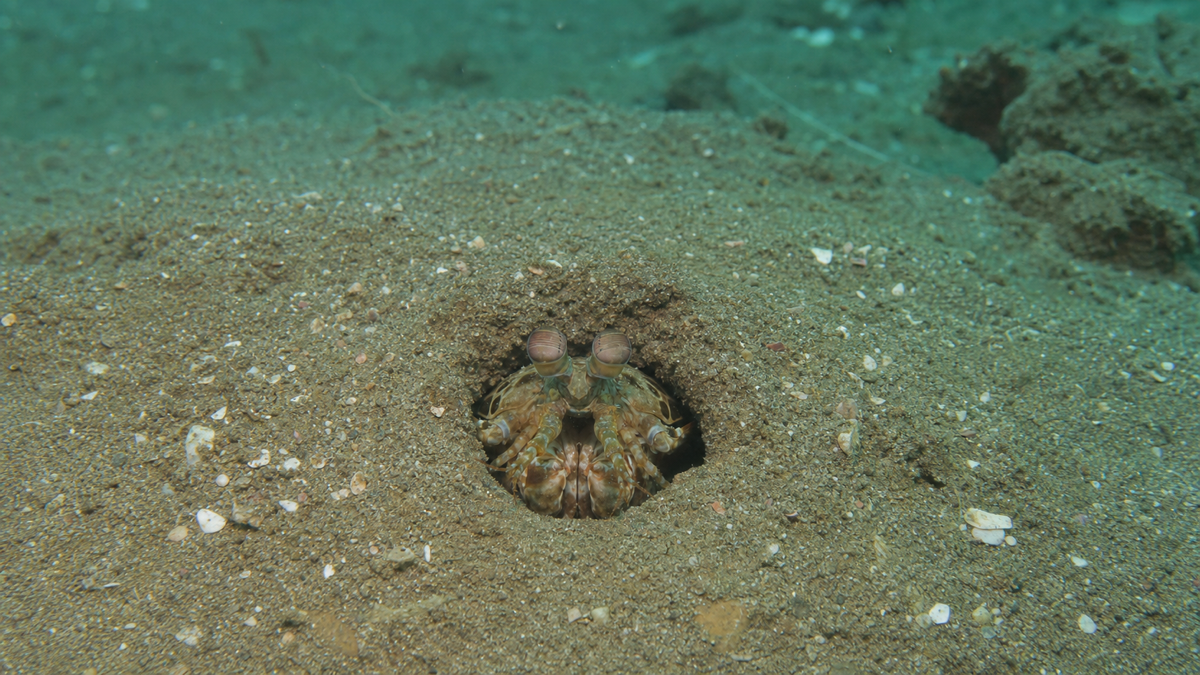
From a burrow dug into the sandy mud of the seafloor, a small crustacean swivels its two eyes restlessly in every direction. Its name is the mantis shrimp. In Japan it is familiar as a sushi topping, but hidden within its body are two "ultimate" traits that no other animal on Earth can match: one is its eyes, the other is its fist.
The mantis shrimp's compound eyes contain up to 16 types of photoreceptors, capturing a world of ultraviolet light and polarization that we can never see. And the raptorial strike it uses to crush prey reaches an acceleration underwater comparable to a bullet leaving a gun barrel—not only cracking shells but generating shockwaves and even flashes of light. The secrets behind this strike are now seriously captivating developers of bulletproof materials and medical devices.
In this article, we will scientifically unpack the mantis shrimp's extraordinary sensory organs and raptorial appendage, one by one, drawing on peer-reviewed papers and university research. By the time you finish reading, you'll be amazed that this unassuming creature buried in the sand is, in fact, a living bundle of cutting-edge technology.
What you'll learn in this article
- The mantis shrimp's compound eyes have up to 16 types of photoreceptors, capturing everything from ultraviolet to infrared (wavelengths of 300–720nm)
- Despite having so many photoreceptors, it is poor at distinguishing subtle color differences, instead using a unique "color recognition" strategy unlike our own
- It is the only animal known to detect "circularly polarized light," in which light vibrates in a spiral pattern
- The mantis shrimp's strike reaches up to 23 m/s underwater, an acceleration of over 10,000 G, and momentarily generates around 1,500 N of force
- The strike triggers cavitation bubbles and even sonoluminescence—light emitted underwater
- The "Bouligand structure" behind its unbreakable fist is inspiring the development of cancer-detection cameras and bulletproof materials
What Is the Mantis Shrimp? — A Small Emperor Lurking on the Seafloor
The mantis shrimp (order Stomatopoda) has a name that evokes "shrimp," but it actually belongs to a separate group of crustaceans, distinct in lineage from both shrimp and crabs. Taxonomically classified as Stomatopoda, its evolutionary lineage stretches back roughly 400 million years. It parted ways with other crustaceans in the distant past—a kind of "ancient nobility" of the sea.
Worldwide, roughly 450 to 500 species of mantis shrimp have been described, distributed widely across shallow seas from cold to tropical waters. New species continue to be discovered even in recent years; around 2020, a research team from the University of the Ryukyus reported four species of mantis shrimp from the Ryukyu Islands and the Ogasawara Islands, including Japan's first records and the first records in the Northern Hemisphere. It remains a group whose full picture has yet to be revealed—research on it is still ongoing.
Japanese Mantis Shrimp and Mantis Shrimp Worldwide
In Japan, "mantis shrimp" (shako) usually refers to an edible species living on the muddy seafloors of Tokyo Bay, the Seto Inland Sea, and Ariake Bay. It measures roughly 10–20cm in length and lives alone in burrows dug into sandy mud. In tropical seas, on the other hand, there are species with astonishingly vivid body coloration. The most famous is the peacock mantis shrimp, named for its green, red, and blue coloring reminiscent of a peacock's tail feathers. Much of the vision and strike research introduced in this article focuses on tropical species, the peacock mantis shrimp foremost among them.
Two Types of Raptorial Appendages — "Smashers" and "Spearers"
Mantis shrimp broadly divide into two types based on the shape of the second thoracic appendage (the raptorial appendage) used to capture prey: the smasher type, suited to cracking open hard shells, and the spearer type, which impales fast-moving prey like a spear. What we fear as the "mantis shrimp punch" comes from the smasher type, to which the peacock mantis shrimp also belongs.
- Smasher type: The tip of the raptorial appendage swells into a club shape, used to smash open the hard shells of snails and crabs. The peacock mantis shrimp is the representative example.
- Spearer type: The raptorial appendage bears sharp spines like a mantis's forelegs, used to impale fast, soft-bodied prey such as fish and shrimp.
- Both types share excellent vision and reflexes as ambush hunters lying in wait for prey.
The Confusion Behind the Name "Mantis Shrimp"
The English name "mantis shrimp" derives from the resemblance of its raptorial appendage to a praying mantis's forelegs. Taxonomically, however, it is neither shrimp nor mantis, but an independent group, the Stomatopoda. The Japanese name "shako" is also easily confused, since it refers both to the edible species used as a sushi topping and to the vividly colored tropical species. This article distinguishes between the two throughout.
A Solitary Hunter Guarding Its Burrow
Most mantis shrimp prefer to live alone. They dig their own private burrow in the sandy mud or rock crevices of the seafloor and use it as a base to ambush prey. The burrow serves as a bed, a shelter from enemies, and a breeding site all at once. In some species, males and females are known to live together as pairs in the same burrow for extended periods, and their sociality is considered relatively high among crustaceans. They are highly territorial, and will mercilessly threaten any other individual that approaches with that famous raptorial appendage.
Because of its high aggression, when kept in an aquarium it will pick off tankmate fish and shrimp one after another, earning it a reputation in the aquarium hobby as an "uninvited troublemaker." Since it often sneaks into tanks hidden in live rock and attacks other creatures night after night, it is frequently discussed in English-speaking communities as a pest to be removed. Yet this very hunting drive is also the driving force that evolved the extraordinary vision and strike we are about to examine.
Mantis shrimp are also relatively long-lived, with some species reported to live from several years to over a decade. Exceptionally for a crustacean, many species remain actively reliant on vision outside the breeding season as well, hunting in broad daylight. This is because making full use of excellent vision requires sufficient light. Living in shallow, sunlit seas rather than the dark depths is closely tied to possessing such highly developed eyes.
Lying in ambush on the seafloor and dispatching passing prey in an instant—this hunting style is supported by the extraordinary vision we'll examine next, and the ultrafast raptorial strike that follows. The history of how deep-sea creatures have adapted to their harsh environment is also covered in our article on the adaptive evolution of deep-sea creatures, but the mantis shrimp's specialization is an extreme of a different kind.
The Reality of the "All-Purpose Camera" Woven from 16 Types of Photoreceptors
Whenever the mantis shrimp's vision is discussed, one number always comes up: 16. While the human retina has only three types of color-sensing photoreceptors (cones), the mantis shrimp's compound eyes contain up to 16 types of photoreceptors. It is this overwhelming number that has earned the mantis shrimp the reputation of having "the most complex eyes in the animal kingdom."
The Secret of the "Midband" That Divides the Compound Eye into Three
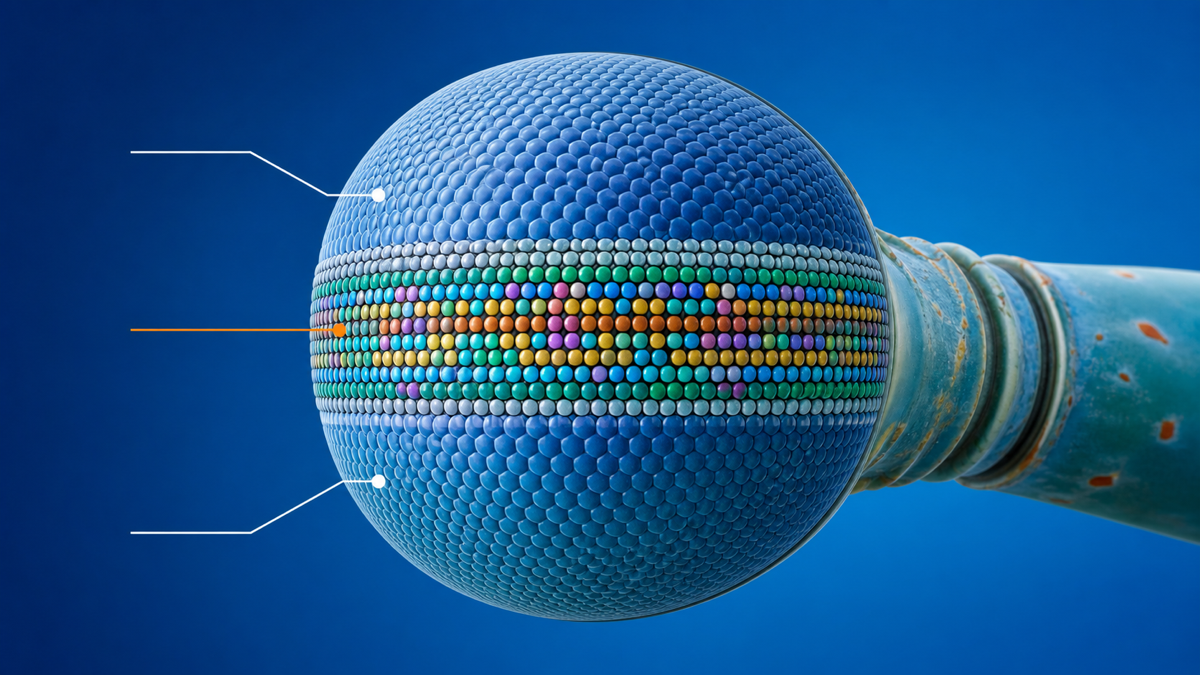
The mantis shrimp's compound eyes sit atop stalks (eyestalks) and can move freely up and down. Looking closely, you'll notice a band-shaped region called the midband running across the center of each eye. In many species this band consists of six rows of ommatidia, densely packed with specialized photoreceptors responsible for color and polarization. It is thought that 14 of the 16 photoreceptor types are concentrated in this midband.
The remaining upper and lower regions are mainly responsible for detecting brightness, motion, and shape. In other words, each of the mantis shrimp's eyes is divided into three parts, sandwiching the color-sensing band in the middle. Thanks to this structure, even a single eye has three overlapping fields of view, allowing it to gauge depth and distance. Whereas humans achieve stereoscopic vision using two eyes, the mantis shrimp achieves trinocular vision with a single eye.
From Ultraviolet to Infrared — The Breadth of Visible Wavelengths
Of the 16 types of photoreceptors, about 12 are responsible for color. Each is tuned to respond only to a narrow wavelength band, and together they cover a wavelength range humans could never match: from deep ultraviolet at 300nm to far red at 720nm. The visible light range for humans spans roughly 380–780nm, but the mantis shrimp can reliably sense ultraviolet light beyond that range as well.
| Item | Human | Mantis Shrimp |
|---|---|---|
| Color-sensing photoreceptors | 3 types | About 12 types (up to 16 photoreceptor types overall) |
| Detectable wavelength range | About 380–780nm | About 300–720nm (including ultraviolet) |
| Polarized vision | Not possible | Both linear and circular polarization possible |
| Method of stereoscopic vision | Stereoscopic vision with two eyes | Trinocular vision with a single eye |
The mantis shrimp further refines its ability to distinguish narrow wavelength bands by layering color filters that cut ultraviolet light over its photoreceptors. It's like placing multiple pieces of colored glass in front of a single sensor—an ingenious mechanism for distributing a limited number of photoreceptors across a greater number of wavelengths. This design of a "moving band plus multiple filters" reveals the fascinating ways color perception can evolve. How fish distinguish the complex world of coral reef colors is also touched on in our article on the diversity of coral reef fish.
Two Independent Eyes That Swivel Restlessly
The mantis shrimp's two eyes sit atop stalks and each moves independently and freely. It can casually pull off the feat of pointing its left eye upward while its right eye looks down or sideways. This independent mobility allows the mantis shrimp to monitor its surroundings all around with almost no body movement. For a hunter lying in wait inside a burrow, there could be no more convenient mechanism. When it spots prey or a predator, it quickly focuses both eyes on that single point to gauge distance.
The mantis shrimp also scans its eyes with fine, trembling up-and-down movements. As noted in the previous section, the color-sensing cells are arranged in a band across the central midband, so moving the eye to sweep the band across an object is the only way to "trace" and read color information. Rather than seeing a wide field of view all at once in color, as humans do, the mantis shrimp reads color by scanning objects with a narrow strip, like a scanner licking across a surface—this is the true nature of its distinctive way of seeing. This mechanism is also deeply connected to the surprising experimental results introduced in the next section.
Key Points
- The mantis shrimp's compound eyes divide into three regions—upper, middle, and lower—centered on the midband
- 14 of the 16 photoreceptor types are concentrated in the central band
- The detectable wavelength range is extremely broad, from ultraviolet (300nm) to far red (720nm)
- The two eyes move independently, giving it "trinocular vision" that can gauge depth with a single eye
Not "Seeing" Color but "Recognizing" It — The Experiment That Overturned Common Sense
Sixteen types of photoreceptors. Learning this number, anyone would assume that "mantis shrimp must see a world of color far richer than humans do." Yet in 2014, a study was published in the journal Science that fundamentally overturned this intuition. It was an experiment by a team led by Justin Marshall at the University of Queensland, Australia, that actually measured the mantis shrimp's color discrimination ability.
A Clever Test That Let Mantis Shrimp Choose Colors
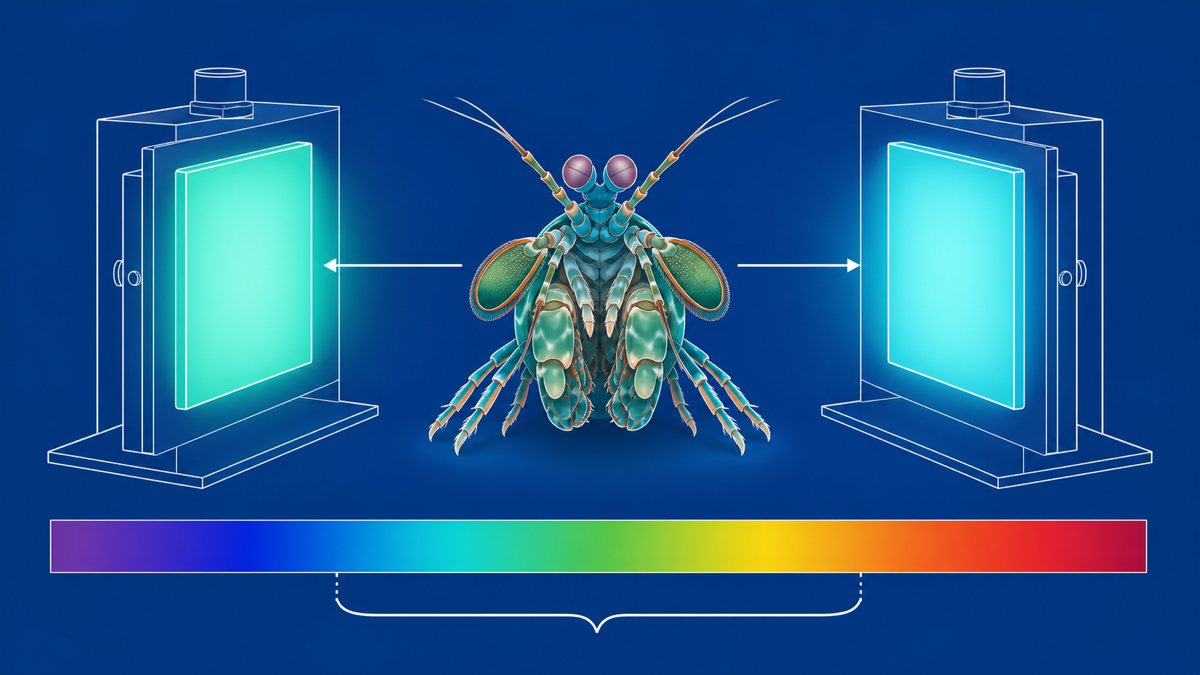
The research team trained mantis shrimp to receive food when they chose light of a specific color. They then placed colors with wavelengths progressively closer to the trained color side by side, testing how fine a color difference the shrimp could distinguish. Humans can tell adjacent wavelengths apart as different colors when they differ by just a few nanometers. Everyone assumed that a mantis shrimp with 16 types of photoreceptors ought to distinguish even finer differences.
The result, however, was the exact opposite. Mantis shrimp could not distinguish colors unless the wavelengths were separated by roughly 12 to 25nm. This figure is far inferior to human color discrimination ability. Despite possessing a lavish array of 16 sensor types, they lost to humans when it came to telling apart subtle color differences—a discovery that greatly surprised the researchers.
Not "Discrimination" but "Recognition" — A Completely Different Strategy
So why did the mantis shrimp bother evolving as many as 16 types of photoreceptors? Marshall and colleagues proposed the hypothesis that the mantis shrimp's brain does not identify color by comparing and computing signals the way the human brain does. The human brain calculates the ratio of signals from three types of photoreceptors to determine color (color-opponent processing). But no evidence of such heavy computation was found in the mantis shrimp.
Instead, the leading theory is that it rapidly scans its eyes up and down while instantly reading which photoreceptors fired, as a pattern. Much like a 12-color barcode scanner, it instantly labels a signal "this is a red pattern" or "this is a UV pattern." Rather than scrutinizing fine color differences, it appears to be specialized for rapidly "recognizing" color.
Mantis shrimp are not discriminating color—they are recognizing it. The large number of photoreceptors may be a mechanism for quickly labeling color, bypassing complex computation in the brain.
— Based on the research thesis of Thoen, How, Chiou, and Marshall (2014), Science
For a mantis shrimp that must ambush prey, flee quickly from predators, and instantly judge companions and territory, speed over accuracy was likely the key to survival. More is not always better—the mantis shrimp's eyes teach us that evolution doesn't necessarily push toward "higher performance," but toward what is "optimized for that particular animal."
Why It Chose "Speed"
Human color vision is accurate, but it takes time because the brain computes the signals. The mantis shrimp's method is crude by comparison, but since it simply reads the photoreceptor response pattern directly, it can make a decision almost instantaneously. For a mantis shrimp lying in ambush on the seafloor, being able to tell in an instant whether something crossing its field of view is "food, a predator, or a companion" is directly tied to life and death. There is no time to leisurely scrutinize color. This "speed-first" design philosophy is thought to be the reason for having 16 types of photoreceptors—a number that at first glance seems needlessly excessive.
What's interesting is that this mechanism resembles computer image recognition. Rather than performing detailed calculations, recent AI has moved toward quickly matching against pre-prepared patterns to judge "this is a dog" or "this is a traffic light." The "eyes specialized for recognition" that the mantis shrimp arrived at hundreds of millions of years ago may have anticipated the very concept we are now reinventing with artificial intelligence. The ingenuity of how living creatures process information is also introduced from another angle in our article on octopus and squid intelligence.
Was the "World of 16 Colors" a Misconception?
The claim that "mantis shrimp see a world many times richer in color than humans do" is often repeated, but since the 2014 study, this is considered inaccurate. Mantis shrimp use their many photoreceptors not for "fine color discrimination" but for "rapid pattern recognition." It's not that they see more colors—it's that their entire approach to capturing color is fundamentally different.
Polarized Vision That Humans Lack — Seeing the World Through a "Hidden Channel"
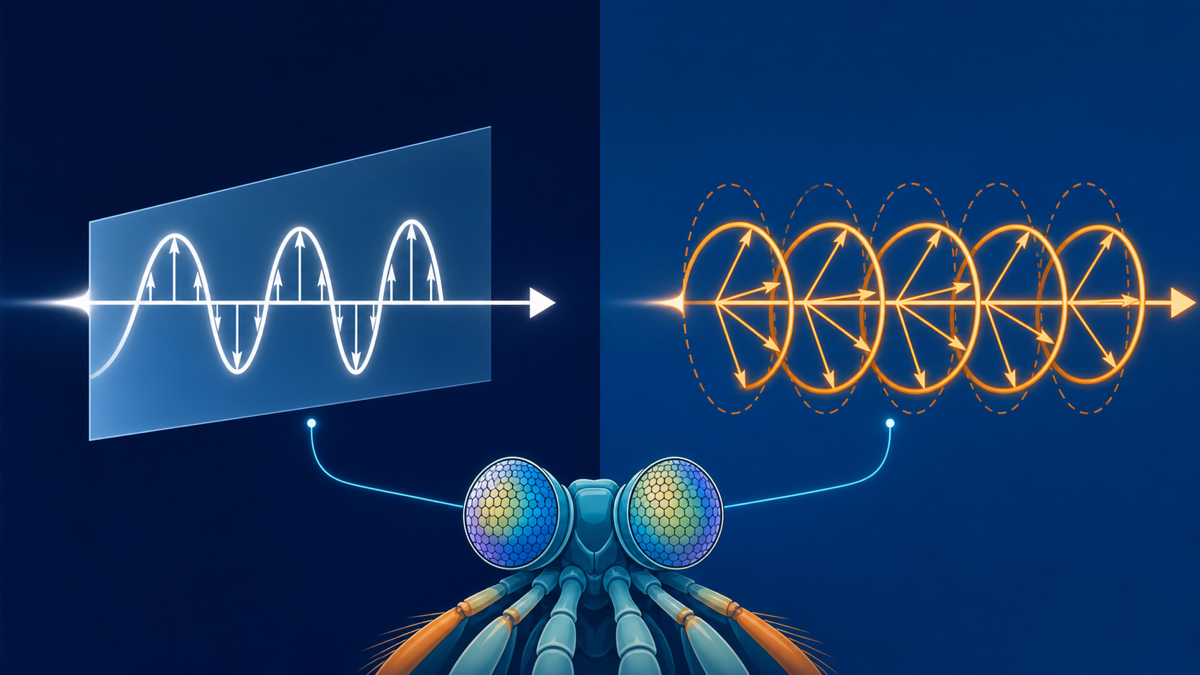
What's truly remarkable about mantis shrimp vision may not be color at all, but rather its ability to see polarized light. Polarization refers to the direction in which a light wave vibrates. Sunlight and lamplight vibrate in every direction, but when reflected off a water surface or an object, the vibration aligns to a specific direction. The human eye cannot detect this difference in direction at all, but the mantis shrimp can distinguish the direction of polarization.
Linear and Circular Polarization — Two Kinds of "Invisible Light"
There are broadly two types of polarization: linear polarization, in which the light wave vibrates within a single plane, and circular polarization, in which the direction of vibration twists in a spiral as the wave travels. Some animals, such as honeybees and octopuses, can distinguish linear polarization, but for a long time no animal was known to detect circular polarization as well.
In 2008, a team led by Chiou reported in the journal Current Biology that the mantis shrimp is the only animal known to distinguish circular polarization. Some of the mantis shrimp's photoreceptors have microstructures that act as a "quarter-wave plate," twisting incoming light at just the right angle, converting circular polarization into linear polarization so it can be detected. The mantis shrimp carries within its own body a mechanism that humans have only managed to create using precision optical instruments.
Why the Mantis Shrimp Sees Polarized Light — A Secret Communication Channel
One reason the mantis shrimp developed polarized vision is thought to be secret communication among companions. Some mantis shrimp have specialized regions on their carapace or raptorial appendages that reflect polarized light, and they exchange polarized signals with each other during courtship or territorial disputes. Because predatory fish cannot see polarization, this signal functions as a "hidden channel" that goes unnoticed by predators. While standing out with flashy body coloration, the truly important messages are exchanged secretly through polarization—a remarkably clever double code.
- Polarization helps prey and objects stand out from the background underwater, aiding in the detection of transparent prey as well
- Circularly polarized reflection signals are used as courtship and territorial signals invisible to predators
- Polarization contrast tends to remain even in turbid water, aiding visibility
- Polarized vision functions as an information channel independent of color vision
The ocean also holds a world where creatures not only "see" light but "create" it. How deep-sea bioluminescent creatures use light for communication is detailed in our article on deep-sea bioluminescence. Read alongside the mantis shrimp's polarized signals, it becomes clear that the ocean holds many overlapping layers of information invisible to the human eye.
We too can experience polarization, if only slightly. Polarized sunglasses, used for fishing or driving, work by cutting only the reflected light aligned to a specific direction off a water surface or road surface, which eliminates the glare on water and makes it easier to see underwater. LCD displays also use polarization technology. In other words, while humans finally learned to "handle" polarization using tools, the mantis shrimp is born with "eyes that see" polarization built into its body. The very thing we've been chasing with technology, the mantis shrimp has had as standard equipment since long ago.
Key Points
- The mantis shrimp can distinguish the "direction of polarization" that humans cannot see
- It is the only animal known to detect the spiraling "circular polarization" as well
- Microstructures in its photoreceptors act as a "quarter-wave plate" that twists light
- Polarization is used as a secret communication channel invisible to predators
The Physics of the Mantis Shrimp Punch — A Strike That Produces Bullet-Like Acceleration
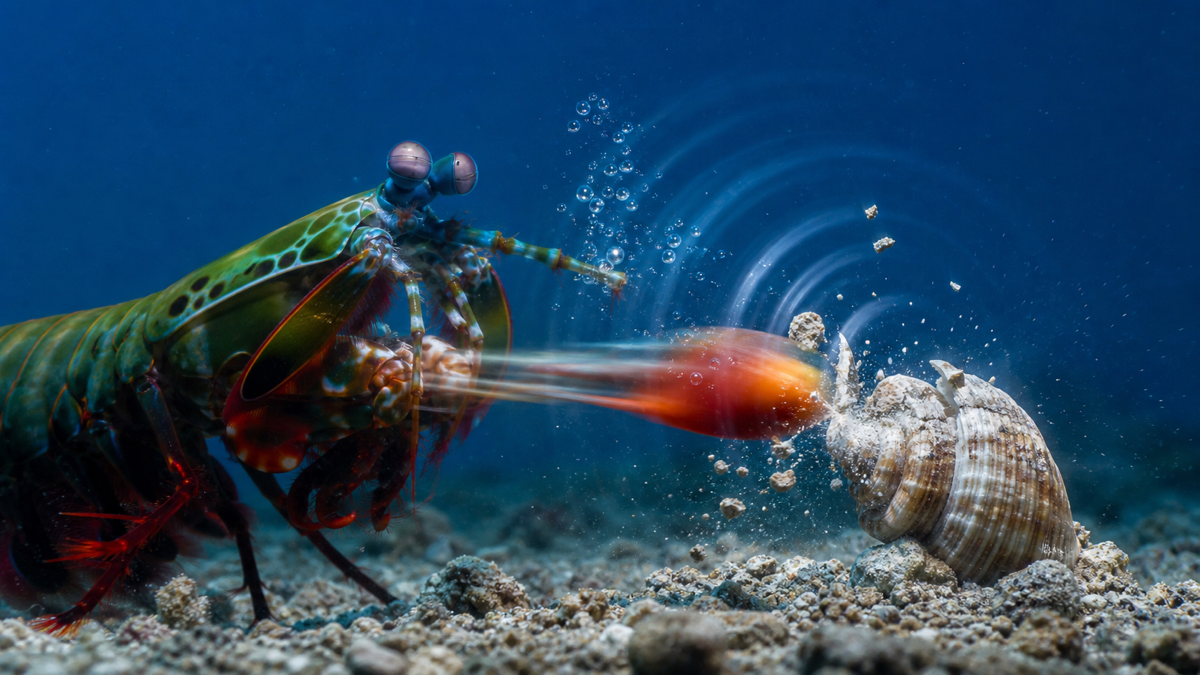
From here, let's turn to the mantis shrimp's other "ultimate" trait—the punch of its raptorial appendage. The strike delivered by a smasher-type mantis shrimp boasts extraordinary speed and force even by the standards of biological movement. According to research using high-speed cameras by Sheila Patek and colleagues at Duke University, the peacock mantis shrimp's club-shaped raptorial appendage reaches 12–23 meters per second underwater, with an astonishing acceleration of about 10,400 G.
Acceleration Rivaling a Gun's Bullet
An acceleration of 10,400 G is more than 10,000 times the force of gravity. This figure is comparable to the acceleration of a .22 caliber bullet leaving a gun barrel (though the top speed itself falls far short of a bullet's roughly 330 m/s). At the moment of the punch, the force the raptorial appendage delivers to prey momentarily reaches about 1,500 newtons (N)—meaning a creature only around a dozen centimeters long delivers a force hundreds of times its own body weight. Before this strike, a crab's shell, a snail's shell, and even aquarium glass stand no chance.
| Metric | Value | Comparison |
|---|---|---|
| Top speed | 12–23 m/s underwater | Roughly 80 km/h in equivalent road speed |
| Acceleration | About 10,400 G | Comparable to a .22 caliber bullet |
| Impact force | About 1,500 N momentarily | Hundreds of times its own body weight |
| Duration | Just a few milliseconds | Far faster than a blink of an eye |
Speed Generated Not by Muscle but by a "Spring and Latch"
A question naturally arises here: given that muscle contraction speed has a physical limit, how can such extreme speed be possible? The answer lies in the fact that the mantis shrimp is not striking directly with muscle power. The mechanism Patek and colleagues revealed is often described as a combination of a four-bar linkage and a latch-and-spring system.
- First, the muscle contracts slowly, compressing a saddle-shaped section of exoskeleton at the base of the raptorial appendage, storing energy like a spring.
- Meanwhile, a latch structure locks the appendage in place, preventing premature release.
- The moment the latch releases, the stored elastic energy is unleashed all at once.
- The linkage mechanism amplifies the motion, firing the appendage out at explosive speed.
This method is called power amplification. It's similar to drawing a bow and releasing an arrow—by slowly storing energy over time and then releasing it in an instant, it produces speeds that muscle alone could never achieve. Many "ultrafast movements" in nature, such as a grasshopper's jump or a chameleon's tongue strike, use this same principle, but the mantis shrimp's saddle has drawn the attention of engineers as a prime example of a finely engineered biological spring.
Extreme Speed Made Possible Precisely Because of Its Small Body
In fact, there is a physical reason why this "spring and latch" style of ultrafast movement is more advantageous the smaller the body is. Smaller, lighter components more easily achieve greater acceleration with the same amount of energy. The mantis shrimp's size—a body only a dozen or so centimeters long—is precisely suited to releasing elastic energy all at once and generating extreme acceleration. If a mantis shrimp were the size of a human, it could never achieve the same acceleration. Being a small hunter on the seafloor and possessing one of the fastest punches in the animal kingdom are by no means unrelated.
The Punch Is Also a "Last Resort"
Powerful as this punch is, delivering it consumes a large amount of energy. For this reason, the mantis shrimp doesn't unleash it recklessly and repeatedly, but reserves this strike for cracking open hard prey or for serious confrontations. It lives frugally the rest of the time, saving its full power for the moments that truly matter—researchers sometimes describe this as a "fuel-efficient finishing move."
Cavitation and Sonoluminescence — A Tiny Sun Born Underwater
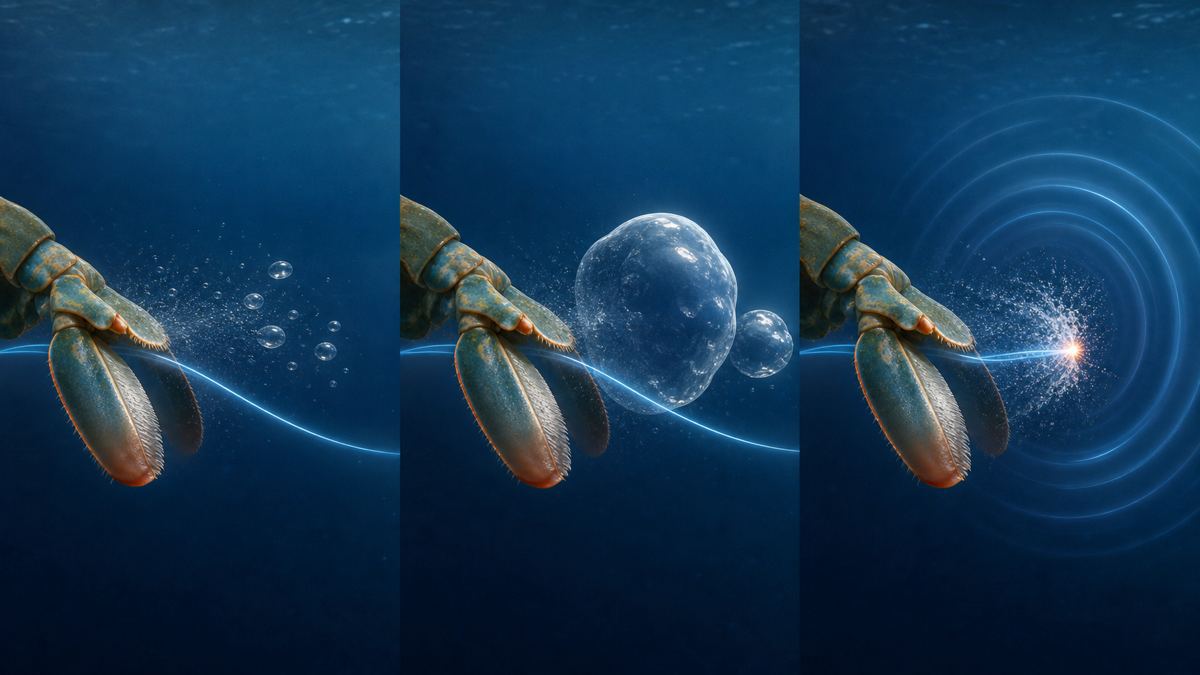
The true terror of the mantis shrimp punch lies not only in the direct force of the raptorial appendage's impact. Because it moves so fast, the water immediately behind the appendage is torn apart, momentarily creating a near-vacuum bubble. This phenomenon is called cavitation. And this bubble becomes a "second punch" that strikes the prey.
Prey Is Struck Twice in a Single Punch
The cavitation bubble collapses with tremendous force almost immediately after forming. At the moment it collapses, the surrounding water rushes inward toward the center, generating a powerful shockwave. In other words, prey is first struck by the direct blow of the raptorial appendage, then struck again immediately afterward by the collapse of the cavitation bubble. A single punch effectively delivers two hits. Even if the appendage happens to miss, the shock from this bubble alone can sometimes stun small prey.
This two-stage attack is especially effective against prey with hard shells. When cracking a snail's shell, the initial strike creates a crack, and the subsequent cavitation shockwave widens that crack further. When researchers film this with high-speed cameras, they clearly record a bright white bubble flickering around the appendage immediately after the punch. In a single instant that appears to our eyes as simply "smashing a shell," an astonishingly complex physical phenomenon is packed in.
Light Is Born the Instant the Bubble Collapses
Even more remarkably, a very brief flash of light can sometimes be observed at the instant a cavitation bubble collapses. This phenomenon is called sonoluminescence, in which the gas inside the bubble is instantaneously compressed to extreme temperature and pressure as the bubble collapses, emitting light. In laboratory-generated sonoluminescence, measurements have shown the temperature at the bubble's center to reach several thousand degrees, and in some conditions, tens of thousands of degrees. Considering that the surface temperature of the sun is about 5,500°C, one can appreciate just how intense this is.
In other words, every time it punches, the mantis shrimp momentarily creates a phenomenon of extreme heat and light underwater, like a "tiny sun." Of course, the scale is minuscule, and the mantis shrimp itself does not get burned. Still, the fact that a creature only a dozen or so centimeters long triggers an extreme phenomenon worthy of a physics textbook with a single swing of its fist gives us renewed appreciation for the depth of nature.
Cavitation, in fact, is also known in human engineering as a troublesome destructive phenomenon. Ship propellers, hydroelectric turbines, and pump impellers all generate the same cavity phenomenon when cutting through water at high speed, and have long suffered from a failure mode called "cavitation erosion," in which metal surfaces are gradually worn away and degraded. The mantis shrimp, by contrast, uses that same destructive force as a weapon, and has even evolved so that its own raptorial appendage does not break. Humans avoid this same physical phenomenon as a nuisance, while the mantis shrimp has turned it into an ally—this contrast is deeply thought-provoking.
The mantis shrimp's strike triggers, all at once, a chain of extreme energy release: direct impact, a cavitation shockwave, and light emission.
— From a review of mantis shrimp strike research in Integrative and Comparative Biology
Key Points
- The high-speed punch tears the water apart, creating a near-vacuum cavitation bubble
- The bubble's collapse generates a shockwave, so prey takes damage twice from a single strike
- Sonoluminescence (light emission) can occur upon collapse
- The interior of the bubble has been measured to reach extremely high temperatures momentarily
The Secret of the Unbreakable Fist — The "Bouligand Structure," a Natural Armor
Having read this far, a new question arises. With acceleration rivaling a gun's bullet, and even unleashing cavitation shockwaves—how can the mantis shrimp's raptorial appendage deliver such a strike tens of thousands of times without breaking itself? The answer lies in the astonishingly sophisticated material design inside the club-shaped raptorial appendage, known as the dactyl club.
The Spiraling "Bouligand Structure"
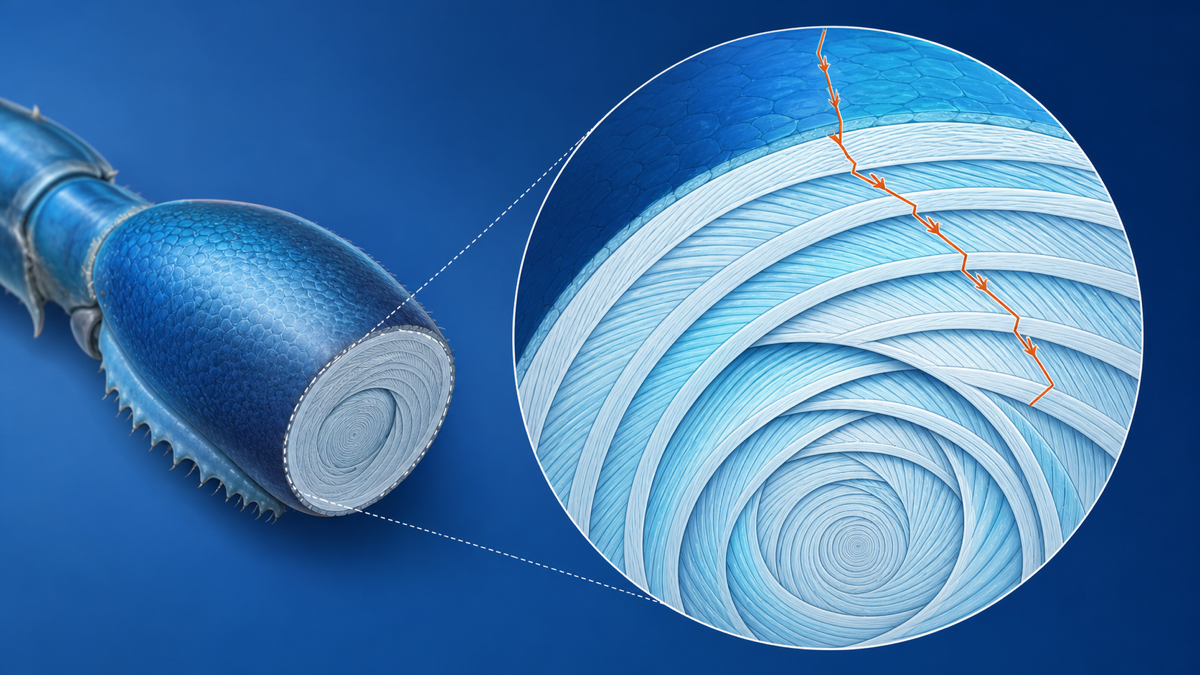
When researchers examined a cross-section of the raptorial appendage under an electron microscope, they found that the interior is divided into multiple layers, with the orientation of the fibers rotating slightly from one layer to the next. It's a spiraling laminated structure, like plywood stacked while being twisted slightly with each layer. This is called the Bouligand structure, named after its discoverer. The surface layer is hardened with rigid minerals, beneath which these spiraling fiber layers continue.
The remarkable power of the Bouligand structure lies in its ability to stop cracks from spreading. Even when an impact causes a crack to form, because the fiber orientation changes from layer to layer, the crack cannot travel in a straight line and instead wanders and twists between layers. In the process, the impact energy is dispersed and absorbed, preventing catastrophic failure. A true "blueprint for not breaking" is inscribed into the raptorial appendage.
A "Sound Shield" That Even Filters Shockwaves
Research has advanced even further. According to results published in 2025 by a team at Northwestern University, the structure of the raptorial appendage also functions as a "phononic (acoustic) shield" that selectively blocks shockwaves (vibrations) of specific frequencies. The appendage acts as a filter so that the high-frequency vibrations generated during a punch don't bounce straight back into its own body. Beyond simply absorbing impact with hardness, it turns out to also possess an advanced defense that blocks the transmission of vibration itself.
- Surface layer: Hard minerals and a herringbone fiber arrangement withstand direct impact
- Inner layer: The spiraling Bouligand structure twists and halts cracks, absorbing energy
- Phononic shield: Selectively blocks harmful high-frequency shockwaves, preventing them from flowing back into the body
- These elements work together across multiple scales, withstanding repeated high-impact strikes
Self-Repair and Rebuilding Through Molting
No matter how sturdy the raptorial appendage is, repeating the punch tens of thousands of times gradually wears it down and accumulates fine damage. Here the mantis shrimp has a solution unique to crustaceans: molting. By shedding its old exoskeleton and replacing it with a new one, it can rebuild even a damaged raptorial appendage entirely. Immediately after molting, the shell is still soft and there is a defenseless period during which it cannot deliver punches, so the mantis shrimp hides quietly in its burrow to protect itself during this time. Having both a hard armor and a mechanism for regularly renewing it is one reason the mantis shrimp's fist can maintain its high performance over the long term.
A "Pinnacle of Materials Engineering" Achieved by a Living Creature
The mantis shrimp's raptorial appendage is not simply hard like iron—it achieves "hardness, toughness, and vibration blocking" all at once within a single component. This is a challenge that human engineering still struggles with today. Hundreds of millions of years of evolution arrived at the very design that today's cutting-edge materials researchers consider ideal—the mantis shrimp's fist quietly tells us this story.
Future Technologies Inspired by the Mantis Shrimp — From Cancer-Detection Cameras to Bulletproof Materials
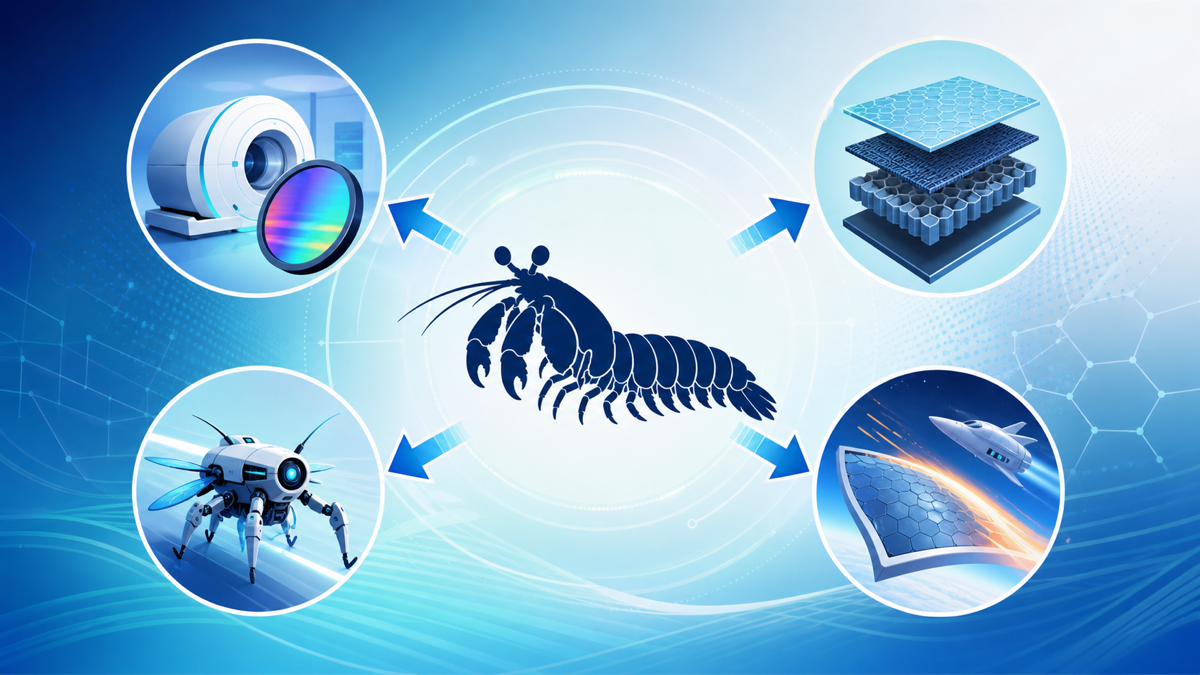
The mantis shrimp's vision and strike are not merely marvels of nature. Researchers around the world are now trying to use this creature's design as inspiration for new technology. Imitating the excellent mechanisms of living things and applying them to engineering—so-called biomimetics—finds an ideal subject in the mantis shrimp.
Eyes That See Polarized Light Help Detect Cancer
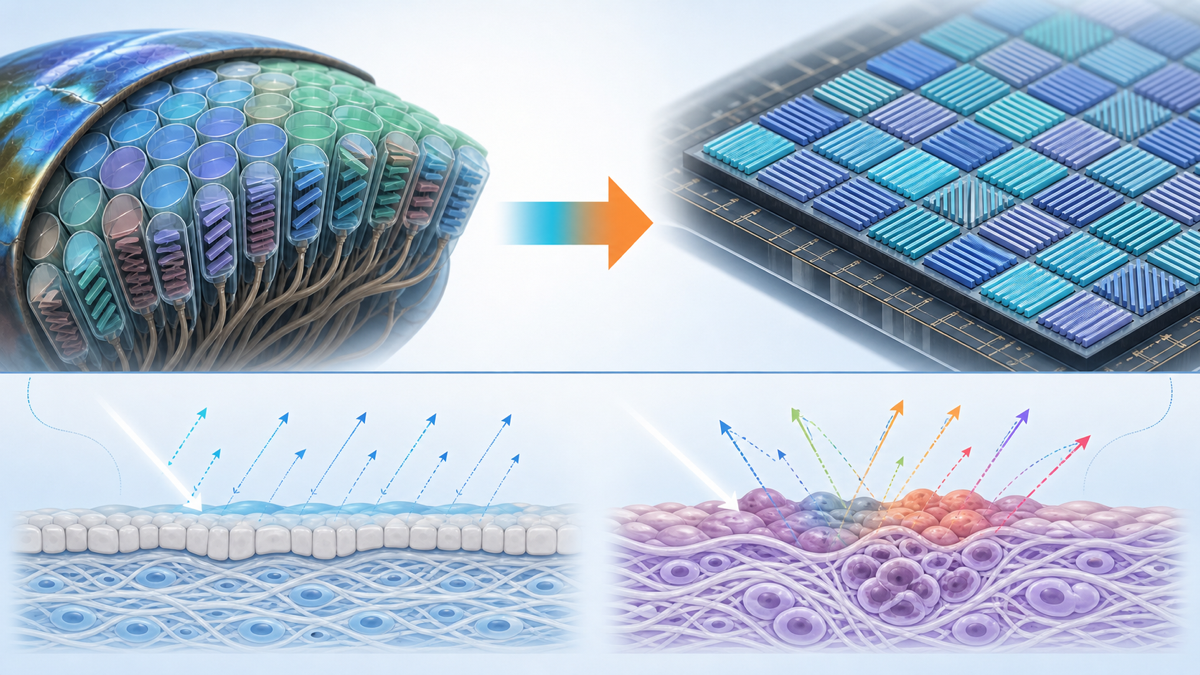
The most closely watched application is early cancer-detection cameras. It's known that cancerous tissue reflects the polarization of light subtly differently from healthy tissue. Research teams, including one at the University of Illinois, have developed compact camera sensors that capture polarization, modeled on the arrangement of the mantis shrimp's polarization-sensing photoreceptors. This sensor captures the "polarization signature" of cancer tissue, invisible to the naked eye or an ordinary camera, and may be able to visualize tumors while they are still small. Future applications are also anticipated, such as incorporating it into endoscopes to distinguish cancer boundaries in real time during surgery.
An Unbreakable Fist Creates Next-Generation Protective Materials
The Bouligand structure of the raptorial appendage is also providing major inspiration for materials engineering. Beginning with research published in the journal Matter in 2021, researchers around the world are prototyping impact-resistant composite materials modeled on this layered spiral structure. It has been confirmed that layering carbon fiber in a Bouligand-like structure makes the same material more resistant to cracking under impact. The following fields are expected applications:
- Bulletproof and protective equipment: Military helmets, body armor, sports protective gear
- Aerospace: Impact-resistant coatings for airframes and components, lightweight yet durable structural materials
- Automotive and construction: Components that absorb collision energy, seismic isolation and vibration-damping technology
- Electronics: Drop-resistant casings for smartphones and wearable devices
Furthermore, the "spring and latch" mechanism of the raptorial appendage that releases stored energy in an instant is also being studied for application in ultrafast small robots and micromachines. It serves as a model for giving small machines the kind of explosive power that muscle or motors alone cannot produce. From the perspective of how the wisdom of ocean creatures is being applied to our lives, reading our article on octopus and squid intelligence alongside this one will give you an even greater sense of how far biomimetics extends.
Why Is There Value in "Imitating"?
Biomimetics draws attention worldwide for reasons that go well beyond the mantis shrimp alone. The designs found in nature are the result of an unimaginably vast amount of trial and error, spanning hundreds of millions of years. Wasteful or weak mechanisms have been weeded out, and only those suited to the environment have survived to this day. In a sense, the results of a grand, planet-scale research and development project are packed into the bodies of living things. Learning from that finished product is often a far shorter path than inventing something from scratch. Moreover, many biological mechanisms function on minimal energy—they are inherently resource- and energy-efficient. Learning from living creatures carries great significance for building a sustainable society as well.
Try Looking at Ocean Creatures as "Teachers of Technology"
- If you spot a mantis shrimp at an aquarium, take a look at the "band" crossing the center of its compound eyes
- Putting on polarized sunglasses makes the glare on water disappear—this is one example of polarization
- Consider that the "impact-resistant materials" around you might actually be inspired by living creatures
- Observing the mechanisms of the natural world is also a way of searching for hints about future technology
Conclusion — The "Living Cutting-Edge Technology" Hidden in the Sand
Familiar as a sushi topping, the mantis shrimp is in fact a creature possessing the most extraordinary eyes and fist on Earth. Its up to 16 types of photoreceptors capture everything from ultraviolet to infrared, revealing a world of polarization invisible to humans. What's most fascinating, however, is that it evolved a completely different strategy—not "finely discriminating many colors" but "rapidly recognizing color."
And its raptorial punch crushes prey with bullet-like acceleration, even generating cavitation shockwaves and a momentary flash of light underwater. The Bouligand structure that withstands this strike is now serving as a model for the designers of bulletproof materials and medical cameras. The mantis shrimp is a "living showcase of cutting-edge technology" that evolution built over hundreds of millions of years.
Article Summary
- The mantis shrimp has up to 16 types of photoreceptors, sensing ultraviolet through infrared light (300–720nm)
- Despite having many photoreceptors, it is poor at color discrimination and instead uses its own unique "color recognition" method (2014 study in Science)
- It is the only animal known to distinguish spiraling "circular polarization" (2008 study)
- Its punch reaches up to 23 m/s underwater, over 10,000 G of acceleration, and about 1,500 N of force
- The collapse of the cavitation bubble produces a shockwave and sonoluminescence (light emission)
- The Bouligand structure of its raptorial appendage is inspiring the development of cancer-detection cameras and bulletproof materials
And we must not forget that neither the mantis shrimp's vision nor its raptorial strike has been fully elucidated. Why does it need as many as 16 types of photoreceptors? To what degree does it differentiate its use of circular polarization? How does the material of its raptorial appendage build up that exquisite structure? Researchers' questions never run out. The creatures closest to us are often, in fact, full of mystery.
In the ocean, there are still mantis shrimp we don't even know the names of, each species harboring its own unsolved secrets of vision and strike. The next time you spot a mantis shrimp at an aquarium or a fish market, take a moment to reflect on the grand science packed into this small body. Beyond its gaze, there surely lies a frontier of evolution that human technology has yet to catch up with.
References and Sources
- Science (AAAS) – Thoen, How, Chiou, Marshall, "A Different Form of Color Vision in Mantis Shrimp" (2014)
- Nature – Patek, Korff, Caldwell, "Deadly strike mechanism of a mantis shrimp" (2004)
- Patek Lab, Duke University – Mechanics of Movement: Mantis Shrimp (explanation of raptorial strike mechanics)
- Matter (Cell Press) – Impact-resistant materials inspired by the mantis shrimp's dactyl club (2021)
- Northwestern University – Mantis shrimp clubs filter sound to mitigate damage (phononic shield research, 2025)
- IEEE Spectrum – Mantis Shrimp Eyes Inspire Cameras to See Cancer (polarization camera cancer application)
- Integrative and Comparative Biology (Oxford Academic) – Power of Mantis Shrimp Strikes: Interdisciplinary Impacts of an Extreme Cascade of Energy Release
- University of the Ryukyus – Report of four mantis shrimp species discovered in the Ryukyu Islands and the Ogasawara Islands, including the first Northern Hemisphere and first Japan records
※ Listed in order of reliability: government/academic institutions > peer-reviewed papers > specialized organizations > trusted media