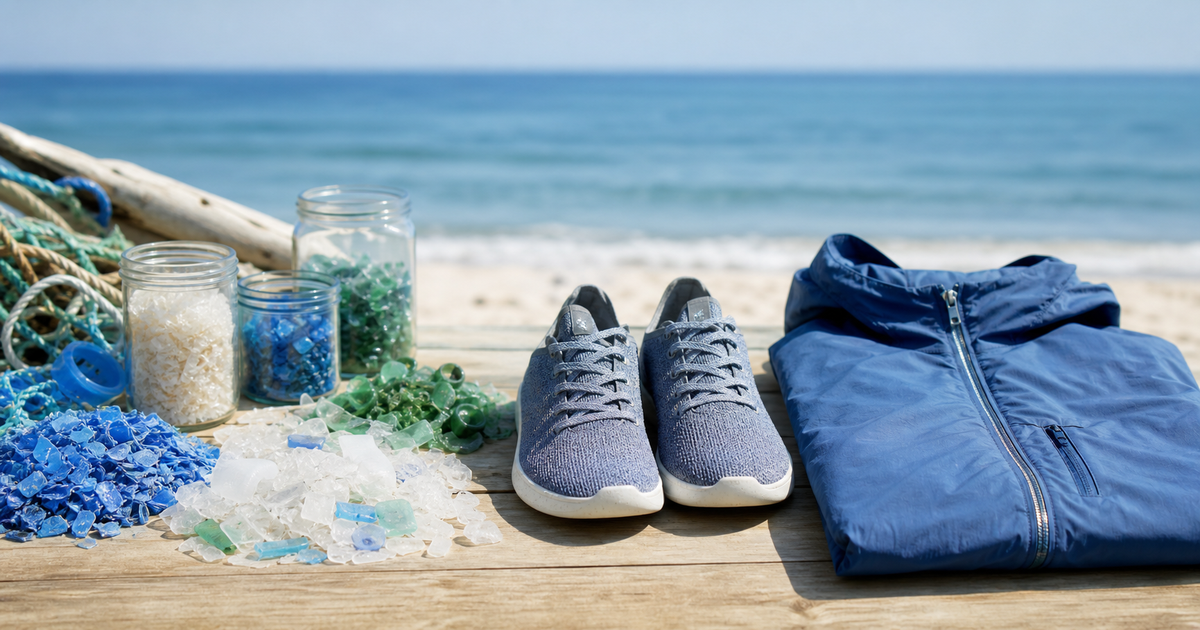
The sneakers on your feet, the jacket you're wearing, the laptop on your desk. Would it surprise you to learn that some of these are partly made from "trash picked up out of the ocean"? Around the world, efforts to collect plastic that has flowed into the sea and bring it back to life as fibers and resins for products are spreading rapidly. This is more than a simple cleanup activity — it is a practice of the "circular economy," turning collected waste into valuable goods that keep circulating.
Behind this lies the worsening problem of ocean plastic pollution. An estimated 8 million tonnes of plastic waste flows into the sea every year, and if nothing changes, some estimates suggest that by 2050 the weight of plastic in the ocean could exceed the weight of fish. Rather than simply picking up trash and stopping there, we need to build a system where society keeps using what has been collected. That is the two-pronged solution — turning off the tap while also mopping up the water that has already spilled onto the floor.
This article first lays out how ocean plastic is collected and what steps it goes through to become a product. It then introduces real examples from three fields — apparel, everyday goods, and electronics — before explaining, as clearly as possible, the two real-world barriers of "quality" and "cost" that lie behind the glamorous headlines, and finally the perspective we as consumers need in order to choose wisely.
What you'll learn in this article
- The full flow of ocean plastic — where it comes from, how it's collected, and how it's turned back into material
- Concrete corporate examples and the scale of ocean plastic use in apparel, everyday goods, and electronics
- The quality and cost barriers facing collected plastic, such as salt content, degradation, and sorting costs
- How to read labels, including the difference between "ocean plastic-derived" and "Ocean Bound Plastic (OBP)"
- A consumer's perspective for choosing products wisely without being misled by greenwashing
- The role of certification systems (such as Japan's Eco Mark) that support the process from collection to product
Why ocean trash is becoming a "raw material for products" now
"Picking up trash" alone will not solve the ocean plastic problem. If collected plastic has nowhere to go, much of it ends up incinerated or landfilled, and only the cost of collection keeps piling up. This is why attention is turning to an idea: using collected ocean plastic as raw material for new products, giving it value. Once trash gains economic value, more people take on the work of collecting it, and cleanup activities themselves become sustainable.
At the root of this thinking is the circular economy, which keeps resources in circulation instead of treating them as disposable. Reducing ocean debris is also closely tied to protecting blue carbon ecosystems, and is positioned as part of the broader effort to restore a healthy ocean. Not just "picking up and being done with it," but "continuing to use" plastic, carries real significance within the larger trend toward decarbonization and resource circulation.
The backdrop: a worsening ocean plastic problem
So why has ocean plastic become such a serious concern in the first place? A report released by the UK's Ellen MacArthur Foundation to coincide with the 2016 Davos meeting (the World Economic Forum's Annual Meeting) pointed out that at least around 8 million tonnes of plastic waste flows into the ocean worldwide every year. That has been likened to dumping the equivalent of one garbage truck full of plastic into the sea every minute.
The same report also presented a striking estimate: without action, by 2050 the weight of plastic in the ocean could exceed the weight of fish. Plastic barely breaks down in nature; instead, UV light and wave action grind it into fragments of 5mm or smaller — microplastics — that end up inside marine life and, eventually, on our own dinner tables. Ocean debris is a multifaceted problem, causing damage not only to ecosystems but also to fisheries, tourism, and ship navigation.
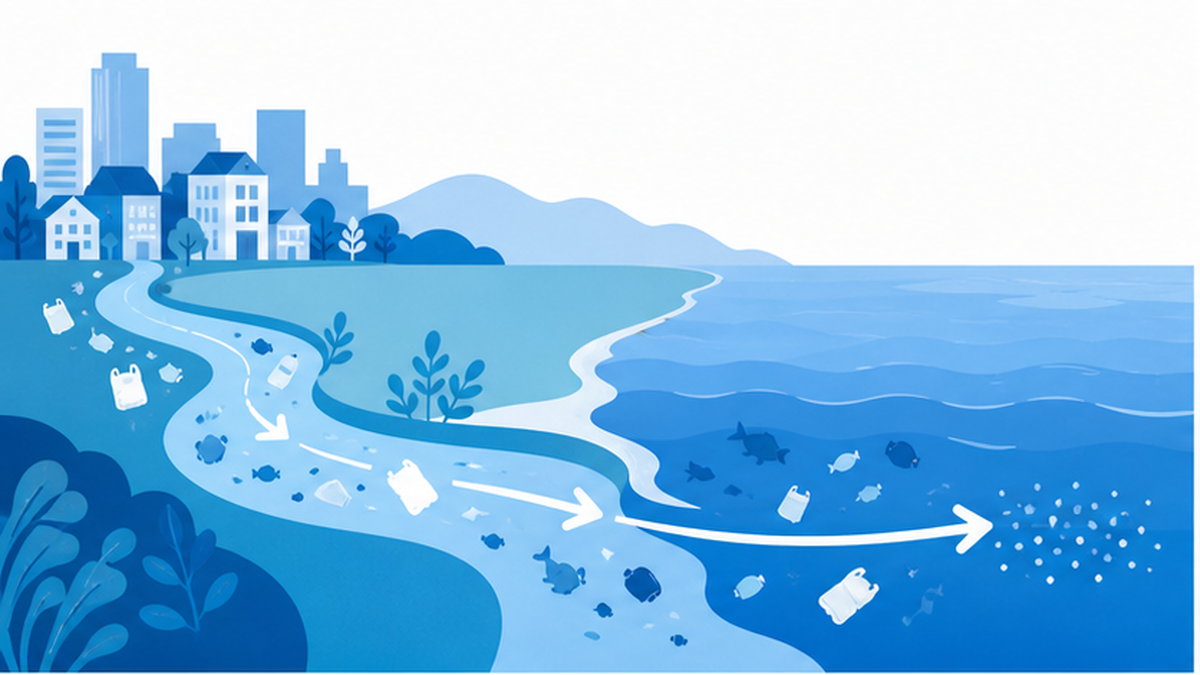
"Ocean plastic" and "ocean-bound plastic" are not the same thing
The "made from ocean plastic" label you often see on products actually covers two different things. One is plastic actually recovered from the sea or the coastline. The other is "Ocean Bound Plastic (OBP)" — plastic collected before it ever reaches the sea, in coastal areas within a few dozen kilometers of the ocean. Many brands use material that includes the latter, and this is by no means a trick — it is also a rational strategy of stopping plastic before it enters the sea. Knowing this distinction will deepen your understanding when reading labels.
A tailwind: a growing market
The use of ocean plastic isn't driven by environmental ideals alone — it is also growing steadily as a market. According to one market survey, the global market for packaging made with recycled ocean plastic was worth about USD 630 million in 2024, and is projected to grow at over 11% annually to reach roughly USD 1.5 billion by 2032. For companies, this is becoming an area where environmental action simultaneously builds brand value and creates new business opportunities.
This tailwind is also being supported by a shift in consumer awareness. More people now care about how a product is made and where it's headed, not just whether it's cheap, and products with a story are increasingly chosen. A pair of sneakers made from material picked up out of the sea can give the wearer a chance to think of environmental issues as their own. The product itself comes to serve as a medium for communicating ocean issues.
Another driving force is the global trend requiring companies to disclose environmental information. Business partners and investors are increasingly asking about resource circulation across the whole supply chain and about cutting greenhouse gas emissions, and the use of ocean plastic is shifting from being "optional social contribution" to being "part of business strategy." It is where principle and practical benefit overlap that this field's growth is rooted.
Key points from this section
- Giving collected plastic value makes cleanup activities sustainable
- An estimated 8 million tonnes flowing in each year, and the projection that plastic could outweigh fish by 2050, show the severity of the problem
- "Ocean plastic-derived" covers two types: plastic actually recovered from the sea, and "Ocean Bound Plastic (OBP)"
- The use of ocean plastic is also a growth market, expanding at over 10% a year
Where does ocean trash come from, and how is it collected?
Before we get to products, let's pin down where the ocean plastic used as raw material comes from and how it is collected. Understanding this will make it much easier to grasp later why the quality of collected plastic varies so much, and why it costs so much.
The three places where ocean debris is found
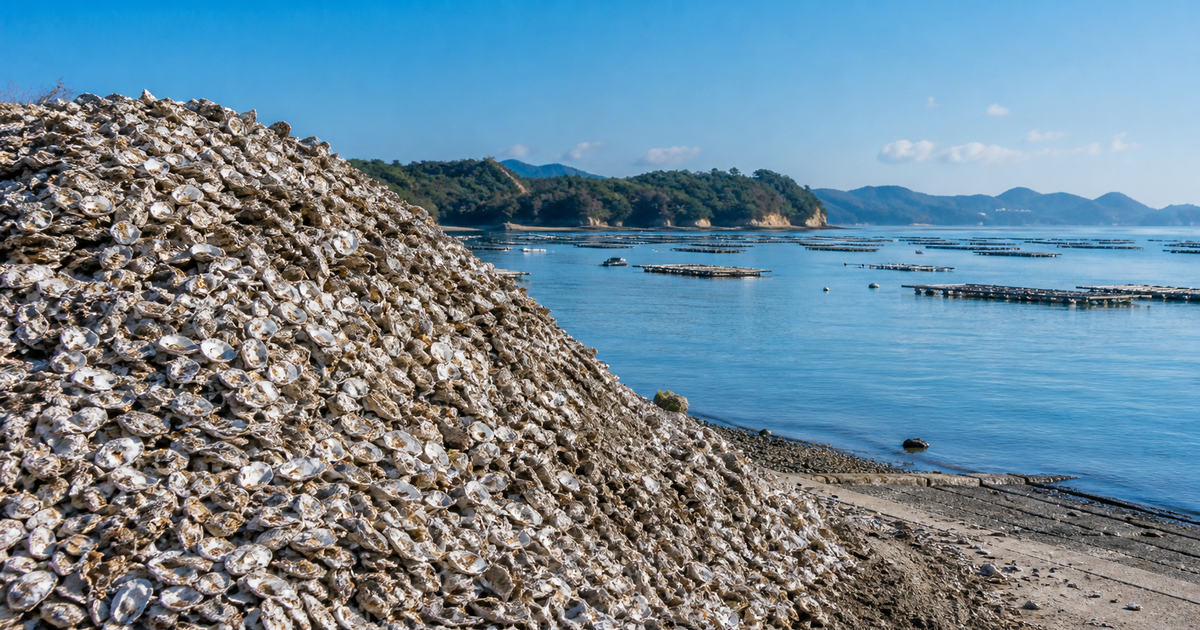
Ocean plastic waste can broadly be divided into three categories: beach litter washed up on the shore, floating debris drifting on or beneath the sea surface, and seabed debris that has sunk to the ocean floor. Each differs greatly in how hard it is to collect, and also in how usable it is as a material.
- Beach litter: relatively easy to collect since it can be gathered on shore, but heavily covered in sand, salt, and marine organisms
- Floating debris: collected by boats or drones, but scattered thinly over a wide area, making collection inefficient
- Seabed debris: fishing gear and heavy items that have sunk. The hardest to collect, relying on divers or bottom trawling
- River and coastal debris (OBP): can be collected before it flows into the sea, and tends to be relatively stable in quality
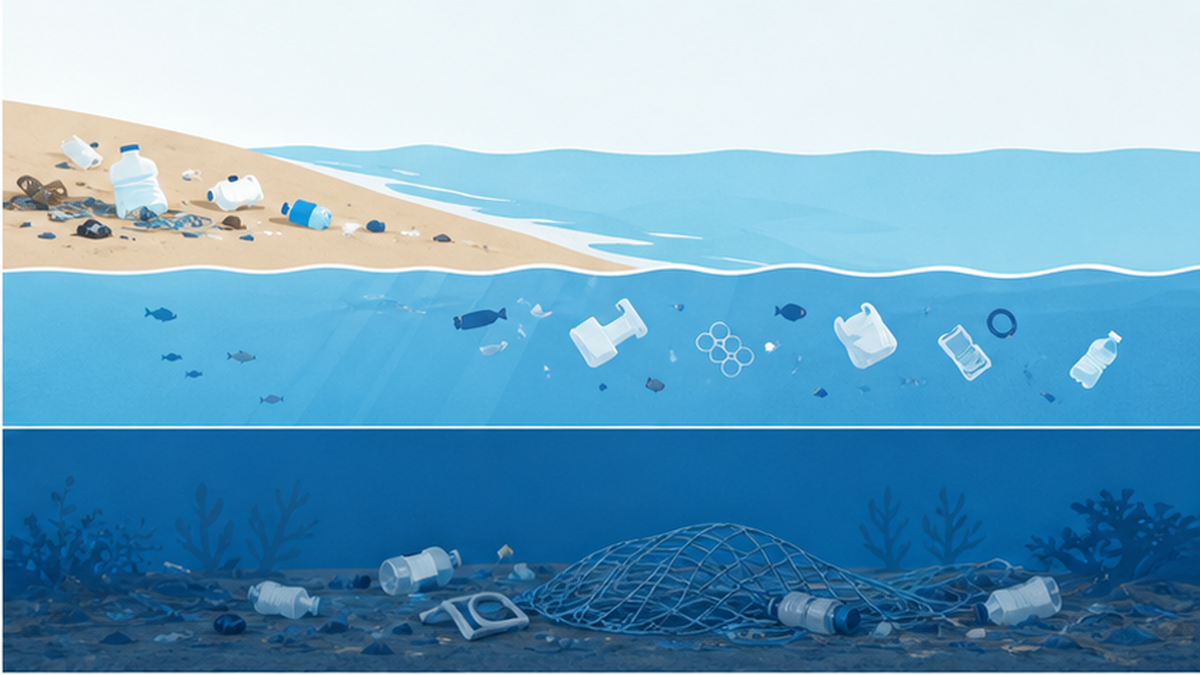
Fishing gear: a source that can't be overlooked
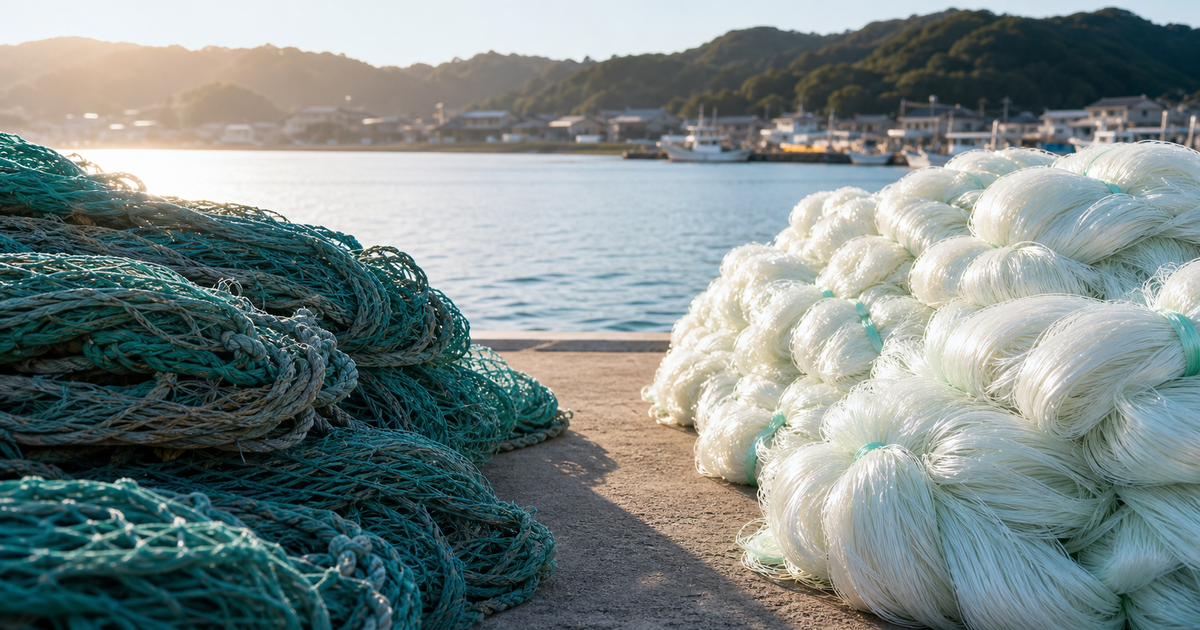
When people think of ocean plastic, they tend to picture PET bottles or plastic bags, but fishing gear left in the sea — nets, ropes, and the like — accounts for a large share too. Fishing gear that has been lost at sea and drifts on, uncollected, is called ghost gear, and even after leaving human hands it continues to entangle fish and sea turtles, causing what's known as "ghost fishing." For more detail, see our article explaining the ghost gear problem as well.
This fishing gear is, in fact, something of a model student as recycling material. It is often made of a single material such as nylon or polyethylene, so if it is sorted by type when collected, it readily becomes a high-quality recycled material. That's why much of the recycled nylon discussed later uses discarded fishing nets as its main raw material. It's a good illustration of the dual nature of ocean plastic use — a nuisance that can also become a high-quality resource.
The people and systems behind collection
The people supporting collection on the ground are local volunteers, fishers, NGOs, and companies. Fishers in particular are working, region by region, on initiatives to bring back ocean debris caught in their nets during operations — a system for cooperating in ocean debris collection. When companies pay for this kind of collection, it creates an economic benefit for the collectors too, generating a virtuous cycle that keeps the activity going.
| Collection location | Main collectors | Debris commonly found | Ease of handling as material |
|---|---|---|---|
| Beach (washed up) | Volunteers, local governments | Bottles, containers, fragments | Medium (sand and salt adhere) |
| Sea surface (floating) | NGOs, corporate collection vessels | Floating plastic, foam-type items | Low to medium (advanced degradation) |
| Seabed, fishing grounds | Fishers, divers | Nets, ropes, fishing gear | High (often single material) |
| Coast, rivers (OBP) | Local businesses, companies | General household-origin plastic | Medium to high (stable, pre-degradation) |
Why "separating" matters
Plastics differ in melting point and properties depending on type, and when mixed together, the quality of the recycled material drops sharply. Whether PET bottles, PE shopping bags, and nylon or PE fishing nets can be properly sorted has a huge influence on what happens later in turning them into products. How carefully sorting is done at the collection stage is what determines the success or failure of ocean plastic recycling.
The process: from collected plastic to finished product
Collected ocean plastic cannot simply be melted down and turned into a product as-is. Getting from a state where it has been exposed to seawater and mixed with sand, organisms, and other plastics, back to usable material, requires a number of labor-intensive steps. Understanding this reveals why ocean plastic products tend to be more expensive.
Sorting and washing: the unglamorous starting point
The first hurdle is sorting and washing by type. Plastic that has come from the sea is thickly coated in sand, shells, seaweed, and the troublesome culprit — salt. If salt and impurities are left on, they can damage processing machinery and reduce the strength of the recycled material, so it has to be carefully washed off. On top of that, the process of separating materials such as PET, PE, and nylon relies heavily on manual labor, taking both time and money.
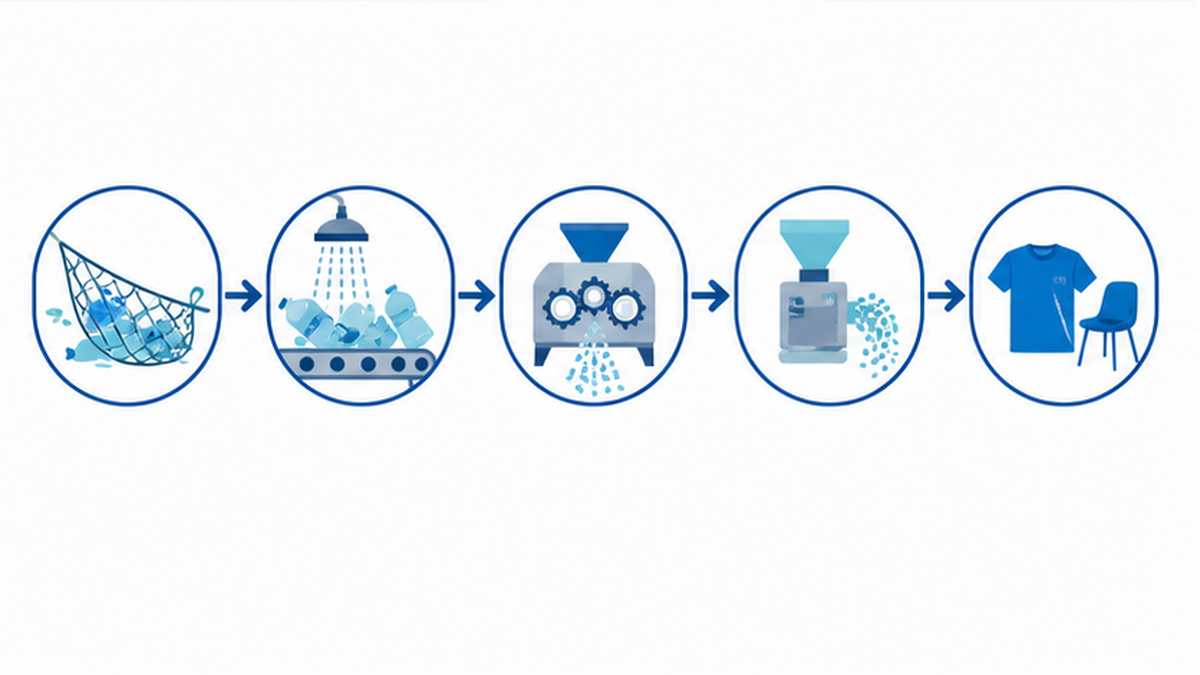
From crushing to pellets, and then to material
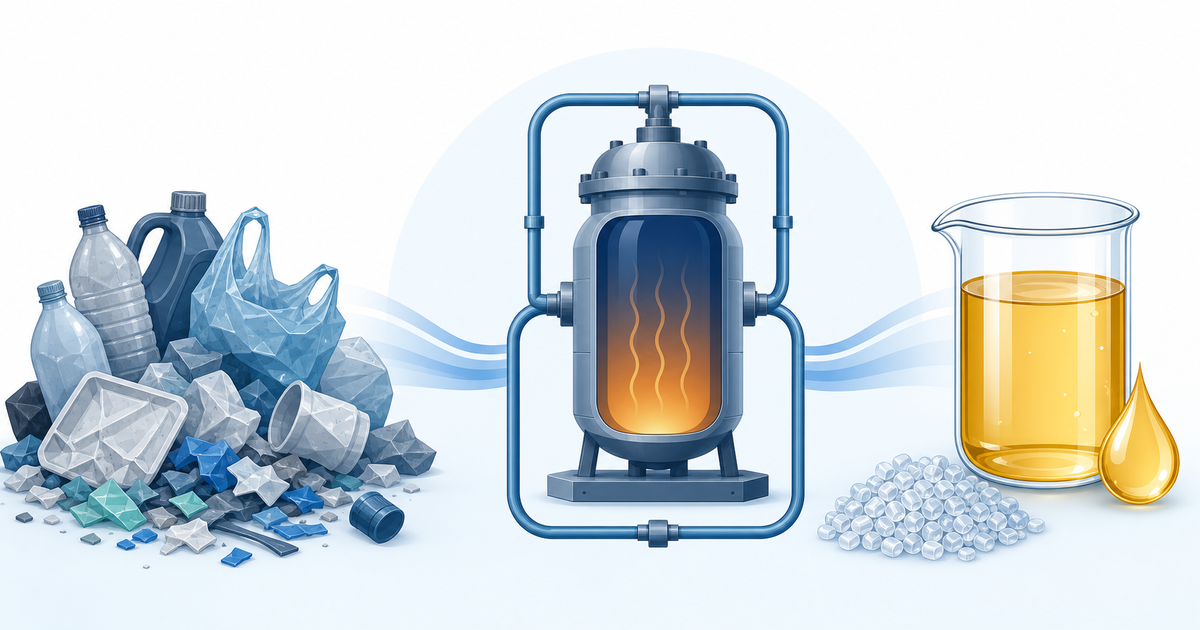
Washed plastic is finely crushed into flakes, then melted with heat and processed into small grains (pellets). These pellets become the raw material for making new products. To turn them into fiber, the pellets are melted and spun into thread, becoming polyester or nylon yarn that is woven into fabric. To make resin products, the pellets are poured into molds and formed.
What matters here is that many products are not 100% ocean plastic — instead, to keep quality stable, they mix in new raw material (virgin plastic) or other recycled material. Because ocean plastic is often degraded, it tends to lack sufficient strength on its own, so blending it secures a quality that can withstand practical use. The fact that so many labels read "○% ocean plastic content" reflects this technical reality.
Chemical recycling: a new option
The method described so far — crushing, melting, and reforming — is called material recycling. While convenient, it has the weakness that quality drops a little each time it's melted down. In contrast, chemical recycling — which chemically breaks plastic down to the level of its original raw materials before rebuilding it — is drawing attention. It is resistant to dirt and degradation and can more easily achieve quality close to virgin material, but the challenge is that it requires large-scale equipment and consumes significant energy and cost.
| Method | Mechanism | Strengths | Challenges |
|---|---|---|---|
| Material recycling | Crush, melt, and reform | Relatively simple, low-cost equipment | Quality gradually declines; vulnerable to mixed materials |
| Chemical recycling | Chemically decompose back into raw material | Resistant to dirt and degradation, high quality | Requires large equipment, energy, and cost |
| Thermal recycling | Burn to recover heat and electricity | Can process even dirty plastic | Strictly speaking, combustion rather than regeneration |
Is "burning" recycling too, in a broad sense?
In Japan, "thermal recycling" — burning plastic to recover heat energy — is counted as recycling in a broad sense, which inflates the recycling rate figures. Internationally, however, this is generally distinguished from recycling and classified instead as heat recovery (energy recovery). When looking at statistics, paying attention to whether combustion is included in the count helps you grasp the real picture.
Use in apparel — sneakers, clothing, and a second life for fishing nets
The field where ocean plastic use has bloomed most spectacularly is apparel. The technology for making polyester and nylon yarn from PET bottles and fishing nets is mature, and a great many products have been released, from sports brands to fashion brands.
Adidas x Parley: a track record of over 30 million pairs
The symbol of this field is the collaboration between sporting-goods giant Adidas and the environmental organization Parley for the Oceans. Together, they developed a material recycled from ocean plastic, "PARLEY OCEAN PLASTIC," and have rolled out shoes made using it. Production started at just 7,000 pairs at launch in 2015, expanded to a scale of 11 million pairs by 2019, and the two are said to have sold more than 30 million pairs cumulatively to date.
What matters is the fact that these actually sold. Sustainability lies not in people buying something simply because it's good for the environment, but in a product being chosen for its design and performance while also carrying environmental value. Adidas positions sustainable products as a future growth opportunity, demonstrating that environmental action can become a pillar of business rather than merely a cost. That said, it's worth understanding calmly that much of the material is OBP collected along the coast, rather than plastic actually recovered from the open sea.
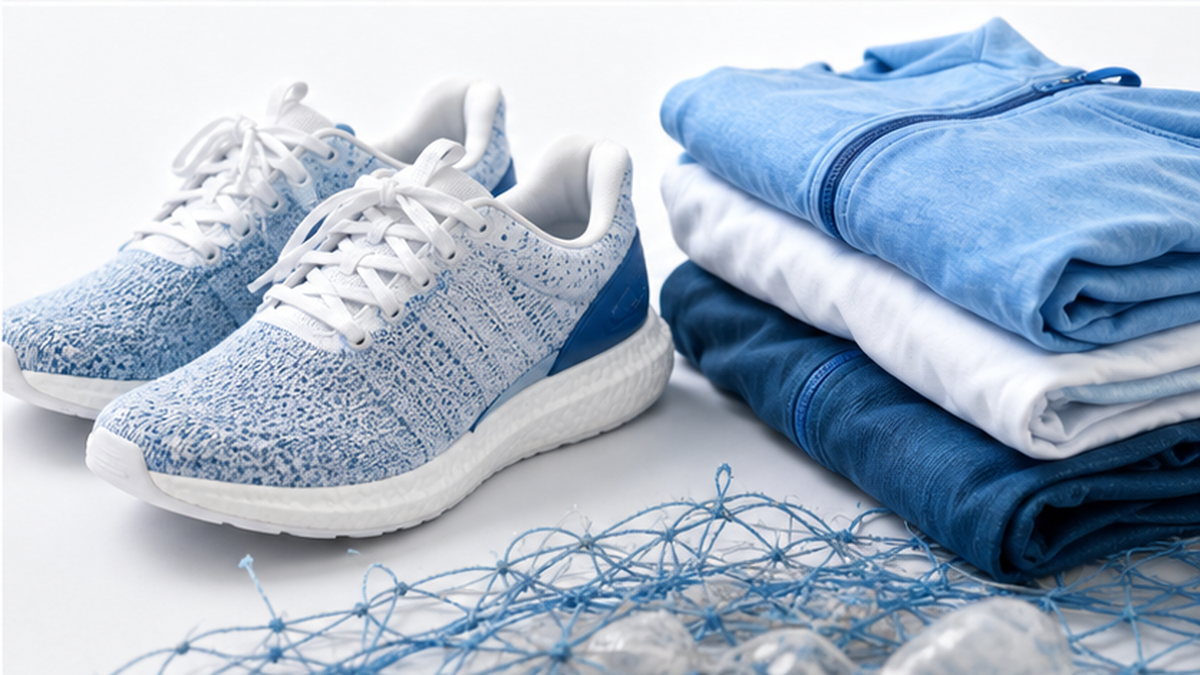
Fishing nets become high-quality recycled nylon
One material especially prized for its quality in the apparel field is recycled nylon made from discarded fishing nets. "ECONYL," offered by Italy's Aquafil, is a nylon material made by regenerating plastic recovered from the sea, discarded fishing nets, and fiber waste, and is used in a wide range of products including swimwear, bags, and outerwear. Its quality is said to be nearly equal to virgin nylon, and its strength is that it can be regenerated over and over again.
Japan is active in this area too. Itochu Corporation has teamed up with Aquafil, the maker of ECONYL, and fishing net manufacturers to jointly develop and sell fishing nets made with recycled nylon. This is a form of horizontal recycling — "from fishing gear back to fishing gear" — in which used-up nets are collected and turned back into nets again. It's a sensible system that circulates a nuisance that could otherwise become ghost gear back into a resource.
Fashion brands championing "zero ocean waste"
In the fashion world too, brands have emerged that fly the banner of using ocean plastic. Spain's "ECOALF" has adopted the slogan "Because there is no Planet B," working with Mediterranean fishers to collect seabed debris and turning it into jackets and bags. It is a leading example of circular fashion, connecting the collection site and the product-making process into a single story.
One reason ocean plastic is easy to use in apparel is that PET — the material PET bottles are made of, and the raw material for polyester — is well suited to being turned into fiber. The technology to crush and melt beverage bottles and spin them into thread is already well established, making it easy to bring bottles collected from the sea into this same flow. That said, ocean plastic still requires more effort in sorting and washing than bottles collected on land, due to degradation and contamination from labels and caps mixed in.
At the same time, apparel products carry a separate issue: every time they're washed, microplastic fiber fragments flow out into the wastewater. Clothing made to reduce ocean debris could end up generating new microplastics during use. That's exactly why recycled textiles going forward need to be considered together with countermeasures such as using laundry bags and wastewater filters.
Characteristics of apparel use
- The technology for making yarn from PET bottles and fishing nets is mature, making products easy to bring to market
- Adidas x Parley has both scale and business viability, with over 30 million pairs sold cumulatively
- Recycled nylon from discarded fishing nets (such as ECONYL) offers quality close to virgin material
- The circle of circulation is expanding, including horizontal recycling "from fishing gear back to fishing gear"
Into goods, everyday items, and art — ocean plastic in daily life
Though less glamorous than apparel, the use of ocean plastic is also steadily spreading in the field of everyday goods and sundries that are close to our daily lives. If anything, it's everyday items — seen over and over — that have the power to root environmental awareness into daily life.
Japanese goods that make the most of color
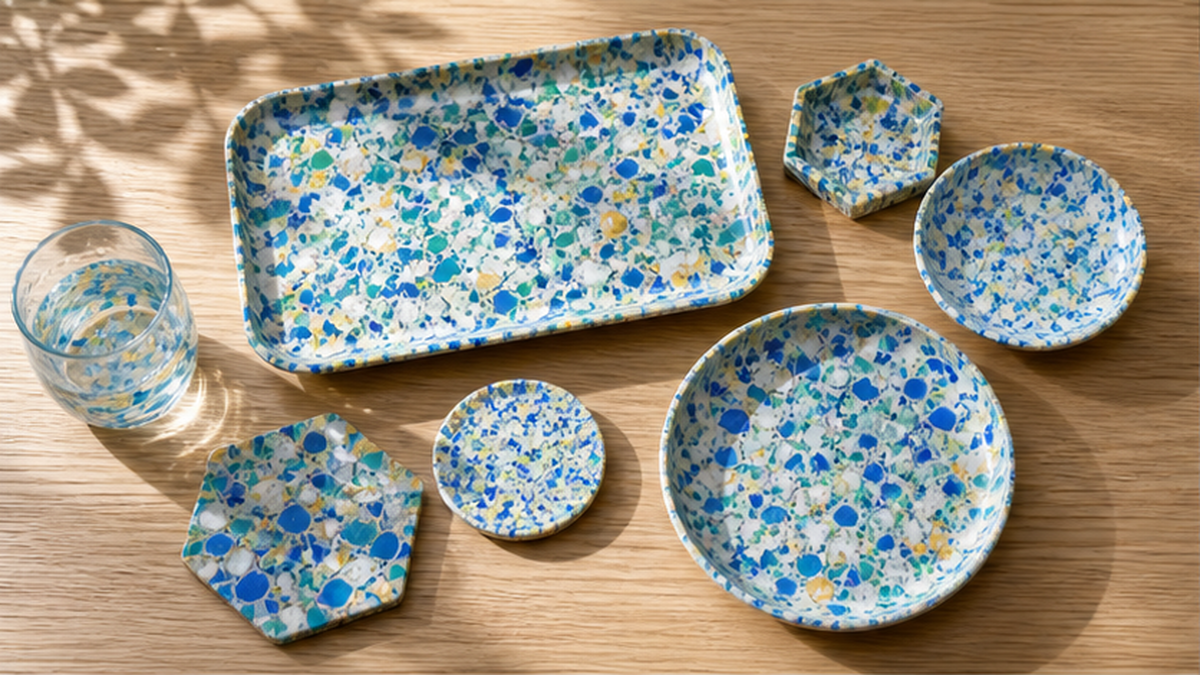
Unique products are also emerging from small and midsize Japanese companies and designers. Technolab Inc.'s "buøy" line is a set of trays and small items made by compressing and molding colorful plastic that washed ashore and broke apart, characterized by vivid patterns that hardly look like they were once trash. Locally rooted art pieces are also being made around the country, such as wall decorations made from ocean plastic collected at Senkoji Beach in Kanazawa, Ishikawa Prefecture.
What these goods have in common is the idea of using mixed colors as a "pattern" rather than hiding them away. Color unevenness, which would be a flaw in industrial products that demand uniformity, is instead turned into the charm of a one-of-a-kind item. It's a triumph of an idea that turns the weakness of ocean plastic — the effort sorting requires — to its advantage.
From stationery to promotional items
Adoption of ocean plastic material is also advancing in the field of corporate promotional items and stationery. Pens, rulers, and clear folders made from recycled collected ocean plastic or fishery-related plastic waste are being chosen as tools for companies to demonstrate their commitment to the SDGs. When an environmental story is embedded in familiar stationery, it can give the recipient a reason to think about ocean issues.
Trust backed by the Eco Mark
In Japan, the Japan Environment Association's Eco Mark includes a category (Product Category No. 164) covering products that recycle ocean plastic waste and fishery-related plastic waste. It applies to a wide range of products, from stationery and everyday goods to textile products and fishing materials, and having third-party certification makes it easier for consumers to tell whether a product "really does" use ocean plastic. It serves as one signpost when buying.
Upcycling: a way of adding value
The key concept in the goods and art fields is upcycling. Rather than simply turning material back into the same thing it was (recycling), it means adding design and ideas to transform it into something of even greater value. A plain fishing net becomes a stylish bag; a broken buoy becomes an interior decoration. The higher the value added, the more room there is to pay for collection, which also becomes a source of funding for cleanup activities.
A characteristic of these small-scale efforts is that they pair well with local revitalization. If collection, manufacturing, and sales are all completed locally, coastal towns gain new jobs and tourism appeal. Turning the negative resource of ocean debris into local pride — even without flash, the field of goods and everyday items holds real power to spread this cycle while drawing in daily life and local communities.
Adoption in home appliances and electronics — circulation progressing out of sight
Less flashy compared to clothing and goods, but the use of ocean plastic and recycled resin is also steadily advancing in home appliances and electronics. This is a field with a high quality bar, since it demands high strength, durability, and flame resistance. Precisely because of that, the fact that it's being used here tells us that recycled plastic quality is approaching a practical standard.
The world's first laptop using ocean plastic
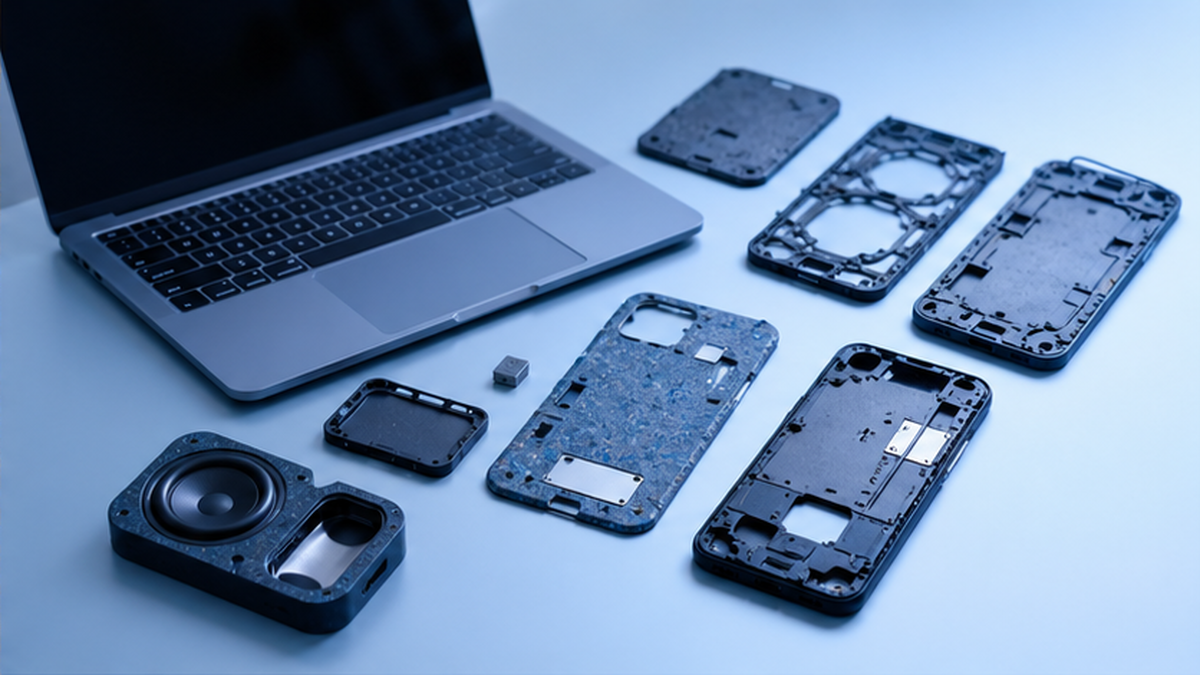
The emblematic example is the U.S.-based Hewlett-Packard (HP)'s laptop, the "HP Elite Dragonfly." This product is said to be the world's first laptop to adopt ocean-derived recycled plastic in its components: recycled plastic makes up 50% of the plastic in the built-in speaker, and 5% of that came from ocean plastic. The numbers alone look modest, but incorporating ocean plastic into the interior of precision equipment was, in itself, a major step forward.
What deserves attention here is the honest number, "5%." Ocean plastic varies greatly in quality, making it hard to use in large amounts in precision equipment. That's exactly why disclosing the actual content ratio without exaggeration builds trust. Rather than misleading consumers with overstated claims, accurately conveying what has actually been achieved is what matters in this field.
Turning appliances back into appliances: Japan's horizontal recycling
While not ocean plastic itself, the recycled resin efforts being pursued by Japanese appliance makers shouldn't be overlooked. The Panasonic Group used approximately 15,000 tonnes of recycled resin in its products in fiscal 2024, bringing the cumulative total since fiscal 2022 to 45,000 tonnes. It has built a system that circulates resources within a product category, achieving "horizontal recycling" — turning plastic collected from used appliances back into appliances — at a scale of roughly 8,000 tonnes a year.
This know-how in recycled plastic from appliances is also applicable to using ocean plastic. That's because the technology for sorting out dirty or degraded plastic and finishing it into recycled resin of stable quality addresses exactly the area where ocean plastic struggles. The sorting, washing, and modification technologies cultivated through appliance recycling are expected to become a foundation supporting the productization of ocean plastic.
The difficulty of using recycled plastic in appliances isn't limited to appearance and strength. Regulations require TV and refrigerator casings to resist burning (flame resistance), and durability to withstand years of use is also essential. Using degraded ocean plastic as-is risks failing to meet these performance requirements. For that reason, the appliance field takes a cautious approach, gradually expanding the scope of adoption — for example, adding additives to recycled plastic to make up for lost performance, or starting with hard-to-see internal components.
| Field | Representative examples | Characteristics of ocean plastic content | Quality bar |
|---|---|---|---|
| Apparel | Sneakers, swimwear, jackets | OBP and discarded fishing nets turned into yarn; higher content ratios | Medium |
| Goods and everyday items | Trays, stationery, interior items | Color unevenness can be used as a pattern | Low to medium |
| Appliances and electronics | PC parts, casings | Lower content ratios; honest disclosure is key | High (strength, flame resistance) |
The significance of the appliance field
- Adoption in appliances, which demand high strength and flame resistance, is proof that recycled plastic quality is improving
- HP's world-first laptop honestly disclosed its 5% content ratio, showing a stance of not exaggerating
- Panasonic uses 15,000 tonnes of recycled resin a year, advancing horizontal recycling
- Sorting and modification technology from appliance recycling could become a foundation for ocean plastic use
Quality and cost — the two barriers ocean plastic products must clear
We've introduced glamorous examples so far, but turning ocean plastic into products faces barriers that are far from small: quality and cost, two inseparable challenges. Knowing this reality is essential for taking a grounded view — neither overly hopeful nor overly disappointed.
Quality lost to seawater and UV light
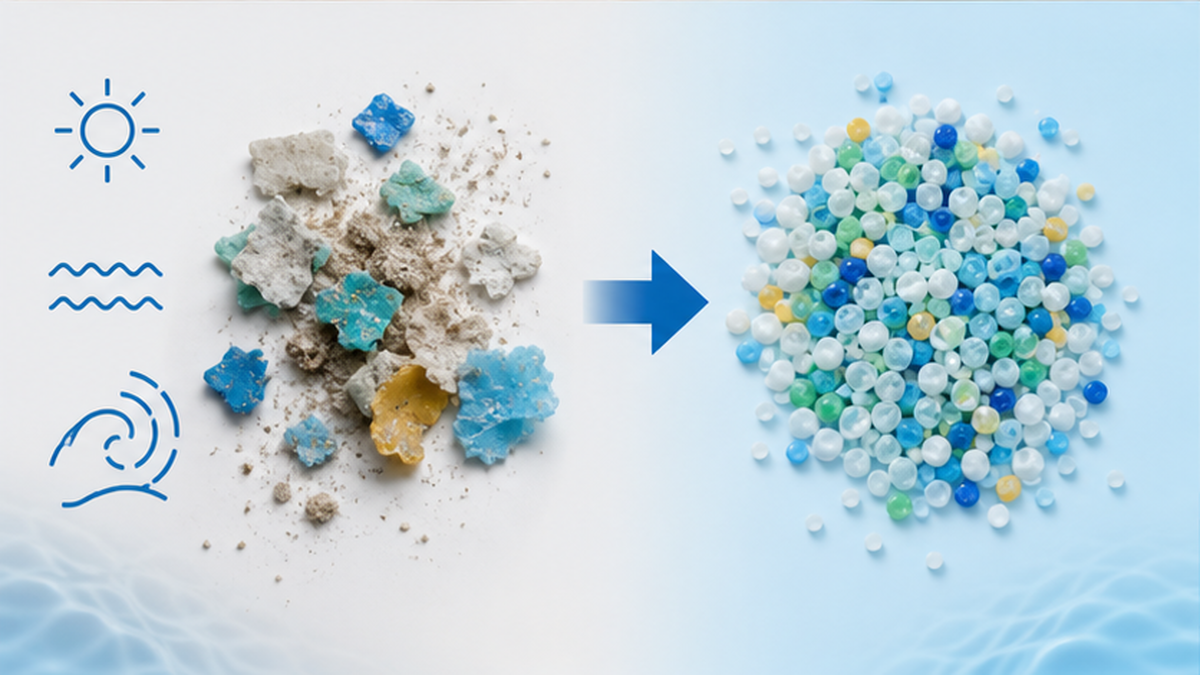
The first barrier is quality. Plastic exposed to seawater for a long time absorbs a lot of salt and impurities, making it hard to recycle at ordinary processing facilities. On top of that, UV light and wave action break molecular bonds, causing degradation and a loss of strength and toughness. Compared with the same plastic collected on land, ocean plastic is often a "damaged raw material."
Because of this degradation, it's hard to maintain high quality with ocean plastic alone, so as mentioned earlier, it's common practice to blend it with virgin material or other recycled material. Residual salt can also cause defects during molding, generate harmful gas when incinerated, or damage furnaces. It isn't a case of "pick it up from the sea and it's ready to use" — restoring it to a usable state is itself a technical challenge.
Effort translates directly into price
The second barrier is cost. Turning ocean plastic into products piles up steps that land-based plastic doesn't require — collection, transport, sorting, washing, and reprocessing. Much of the sorting and washing in particular relies on manual labor, and the volume that can be collected isn't stable either. Because virgin plastic made from crude oil is cheap thanks to mass production, ocean plastic, with all its extra effort, inevitably ends up at a price disadvantage.
Behind recycled material's inability to compete with virgin material on price lie unstable supply volumes, uneven quality, and a mismatch between supply and demand. A "chicken and egg" relationship — where you can't get a stable supply of raw material even if you want to make something, or where buyers are hard to find even if you do make it — is making it difficult for the market to expand. Ocean plastic products being pricier isn't a matter of corporate attitude; it stems from structural circumstances.
| Challenge | Specific details | Impact on product-making |
|---|---|---|
| Salt and impurities | Salt, sand, and organisms from seawater | Higher washing costs, equipment degradation, molding defects |
| Material degradation | Molecular breakdown from UV light and waves | Insufficient strength requires blending with virgin material |
| Sorting burden | Manual sorting of mixed, diverse plastics | Higher labor costs; processing volume unstable |
| Unstable supply | Collection volume affected by weather and region | Mass production difficult, raising unit cost |
| Insufficient demand | Higher price makes buyers hard to find | Hard to recoup investment, stalling adoption |
Technology and systems for clearing the barriers
Even so, efforts to overcome these barriers are advancing. The practical rollout of chemical recycling that resists dirt and degradation, automated sorting using AI and sensors, and building systems where companies pay for collection to stabilize supply. Beyond that, creating value that gets "chosen even at a higher price" through certification systems and brand storytelling is also an effective way to overcome the cost barrier. With technology and systems as two wheels working together, reality is slowly moving forward.
What tends to be overlooked is the perspective of designing collection itself as a "business." Beach cleanups inevitably tend to rely on well-meaning volunteers, but if collected plastic gets a stable buyer and price, collection becomes ongoing work. If local fishers and businesses can earn income as collectors, cleanup activities shift from a one-off event into an enterprise rooted in the local economy. Turning ocean plastic into products is, in fact, also about nurturing the economic zone that supports collection.
Don't take "100% ocean plastic" at face value
If a product prominently states "100% ocean plastic used," pause for a moment to check. Technically, it's hard to maintain practical quality using only degraded ocean plastic, and many products are made blended with other materials. Whether the content ratio is disclosed, and whether the plastic is actually recovered from the sea or is OBP (Ocean Bound Plastic), serves as a benchmark for judging a company's honesty.
Choosing wisely — an eye for spotting greenwashing
The more ocean plastic products spread, the more our "ability to choose" as consumers is tested. That's because, unfortunately, greenwashing (projecting only an environmentally friendly image without the substance to back it up) does exist. Choosing correctly supports companies that are genuinely making an effort, and helps the market grow in a healthy way.
Three checkpoints for reading labels
When choosing a product, checking the following three points will reveal the reality. No difficult knowledge is required — just look at whether the package or product page states honest information.
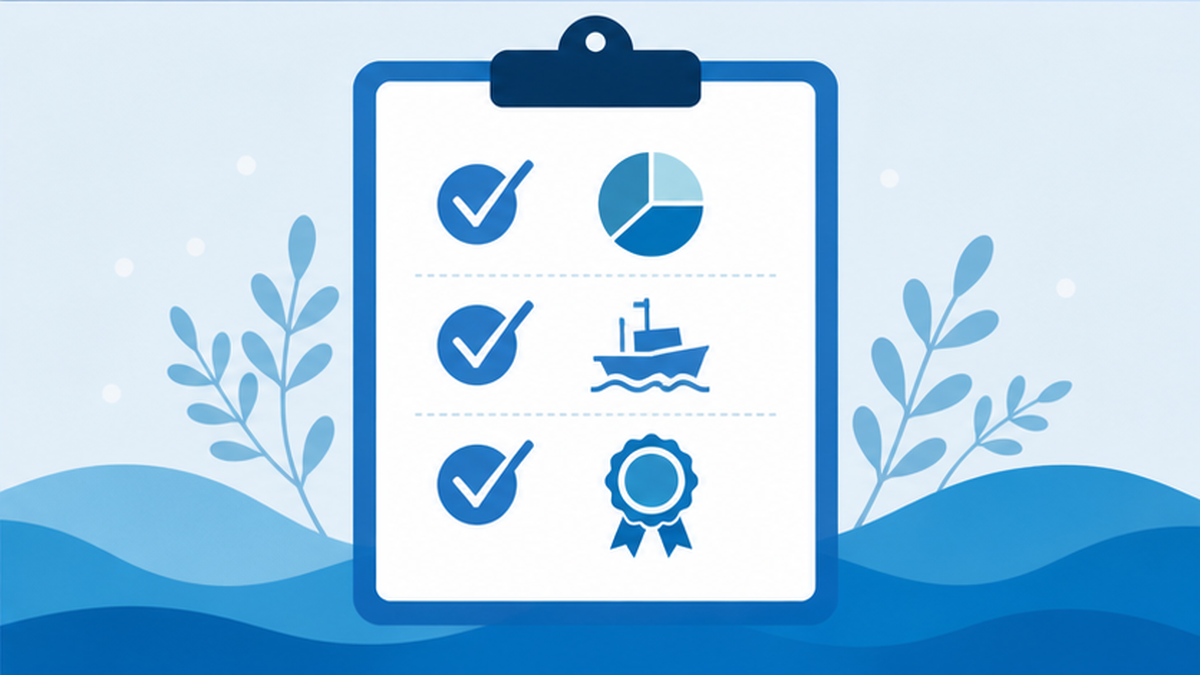
- Is the content ratio stated clearly: is there a specific number, such as "○% content," rather than just "contains ocean plastic"?
- Can you tell where it was collected: is it explained whether the plastic was actually recovered from the sea, or is OBP collected along the coast?
- Is there third-party certification: is it backed by an outside certification, such as Japan's Eco Mark?
What you can do besides buying
Choosing ocean plastic products is important, but it isn't the only solution. In fact, the most effective thing is not letting plastic flow into the sea in the first place. Reducing single-use plastic, sorting waste properly, and taking part in local beach cleanups — these actions lighten the burden of collection itself. Ocean health is also deeply connected to carbon absorption through blue carbon and to the effects of climate change, such as marine heatwaves, so reducing plastic also means protecting that foundation.
And when it comes to fishing gear, one of the sources of ocean debris, our understanding of it is also a form of support. Learning about the ghost gear problem and supporting the efforts of companies and fishers advancing the collection and recycling of discarded nets is also a legitimate form of participation. Each person's small choices and actions become the force that keeps the virtuous cycle of collection and productization turning.
5 actions you can start today
- When buying ocean plastic products, check the three points: content ratio, origin, and certification
- Use the presence of third-party certification, such as the Eco Mark, as a signpost
- Reduce single-use plastic and sort it correctly
- Try joining a local beach or river cleanup at least once
- Tell your family and friends the difference between "ocean plastic-derived" and "OBP"
Don't demand perfection
Finally, what matters is not demanding perfection. If we dismiss efforts as "not enough" just because the ocean plastic content ratio is low or because OBP is being used, companies willing to take on the challenge won't be able to grow. Working honestly within what's currently possible, and gradually raising the content ratio and quality — a stance of supporting that steady progress is exactly what moves the market forward. Support grounded in accurate information, rather than criticism, is what benefits the ocean.
Conclusion — toward a cycle of collecting, restoring, and continuing to use
The effort to turn plastic collected from the sea into products is not merely a cleanup activity — it is a practice of the circular economy, giving waste value and keeping it in circulation. Faced with the serious reality that an estimated 8 million tonnes flows in every year, this is one half of the two-wheeled approach that advances both "turning off the tap" (preventing outflow) and "mopping up the spilled water" (collecting and putting it to use).
Adidas's more than 30 million pairs of sneakers cumulatively sold, the high-quality recycled nylon born from discarded fishing nets, HP's world-first laptop using ocean plastic, and Japanese goods that turn color unevenness into character. Each field takes a different form, yet all embody the same hope: "ocean trash can become a resource." At the same time, we need to understand, without looking away, the real barriers of quality — caused by salt and degradation — and cost, where effort translates directly into price.
That's exactly why our role as consumers is so significant. Check the content ratio, origin, and certification, and choose wisely. And above all, live in a way that keeps plastic from flowing into the sea. Support efforts that move forward honestly, even if imperfect. Each of these individual choices makes the cycle of collecting, restoring, and continuing to use all the more certain.
Summary of this article
- Turning ocean plastic into products is a circular-economy practice that gives waste value and makes collection sustainable
- It becomes material through a labor-intensive process: collection → sorting/washing → crushing/pelletizing
- Use is expanding into apparel (Adidas over 30 million pairs cumulatively), goods, and appliances
- Quality issues from salt and degradation, and cost stemming from effort, are the two barriers to wider adoption
- Understanding the difference between "ocean plastic-derived" and "OBP (Ocean Bound Plastic)" is important
- Checking content ratio, collection origin, and third-party certification, and choosing wisely, helps grow the market
- More than buying, actions like not letting plastic flow out, reducing it, and sorting it lead to a fundamental solution
References and sources
- Ministry of the Environment, Japan - FY2020 White Paper on the Environment, Sound Material-Cycle Society, and Biodiversity (Ocean plastic pollution and biodiversity loss)
- Ministry of the Environment, Japan - FY2019 White Paper on the Environment (Domestic and international circumstances and trends surrounding plastic)
- Ministry of the Environment, Japan - Japan's efforts on ocean plastic waste and the "Plastics Smart" campaign
- Ministry of the Environment, Japan - Fishing net recycling (material from Nichimo Co., Ltd. R&D Office)
- WWF Japan - About the ocean plastic problem
- WWF Japan - Ghost gear prevention measures and regional projects
- Nippon Foundation, Umi to Nihon PROJECT - The reality of ocean debris you should know now
- Eco Mark Office (Japan Environment Association) - Product Category No. 164: Products recycling ocean plastic waste and fishery-related plastic waste
- Sustainable Japan - HP launches world's first PC using recycled ocean plastic material
- Itochu Corporation - On the joint development and launch of sales of fishing nets using recycled nylon (ECONYL)
* Listed in order of reliability: government/academic institutions > peer-reviewed papers > specialized organizations > reliable media