The ocean below 1,000 meters, where sunlight disappears entirely, is often imagined as a pitch-black world nearly devoid of life. In reality, however, it is one of the most "light-filled" spaces on Earth, twinkling with countless points of blue light. A 17-year survey of the deep sea off the coast of California by the Monterey Bay Aquarium Research Institute (MBARI) in the United States found that fully 76% of the organisms observed from the surface down to 4,000 meters possessed the ability to produce their own light. In the deep sea, glowing is not a rare talent — it is standard equipment.
This light generates no heat, unlike a light bulb. It is an extremely efficient "cold light" produced by chemical reactions within living organisms. The key players are luciferin, the light-emitting substance, and luciferase, the enzyme that oxidizes it. Deep-sea creatures use this chemistry to lure prey, deceive predators, and communicate with one another in the darkness.
This article carefully traces the science of light in the deep sea — from the chemical mechanism of bioluminescence, to counter-illumination (which erases an animal's own shadow with light), the symbiosis between anglerfish and luminous bacteria, and the firefly squid and the Nobel Prize-winning GFP (green fluorescent protein). By the time you finish reading, the supposedly dark deep sea should look like an entirely different world — one with its own unique glow.
What you'll learn in this article
- Bioluminescence is a cold light, producing almost no heat, created when luciferase (an enzyme) oxidizes luciferin (a light-emitting substance)
- Why blue light — the wavelength that travels best through seawater — is favored in the deep sea, making bioluminescence the norm rather than the exception
- The sophisticated camouflage mechanism called "counter-illumination," which erases an animal's shadow with light
- How the purposes of bioluminescence can be broadly organized into three categories: "luring," "threat/defense," and "communication"
- The remarkable symbiosis in which the anglerfish does not glow itself but is lit by luminous bacteria taken in from seawater
- How Japanese research on luminous organisms such as the firefly squid and the crystal jellyfish's GFP has transformed medicine and life science
The Deep Sea Is a World of Glowing Creatures
The average depth of the ocean is about 3,800 meters. Sunlight penetrates, even faintly, only down to about the top 200 meters. From 200 to 1,000 meters is the dimly lit "twilight zone" (mesopelagic zone), and below 1,000 meters lies the "bathypelagic zone" and beyond — a world of total darkness where no light reaches at all. In terms of the volume of habitable space on Earth, most of it is occupied by this dark ocean. In other words, darkness is actually the "normal" habitat on Earth.
Creatures fill that darkness with their own light. MBARI researchers Séverine Martini and Steven Haddock analyzed more than 350,000 observations recorded over 17 years by remotely operated vehicles (ROVs), reporting in 2017 that 76% of organisms living in the water column possess the ability to glow. Among gelatinous animals such as jellyfish, that figure exceeds 97%. Even among bottom-dwelling creatures, 45% glow. Deep-sea adaptation is discussed in detail in our article on the astonishing adaptations of deep-sea creatures, but bioluminescence stands out as an especially widely shared "common language" among these adaptations.
Bioluminescence and Fluorescence Are Entirely Different
First, it's worth clarifying the difference between "bioluminescence" and "fluorescence." Bioluminescence is a phenomenon in which an organism creates its own light through an internal chemical reaction. It glows even in complete darkness, with no external light source needed. Fluorescence, on the other hand, is a phenomenon in which an organism absorbs light from an external source (such as ultraviolet or blue light) and re-emits it as a different color; without a light source, it does not glow at all. The light produced by deep-sea anglerfish and firefly squid is bioluminescence, while the green glow of corals and crystal jellyfish under blue light is fluorescence. This article's subject is the former: bioluminescence.
Key Terms in This Article
- Bioluminescence — a phenomenon in which an organism creates its own light through a chemical reaction; a "cold light" that produces almost no heat
- Luciferin — the light-emitting material (luminous substrate) / Luciferase — the enzyme that oxidizes it
- Coelenterazine — a representative luciferin widely shared among marine organisms
- Counter-illumination — camouflage that erases an animal's own shadow by making its underside glow
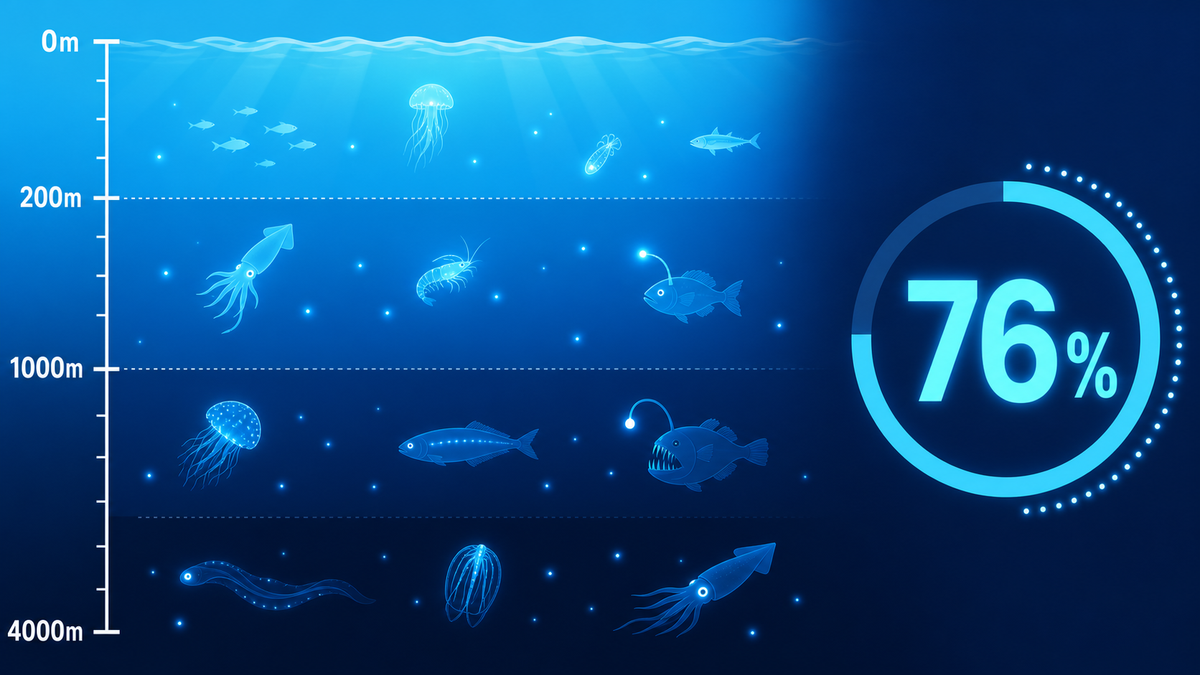
On land, glowing organisms such as fireflies and luminous mushrooms are a small minority, but in the ocean the situation is entirely different. Bioluminescence occurs across more than a dozen animal phyla and is thought to have evolved independently at least 40 times over the course of evolutionary history — a textbook example of what evolutionary biology calls "convergent evolution." Organisms with entirely different ancestries, faced with the same challenge of the dark ocean, all arrived at the same answer: glow. This fact alone speaks to just how useful light is as a tool in the deep sea.
Why We Still Know So Little About the Deep Sea
Even though bioluminescence is so commonplace in this world, the ecology of the deep sea remains largely unexplored. The first reason is simply how difficult it is to get there. At a depth of 1,000 meters, the seafloor experiences pressure of about 100 kilograms per square centimeter — a place unreachable without crewed submersibles or remotely operated vehicles. Second, the act of observation itself interferes with bioluminescence. When a submersible's powerful lights are switched on, creatures adapted to darkness flee, and delicate luminous displays become invisible.
In recent years, progress in high-sensitivity cameras that can capture faint light over long periods without strong illumination, and in quiet observation equipment that doesn't disturb the animals, has gradually begun to record natural luminous behavior that was previously invisible. In Japan, too, the crewed research submersible Shinkai 6500, operated by the Japan Agency for Marine-Earth Science and Technology (JAMSTEC), has contributed to elucidating deep-sea ecology. Deep-sea bioluminescence is a cutting-edge research topic that is only now beginning to reveal itself, thanks to advancing technology.
Bioluminescence isn't limited to the deep sea, either. The bluish-white glow sometimes seen at the water's edge on summer nights — known in Japanese as "yakouchu" (noctiluca) — comes from a type of dinoflagellate, a phytoplankton that glows when disturbed. From the surface down to the deep-sea floor, bioluminescence spans every depth of the ocean. Trace the light we see on the beach back to its origin, and you arrive at the very same chemical reaction found in the deep sea.
The Chemistry That Creates Light: Luciferin and Luciferase
At the heart of bioluminescence lies a surprisingly simple chemical reaction. An enzyme called "luciferase" acts on a light-emitting substance called "luciferin," using oxygen to oxidize it. This produces "oxyluciferin" in a high-energy excited state, and as it returns to a stable state, it releases the excess energy as light. Both "luciferin" and "luciferase" are generic terms derived from the Latin word lucifer, meaning "light-bringer"; the actual molecular structures differ from species to species.
The True Nature of Heatless "Cold Light"
An incandescent light bulb converts most of its electrical energy into heat, with only a small fraction becoming light. Bioluminescence, by contrast, is an extremely efficient form of light production that converts almost all of the energy generated by the reaction directly into light. Because it produces almost no heat, it is called "cold light." In the energy-poor deep sea, this mechanism — which yields light without wasting precious nutrients as heat — is a rational, energy-saving design well suited to life in a world of darkness.
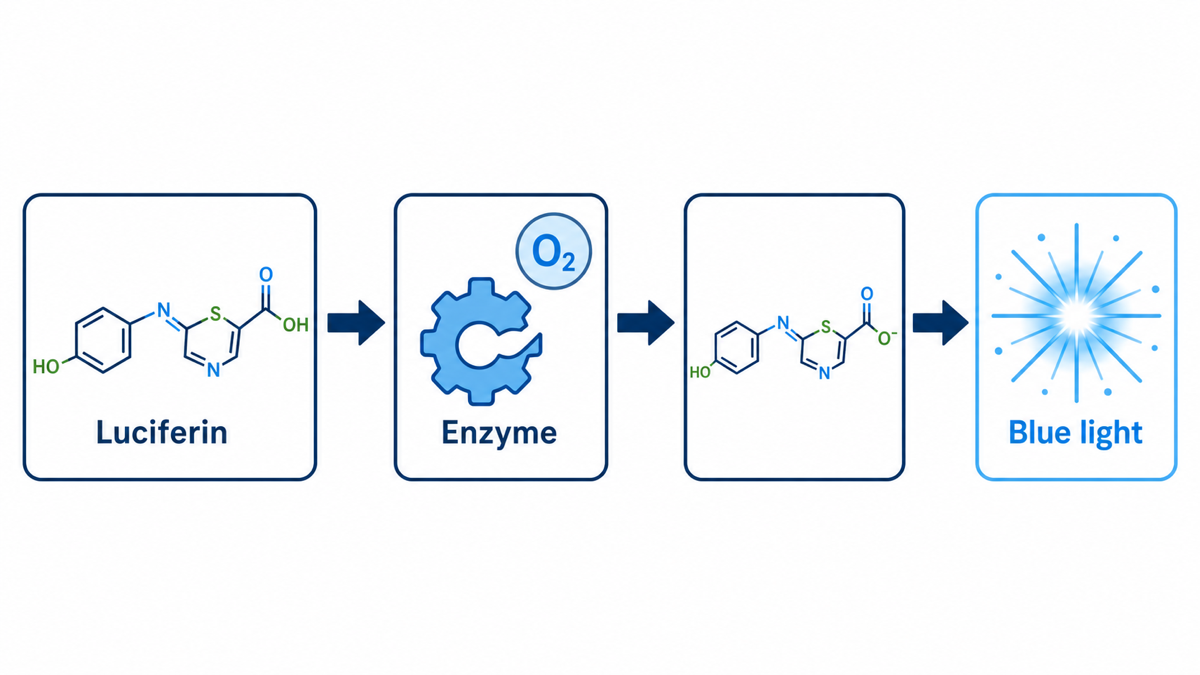
It's also important that the reaction requires oxygen. Because bioluminescence is fundamentally an oxidation reaction that consumes oxygen, it is harder to produce light in oxygen-poor environments. Conversely, many deep-sea organisms finely control the on/off switching of the reaction using enzymes or calcium ions, glowing only when needed and only in the parts of the body needed. Some creatures, such as the firefly squid, can flash the light organs across their entire body independently, meaning light is not simply "turned on" but is a precisely controlled signal.
Comparing this to the firefly's light on land makes the sophistication of this mechanism clear. The firefly's luciferin requires ATP (the energy currency of living things) to be oxidized. Taking advantage of this property, firefly luciferin and luciferase have been put to practical use as reagents in hygiene tests that measure the amount of bacteria in food or the environment by the intensity of the light produced. Bioluminescence serves not only to illuminate darkness but also as a "ruler" that converts invisible quantities into the brightness of light.
The way creatures glow is far from uniform, either. Light used to lure prey stays steadily lit, light used to confuse predators flashes explosively and briefly, and light used for communication flickers in a rhythm fixed for each species. By combining the speed of the chemical reaction, the opening and closing of light organs, and control via nerves and hormones, creatures command a rich "grammar of light." The very same luciferin–luciferase reaction can convey completely different messages depending on how it is used.
Coelenterazine: The Ocean's Common Language
Land fireflies and marine creatures use different types of luciferin. Especially widespread in the ocean is a luciferin called "coelenterazine." Cnidarians such as jellyfish, comb jellies, squid, shrimp, copepods, brittle stars, and even many fish — organisms with entirely different evolutionary lineages — all share coelenterazine as the raw material for their light.
Interestingly, many creatures cannot produce coelenterazine on their own. Many fish and crustaceans are thought to take in coelenterazine from copepods and other prey they eat, then reuse it for their own bioluminescence. In other words, the raw material for light circulates through the ocean via the food chain — bioluminescence is built upon a kind of ecosystem network. If the connections among marine creatures were to break down, this relay of light could well be disrupted.
This perspective — that "the raw material of light circulates" — is also important when thinking about deep-sea conservation. Pollution from ocean plastic and chemical substances could gradually affect the small plankton that carry the raw material for light, and the chain of creatures that feed on them. How things break down and circulate in the ocean is also discussed in our article on the degradation of ocean plastic, and bioluminescence, too, is a delicate phenomenon built upon this invisible web of connections.
| Light System | Representative Organisms | Characteristics |
|---|---|---|
| Luciferin + luciferase (self-produced) | Firefly squid, lanternfish, many luminous fish | Reaction controlled within the organism's own cells; capable of rapid flashing |
| Coelenterazine-based | Jellyfish, comb jellies, squid, shrimp, fish, and more | Widely shared in the ocean; many species obtain the raw material from prey |
| Symbiosis with luminous bacteria | Anglerfish, lanterneye fish, pinecone fish | Do not glow themselves; rely on symbiotic bacteria to produce light |
What Determines the Color of the Light?
The color (wavelength) of bioluminescence is determined by the combination of luciferin and luciferase, and by the presence or absence of another light-receiving protein (such as a fluorescent protein). Blue is overwhelmingly dominant in the deep sea, but there are exceptions — some fish emit red light visible only to themselves — showing that the color of light itself can be a strategy.
Why Blue Light? The Deep Sea's Light Environment
Looking at photographs of deep-sea bioluminescence, most of it appears blue or blue-green. Red or yellow light is rarely seen. This is no coincidence — it has a clear basis in the physical properties of seawater.
Blue Light Travels Farthest
Sunlight contains light of many different colors (wavelengths), but water does not transmit them all equally. Long-wavelength red light is absorbed by water almost immediately, disappearing almost entirely within just a few to a dozen or so meters of depth. Orange, yellow, and green light penetrate progressively deeper as their wavelengths shorten, and blue light — around 470 nanometers — travels the farthest of all. This is precisely why the ocean appears blue, and why the world turns increasingly blue the deeper one dives.
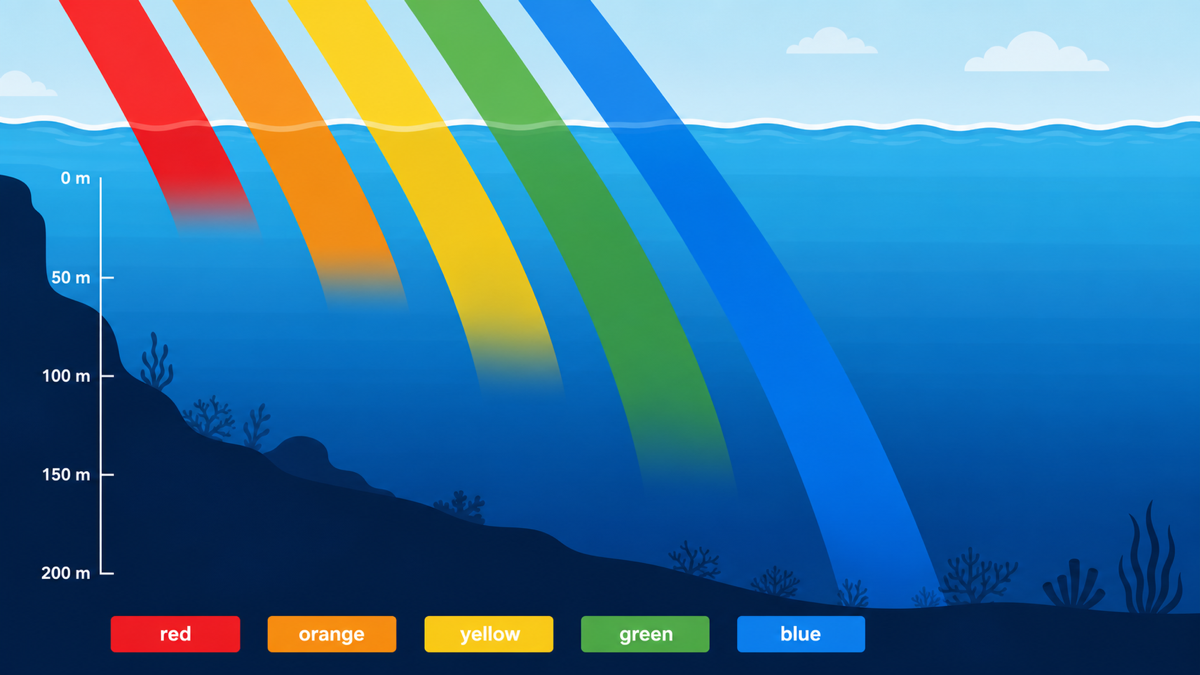
The fact that deep-sea creatures glow blue is a result of evolution adapting to this light environment. However much light an animal emits, if it uses easily absorbed red light, the signal won't travel far. By using blue light, which attenuates the least, an animal can send a signal as far as possible with minimal energy. Furthermore, the eyes of many deep-sea creatures are optimized to be most sensitive to this blue wavelength. With both the emitting and receiving sides tuned to blue, the deep sea has become an efficient "blue communication network."
This "concentration on blue" is also clearly reflected in the evolution of vision. The retinas of deep-sea fish eyes contain abundant blue-sensitive visual pigments (such as rhodopsin), and quite a few species have lost the ability to perceive red light altogether. While we on land see a world full of vivid color, for many deep-sea fish, the world is closer to a simple contrast of light and dark — essentially, "can blue be seen, or not." That is precisely why how an animal uses blue bioluminescence becomes a strategy of life and death.
The "Secret Flashlight" That Uses Red Light
Precisely because nearly all deep-sea creatures are tuned to blue, a strategy has emerged to exploit that very fact. Some deep-sea fish (such as certain loosejaws, in the order Stomiiformes closely related to the viperfish) possess light organs that emit red light, which is hard for other creatures to see, and moreover have eyes capable of perceiving that red light themselves. While everything around them can see only blue, they alone can quietly illuminate their prey with a red searchlight — a mechanism much like a night-vision scope. This evolutionary arms race over the color of light continues in the deep sea even today.
The evolution of light color also reflects the sheer complexity of deep-sea ecosystems. Some species emit light that is slightly greener, others a deeper blue, even within the blue spectrum, and it has been suggested that such differences may contribute to "niche partitioning" among creatures living in the same layer of the ocean. Precisely because it is a largely monotonous world dominated by blue, even a slight difference in color can carry significant meaning as information for deep-sea creatures.
The Link Between Ocean Color and Climate
The color the ocean appears to be depends not only on the water itself but also on the amount of phytoplankton present. Changes in sea surface temperature alter plankton distribution, which in turn changes ocean color and ecosystems. See also our article on rising sea temperatures and changing ocean currents for a look at how the deep-sea environment is part of a planetary-scale system.
Hiding with Light: Counter-Illumination
Among the many ways deep-sea creatures use bioluminescence, the most sophisticated is a camouflage technique called "counter-illumination." Rather than standing out with light, this seemingly paradoxical technique makes an animal disappear using light — and it is a trump card for survival in the dimly lit mesopelagic zone.
A Shadow Visible from Below
In the mesopelagic zone, 200 to 1,000 meters deep, faint blue light filters down from above. For a predator looking upward from below in this layer, prey appears as a "dark silhouette" — a shadow — against the bright background. No matter how transparent an animal's body becomes, the shadow cast by its internal organs and the thickness of its body cannot be erased. This shadow is precisely the weakness that can prove fatal in the deep sea.
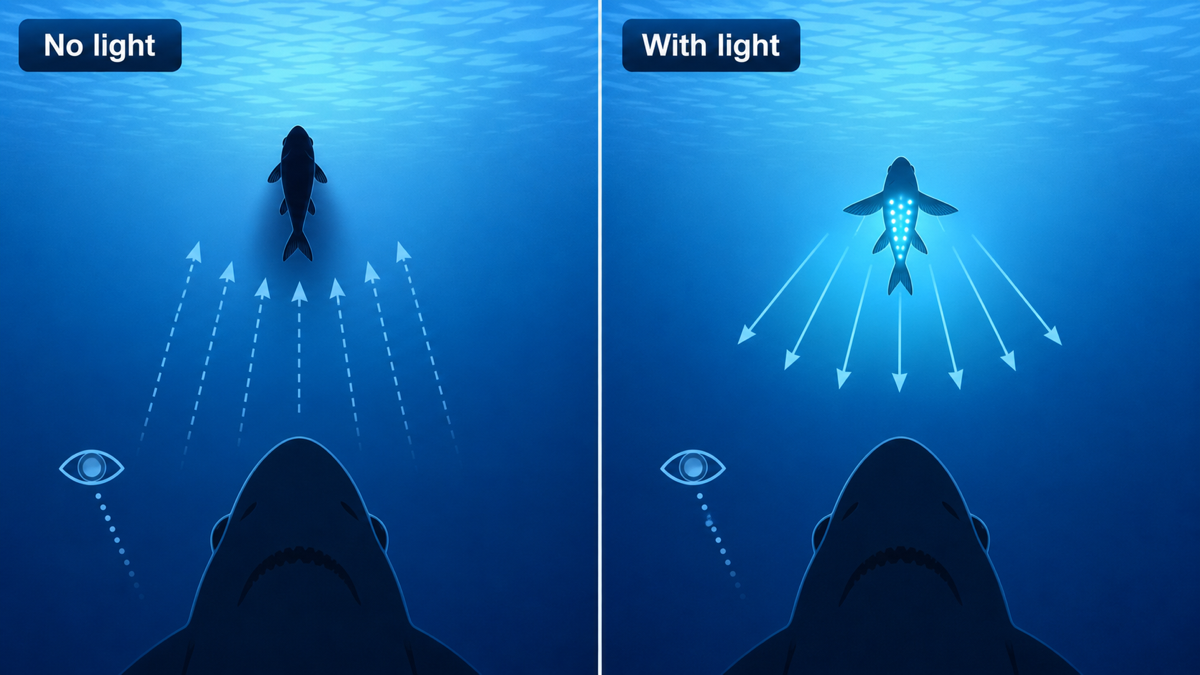
Counter-illumination is the technique that erases this shadow. Fish and squid emit blue light downward from light organs arranged along the underside of their bodies. By adjusting the brightness to match exactly the faint light filtering down from above, the shadow of the prey blends seamlessly into the brightness of the background, as seen by a predator looking up from below. It's as if the animal lets the background light pass right through its body, erasing its own presence entirely.
Lanternfish: Matching Even the Direction of Light
Lanternfish, it turns out, occupy an enormous role within the ecosystem. They hide in the deep sea during the day, rise nearly to the surface at night to feed on plankton, and return to the depths again at dawn, repeating this "diel vertical migration" every day. This is said to be one of the largest migrations of any creature on Earth, and it also plays a role in transporting carbon from the surface to the deep sea. This enormous number of lanternfish all live while concealing themselves using counter-illumination.
The masters of this technique are lanternfish (family Myctophidae), among the most numerous fish in the deep sea. Inside the light organs arranged along a lanternfish's belly are mirror-like tissues that reflect light, allowing light emitted from luminous cells to be directed precisely toward a target direction. It is also thought that lanternfish sense the surrounding brightness and continuously adjust the intensity of their light accordingly. Rather than simply glowing, they precisely control both brightness and direction — a remarkably sophisticated optical device built by a living organism.
The same strategy is widely seen in loosejaws, firefly squid, and various deep-sea shrimp and squid. Counter-illumination is a standard survival technique of the deep sea, independently evolved many times over as a solution to the "twilight battlefield" of the mesopelagic zone.
An Imperfect Camouflage
This technique does have weaknesses, however. The faint light from above changes constantly, depending on the height of the sun, cloud cover, and water turbidity. If the brightness of the counter-illumination fails to match it, the animal ends up standing out instead. Also, if viewed from an angle rather than directly from below, the angle of the light may not align properly, revealing the shadow. Some predators are thought to have evolved eyes sensitive to light of a different color than the blue typically used by luminous organisms, specifically in order to detect these subtle mismatches.
In other words, an endless arms race over light plays out in the deep sea between those who hide and those who see through the hiding. The precision of counter-illumination is the culmination of this long evolutionary back-and-forth. The clever construction of deep-sea creatures' bodies is explored further in the astonishing adaptations of deep-sea creatures, but this technique of manipulating light stands out as an especially ingenious adaptation.
Key Points of Counter-Illumination
- For predators looking up from below, an animal's own "shadow" becomes its greatest weakness
- Light organs on the underside emit light downward, matched in brightness to the faint light from above
- Lanternfish control even the direction of the light using reflective tissue, adjusting it to match ambient brightness
- Independently evolved multiple times across fish, squid, shrimp, and other lineages
Luring, Threatening, and Communicating: The Three Purposes of Bioluminescence
Beyond "hiding" uses like counter-illumination, bioluminescence broadly serves three additional purposes: luring prey, threatening or defending against predators, and communicating with companions. It is not uncommon for a single creature to switch between these uses depending on the situation.
1. Luring: Using Light to Attract Prey
In the dark deep sea, luring prey with light is far more efficient than swimming around searching for it. The most famous example is the anglerfish, discussed in more detail later. It lights up the tip of a "fishing rod" extending from its head, swallowing whole any small fish or shrimp that gather toward the light. Some species, such as certain loosejaws, light up areas inside the mouth or near the teeth, luring prey right up to their jaws. Light is a trap set in the darkness.
The light used for luring is a clever illusion, making prey believe "there's food here." In the nutrient-poor deep sea, creatures are instinctively drawn toward light and the small organisms that gather around it. Predators exploit this tendency, lighting a decoy with minimal energy and simply waiting in ambush. Rather than moving around themselves, they let prey come to them — an extremely rational hunting method in a deep sea where energy conservation is paramount.
2. Threat and Defense: Using Light to Protect Oneself
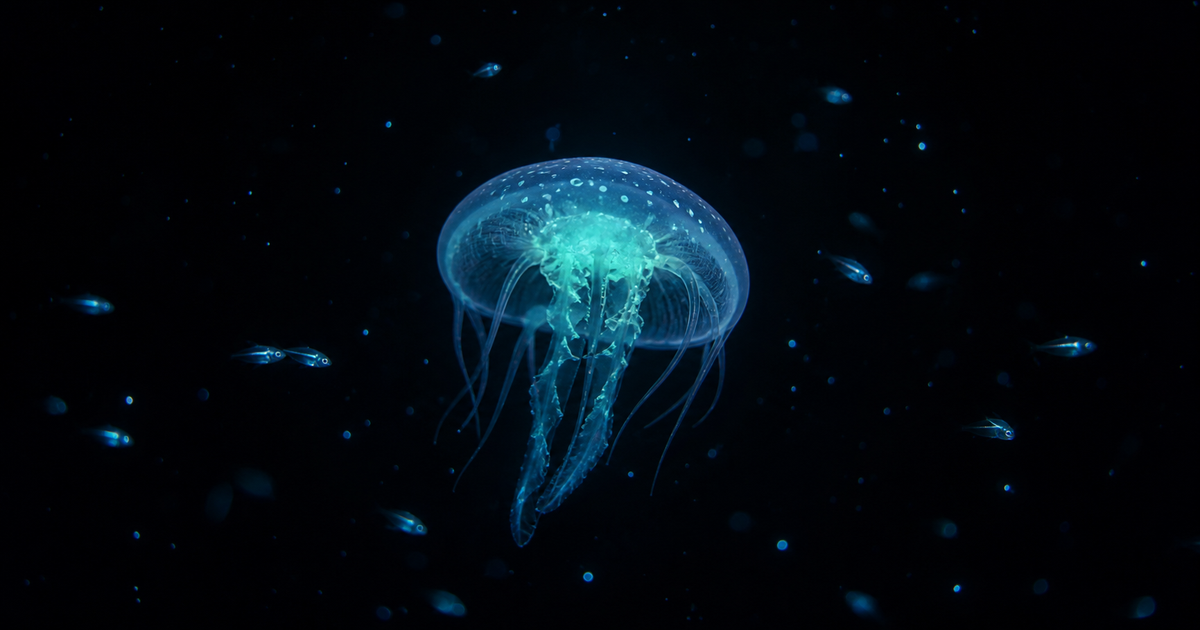
Light can also serve as a weapon of self-defense. The most ingenious strategy is known as the "burglar alarm." The Atolla jellyfish (nicknamed the "alarm jelly") puts on a flashy luminous display when attacked by a predator, sending light spinning around the rim of its body. This light is meant to summon an even larger predator to attack whatever is attacking it. It's a calculated tactic: by shouting, in effect, "a burglar has broken in," the jellyfish gets a stronger predator to deal with its attacker.
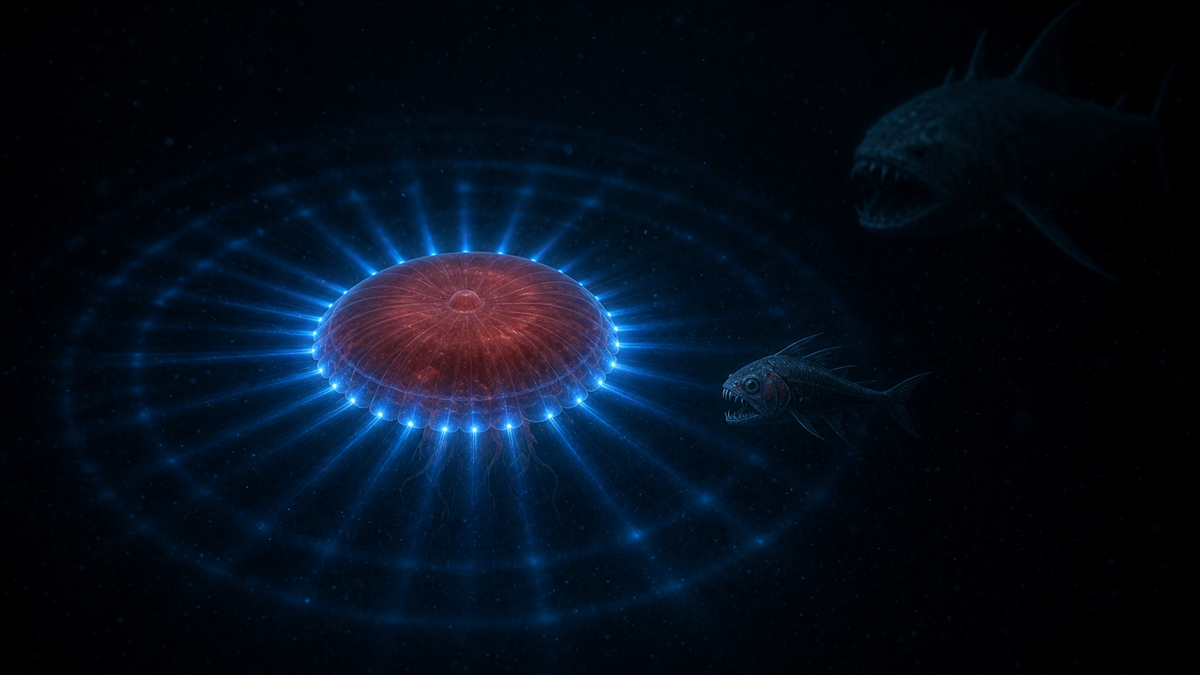
There are more direct defenses, too. Some deep-sea shrimp expel a glowing liquid from glands near the mouth, blinding predators and buying time to escape. It's the same idea as a shallow-water squid releasing ink, except in the dark deep sea, light itself serves as the smokescreen instead of ink. Other creatures detach a glowing part of their body to distract a predator's attention while they make their escape. Light is a versatile tool of self-defense in the deep sea.
Some creatures even turn their own light into a decoy. Certain sea cucumbers and polychaete worms, when sensing danger, deliberately detach a glowing part of their body; while it continues to glow as a decoy, the main body slips away into the darkness. It's the same idea as a lizard shedding its tail to escape, done instead with light. Deep-sea creatures use light not only as a tool "to stand out," but with remarkable versatility, as a tool "to deceive the enemy's eye" as well.
3. Communication: Talking with Companions Through Light
In the pitch-black deep sea, light serves as an even more powerful cue than sound or scent for finding companions. Patterns of bioluminescence, flashing rhythms, and the location of light organs differ from species to species, and are thought to help males and females of the same species recognize one another in the darkness and find mates. Lanternfish have species-specific arrangements of light organs on their tails and heads, which are believed to function like "name tags," allowing individuals to identify members of their own species. Light is a wordless conversation in the ocean.
Some species are known to have different arrangements or patterns of light organs between males and females. In the vast, sparsely populated deep sea, simply encountering a potential mate is difficult in itself, so a reliable mechanism for distinguishing members of the opposite sex within the same species is directly tied to survival. A species-specific luminous pattern, functioning almost like a "code," is also thought to help avoid the wasted effort of mating with the wrong species. Light is both a signal of romance and a marker that guards the boundaries between species.
| Purpose | Mechanism | Representative Organisms |
|---|---|---|
| Luring | Attracting prey with a glowing decoy or light near the mouth | Anglerfish, loosejaws |
| Threat/Defense | Burglar alarm displays, luminous smokescreens, glowing decoys | Atolla jellyfish, deep-sea shrimp |
| Communication | Species-specific luminous patterns to identify conspecifics and mates | Lanternfish, firefly squid |
| Camouflage | Erasing shadows with light from the underside (counter-illumination) | Lanternfish, firefly squid, deep-sea shrimp |
The Anglerfish and Its Symbiosis with Luminous Bacteria
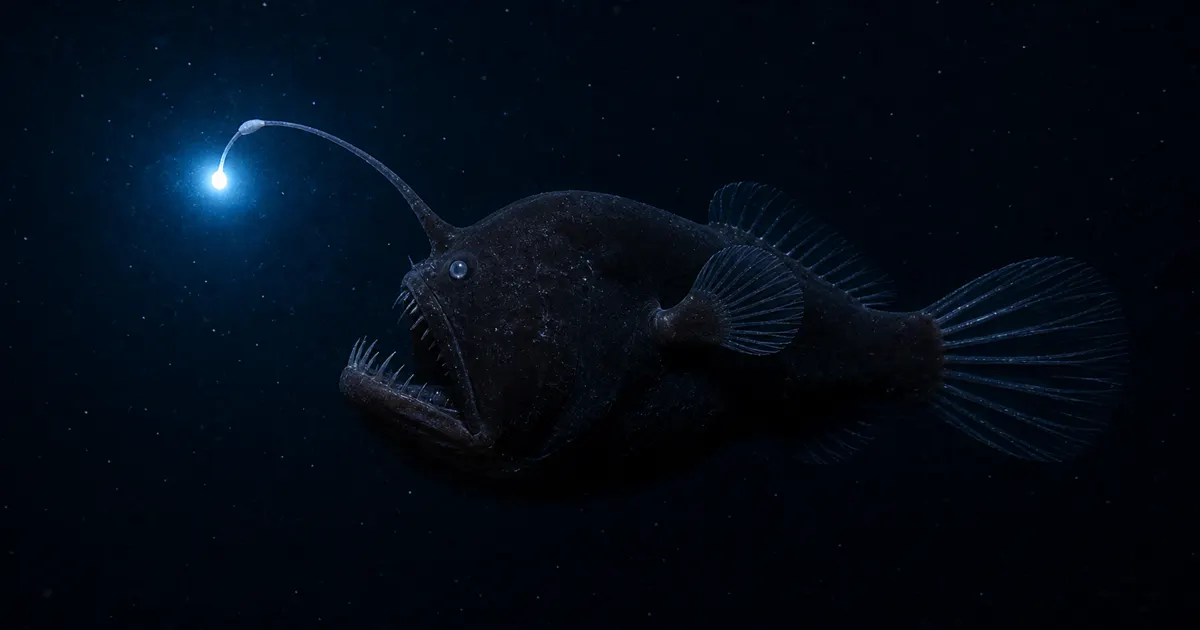
No discussion of deep-sea bioluminescence is complete without the anglerfish. The image of a glowing "lantern" dangling from a stalk on its head, luring prey with that light, is famous — but the true nature of that light hides a surprising mechanism. The anglerfish itself does not actually glow.
It Was Bacteria That Were Glowing
The anglerfish's "lantern" is more properly called the "esca," a luminous organ. Inside the esca live dense colonies of luminous bacteria (relatives of Vibrio, in the family Vibrionaceae). It is these bacteria that are actually glowing; the anglerfish provides the esca as a "culture chamber" for the bacteria, letting them do the glowing on its behalf. The esca has a semi-transparent structure, allowing the light produced by the bacteria inside to shine through to the outside. The tissue that conducts light to the tip is also said to function somewhat like an optical fiber.
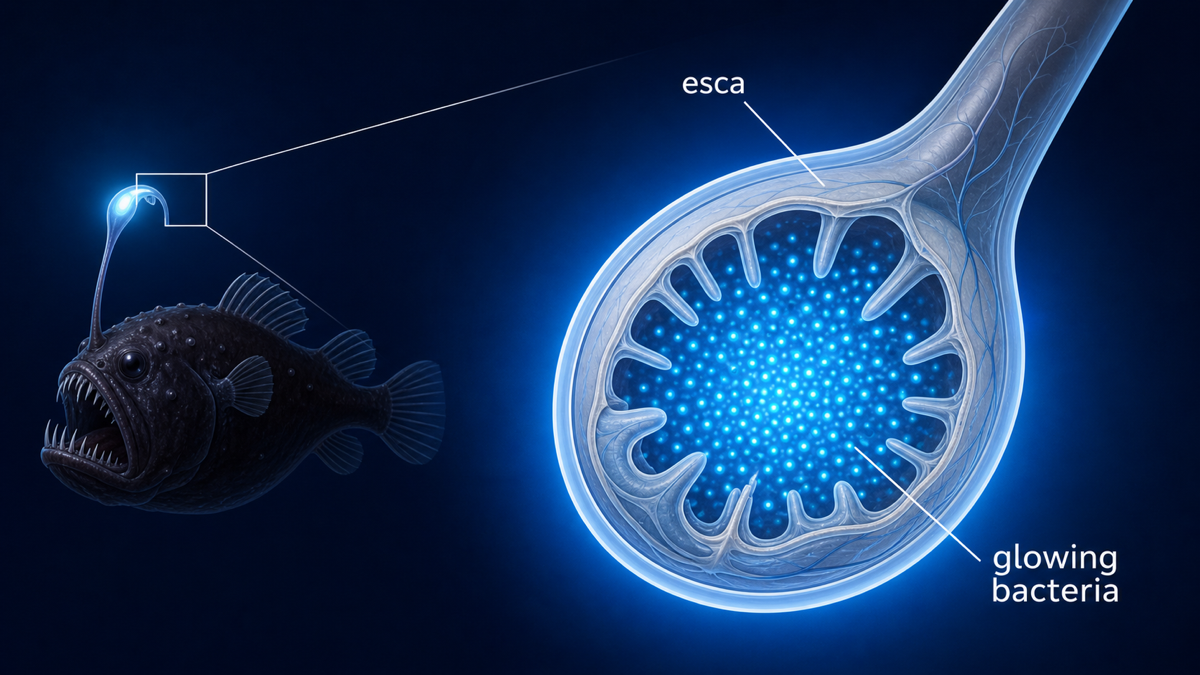
This relationship is a mutually beneficial symbiosis. The anglerfish provides the bacteria with oxygen, nutrients, and a safe home. In return, the bacteria supply a steady light to lure prey. In the darkness of the deep sea, fish and bacteria join forces to survive — bioluminescence, in this case, is built upon a cooperative relationship that crosses the boundary between species. Within the esca, the host is also thought to exert some degree of control over the quantity of bacteria and the intensity of the light, suggesting a relationship that is not mere cohabitation but something closer to a tightly coordinated "joint operation."
Glowing Bacteria Come from Seawater
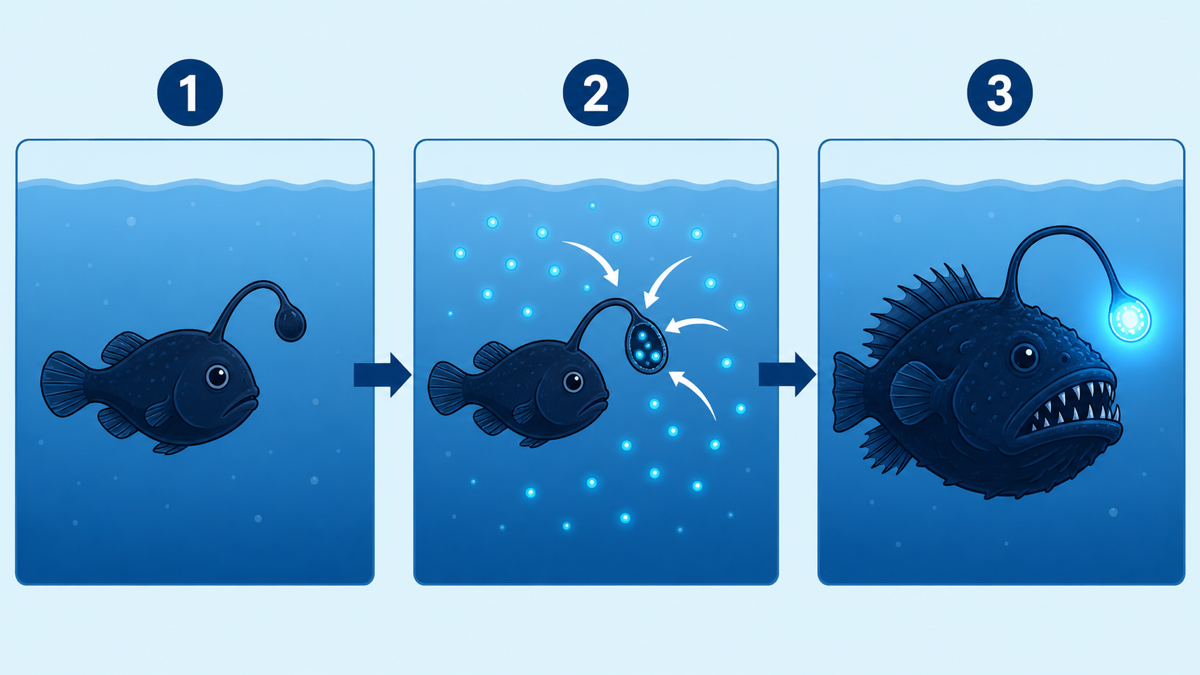
For a long time, where these luminous bacteria came from remained a mystery. Are they passed down from parent to offspring, or acquired from the environment? A 2019 study by a team including researchers from Cornell University in the United States strongly indicated that this symbiotic bacterium is taken in from the surrounding seawater around the anglerfish. Newly hatched larvae do not yet have any bacteria; it is thought that, as they grow, they take in luminous bacteria from the seawater into their esca, making them lifelong partners.
What's even more remarkable is that the genomes of these symbiotic bacteria have become dramatically smaller compared to their free-living relatives in the open ocean. One study reported an example in which the genome had shrunk to roughly half its original size. Living inside a host, the bacteria appear to be gradually losing the genes needed to survive independently — the evolution of symbiosis is, quite literally, being written into the bacteria's genes as we speak.
Only Females Glow — The Strange Life of the Male
In fact, only female anglerfish possess the glowing "lantern." Males are far smaller, and in many species lack light organs altogether — their life history is quite remarkable. When a male finds a female in the vast deep sea, he bites onto her body; eventually their skin fuses, and even their blood vessels connect, merging the two into one. The male stops feeding on his own and becomes something like an organ that merely supplies sperm, drawing nutrients from the female. This extreme reproductive strategy is also thought to be an adaptation for reliably producing offspring in a dark ocean where encounters are rare.
For the female, the light that calls in prey is a lifeline. That is precisely why the symbiotic relationship evolved in which she encloses luminous bacteria within the esca and provides oxygen and nutrients — even at a cost — just to secure that light. The bacteria's light, the fusion of the male, and the hunting lure — the anglerfish's way of life is a microcosm of the drama surrounding bioluminescence, born of the extreme environment of the deep sea.
Other fish known to live in symbiosis with luminous bacteria, besides the anglerfish, include the lanterneye fish (flashlight fish) and the pinecone fish. The lanterneye fish has a large light organ beneath each eye, and can flash it on and off by opening and closing an internal shutter. Symbiosis with luminous bacteria is another clever solution for obtaining light without the trouble of assembling one's own luciferin and luciferase. Make it yourself, or borrow it from bacteria — deep-sea creatures choose their method of obtaining light according to their own circumstances.
Japan's Seas Support Bioluminescence Research
Bioluminescence research, it turns out, has a deep connection to Japan. Japan's coastal waters are home to internationally valuable luminous organisms, and research on them has propelled life science and medicine forward significantly. Deep-sea light is not some distant, faraway story — it is science right at our doorstep.
The Blue Jewel of Toyama Bay: The Firefly Squid
Japan's most iconic luminous organism is the firefly squid of Toyama Bay. This tiny squid, only about 5 to 7 centimeters long, has 700 to 1,000 light organs covering its entire body, emitting a mysterious blue glow. It normally lives at depths of 200 to 600 meters, but during the spring spawning season it rises close to shore to lay eggs, filling the sea surface with shimmering blue light. The waters of Toyama Bay where the firefly squid gather to spawn have been designated a Special Natural Monument of Japan.
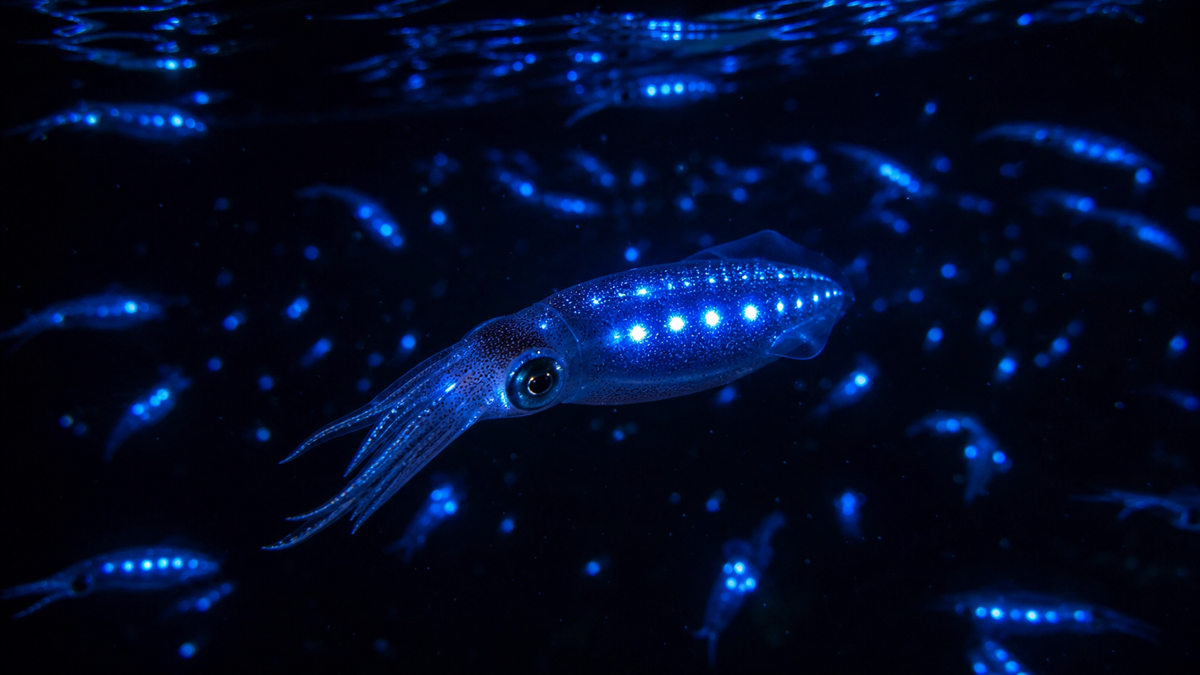
The luciferin used by the firefly squid is a molecule called "coelenterazine disulfate," in which two sulfate groups are attached to coelenterazine. Oxidized by the action of luciferase, it produces light in a display that could serve as a textbook example of cold light. Because it can flash the light organs across its entire body independently, the firefly squid manipulates light in versatile ways depending on the situation — from erasing its shadow via counter-illumination to confusing predators.
The Sea Firefly: Ostracods
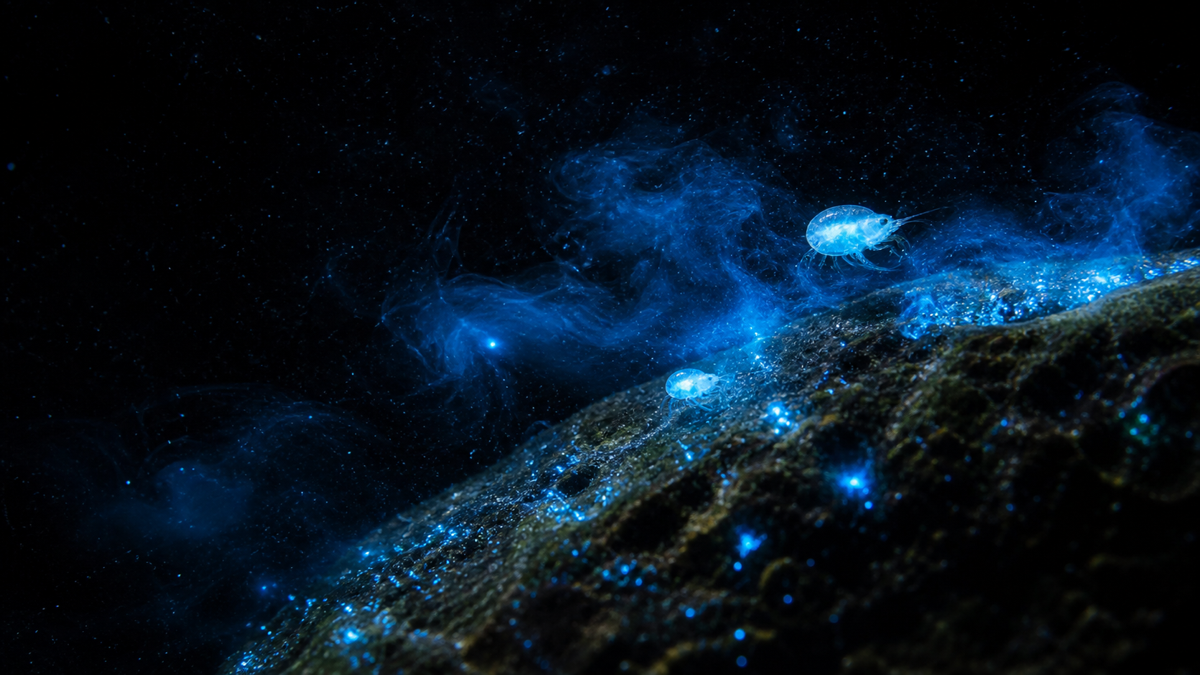
Another luminous organism not to be forgotten in Japanese bioluminescence research is the "sea firefly" (umi-hotaru), a species of ostracod. This tiny crustacean, only about 3 millimeters long, expels a blue luminous substance into the water when disturbed, filling the surrounding area with a fantastical blue glow. Unlike the anglerfish, the sea firefly doesn't rely on symbiotic bacteria — it glows using its own luciferin (ostracod luciferin) and luciferase. It is stable enough that, even after being dried out, it glows again once water is added, which is why it has long been prized as a research material and helped lay the foundation of Japanese bioluminescence research. The rich diversity of luminous organisms in Japan's coastal waters, from squid to ostracods, has been the foundation that allowed Japan to lead the world in this field.
The Crystal Jellyfish and the Nobel Prize: GFP
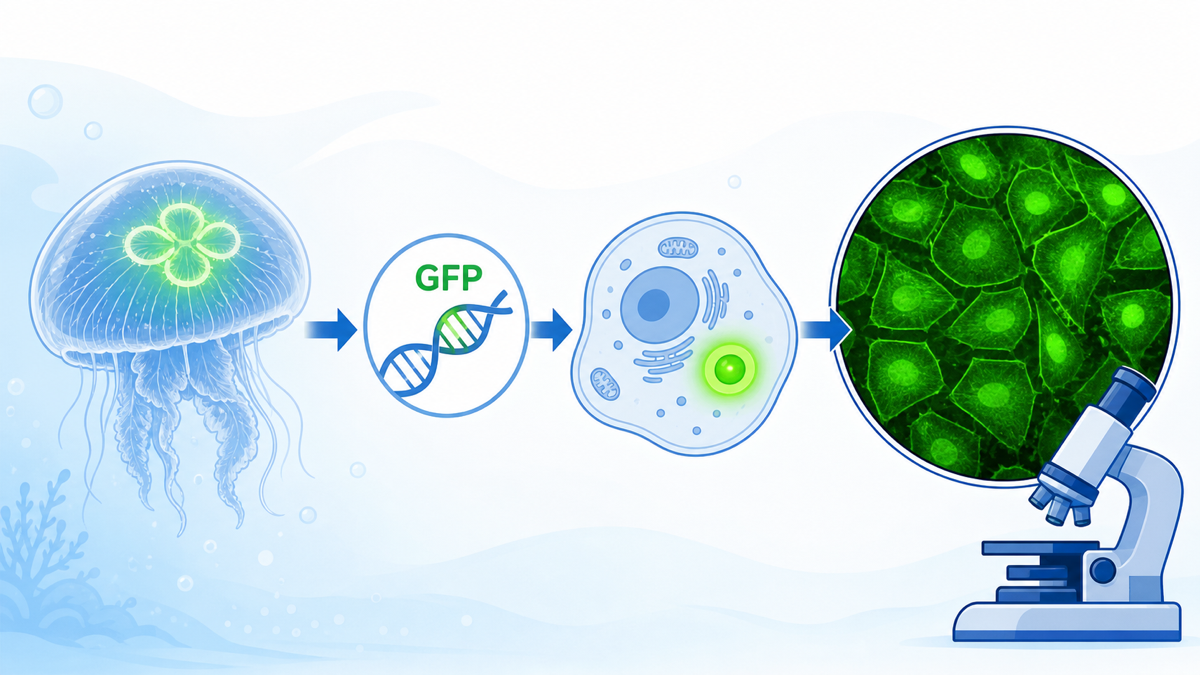
The greatest achievement to come out of Japanese bioluminescence research is GFP (green fluorescent protein). Researcher Osamu Shimomura studied the luminous crystal jellyfish, and in 1962, while purifying the luminous protein "aequorin," discovered and isolated GFP, a protein that absorbs blue light and glows green. At the time, it was merely a result of basic research, but GFP would later transform life science, becoming a groundbreaking tool for tagging specific proteins with a "glowing marker" inside living cells.
When the GFP gene is inserted into the genome of another organism, it becomes possible to observe, in a living state and using light, when and where a target protein is produced. The movement of cancer cells, the connections between neurons, and even the movement of molecules inside cells all became "visible," propelling medical and biological research forward by leaps and bounds. For this achievement, Osamu Shimomura received the Nobel Prize in Chemistry in 2008, together with Martin Chalfie and Roger Tsien. The light of a single jellyfish became a tool that illuminates laboratories around the world.
GFP is not the only example. Luciferases obtained from marine luminous organisms such as Renilla (sea pansy) and copepods are used as "reporters" that measure gene activity by light intensity, helping efficiently screen candidate substances in drug discovery research. Sea firefly luciferin has also been applied to detecting reactive oxygen species and in immunoassays. The chemistry of light, which evolved in the darkness of the deep sea, has now become an indispensable foundational technology in the fields of disease research and drug development.
Both Bioluminescence and Fluorescence Have Proved Useful
GFP is a "fluorescent" protein that converts externally applied blue light into green. Inside the body of the crystal jellyfish, GFP receives the blue light emitted by the luminous protein aequorin and converts it into green. In deep-sea organism research, both this "bioluminescence" and "fluorescence" have become indispensable tools for observing living creatures and for biotechnology.
Protecting deep-sea creatures also means protecting mechanisms of bioluminescence not yet discovered, and useful molecules that could become the next GFP. The deep sea is not immune to the effects of marine debris and plastic pollution either; as discussed in our article on trash sinking into the deep sea, human activity has already reached even the deepest parts of the ocean. Preserving the world of glowing creatures for the future is directly tied to preserving the very possibilities of science.
Conclusion: The Dark Ocean Is Full of a Language of Light
The sunless deep sea is by no means a silent darkness. It is a stage for one of the liveliest "conversations of light" on Earth, twinkling with the cold blue glow produced by luciferin and luciferase. Luring prey, deceiving predators, finding companions, and even erasing their own shadows — creatures put light to use for every conceivable purpose.
And the science of that light is deeply connected to Japan's seas as well, supporting our medicine and life science through the mystery of the firefly squid and GFP derived from the crystal jellyfish. Deep-sea bioluminescence is not some distant wonder — it is a familiar mirror reflecting both the ingenuity of life on Earth and the importance of protecting it.
The deep sea is the largest and least disturbed ecosystem on Earth, yet it is also a place where the effects of our activities have already begun to reach. Luminous organisms not yet named, and unknown molecules that could become the next GFP, are, at this very moment, quietly glowing in the dark ocean. Preserving that light for the future means preserving the very possibilities of science, and protecting one of this planet's true treasures. The next time you see a glowing creature at night by the sea or in an aquarium, remember that each and every point of light carries within it a grand story of evolution, polished in the deep sea.
Summary of This Article
- 76% of organisms observed from the surface down to 4,000 meters possess bioluminescent ability — light is standard equipment, not an exception
- Bioluminescence is a heatless "cold light" created when luciferase (an enzyme) oxidizes luciferin (the raw material)
- Blue light around 470nm, the wavelength that travels best through seawater, is favored, with both emitters and receivers optimized for blue
- Uses fall into four categories: luring, threat/defense, communication, and camouflage (counter-illumination)
- The anglerfish doesn't glow itself; it relies on a symbiosis with luminous bacteria taken in from seawater
- Japanese research on luminous organisms, such as the firefly squid and GFP derived from the crystal jellyfish, has produced Nobel Prize-level achievements
References and Sources
- MBARI (Monterey Bay Aquarium Research Institute) – New study shows that three quarters of deep-sea animals make their own light
- Scientific Reports (Nature) – Martini & Haddock (2017) Quantification of bioluminescence from the surface to the deep sea
- Monterey Bay Aquarium – Illuminating the facts of deep-sea bioluminescence
- Cornell Chronicle (Cornell University) – Study illuminates link between anglerfish, bacteria
- National Museum of Nature and Science, Japan – Nobel Prize in Chemistry: The discovery and development of green fluorescent protein (GFP)
- The University of Tokyo – Why do deep-sea fish emit light? (Toshiro Saruwatari, "Simple Questions vs. UTokyo")
- Chemistry and Education, The Chemical Society of Japan – Bioluminescence and chemiluminescence (Vol. 64, No. 8, 2016)
- RIKEN BioResource Research Center – Luciferase (an overview of luminous enzyme resources for research)
※ Listed in order of reliability: government/academic institutions > peer-reviewed papers > specialized organizations > reliable media