⚡ In short
Mushrooms break down fallen logs and leaves, cycling carbon as the forest's decomposers. Their mycorrhizal networks support trees, and forest nutrients travel by river all the way to the sea. Yet mushroom-poisoning accidents keep happening every year. Here is what science says about fungi's ecological role and how to avoid poisonous mushrooms.
In autumn, mushrooms poking up from the forest floor or a fallen log look charming, but behind that cute appearance they are key players holding up the whole forest ecosystem. Very few organisms besides fungi and a small number of bacteria can break down cellulose and lignin, the parts of plant matter that animals cannot digest, and return them to inorganic form. Without mushrooms (fungi), forests would simply pile up with dead wood and fallen leaves, and no nutrients would be released for new trees to grow.
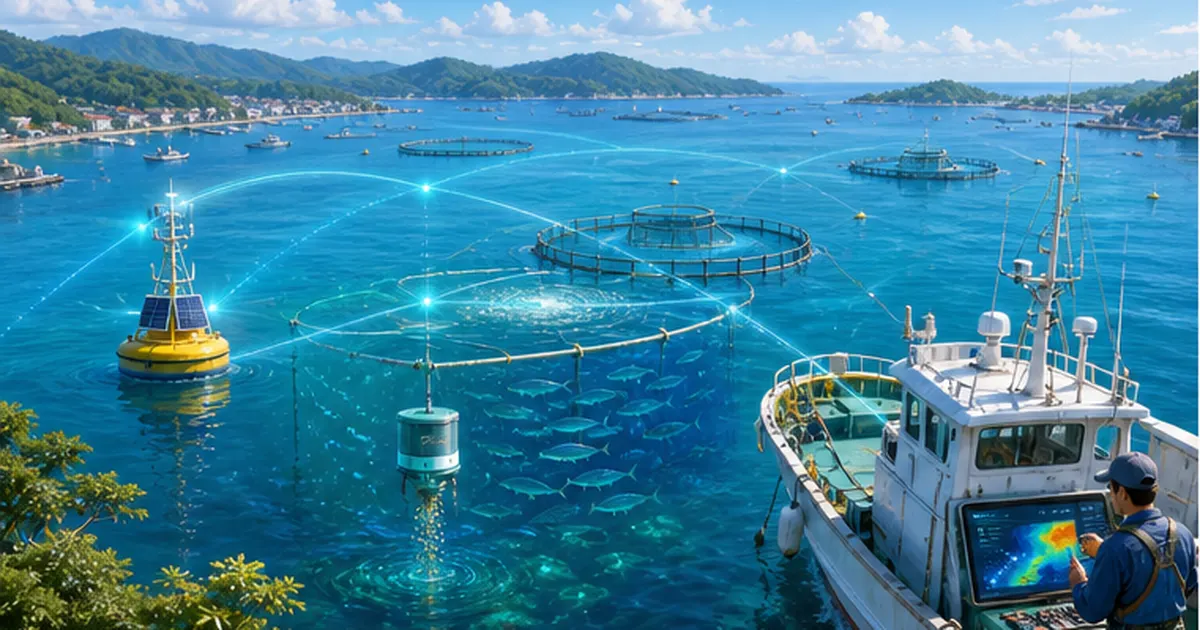
What's more, a mushroom's work doesn't stop at the forest's edge. Humus formed by decomposing leaves and logs holds rainwater and slowly releases minerals and iron into rivers. "The forest is the sea's lover," a reforestation movement that oyster farmers in Kesennuma, Miyagi Prefecture have kept alive since 1989, is known for demonstrating this very forest-river-sea connection from the front line of fishing communities. Mushrooms, as decomposers, stand at the starting point of that long journey of matter.
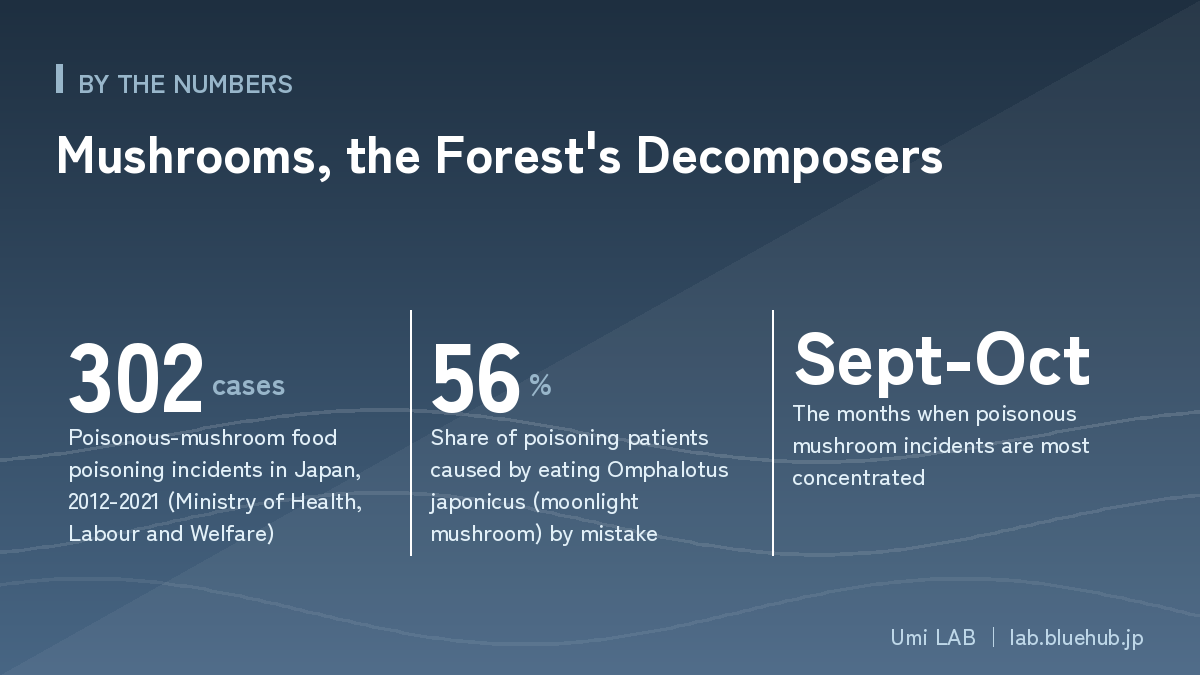
At the same time, mushrooms are a familiar hazard to people. According to Japan's Ministry of Health, Labour and Welfare, poisonous mushrooms caused 302 food-poisoning incidents over the ten years from 2012 to 2021, sickening 820 people and killing 3. Some species are deadly if eaten by mistake, and some highly toxic ones cause dermatitis on contact alone. This article explains the ecosystem services mushrooms provide and the essential poisoning-prevention knowledge every mushroom-hunting season, based on government statistics and academic sources.
What You'll Learn
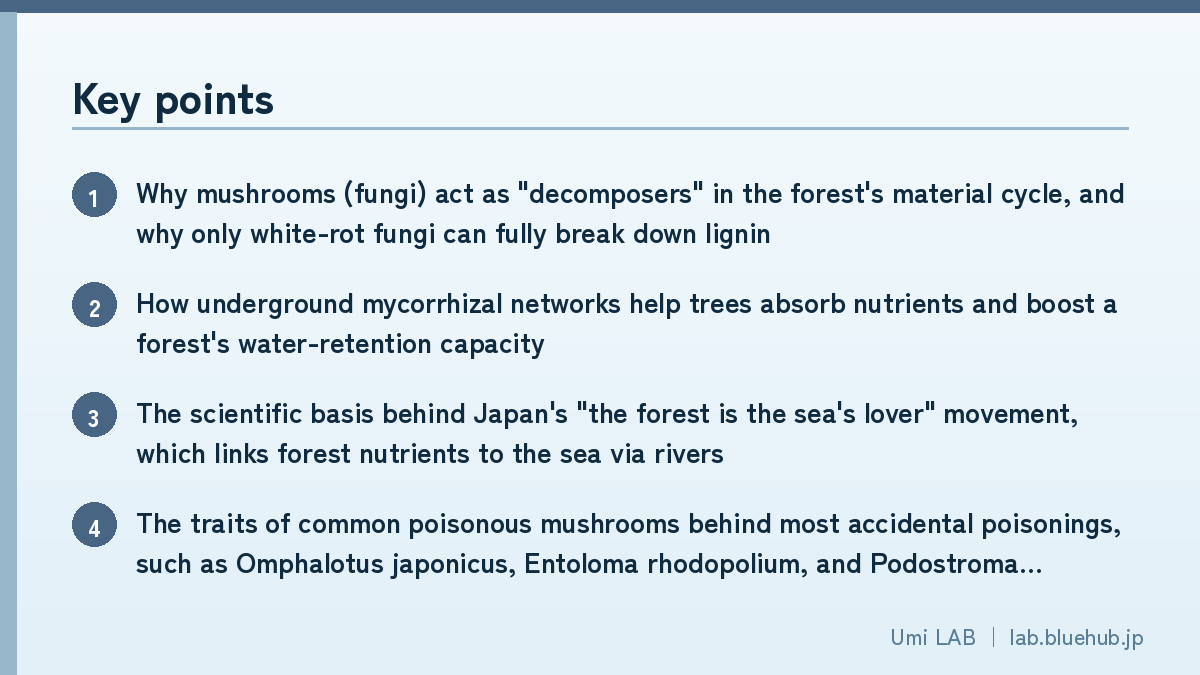
- Why mushrooms (fungi) act as "decomposers" in the forest's material cycle, and why only white-rot fungi can fully break down lignin
- How underground mycorrhizal networks help trees absorb nutrients and boost a forest's water-retention capacity
- The scientific basis behind Japan's "the forest is the sea's lover" movement, which links forest nutrients to the sea via rivers
- The traits of common poisonous mushrooms behind most accidental poisonings, such as Omphalotus japonicus, Entoloma rhodopolium, and Podostroma cornu-damae
- Poisoning statistics and identification myths to avoid when telling edible mushrooms from poisonous ones
- The "don't pick, don't eat, don't share" principle for enjoying mushroom hunting safely
Why Mushrooms Are Called the Forest's Decomposers
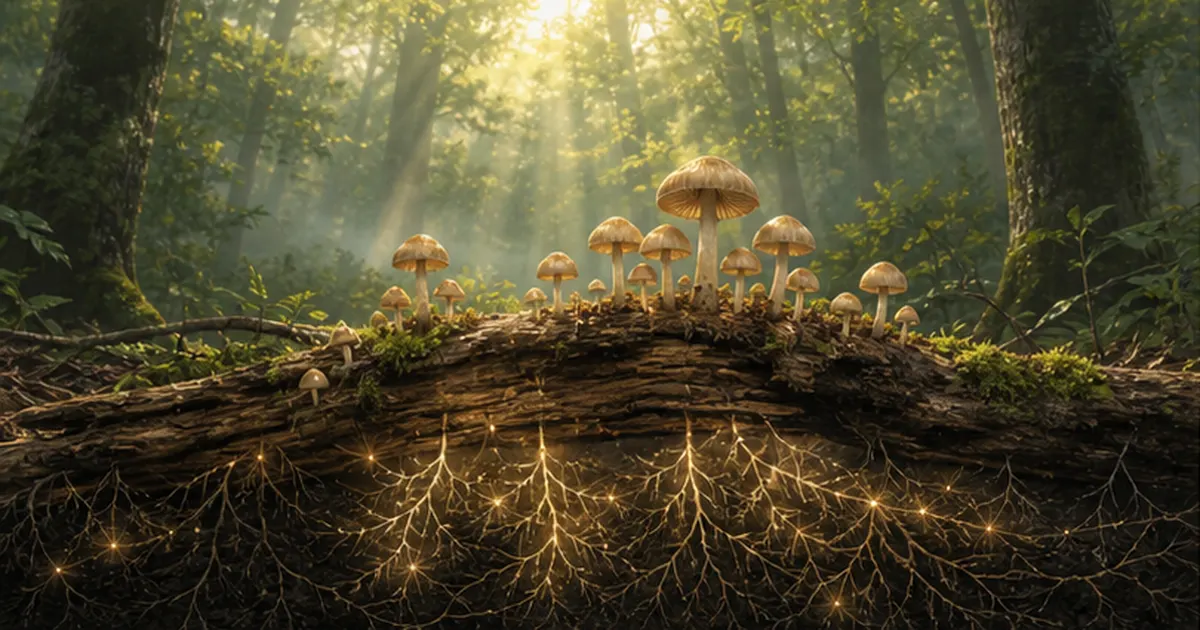
Ecosystems broadly run on three roles: "producers" (plants) that make energy through photosynthesis, "consumers" (animals) that eat them, and "decomposers" that return carcasses and waste to inorganic matter. The part that appears above ground as a mushroom (the fruiting body) is only a tiny fraction of the organism; its true form is a mycelium, a network of thread-like filaments spreading through soil and fallen logs. Fungi secrete enzymes to break down surrounding organic matter outside their own bodies and then absorb the nutrients — a unique feeding strategy known as external digestion.
Cellulose and Lignin: Few Organisms Can Break Them Down
Cellulose and lignin, which make up plant cell walls, are the most abundant organic compounds on Earth, yet very few organisms can decompose them. Lignin in particular is a hard-to-break-down polymer with a complex carbon skeleton, and it is known that only a group of fungi called white-rot fungi can fully decompose it. Brown-rot fungi, by contrast, use only cellulose while leaving lignin untouched, so lignin remains behind as soil organic matter after decomposition.
| Decay type | Components broken down | Representative fungi | Appearance of decayed wood |
|---|---|---|---|
| White rot | Cellulose + lignin (near-complete breakdown) | Trametes versicolor and others | Bleached and fibrous |
| Brown rot | Cellulose only (lignin left behind) | Armillaria and others | Reddish-brown and cracked |
About 30% of the carbon fixed through photosynthesis is thought to be stored in plants as lignin, and how quickly it can be decomposed is one factor influencing atmospheric CO2 levels over timescales of hundreds to thousands of years. Small as they look, mushrooms are decomposition machines involved in a planet-scale carbon cycle.
The World's Largest Organism Turned Out to Be a Forest "Mushroom"
A case that symbolizes the scale of fungi as decomposers has been found in a forest in eastern Oregon, USA. The mycelium of Armillaria ostoyae, a relative of the honey fungus, keeps spreading underground as a single individual; the largest confirmed specimen covers about 8.8 square kilometers (roughly 190 Tokyo Domes), and its age, estimated from its growth rate, is thought to be 2,400 years, possibly as much as 8,650 years. The fact that the largest organism confirmed on Earth is neither a whale nor a giant tree but the mycelium of a single fungal individual spreading underground speaks to the quiet, vast scale fungi carry as decomposers.
Mushrooms Aren't Plants — They're Actually Closer to Animals
Because they "grow in forests," mushrooms are often assumed to be plant relatives, but taxonomically, fungi including mushrooms belong to their own kingdom, Fungi, separate from plants, and in terms of cell-wall composition (chitin) and feeding strategy they are actually closer to animals. Unlike plants, they cannot make their own nutrients through photosynthesis; like animals, they are heterotrophs that take in surrounding organic matter to survive — one reason mushrooms can serve as the forest's decomposers.
Forest decomposition isn't accomplished by fungi alone. Soil animals such as woodlice, millipedes, and springtails first chew fallen leaves and logs into smaller pieces — "physical decomposition" — and fungi then extend their mycelium into the increased surface area to carry out "chemical decomposition." It's known that fungi and soil animals divide the labor this way. Only through this cooperation does forest decomposition proceed efficiently.
What Would Happen Without Decomposers
- Dead wood and fallen leaves would simply pile up instead of returning to soil, leaving no nutrients for new plants to sprout
- Carbon would stay locked in place instead of cycling, disrupting the forest's material balance
- Without hollow cavities forming inside fallen logs, the diversity of woodpeckers, insects, and other creatures that live in dead wood would also be lost
Underground Mycorrhizal Networks Support the Forest
Many mushrooms don't just decompose dead matter — many species live in partnership with the roots of living trees. These are called mycorrhizal fungi. Trees hand over sugars made through photosynthesis to the fungi, and in return the fungi extend fine mycelium deep into the soil to gather water and nutrients such as phosphorus and nitrogen that the tree's roots alone can't reach — a mutually beneficial symbiosis.
Two Types: Ectomycorrhizae and Endomycorrhizae
- Ectomycorrhizal fungi: partner with pines, oaks, and other Fagaceae and Pinaceae trees, covering the surface of roots with mycelium (edible mushrooms such as matsutake and Lyophyllum shimeji belong to this type)
- Endomycorrhizal (arbuscular) fungi: partner with cherry, maple, and many other tree species, with mycelium penetrating inside the root cells
| Type | Main tree partners | How mycelium enters | Representative mushrooms |
|---|---|---|---|
| Ectomycorrhizae | Pinaceae and Fagaceae (red pine, oak, beech, etc.) | Covers the root surface (does not enter cells) | Matsutake, Lyophyllum shimeji, Amanita species |
| Endo (arbuscular) mycorrhizae | Many angiosperms (cherry, maple, crops, etc.) | Mycelium penetrates inside root cells | Most species do not form above-ground fruiting bodies |
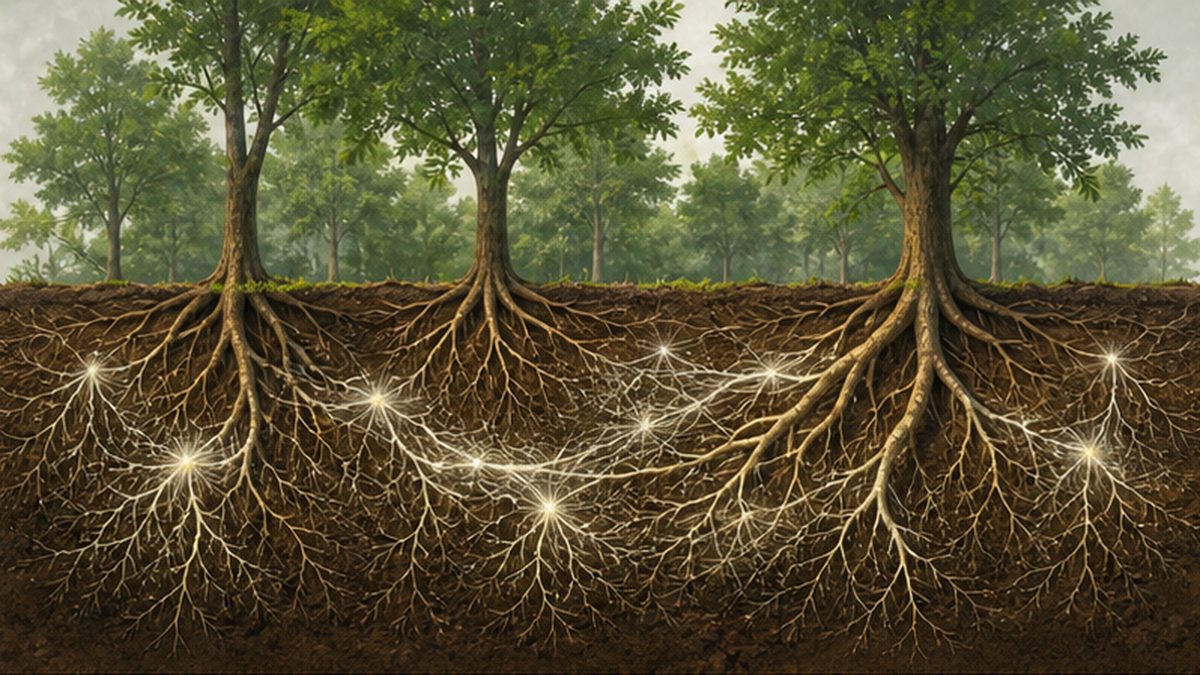
Underground in the forest, a single strand of mycelium can connect to the roots of several trees, forming an underground mycorrhizal network that exchanges nutrients tree to tree. Some studies suggest that young seedlings unable to photosynthesize enough in the shade receive sugar from larger trees via this network, meaning mushrooms also act as the "plumbing" connecting the whole forest like a single organism.
The "Wood Wide Web" — and How to Read the Claim
The term "wood wide web" for this mycorrhizal network traces back to a 1997 paper in the journal Nature (vol. 388, pp. 579-582) by Canadian forest ecologist Suzanne Simard and colleagues. Simard's team fed paper birch and Douglas fir seedlings different carbon isotopes (carbon-14 and carbon-13) and, digging up the soil nine days later, confirmed that carbon had actually moved between the two tree species through the mycelium of a shared ectomycorrhizal fungus. "Wood wide web" was the catchy name Nature's editors attached to the cover story reporting this result.
The experiment itself is a peer-reviewed, internationally recognized finding, but some researchers point out that the more elaborate storyline that grew out of it — that "mother trees" deliberately help only their own offspring — lacks sufficient peer-reviewed evidence. The core finding, that mycorrhizal fungi help individual trees absorb nutrients and that carbon and nutrients can move across species, is well established, while the picture of an entire forest behaving like one coordinated organism deserves a more cautious, non-exaggerated reading.
Mycorrhizal fungi also matter commercially. Matsutake, a prized autumn delicacy in Japan, is an ectomycorrhizal fungus that partners with red pine and is extremely difficult to cultivate artificially, which is one reason wild matsutake commands such high prices. Lyophyllum shimeji and Rhizopogon truffles likewise depend on symbiosis with trees, so these "symbiotic-type" mushrooms, unlike saprotrophic ones, cannot be grown on artificial substrates like sawdust alone.
Mycorrhizal Fungi and a Forest's Water-Holding Capacity
As mycelium threads through the gaps between soil particles, it promotes the formation of soil aggregates, increasing the pockets that hold rainwater. Soils rich in mycorrhizal fungi tend to balance drainage and water retention well, and are also expected to help curb sudden runoff during heavy rain.
Forest Decomposition Feeds Nutrients to Rivers and the Sea
When fallen leaves and logs are broken down by fungi and soil microbes, dark brown organic matter called humus accumulates in the soil. Humus acts like a sponge holding rainwater and slowly releases it into springs and streams. This is the substance behind what's called the forest's "green dam" water-retention function — it not only stabilizes river flow but also dissolves the minerals and iron in humus and carries them downstream.
Iron-Humic Complexes and "The Forest Is the Sea's Lover"
A red tide is a phenomenon in which plankton multiply explosively and turn seawater reddish-brown; the resulting plankton bloom can consume oxygen or clog the gills of fish and shellfish, causing serious damage to aquaculture. From the mid-1960s, when Shigeatsu Hatakeyama took over the family oyster farm, rapid economic growth brought a flood of household wastewater that degraded water quality in Kesennuma Bay, triggering repeated outbreaks of red tide and "blood oysters" stained red and unsellable — a crisis serious enough that some fishermen gave up their trade.
Shigeatsu Hatakeyama, who ran an oyster and scallop farm in Kesennuma, Miyagi Prefecture, faced frequent red tides and other changes in the sea in the late 1960s. A visit to France's Loire River basin, where he saw firsthand the relationship between broadleaf forests and coastal biodiversity, led him to focus on the forest-sea connection. When humic substances formed by decomposing forest leaves bind with iron ions in the soil, they become iron-humic complexes, which, once carried to the sea via rivers, supply the iron essential for phytoplankton growth. Phytoplankton form the base of the marine food chain, so a rich fishing ground is really an extension of the forest's nutrient cycle.
Learn more about the movementThe Forest Is the Sea's Lover | Suntory Regional Culture AwardHow Kesennuma oyster farmers have kept planting trees upstream to protect the sea🔗 suntory.co.jpIn 1989, Kesennuma fishermen who answered Hatakeyama's call carried fishing flags up Murone Mountain, the headwaters of the Okawa River that flows into Kesennuma Bay, and began planting broadleaf trees. The slogan "the forest is the sea's lover" became known as a pioneering movement that showed, from the fishing industry's own front line, that mountains and sea form one continuous ecosystem, and it was later honored with awards such as the Suntory Regional Culture Award. Decomposition by mushrooms is the starting point of this long journey of matter. The tree-planting festival continues into the present era, reaching its 38th edition in 2026, more than 30 years after it began, and is still held every June at Murone Mountain, growing in scale year by year.
The Journey of Nutrients from Forest to Sea (Simplified)
- ① Fungi and microbes decompose fallen leaves and logs → humic substances accumulate in the soil
- ② Iron ions bind with humic substances to form iron-humic complexes
- ③ Rainwater carries them into rivers and downstream to the coast
- ④ Along the coast they nourish phytoplankton, the base of the food chain that sustains fish and shellfish
"Fishermen's Forests" Spreading Nationwide
Inspired by Kesennuma's example, the idea of planting trees upstream to protect fishing grounds downstream has spread to "fishermen's forest" and satoumi (coastal commons) projects run by fishing cooperatives and local governments across Japan. The view that marine abundance isn't confined to the coast but is tied to the condition of the entire watershed's forests and rivers is increasingly being adopted as part of fisheries resource conservation.
The Cushion In Between: Tidal Flats and Brackish Estuaries
The journey of nutrients from forest to sea doesn't flow in a straight line. Where rivers meet the sea, brackish estuaries and tidal flats where fresh and salt water mix often spread out, and here too a variety of microbes, shellfish, and crustaceans filter organic matter, passing nutrients along in stages to coastal ecosystems. The journey of matter that began with forest decomposers reaches the sea only after relaying, and gradually transforming, through several ecosystems — rivers, brackish estuaries, and finally the coastal ocean.
The Forest-River-Sea Connection and the SDGs
Viewing the chain from forest decomposers to the marine food web as a single watershed is also a good example showing that SDG 15 ("Life on Land") and SDG 14 ("Life Below Water") are not really separable issues, but one continuous challenge.
The Diversity and Seasonality of Japan's Mushrooms
Japan is home to thousands of mushroom species, with lifestyles ranging from saprotrophic fungi that decompose fallen logs and leaves, to mycorrhizal fungi that live symbiotically with trees, to the rare cordyceps-type fungi that parasitize insects and spiders. Many mushrooms also appear close to where people live — in satoyama woodlands, national forests, and urban park greenery — and autumn mushroom hunting has long been cherished as part of Japan's food and outdoor culture.
| Ecological type | Characteristics | Representative examples |
|---|---|---|
| Saprotrophic fungi | Live by decomposing fallen logs, leaves, and dead branches | Shiitake, oyster mushroom, Omphalotus japonicus (poisonous) |
| Mycorrhizal fungi | Live symbiotically with living tree roots, exchanging nutrients | Matsutake, Lyophyllum shimeji, Amanita species (including poisonous ones) |
| Parasitic fungi | Attach to living insects, spiders, and other animals or plants | Cordyceps-type fungi |
Satoyama Woodlands and Mushroom Food Culture
From log cultivation of shiitake to clearing undergrowth on matsutake mountains and managing red pine stands, tending the mountains to nurture mushrooms has long been a livelihood in Japan's satoyama woodlands. Satoyama environments, kept bright and well-tended by human hands, provide favorable growing conditions for specific mycorrhizal fungi such as matsutake, but in recent years the abandonment of satoyama management and oak wilt disease are also cited as reasons for the decline of pine stands suited to matsutake in various regions.
Why Mushrooms Increase in Autumn
Many mushrooms form fruiting bodies (the "mushroom" part that appears above ground) in September and October, when temperatures drop and moderate humidity is maintained. This is when mycelium redirects the nutrients it stored over summer all at once toward spore production, which is why mushroom-hunting season overlaps with the peak season for poisonous mushroom poisoning discussed later. Moderate rainfall from typhoons and the autumn rain front also triggers fruiting body formation.
Poisonous Mushrooms Are Legitimate Decomposers and Symbionts Too
Whether a mushroom is dangerous to humans and what role it plays in the forest ecosystem are two separate questions — and that applies to Omphalotus japonicus and Podostroma cornu-damae, introduced in later sections. Omphalotus japonicus is a saprotrophic fungus that decomposes dead broadleaf wood such as beech, and Podostroma cornu-damae also lives its life cycle interacting with soil organic matter and tree roots. Rather than a simple "poisonous mushroom equals villain" framing, keeping in mind that each mushroom plays its own distinct role within the forest ecosystem gives a fuller, more three-dimensional grasp of mushroom-hunting safety knowledge.
Poisonous Mushroom Poisoning by the Numbers
According to food poisoning statistics from Japan's Ministry of Health, Labour and Welfare, poisonous mushrooms caused 302 food-poisoning incidents over the ten years from 2012 to 2021, sickening 820 people, of whom 3 died. More recent data shows 19 incidents believed to involve poisonous mushrooms in fiscal 2024, with one death reported. The number of cases varies year to year, but incidents occur without fail every year.
When Incidents Cluster, and the Mushrooms Behind Them
Poisonous mushroom poisoning clusters in September and October, mushroom-hunting season. By patient count, the mushroom most often responsible is Omphalotus japonicus (the moonlight mushroom), frequently mistaken for edible oyster mushrooms, Panellus and shiitake, accounting for roughly 56% of all patients. Next come Entoloma rhodopolium, which resembles Lyophyllum shimeji, and Tricholoma ustaloides, which resembles shiitake.
Looking at where incidents happen, most poisonous-mushroom food poisoning occurs not in restaurants but in private homes. The typical case involves people or family members going mushroom hunting themselves and cooking what they picked at home, believing it to be edible — a pattern repeatedly flagged by the Food Safety Commission and prefectural warnings. Risk is concentrated precisely in "self-consumption" situations that bypass a professional eye.
| Toxic mushroom | Edible mushrooms it resembles | Main symptoms |
|---|---|---|
| Omphalotus japonicus | Oyster mushroom, Panellus serotinus, shiitake | Vomiting, diarrhea, and severe abdominal pain 30 minutes to 1 hour after eating |
| Entoloma rhodopolium | Clitopilus, Lyophyllum shimeji, Lyophyllum decastes | Vomiting, diarrhea, abdominal pain, sweating, etc. 20 minutes to 1 hour after eating |
| Tricholoma ustaloides | Shiitake, Pholiota lubrica | Severe vomiting and diarrhea 1-3 hours after eating |
Rare but Deadly: The "Amatoxin" Group
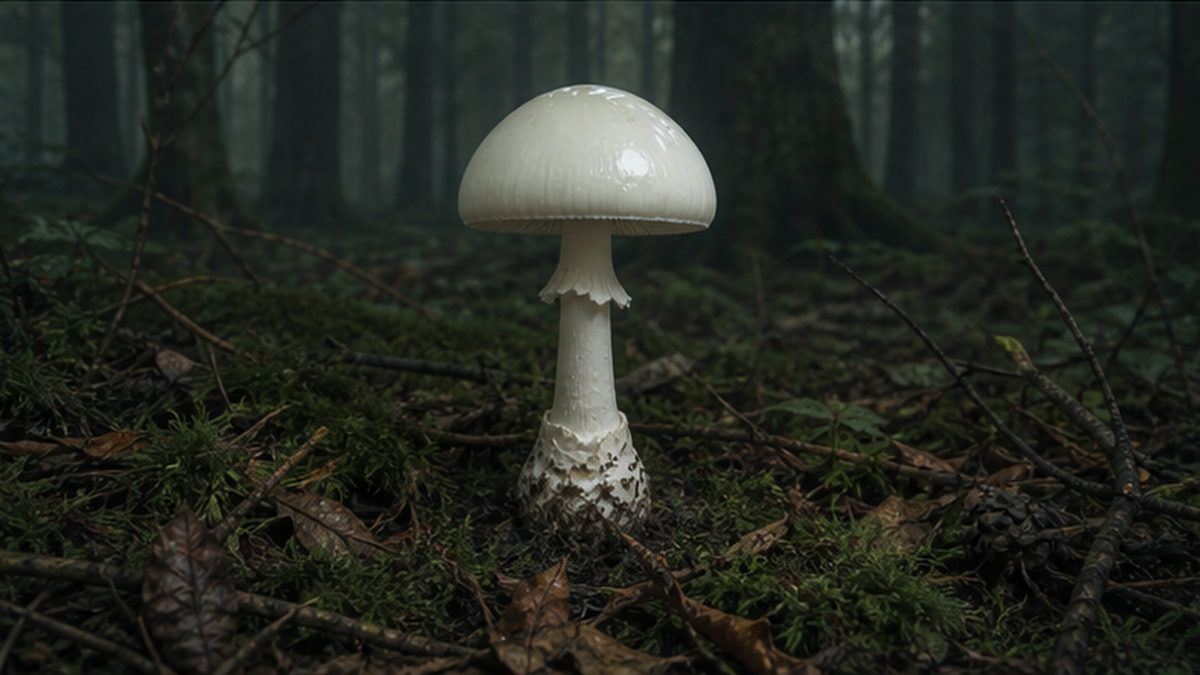
Poisoning by Omphalotus japonicus and similar species affects many patients but usually stays limited to digestive symptoms that resolve within a few days. In contrast, amatoxins, the toxins found in Destroying Angel (Amanita virosa) and Death Cap (Amanita phalloides), cause relatively few incidents but are known for an extremely high fatality rate. According to a natural-toxin risk profile from Japan's Ministry of Health, Labour and Welfare, a single mature Destroying Angel can contain 10-12mg of alpha-amanitin, enough to kill an adult who eats just one mushroom.
What makes it more dangerous still is how symptoms unfold. Abdominal pain, vomiting, and diarrhea begin 6-24 hours after ingestion; symptoms then appear to subside in a "false recovery" phase, only for gastrointestinal bleeding, jaundice, and swelling of the liver and kidneys to progress rapidly 1-3 days later, often leading to death from multi-organ failure. The false sense that "maybe I've recovered" during the early stage is the single biggest danger, since it tends to delay seeking medical care.
| Timeline | Main symptoms |
|---|---|
| 6-24 hours after ingestion | Abdominal pain, vomiting, diarrhea, and other digestive symptoms appear |
| Around 1 day after onset | Symptoms appear to subside — the "false recovery" phase |
| 1-3 days later | Gastrointestinal bleeding, jaundice, liver and kidney swelling, and other organ damage progress rapidly |
| 2-7 days later | Severe cases can progress to multi-organ failure |
Death Cap (Amanita phalloides) is known internationally as exactly that — the mushroom responsible for the majority of fatal mushroom-poisoning accidents worldwide. Amatoxin poisoning isn't unique to Japan; it's a recurring, globally shared natural-toxin risk reported repeatedly across Europe and North America as well.
Deadly Mushrooms You Shouldn't Even Touch
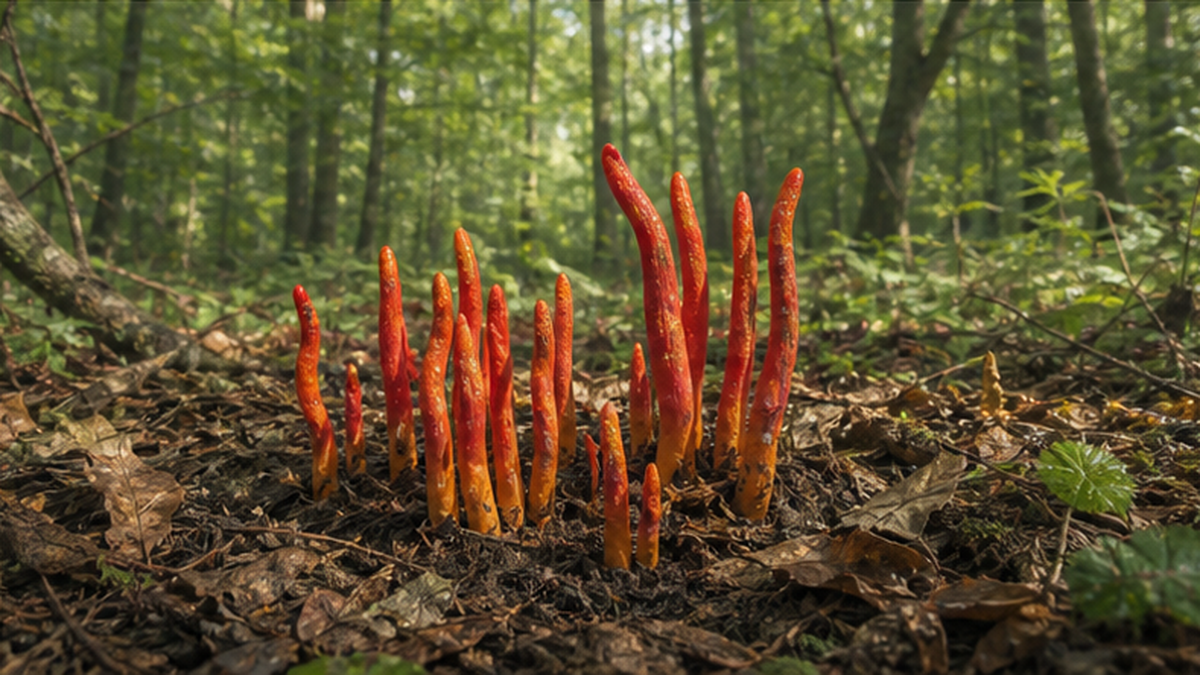
Most poisonous mushrooms are "safe if you don't eat them," but there are exceptions — species that cause harm simply by contact. The best-known is Podostroma cornu-damae, which has drawn repeated warnings in recent years. It grows in clusters from the ground in broadleaf forests of beech and oak, its fruiting bodies shaped like flames or human fingers, colored red to orange.
Trichothecenes: The Toxin Behind Podostroma cornu-damae
The toxic compounds in Podostroma cornu-damae are a type of mold toxin called trichothecenes, for which no effective antidote exists. Eating it by mistake causes fever, vomiting, diarrhea, and abdominal pain, along with neurological symptoms such as numbness in the limbs, and fatalities have been reported. Trichothecenes also irritate skin, which means even picking it up to examine it can cause dermatitis — a trait that sets it apart from most other poisonous mushrooms.
If You Find Podostroma cornu-damae
- Don't touch it with bare hands or take it home — a photo is enough
- Keep small children and pets from touching it accidentally
- Some local governments ask residents to report sightings, so check your area's guidance
"Dangerous Just to Touch" Is the Exception, Not the Rule
To be clear, most poisonous mushrooms in Japan do not cause poisoning unless eaten. Species like Podostroma cornu-damae, which harm on contact alone, are quite exceptional among the many mushrooms out there. Still, the very existence of such an exception reinforces the basic rule: don't casually touch a mushroom you can't identify. When observing or photographing mushrooms, it's safer to make a habit of just looking rather than grabbing them with bare hands.
The Right Knowledge for Avoiding Poisonous Mushroom Poisoning
Most poisonous-mushroom food poisoning happens because people judge, based on appearance or folklore, that "this must be an edible mushroom." But there is no simple rule for telling poisonous mushrooms from edible ones by looks alone.
Myths You Shouldn't Believe
- "Brightly colored mushroom = poisonous" is false (many poisonous mushrooms are plain-colored)
- "Safe if insects are eating it" is false (insects and humans have different tolerances to toxins)
- "Safe to eat if it tears lengthwise" is false (many mushrooms tear lengthwise, poisonous or not)
- "Salting, drying, or cooking makes a poisonous mushroom safe" is false (most toxins are not broken down by heat or salt curing)
Japan's Ministry of Health, Labour and Welfare, Ministry of Agriculture, Forestry and Fisheries, and Consumer Affairs Agency all promote the same three basic principles for preventing wild-mushroom poisoning: "don't pick it, don't eat it, don't give it to others." Don't pick a mushroom you can't confidently identify as edible; don't eat it even if you did pick it; and don't casually hand it to someone without the knowledge to judge it — a simple but thorough set of rules.
Don't Rely Solely on Smartphone Identification Apps
Smartphone apps that identify mushroom species from a photo have become popular in recent years, but even within the same species, a mushroom's color and shape can vary widely by growth stage and environment, so automatic identification from a single photo has real limits. As the yearly poisoning statistics show, even people with specialist knowledge sometimes misidentify mushrooms — that's how difficult telling poisonous from edible mushrooms can be. Treat an app's verdict as reference information only, never as the final basis for a decision.
What to Do If You've Eaten One
If you suspect you've eaten a poisonous mushroom, official guidance recommends inducing vomiting within reason, as long as you're fully conscious and not having convulsions. However, if the person is unconscious or convulsing, do not force vomiting, since vomit could enter the airway. In either case, don't wait and see on your own judgment — the top priority is to bring any leftover mushroom or a photo taken before cooking and seek medical care immediately. If diagnosed as mushroom-related food poisoning, the medical institution will also report it to the public health center.
Good Habits for Mushroom Hunting
- Don't judge from a single photo in a guidebook or app — check the cap, gills, stem, and ring together as a whole
- If unsure, have an expert confirm it — a local public health center, agriculture and forestry office, or mushroom identification event
- Treat mushrooms growing in your home garden or yard with the same caution — don't assume they're edible
- If you feel unwell after eating a mushroom, see a doctor immediately, bringing any leftovers or photos of the mushroom
Living Alongside Mushrooms, the Forest's Decomposers
As we've seen, mushrooms sustain the forest's material cycle, help trees grow through mycorrhizal networks, and even stand at the start of the long story that carries forest nutrients to the sea. For people, they are both a target for outdoor activities like foraging for wild plants and mushrooms, and organisms that can be life-threatening without the right knowledge.
Protecting Mushrooms as an Ecosystem Service
Not over-tidying fallen logs and leaves, so as not to interfere with the forest's decomposition process, is also worth keeping in mind for sustaining the ecosystem services mushrooms provide. In managing satoyama woodlands and parks, rather than removing every fallen log, an approach that leaves some behind as a "home for decomposers" is increasingly seen in forest management across regions. The next time you spot a mushroom in your garden or a nearby park, pausing for a moment before removing it — thinking "this, too, is a decomposer at work" — might change how familiar nature looks to you.
For Those Who Study the Sea: The Forest Is Another Front Line Worth Knowing
When people think of ocean environmental issues, attention tends to focus on the sea itself — plastic waste, declining fisheries resources, coral bleaching. But as the story of "the forest is the sea's lover" shows, the sea's abundance also results from a connection with a place far away, starting with the work of forest decomposers. When thinking about the global environment, rather than viewing the sea and the forest as separate, it's worth holding a view of land and sea as one continuous cycle, from decomposers to the top of the food chain.
Respecting the real danger of poisonous mushroom poisoning while deepening your understanding of mushrooms' role as decomposers and of the material cycle connecting forest and sea should be a good first step toward sharper appreciation of the nature around you. When heading out mushroom hunting, keep in mind that, as the statistics show, accidents cluster in September and October, and hold firm to caution: never touch a mushroom you're not sure about.
Behind a single small mushroom lies a surprisingly long story — from the enzymatic chemistry that breaks down lignin, to the mycorrhizal network spreading underground, to iron-humic complexes flowing down a river, to the coastal food chain. Next autumn, if you spot a mushroom in a forest or park, it's fine to simply look rather than pick it on the spot. Just holding the perspective that the small decomposer at your feet is connected all the way to the richness of a distant sea can make a familiar landscape look a little different.
References
- Status of Food Poisoning Caused by Poisonous Mushrooms – Ministry of Agriculture, Forestry and Fisheries of Japan
- Food Poisoning Prevention: Beware of Poisonous Mushrooms! – Ministry of Health, Labour and Welfare of Japan
- Beware of Poisonous Mushrooms: 820 Poisoned, 3 Dead Over the Past 10 Years – nippon.com (based on Ministry of Health, Labour and Welfare statistics)
- Natural Toxin Risk Profile: Amanita virosa (Destroying Angel) – Ministry of Health, Labour and Welfare of Japan
- White-Rot Fungi: The Biochemistry of Lignin Decomposition and Mycoremediation Applications – Forest Eight
- The Mycorrhizal Networks That Support Forest Ecosystems – Science Portal (Japan Science and Technology Agency)
- Beware of the Highly Toxic Mushroom Podostroma cornu-damae – Yamagata Prefecture
- Omphalotus japonicus (Poisonous), Family Tricholomataceae – Tokyo Metropolitan Bureau of Hokenmedical Care, "Food Safety Window"
- The "Forest Is the Sea's Lover" Movement: An Environmental Conservation Activity Linking Mountain and Sea Communities – Suntory Regional Culture Award
- The Largest Organism on Earth Is a Fungus in Eastern Oregon – Scientific American
※ Sorted by reliability: government / academic institutions > peer-reviewed papers > specialist bodies > trusted media.