⚡ In short
You don't need binoculars or a notebook to start nature observation. This guide covers tips for beginning today from your local park, plus how to keep records with citizen science apps, drawing on primary sources from Japan's Ministry of the Environment and Meteorological Agency.
The phrase "nature observation" might conjure images of a serious hobby involving binoculars and field guides on a trip to the mountains or the sea. In reality, though, a roadside tree on your commute, an insect on your balcony, or a puddle in a park is more than enough to get started. What matters isn't special equipment — it's just two simple actions: noticing, and recording.
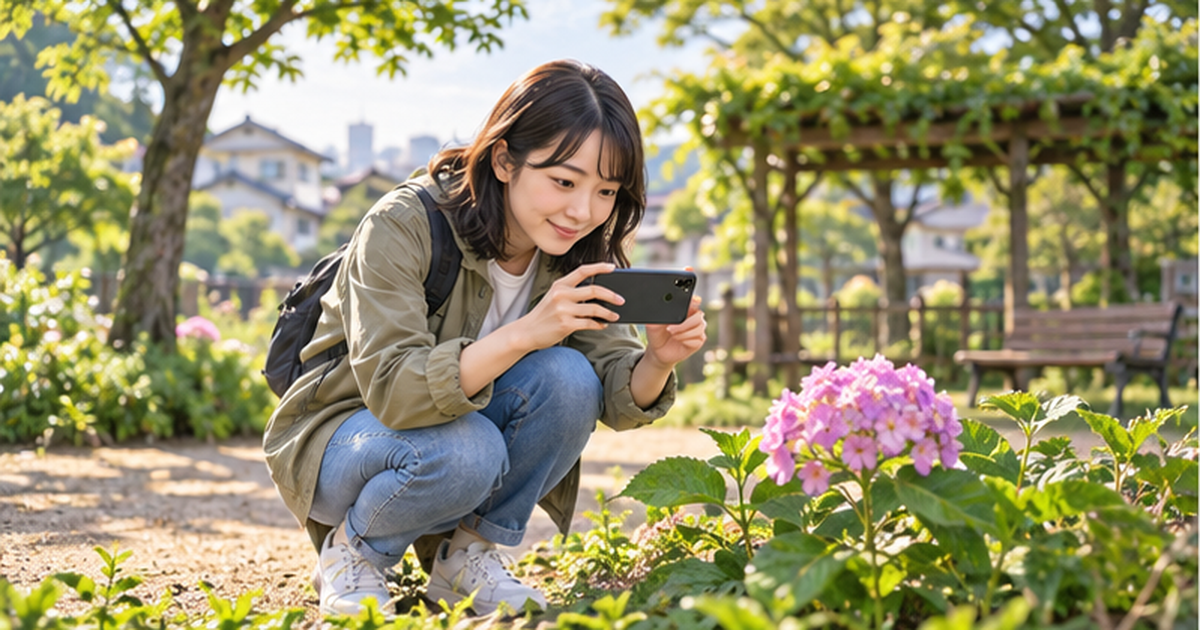
In recent years, smartphone cameras paired with AI identification apps have made it possible to learn the name of a creature on the spot, even without expert knowledge. Because photos automatically capture location and time, casual observations by individuals are increasingly being used as citizen science data by government agencies and research institutions.
This article draws on primary sources from Japan's Ministry of the Environment and the Japan Meteorological Agency to cover how to start observing with zero equipment, concrete ways to keep records, seasonal themes worth watching for, and nationwide citizen participation programs for deepening the hobby over time.
What you'll learn in this article
- Why you can start nature observation today, with no equipment
- Concrete ways to turn observation into a habit of recording
- How to use citizen science apps like iNaturalist and Biome
- Examples of seasonal creatures and phenomena worth observing
- How nationwide citizen participation surveys run by government agencies work
- Next steps for deepening your observation practice, such as becoming a nature guide
Nature observation needs no equipment
At training sessions for nature observation guides run by the Nature Conservation Society of Japan (NACS-J), a public interest incorporated foundation, participants often say things like: "I used to think this required special equipment, like for birdwatching or stargazing, but I learned there are things anyone can do casually." In fact, roughly 1.3 million people a year take part in observation events led by these certified guides nationwide, and most of them come without any specialized gear.
Many people hear the words "nature observation" and assume prior knowledge or special equipment are required. But the experience shared at actual observation events tends to say the opposite. What matters far more than gear is how much attention you're willing to pay to the change happening right in front of you.
Start by simply "noticing"
The first step in nature observation is noticing small changes — whether a roadside weed has bloomed, or whether the leaves of a street tree are starting to change color. The subject doesn't need to be a rare creature; simply watching the same tree or flowerbed on your daily route as a "fixed point" is enough to yield discoveries.
The advantage of fixed-point observation is that your point of comparison becomes your own past memories and records. Observation that chases rare creatures depends on luck — whether or not you happen to encounter one — but watching a single familiar tree can start anytime, regardless of weather or mood, and the change itself becomes the discovery.
Binoculars and field guides, if you want them
If you want to look at something a bit farther away, such as birds, binoculars open up a new world. For beginners, a magnification of 8x to 10x with an objective lens diameter of around 30mm is considered easy to handle. Higher magnification makes it easier to lose track of the subject due to hand shake, and a larger lens diameter adds weight that makes carrying it around less practical — so for your first pair, prioritize lightness.
Field guides can now be replaced by smartphone apps, but paper guides retain one advantage: the ability to flip through pages and compare similar species side by side. There's no need to acquire everything up front — start with just a smartphone, and add equipment gradually if your interest continues.
Your first step, starting today
- Spend a week watching the insects and birds that visit your balcony or doorstep
- Pick one street tree along your commute as your "my tree"
- Take one photo of a flowering plant in a nearby park
Turning observation into a record
The key to enjoying nature observation as a long-term hobby is not letting what you see disappear into the moment, but turning it into a record. With records, you can notice things for yourself — "it bloomed earlier than last year," or "the same bird comes to this spot every year." Relying on memory alone makes such year-over-year comparisons nearly impossible.
The four minimum details worth recording
| Item | Content | Note |
|---|---|---|
| Date and time | Year, month, day, and time observed | Automatically recorded in a smartphone photo's Exif data |
| Location | Place name or coordinates | Can be captured automatically via your phone's GPS |
| Subject | Name or features of the creature | "unidentified white flower" is fine if you don't know |
| Photo | An overall shot plus a close-up of a distinguishing feature | Serves as a clue for identifying it later |
Taking two photos as a set — one showing the whole subject and one close-up of a distinguishing feature — gives you more clues for identifying it later. For a flower, that might mean a front-facing shot showing the number of petals plus one showing the leaf shape; for a bird, a full silhouette plus, if possible, a shot showing the color of the beak or feathers.
The case for a paper observation notebook
Despite the convenience of smartphones, handwritten paper notebooks retain a loyal following. Sketching forces you to look more carefully at what you're observing, and there's no risk of running out of battery. That said, pairing a notebook with a smartphone app that automatically logs date and location greatly reduces the chance of gaps in your records. Many observers use both — letting the app capture photos and location, and reserving the notebook for sketching only the things that leave a strong impression.
Tips for keeping records going
It's common for record-keeping to stop after just a few days. The trick to sticking with it is not demanding too much quality from each entry. It's perfectly fine to skip written descriptions and just log a photo with one tap of location data, or to register an unfamiliar creature as "unidentified" and revisit it later. A record that keeps going, even an imperfect one, is worth far more in hindsight than a perfect record that stops.
It also helps to tie your recording moment to an existing daily habit, so you don't forget. For example, "always open the app during the dog walk" or "check the balcony for five minutes before heading to work." Attaching it to an existing routine lets the new habit stick without requiring conscious effort.

Apps that tell you the name of what you found
The biggest hurdle for beginners — "I don't know the name of what I just found" — is solved by smartphone apps with AI identification features. The two leading examples are iNaturalist and Biome.
iNaturalist: connecting with naturalists worldwide
Launched in 2008, iNaturalist is a widely used global citizen science platform: simply point your camera at a creature and its AI suggests candidate species. Photos are automatically tagged with location and time, and naturalists around the world help each other with identification. The data collected is also used by research institutions, and its use has spread within Japan to the point that regional offices of Japan's Ministry of the Environment have published their own usage manuals.
iNaturalist's strength lies not only in its AI's initial assessment but also in its community feature, where other users worldwide help with identification. Even when the AI isn't confident about a photo, users with specialized knowledge often step in with comments to supply the correct species name — and the more you post, the more confidence you gain in the accuracy of the identifications.
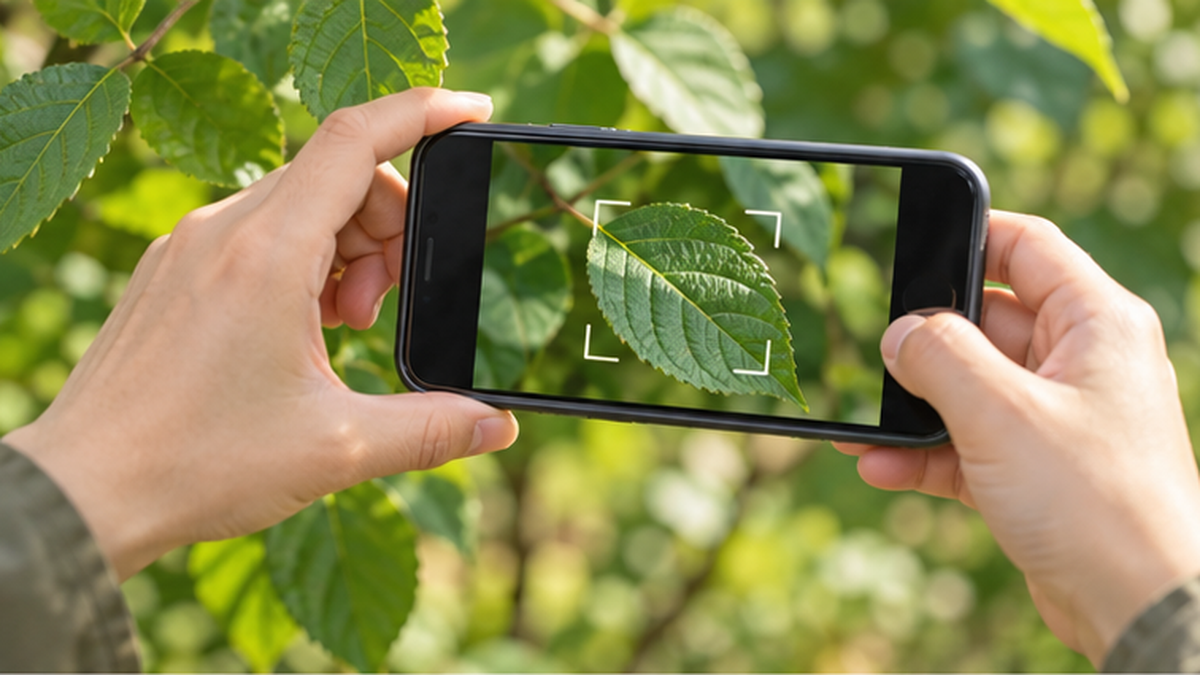
Biome: covering over 60,000 species found in Japan
Developed in Japan, Biome is a "creature collecting" app that catalogues 63,635 species — nearly every plant and animal found in Japan — and uses its own AI to suggest candidate names. In addition to field-guide, map, and social features, it includes game-like "quests" for finding creatures, with many features designed to make the act of observing itself enjoyable. Because it specializes in Japanese species, it also tends to offer higher identification accuracy for common local plants and insects.
Which app to choose
- Want to connect with naturalists worldwide or contribute to research data? → iNaturalist
- Want something focused on Japanese species that's easy to enjoy casually? → Biome
- Both are free to start and suggest candidate names from your photos
Seasonal themes to look out for
What's worth observing in nature changes dramatically with the seasons. For anyone unsure where to start, here are examples of seasonal observation themes.
Spring: budding and migratory arrivals
Spring is when plants bud and bloom all at once, epitomized by the flowering of Somei-Yoshino cherry trees. Beyond cherry blossoms, it's also easy to observe the changing color of new buds on street trees, the blooming of dandelions, and the first sighting of a cabbage white butterfly. It's also when summer migratory birds such as swallows, which spent the winter abroad, begin to arrive — recording the date of your first sighting gives you a point of comparison for the following years.
Summer: insects and creatures of the water's edge
Summer is the season of peak insect activity, with the date of the first cicada song, dragonfly species, and frogs and aquatic insects near water all being good subjects for observation. Early morning and evening, when temperatures drop and creatures become more active, are good times to avoid the heat of midday while observing.
Autumn: foliage and southbound migration
Autumn is well suited to fixed-point recording of how foliage color progresses. Photographing the same tree from the same angle every year makes the year-to-year variation in the timing of color change clear. It's also the season when migratory birds head south toward their wintering grounds, and you may even see them flying overhead in formation.
Winter: birdwatching and overwintering behavior
Winter, when trees lose their leaves, actually makes birdwatching easier. Ducks and other winter birds arrive at rivers and ponds, and the species of small birds visiting your garden also offer discoveries unique to the season. Starting alongside a "winter birdwatching" campaign organized by groups such as the Wild Bird Society of Japan is one way to begin.
Examples of seasonal observation themes
- Spring: cherry blossom bloom date, first swallow sighting
- Summer: first cicada song, dragonfly species near water
- Autumn: onset of autumn foliage, southbound bird migration
- Winter: species of birds visiting the garden, winter ducks on ponds
Observing with more than just your eyes
Nature observation tends to focus on visual records captured in photos, but the presence of living things can also be noticed through sound, scent, and touch. Paying attention to senses beyond sight dramatically changes how much information the same walking route can reveal.
Listen closely: birdsong and insect calls
Birds are often noticed by their call before they're spotted visually. Especially in summer, when foliage is thick, listening for the direction and type of birdsong is often a better clue than trying to spot the bird itself. Similarly, insects that call at night in autumn vary widely in tone and rhythm depending on species, so "what's calling tonight" can become a subject for recording even without seeing anything. Some smartphone apps can now estimate bird species from their calls, and more observers are combining them with visual identification apps.
Seasonal scents and shifts in the air
Just as the scent of fragrant olive drifting through the air signals the arrival of autumn, seasonal change can also be perceived through smell. The scent of soil after rain, or the distinctively fresh air of new spring greenery — jotting down these sensations that photos can't capture adds depth to your records.
Tips for using all five senses
- Learn to notice birds and insects by their calls alone
- Note the seasonal scents of plants alongside your records
- Record weather conditions too, such as after rain or on windy days
Recording seasonal change through "phenology"
Fixed-point observation of how living things change with the seasons is called "phenological observation." The Japan Meteorological Agency (JMA) has continued this practice since 1953, tracking the timing of cherry blossoms and autumn foliage to capture how early or late the seasons are running, and how the climate is changing.
The state of phenological observation today
At its peak, 65 phenomena were observed at 59 weather stations across Japan; since 2021, observation has narrowed to just six species covering nine phenomena, such as cherry blossom flowering and autumn foliage. Observation follows a strict procedure: a specific reference tree is designated, and an observer at or near the weather station visually confirms and records the date the phenomenon occurred. While official observation has shrunk, this makes the role of citizens continuing their own records all the more significant.
Citizen-participation phenology monitoring
Japan's National Institute for Environmental Studies runs a citizen-participation phenology monitoring program through its Climate Change Adaptation Information Platform. Continuing to record the cherry blossom bloom date or the first sighting of a particular insect in your own garden or neighborhood park can become valuable data for capturing the effects of climate change. Precisely because the JMA's official observation categories have shrunk, this kind of citizen-participation framework plays an increasingly important role.
Getting started with phenological observation
- Pick one tree or flower near your home or workplace to observe every year
- Record the date of any change — flowering, foliage, leaf fall — in a calendar or app
- Continue for several years, and the climate characteristics of each year will emerge from your own records
Joining a nationwide citizen science project
An individual's observation record gains social value when contributed to a nationwide survey. Japan has several frameworks in place for exactly this purpose.
Monitoring Sites 1000
"Monitoring Sites 1000" (officially the Monitoring Sites 1000 Project), run by the Ministry of the Environment's Biodiversity Center since fiscal 2003, tracks long-term changes in ecosystems at roughly 1,000 sites nationwide, spanning alpine zones, forests and grasslands, satoyama, inland waters, coastal areas, sandy beaches, coral reefs, and small islands. General forest and grassland sites, for example, are supported by citizen surveyors drawn mainly from members of the Wild Bird Society of Japan. The data collected is compiled and managed by the Biodiversity Center and published through annual reports and comprehensive analyses conducted every five years on its website.
Becoming a certified nature observation guide
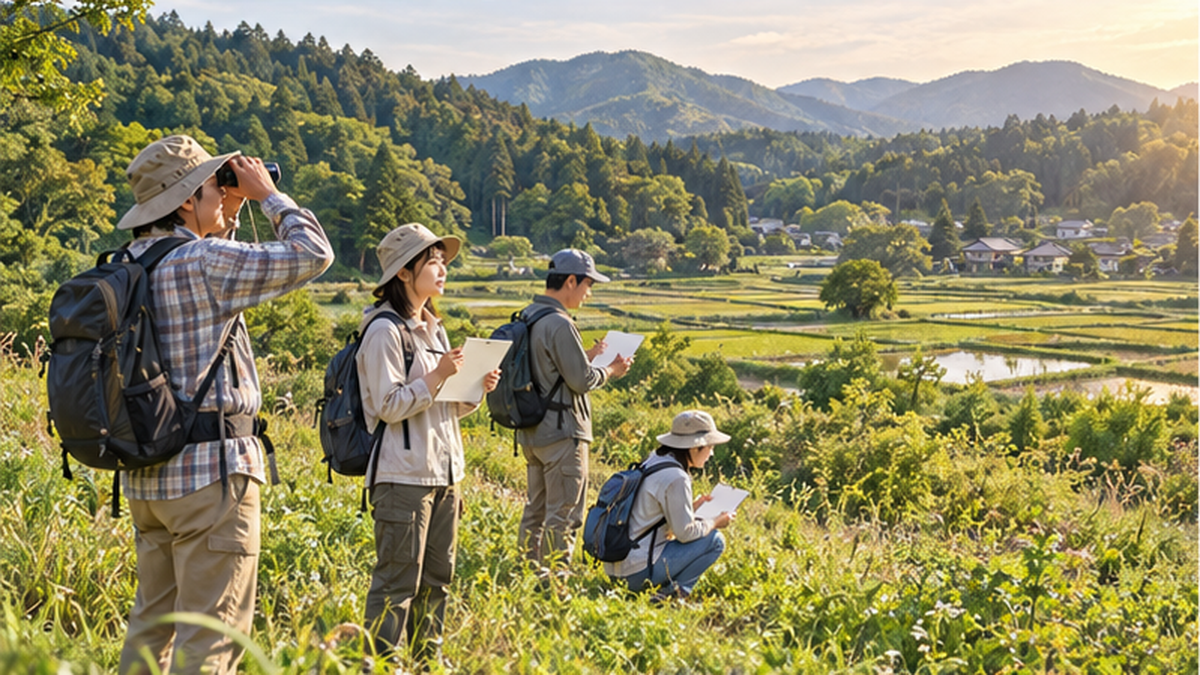
For those who want a more serious level of involvement, there's also the option of taking the Nature Observation Guide training course run by the Nature Conservation Society of Japan. After completing the course and registering, anyone with the will to act for nature conservation can become a certified nature observation guide and start organizing local observation events themselves. Roughly 1.3 million people a year attend events led by these certified guides nationwide, making them an important channel for passing on knowledge of local nature.
| Way to participate | Who it's for | Features |
|---|---|---|
| iNaturalist / Biome apps | Anyone, right now | Just take a photo and post; AI suggests the name |
| Phenology monitoring | Those who want to keep records long-term | Record and report seasonal phenomena, like cherry bloom dates |
| Monitoring Sites 1000 | Those who want to contribute to a local survey | Contribute to long-term monitoring at roughly 1,000 sites nationwide |
| Nature Observation Guide course | Those who want to deepen or teach observation | Registration-based; you can go on to run your own observation events |
Finding a good place to observe
There's no need to worry about whether there's a good observation spot nearby. In fact, a familiar, everyday environment can be easier to keep observing over time than a special nature park.
- Consider parks, green spaces, and riverbanks within a 10-15 minute walk from home
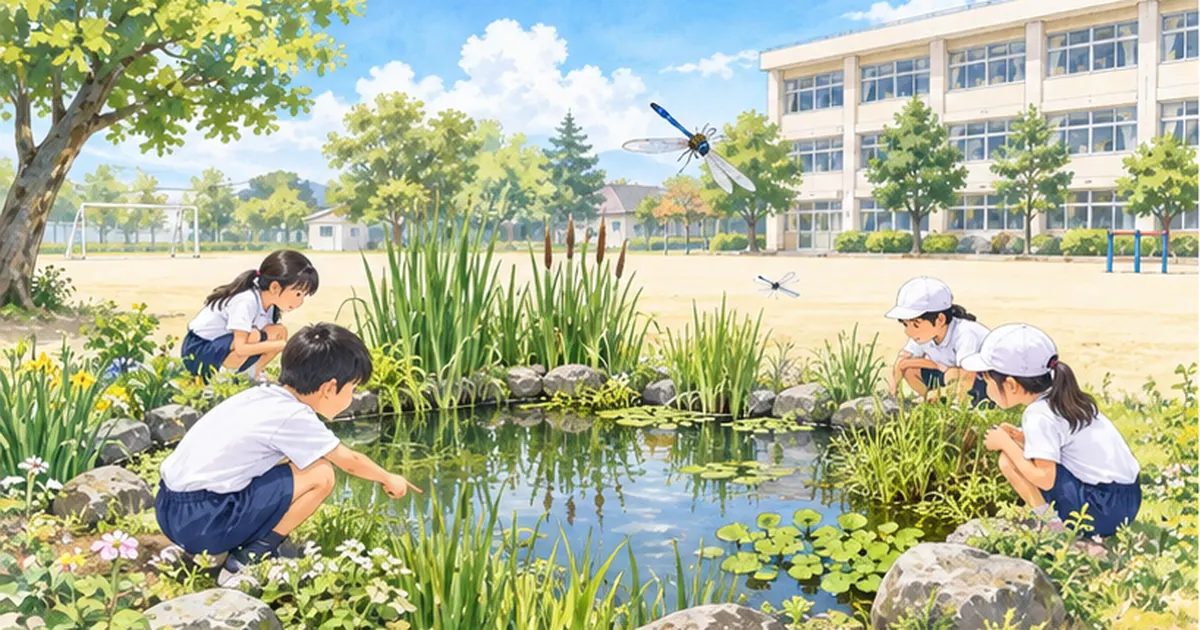
- Bodies of water (ponds, rivers, canals) host many species and yield frequent discoveries even in a short time
- Be aware that the creatures visible along the same route change between morning, midday, and evening
- Observe only from public areas, and never enter private property or restricted zones
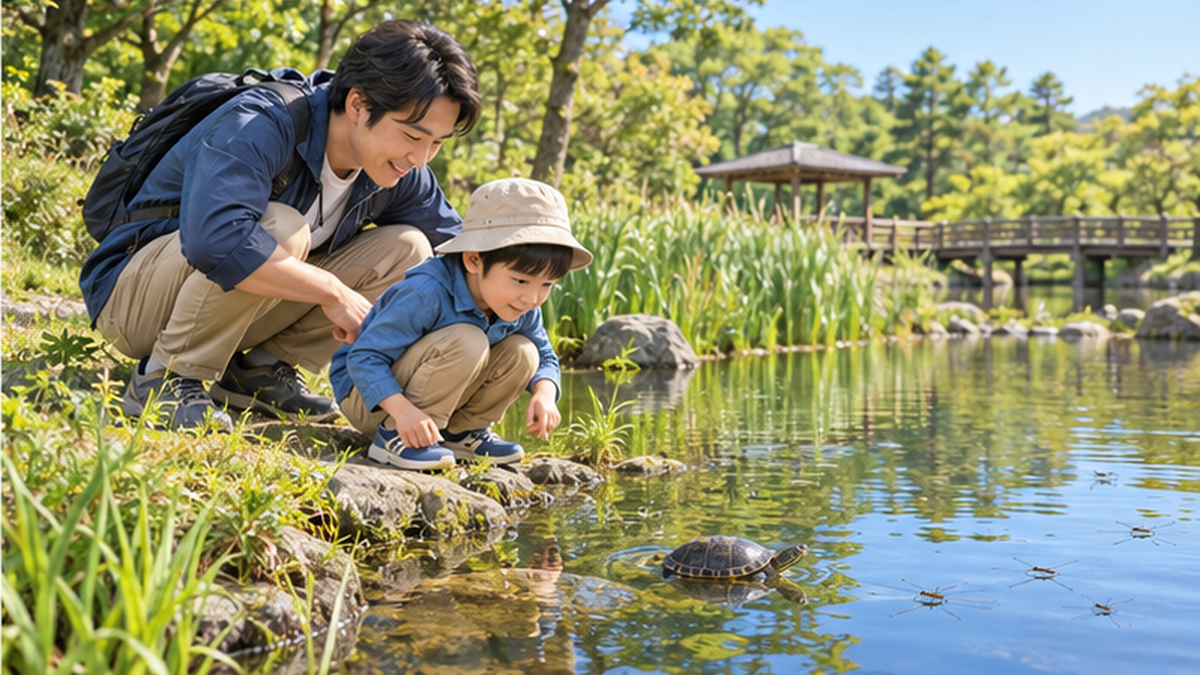
Waterside spots are dense with life
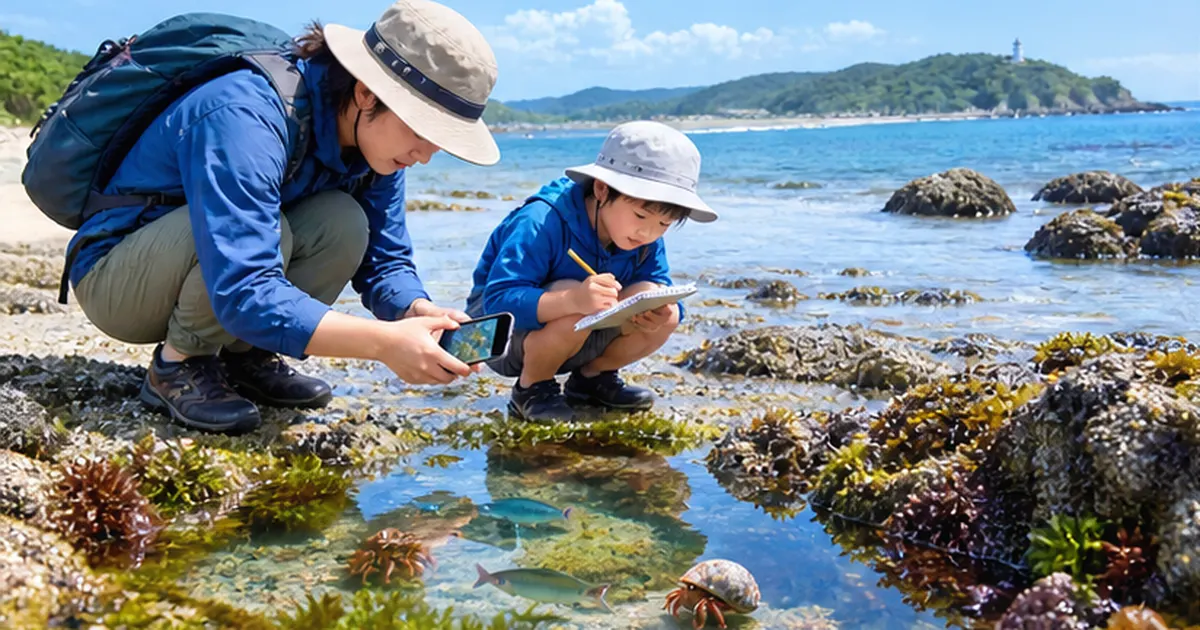
Ponds, rivers, and irrigation channels tend to attract a wide variety of creatures — aquatic insects, fish, frogs, and waterbirds — making them spots with frequent discoveries even in a short visit. Just as tidepools are known as a beginner-friendly entry point for shore observation, a familiar body of water can offer beginners the same reassurance: you're bound to find something if you look.
The same place looks different at different times of day
Even in the same park, bird activity peaks in the morning, insects and plants are easier to observe at midday, and as evening turns to night, diurnal creatures give way to moths and other nocturnal species. Simply visiting the same location at different times of day dramatically changes the cast of creatures you can observe.
Things to keep in mind while observing
- Don't forcibly catch creatures or significantly disturb their environment
- Never enter private property or restricted areas
- Keep a safe distance from wild animals rather than approaching too closely
The value your records hold beyond personal hobby
The nature observation records an individual keeps as a hobby can carry more social value than one might think. Every app and survey program introduced so far is, in effect, a mechanism that uses the collective power of many citizens to supplement the wide-ranging, long-term data collection that experts alone cannot manage.
Citizens filling gaps researchers can't cover alone
Because ecosystem change unfolds across broad areas and long timeframes, a limited number of researchers cannot continuously survey an entire country on their own. Observation data submitted by citizens around the world to platforms like iNaturalist fills this gap, helping with the early detection of invasive species and providing clues about shifting distributions of particular creatures.
The moment your record becomes "evidence"
A record kept casually can, one day, prove unexpectedly useful. For instance, there are reported cases where a photographed record of an unfamiliar creature in a familiar location later served as supporting evidence for the establishment of an invasive species — or, conversely, for the rediscovery of a species that had been declining locally. Even without a dramatic discovery, the steady accumulation of plain records — when, where, and what was seen — forms the foundation of this kind of citizen science.
The value your records hold
- They become a way to notice change for yourself (comparing with last year, for example)
- They can serve as supporting material for documenting local ecosystem change
- They can lead to the early detection of invasive species or the rediscovery of rare ones
Small habits that keep observation going
Nature observation isn't a one-off event — it's a hobby where continuing reveals more over time. Here are a few tips for keeping it up without straining yourself.
- Decide it's fine to record "whenever you notice something," not "every day" (turning it into an obligation kills the habit)
- Build one or two observation spots into your regular walking route
- Observe the same place and subject repeatedly, and compare the changes
- Look back over your app's record list once a month to reflect on the shifting seasons
It's worth recording even when you don't know the name
Even for a creature or plant you can't name, keeping a photo along with the date and location often makes it possible to identify later with the help of an app's AI or its community. The attitude of "recording it even without knowing what it is," rather than "not recording it because I don't know," is what keeps nature observation going in the long run.
Enjoyable alone or with others
Nature observation suits quiet solo contemplation, but it can also be enjoyed with family or friends, turned into something like a "what did you find today" quiz. Joining an event led by a certified nature observation guide also offers a chance to encounter perspectives and local trivia you might not have noticed on your own. There's no single right way to begin — finding a form that fits your own daily rhythm is, in the end, the way that lasts the longest.
Summary of this article
- Nature observation can start today with zero equipment, using nothing but your smartphone
- Simply attaching the date and location to a photo can turn a hobby's records into scientific data
- AI identification apps like iNaturalist and Biome remove the biggest hurdle for beginners
- Nationwide frameworks such as Monitoring Sites 1000 let your records give back to society
References and Sources
- Ministry of the Environment Biodiversity Center | Monitoring Sites 1000 – Overview of the long-term ecosystem monitoring survey at roughly 1,000 sites nationwide
- Ministry of the Environment | Overview of Monitoring Sites 1000 (PDF) – Details of the project's official name, purpose, and structure
- Japan Meteorological Agency | Phenological Observation – Explanation of the purpose and categories of phenological observation
- National Institute for Environmental Studies | Phenology Monitoring with Citizen Surveyors – Citizen-participation monitoring via the Climate Change Adaptation Information Platform
- Nature Conservation Society of Japan | Nature Observation Guides – Information on the nature observation guide system and training courses
- Wild Bird Society of Japan | Monitoring Sites 1000 (Forest/Grassland) Terrestrial Bird Survey – Structure of bird monitoring conducted by citizen surveyors
- iNaturalist official site – Overview of the global citizen science platform iNaturalist
- Phenological Observation - JMA Phenological Observation Database – Real-time data on phenological observations, including cherry blossom bloom dates
* Listed in order of reliability: government/academic institutions > peer-reviewed papers > specialized organizations > reputable media