Frozen cod at the supermarket, canned sardines, a fried white-fish fillet in your bento box — have you ever stopped to wonder whether that fish came from a sea we can keep fishing from for generations to come? According to a 2024 report from the UN Food and Agriculture Organization (FAO), about 37.7% of the world's marine fish stocks are already being "overfished," and that share has kept climbing in recent years. Fish are not an infinite resource; they are a finite shared asset that can become irretrievably damaged if harvested the wrong way.
Against this backdrop, Nissui — one of Japan's leading seafood companies, formerly known as Nippon Suisan Kaisha before its 2022 rebrand — has continued an initiative to investigate and publicly disclose just how healthy the stocks are behind the seafood it sources from around the world. Working with external specialist organizations, its 37 group companies conduct a "stock status assessment" covering 304 species and roughly 2.76 million tonnes of seafood, identifying the species that carry the highest risk of overfishing.
This article explains, from the perspective of marine science and international stock management, what Nissui's stock status assessment has revealed, how to interpret its figures, and what the company is doing to reach its 2030 goal of confirming the sustainability of 100% of what it sources. Through the lens of a single company's efforts, let's explore together the connection between the fish we eat every day and the future of the ocean.
What you'll learn in this article
- About 37.7% of the world's marine fish stocks are already overfished
- The framework Nissui uses to have a third-party organization assess the stock status of the 304 species and 2.76 million tonnes it handles
- How to read the figures "83% from fisheries with management systems in place," "75% of stocks appropriately managed," and "8% needing improvement"
- How high-risk species are prioritized and improved through certification, FIPs, and sourcing suspensions
- What's inside the sourcing guidelines for endangered species such as the European eel
- Tips for us as consumers to identify and choose "sustainable seafood"
Why the sourcing practices of major seafood companies matter now
Whether we can keep eating fish depends, in fact, heavily on who is catching how much and selling how much. In particular, the sourcing policies of major seafood companies that buy, process, and deliver enormous volumes of fish from around the world to our tables carry enough weight to affect ocean resources as a whole. Let's start by confirming the "state of the world's oceans" that lies behind this.
About 40% of the world's fish stocks are already "overfished"
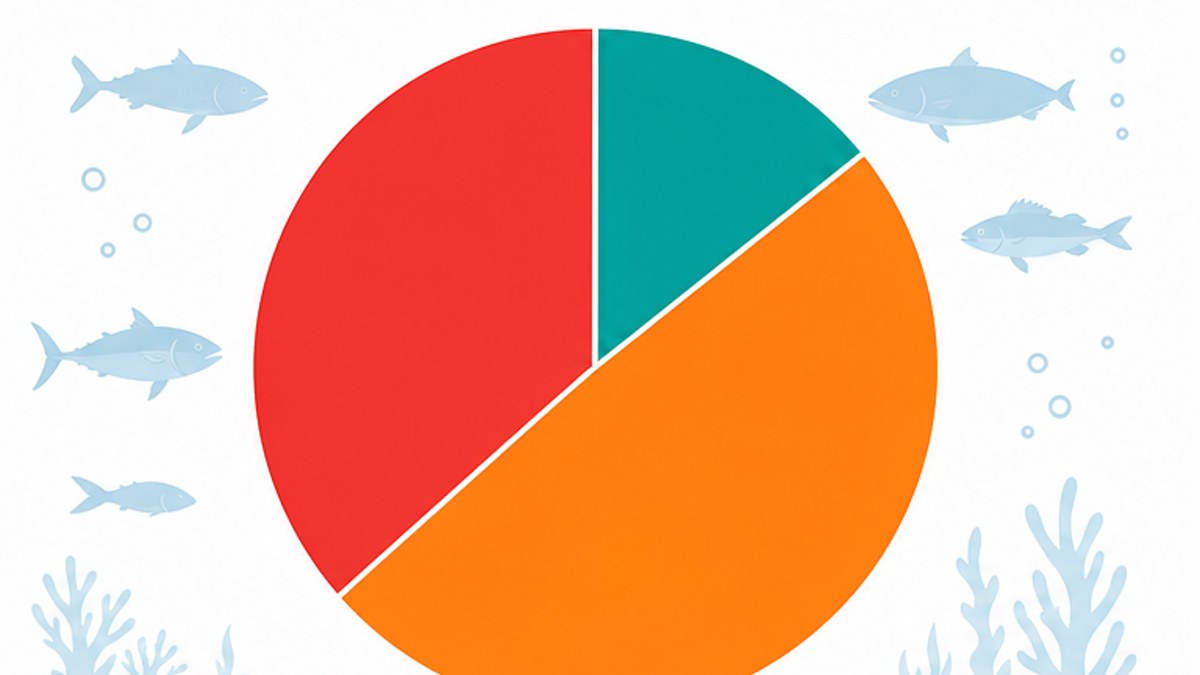
According to "The State of World Fisheries and Aquaculture (SOFIA 2024)," published by the FAO (UN Food and Agriculture Organization) in 2024, only 62.3% of scientifically assessed marine fish stocks are being fished within biologically sustainable limits, while the remaining 37.7% are already "overfished." This share of overfished stocks has worsened further from the 35.4% recorded in an earlier assessment, showing that the world's oceans are steadily being pushed to their limits.
Looking more closely, 50.5% of the stocks classified as sustainable are "maximally sustainably fished" — in other words, there is barely any room left to catch more. Stocks that are still "underfished" and have room to spare make up only 11.8%. The feeling that "there are still plenty of fish in the sea" is, unfortunately, far removed from reality.
What does "overfished" mean?
It refers to a state in which fish are being caught faster than they can naturally reproduce. If this continues, stock levels decline and the fishery itself eventually becomes unviable. The cod fishery off Newfoundland, Canada — once one of the world's great fishing grounds — collapsed from overfishing and was closed in 1992; more than 30 years later, the stock still has not fully recovered. Overfishing is a case where "once broken, it is extremely difficult to restore."
Japan is one of the world's great fish-eating nations
Japan's per-capita consumption of seafood is among the highest in the world, and much of it is imported. Shrimp, tuna, salmon, cod, squid — a glance at the country-of-origin labels on the seafood lining supermarket shelves shows how connected Japan is to oceans around the world. That is precisely why the standards Japanese seafood companies use to purchase fish have a direct impact on the future of stocks in distant seas. Ocean environmental issues are not limited to things tied to water temperature and climate, such as coral bleaching — the question of "how fish are caught and bought" is another major pillar. To deepen your understanding of the pressures on marine ecosystems themselves, it's worth reading about the role of Marine Protected Areas (MPAs) as well.
Japan's own fisheries are no exception. Japanese sardine catches once topped four million tonnes a year, then plummeted to a few hundred thousand tonnes amid fluctuations in stocks and fishing pressure, before recovering again — a pattern of large swings repeated over time. Species such as Pacific saury and Japanese flying squid have seen record poor catches in recent years. Natural factors such as sea temperature are also involved in these fluctuations, but when overfishing by humans is layered on top, stocks become even more fragile. In 2020, Japan significantly revised its Fisheries Act, shifting toward expanding the range of species managed under science-based catch limits (TAC, or Total Allowable Catch). Both globally and in Japan, we are moving decisively from an era of "catching as much as possible" to one of "catching according to a plan."
Amid this shift, the role expected of seafood companies has also changed. Where cheap, high-volume procurement was once prized, what matters now is the ability to explain that the fish being sourced comes from a healthy stock. Nissui's stock status assessment can be seen as precisely this kind of response to the demands of this new era.
Furthermore, overfishing is not the only problem. Fisheries face multiple environmental challenges, including "bycatch," in which non-target species are caught up in fishing gear, and ghost gear — abandoned fishing nets that continue to harm marine life at sea. How major seafood companies address these challenges is increasingly a factor in how their sourcing policies are evaluated.
Key points of this section
- About 37.7% of the world's fish stocks are already overfished
- Only 11.8% of stocks still have room to spare, and the situation is worsening
- The sourcing policies of major seafood companies handling large volumes of fish affect the ocean as a whole
What is Nissui's "stock status assessment"?
Against this global backdrop, Nissui has continued an initiative to quantify just how healthy the stocks are behind the seafood it sources. This is its stock status assessment. Let's look at how this framework was built and how it works.
Taking a "stock check" of the fish handled and giving it a health exam
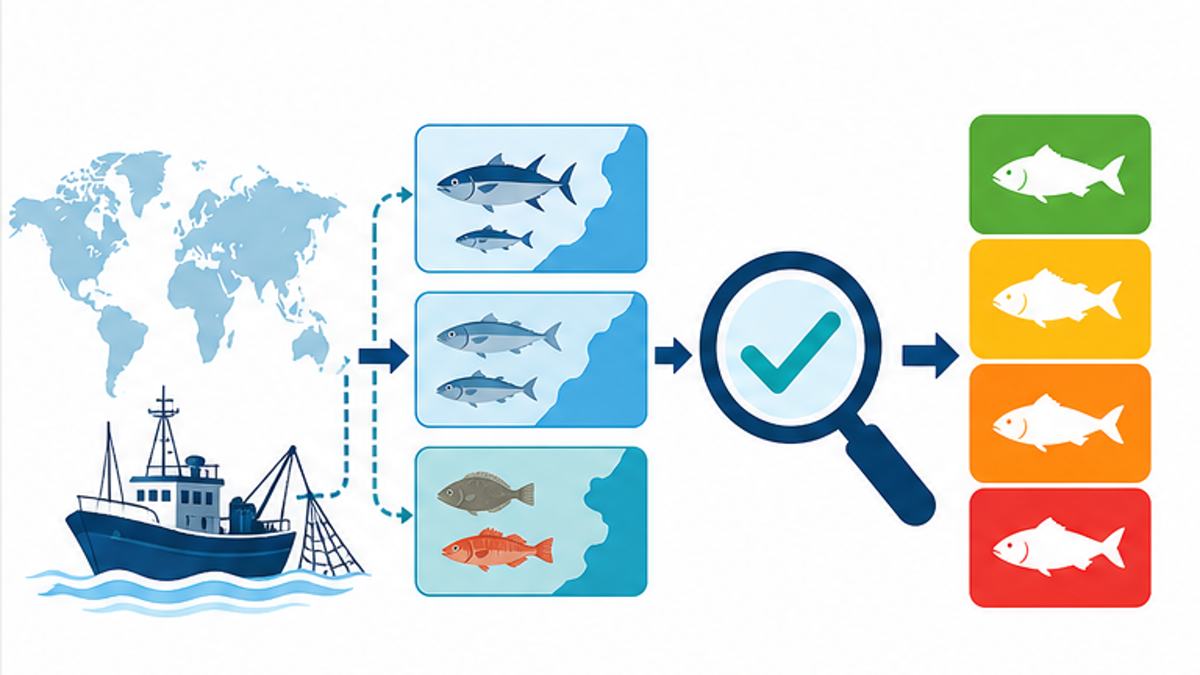
In short, the stock status assessment is an effort to "catalog the seafood the group handles in a given year by species and fishing area, and have an external specialist organization assess the current status of each stock." It is much like a full physical checkup for a person: an objective, data-based way of identifying what's healthy and where problems may lie.
The scope covers wild seafood and processed products (excluding seaweed) handled by Nissui and its group companies in Japan and overseas, for which annual transaction value exceeds 10 million yen. Rather than simply declaring, "We care about sustainability," the integrity of this initiative lies in cataloging the fish handled one by one and presenting the results as numbers.
A third-party organization, SFP, and objective evaluation
Central to this evaluation is collaboration with SFP (Sustainable Fisheries Partnership), an international fisheries NGO. SFP operates a database called "FishSource," which compiles fisheries data from around the world and scores stock status and management quality across multiple criteria. By commissioning SFP to conduct the analysis, Nissui ensures the assessment is not skewed by an overly favorable, in-house view, but instead passes through an objective third-party lens.
Under this evaluation, each stock is classified into categories such as "well managed," "managed," "needs improvement," or "unassessed (insufficient data)" — much like a traffic light system that sorts stocks from green (healthy) to red (needing attention).
An accumulation of "dialogue" since 2016
This assessment was not built overnight. Nissui began a "stakeholder dialogue" with outside experts in 2016, signaling its intent to incorporate objective outside opinions. Its first assessment (2017) was analyzed in-house using FAO evaluation methods and the FishSource database, but from the second assessment (2020) onward, Nissui switched to joint analysis with SFP to enhance its third-party objectivity.
Outside experts initially pointed to an "excessive reliance on MSC certification," which led to a clear internal recognition of the need to evaluate stocks through multiple lenses, including FIPs (Fishery Improvement Projects).
— From a case study on collaboration with Seafood Legacy
In other words, rather than treating only certified fish as "sustainable," the approach has evolved to include fisheries that are not yet certified but are working on improvement, resulting in an evaluation more grounded in reality. This process of "refining the evaluation through dialogue" is itself a part of the case study worth learning from.
Key points of this section
- The stock status assessment catalogs the fish the company handles and quantifies the health of each stock
- A third-party organization, SFP, and its FishSource database provide an objective evaluation
- The evaluation method has been refined step by step since dialogue began in 2016
Reading the figures revealed by the third assessment
In September 2024, Nissui published the results of its third stock status assessment. It covers seafood handled by 37 group companies (16 in Japan, 20 overseas) during 2022. Let's now look at the specific figures. There are quite a few numbers, but confirming their meaning one by one will make the true picture of this initiative come into sharp focus.
304 species, 2.76 million tonnes handled
The third assessment covered seafood totaling roughly 2.76 million tonnes in round-fish equivalent, spanning 304 species across 18 fishing areas worldwide. That's up 35 species from the 269 species covered in the previous assessment (covering 2019), showing that the survey's scope has expanded. A volume of 2.76 million tonnes is equivalent to more than 270,000 ten-tonne truckloads — a scale that seems almost too large for a single company, which is exactly why its responsibility toward these stocks is so great.
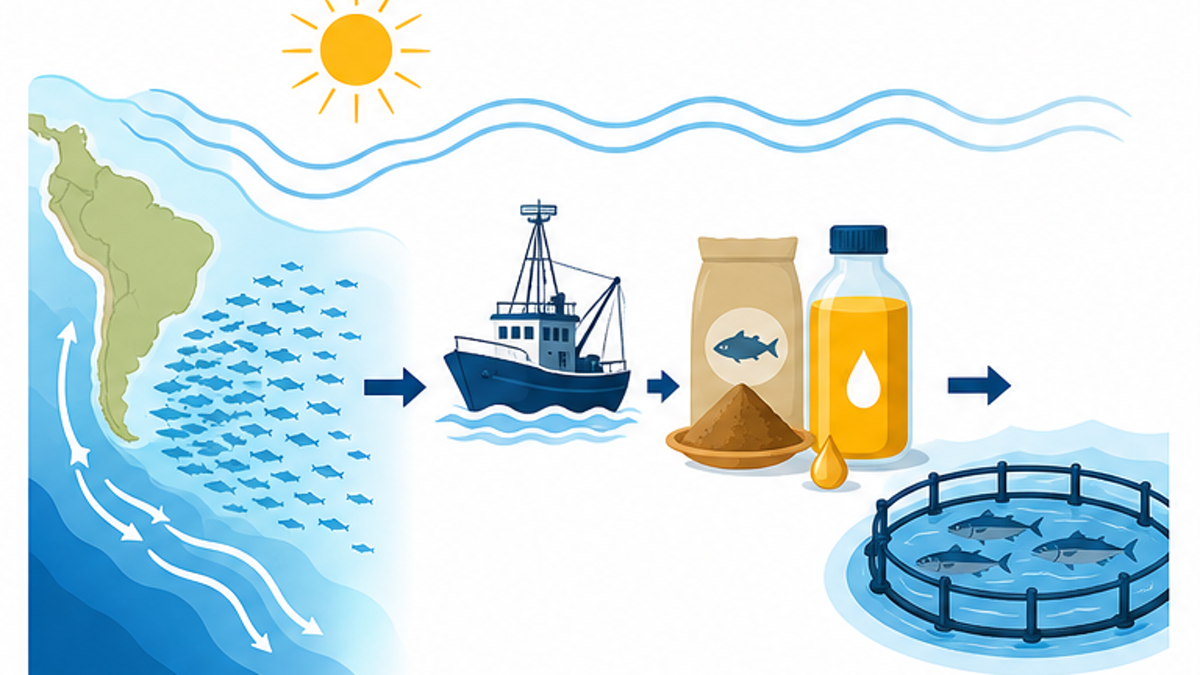
Just three species — Alaska pollock, anchoveta (a type of anchovy), and Japanese sardine — account for about 54% of everything handled. Alaska pollock, used for surimi and white-fish fillets, and anchoveta, used for fishmeal and fish oil, are fish whose names we rarely think about, yet they are handled in enormous quantities.
Anchoveta in particular is a small fish caught in huge quantities off the coast of Peru, much of it processed into fishmeal and fish oil that feed farmed fish. This species is strongly affected by El Niño, a climate phenomenon that recurs every few years, and its numbers can plummet when sea temperatures rise. In other words, it is a species whose stock is directly tied to climate variability. Given the huge volumes involved, careful monitoring of changes in this stock and management to avoid overfishing are essential. Fish whose names are unfamiliar to us are, in fact, important resources underpinning the world's food supply.
| Item | 3rd assessment (2022) | Previous (2019) |
|---|---|---|
| Total volume handled (round-fish equivalent) | About 2.76 million tonnes | About 2.71 million tonnes |
| Number of species | 304 species | 269 species |
| Stocks appropriately maintained and managed | 75% | 71% |
| Of which "well managed" | 35% | 18% |
| Stocks needing improvement | 8% | 8% |
| Unassessed (insufficient data) | 17% | 21% |
| Share of MSC-certified products | 29% (800,000 tonnes) | 25% (770,000 tonnes) |
83% from "fisheries with a management system"
The assessment found that 83% of the seafood handled was sourced from "fisheries with a system for managing stocks" in place. A management system means a fishery that has rules in place to protect stocks — such as scientifically set catch limits (catch quotas), or designated closed seasons and closed areas.
What "75% managed, 8% needing improvement" means
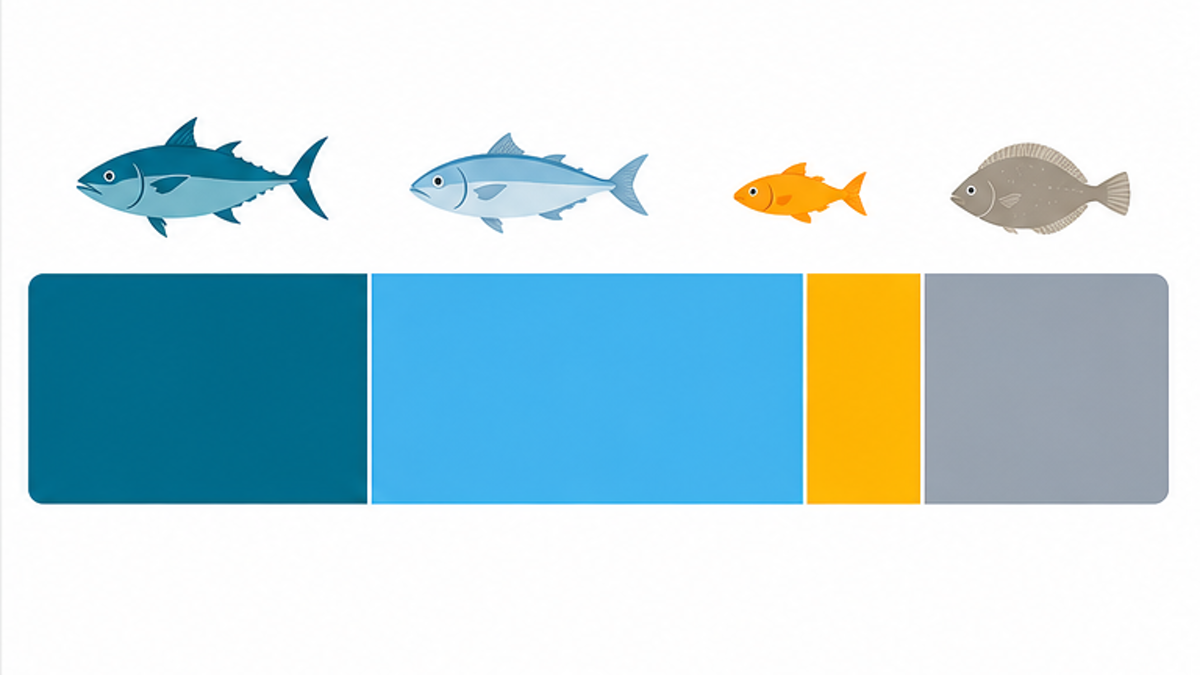
Looking more closely, 75% of the stocks handled were "appropriately maintained and managed." Of this, "well managed" accounts for 35% and "managed" for 40%. In the previous assessment, "well managed" stood at just 18%, meaning sourcing from higher-quality managed fisheries has grown significantly. Meanwhile, 8% falls into "needs improvement" — meaning there are concerns about the stock that require action. And 17% could not be assessed at all due to a lack of data.
The "17% unassessed" is the next real challenge
In fact, the 17% for which there isn't even enough data to assess is a deeper-rooted problem than the 8% clearly flagged as "needs improvement." This is especially true for raw materials used in fishmeal, fish oil, and surimi, and for fish purchased from external suppliers, where it can be difficult to trace exactly where and by whom the fish was caught. Building traceability — turning "fish we don't know about" into "fish we do know about" — is a major task going forward.
This stance of disclosing both the good and the challenges in numbers, without hiding anything, is the single greatest value of the stock status assessment. Precisely because it isn't a perfect score, it's clear where improvement is needed. If a company simply declared, "All of our seafood is sustainable," we would have no way to verify whether that's true. It is precisely because figures like 75%, 8%, and 17% exist that outsiders can verify progress and track changes year over year. Publishing numbers exposes a company's weaknesses, but it is also, at the same time, the most reliable way to build trust.
Key points of this section
- The third assessment covered 304 species and about 2.76 million tonnes; the top three species account for about 54%
- 83% comes from fisheries with a management system, and 75% of stocks are appropriately managed
- Resolving the 17% that cannot be assessed (due to insufficient data) is the next challenge, even more so than the 8% needing improvement
How high-risk species are identified and prioritized
Fish flagged as "needs improvement" or "unassessed" in the survey are, in a sense, items flagged for a follow-up test in a health checkup. But 304 species are handled in total — it's not possible to address them all at once. That's why Nissui takes a prioritized approach, tackling issues in order of the scale of risk involved.
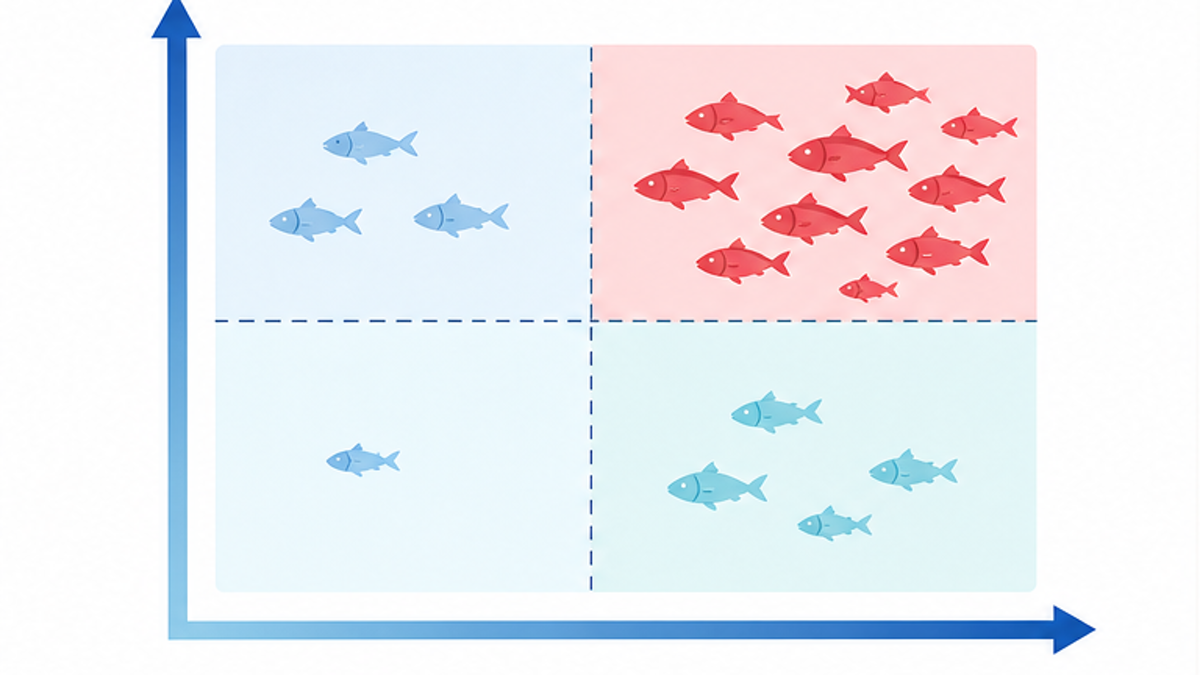
Starting with fish that are "high volume × high risk"
The basic idea behind prioritization is simple: improve first the fish that are handled in large volumes and carry high stock risk — this is the approach with the greatest impact. Keeping the stock of a major species handled in large volumes healthy has a far greater impact on the ocean as a whole than perfecting a species handled only in small quantities.
For example, major species like Alaska pollock, anchoveta, and Japanese sardine — which together account for about 54% of the total — would have an enormous impact if their stocks were to deteriorate. Carefully monitoring compliance with catch limits and stock assessments for these species, and maintaining their health, is the top priority.
Bycatch and endangered species: another axis of risk
Beyond the stock level itself, whether a fishery harms other creatures is another important risk factor. Whether sea turtles or seabirds are caught in tuna longline fishing (bycatch), or whether endangered species are among those handled, are also essential points to check when assessing sourcing. To see how bycatch affects sea turtles, it's worth reading about efforts to protect sea turtles as well, which brings the relationship between fisheries and ecosystems into sharper focus.
The third assessment also revealed that 13 endangered species were among the seafood Nissui handled. That's down from 16 in the previous assessment, but it is still not zero. For these species, the response goes beyond simply "reducing the volume" — it becomes a matter of reconsidering whether to handle them at all.
Traceability to reduce the number of "unknown fish"
The "17% unassessed" fish discussed in the previous section often cannot even be identified by species or origin in the first place. Nissui has therefore started with the work of pinpointing "exactly what fish this is used in this processed product, and where it was caught." Only once a species is identified can its stock be evaluated as healthy or not. It's painstaking work, but it forms the foundation of sustainable sourcing.
What makes this identification work difficult is the complex distribution routes that many seafood products travel. A fish may be caught at sea, frozen on board, processed in one country, then seasoned and packaged in yet another country before arriving in Japan — and along the way, information about what the original fish was can fade. Efforts using technologies such as DNA analysis to confirm species are progressing, but verifying the enormous number of items handled worldwide one by one remains a long, patient road. That is precisely why the prioritization approach — steadily working through the highest-risk fish first — proves its value here as well.
Read corporate sustainability claims with a critical eye
When reading a company's sustainability messaging, blanket statements like "100% sustainable!" actually warrant extra caution. What makes Nissui's initiative credible is that it also discloses in numbers the parts that are not yet achieved — the 8% needing improvement and the 17% unassessed. Companies that honestly disclose their challenges are often more trustworthy than those that claim perfection.
Key points of this section
- Fish that are "high volume and high risk" are improved first
- Beyond stock levels, bycatch and endangered species are also examined as a separate risk axis
- Traceability to identify species and origin is a prerequisite for evaluation
Certification, FIPs, and sourcing guidelines — concrete steps for improvement
Once high-risk fish have been identified, how are they actually improved? Nissui combines several approaches, broadly grouped into "switching to certified products," "engaging with FIPs to improve fisheries themselves," and "establishing rules for at-risk species." Let's walk through each of these frameworks in plain terms.
MSC, ASC, and MEL — "marks of sustainability"
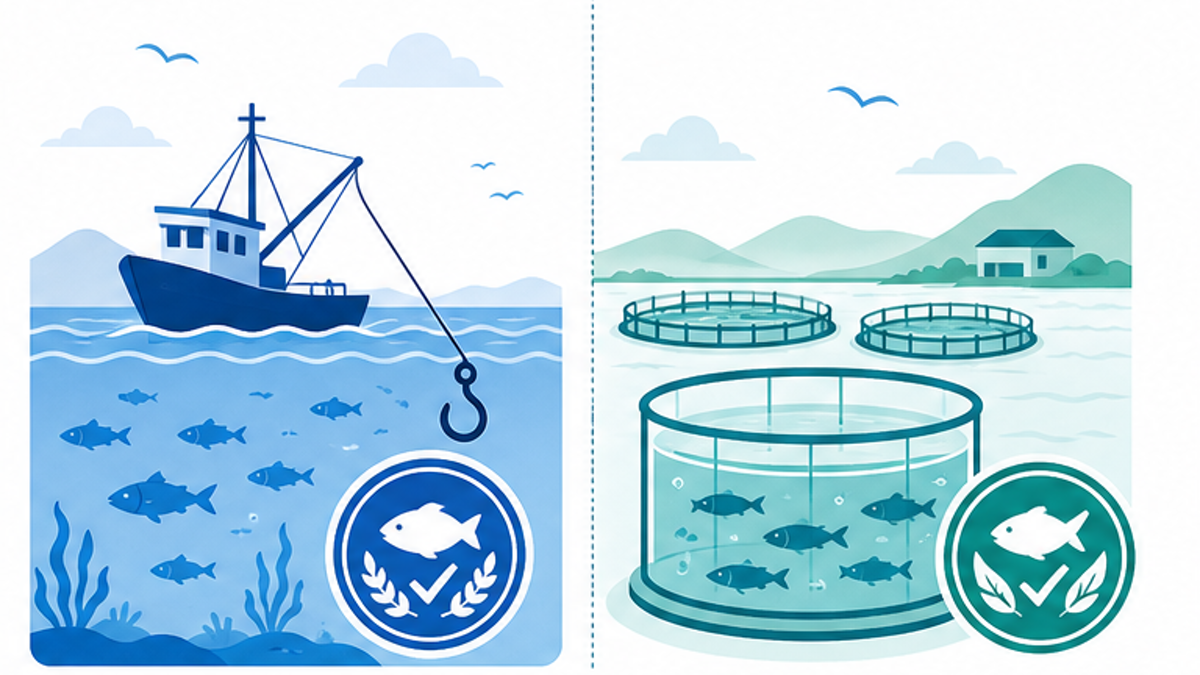
There are several certification marks for seafood that accounts for stock and environmental considerations. The best known are MSC certification (the Blue Ocean eco-label), for wild fisheries, and ASC certification, for aquaculture. Japan also has its own MEL certification for domestic seafood. These are, in effect, "marks of sustainability" that can only be applied to fisheries and aquaculture operations that a third party has recognized as being appropriately managed with due regard for stocks and the environment.
MSC-certified products that Nissui handled in 2022 came to 800,000 tonnes (29% of the total) across 72 species, a steady increase from 770,000 tonnes, 25%, and 55 species previously. Prioritizing the purchase of certified products also helps provide economic support to healthy fisheries. To see how certified seafood is spreading, it's worth reading about the retail case study of AEON's TOPVALU and MSC/ASC certification, and the restaurant-chain case of Kura Sushi's use of wild-caught fish, alongside this article, to see how the movement plays out across the entire supply chain.
That said, certification comes with both effort and cost. Obtaining certification requires organizing fisheries data and paying for audits, and the burden falls especially heavily on small-scale fisheries. Only a fraction of the world's fisheries are currently certified, and pursuing certified products alone limits the range of fish that can be handled. That is precisely why Nissui values certification as "one goal" while also combining it with approaches like FIPs, discussed next, which improve stocks even without certification. Understanding certification not as a silver bullet but as one tool among several allows for a more accurate reading of corporate initiatives.
FIPs — improving fisheries even without certification
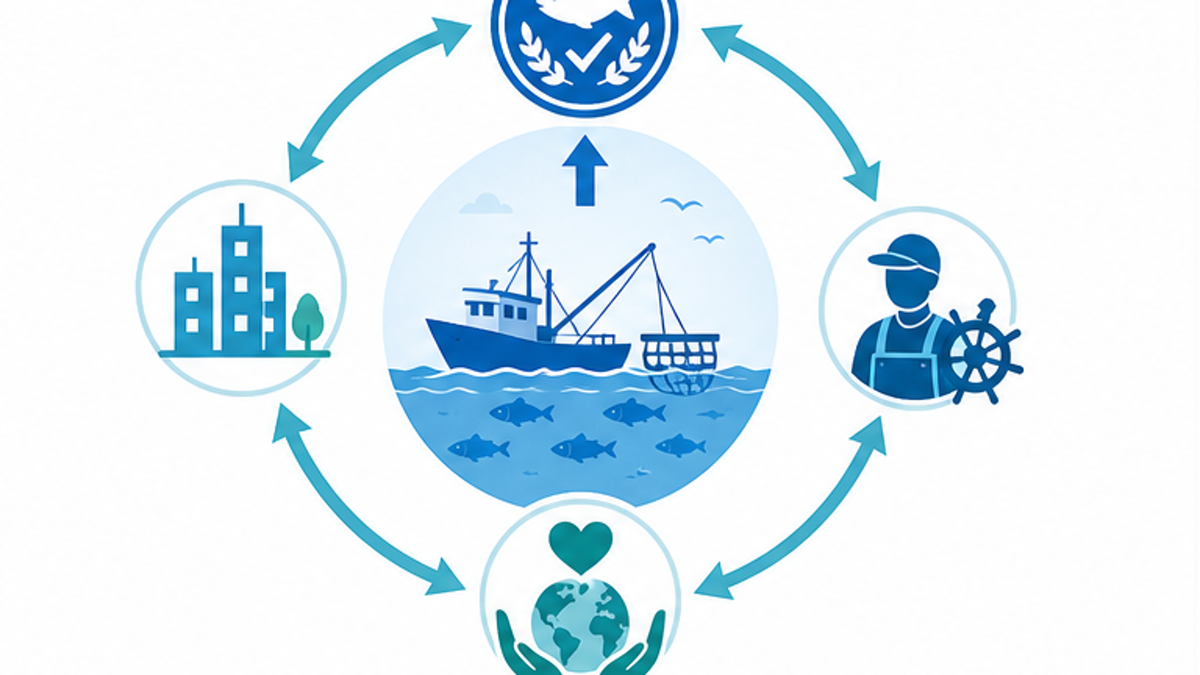
Not every fishery in the world can obtain certification right away, however. Many lack sufficient data or have not yet established the necessary management systems. This is where FIPs (Fishery Improvement Projects) become important. A FIP is not a certification mark itself, but rather an "improvement process" in which fishers, companies, and NGOs cooperate to resolve the challenges facing a fishery step by step.
Nissui doesn't just purchase certified products — it also proactively participates in FIPs, provides financial support, and joins roundtable discussions with suppliers. Simply "choosing to buy only good fish" does nothing to change fisheries that are not yet good. Staying engaged with fisheries that need improvement and working together to improve them — this is a role that only a major seafood company can play.
This idea might seem a little counterintuitive. Some might think, "Wouldn't it be better to simply walk away from fisheries with stock problems?" But if major buyers all withdraw at once, the fishing communities that depend on that fishery lose their income, which can push them toward even more desperate operations. Instead, an influential buyer staying engaged and signaling, "We will keep buying if you improve," can be a powerful force for moving a fishery in a better direction. Fulfilling both the responsibility to buy and the responsibility to support — this is both the difficulty and the interest of sustainable sourcing.
The difference between certification and FIPs
MSC and ASC are a "certificate of achievement" (a goal) awarded to fisheries and aquaculture operations that already meet the standard. A FIP, by contrast, is an ongoing effort "in the process of improving to meet the standard" (the road to the goal). Combining both makes it possible to "support fisheries that are already good, while also lifting up fisheries that still have challenges."
Sourcing guidelines for endangered species
In February 2024, Nissui established its "Nissui Group Guidelines for Sourcing Endangered Species (Seafood)." These guidelines set clear internal rules for how to handle species at risk of extinction. Specifically, for critically endangered species such as the European eel and for species of concern such as the thornback ray, the company is moving to halt sales or switch to certified stocks.
Rather than simply deciding "we won't handle endangered species at all," the company is building rules grounded in the reality of stock conditions and available alternatives — a practical response that is also a valuable lesson from this case study.
Key points of this section
- MSC for wild-caught fish, ASC for aquaculture, and MEL for domestic seafood are marks of sustainability; certified products have grown to 29%
- FIPs help improve fisheries that aren't yet certified, working together with them
- In 2024, sourcing guidelines for endangered species were established, reviewing the handling of species such as the European eel
The road to "100% sustainable sourcing" by 2030
What is the ultimate goal of all these individual efforts? Nissui has set a clear numerical target: to reach a state by 2030 in which the sustainability of 100% of the group's sourced products has been confirmed.
75% in FY2024, 85% in 2027, 100% in 2030
Nissui's medium-term plan sets step-by-step targets for the share of sustainable seafood sourcing. The most recent FY2024 result was 75%. The plan is to raise this to 85% by FY2027 and to 100% by FY2030. How to fill in the remaining 25% — particularly the portion that cannot be assessed due to insufficient data — will be the real test going forward.
| Fiscal year | Target/result for sustainable sourcing ratio |
|---|---|
| FY2024 (result) | 75% |
| FY2027 (target) | 85% |
| FY2030 (target) | 100% |
A "three-stage approach" underpinning the improvements
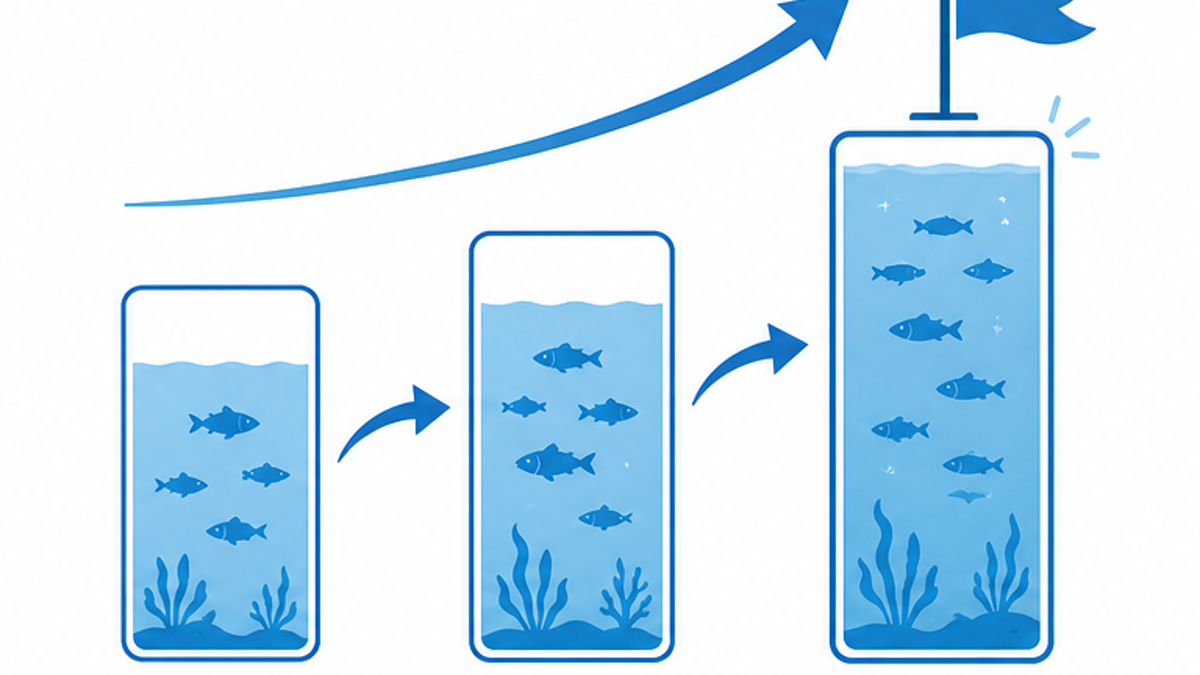
Toward this goal, Nissui has organized its efforts, based on the assessment results, into three stages. Let's walk through them in order.
- Choose stocks that are in good condition: switch to MSC-certified products and species with healthy stock status, introduce MEL-certified products for domestic fish, and promote sourcing of FIP-derived seafood.
- Engage in stock improvement activities: proactively participate in and financially support FIPs, and join roundtable discussions with suppliers to improve the fisheries themselves.
- Secure traceability: for items that are difficult to identify, start by pinpointing the species so that stock status can be understood.
The key is advancing all three together — not just "choosing good fish," but also "improving fisheries" and "turning unknown fish into known fish." Relying on step one alone would place an unfair burden on already-healthy fisheries and leave those with problems behind. Combining all three is what leads to raising the overall level of the ocean. In other words, rather than just gathering the top-performing fish, it's like raising the average score for the entire class. It takes time, but this may truly be the shortest path to genuine sustainability.
International cooperation and disclosure
Nissui is not pursuing these efforts alone. It has participated since 2022 in the "Global Roundtable on Marine Ingredients," an international framework discussing the sustainability of fishmeal and fish oil, and has also signed WWF Japan's "Pledge for the Conservation of Pacific Bluefin Tuna." It also maintains a 15-year partnership with the New England Aquarium in the United States, drawing on scientific expertise.
Stock management is a challenge that no single company or country can solve alone. Fish migrate across borders, and a single fishing ground is often used by multiple countries. That's exactly why it's essential for companies, NGOs, research institutions, and governments to share information and build common rules across their respective positions. When a major company like Nissui joins international discussions and discloses its own data, it also helps raise the transparency of the entire industry. The efforts of a single company can eventually rewrite what becomes "standard practice" in the seafood industry — and that ripple effect is precisely the value of studying a major company's case study.
While progress is being made in understanding the status of sourced stocks and advancing sustainable seafood sourcing, fisheries that lack management systems or data — and thus cannot be assessed — as well as fisheries that need improvement, still remain. We will continue to prioritize and address these going forward.
— From Nissui's third stock status assessment results
Key points of this section
- The goal is 100% sustainable sourcing by 2030 (75% as of FY2024)
- A three-stage approach of "choosing, engaging, and tracing" drives improvement
- Nissui collaborates with international frameworks, NGOs, and aquariums, and discloses information
What we as consumers can do — lessons from a corporate case study
We've looked at one company's efforts here, but creating a "sustainable ocean" isn't just the job of companies. The choices each of us makes when buying and eating fish also shape the future of the ocean. What can we learn from a case study like Nissui's, and how can we act on it?
Looking for the "mark" when you shop
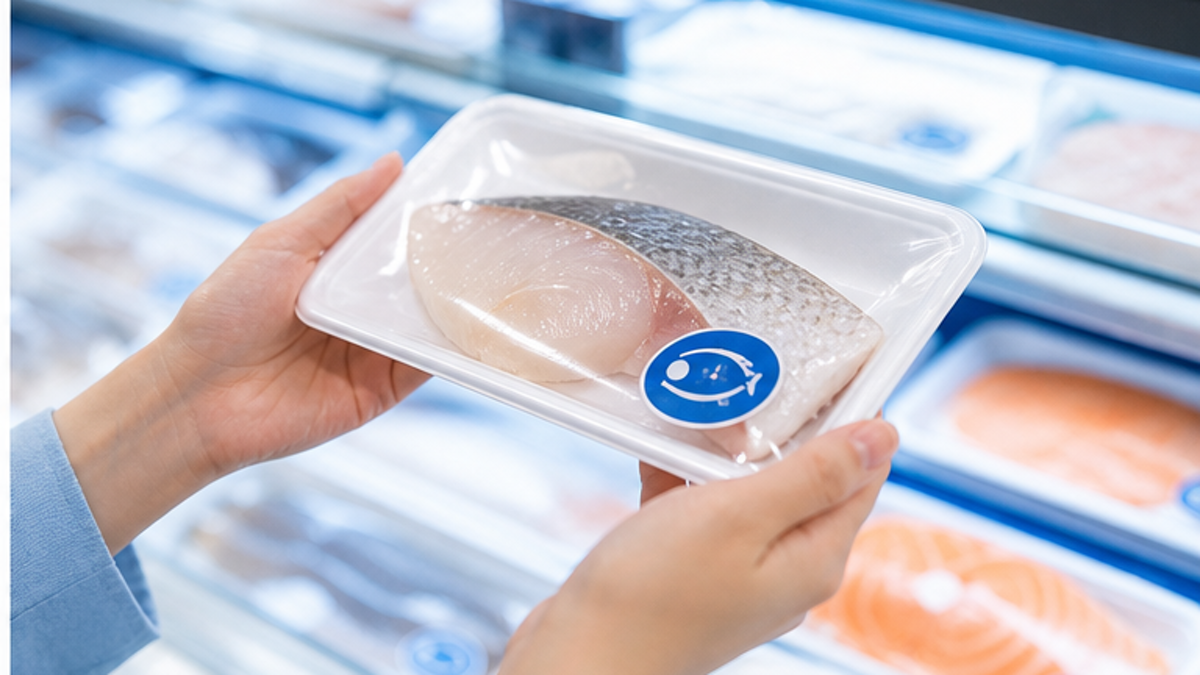
The easiest first step is to look for certification marks such as MSC (the blue label), ASC, or MEL when choosing fish or processed seafood products at the supermarket. Not every product carries one, but if a certified option is available, simply choosing it helps support sustainable fisheries. It's fine to balance this with price and preference, choosing "when you can, to the extent you can." A single choice may be small, but when tens of thousands or millions of people make the same choice, it becomes powerful enough to shift a company's sourcing policy. In fact, growing consumer demand for certified products has been a major driver pushing seafood companies toward certification and stock management. Shopping is, in a way, a "daily vote" for the ocean.
Reading corporate messaging through the lens of numbers
Another important habit is not to take corporate sustainability messaging at face value, but to check whether it is "backed by numbers" and whether it also "discloses what hasn't been achieved." As we've seen throughout this article, what makes Nissui's initiative credible is not just the 75% achievement, but that it also presents the 8% needing improvement and the 17% unassessed as figures.
In recent years, "greenwashing" — presenting a false appearance of environmental responsibility without substance — has also become a problem. That's exactly why building the habit of checking for three things — third-party evaluation, concrete figures, and disclosure of challenges — rather than being swayed by a catchy slogan, becomes a smart consumer's most useful tool.
| Point to check | What to look for |
|---|---|
| Is it assessed by a third party? | Is an outside NGO or certification body involved? |
| Is it backed by numbers? | Concrete data such as percentages, volumes, or species counts |
| Are challenges also disclosed? | Clear mention of weak points like "needs improvement" or "unassessed" |
| Is it ongoing? | Is the assessment conducted and updated regularly, not just once? |
Ocean issues are all "connected"
Overfishing and stock management issues do not exist in isolation — they are connected to a wide range of other ocean challenges. Rising water temperatures cause coral bleaching, which robs fish of habitat, while bycatch and ghost gear harm ecosystems. Fishing sustainably is part of protecting the health of the ocean as a whole. Starting from the angle of a single company's sourcing policy and building a perspective that takes in the entire ocean will only become more important going forward.
Three actions you can take starting today
- Look for certification labels like MSC, ASC, or MEL at the supermarket, and choose them when they're available
- Develop an eye for verifying a company's claims of being "sustainable" through numbers and third-party assessment
- Pay attention to where fish comes from, and stay aware that ocean resources are finite
Conclusion — the value of "showing the numbers honestly"
We've looked at Nissui's sustainable seafood sourcing initiative, from the state of the world's oceans to concrete figures, improvement measures, and what we ourselves can do. Amid the harsh reality that about 40% of the world's fish stocks are overfished, the stance of examining the 304 species and 2.76 million tonnes it handles one by one, and disclosing both the good and the challenges in numbers, is a responsible case study worth learning from among major seafood companies.
Of course, 75% is not 100%. Challenges remain, including the 8% needing improvement and the 17% unassessed. But rather than claiming perfection, advancing step by step toward 100% by 2030 while honestly showing the challenges — that integrity may be exactly what sustainable sourcing should look like. And what pushes that progress forward is the choice each of us makes: choosing certification labels, and reading a company's words through the lens of numbers.
Summary of this article
- About 37.7% of the world's fish stocks are already overfished — fish are a finite shared resource
- Nissui investigates the stock status of the 304 species and 2.76 million tonnes handled by its 37 group companies with the third-party organization SFP
- 83% comes from fisheries with a management system, and 75% of stocks are appropriately managed — while 8% needs improvement and 17% is unassessed (insufficient data)
- High-risk fish are prioritized for improvement through switching to certified products, engaging with FIPs, and applying endangered-species guidelines
- The goal is 100% sustainable sourcing by 2030 (75% as of FY2024), progressing through the three stages of "choosing, engaging, and tracing"
- We too can support the future of the ocean by choosing certification labels and evaluating corporate messaging through numbers and third-party assessment
Behind every piece of fish on our daily table lies the world's oceans, and the countless efforts to protect them. The next time you pick up a piece of fish, take a moment to consider where it came from. That small bit of curiosity is the first step toward carrying a rich ocean into the future. The fact that we can enjoy eating fish today is thanks to the resources the ocean has nurtured over a long span of time. Whether we can pass that gift on to the next generation, unchanged, depends on where the efforts of companies and the choices we make ultimately meet.
References and sources
- UN Food and Agriculture Organization (FAO) – The State of World Fisheries and Aquaculture (SOFIA 2024)
- Nissui Corporation – Results of the Nissui Group's Stock Status Assessment of Seafood Handled (3rd assessment)
- Nissui Sustainability – Sustainable use of wild fisheries resources
- Nissui Sustainability – Targets and results (KPI for sustainable sourcing ratio)
- Nissui Sustainability – Nissui Group Sustainability Report 2024
- Seafood Legacy – Case study of collaboration with Nissui (background of the stock status assessment)
- Marine Stewardship Council (MSC) – What is a Fishery Improvement Project (FIP)?
- Sustainable Fisheries Partnership (SFP) – FishSource fisheries stock database
* Listed in order of reliability: government/academic institutions > peer-reviewed papers > specialist organizations > reputable media