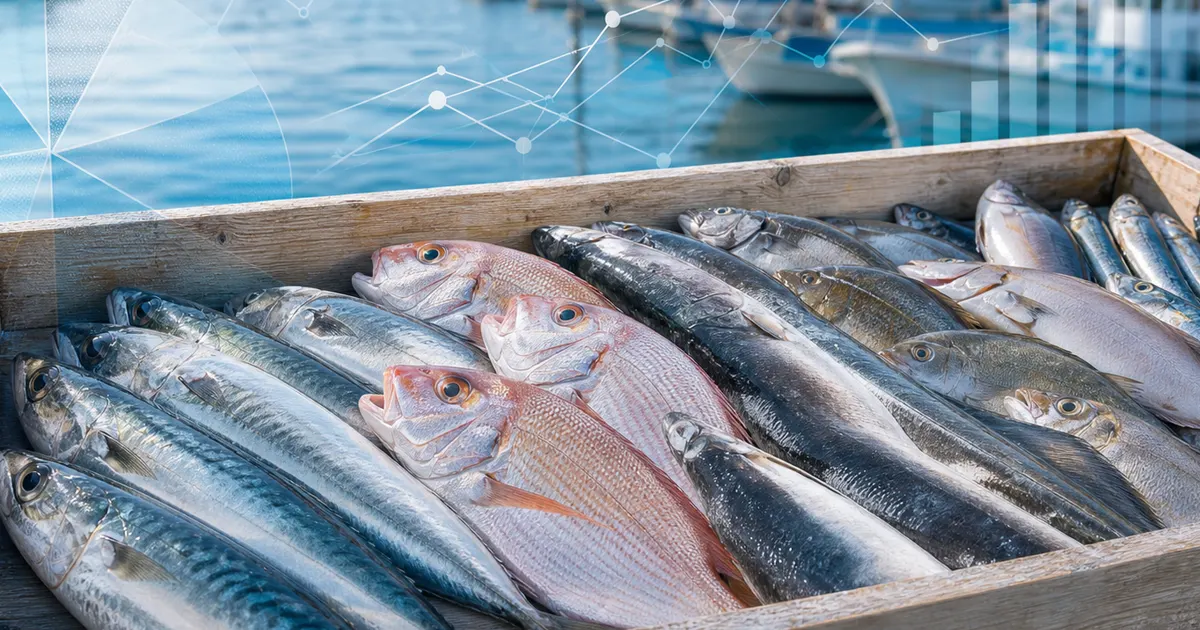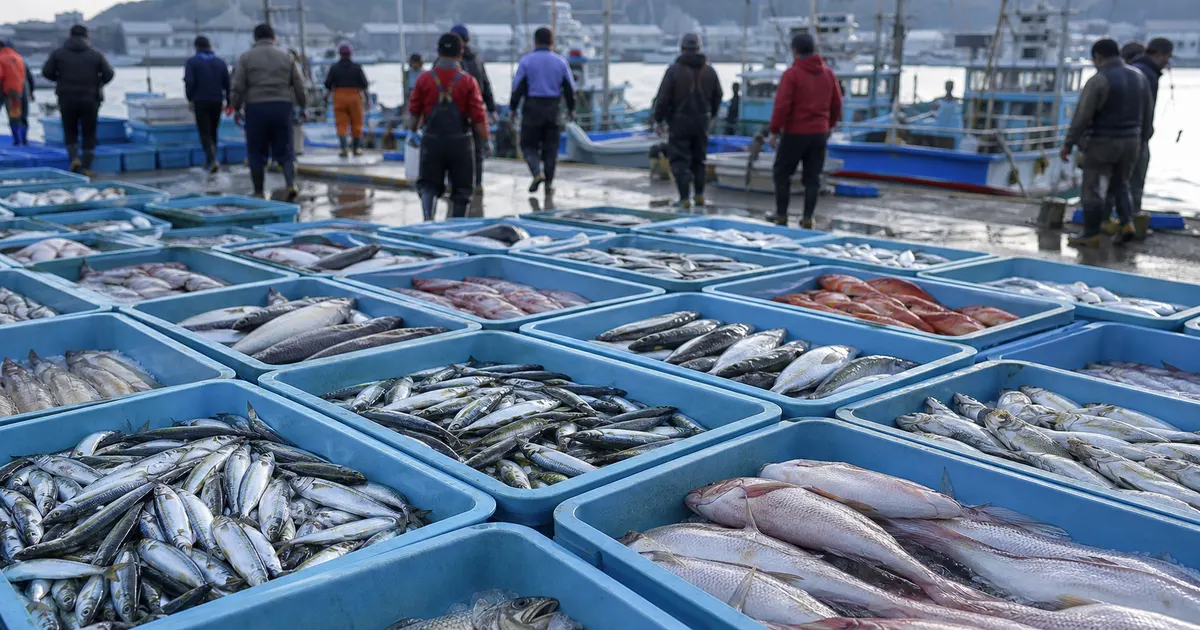
The varieties of fish lined up at the supermarket seafood counter are, in fact, only a tiny fraction of what Japan's seas produce. Even when fish are caught in the nets, many end up unsold and discarded simply because their sizes are uneven, their names are unfamiliar, or they are difficult to prepare. Meanwhile, the amount of fish Japanese people eat has fallen by almost half over the past 20 years, and the number of people working in fisheries keeps declining. The bounty of the sea is shrinking, yet we are failing to make full use of what remains — this is the contradiction at the heart of Japan's fishing industry today.
Kura Sushi, a conveyor-belt sushi chain, is an unexpected player that has taken this challenge head-on. "Whole-catch buying," which purchases the entire contents of fixed nets regardless of species or size; the commercialization of underused fish rarely seen on the market; and the "Sakana 100% Project," which uses every part of the fish down to the bones and trimmings. These initiatives, ongoing since 2010, have drawn attention as a system that stabilizes fishers' incomes while making full use of the sea's limited resources.
This article examines Kura Sushi's "Fisheries Revitalization Initiative" within the broader context of the state of Japan's fisheries resources. Rather than treating it as a feel-good corporate PR story, let's think together, using concrete figures and examples, about how the restaurant industry can contribute to the sustainability of fisheries resources, and what each of us as consumers can choose at our own dining tables.
What you'll learn in this article
- The real picture of Japan's dual crisis: declining fisheries resources and the decline in fish consumption
- How "underutilized and underused fish" come to exist, and why using them helps conserve resources
- Why Kura Sushi's "whole-catch buying" helps stabilize fishers' incomes
- An overview of initiatives such as the Wild Fish Project, Sakana 100%, and the Kura no Ippin series
- The circular structure of the domestic wild-fish ecosystem built around "local fish, local consumption"
- Concrete ways consumers can support sustainable fisheries from their own dining tables
The dual crisis facing Japan's seas: shrinking resources and a fading connection to fish
To understand Kura Sushi's initiatives, we first need to grasp the harsh reality facing Japan's fishing industry. Japan, the "land of fish" that has long supported our dining tables, is now quietly facing a crisis on both the resource and consumption fronts. Understanding the structure of this crisis helps explain why a single company would take on a seemingly roundabout system like "whole-catch buying."
Fisheries production down to about 30% of its peak
According to statistics from the Fisheries Agency of Japan, Japan's fisheries and aquaculture production peaked at 12.82 million tons in 1984. Since then, a combination of factors — countries establishing Exclusive Economic Zones (EEZs) that forced Japan to withdraw from distant-water fishing grounds, fluctuations in Japanese sardine stocks, and the deterioration of fishing grounds — caused production to fall to about 3.92 million tons in 2022, roughly 30% of its peak. Despite being a country surrounded by the sea, the bounty we obtain from it has shrunk dramatically over these 40 years.
Rising sea temperatures driven by climate change are also part of the picture. Warming seas are shifting fish distribution and migration routes, and reports from across the country describe fish that used to be caught no longer appearing. The continued poor catches of once-familiar table fish such as saury, Japanese flying squid, and salmon are the result of this interplay between environmental change and resource conditions. For more on the relationship between rising sea temperatures and fisheries, see our article on the impact of ocean warming on fisheries.
To better grasp the state of these resources, the Fisheries Agency significantly expanded the number of species subject to stock assessment from 119 to 192 in fiscal year 2021. The system for managing allowable catch based on scientific data is also being strengthened in stages. Working from the premise that fisheries resources are renewable and can be used indefinitely if managed properly, it becomes clear that what's needed now is not just "catching less" but also the mindset of "making full use of whatever is caught."

Fish consumption cut in half over 20 years
Even as resources decline, the amount of fish Japanese people eat is also falling rapidly. Per capita annual consumption of food-use seafood peaked at 40.2 kg in fiscal year 2001 and has continued to decline, hitting an all-time low of 22.0 kg in fiscal year 2022 — almost half the peak figure. In fiscal year 2011, meat consumption exceeded seafood consumption for the first time, and the gap has continued to widen ever since.
Fisheries Agency surveys show that even though most consumers recognize that "fish is good for you" and "delicious," reasons for not choosing fish include high prices, the hassle of preparation, and not knowing how to fillet or cook it. It isn't so much that fish itself has lost its appeal, but that the distance between fish and everyday life has widened. The rise of dual-income households leaving less time for unhurried cooking, a desire to avoid food waste and odors, and the relative scarcity of information on how to prepare fish compared with meat have all widened this gap.
Looking globally, the picture is the opposite. Amid a growing focus on health, worldwide consumption of food-use seafood is actually on the rise, with demand growing especially in Asia and Oceania alongside rising living standards. This creates an ironic situation in which Japan — supposedly the home of fish-eating culture — is the one country turning away from fish. As domestic demand shrinks, Japanese-caught fish increasingly have nowhere to go, prices fall, and fishers are pushed further into a corner.
Breaking down the "dual crisis"
- Supply side: declining resources plus an aging, shrinking fisher workforce mean both the fish caught and the people catching them are decreasing
- Demand side: the move away from fish has cut consumption in half, shrinking the very market for selling fish
- If both trends continue together, regional fisheries could become economically unviable, risking the loss of local food culture along with them
The "no buyers" problem plaguing fishers
Within this dual crisis, the problem directly afflicting fishers is that "even when you manage to catch fish, no one will pay for them." Fixed nets bring in not just popular fish but also large numbers of fish that taste good but are little known, are the wrong size for market standards, or are difficult to process. These fetch only rock-bottom prices in the market, and are sometimes thrown back into the sea or discarded. The effort of catching them is the same, but it doesn't translate into income — this structure has turned fishing into "work that doesn't pay." Targeting only popular fish increases pressure on those specific stocks, yet catching a diverse range of fish brings no buyers either. This impasse is the fundamental problem eating away at both resource conservation and fisheries management, and it is precisely the core challenge Kura Sushi set out to tackle.
What are "underutilized and underused fish"? The bounty of the sea going to waste
At the heart of Kura Sushi's efforts is the use of these "underutilized and underused fish." The term may be unfamiliar, but understanding it is the key to grasping why "whole-catch buying" contributes to resource conservation.
Fish that are edible but go unused
"Underutilized fish" does not mean fish that can't be eaten at all. It is a general term for fish that are perfectly edible and delicious, yet rarely reach the market or are not fully put to use. Fish with a somewhat higher degree of use are sometimes distinguished as "underused fish," though the boundary between the two is not strict. The Fisheries Agency describes such fish — those with uneven body sizes or caught in quantities too small to form a viable lot — as ending up diverted to non-food uses or valued only at low prices.
- Off-spec size: too small, too large, or otherwise not matching distribution standards
- Low catch volume: quantities too small to form a lot, making them hard to put into market distribution
- Low recognition: unfamiliar to consumers, with no known way to prepare or eat them
- Appearance or handling difficulty: plain looking, bony, or quick to lose freshness
- Infrastructure gaps: producing regions lacking adequate freezing, refrigeration, or processing facilities

Just how much fish goes to waste?
According to the UN Food and Agriculture Organization's (FAO) "The State of World Fisheries and Aquaculture (SOFIA)" and similar reports, a substantial share of the seafood caught worldwide is thrown back into the sea or discarded, and not fully utilized as food. In Japan too, a considerable proportion of landed catch in some regions is said to be treated as fish that fetch little value, suggesting there is significant room for greater use. Figures vary between surveys, but the underlying picture is consistent: edible bounty from the sea is being discarded due to the way the system works.
Why using underutilized fish amounts to "resource conservation"
Even from the same single catch, if fishers can turn every fish caught into value without waste, they can make a living with a smaller catch volume. In other words, using underutilized fish is a mindset that puts limited resources to work through "value" rather than "volume," and it pushes fisheries toward sustainability that doesn't rely on overfishing. Reducing food loss and conserving resources advance together.
Value changes simply because a fish is "unknown"
What's interesting is that many underutilized fish are undervalued not because of "a taste problem" but because of "a recognition and distribution problem." Mahi-mahi, for example, is positioned as a premium ingredient in Hawaii, yet in Japan how it is treated varies enormously by region. A single change in name, branding, or suggested cooking method can dramatically shift the value of the very same fish. This is exactly where restaurant companies with processing capability and product development skills can step in.
The toll discarded fish take on the sea
The significance of using underutilized fish extends beyond reducing food loss and supporting fishers. "Discarding" — sorting through the catch and throwing unwanted fish back into the sea — usually returns fish that are already dead or dying, meaning the resource is simply lost. Delivering to the table, without waste, fish whose lives have already been taken raises the ethical standing of fishing itself and helps restore respect for the sea's bounty. Just as the Japanese word "mottainai" has been embraced by environmental movements worldwide, using underutilized fish can be seen as a practice of resource conservation rooted in a distinctly Japanese sense of values.

Kura Sushi's "whole-catch buying": a system that buys an entire fixed net's catch
Symbolic of Kura Sushi's fisheries revitalization efforts is "whole-catch buying," launched in 2015. The name alone might suggest a bold, sweeping purchase, but its essence lies in a highly practical mechanism in which the company takes on the fishers' risk.
"Buying everything at a fixed price, regardless of species or size"
Whole-catch buying is an annual contract to purchase, in bulk, all the domestic wild fish caught in a fixed net, regardless of species or size, at a fixed price agreed in advance. Rather than selecting only popular fish, it takes on everything as a whole — unfamiliar fish, unevenly sized fish, and fish that are difficult to process, included. For fishers, it means they can count on their income even without knowing what the net will bring in on any given day — and this "predictability" is the greatest value of all.
In conventional market trading, landed fish go up for auction, and unpopular fish either fetch rock-bottom prices or find no buyer at all. Even a bumper catch doesn't raise take-home pay if prices crash, and poor weather leading to a poor catch cuts off income entirely. Whole-catch buying aims to stabilize fisheries management by having the company absorb this risk of price swings and unsold stock. When income becomes predictable, fishers no longer need to chase excessive volumes, and it becomes easier to plan for the long term — including passing skills on to the next generation and investing in equipment.
The shortage of people entering the fishing industry is growing more severe every year. Unstable, unpredictable income is a major factor that makes it hard for younger generations to choose fishing as a career. Having a stable buyer doesn't just support that year's sales — it creates the outlook that "this is a job I can keep doing," underpinning the sustainability of regional fisheries themselves. Whole-catch buying is called "fisheries revitalization" precisely because it isn't just about immediate transactions, but aims to nurture the future of fishing, including the people who carry it forward.

Building trust-based partnerships with local fisheries cooperatives
These efforts rest on a deep relationship of trust with local fisheries cooperatives. Whole-catch buying began in April 2015 with an annual contract with a fixed-net fishing boat at Takasu Fishing Port in Fukui Prefecture, and has since expanded to producing regions across the country, including Uoshima in Ehime Prefecture and Oda Fishing Port in Kagawa Prefecture. Rather than the company unilaterally driving down prices, an approach of handling fish while sharing values with the producing region underpins a sustainable relationship among fishers, fisheries cooperatives, and the company.
Kura Sushi has expanded these efforts nationwide, and as of 2022 states that it trades directly with 116 fishing ports and fisheries cooperatives across Japan. Direct connections with producing regions also contribute to making freshness and traceability visible, adding to consumer peace of mind. By dealing directly with producing regions rather than going through the market, there is also room to hold down intermediary costs while returning more of that value to fishers. This stance of supporting regional fisheries broadly resonates with the case of the recovery of the Sanriku fishing industry after the Great East Japan Earthquake. Forging a relationship in which producing regions and the businesses that actually use their fish know each other by name is a force that supports regional fisheries even amid headwinds such as disasters or poor catches.
Three effects created by whole-catch buying
- Fishers: income stabilizes, and having every fish caught become value makes it possible to plan their business
- Resources: because even low-value fish become worth something, pressure toward overfishing driven by chasing volume eases
- The company: gains stable access to a diverse range of fish that other companies don't handle, increasing menu originality
Buying is not where it ends
That said, simply buying everything in bulk risks letting hard-to-handle fish go to waste as an untapped resource. That's precisely why Kura Sushi has simultaneously built a processing and product-development system that reliably turns purchased fish into products. At its processing center in Kaizuka City, Osaka Prefecture, a system is in place to fillet a wide variety of fish by hand, one at a time, and send them out to stores nationwide while keeping them fresh. Whole-catch buying only works when both the capacity to buy and the capacity to turn that catch into products exist together.
As we'll see in the next chapter, whole-catch buying is not a standalone measure but the entry point for a series of interconnected projects that put wild fish to full use without waste. Because the stages of catching, raising, using up, and adding value work together, every fish bought in bulk is turned into value, right down to the last part, without waste.
The evolution of the Wild Fish Project: Uoiku, Sakana 100%, and Kura no Ippin
Kura Sushi's fisheries revitalization has evolved in stages, built on the "Wild Fish Project" launched in 2010. Catching, raising, using up, and adding value — the initiatives responsible for each stage have accumulated to form a single ecosystem. Here we look at the main pillars in order.
① Whole-catch buying (since 2015): the entry point for sourcing wild fish
Whole-catch buying, covered in the previous chapter, is the entry point for the entire Wild Fish Project. Securing a diverse range of fish stably is the precondition for all the product development and resource use that follows. To support this sourcing, Kura Sushi has built a large-scale processing center (the Kaizuka Center) in Kaizuka City, Osaka Prefecture, establishing a system capable of filleting and commercializing a wide variety of fish.
② The Wild Fish "Uoiku" Project (since 2019): raising small fish
The "Uoiku Project" is an initiative that, rather than immediately commercializing small juvenile fish caught in fixed nets, raises them first before putting them to use. By growing fish that are not yet a suitable size for eating, resources are not wasted, and the fish can be offered in a higher-value state later on. Its defining feature is an approach somewhere between wild-caught and farmed fish — making use of resources while avoiding overfishing. Discarding small fish on the spot loses both life and resource, but raising and using them instead increases both the value per fish and the resource efficiency of the sea as a whole. Building on the sea's natural bounty while giving it just a small human push — this idea points toward a new form of fisheries that combines the best of aquaculture and wild fishing.

③ The Sakana 100% Project (since 2018): using every bone and scrap
The "Sakana 100% Project" is an initiative Kura Sushi pioneered as a major conveyor-belt sushi chain, in which parts of wild fish normally thrown away, such as bones and trimmings, are used as part of feed for farmed fish, putting the entire catch to use without waste. By incorporating not just the edible parts but also the inedible parts into the cycle, the value obtained from a single fish is maximized. Applications of this cycle have also progressed, such as offering rice grown using fishmeal made from this feed (fishmeal-fed rice).
This idea of circulating leftovers and scraps as a resource, rather than discarding them, is shared with the circular manufacturing that is spreading throughout the fisheries industry, including the recycling of fishing gear. Efforts to give used fishing nets new life as new products are also introduced in our article on fishing net recycling.
④ The Kura no Ippin series (since 2023): branding local fish
The "Kura no Ippin series" is an attempt to serve fish caught locally to local customers — in effect, letting them taste the story of the producing region along with the fish. By shining a light on fish that were previously unknown and raising their value through careful processing and menu suggestions, fish that used to fetch low prices translate into returns for fishers. The core of this stage is the stance of using underused fish "as a valuable ingredient," not merely "because it's cheap."
These four pillars are not independent measures but a continuous chain revolving around a single fish. Among the fish secured wholesale through whole-catch buying, the still-small ones are raised through Uoiku, the edible parts are offered with added value as Ippin items, and the bones and trimmings are turned into feed through Sakana 100%. The design ensures that not a single part of the fish is wasted, from entry to exit. What raises the sophistication of this effort is not that individual good deeds were simply added together, but that it was built from the outset on the consistent philosophy of "making full use of the whole fish."
The significance of these measures working together
If Kura Sushi did only whole-catch buying, hard-to-handle fish would pile up unused. Sakana 100% alone couldn't secure a diverse range of fish in the first place. Without Uoiku, small fish couldn't be put to use. Only when the four pillars mesh together is the cycle completed in which every fish caught becomes value, right to the end. The strength of this system lies in its design as a whole, not as isolated parts.
| Initiative | Started | Aim |
|---|---|---|
| Wild Fish Project | 2010 | Building the foundation for actively handling domestic wild fish |
| Sakana 100% Project | 2018 | Turning bones and trimmings into feed to use the whole fish |
| Whole-catch buying | 2015 | Buying an entire fixed net's catch to support fishers |
| Uoiku Project | 2019 | Raising juvenile fish to use resources without waste |
| Kura no Ippin series | 2023 | Branding local fish to raise their value |
"Local fish, local consumption" and the domestic wild-fish ecosystem: a cycle that enriches communities
The concept running through each of these individual measures is "jizakana-jishoku" — local fish, local consumption: fish caught locally, eaten by local consumers. It sounds obvious, yet in today's fisheries industry, where nationwide distribution has become the norm, this cycle has surprisingly become difficult to sustain.
Realizing local production for local consumption, through fish
The "Domestic Wild Fish Ecosystem" that Kura Sushi advocates has at its core a cycle of providing fish caught in a region, at stores in that region, to customers in that region. Reducing long-distance transport and letting people enjoy local fish while it's still highly fresh also helps curb the environmental burden that comes with transportation. In addition, by returning that revenue to local fishers, the model aims to enrich the local economy itself.
To support this cycle, Kura Sushi is said to have redesigned its distribution network by dividing the country into roughly 22 areas, working to build a system that efficiently delivers fish to stores near the producing region. A defining feature is the shift in logistics thinking from the conventional model — distributing uniformly nationwide via central markets — to a regionally self-contained model. Freshness is everything for fish, and the shorter the distance and time from producing region to dining table, the better both the taste and the energy efficiency of transport. Building processing and logistics hubs region by region is a steady, long-term investment that can't happen overnight, but it's this foundation that makes the cycle of "local fish, locally" a reality.

Protecting diversity protects abundance
Kura Sushi has set a goal of expanding the roughly 30 species of wild fish it currently handles to around 130 species (about four times as many) in the future. When demand concentrates on certain popular fish, the risk of overfishing that single species rises. Conversely, directing consumption toward a diverse range of fish spreads the pressure across different stocks, helping protect the diversity of marine life. For more on the rich biodiversity of Japan's seas, see our article on Japan's marine biodiversity.
Why the ecosystem creates benefits for "three sides"
- Good for fishers: a diverse range of fish sells steadily, and income is returned to the region
- Good for consumers: fresh local fish can be enjoyed at an affordable price
- Good for the sea: demand spreads across diverse species, avoiding concentration on any one stock
Scale that only a restaurant chain can achieve
Being able to run this cycle at a nationwide scale is a strength unique to a restaurant chain with many stores and stable demand. The company's scale makes up for the "volume" and "continuity" that individual fishers or small operators face limits in achieving on their own. Put another way, which fish the restaurant industry chooses and how it sources them carries significant influence over the future of Japan's seas.
Connecting to SDG 14, "Life Below Water"
These efforts connect directly to the United Nations Sustainable Development Goal (SDG) 14, "Life Below Water." SDG 14 calls for ending overfishing and using ocean resources sustainably. A company contributing to resource sustainability through its core business while also generating profit — this kind of "core-business SDGs" has a strength that donations or social contribution activities don't: as long as the business continues, so does its effect. That's exactly why it matters that this has been sustained for more than a decade, rather than as a one-off campaign.
Things to consider when choosing a conveyor-belt sushi restaurant
- Take an interest in how a restaurant sources its domestic wild fish
- Try actively choosing unfamiliar fish or "today's local fish" menu items
- Patronize restaurants that promote resource- and region-conscious efforts, as a way of supporting them
Kura Wild Fish Market and "Fish Day": bringing fish back to the dinner table
No matter how much good fish is secured, the cycle can't turn without people to eat it. What keeps Kura Sushi's efforts from being merely a sourcing innovation is that they also work on the demand side — that is, on the decline in fish consumption itself.
"Kura Wild Fish Market," where underused fish come together
"Kura Wild Fish Market," set up in Kaizuka City, Osaka Prefecture, is a facility equipped with a fresh fish shop and seafood grill stalls, working in tandem with the adjacent processing center. Here, more than 60 varieties of fish sourced through whole-catch buying are displayed, changing daily, and shoppers can also buy underused fish that generally don't reach the market. It serves as an outlet for the ecosystem, functioning as a channel that delivers fish the conveyor-belt sushi stores can't fully handle directly to consumers.
Such places give consumers a chance to encounter "fish they've never seen before" and to learn how to prepare them and what makes them appealing. If one cause of the decline in fish consumption is "not knowing the fish, not knowing how to fillet it, not knowing how to cook it," then a place where people can actually pick fish up in their hands helps bridge the gap between knowledge and experience. Efforts such as suggesting cooking methods in-store or selling fish already prepped are a practical boost that makes it easier to choose fish even amid busy modern lifestyles. If a cycle forms where fish enjoyed as a plate of sushi at a restaurant is then enjoyed again at home, the base of fish-eating steadily widens.

Monthly "Fish Day" encourages eating more fish
"Fish Day" (the 3rd through 7th of every month) is an initiative established by the Fisheries Agency through public-private collaboration, launched in November 2022. Kura Sushi has endorsed and worked with this initiative too, creating opportunities for people to feel closer to wild fish. Such corporate efforts echo a broader societal push to preserve fish-eating culture. Through events and menu suggestions, it is a steady effort to bring the habit of eating fish back into everyday life.
An initiative recognized by the Ministry of the Environment
Kura Sushi's series of fisheries revitalization efforts has also earned social recognition, including being honored with the "Good Life Award" hosted by the Ministry of the Environment. It has drawn attention as a model that achieves both higher corporate sales and social value in the form of resource conservation and community contribution. That said, such recognition is not the goal — it only carries meaning if the effort continues and expands. An award is proof that society has recognized the initiative as sound, and at the same time serves as a signpost encouraging other companies and producing regions to take on similar challenges.
What matters is that this demand-side outreach is designed not as an "imposition" but as "the joy of discovery." Encountering a fish you didn't know, learning how to prepare it, and actually finding it delicious — this chain of experiences naturally draws consumers back toward eating fish. Rather than eating fish out of a sense of duty for the sake of the environment or resources, simply enjoying fish ends up protecting the sea — and this positive structure is exactly the driving force that allows the effort to be sustained over the long term.
Why demand-side outreach matters
Supply-side effort alone can't stop a market shrinking due to declining fish consumption. Creating places to encounter a diverse range of fish, suggesting how to prepare them, and turning eating fish into a habit through days like this — this kind of demand creation is essential to rewarding fishers' efforts in the form of actual sales. It's not enough to simply produce; the sophistication of this effort lies in designing all the way through to getting people to actually eat the fish.
The spreading use of underutilized fish and the trend toward sustainable sourcing
Kura Sushi's efforts stand out, but they are by no means an isolated movement. The use of underutilized fish and sustainable seafood sourcing are steadily spreading right now across the restaurant, retail, and food processing sectors. Placing this within that larger trend makes the significance of a single company's case study appear in fuller relief.
Underutilized fish use spreading through restaurants and retail
In recent years, underutilized fish have begun to be used in diverse ways: online sales services specializing in them, use in school lunches and company cafeterias, and direct-from-the-producer menu items at izakaya chains. What they have in common is the idea of creating value by providing "ways to eat" and "sales channels" for fish that previously fetched no price. Combining processing technology, branding, and logistics ingenuity is allowing fish that used to go to waste to reach the table. Use in school lunches, in particular, also becomes a food-education opportunity for children to learn about their local sea's bounty and become familiar with a diverse range of fish. Memories of fish tasted in childhood become the seeds that nurture future fish-eating habits. Using underutilized fish isn't just about reducing food loss right in front of us — it's also an effort that cultivates the food culture of the next generation.
- Specialty e-commerce and home delivery: assembling underutilized fish into boxes delivered to homes, along with suggested ways to prepare them
- School lunches and company cafeterias: continuously using local underused fish, backed by stable demand
- Processed product development: turning difficult-to-handle fish into products such as fish paste, fried items, and dashi stock
- Restaurant chains: connecting directly with producing regions to offer local fish that changes daily
Certification and "visibility": a different approach
There is also another approach to sustainable sourcing besides using underutilized fish. A representative example is certification systems such as the MSC (Marine Stewardship Council) and ASC (Aquaculture Stewardship Council). These are "visibility" mechanisms in which a third party certifies that seafood was caught or farmed with resource conservation in mind, allowing consumers to choose it in stores. Looking for the blue label on packaging lets people make sustainable choices without needing specialist knowledge. Many restaurant and retail companies are gradually increasing their handling of such certified seafood.
The approach of "putting underutilized fish to use" and the approach of "making sustainability visible through certification" are not in conflict but complement each other. The former gives value to resources that were previously discarded, while the latter supports fishing practices that are themselves resource-conscious. As producer-connected models like Kura Sushi's and international standard-setting through certification systems advance together as two wheels of the same cart, Japan's seafood sourcing is gradually moving in a more sustainable direction. Different companies may be skilled at different methods, but the direction they're aiming for is shared.

Connecting to efforts that protect the marine environment itself
Sustainable fishing isn't complete just through how fish are caught and sold. Protecting the marine environment itself, where fish grow, is equally important. Issues such as red tides and eutrophication caused by disrupted nutrient balance, and the conservation of blue carbon ecosystems that absorb carbon dioxide and nurture fishing grounds, support the foundation of abundant fisheries. Eating fish wisely and protecting the marine environment are two sides of the same continuous challenge.
How to approach questions of safety and reassurance
Regarding domestic seafood, since the release of ALPS-treated water into the ocean from Tokyo Electric Power Company's Fukushima Daiichi Nuclear Power Station, concerns about safety and, in some cases, the effects of harmful rumors have been discussed. On this point, the national government and related institutions continuously monitor radioactive substances in seawater and seafood and publish the results. It's important to confirm the facts based on scientific monitoring data, listen to explanations from producing regions and businesses, and reach calm judgments. A sourcing approach that connects directly with producing regions and makes traceability clear also helps consumers gain reassurance with evidence in situations like this. Taking a stance of judging from the common ground of published data, rather than emotion or rumor, also helps protect producing regions from unfair rumors and supports the fishers making the effort.

Conclusion: Supporting sustainable fisheries from the dining table
Kura Sushi's fisheries revitalization efforts have confronted, from the standpoint of a restaurant company, the dual crisis facing Japan's seas: "resources are declining, and so is consumption." Whole-catch buying, which purchases an entire fixed net's catch; the commercialization of underused fish rarely seen on the market; Sakana 100%, which uses everything down to the bones and trimmings; and local fish, local consumption, which circulates value within a region. These are not separate good deeds, but a single system designed to support fishers, consumers, and the sea all at once.
"Eating wisely" is the greatest form of resource conservation
What matters is that this isn't a story about endurance or self-sacrifice. Eating a diverse range of fish deliciously, paying fishers fair compensation for their efforts, and, as a result, protecting the sea's resources — sustainable fisheries are a forward-looking system for passing abundance on to the future. A company sets the stage, and consumers choose fish within it. Only when these two wheels are in place together does the cycle start to turn. What Kura Sushi's case shows is the hopeful message that resource conservation and economic activity are not opposed to each other, but can coexist depending on how things are designed.
Of course, the crisis facing Japan's seas won't be solved by the efforts of a single company alone. Sustainable fisheries become reality only when the efforts of many different actors overlap: stronger resource management by the government, the development of processing and logistics infrastructure in producing regions, the spread of certification systems, and, above all, the awareness of each individual consumer. Kura Sushi's "fisheries revitalization" is one piece of that larger puzzle — but a powerful one. If more companies and producing regions adopt the same mindset, Japan's seas should once again become seas capable of handing down rich bounty to the future.
What we can do from our own dining tables
- Try an unfamiliar fish: give unfamiliar local or underused fish a try whenever the chance arises
- Pay attention to season and origin: choose fish that's in season and from that region, creating diverse demand
- Use the whole fish: enjoy fish without waste at home too, such as using trimmings and bones for dashi stock
- Support these efforts: consciously choose products from companies and producing regions that are mindful of resources
- Judge based on accurate information: check the safety of producing regions using official monitoring data
Summary of this article
- Japan's fisheries production is at about 30% of its 1984 peak, and seafood consumption has been cut roughly in half to about 22 kg — a crisis on both the supply and demand sides
- "Underutilized and underused fish" are edible fish that go unused, and putting them to use advances both food loss reduction and resource conservation at the same time
- Building on the Wild Fish Project launched in 2010, Kura Sushi has developed whole-catch buying, Uoiku, Sakana 100%, and the Kura no Ippin series
- The domestic wild-fish ecosystem of "local fish, local consumption," connected to 116 fishing ports nationwide (as of 2022), aims for a cycle that benefits fishers, consumers, and the sea alike
- Using underutilized fish and making sustainability visible through certification are the two wheels supporting sustainable sourcing, and both are spreading through restaurants and retail
- Consumers can support sustainable fisheries from their own dining tables by "eating a diverse range of fish wisely"
What Kura Sushi's whole-catch buying and use of underutilized fish teach us is a perspective in which not just "how fish are caught" but also "how they are eaten and delivered" becomes a force for protecting the sea. It is neither the effort of fishers alone nor the ingenuity of a company alone, but the connection between those who catch, those who sell, and those who eat, each from their own position, that allows the sea's limited bounty to be passed on to the future for the first time. Sustainable fishing is not a distant ideal — it lives within the accumulation of everyday choices made at the dining table.
The next time you encounter an unfamiliar fish at a conveyor-belt sushi restaurant or fresh fish counter, try remembering that behind that single plate or slice are fishers hauling in their nets and a system built to support them. Trying a fish whose name you don't know, choosing a local fish in season — these small steps reward fishers' efforts, protect the diversity of marine life, and help pass Japan's rich fish-eating culture on to the next generation. The act of choosing fish is a genuine vote that shapes the future of Japan's seas.
References and Sources
- Kura Sushi Co., Ltd. – Fisheries Revitalization Initiatives (Whole-Catch Buying, Wild Fish Project, Kura Wild Fish Market)
- Kura Sushi Co., Ltd. – The Sakana 100% Initiative
- Fisheries Agency of Japan – Fisheries White Paper Feature Page, "Eating Seafood: On Seafood Consumption"
- Fisheries Agency of Japan – Fisheries White Paper Feature Page, "Conditions in the Sea: On Fisheries Resources"
- Ministry of the Environment, Japan – Good Life Award, Introduction of Awarded Initiative (Kura Sushi's Fisheries Revitalization Initiative)
- Japan Fisheries Association, Fish Consumption Promotion Center – What Are Underutilized and Underused Fish? Let's Make the Most of the Sea's Resources!
- Fisheries Agency of Japan – Fisheries White Paper Topics, "Utilizing Underutilized Fish — MOTTAINAI"
- nippon.com – Per Capita Annual Seafood Consumption Hits Record Low as Fish-Eating Culture Fades
- Sasakawa Peace Foundation, Ocean Policy Research Institute – Ocean Newsletter, "The Future of Fish-Eating in Japan — On the Decline in Fish Consumption"
- FAO (Food and Agriculture Organization of the United Nations) – The State of World Fisheries and Aquaculture
Note: Listed in order of reliability: government and academic institutions > peer-reviewed papers > specialist organizations > reliable media