⚡ The answer in 30 seconds
- The 72 microseasons split each solar term into three, about five days each; they are a seasonal guideline, not measured values.
- In 1685 Shibukawa Shunkai adapted them for Japan in the Jokyo calendar; the 1874 Ryakuhon-reki version is widely used today.
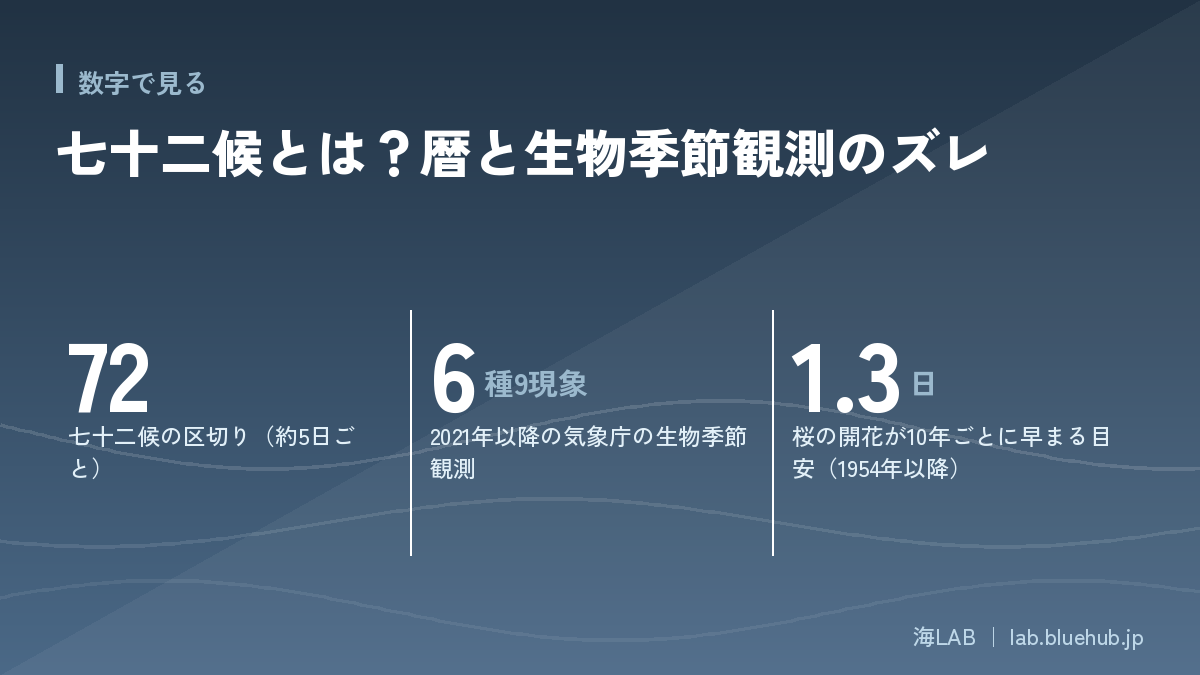
- From 2021 JMA reduced phenological observation to 6 species and 9 phenomena, ending 23 animal observations.
- Since 1954 cherry flowering has advanced about 1.3 days per decade, while maple coloring has been delayed about 3.0 days.
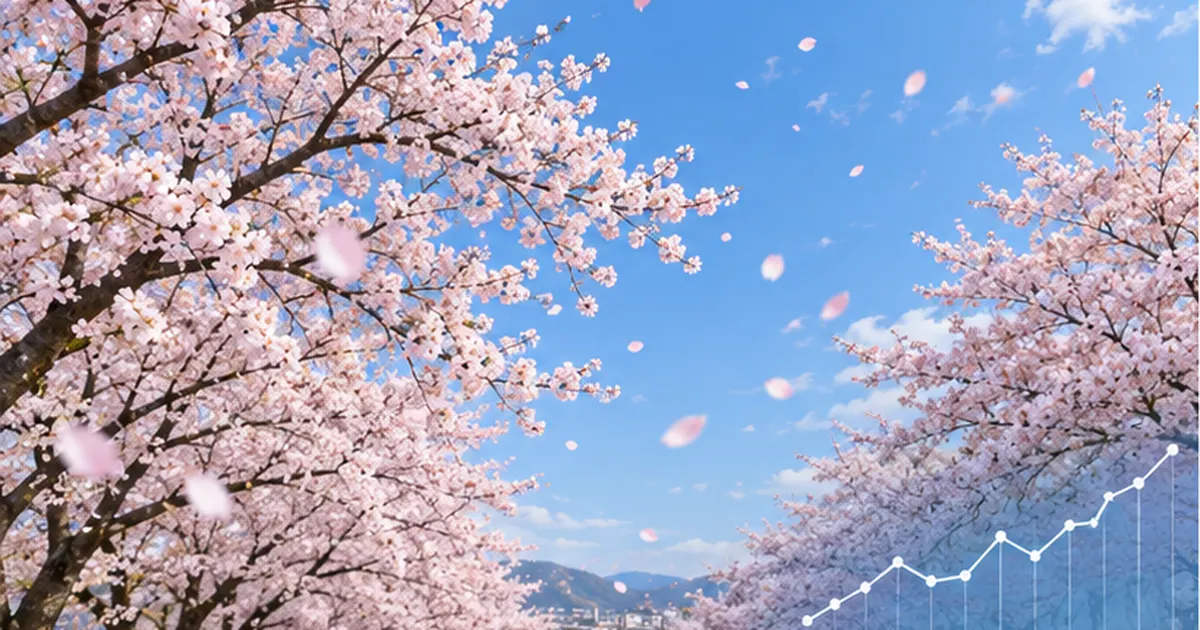
The 72 microseasons divide the year into 72 periods of about five days, each named with a short phrase for a small change in nature. “Fish rise from the ice,” “Cherry blossoms begin to open,” “Wild geese arrive”—changes in wind, flowers, birds and fish line up through the year.
What does this calendar look like when set against modern observation data? The Japan Meteorological Agency's phenological observations were greatly reduced in 2021.
This article covers the origins of the 72 microseasons, the current state of observation, how to read the gap between calendar and nature, and how to observe seasons yourself.
What you will learn
- How the 72 microseasons relate to the 24 solar terms
- The history of Shibukawa Shunkai's adaptation for Japan
- Why JMA scaled back its phenological observations
- The seasonal shifts shown by cherry and maple records
- Tips for keeping up familiar observation habits
What are the 72 microseasons? A calendar that splits the 24 solar terms into three
How the year is divided into 72
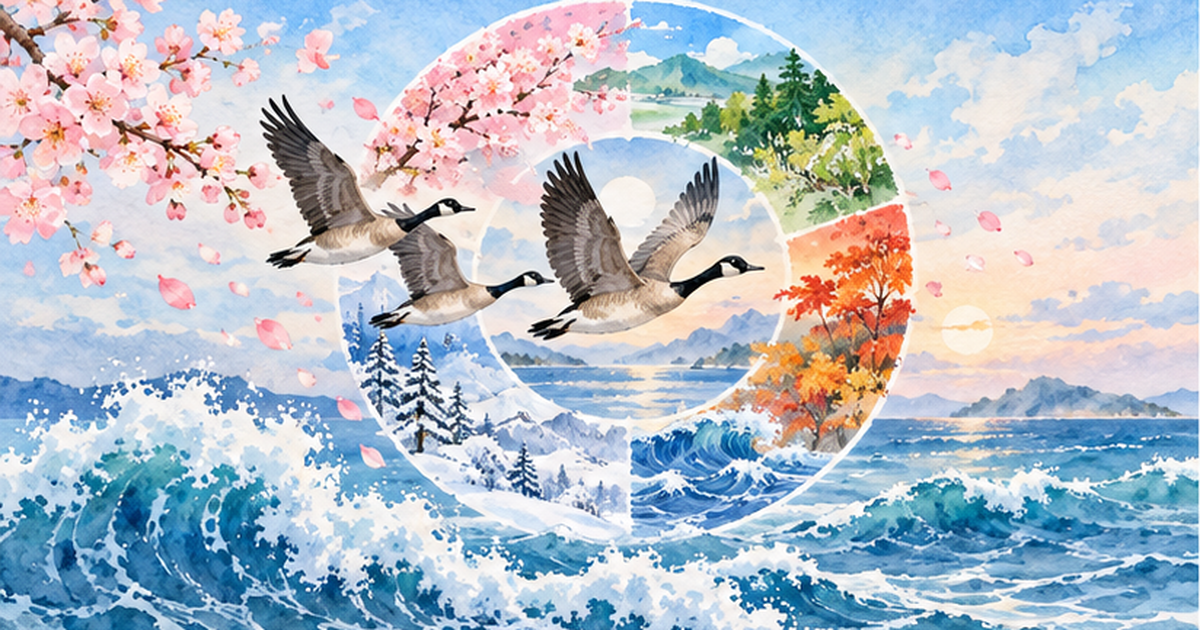
The 72 microseasons divide the year into 72 periods of about five days, assigning each a short phrase for a small seasonal change. They build on the 24 solar terms, which split the year into 24 equal parts by the sun's movement. Terms such as Risshun (start of spring), Shunbun (spring equinox), Geshi (summer solstice), Shubun (autumn equinox) and Toji (winter solstice) are each divided into three—first, second and last periods—giving 24 × 3 = 72.
For example, the first period of Risshun is “East wind melts the ice,” the second is “Bush warblers start singing,” and the last is “Fish rise from the ice.” Wind, birds and fish—familiar changes in nature—line up in three frames within a single solar term. About fifteen days at the threshold of spring can be read as a more detailed story.
Key points of the 72 microseasons
- Divides a solar term (about 15 days) into three, about five days each
- Each name is a short sentence describing a change in animals, plants or weather
- A guideline on the calendar, not a measured value of actual natural conditions
A calendar that puts “changes” in nature and weather into words
Many names use phrasing that captures a moment of change, such as “begins to open,” “first sounds,” or “enters.” Rather than describing a state that continues, they name the moment a state switches. In spring, “ice melts” or “insects emerge”; in autumn, “geese arrive” or “plants change color”—such phrases have long served as clues for spotting signs of change in daily life.
At the same time, the 72 microseasons were not created as scientific observation data. The National Astronomical Observatory of Japan states that the content “is not necessarily scientific, nor does it specify exact dates,” and it does not publish the 72 microseasons itself. Wondering how well the words on the calendar match the nature in front of us is itself part of the enjoyment of this calendar.
Sorting out the relationship with the 24 solar terms
| Division | Divisions per year | Approximate interval | Main basis |
|---|---|---|---|
| 24 solar terms | 24 | About 15 days | Movement of the sun |
| The 72 microseasons | 72 | About 5 days | Changes in animals, plants and weather (guideline) |
| Phenological observation (JMA) | 6 species / 9 phenomena (from 2021) | One record per year for each | Actual observation |
From ancient China to Japan: Shibukawa Shunkai rebuilt it for Japan's climate
Originally fitted to the climate of China's Yellow River basin
The 72 microseasons are a calendar concept born in ancient China. Because they were built on the climate of northern China and the Yellow River basin, they did not fit Japan's natural rhythms when brought over unchanged. They have been passed down in Japan since the calendar was introduced, but the mismatch with the actual feel of the seasons was probably recognized early on.
The 1685 Jokyo calendar and the “Honcho 72 microseasons”
In 1685 (Jokyo 2) in the Edo period, when the astronomer Shibukawa Shunkai created the Jokyo calendar, the 72 microseasons were also revised to suit Japan's climate. These are called the “Shinsei (new) 72 microseasons” or the “Honcho 72 microseasons.” For example, “Swallows arrive” and “Lightning first flashes” in the Chinese version were replaced by familiar Japanese creatures and flowers, such as “Sparrows begin nesting” and “Cherry blossoms begin to open.”
In other words, the 72 microseasons are not an imported calendar frozen in place but one rewritten bit by bit to match Japan's nature. The question “does the calendar match actual nature?” was already one Edo-period astronomers faced.
The version in use today comes from the 1874 Ryakuhon-reki
The names were revised several times afterward, and the version most commonly used today is said to be the one in the 1874 (Meiji 7) “Ryakuhon-reki.” However, there is no single official version, and readings and notation differ by book and calendar. The examples in this article use names that are widely introduced.
The 72 microseasons in a timeline
- Ancient China: formed based on the climate of the Yellow River basin
- 1685: Shibukawa Shunkai set the “Honcho 72 microseasons” in the Jokyo calendar to suit Japan's climate
- 1874: the version in the Ryakuhon-reki became widely used as today's 72 microseasons
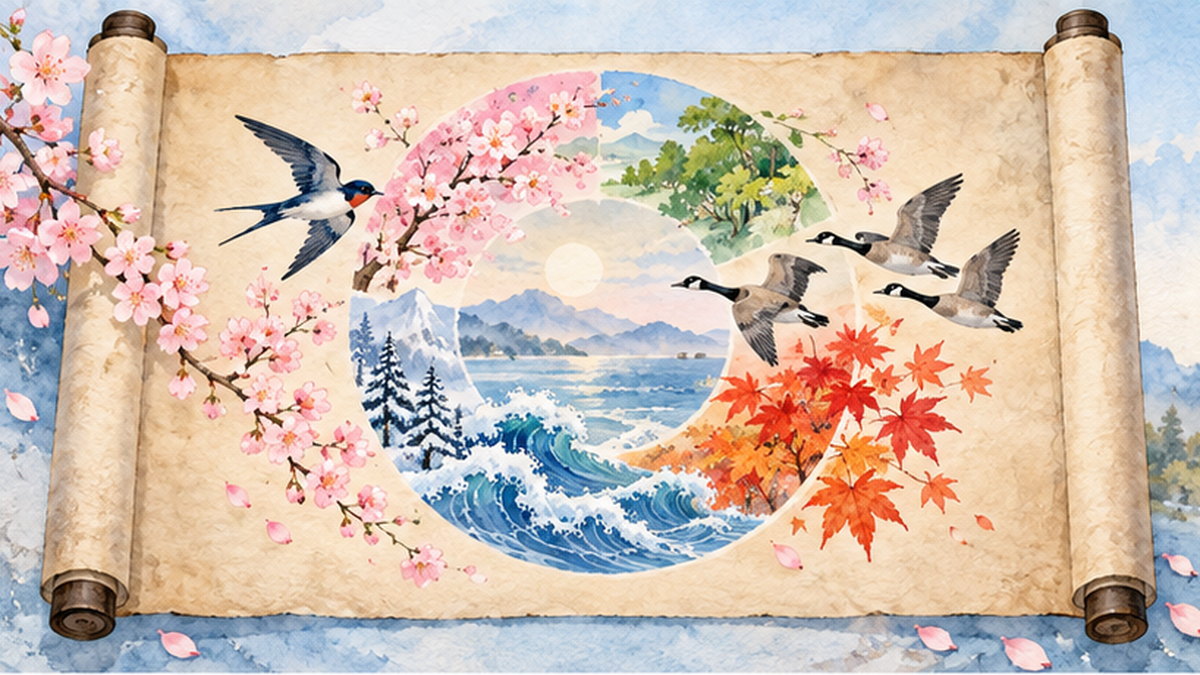
Changes in nature across the 72 microseasons: life on land, in the air and by the water
Spring: fish rise from beneath the ice, swallows and sparrows build nests
The spring microseasons capture finely how cold winds loosen, ice breaks, and living things begin to move. “Fish rise from the ice” in Risshun is said to depict fish leaping among broken ice, which includes the faces that seas, rivers and lakes show at the turn of the season. In Shunbun, “Sparrows begin nesting,” “Cherry blossoms begin to open” and “Thunder sounds” line up, linking birds, flowers and weather in one solar term.
Autumn: geese arrive, chrysanthemums bloom, insects come to the door
Autumn belongs to migratory birds, insects and plants. The first period of Kanro is “Wild geese arrive,” marking when geese come. “Wagtails sing” and “Swallows leave” in Hakuro tell of the changeover, as summer birds depart and winter birds arrive. The 72 microseasons build in animal migration, a large-scale movement of seasonal change.
| Season | Solar term | Microseason example | Reading / meaning |
|---|---|---|---|
| Spring | Risshun | Tōfū kōri o toku | The east wind melts the ice |
| Spring | Risshun | Kōō kenkan | Bush warblers sing |
| Spring | Risshun | Uo kōri o izuru | Fish rise from the ice |
| Spring | Shunbun | Suzume hajimete sukuu | Sparrows begin nesting |
| Spring | Shunbun | Sakura hajimete hiraku | Cherry blossoms begin to open |
| Autumn | Hakuro | Kusa no tsuyu shiroshi | Dew glistens white on the grass |
| Autumn | Hakuro | Tsubame saru | Swallows leave |
| Autumn | Kanro | Kōgan kitaru | Wild geese arrive |
| Autumn | Kanro | Kiku no hana hiraku | Chrysanthemums bloom |
The sea, rivers, waterside and the calendar
Few of the 72 microseasons feature the sea itself. Still, some, like “Fish rise from the ice,” capture waterside changes, and the movements of migratory birds are deeply tied to the environments of seas, wetlands and estuaries. The migration of geese and swallows depends on whether insects and waterside habitats are in good condition. The birds on the calendar rest on the connections that link sea, land and river.
As a related article, Asagimadara migration covers an insect that travels thousands of kilometers with the seasons. It is a useful reference for reading “migration” in the calendar through a specific creature.
What is phenological observation? When the calendar became observation
Fixed-point observation kept by JMA
JMA's phenological observation is an effort to check the words on the calendar against actual observation. Around meteorological observatories, staff have continuously observed designated sample trees and target animals and recorded the dates of events such as cherry blossoms opening and maple leaves turning. A key feature is that all JMA stations observe using unified criteria, and the records are used as data to read long-term seasonal change.
Scaled back to “6 species, 9 phenomena” in 2021
On November 10, 2020, JMA announced that it would scale back phenological observation to 6 species and 9 phenomena from 2021. All 23 animal observations were discontinued, and some plant observations remain. The remaining targets are six species: hydrangea flowering; ginkgo yellowing and leaf fall; Japanese apricot flowering; maple reddening and leaf fall; cherry flowering and full bloom; and Japanese pampas grass flowering.
The reasons given were environmental changes around observatories. It is said that securing sample trees and finding target animals had become difficult. When the policy was announced, not only meteorology experts but also nature conservation groups voiced opposition and concern, sparking debate.
What is no longer observed after the 2021 reduction
- The 23 animal observations (first songs, first sightings, etc.) ended at JMA
- Only 6 plant species / 9 phenomena continue (cherry, Japanese apricot, maple, ginkgo, hydrangea, pampas grass)
- Changes in birds and insects found in the 72 microseasons are no longer covered by official fixed-point observation
Trial collaboration with the Ministry of the Environment and NIES
In response, in March 2021 JMA, the Ministry of the Environment and the National Institute for Environmental Studies announced a trial survey toward the further use of phenological observation. NIES is running phenological monitoring together with citizen investigators nationwide, and the approach is expanding to collect records observed by citizens as well as specialist institutions.
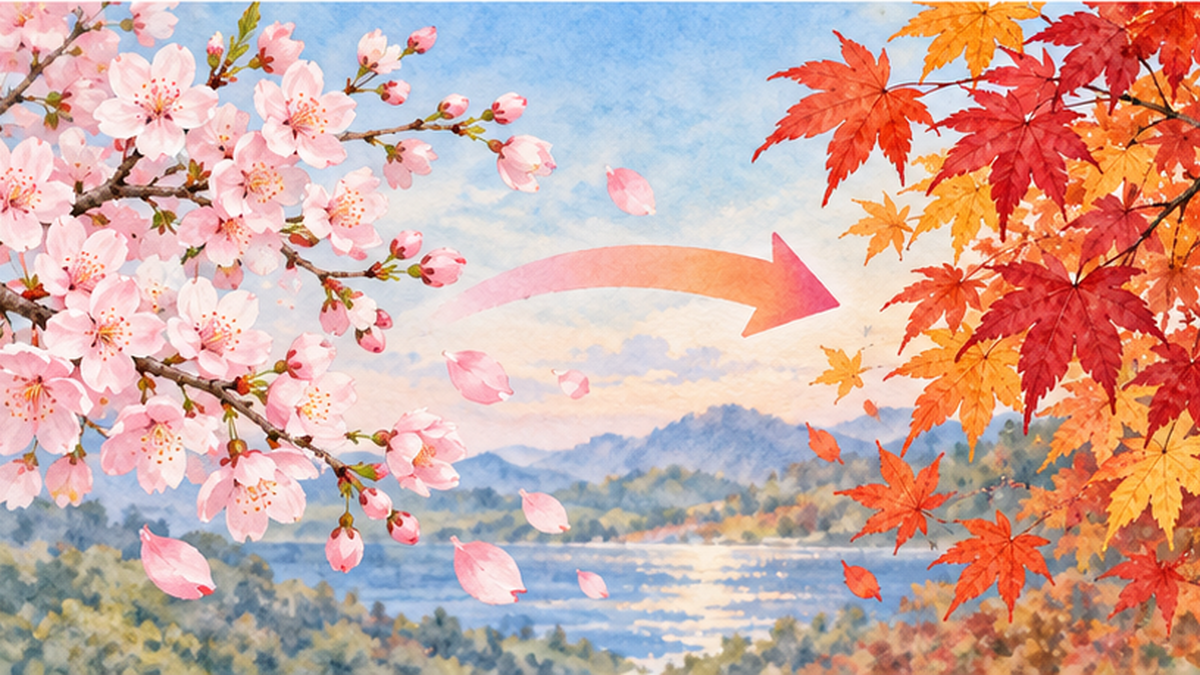
The data show the “gap with the calendar”: earlier springs, later autumns
Cherry blossoms 1.3 days earlier per decade, maples 3.0 days later
According to JMA observations, since 1954 cherry flowering dates have advanced by about 1.3 days per decade. Maple reddening and yellowing dates have been delayed by about 3.0 days per decade. Spring is arriving earlier and autumn later. This trend suggests that rising temperatures are shifting the timing of living things.
“Cherry blossoms begin to open” falls in the second period of Shunbun, around late March on the calendar. Actual flowering dates vary greatly by region and year, but the long-term trend in observation data points to earlier flowering. The gap between the calendar date and the actual bloom date grows and shrinks from year to year.
Using the calendar as a baseline
The dates of the 72 microseasons are guidelines based on the climate of the Edo and Meiji periods. By reading the gap with present-day observations, we can talk about climate change in everyday words. “It is cherry-blossom time on the calendar, but they have already fallen this year.” “It should be autumn-leaf season, but green still remains.” Linking such impressions to numbers is a way to start noticing seasonal change.
On climate change and the sea, see also the articles on Why cherry blossoms bloom earlier and how autumn leaves change color.
Points to keep in mind
- Observed values vary greatly by site, tree species and year
- Calendar dates are guidelines, not a measure of “right” or “wrong”
- One early or late year alone cannot establish climate change
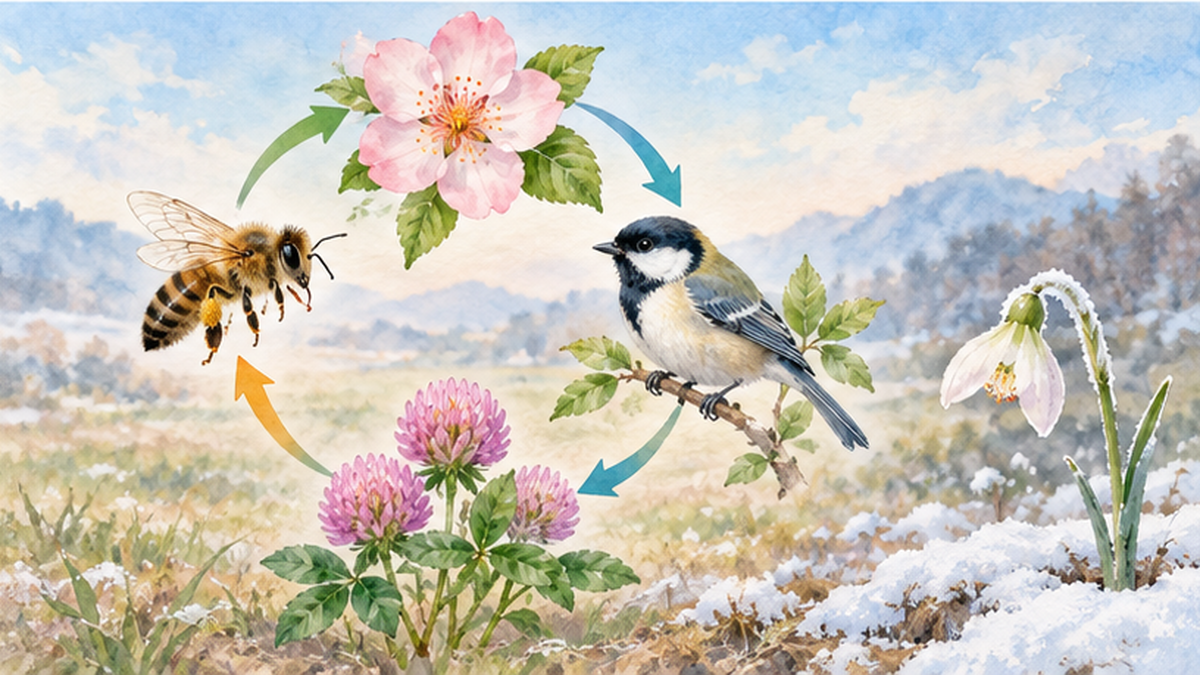
What happens when the timing of living things drifts apart?
The possibility that seasonal “synchrony” breaks down
Living things roughly align the timing of flowering, insect emergence and bird migration. Relationships that depend on overlapping timing are not rare, such as flowers and pollinating insects, or insect emergence and bird chick-rearing. Because each species responds differently to temperature change, shifts in timing could affect such relationships.
The calendar tells us the “premise” has changed
The words of the 72 microseasons were markers for spotting changes in nature. If a gap appears between the markers and actual nature, it may be read not as the calendar being wrong but as a sign that the environment in which it was made is changing. Now that official observation has been scaled back, the value of everyday observation and citizen records has risen relatively.
Observing a “modern 72 microseasons” starting today
Small changes to find every five days
The 72 microseasons are just the right length to encourage daily observation. Once every five days, walk the same road, park or seashore and record one change you notice first, and you will have your own 72 microseasons. Flowers, insects, birds, the color of the sky, the smell of the wind—anything will do.
- Check the name of the current microseason with a calendar app or book
- Observe for just five minutes at the same place and time of day
- Record the change you notice with a photo and one short sentence
- Look back at the same microseason next year and compare the gap
Joining citizen monitoring
The National Institute for Environmental Studies runs phenological monitoring that recruits investigators nationwide. How to take part and recruitment status change over time, so check the official page for the latest information. Your observations may become records that fill the part of official observation that was scaled back.
Things to try first
- Look up today's microseason and find just one real example
- Take one photo a month of the same place from the same angle
- Write one line in an observation notebook: “calendar says… / actually…”
Walking through the year with the 24 solar terms and 72 microseasons: how to read seasonal turning points
Seeing the four seasons from four gateways
The 24 solar terms divide the year into spring, summer, autumn and winter, using the four “start” terms—Risshun, Rikka, Risshū and Rittō—as gateways to the seasons. The spring and autumn equinoxes are when day and night are nearly equal; the summer and winter solstices are when the day is longest or shortest. By cutting the span between these turning points into five-day pieces, the 72 microseasons show that seasons move gradually rather than switching all at once.
For example, Risshun, the gateway to spring, is spring on the calendar but still severely cold in reality. Even in that cold, small changes can be found: ice loosening, birds singing, fish moving. The words of the calendar are a tool for picking up the changes between “still winter” and “already spring.”
Why the dates shift a little every year
Because the 24 solar terms are based on the sun's position, dates shift by about a day from year to year. The 72 microseasons are tied to those terms, so “this microseason is on this date” is not fixed. This is why dates can differ by a day between calendars and books. Actual nature does not move exactly on these dates, so it is best read as a guideline.
| Term | Meaning | How the date is determined |
|---|---|---|
| Risshun, Rikka, Risshū, Rittō | Gateways to the seasons | Determined by the sun's position |
| Spring and autumn equinoxes | Day and night nearly equal in length | Determined by the sun's position |
| Summer and winter solstices | Longest and shortest day | Determined by the sun's position |
| First, second and last periods | Three equal parts of a solar term | About five days each from the solar term's date |
What the word “kō” (microseason) means
The word “kō” carries the meanings of sign and appearance. The 72 microseasons are not a way of declaring seasonal change an “event,” but a way of softly capturing it as “the time when the appearance begins to show.” Even if the words on the calendar are a little early or late, the calendar includes an attitude of enjoying the seasons with that margin.
The value of keeping seasonal observations as records
A long record to learn what a “usual year” is
Reading climate change requires records that continue for decades, not just one year. JMA's phenological observations, a dataset running from the 1950s, have shown that cherry blossoms are opening earlier and maple leaves turning later. A long record cannot be recovered afterward. Continuing observation is itself the foundation of future research and decisions in daily life.
Thinking about what it means that animal observations ended
With the 2021 reduction, animal observation ended at JMA. Records such as first songs and first sightings were clues for reading how living things respond to changes in temperature and environment. Behind the reduction are circumstances on the ground in continuing observation. At the same time, concern was raised that gaps in data would remove the baseline for comparison when looking back in the future.
In response, movements are emerging in which specialist institutions and citizens cooperate to preserve records, such as NIES's collaboration with citizen investigators. Each person's observation is a small dot, but many dots joined together can become a map of the seasons across regions and eras.
Tips for keeping observation records
- Always write the date, place and weather (so you can compare later)
- Be aware of both the “first day seen” and the “last day seen”
- Pick the same tree or place and watch it the same way every year
- Record days when you could not find anything as “none”
Finding the seasons at the seashore
Seashores and estuaries are places where seasonal change is easy to spot. Tidal flats where migratory birds rest, seaweed sprouting in spring, the bustle of beaches in summer, driftwood washing up in autumn—the shoreline changes its face through the year. Walking the beach with the words of the 72 microseasons in hand, you may find where the land calendar and the sea's seasons overlap.
Observing the seasons in words is a first step toward receiving changes in climate and the sea as a lived feeling rather than numbers.
Summary: turning the calendar's words into a yardstick for climate change
The 72 microseasons are a calendar rooted in Japanese life that puts changes in nature every five days into words. It changed form with each era to suit Japan's nature, from Shibukawa Shunkai's revision to the Meiji 7 Ryakuhon-reki.
Meanwhile, JMA scaled back phenological observation to 6 species and 9 phenomena in 2021 and ended animal observation. With long-term trends showing earlier cherry blossoms and later maple coloring, the meaning of checking the gap between the calendar's words and actual nature through daily observation has, if anything, grown.
Summary of this article
- The 72 microseasons are a calendar of about five-day periods, splitting the 24 solar terms into three
- The calendar has been revised many times to suit Japan's climate
- Phenological observation was scaled back to 6 species / 9 phenomena in 2021
- Cherry flowering is getting earlier while maple coloring is getting later
- Everyday observation can be a clue for noticing climate change
References
- Phenological observation | Japan Meteorological Agency (Hiroshima Local Meteorological Observatory) – Overview of phenological observation
- Observation of first bird songs abolished from 2021; cherry continues | Nikkei – Report on the 2020 reduction announcement
- Phenological monitoring with citizen investigators | NIES – Climate Change Adaptation Information Platform
- Koyomi Wiki / Seasons / 72 microseasons | NAOJ Calendar Computation Office – Position of the 72 microseasons
- Environmental glossary: phenological observation | EIC Net – Explanation of the term
- Is global warming disrupting cherry blossoms? | Ministry of the Environment Deco-katsu – Cherry blossoms and global warming
- 72 microseasons | Wikipedia – History and differences between versions
※ Ordered by reliability: government agencies and academic institutions > peer-reviewed papers > specialist organizations > reliable media