⚡ In short
Cold seeps, where methane and hydrogen sulfide slowly ooze from the seafloor, host chemosynthetic communities that thrive without sunlight. This article covers how Calyptogena clams and deep-sea mussels live, how cold seeps differ from hydrothermal vents, and the 80 species recently confirmed at the Nankai Trough, drawing on the latest research around Japan.
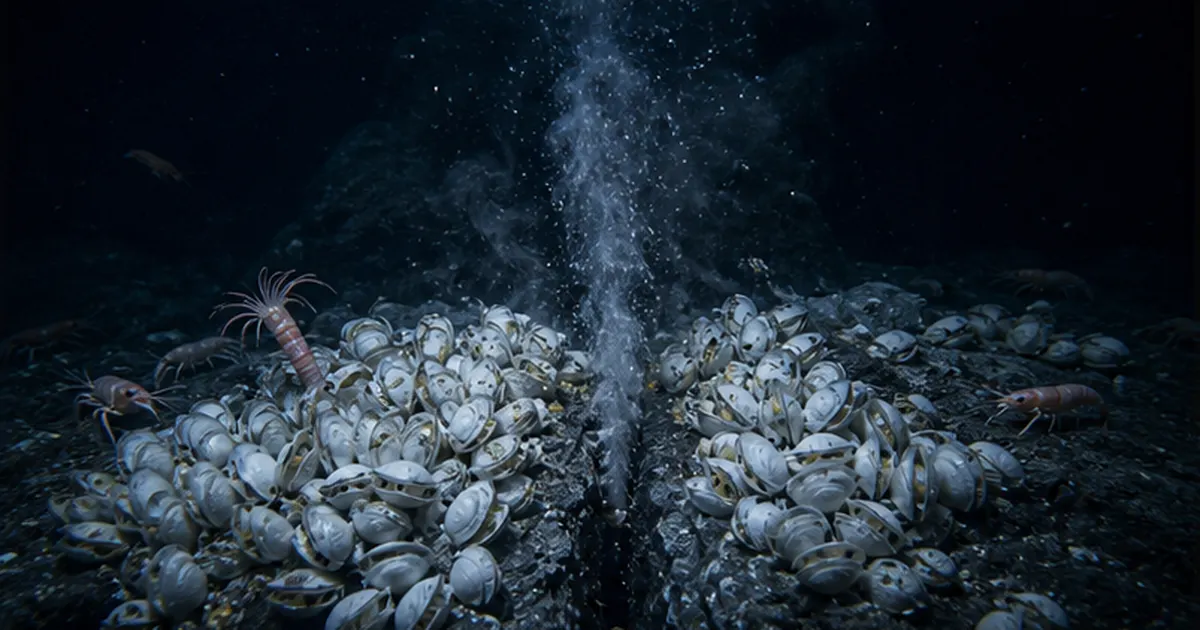
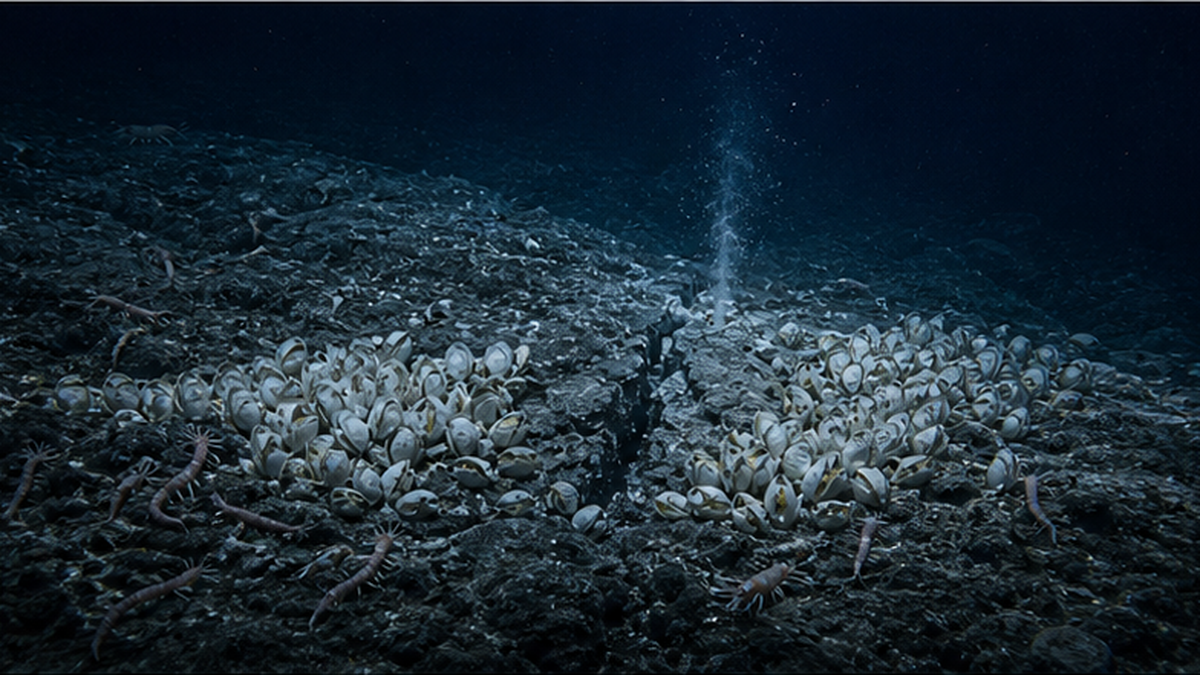
On the pitch-black seafloor, hundreds to thousands of meters down, where no sunlight ever reaches, there are places packed densely with life. These are "cold seeps," where water containing methane and hydrogen sulfide slowly oozes from the seafloor. Despite being barely warmer than the surrounding seawater, they host a distinctive ecosystem crowded with white clams, polychaete worms, and shrimp.
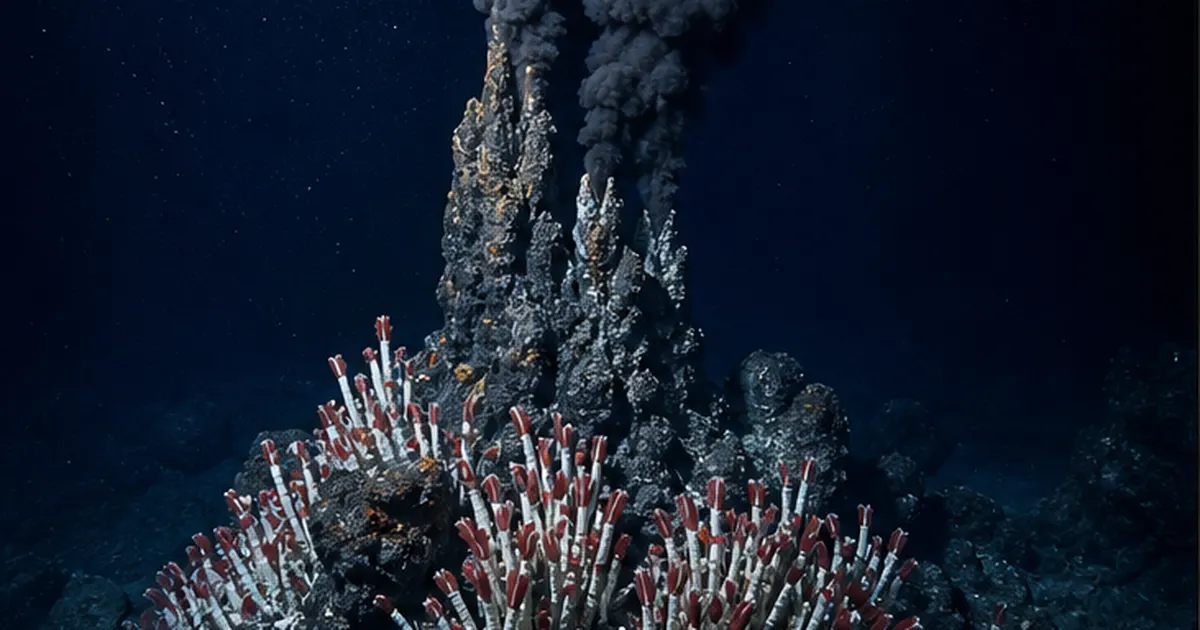
What sustains this ecosystem is not photosynthesis but an energy-harvesting method called "chemosynthesis." Microbes oxidize the methane and hydrogen sulfide seeping from the seafloor, using the energy released to build organic matter, which becomes the starting point of the food chain. Hydrothermal vents are the better-known example of a chemosynthesis-based ecosystem, but cold seeps differ in temperature, formation, and the animals that live there — making them another distinct deep-sea ecosystem.
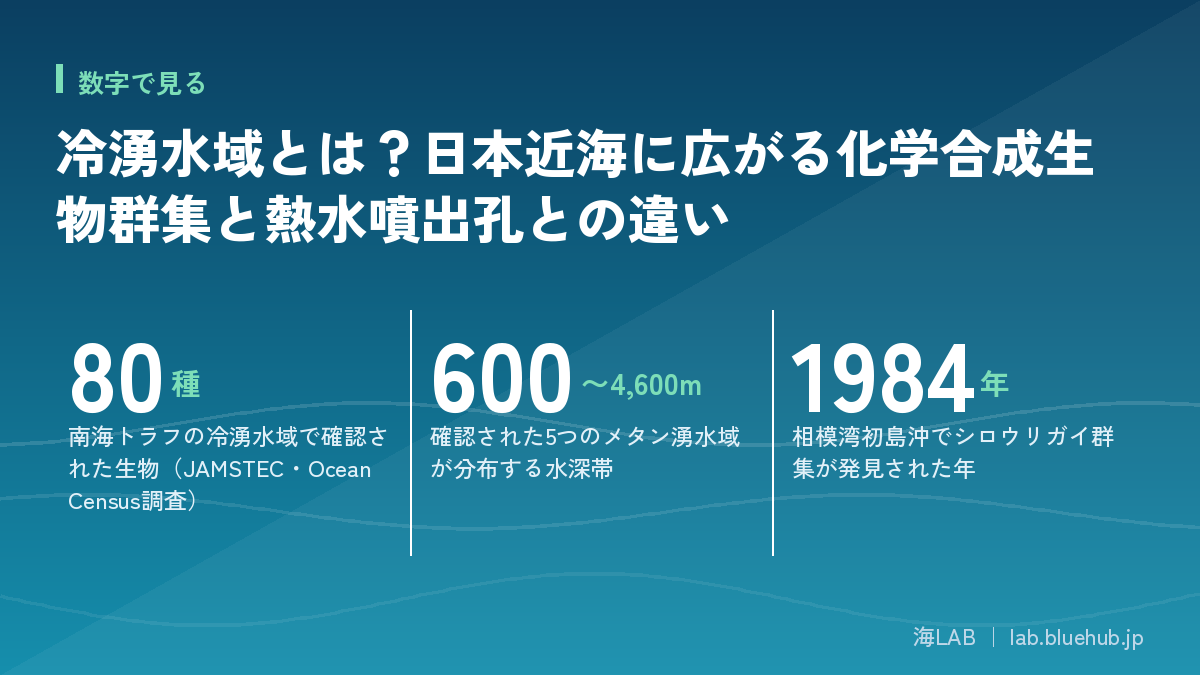
The waters around Japan, with their many subduction zones, are one of the world's richest reservoirs of cold seeps. Since the first discovery off Hatsushima in Sagami Bay in 1984, surveys have advanced at the Nankai Trough, the Japan Trench, the Sea of Japan, and elsewhere, and in 2025 a joint JAMSTEC–Ocean Census survey confirmed 80 species at the Nankai Trough alone. This article explains how cold seeps form, introduces their signature animals, contrasts them with hydrothermal vents, and reviews the latest survey results.
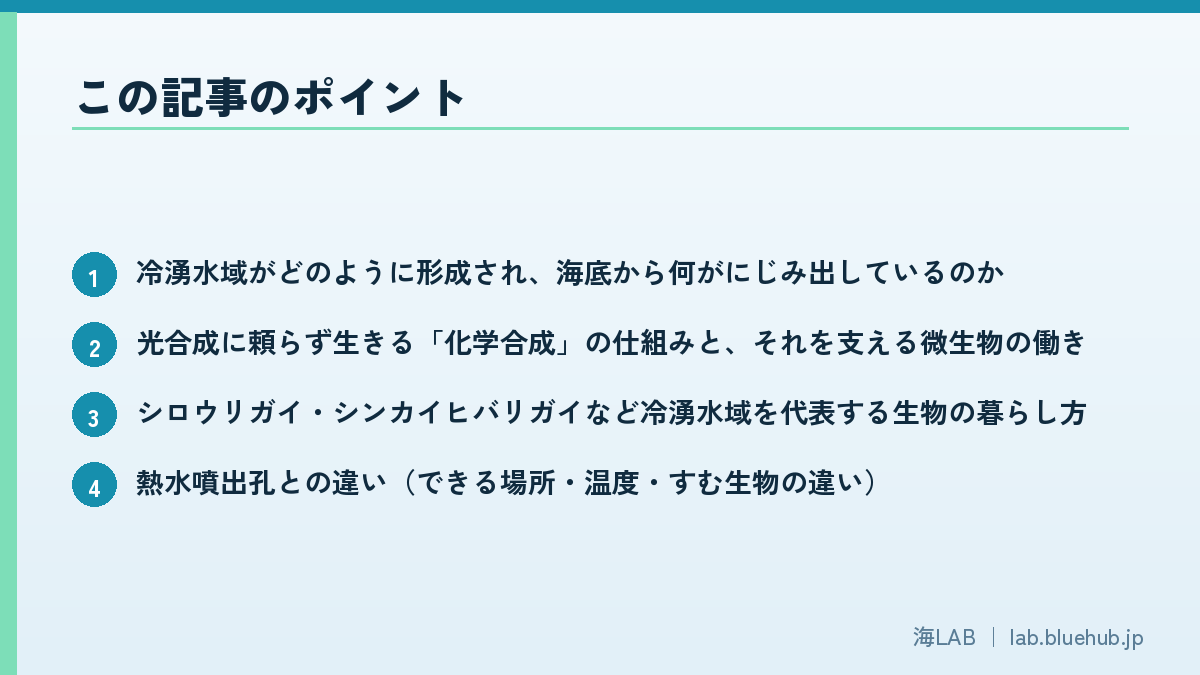
What you'll learn in this article
- How cold seeps form and what exactly seeps from the seafloor
- How "chemosynthesis" works without sunlight, and the microbes that make it possible
- How signature cold-seep animals such as Calyptogena clams and deep-sea mussels live
- How cold seeps differ from hydrothermal vents in location, temperature, and inhabitants
- Where cold seeps occur around Japan, from Sagami Bay to the Nankai Trough and the Japan Trench
- What the 2025 survey revealed about the rich biodiversity of the Nankai Trough
What Is a Cold Seep? Another Window Into the Deep Sea
A cold seep is a place on the seafloor, at a fault or crack, where pore water containing methane and hydrogen sulfide stored underground slowly oozes out. "Oozes" is a better description than "erupts" — cold seeps are entirely unlike the vigorously erupting, volcanically driven hydrothermal vents. A single seep can range from a small patch of a community to a much larger one where organisms stretch across a wide area, and a single seep field often contains several seep sites of varying intensity.
How methane and hydrogen sulfide seep out
Most cold seeps occur around "subduction zones," where an oceanic plate slides beneath a continental plate, and especially within "accretionary prisms" — wedges of sediment scraped up and compressed along the trench. As the plate subducts and compresses the sediment, pore water, methane released by the breakdown of deep methane hydrates, and methane and hydrogen sulfide generated as microbes decompose organic matter are all squeezed up to the seafloor along faults and gas pathways.
Because this fluid is supplied gradually from reserves that accumulated in the sediment over millions of years, it is not unusual for a single seep to remain stably active for hundreds or even thousands of years. Changes in fault conditions triggered by earthquakes can suddenly intensify or weaken the seepage, so despite its quiet appearance, a cold seep is also a dynamic phenomenon directly linked to geological activity below.
Why they're called "cold" seeps
The word "cold" reflects the fact that the seeping fluid is close to the temperature of the surrounding deep water (often just a few degrees Celsius). By contrast, hydrothermal vents — another chemosynthesis-based ecosystem — expel fluid that can exceed 300°C. Cold seeps are so mild-looking that they can be hard to distinguish from ordinary seafloor at a glance. Instead, it is the "quantity" and "duration" of the methane and hydrogen sulfide in the seeping fluid that determine whether a distinctive community of organisms can take hold.
Methane hydrate as a "capacitor"
Beneath many cold seeps, shallow sediments contain "methane hydrate" — a crystalline solid formed by methane and water under low-temperature, high-pressure conditions. Long-term in-situ seafloor observation experiments have shown that even at cold seeps where venting is intermittent, methane hydrate in the sediment repeatedly breaks down and re-forms, acting like a "capacitor" that stores and releases methane. This mechanism keeps methane flowing into the surrounding seawater even when active seepage temporarily weakens, stably sustaining the chemosynthetic bacteria and communities that depend on it.
Key terms
- Cold seep: a place where fluid containing methane and hydrogen sulfide, close to ambient temperature, oozes from the seafloor
- Chemosynthesis: producing organic matter using the energy of chemical reactions rather than light
- Accretionary prism: a geological structure formed by compressed sediment at a subduction zone, the main setting for cold seeps
Chemosynthesis: A Way of Life That Doesn't Need the Sun
Most ecosystems on Earth begin with "photosynthesis," in which plants and plankton use sunlight to build organic matter. But no light reaches cold seeps or hydrothermal vents, so organisms that obtain energy through an entirely different mechanism form the base of these ecosystems. That mechanism is chemosynthesis.
The idea of a deep-sea ecosystem sustained by chemosynthesis became widely known after hydrothermal vent communities were discovered along the Galápagos Rift on the East Pacific Rise in 1977. Cold seeps followed in 1984, when tube-worm and bivalve communities resembling those at hydrothermal vents were found at about 3,266m depth off the Florida Escarpment in the Gulf of Mexico — the same year the discovery off Hatsushima in Sagami Bay was independently reported. By coincidence, "chemosynthetic ecosystems in cold places" were found on both sides of the Atlantic and Pacific almost simultaneously in 1984.
Photosynthesis vs. chemosynthesis
| Item | Photosynthesis | Chemosynthesis |
|---|---|---|
| Energy source | Sunlight | Chemical reactions involving methane, hydrogen sulfide, etc. |
| Main organisms | Plants, algae, cyanobacteria | Sulfur-oxidizing bacteria, methane-oxidizing archaea, etc. |
| Where it works | Where light reaches (shallow water, land) | Works even in the total darkness of the deep sea |
| Examples around Japan | Seaweed beds, coral reefs | Cold seeps, hydrothermal vents |
Just as algae and corals act as "primary producers" supporting the base of the food web in shallow seas, chemosynthetic bacteria play the role of primary producer at cold seeps. The organic matter the bacteria synthesize passes through symbiotic clams and polychaete worms to the wider community, and nutrients flow further to crabs, shrimp, and visiting fish that feed on that community. Even in the lightless deep sea, a full-fledged food web takes shape, starting from chemosynthetic bacteria.
Anaerobic oxidation of methane (AOM): microbes working together
One of the central reactions sustaining chemosynthesis at cold seeps is "anaerobic oxidation of methane" (AOM). This reaction breaks down methane without using oxygen, and it is carried out jointly by methane-oxidizing archaea (a type of archaeon) and sulfate-reducing bacteria. The archaea break down methane and pass the resulting electrons to the sulfate-reducing bacteria, which reduce sulfate in seawater to produce hydrogen sulfide. Recent research has shown that this is a "symbiotic metabolism" that no single microbe could carry out alone — it requires multiple microbes working as a team.
The partnership between host animals and symbiotic bacteria
The hydrogen sulfide and methane produced this way are then used as an energy source by chemosynthetic bacteria living symbiotically inside bivalves and polychaete worms, often in their gills. The host animal supplies the bacteria with hydrogen sulfide, oxygen, and carbon dioxide, and the bacteria synthesize organic matter that they share with the host as nutrition. Calyptogena clams and deep-sea mussels have come to depend so heavily on this symbiosis that their body plans have changed as a result — in many cases their digestive tracts have become vestigial.
How does the symbiosis begin?
Interestingly, much of this symbiotic bacteria is not thought to be passed directly from parent to offspring, but rather newly acquired from the surrounding seawater and sediment each generation. At the larval or juvenile stage, the animal establishes the symbiosis anew by letting chemosynthetic bacteria drifting in the seawater colonize its gills. This means that even individuals of the same species can host slightly different bacterial lineages depending on the seep environment where they grew up — and this flexibility in host–bacteria pairing is one reason cold-seep ecosystems can persist so tenaciously.
The Stars of the Cold Seep, From Clams to Worms
Cold seeps are home to a diverse array of organisms clustered around large bivalves that host symbiotic bacteria in their gills.
Calyptogena clams: burying most of the body in mud
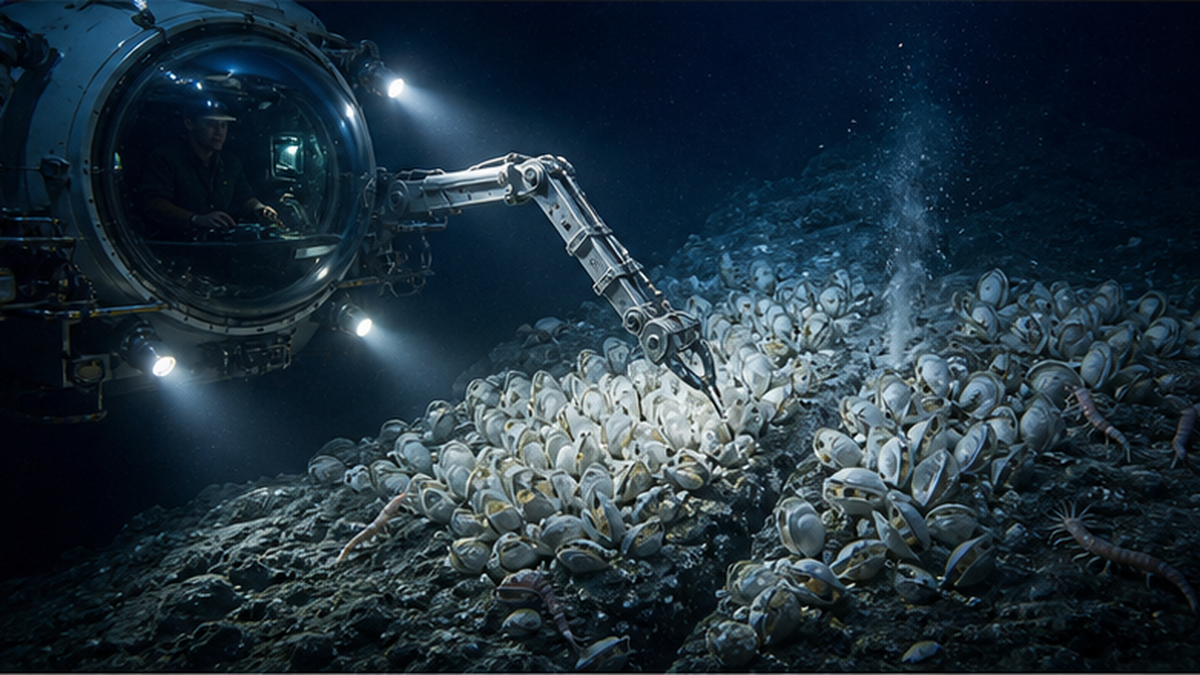
Calyptogena clams (genus Calyptogena) are among the signature animals of cold seeps around Japan. At deep sites such as the Nankai Trough, around 4,500m depth, they live in clusters with roughly two-thirds of the body buried in seafloor mud. This posture is thought to help them take up methane and hydrogen sulfide seeping up from below more efficiently. Their gill cells host a dense population of symbiotic sulfur-oxidizing bacteria, from which they derive most of their nutrition.
Deep-sea mussels: symbiotic bacteria in the gills
Deep-sea mussels (Bathymodiolus and related genera) supply hydrogen sulfide to sulfur-oxidizing bacteria living symbiotically in their gill cells and receive, in return, the organic matter the bacteria synthesize. What makes them fascinating is that, despite belonging to a different taxonomic group from Calyptogena clams, they independently evolved a symbiosis with chemosynthetic bacteria. Related species live not only at cold seeps but also around hydrothermal vents, making mussels one of the signature groups spanning both types of chemosynthetic ecosystem.
Tube worms, polychaetes, and the rest of the supporting cast
Overshadowed by the large bivalves, cold seeps also host a wide range of taxa — polychaete worms, snails, crustaceans, and ribbon worms among them. In the 2025 JAMSTEC–Ocean Census survey of five methane seep sites at the Nankai Trough (600–4,600m depth), the 80 confirmed species included 33 mollusks (snails, bivalves, etc.), 23 annelids (polychaetes, etc.), 11 arthropods (crabs, shrimp, amphipods, etc.), 5 nemerteans, 4 echinoderms (starfish, brittle stars, sea cucumbers, etc.), 3 cnidarians (hydroids, zoanthids, etc.), and 1 bryozoan — meaning organisms other than bivalves made up more than half the total. Beneath the showy bivalve beds lies an ecosystem far more finely diverse than it first appears.
- Mollusks (snails, bivalves): dominated by large species with symbiotic bacteria, such as Calyptogena clams and deep-sea mussels
- Annelids (polychaete worms): abundant in the gaps between the community, rivaling bivalves in species count
- Arthropods (crabs, shrimp, amphipods): predators and scavengers that roam the community's edges
- Echinoderms, cnidarians, nemerteans, and others: attached to or living on the margins and surrounding rock
These communities include many "seep-endemic species" rarely seen on ordinary seafloor nearby, alongside "background species" also widely distributed on typical deep seafloor. The ratio between the two varies greatly by location and depth, and is thought to depend on the strength and duration of seepage as well as the nature of the sediment.
How Cold Seeps Differ From Hydrothermal Vents
Cold seeps are often discussed alongside hydrothermal vents. Both share the common trait of being chemosynthesis-based ecosystems independent of sunlight, but they differ greatly in where they form, their temperature, and the organisms that live there.
Where they form: mid-ocean ridges and back-arc basins vs. subduction zones
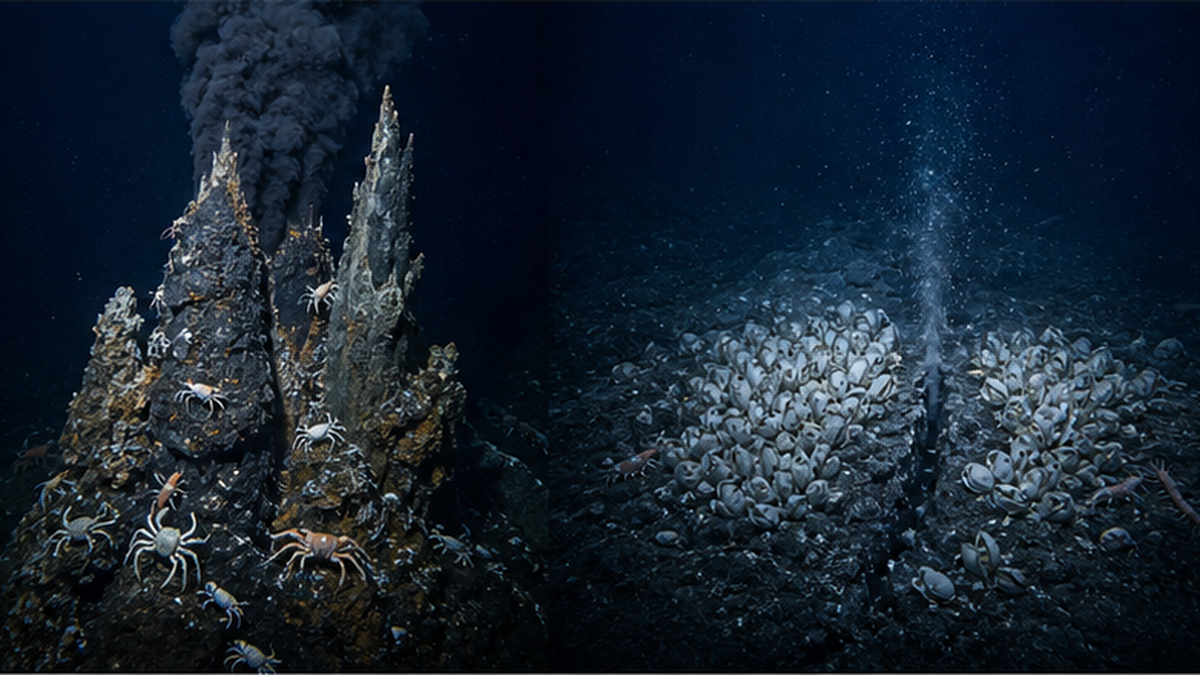
Hydrothermal vents occur at mid-ocean ridges, where new oceanic crust is created, and at back-arc basins such as the Okinawa Trough. Seawater heated by magmatic activity dissolves metals from the crust and erupts at vent openings, cooling rapidly to form sulfide chimney structures. Cold seeps, on the other hand, occur at accretionary prisms along subduction trenches, where the fluid originates not from volcanic activity but from methane and pore water squeezed out of the sediment.
The waters around Japan are an unusual case where both geological settings coexist. The Okinawa Trough, a back-arc basin where the seafloor is spreading apart, hosts hydrothermal vents, while the Nankai Trough and Japan Trench, where the Philippine Sea Plate and Pacific Plate subduct, host cold seeps. Two chemosynthetic ecosystems with entirely different origins thus coexist within Japan's exclusive economic zone.
Differences in temperature, fluid, and lifespan
| Item | Hydrothermal vents | Cold seeps |
|---|---|---|
| Typical setting | Mid-ocean ridges, back-arc basins (e.g., Okinawa Trough) | Accretionary prisms at subduction zones (e.g., Nankai Trough) |
| Fluid temperature | High, sometimes exceeding 300°C | Close to ambient seawater, often just a few degrees Celsius |
| Fluid origin | Seawater heated by magma | Methane and pore water in sediment |
| Activity lifespan | Often exhausted within years to decades | Can continue for hundreds to thousands of years |
Signature animals: yeti crabs vs. Calyptogena clams
The Kiwa yeti crab (known in Japan as Goemon-koshiorie-bi) is a signature animal of hydrothermal vents such as those in the Okinawa Trough. It hosts sulfur-oxidizing bacteria externally on the bristles covering its body and feeds by scraping off that bacteria-laden bristle with its hand-like appendages — a distinctive feeding style. Living right beside high-temperature vent fluid, it presents a striking contrast to Calyptogena clams and deep-sea mussels, which live more slowly in near-ambient-temperature fluid. Readers interested in hydrothermal vent ecosystems around Japan can find a fuller picture of chemosynthetic ecosystems there.
Interestingly, some organisms, such as deep-sea mussels (genus Bathymodiolus), have closely related species distributed at both cold seeps and hydrothermal vents. This is thought to reflect the fact that, despite differences in temperature (near-ambient vs. high) and setting (accretionary prism vs. ridge), the underlying survival strategy — using symbiosis with chemosynthetic bacteria to exploit methane and hydrogen sulfide — is fundamentally the same. Species descended from common ancestors appear to have branched off to adapt to different environmental conditions.
Deep-Sea Survey Technology: Shinkai 6500, ROVs, and Cold Seep Research
Most cold seeps lie hundreds to thousands of meters deep, far beyond the reach of direct human observation. Specialized survey technology — crewed submersibles and remotely operated vehicles (ROVs) — supports the research frontier.
Using acoustic surveys to narrow down seep sites
Acoustic surveys provide the first clue for locating a cold seep within the vast seafloor. Multibeam echo sounders mounted on research vessels map seafloor topography in fine detail, and because methane bubble plumes drifting through the water strongly reflect sound waves, ships can detect columns of bubbles rising through the water column. This kind of "narrowing down" work, done before any dive, lets researchers use their limited number of dives efficiently.
Direct observation with crewed submersibles and ROVs
JAMSTEC (Japan Agency for Marine-Earth Science and Technology) uses the crewed submersible Shinkai 6500, capable of diving to 6,500m, and ROVs such as Hyper-Dolphin, to carefully collect cold-seep organisms with manipulator arms while recording video on site. Because researchers can observe the scene directly and choose samples themselves, crewed submersible surveys are especially good at capturing the diversity of species that make up a community, even within a limited survey window.
Why discovery is difficult: the limits of survey opportunities
Deep-sea surveys require long preparation times and significant cost, and only a limited number of researchers can join a given voyage. Collected specimens must be identified by specialist taxonomists using microscopy and genetic analysis, work that can take months on its own. That is why both an at-sea survey voyage and an onshore workshop, where domestic and international experts gather to identify the specimens brought back, are indispensable.
In recent years, "environmental DNA" surveys — analyzing trace DNA fragments in seawater samples — have drawn attention as a way to supplement our understanding of deep-sea ecosystems. Without diving to the site, researchers can estimate to some extent which organisms are likely present nearby, and combining this technique with direct observation from crewed submersibles or ROVs makes the most of limited survey opportunities.
Barriers to discovery
- The deep sea's high pressure, darkness, and cold keep humans from entering directly
- Only a limited number of researchers and taxonomists can join each voyage
- Identifying collected specimens requires specialist knowledge and considerable time
- As a result, new species are often found each time the same area is surveyed again
Cold Seeps Around Japan, From Sagami Bay to the Japan Trench
The waters around the Japanese archipelago sit atop one of the world's densest clusters of plate boundaries, where the Pacific Plate and Philippine Sea Plate subduct beneath the Eurasian and North American Plates. As a result, cold seeps have been found in many locations around Japan.
1984: the discovery off Hatsushima, Sagami Bay
The first chemosynthetic community confirmed in Japanese waters was found in 1984. A survey by the crewed submersible Shinkai 2000 discovered a large community of Calyptogena soyoae clams at a depth of 1,000–1,130m off Hatsushima in Sagami Bay. This area is a seep zone shaped by plate subduction, where hydrogen sulfide and methane ooze from the seafloor, and it has since become one of the key research sites for chemosynthetic ecosystems in Japan.
Spreading to the Nankai Trough, the Japan Trench, and the Sea of Japan
| Area | Characteristics |
|---|---|
| Off Hatsushima, Sagami Bay | Site of Japan's first Calyptogena clam community, discovered in 1984 (depth 1,000–1,130m) |
| Nankai Trough | Five methane seep sites from Suruga Bay to off Hyuga-nada, spanning 600–4,600m depth |
| Japan Trench | A Calyptogena-genus community confirmed at 5,346m depth, and a chemosynthetic ecosystem at a maximum of 7,326m |
| Sea of Japan (off Okushiri Island) | Of 8 benthic species recorded, 2 — including a new species of snail — were found to be endemic |
The Nankai Trough, the plate boundary running from Suruga Bay to off Hyuga-nada, is known for its many cold seeps where methane-rich fluid naturally rises to the seafloor. At the Japan Trench, a Calyptogena-genus community at 5,346m depth has been studied in detail for its anaerobic methane oxidation metabolism, and a chemosynthetic ecosystem found at 7,326m depth is considered one of the deepest such records reported anywhere. Off Okushiri Island in the Sea of Japan, only 8 species were confirmed, but a 2026 study found that 2 of them — including a new species of snail — were endemic, suggesting that each area has followed its own distinct evolutionary path. Among Japan's overall marine biodiversity, cold seeps stand out as one of the few deep-sea biodiversity hotspots.
Cold seeps have also been reported around the Kuril–Kamchatka Trench and the Ryukyu Arc. Because the Japanese archipelago is surrounded by plate boundaries of differing character from north to south, it hosts a range of cold seeps that differ in depth and sediment character — making the seas around a single country an unusually well-suited field for comparing the many types of cold seep found worldwide.
What Global Comparisons Reveal About Japan's Cold Seeps
Cold seeps are not unique to Japanese waters — they occur at plate boundaries and continental margins worldwide. Comparing them with other regions brings the distinctive features of Japan's cold seeps into sharper focus.
Cold seeps in the Gulf of Mexico and South China Sea
One of the world's most extensively studied cold seeps lies off the Florida Escarpment in the Gulf of Mexico. Since its discovery in 1984, communities of large tube worms and bivalves hosting symbiotic bacteria have been repeatedly surveyed there, making it a benchmark site for studying how communities change over time and comparing them geographically. At the Haima cold seep in the South China Sea, the structure of bacterial communities in surface sediment and the seawater just above the seafloor has been examined in detail, revealing that the dominant microbial types shift substantially with seep activity levels.
Research is also progressing on the microbial communities sustaining methane seeps at the Hikurangi subduction margin off New Zealand. Like Japan's Nankai Trough, this is a setting formed by an accretionary prism at a subduction zone, and comparing regions that share this geological background is providing clues toward answering why rich communities develop in some places but not others.
Not all cold seeps look alike: some are dominated by sponges
Cold seeps tend to bring to mind large bivalves and tube-worm communities, but not every seep looks that way. A study of a subarctic methane seep found a community dominated by sponges without a clear signal of chemosynthesis. This shows that, depending on the amount and persistence of methane venting, water temperature, and ocean currents, the makeup of the ecosystem can vary enormously even within the single category of "cold seep."
What Japan's cold seeps mean in a global context
Compared with these examples worldwide, Japan's waters — where multiple methane seep sites at the Nankai Trough span a wide depth range of 600–4,600m, and where Sagami Bay, the Japan Trench, and the Sea of Japan, each with different characteristics, all lie within a single country's exclusive economic zone — offer a rare field for observing the full diversity of cold seeps in one place. Survey data from Japanese waters is likely to play an even larger role in global comparative research going forward.
The Research Frontier: What the Nankai Trough Survey Revealed
Research on cold seeps has advanced significantly in recent years, symbolized by the joint survey JAMSTEC and Ocean Census conducted in 2025.
The 2025 JAMSTEC × Ocean Census joint expedition
From June 4 to 23, 2025, JAMSTEC and the international "Ocean Census" project conducted a joint deep-sea survey of the Nankai Trough and the Shichiyo Seamount Chain off the Izu-Ogasawara Islands, using the deep-sea research support vessel Yokosuka and the crewed submersible Shinkai 6500. More than 528 lots of biological specimens were collected, and from September to October that year, an international workshop of taxonomists carried out the identification work. As a result, 38 new species were confirmed, along with 28 more that are very likely new to science.
Read the press releaseJapan's Rich Deep-Sea Biodiversity Revealed — JAMSTEC / Ocean Census Joint Survey80 new species confirmed at Nankai Trough cold seeps, results of the 2025 joint expedition.🔗 jamstec.go.jpWhat the number 80 says about a biodiversity hotspot
Before this survey, only 14 species had ever been reported from the Nankai Trough's cold seeps themselves. This survey, which carefully examined five methane seep sites at 600–4,600m depth, confirmed a total of 80 species. At individual sites, previous records had listed only 1 to 6 species, but this survey found 15 to 30 species per site. The results include expanded distribution records, new records for Japan, and previously unknown species interactions, once again showing that the Nankai Trough is an extraordinarily rich and still poorly understood biodiversity hotspot within Japanese waters.
Looking ahead: building a scientific basis for conservation
JAMSTEC and Ocean Census, who led this joint survey, note that even though the results cover only part of the Nankai Trough and the Shichiyo Seamount Chain, they show that vast numbers of undiscovered species and unknown ecosystems likely remain in the deep sea around Japan. Going forward, human activities such as methane hydrate development and offshore wind power are expected to reach even the deep sea and its organisms. Establishing an accurate record of biodiversity before such impacts intensify is expected to provide an important scientific foundation for future marine conservation.
What Cold Seep Research Teaches Us
The fact that an ecosystem can exist in the lightless deep sea, powered solely by chemical reactions, broadens our understanding of life itself.
Clues to the origin of life and the search for life beyond Earth
Chemosynthetic ecosystems, as a real-world example showing that life can exist without sunlight, draw attention both in research on the origin of life and as a clue for considering whether life could exist in the subsurface oceans of ice-covered worlds such as Jupiter's moon Europa. The very fact that a unique ecosystem thrives in one of the harshest environments on Earth speaks to the diversity and resilience of life.
Balancing seabed resource development with conservation
At the same time, it has been pointed out that areas where cold seeps occur could eventually be affected by resource development such as methane hydrate extraction. Because even deep-sea organisms can be affected by human activity, recording an accurate picture of biodiversity before development intensifies is an important scientific foundation for thinking about marine conservation. As the Nankai Trough survey showed, many organisms likely remain entirely unnamed, and continued patient survey work will remain essential.
On the deep seafloor, far from anywhere we normally see, there are organisms quietly sustaining life by converting ordinary chemical substances — methane and hydrogen sulfide — into energy, rather than light. Learning about cold seeps reminds us that this planet we stand on has room for a far greater diversity of ways to live than we might imagine.
References
- JAMSTEC – Japan's Rich Deep-Sea Biodiversity Revealed (press release)
- Ocean Census (PR TIMES) – Ocean Census Begins Japan's First Joint Deep-Sea Expedition With JAMSTEC
- Ecosphere (Wiley) – Chen et al. 2025, Biological surveys reveal unexpectedly high faunal diversity at Nankai Trough methane seeps
- Enoshima Aquarium – Deep Sea II: Shinkai 2000 (introducing the discovery off Hatsushima, Sagami Bay)
- Hiratsuka City Museum – Deep-Sea Calyptogena Clams
- Journal of Zoological Systematics and Evolutionary Research – Cold Seep Communities in the Sea of Japan Are Species-Poor and Dominated by a New Species of Provannid Snail
- PMC (U.S. National Library of Medicine) – Anaerobic methanotrophic community of a 5346-m-deep vesicomyid clam colony in the Japan Trench
- JOGMEC – Overview of Marine Mineral Resources: Seafloor Hydrothermal Deposits
- PMC (U.S. National Library of Medicine) – Microbial Communities of Deep-Sea Methane Seeps at Hikurangi Continental Margin (New Zealand)
- ScienceDirect – Gas hydrates in shallow sediments as capacitors for cold seep ecosystems: Insights from in-situ experiments
※ Ordered by reliability: government / academic institutions > peer-reviewed papers > specialist organizations > trusted media