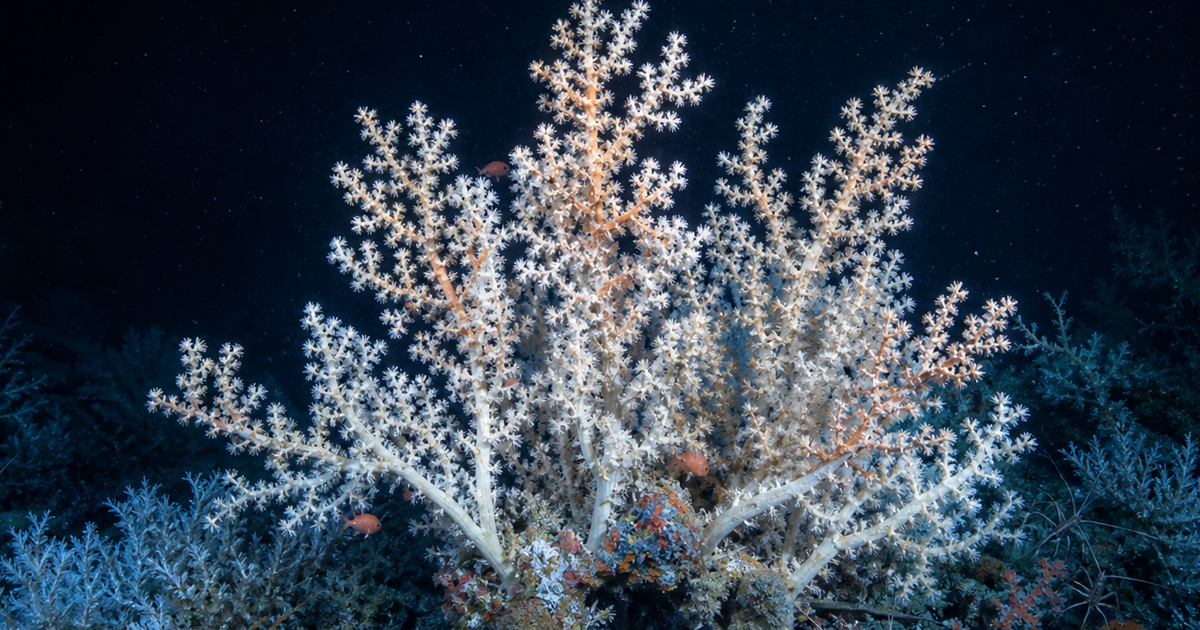
At the bottom of the sea, hundreds of meters down, in cold darkness where sunlight never reaches at all, there quietly grows a forest of coral spreading colorful branches. Living in a world entirely apart from the familiar corals of shallow tropical waters, it is called "cold-water coral" (also known as deep-sea coral). Without relying on photosynthetic zooxanthellae, it builds reefs over thousands of years in total darkness, becoming a refuge for countless deep-sea creatures.
And yet this "forest of time" is also fragile enough to be flattened by just a few minutes of bottom trawling — taking hundreds of years to recover, if it ever recovers at all. In recent years, an enormous colony estimated at about 7,000 years old was even found on a seamount off Japan's coast, making clear that deep-sea coral is by no means a story confined to distant seas.
This article explains, based on primary sources from Japan's Ministry of the Environment, the Fisheries Agency, JAMSTEC, NOAA, and the FAO, what kind of creature cold-water coral is, how it survives in a world without light, and what threatens it today — explained in plain terms accessible to anyone from middle schoolers to adults.
What you'll learn in this article
- How cold-water coral survives in the lightless deep sea without relying on zooxanthellae (symbiotic algae)
- How growth of just millimeters a year builds an enormous "deep-sea forest" over thousands of years
- Why cold-water coral reefs become a refuge and spawning ground for so many deep-sea creatures
- The roughly 7,000-year-old deep-sea coral found off Japan, and the reality of Japan's precious coral
- Why bottom trawling can destroy cold-water coral in an instant, and why recovery takes centuries
- New threats from ocean acidification and warming, and conservation actions we can take
What is cold-water coral: a creature entirely different from tropical coral
When people hear "coral," most picture the vividly colored reefs of shallow, sun-drenched seas — places like Okinawa or the Great Barrier Reef. But there's an entirely different group of corals on Earth living a completely different lifestyle. This is cold-water coral, also known as deep-sea coral. As the name suggests, it lives at the bottom of cold, dark seas.
Cold-water coral is not an especially rare creature. It is widely distributed across seafloors around the world, from depths of just a few dozen meters off Norway to over 1,000 meters along the Mid-Atlantic Ridge. Overall, it is found across a broad depth range of roughly 40 to 3,000 meters, forming "deep-sea forests" in places we never normally see — continental slopes, seamounts, and ridges on the ocean floor.
The biggest difference: it doesn't rely on zooxanthellae
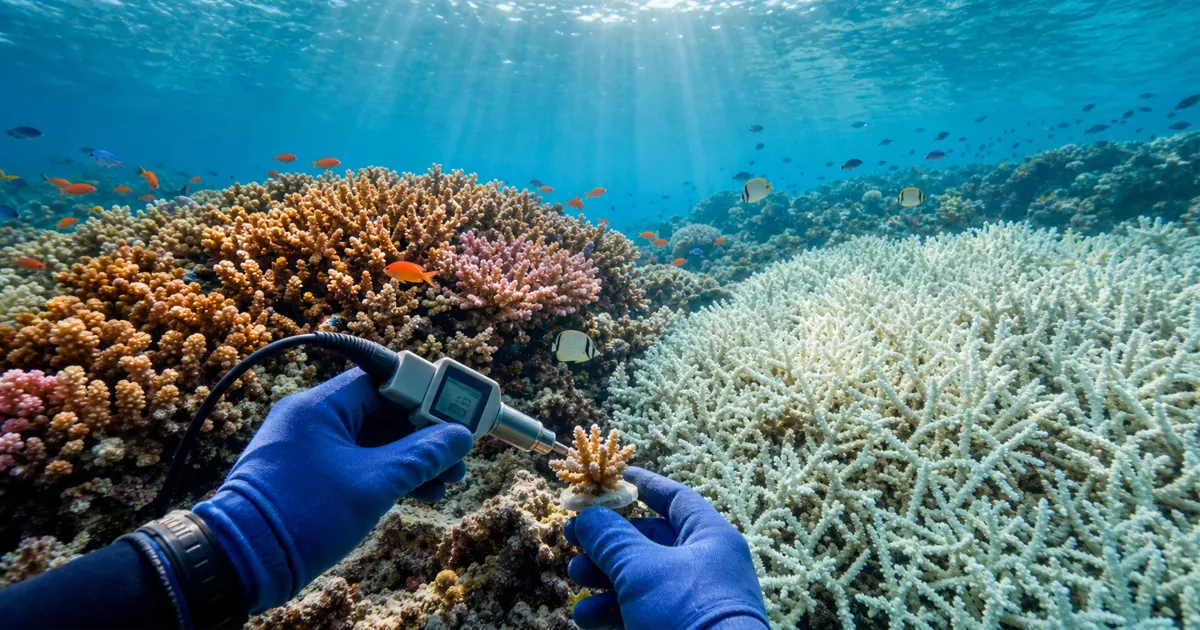
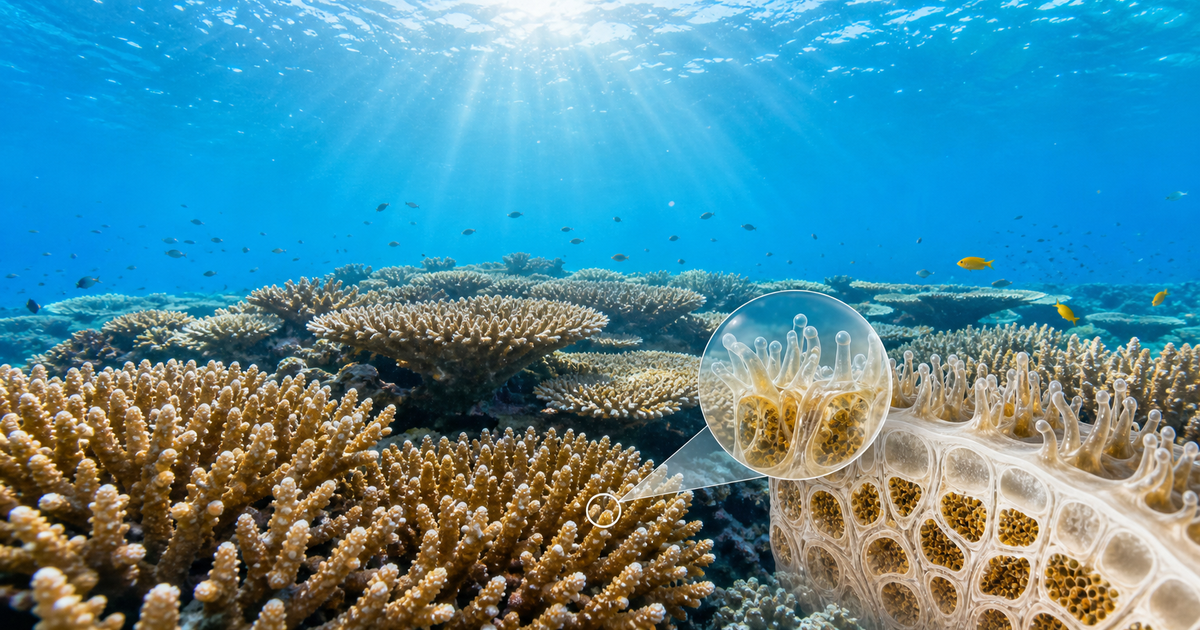
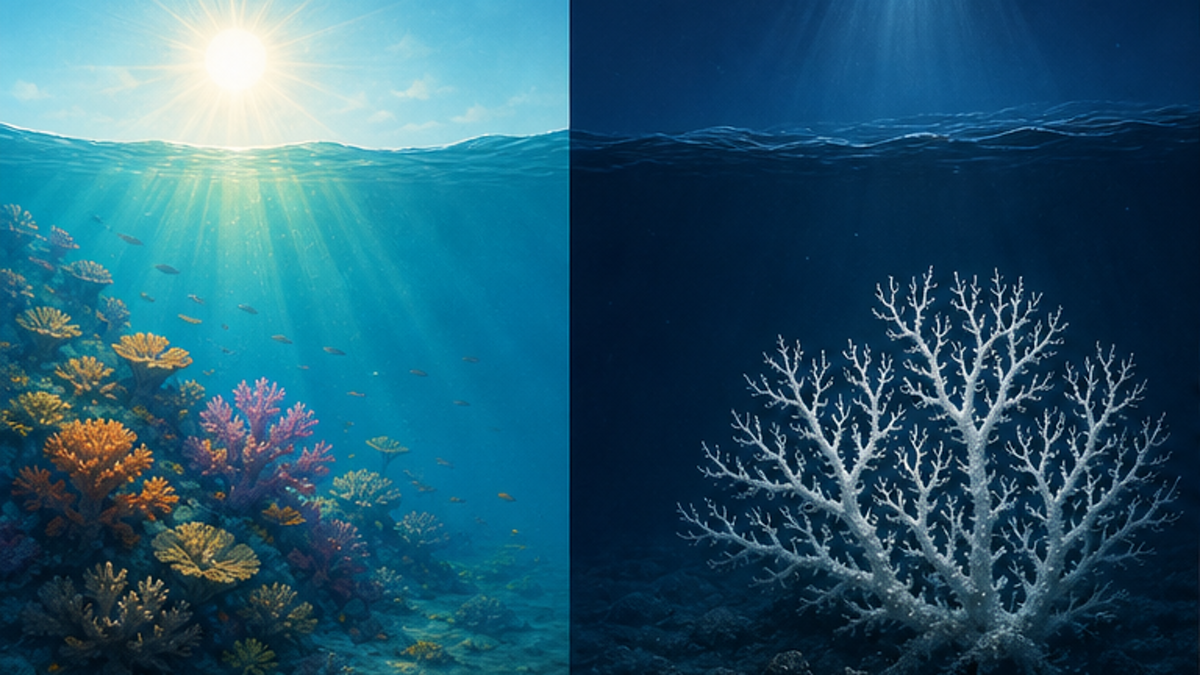
The decisive difference between tropical reef-building coral and cold-water coral is whether it houses tiny algae called zooxanthellae inside its body. Tropical coral survives on nutrients shared by the zooxanthellae living inside it, produced through photosynthesis. This symbiotic mechanism is explained in detail in a separate article on the symbiosis between coral and zooxanthellae. Cold-water coral, however, has no such photosynthetic partner.
The reason is simple: the deep sea where cold-water coral lives receives absolutely no sunlight, which photosynthesis requires. Without light, zooxanthellae cannot photosynthesize, so there is no point in the symbiosis. Cold-water coral has therefore chosen its own way of life, independent of both light and zooxanthellae. This "independence from light" is the first key to understanding cold-water coral.
Differences between cold-water coral and tropical coral
- Tropical coral: shallow seas, light present, relies on nutrients from photosynthesis via symbiotic zooxanthellae
- Cold-water coral: deep seas, no light, has no zooxanthellae and catches its own food
- Both are cnidarians (the same group as jellyfish and anemones), yet their lifestyles are complete opposites
Some are "reef-building corals" that stack up stone
There are many kinds of cold-water coral. The best known is Lophelia (Lophelia pertusa, also increasingly called Desmophyllum pertusum), a stony coral that builds a hard skeleton of calcium carbonate (limestone). As this hard skeleton accumulates over vast stretches of time, it forms the enormous "cold-water coral reefs" introduced later in this article. The deep sea is also home to a diverse array of other groups, including precious coral prized for jewelry, and black coral (antipatharians) with dark skeletons.
In other words, cold-water coral is not the name of a single creature, but a collective term for "corals that live in the cold, dark deep sea." Some build hard reefs, while others extend flexible branches — each adapted to the harsh environment of the deep sea in its own way. In the next section, let's look at how they feed in a world without light.
Its existence was only recently understood
Fragments of deep-sea coral have actually been known to fishers for a long time, occasionally caught in their nets. But it is only in the past few decades — since submersibles and remotely operated vehicles (ROVs) made it possible to observe the deep sea directly — that we've come to understand these corals form vast "reefs" on the seafloor. Not much time has passed since humanity began to see the full picture of cold-water coral.
In other words, cold-water coral is an "ancient forest only just discovered." It has existed in the deep sea for thousands of years, yet we only recently began to see and understand its value. That is precisely why it faces the threats discussed later in this article, even before adequate protective systems are in place. Simply knowing about it is the starting point for protecting it.
This article will deepen your understanding step by step, in the order of cold-water coral's "way of life," its "extraordinary span of time," its "role as a refuge for other creatures," its "presence in Japan," the "threats of bottom trawling and ocean acidification," and "systems for protecting it." Technical terms will be explained as simply as possible, so even those encountering the deep-sea forest for the first time can read on with confidence. Let's begin with the first mystery: how does it eat in a world without light?
A life independent of the sun: catching plankton with tentacles
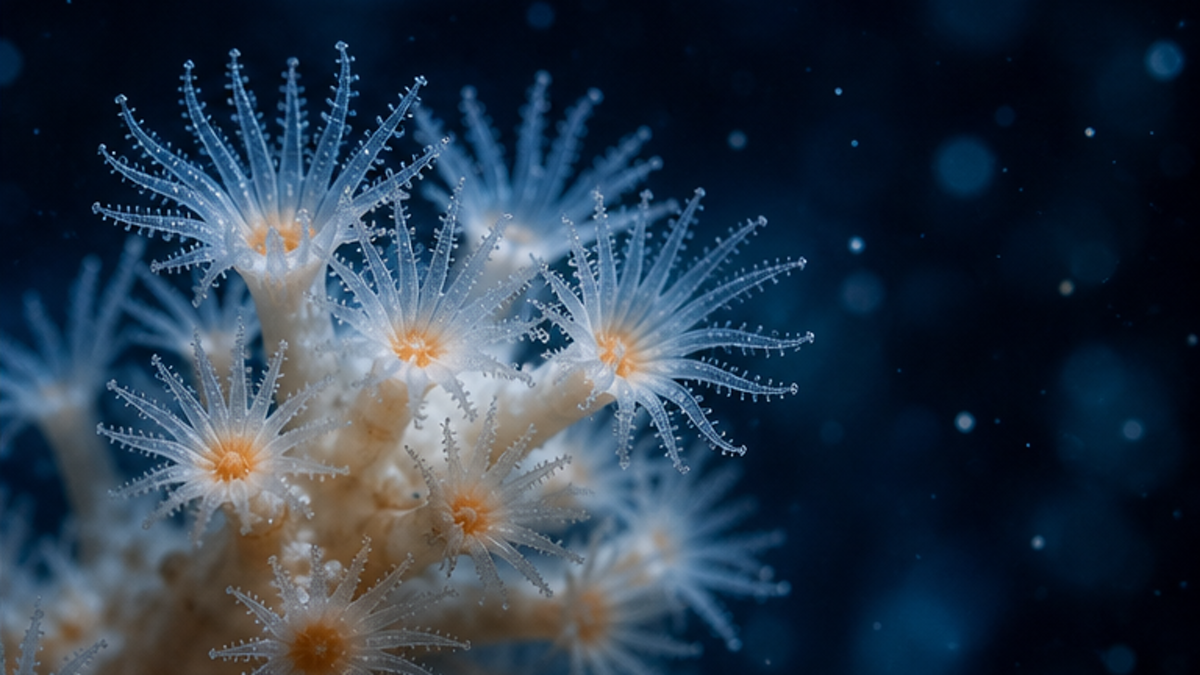
Lacking the "self-generating" means of photosynthesis, how does cold-water coral obtain energy? The answer is the same as for us animals: by eating. Cold-water coral is a bona fide carnivorous animal that catches plankton and particles of organic matter drifting through the sea using its many tentacles.
The fact that coral is an "animal"
To begin with, coral is not a plant — it belongs to the same animal group as jellyfish and sea anemones, the cnidarians. Each individual body is called a "polyp" and has tentacles around its mouth. The tentacles carry stinging capsules called nematocysts, which are fired into small passing prey to capture it and carry it to the mouth. Cold-water coral survives in a world without light using nothing more than this basic animal equipment.
Relying on "delivery" carried by ocean currents
For cold-water coral, which cannot swim on its own, it is ocean currents that deliver its food. Cold-water coral thrives best in places where a strong current continually carries plankton and organic matter (known as marine snow) that forms in the ocean's surface layer and sinks down. That's precisely why they favor topographically "well-ventilated" locations — the tops and slopes of seamounts, ridges on the ocean floor, and overhangs on continental slopes — where currents collide and food tends to gather.
In sharp contrast to shallow-water tropical corals, which gather in "bright places bathed in light," cold-water corals gather in "places where food flows by." Light or current — the resource on which life depends changes where creatures gather, and this is a crucial perspective for reading ocean ecosystems.
A cold, dark, yet stable world
The deep sea where cold-water coral lives has a water temperature of roughly 4 to 12 degrees Celsius, staying nearly constant year-round. With no light and barely any sense of seasons, it is, in a sense, a "world where time flows slowly." This stable, low-temperature environment is thought to be deeply connected to the extraordinary lifespans — spanning thousands of years — that cold-water coral achieves, as discussed later.
At low temperatures, the chemical reactions occurring inside living bodies also slow down. While growth becomes gradual, aging and energy consumption are also suppressed, making it easier to survive on limited food. In an environment like the deep sea, where food is scarce, this "strategy of living slowly" makes perfect sense. The astonishing longevity of cold-water coral can be seen as a naturally emerging way of life, adapted to the harsh environment — a lifestyle tailored for the deep sea.
| Item | Tropical reef-building coral | Cold-water coral (deep-sea coral) |
|---|---|---|
| Main habitat depth | 0 to a few dozen meters | Roughly 40 to 3,000 meters |
| Light | Required (shallow seas) | Not required (unreachable) |
| Zooxanthellae | Symbiotic | None |
| Main nutrient source | Zooxanthellae photosynthesis + predation | Predation on plankton/organic matter only |
| Preferred location | Sunlit, bright seafloor | Seamounts/slopes where currents carry food |
| Approximate water temperature | Around 18–30°C | Around 4–12°C |
Feeding time knows "no day, no night"
In the deep sea where no light reaches, there is no distinction between day and night to begin with. What matters to cold-water coral is not whether the sun is out, but whether a current is flowing right now. When the tide's ebb and flow, or a deep current, strengthens and carries plankton along, the polyps spread their tentacles all at once to feed. When the current is weak, they may retract their tentacles and rest — a deep-sea creature that, in its own way, lives a rhythmic life in sync with the ocean's movements.
This "current-dependent" way of life is a major factor determining where cold-water coral is distributed. They appear concentrated in places where topography — seamounts, continental slopes, the edges of undersea canyons — speeds up currents and gathers food. Looking at a map of the deep sea and considering "where currents converge" is directly linked to inferring "where cold-water coral forests might be."
Remember: "deep-sea coral = coral of the dark sea"
Cold-water coral is an animal that survives on food carried by ocean currents, not light. So where it lives is determined by "current and food," not brightness. Grasping just this one point makes the distribution and reef formation discussed next much easier to understand.
A "creature of time" that grows over thousands of years
The single greatest characteristic of cold-water coral is, above all, its slow growth and the extraordinary lifespan that results from it. While warm-water coral can grow several centimeters in a year, cold-water coral's skeleton typically extends just a few millimeters a year. In the cold, food-limited deep sea, life itself proceeds slowly.
A few millimeters a year, yet thousands of years old
The growth rate of Lophelia, the representative species, is said to be around 4 to 25 millimeters a year depending on conditions, and studies that actually marked and measured skeletons in the deep sea have reported an average of 2.4 to 3.8 millimeters per year — a pace slower than the growth of a fingernail. Yet when this slowness combines with thousands of years, the scale becomes almost unimaginable.
Some Lophelia reefs in the North Atlantic are estimated to have been growing continuously since roughly 8,000 to 10,000 years ago. This means they have grown without interruption since around the end of the last ice age. Indeed, there are known examples where the first corals took root in grooves left by icebergs scraping the seafloor, and reefs developed from there. Cold-water coral reefs are, in a very real sense, living "geological monuments."
Considered this way, a single cold-water coral reef we now see on the seafloor is a "living historical heritage" as old as — or older than — the pyramids or ancient ruins. A forest that has continued to grow since before humanity even invented writing is still quietly extending its branches in the deep sea today. That fact poses us a weighty question: should we destroy it in an instant for short-term gain?
"Over 4,000 years" — among the oldest animals on Earth
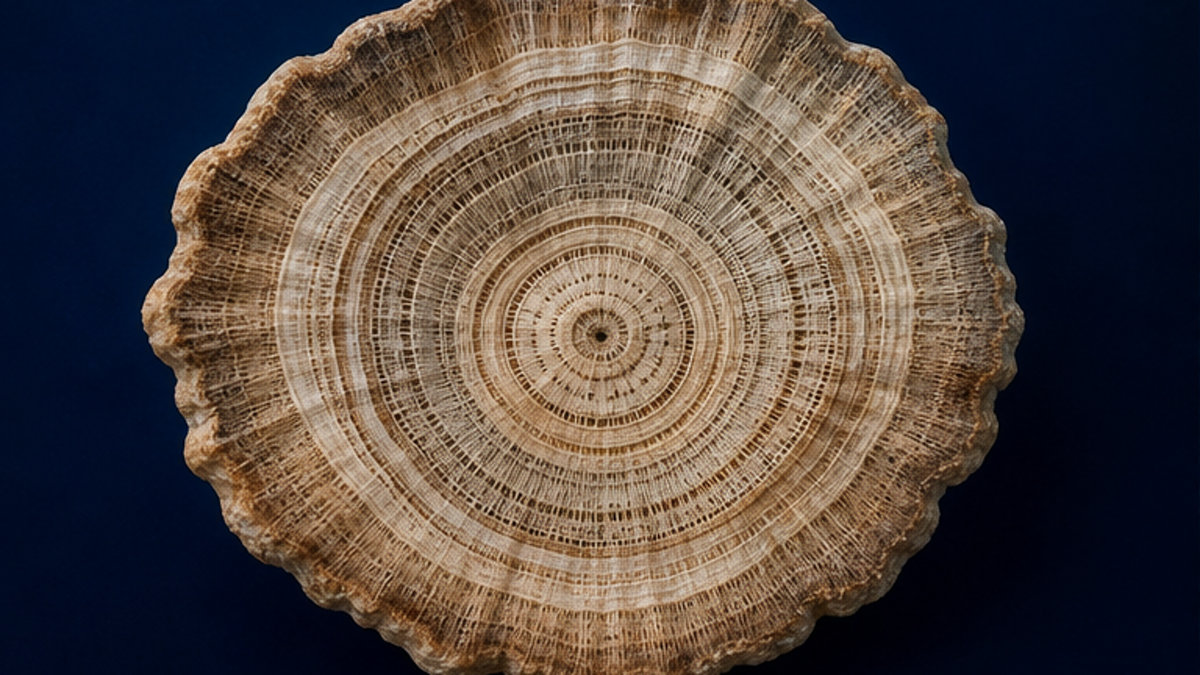
Some individual cold-water coral colonies hold even older records. Leiopathes, a species of black coral collected from deep waters off Hawaii (at a depth of 300 to 500 meters), was estimated by radiocarbon dating to be about 4,265 years old, making it one of the oldest skeleton-building marine animals in the world. The same study measured a gold coral (genus Gerardia) at approximately 2,742 years old.
What's interesting here is that this "age" reflects the age of the colony's overall skeleton. Each individual polyp making up the colony typically lives only a few years on average. Building one enormous skeleton together across generations, over thousands of years — cold-water coral is, in a sense, a "living structure" formed by the connected lives of countless generations.
The skeleton as an "ocean recording device"
The skeleton that cold-water coral slowly builds up chemically records the state of the ocean at each point in time. By analyzing the elements and the ratios of carbon and oxygen contained in the skeleton, researchers can read past changes in water temperature, ocean currents, and seawater properties. Deep-sea corals living for thousands of years are, in effect, natural recording devices placed in the deep sea, offering researchers precious clues for reconstructing climate change since the ice age.
In other words, losing a single cold-water coral colony means more than simply losing one organism. It means the loss, forever, of thousands of years' worth of ocean history recorded within it. A creature that grows over a long span of time is not only a member of the ecosystem, but also a witness testifying to the Earth's past.
Slow growth is the flip side of "fragility"
Growing just a few millimeters a year means that once destroyed, recovery takes just as long — in some cases hundreds to thousands of years. While the long lifespan of cold-water coral is remarkable, it is also a decisive vulnerability against human activity. We'll examine this in detail in the later section on "the threat of bottom trawling."
Cold-water coral reefs spreading across the seafloor: Røst Reef and the "living wall"
When reef-building cold-water corals like Lophelia stack up their skeletons over thousands of years, an enormous cold-water coral reef is born on the seafloor. Their scale rivals — or even exceeds — tropical coral reefs, with the largest examples in the world stretching dozens of kilometers.
The world's largest cold-water coral reef: Røst Reef
The champion of them all is Røst Reef, discovered in 2002 off Norway's Lofoten Islands. It stretches roughly 43 kilometers in length and up to several kilometers in width, and is currently known as the world's largest cold-water coral reef. Built entirely by Lophelia over thousands of years, it can be described as a vast "living wall" lying across the deep sea.
Røst Reef was designated a special protected area the year after its discovery, in 2003, and rules were put in place to protect it from bottom trawling, discussed later. Sula Reef, also off Norway, was similarly protected in 1999 — this region was quick to recognize the value of cold-water coral reefs. Such mechanisms for protecting sea areas are a leading example of the concept of a Marine Protected Area (MPA).
Most of the reef is made of "dead skeleton"
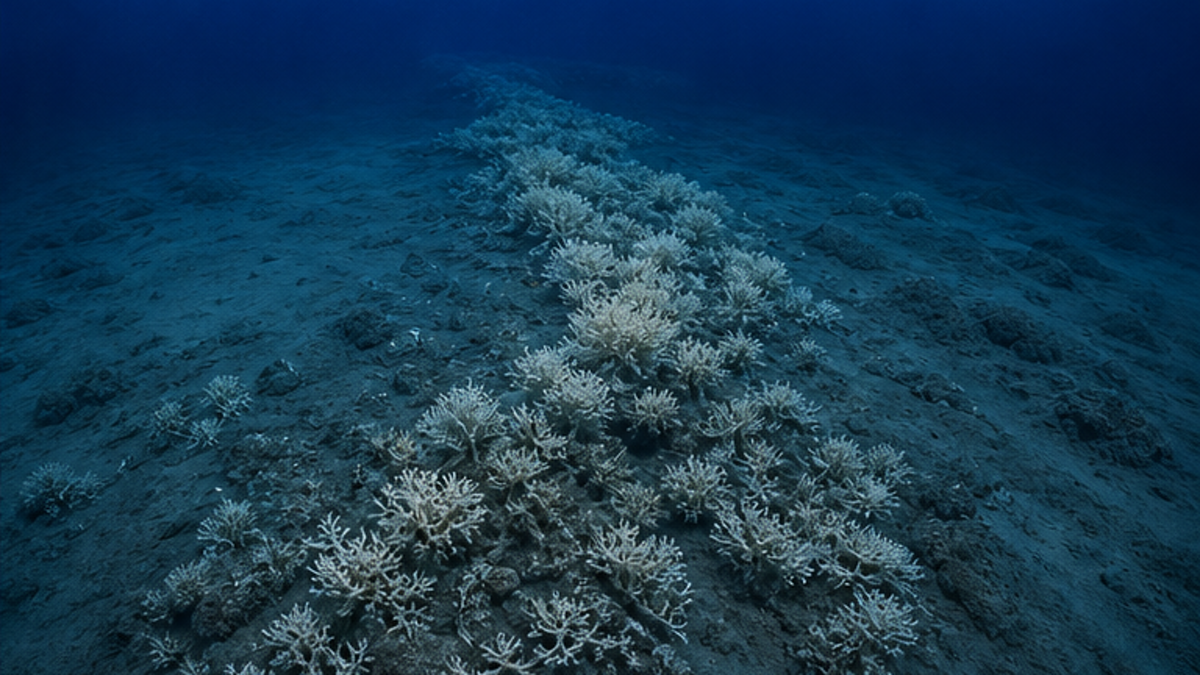
It may come as a surprise, but most of a cold-water coral reef is actually built on a foundation of already-dead coral skeletons stacked up over time. Only a small portion of the surface holds living, growing coral, while beneath it lie the skeletons of thousands of years' worth of ancestors, serving as support. This three-dimensional, complex structure is precisely what gives rise to the reef's role as a "deep-sea refuge," discussed in the next section.
However, the fact that most of the foundation is dead limestone skeleton also becomes a weakness against ocean acidification, discussed later. Acidified seawater dissolves calcium carbonate, gradually eating away not just living coral, but the skeletal foundation supporting the entire reef.
Building a reef requires "just the right conditions"
Building a reef this large requires several conditions to align. First, there must be a hard foothold where larvae (baby corals) can settle. Second, there must be a moderate ocean current carrying plankton. And third, water temperature and seawater properties must remain stable over long stretches of time. Only in sea areas where these conditions align can a massive cold-water coral reef like Røst Reef develop. Conversely, if even one of these conditions breaks down, maintaining the reef becomes difficult.
Once a cold-water coral reef forms, it creates a virtuous cycle: more creatures gather there, and those creatures further enrich the environment. The span of thousands of years is also the history of this virtuous cycle slowly accumulating. That is precisely why, when destroyed suddenly by a powerful outside force, this very cycle is severed. In the next section, we'll look at just how much life this reef supports.
Major sea areas where cold-water coral reefs are found
- Off Norway, North Atlantic (Røst Reef, Sula Reef, and others)
- Off Ireland and the UK, the Mediterranean Sea
- The Gulf of Mexico, off the southeastern United States
- Seamounts and continental slopes in the Pacific (including waters off Japan)
An oasis in the deep sea: shelter for countless creatures
The greatest reason cold-water coral is considered "worth protecting" is not just its beauty or longevity. It's because cold-water coral reefs create an oasis teeming with life on a deep seafloor that would otherwise appear utterly barren. Its intricately branching, three-dimensional structure becomes an irreplaceable home for countless deep-sea creatures.
Gaps between branches become "homes"
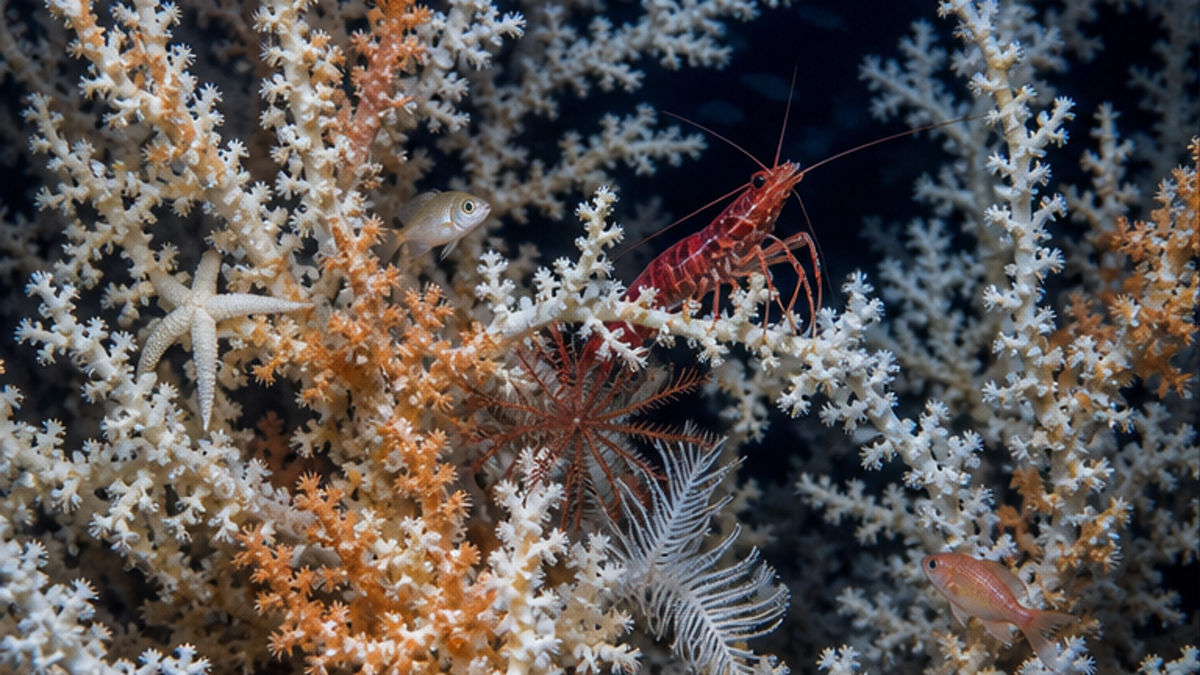
A flat deep seafloor covered only in mud or sand offers almost no place to hide or lay eggs. Where a cold-water coral reef exists, however, the countless gaps between its branches become a refuge for fish, shrimp, crabs, starfish, and crinoids. As a place to escape predators, avoid strong currents, and protect eggs and juveniles, coral's three-dimensional structure is truly a deep-sea "apartment complex."
Biomass far exceeding the surrounding seafloor
According to research, the variety and quantity of organisms gathered on a cold-water coral reef is on an entirely different order of magnitude from the flat seafloor surrounding it. In cold-water coral areas off the southeastern United States, for instance, at least over 100 species of coral alone have been identified, and together with the fish and invertebrates that join them, a rich community forms. The biomass on the reef has been reported to be many times, even dozens of times, greater than that of the surrounding seafloor.
Furthermore, cold-water coral reefs are believed to be important as spawning, nursery, and feeding grounds for many fish and invertebrates. For deep-sea creatures, coral reefs are also "places where the next generation can be safely raised." In supporting a rich web of ocean food, they share something in common with shallow-water ecosystems.
Perhaps a "cradle of evolution" in the deep sea
It has also been suggested that complex, stable environments like cold-water coral reefs may serve as a stage for evolution (a center of speciation) where new species arise. It is thought that as diverse creatures gather and interact with one another over long spans of time, unique evolutionary paths emerge. Protecting cold-water coral is also connected to protecting deep-sea biodiversity we have yet to discover.
Deeply connected to fishery resources as well
The fact that cold-water coral reefs serve as spawning and nursery grounds for fish also means they may be a cradle nurturing the very fish we eat. Many species targeted by human fisheries also live in the deep sea and along continental slopes. If cold-water coral reefs were lost, the places where such fish grow would also be lost, potentially rippling out to affect fishery resources as well. Protecting deep-sea coral is inseparable from protecting the ocean's bounty.
This is much the same structure as shallow-water coral reefs, mangroves, and seagrass meadows supporting fisheries as "cradles of the sea." Even in the invisible deep sea, ecological connections extend all the way to our tables on land. The abundance of cold-water coral is a story about a distant deep sea, but at the same time, it is a foundation quietly supporting our own lives.
Cold-water coral reefs can also serve as gathering points where many creatures converge at a fixed location — as a "cleaning station" where bodies get cleaned, or as a meeting place for spawning. A single reef amid an otherwise barren, muddy seafloor is enough to sharply raise the density of life around it — cold-water coral truly functions as the "core" of the deep-sea ecosystem. This role teaches us the value of the reef as a "place" in itself — something that cannot be replaced simply by protecting individual species.
Four roles played by cold-water coral reefs
- Refuge: gaps between branches protect creatures from predators and strong currents
- Spawning and nursery ground: a foothold for safely raising eggs and juveniles
- Biodiversity hotspot: gathers far more creatures than the surrounding seafloor
- Cradle of evolution: possibly a center where new species emerge
Japan's deep-sea coral: a roughly 7,000-year-old colony and precious coral
Cold-water coral is not just a story of distant northern seas. Recent surveys have revealed that astonishingly long-lived deep-sea corals also live in the deep waters surrounding Japan.
A giant "7,000-year-old" colony found at 525m depth
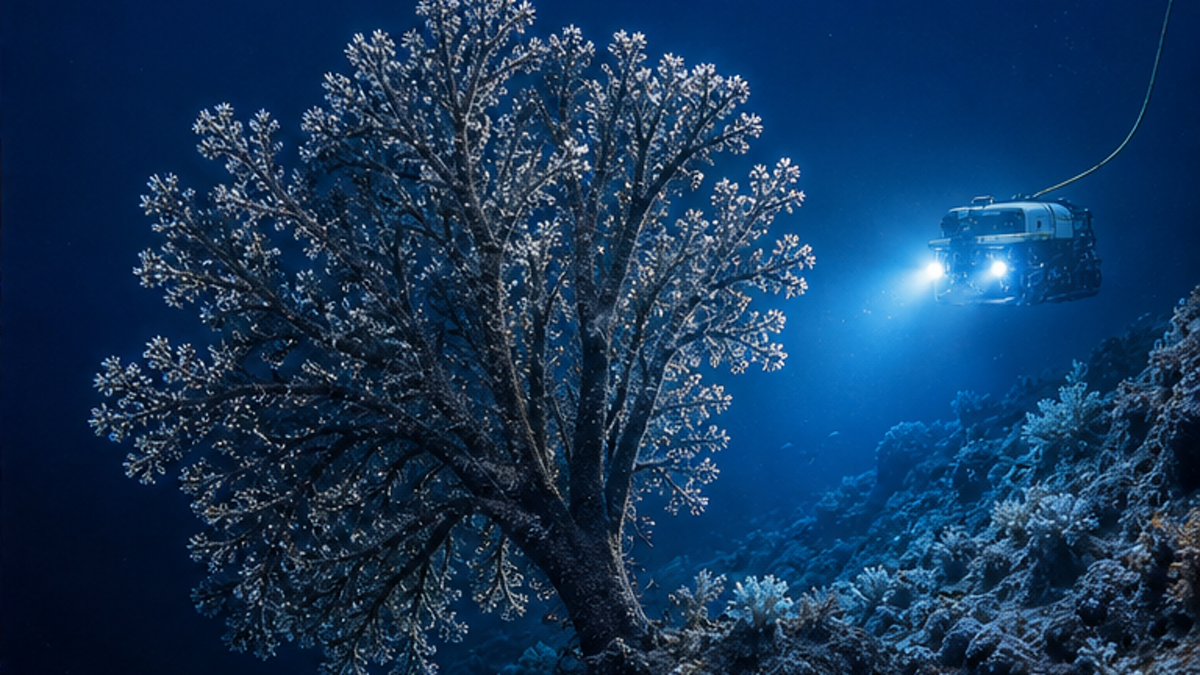
In 2024, a research team from the Japan Agency for Marine-Earth Science and Technology (JAMSTEC) and the University of the Ryukyus, among others, announced that they had discovered a giant black coral colony (genus Leiopathes), estimated at roughly 7,000 years old, at a depth of about 525 meters off the western Mariana Ridge in the northwestern Pacific (within an offshore seafloor nature conservation area). It is one of the longest-lived deep-sea creatures known in the world. Spanning several meters, this colony has continued growing quietly at the dark bottom of the sea since long before the Jomon period.
The survey also reported finding several new species among the small creatures living alongside the deep-sea coral, telling us that the deep sea around Japan remains a treasure trove of largely unexplored biodiversity. A span of roughly 7,000 years is almost the same length as the entire history of human civilization. While we've been writing our history, this colony has continued living in exactly the same spot.
Japan's iconic "precious coral"
Another famous type of deep-sea coral in Japan is precious coral, prized for use in jewelry. Species such as red coral, pink coral, and white coral are known, all belonging to the octocorallia subclass and closely related to soft corals. They live in deep waters at depths of several dozen to several hundred meters around Okinawa, Shikoku, Kyushu, and the Ogasawara Islands.
Precious coral is also a cold-water coral with very slow growth and a long lifespan. Because it is beautiful and expensive, it is prone to overharvesting, and research into resource management and reproductive biology is underway. For Japan, cold-water coral is a familiar deep-sea treasure deeply tied to both culture and industry.
| Type | Approximate classification | Main habitat | Characteristics |
|---|---|---|---|
| Lophelia | Stony coral (reef-building) | North Atlantic, etc. | Representative reef-building cold-water coral made of limestone |
| Black coral (antipatharians) | Order Antipatharia | Pacific seamounts, etc. | Extremely long-lived; a colony off Japan estimated at ~7,000 years old |
| Precious coral (red/pink/white) | Subclass Octocorallia | Okinawa, Shikoku, Ogasawara, etc. | Prized for jewelry; slow-growing and in need of protection |
"Offshore seafloor nature conservation areas" — a first step in protection
The waters off the western Mariana Ridge, where the roughly 7,000-year-old colony was found, are designated by Japan as one of its offshore seafloor nature conservation areas. This is a system for protecting specific sea areas in order to preserve precious deep-sea ecosystems, and is part of Japan's marine protected area initiatives. The discovery of a long-lived deep-sea coral within such a conservation area is an encouraging sign that the system is genuinely playing a role in protecting important species.
That said, most of the deep sea around Japan remains unsurveyed, and the full picture of where and how much cold-water coral lives there is still unknown. The fact that new species keep turning up in surveys is, viewed the other way, also a risk — we may be losing things without even realizing it. Getting to know the deep sea, recording it, and protecting it — this steady accumulation of effort will shape the future of Japan's deep-sea coral.
Japan is a maritime nation with one of the largest sea areas in the world, and its seafloor is home to numerous seamounts and continental slopes. It is thought that many cold-water coral forests still lie hidden there, unseen by human eyes. For those of us living in a country surrounded by sea on all sides, knowing about and protecting deep-sea coral is, in effect, the same as cherishing our own country's natural heritage.
Cold-water coral is also "a story about Japan's sea"
Both the roughly 7,000-year-old colony and precious coral live in the deep waters right next to us. Conserving deep-sea coral is not a distant issue overseas — it is directly tied to protecting Japan's own marine resources and culture.
The biggest threat, bottom trawling: a forest of millennia gone in an instant
A cold-water coral forest that took thousands of years to grow is, ironically, fragile enough to be destroyed by a single human fishing operation. The greatest threat is bottom trawling. This fishing method, which sweeps up nearly everything living on the seafloor to catch fish and shrimp, is considered worldwide to be the most destructive human activity to deep-sea coral.
A net dragged along the seafloor flattens the forest
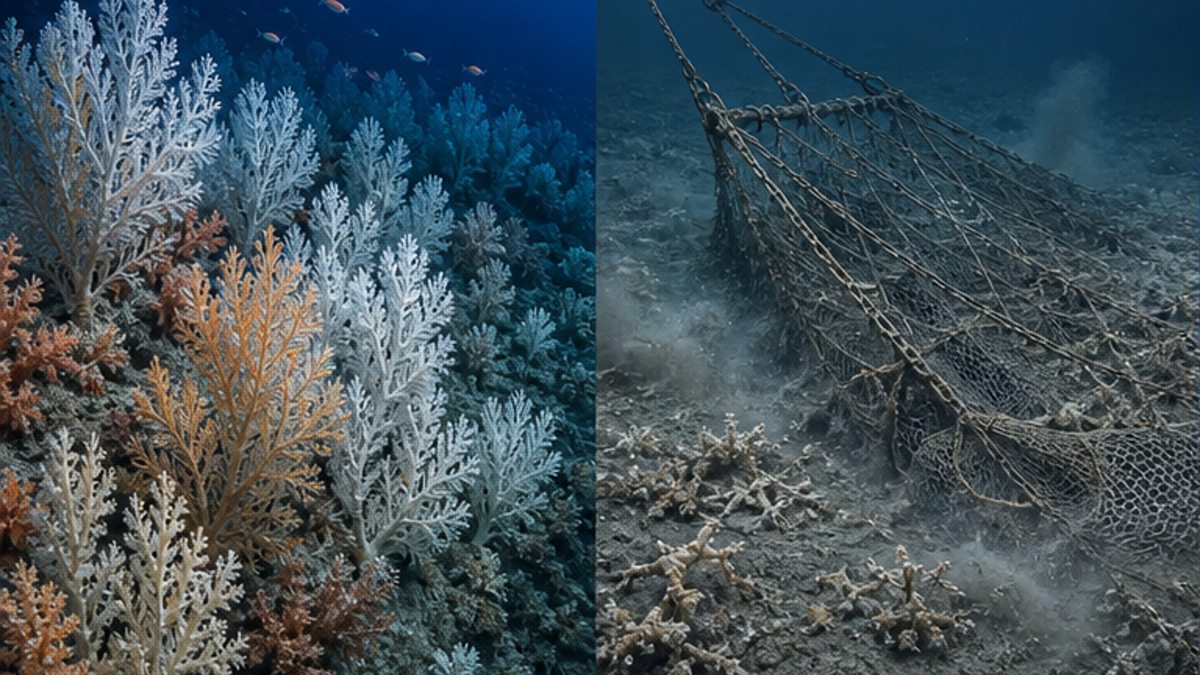
Bottom trawling is a fishing method that drags a large weighted net along the seafloor, scooping up whatever creatures happen to be there. The seafloor after the net has passed resembles, in a sense, a forest after a bulldozer has gone through. Cold-water coral branches that took thousands of years to rise up snap, shatter, and flatten easily under the mechanical impact. A few minutes of operation erases thousands of years of history.
"Centuries to recover" — or never at all
Shallow-water ecosystems can sometimes recover within a few years to a few decades even after being damaged. But for cold-water coral, which grows just millimeters a year, the situation is entirely different. A destroyed reef is estimated to take hundreds to thousands of years to return to its original state, and depending on conditions, it may never recover at all. For deep-sea coral, "destroying" it is, in practical terms, close to "losing it forever."
Bottom trawling is also not unrelated to bycatch (catching non-target species) and damage from fishing gear left abandoned on the seafloor. The problem of ghost gear — nets and ropes left in the sea that continue to injure marine life — is also gradually inflicting damage on deep-sea ecosystems.
Ocean acidification and warming add further pressure
Bottom trawling, which destroys coral directly, is not the only threat facing cold-water coral. Ocean acidification — in which some of the carbon dioxide emitted by human activity dissolves into the sea, gradually shifting seawater toward acidity — is also a quiet but serious threat. As acidification progresses, coral skeletons made of calcium carbonate become easier to dissolve, making it more difficult for coral to build shells and skeletons in the first place.
Research suggests that if acidification continues at its current pace, roughly 70% of cold-water coral reefs could be exposed to seawater in which calcium carbonate readily dissolves within this century. In particular, as the "dead skeleton" that makes up most of a reef's foundation becomes more brittle, the entire reef becomes more prone to collapse. Combined with changes in water temperature and ocean currents from warming, cold-water coral faces multiple threats simultaneously. Understanding the mechanism of ocean acidification alongside the separate article on the mechanism of coral bleaching helps reveal what is happening across the entire ocean.
Deep-sea damage progresses easily because it's "invisible"
When a shallow-water coral reef is destroyed, divers and tourists notice right away, and it becomes a social issue. But cold-water coral forests lie in darkness hundreds of meters deep. Normally invisible to anyone, they carry the difficulty that destruction can progress without ever being witnessed. A vicious cycle — "unseen, so unnoticed; unnoticed, so action is delayed" — makes deep-sea conservation especially difficult.
That is precisely why it matters so much to record the current state of the deep sea through surveys with underwater vehicles, and share that footage and imagery with society. Making visible the reality that a forest of millennia can turn into a wasteland in an instant helps build public opinion and policy that can stop the destruction. The problem of deep-sea coral is a scientific issue, but it is also a matter of how much imagination we as people can bring to bear.
Major threats facing cold-water coral
- Bottom trawling: the greatest threat, physically flattening reefs. Recovery takes hundreds to thousands of years, or may be irreversible
- Ocean acidification: dissolves the calcium carbonate skeleton, weakening the reef's foundation
- Warming and current changes: alter water temperature and food supply, degrading habitat conditions
- Bycatch and ghost gear: direct and indirect damage from fishing equipment
How to protect it: international rules and what we can do
To protect cold-water coral, which is fragile and takes an extraordinary amount of time to recover, the international community has built up a number of rules. The nature of deep-sea coral — where regret comes too late once it's destroyed — teaches us the importance of protecting it preemptively.
The FAO's concept of "Vulnerable Marine Ecosystems (VMEs)"
In 2008, the UN Food and Agriculture Organization (FAO) established international guidelines for deep-sea fisheries on the high seas. At their core is the concept of Vulnerable Marine Ecosystems (VMEs). Ecosystems like cold-water coral reefs, which are difficult to recover once destroyed, are positioned as VMEs, and countries are asked to prevent serious adverse impacts on them before they occur. In sea areas where deep-sea coral has been found, rules such as stopping fishing and moving elsewhere (the "move-on" rule) have also been introduced.
Protecting through closed "reserve" areas
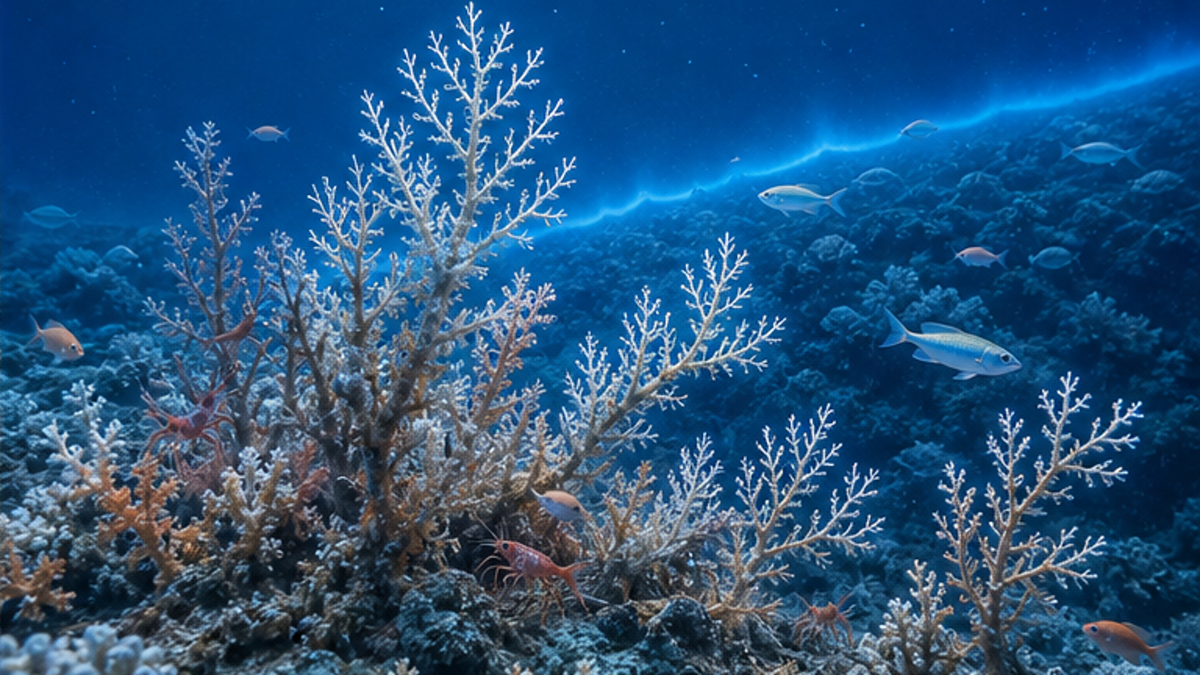
Since 2005, the North East Atlantic Fisheries Commission (NEAFC) has established closed areas that prohibit bottom trawling in specific sea areas in order to protect seafloor ecosystems, including cold-water coral. Norway's early protection of Røst Reef and Sula Reef follows the same trend. Establishing a Marine Protected Area (MPA) to protect a specific sea area and restricting bottom trawling within it is considered one of the most effective measures for protecting cold-water coral. Indeed, in sea areas where fishing has stopped, there are reported examples of ecosystems gradually moving toward recovery over time.
"Choosing what you buy" also supports conservation
The deep sea may feel like a distant topic, but it is not unrelated to our everyday choices. When buying fish and seafood, choosing products certified (such as MSC certification) as caught through sustainable fisheries that account for their impact on seafloor environments helps push back against destructive fishing methods. Certified products like these are spreading even at familiar local stores — for example, cases such as AEON's initiative with MSC/ASC-certified seafood are well known.
Seafood companies and distributors are also increasingly moving toward sustainable sourcing. When each of us takes even a little interest in "where and how a fish was caught," demand shifts, and how the ocean is used changes along with it. The first step in protecting deep-sea coral is knowing it exists and maintaining that interest.
The importance of "protecting before destroying"
A concept repeatedly emphasized in cold-water coral conservation is the precautionary principle. For a creature that takes hundreds to thousands of years to recover, "taking action after it's destroyed" is simply too late. Even in sea areas where damage has not yet been confirmed, if there is a high likelihood of a precious ecosystem being present, protecting it preemptively — this kind of caution is especially important in environments like the deep sea, which are difficult to survey and easily destroyed. The FAO's VME concept and the move-on rule are precisely this idea put into concrete form.
The deep sea is not a place any of us can visit directly. Still, we can hold the right knowledge, accumulate ocean-friendly choices, and support conservation efforts. Will our generation lose, within a few decades, a forest of time that took thousands of years to grow — or can we hand it on to the next generation? That fork in the road lies, surprisingly, at the end of an accumulation of familiar, everyday choices.
What we can do
- Choose seafood caught through sustainable fisheries, such as MSC-certified products
- Take an interest in topics like the deep sea and marine protected areas, and share accurate information with family and friends
- Ease ocean acidification and warming through a lifestyle that reduces carbon dioxide emissions
- Support organizations and research working on ocean conservation
Cold-water coral is a "forest of time" that grows over thousands of years in the deep sea. Destroying it takes an instant; restoring it takes centuries. That is precisely why the mindset of protecting it before it's lost is essential.
— Umi Lab Editorial Team
Conclusion: carrying the forest of time that lives in the lightless sea into the future
Cold-water coral is coral that lives in the cold, dark deep sea without sunlight or photosynthetic zooxanthellae. It captures plankton carried by ocean currents with its tentacles, growing just millimeters a year to build enormous reefs over thousands of years. That forest creates an oasis where countless creatures gather, in a deep sea that would otherwise appear flat and barren.
A roughly 7,000-year-old colony and precious coral also live in the waters around Japan, showing that cold-water coral is by no means a story confined to distant seas. At the same time, a forest thousands of years old can be destroyed by a brief episode of bottom trawling, so fragile that recovery takes hundreds of years — or never happens at all. New threats such as ocean acidification and warming quietly compound the pressure.
What cold-water coral teaches us is the weight of a value called "time." No amount of money or technology can buy back thousands of years. That is precisely why the forests of time still remaining in the deep sea today are an irreplaceable asset — one that, once lost, we can never rebuild with our own hands.
That is exactly why mechanisms that "protect before destroying" — the FAO's VME concept, marine protected areas, and sustainable fishery certification — matter so much. And the starting point for all of it is simply knowing the fact that a forest of time spreads across the deep sea. The knowledge you've gained from this article is also part of the larger movement to protect the ocean.
Summary of this article
- Cold-water coral has no light or zooxanthellae, and survives in the deep sea by catching plankton carried by ocean currents
- Growing just millimeters a year, it builds reefs over thousands of years; some colonies live over 4,000 years
- Cold-water coral reefs are a biodiversity oasis, serving as a refuge and spawning ground for many deep-sea creatures
- A roughly 7,000-year-old colony and precious coral also live in the waters around Japan
- The biggest threat is bottom trawling, with recovery taking centuries or being impossible; acidification and warming also threaten it
- VMEs, marine protected areas, sustainable fisheries, and our own awareness of "choosing what we buy" all support conservation
References and sources
- Japan Agency for Marine-Earth Science and Technology (JAMSTEC) – Press release, "Discovery of one of the world's longest-lived deep-sea organisms — a coral colony living over 7,000 years on a Pacific seamount (525m depth)" (2024)
- University of the Ryukyus – News, "Discovery of one of the world's longest-lived deep-sea organisms" (Leiopathes coral colony off the western Mariana Ridge, 525m depth)
- Japan Ministry of the Environment – Coral Reef Ecosystem Conservation Action Plan 2022–2030 / Coral reef conservation initiatives
- Fisheries Agency of Japan – Report on the conservation of deep-sea corals and related species
- NOAA (National Oceanic and Atmospheric Administration) – Why Deep-Sea Corals Are Essential to Our Ocean
- FAO (UN Food and Agriculture Organization) – International Guidelines for the Management of Deep-sea Fisheries in the High Seas / Vulnerable Marine Ecosystems
- PNAS (Proceedings of the National Academy of Sciences) – Roark et al. 2009, "Extreme longevity in proteinaceous deep-sea corals" (radiocarbon dating of Leiopathes at ~4,265 years)
- Carbon Brief – "Acidification could leave oceans uninhabitable for cold-water corals"
- Lophelia.org – Resources on the ecology, growth and longevity, and distribution of cold-water/deep-sea coral
* Listed in order of reliability: government/academic institutions > peer-reviewed papers > specialist organizations > reputable media