⚡ In short
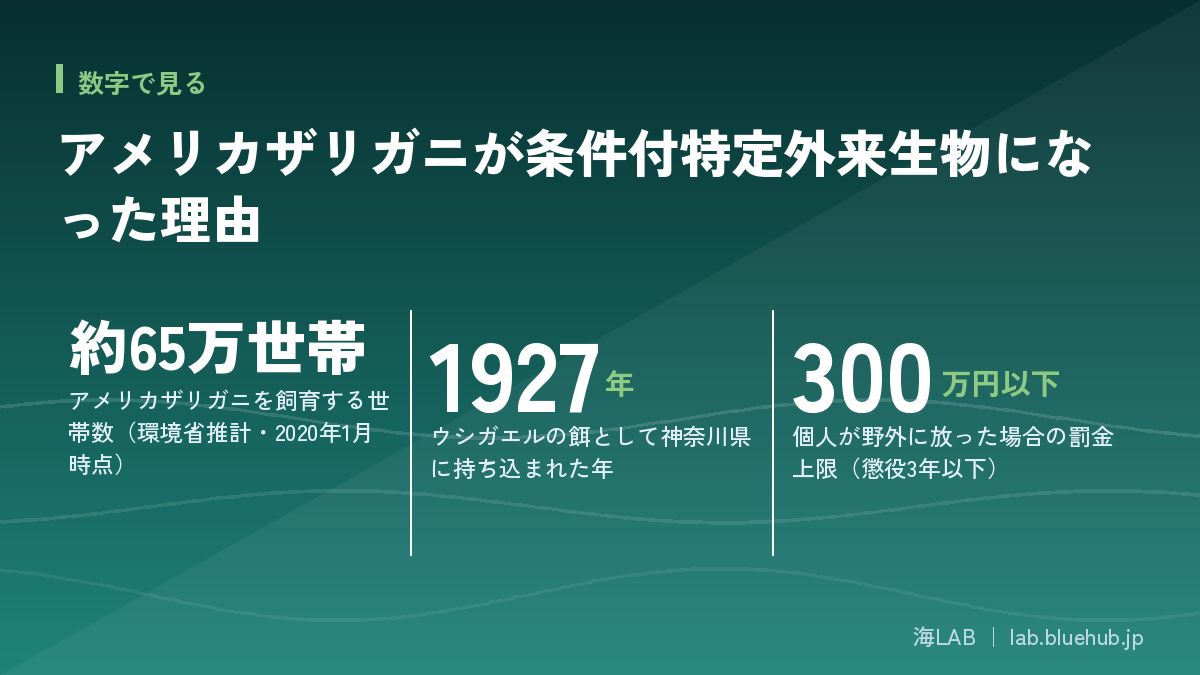
In June 2023, Japan designated the red swamp crayfish (commonly called American crayfish) as a "conditionally designated invasive alien species" — a new legal category born from a paradox: banning it outright would trigger mass release into the wild. From 27 crayfish imported in 1927 to roughly 650,000 households keeping 5.4 million of them today, this article explains the history, the ecological and agricultural damage, and what the new rules actually mean.
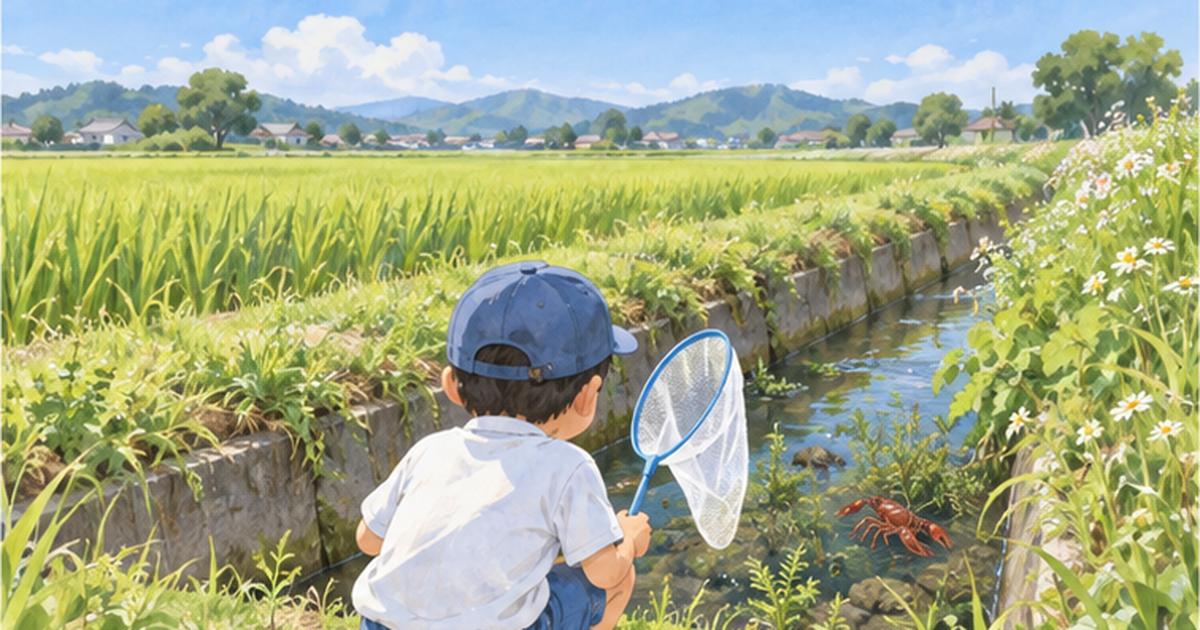
Many people remember tying dried squid to a string and fishing for crayfish in the irrigation ditch beside the rice paddies as a child. The red swamp crayfish that everyone knows is, in fact, a creature whose legal status changed on June 1, 2023.
On that day, Japan's Ministry of the Environment designated the red swamp crayfish and the red-eared slider turtle as "conditionally designated invasive alien species" — a category that did not exist before. A "specified invasive alien species" conjures images of a strong ban on both import and keeping, but "conditionally designated" is different. Anyone already keeping one at home can continue to do so as before; what is banned is mainly "releasing it into the wild," "sale, distribution, and purchase," and "import."
Why was such a seemingly half-measure system created at all? The answer lies in a near-century of history — from the mere 27 crayfish brought in in 1927 to today's roughly 650,000 households keeping 5.4 million of them nationwide — and in a dilemma unique to invasive species policy: the more you regulate, the more damage you can inadvertently cause. This article organizes the background to the designation, the actual ecological and agricultural damage, the specifics of the regulation, and how both current keepers and newcomers should approach this animal, based on primary sources including the Ministry of the Environment.
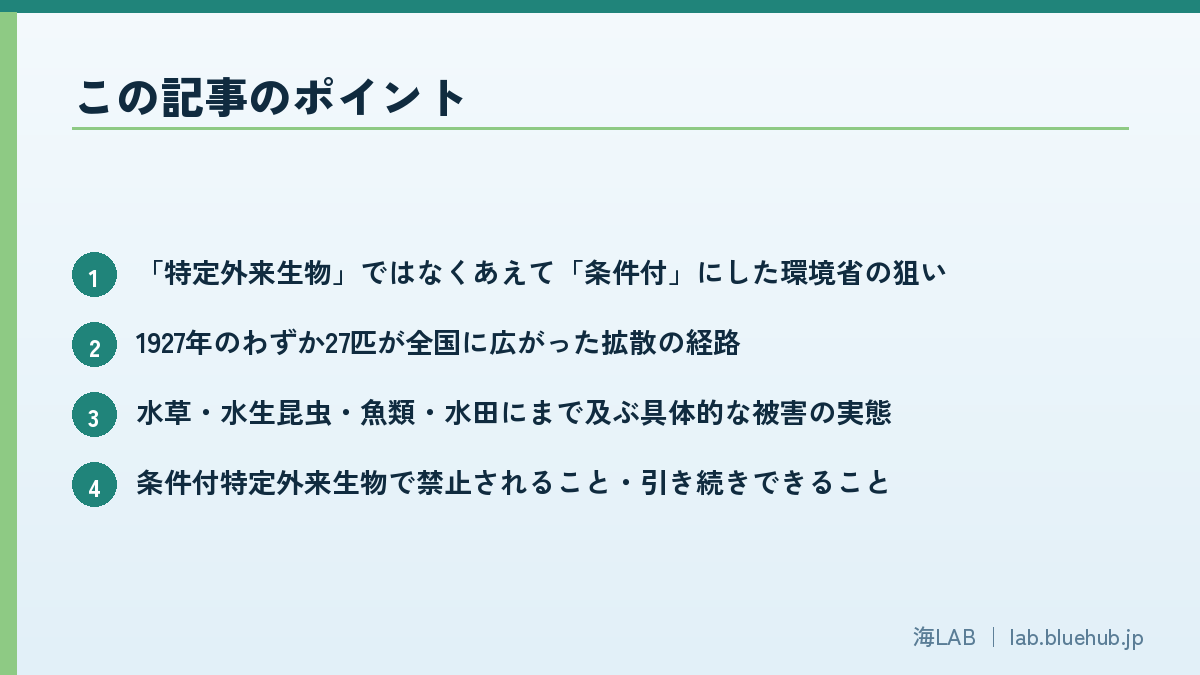
What you'll learn in this article
- Why the Ministry of the Environment deliberately chose "conditionally designated" over a full "specified invasive alien species"
- How just 27 crayfish in 1927 spread across the entire country
- The concrete damage extending to aquatic plants, aquatic insects, fish, and rice paddies
- What is banned and what remains allowed under the conditional designation
- The penalties for violations, and what current keepers should do
- How to reconcile school nature study and crayfish-fishing culture with the new rules
What Is the Red Swamp Crayfish? How a North American Crustacean Came to Japan
The red swamp crayfish (scientific name Procambarus clarkii) is a freshwater crayfish native to wetlands stretching from the southern United States into northern Mexico. Adults grow to about 10cm and are known for their deep red coloring. They are strongly omnivorous, eating everything from aquatic plants and earthworms to the carcasses of other aquatic animals. They also tolerate drought reasonably well, burrowing into the mud when a paddy dries out and waiting for the rainy season. This "eats anything, tolerates drying out" toughness became the foundation for the astonishing spread it would later achieve across Japan.
27 Crayfish That Crossed the Ocean as Bullfrog Feed
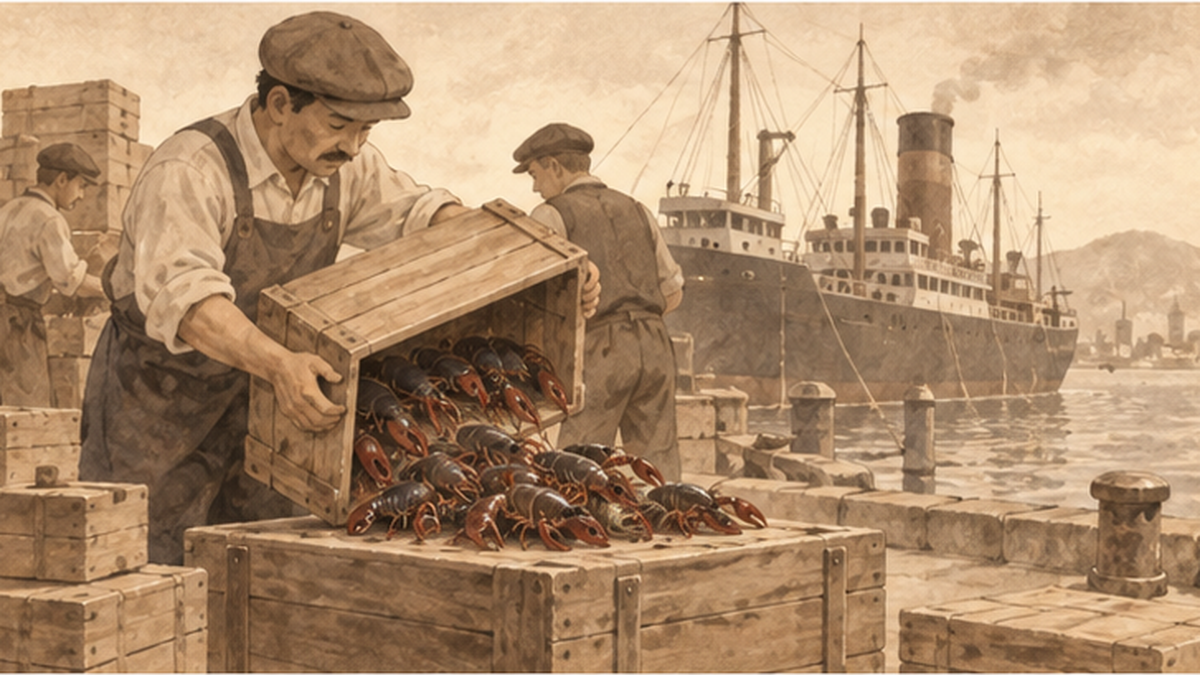
Japan's introduction dates back to 1927 (Showa 2). At the time, bullfrogs were being farmed for food, and red swamp crayfish were shipped from New Orleans, USA, to feed them, arriving in Ofuna, Kanagawa Prefecture (now part of Kamakura City). One hundred were reportedly sent, but most died during the long voyage; records state that only 27 (some accounts say 20) actually reached Japanese soil.
After the Farm Closed, They Spread into Canals and Paddies
The bullfrog farming business itself later declined and the farm ponds were closed, but the crayfish that had escaped into the surrounding area did not disappear. Instead, they quietly multiplied in the rivers around Ofuna and in the rice paddies and irrigation canals connected to them. With few natural predators and an abundance of aquatic plants and small animals to eat, Japan's paddy environment turned out to be an ideal home for the red swamp crayfish.
A Completely Different Animal from Japan's Native Crayfish
The Japanese crayfish (Cambaroides japonicus), found only in Hokkaido and parts of Tohoku, is a genus apart from the red swamp crayfish — a rare native species that prefers cold, clean water. Despite sharing the name "crayfish," the red swamp crayfish is a North American invader while the Japanese crayfish is considered a relic of the ice age native to Japan; their origins could not be more different. The two rarely meet directly in the same waters, but as explained later, the red swamp crayfish can still pose an indirect threat by transmitting disease.
Selectively Bred Ornamental Varieties Now on the Market
In recent years, rising popularity as pets has led to selectively bred color variants beyond the standard red — blue, white, and others — sold under names such as "Dygosti." Many of the colorful crayfish seen at festival-stall crayfish-fishing games or in aquarium shops are bred varieties of this same species. Its popularity as an everyday pet is directly tied to the sheer number of keepers, and in turn to how difficult it was to design regulations around it.
Why 27 Crayfish Were Enough to Trigger an Explosion
The fact that such a tiny surviving population spread across the entire country comes down to reproductive power. A single female can carry hundreds of eggs at once, and some individuals spawn multiple times a year. On top of that, distribution channels multiplied through pet shops, festival crayfish-fishing stalls, and use as school teaching material, carrying them to new areas by human hand. Both its ecological toughness and its closeness to human society helped drive the spread of this animal.
Crayfish also have a hard exoskeleton, so they must molt repeatedly to grow. Even after losing a claw or leg, they have a strong capacity to regenerate it gradually through successive molts, and they can also perform autotomy — deliberately shedding a limb when in danger. This high adaptability and toughness is also thought to be one reason they were able to survive and keep multiplying in Japan's paddy environment, so far from their native range.
How It Spread Nationwide Over 60-Plus Years from the 1930s
Natural Dispersal Northward Across the Kanto Plain
The population that took hold in Ofuna, Kanagawa, spread to Tokyo, Saitama, and Chiba during the 1930s. Natural dispersal along canals and rivers takes time, and it is said to have taken roughly 30 years to reach the northern part of the Kanto Plain.
"Stepping-Stone" Spread by Human Hands
Interestingly, the spread did not always progress continuously along connected water systems. Sudden appearances in far-off, disconnected areas — a "stepping-stone" pattern of distribution — have also been observed, believed to result from people carrying the animals as pets or bait. The more they circulated as fishing bait or ornamental pets, the more this stepping-stone spread accelerated.
| Period | Event |
|---|---|
| 1927 | 27 crayfish land in Ofuna, Kanagawa Prefecture (as bullfrog feed) |
| 1930s | Spread to the Tokyo, Saitama, and Chiba areas |
| 1960s | Established in every prefecture except Hokkaido |
| As of January 2020 | Ministry of the Environment estimates ~650,000 households keeping ~5.4 million nationwide |
| June 1, 2023 | Designated a "conditionally designated invasive alien species"; release and sale regulated |
90% Were Caught in the Wild — Yet Over 10% Had Been Released
According to a 2020 Ministry of the Environment survey on keeping habits, the overwhelming majority of keepers — 86.7% — obtained their crayfish by "catching them in the wild," followed by pet shops (4.8%), receiving one from an acquaintance (4.1%), receiving one from school (1.9%), and buying one at a festival stall (1.5%). In other words, most keepers didn't so much "buy" their crayfish as "catch" it.
| How the crayfish was obtained | Share |
|---|---|
| Caught in the wild | 86.7% |
| Purchased at a pet shop | 4.8% |
| Received from an acquaintance | 4.1% |
| Received from school | 1.9% |
| Purchased at a festival stall | 1.5% |
The same survey also found that 11.7% of people with keeping experience had released one into the wild (7.0% back where they found it, 4.7% somewhere else), and a further 1.9% said their crayfish had simply "escaped." Catching one is easy, but a meaningful share of keepers end up returning it to the wild rather than seeing it through to the end of its life — and this figure is arguably the single most direct reason the conditional designation exists.
Found in Every Prefecture Today, but Unevenly
The red swamp crayfish is now confirmed present in every prefecture in Japan. Even so, presence varies widely within a given region — a survey in Kobe City, Hyogo Prefecture, for example, found the species in only 17 of 54 surveyed ponds, with no sign of it in the rest. Rather than "everywhere across the country," it may be more accurate to say it "continues to spread from waters where it has already taken hold into waters it has not yet reached."
What Is Being Destroyed? The Reality of Ecological Damage
The red swamp crayfish disrupts ecosystems by wiping out aquatic plants and preying on aquatic insects, and it also carries a risk of transmitting diseases such as crayfish plague and white spot disease, which could seriously affect native species such as the Japanese crayfish.
— Government of Japan Public Relations Online
Aquatic Plants Vanish, and Ponds Turn Murky
The red swamp crayfish's feeding damage shows up most strongly in aquatic plants. In a certain park pond in Kanagawa Prefecture, water fringe (Nymphoides) and Japanese pond lily once grew thickly, but after red swamp crayfish were introduced and their numbers exploded, these aquatic plants disappeared entirely. In summer, rising water temperatures trigger plankton blooms, and the pond reportedly remains cloudy year-round. At Ushiku Marsh in Ibaraki Prefecture, the floating-leaved prickly water lily, and in many ponds across Hyogo Prefecture, water shield — long harvested there — have been rapidly vanishing over the past decade as crayfish numbers have grown.
Cases Where Rare Diving Beetles and Dragonflies Disappeared Pond by Pond
Impacts on aquatic insects have also been documented in concrete terms across the country. In Kanazawa City, Ishikawa Prefecture, a pond that was home to the rare diving beetle Hydaticus bowringii lost its vegetation after crayfish invaded, and the beetle itself went extinct there. At Okegaya Marsh in Iwata City, Shizuoka Prefecture, rare dragonflies including the Sinuous-tailed skimmer have declined sharply, and aquatic insects such as certain water bugs have gone extinct one after another. A survey on Goto, Nagasaki Prefecture, found more than 20 species of aquatic insects, including rare diving beetles, in ponds without crayfish, versus just three species in ponds with a high density of crayfish — a striking contrast.
| Region | Reported damage |
|---|---|
| Kanazawa City, Ishikawa Prefecture | Rare diving beetle Hydaticus bowringii went extinct along with the vegetation |
| Iwata City, Shizuoka Prefecture (Okegaya Marsh) | Rare dragonflies declined sharply; certain water bugs went extinct |
| Goto, Nagasaki Prefecture | Aquatic insects: 3 species where crayfish established vs. 20+ species where absent (comparative study) |
| Mie Prefecture | The nation's only stable population site for a rare diving beetle disappeared |
| Aomori, Akita, and Yamagata Prefectures | Habitats for another rare diving beetle went extinct in multiple ponds |
| Paddy areas of Okayama Prefecture | Identified as a factor in the decline of the giant water bug |
| Nakaikemi Wetland, Fukui Prefecture | Dragonflies and diving beetles declined sharply compared with surrounding wetlands |
Cascading Damage to Fish Such as Medaka and Loaches
Laboratory experiments testing effects on the southern medaka, a bitterling species, and the pond loach found that all three species were preyed upon and declined, with the bottom-dwelling pond loach reported to be most vulnerable.
In a group of ponds around the former Shinainuma marsh in Miyagi Prefecture, red swamp crayfish preyed on the freshwater mussel Anodonta lauta, causing indirect cascading harm: the rare bitterling species that depends on that mussel to lay its eggs lost its spawning habitat. The severe situation facing Japan's native medaka is discussed further in The Real Reason the Medaka Became an Endangered Species.
On the other hand, at a certain waterfront park in Chiba Prefecture, removing crayfish from a pond where aquatic plants had been declining led to an increase in emergent plants and zooplankton (since the removal wasn't complete, submerged plants had not yet recovered). In waters where crayfish density has been suppressed through trapping, dramatic recovery of frogs, fish, aquatic insects, and aquatic plants has also been reported — the damage is, in that sense, something that "comes back if you act."
A Threat to Native Crayfish — Crayfish Plague and White Spot Disease
The red swamp crayfish can carry a pathogenic mold called crayfish plague as well as a viral illness called white spot disease, and there are concerns it could transmit both. North American crayfish species have evolved resistance to these pathogens, but native Japanese crustaceans, including the Japanese crayfish, lack this resistance and could suffer serious harm if infected.
The Japanese crayfish, found only in Hokkaido, Aomori, Akita, and Iwate, is listed as Vulnerable (Category II) on the Ministry of the Environment's Red List and designated as a Class II Nationally Rare Species of Wild Fauna and Flora under Japan's Act on Conservation of Endangered Species, which bans capturing or transferring it for sale or distribution. Habitat degradation, along with the effects of the invasive red swamp crayfish, is cited as one factor behind its declining numbers.
Agricultural Damage That Can't Be Ignored: Burrows That Drain Paddies Dry
Burrows Up to 100cm Deep, Dug at a Pace of 20cm a Day
The harm caused by the red swamp crayfish isn't limited to ecosystems. According to field research by Japan's National Agriculture and Food Research Organization (NARO), burrows dug by crayfish into paddy embankments have reached depths of up to 100cm in field surveys, and up to 58cm in model experiments.
The average depth is around 25cm, but digging can proceed at a pace of 20cm or more per day, with a hole diameter of roughly 5–10cm. The burrows are dug mainly vertically, tracing a gentle S-curve.
| Survey item | Value |
|---|---|
| Maximum burrow depth (field survey) | ~100cm |
| Maximum burrow depth (model experiment) | ~58cm |
| Average depth | ~25cm |
| Digging pace per day | 20cm or more |
| Hole diameter | 5–10cm |
| Maximum leak rate | 1.5 liters per second (equivalent to about 43mm of water per day over a 30-are plot) |
Leaks Let Weeds Take Over and Cut Rice Yields
Once a burrow becomes a leak path, water doesn't just flow out — the flow can also erode and widen the hole itself, sometimes developing into a leak serious enough to require repair. Fields with ongoing leaks can lose the water level needed for herbicides to work, letting weeds such as monochoria take over, with reported declines in rice yield as a result.
Left unaddressed, the accumulation of such damage has been flagged as a possible contributing factor to farmland abandonment in severe cases. Burrow density has surged in some hard-hit areas from around 8 per 100m to more than 30 per 100m in a single year, with digging reportedly accelerating after the mid-summer paddy-draining period ("nakaboshi") begins in July.
Damage Extends Beyond Paddies to Crops Like Lotus Root
A nationwide survey by Japan's Ministry of Agriculture, Forestry and Fisheries confirmed not only paddy leaks but also widespread feeding damage to crops such as lotus root, indicating that agricultural harm from the red swamp crayfish is not confined to particular regions but has become a nationwide issue for farming communities. Beyond embankments, burrows have also been reported to collapse pond-embankment slopes and canal walls, adding to the maintenance costs of the facilities that support agricultural water supply.
A Problem Spreading Around the World
Arrived in Europe in the 1970s, Threatening Native Species
Japan is not the only place where the red swamp crayfish has taken hold. It was brought to Europe in the 1970s for food and has since become established in wetlands and canals across Spain, Italy, and elsewhere. Europe had several native crayfish species, including the white-clawed crayfish, but ones lacking resistance to crayfish plague — a pathogenic water mold carried by the red swamp crayfish — became infected one after another, wiping out populations in some areas. The white-clawed crayfish itself has since declined due to competition with these invasive crayfish and disease, to the point of being classified as Endangered on the IUCN Red List.
The Pathogen Itself Made the "World's 100 Worst" List
The pathogen behind crayfish plague (Aphanomyces astaci) has caused such severe damage to ecosystems worldwide that it appears on the International Union for Conservation of Nature's (IUCN) list of "100 of the World's Worst Invasive Alien Species." As a host that carries this pathogen, the red swamp crayfish has spread its impact to freshwater ecosystems not only in Europe but across Asia and Africa as well.
A Major Food Industry in China: The Same Animal, "Nuisance" in One Place, "Economic Pillar" in Another
In China, by contrast, this same species (known locally as xiǎolóngxiā) has become a beloved national dish and grown into a massive industry. According to reports from Chinese aquaculture-industry bodies, the crayfish industry as a whole — from farming through processing and dining — reached a market size of roughly 422.2 billion yuan (on the order of ¥8 trillion) in 2021, and is said to support employment for around 5 million people. As of 2016, more than 10,000 restaurants served crayfish dishes in China — more than the combined number of KFC (roughly 5,000) and McDonald's (roughly 2,000) locations in the country. The dish "málà xiǎolóngxiā," crayfish simmered in chili and Sichuan pepper, is a beloved summer staple nationwide.
Even in Japan, red swamp crayfish circulate as a premium ingredient at Tokyo's Toyosu Market, trading at around ¥3,000 per kilogram. The same animal is treated as a "nuisance" subject to regulation in one country or context, and cherished as an indispensable "economic pillar" in another — a reminder that invasive species issues can't be reduced to simple good-versus-bad narratives.
Japan Shares a Problem Common to Many Countries
Japan's red swamp crayfish problem is not a uniquely unusual case globally. An animal carried to a distant continent from its native range gradually becomes, over decades, a threat to the local ecosystem — this is a pattern common to invasive species issues everywhere. Japan's history, from the mere 27 crayfish brought in in 1927 to the situation today, is one clear example of that pattern.
Why "Conditionally Designated" Instead of a Full "Specified Invasive Alien Species"
The "Regulatory Dilemma" Flagged by the Central Environment Council
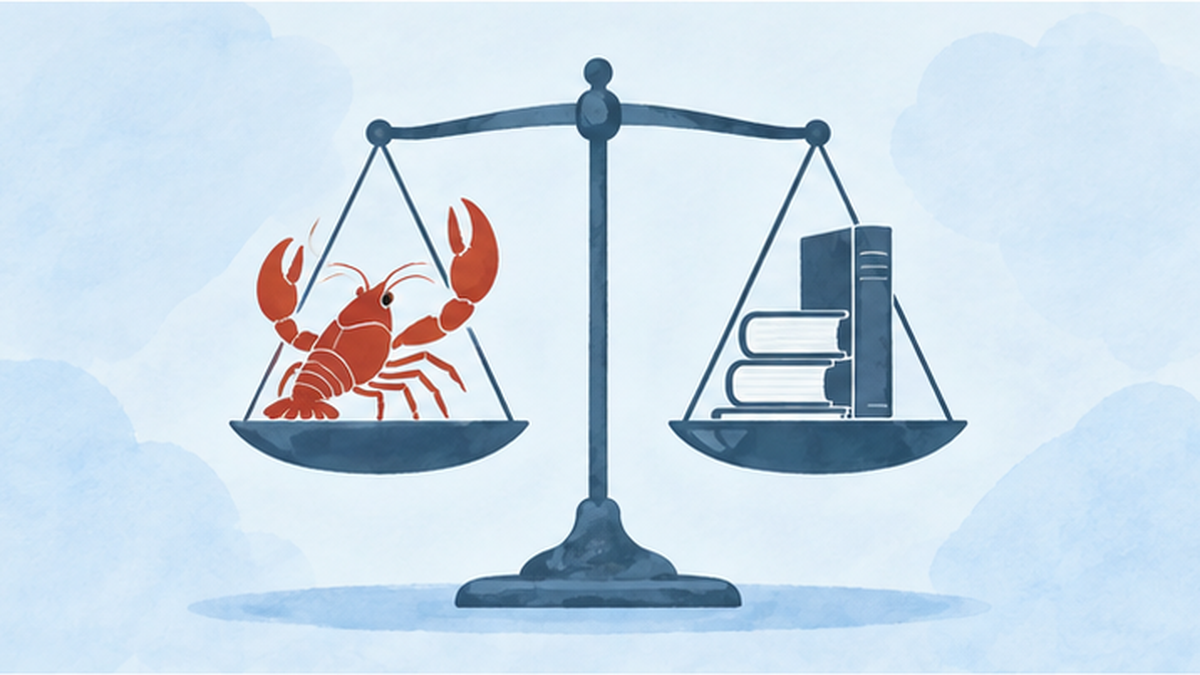
In January 2022, Japan's Central Environment Council, under the Ministry of the Environment, noted that for invasive species like the red swamp crayfish — already widely kept as pets while also causing major harm to ecosystems — uniformly banning keeping could trigger serious mass release into the wild, and recommended building a new regulatory framework to address this.
A New Category Born from the May 2022 Law Amendment
Following that recommendation, an amendment to Japan's Invasive Alien Species Act, enacted and promulgated in May 2022, created a mechanism allowing certain regulations to be waived, for the time being, for newly designated specified invasive alien species whose designation itself could otherwise undermine efforts to prevent ecological harm. This is the "conditionally designated invasive alien species" category, and on June 1, 2023, the red swamp crayfish and the red-eared slider turtle became the first species designated under it.
The Difficulty of Invasive Species Policy: Banning Doesn't Always Reduce Harm
If keeping were banned outright, keepers burdened by the resulting paperwork might simply choose to "get rid of it" — actually accelerating its spread into the wild. This is a dilemma common to invasive species policy in general. The conditionally designated invasive alien species system is designed as a pragmatic compromise that accounts for this dilemma: it tolerates existing keeping while precisely targeting the main pathways of spread — "release" and "sale, distribution, and import" — for restriction.
What the Conditional Designation Actually Regulates: Banned vs. Permitted
Prohibited Acts
- Releasing into the wild (illegal whether done intentionally or by letting one escape)
- Sale and distribution (distributing to an unspecified large number of people counts as "distribution" and is banned even if free of charge)
- Purchase
- Unauthorized import
- Unauthorized keeping "as a business" (including ongoing handling by zoos, fishing ponds, educational institutions, research facilities, and the like)
What Remains Permitted
- Continuing to keep an individual that was already being kept at home as of June 1, 2023
- Catching one in the wild (not regulated unless moved for the purpose of sale or distribution)
- Giving one to a small number of friends or acquaintances (permitted as long as it doesn't amount to distribution to an unspecified large group)
- Catch-and-release on the spot
- Breeding at home (though selling or distributing the offspring is not permitted)
| Act | Permitted? |
|---|---|
| Releasing into the wild (letting it go, releasing into a pond or river) | ✕ Illegal |
| Unauthorized sale, distribution, purchase, or import | ✕ Illegal |
| Continuing to keep one at home | ○ Still allowed |
| Catching and taking one home (to keep) | ○ Allowed (moving for distribution purposes requires authorization) |
| Catch-and-release on the spot | ○ Not regulated |
| Giving one to a small number of friends or acquaintances | ○ Allowed |
| Breeding at home | ○ Allowed (selling or distributing offspring is not) |
What Counts as "Keeping as a Business"
The phrase "keeping as a business," which comes up frequently in the regulations, refers to keeping or handling the animal outside an ordinary household, repeatedly and continuously, whether for profit or not, to a degree that would generally be recognized as running a business. The Ministry of the Environment gives the following examples:
- Display and keeping at zoos and aquariums
- Keeping at crayfish-fishing ponds
- Keeping as part of an educational program at a school or similar institution
- Keeping at research facilities for academic research
- Keeping as part of a control/eradication program
Simply keeping one as a household pet does not fall under "as a business." However, note that even non-profit educational use requires authorization if handled continuously as a business activity. Businesses already keeping or handling the species "as a business" as of the June 1, 2023 designation date were given a grace period to apply, running through November 30 of that year, so that existing operations would not have to stop abruptly.
Once Dead, It Can Still Be Sold as Food
Interestingly, while handling live individuals is tightly restricted, serving them dead as a cooked dish falls outside the regulation. A restaurant preparing and serving them as food only needs the standard business license required under the Food Sanitation Act — no additional procedure is required. The food industry in China described above, and the premium-ingredient trade at Toyosu Market, are both consistent with this design: strict on live animals, flexible on distribution as food.
Penalties: Different Weights for Individuals and Corporations
Heavy penalties apply to violations. An individual who releases one into the wild or engages in unauthorized import or sale can face up to three years in prison and/or a fine of up to 3 million yen. If the act is carried out in the course of a company's business, the company itself can be fined up to 100 million yen under a dual-liability provision. This is a weight of consequence for which "I didn't know" offers no excuse.
What Current Keepers Should Watch Out For
Take Responsibility Until the End of Its Life
A red swamp crayfish can live about five years in captivity. Releasing or letting one escape into the wild for selfish reasons — "caring for it became a hassle," "it got too big to handle," "I can't bring it when I move" — is not only illegal but also harms the native wildlife already living wherever it ends up. Before you start keeping one, it's essential to think carefully about whether you can see it through to the end.
In fact, the Ministry of the Environment's own survey found that 1.9% of people with keeping experience reported theirs had "escaped." Red swamp crayfish are surprisingly strong climbers, and when water levels are high they can climb up and over the rim of a tank, so preparing a lid or a tall enough tank to prevent "unintended escapes" is also part of responsible keeping.
If You Discover It Has Laid Eggs
Breeding itself is not restricted, but any resulting offspring must likewise be cared for responsibly until the end of their lives. Because careless breeding can end up forcing an illegal release when you can no longer keep up, it's worth being cautious about letting numbers grow. If the population becomes unmanageable, distributing them to an unspecified large number of people — even for free — is not permitted, so the first step is to look for a small number of individual friends or acquaintances who might take them in.
If You Truly Can No Longer Keep It
The Ministry of the Environment directs people to regional environment offices as a point of contact. If continuing to keep the animal becomes difficult, the guidance is to first look for someone nearby, or an organization seeking new keepers, to take it in; only if the maximum reasonable effort fails to find a taker is humane disposal by an appropriate method suggested as a last resort. In every case, releasing it into a pond or river is the one option that must absolutely be avoided.
Priority order when you can no longer keep it
- ① Look for a friend, acquaintance, or fellow animal lover to take it in
- ② Use information from organizations or social media seeking new keepers
- ③ If no taker can be found, consider appropriate disposal as a last resort
- ④ No matter the reason, never release it into a pond, river, or other outdoor setting
Balancing School Education with What We Can All Do
About 30% of Kindergartens and Elementary Schools Have Kept One — Catching and Observing Remain Unrestricted
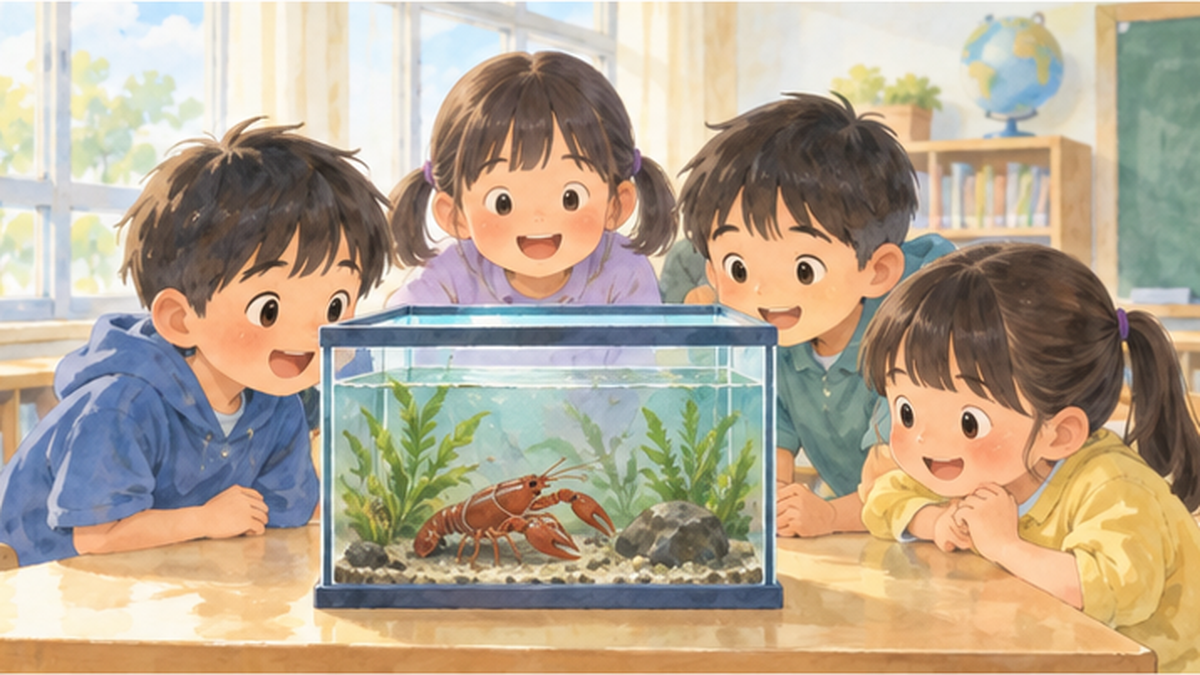
According to a Ministry of the Environment survey of educators, 11.1% of educational institutions overall — spanning kindergartens, nursery schools, elementary, junior high, and high schools — had kept red swamp crayfish, but the figure reached about 30% when limited to kindergartens through elementary schools. The most common reason for choosing it as teaching material was that it's "easy to observe," followed by "easy to obtain," "approachable," and "easy to keep."
Catching them in the wild, and observing or keeping them for classroom purposes, are not themselves regulated. Authorization is only needed when an entity such as a materials company handles them continuously "as a business" for commercial sale, so schools can continue observation and keeping activities exactly as before.
Its Value as an Environmental Education Topic Has Only Grown
"Why did such a familiar animal end up regulated?" "How did just 27 crayfish in 1927 spread this far?" — the red swamp crayfish can be an excellent way to make invasive species issues feel personal. Rather than stopping at simply catching one, learning about its origins and its impact on ecosystems and agriculture is exactly what today's environmental education should aim for.
The Single Most Important Rule: "Don't Release It" — Plus the Option of Joining Control Efforts
Boiled down, the essence of the regulation surrounding the red swamp crayfish comes down to one thing: "don't newly release it into the wild." Anyone already keeping one can keep doing so, and starting to keep one for the first time is not itself banned either. What is prohibited is release — the entry point for further spread — and the unauthorized sale, distribution, and import that fuel it.
In addition, Japan's Ministry of Agriculture, Forestry and Fisheries has published a guide to controlling red swamp crayfish aimed at farming communities with extensive paddies and irrigation networks, and joining local control activities in canals and paddies is another way to engage with this animal. Since releasing a captured individual back on the spot would defeat the purpose, participants need to handle them appropriately in line with the aims of the control effort.
A Problem Connected to Marine Invasive Species and Paddy Biodiversity
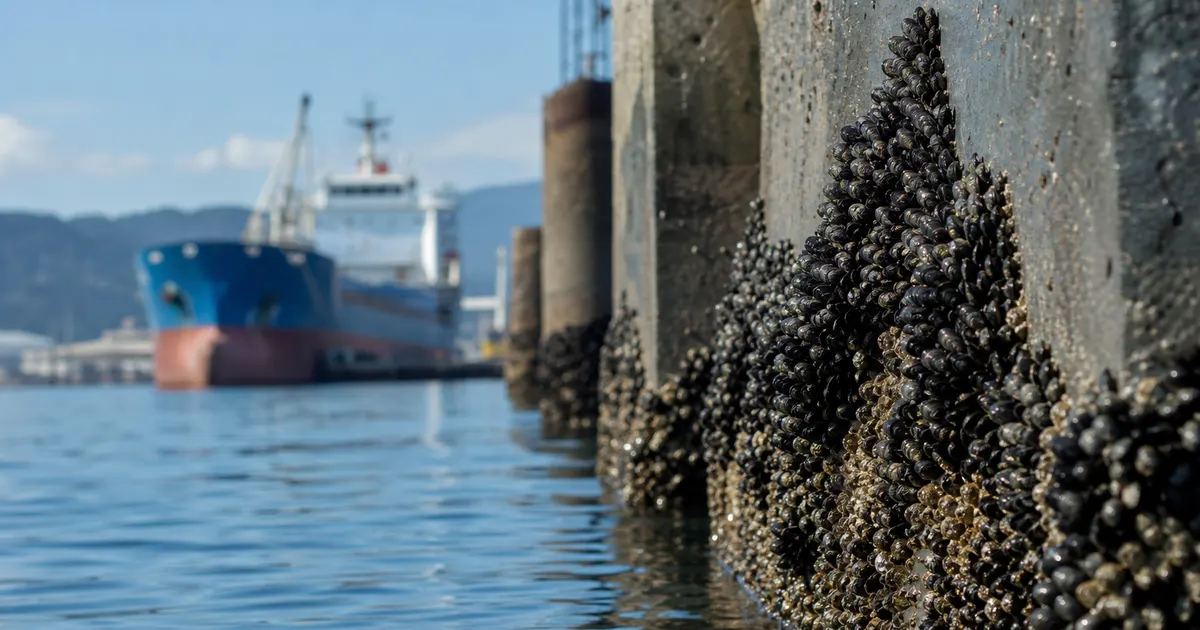
The red swamp crayfish is a freshwater animal, but the same pattern of ecological harm from invasive species plays out in the ocean as well. Species carried by ships' ballast water are covered in detail in Where Do Marine Invasive Species Come From?. And the rich world of life that the rice paddies themselves support — the very habitat this crayfish calls home — is explored in A Field Guide to Life in the Rice Paddy. Whether in fresh water or the sea, a quiet struggle between invasive and native species continues right beside where we live. Paying attention to what's happening in the waters close to home is a first step toward protecting biodiversity.
Summary
- The red swamp crayfish arrived with just 27 individuals in 1927 and, over nearly a century, spread until roughly 650,000 households nationwide now keep about 5.4 million of them
- On June 1, 2023, to prevent mass release driven by the sheer number of keepers, it was designated a "conditionally designated invasive alien species," regulating release, sale, distribution, and import
- Beyond damage to aquatic plants, aquatic insects, fish, and native crayfish, agricultural damage from burrowing into paddy embankments has also been reported nationwide
- Anyone already keeping one at home can continue to do so — the key point is simply "don't newly release it into the wild"
References & Sources
- Ministry of the Environment, Japan – Red Swamp Crayfish | Japan's Invasive Alien Species Countermeasures
- Ministry of the Environment, Japan – What's the Problem? Cutting Down All the Aquatic Plants?! (Detailed case studies of ecological damage)
- Ministry of the Environment, Japan – On the Regulation of Conditionally Designated Invasive Alien Species: Red-Eared Slider Turtle and Red Swamp Crayfish
- Ministry of the Environment, Japan – Regulatory Details and Procedures for Conditionally Designated Invasive Alien Species: Red-Eared Slider Turtle and Red Swamp Crayfish
- Ministry of the Environment, Japan – Why Is It Everywhere? The History of the Red Swamp Crayfish's Spread
- Ministry of the Environment, Japan – How Are We Connected to It? A Survey of Red Swamp Crayfish Keeping Habits
- Government of Japan Public Relations Online – Are Familiar "Invasive Species" Like the Red Swamp Crayfish and Red-Eared Slider Turtle Harming Ecosystems?
- National Agriculture and Food Research Organization (NARO) – The Reality of Water Leaks from Paddy-Embankment Burrowing by the Red Swamp Crayfish
- Ministry of Agriculture, Forestry and Fisheries, Japan – A Guide to Controlling the Red Swamp Crayfish in Rural Areas
- JETRO (Japan External Trade Organization) – China's Crayfish Consumer Market Grows to a ¥4.3 Trillion Scale
- Biodiversity Center of Japan, Ministry of the Environment – Biodiversity Information System: Japanese Crayfish (a Red List species)
※ Sorted by reliability: government and academic institutions > peer-reviewed papers > specialized organizations > reputable media