⚡ In short
Attracting wildlife to your garden or balcony comes down to four basics: choosing native plants, making a shallow water source, using fewer pesticides, and managing without overdoing it. Drawing on municipal materials and research, we also cover the escape of alien species and how gardens connect to rivers and the sea.
Gardens and balconies are small spaces, but for butterflies, bees, and small birds they serve as important stepping stones for moving through the city.Choose native plants, create a shallow water source, reduce pesticides, and avoid over-managing. These four points are the basics of a garden that attracts wildlife.
This article draws on municipal guidelines, the Ministry of the Environment's invasive species system, and domestic biotope surveys to organize concrete steps you can take at home. As an Umi Lab article, it also touches on how garden water and alien species connect to the sea through rivers.
You don't have to change everything at once. Starting with one pot of native plants and one shallow water source, and then continuing to observe, is the most realistic and sustainable approach.
What you will learn in this article
- Why gardens and balconies can serve as stepping stones for wildlife
- How to choose native plants and use municipal lists
- The Invasive Alien Species Act and the risk of plants escaping from gardens
- How to make a small water source or rain garden, and what to watch out for
- The order for cutting back pesticides, and how to coexist with beneficial insects
- How garden water connects to the sea through rivers
Why gardens and balconies matter for wildlife
Small green spaces are scattered stepping stones for urban wildlife
Wildlife does not live entirely within large green spaces such as parks and forests. Butterflies, bees, and small birds move through the city by following small patches of green like stepping stones. Each garden or balcony may be small, but because there are so many of them, their combined extent is far from negligible.
Nagoya City's "Biodiversity Greening Guidelines, Pocket Edition" (published September 2024) lists the key points of biodiversity-friendly greening: set a target for the wildlife you want to attract, create feeding grounds and habitats, plant native species, and avoid planting invasive plants. In other words, the starting point is not "increase greenery by any means" but "decide who you want to welcome and design for them."
The global concern over insect decline
The decline of insects is not just a problem in distant countries. A 2017 study by Hallmann and colleagues published in PLOS ONE measured the total biomass of flying insects over 27 years at 63 nature reserves in Germany and estimated a seasonal average decline of 76%, and 82% in midsummer. The authors reported that weather, land use, and habitat characteristics alone could not explain the decline.
However, this figure comes from a study of German nature reserves and cannot be applied directly to Japanese gardens. Even so, the food web connection holds in any country: when insects decline, the birds and spiders that eat them and the plants that rely on them for pollination are affected too.
The thinking behind this article
- Think of attracting wildlife as a set of four: plant choice, water, pesticides, and management.
- The goal is not to attract rare species, but to add habitat for the wildlife that already lives in your area.
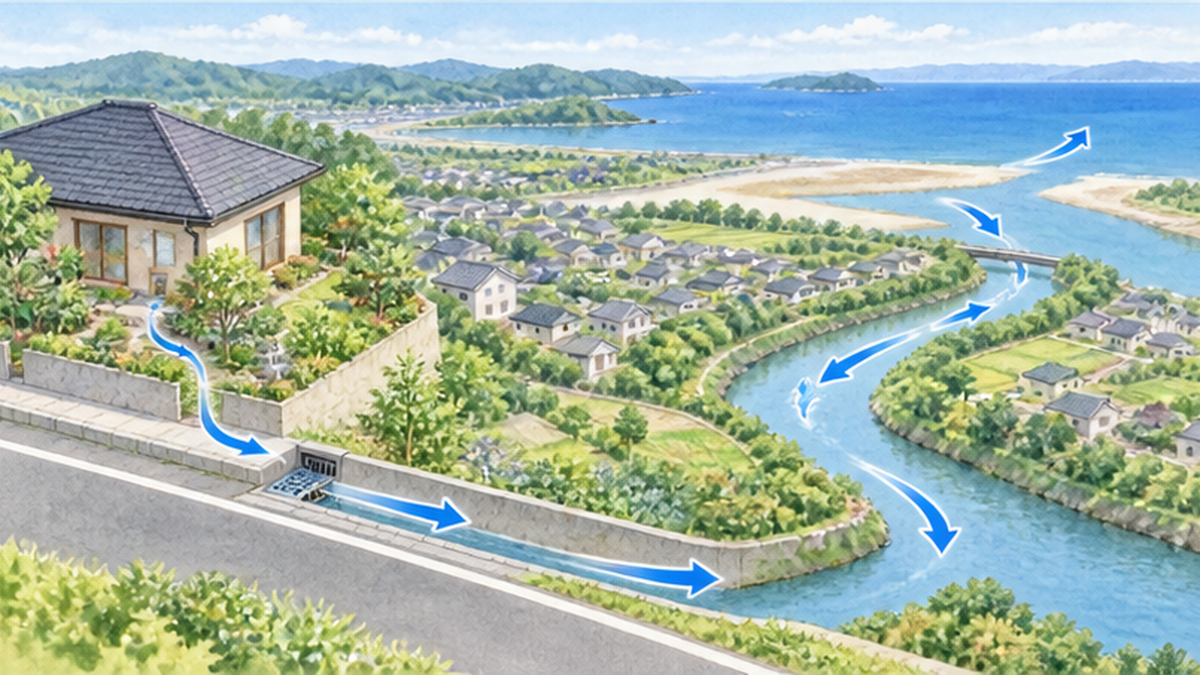
- Garden water and soil connect to rivers, and then to the sea, through rain and drainage.
How are gardens connected to the sea?
Umi Lab covers gardens because rain falling on a garden, along with some of the fertilizer and pesticides used there, eventually flows through gutters, sewers, and rivers toward the sea. We also discuss the cycle of nutrients and water that travels from mountains through rivers to the sea in our article on Source Forests and the Water Cycle. Seen at the scale of a watershed, making a garden underfoot is also part of caring for the sea.
Does a bigger garden mean more wildlife?
A larger garden does not automatically attract more wildlife. As Nagoya City's guidelines indicate, it is important first to set a target for which wildlife you want to attract, and then to provide the feeding grounds and habitat they need. For example, to attract butterflies you need both flowers where adults can feed on nectar and leaves that caterpillars can eat. To attract small birds you need fruiting shrubs, a place to bathe, and thickets where they can hide from cats and other predators. Narrowing your target makes the effects easier to feel, even in a small garden.
Another important step is checking your surroundings. Minato City's "Biodiversity Greening Guide" also lays out a process of understanding the surrounding greenery before setting a target for the wildlife to attract. If there is a park or river nearby, you can anticipate which species may arrive from there. Conversely, where there is little greenery around, your garden may become a valuable stepping stone. Start by using a map app to check the location of green spaces and water within a few hundred meters.
Choose native plants: build connections with wildlife into your garden
What are native species, and why choose them?
Native species are plants that have grown naturally in a region without human intervention. Having built relationships over a long time with the region's insects, birds, and soil microbes, they are thought to readily create connections such as caterpillars eating the leaves, insects drinking nectar, and birds eating the fruit.
On the other hand, some ornamental plants, however beautiful, can hardly be used by local insects. Of course, not all ornamental plants are bad. A realistic approach is to keep your favorite flowers as the stars of the flower bed and dedicate just one corner of the garden to native species.
Use your municipality's native plant list
When you are unsure which plants to choose, municipal materials can help. In 2014, the Tokyo Metropolitan Government published its "Guidelines for Selecting Native Species for Planting," which compiles a list of native species suited to planting along with points to consider when planting. Nagoya City publishes the "Nagoya Regional Native Plant List," where you can check plant characteristics such as flowering period and height, as well as what wildlife visits them. See whether your own municipality has similar materials on the pages of its environment or parks and greenery departments.
| Approach | Practical tips | Points to note |
|---|---|---|
| Keep something in bloom all season | Combine native flowers that bloom in sequence through spring, summer, and autumn | If blooms cluster in one season, the nectar supply breaks off |
| Layer different heights | Aim for three tiers: ground-level herbs, mid-sized shrubs, and taller trees | In a small garden, don't choose too many trees |
| Include larval host plants | Include one or two native plants that butterfly and moth caterpillars eat | Don't over-control pests even if leaves get eaten |
| Include fruiting trees | Add one shrub that bears fruit small birds eat | Think about where the fruit falls and how to manage it |
On a balcony, build a small ecosystem with pots and height
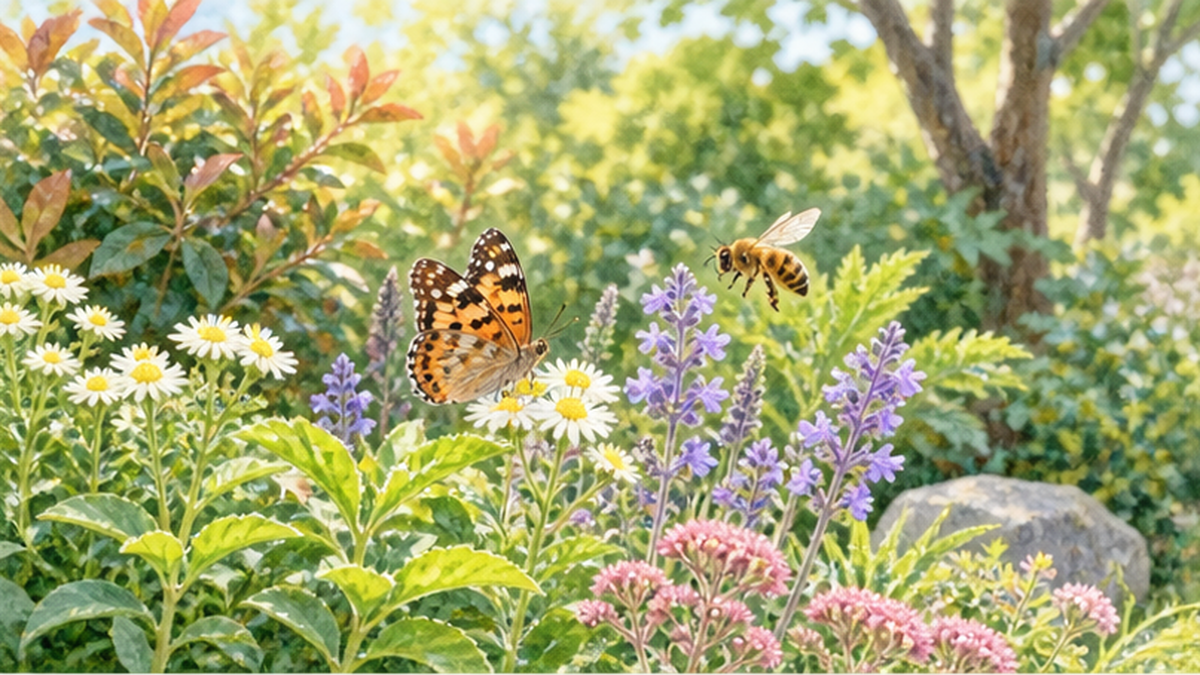
Even on a balcony, planting native flowers in planters creates a place where bees and hoverflies can stop by. Even with only a few pots, the trick is to combine them so that something is always in bloom each season. On high floors with strong winds, choose short, sturdy species and put preventing pots from tipping over first.
Allow butterfly and moth caterpillars to eat your plants
When attracting native butterflies, a surprisingly large obstacle is reluctance to see leaves eaten. Butterfly caterpillars often eat only specific plants, and if those plants are not in your garden, adults may come for nectar but cannot raise generations there. Holes in leaves are also a sign that your garden is working as a nursery for wildlife.
A realistic approach is to plant host plants where it doesn't matter if they get eaten. Try planting one or two native herbs or shrubs in a corner of the garden or in an inconspicuous pot. Keep ornamental flower beds as usual, and designate the host plant corner as a place where being eaten is fine. This makes it easier to keep going emotionally, too.
The relationship between flower shape and insect visitors
Different flowers suit different insects. Short-mouthed hoverflies and flies prefer shallow, dish-shaped flowers, while butterflies and moths with long mouthparts, and some bees, drink nectar from tubular flowers. Rather than sticking to one shape, combining native flowers of different shapes widens the range of insects that visit.
Also, among improved ornamental varieties such as double-flowered types, some have stamens or nectaries that have been altered, making it hard for insects to get nectar or pollen. This varies by variety, so it can't be called bad across the board, but where you want to attract insects, single-flowered varieties or those close to wild species tend to work better.
Soil preparation is part of choosing plants
Native species often suit the soil conditions and climate of the region, and tend to need less fertilizer and watering after planting. If you fertilize them the way you would an ornamental species that likes rich soil, they can become leggy and weak or attract more pests. Using less fertilizer also helps reduce the nutrients that flow out to the sea.
What not to plant: alien species and the risk of escape
Invasive Alien Species are subject to legal regulation
Under the Invasive Alien Species Act, species designated as Invasive Alien Species are regulated in terms of keeping, cultivation, transport, storage, import, release into the wild, planting, and sowing. Violators may face up to three years in prison or a fine of up to 3 million yen for individuals, and a fine of up to 100 million yen for corporations. Before planting anything in your garden, the basic step is to check that it is not on the Ministry of the Environment's list of Invasive Alien Species.
In addition, a 2022 amendment to the law created the "Invasive Alien Species Requiring Urgent Response" system, which allows the designation of species that could cause extremely serious damage if they spread and that require prompt action when found.
Even species outside the law: beware of "Invasive Alien Species Threatening Ecosystems"
In March 2015, the Ministry of the Environment published the "List of Alien Species Threatening Ecosystems." Following this list, 54 species were newly designated as Invasive Alien Species between FY2016 and FY2020. On the other hand, some species that are on the list but not designated as Invasive Alien Species face no legal regulation. Just because something doesn't break the law doesn't mean it won't spread into the wild.
How garden plants "escape"
- Seeds carried by wind, birds, or water and spreading beyond the garden is called escape.
- Fragments of roots or stems can also take hold where they are thrown away as garden waste.
- Always dispose of prunings and pulled plants as burnable waste or according to your municipality's rules.
Alien species carried through rivers to the sea
Seeds of plants that escaped from a garden, or aquatic plants and fish that were kept there, can enter rivers through drainage channels and disturb aquatic ecosystems. Alien species problems also occur in the sea, and as introduced in our article on Marine Alien Species, there are known cases where organisms carried by human activity have changed native ecosystems.
How to think about identifying alien species
If you don't know a plant's name, you can consult your municipality's environment department, the department in charge of parks and greenery, or a local botanical garden or museum. Plant labels at garden centers may also show the scientific name or classification. Avoid bringing home plants collected in the wild when you don't know what they are. They may be alien species, or they may disturb the genetic makeup of local wild populations.
Even native species require care when sourced from another region
Even for species native to Japan, bringing in individuals from another region calls for careful consideration. Even within one species, genetic characteristics can differ by region, and there is concern that if individuals from different regions interbreed, features unique to the local area may be diluted. When obtaining seedlings or seeds, it is best to choose those collected and grown locally as far as possible.
Do not release aquatic life into the wild
Releasing fish, turtles, or aquatic plants you kept into a nearby river or pond because you no longer need them causes alien species problems. In particular, it is possible for them to flow from a small garden water source through drainage channels into rivers and the sea. When you stop keeping them, either look after them to the end or find someone to take over their care.
Create a water source: wildlife drawn to a small waterside
A water source is a valuable resource for birds and insects
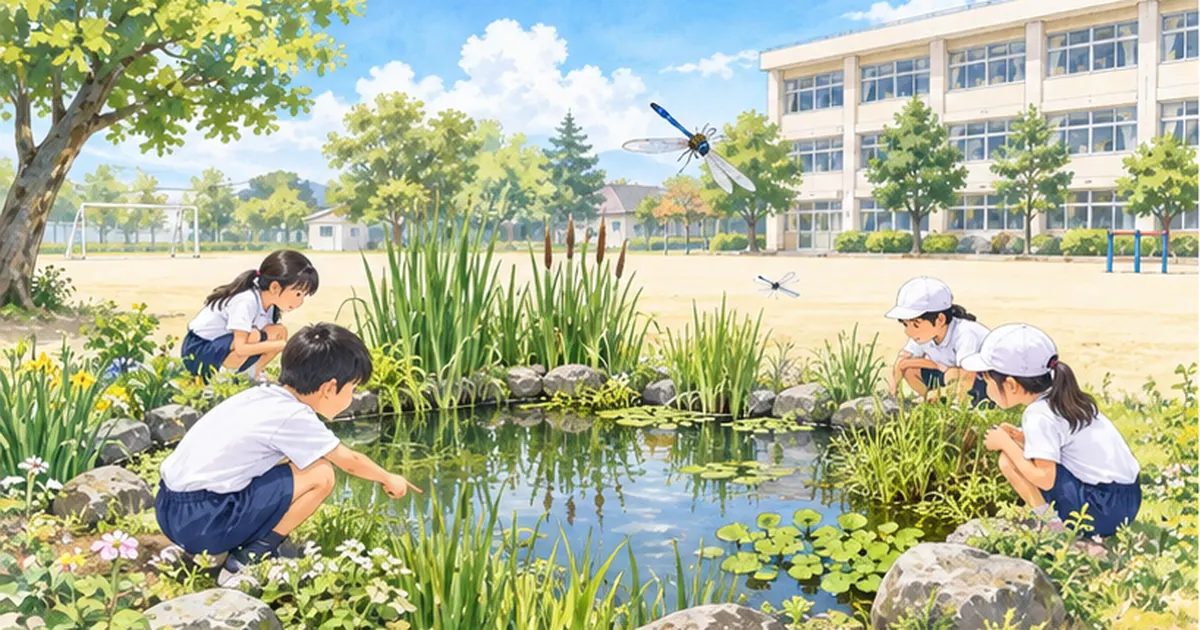
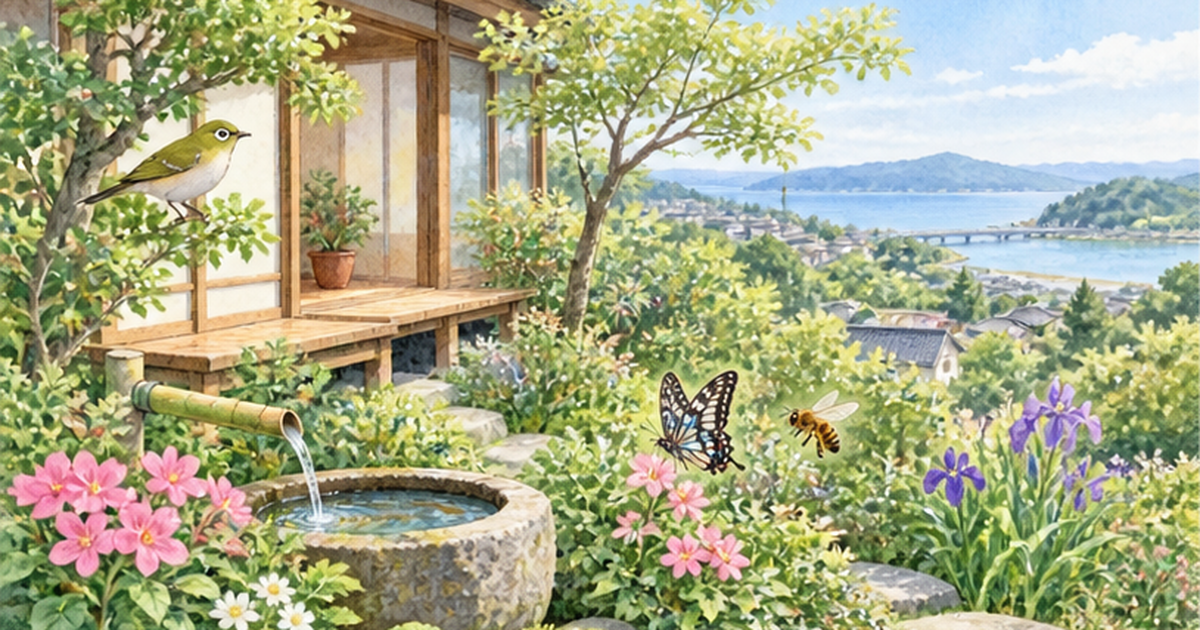
Birds need water for bathing and drinking, and insects and frogs need it for laying eggs and living. Just having a shallow water source in your garden increases the variety of visitors. You don't need to build a deep pond, though. You can start with a small water source using a shallow dish or pot.
What a long-term biotope survey tells us
One study tracked a newly created waterside biotope for eight years at a roughly 250 m² test site in Tokyo. It found that 16 dragonfly species had become established within two years of construction, with little change afterward, and that 33 bird species were recorded in the breeding season and 35 in the wintering season. It also reported that the number of aquatic insect species increased for a while after construction, then declined as silt built up, and recovered after dredging (removal of mud).
This survey covered a newly created waterside and does not apply directly to small household water sources. Even so, it shows both the value of creating a waterside and the importance of management such as removing mud after construction.
Steps for making a water source at home
- Check sunlight and wind, and choose a partly shaded spot with little foot traffic.
- Set out a shallow container (about 5 to 10 cm deep) and place stones on one side to make a slope so small creatures can climb out.
- If you use tap water, let it sit overnight to let the chlorine escape.
- In summer, change the water regularly to prevent mosquito larvae.
- When mud or fallen leaves accumulate, remove them a little at a time each season.
Cautions for making a water source
- Deep water can lead to accidents involving small children and pets. Keep it at a safe, shallow depth.
- Releasing purchased fish or aquatic plants can lead to alien species problems. Even with native species, do not bring in individuals from other regions.
- If mosquitoes are a concern, do not leave water standing.
The idea of a rain garden that captures rainfall
Setagaya Ward and Kyoto City describe a rain garden as a green space that, rather than discharging rainwater directly into the sewer, temporarily stores it and lets it slowly soak into the ground. It helps reduce concentrated runoff of rainwater into rivers and sewers and is positioned as a form of green infrastructure. However, caution is advised when installing one where the groundwater level is high, or on slopes or near building foundations. At home, you can start by placing a pot or a small planting strip at the downspout outlet so rainwater soaks in slowly.
Where to place a water source, and consideration for cats and children
The location of a water source determines whether birds can use it with confidence. If the surroundings are too open, birds are wary of predators such as hawks and keep away. Conversely, if it sits right against a thicket, cats can hide and approach easily. An ideal spot is one to two meters away from a low thicket or branches. On a balcony, you can place a shallow dish near the railing and set up a branch or post nearby where birds can perch.
In homes with small children, keep the water shallow and weigh the container down with heavy stones so it doesn't move. If you build a pond where the water gets deep, you need a fence or cover, or a design that doesn't let rainwater pool. Put safety first and start at a manageable scale.
Tips for maintaining a water source
- In summer, place it in partial shade so the water doesn't get too warm.
- If algae increase, scrub the container clean and change the water.
- In seasons with many fallen leaves, remove them often.
- In winter, birds cannot drink if the water freezes, so change the water during the day.
- Bird water sources easily get dirty with droppings. To prevent infection, wear gloves when cleaning and wash your hands afterward.
Maintaining a water source may seem like a chore at first. But seeing birds bathe or dragonflies visit the water surface is a valuable chance to feel the garden changing. Keeping it up at a sustainable pace ends up making a better environment for wildlife as well.
Reduce pesticides: rethink the balance between pests and beneficial insects
"Insects present" does not mean "failure"
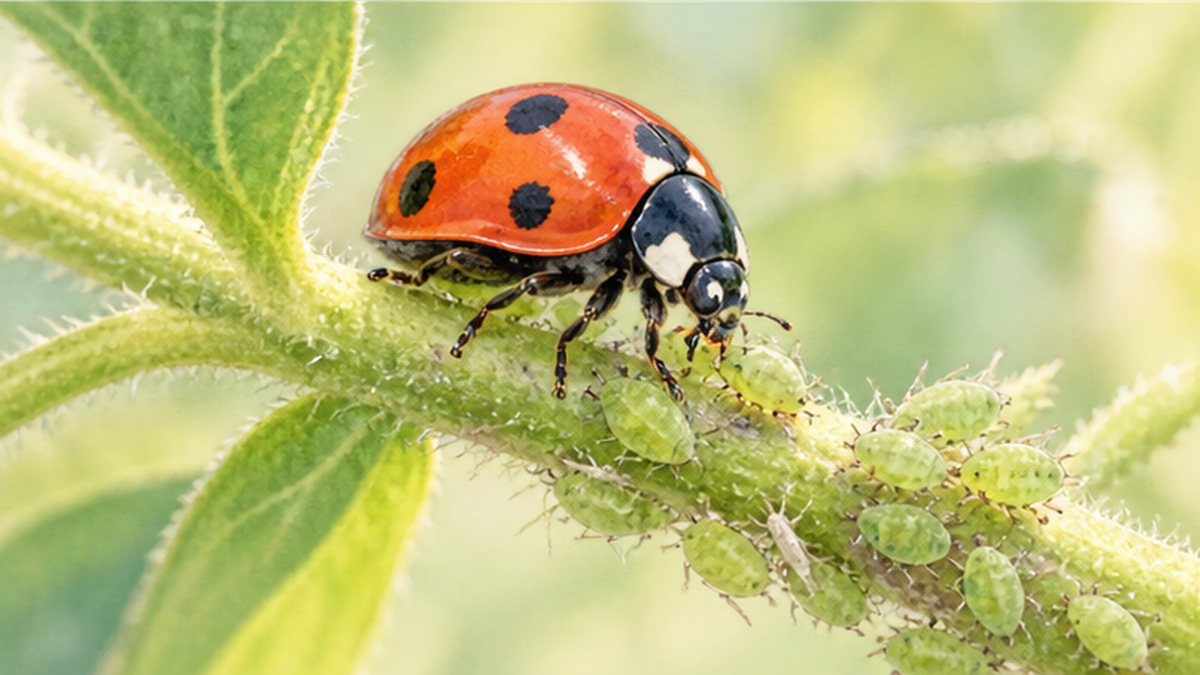
Garden insects include not only those that eat plants but also many that support the garden's health, such as ladybugs and spiders that eat pests and bees that carry pollen. If you wipe out insects indiscriminately with chemicals, beneficial insects disappear along with them, and pests can sometimes become even more likely to increase.
Japan's debate over pesticides
Regarding neonicotinoid pesticides and honeybee damage, the Ministry of Agriculture, Forestry and Fisheries has investigated cases of harm. NGOs and others have called for stronger regulation in response to the findings, and the ministry is said to have introduced, through the 2015 revision of the Agricultural Chemicals Regulation Act, a system for periodically re-evaluating registered pesticides. How to evaluate and regulate them remains under debate in Japan and abroad, and views differ by position. At home, it is important to follow the directions for use on the product label and its cautions about flowers and nectar sources.
The order for cutting back at home
- Remove by hand: Wash off aphids and caterpillars with a hose or remove them by hand as soon as you find them.
- Improve airflow: Prune crowded branches to prevent disease caused by stuffiness.
- Grow healthy plants: Water and fertilize in moderation. Too much nitrogen makes plants more prone to insects.
- Chemicals as a last resort: If you use them, do not spray plants in bloom, and spot-treat at a time when there is no wind.
- Avoid spraying before rain: This prevents chemicals from washing into waterways.
Things to try first
- Aphids can be greatly reduced with water pressure and manual removal.
- Observing and recording garden insects once a month makes it easier to notice beneficial ones.
- Make a note of the names of chemicals you use and the dates you spray.
Think about fertilizer and nutrient runoff
Of the fertilizer you apply to your garden, whatever plants cannot absorb dissolves in rainwater, flows through the soil, and may ultimately reach rivers and the sea via groundwater and drainage channels. It is known that when nutrients such as nitrogen and phosphorus flow into waterways in excess, algae overgrow and water quality deteriorates. The amount used in a home garden is small, but in a watershed with extensive residential areas the total can become significant.
Using less fertilizer, avoiding fertilizing before rain, and mixing organic compost into the soil so that the soil's own strength grows plants can reduce nutrient runoff. Even compost made in your own composter should not be overused.
Creating a garden that attracts natural enemies
One of the most lasting ways to reduce pests is to attract natural enemies to the garden. Ladybugs, hoverflies, spiders, mantises, and small birds eat aphids and caterpillars. These natural enemies settle more easily in a garden with nectar, pollen, hiding places, and water. Frequent chemical use also reduces natural enemies, which can create a vicious cycle in which pests increase.
For plants that suffer heavy pest damage, "choosing plants again" is also a perfectly good countermeasure: move them or replace them with a different kind. Choosing plants that suit your garden's environment takes less effort and puts less burden on the environment than continuing to spray chemicals on the same plant.
Managing without overdoing mowing and cleaning
Don't mow everything: decide where to leave areas alone
A garden that is too neatly trimmed tends to become a space with neither hiding places nor egg-laying sites for wildlife. If you let a corner of the garden grow tall and mow it only once or twice a year, you keep overwintering sites for insects and living space for grasshoppers.
The role of fallen leaves and dead branches
Fallen leaves keep the ground from drying out and, as they decompose, enrich the soil. Beneath them live pill bugs, earthworms, and beetle larvae, and birds come to eat them. A good approach is to make a place in a corner of the garden to pile up fallen leaves, recycling them rather than throwing everything away. A small pile of dead branches also becomes a home for insects and lizards.
Annual management calendar
| Season | Main tasks | Consideration for wildlife |
|---|---|---|
| Spring | Check new shoots, plant seedlings | Avoid major pruning during the bird nesting season |
| Summer | Watering, changing water in the water source | Mow only part of the area and leave escape routes |
| Autumn | Collect seeds, gather fallen leaves | After flowers finish, leave the stems as overwintering sites |
| Winter | Pruning, making compost | Leave some dead stems and fallen leaves as they are |
Dispose of garden waste properly
Dispose of prunings and dead grass according to local rules. Dumping garden waste along riverbanks or on vacant lots leads to the spread of alien plants and to litter being carried away. With a composter, you can also create a cycle that returns waste to the soil at home.
Create a small experimental area
Changing how you manage the whole garden at once is a big burden, so we recommend picking an "experimental area" of about one to two square meters. In that spot only, reduce mowing to once or twice a year, use no pesticides or chemical fertilizers, and leave fallen leaves as they are. Observing the changes over a year shows which plants grow and which insects and birds come. If the results are good, you can expand the area little by little.
Be considerate of your neighbors
A wildlife-friendly garden also depends on good relations with the neighbors. In some areas, a garden with overgrown grass may be mistaken for a site of illegal dumping or a source of pests. Tending the boundary and leaving a natural meadow inside gives a clear contrast and makes it easier to gain understanding. You could also put up a small sign saying "a garden for wildlife."
Connect with rice paddies and urban greenery: reaching beyond your garden
From a single garden to a green belt across the town
What matters for wildlife is that your garden is not isolated. When neighboring homes, balconies, parks, street trees, and small waterways connect, they form a "green belt" through which butterflies and bees can move. Some municipalities have systems that register private green spaces and encourage native planting (such as Tokyo's "Edo Midori Registered Green Spaces"), and mechanisms for spreading individual efforts across wider areas are beginning to take shape.
Wild bees also support Japanese agriculture
One estimate puts the economic benefit of crop pollination by wild bees at about 330 billion yen a year nationwide in Japan. Urban gardens and green spaces can also serve as habitat for the insects that support pollination on nearby farms. The relationship between rice paddies and wildlife is also covered in detail in our article on Paddy Field Biodiversity.
Citizen records make local nature visible
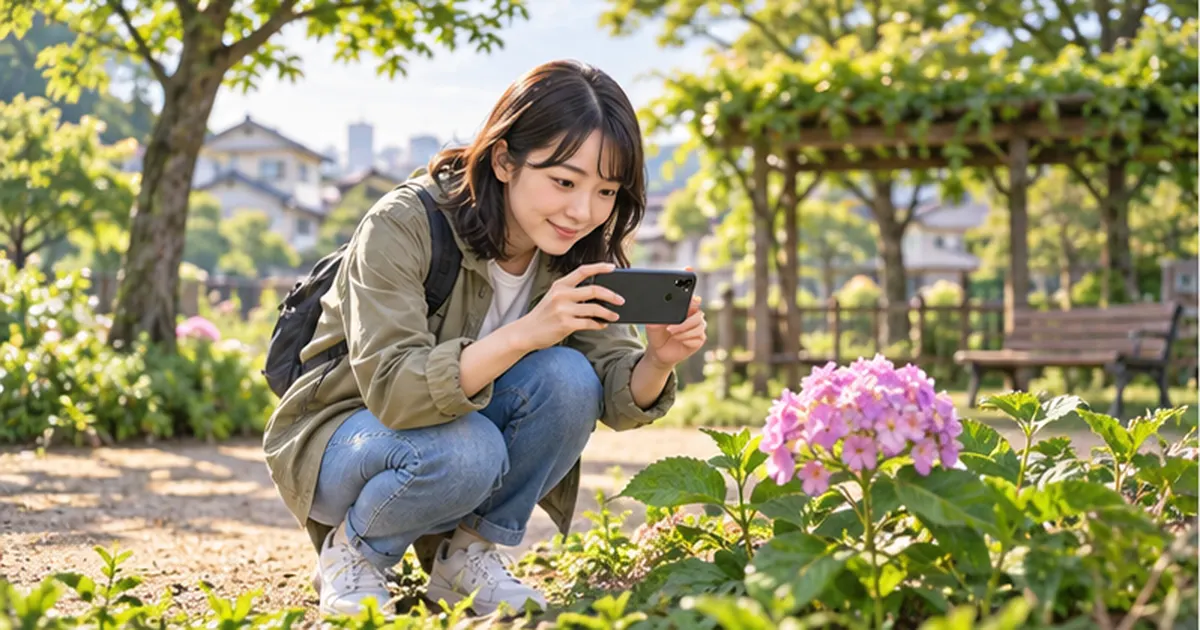
Photographing and recording the wildlife you see in your garden not only lets you notice changes in your own garden but also becomes data on local nature. For citizen-participation surveys, see our article on Citizen Science in Japan, which introduces such efforts.

What you can share with neighbors
- Share native plant seedlings and seeds with neighbors.
- Join municipal greening courses and nature observation events.
- Talk with the manager about the timing of mowing in shared spaces.
Looking ahead: keep a record of your garden
Records are important for seeing changes in your garden over the long term. Even just taking photos from the same spot in the same season shows differences from year to year. Jotting down the names of the birds that visit and the timing of the flowers that bloom in a notebook can lead to big discoveries a few years later. Records help you check your own efforts and may also be useful as data on local nature.
A garden-making roadmap you can start today
Three steps, at a comfortable pace
You don't have to change everything at once. A realistic approach is to proceed in three stages: start by observing, then make one small change, and finally move on to ongoing management.
| Stage | What to do | Timeframe |
|---|---|---|
| 1. Observe | Record the wildlife visiting your garden or balcony for one month | Today to 1 month |
| 2. Change one thing | Set out one pot of native plants and one shallow water source | 1 to 3 months |
| 3. Keep going | Reduce pesticides, adjust how you mow, and review once a year | 6 months to 1 year |
Summary
- Attract wildlife to your garden with four steps: native plants, a small water source, fewer pesticides, and management that doesn't overdo it.
- Be aware of escape of alien species and of how gardens connect to rivers and the sea.
- You don't have to do everything perfectly. Start with one pot and one water source, and keep observing.
How to think when you get stuck
Even after trying, you may find that not as much wildlife comes as you expected. It often takes time for wildlife to settle in a garden, and a lack of results in the first year is not necessarily a failure. Even in the biotope survey mentioned earlier, it took about two years from construction for dragonflies to become established. What matters is patiently watching for changes over several years.
It is also helpful to record what didn't work, to guide your next improvements. Review the causes one by one, such as too little sunlight, water that was too deep, or plants that didn't suit the site, and adjust little by little. Making a garden is something like a conversation with wildlife.
References and sources
- Nagoya City, Biodiversity Greening Guidelines, Pocket Edition (September 2024) – Key points of biodiversity-friendly greening
- Nagoya City, Nagoya Regional Native Plant List – Characteristics of native plants and the wildlife that visits them
- Tokyo Metropolitan Bureau of Environment, Edo Midori Registered Green Spaces – Registration system for private green spaces that plant native species
- Ministry of the Environment, Overview of the Invasive Alien Species Act – Regulations on Invasive Alien Species
- Ministry of the Environment, Overview diagram of the Invasive Alien Species Act – Summary of regulations and penalties
- Hallmann et al. (2017) PLOS ONE – Decline in flying insect biomass in German nature reserves
- Early succession of flora and fauna in a newly created biotope (Sugiyama Jogakuen University repository) – Eight-year follow-up survey at a test site in Tokyo
- Ministry of Land, Infrastructure, Transport and Tourism, materials on biotopes – Purposes of urban biotopes
- Setagaya Ward, materials on rain gardens – How rain gardens work and conditions for installation
- Ministry of the Environment, Ecojin Quiz – Bees used in agriculture and the shift to native species; estimated economic value of wild bee pollination
* Listed in order of reliability: government agencies and academic institutions > peer-reviewed papers > specialized organizations > reputable media