⚡ In short
An explainer on BRING, the clothing collection program by Japan Environmental Design (now JEPLAN). How used clothes are chemically recycled into recycled polyester, the 2022 breakdown of destinations, and challenges such as blends and profitability, based on public information.
Where do clothes you no longer wear go once they are in a collection box? BRING by Japan Environmental Design (now JEPLAN) sorts collected used clothing into reuse and recycling, and aims to return 100% polyester to raw material for new clothes through chemical recycling.
What you will learn
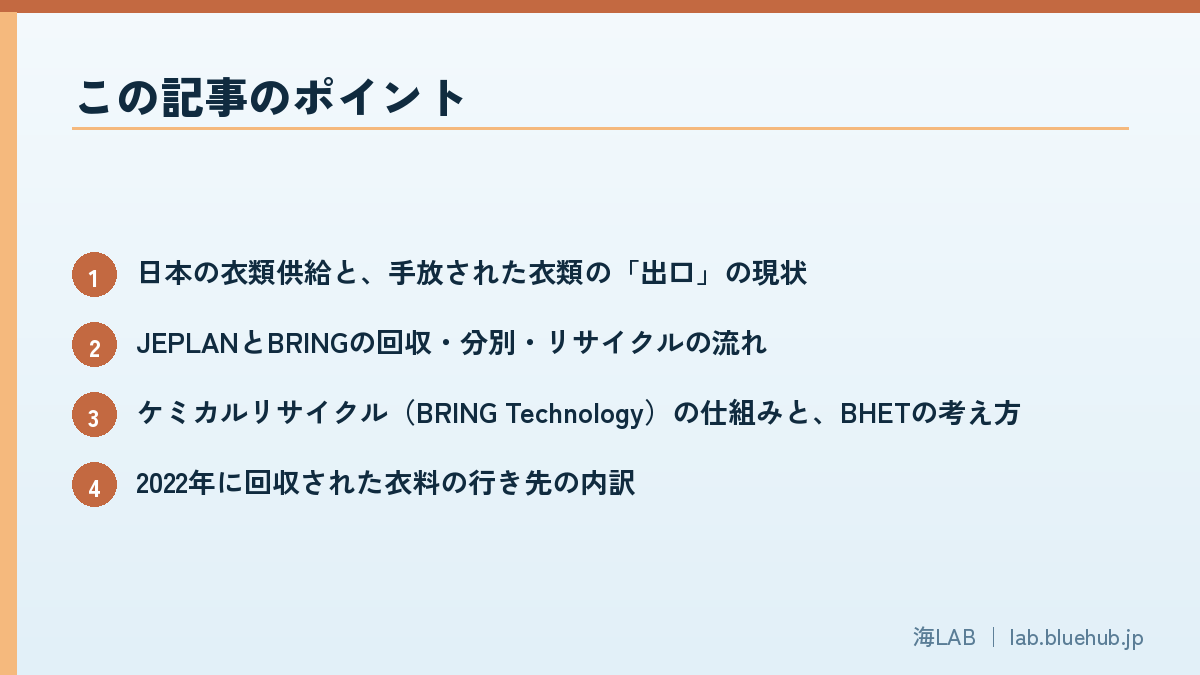
- The state of Japan's clothing supply and where discarded clothes end up
- The collection, sorting and recycling flow of JEPLAN's BRING
- How chemical recycling (BRING Technology) works and what BHET is
- Where clothing collected in 2022 went
- The challenges of blends, production scale and profitability
- How to choose before discarding and before buying, for the sake of the ocean
Where do Japan's clothes go? Looking at the 'exit' of discarded garments in numbers
Clothes asleep in the closet, clothes you no longer wear—how do you let them go? Sell them on a flea-market app, take them to a used-clothing shop, put them out for municipal resource collection, or throw them in the burnable trash. Ways of parting with clothes vary, but few people follow them to their final destination. Japan's Ministry of the Environment surveys and publishes this as the 'clothing material flow', which shows in numbers how much clothing is made, bought, discarded and reused in Japan.
The clothing material flow shown by the Ministry of the Environment
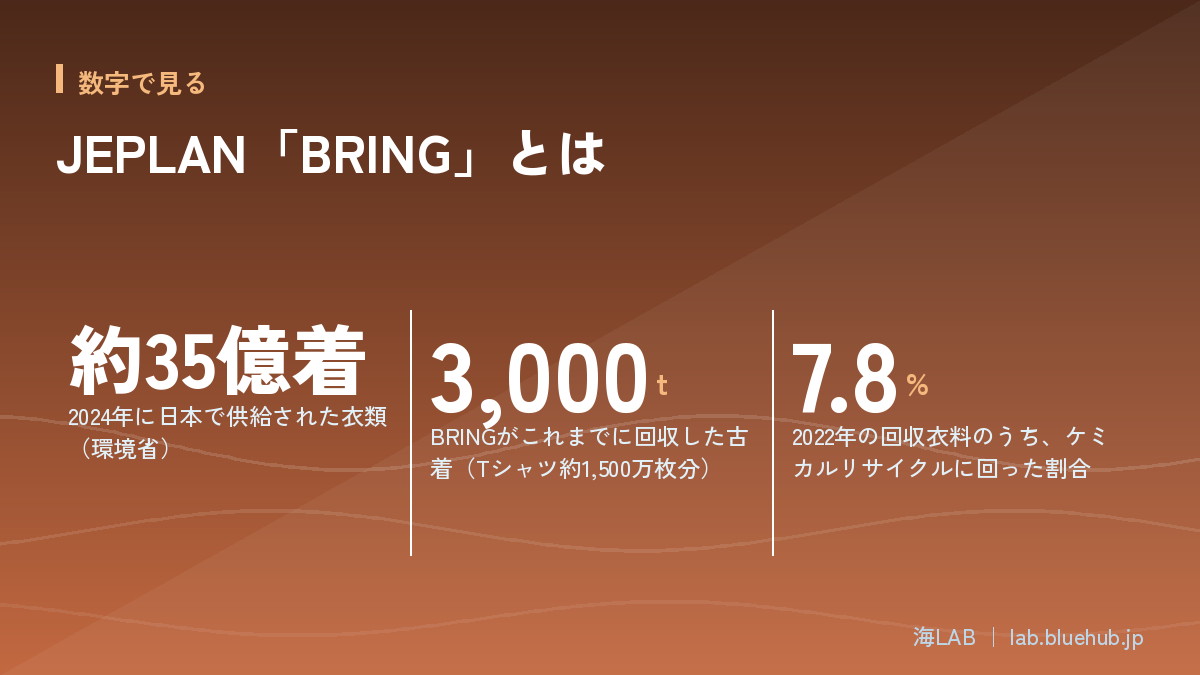
According to the Ministry's sustainable fashion page, about 3.5 billion garments were supplied in Japan in 2024, up about 1.8 times from about 2 billion in 1990. Yet the amount people actually buy has stayed flat; what has grown is the volume put on the market. The page also states that only about 38% of the clothing households let go of is reused or recycled, and the rest is disposed of. It also gives a figure of roughly 460,000–500,000 tons of household clothing going to incineration or landfill each year (numbers vary by year and calculation method).
| Item | Figure on the Ministry's page (approximate) |
|---|---|
| Annual clothing supply | About 3.5 billion garments in 2024 (about 2 billion in 1990, i.e. about 1.8 times) |
| Household clothing reused or recycled after being discarded | About 38% (the rest is disposed of) |
| Household clothing sent to incineration or landfill | Roughly 460,000–500,000 tons per year |
| Unused clothing stored at home | About 45% of owned clothing (more than twice the annual new supply) |
| Import dependence | About 98% of clothing sold in Japan is imported |
Recycling and reuse are different things
Note what the roughly 38% consists of. Most of it is reuse (clothes worn again as secondhand items), while recycling, which turns clothing back into raw material, is a small part. The Ministry's page also puts reuse through flea markets and collection at about 35%, so recycling is the small remainder. Turning clothes that can no longer be worn back into raw material for new clothes is exactly what BRING, by Japan Environmental Design (now JEPLAN), aims to do, and it is the subject of this article.
Key points of this chapter
- About 3.5 billion garments were supplied in Japan in 2024, about 1.8 times the 1990 level
- About 38% of discarded clothing is reused or recycled, but most of it is reuse; clothing-to-clothing recycling is limited
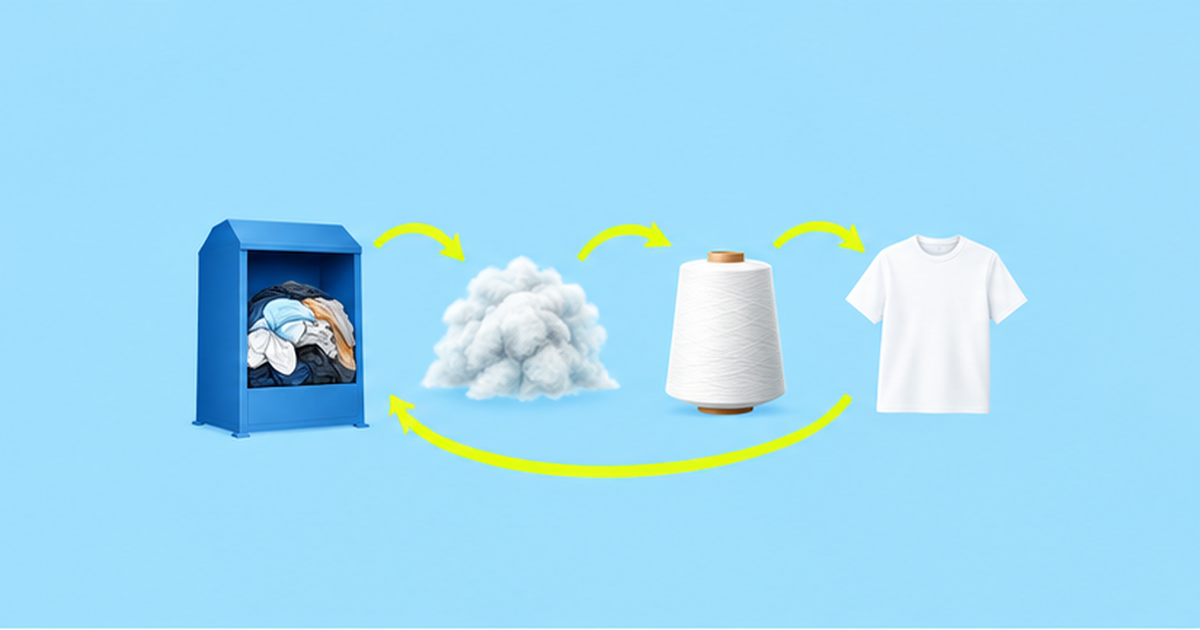
- Creating a 'clothes to clothes' loop requires both a collection system and technology to return clothing to raw material
Why talk about clothing at Umi Lab? Synthetic fibers and the ocean
Why does a media outlet about the ocean cover clothing recycling? Because most of the clothes we wear are made of petroleum-based synthetic fibers, and where they end up is closely tied to the sea.
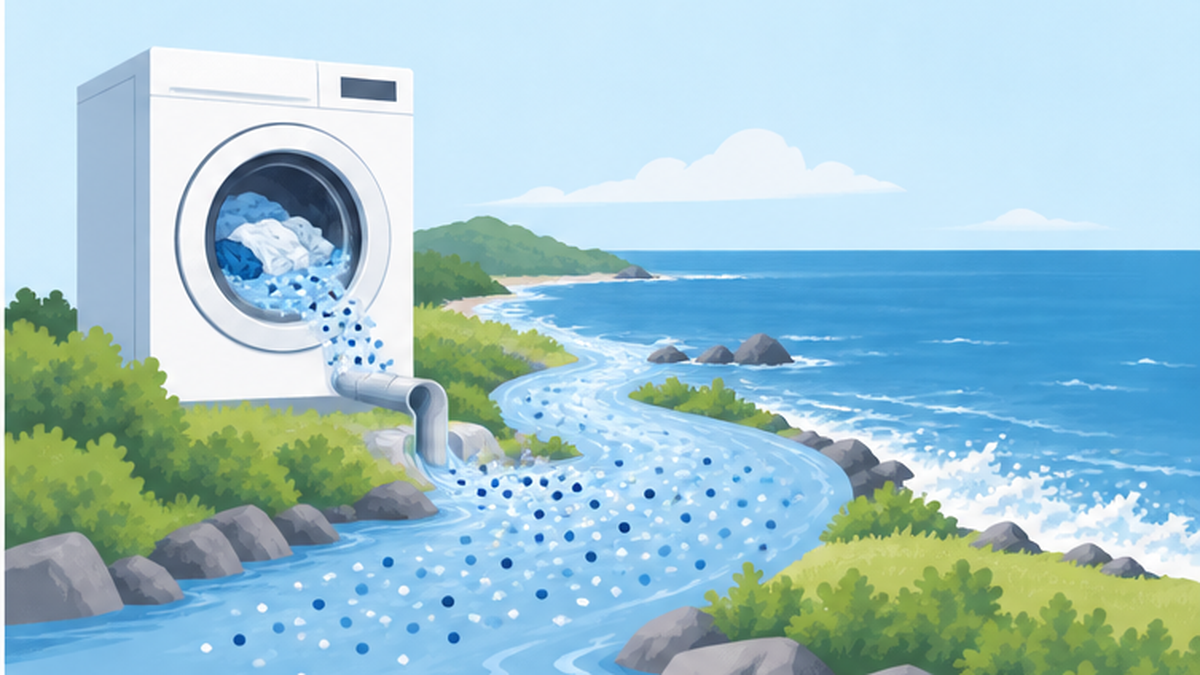
Microfibers washed out in the laundry
Clothes made of synthetic fibers such as polyester and nylon release extremely fine fiber fragments (microfibers) into wastewater every time they are washed. A 2017 report by the International Union for Conservation of Nature (IUCN) (Boucher and Friot) estimated that washing synthetic textiles accounts for about 35% of primary microplastics released to the ocean. The European Environment Agency (EEA) cites the same figure. Note, however, that this is an estimate of sources of primary microplastics entering the ocean, not 35% of all microplastics in the sea. Estimates vary, and lower ones exist.
For how laundry fibers behave and what you can do at home, see Microfibers from Laundry. The point here is that the material we make clothes from and ocean plastic pollution are connected by the same substance.
As long as we keep making it from oil, the exit is incineration or landfill
Polyester is made from petroleum, and once it is used up most of it is incinerated or landfilled. Incineration emits carbon dioxide, and landfilling or illegal dumping lets it persist in the environment for a long time. If clothing can be returned to raw material again and again, we can reduce the use of new petroleum-based feedstock and the waste generated at the end of a garment's life. That is why clothing recycling is treated as an ocean topic.
What are JEPLAN and BRING? The company and system circulating clothing
From Japan Environmental Design to JEPLAN
JEPLAN is the company formerly known as Japan Environmental Design Inc., established in January 2007, which changed its name to JEPLAN, INC. effective June 1, 2022. Its mission is 'to circulate everything'. Its business rests on four pillars—commercial plants, technology licensing, apparel and bottles—and its chemical recycling covers both PET bottles and polyester fiber.
The basic flow of BRING
BRING is a clothing collection and recycling initiative that JEPLAN runs with companies, municipalities and consumers. According to the official page, used clothes are collected at retail stores and elsewhere, and polyester fiber is turned into recycled polyester raw material with proprietary technology to make new clothes. The basic flow is as follows.
- Consumers bring clothes they no longer wear to collection boxes at participating companies' stores and facilities (many programs accept clothing regardless of brand)
- The collected clothes are sorted by material and parts
- Clothes that can still be worn are sent to donation or reuse
- Clothes that are 100% polyester are returned to recycled polyester raw material (BRING Material) through chemical recycling (BRING Technology)
- Materials other than polyester, such as wool and cotton, are recycled in other ways with partners
The official page says BRING has so far collected 3,000 tons of used clothing, equivalent to about 15 million T-shirts (the date of the tally is not stated). For participating companies, another feature is that arranging pickup is completed within the system and the collected amount is reported afterward.
How far has it spread?
A WWD JAPAN article from February 2023 gives a sense of scale. As of February 15, 2023, JEPLAN was working with 199 brands, with 4,536 collection points (including spot events). Collection grew from about 600 tons before COVID-19 to about 1,200 tons in 2021 and about 1,500 tons in 2022. These are figures from that time; please check the official page for the latest numbers.
Where do the collected clothes actually go?
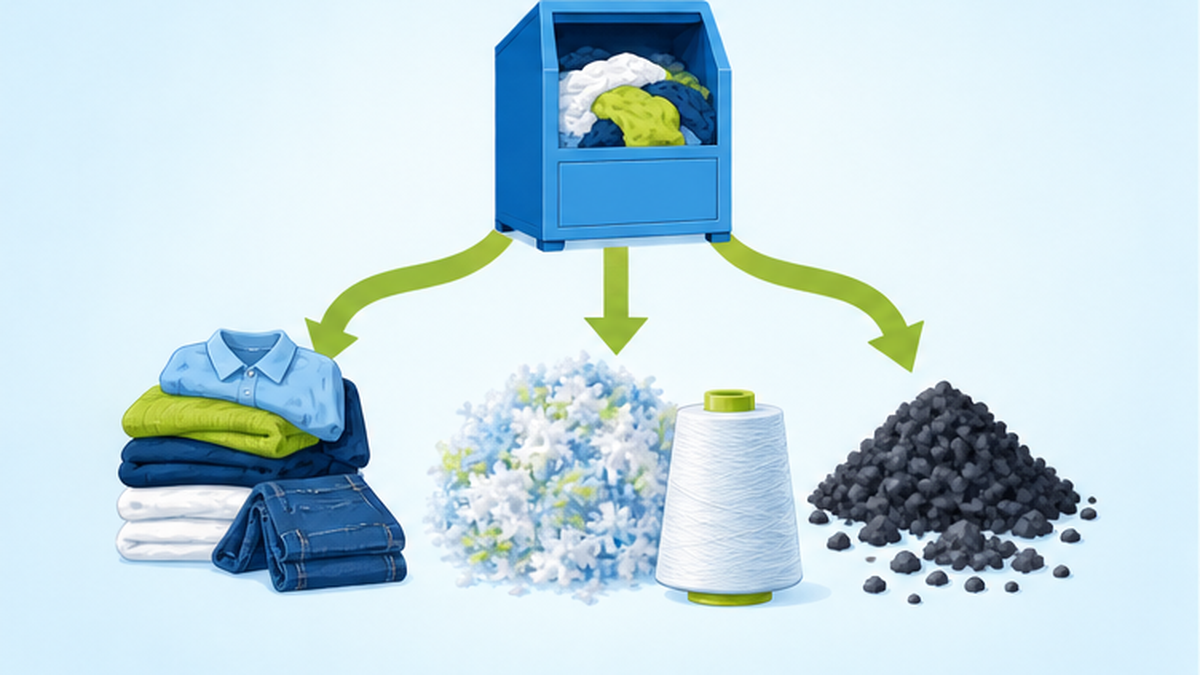
People who assumed that 'everything I put in a collection box becomes new clothing' may be surprised. Where collected clothes go depends on their condition and material. According to the 2022 results reported by WWD JAPAN, the breakdown was as follows.
| Destination of collected clothing (2022) | Share |
|---|---|
| Reuse (worn again as secondhand clothing) | 75.3% |
| Chemical recycling of 100% polyester clothing | 7.8% |
| Conversion to chemical feedstock for coke ovens | 16.1% |
| Automotive interior materials | 0.1% |
| Recycled wool | 0.1% |
| Disposed of as industrial waste | 0.6% |
Most of it goes to reuse
The largest share is reuse, accounting for three quarters of collected clothing. This reflects a priority of 'wear what can still be worn' before recycling, which also makes sense environmentally: using existing clothes avoids the raw-material extraction and manufacturing energy needed to make new ones.
About 8% goes to chemical recycling
Meanwhile, the share of 100% polyester clothing returned to raw material by chemical recycling was 7.8%, which for 1,500 tons is about 117 tons (this weight is a rough figure calculated from the percentage above). It is small relative to total collection, but it shows that the entrance to a 'clothes to clothes' loop is actually working. Conversion to coke-oven chemical feedstock (16.1%) means using the material in place of coal, an industrial reuse rather than a material loop.
How to read '100% recycled'
- BRING sorts used clothing into reuse, chemical recycling, industrial feedstock and other routes, so not everything becomes raw material for new clothes
- What goes to 'clothes to clothes' chemical recycling is 100% polyester clothing whose condition and composition meet the requirements
How chemical recycling works: returning clothes to the molecular level
How it differs from material recycling
There are two broad ways to recycle. One is material recycling, which crushes and melts a material and remakes it as it is. The other is chemical recycling, which chemically breaks a material down to raw-material level. Material recycling is simple, but quality tends to decline gradually with each cycle and it is affected by impurities. The strength of chemical recycling is that, once impurities are removed, the material can potentially be restored to quality equivalent to new.
The flow of BRING Technology
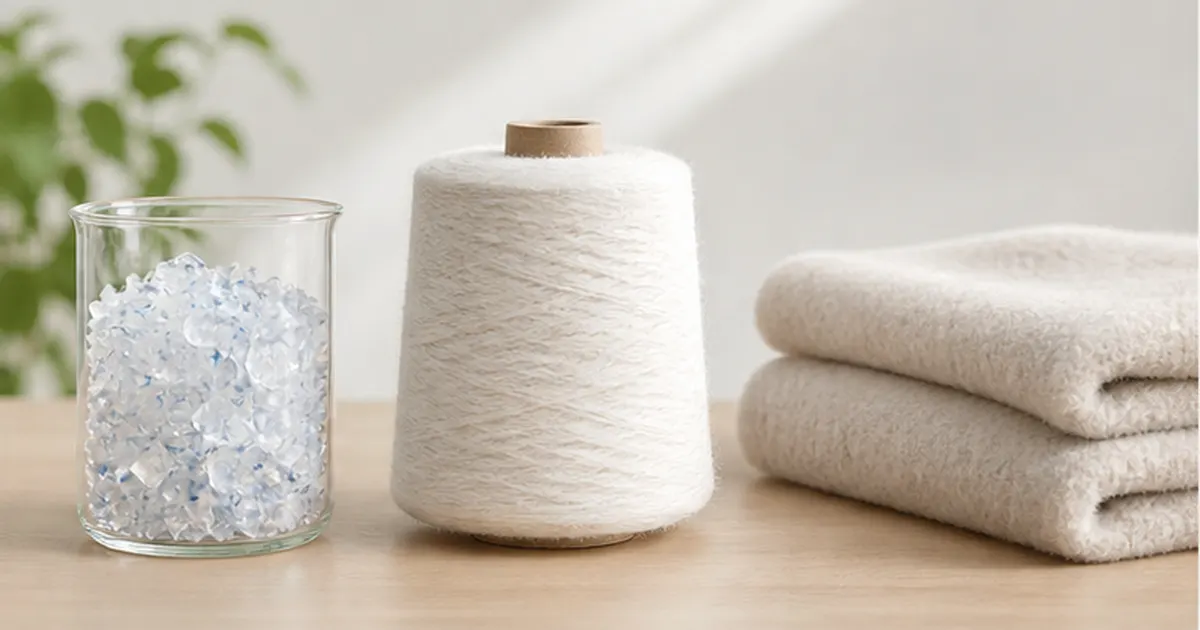
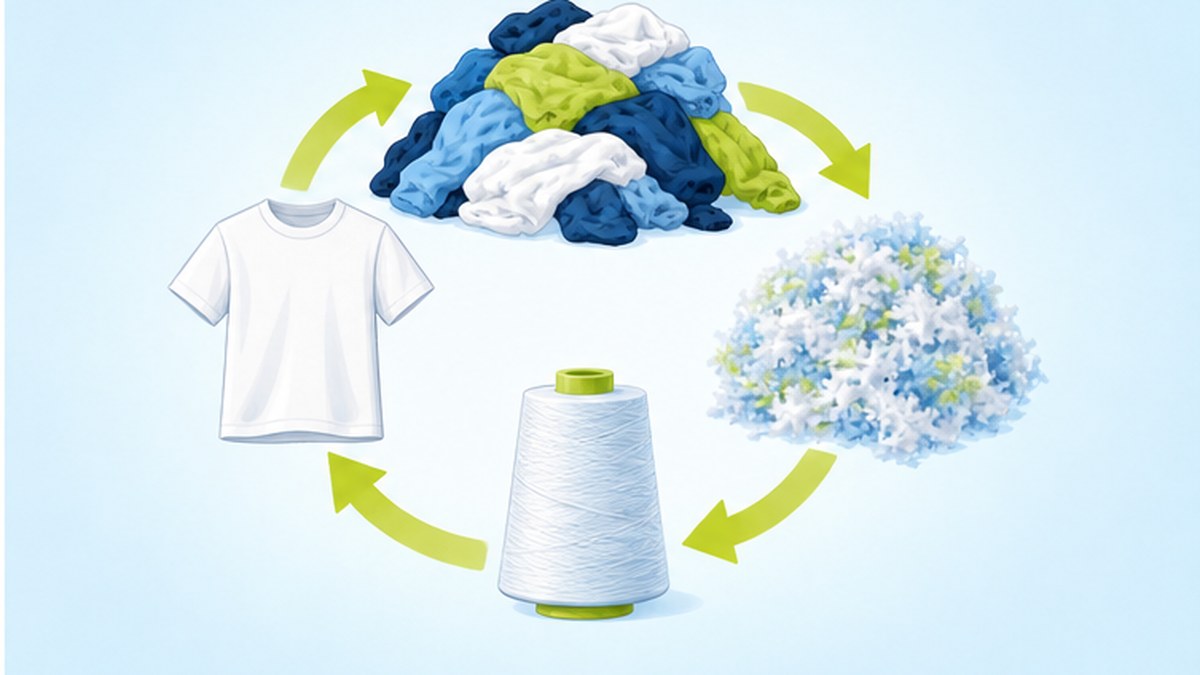
According to JEPLAN's official page, BRING Technology breaks used PET products down to the molecular level and removes impurities such as pigments and metals. By combining two different purification processes, crystallization and distillation, it extracts the monomer (BHET) that serves as raw material and recycles it into recycled PET resin of quality equivalent to petroleum-derived resin. In media reports, this technology is described as the BHET method.
- Break used polyester products down to the molecular level
- Remove pigments, metals and other impurities
- Purify by combining crystallization and distillation to extract the monomer (BHET)
- Make recycled PET resin (BRING Material) of quality equivalent to petroleum-derived resin from BHET
- Process the resin into yarn and fabric and use it in new clothing and other products
PET bottles and polyester fiber are chemically the same polymer, polyethylene terephthalate (PET). Chemical recycling of bottles and of fibers is therefore discussed with a shared way of thinking. For bottle recycling, see also Bottle-to-Bottle Recycling.
Where is the plant?
Media reports introduce JEPLAN's Kitakyushu Hibikinada plant as a facility that makes recycled polyester resin from polyester fiber. Some reports state a fiber production capacity of 1,000 tons per year. Compared with the amount collected (about 1,500 tons in 2022), plant capacity is still small, which leads to the scale challenge described below.
Do not take environmental-benefit numbers at face value
- JEPLAN's official page says chemical recycling contributes to reducing CO2 emissions, but only in qualitative terms; within what we could confirm, no specific reduction rate compared with virgin raw material is given
- When you see a claim such as 'CO2 reduced by X%', always check what it is compared against (calculation scope and conditions)
What products does recycled polyester become?
Making recycled raw material is not enough by itself. It only completes the loop when it becomes yarn, then clothing, and is bought. Here we look at public examples of how BRING's recycled material and collection have spread.
Permanent collection at brands and stores
In November 2022, the select shop SHIPS began permanent clothing collection with BRING at all its stores (excluding kids' stores). It was explained that 100% polyester clothes are reborn as recycled polyester through BRING Technology. In November 2024, Tamagawa Takashimaya Shopping Center placed a collection box on the third floor of its West Building, positioning BRING as one of four circulation options participants can choose from.
Supply as yarn and material
In June 2023, a yarn-sales partnership with the textile trading company Toyoshima was announced. It creates a system to supply BRING Material not only as resin, as it had been sold until then, but also as yarn, with Toyoshima handling yarn stock and sales. When recycled material circulates as yarn, apparel brands find it easier to plan clothing that uses it.
Cooperation with events, schools and municipalities
- 2022: Produced participation-prize T-shirts and collected clothing at Yokohama Marathon 2022
- May 2023: Cooperated with an artist's tour to produce fan-club-exclusive T-shirts
- July 2023: BRING Material adopted for limited-edition T-shirts of 'Okushinano 100'
- June 2024: Started a project with Kanko Gakuseifuku to collect school uniforms and gym wear in cooperation with five municipalities nationwide
- December 2024: Cooperated with the 'Sportswear Reborn Project' promoted by Hyogo Prefecture
These examples show many initiatives that link collection and product-making in one story. A format in which participants can feel that 'the clothes I gave will become this T-shirt next' raises their sense of conviction.
How it differs from other recycled polyester
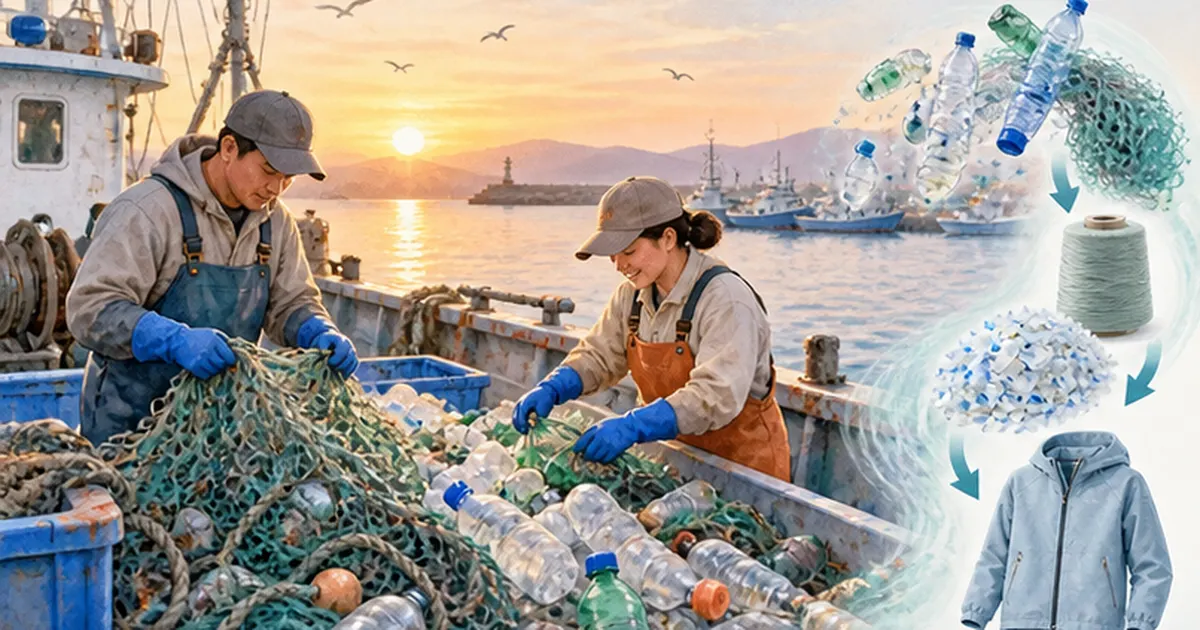
Clothing that uses recycled polyester is increasing beyond BRING, such as MUJI's recycled polyester and Montbell's recycled-material wear. Even among recycled polyesters, the meaning of the loop differs depending on whether the source is PET bottles, used clothing or discarded fishing nets. BRING, which returns used clothing to raw material, is distinctive in that the loop is easier to close as 'clothing to clothing'.
Challenges: blends, cost and scale
Reading this far, BRING may look like an ideal system. But JEPLAN's own management speaks frankly about the challenges. In an interview with WWD JAPAN in February 2023, the following issues were raised.
Blends and impurities
Even when a label says '100% polyester', other materials, dyes and pigments may in fact be mixed in. Because the types and amounts are many and the composition cannot be fully grasped, whatever cannot be removed lowers overall quality and keeps plant productivity from rising. Many garments are made of composite materials, and recycling technology for them is not established. Cotton and polyurethane are said to be common materials mixed with polyester; separation technology has been developed by startups, but it is described as a stage that needs scale.
In response, JEPLAN announced in September 2023 that it had begun a demonstration of pyrolysis gasification of blended fibers, an attempt to find another route that processes mixed materials together. The idea of breaking down waste plastic with heat and reusing it is shared with Converting Waste Plastic Back into Oil.
Technology maturity and cost
The same interview also candidly said that production of polyester resin is still small and cannot be increased because the technology is immature, and that the textile recycling business continues to run at a loss while ways to become profitable are being explored by trial and error. On the other hand, the view was also offered that clothing has higher added value than PET bottles and can therefore absorb costs more easily.
| Challenge | Details | Direction of efforts |
|---|---|---|
| Blends and impurities | Composite materials and dyes are mixed in, lowering quality and productivity | Introducing separation technology; pyrolysis gasification demonstration for blends |
| Production scale | Resin output is still small and hard to increase | Expanding plants, technology licensing, etc. |
| Profitability | The textile recycling business continues to run at a loss | Developing high-value uses and expanding sales channels (yarn sales, etc.) |
| Quantity and quality of collection | The amount of 100% polyester clothing that can be circulated is limited | Expanding collection points and cooperating with schools and municipalities |
Why it matters to know the challenges
- That challenges are openly discussed is also a sign that the system is being improved as we speak
- At the same time, the amount that actually gets recycled is still limited, and it is true that 'just recycle it' does not solve the problem
What we can do: think before discarding and before buying
The more clothing recycling advances, the easier it is to think 'I can just recycle it once I stop wearing it'. But as the Ministry of the Environment also stresses, the basics are right-sized production, right-sized purchasing and long use. It is realistic to treat recycling as the last safety net.
Before you let go: know the priorities
- First, wear it for a long time (repair and remaking are options too)
- If you will not wear it, pass it on or sell it (reuse)
- If it cannot be reused, take it to collection and recycling (collection boxes such as BRING)
- Only what truly cannot be used is finally discarded
The Ministry's materials also introduce figures that each person discards about 11 garments a year but repairs only about 2. Simply increasing the habit of 'repair before discarding' can reduce disposal considerably.
Before you buy: check the material label
- Check the proportion of polyester on the care and composition label (the closer to a single material, the easier it is to recycle)
- For 'recycled material used' labels, check what is used and in what percentage
- Use laundry nets and wash less often to reduce microfiber release
Cautions when taking clothes to collection
- Check in advance which brands, materials and conditions the collection box accepts
- Heavily soiled or wet items, underwear and the like may not be accepted
- Do not let taking clothes to collection become the goal; also review how much you buy
Three things you can do from today
- Sort through your closet and set aside clothes you have not worn for over a year
- Find out where nearby collection boxes (BRING partner stores or municipalities) are and their conditions
- Next time you buy clothes, think once about the material label and whether you can wear it for a long time
Summary: closing the loop from clothes to clothes
About 3.5 billion garments were supplied in Japan in 2024, and only about 38% of discarded clothing is reused or recycled. Against this, JEPLAN's BRING sends collected used clothes to reuse and returns 100% polyester to new raw material through chemical recycling, trying to build a clothes-to-clothes loop.
However, in 2022 results only 7.8% of collected clothing went to chemical recycling, and hurdles remain, including processing blended materials, expanding production scale and profitability. Specific figures on environmental benefits also do not appear to be sufficiently disclosed within what we could confirm. That is why consumers are asked to review how much they buy, wear clothes for a long time, and choose the right route when letting go.
This is not someone else's problem for the ocean either. The raw material of clothing and ocean microplastics are connected by the same substance. The more the loop of circulation widens, the more we should be able to reduce fiber fragments reaching the sea and newly made petroleum-based raw material. Please also read What Is the Circular Economy?.
Summary of this article
- Japan's clothing supply was about 3.5 billion garments in 2024. About 38% of discarded clothing is reused or recycled
- BRING collects used clothing and sorts it into reuse, chemical recycling and other routes. In 2022, chemical recycling was 7.8%
- BRING Technology breaks polyester down to the molecular level and purifies it into recycled PET resin
- Blends, production scale and profitability are challenges. First wear clothes for a long time, and choose the right route when letting go
References and Sources
- JEPLAN "BRING" official page – How BRING works and amount collected
- JEPLAN technology overview (BRING Technology) – Chemical recycling process
- Ministry of the Environment, "Sustainable Fashion" – Clothing material flow and policy
- WWD JAPAN: Interview with JEPLAN President Masaki Takao (Feb. 2023) – Amount collected, breakdown of destinations, challenges
- WWD JAPAN: BRING collection at Tamagawa Takashimaya SC (Nov. 2024) – Example of a collection box installation
- IUCN:Primary microplastics in the oceans (Boucher and Friot, 2017) – Primary microplastics from laundry
- European Environment Agency (EEA): Microplastics from textiles – Overview of microplastics from textiles
- Takashimaya: Depart de Loop (polyester collection) – Collection example at a department store
* Listed in order of reliability: government and academic institutions > peer-reviewed papers > specialist organizations > reliable media