Ocean currents, the linchpin of Earth's climate system, are undergoing fundamental changes driven by rising sea temperatures. According to the IPCC's Sixth Assessment Report, average ocean temperatures have risen by 1.1°C over the past century, and the Atlantic Meridional Overturning Circulation (AMOC) is estimated to have slowed by about 15% since the mid-20th century. This is not merely an oceanic phenomenon — it is dramatically reshaping climate patterns across the entire planet.
Ocean currents function as the Earth's "circulatory system," playing a crucial role in transporting heat energy from the equator to the poles and from the surface to the deep ocean. However, as anthropogenic greenhouse gas emissions drive up sea temperatures, this finely tuned circulation system is experiencing serious disruption. Observational research by organizations such as the Japan Agency for Marine-Earth Science and Technology (JAMSTEC) has reported multiple signs of change, including shifts in current pathways and a weakening of deep water formation.
Of particular concern is the chain reaction of current changes. Changes that began in the North Atlantic are now affecting the Kuroshio Current in the Pacific, circulation in the Indian Ocean, and even the Antarctic Circumpolar Current, revealing that a global reorganization of the climate system is underway. This phenomenon is considered highly likely to have direct impacts on the foundations of human life, including agricultural production, water resources, and the frequency of extreme weather events.
What You'll Learn in This Article
- The mechanism of rising ocean temperatures and the current situation
- Changes in major ocean current systems and their impacts
- The global impacts triggered by the slowdown of thermohaline circulation
- Regional climate change patterns and future projections
- Adaptation measures and international responses to changing ocean currents
- The Mechanism of Ocean Warming: The Accumulation of Heat Energy
- Changes in Major Ocean Current Systems: Impacts on Earth's Circulatory System
- The Slowdown of Thermohaline Circulation: A Crisis in Deep Water Formation
- Regional Climate Change Patterns: Local Impacts of Changing Ocean Currents
- Future Projection Scenarios: Ocean Current System Changes Through 2100
- Adaptation Measures and International Cooperation: Strategies for Responding to Changing Ocean Currents
- Conclusion: A Path to a Sustainable Future in the Age of Changing Ocean Currents
- References
The Mechanism of Ocean Warming: The Accumulation of Heat Energy

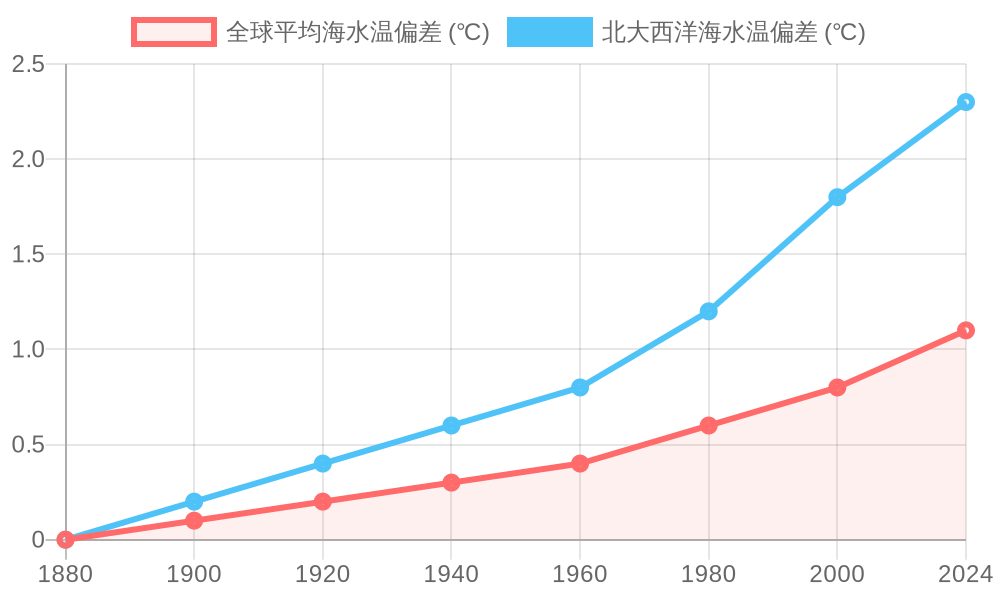
The ocean covers about 71% of Earth's surface and has roughly 1,000 times the heat capacity of the atmosphere, making it the planet's largest heat reservoir in the context of climate change.IPCC Sixth Assessment Report (2021)finds that about 91% of the excess heat energy accumulated due to anthropogenic greenhouse gas increases has been absorbed by the ocean, and as a result the global average sea surface temperature has risen by 1.1°C since 1880.
Regional and Depth-wise Patterns of Ocean Warming
Ocean warming is not occurring uniformly across the globe. According to observational analyses such as the IPCC Sixth Assessment Report, some areas in the mid-to-high latitudes of the North Atlantic and North Pacific show warming that exceeds the global average, while parts of the Southern Ocean and the subarctic North Atlantic show smaller warming or even a cooling trend. This regional variation results from the complex interplay of multiple factors, including ocean current patterns, the arrangement of land masses, and glacial melt.
Warming Trends by Major Sea Region
| Sea Region | Surface Temperature Trend | Heat Penetration to the Deep Ocean | Key Related Factors |
|---|---|---|---|
| North Atlantic | Marked warming at mid-to-high latitudes (smaller warming in parts of the subarctic zone) | Relatively large heat transport to the deep ocean | Changes in the Gulf Stream and AMOC |
| North Pacific | Marked warming (frequent marine heatwaves) | Warming progressing into the mid-layer | Fluctuations in the Kuroshio and Oyashio Currents |
| South Atlantic | Warming trend | Heat penetration into the mid-layer | Influence of the Brazil Current |
| South Pacific | Warming trend | Concentrated at the surface | Strengthening of the East Australian Current |
| Indian Ocean | Marked warming across a wide area | Warming from surface to mid-layer | Monsoon variability |
| Southern Ocean | Relatively small warming | Absorbing a large share of heat at mid-to-deep layers | Antarctic Circumpolar Current and deep vertical mixing |
By depth, the surface layer (0-200m), which directly receives heat from solar radiation and the atmosphere, shows the most pronounced temperature rise. Warming becomes progressively smaller with depth, in the mid-layer (200-1000m) and deep layer (below 1000m), indicating that vertical mixing in the ocean is limited.
Changes in the Distribution of Heat Energy
As ocean temperatures rise, the distribution of heat energy within the ocean is also changing significantly. Recent observational analyses show that the temperature difference between the surface and deep ocean (stratification) is intensifying, which is hindering vertical water mixing and having a serious impact on nutrient circulation and oxygen supply.
Changes in Major Ocean Current Systems: Impacts on Earth's Circulatory System
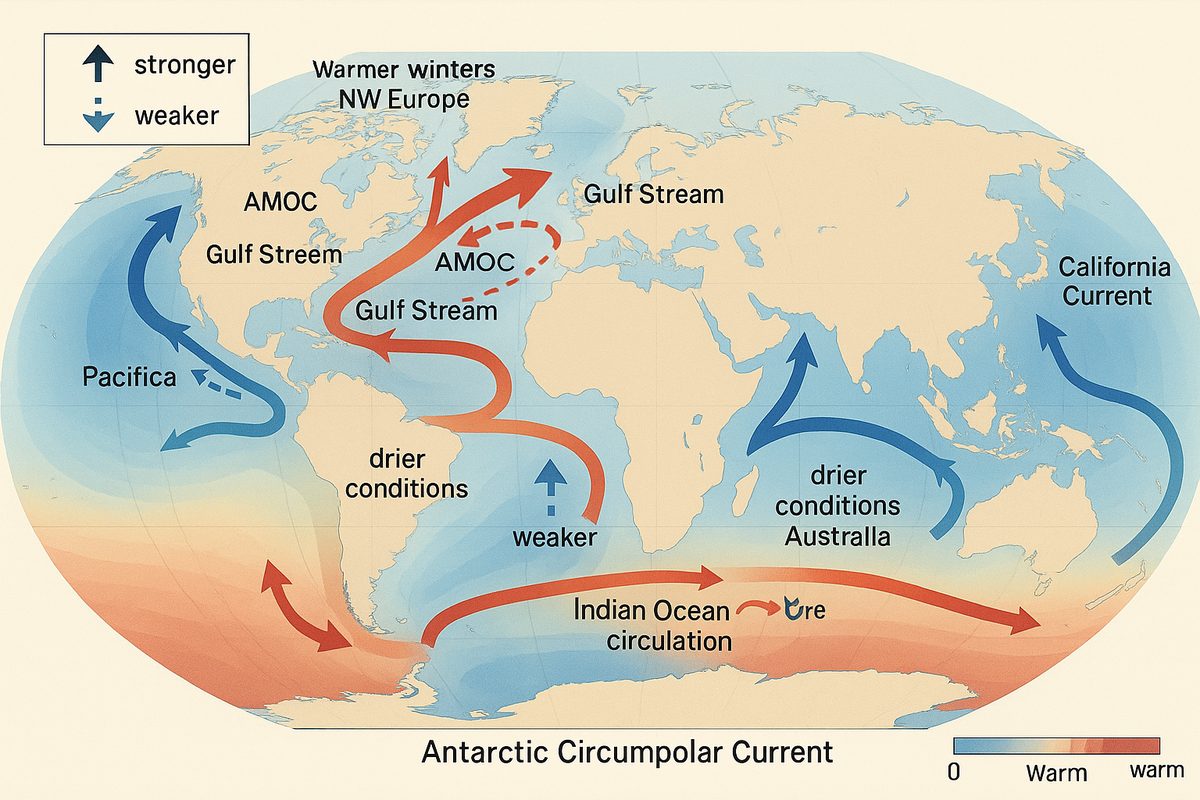
The Earth's ocean current system consists of two main mechanisms: the "thermohaline circulation," driven by density differences, and the "wind-driven circulation," driven by winds. Rising ocean temperatures are bringing about fundamental changes to both systems, with the impact on thermohaline circulation being especially severe. Recent observational and reanalysis studies have reported signs of weakening in the ocean current system, particularly in thermohaline circulation.
The Slowdown of the Atlantic Meridional Overturning Circulation (AMOC)
The most closely watched development is the dramatic slowdown of the Atlantic Meridional Overturning Circulation (AMOC). The AMOC is a massive circulation system in which water cooled in the North Atlantic sinks to depth and flows across the equator to the South Atlantic.Caesar et al. (2018, Nature)estimates that AMOC strength has slowed by about 15% compared with the mid-20th century, and the IPCC Sixth Assessment Report assesses it as very likely that further weakening will occur throughout the 21st century.
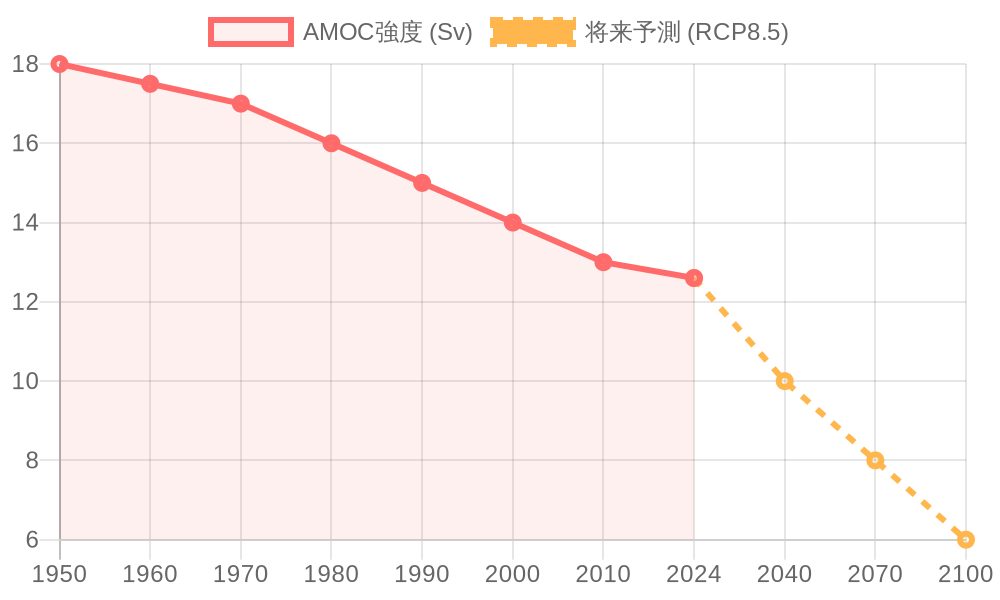
The main cause of the AMOC slowdown is that melting of the Greenland ice sheet is sending large volumes of freshwater into the North Atlantic, lowering the density of the seawater. Lower-density water is less able to sink to depth, which weakens the circulation as a whole. This phenomenon is known as the "freshening feedback," and once it begins, it tends to progress in a self-reinforcing manner.
Fluctuations in the Pacific Circulation System
In the Pacific, notable fluctuations are occurring in the Kuroshio Current, which flows near Japan, and its extension, the Kuroshio Extension. According to long-term observations by the Japan Meteorological Agency, the Kuroshio repeatedly undergoes major path changes, including the occurrence and persistence of large meanders, and marked warming has been observed in the Kuroshio Extension region. These changes are altering the distribution of sea temperatures along Japan's coast and the inflow patterns of warm water.
Impacts of Changes in the Kuroshio Current System
- Impact on fisheries: Shifts in the distribution of migratory fish such as saury and salmon
- Impact on climate: Changes in precipitation patterns along the Pacific coast of Honshu
- Impact on ecosystems: Northward expansion of subtropical fish species and decline of temperate species
- Impact on the marine environment: Changes in nutrient distribution and a decline in primary production
Changes in Indian Ocean and Southern Ocean Circulation
In the Indian Ocean, circulation patterns closely tied to the monsoon system are changing. Research by the Indian National Centre for Ocean Information Services (INCOIS) shows that the frequency of Indian Ocean Dipole events is increasing, which is destabilizing monsoon rainfall.
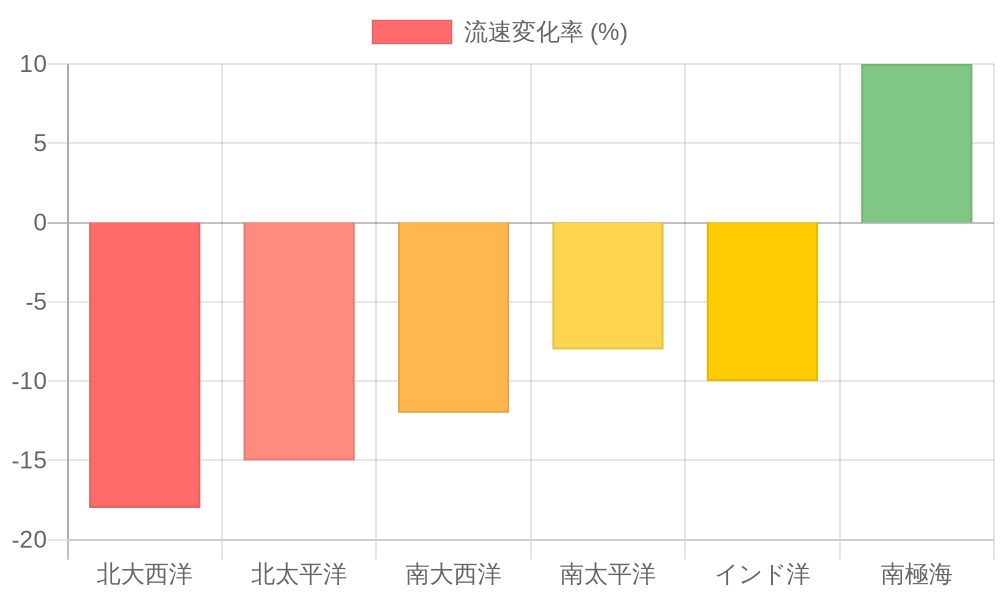
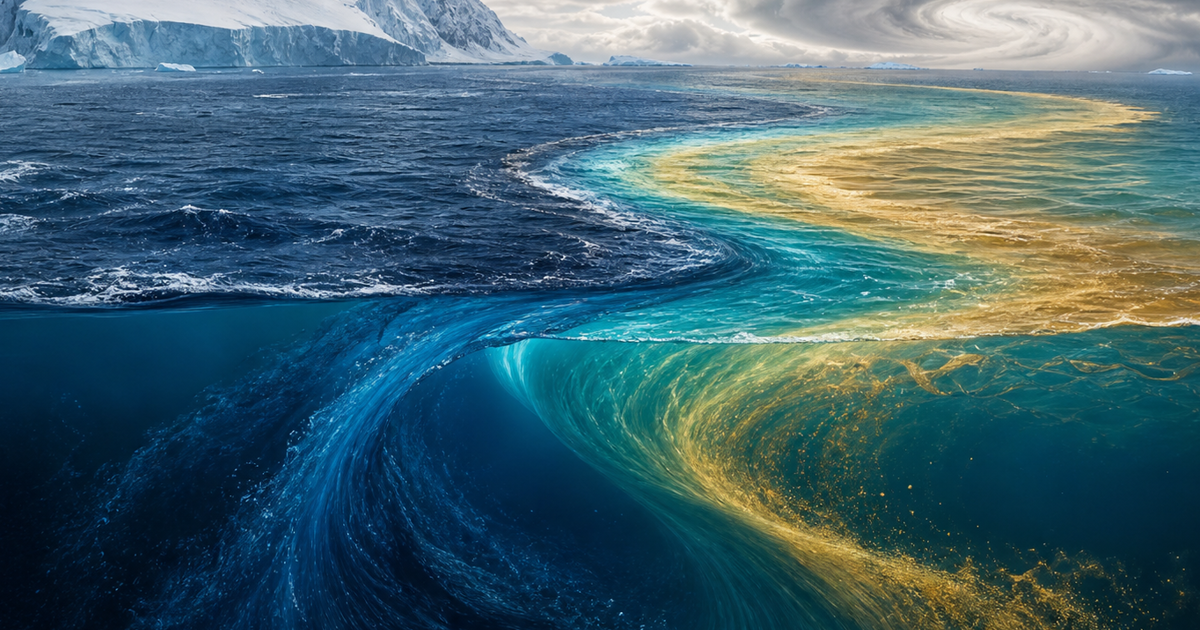
The Antarctic Circumpolar Current (ACC), which encircles the Southern Ocean, is the largest ocean current system on Earth and plays a crucial role in linking ocean circulation worldwide. Recent research by the Australian Antarctic Division has found that strengthening westerly winds have increased ACC flow speed by 10%, while flow speed has actually decreased in waters closer to the Antarctic continent.
The Slowdown of Thermohaline Circulation: A Crisis in Deep Water Formation
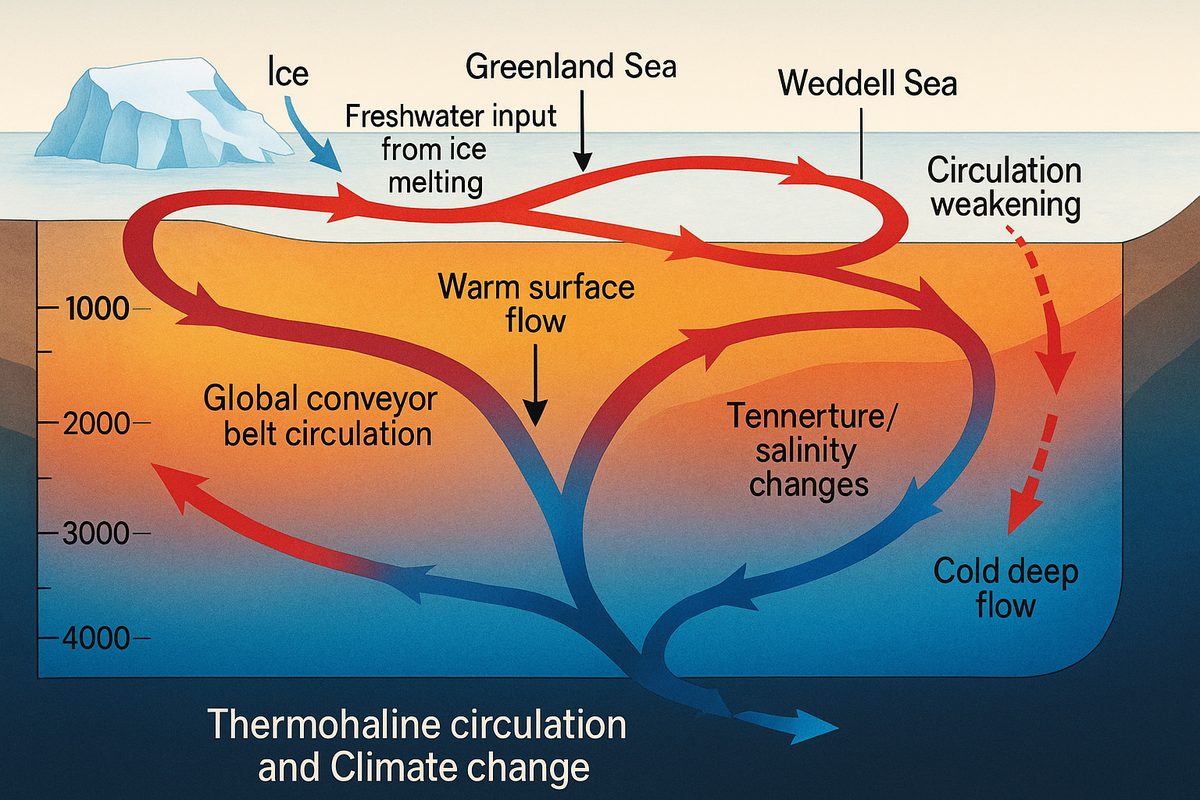
Thermohaline circulation is a global-scale ocean circulation system driven by density differences arising from variations in seawater temperature and salinity. Also known as the "ocean conveyor belt," this circulation plays a decisive role in the distribution of heat and nutrients across the planet. However, according toCaesar et al. (2021, Nature Geoscience), the AMOC, the core of thermohaline circulation, may be at its weakest state in more than 1,000 years.
Changes in the Deep Water Formation Process
Deep water formation occurs mainly in the Labrador Sea and Greenland Sea in the North Atlantic, as well as a few locations around Antarctica. In these regions, strong winter cooling makes seawater denser, causing it to sink to the seafloor and form deep water. However, global warming is driving the following changes:
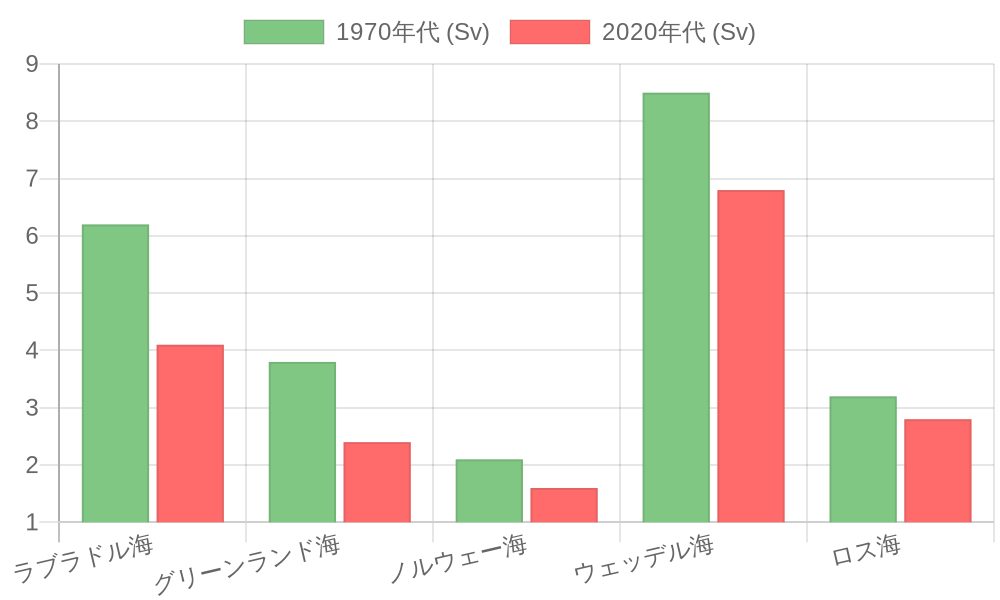
Reported Trends of Change in Major Deep Water Formation Regions
| Formation Region | Reported Change | Main Factor |
|---|---|---|
| Labrador Sea | Weakening of deep winter convection | Increased freshwater inflow |
| Greenland Sea | Decreased frequency of deep convection events | Sea ice decline |
| Norwegian Sea | Increased variability in downwelling | Surface warming |
| Weddell Sea | Shrinking and warming of Antarctic Bottom Water | Antarctic ice sheet melt |
| Ross Sea | Declining salinity of bottom water | Wind pattern changes and meltwater inflow |
*Shows qualitative trends reported in observational studies (quantitative estimates vary widely depending on the observation period and methodology)
Changes in Salinity Distribution and Progressing Freshening
Ocean salinity distribution is a key factor driving thermohaline circulation, but climate change is causing major shifts. Analysis of the World Ocean Database (WOD) has revealed the following patterns:
- Freshening at high latitudes: Melting ice sheets in Greenland and Antarctica are lowering salinity in the North Atlantic and Southern Ocean
- Salinity concentration in subtropical regions: Increased evaporation is raising salinity in the Mediterranean Sea, Red Sea, Persian Gulf, and similar regions
- Changes in precipitation patterns: Drying is advancing in subtropical high-pressure belts, while precipitation is increasing at high latitudes
Impacts on Oxygen Distribution
The slowdown of thermohaline circulation is also having a serious impact on oxygen distribution within the ocean. According toSchmidtko et al. (2017, Nature), total ocean oxygen content has declined by about 2% over the roughly 50 years since the 1960s, and reduced oxygen supply (ventilation) to the deep ocean due to weakening circulation is thought to be a contributing factor.
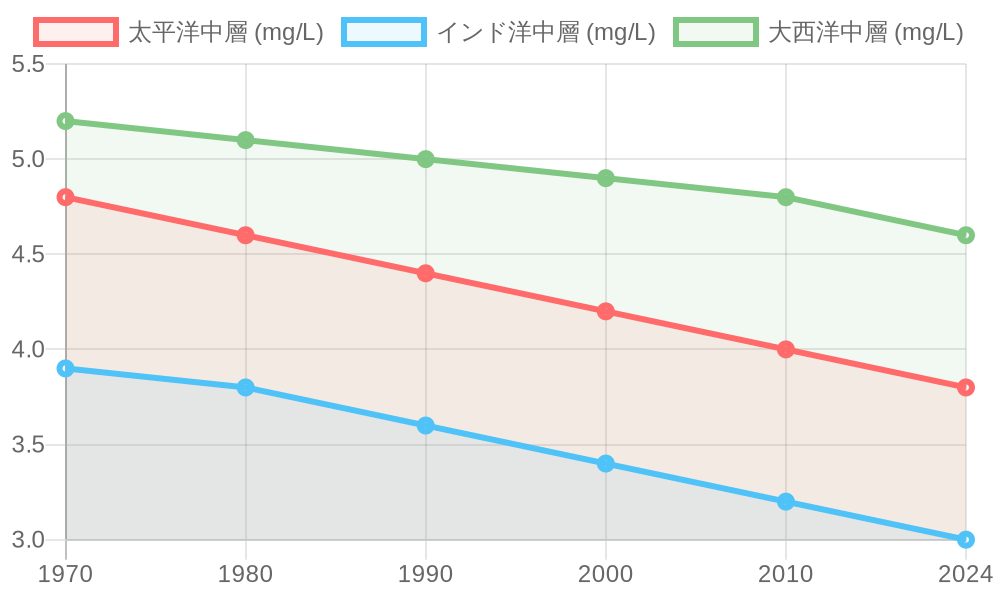
This phenomenon, known as "ocean deoxygenation," is causing the shrinkage of marine habitats and changes in nutrient cycling. In particular, the expansion of oxygen minimum zones (OMZs) is restricting the vertical distribution of fish and squid, raising concerns about impacts on fishery resources.
Regional Climate Change Patterns: Local Impacts of Changing Ocean Currents
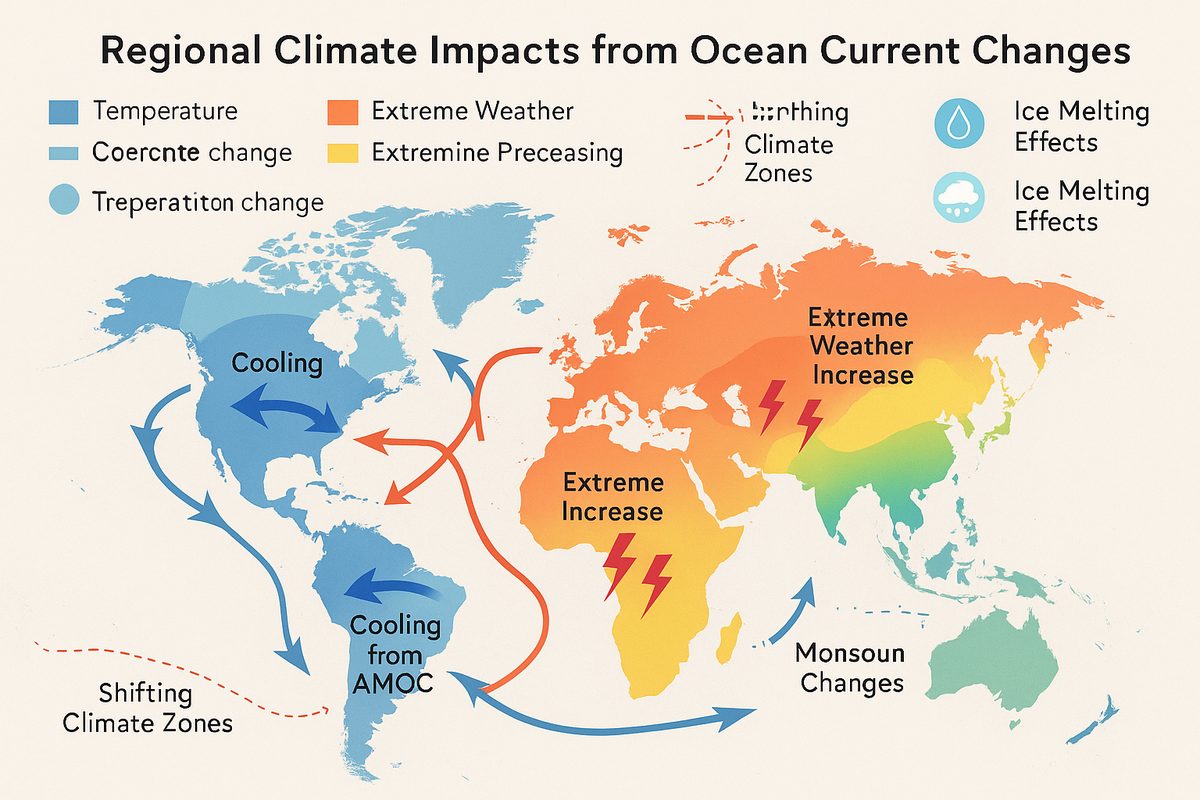
The climate impacts of changing ocean currents vary greatly by region. According to a 2024 report by the World Meteorological Organization (WMO), current changes are causing cooling in some regions and accelerated warming in others, forcing revisions to conventional climate prediction models. In particular, impacts on densely populated areas and agricultural regions pose a direct threat to food security and social infrastructure.
Europe: Cooling Risk from the AMOC
A slowdown of the Atlantic Meridional Overturning Circulation (AMOC) could bring dramatic changes to Europe's climate. Research by the UK Met Office projects that if the AMOC slows to half its current strength, average temperatures in northwestern Europe could drop by 3-5°C, with major shifts in precipitation patterns as well.
Expected Impacts on Europe
- Temperature decline: Winter average temperatures drop by 5°C in Iceland, the UK, and Norway
- Reduced precipitation: Annual precipitation falls by 20-30% in Mediterranean coastal countries
- Agricultural impact: Suitable grain-growing areas shift southward, dealing a blow to the wine industry
- Energy demand: Sharp rise in heating demand and changes in wind power generation efficiency
The East Coast of North America: Rising Extreme Weather
Changes in the Gulf Stream are producing different effects along the East Coast of North America. Analysis by the U.S. National Oceanic and Atmospheric Administration (NOAA) shows that shifts in the Gulf Stream's path are destabilizing sea surface temperature distribution off the U.S. East Coast, altering hurricane formation patterns and intensity.
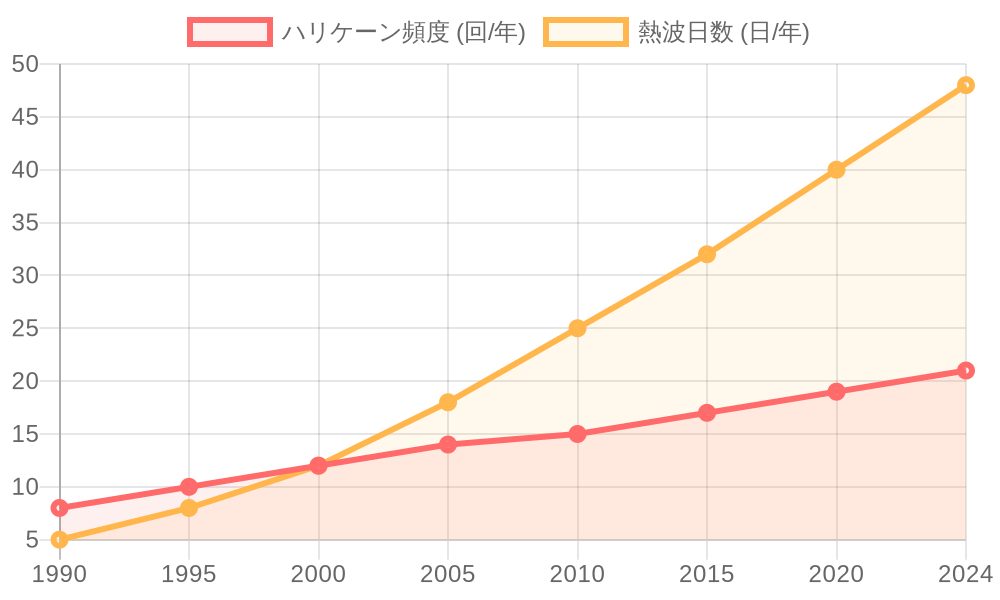
Asia-Pacific: Disruption of the Monsoon System
In the Asia-Pacific region, changing ocean currents are having complex effects on the monsoon system. Long-term analysis by the Japan Meteorological Agency has observed the following changes:
Climate Change in the Asia-Pacific Region (1990-2024 Comparison)
| Region | Summer Avg. Temp. Change (°C) | Precipitation Change (%) | Typhoon Frequency Change | Main Impact |
|---|---|---|---|---|
| Japanese Archipelago | +1.8 | +15 | Southward shift | Extended rainy season |
| Korean Peninsula | +2.1 | +22 | Increased intensity | Frequent torrential rain |
| North China Plain | +1.9 | -12 | Minor impact | Advancing aridification |
| South China region | +1.6 | +8 | Northward trend | Increased flood risk |
| Southeast Asia | +1.4 | +5 | Increased intensity | Frequent heatwaves |
The Southern Hemisphere: Impacts of the Antarctic Circumpolar Current
In the Southern Hemisphere, changes in the Antarctic Circumpolar Current are affecting climate patterns. Research by the Australian Bureau of Meteorology has found that strengthening of the Antarctic Circumpolar Current is altering precipitation patterns in southern Australia, while rising sea surface temperatures have been observed off the west coast of South America.
Future Projection Scenarios: Ocean Current System Changes Through 2100
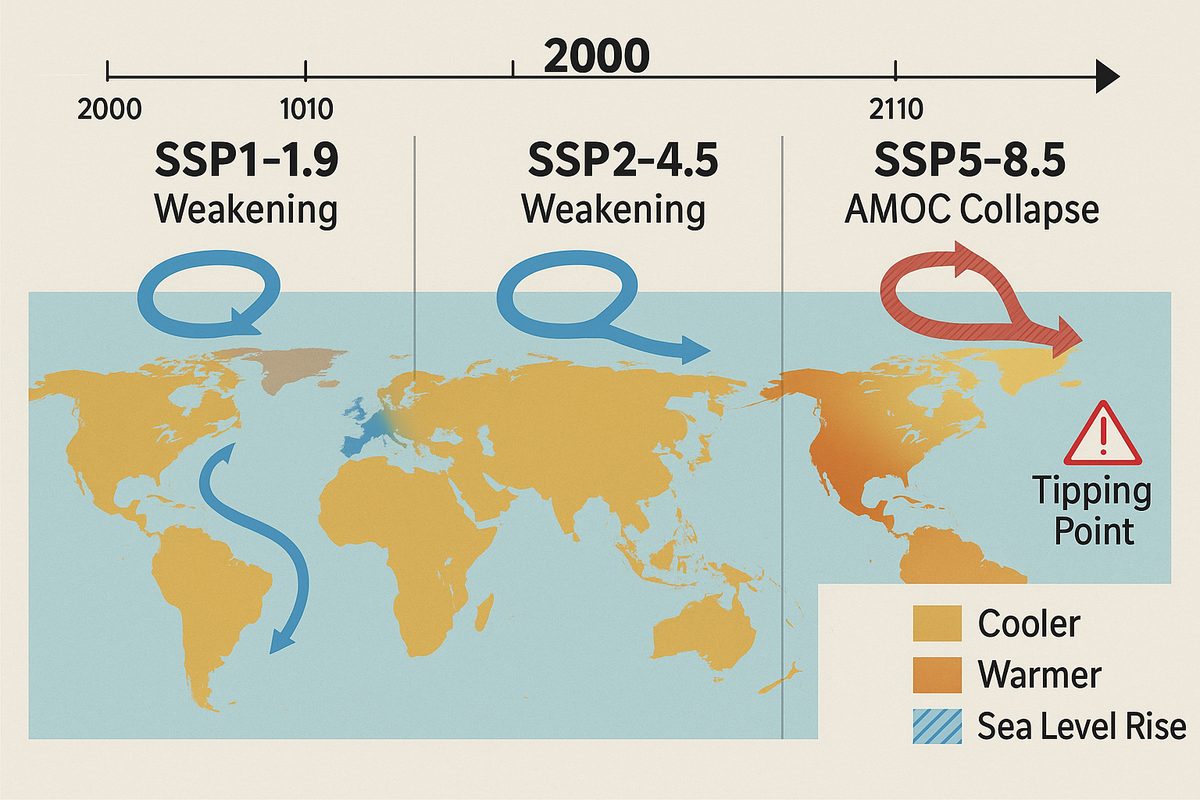
The Intergovernmental Panel on Climate Change (IPCC) Sixth Assessment Report projects changes in the ocean current system through 2100 based on multiple greenhouse gas emissions scenarios. Analysis using the latest Earth System Models (ESMs) shows that under every scenario, the currently observed changes in ocean currents will continue, with some potentially reaching irreversible states.
Projections by Emissions Scenario
The IPCC report presents future projections under five scenarios based on the Shared Socioeconomic Pathways (SSPs). The impact on the ocean current system varies greatly depending on the level of greenhouse gas emissions:
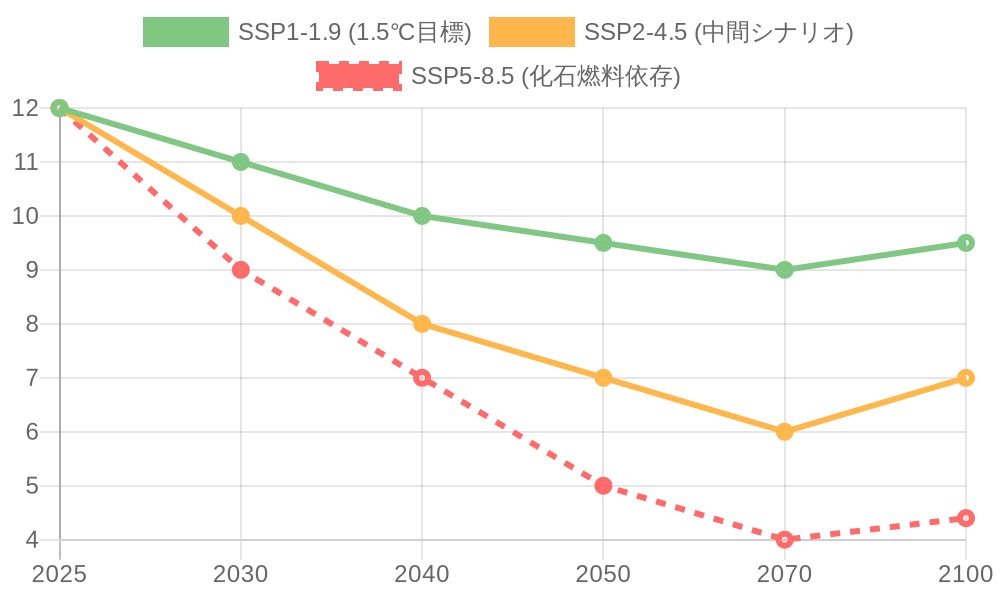
Outlook for Ocean Current Changes in 2100 (by Scenario)
| Scenario | Degree of AMOC Weakening | Global Avg. Temp. Rise (°C)* | Impact on Deep Water Formation | Reversibility of Impact |
|---|---|---|---|---|
| SSP1-1.9 (1.5°C target) |
Weakening (relatively small) | +1.4 | Decrease (limited) | Partially reversible |
| SSP1-2.6 (2°C target) |
Weakening | +1.8 | Decrease | Partially reversible |
| SSP2-4.5 (Intermediate scenario) |
Marked weakening | +2.7 | Marked decrease | Difficult |
| SSP3-7.0 (Regional rivalry) |
Substantial weakening | +3.6 | Substantial decrease | Very difficult |
| SSP5-8.5 (Fossil-fueled development) |
Very substantial weakening | +4.4 | Very substantial decrease | Risk of irreversibility |
*Approximate global average temperature rise for 2081-2100 (IPCC AR6, relative to pre-industrial levels). Impacts on the AMOC and deep water formation are qualitative outlooks. The IPCC AR6 assesses AMOC weakening during the 21st century as "very likely" under every scenario, while judging a sudden collapse before 2100 as unlikely (medium confidence).
The Possibility of Tipping Points
The ocean current system has critical thresholds known as "tipping points," beyond which abrupt and irreversible changes may occur.Boers (2021, Nature Climate Change)reports signs from observational data that the AMOC is losing stability, and notes that continued warming raises the risk of reaching a tipping point.
⚠️ Tipping Points in the Ocean Current System
- AMOC collapse: Abrupt cessation of circulation on a 50-100 year timescale
- West Antarctic ice sheet instability: Changes in Southern Ocean circulation from massive freshwater inflow
- Loss of Arctic sea ice: Fundamental change in thermohaline circulation
- Collapse of the Amazon rainfall system: Indirect impact from changes in Atlantic circulation
Detailed Regional Impact Projections
Future changes in ocean currents are projected to bring different impacts across the world. Serious socioeconomic effects are expected especially in the following regions:
- Northwestern Europe: Relative cooling advances as the AMOC's warming effect diminishes. Shifting agricultural zones and increased heating demand
- East Coast of North America: Accelerating sea level rise and shifting hurricane activity. Increased flood risk for coastal cities
- West Africa: Changing precipitation patterns drive aridification of the Sahel region, posing a serious threat to food security
- South America: Declining rainfall in the Amazon basin and impacts on fishery resources from changes in upwelling off Peru
Adaptation Measures and International Cooperation: Strategies for Responding to Changing Ocean Currents
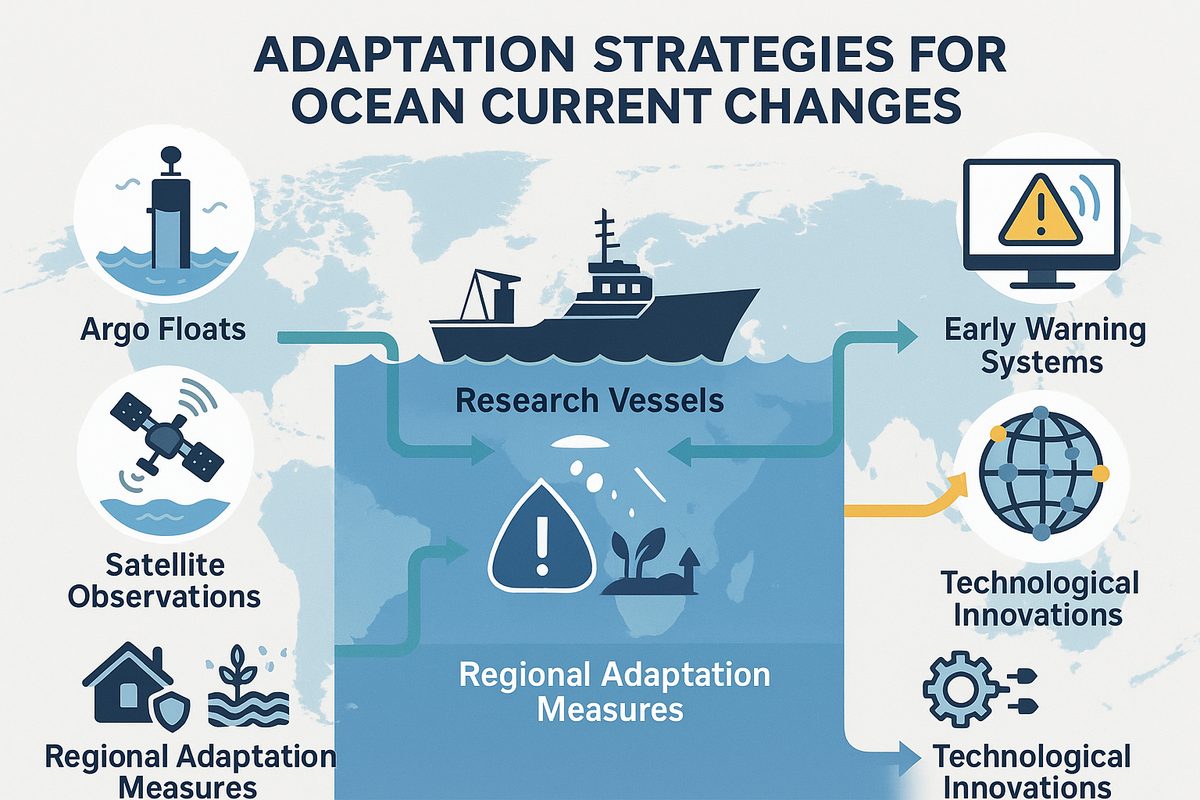
Changes in the ocean current system are a global phenomenon, and responding to their impacts requires international cooperation and science-based adaptation measures. The UNFCCC's 2024 technical report organizes adaptation measures for changing ocean currents around three pillars — "mitigation," "adaptation," and "loss and damage" — and presents concrete action plans.
Strengthening Observation and Monitoring Systems
The first step in responding to changing ocean currents is building an accurate, continuous observation system. The following international observation networks are currently in operation:
Major Ocean Observation Systems
- Argo Float Network: More than 4,000 automated observation floats deployed across the world's oceans
- RAPID-MOCHA Array: A continuous monitoring system for the Atlantic Meridional Overturning Circulation
- TAO/TRITON: An ocean-atmosphere observation network for the tropical Pacific
- Southern Ocean Observing System: A comprehensive observation network for the Southern Ocean
According to a 2024 report by the Global Ocean Observing System (GOOS), maintaining and expanding these observation systems requires an investment of roughly $1.5 billion per year — but compared with the economic losses from climate change (roughly $23 trillion per year), this is shown to be an extremely cost-effective investment.
Development of Early Warning Systems
To minimize the impacts of changing ocean currents, countries are developing early warning systems. The European Centre for Medium-Range Weather Forecasts (ECMWF) has developed a new model system that predicts ocean current changes from seasonal to multi-year timescales, and it is being used to support decision-making in agriculture, fisheries, and the energy sector.
Regional Adaptation Strategies
Because the impacts of changing ocean currents vary greatly by region, adaptation measures tailored to regional characteristics are needed. The adaptation strategies for major regions are shown below:
Regional Adaptation Strategies for Ocean Current Change
| Region | Key Climate Risk | Adaptation Measure | Investment Scale | Implementation Period |
|---|---|---|---|---|
| Northwestern Europe | Cooling and precipitation changes | Crop variety improvement, more efficient heating systems | €50 billion | 2025-2040 |
| U.S. East Coast | Sea level rise, extreme weather | Coastal protection, strengthened evacuation planning | $120 billion | 2025-2050 |
| West Africa | Reduced precipitation, aridification | Water resource management, introduction of drought-tolerant crops | $30 billion | 2025-2035 |
| East Asia | Intensifying typhoons, precipitation variability | Disaster prevention systems, strengthened urban infrastructure | $80 billion | 2025-2040 |
| Small island states | Sea level rise, storm surges | Relocation planning, ecosystem protection | $15 billion | 2025-2030 |
Technological Innovation and R&D
Responding to changing ocean currents requires both new technology development and improvements to existing technologies. Innovative technological development is currently underway in the following fields:
- Ocean energy utilization: Development of renewable energy technologies harnessing ocean currents and wave power
- Artificial upwelling: Recovery of fishery resources through technology that artificially pumps deep water to the surface
- Ocean carbon storage: Development of efficient carbon sequestration technologies using ocean currents
- Seawater desalination: Next-generation desalination technology with improved energy efficiency
Building International Cooperation Frameworks
Changing ocean currents are a phenomenon that crosses borders, and international cooperation is essential for an effective response. TheUN Global Goal on Adaptationsets out the following targets to be achieved by 2030:
🎯 2030 Adaptation Targets
- Full operational launch of a global ocean observing system
- Worldwide deployment of climate risk early warning systems
- Securing $100 billion per year in adaptation finance for vulnerable regions
- Doubling international investment in scientific research on ocean current change
Conclusion: A Path to a Sustainable Future in the Age of Changing Ocean Currents
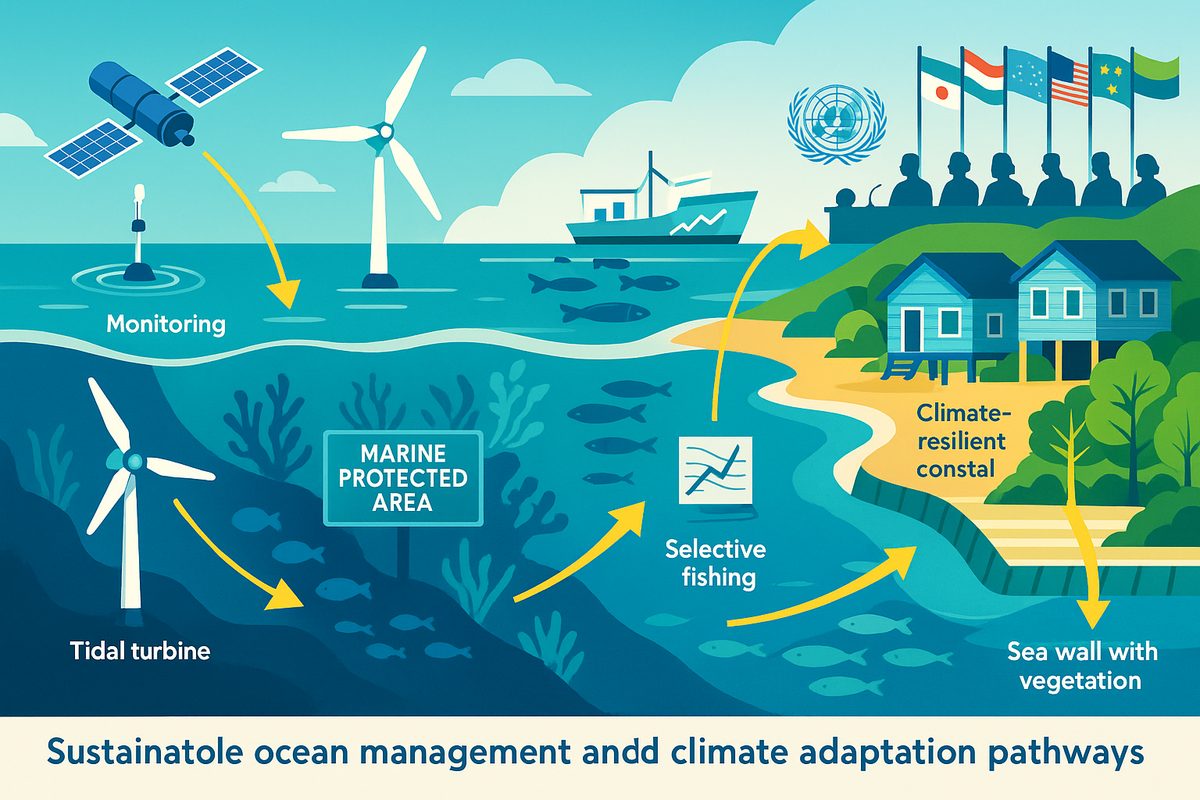
Changes in the ocean current system driven by rising sea temperatures are one of the greatest environmental challenges of the 21st century. As detailed in this article, this change has the potential to fundamentally reshape climate patterns worldwide and is having a serious impact on the sustainability of human society. However, deepening scientific understanding and advancing international cooperation are beginning to reveal a path forward on this challenge.
The Importance of Recognizing the Current Situation
First and foremost, it is important to recognize that changing ocean currents are an ongoing reality. Observational research estimates that the Atlantic Meridional Overturning Circulation has slowed by about 15% since the mid-20th century, and weakening convection has also been reported in major deep water formation regions such as the North Atlantic. These changes tend to progress in a self-reinforcing manner once they begin, making early action essential.
Continuing Scientific Monitoring
Taking effective countermeasures requires continuous monitoring of the ocean current system and deepening scientific understanding. Maintaining and expanding the currently operating Argo Float network and other observation systems represents an extremely cost-effective investment in climate change countermeasures.
Key Action Items Going Forward
- Strengthen observation systems: Maintain and expand the global ocean observation network, and drive technological innovation
- Improve forecasting capability: Improve the accuracy of Earth System Models and develop seasonal forecasting technology
- Implement adaptation measures: Develop and implement concrete adaptation plans tailored to regional characteristics
- Advance international cooperation: Promote technology transfer, financial support, and knowledge sharing
- Raise public awareness: Education and outreach on the risks of changing ocean currents
From Local to Global Action
Responding to changing ocean currents requires an approach that combines regional-level adaptation measures with global-scale mitigation measures. Each country and region must accurately assess its own climate risks and formulate adaptation plans accordingly, while continuing efforts to curb the progression of ocean current change through reductions in greenhouse gas emissions.
Expectations for Technological Innovation
Development of new technologies to address changing ocean currents is progressing, including the use of ocean energy, artificial upwelling technology, and high-efficiency seawater desalination. These technologies have the potential to turn risk into opportunity and point the way toward sustainable development.
Responsibility to Future Generations
The ocean current system is a vital system that has stabilized Earth's climate for thousands of years. Minimizing current changes and restoring conditions as close as possible to their original state is an important responsibility that the present generation owes to the next. Achieving this requires swift, effective action grounded in scientific knowledge.
The age of changing ocean currents has already begun. But with an appropriate response, it is possible to overcome this change and build a more sustainable, resilient society. It is important to keep pursuing efforts that integrate science, technology, policy, and the actions of every individual citizen, aiming for a civilization that develops in harmony with the ocean — the largest system on Earth.
References
- IPCC (2021). Climate Change 2021: The Physical Science Basis. Sixth Assessment Report.
- Caesar, L. et al. (2018). Observed fingerprint of a weakening Atlantic Ocean overturning circulation. Nature, 556, 191-196.
- Caesar, L. et al. (2021). Current Atlantic Meridional Overturning Circulation weakest in last millennium. Nature Geoscience, 14, 118-120.
- Rahmstorf, S. et al. (2015). Exceptional twentieth-century slowdown in Atlantic Ocean overturning circulation. Nature Climate Change, 5, 475-480.
- Schmidtko, S., Stramma, L. & Visbeck, M. (2017). Decline in global oceanic oxygen content during the past five decades. Nature, 542, 335-339.
- Boers, N. (2021). Observation-based early-warning signals for a collapse of the Atlantic Meridional Overturning Circulation. Nature Climate Change, 11, 680-688.
- UNFCCC (2024). Global Goal on Adaptation: Technical Progress Report.
- Japan Agency for Marine-Earth Science and Technology (JAMSTEC) official website: Ocean and climate change research information
- Japan Meteorological Agency, "Ocean Health Check" (comprehensive assessment of ocean conditions)
- Global Ocean Observing System (GOOS) official website
- World Meteorological Organization (WMO), "State of the Global Climate" report