⚡ In short
The world's largest amphibian, the Japanese giant salamander, is being pushed toward extinction as hybridization with an invasive species leaves the native population "effectively extinct." We trace the 2024 legal change and the front lines of habitat conservation.
Holding its breath beneath a riverbed stone, a giant amphibian over a meter long — the Japanese giant salamander — is a "living fossil" that has barely changed shape since the age of dinosaurs. Designated a national Special Natural Monument in 1952, this species endemic to Japan has drawn attention from researchers and zoos around the world.
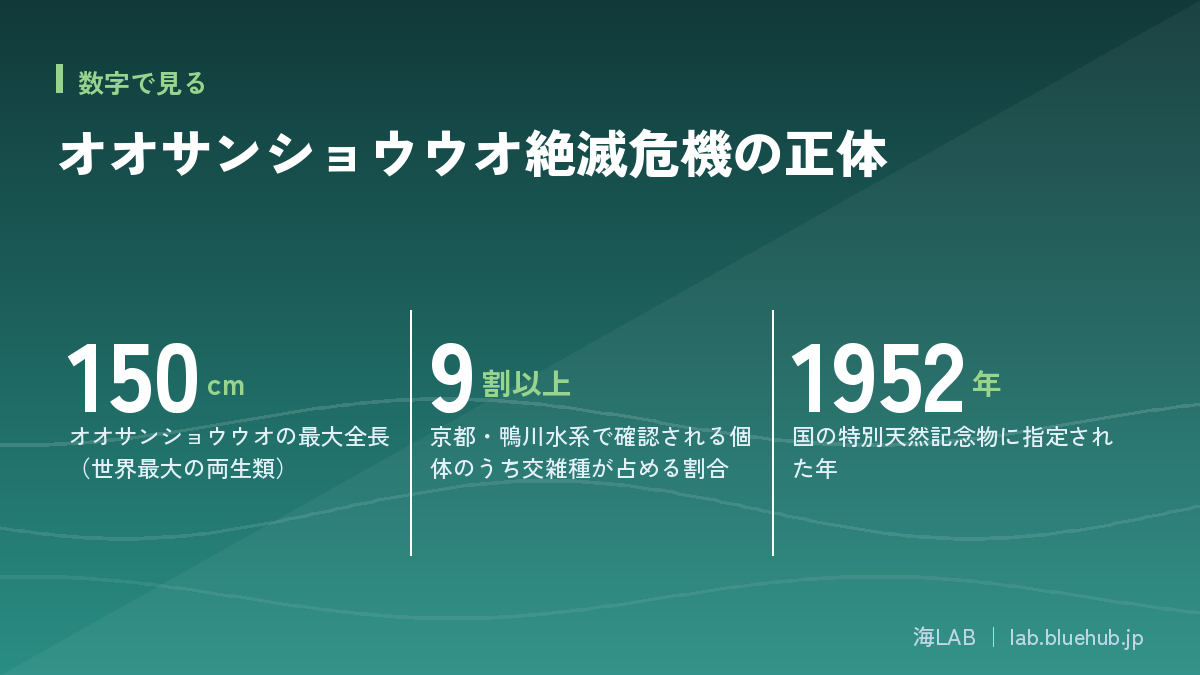
Yet today, this living fossil faces a quiet crisis. The closely related Chinese giant salamander, brought in as pets or for food, has gone feral in rivers across the country and repeatedly hybridizes with the native species. Surveys by Kyoto Prefecture and Kyoto University found that over 90% of individuals found in the Kamo River system are hybrids — reports have gone so far as to describe the native population as "effectively extinct."
Habitat fragmentation from weirs and dams, and the loss of nesting burrows to river channel work, add further pressure. In July 2024, hybrid individuals and the invasive species were designated as "Invasive Alien Species" under Japan's Invasive Alien Species Act, and the government began full-scale eradication efforts. This article organizes the salamander's biology, the reality of the hybridization crisis, the details of the 2024 legal change, and half a century of conservation work, based on primary sources.
What you'll learn in this article
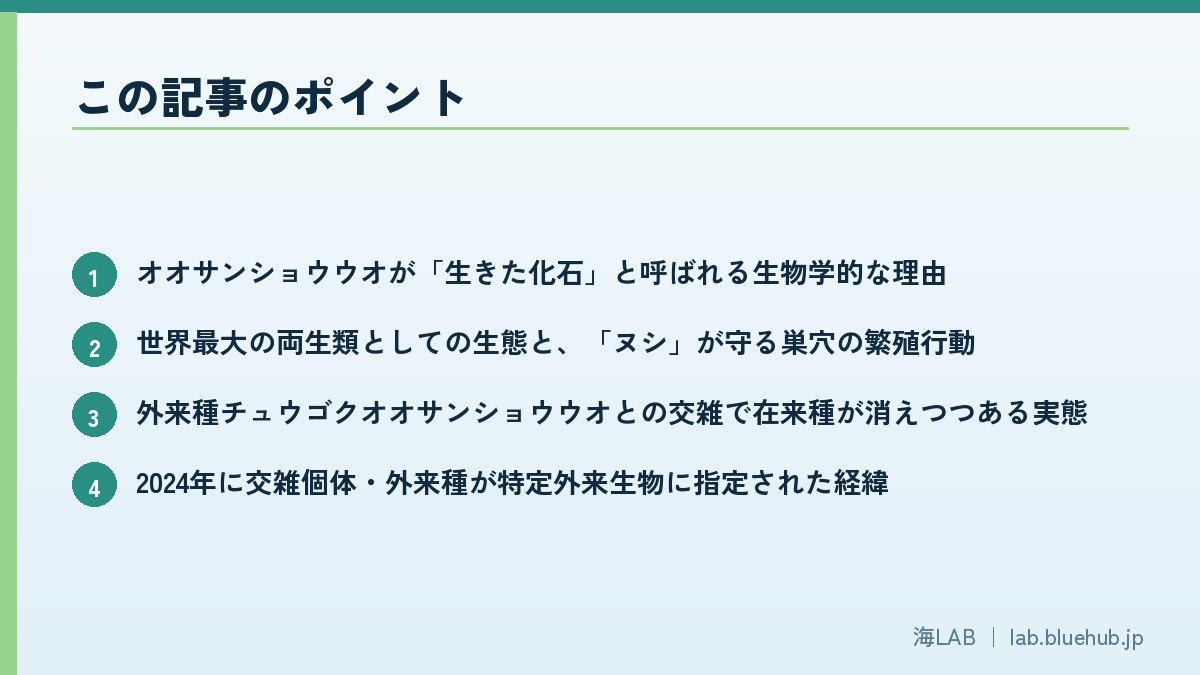
- The biological reason the Japanese giant salamander is called a "living fossil"
- Its ecology as the world's largest amphibian, and the nest-guarding behavior of the "master" male
- The reality of hybridization with the invasive Chinese giant salamander that is erasing the native population
- How hybrid individuals and the invasive species came to be designated Invasive Alien Species in 2024
- How weirs and dams fragment habitat, and efforts to restore upstream migration routes
- Half a century of conservation by zoos and local communities, and what we can do
The Japanese giant salamander: the world's largest amphibian
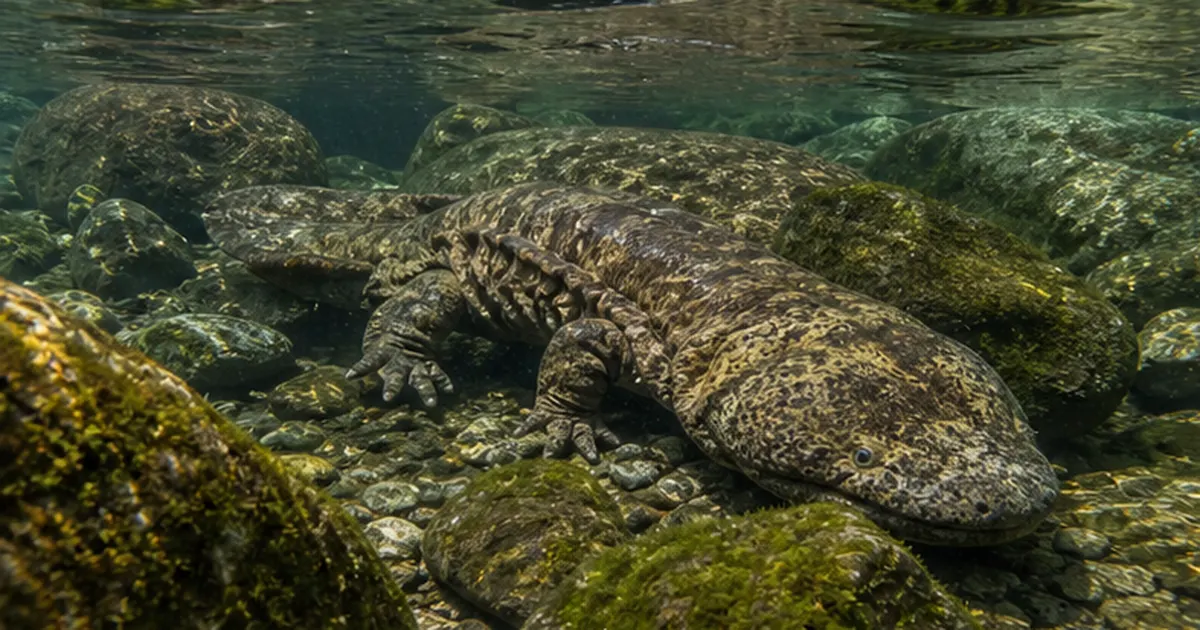
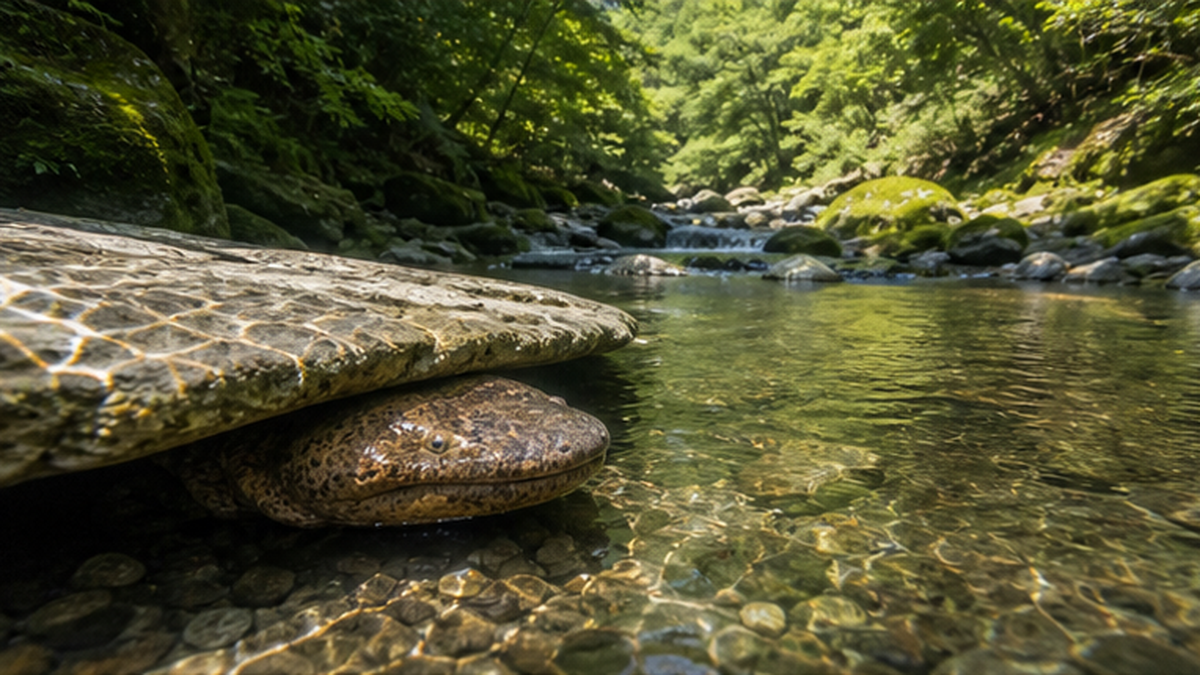
The Japanese giant salamander (Andrias japonicus) is an amphibian in the family Cryptobranchidae, endemic to Japan. Adults typically reach 50–70cm, though some individuals have been recorded at up to 150cm. Like frogs and newts, it is an amphibian, but unlike most, it remains fully aquatic for its entire life even after the larval stage. Its skin is slimy and covered in fold-like lateral lines that sense vibrations in the water. Adults can weigh 20–25kg, making it exceptionally large among amphibians as a whole.
A fully aquatic giant reaching 150cm in length
Because it relies on skin respiration in addition to lungs, it can only survive in cold streams rich in oxygen. It mainly inhabits upper reaches of rivers at elevations of roughly 400–600m, distributed mostly in western Japan — Honshu west of Gifu Prefecture, Shikoku, and parts of Kyushu. It is nocturnal, hiding by day in burrows it digs into the riverbank or in gaps between rocks, and becoming active at night in search of prey. Its skin is dotted with wart-like bumps that secrete mucus, helping protect it from drying out and from predators.
A nocturnal hunter living in streams at 400–600m elevation
Its eyesight is poorly developed, but it excels at detecting faint vibrations and chemical cues in the water, lying in wait to swallow fish, freshwater crabs, and aquatic insects whole. There are also reports of it preying on snakes and water shrews, placing it near the top of the stream food web. It generally moves slowly, but the instant prey comes within range, it snaps its large mouth open and sucks it in.
- Distribution: Honshu (west of Gifu Prefecture), Shikoku, parts of Kyushu
- Habitat: cool upper-stream reaches at roughly 400–600m elevation
- Diet: fish, freshwater crabs, aquatic insects, occasionally snakes and water shrews
- Activity: nocturnal (hides in bank burrows or under rocks by day)
The same streams are also home to the kajika frog, freshwater crabs, fish such as char and red-spotted masu trout, and birds like the brown dipper — and among them, the Japanese giant salamander sits near the top as an apex predator with almost no natural enemies. This food web only holds together when the upstream ecosystem remains connected, which is why the salamander's presence is also seen as a symbolic indicator of how rich the natural environment of an entire watershed is.
1952: Japan's first animal Special Natural Monument
The Japanese giant salamander was designated a Natural Monument in 1951, and a Special Natural Monument the following year, in 1952. Special Natural Monument is the strictest protection category under the Act on Protection of Cultural Properties, and capturing, transferring, or keeping the species without permission is prohibited in principle. In 1927, the Wara River basin in what is now Gunjo City, Gifu Prefecture, was designated a national Natural Monument as a "Japanese giant salamander habitat" — protection has advanced not only for the species itself but also for entire habitats. Prefectures where it lives, including Shiga, Kyoto, Hiroshima, and Okayama, continue to manage it under their own natural monument systems or Red Data Books.
More than 70 years after that designation, this framework remains unchanged. But as the hybridization problem and habitat fragmentation discussed below have progressed, a troubling gap has come into sharper focus in recent years: a species that is supposed to be strictly protected is, in fact, quietly declining.
Why it's called a "living fossil"
The Japanese giant salamander is called a "living fossil" because its lineage has persisted almost unchanged for an extremely long time. Ancestral forms of the family Cryptobranchidae already closely resembled living species in fossils from tens of millions of years ago, making it a rare lineage that preserves, to this day, what waterside life looked like when dinosaurs still roamed the earth.
Close relatives survive only in China and North America
There are only three living species in the family Cryptobranchidae worldwide: Japan's giant salamander, China's Chinese giant salamander (Andrias davidianus), and North America's hellbender (Cryptobranchus alleganiensis). All three depend on cool streams and share a common vulnerability to development and water quality decline. All three are also assessed as threatened on the IUCN Red List — the very antiquity that makes them "living fossils" goes hand in hand with a poor capacity to adapt to environmental change.
Ironically, the hybridization problem at the heart of this article is occurring between exactly two of these three species: Japan's giant salamander and China's Chinese giant salamander. Close relatives that, by rights, should never have met — separated as they were by sea and continent — have been brought into the same rivers by human hands, eroding a reproductive boundary that had held for millions of years.
Its scientific value as a species endemic to Japan
Japan's giant salamander has evolved as a genetically distinct lineage even among these close relatives, and has long been valued as a clue to understanding how the Japanese archipelago's freshwater ecosystems came to be. That is precisely why hybridization with the invasive species, discussed later, is treated as a serious problem that could erase the very integrity of the species itself.
An ancient physiology built around skin respiration
While most living amphibians breathe through gills as larvae and switch to lungs as adults, the Japanese giant salamander remains highly dependent on skin respiration even as an adult. This creates a constraint: it can only survive in cold, flowing water with high oxygen concentration, and is thought to be one reason for its low tolerance to rising water temperatures and declining water quality. This delicate physiology, honed by an ancient lineage, shows up as a vulnerability to today's changing river environments.
What it shares with other "living fossils"
The term "living fossil" is also applied to creatures that have survived across long geological eras in nearly the same form, such as the coelacanth in the sea or the horseshoe crab, which still molts its shell today. What they share is that their habitats remained stable long enough for their forms to persist unchanged — but once the environment changes abruptly, they have little room to adapt and tend to decline rapidly. The Japanese giant salamander is no exception: an ecology refined over millions of years is now being shaken by just a few decades of development and invasive species.
The strange world of reproduction: the "master" that guards the nest
The reproductive behavior of the Japanese giant salamander is known as one of the more unusual patterns even among amphibians. Around June or July, large males dig burrows into the riverbank to create nesting dens — a "chamber" structure that widens inside the burrow. Males fight fiercely over these dens, and the winner claims ownership.
June to September: males dig nest burrows and welcome females
From late August through September, the male that holds the den lures visiting females deep inside, where each lays hundreds of eggs in a string. Multiple females sometimes lay in the same den, and it's not unusual for a single den to accumulate several hundred to nearly a thousand eggs. Spawning tends to happen at night, and records have accumulated over the years through local observation events and researchers' fixed-point surveys.
The large "master" male who guards eggs and larvae
After spawning, the male that holds the den stays with the eggs for the tens of days it takes them to hatch, eating almost nothing while continuing to care for them — swaying its body to circulate fresh water and removing eggs that have grown mold. Locally, this individual is called the "nushi," or "master," and it is fiercely territorial, sometimes biting any other individual that intrudes. This is more than just folklore: researchers have actually observed the same individual guarding the same den across multiple years.
Larvae with no fledging, and a long road to maturity
Hatched larvae emerge with gills, swimming out looking like small fish, but it takes several years to become adults, and sexual maturity is thought to take five years or more. In captivity, some individuals have lived past 100 years, and its lifespan is said to rival that of a human — a remarkably long-lived creature. This life history of slow growth and a long path to sexual maturity means that once a population declines, recovery can take a very long time — one of the reasons conservation is so difficult.
Folklore about the "nushi" also survives in local legends and festival traditions across the country. The idea that a great salamander master dwells in the river is not mere superstition but is thought to reflect people's actual experience of watching a male guard the same den for years at a time. This overlap between the salamander's real ecology and its cultural image as a "nushi" is one reason the species has long been treated as something special.
The Japanese giant salamander's breeding cycle
- June–July: males dig nesting burrows into the riverbank
- Late August–September: females visit the den and lay hundreds of eggs
- After spawning until hatching: the "master" male eats little while guarding the eggs
- After hatching: larvae emerge with gills and swim off, taking years to become adults
- 5+ years: sexual maturity is reached, allowing participation in breeding
IUCN status and declining populations
On the IUCN Red List, the Japanese giant salamander was classified as Near Threatened (NT) as of 2014, but was upgraded to the more serious Vulnerable (VU) category in a 2021 reassessment (published in 2022). Populations are assessed as declining in many areas.
2022: upgraded from Near Threatened to Vulnerable (VU)
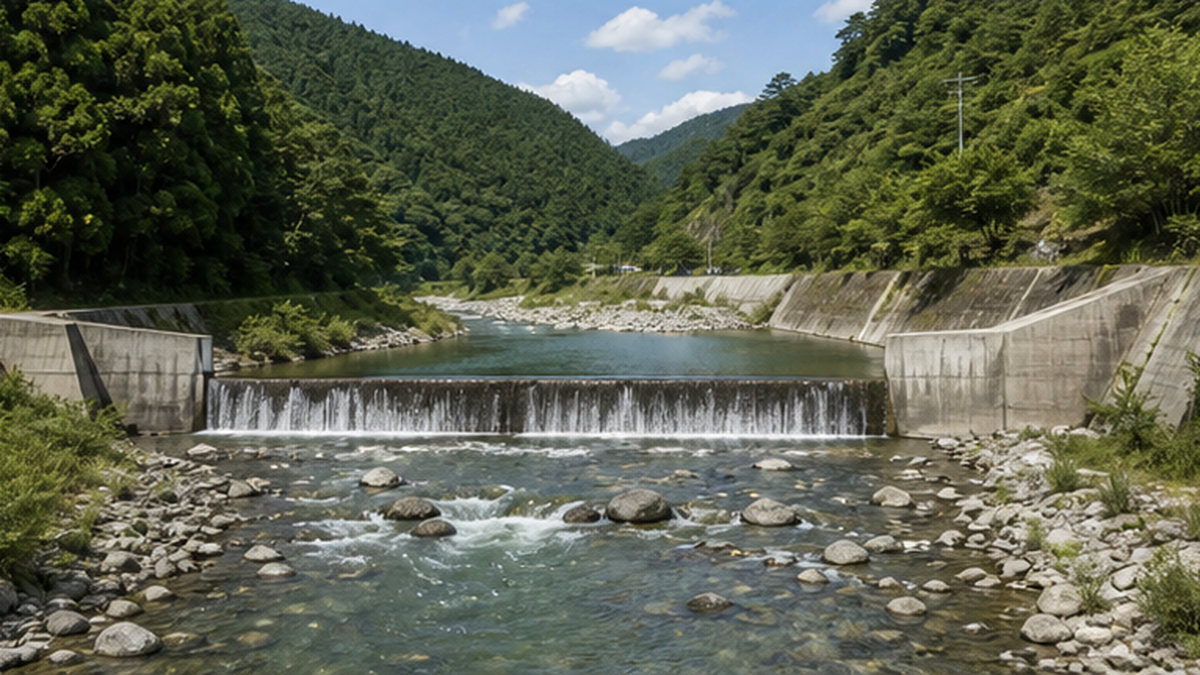
The main cause cited for the population decline is the physical destruction and fragmentation of habitat caused by river channel works and the construction of dams and weirs. Concrete bank protection removes the earthen banks needed for digging dens, while weirs act as walls separating upstream and downstream, blocking individuals' movement. In addition, riverbed changes from channel straightening and gravel extraction are also thought to reduce the rocky crevices used as hiding places and the shallows that serve as larval habitat.
Habitat fragmentation caused by weirs and bank protection works
The Japanese giant salamander normally migrates upstream to spawning sites during the breeding season, but weirs with large drops become insurmountable barriers, isolating populations upstream and downstream — a risk that has also been flagged for causing loss of genetic diversity. In Shiga Prefecture and elsewhere, designs that take the salamander's migration routes into account are beginning to be considered when carrying out erosion-control projects. Much as fish need "fish ladders," recognition is gradually growing of the need for structures that help large amphibians move as well.
Expanding protection designations at the prefectural level
Beyond the national Special Natural Monument designation, many municipalities where the species lives have listed it in their own Red Data Books and advanced environmental education and monitoring in its habitats. In multiple western Japan municipalities, including Maniwa City in Okayama Prefecture and areas of Hiroshima Prefecture, community-wide habitat conservation has continued for many years. Some areas incorporate observation of local salamander populations into school education, advancing both species conservation and residents' awareness at the same time.
An "indicator species" sensitive to water quality and temperature
Because the Japanese giant salamander can only survive in clean streams with high oxygen levels and low water temperatures, its presence is also watched as an indicator of the health of the river environment itself. Water quality decline from domestic and agricultural wastewater, and summer water temperature rises linked to drought and climate change, can gradually burden populations through pathways quite separate from direct capture or removal. The fact that habitat fragmentation from weirs and bank protection, and changes in water quality and temperature, are advancing simultaneously is part of what makes conserving this species so difficult.
Population decline that's hard to notice because it's nocturnal
Because the Japanese giant salamander is nocturnal and spends long periods submerged, it has few chances to be seen by people in the first place, making it inherently difficult to accurately track changes in its population. Declining trends only become visible through the accumulation of fixed-point surveys and mark-recapture studies by researchers, which creates a time lag: by the time damage becomes apparent, the impact on the population has often already progressed — a challenge that has also been pointed out as a concern.
The reality of hybridization: the invasion of the Chinese giant salamander
What is now considered the most serious threat to conservation of the Japanese giant salamander is hybridization with its closely related invasive counterpart, the Chinese giant salamander. Native to China, this species is believed to have become established in rivers across Japan after individuals brought in for food farming or as ornamental animals escaped from breeding facilities or were released.
The 1960s–70s: how it was brought in as food
Farming of the Chinese giant salamander began in China in the 1960s, and around the same time through the 1970s, individuals were imported into Japan for food and medicinal purposes. At the time there were no particular regulations, so the imports were legal, but some individuals are believed to have escaped from farms into rivers, or been released once no longer wanted, establishing populations in the wild. More than half a century after those imports, this population now repeatedly hybridizes with the native species across multiple river systems.
An invasive species gone feral from pet and food farming origins
According to Ministry of the Environment materials, the Chinese giant salamander and its hybrids are more active and aggressive than the native species, tending to occupy prime breeding dens and drive out native individuals. Because they look extremely similar, even experts often find it difficult to distinguish them without genetic testing. While there are slight tendencies in coloring and spot patterns, individual variation is large, and appearance alone cannot be used to make a definitive judgment.
Native and hybrid individuals that are hard to tell apart by sight
A research group including Kyoto Prefecture, Kyoto City, and Kyoto University built a statistical model based on data from 134 surveys conducted in the Kamo River system between 2005 and 2021, analyzing population trends across four groups: native individuals, invasive individuals, first-generation hybrids, and second-generation-or-later hybrids. The results showed that over 90% of confirmed individuals were hybrids, revealing that only a very small number of pure native individuals remain.
The shock of "near extinction" of the native species in the Kamo River system
Researchers point out that generational turnover is already progressing even among hybrid individuals, warning that if left unaddressed, the genetic material of the pure native population could be lost from the region entirely. Similar hybridization has been reported not only in the Kamo River but across multiple river systems, with rivers running through urban areas appearing to carry a higher risk of invasive species establishment and spread.
Why hybridization amounts to a kind of extinction
Because individuals born from hybridization are alive, the Japanese giant salamander's presence doesn't simply vanish from a river. But at the genetic level, the native lineage that evolved uniquely across the Japanese archipelago over millions of years is gradually replaced by invasive genes with each generation. Even if the form looks the same, the unit that carries this evolutionary history — "Japan's giant salamander" — is itself being lost. This is why hybridization is considered a more serious problem than a simple decline in numbers.
Over 90% of confirmed individuals are hybrids, and the native species has effectively all but vanished from the Kamo River.
— Survey of the Kamo River system by Kyoto Prefecture, Kyoto City, Kyoto University and others (analysis of data from 134 surveys, 2005–2021)
| Category | Characteristics | Legal treatment (from July 2024) |
|---|---|---|
| Native Japanese giant salamander | Species endemic to Japan. Special Natural Monument | Protected. Capture and transfer prohibited in principle |
| Chinese giant salamander | Native to China. Active and aggressive | Designated Invasive Alien Species (keeping, import etc. regulated) |
| Hybrid individuals (first generation onward) | Hard to distinguish by appearance; genetic testing required | Designated Invasive Alien Species |
The 2024 legal change: the decision to designate it an Invasive Alien Species
In response to the deepening hybridization crisis, a Ministry of the Environment expert panel concluded in January 2024 that the Chinese giant salamander and its hybrids should be designated as "Invasive Alien Species" under the Invasive Alien Species Act. Following this, on July 1 of that year, hybrid individuals (including their descendants) and the invasive species were formally designated as Invasive Alien Species, applying only to living specimens.
How hybrids and the invasive species came to be designated
Once designated an Invasive Alien Species, keeping, importing, transferring, or releasing an individual into the wild without permission is prohibited by law. At the same time, the native Japanese giant salamander itself remains strictly protected as a Special Natural Monument — creating a two-tier system in which "invasive and hybrid individuals are to be eradicated, while native individuals are to be protected." Having both "individuals to be protected" and "individuals to be removed" within the same genus is an unusual framework even by the standards of invasive species policy.
The difficulty of telling native and invasive individuals apart in the field
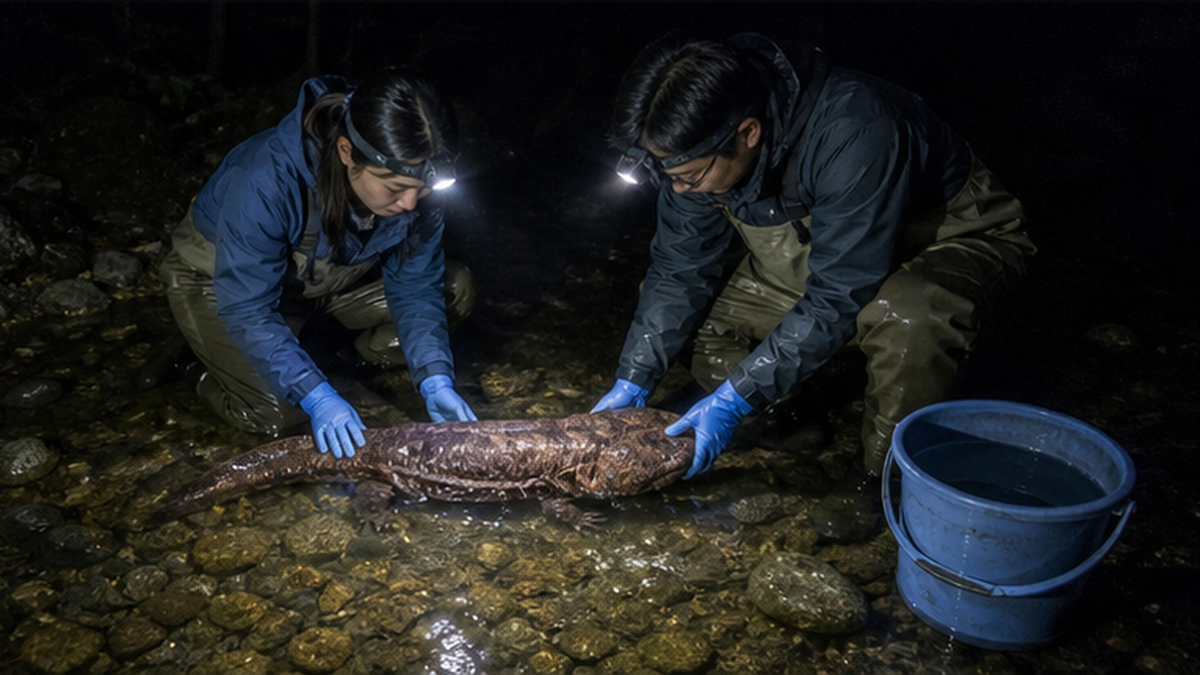
In practice, however, distinguishing a native individual from a hybrid by appearance alone is extremely difficult on the ground. As a result, many municipalities and research institutions now take DNA samples from captured individuals, determine their lineage through genetic testing, and then sort them accordingly — isolating or displaying hybrids while returning native individuals to their original rivers. Because a decision must wait on test results for each individual, it typically takes some time from capture to determination and eventual release.
It's also worth noting that the designation applies only to "living specimens." Details of the system, such as how to handle specimens or individuals already in captivity, still have points that need to be worked out, and expert panels and municipalities are still in the process of sharing operational challenges as they develop the system further. Passing a law doesn't resolve the problem all at once — the real work is the continuous operation that follows.
The painstaking work of genetic testing
This determination work takes time and money, and in areas where hybridization has already progressed far, the very question of "where to draw the line on what still counts as native" is becoming harder to answer. Even now that the system is in place, painstaking survey work continues in the field. If the scope of eradication is too broad, there's a risk of mistakenly disposing of rare native individuals; if too cautious, the spread of hybridization can't be stopped. Striking this balance is a shared struggle among those responsible.
The real-world challenge of staffing and budget for eradication
Designation as an Invasive Alien Species is only the first institutional step. Actually capturing individuals, running genetic tests, and carrying out isolation, display, or disposal requires sustained staffing and budget. Because rivers span wide areas, it's far from easy for a limited survey team to cover an entire habitat range, and various regions are exploring ways to build cooperative systems among municipalities, research institutions, and citizen volunteers.
On the front lines of conservation: zoos and local communities
Conservation of the Japanese giant salamander has been sustained not only by government action but also by the long-running efforts of zoos and local communities. Hiroshima City Asa Zoo has worked on surveying and keeping the species for more than half a century, even before the zoo opened in 1971, and in 1979 became the first zoo in Japan to succeed in captive breeding.
Half a century of captive breeding at Hiroshima City Asa Zoo
Drawing on knowledge gained from field surveys, the zoo recreated the structure of the multi-male, multi-female spawning dens seen during the breeding season within its captive environment, and has gone on to succeed in breeding between individuals born in captivity. This research has been highly regarded both in Japan and internationally, earning an award from the Japanese Association of Zoos and Aquariums, and stands as a model case of captive conservation. The zoo also manages pedigree registration for the species, continuing efforts to maintain the population while preserving genetic diversity.
Restoring migration routes and weir countermeasures
In habitat areas, local residents have taken the lead in restoring upstream migration routes, installing artificial dens, and setting up observation huts, sustaining activities to maintain an environment suited for breeding. On the administrative side too, there is a growing trend toward considering the salamander's migration routes when carrying out erosion-control and flood-management projects. Design methods that balance flood control with ecosystem conservation are not yet an established standard — rather, they remain a stage where case studies are gradually accumulating from region to region.
Much of this activity has begun not as work commissioned by the government but as voluntary efforts by people who deal with the river on a daily basis — local conservation societies, nature protection groups, fishery cooperatives, and others. Patrolling swollen rivers during the rainy season to check on den conditions, or asking those involved to avoid construction during spawning season — these steady, unglamorous efforts have filled in gaps that laws and budgets alone cannot cover.
Coexisting with local culture: the "Hanzaki Daimyojin" shrine in Maniwa, Okayama
Maniwa City in Okayama Prefecture (including the former town of Yubara) is one of the salamander's representative habitats, where locals have long affectionately called it "hanzaki," and there is even a shrine, Hanzaki Daimyojin, dedicated to it. This history of valuing the creature through faith and local culture also forms a foundation for conservation activities. Cultural ties like these give rise to a kind of ongoing, community-rooted watchfulness that legal regulation or scientific conservation plans alone rarely produce.
The living salamanders on display at the "Hanzaki Center"
Near Yubara Onsen sits the Maniwa City Japanese Giant Salamander Conservation Center — commonly known as the Hanzaki Center — which opened in 1971 and lets visitors observe local Special Natural Monument salamanders up close, free of charge. Multiple individuals, from adults over a meter long down to larvae, are on display, alongside exhibits on the "Hanzaki legend" and the festival float used in the Hanzaki Festival — serving as a window into both the biology of the species and the local culture surrounding it. Facilities like this also play a role in expanding the base of conservation support by connecting tourism with environmental education.
If you spot a Japanese giant salamander
- Don't capture or take it home (both native and invasive individuals are legally regulated)
- Contact your local government or a museum/zoo with a photo and sighting details
- Don't throw stones or trash into the river, and don't disturb banks that could serve as dens
What we can do
The crisis facing the Japanese giant salamander is not unrelated to our own daily lives. Just as the release of a pet invasive amphibian into the wild was the starting point of the hybridization problem, the casual decision to start keeping an animal — or to release it into a river once it can no longer be cared for — can become the trigger that threatens a lineage that has persisted for tens of millions of years.
Don't keep it as a pet — don't let it escape, don't release it
Whether classified as a Special Natural Monument or an Invasive Alien Species, keeping any member of the genus Andrias at home without permission, or releasing one into the wild, is prohibited by law. Even those who already keep one should consult with a local government or specialist institution to confirm proper management or transfer options. It's worth remembering that the very idea of "just returning it to the river if I can't keep it anymore" is what set off this hybridization problem in the first place.
This isn't unique to the Japanese giant salamander — it's a principle that applies to any creature, from invasive turtles and crayfish to ornamental fish. Before taking on a pet, confirming whether you can responsibly care for it to the end, and whether there's a transfer option to fall back on if something goes wrong, is the surest way to prevent future feral populations and hybridization.
Take an interest in river environments and local information
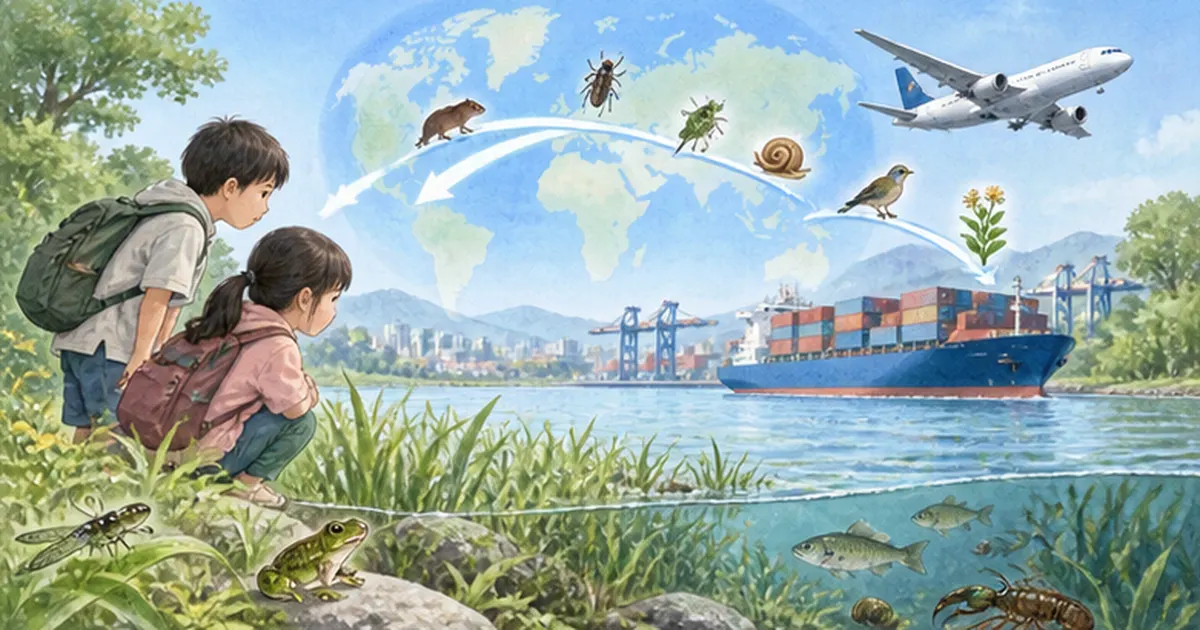
Even in urban rivers lined with concrete banks, preserving or restoring natural terrain along the water's edge helps protect habitat for large amphibians like the Japanese giant salamander — much as the ecosystem of rice paddies supports the creatures of tidal flats, or the habitat of the medaka, a familiar freshwater fish, depends on similar conditions. Taking part in survey reports or observation events shared by local museums and zoos is also a good first step toward understanding the current situation. The pattern of introduced species reshaping ecosystems is also shared with the problem of invasive marine species, underscoring the need for a "don't bring it in, don't let it escape" mindset that spans both rivers and the sea.
If you happen to visit a mountain river while traveling or returning to your hometown, stopping by a conservation and display facility like the Hanzaki Center to observe a living salamander is a good option. Seeing the real thing and feeling the weight behind the phrase "Special Natural Monument" offers an understanding that news coverage of hybridization and legal changes alone cannot provide. As places where children can learn alongside adults, such facilities also play a valuable role in environmental education.
Passing this "living fossil" on to the next generation
A lineage with a history spanning nearly 30 million years should not be lost to changes brought about by just a few decades of human activity. Building up what each of us can do — through legal systems, research institutions, zoos, and local communities alike — is the only way to carry this living fossil into the future. Rivers where the Japanese giant salamander can live safely are also often rich environments for fish, aquatic insects, birds, and many other creatures. Efforts to protect a single symbolic species end up lifting biodiversity across the entire watershed as a result.
Summary of this article
- The Japanese giant salamander is the world's largest amphibian, reaching up to 150cm, and a "living fossil" endemic to Japan
- Designated a national Special Natural Monument in 1952, it has since been strictly protected
- Hybridization with the invasive Chinese giant salamander has advanced, leaving the native species near extinction in the Kamo River system
- In July 2024, hybrid individuals and the invasive species were designated Invasive Alien Species, creating a system that treats them separately from native individuals
- Habitat fragmentation from weirs and bank protection remains a challenge, with local efforts such as migration-route restoration continuing
References and sources
- Ministry of the Environment: The Chinese giant salamander and its hybrids – Position under the Invasive Alien Species Act and approach to eradication
- Ministry of the Environment: Notice on transfer restrictions for the genus Andrias – Advisory following the Invasive Alien Species designation
- Ministry of the Environment: Biodiversity Center Red List / Red Data Book — Japanese giant salamander – Domestic conservation status
- Kyoto Prefecture: Results of the Kamo River giant salamander survey – Genetic-testing survey report, 2005–2021
- Kyoto City: On the giant salamanders of the city's rivers – Response policy for native and hybrid individuals
- Kyoto Shimbun: The Japanese giant salamander living in Kyoto's Kamo River — the native Special Natural Monument population is "effectively extinct" – Reporting on the statistical population analysis
- Nikkei: The crisis facing the Japanese giant salamander — hybridization with an invasive species advances – Reporting on the nationwide spread of hybridization
- Hiroshima City Asa Zoo: Japanese giant salamander – Half a century of survey and captive-breeding work
- Japan Cultural Heritage Online: Japanese giant salamander habitat – Designation as a national Natural Monument habitat
- Maniwa City: Maniwa City Japanese Giant Salamander Conservation Center (Hanzaki Center) – Overview of the conservation and display facility, opened in 1971
※ Listed in order of reliability: government and academic institutions > peer-reviewed research > specialist organizations > trusted media