Why can a shark pinpoint a fish hidden completely under sand, or lurking somewhere in a lightless night sea? The strike that neither eyes nor a nose could guide is made possible by "electroreception," a sense developed only by sharks and their relatives. The muscles and hearts of any living animal leak a tiny electric current every time they move. Sharks can sense that current, on the order of just a few nanovolts per centimeter, an almost unimaginably faint scale, and trace it out as an "electric map" revealing where their prey is hiding.
The organ responsible for this sense is a scattering of small pores, like tiny stars, across a shark's snout: the ampullae of Lorenzini. First recorded by the 17th-century Italian anatomist Stefano Lorenzini, these pores remained a mysterious feature of unknown purpose for a long time. Only in the latter half of the 20th century did experiments finally prove that they form the sharpest electric sensor on Earth.
This article traces the shark's "sixth sense" through the latest research, from the structure of the ampullae of Lorenzini, to the mechanics of hunting prey hidden in sand, to how this sense works together with smell and the lateral line, and even the cutting-edge topic of navigation by reading Earth's magnetic field.
What you'll learn in this article
- The structure of the ampullae of Lorenzini, and how the jelly inside forms an "electrical pathway"
- Why a shark's electrical sensitivity is so extraordinary, in concrete quantitative terms
- How sharks hunt prey hidden in sand, and the classic experiments that proved it
- How smell, the lateral line, vision, and electroreception divide up the work of a hunt
- The latest research on electroreception, including a compass that reads Earth's magnetic field
- How electroreception is being applied to conservation, through shark deterrents and reduced bycatch
The shark's "sixth sense": what does it mean to sense electricity?
Our human senses are organized into five: sight, hearing, smell, taste, and touch. But sharks, rays, and chimaeras, collectively known as cartilaginous fish, are equipped with an additional, sixth sense: the ability to "sense electricity." Technically called electroreception, it is the ability to detect the extremely faint electric fields (imbalances in electric potential) that arise in water.
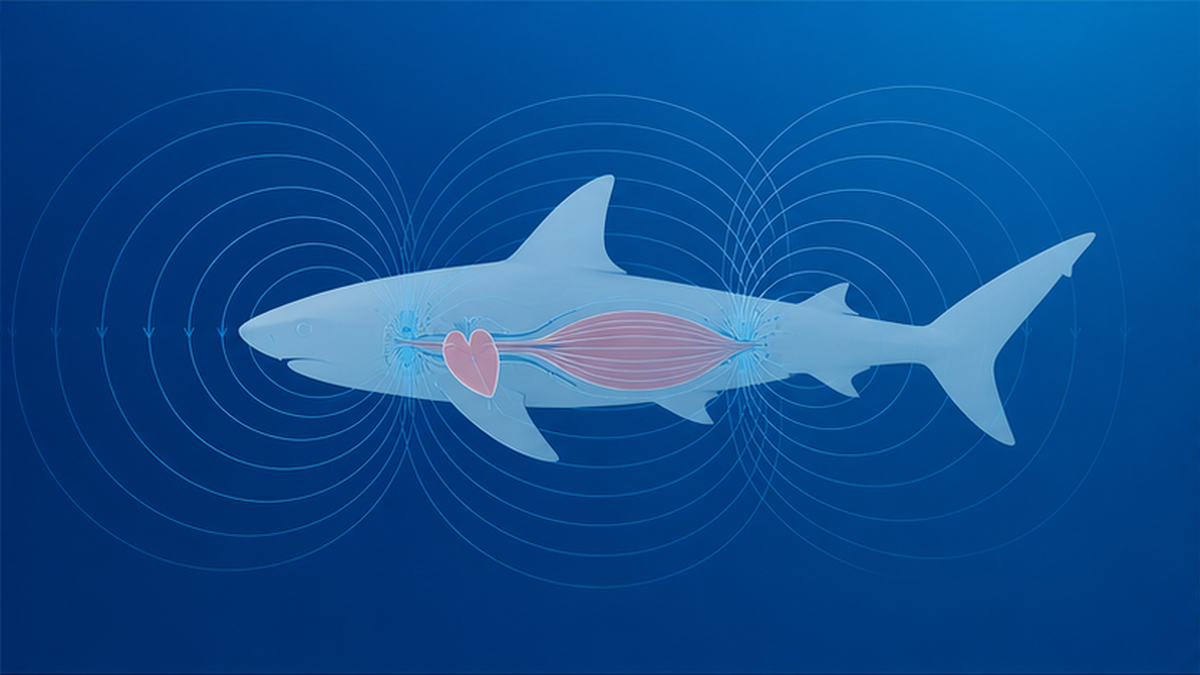
Why would sensing electricity be useful for hunting? The answer is that every living animal "leaks electricity." When a fish's muscles contract, when its heart beats, when its gills push water through, weak activity currents flow across cell membranes. In addition, a direct-current-like potential difference persists between the mucous membranes on the body surface, or the inside of the mouth and gills, and the surrounding seawater, even when the animal is not moving. Because salty seawater conducts electricity well, these weak currents gradually seep out into the water, forming a small "bioelectric field."
Even unseen, electricity cannot be hidden
Light is blocked by murky water or sand, scent may fail to travel depending on the current, and some prey hold their breath to make no sound at all. But as long as it is alive, an animal cannot stop generating electricity. It could hide by stopping its heart, but then the prey itself would die. A shark's electric sense turns the very fact that prey is "alive" against it, an inescapable method of detection.
Cartilaginous fish are not the only animals with an electric sense
Sharks are not the only animals that sense electricity. Some fish, such as electric eels and electric catfish, generate strong electricity themselves; others, like South American knifefish, emit weak electricity to "see" their surroundings electrically; and even some mammals, such as the platypus and echidna, are equipped with electroreception. However, the ability to passively detect only the bioelectric fields of prey, with an extreme sensitivity on the order of a few nanovolts per centimeter, is especially pronounced among sharks and rays. This article focuses on that passive electroreception, the mechanism by which an animal emits no electricity of its own and merely listens in on that of others.
Animals that sense electricity broadly fall into two types. One is active electroreception, in which the animal emits weak electricity itself and reads the resulting disturbances to "see" its surroundings electrically; electric eels and their relatives living in murky rivers are examples of this type. The other is passive electroreception, in which the animal emits no electricity itself and simply listens quietly to electricity arriving from outside. Sharks and rays are masters of this passive type, effectively "eavesdropping" on the bioelectric fields leaked by prey and companions alike. Because it requires no energy expenditure to emit electricity, it is energy-efficient, and it also allows the shark to probe without alerting its target, an ideal trait for hunting.
Why it is called a "sixth sense"
This ability is often called the "shark's sixth sense" because it does not correspond to any of our human five senses. We have no organ that directly senses electricity, and the pain of an electric shock is merely an indirect sensation channeled through touch (pain perception). In other words, electroreception is a sense that views the world through an entirely "different window," one that is inherently difficult for us to imagine. Consider that the sea a shark swims through unfolds as an "electrical landscape" utterly unlike the sea we see with our eyes, and it becomes clear that even within the same ocean, the world looks strikingly different depending on the creature experiencing it. The diversity of senses among marine creatures itself reflects the sheer resourcefulness of the ecosystem.
Key points of this article
- A shark's electric sense passively detects the faint electric currents leaked by living prey
- Even in situations where light, sound, and scent cannot reach, electricity alone is hard to hide
- Even among animals with electroreception, sharks' sensitivity is unmatched in the animal kingdom
The mechanics of the ampullae of Lorenzini: hundreds of jelly-filled pores
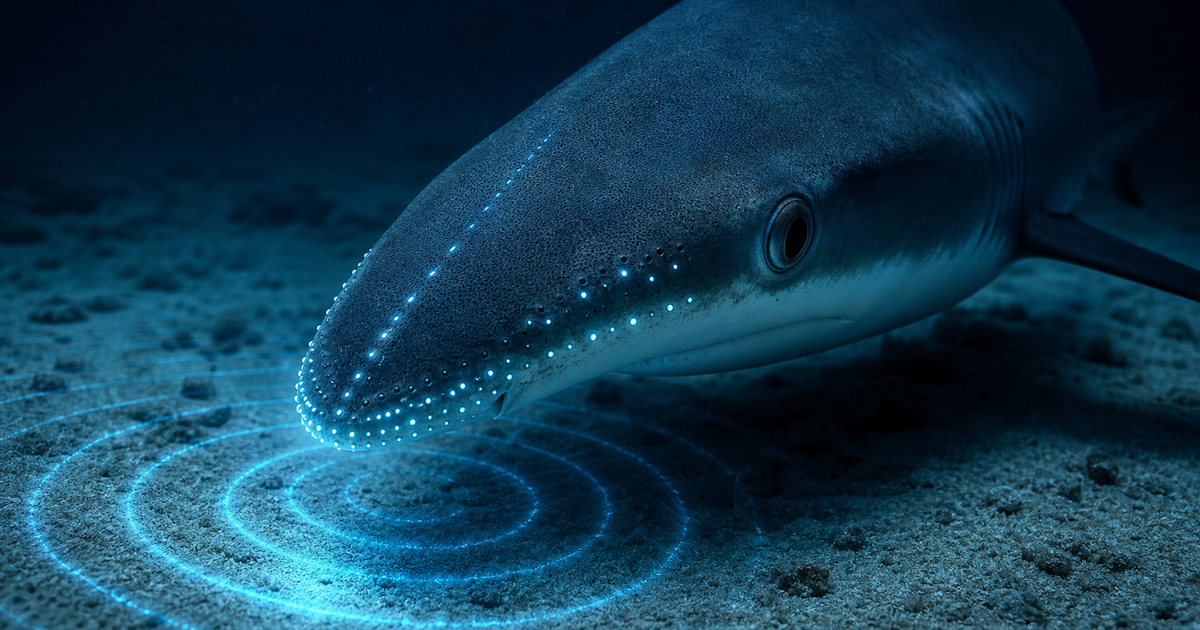
The organ responsible for a shark's electric sense is the ampullae of Lorenzini. Look closely at a shark's snout and you will see many small pores, like black dots, lined up across it. Each one is the entrance to an organ: the interior is a thin canal filled with a jelly-like substance, leading to a bulb-shaped sac (the ampulla) at its far end, packed with sensory cells.
A three-layer structure of pore, jelly canal, and sensory cell
Tracing the structure, there is first a pore on the skin surface, from which a jelly-filled canal runs beneath the skin, ending in an ampulla (bulb) lined with sensory cells. The sensory cells read the "difference" between the seawater potential at the pore and the potential deep within the ampulla, effectively a collection of tiny voltmeters wired throughout the body. The longer the canal, the easier it becomes to compare potential differences between two distant points, providing clues to direction and distance.

The jelly turned out to be a proton-carrying semiconductor
The role of the jelly filling the canal was a mystery for a long time. Recent research has found that this jelly, while containing keratan sulfate and being about 97% water, possesses the highest known proton (hydrogen ion) conductivity of any biological material. A study reported in 2016 in the journal Science Advances showed that this jelly efficiently transmits electrical signals by carrying protons rather than electrons, behaving in effect as a natural "proton conductor" (a semiconductor-like material). It is a sophisticated wiring material that delivers extremely weak electrical signals to the sensory cells in the ampulla without letting them attenuate.
The calcium-activated potassium channels in the cell membrane are thought to be involved in converting these signals within the sensory cells. A tiny change in potential triggers a cellular response, which is then transmitted to the brain via nerves; this entire sequence of amplification and conversion underlies the extraordinary sensitivity discussed later. It should not be overlooked that the combination of a highly insulating canal wall and highly conductive jelly inside efficiently concentrates the small potential difference from outside at the end of the canal. The whole organ is designed like an antenna that narrows a faint signal down to a single point.
It also senses changes in temperature and salinity
The ampullae of Lorenzini are not sensitive to electricity alone. Research has shown that this organ also responds to slight changes in water temperature. Just how much sharks rely on this sense to move using boundaries in water temperature (such as tide lines or the edges of upwellings) as a cue, or to search for places where prey tend to gather, remains an intriguing research topic. Sensitivity to changes in salinity and pressure has also been pointed out, raising the possibility that a single organ reads multiple types of environmental information at once. Rather than a simple "electric sensor," it is better understood as a multifunctional group of sensors that comprehensively senses the physical conditions of the sea, and viewed this way its depth becomes clear.
The arrangement of pores reflects each species' way of life
The number and distribution of pores in the ampullae of Lorenzini vary considerably by species. Sharks and rays that lie in ambush on the seafloor tend to have pores concentrated on the underside (ventral surface) of the body, making it easier to search for prey buried in sand. In contrast, species that pursue moving prey while roaming the open ocean tend to have pores concentrated at the front of the snout, arranged to detect prey ahead of them. In other words, the arrangement of pores itself becomes a "résumé of lifestyle," reflecting where a species has lived and what prey it has hunted. It shows clearly how body structure and sensory ability have evolved as one.
This organ has an extremely ancient origin, thought to trace back more than 400 million years to when the ancestors of sharks first appeared in the ocean. It is precisely because it has been refined over such a long span of evolutionary time that so exquisite a mechanism could be completed. Incidentally, the ampullae of Lorenzini are also shared by rays and chimaeras, which, like sharks, are cartilaginous fish. Most of the bony fish we commonly encounter lack this organ entirely, making electroreception something of a "specialty" that cartilaginous fish alone have specially developed. Knowing that this ancient lineage, which has survived for hundreds of millions of years in the ocean, has relied on such a precise sensor throughout its prosperity gives a real sense of the depth of evolution.
| Part | Function |
|---|---|
| Pore on the skin surface | Opens to the seawater, serving as the entrance that takes in the external potential |
| Jelly canal | Wiring that carries the faint electric signal inward via proton conduction |
| Ampulla (bulb) | Where sensory cells are lined up, converting potential differences into nerve signals |
| Afferent nerve | Sends the converted signal to the brain, where it is integrated into information about the prey's location |
The number of pores varies by species, and the great white shark is said to have about 1,500 across its head. Some species, such as the hammerhead shark discussed later, spread their head sideways to disperse the pores and gain search area. The diversity of the exquisite sensory organs found among marine creatures is also an angle not to be overlooked when discussing the biodiversity of Japan's oceans.
A world of five nanovolts: just how extraordinary is a shark's electrical sensitivity?
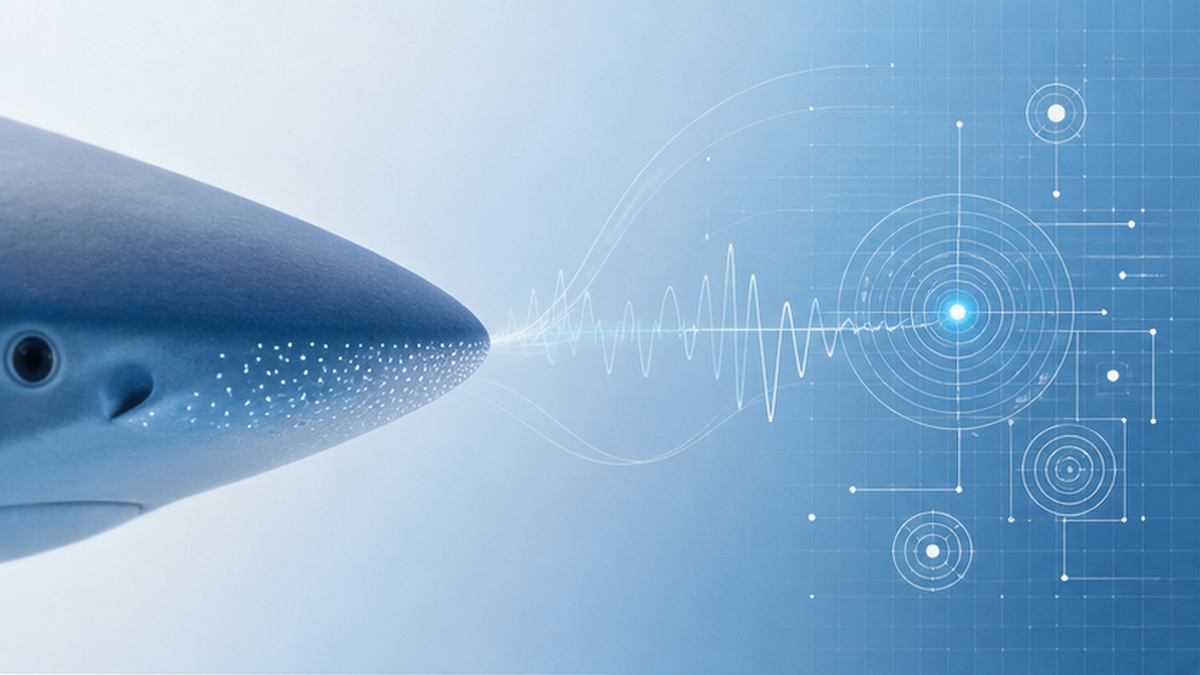
Let's look at just how sharp a shark's electric sense is, in numbers. The detection threshold confirmed experimentally in sharks is said to be about 5 nanovolts per centimeter (5 x 10⁻⁹ V/cm). A nanovolt is one billionth of a volt. Given that the ordinary battery we use daily is 1.5 volts, sharks are distinguishing a potential difference on the scale of roughly one three-hundred-millionth of that, through water.
The analogy of "wiring a battery across a great distance"
This sensitivity is often compared to being able to "sense even the extremely faint electric field that would arise in seawater if you connected the two poles of a battery over a very great distance." This kind of analogy can be somewhat exaggerated and should not be taken entirely at face value, but even taking the measured figure of 5 nanovolts per centimeter alone, it remains undeniable that sharks possess the sharpest electric sensor in the animal kingdom. A precision comparable to a highly sensitive artificial voltmeter is achieved by an organ just a few millimeters across, filled with jelly.

The "trade-off" of being too sensitive
Being this sensitive, one might expect that even the shark's own swimming, ocean currents, and even Earth's magnetic field would become "noise." Indeed, electroreception is effective only at very short range, generally said to be within a few tens of centimeters. Distant prey is caught by smell, sound, and the lateral line, and only in the final few tens of centimeters does the shark switch to electroreception to strike precisely. It is this division of labor that makes such extreme sensitivity practically usable. Sensitivity and detection range exist in a trade-off relationship, and sharks use that boundary as the "final aiming stage" of a hunt.
How sharks overcome noise
Any ultra-sensitive sensor inevitably has to contend with noise. Because the shark's own heartbeat, muscle movement, and gill respiration also generate electricity, if left unaddressed, the electricity produced by its own body could drown out the signal from its prey. It is thought that sharks skillfully subtract out these rhythmic signals originating from their own bodies, isolating the signal arriving from outside, from prey. In addition, the mechanism by which the organ "compares" the potentials at pores on the left and right sides also helps cancel out noise that is applied uniformly across the whole sea, letting only the localized electric field of nearby prey stand out. Extraordinary sensitivity only becomes meaningful when paired with this kind of clever noise reduction.
Waves, ocean currents, distant lightning, and even faint electric potentials generated by minerals in undersea rocks fill the ocean with a variety of "electrical noise." Picking out only the signal of living prey from among all this is like picking out a single whisper in the middle of a crowd. A shark's brain constantly processes the enormous amount of information arriving from the ampullae of Lorenzini, extracting only meaningful patterns. It is only when the sharpness of the sense organ and the brain's information processing that supports it work together, as two wheels of the same cart, that "seeing prey through electricity" becomes possible.
How is this sensitivity measured?
How was the figure of "5 nanovolts per centimeter" confirmed? Researchers place a pair of electrodes in a tank and gradually weaken the voltage flowing between them, carefully observing exactly when the shark's nerves stop responding, or when, in terms of behavior, the shark stops orienting toward the electric field. This remarkable value was derived through two complementary methods: attaching electrodes to nerves to directly record signals, and observing whether a living shark swims toward the electric field. Behind these numbers lies an accumulation of painstaking, precise measurement. The conclusion of extraordinary sensitivity is by no means an exaggerated anecdote; it is a fact supported by reproducible experiments.
A guide to nano, micro, and milli
- 1 volt (V) = roughly the voltage of about 1.5 ordinary batteries
- 1 millivolt (mV) = one thousandth of a volt
- 1 microvolt (µV) = one millionth of a volt
- 1 nanovolt (nV) = one billionth of a volt (the world a shark senses)
Revealing prey hidden in sand: bioelectric currents and hunting experiments
Evidence that a shark's electric sense is actually used in hunting was vividly demonstrated by a series of experiments in the latter half of the 20th century. The most famous is the research published in 1971 by biologist Adrianus J. Kalmijn. He confirmed that sharks and rays bite precisely toward the electric field emitted by prey hidden in sand, or by electrodes.
Kalmijn's ingenious experimental design
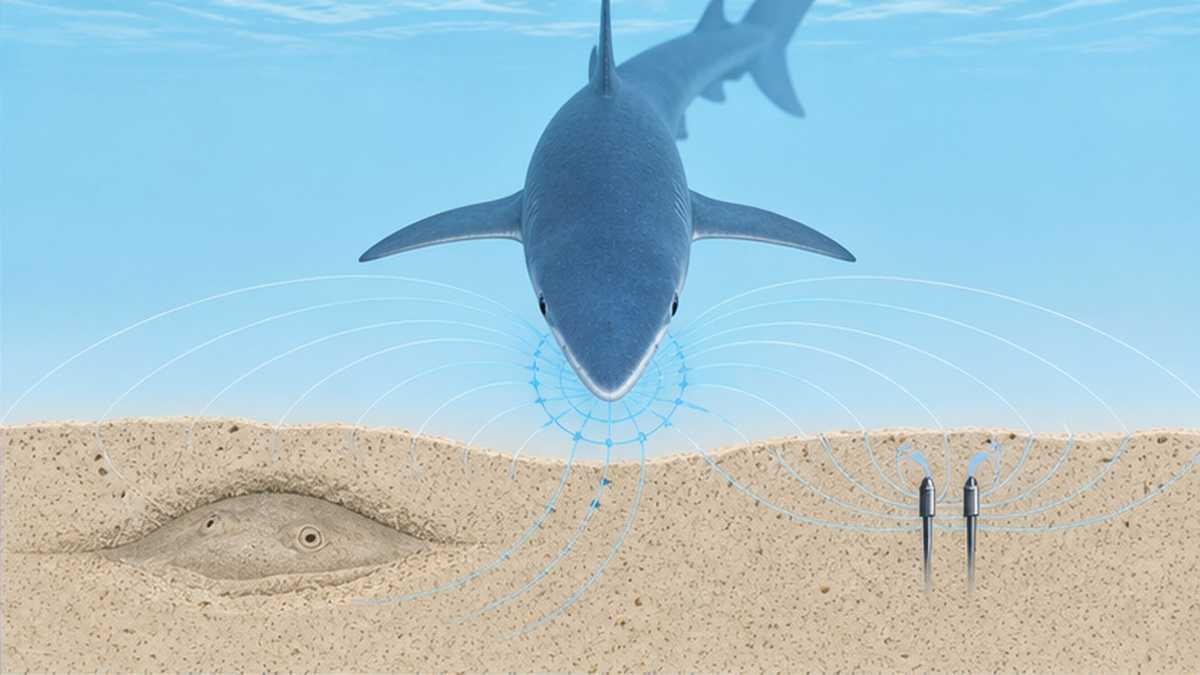
Kalmijn buried living prey, such as flatfish, under sand and observed whether sharks could dig them out. The deciding factor was a controlled experiment. When the prey was covered with a non-conductive partition made of agar, the shark became less likely to respond, even though the scent and shape remained unchanged. Conversely, when, in place of prey, only an electrode emitting a very weak current was buried in the sand, the shark rushed at it and bit down. It was heading toward the "electric field" rather than the prey itself, confirming decisively that electroreception guides hunting.
Even motionless prey cannot stay hidden
What matters is that even an animal that lies completely still, buried in sand, can be detected. Because a bioelectric field arises just from gill respiration and the potential difference between mucous membranes and seawater, even an animal that freezes in place is, electrically speaking, effectively "glowing." In the round stingray (Urobatis halleri), which lives in places such as California, males have been reported to locate females buried in sand by relying on the faint voltage generated by the female's respiratory muscles, suggesting that electroreception is used not only for hunting but also in reproduction.
Regarding prey hiding in sand or mud, soft substrates like tidal flats are precisely a refuge for small animals. The importance of protecting environments rich in benthic organisms is also connected to the theme of tidal flat conservation. A predator's sharp senses only mean something because this kind of thriving benthic ecosystem exists.
Why controlled experiments are the "deciding factor"
Kalmijn's research is still discussed as a classic today not simply because it stated that "sharks sense electricity," but because it carefully eliminated other possibilities one by one. By excluding other cues such as scent, shape, and movement, and establishing that only electricity remained, the study could finally declare with confidence that "electroreception guides hunting." Placing living prey and an electrode emitting only current side by side for comparison. Swapping a conductive partition for a non-conductive one. This accumulation of controlled experiments that change only one condition at a time is the royal road of science, one that sets aside assumptions and approaches the truth. Beyond the anecdote about sharks, the very way of thinking behind the experiment is itself a rich subject to learn from.
It is now known that there are broadly two types of electric field that sharks detect from prey. One is an alternating-current-like field that changes over time, accompanying the movement of muscles and the heart; the other is a nearly constant, direct-current-like field arising between the mucous membranes or wounds on the body surface and the surrounding seawater. A moving prey animal generates the former, while the latter does not disappear even in prey that stays perfectly still. This is precisely why even prey that freezes in place still gets found. The direct-current field emitted by a weakened or injured fish tends to be especially strong, which is one reason for the harsh reality of nature that "the weaker an animal is, the more it is targeted."
Sharks attack not the prey itself, but the electric field the prey creates in the water.
— The core insight of electroreception demonstrated by Kalmijn's 1971 experiment
The hammerhead's "metal detector": head shape and electroreception
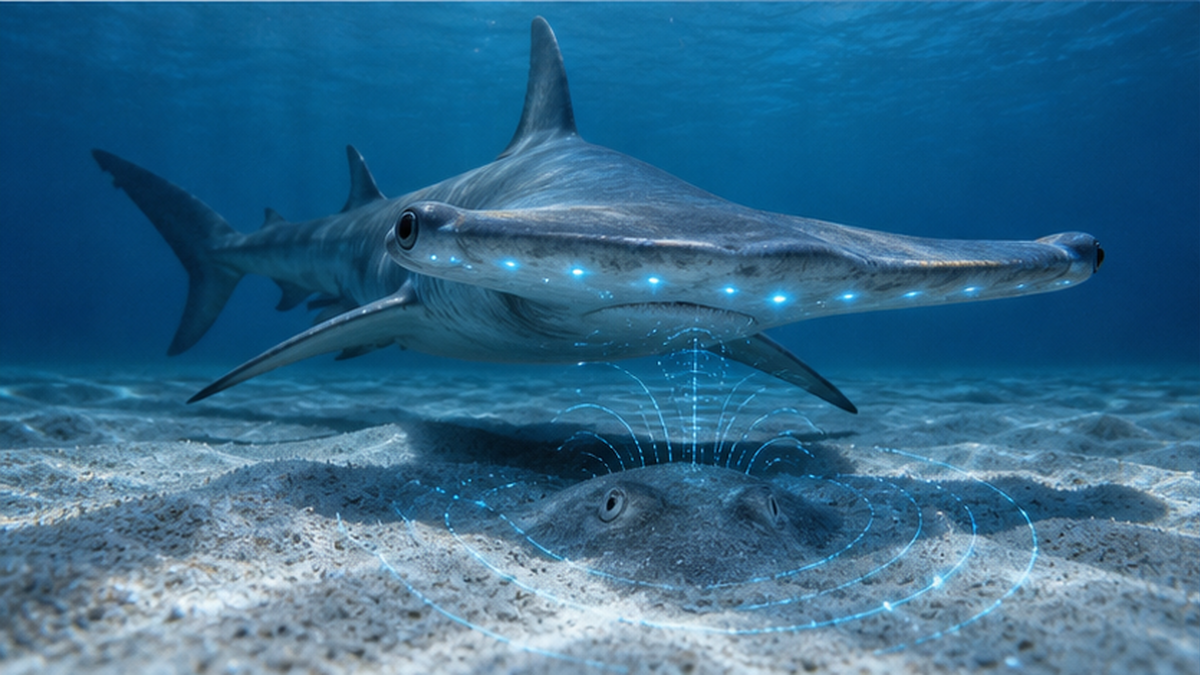
A striking example of electroreception and body shape fitting together perfectly is the hammerhead shark. Its distinctive head, flattened and extended sideways, is technically called a cephalofoil, and it looks much like the flat sensor plate of a metal detector. In fact, the ampullae of Lorenzini are arranged widely dispersed across its surface.
Spreading the head sideways to gain "search area"
Hammerhead sharks swim just above the seafloor while slowly swinging their flat heads from side to side, "scanning" the sandy bottom. Because the head is wider, it can search a larger area for electric fields at once, efficiently detecting rays and flatfish buried in the sand. In particular, the great hammerhead (Sphyrna mokarran) is known to favor hunting stingrays that hide themselves in sand. Even a stingray with only its eyes or spiracle exposed above the sand cannot stay hidden electrically.
"Wider" does not mean "more sensitive"
One thing worth noting here is that a wider head does not, by itself, increase sensitivity. Research comparing young hammerhead sharks with sandbar sharks (family Carcharhinidae) found that the sharpness of response to an electric field, that is, sensitivity itself, did not differ greatly between the two, and that the hammerhead's advantage lies mainly in the breadth of area it can search. In other words, the cephalofoil appears to be an evolutionary adaptation for "searching more widely" rather than "sensing better." Even with the same electroreceptive ability, how it is used depends on body shape.
The head as a multifunctional part, serving as both rudder and eyes
The role of the cephalofoil is not limited to electroreception. The flat, extended head is thought to function underwater like a rudder or wing, helping the shark make sharp turns. Eyes set far apart on either side widen the field of view, and widely spaced nostrils are advantageous for determining the direction of a scent. In other words, the hammerhead's strange head is an evolutionary "multifunctional part" that bundles together multiple advantages, electrical, visual, olfactory, and hydrodynamic, into one. It is becoming clear that even shapes that look bizarre have their own logical purpose.
There are several species of hammerhead shark around the world, and the width and shape of the head differ slightly from species to species. In Japan's coastal waters, the scalloped hammerhead (Sphyrna lewini) is also found, known for forming schools and migrating in summer. Learning about the ecology of sharks living in seas close to us is also an opportunity to reconsider the richness of our own ocean. However, many hammerhead species are declining in number worldwide and are also a group of great conservation concern.
Why the hammerhead's head is advantageous
- It spreads the ampullae of Lorenzini widely, allowing a larger area to be searched at once
- It scans the seafloor side to side, efficiently detecting rays and flatfish buried in sand
- It gives hunting an advantage through "breadth of search area" rather than sensitivity itself
Working with smell, the lateral line, and vision: the flow of a hunt that ties the senses together
Electroreception is powerful, but effective only at very short range. Sharks can catch prey at a distance because they link multiple senses together like a relay. Let's trace the flow of a hunt, from farthest to nearest.
Long range: "smell" and "sound"
The first sense to act is smell. Sharks can detect trace amounts of dissolved substances in water, and some species are said to sense blood diluted by a factor of one in ten billion. From the difference in timing and concentration of scent reaching the left and right nostrils, they can estimate the general direction of the source. Around the same time, the low-frequency sounds and vibrations made by a weakened fish also serve as a clue from a distance.
Sound travels through water at roughly four to five times the speed it does through air, and it also attenuates less over distance. In particular, the low-frequency sound produced when a weakened fish thrashes irregularly has long been known to draw sharks in from far away. In fact, researchers have confirmed that playing irregular low-frequency sounds through an underwater speaker attracts sharks. Scent signals that "prey is somewhere," while sound signals that "something is weakening around here"; these two long-distance sensors flip the first switch of the hunt. Though scent and sound offer only rough directional precision, they play an irreplaceable role in guiding a shark toward the "general location" of prey across a wide ocean.
Medium range: the "lateral line"; just before the strike: "vision"
As the shark approaches its prey, the lateral line takes over as the leading sense. The lateral line is a tube-shaped organ running along the flanks and head, whose internal sensory cells (neuromasts) detect minute movements of water and changes in pressure, effectively acting as a form of "distant touch." It senses the water flow created by a struggling fish, or the vortex left behind by a swimming animal, making it possible to close in even in dark water. Experiments have also shown that the lateral line is essential for accurately tracing a scent back to its source (a behavior called "eddy chemotaxis," following the eddies in water flow). In the final few meters, vision joins in, capturing the shape of the prey.
What's interesting is that scent and water flow are used "together, not separately." Scent drifting through the sea does not spread out uniformly; it travels along with the current, forming thin filaments and clumps of eddies. The moment a shark detects a scent, it uses its lateral line to sense which direction the water is coming from, and advances as if tracing the flow back upstream. This mechanism of "olfaction that follows eddies" has been confirmed experimentally, and by having the nose and lateral line cooperate, a shark can reach the source of a scent far faster than it could by simply moving toward the stronger concentration. It is precisely this cooperation between senses, invisible if you consider any one sense in isolation, that lies at the heart of hunting.
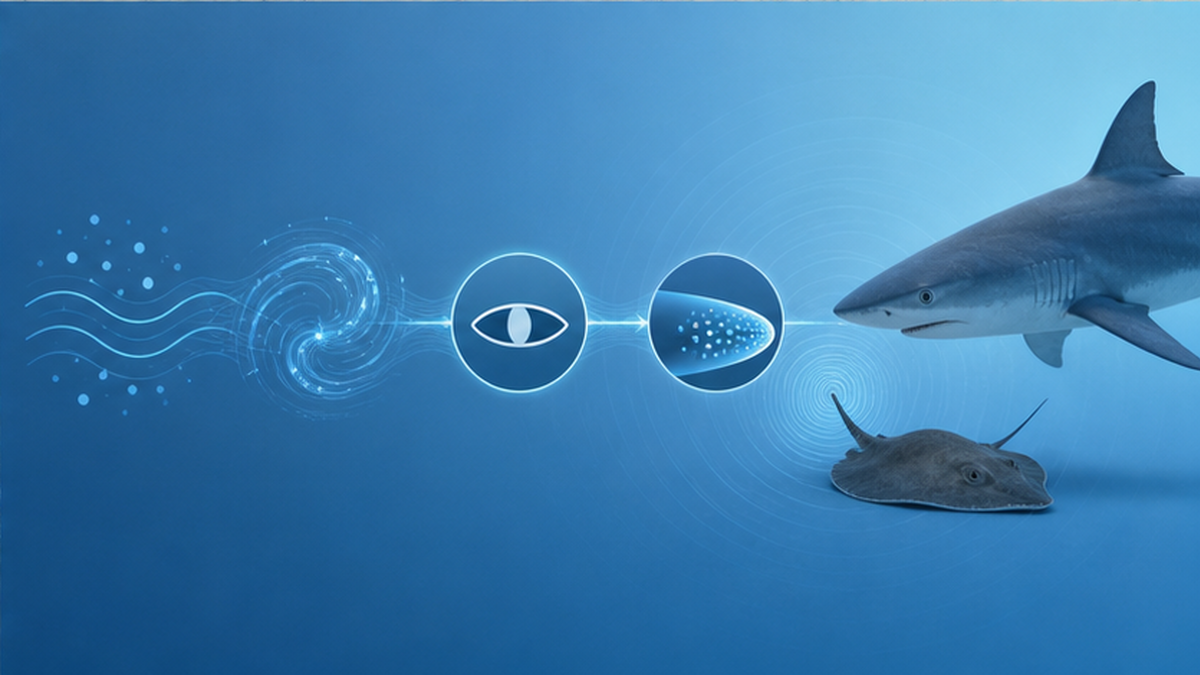
The finishing touch: "electricity," the moment of biting with eyes protected
And then, in the last few tens of centimeters before the bite, electroreception takes on the role of final aim. At the moment many sharks sink their teeth into prey, they protect their eyes by covering them with a nictitating membrane or retracting the eyeball backward. In other words, for that one instant, a shark bites while effectively "blind." Even so, it can still strike its target precisely, because it senses the prey's electric field without relying on vision. Finding prey by scent, tracking it with the lateral line, closing in with vision, and finishing with electricity: this smooth relay is exactly what makes a shark such an effective hunter of the sea.
This division of labor is flexible, with the leading role shifting depending on the environment. In clear daytime waters, vision contributes greatly, while in murky water, at night, or in the deep sea, the lateral line and electroreception take on a greater share of the work. This is precisely why sharks have been able to inhabit such a remarkably wide variety of seas, from the deep sea where almost no light reaches, to murky coastal waters, to the surface layer of the open ocean. Relying entirely on any single sense would not allow a species to spread into such a wide range of environments. This "redundancy," the ability to reweight multiple senses according to circumstance, is likely the very source of strength that has allowed the shark lineage to persist for more than 400 million years.
| Distance range | Primary sense at work | Information captured |
|---|---|---|
| Long range | Smell and hearing | Scent molecules, low-frequency sound and vibration |
| Medium range | Lateral line | Water flow, pressure changes, eddies (distant touch) |
| Short range | Vision | The shape and outline of the prey |
| Point-blank range (tens of cm) | Electroreception | Precise location and vital points via the bioelectric field |
A compass that reads Earth's magnetic field: electroreception and navigation
The role of the ampullae of Lorenzini is not limited to hunting. Drawing attention in recent years is its connection to navigation using geomagnetism (Earth's magnetic field). Some sharks migrate hundreds of kilometers each season, and in some species, across entire oceans. How do they hold their course across an open sea with so few landmarks?
Why electroreception could serve as a magnetic cue
According to the laws of physics, a voltage arises when a conductor moves through a magnetic field (electromagnetic induction). A shark swimming through seawater, itself a conductor, receives an extremely weak electric field as it crosses Earth's magnetic field. In theory, the ultra-sensitive ampullae of Lorenzini could use this field as a cue to read the direction it is heading or the strength of the geomagnetic field. In other words, electroreception itself could function directly as an "electromagnetic compass."
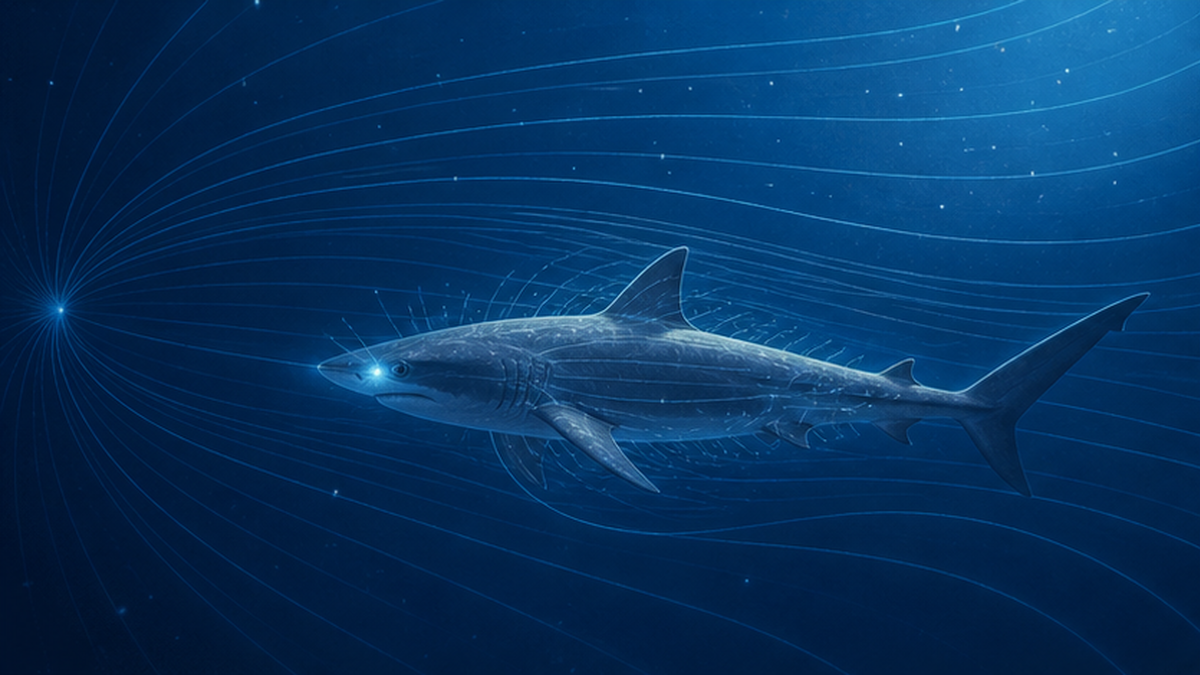
A "map-like" magnetic sense demonstrated by experiment
In 2021, research published in the journal Current Biology lent experimental support to this idea. The research team placed bonnethead sharks, a small species of hammerhead, into a tank equipped with coils (Merritt coils) that could artificially generate a magnetic field, and recreated the geomagnetic conditions corresponding to a location about 600 km south of the sharks' actual capture site. The sharks, "tricked" into believing they had been brought south, then swam north, as if trying to return home. This result showed that they possess not merely a simple compass, but a "map-like" magnetic sense capable of estimating their current location.
However, exactly which organ sharks use to sense magnetism has not yet been fully settled. Alongside the theory of electromagnetic induction via the ampullae of Lorenzini, the possibility that they carry magnetite (magnetic microparticles) in their bodies is also being discussed, and it is possible that multiple mechanisms are used together. Research into these senses is still ongoing, and this field is very much a frontier that continues to be updated. The marine environment itself also keeps changing, as seen in shifts related to rising sea temperatures and fisheries, and understanding the behavior of migratory animals is becoming increasingly important for resource management as well.
Why a "map" is necessary
There is a major difference between a simple compass that only tells direction and a "map-like" sense capable of estimating one's current location. A compass will tell you "north is that way," but it will not tell you "where I am right now." Earth's magnetic field, however, gradually changes in strength and direction depending on location. If that subtle variation can be read, it provides a cue, akin to latitude, to "where I am." In the bonnethead shark experiment, the fact that sharks tricked into believing they had been moved south swam north is precisely evidence that this kind of position estimation is possible. This map-like ability is thought to be essential for the kind of migration that lets sharks return precisely to their home breeding or feeding grounds.
As research into geomagnetic navigation advances, new questions are emerging as well, such as how artificial electromagnetic fields, from undersea cables or offshore wind farms crossing migration routes, might affect shark behavior, questions relevant to the design of marine protected areas. Protecting the ocean means considering not only visible habitats, but also the "invisible cues" that creatures rely on. Research into these senses is basic science, but it is also becoming a practical foundation for thinking about how we use the ocean going forward.
"Electricity" and "magnetism" are two sides of one thing
Electricity and magnetism are two faces of the same phenomenon, electromagnetism. A shark moving through seawater receives a faint electric field simply by crossing Earth's magnetic field. That is precisely why an organ built for electroreception can double as a cue for direction. A tool for hunting doubles as a compass for crossing oceans: here lies the resourcefulness of a shark's senses.
Humans and sharks: conservation and fisheries that make use of electroreception
A shark's electric sense connects to human life in surprising ways. The fact that sharks are sensitive to electric fields is beginning to be applied to technology that eases friction between sharks and people, and between sharks and fisheries.
Using electricity to "gently" keep sharks away
Sharks tend to find overly strong electric fields unpleasant and avoid them. This trait is put to use in electric shark deterrents. Small devices worn by surfers and divers, and protective measures at swimming beaches, that emit a strong electric field to make it harder for sharks to approach, are being researched and put into practical use in various countries. Unlike physical exclusion with nets or barriers, the advantage is that sharks can be kept away without being harmed, making this one option for coexistence between sharks and people.
Reducing bycatch: reconciling fisheries with wildlife
An even more significant application is reducing bycatch. In longline fishing targeting species such as tuna, bycatch of unintended sharks has become a global problem. Research is therefore underway to embed electric fields or magnets near hooks and fishing gear, stimulating a shark's electroreception to keep it from approaching. The effect varies by species and conditions and is not a cure-all, but catching the target fish while reducing shark casualties holds promise as a step toward sustainable fisheries. In terms of not wasting ocean resources, this shares a common concern with efforts around recycling used fishing nets.
The importance of the role sharks play should also not be forgotten. Most sharks are predators positioned near the top of the food chain, removing weakened or diseased fish and regulating prey populations, thereby maintaining the balance of the entire marine ecosystem. Cases have been reported in various regions where, as top predators decline, the creatures below them multiply excessively, damaging seaweed beds or coral reefs in unexpected ripple effects. Protecting sharks is not simply about saving one species; it is connected to protecting the health of the ocean as a whole system. When considering the biodiversity of Japan's oceans, the presence of sharks at the top of the food chain is indispensable.
The idea of not "over-stimulating" the senses
Electric shark deterrents and bycatch countermeasures also require caution. Because a shark's senses are extremely sensitive, a strong electromagnetic field can confuse it, or even, conversely, pique its interest. The effect varies by species, age, and situation, and there is not yet a "universal device that works reliably in every scenario." This is precisely why an accumulation of basic research into exactly what kind of electricity sharks sense, and how, is the key to improving the precision of practical countermeasures. Correctly understanding the senses of a living creature leads directly to a wiser way for humans and wildlife to coexist; herein lies the underlying strength of basic science.
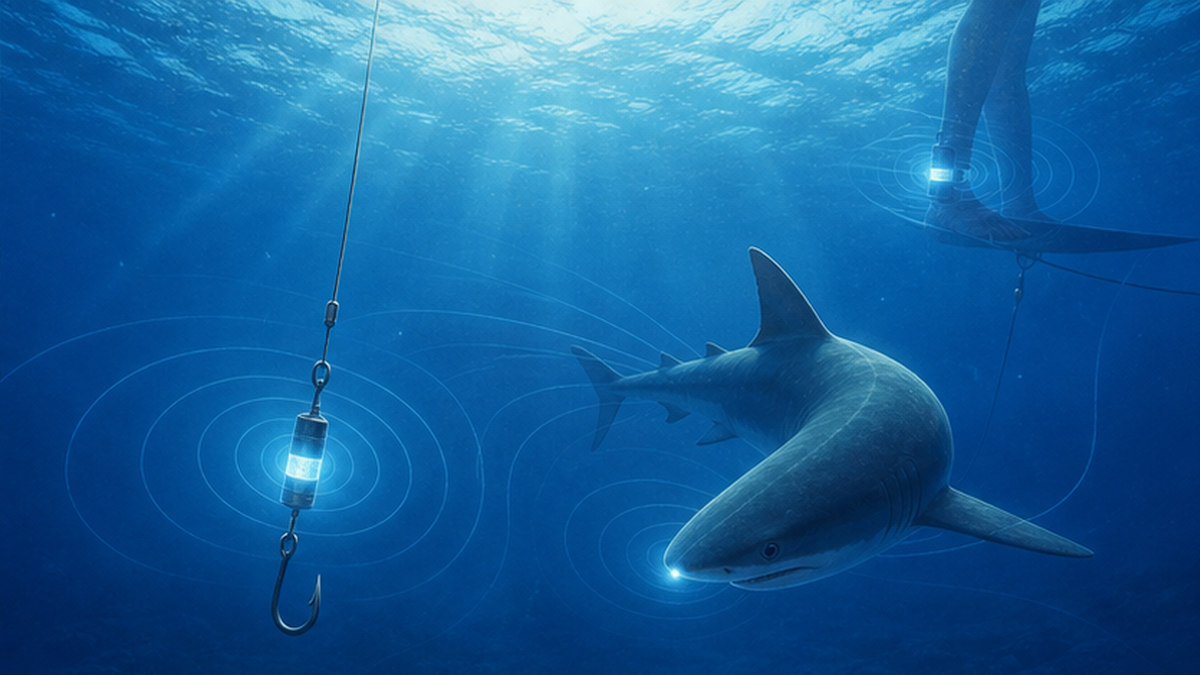
Understanding the senses means protecting sharks
Many shark and ray species around the world have declined in number due to overfishing, bycatch, and habitat degradation, and quite a few species are of concern for extinction. Japan's coastal waters are also home to diverse sharks, and much about their ecology remains unknown. Understanding how sharks sense the world and how they behave forms the foundation for avoiding unnecessary conflict and protecting them. Behind the image of a fearsome predator lies an exquisite creature equipped with the most delicate electric sensor on Earth; understanding that is precisely the first step toward protecting the ocean ecosystem as a whole.

What we can do
- Rather than uniformly viewing sharks as "dangerous villains," come to correctly understand their role and their senses
- Take an interest in fishing methods that reduce bycatch, and in choosing sustainably sourced seafood
- Pay attention to shark and ray conservation through aquariums and the dissemination of research
Conclusion: the most delicate electric sensor on Earth
A shark's electric sense is a sophisticated combination of physics and biology that cannot be fully captured by the mere phrase "sixth sense." It reads the bioelectric field that any living creature cannot help but generate, using a jelly that carries protons and hundreds of sensory organs, exposing even prey hidden in sand. It divides the work with smell, the lateral line, and vision, switching to electricity for the final few tens of centimeters to make the strike. And the very same organ can even double as a compass for crossing entire oceans. Sharks can be described as creatures that have mastered, to an extreme degree, the properties of water as a conductor.
Understanding this delicate sense also gives rise to technologies of coexistence, such as shark deterrents and reduced bycatch, and forms a foundation for protecting sharks themselves. Learning about the senses of marine creatures is connected, in the end, to knowing the ocean itself more deeply, and to cherishing it.
Summary of this article
- A shark's electric sense (electroreception) passively detects the faint bioelectric field leaked by living prey
- The ampullae of Lorenzini have a three-layer structure of "pore, proton-carrying jelly canal, sensory cell," with a detection threshold of about 5 nanovolts per centimeter, the sharpest sensitivity in the animal kingdom
- Electroreception is effective only at very short range. Kalmijn's experiments proved that electroreception guides hunting, through attacks on both buried prey and bare electrodes
- A hammerhead shark's flat head is a device for expanding search area, not for increasing sensitivity itself
- Hunting is accomplished through a relay of scent, sound, the lateral line, vision, and electricity, with the eyes protected and electricity providing the aim at the moment of biting
- A 2021 experiment with bonnethead sharks demonstrated the possibility of a "map-like" geomagnetic navigation, showing that electroreception can also serve as a compass for migration
- Understanding electroreception is connected to technology and conservation, such as shark deterrents and reduced bycatch, that allow sharks and humans to coexist
References and sources
- Nikkei Science - R. D. Fields, "The Shark's Electric Sense" (November 2007 issue)
- Journal of Experimental Biology - Kalmijn, A. J., "The electric sense of sharks and rays" (1971)
- Science Advances - Josberger et al., "Proton conductivity in ampullae of Lorenzini jelly" (2016)
- Journal of Experimental Biology - Gardiner & Atema, "Sharks need the lateral line to locate odor sources: rheotaxis and eddy chemotaxis" (2007)
- Journal of Experimental Biology - Kajiura & Holland, "Electroreception in juvenile scalloped hammerhead and sandbar sharks" (2002)
- Current Biology - Keller et al., "Map-Like Use of Earth's Magnetic Field in Sharks" (2021)
- Scientific Reports (Nature) - Anderson et al., "Insight into shark magnetic field perception from empirical observations" (2017)
- NOAA Fisheries - Sharks (an overview of shark ecology and senses)
* Listed in order of reliability: government and academic institutions > peer-reviewed papers > specialist organizations > reliable media