At 2:46 p.m. on March 11, 2011, a magnitude-9.0 earthquake struck off Sanriku, and the tsunami that followed swallowed the Pacific coast of Tohoku, one of Japan's premier fishing regions. Centered on Iwate, Miyagi, and Fukushima, fishing ports, fishing boats, fish markets, aquaculture rafts, seafood processing plants, and the very livelihoods of the people who worked there were lost overnight. More than 13 years have passed since then. How far has fishing in the disaster-hit areas recovered, and what has yet to return?
To state the conclusion up front: the "visible hardware" — fishing ports and boats — has recovered remarkably. In Iwate Prefecture, 106 of the 108 fishing ports have regained landing capability; in Miyagi, 140 of 142 ports have. About 90% of the fishing boats whose owners sought restoration have been restored. Yet catch volumes have plateaued at 50–70% of pre-disaster levels, the number of people working in the industry keeps shrinking, and in Fukushima, the entirely separate difficulty of the nuclear accident still casts a shadow. Recovery is neither "finished" nor "stalled" — it sits in a complicated middle ground between the two.
Drawing on primary data from the Fisheries Agency and the Reconstruction Agency, this article traces the full scope of the destruction, the rebuilding of fishing ports and markets, the revival of aquaculture, the structural reasons catch volumes haven't recovered, Fukushima's particular circumstances, and the long-standing homework of a shrinking workforce that predates the disaster. Rather than a mere record of damage, this is meant as a guide to understanding what Japan's fisheries industry has chosen, and staked its future on, over these 13 years.
What you'll learn in this article
- The full scope of how the tsunami destroyed fishing ports, boats, aquaculture, and markets across Sanriku and Joban
- Why hardware recovery — ports and boats — is essentially complete, while catch volumes remain stuck at 50–70%
- What "consolidation and modernization" means in practice, as symbolized by advanced hygiene-control markets and smart fisheries
- Fukushima's 13-year journey from the end of trial operations to the release of ALPS-treated water, and the reality of reputational damage
- The pre-existing homework of a shrinking, aging workforce, and the challenges that remain for the future of recovery
What the seas of Sanriku and Joban lost that day
The Pacific coast of Tohoku — the region running from Sanriku to Joban — is one of the world's finest fishing grounds, where the cold Oyashio Current meets the warm Kuroshio Current. The intricate bays of its rias coastline are well suited to farming wakame seaweed, oysters, and scallops, while offshore waters have long yielded saury, mackerel, bonito, and walleye pollock. Port towns such as Kesennuma, Ofunato, Ishinomaki, Onagawa, and Iwaki formed integrated clusters of landing, processing, and distribution that underpinned the local economy and food culture.
On March 11, 2011, that foundation was torn apart by the tsunami. The damage was not confined to any single port; it swept across a broad stretch of fishing ports, boats, aquaculture facilities, seafood processing plants, and distribution functions from Aomori to Chiba. The value of the damage to the fisheries sector — including facilities, equipment, and inventory — was enormous, and among all the damage suffered by agriculture, forestry, and fisheries, the blow to the fishing industry stood out as especially severe.
The three forms of "capital" that were destroyed
What the tsunami took away were the three forms of capital that make fishing possible. First, infrastructure such as fishing ports, breakwaters, and quays: land subsidence pushed quays below sea level, and handling facilities and ice plants were washed away. Second, fishing boats and aquaculture facilities: tens of thousands of fishing boats were swept away, and the oyster and wakame rafts that had filled the bays vanished without a trace. Third, fish markets and seafood processing plants: the chain of functions that sorts, stores, processes, and ships landed fish came to a halt, leaving fishers with nowhere to sell their catch even when they could land it.
- Fishing ports: damaged across a wide area from Aomori to Chiba, with land subsidence and facility loss often occurring together at a single port
- Fishing boats: tens of thousands were lost or damaged, mainly across the three hardest-hit prefectures; the burden of rebuilding fell hardest on small-scale coastal fishers
- Aquaculture: rafts and seed stock for wakame, oysters, scallops, and sea squirts were nearly wiped out entirely
- Processing and distribution: fish markets, ice/freezing/refrigeration facilities, and seafood processing plants were devastated, severing the supply chain
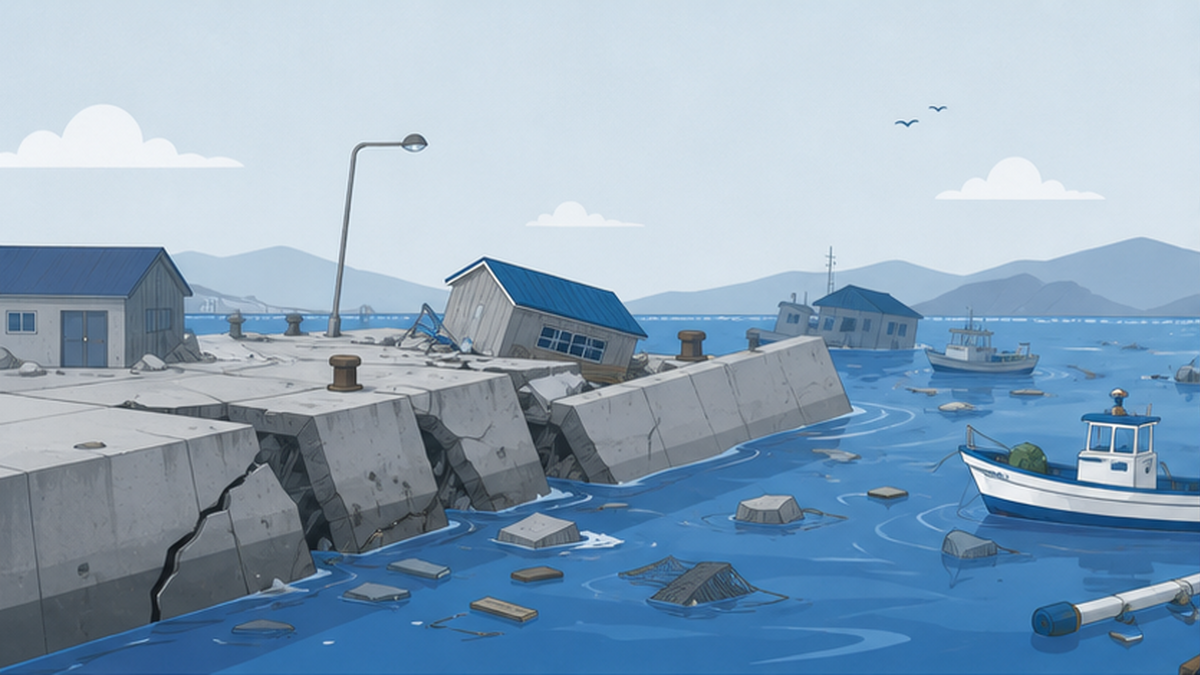
What matters is that this was not simply a "loss of things." Fishing is a regional industry in which fishers, wholesalers, processors, and transporters are closely interlinked, bay by bay. If a single port loses its function, the processing plants it supplied and the carriers who moved its products stop in a chain reaction. The structure by which changes in the marine environment can shake a region's livelihood is echoed in issues such as rising sea temperature and changing fisheries, but the tsunami triggered that same kind of upheaval far more suddenly and far more thoroughly.
What are "Sanriku" and "Joban"?
Sanriku refers to the rias coastline stretching from southern Aomori Prefecture through northern Iwate and Miyagi Prefectures, a major hub for aquaculture and coastal/offshore fishing. Joban refers to the coast from Fukushima to Ibaraki, known for the "Joban-mono" brand of high-quality fish. The earthquake and the nuclear accident struck both of these prime fishing grounds at once.
The early recovery of fisheries in the disaster area was directly tied to regenerating the local economy, and also to the nation's broader food security in ensuring a stable supply of seafood to the public. That is why the government committed enormous budgets to the recovery effort — but the road ahead was far from smooth. The next section looks at how far the rebuilding of infrastructure has actually progressed.
"Restore as it was" or "rebuild anew"?
Communities that began recovery work faced a fundamental question early on: should what was destroyed be restored exactly as it was before the disaster, or should this be treated as an opportunity to rebuild in a new form suited to the future? In regions where population decline and aging were already advancing, restoring many small, aging facilities exactly as they were would only make them difficult to maintain again within a few years. Conversely, envisioning a future and pushing toward consolidation and modernization would increase the burden on users and the difficulty of reaching consensus in the short term. This tension between "restoration" and "reconstruction" would continue to run through every field discussed below, like a constant undertone.
The figures used in this article are based mainly on public primary sources such as the Fisheries Agency's White Paper on Fisheries and materials from the Reconstruction Agency. That said, catch volumes and the number of workers fluctuate significantly by year and by fish species, so it is risky to judge good or bad based on a single year's figures alone. Rather than a scattering of isolated numbers, this article focuses on grasping the underlying structure of "what has recovered, and what has not."
Restoring ports and boats — how far the hardware has come back
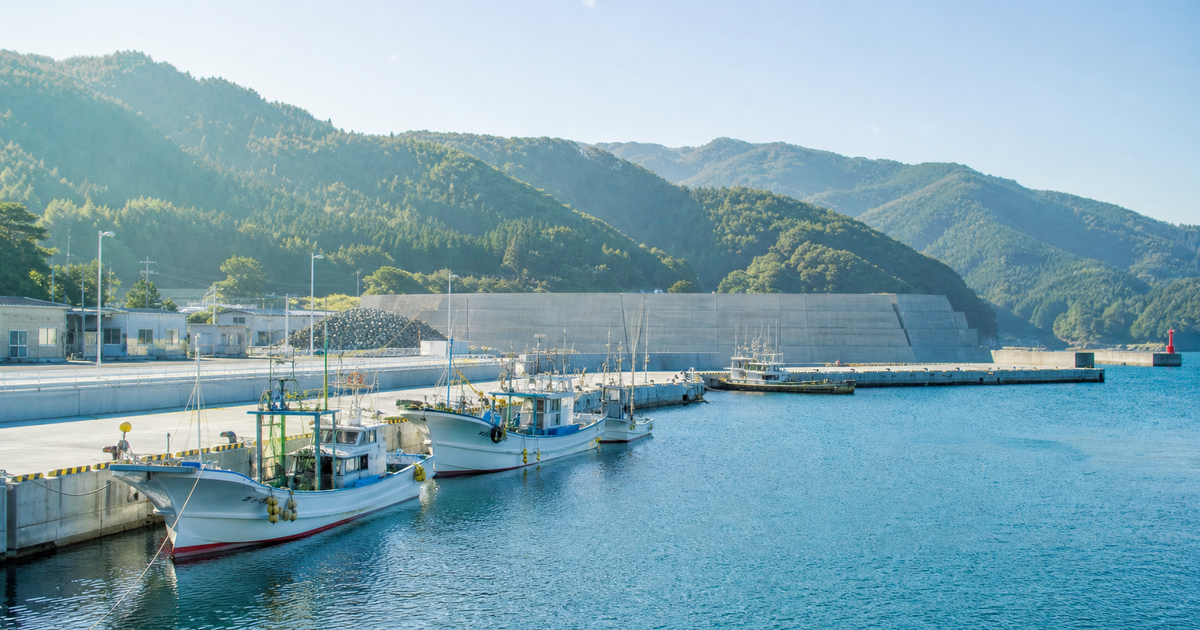
More than a decade after the disaster, fishing ports and boats are the areas where recovery can most clearly be called complete. According to figures compiled by the Fisheries Agency, the recovery rate for landing capability at fishing ports reached 98% in Iwate Prefecture (106 of 108 ports) and 99% in Miyagi Prefecture (140 of 142 ports). Fukushima Prefecture lagged due to the effects of the nuclear accident, but 8 of its 10 ports have regained function, putting its recovery rate at roughly 80%.
Restoration of fishing boats has also progressed substantially. According to Fisheries Agency figures, as of the disaster's tenth anniversary (2021), the recovery rate for boats whose owners sought restoration reached about 90%. It is worth noting that this "about 90%" is a share of the number of boats whose owners applied for restoration, not a share of the total number of boats damaged nationwide (roughly 28,600). This is the result of phased renewal — from large, jointly used boats to small, individually owned ones — supported by national and prefectural subsidies.
The fight against land subsidence, and raising the ground
Restoring fishing ports was not simple, because tsunami damage was compounded by land subsidence. The earthquake caused the ground in the disaster area to sink by as much as more than a meter in places, leaving quays submerged at high tide at port after port. Restoration work required raising quays, rebuilding breakwaters, and improving the ground all in parallel — not simply putting things back as they were, but structurally rebuilding them so the same damage could never happen again.
| Item | Iwate Prefecture | Miyagi Prefecture | Fukushima Prefecture |
|---|---|---|---|
| Recovery of fishing port landing capability | 98% (106/108 ports) | 99% (140/142 ports) | ~80% (8/10 ports) |
| Main cause of delay | Relocation to higher ground / labor shortage | Coordination over facility consolidation | Effects of the nuclear accident |
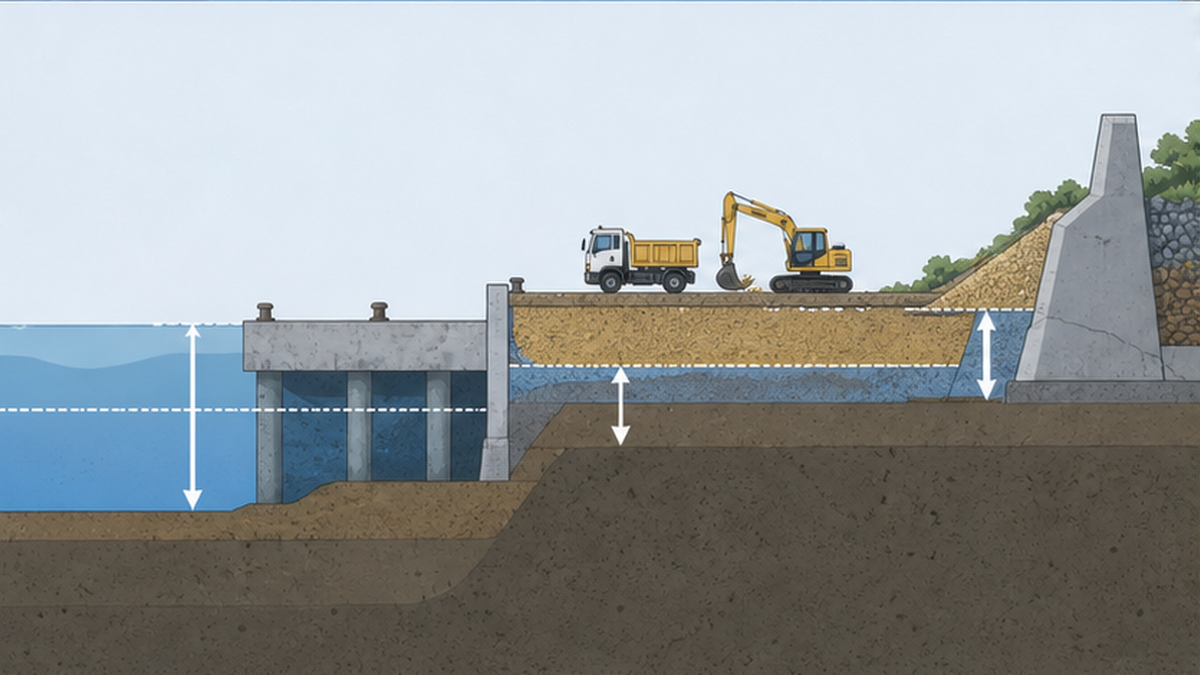
A gap in speed — fast for boats, slow for ports
Even among "hardware," the pace of restoration varied. Boats could be brought back into service relatively quickly through the transfer of used vessels and the introduction of jointly used boats. Civil engineering work such as raising quays and rebuilding seawalls, on the other hand, took years to complete due to a combination of factors — securing land, reaching consensus with local residents, and shortages of materials and skilled labor. The fact that Kesennuma Port's advanced hygiene-control handling facility began operating only in 2019, and that facilities at major hubs were not all in place until 2020, shows just how long a road infrastructure reconstruction turned out to be. Behind the recovery news that kept reporting "still under construction" lay this heavy, characteristic slowness of civil engineering work.
What hardware recovery shows
- Fishing port functions have essentially recovered, at 98% in Iwate, 99% in Miyagi, and roughly 80% in Fukushima
- About 90% of boats whose owners sought restoration have been restored, putting the physical conditions for fishing back in place
- But "the port is back" does not mean "fishing is back." People, sales channels, and the fish themselves are separate problems
What underpinned this restoration was generous financial support from the national government. Subsidy programs that allowed groups of operators to apply jointly were used to rebuild damaged boats and jointly used facilities, with public funds covering much of the rebuilding cost that individual fishers could never have shouldered alone. Had fishers relied solely on ordinary loans, many small-scale operators would likely have given up on rebuilding altogether. The fact that generous support made possible a roughly 90% restoration rate, on an applied-for basis, is an important point when considering the meaning of public support in disaster recovery.
These figures reflect both the scale of public funds invested in restoration and the tenacious effort of the people in the disaster area. Infrastructure such as seawalls and quays also serves as a lifeline the next time a tsunami strikes. The risk of sea-level change and storm surge is, if anything, rising with warming, a background that is not unrelated to the mechanics of sea temperature and ocean currents. But even once ports are restored, fishing cannot get moving again unless the fish return, the people return, and the buyers return. "The box is built, but what goes inside is still to come" — that was the next wall facing the disaster area once hardware restoration was complete.
"Consolidation" and "modernization" behind the rebuilding of fish markets
Whereas ports and boats were restored to what they had been, rebuilding fish markets was distinctly a matter of "rebuilding anew." Many of the fish markets in the disaster area had been aging, open-air facilities of the old style, where birds and dust could get in and fish were handled placed directly on the floor. Rather than simply rebuild them, the national government and local authorities chose to upgrade them all at once into advanced hygiene-control markets compliant with international food safety standards.
The choice of HACCP-compliant handling facilities
An advanced hygiene-control market refers to a handling facility compliant with HACCP, an international method of food hygiene management. A roof and walls block outside air, birds and rats are kept out, and a hygienic workflow is maintained so fish are never placed directly on the floor. Such facilities were built at major distribution hubs including Kesennuma, Onagawa, and Ishinomaki, coming online in stages through March 2020. A hygiene-control standard that had still been rare in pre-disaster Japan was, ironically, spread rapidly precisely because of the disaster.
- Kesennuma Port: its main quay was completed in May 2014, and its advanced hygiene-control handling facility began operating in April 2019
- Ishinomaki Fish Market: rebuilt HACCP-compliant roughly four years after being completely destroyed; at about 880 meters long, it is one of the largest in the country
- Onagawa, Ofunato, and others: hygiene-control facilities were built at major hub ports and came online in stages through March 2020
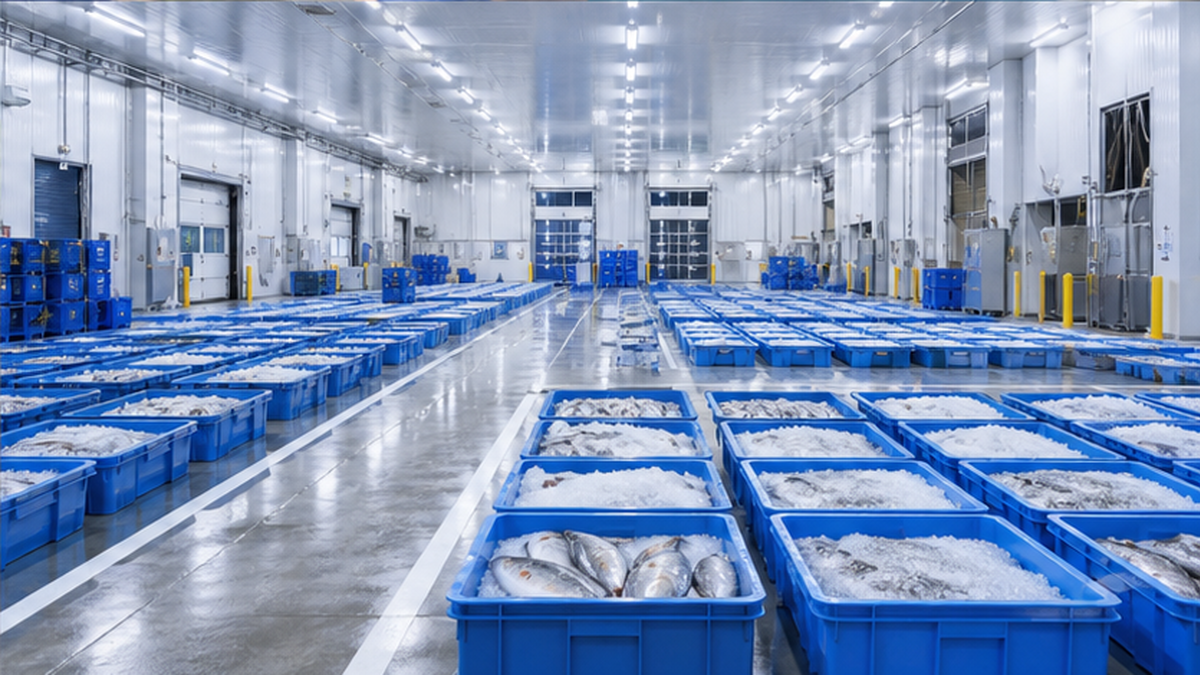
Why "consolidation"?
Rather than restoring many small markets, the rebuilding effort took the approach of consolidating function into a smaller number of larger, hub markets. This was against a backdrop of catch declines and population loss that had already been under way before the disaster. Building costly hygiene-control facilities at every port was not realistic, so the idea was to concentrate limited resources at key hubs to boost quality, brand strength, and export readiness. This amounted to a shift from "many small facilities" to "fewer, high-value elite facilities."
What is HACCP?
HACCP is a food hygiene management method that analyzes hazards (such as bacterial contamination) capable of causing harm to health at every stage from the receipt of raw materials to shipment, and continuously monitors and records critical control points. It is an international standard often required by trading partners for seafood exports as well. Rebuilding markets in the disaster area became an opportunity to raise the hygiene standards of Japan's seafood distribution as a whole.
What advanced hygiene-control markets aimed for was not mere cleanliness, but a boost to seafood's brand value and export competitiveness. Fish that pass through a market with thorough hygiene management are easier to certify for freshness and safety, making them easier to sell into premium markets at home and abroad, and to export destinations. Pre-disaster seafood distribution in Japan had grown accustomed to handling large volumes cheaply, and differentiation through hygiene and quality had lagged. Rebuilding markets in the disaster area became, in a sense, a testing ground that updated that old approach all at once, shifting the mindset from "cheap and plentiful" to "good quality at a fair price."
This modernization is two sides of the same coin as the shrinking workforce discussed later. In an era when the number of people is falling and the amount of fish caught is falling too, it becomes difficult to keep pursuing the old model of thin margins on high volume. Raising the value of each fish caught, even in smaller quantities, and building trust as a production region — that is the realistic strategy for a shrinking industry to survive. Modernizing markets can be seen as supporting that strategy from the side of physical infrastructure.
That said, consolidation and modernization are not without their downsides. In small fishing villages far from the hub facilities, some fishers now face a longer trip to land their catch, adding to their burden. Even where impressive facilities have been built, if the fish and people gathering there don't grow as expected, the investment weighs heavily in the form of low utilization rates. Whether the modernized vessel — the facilities — meshes with the recovery of what fills it — catches and workers — is the theme of the sections that follow.
Aquaculture's revival — where wakame, oysters, and scallops stand today
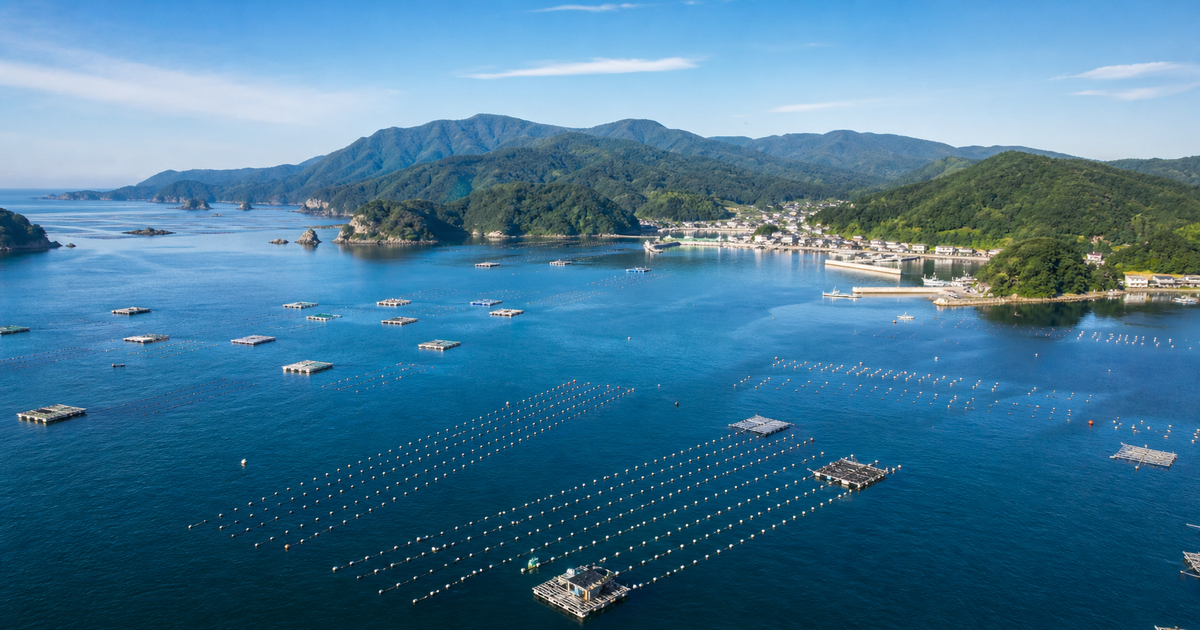
The rias coastline of Sanriku, with its chain of calm bays, is well suited to aquaculture. Farming wakame, kelp, oysters, scallops, and sea squirts is a pillar of the region's fishing income, and the tsunami wiped out nearly all of its rafts and seed stock. Even so, aquaculture was also a field where the path to resuming operations became visible relatively quickly compared with boat-based fishing, because once rafts are rebuilt and seed stock secured, a harvest can be expected the following season.
Rebuilding aquaculture through cooperation and mechanization
The recovery process also prompted a rethink of aquaculture methods themselves. Previously, each household typically operated its own rafts individually, but the disaster spurred a broader move toward cooperative management, in which multiple fishing households jointly operate rafts and work sites, along with mechanization of processing. In Iwate Prefecture, farmed wakame production has recovered to about 70% of pre-disaster levels, and abalone catches to roughly 60–80%, showing steady recovery in production for some items.
| Item | Characteristics | Recovery / current trend |
|---|---|---|
| Wakame / kelp | The mainstay of Sanriku aquaculture; cooperative management and mechanization are advancing | Recovered to about 70% of pre-disaster levels in Iwate |
| Oysters | Miyagi is the nation's second-largest production region after Hiroshima; both shucked and shell-on | Maintaining its position as the nation's second-largest production region |
| Scallops / sea squirts | Sea squirts face shrinking domestic demand and halted exports | Fortunes diverge sharply by item |
| Abalone / sea urchin | Rocky-shore resources; demand remains solid as premium goods | Recovered to about 60–80% in Iwate |
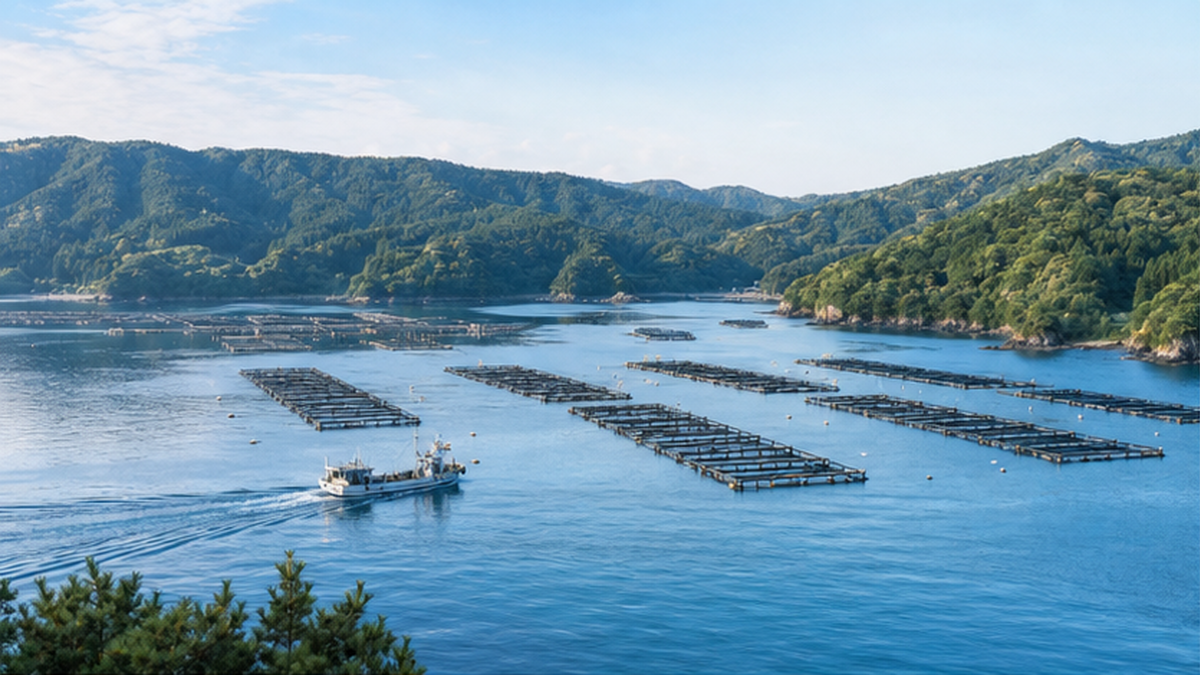
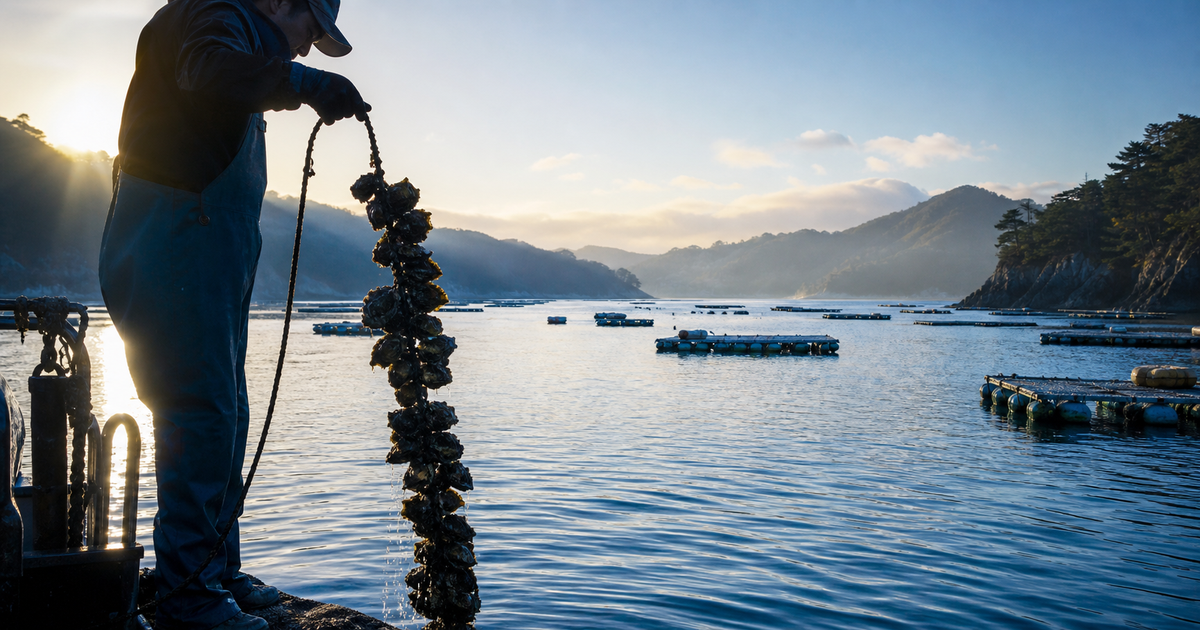
Miyagi's oysters are known as one of Japan's leading production regions, second only to Hiroshima Prefecture. The disaster wiped out oyster racks entirely, but during the recovery process, some production areas adopted "thinned-out farming," spacing rafts less densely than before. This is an attempt to grow larger, meatier oysters by lowering density, competing on quality rather than quantity. Ironically, having no choice but to rebuild the rafts from scratch became an opportunity to reconsider the old overcrowded style of farming and pivot toward higher-quality oyster production — a case where crisis pushed forward a change to production methods that had gone unchanged for years.
What sea squirts reveal: "we can grow it, but we can't sell it"
Symbolic of aquaculture's revival is the case of sea squirts (hoya). Before the disaster, much of Miyagi's sea squirt production was exported to South Korea. But after the nuclear accident, South Korea halted imports of seafood from eight prefectures including Fukushima, cutting off a major sales channel. Even if rafts can be rebuilt and farming resumed, the harvest has nowhere to go without a market to sell it into. Recovering production and recovering sales channels are separate challenges — and this same structure applies to seafood processing as well.
Recovering production ≠ recovering income
Even if aquaculture rafts are repaired, seed stock secured, and a harvest brought in, a fishing household's income won't recover if prices are low or the market it once sold to has been lost. For items like sea squirts, where export halts cut off sales channels, business recovery lagged even as production facilities were restored. Measuring recovery by "production volume" alone overlooks this problem of income and sales channels.
Another reason aquaculture resumed faster than boat-based fishing is the shorter time to harvest. Wakame and oysters can be harvested roughly a year after seed stock is introduced, so as long as rafts and seed stock can be secured, a harvest can be expected the following season. Because the turnaround is quick, it was easier for affected households to regain cash income, giving them a foothold for rebuilding their lives. Indeed, in the year or two following the disaster, aquaculture rafts gradually returned to bays across Sanriku, and the sight of harvests resumed. The fact that aquaculture "came back quickly" was, in no small way, a psychological support for the entire fishing industry in the disaster area.
At the same time, aquaculture is an extremely sensitive livelihood when it comes to changes in the marine environment. Rising sea temperature shifts the optimal growing season for wakame and oysters, and hypoxia or red tides can ruin a harvest overnight. Even after rebuilding through cooperation and mechanization, if the very sea in which they are raised becomes unstable, it is hard to plan for the future of the business. The goal of recovery is not to return to how things were before the disaster, but to build a system that can sustain aquaculture while adapting to a changing sea.
Aquaculture's recovery shows that fishing in the disaster area is not simply "returning to what it was," but is shifting its very character toward cooperation, mechanization, and higher added value. It is also a reality that the marine environment in which shellfish and fish grow is itself exposed to pressures such as red tides, hypoxia, and ocean acidification. Environmental risks such as the mechanism behind red tides, for instance, remain an ongoing challenge for the stability of aquaculture even after recovery.
Catches that won't come back — the 50–70% wall and the struggles of seafood processing
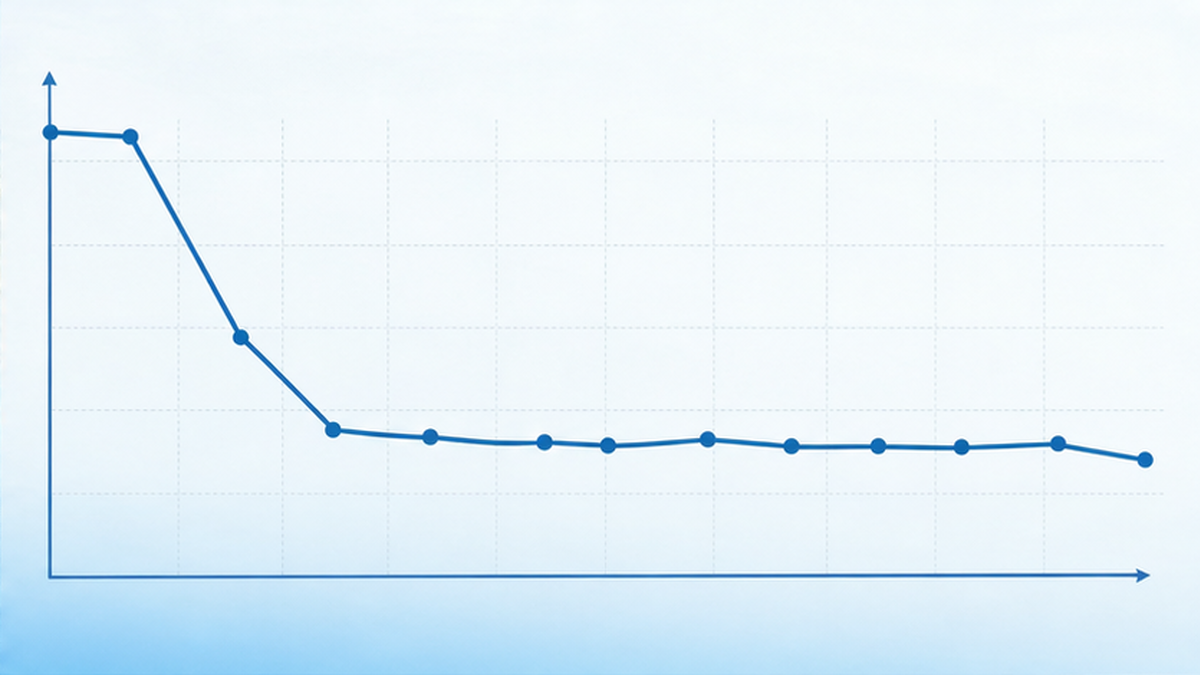
Even with fishing ports 98% restored and about 90% of boats whose owners sought restoration back in service, the all-important catch volume has not reached pre-disaster levels. Catch volumes at the major fish markets of Iwate, Miyagi, and Fukushima have in recent years plateaued at roughly 50–70% of pre-disaster levels. According to figures compiled at the disaster's tenth anniversary, the value of catches across the disaster area as a whole had only recovered to about 76% of the pre-disaster year, and volume to about 69%. Hardware recovery rates exceed 90%, yet catches remain stuck around 70% — this gap is precisely the core difficulty of fisheries recovery.
Why haven't catches recovered?
There is no single reason. First is a decline in the resource itself. Sanriku's mainstay species — saury, Japanese flying squid, and salmon — have, quite apart from the disaster, continued to see poor catches nationwide due to changes in the marine environment. Even with ports fully operational, catches won't grow if there are fewer fish to catch. Second is the decline in the workforce, discussed in detail in the next section: the number of fishers itself has fallen, and so has the actual number of boats that can go out to sea. Third is the failure of sales channels and processing capacity to recover.
- Resource decline: poor catches nationwide of mainstay species such as saury, Japanese flying squid, and salmon, compounding the disaster's effects
- Workforce decline: aging and a lack of successors have reduced the number of active fishers and operational boats
- Loss of sales channels: trading partners and export destinations were lost, so even fish that are caught have fewer places to sell
- Delays in processing: even as processing plants reopen, the pre-disaster trading networks have not fully returned
Seafood processing — production capacity is back, but not sales
The disaster area was a hub not only for "catching fish" but also for the "processing industry." The Fisheries Agency has tracked the recovery of seafood processing businesses — makers of kamaboko fish cakes, canned goods, dried fish, and frozen processed products — through surveys. These show that about 70% of businesses have recovered production capacity to 80% or more of pre-disaster levels, while only about 50% have recovered sales to 80% or more. Equipment has come back, but sales haven't followed. Here too, a gap appears between production capacity and actual business performance.
| Metric | Share of businesses recovered to 80% or more |
|---|---|
| Production capacity | About 70% |
| Sales revenue | About 50% |
The main reason sales haven't recovered is that trading partners lost during the disaster's blank period switched to other production regions. Winning back a sales channel once it has been lost is not easy. On top of that, poor catches of the raw-material fish squeeze procurement, and labor shortages constrain production. It should not be overlooked that the sea's bounty itself is exposed to long-term pressures such as ocean acidification and ecosystem change. Topics on the ocean's functions, such as blue carbon and coastal ecosystems, are directly connected to the future of fishery resources.
The triple burden behind stagnant catches
- The marine resource itself is declining (poor catches nationwide, separate from the disaster)
- The people who catch and process fish are declining (workforce shortage)
- The markets to sell into are shrinking (loss of sales channels, and trading partners moving to other regions)
The trap hidden in "recovery rate" figures
When discussing recovery, phrases like "catches have recovered to X% of pre-disaster levels" are commonly used. But it's important to note that the "pre-disaster" baseline itself was, in fact, already partway through a long-term decline. Japan's fisheries production has been falling for decades since its peak in the 1980s, and the 2011 level was just one point on that downward slope. In other words, the figure "70% of pre-disaster levels" is 70% of a baseline that was already not high to begin with — meaning the situation facing fisheries in the disaster area is more severe than the number alone suggests. Evaluating recovery requires looking not only at comparisons with pre-disaster levels, but placing them within the long-term trend of Japan's fisheries as a whole.
That said, it is not all pessimism. Some businesses are maintaining or even growing sales and income despite lower catch volumes, by focusing on quality and branding and adding value through processing and direct sales. If a recovery in volume has plateaued, then competing on unit price and added value is the alternative — and part of the disaster area's seafood processing industry is already ahead of this shift. Understanding the trap in the numbers, how to build up value rather than volume is set to become the new yardstick for evaluation going forward.
Fukushima's 13 years — from trial operations to ALPS-treated water
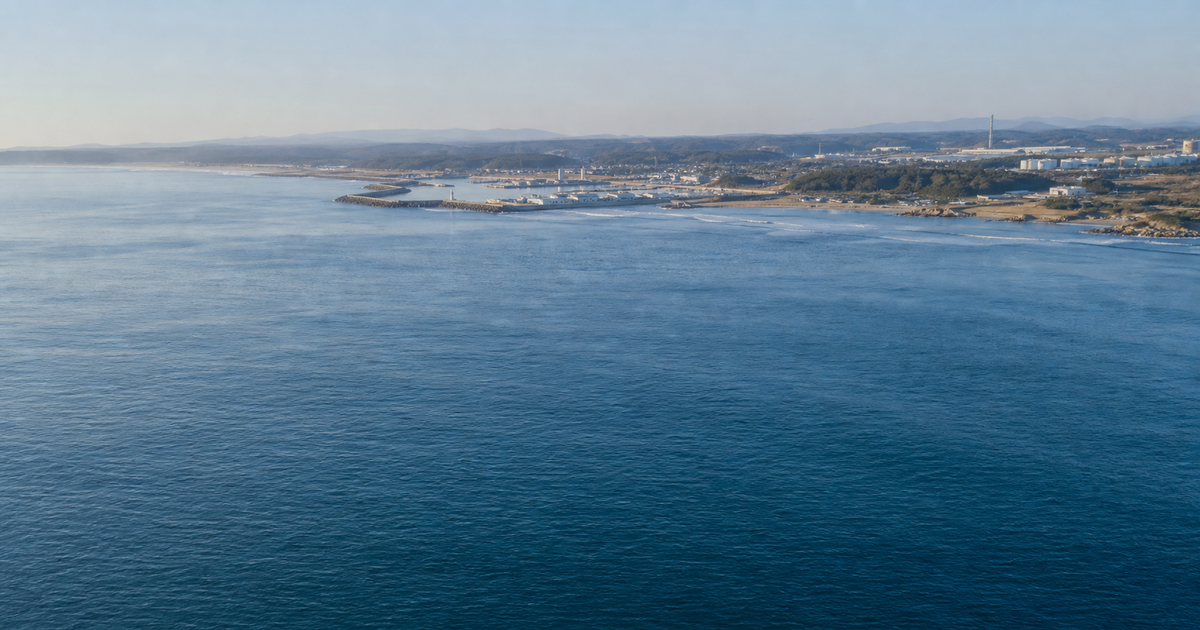
Among the three hardest-hit prefectures, only Fukushima's fisheries have carried a fundamentally different burden. In addition to tsunami damage, the accident at Tokyo Electric Power Company's Fukushima Daiichi Nuclear Power Station forced coastal fishing to halt normal operations for a long period. The waters off Fukushima, once proud of the high-quality fish known as "Joban-mono," were forced to confront the invisible problem of radioactive material, again and again.
A decade of trial operations
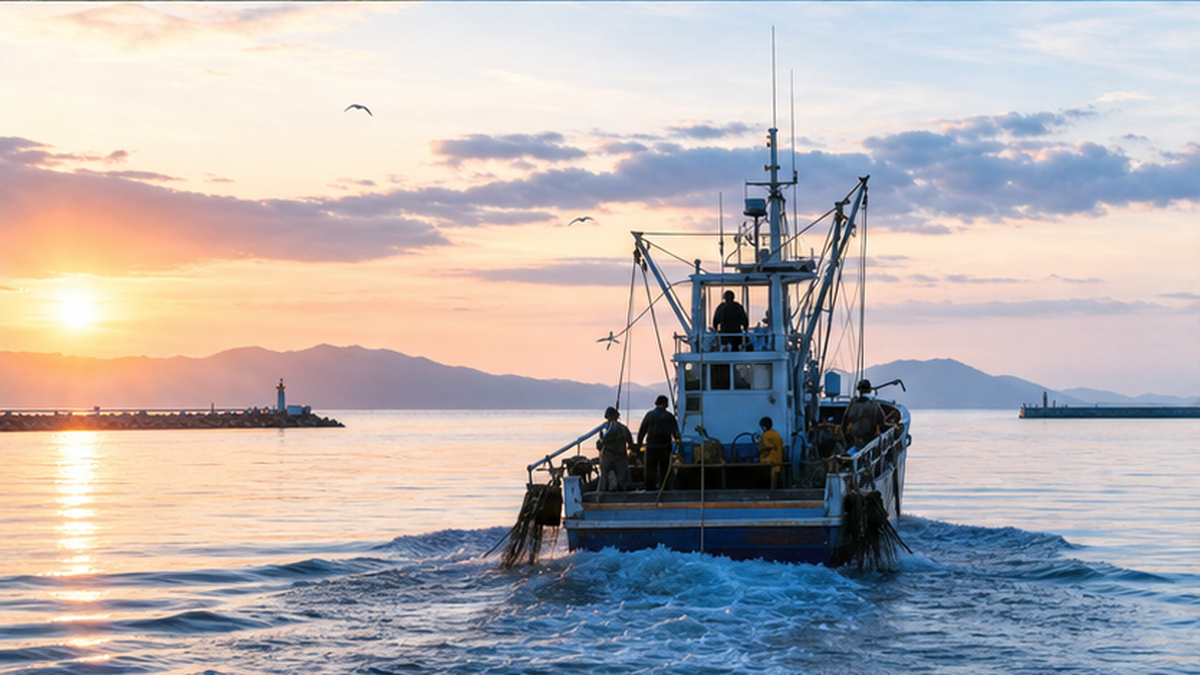
After the accident, coastal fishing in Fukushima resumed on a small scale in the special form known as trial operations. This was a cautious approach that limited the target species and sea areas, confirmed safety through radioactive material testing, and gradually expanded scope while watching how the market responded. These trial operations continued for about ten years and ended at the end of March 2021. From April 2021, fisheries entered a "transition period toward full-scale operations," aiming for a return to normal fishing. It was just as safety data had finally accumulated enough for the industry to begin moving forward.
The ocean release of ALPS-treated water, and reputational damage
Partway through the move toward full-scale operations, a new point of contention emerged: the ocean release of ALPS-treated water. At Fukushima Daiichi, water treated by purifying contaminated water through the Advanced Liquid Processing System (ALPS) kept accumulating in tanks, and in August 2023, the government and Tokyo Electric Power Company began diluting it to meet regulatory standards and releasing it into the sea. Monitoring testing of seafood for tritium was strengthened, and countermeasures were put in place at every stage from production to consumption.
As a hedge against reputational damage, the government established a large-scale fund. Combining ¥30 billion from the fiscal 2021 supplementary budget and ¥50 billion from the second fiscal 2022 supplementary budget, a fund of roughly ¥80 billion was set up, allocated to developing sales channels, stimulating demand, and responding to price declines. Looking at the domestic situation after the release, thanks in part to the government's countermeasures against reputational damage, there were reportedly almost no fishers or processors who fell into serious sales slumps due to consumers avoiding their products.
The "wall abroad" proved heavier than the wall at home
After the release of ALPS-treated water, domestic consumer reaction was relatively calm, but the impact was significant on exports. China and Russia moved to an outright ban on imports of Japanese seafood, and Hong Kong and Macau expanded the scope of their own import bans. Items highly dependent on the Chinese market, such as scallops, were hit harder by the export halt than by the release itself. The fact that the barrier to recovery shifted from domestic reputational damage to international relations illustrates the complexity of this issue.
The accumulation of monitoring test results serves as more than mere regulation for Fukushima's fisheries — it is a foundation of trust. Since the accident, a vast number of radioactive material tests on fish caught off Fukushima have continued, and in recent years almost no samples exceeding the standard values have been detected. This steady accumulation of data has scientifically supported the transition from trial operations to full-scale operations. For "Joban-mono" to be valued once again at the table and in the marketplace, this kind of transparent testing and disclosure of information must continue, even if it goes largely unnoticed.
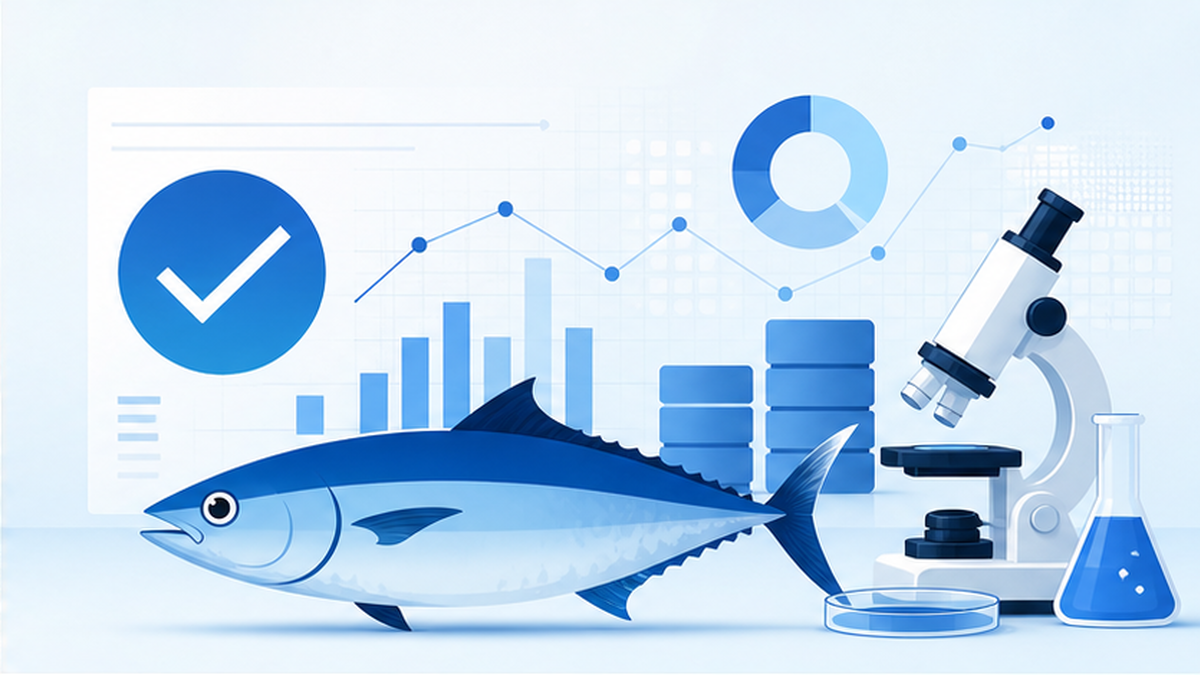
Fukushima's 13 years posed the difficult lesson that "being safe" and "being trusted as safe" are two different things. No matter how much scientific testing data demonstrates safety, sales channels won't recover unless consumers and trading countries accept it. The question of the reliability of information about the marine environment is a modern challenge that also extends to broader ocean governance issues, such as marine protected areas and ocean management.
The pre-disaster homework of a shrinking workforce, and smart fisheries
At the root of the "catches won't come back" problem examined so far lies a structural issue that was not caused by the disaster, but was accelerated by it: a shrinking, aging workforce. The number of people employed in Japan's fisheries had already been declining over the long term before the disaster, and the aging rate was already high. The tsunami added momentum to that trend. Among fishers who lost their boats and homes and were forced to move to higher ground, living apart from their fishing ports, no small number chose to leave the industry altogether.
How separating home from work took away "the fisher's way of life"
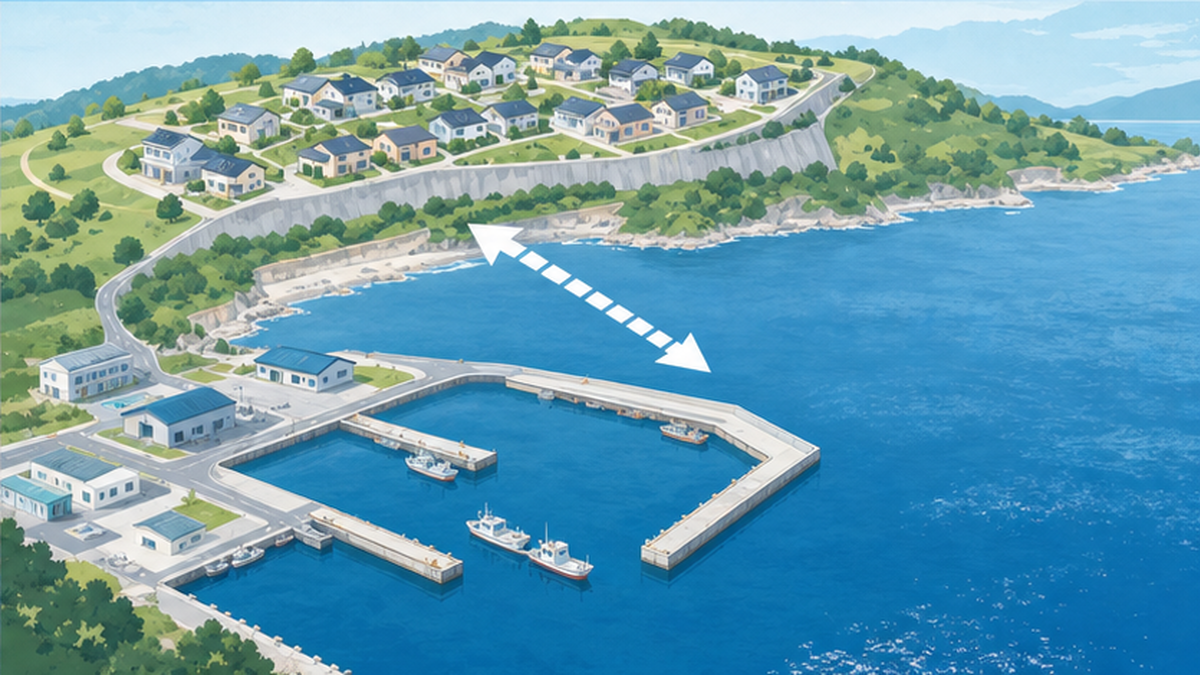
In rebuilding communities, relocation to higher ground was widely carried out to protect lives from future tsunamis. Safety improved, but the cost was that it became difficult to maintain fishers' traditional way of life — living near the port and heading out to sea early in the morning while watching the weather. With homes now separated from ports — a separation of home and work — fishing came to resemble a job one commutes to, and older fishers who had continued the work part-time found it easier to retire. This is a deep-seated dilemma of recovery: reconciling safety with livelihood.
- The number of fisheries workers had already been declining and aging before the disaster — a structural pre-existing challenge
- Business closures caused by the disaster, along with relocation to higher ground and the separation of home and work, accelerated the flow of people leaving the industry
- Securing successors is a precondition for recovery in catches, processing, and the local community alike
Smart fisheries and attracting new entrants
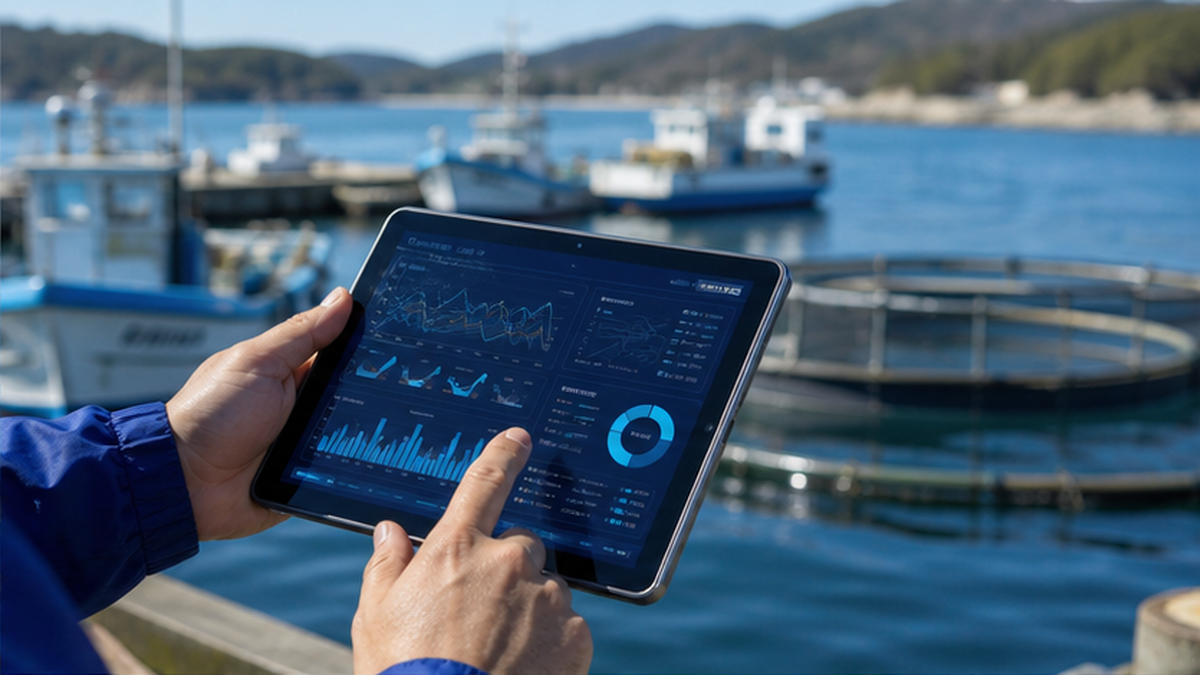
In response to this homework assignment, the disaster area continues to pursue several forward-looking initiatives. One is smart fisheries. The Fisheries Agency recommends efforts to raise productivity through digital technology, and in Higashimatsushima City in Miyagi Prefecture, an initiative is under way in partnership with the KDDI group to systematize the collection and management of data related to aquaculture and fishing, aiming to streamline operations. The idea is to raise productivity per person even as the number of people declines, aiming for a fishing industry that can function even with fewer workers.
Another is attracting new entrants. Fishery cooperatives, local governments, and the national government are working together to set up fishing experience programs and training systems for people considering moving in from outside the town, in hopes of welcoming those interested in work at sea. Rather than relying solely on hereditary succession within families, inviting people in from outside and passing on skills to them — a shift from a closed family trade to an open industry — is quietly beginning.
Whether these initiatives succeed is not a matter confined to the disaster area alone. The challenge of a shrinking workforce and dwindling resources is shared, to varying degrees, by fishing communities across Japan. The disaster area was forced to confront this challenge earlier, in the harsh form of a disaster, and is now testing in practice a prescription of consolidation, modernization, smart technology, and support for new entrants. The successes and failures here should serve as valuable precedents for fisheries nationwide, which face the same wave of population decline yet to come.
Three directions for building the workforce of the future
- Smart fisheries: raising productivity per person through data and digital tools
- Support for new entrants: welcoming migrants and newcomers through training and hands-on experience
- Higher added value: shifting toward a "catch less, sell for more" model through advanced hygiene management and branding
Responding to environmental issues such as marine debris and lost fishing gear will also shape the sustainability of fishing going forward. As with the problem of ghost gear (abandoned, lost, or discarded fishing gear) drifting through the ocean, the fisheries industry bears a responsibility to protect the sea even as it makes use of it. Growing the workforce, supporting it with technology, and harmonizing it with the environment — only when these three come together will recovery move beyond "returning to what it was" and into the stage of "building a new fisheries industry."
Conclusion — where 13 years have brought us, and the sea ahead
Looking back at fisheries recovery from the Great East Japan Earthquake in numbers, the picture is one of clear contrasts. More than 90% of fishing ports have regained function, about 90% of boats whose owners sought restoration have been restored, and fish markets have been reborn as advanced hygiene-control facilities. In terms of hardware restoration, it is fair to say the disaster area has achieved a recovery Japan can be proud of on the world stage. But catch volumes have plateaued at 50–70% of pre-disaster levels, sales in seafood processing have not fully returned, the workforce keeps shrinking, and Fukushima still carries the entirely separate challenge of the nuclear accident.
What matters is that much of this stagnation stems not from the disaster itself, but from structural problems that the disaster accelerated. Declining resources, aging, a lack of successors, weak sales channels — these are challenges facing Japan's fisheries as a whole, and the disaster area is searching for answers on the front line. The disaster area's efforts toward consolidation and modernization, smart fisheries, and welcoming new entrants form a microcosm of Japan's fisheries industry itself in an era of population decline.
Thirteen years is long enough for a child born at the time to have become a junior high school student. In the disaster area, a generation with no direct memory of the tsunami is now growing up, and newcomers who have moved into the region are beginning to take up fishing. As long as recovery is defined as "returning to how things were before the disaster," the goal will forever recede into the distance. What matters more is whether a new generation of workers can build a form of fishing they can be proud to continue, within a sea and a society that have already changed — that is where the focus of the next ten years truly lies. The "incompleteness" the numbers reveal is not a record of failure, but a picture of the future still being drawn.
Summary of this article
- Fishing ports have regained function at 98% in Iwate, 99% in Miyagi, and roughly 80% in Fukushima, and about 90% of boats whose owners sought restoration have been restored (as of the disaster's tenth anniversary; Fisheries Agency) — hardware recovery is essentially complete
- Yet catch volumes have plateaued at 50–70% of pre-disaster levels, caused by a triple burden of resource decline, workforce shortage, and lost sales channels
- Fish markets have been consolidated and modernized into advanced hygiene-control (HACCP-compliant) facilities, raising the quality standard of seafood distribution
- Fukushima moved to full-scale operations in 2021 after about a decade of trial operations; after the 2023 release of ALPS-treated water, the impact of export halts was greater than domestic effects
- Facing the pre-existing homework of a shrinking workforce, the industry is now pursuing a new form of fishing through smart fisheries, support for new entrants, and higher added value
Recovery is not finished. But that does not mean "failure." Rather than simply returning to what it was, fisheries in the disaster area are grappling, ahead of the rest of the country, with a question that all of Japan's future must answer: how to hand down the sea's bounty to the next generation with fewer people and dwindling resources. When the seas of Sanriku and Joban regain their full vitality once more, it will stand as proof that this country's fisheries industry has found a new form.
References and sources
- Fisheries Agency – White Paper on Fisheries, "Chapter 6: The State of Recovery Ten Years After the Great East Japan Earthquake"
- Fisheries Agency – White Paper on Fisheries, "Status of Restoration and Recovery in Fisheries"
- Fisheries Agency – Current Status and Challenges Toward Fisheries Recovery from the Great East Japan Earthquake
- Fisheries Agency – White Paper on Fisheries, "Developments Surrounding the Ocean Release of ALPS-Treated Water"
- Fisheries Agency – Survey on the Recovery Status of Seafood Processing Businesses from the Great East Japan Earthquake
- Reconstruction Agency – Status and Efforts of Recovery from the Great East Japan Earthquake (December 2024)
- Reconstruction Agency – Ten-Year Review of Reconstruction Policy, Chapter 6: Revival of Industry and Livelihoods — Fisheries
- Miyagi Prefecture – Records and Legacy of the Disaster: "Restoration of Fishing Boats and Jointly Used Fisheries Facilities"
- Fukushima Prefecture – Information on Fukushima's Fisheries (Trial Operations and Full-Scale Operations)
* Listed in order of reliability: government and academic institutions > peer-reviewed papers > specialist organizations > reputable media