⚡ In short
In 2022, global aquaculture production reached 94.4 million tonnes, surpassing wild capture fisheries for the first time in history. Yet challenges remain: sediment pollution from uneaten feed and feces, antibiotics, and dependence on fishmeal made from wild fish. We explain the real impacts and the latest innovations toward sustainable aquaculture.
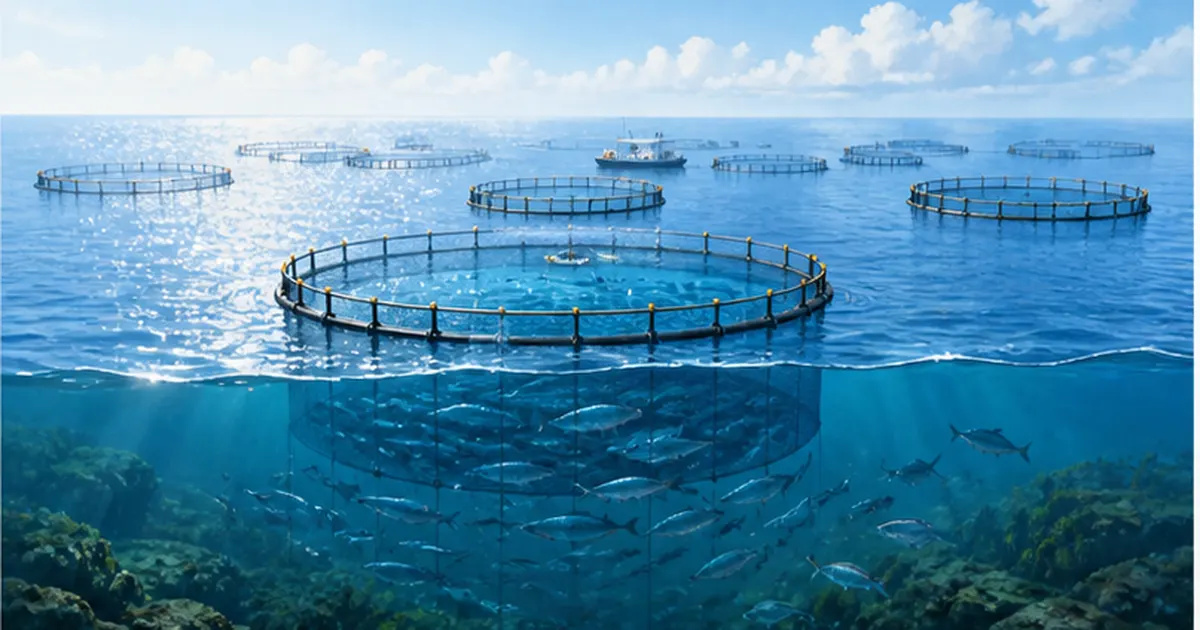
The salmon, yellowtail, oysters, and shrimp lining supermarket shelves — most of them are now farmed, not wild-caught. According to the FAO (Food and Agriculture Organization of the United Nations), global aquaculture production of aquatic animals reached 94.4 million tonnes in 2022, surpassing capture fisheries for the first time in history. Aquaculture, which can supply protein without leaning on overexploited wild stocks, is hailed as a "solution to the ocean crisis."
What is far less known, however, is that aquaculture itself places new burdens on the marine environment. Uneaten feed and feces piling up beneath net pens deplete oxygen on the seafloor, antibiotics used to prevent disease create risks of drug-resistant bacteria, and large quantities of wild fish go into the feed of farmed fish. The industry carries a paradoxical structure: catching fish in order to raise fish.
This article organizes the real environmental impacts of aquaculture based on primary sources, then walks through Japan's legal framework and fishing-ground improvement efforts, and on to the frontier of sustainable aquaculture — integrated multi-trophic aquaculture (IMTA), land-based farming, alternative feeds, and ASC certification.
What you will learn in this article
- Why environmental impact is being questioned now that global aquaculture has overtaken capture fisheries
- The mechanism of "sediment pollution," in which uneaten feed and feces deplete oxygen on the seafloor
- The "fishmeal and fish oil problem" of feeding wild fish to farmed fish, and the FIFO (Fish In, Fish Out) concept
- The risks of antibiotics and drug resistance — why Chile and Norway differ by a factor of 470
- Japan's on-the-ground measures under the Act on Ensuring Sustainable Aquaculture Production and fishery-ground improvement plans
- Frontier innovations that reduce impact: IMTA, land-based aquaculture, alternative feeds, and ASC certification
Is Aquaculture the Ocean's Solution or a New Burden? Where the World and Japan Stand
First, let's confirm with numbers just how large aquaculture has become. According to the FAO's The State of World Fisheries and Aquaculture (SOFIA) 2024, global fisheries and aquaculture production in 2022 hit a record 223.2 million tonnes including algae. Of this, aquaculture accounted for 130.9 million tonnes. Looking at aquatic animals alone, aquaculture produced 94.4 million tonnes — 51% of the total. For the first time in recorded statistics, aquaculture overtook capture fisheries.
Behind this lies global population growth and expanding demand for seafood. Wild fishery resources are finite, and the FAO has long warned that the share of stocks fished beyond sustainable levels exceeds 30%. With capture fisheries unable to grow further, aquaculture is effectively the only thing supporting rising demand. Regionally, aquaculture production is concentrated in Asia, led by China and followed by Indonesia, India, and Vietnam. The variety of organisms farmed is remarkable, from freshwater fish such as carp and tilapia to shrimp, bivalves, and seaweed.
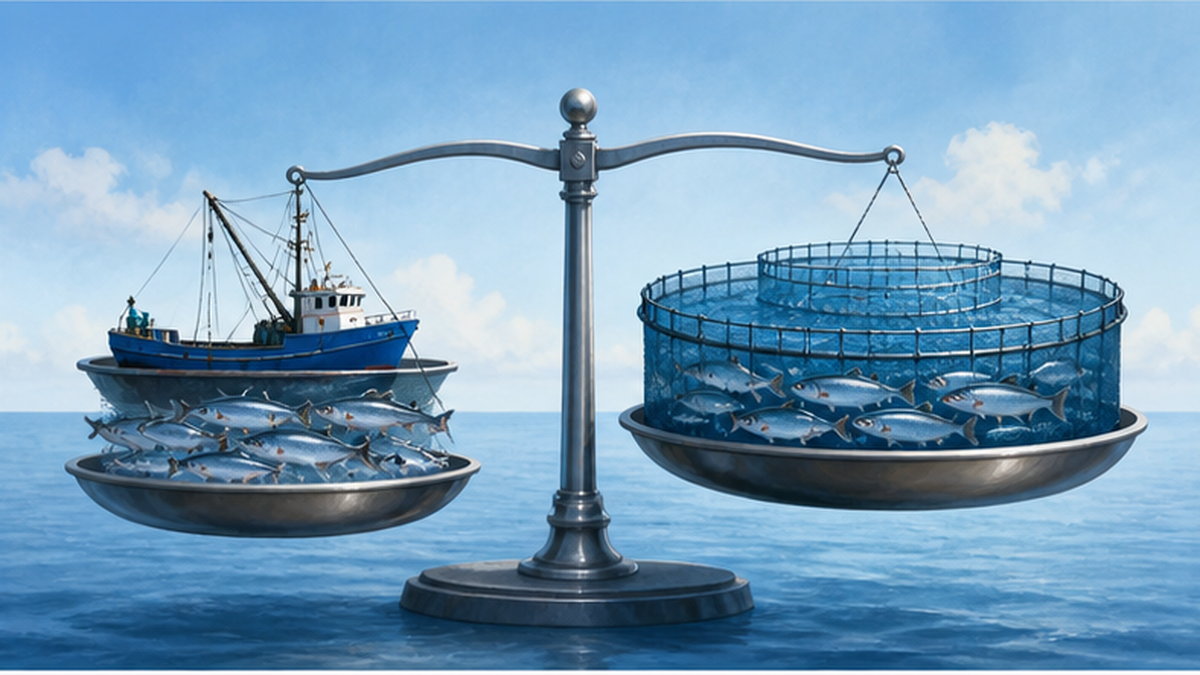
In Japan, Too: About 20% by Volume and 40% by Value
Aquaculture looms large in Japan as well. According to the Fisheries Agency's white paper on fisheries, marine aquaculture produces about 880,000 tonnes — just over 20% of national production by volume — and more than 40% by value. Beyond finfish such as yellowtail, red sea bream, and coho salmon, farmed products include shellfish like oysters and scallops and seaweeds like nori and wakame; much of the seafood familiar on Japanese tables comes from aquaculture. The higher share by value reflects aquaculture's strength: high-value species can be raised and shipped on a planned schedule.
Japan in fact has a long history of aquaculture. Oyster farming in Hiroshima is said to date back to the Warring States period, and nori cultivation took off in Edo-period Tokyo Bay. In finfish, hamachi (yellowtail) farming began around 1927 in Ado Pond in Kagawa Prefecture, later expanding to red sea bream, tiger puffer, and bluefin tuna. As wild stocks decline and the fishing workforce ages, aquaculture is seen as the future of Japan's fisheries, with the government strengthening support under its "growth industrialization of aquaculture" policy.
Reference / SourceFAO, The State of World Fisheries and Aquaculture (SOFIA) 2024The latest statistics on global fisheries and aquaculture production, reporting that aquaculture surpassed capture fisheries for the first time in 2022🔗 fao.org"Farming the Sea" Has Environmental Costs Too
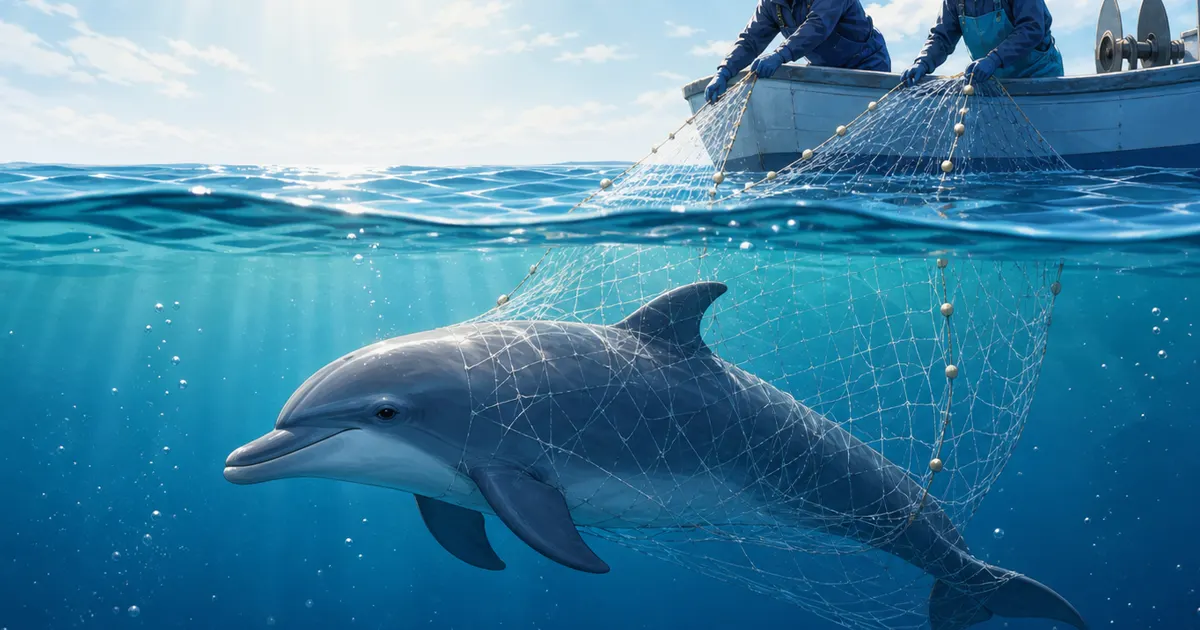
For all its rapid growth, raising animals at high density means the environmental load is never zero. The main issues fall into four categories: (1) water and sediment pollution from uneaten feed and feces; (2) antibiotics and drug resistance from disease control; (3) a structure that depends on wild fish as feed ingredients; and (4) ecosystem impacts from escaped fish and parasites. Let's examine them in turn.
Key points of this section
- In 2022, global aquaculture of aquatic animals (94.4 million tonnes) surpassed capture fisheries for the first time in history
- In Japan, aquaculture is a core industry accounting for over 20% of production volume and over 40% of value
- At the same time, it faces four environmental challenges: sediment pollution, antibiotics, fishmeal dependence, and ecosystem impacts
What Happens Beneath the Net Pens: Sediment Pollution from Uneaten Feed and Feces
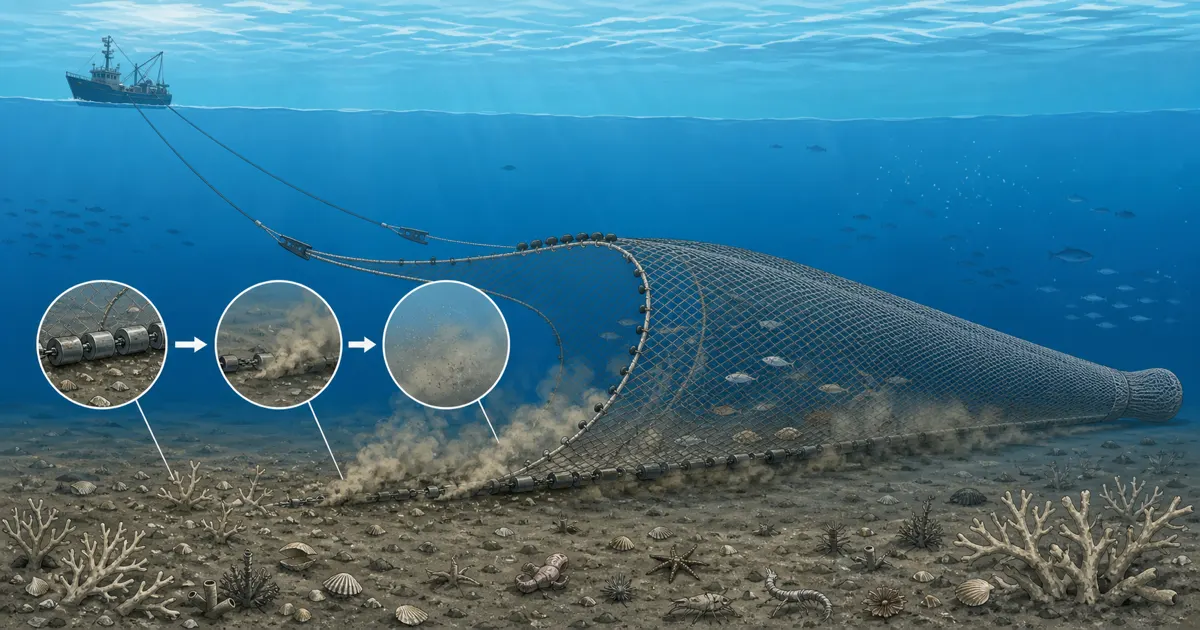
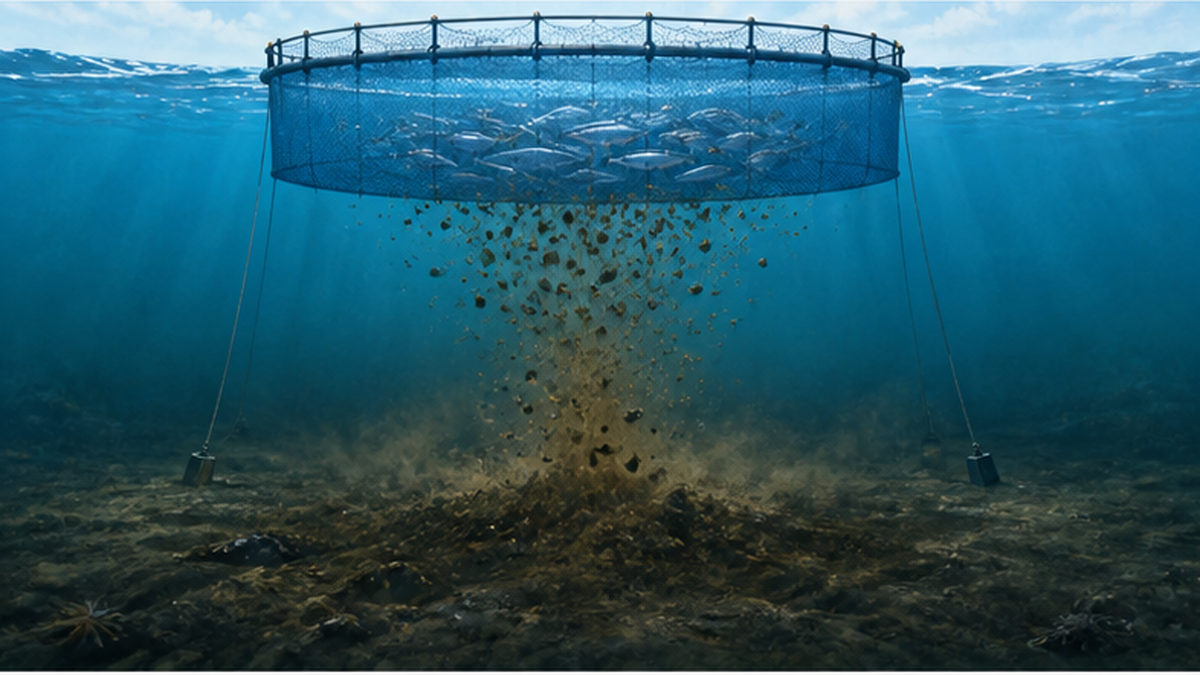
The longest-recognized environmental impact of aquaculture is sediment pollution. Inside a net pen, huge numbers of fish eat and excrete every day. Uneaten feed and feces sink to the seafloor, accumulating as masses of organic matter that then decompose.
The problem is that this decomposition consumes vast amounts of oxygen at the seabed. When there is too much organic matter, the bottom water becomes hypoxic; once normal aerobic decomposition can no longer keep up, microbes that operate without oxygen take over and produce toxic sulfides such as hydrogen sulfide. A sulfide-laden seabed turns black, gives off a rotten-egg smell, and becomes a "dead seafloor" where benthic creatures such as polychaetes and shellfish cannot live.
To picture the scale of the load, consider feed efficiency. Aquaculture uses an indicator called the feed conversion ratio (FCR) — how many kilograms of feed are needed to add one kilogram of fish body weight. For yellowtail and red sea bream raised on compound feed it is around 2 to 3, meaning two to three times the weight of the harvested fish is poured into the sea as feed. Most of it fuels growth and metabolism, but whatever is not digested leaves as feces, and whatever is not eaten leaves as waste feed — all of it ends up in the sea. The more fish are stocked and the rougher the feeding practice, the more the burden on the seafloor piles up.
Pollution Rebounds on the Farm Itself
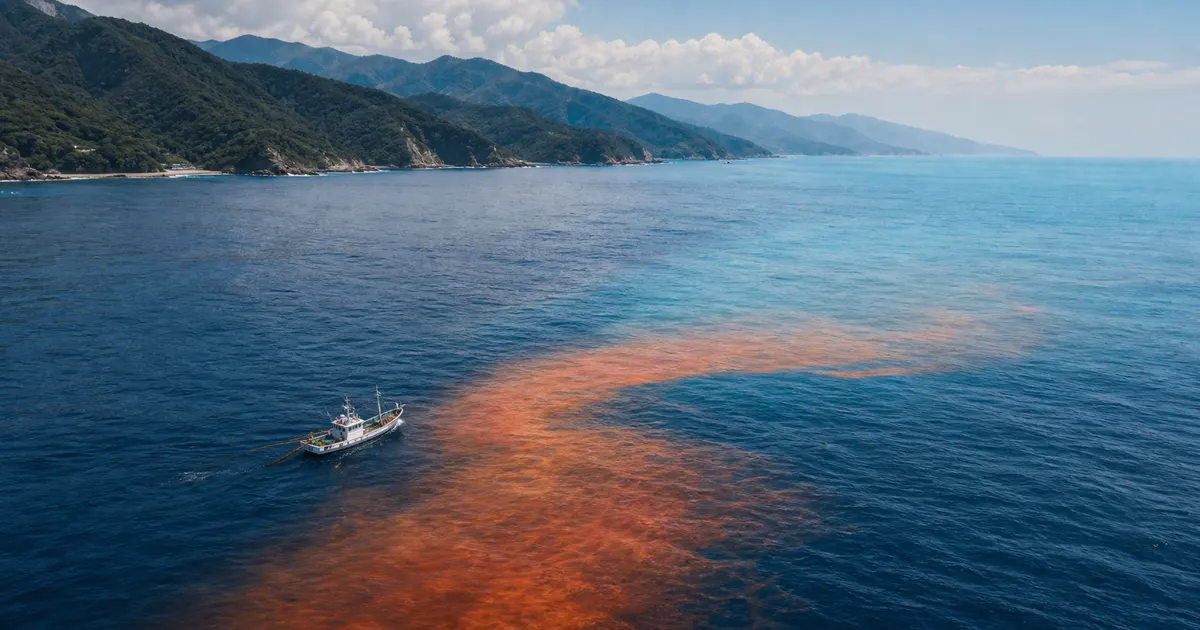
Degraded sediments harm not only the surrounding ecosystem but the farm itself. In fishing grounds overloaded with organic matter and nutrients, harmful algal blooms that damage fish gills occur more readily, and hypoxic seabeds raise the risk of fish disease. In Japan, overcrowded farming in the 1980s–90s caused serious "self-pollution" and aging of fishing grounds, with repeated outbreaks of fish disease and red tides. We explain how excess nutrients enrich the sea in our article on nutrient runoff and eutrophication, and the mechanism of red tides in our article on red tides and eutrophication.
How Much Load Can the Sea Absorb?
The key point is that the sea naturally has a self-purification capacity. A moderate amount of organic matter is broken down by benthic organisms and microbes and dispersed by currents. Widely used indicators of whether the load stays within this capacity include acid-volatile sulfide (AVS-S) in bottom sediment and dissolved oxygen; at Japanese fishery-improvement sites, feed amounts and stocking numbers are adjusted so that sulfide levels do not deteriorate.
In other words, sediment pollution is not a story of "farm fish and the sea dies," but a question of whether the load exceeds the carrying capacity of that particular fishing ground. A site with good tidal flow can absorb a larger load, while a semi-enclosed bay is more easily polluted at the same scale. Scientifically estimating each site's carrying capacity and keeping production within it — this is the basic philosophy of modern aquaculture management, and the foundation of Japan's fishery-ground improvement plans described later.
- Waste-feed measures: switching from raw feed to pelletized compound feed, and introducing feeding systems that monitor appetite with cameras and sensors
- Sediment measures: moving and resting pens (rotating fishing grounds), tilling the seabed to supply oxygen, and spreading lime to suppress sulfides
- Monitoring: regular measurement of sediment sulfides and dissolved oxygen as an ongoing "health check" of the fishing ground
Points of caution
- Sediment pollution can affect not only the area directly beneath pens but also nearby seagrass beds and fishing grounds via currents
- A seabed once loaded with sulfides takes a long time to recover — "not polluting" beats "polluting then fixing"
"Catching Fish to Raise Fish": The Fishmeal, Fish Oil, and FIFO Dilemma
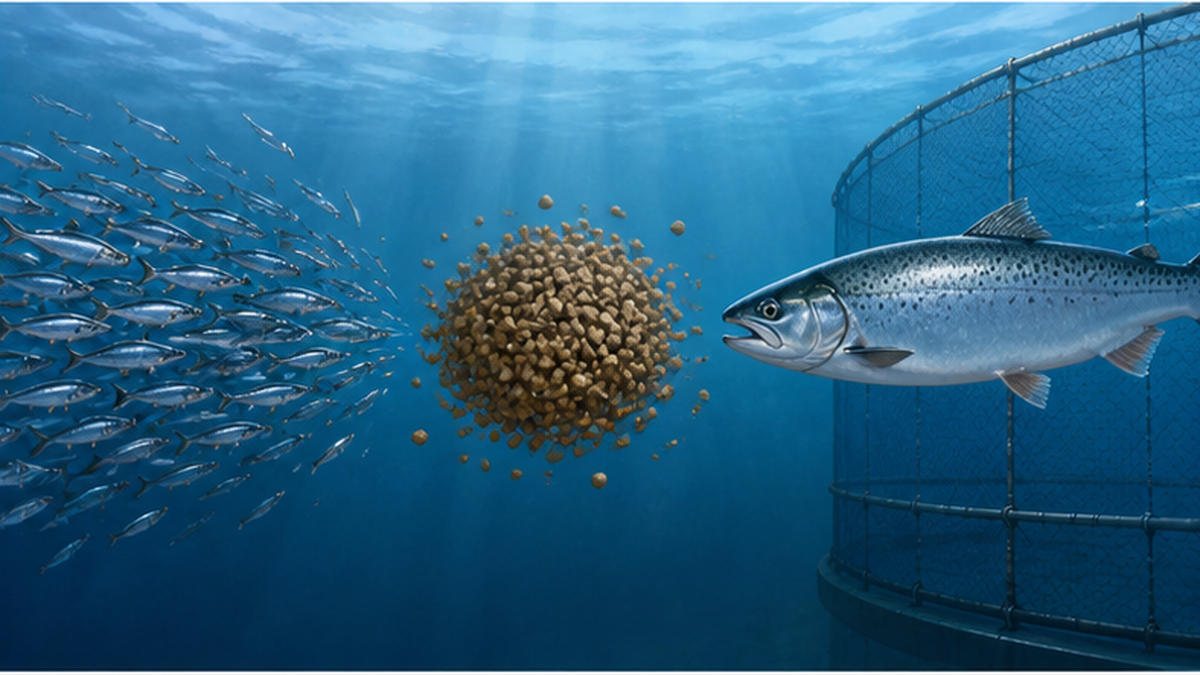
No discussion of aquaculture's environmental impact can avoid the feed question. The main ingredients of compound feeds for carnivorous fish like yellowtail, red sea bream, and salmon are fishmeal and fish oil made from small fish such as anchoveta. In other words, large volumes of wild fish are caught to raise farmed fish. According to the FAO, about 11% of global aquatic animal production goes to non-food uses, much of it as raw material for fishmeal and fish oil.
The indicator for this structure is FIFO (Fish In, Fish Out) — how many kilograms of wild fish are used to produce one kilogram of farmed fish. Estimates that salmon farming required 4–5 kg of wild fish were long cited by critics, but the industry body IFFO and an academic review published in 2024 conclude that, once by-product use and improved feed efficiency are factored in, salmon's FIFO is about 1.7 and still falling. The range depends on calculation methods, but it is clear that less wild fish is needed than before.
Fish Oil and Omega-3s: Where the "Healthy Nutrients" Come From
As important as fishmeal is fish oil. The DHA and EPA (omega-3 fatty acids) in the vivid fat of a salmon fillet are originally produced by marine microalgae and accumulated in the bodies of small fish. To give farmed salmon these healthy nutrients, fish oil derived from wild small fish must be blended into the feed. Substituting plant oils affects fish health and the nutritional value of the flesh, so fish oil has been considered even harder to replace than fishmeal. That is precisely why cultivating microalgae that produce DHA and EPA directly (discussed later) is drawing attention.
The Pressure on Small Fish That Still Remains
Even with FIFO falling, the problem has not disappeared. The small pelagic fish used for fishmeal — anchovies, herring, and the like — are the foundation of the marine food web, supporting seabirds, marine mammals, and larger fish. Peru, the world's largest fishmeal supplier, surveys anchoveta stocks every year and operates under strict catch quotas, but demand for fishmeal keeps growing with aquaculture's rapid expansion, and supply is volatile — when El Niño causes poor anchovy catches, fishmeal prices spike worldwide. The share of fishmeal from processing by-products (heads, bones, viscera) has grown past 20%, yet dependence on wild fish remains.
| Issue | Critics' view | Data showing improvement |
|---|---|---|
| FIFO (salmon) | Estimates of 4–5 kg of wild fish per 1 kg circulated widely | Revised calculations put it at about 1.7 and falling (IFFO; 2024 review) |
| Fishmeal ingredients | Mass harvesting of small pelagics pressures the food web | By-product share has risen above 20%, gradually lowering dependence |
| Demand trends | Fishmeal demand keeps rising with aquaculture growth | Development of low-fishmeal feeds and alternative proteins is accelerating (see below) |
From a food-security perspective there is also the question of whether edible small fish should go to fishmeal at all, since many of them could feed people directly. In parts of Africa and Southeast Asia, small fish that were once local protein sources are reportedly being bought up by fishmeal plants and drifting away from local tables — an issue of fairness that goes beyond the environment.
The feed problem, then, is not a simple "aquaculture is bad" story but a question of how efficiently and fairly we use limited wild resources. That is why the innovations described later — low-fishmeal feeds and insect and algal proteins — hold the key to sustainable aquaculture.
Antibiotics and Drug Resistance: Why Chile and Norway Differ by 470 Times
Because disease can sweep through densely stocked pens, antibiotics are sometimes used for treatment. The concern is that some of the antibiotics administered in feed escape into the sea with uneaten feed and feces, potentially fueling the emergence and spread of drug-resistant bacteria. Antimicrobial resistance (AMR) is a global threat to human medicine as well, and aquaculture is cited as one contributing factor.
Same Salmon Farming, Wildly Different Numbers by Country
What stands out is how drastically usage differs by country even for the same salmon farming. Chile, the world's second-largest producer, used about 351 tonnes of antimicrobials in 2024, while Norway, the largest producer, used just 741 kg. Norway produces more salmon (about 1.63 million tonnes vs. 1.09 million tonnes in 2023), yet the difference in usage is several hundred-fold.
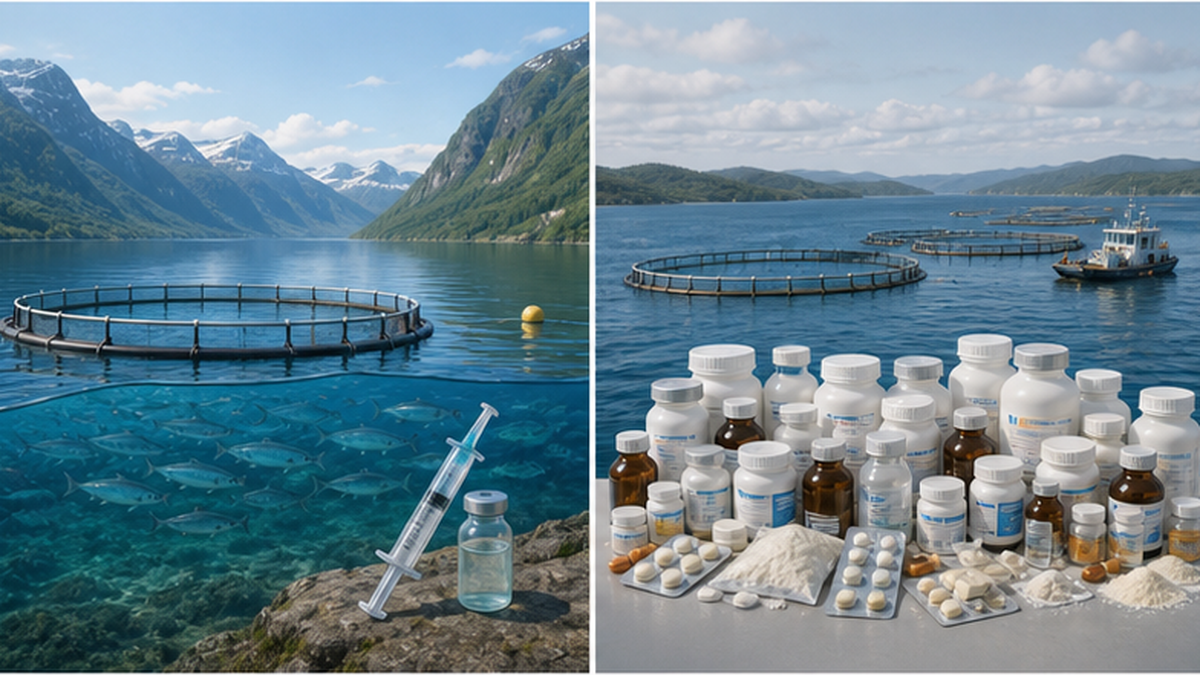
What created this gap is vaccines. Norway used about 50 tonnes of antibiotics a year in the late 1980s, but by thoroughly vaccinating juvenile fish it cut usage by more than 99%, achieving today's level of under 1 gram per tonne of salmon produced. Preventing disease rather than treating it with drugs lowered both environmental impact and cost. Chile is also reducing use through tighter regulation and industry efforts, but vaccines effective against its main bacterial diseases are still in development, and usage remains high.
What About Japan?
In Japan, the use of veterinary medicines in aquaculture is regulated under the Pharmaceuticals and Medical Devices Act and related rules, which specify permitted drugs, target species, and withdrawal periods (the drug-free interval before shipment). Vaccination is widely adopted for yellowtail and other species, making prevention without antibiotics the mainstream. Seafood exceeding residue limits cannot be distributed, so food safety is institutionally assured.
Prevention is not only about drugs. Keeping stocking densities appropriate, resting sites before introducing juveniles, and promptly removing dead fish to eliminate reservoirs of pathogens — these basics of husbandry reduce disease outbreaks themselves. Norway's 99% reduction rests not only on vaccine technology but on comprehensive hygiene management: site rotation and careful handling that lowers fish stress. A country's or a farm's antibiotic usage is a mirror of its management standards.
What is antimicrobial resistance (AMR)?
The phenomenon in which bacteria emerge and spread that antibiotics can no longer kill. Framed as a "One Health" issue linking people, livestock, aquaculture, and the environment, AMR is ranked by the WHO among the greatest threats to human health. Proper use and reduction of antibiotics in aquaculture protects not only the marine environment but human medicine.
Overlooked Burdens: Escaped Fish, Parasites, and Mangrove Destruction
Beyond sediments, feed, and drugs, aquaculture carries environmental burdens that are easy to overlook. Here are three.
1. Escaped Farmed Fish Alter Wild Populations' Genes
This is the problem of farmed fish escaping from pens damaged by typhoons or net failures and interbreeding with wild fish. Farmed fish are selectively bred for traits like fast growth; when they cross with wild populations, the locally adapted genetic characteristics honed over long ages in that sea area risk being diluted. In Norway, the salmon-farming superpower, hybridization between escaped Atlantic salmon and wild salmon is monitored as one of the main threats to river-by-river wild populations.
Japan's typhoon-prone waters are not immune to escapes either, and countermeasures such as pen strength standards and net inspections are in place. When non-native species or strains from other regions are farmed, escapes could trigger invasive-species problems or genetic disturbance, so care is required in choosing species and seed stock. When land-based aquaculture touts "zero escapes" as a strength, it is the flip side of this very problem.
2. Amplification of the "Sea Lice" Parasite
Densely stocked pens are ideal breeding grounds for parasites such as salmon lice (sea lice). Parasites that multiply in pens can spread to wild juvenile fish migrating nearby — a recognized problem overseas — and countermeasures continue, including delousing agents, cleaner fish that eat the parasites, and managing pen depth.
The countermeasures themselves can create new issues. Because delousing agents target sea lice, which are crustaceans, concern about effects on surrounding crustaceans such as shrimps and crabs has led to tighter regulation. Physical delousing with warm or fresh water is highly stressful for the fish, prompting calls for improvement from an animal-welfare standpoint as well. Here too, preventive management that stops disease and parasites from arising is ultimately the solution with the smallest environmental footprint.
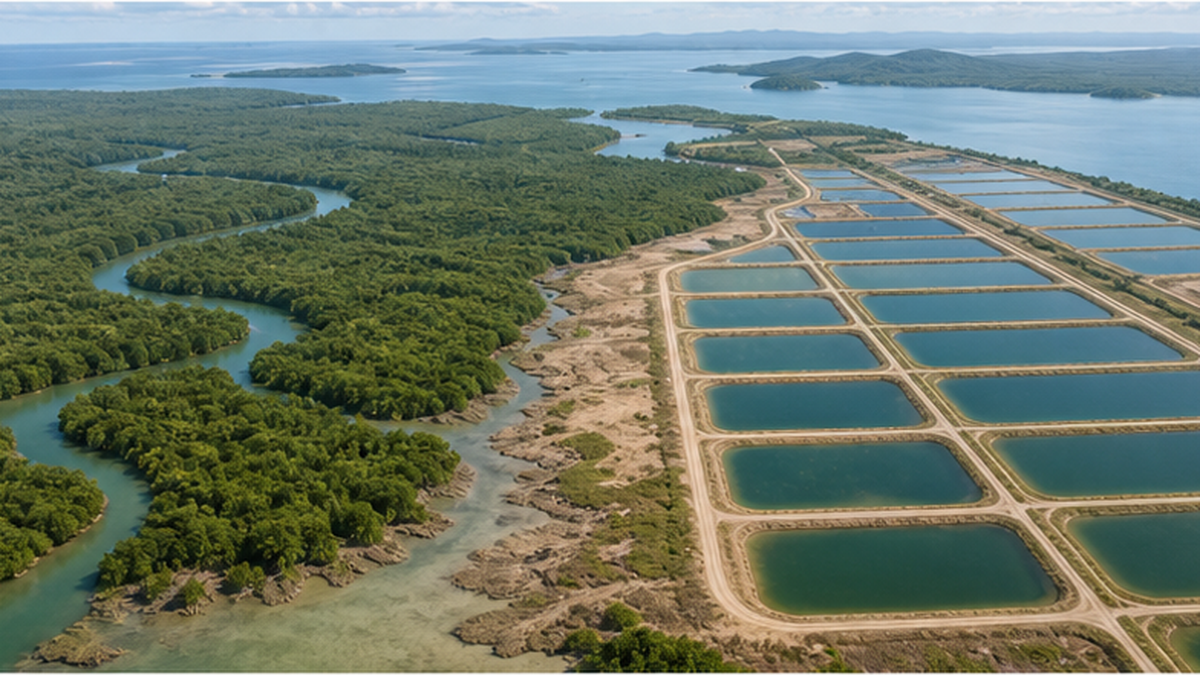
3. Shrimp Farming and the Loss of Mangrove Forests
Shrimp, heavily consumed in Japan, are farmed along the coasts of Southeast Asia and Latin America — and many of those ponds were built by clearing mangrove forests. Mangroves are nurseries for juvenile fish, protect coasts from storm surge, and store vast amounts of carbon as a "blue carbon" ecosystem. Pond construction is regarded as one of the main drivers of mangrove loss since the 1980s, and the magnitude of the lost functions is being reappraised. We cover the value of mangroves and efforts to restore them in our article on mangrove restoration.
Summary of this section
- Escaped fish can erode the genetic diversity of wild populations
- High-density farming can amplify parasites and affect wild fish
- Shrimp-pond construction has historically been a main driver of mangrove loss
How Japan Responds: The Act on Ensuring Sustainable Aquaculture Production and Fishery-Ground Improvement Plans
Having suffered aging fishing grounds, red tides, and fish disease from self-pollution, Japan was early to codify aquaculture-site management into law: the Act on Ensuring Sustainable Aquaculture Production, which took effect in 1999. Under this law, fisheries cooperatives draw up a fishery-ground improvement plan for each site and, with prefectural governor approval, work to maintain and improve the site environment.
The pillar of these plans is keeping the load within what each site can absorb. Concretely, an appropriate farming capacity is set per site to manage stocking numbers, sediment sulfides and dissolved oxygen are measured regularly, and feed volumes and pen layouts are adjusted to stay within standards. The plans also promote switching to lower-impact compound feeds and vaccination for disease prevention.
Technologies to restore degraded seabeds are also used in the field. Representative examples are seabed tilling, which plows the sediment to introduce oxygen, and lime spreading to suppress hydrogen sulfide formation. Stirring the seabed like plowing a field promotes microbial decomposition, while lime neutralizes acidified sediment. It is painstaking work, but combined with resting pens through site rotation, it can gradually bring aged fishing grounds back to life.

Evolving Feed Has Greatly Reduced the Load
The biggest change in the field has been the feed transition. The raw feed and moist pellets once dominant — frozen sardines fed as-is, for example — leached nutrients into the water and left much waste, making them a major polluter of fishing grounds. Today the shift to nutritionally balanced solid compound feed (dry pellets) is well advanced, and together with low-waste feeding management, the environmental load per fish produced has fallen sharply. Recently, smart feeders that use AI cameras to judge fish appetite and automatically adjust feed volumes have appeared.
See the primary sourceFisheries Agency of Japan, "White Paper on Fisheries"Annual report covering Japan's fisheries and aquaculture trends and policies such as the Act on Ensuring Sustainable Aquaculture Production and fishery-ground improvement plans🔗 jfa.maff.go.jpIn 2020, the Fisheries Agency also adopted its comprehensive strategy for the growth industrialization of aquaculture, charting a course to develop aquaculture into an export industry while managing environmental load. Maintaining fishing-ground environments is a "regulation," but it is also the foundation of trust in Japan's aquaculture brands.
Feed Innovation: Low-Fishmeal Diets, Insects, and Microalgae
As the way out of the fishmeal problem, technologies for raising fish on proteins and oils that do not depend on wild fish are being developed worldwide. Soaring fishmeal prices have pushed up the share of feed in farming costs, making alternatives urgent for both the environment and business.
- Low-fishmeal compound feeds: feeds that raise the share of plant proteins such as soybean meal and corn gluten to cut fishmeal content. Practical use is advancing in Japan for yellowtail and red sea bream
- Insect protein: black soldier fly larvae grow on food scraps and make a high-quality protein source. Their use as a feed ingredient is beginning in Japan and abroad
- Microalgae: culturing microalgae that produce DHA and EPA in place of fish oil and blending them into feed — directly producing "the original source of the nutrients fish have always eaten"
- Single-cell proteins and fermentation: proteins made by culturing yeasts and bacteria — next-generation ingredients that use neither farmland nor the sea are also under study
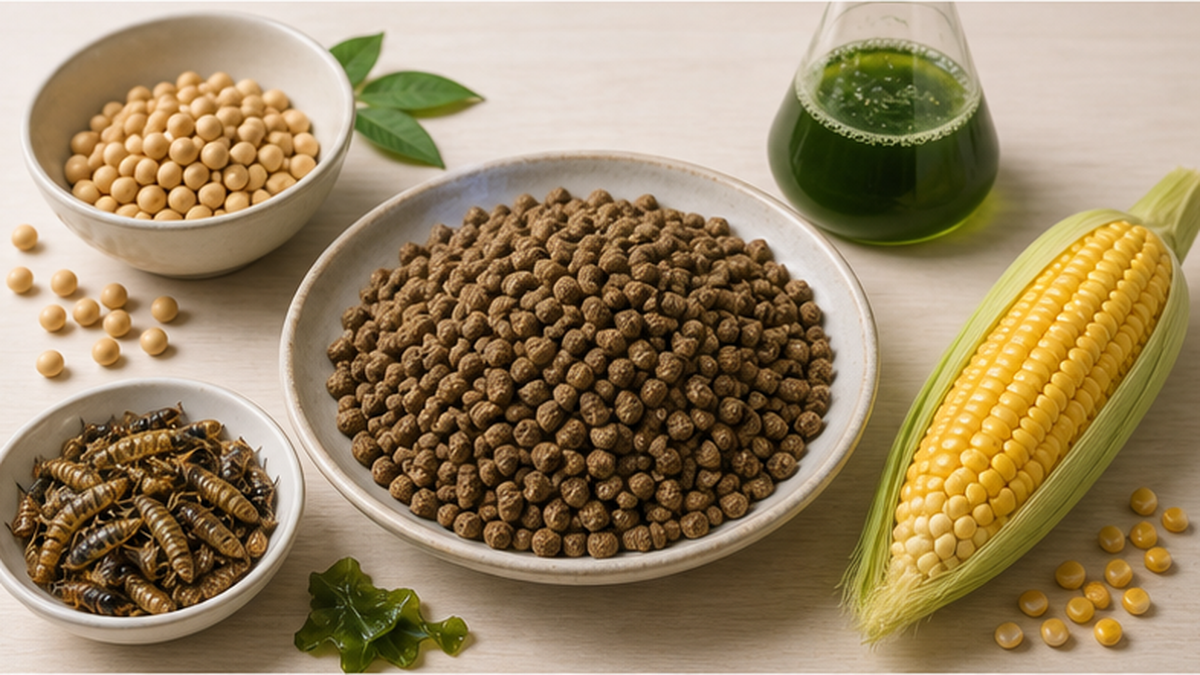
Microalgae in particular go back to first principles. As noted above, the DHA and EPA in fish originally come from marine microalgae, concentrated up the food chain. Then why not skip the small fish and culture DHA/EPA-producing algae directly in tanks for feed? On this idea, technology for mass-culturing heterotrophic algae such as Schizochytrium in fermentation tanks has been commercialized, and overseas salmon feeds have begun partially replacing fish oil. Because it can create "fish nutrition" without using a single wild fish, it is seen as the leading answer to the fish-oil problem.
Turning "Food Waste" into Feed
What makes insect protein interesting is that it can advance food-waste reduction and de-fishmeal-ing of aquaculture at the same time. Raise soldier flies on unsold food and factory scraps, feed the larvae to fish, and waste is reborn as marine protein in a working loop. Use of processing by-products — the heads, bones, and viscera left from filleting fish — as fishmeal ingredients is also spreading, and more than 20% of fishmeal already comes from by-products. Feed is arguably the most active arena of innovation for reducing aquaculture's environmental load.
Change the feed, change the industry
- Feed is a major share of farming costs — environmental measures and cost cutting can go hand in hand
- Low-fishmeal feeds, insects, and algae can progressively reduce dependence on wild fish
- Food waste × insect feed creates a loop linking food-loss reduction with marine resource protection
Reinventing How We Farm: IMTA, Land-Based RAS, and Offshore Aquaculture
Beyond feed, approaches that reduce environmental load by changing the farming system itself are advancing. Here are three representative ones.
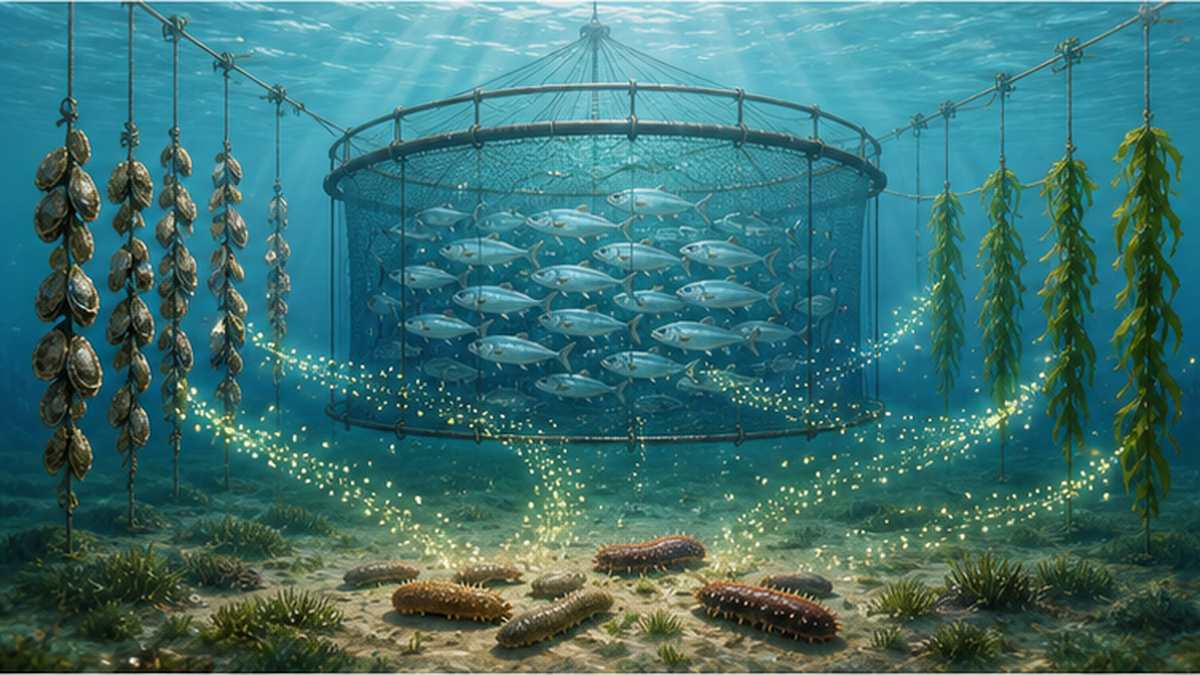
1. IMTA (Integrated Multi-Trophic Aquaculture): Building a Circulation in the Sea
IMTA is polyculture that raises bivalves such as oysters, seaweed, and sea cucumbers alongside fed fish. Of the waste and uneaten feed from the fish, suspended organic particles are filtered and eaten by the bivalves, what settles to the bottom is consumed by sea cucumbers, and dissolved nitrogen and phosphorus are taken up as nutrients by the seaweed. One organism's "waste" becomes another's "food" — by recreating around the pens the same material cycle as a natural ecosystem, pollution is turned into resources. NOAA (the U.S. National Oceanic and Atmospheric Administration) and others are researching it, and because shellfish and seaweed add sellable products, there are business benefits too.
In fact, many stretches of Japan's coast have long hosted oyster rafts and nori or wakame cultivation near finfish pens, and the wisdom of "satoumi" — keeping the sea productive through careful human involvement — overlaps with IMTA thinking. Trials releasing sea cucumbers beneath pens to consume deposits, and research directing farm nutrients into seaweed cultivation, are under way around the country, marking the start of a shift from mass monoculture toward aquaculture that designs whole ecosystems.
2. Land-Based Aquaculture (RAS): The Option of Not Using the Sea
A closed recirculating aquaculture system (RAS), which raises fish in land tanks while purifying and recirculating the water, can capture uneaten feed and waste instead of releasing them, cutting off the burden on the sea at its root. The rearing water is reused repeatedly while filters and microbes remove ammonia, so water consumption is minimal, and recovered sludge is being studied for use as fertilizer. With no escapes or parasites, and production close to consumers, transport impacts shrink as well.
In Japan, projects are springing up nationwide — the Norwegian company Proximar Seafood's Atlantic salmon facility at the foot of Mt. Fuji, among the largest in the country, began operating in 2023. Because even landlocked prefectures can produce salmon and shrimp, RAS is also drawing attention as a tool for regional revitalization. The challenges are the electricity needed for temperature control and pumping and the scale of construction costs; use of renewable energy and waste heat from power plants and factories is being explored.
3. Offshore Aquaculture: Dilute and Disperse
This approach installs large, robust pens not in calm inner bays but offshore where currents run fast. Strong flows disperse and break down uneaten feed and waste, preventing accumulation in any one spot. For the fish, growing while swimming in a spacious environment with stable temperature and water quality is said to improve flesh quality. Withstanding typhoons and rough weather demands engineering, but adoption is spreading worldwide, led by Norway's large installations, and Japan is running demonstrations combining large pens with sensor-based remote management as part of its aquaculture growth strategy. For Japan, whose inner-bay sites tend to be crowded, moving offshore is one option that reconciles improving site environments with expanding production.
| Method | Environmental strength | Challenges |
|---|---|---|
| IMTA (polyculture) | Waste is used by shellfish, seaweed, and sea cucumbers, forming a cycle | Optimizing species combinations and layout requires know-how |
| Land-based (RAS) | No load released to the sea; zero escapes | High electricity use and construction costs |
| Offshore | Strong currents prevent sediment build-up | Investment for rough-weather resilience; work safety |
What We Can Do: ASC Certification and Voting with Our Choices
Finally, what can consumers do? The most practical step is choosing seafood bearing the mark of ASC (Aquaculture Stewardship Council) certification, under which third parties audit farms for environmental and social responsibility. ASC standards cover water and sediment management, feed sustainability, proper antibiotic use, and even workers' rights, with criteria set for 12 species groups including salmon, yellowtail, bivalves, shrimp, and seaweed.
Certification is spreading steadily in Japan: in March 2016, oyster farming by the Tokura office of the Miyagi fisheries cooperative's Shizugawa branch earned Japan's first ASC certification, and as of May 2023, 48 farms of 15 companies and cooperatives hold certification. For how ASC certification works and examples in Japan, see our article on ASC-certified aquaculture.
Visit the official siteASC Japan (Aquaculture Stewardship Council)The international certification for environmentally and socially responsible aquaculture, with information on the scheme and certified farms in Japan🔗 jp.asc-aqua.org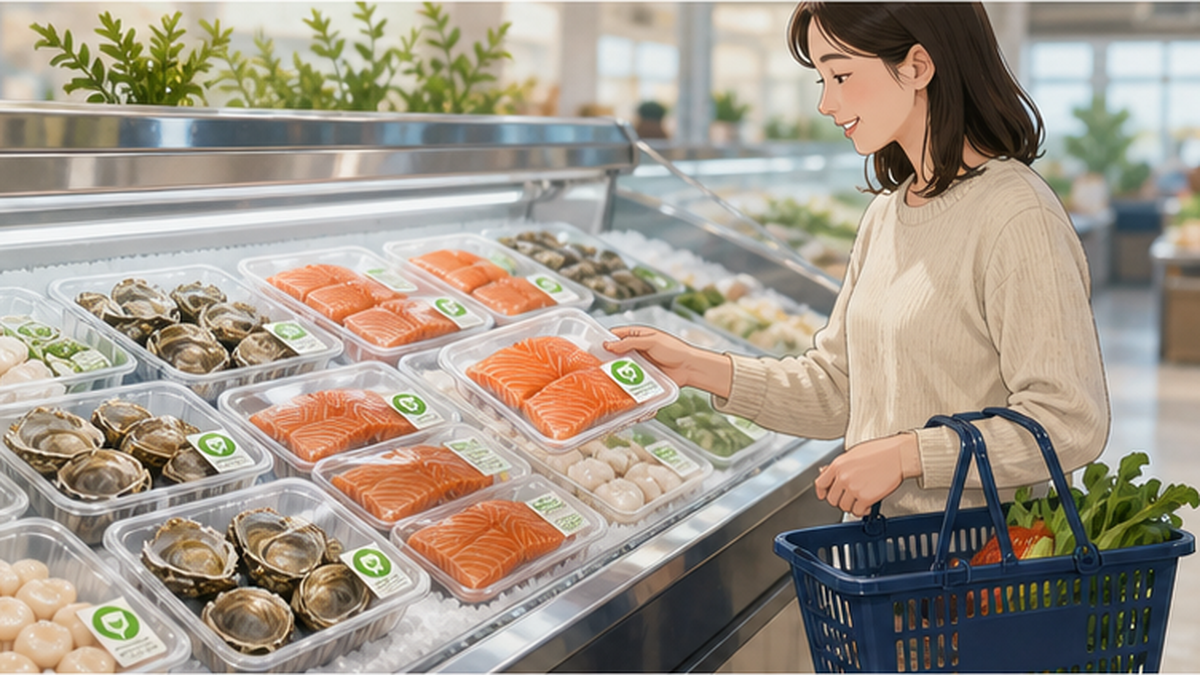
Shellfish and Seaweed: Aquaculture That Cleans the Sea
One more thing worth knowing: some forms of aquaculture do not merely have a small footprint — they actually purify the sea. Bivalves such as oysters and scallops grow by filtering plankton from the water without any feed, and seaweeds such as nori, wakame, and kombu grow by photosynthesis while absorbing nitrogen and phosphorus. Shellfish and seaweed farming thus works to draw nutrients out of over-enriched waters. Seaweed farming is also attracting attention as blue carbon that absorbs CO2 — what we choose to eat is itself a vote for the sea.
Not "Farmed vs. Wild" but "How It Was Produced"
As we have seen, aquaculture certainly has environmental impacts, but well-managed aquaculture is also one of the most promising ways to supply protein while preventing overfishing. Fish are cold-blooded and buoyant, so compared with cattle and pigs — which spend energy maintaining body temperature and posture — they convert feed more efficiently and tend to emit less greenhouse gas per unit of protein. The FAO expects the role of "blue foods" in feeding a growing world population to keep expanding.
What matters is not passing judgment in a farmed-versus-wild binary, but choosing seafood by how it was produced. If products from producers who monitor sediments, cut drugs with vaccines, and innovate on feed sit on the same shelf as products from those who don't, then the more consumers choose the former, the lighter the burden on the sea becomes. Certification labels are the clearest guide for doing so.
Actions you can take today
- Look for certification labels such as ASC and MSC at the supermarket
- Check origin and farming-method labels, and choose producers who disclose information
- Choose seasonal and local fish, and be mindful of transport impacts
- Reduce leftovers — cutting seafood waste means not squandering the resources used as feed
Summary of the whole article
- Global aquaculture has grown beyond capture fisheries and become essential to food supply
- It faces challenges: sediment pollution from uneaten feed and feces, antibiotics, fishmeal dependence, and ecosystem impacts
- Japan has managed the load through the Act on Ensuring Sustainable Aquaculture Production and fishery-ground improvement plans
- Innovations that cut the load — low-fishmeal feeds, IMTA, land-based farming — are accelerating
- Consumers can support "responsible aquaculture" using ASC certification as a guide
References and Sources
- FAO – The State of World Fisheries and Aquaculture (SOFIA) 2024 — global fisheries and aquaculture production statistics
- Fisheries Agency of Japan – White Paper on Fisheries — trends in Japan's fisheries and aquaculture and the Act on Ensuring Sustainable Aquaculture Production
- Fisheries Agency of Japan – Guide to aquaculture using fishing-port waters — basic thinking on fishing-ground environments and aquaculture
- Aquaculture, Fish and Fisheries (journal) – A review of the global use of fishmeal and fish oil and the Fish In:Fish Out metric (2024)
- Frontiers in Microbiology (journal) – Current status of antibiotic use and antimicrobial resistance in Chilean salmon farms
- NOAA Fisheries – Explanation of integrated multi-trophic aquaculture (IMTA)
- ASC Japan – Official site of ASC certification, the international standard for responsible aquaculture
- WWF Japan – Farmed oysters in Miyagi Prefecture earn Japan's first ASC certification (2016)
※ Ordered by reliability: government and academic institutions > peer-reviewed papers > specialist organizations > trusted media