⚡ In short
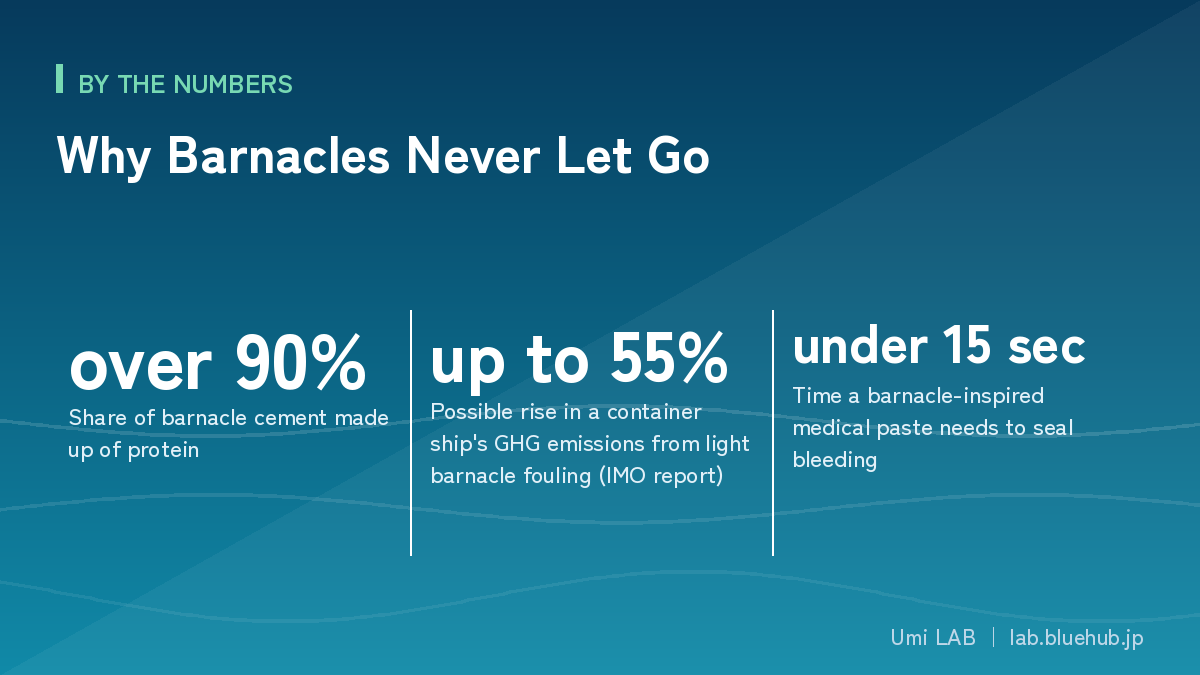
Barnacles cover rocks and ship hulls, yet they are not shellfish at all — they are crustaceans whose larvae choose a home once in a lifetime and cement themselves down with a glue that is over 90% protein. That fouling can raise a ship's greenhouse gas emissions by up to 55%, while the same adhesion inspired a medical paste that seals bleeding in under 15 seconds.
Rocks on a tide-swept shore, the bottom of a ship, a mooring rope, sometimes the shell of a sea turtle or the skin of a whale. Barnacles clamp down under a hard shell as though that spot were the whole world. Rub them with a finger and nothing happens; attack them with a scraper and the shell often breaks before the bond does. How can anything stick this hard underwater, in salt water, under breaking waves? That simple question has grown into a major research theme spanning marine biology and materials engineering.
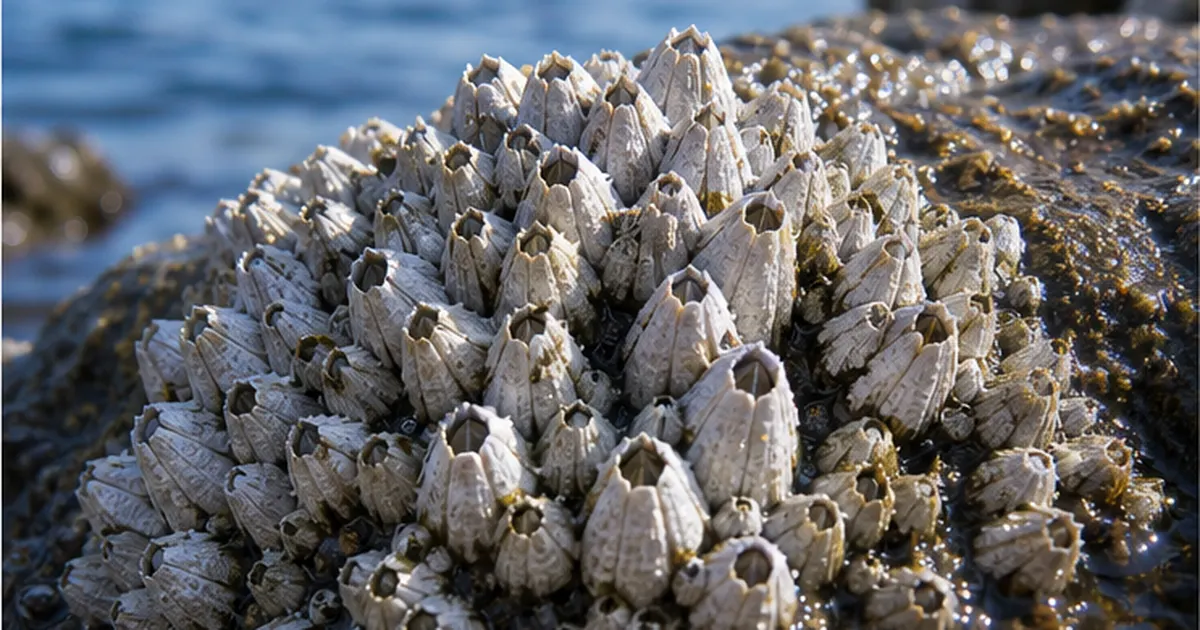
Barnacles are frequently mistaken for shellfish, but they are crustaceans, related to shrimp and crabs. They spend their early life drifting as plankton, and then one day they decide "this is where I will spend my entire life" and glue themselves to the ground. There is no second chance. That is exactly why the larva inspects its options so carefully, and why the adult carries such a formidable adhesive.
This animal also has a measurable effect on the human economy. Barnacles on a hull increase drag, driving up fuel consumption and greenhouse gas emissions. They clog power-station intakes, weigh down aquaculture gear, and hitch rides across oceans as invasive species. And yet the research that unravelled their adhesion produced a medical glue that repels blood and seals a bleeding organ in seconds. This article follows a single thread from the biology of a small animal to the chemistry of its glue, the cost it imposes on shipping, and the technologies it has inspired.
What you will learn
- Why barnacles are crustaceans rather than shellfish, and how they live upside down inside their shells
- How cyprid larvae walk on their antennae to inspect a surface and rely on a chemical signal (SIPC) from their own kind
- The division of labour among cement proteins and the amyloid-like nanofibres that give the glue its strength
- What biofouling actually costs in fuel, greenhouse gas emissions and the spread of invasive species
- The path from organotin (TBT) antifouling paints to today's IMO biofouling guidelines
- Barnacle-inspired biomimetics, including a haemostatic adhesive that works on wet, bleeding tissue
Barnacles Are Not Shellfish — They Are Crustaceans Glued to a Rock
It is natural to look at a barnacle and see a shellfish. It has a hard calcareous shell, it clings to rock, and it does not move. On appearances alone it sits comfortably alongside limpets and oysters. Crack the shell open, though, and what you find is unmistakably a relative of shrimp and crabs.
What lives inside the shell is a crustacean
Barnacles belong to the phylum Arthropoda, subphylum Crustacea, in a group called the Cirripedia. For a long time taxonomists placed them among the molluscs, but in the first half of the nineteenth century observations of their larvae showed that they hatch as nauplius larvae just like other crustaceans, and they were reassigned accordingly.
Their anatomy is just as unusual. A barnacle attaches head-down to the substrate and spends its entire life effectively standing on its head. What we tend to read as the barnacle's mouth is actually the opercular plates, a lid through which the legs are extended; the head sits immediately behind the adhesive base. The cement glands that produce the adhesive are on that same head end.
Feeding by combing the water with feathery legs
The name Cirripedia refers to the fine, branched, tendril-like legs. When the tide comes in and the shell is submerged, the barnacle opens its lid, fans out these legs and rhythmically sweeps the water. Fine hairs on the legs act as a net, straining out phytoplankton and detritus and carrying them to the mouth. Where shrimp and crabs evolved legs for walking and swimming, barnacles evolved legs for eating.
This filter feeding is not trivial for water quality. A barnacle colony covering the intertidal zone filters an enormous volume of seawater every day and helps settle suspended matter. Barnacles are also food for anemones, starfish, snails and birds, sitting near the base of the rocky-shore food web. For more on how these shore organisms interact, see our guide to tide pool life.
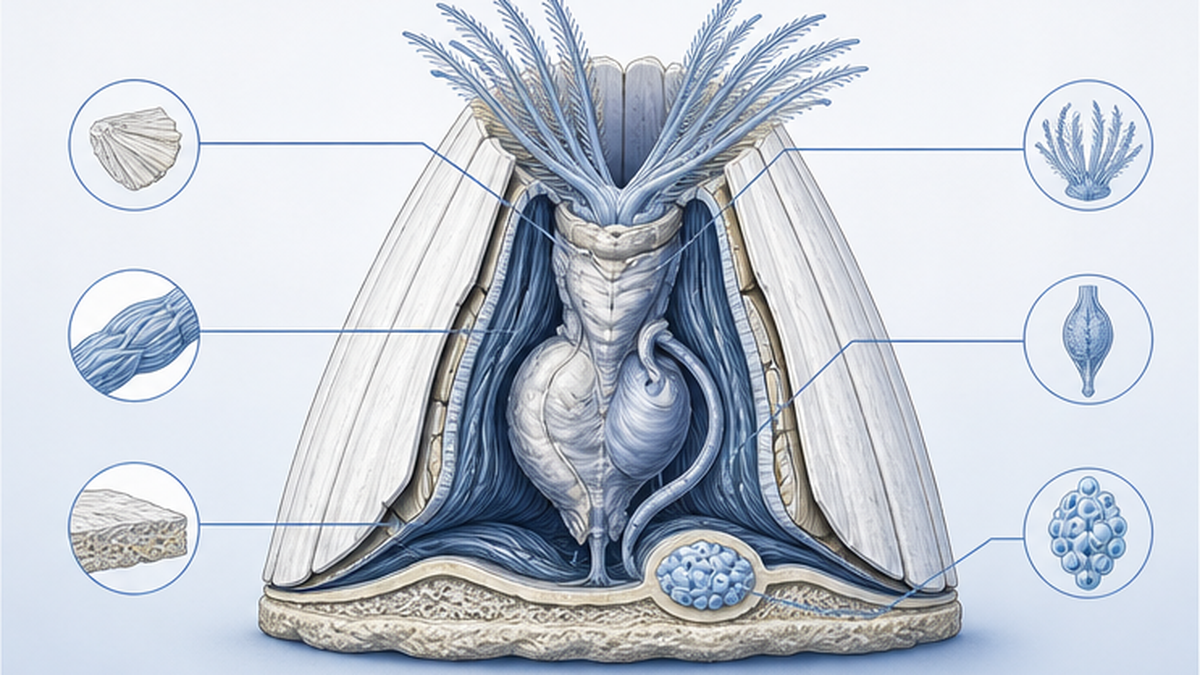
The animal that consumed eight years of Darwin's life
No history of barnacle research can skip Charles Darwin. Before publishing On the Origin of Species he immersed himself in cirripede taxonomy, working through specimens gathered from around the world, and between 1851 and 1854 produced a four-volume monograph, A Monograph on the Sub-class Cirripedia. Comparing that mass of material — seeing how much form varied within a single species, and how differently the sexes were organised from group to group — gave him observational capital that later underpinned his theory.
Barnacle reproduction was among the features that surprised him. Many species are hermaphrodites that nonetheless mate with neighbours, extending an extraordinarily long copulatory organ relative to body size in order to reach them. It is an extreme solution to the problem of sexual reproduction in an animal that cannot move.
| Aspect | Barnacles (Cirripedia) | Shellfish (Mollusca) |
|---|---|---|
| Classification | Arthropoda, Crustacea | Mollusca |
| Origin of the shell | Several plates fitted together | A single shell secreted by the mantle |
| Larvae | Nauplius then cyprid (both swimming) | Trochophore then veliger (varies by group) |
| Movement | None at all after settlement | Most can move |
| Feeding | Filter feeding with cirri | Rasping with a radula, filtering, and more |
| Close relatives | Shrimp, crabs, water fleas | Clams, turban snails, squid |
Key points
- Barnacles are not shellfish; they are crustaceans (Cirripedia) like shrimp and crabs
- They cement down head-first and feed by filtering the water with feathery legs
- More than 1,000 species are known worldwide, and Darwin laid the foundation of their taxonomy
- Most are hermaphrodites with an exceptionally long copulatory organ for their body size
One Move in a Lifetime — How the Larva Chooses Its Spot
To understand barnacle adhesion you first need to know when it happens and who does it. The answer: the larva, exactly once, for life. There is no revising the decision. Choose a place where food never arrives, a height that dries out, or a face that predators sweep clean, and that choice is fatal. So the larva inspects its options with remarkable care.
From nauplius to cyprid
Barnacle eggs hatch inside the parent's shell and swim out as nauplius larvae. The nauplius spends weeks in the plankton, eating phytoplankton and moulting several times as it grows. During this period currents carry it away, which is the only chance the offspring of an immobile animal ever get to expand their range.
The final larval stage is the cyprid, a roughly millimetre-long larva enclosed in a bivalve-like carapace. Its defining feature is that it does not feed at all: the gut is reduced and the body is packed with stored lipid. The cyprid has abandoned eating in order to specialise completely in finding a site, settling and metamorphosing. Its clock is set by the fuel it carries — days, or at most a few weeks.
Walking the surface on a pair of antennules
The cyprid uses two antennules projecting from the front of its body like limbs, crawling across the substrate. Each antennule ends in a sucker-like disc that temporarily anchors the body while the larva probes the surface. Researchers call this "walking", and have shown that the shift from long straight tracks to tight repeated circling reveals how much the larva likes what it has found.
If the conditions do not suit it, the larva swims off to look elsewhere. If they do, it releases adhesive from the larval cement gland at the base of the antennules, fixes itself in place, and undergoes a dramatic metamorphosis into a shelled adult. That instant is the decisive fork in a barnacle's life.
Smelling its own kind — the settlement-inducing protein complex
Anyone walking a rocky shore notices that barnacles do not scatter evenly; they crowd together in dense patches. For an animal that cannot move, having a mate within reach is a matter of life and death, so cyprid larvae strongly prefer sites where adults of their own species are already established.
The chemical basis of this gregariousness is SIPC (settlement-inducing protein complex), isolated from adults of the striped barnacle. It is a huge protein complex of more than 200 kDa, built from several subunits and present on the adult cuticle and in moulted material. Cyprids detect it with sensors on their antennules and read it as "my own kind survives here".
Intriguingly, SIPC acts differently depending on concentration. At low concentrations it promotes settlement; at high concentrations it has been observed to deter it. Because overcrowding intensifies competition for food and space, a single molecule appears to handle the trade-off between wanting neighbours and not wanting to be packed in.
Colour, microtexture and biofilm all feed into the decision
Chemistry is not the only cue. Japanese experiments controlling the colour of test panels found that settlement numbers changed, implicating visual information. Fine surface topography also matters strongly: grooves and bumps on a scale comparable to the larva's antennules or body can raise or suppress settlement.
On top of that, any object placed in the sea develops a biofilm of bacteria and diatoms within hours to days, and the composition of that film is itself a cue. Barnacle settlement is therefore the product of chemical, visual, topographic and microbial signals combined — which is precisely why antifouling technology has struggled to find a single decisive answer.
Three features of the cyprid larva
- It does not feed — the gut is reduced and stored lipid funds the entire search
- It walks on antennules — two antennules crawl across and probe the substrate
- It seeks its own kind — chemical cues such as SIPC identify sites where the species already thrives
What the Cement Actually Is
Most everyday adhesives fail outright on a wet surface: a residual water layer keeps the molecules apart, and solvents cannot evaporate. Barnacles begin gluing while fully submerged and keep the bond intact for years. The key to that contradiction is the secretion known as cement.
Almost pure protein, straight from the cement gland
Barnacle cement is produced in glands on the head side and delivered through fine ducts to the adhesive interface. Analyses indicate that more than 90% of it is protein, with little reliance on sugars, lipids or metal ions. Where many marine foulers depend on metal ions or unusual modified amino acids, barnacles appear to build their strength almost entirely from ordinary amino acid sequences and clever three-dimensional structure.
Crucially, cured cement is insoluble in water and in ordinary solvents. That is why the material resisted analysis for so long: individual proteins could only be recovered after forcing them into solution with strong denaturants. That technical barrier was not broken until the 1990s.
Proteins with distinct jobs
A Japanese research group separated several proteins from the cement of the red barnacle (Megabalanus rosa) and named them after their apparent molecular weights: cp100k, cp68k, cp52k, cp20k and cp19k. Later work showed that they are not simply mixed together but operate under a clear division of labour.
Broadly, cp19k, cp20k and cp68k handle the interface, binding to whatever material is on the other side, while cp52k and cp100k handle bulk cohesion, holding the adhesive layer itself together so it does not tear. Any adhesive bond requires both adhesion to the substrate and cohesion within the glue, so this split makes structural sense.
| Protein | Probable main role | Characteristics |
|---|---|---|
| cp19k | Interfacial adhesion | Rich in serine, threonine, alanine and glycine; flexible low-complexity sequence |
| cp20k | Interfacial adhesion | Cysteine-rich with many charged residues |
| cp68k | Interfacial adhesion | Highly hydrophilic; helps wet surfaces |
| cp52k | Bulk cohesion | Insoluble and fibrous |
| cp100k | Bulk cohesion and hydrophobic priming | Large insoluble protein |
Amyloid-like nanofibres provide the strength
Electron microscopy of cured cement reveals a mesh of tangled nanofibres. Spectroscopy shows that the protein chains fold into beta sheets that stack into those fibres — a configuration closely resembling the amyloid fibrils familiar from human disease.
Stacked beta sheets connect neighbouring molecules through vast numbers of backbone hydrogen bonds. Each individual bond is weak, but bundle thousands or tens of thousands of them and the assembly becomes extremely hard to break — the same principle that makes silk strong. Indeed, barnacle cement protein sequences show homology with silk proteins, evidence that nature reuses the same design whenever it needs a tough, water-insoluble fibre.
Better still, the fibres form by self-assembly. Until secretion the proteins are kept soluble, apparently held in a "not yet" state by the low pH and high salt concentration inside the cement gland. Once secreted into seawater, where pH and ionic strength change, the proteins spontaneously aggregate into fibres and solidify. No external heat or catalyst is required, which is how a barnacle achieves high-performance curing in ambient seawater without any specialised machinery.
A bond that is topped up as the animal grows
Adhesion is not a one-off event at settlement. As the adult grows it expands its shell sideways, and each time it does so it adds fresh cement around the edge of the base, enlarging the bonded area. Old and new layers overlap, so the attachment actually strengthens with age. That is one reason barnacles on a long-neglected hull are so stubborn.
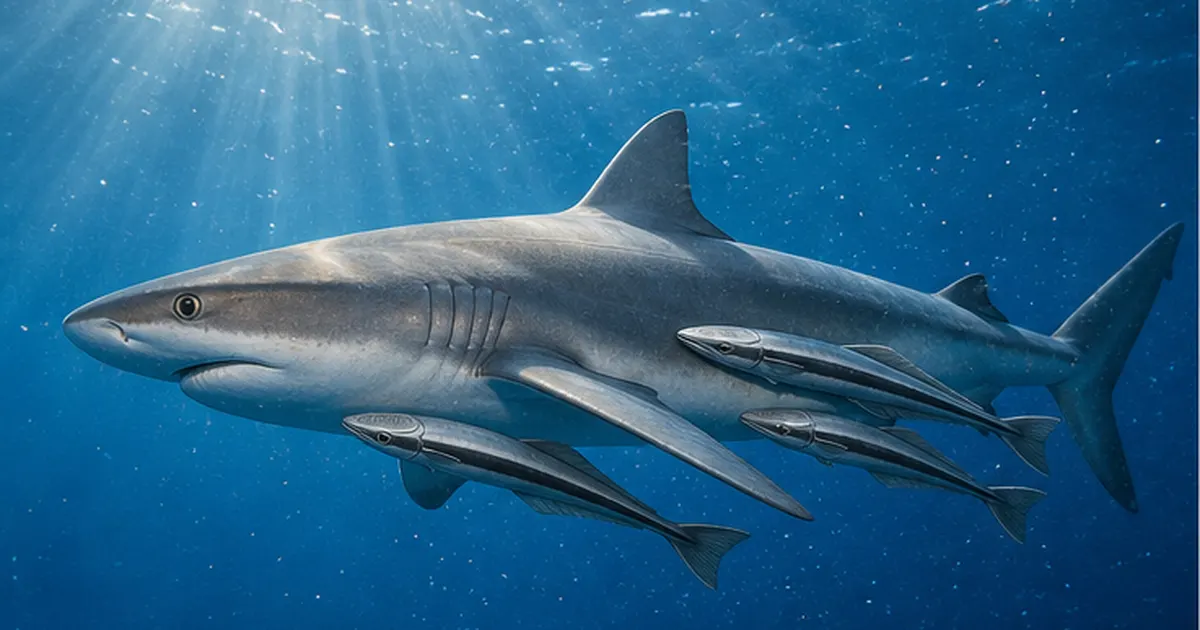
Barnacles are also indifferent to what they stick to: rock, concrete, steel, plastic, glass, wood, or another animal's body. They bond to hydrophilic and hydrophobic surfaces alike, probably because interfacial proteins like cp19k use their flexible sequences to adopt whichever binding mode the substrate calls for. Hitching a ride on a larger animal is a widespread strategy in the sea; unlike the remora, which grips a shark with a suction disc, barnacles evolved in the opposite direction — never to let go.
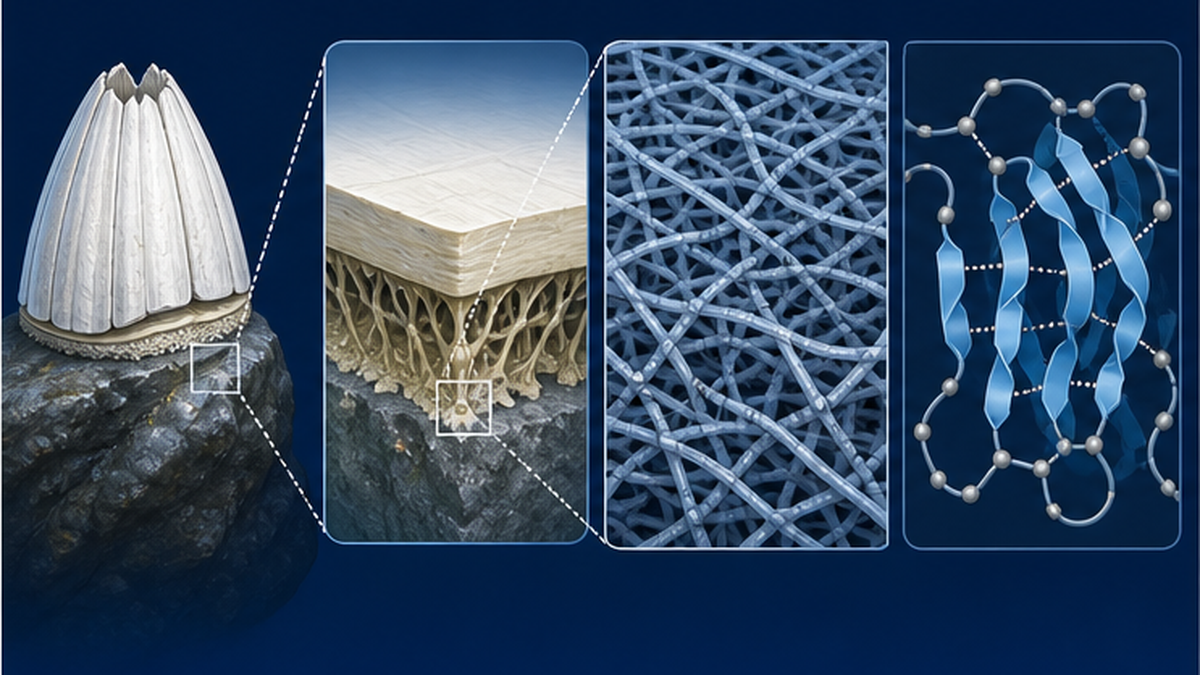
Barnacle cement stands out among biological adhesives for being strikingly material-driven: it achieves underwater curing through protein folding and self-assembly alone, without depending on metal ions or exotic chemical modifications.
― Summarised from reviews of barnacle cement research
Why It Sticks Underwater — Four Pieces of Physical Chemistry
Knowing what the cement contains still leaves the central question open. The answer research has produced is not a single trick but a combination of strategies.
1. Push the water out of the way first
The great enemy of underwater adhesion is the layer of water molecules clinging to the target surface. While it remains, adhesive molecules can never touch the substrate directly. Barnacles appear to solve this by sending hydrophobic components in first to displace water from the bond area, exploiting the very immiscibility of oil and water to clear the site before the working proteins arrive.
That "clear the water first" idea passed directly into the design of the medical adhesive described later. Bonding in blood means repelling blood before you bond — a solution barnacles reached over hundreds of millions of years, now carried into the operating theatre.
2. Bind it all together with hydrogen bonds
Once the water is gone, the hydrogen bonding of the beta-sheet structure takes over. Cement proteins form thousands of hydrogen bonds with their neighbours, so that the load is carried across a whole surface. A single hydrogen bond is weak by chemical standards, but sheer number and structural order turn it into the strength of a structural material.
3. Cross-link with disulfide bonds
Some cement proteins are rich in the amino acid cysteine. Sulfur atoms on cysteine residues form disulfide bonds, strong covalent links that stitch protein molecules to one another. This cross-linking keeps the adhesive layer from degrading or swelling even after long exposure to seawater. Recent work identifies this covalent stabilisation as one of the decisive reasons barnacle adhesion is permanent rather than temporary.
4. Change binding mode to suit the surface
Interfacial proteins such as cp19k carry low-complexity sequences of small amino acids — serine, threonine, alanine, glycine — and have no fixed structure. That softness lets them conform to hydrophilic glass and hydrophobic plastic alike in whichever way works best. Charged residues attract charged surfaces electrostatically while hydrophobic residues favour oily ones. A single molecule that carries several different ways of sticking is why barnacles can bond to almost any material.
Four conditions for underwater bonding
- Water must be displaced from the interface (hydrophobic components go first)
- Large numbers of weak interactions must tie the molecules together (hydrogen bonds)
- Covalent cross-links must provide long-term water resistance (disulfide bonds)
- The adhesive must flex to match the substrate (low-complexity sequences)
When Barnacles Slow a Ship — The Price of Biofouling
Seen from the human side, that same adhesive capability is a serious nuisance. The accumulation of organisms on hulls and structures is called biofouling, and barnacles are its emblem.
More friction means more fuel and more CO2
As a ship moves through water, a thin layer of fluid flows along the hull. If the surface is smooth that flow stays orderly, but hard protruding growths such as barnacles disturb it and frictional resistance rises sharply. Holding the same speed then requires more power, which means more fuel and more greenhouse gas (GHG).
According to reporting from the IMO-led GloFouling Partnerships, a layer of slime around 0.5 mm thick covering up to 50% of the hull can already raise GHG emissions by as much as 25%. With light fouling by barnacles or tubeworms, an average container ship's GHG emissions can rise by up to 55%. The figures vary considerably with ship type, speed and route, but the industry now broadly accepts that hull condition governs fuel performance.
| Hull condition | Reported order of magnitude |
|---|---|
| Clean and smooth | Fuel performance as designed |
| 0.5 mm slime over 50% of the hull | Up to 25% higher GHG emissions |
| Light barnacle or tubeworm fouling | Up to 55% higher GHG emissions (container ship example) |
| Heavy fouling left unaddressed | Speed loss, drydock cleaning costs, higher machinery load |
Power station intakes, aquaculture gear and buoys too
Ships are not the only victims. Many of Japan's thermal and nuclear power stations sit on the coast and draw large volumes of seawater for cooling. When barnacles and mussels colonise the intake channels and condenser tubes, flow drops, cooling efficiency falls, and in the worst case output must be curtailed or the plant shut down. A common countermeasure is to electrolyse the intake seawater to generate sodium hypochlorite and dose it at the intake, suppressing larval settlement.
In aquaculture, barnacles on cage netting, ropes and hanging lines add weight and labour while blocking the mesh and degrading water exchange inside. Growth on oyster and scallop shells reduces market value. Buoys, instruments, ocean sensors and offshore wind foundations — anything placed in the sea must reckon with the same problem.
Crossing oceans on a hull — the invasive species angle
Biofouling also functions as a transport route for invasive species. Barnacles cemented to a hull travel thousands of kilometres with the ship and release larvae at the destination port. Alongside ballast water, hull fouling is recognised as a leading pathway for the unintended transboundary movement of marine organisms.
Species such as the striped barnacle and the European barnacle, now common in Japanese ports, have spread far beyond their original ranges. For the wider picture see where marine invasive species come from, and for the regulatory side the ballast water problem.
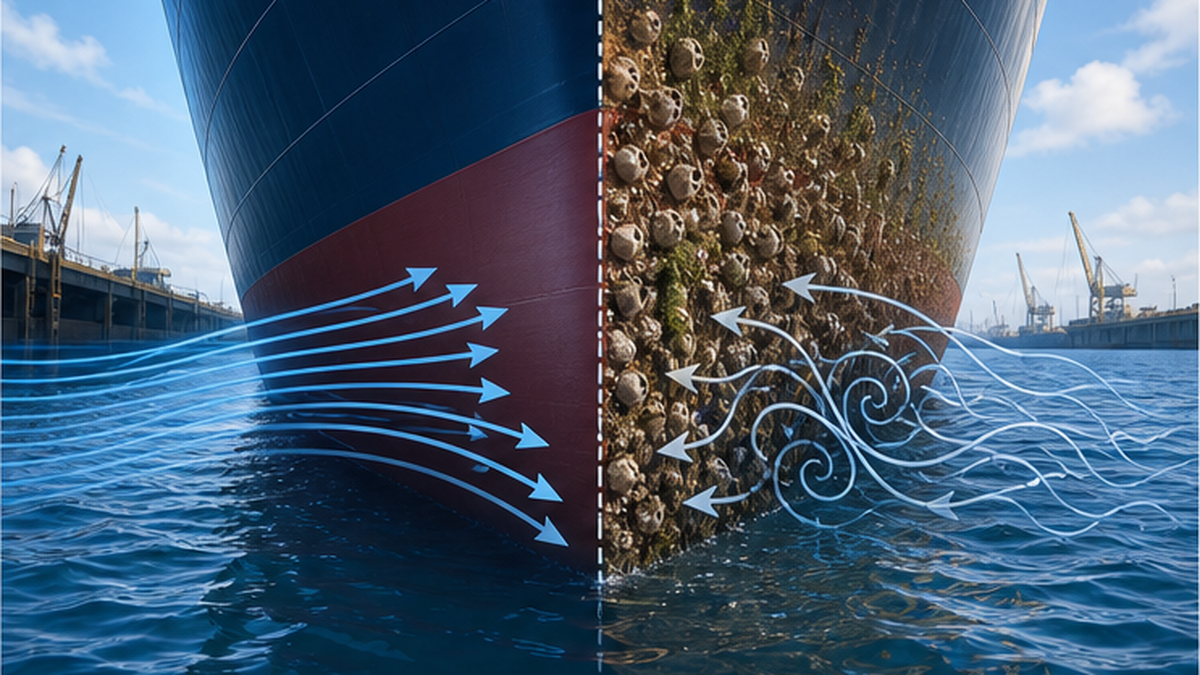
Three kinds of loss caused by biofouling
- Energy: higher frictional resistance sharply increases fuel use and GHG emissions
- Assets: reduced performance and cleaning costs for power station intakes, aquaculture gear and instruments
- Ecosystems: organisms carried across oceans on hulls establish themselves as invasive species
Antifouling Past and Present — From Killing to Not Sticking
People have fought hull fouling since antiquity with pitch, lead sheathing and copper plating. The modern history of antifouling is equally a history of the tension between effectiveness and environmental harm.
Organotin (TBT) and its prohibition
In the later twentieth century the dominant antifouling agents were organotin compounds such as tributyltin (TBT). Small doses suppressed a wide range of foulers, and the effect lasted. As a biocide it looked ideal. Then it emerged that TBT affects marine life at extremely low concentrations, most notoriously through imposex, the development of male sexual characteristics in female gastropods, reported worldwide and linked to population declines.
In response the IMO adopted the AFS Convention (International Convention on the Control of Harmful Anti-fouling Systems on Ships) in October 2001. Application of organotin-containing antifouling paint was prohibited from 1 January 2003, and from 1 January 2008 existing coatings had to be removed or sealed. The convention itself entered into force in September 2008, and Japan carries out port state control inspections of foreign ships accordingly.
Copper-based paints and fouling-release coatings
After TBT the mainstream shifted to copper-based antifouling paints using cuprous oxide, often combined with organic biocides. The film gradually dissolves, renewing the surface and deterring settlement. Copper is nonetheless toxic to organisms, and its accumulation in sediment is a concern in enclosed harbours.
That has drawn attention to fouling-release coatings, which avoid toxicity altogether. Silicone or fluoropolymer surfaces are made extremely smooth and low in surface energy so that organisms can only attach weakly; once the ship reaches cruising speed, shear from the water strips the growth away. They work well on ships with steady operating patterns but lose effectiveness on vessels that spend long periods at berth.
Hull cleaning and the IMO guidelines
Since paint alone cannot do the job, periodic hull cleaning remains essential. Underwater robotic cleaning has advanced in recent years, and there is growing demand for capture-type cleaning that collects removed fouling and paint fragments rather than dispersing them into the harbour.
The IMO adopted biofouling management guidelines for ships in 2011, but uptake proved insufficient, and a revised version, MEPC.378(80), was adopted in 2023. It remains voluntary rather than mandatory, but it establishes a common international framework for ship-specific biofouling management plans and record books, coating selection, and approaches to inspection and cleaning.
Next-generation antifouling — from chemistry to structure
At the research frontier, new approaches are being tested that do not rely on toxicity: compounds modelled on the natural settlement inhibitors found in sponges and seaweeds, methods that jam the settlement signal read by cyprid antennules, and physical deterrence through microtexture inspired by shark skin or mussel shells. The fact that cyprid larvae are sensitive to surface topography means, conversely, that it may be possible to design a shape larvae dislike.
Understanding barnacle adhesion is therefore research into knowing the adversary and, at the same time, a seedbed for the next generation of technology.
Learning From Barnacles — From Surgical Glue to Underwater Materials
Long studied as a nuisance, the barnacle's adhesion mechanism is now attracting attention as an answer to a problem humans have failed to solve for decades. One of the places where fast, strong, safe bonding in the wet is most urgently needed is the operating theatre.
A paste that repels blood and seals in under 15 seconds
In 2021 a research team at the Massachusetts Institute of Technology (MIT) published a haemostatic paste inspired by barnacle adhesion in Nature Biomedical Engineering. Stopping bleeding from an organ is a classic surgical difficulty, and most conventional haemostatic materials depend on the patient's own clotting ability, so they work poorly for patients on anticoagulants or in cases of massive haemorrhage.
The team focused on the fact that barnacles displace water from the bond area with an oily secretion before adhering. Their paste consists of blood-repelling hydrophobic oil carrying dispersed microparticles that form covalent bonds with tissue. Pressed gently against a bleeding surface, the oil clears the blood, the particles contact the tissue directly, and the seal is complete in under 15 seconds. Because it does not depend on the clotting cascade, it works even under anticoagulation.
Animal studies showed that the seal held for several weeks, buying time for natural healing, and that inflammation was comparable to existing haemostatic agents. The paste is resorbed over months, but can also be removed early with a dedicated solution if required.
Recombinant proteins and engineered peptides
A second research stream tries to reproduce the cement proteins themselves. Harvesting cement from barnacles is not viable at scale, so groups worldwide are producing proteins such as cp19k as recombinant proteins in bacteria. Studies using recombinant cp19k have reported adhesive strengths comparable to commercial glues under suitable conditions.
More recently the emphasis has shifted from whole proteins to designing short peptides containing only the sequences that matter for adhesion. With the division of labour now better understood — low-complexity STGA-rich regions supplying flexibility, hydrophobic and charged residues handling hydrophobic and charged surfaces respectively — designing adhesive peptides for a specified target surface is coming within reach.
In 2025 an underwater adhesive modelled on the barnacle's combined hydrophobic-hydrophilic strategy was reported, showing instant, robust and repeatable attachment and detachment on diverse surfaces. Candidate applications range from repairing submerged structures and patching flooded pipework to fixing electronic components in damp environments.
On reading nature's blueprints
What barnacle research demonstrates is that outstanding materials often evolve under extreme constraints. Battered by waves, bathed in salt, exposed to predators, and obliged to stay in one chosen spot for years — those harsh conditions are exactly what refined an adhesive system that cures at ambient temperature, underwater, without a catalyst.
The same research also makes a practical case for protecting marine biodiversity. It is highly likely that solutions humanity does not yet possess are sitting inside organisms nobody has studied. Conservation should not be argued purely on utility, but the thought that we may be losing blueprints without ever knowing they existed is hard to ignore.
Where barnacle-derived technology is heading
- Medicine: haemostatic materials and surgical sealants that bond instantly to wet tissue
- Civil and marine engineering: underwater repair of subsea structures and hulls, maintenance of offshore installations
- Industry: adhesives usable in damp environments, and recyclable or biodegradable adhesive materials
- Antifouling: settlement-inhibiting technologies that turn the adhesion mechanism against itself without toxicity
Barnacles in Everyday Life — Eating, Watching, Coexisting
To close, a lighter look at where barnacles touch daily life. This nuisance and research subject also turns up on the dinner table and on a day out at the shore.
The edible barnacle of Japan
The barnacle marketed as food in Japan is chiefly Mine-fujitsubo (Balanus rostratus). It is the largest barnacle in the country, attaching to rocks and large shells from Tsushima, the Seto Inland Sea and Mikawa Bay northwards. It has long been eaten in Aomori Prefecture and elsewhere; removed from the shell, the meat has a distinctive sweetness and sea aroma unlike either crab or shrimp. It is usually boiled in salted water or added to miso soup, and it belongs firmly to local food culture.
Abroad, percebes (goose barnacles) are prized as a delicacy in Spain and Portugal. Harvesting them from surf-battered rocks is genuinely dangerous, which is reflected in the price — proof that cirripedes are a connoisseur's dish in several parts of the world.
How to watch them on the shore
If you visit a rocky shore, take a moment with the barnacles. Individuals submerged by the incoming tide open their lids and fan out their cirri, sweeping the water rhythmically. The trick is to keep your hands out of the pool and wait quietly for a few minutes. At low tide they close their lids tightly instead, conserving internal moisture against desiccation and heat.
Notice too how species and density change with height on the rock. The banding of dominant organisms across the upper, middle and lower intertidal is called zonation, and it reflects the balance between desiccation tolerance, competition and predation. Barnacles are the ideal subject for observing it. For more on exploring the shore, see our guide to tide pool life.
Not an enemy, but a blueprint
For ship operators barnacles are unambiguously a cost. But framing the goal as "zero fouling" risks trading one problem for another in the form of biocide pollution. The lesson of TBT was that a powerful solution can create a new problem. Today's shift from killing towards preventing attachment and encouraging release is built on that reflection.
At the same time barnacles play a genuine role in the sea. They filter water, feed other animals, and their shells shelter smaller creatures. Where hard substrate is scarce, a barnacle colony is itself a micro-habitat. The question worth asking is not how to eradicate barnacles but where to coexist with them and where to hold them back.
Article summary
- Barnacles are crustaceans (Cirripedia), not shellfish; they cement down head-first and filter feed with their cirri
- The non-feeding cyprid larva probes surfaces with its antennules and uses chemical cues such as SIPC to choose a site
- The cement is over 90% protein, with interfacial and bulk proteins dividing the work, cured by beta-sheet nanofibres and disulfide bonds
- Underwater bonding combines water displacement, hydrogen bonding, covalent cross-linking and surface-adaptive flexibility
- Biofouling can raise a ship's GHG emissions by up to 55% and also causes equipment failures and invasive species spread
- Since the TBT ban under the AFS Convention, antifouling has moved from biocides towards low-adhesion, release and microtexture approaches
- Barnacle strategy has become a blueprint for new materials, including a medical glue that seals bleeding in under 15 seconds
References and sources
- Kamino, K. et al., "Barnacle Cement Proteins" – Journal of Biological Chemistry (2000). Identification and primary structure of red barnacle cement proteins including cp19k
- "Sequence basis of Barnacle Cement Nanostructure is Defined by Proteins with Silk Homology" – Scientific Reports (2016). Nanofibre structure of the cement and its homology with silk proteins
- "Rapid and coagulation-independent haemostatic sealing by a paste inspired by barnacle glue" – Nature Biomedical Engineering (2021). The original paper on the barnacle-inspired haemostatic paste
- MIT News, "Bio-inspired, blood-repelling tissue glue could seal wounds quickly" – MIT press release on the haemostatic paste research, 9 August 2021
- IMO GloFouling Partnerships, "Ship's biofouling management reduces GHG emissions" – Reporting on the effect of biofouling on ship energy efficiency and GHG emissions
- International Maritime Organization, GloFouling Partnerships Project – International project on hull biofouling management and prevention of invasive species spread
- Ministry of Land, Infrastructure, Transport and Tourism, Japan — port state control of TBT paints – Inspection of organotin antifouling systems under the AFS Convention
- Japan Paint Manufacturers Association, "Antifouling paints for ship hulls" – Background to the AFS Convention and the technical evolution of antifouling paints
- Matsumura, K., "How barnacles gather in groups" (Kagaku to Seibutsu) – Japan Society for Bioscience, Biotechnology and Agrochemistry. Cyprid settlement behaviour and the settlement-inducing protein complex SIPC
- Akita Prefectural University, Okano Laboratory — the barnacle life cycle – From nauplius and cyprid larvae through settlement and metamorphosis
- Central Research Institute of Electric Power Industry — countermeasures against organisms affecting power plant operation – Research on fouling organisms and jellyfish ingress in intake channels
- Kyushu Electric Power — suppressing barnacle attachment – Dosing sodium hypochlorite generated by seawater electrolysis to inhibit settlement
Listed in order of reliability: government and academic institutions > peer-reviewed papers > specialist organisations > trusted media