⚡ In short
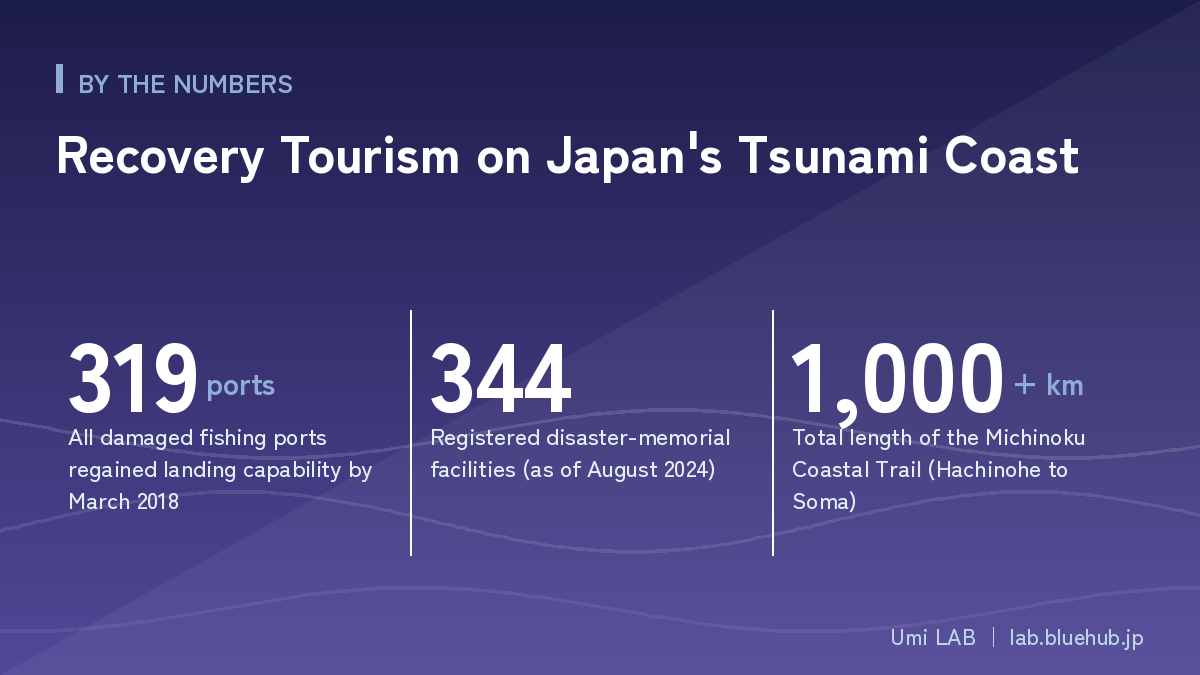
All 319 damaged fishing ports have regained their landing function. With 344 registered disaster-memorial facilities, the 1,000 km Michinoku Coastal Trail, storyteller tours, fishing experiences and divers restoring seaweed beds, here is how Japan's tsunami coast turned the sea into a tool for recovery.
Is it improper to travel to a disaster area? Fifteen years after the Great East Japan Earthquake, plenty of people still hesitate to visit Sanriku or Fukushima's Hamadori coast while carrying that question. On the ground, however, more than a decade of work has gone into redesigning the act of being visited into a means of recovery. Disaster ruins are preserved, survivors tell their own stories, fishers take visitors out on their boats, and divers clear seabed debris while nurturing seaweed beds. Taken together, that is recovery tourism.
From Sanriku down to Fukushima, most of what was lost and most of what is being regained is tied to the sea. The tsunami destroyed 319 fishing ports and more than 28,000 vessels, yet the same sea grows wakame, oysters and salmon, shapes the ria coastline, and draws back divers and long-distance hikers. Not tourism that consumes the sea, but tourism that studies and tends it. Recovery tourism is a laboratory for exactly that shift.
This article works through disaster ruins and storyteller tours, the Michinoku Coastal Trail and Sanriku Fukko National Park, fishing experiences and the nagisa-haku and umigyo schemes, diving-led restoration of the sea, and Fukushima's Hope Tourism, using figures published by Japan's Ministry of the Environment, Fisheries Agency, Ministry of Land, Infrastructure, Transport and Tourism, and Fukushima Prefecture. It also faces the problems that will not resolve themselves: ageing storytellers and thinning visitor numbers.
What you will learn
- What "recovery tourism" means and which resources it is built on
- The role of disaster ruins and storyteller tours, and how to visit them respectfully
- Why the Michinoku Coastal Trail and Sanriku Fukko National Park were created as recovery policy
- How fishing experiences, nagisa-haku lodging and umigyo turn the sea into village income
- How volunteer divers restored seaweed beds, and why Shizugawa Bay became a Ramsar site
- The ageing of storytellers, falling visitor numbers, and how to plan a trip that actually helps
What recovery tourism is: making a visit itself a form of support
Recovery tourism means travelling to a region working its way back from disaster, learning about the damage and the lessons drawn from it, and spending money on local food, lodging and hands-on programmes. In government documents the term overlaps with "disaster learning", "disaster-prevention school trips" and "expanding the visitor population"; the Japan Tourism Agency treats tourism recovery after the Great East Japan Earthquake as one strand of sustainable destination management.
A trip where sightseeing and study cannot be separated
Ordinary tourism is organised around scenery and food. In recovery tourism, the core of the itinerary is seeing the site, hearing the people who lived through it, and relating that to your own life. A typical half-day pairs a ruin visit and a storyteller's talk with a lunch of local fish and a stop at a products shop. The coexistence of learning and consumption is sometimes criticised, but from the region's side, learning alone does not sustain an economy, and consumption alone does not preserve memory.
Overlap with, and difference from, dark tourism
Travel to sites of disaster, war or accident is called dark tourism. Recovery tourism overlaps with it but places its weight differently. Where dark tourism centres on passing on the memory of tragedy, recovery tourism extends to the regeneration that follows: livelihoods restarting, and disaster prevention for the future. That is why so many Sanriku programmes add a visit to a rebuilt fish market or an aquaculture site after the ruins.
From Kobe to Tohoku: an inherited idea
Travel to disaster areas did not begin in 2011. After the 1995 Great Hanshin-Awaji Earthquake, walking tours through damaged neighbourhoods emerged as a way to learn disaster prevention, and after the 2004 Chuetsu earthquake in Niigata, mountain villages combined regeneration with exchange programmes for urban residents. Overseas, tsunami museums and memorial facilities built after the 2004 Indian Ocean tsunami likewise tie disaster education to tourism.
What makes the Great East Japan Earthquake distinctive is that the damage stretched along more than 500 km of coastline. Rather than completing the experience in a single walkable town, you can move along the coast across prefectural borders and compare how high the tsunami reached and what form of rebuilding each community chose. Towns raised wholesale onto higher ground, towns that returned to their original sites behind taller sea walls, districts still empty because residents did not come back: that variety is itself the teaching material.
Three resources a coastal disaster area holds
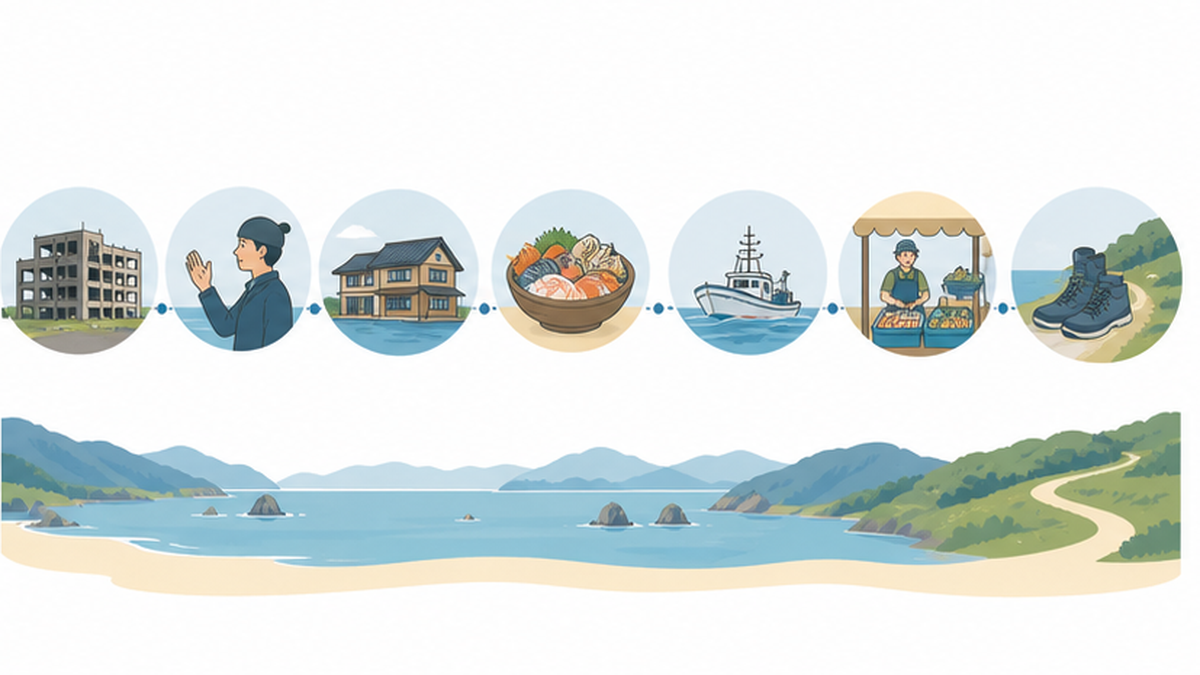
Recovery tourism on a coast rests on three kinds of resources. First, resources of memory (ruins, memorial museums, storytellers). Second, resources of nature (the ria coastline, a national park, a long trail, rich seaweed beds). Third, resources of livelihood (fishing experiences, markets, seafood processing, restaurants). The strength of the Sanriku coast is that all three sit within walking distance or a short drive of one another.
Terms used in this article
- Recovery tourism: travel that engages with a region's regeneration through both learning and spending
- Visitor population (koryu jinko): people who come for tourism or business, as opposed to residents
- Related population (kankei jinko): people who keep engaging with a region without moving there, including repeat visitors and supporters
- Umigyo: businesses built on fishing port and village resources, such as seafood retail, recreational fishing and fishing experiences
The day the sea was taken: damage and recovery in numbers
To understand recovery tourism you first need to know how much was destroyed and how much has come back. On 11 March 2011, the earthquake and tsunami struck the Pacific coast from Tohoku to Kanto and inflicted extraordinarily wide-ranging damage on the fisheries sector.
319 ports, 28,612 vessels
According to the Fisheries Agency, 319 fishing ports were damaged, with Iwate (108) and Miyagi (142) accounting for roughly 78% of the total. Vessel damage came to 28,612 boats nationwide, valued at about 182.2 billion yen. What made recovery so slow was that markets, ice plants, cold storage and processing plants — the whole chain from landing to shipping — were lost at the same time.
| Item | Damage and recovery |
|---|---|
| Fishing ports damaged | 319 ports (Iwate 108, Miyagi 142; about 78% of the total) |
| Fishing vessels damaged | 28,612 vessels / roughly 182.2 billion yen in damage |
| Vessels restored | 18,651 vessels restored by March 2018 |
| Port function restored | All 319 ports had regained landing capability by 30 March 2018 (including partial resumption) |
The gap between restored facilities and restored livelihoods
Quays repaired, boats back, landings possible — that is real progress, but it does not mean back to normal. Population outflow and ageing have thinned the ranks of fishers, processing plants face labour shortages, and rising sea temperatures are changing which species are caught at all. Even as facility restoration approached 100%, there remain regions where landing volumes and processing revenues have not returned to pre-disaster levels. Recovery tourism has been expected to fill part of that gap with a different kind of income.
The recovery of the fishing industry itself is covered in detail in Thirteen years of fisheries recovery after the Great East Japan Earthquake. Read together, it becomes easier to place the role tourism actually plays.
How sea walls and land raising changed the view of the sea
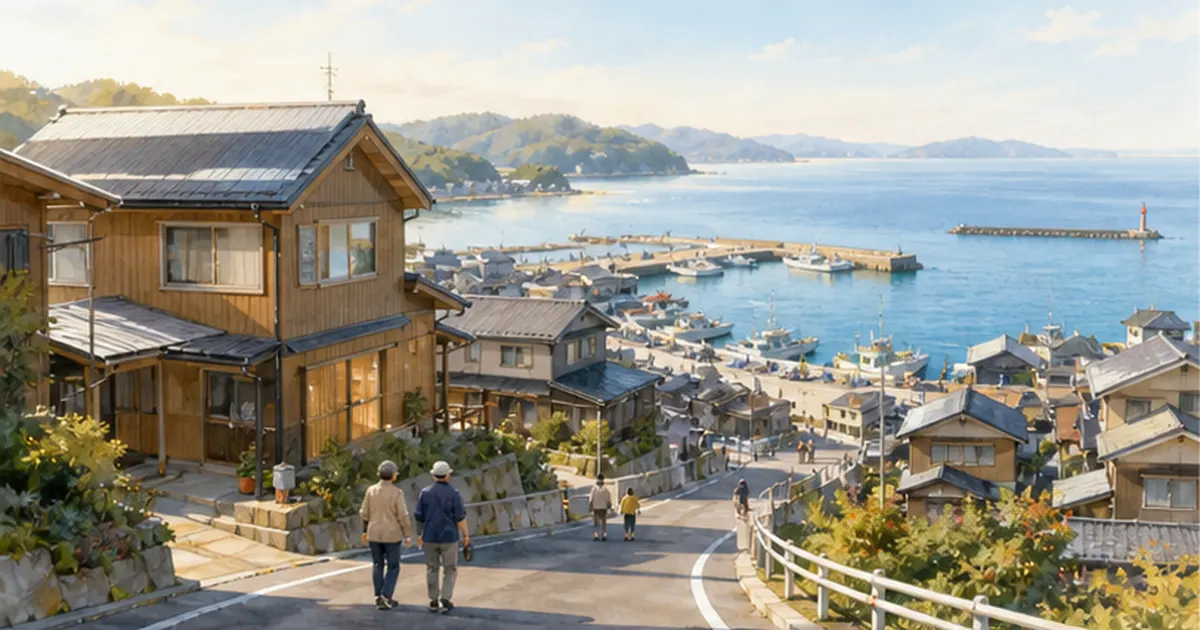
Recovery also transformed the coastal landscape itself. In many districts sea walls around 10 metres high were built and town centres were raised by several metres. These are works undertaken to save lives, yet in place after place people say that you can no longer see the sea from the shore. "You hear the waves but cannot see them" affects both a fishing culture built on reading the water by eye and the everyday sense of living beside the sea.
In response, recent designs add viewing decks and stepped waterfront spaces to sea walls, or run promenades along the top of them. How each community struck a balance between disaster prevention, landscape and access to the water is another theme of recovery you can only grasp on foot. When you visit, check with your own eyes how the height of the wall relates to the sea surface behind it.
A distinction worth keeping
"Restoration" means returning damaged facilities to their former state; "recovery" means making a region's life and economy work again. Recovery tourism addresses the latter, which facility statistics alone cannot measure.
What disaster ruins convey: 344 memorial facilities and the 3.11 Densho Road
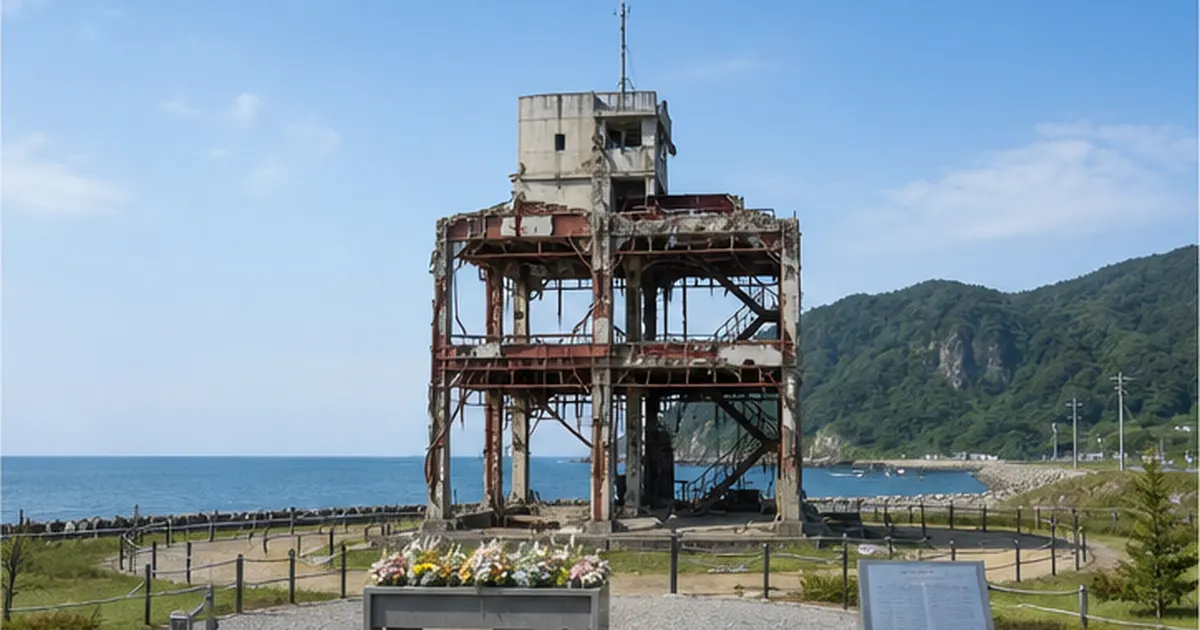
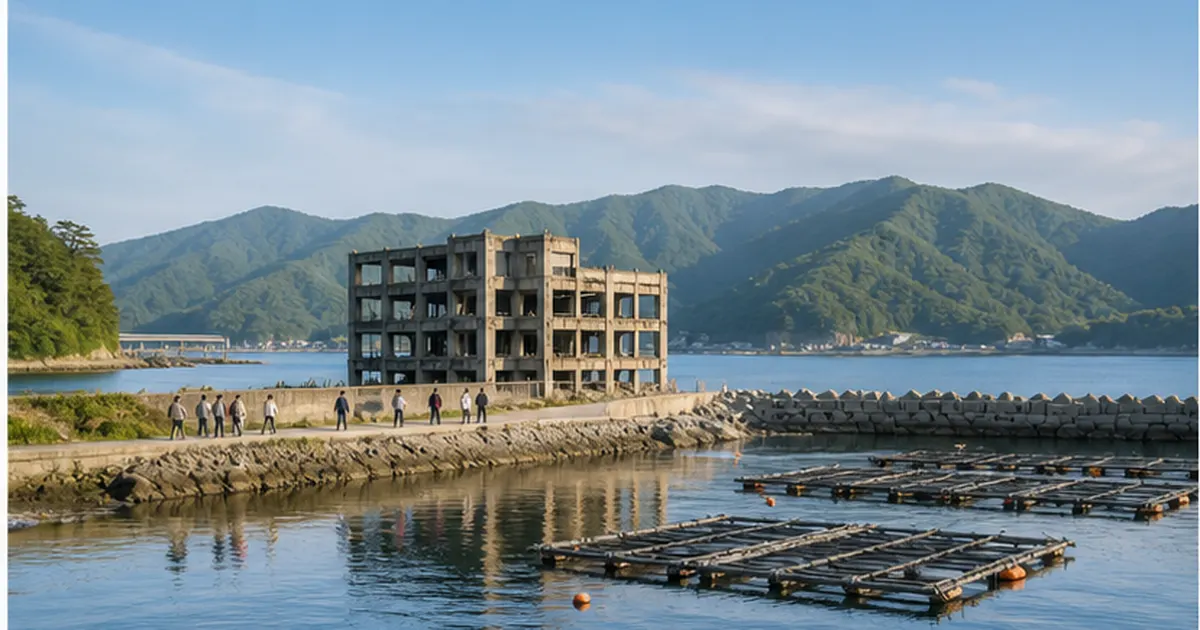
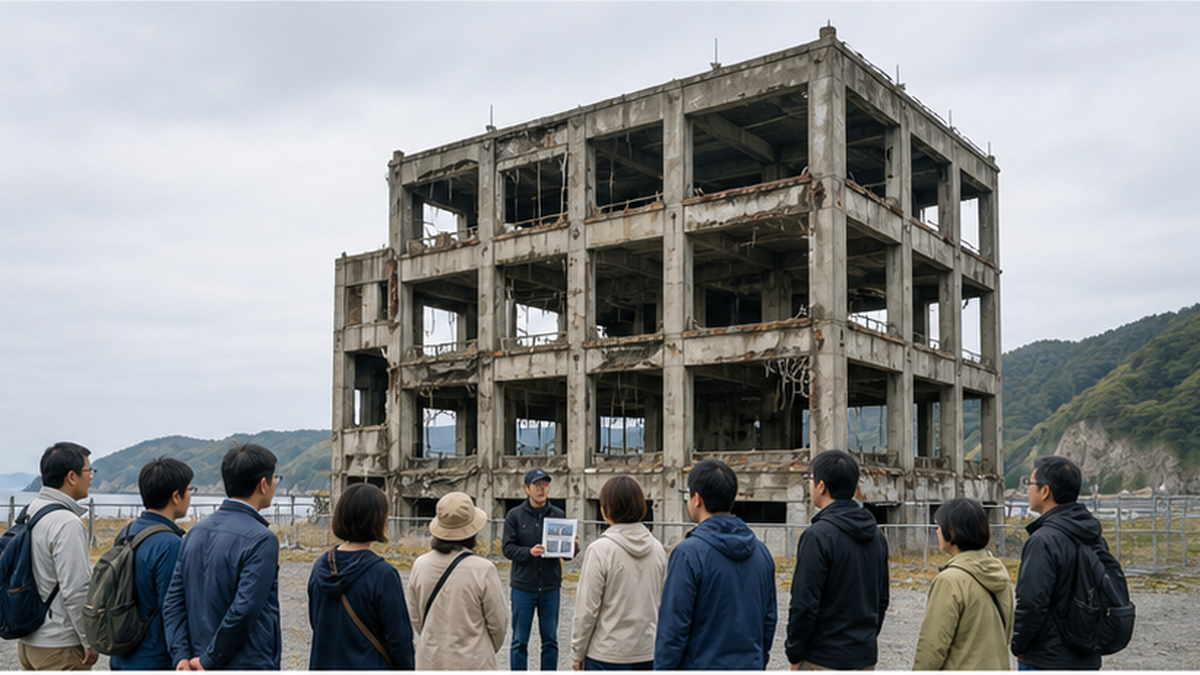
Hearing the height of a tsunami as a number rarely lands. Disaster ruins — buildings preserved as the water left them — close that distance instantly. Standing before a steel frame flooded to the fourth floor, or debris marks on a second-floor ceiling, the fact that the water reached here enters the body rather than the notebook.
A registration scheme for memorial facilities
The Earthquake Memorial Network Council, which includes the Tohoku Regional Bureau of the Ministry of Land, Infrastructure, Transport and Tourism, registers ruins, memorial museums and monuments as "disaster memorial facilities" and links them through the "3.11 Densho Road" with a shared logo and signage. Additional registrations at the 13th council meeting in August 2024 brought the total to 344 facilities. The aim is to connect scattered sites from Aomori to Fukushima into a route that is easy to travel.
Representative ruins on the coast
| Facility | Location | Features and opening |
|---|---|---|
| Tsunami ruin: Taro Kanko Hotel | Miyako, Iwate | Screens tsunami footage filmed from the sixth floor. Open to the public since 1 April 2016 |
| Great East Japan Earthquake and Tsunami Memorial Museum (Iwate Tsunami Memorial) | Rikuzentakata, Iwate | Opened 22 September 2019 inside Takata Matsubara Tsunami Reconstruction Memorial Park; exhibition area about 1,155 square metres |
| Kesennuma Great East Japan Earthquake Memorial Museum | Kesennuma, Miyagi | Preserves the former Miyagi Prefectural Kesennuma Koyo High School building. Opened 10 March 2019 |
| Ishinomaki Okawa Elementary School Disaster Ruin | Ishinomaki, Miyagi | Opened to the public 18 July 2021. The school building is preserved as it stood, with the Okawa Memorial Hall alongside |
The conflict behind every decision to preserve
Preservation was never a given. The feelings of bereaved families, for whom the sight brings back the day they lost someone, collided head-on with the argument that these structures must be handed to the future, and many municipalities spent years debating demolition versus preservation. At Okawa Elementary School, preservation was decided only after resident surveys and long negotiation. Visitors should know that the very presence of the building is the result of a community reaching agreement.
How to behave at a disaster ruin
- These are also places of mourning. Avoid posed photographs and loud conversation
- Many people pause and bow before the flower stands and monuments. Do not block the path
- Do not ask residents out of the blue what happened to them. Those who wish to speak do so as storytellers
- When posting online, avoid images that identify a damaged private home or car
- Admission and guide fees fund preservation and operation. Do not rely only on the free options
Storyteller tours: what only a person can pass on
If a ruin shows how far the water came, a storyteller conveys what people were thinking and how they moved. Storyteller tours sit at the centre of recovery tourism. Residents who lived through the disaster describe in their own words the decision to evacuate, why they survived, whom they could not save, and how life has gone since.
Handing over judgement, not information
What makes these talks powerful as disaster education is that they do not supply a correct answer. Anyone can say "head for high ground", but in the real event people had minutes to decide whether to go back for family, drive or run, or simply climb to the second floor. Storytellers offer the hesitation itself, not just the outcome. Listeners leave holding the question of what they would have done, and that is what separates this from a simple site visit.
The scale of storyteller programmes in numbers
The 3.11 Memorial Network, which connects memorial organisations across the disaster area, reports programme results from September 2011 to March 2023 of 55,453 on-site participants and 33,324 online participants. The high online share reflects the delivery formats built during the pandemic for schools that could not travel, and those formats remain in use for pre-trip study by distant schools.
School trips as the underlying demand
Storyteller tours are sustained by educational travel: school excursions and field study. A stronger place for disaster education in the national curriculum, plus the fact that the coast is within a day trip or one night of the Tokyo area, both helped. In recent years, management and leadership training programmes for companies have added to the base of group visitors.
How to book a storyteller tour
- Apply through the municipal tourism association, a memorial facility, or a local NPO with your preferred date, group size and duration
- One-hour and two-hour courses are standard; some formats include commentary from a coach en route
- Groups of one or two are often accepted, but small parties may be charged a minimum fee
- Peak periods (March and the school-trip season) fill months ahead. Enquire early
Feeling the sea on foot: the Michinoku Coastal Trail and Sanriku Fukko National Park
Recovery tourism is not built on ruins and storytellers alone. After the disaster, national policy set out to redefine the damaged coastline itself as a resource to be walked. The Michinoku Coastal Trail and Sanriku Fukko National Park are the results.
A national trail of more than 1,000 kilometres
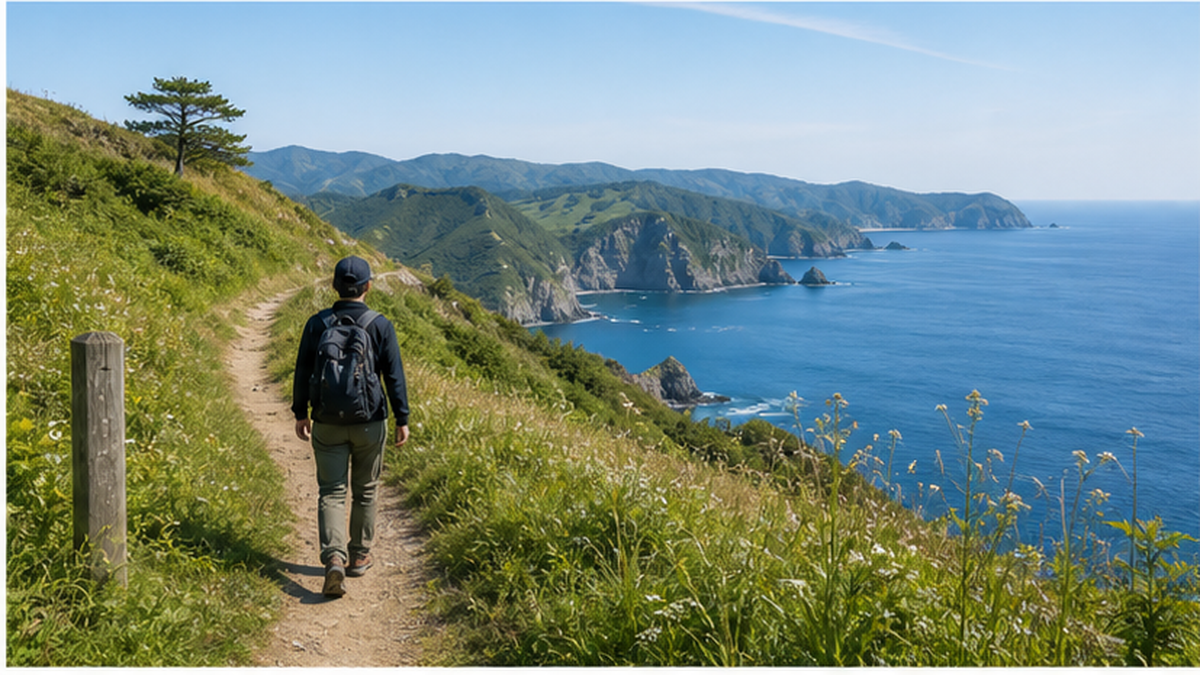
The Michinoku Coastal Trail is a long-distance nature trail established by the Ministry of the Environment to contribute to recovery from the Great East Japan Earthquake, running from Kabushima in Hachinohe, Aomori, to Matsukawaura in Soma, Fukushima. It exceeds 1,000 km in total and opened along its full length on 9 June 2019. Because it stitches together existing footpaths, local roads, beaches and fishing-village lanes, it alternates between cliff-top panoramas and alleys running past fishing harbours.
Few people walk the whole thing; most choose a section of one to several days. Moving along the coast at walking pace, you take in the height of the sea walls, the raised ground, and the aquaculture rafts floating offshore in sequence, and feel that damage and regeneration are continuous. The trail is operated by the Ministry of the Environment together with local governments, private organisations and residents.
The national park as a framework
On 24 May 2013, Sanriku Fukko (Reconstruction) National Park was designated by incorporating the coast from Hachinohe to Hashikami Town in Aomori, and Mount Hashikami, into the existing Rikuchu Kaigan National Park. The step followed the "Green Reconstruction Vision centred on the creation of Sanriku Fukko National Park", making it a rare case in Japan of a natural park designation used as a pillar of recovery policy. The national park label has functioned as a brand for attracting visitors as well as a conservation instrument.
The ria coast as an exhibit in itself
The Sanriku ria coast formed as mountain valleys subsided and were drowned by the sea, producing a run of deep inlets. This shape concentrates wave energy at the head of each bay and so amplifies tsunami height — yet it also makes the water calm and deep, and therefore exceptionally well suited to aquaculture. Danger and bounty arise from the same landform, and that duality registers far better when you cross the bays one by one on foot than when you read a map.
North of Miyako, the coast switches to sea cliffs and marine terraces formed by uplift, a completely different landscape from the ria coast to the south. That two coastlines of different origin sit inside a single designated area is part of what makes Sanriku Fukko National Park interesting.
What a walking trip leaves behind
The economic impact of a long trail is modest per person. But walkers spread their overnight stays along the route, buy food in local shops and use public transport. Unlike coach tourism that passes through, the spending reaches small settlements. Guesthouses, minshuku and "trail-friendly" lodgings have spread along the route.
If you are walking it for the first time
- Start with a one-day section (10-20 km) reachable by public transport rather than the full route
- Always obtain the route maps and GPS data published by the Ministry of the Environment and the operating organisations in advance
- The coast is windy and sea fog can drop the temperature suddenly. Carry wind and cold protection even in summer
- Some sections pass through residential lanes. Do not photograph gardens or laundry
- Resupply points can be tens of kilometres apart. Plan water and food the day before
Playing and working at sea: fishing experiences, umigyo and nagisa-haku
Ruins and trails alone end a trip in half a day. What stretches a stay to one or two nights, and lengthens the time money circulates locally, is hands-on fishing experiences and the schemes that support them.
Umigyo: a policy word for sea businesses
The Fisheries Agency now promotes businesses that use the resources of fishing ports and villages under the name umigyo. Concrete examples include selling seafood and serving meals at fishing ports, recreational fishing, and fishing experiences. Behind it lies the fact that, as the number of fishers falls, more port facilities go unused, and that space needs to be converted into local earnings.
The Fisheries Agency has set a target of roughly 500 fishing ports starting new umigyo initiatives over five years, and has designated 86 districts for priority support — 54 announced in March 2024 plus 32 decided in February 2025. Ports in the disaster area have begun using this framework to build direct-sales outlets and experience facilities.
Nagisa-haku: staying in a fishing village
The Ministry of Agriculture, Forestry and Fisheries promotes stays in rural and fishing communities as nohaku, and calls the fishing-village version nagisa-haku. You stay in a fishing family's guesthouse or a converted old house, then join the morning's work at sea. Across nohaku as a whole, annual overnight stays in participating areas rose to 7.94 million in fiscal 2023, above the target of 7 million set for fiscal 2025.
What you can actually do
| Type of experience | Content | Typical season |
|---|---|---|
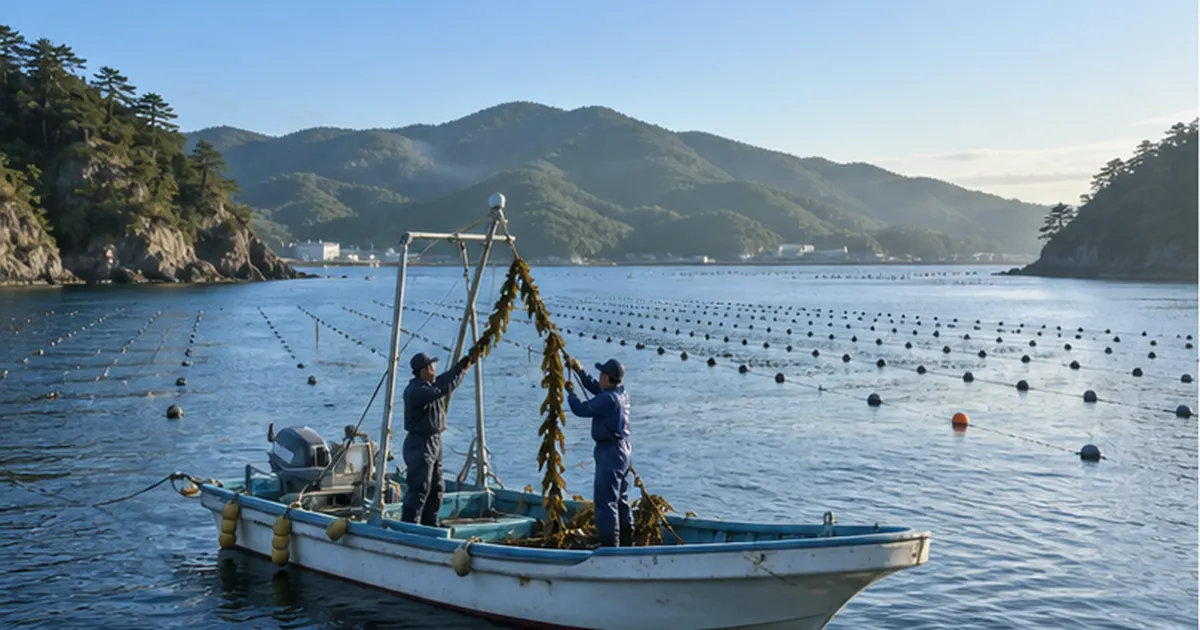
| Wakame and kelp harvesting | Cutting on board, then blanching and salting | Winter to spring (March-May) |
| Oyster and scallop farming work | Ear-hanging, cleaning and shucking on the rafts | Year-round (seed work is seasonal) |
| Set-net fishing on board | Early departure to watch the net hauled; the catch cooked on the spot | Spring to autumn |
| Cooking with a fishing family | Making and eating local dishes in the household kitchen | Year-round |
| Rocky-shore observation | Watching tide-pool life; many programmes aimed at children | Early summer to summer |
For fishers, these programmes are cash income even in a poor season; for consumers, a chance to see the labour behind the price tag. How oyster farming in Sanriku was rebuilt is covered in The recovery of oyster farming, and the decision to deliberately reduce the number of rafts to raise quality makes far more sense once you have stood on one.
The burden on the hosts
These programmes are not pure gain for fishers. Explaining takes time away from fishing, safety has to be assured, gear is lent out, and cleaning up follows. Accidents at sea escalate quickly, so insurance, limits on the number of people aboard and life jackets for everyone are essential. Subsidies for building reception capacity exist precisely so that this burden is not dumped on individual households.
What participants can do is simple: arrive on time, follow instructions, and treat the experience as visiting someone's workplace rather than buying a service. Programmes are sometimes cancelled on the day because of sea conditions; that is a safety judgement, and a good participant switches to the alternative without complaint.
Umigyo refers to businesses that make use of the value and appeal of the resources of the sea and fishing villages, including the sale of seafood and provision of meals at fishing ports, recreational fishing and fishing experiences.
― Fisheries Agency, "Policy for Promoting Umigyo"
Supporting the sea from below: diving and marine restoration
Coastal recovery tourism has a layer invisible from land: the work divers do underwater, and the tourism that has grown out of it.
The divers who cleared debris and brought seaweed beds back
The tsunami carried an enormous volume of land-based material into the sea. Vehicles, fishing gear and building materials on the seabed obstruct any attempt to restart aquaculture and blanket the rock where seaweed would take hold. Divers who entered the disaster area immediately after the event began clearing seabed debris as volunteers.
The NPO Sanriku Volunteer Divers, based in Kesennuma, has worked at the request of fisheries cooperatives to remove large debris, recover fishing gear, mark sunken vessels before salvage, survey sites before aquaculture facilities are installed, and conduct ecological surveys. The group also clears river debris so that salmon can run, work recognised by the Ministry of the Environment's Good Life Award. Volunteers arriving from across Japan include not only divers but people working on land, and children.
What Shizugawa Bay's Ramsar listing means
The symbol of the sea's reappraisal is Shizugawa Bay in Minamisanriku, Miyagi. On 18 October 2018 it became Japan's 52nd Ramsar Convention wetland. The listing centres on its seaweed and seagrass beds: kelp beds, arame beds, gulfweed beds and eelgrass meadows all occur together, and more than 220 species of macroalgae and marine plants have been confirmed. This diversity is characteristic of a place where cold and warm currents meet.
Seaweed and seagrass beds are spawning grounds and nurseries, and blue carbon ecosystems that store carbon dioxide on the seabed. Declaring a "sea to be protected" in the middle of recovery added value to aquaculture branding and credibility to tourism alike. The techniques of restoring these beds are covered in Restoring seagrass meadows, the cradle of fish.
The promise and the limits of dive tourism
When visibility is good, the Sanriku sea offers seaweed forests and dramatic topography — but the water stays cold even in summer and is exposed to swell and current. It is not a place anyone can casually dive; a dry suit and real experience are usually required. Diving here therefore works less as mass tourism than as a dense point of contact between the region and people with a strong interest in the sea.
The main work carried out underwater
- Removing large seabed debris and fishing gear, and surveying planned aquaculture sites in advance
- Marking the position of sunken vessels ahead of salvage
- Recording damage to seaweed beds and monitoring their recovery
- Clearing river debris to keep salmon migration routes open
- Building up ecological survey data, shared with cooperatives and research institutes
Fukushima's Hope Tourism: travelling into the question of reputation
Recovery tourism has a different character along Fukushima's Hamadori coast. On top of tsunami damage came a nuclear accident, and with it layered problems of evacuation, return and reputational harm. Fukushima Prefecture has built a travel programme that addresses these head-on, called Hope Tourism.
A record 19,071 participants in fiscal 2024
According to prefectural figures, Hope Tourism drew 19,071 participants in fiscal 2024, up 2,595 on the previous year and the highest on record. Of these, 12,828 were on educational trips and 6,243 came with general groups including corporate training. The number of participating groups also set a record at 438, up 42 year on year. More than 70% of participants came from outside the prefecture, mainly the Tokyo area, and four groups totalling 70 people came from abroad, including Taiwan.
Designed to send people home with unanswerable questions
What distinguishes Hope Tourism is that the itinerary builds in time for participants to turn what they have seen into their own questions. Groups visit areas near the decommissioning site, hear from people in different positions — residents who evacuated, those who came back and started businesses, those who have not returned — and end by discussing what they themselves will do. Refusing to align everyone on a single conclusion is precisely what gives the programme its educational value.
Seafood, reputation, and the tourism of dialogue
Debate has continued over radioactivity testing of Fukushima seafood and the ocean release of treated water. The testing regime and how to read the data are set out in Monitoring Fukushima's seafood and the road to full-scale fishing, but numbers alone do not dissolve anxiety. Talking to a fisher, seeing the catch at the market and eating it there builds understanding through a different channel from statistics. That is why recovery tourism has also been positioned as a response to reputational harm.
| Category | Fiscal 2024 result |
|---|---|
| Total participants | 19,071 (up 2,595 year on year; record high) |
| Of which educational travel | 12,828 |
| Of which general groups (corporate training etc.) | 6,243 |
| Participating groups | 438 (up 42 year on year; record high) |
| From outside the prefecture | More than 70% of the total, mainly the Tokyo area |
| From abroad | 4 groups, 70 people (including Taiwan) |
What has to be solved, and how to start your own trip
Recovery tourism looks established, but it carries several problems of sustainability. Knowing them is not background trivia for a visitor; it changes the quality of the trip.
Visitor numbers are not rising steadily
Fourteen years on from the disaster, visitor numbers at major memorial facilities rebounded after the pandemic but then fell below the previous year at many sites, and numerous organisations have expressed anxiety about whether they can keep going. Memory fades with time and media coverage thins. The pattern of a surge in an anniversary year — ten years, fifteen years — followed by a drop the year after has repeated itself.
Ageing storytellers and the handover of generations
The gravest issue is the people who do the telling. Storytellers who were in their working prime in 2011 are now entering old age. The generation who were children then are beginning to take the role, but the resolution of their memories differs, and many young successors wrestle with whether they have standing to speak at all. Building video archives at memorial facilities and recording storytelling online are ways of preparing for that gap.
Inbound travel as a new current
There is a tailwind for Tohoku as a whole. According to the Tohoku District Transport Bureau, overnight stays by foreign visitors across the six Tohoku prefectures reached 2,772,360 in 2025, up 21.8% on 2024 and a record high for the second year running. Taiwan led by market, followed by mainland China and Hong Kong, with new scheduled international flights cited as a driver. Overseas visitors to disaster ruins are increasing too, and multilingual guiding and interpretation panels are the next task.
| Issue | What is happening on the ground | Responses being tried |
|---|---|---|
| Declining visitors | Numbers fall after anniversary years | Cultivating stable demand from school trips and corporate training |
| Ageing storytellers | The generation who experienced it is retiring | Training younger storytellers; video and audio archiving |
| Unstable funding | Recovery-related subsidies are winding down | Raising the share of own revenue from admissions, programme fees and donations |
| Foreign visitors | Interpretation is mostly Japanese-only | Multilingual panels, interpreter guides, audio guides |
| Friction with daily life | Entering residential areas, photography disputes | Marking visitor routes, promoting etiquette, encouraging guided visits |
When does the word "recovery" come down?
One more question has no settled answer: how long should "recovery" remain the banner over these trips? The longer time passes, the more the label "disaster area" fixes the region's image and narrows the vocabulary younger residents have for describing their own town. Tourism operators along the coast say repeatedly that they want to be chosen for the quality of the seafood and the beauty of the coastline, not only for the disaster.
Yet letting go of ruins and storytellers would erode the lessons quickly. The two aims look opposed but can coexist. Put half a day of disaster learning and half a day of simply enjoying the sea and the food into the same itinerary. That ordinary arrangement is what supports a region over the long run. The sea brings danger and enriches daily life at the same time, and conveying both is the task ahead for recovery tourism.
How to start: one night, not half a day
If it is your first visit, rather than seeing a single ruin and going home, stay a night and include both a storyteller's talk and a hands-on programme. The reason is simple: after hearing the story, eating local fish and looking at the sea the next morning changes what the story meant. Staying overnight also multiplies what the region earns from your visit.
Summary
- Recovery tourism rests on three resources: memory (ruins and storytellers), nature (national park, trail, seaweed beds) and livelihood (fishing experiences and food)
- All 319 damaged fishing ports regained landing function, but with fewer fishers and shifting species, the recovery of livelihoods is unfinished
- 344 disaster memorial facilities are registered and linked as the 3.11 Densho Road
- The Michinoku Coastal Trail (1,000+ km) and Sanriku Fukko National Park were built as recovery policy
- Umigyo and nagisa-haku bring cash income and overnight demand to fishing villages, while divers cleared seabed debris and restored seaweed beds
- Fukushima's Hope Tourism reached a record 19,071 participants in fiscal 2024, designed around dialogue rather than a single conclusion
- Ageing storytellers and thinning visitor numbers are the biggest risks; staying a night and combining several experiences is what helps most
References
- Fisheries Agency of Japan – Status of restoration and recovery in the fisheries industry (Fisheries White Paper)
- Ministry of the Environment, Japan – Michinoku Coastal Trail (Sanriku Fukko National Park)
- MLIT Tohoku Regional Bureau – Disaster memorial facilities and the 3.11 Densho Road
- Japan Tourism Agency – Tourism recovery from the Great East Japan Earthquake
- Fisheries Agency of Japan – Policy for promoting umigyo (February 2025)
- Fisheries Agency of Japan – Promotion of nagisa-haku
- Ministry of Agriculture, Forestry and Fisheries – Current status of nohaku (as of 10 January 2025)
- Minamisanriku Town – The Ramsar Convention and the sea of Minamisanriku (Shizugawa Bay)
- Iwate Prefecture – Great East Japan Earthquake and Tsunami Memorial Museum (Iwate Tsunami Memorial)
- MLIT Tohoku District Transport Bureau – Overnight stays by foreign visitors in Tohoku hit a record 2.77 million in 2025
- Fukushima Hope Tourism – Official site (programmes and results)
- Sanriku Volunteer Divers – Seabed debris removal and seaweed bed restoration
* Ordered by reliability: government and academic institutions > peer-reviewed papers > specialist organisations > trusted media