⚡ In short
The coastal pine forest of Takata Matsubara, wiped out by the 2011 tsunami, is slowly coming back through raised earthworks and a decade of tree-planting. This article explains how coastal forests reduce tsunami force and prevent sand and salt damage, and traces the national recovery effort.
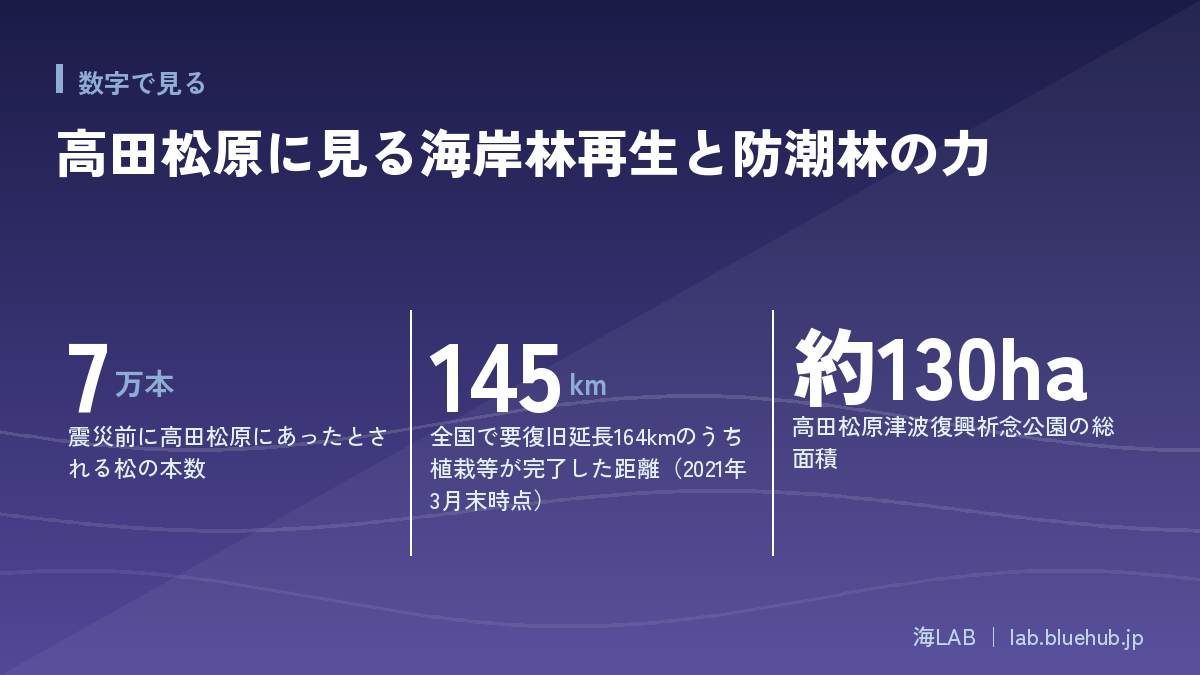
For about 350 years, "Takata Matsubara" was nurtured along the coast of Rikuzentakata City, Iwate Prefecture — a scenic pine grove of roughly 70,000 Japanese black pines stretching 2 km, ranked among Japan's Hundred Scenic Spots, and also a coastal forest that protected the town from tsunamis and sea winds. But the tsunami of the 2011 Great East Japan Earthquake knocked down nearly all of the forest, leaving behind only what became known as the "Miracle Lone Pine."
Over the ten-plus years since, Iwate Prefecture, Rikuzentakata City, local NPOs, and volunteers from across the country have steadily advanced the forest's restoration — raising new growing ground with earthworks, cultivating salt-resistant black pine seedlings, and planting them one by one. This article explains that technique and its progress, alongside the state of coastal forest recovery nationwide.
Restoring a coastal forest is not simply a matter of "bringing back the old scenery." It is also a long-term erosion-control undertaking that asks how disaster-prevention functions — reducing tsunami force, preventing blown sand and salt damage — should be redesigned for decades into the future. Through this article, we hope readers come to see just how long a time horizon is behind the disaster-prevention investment of planting a single tree.
What you'll learn in this article
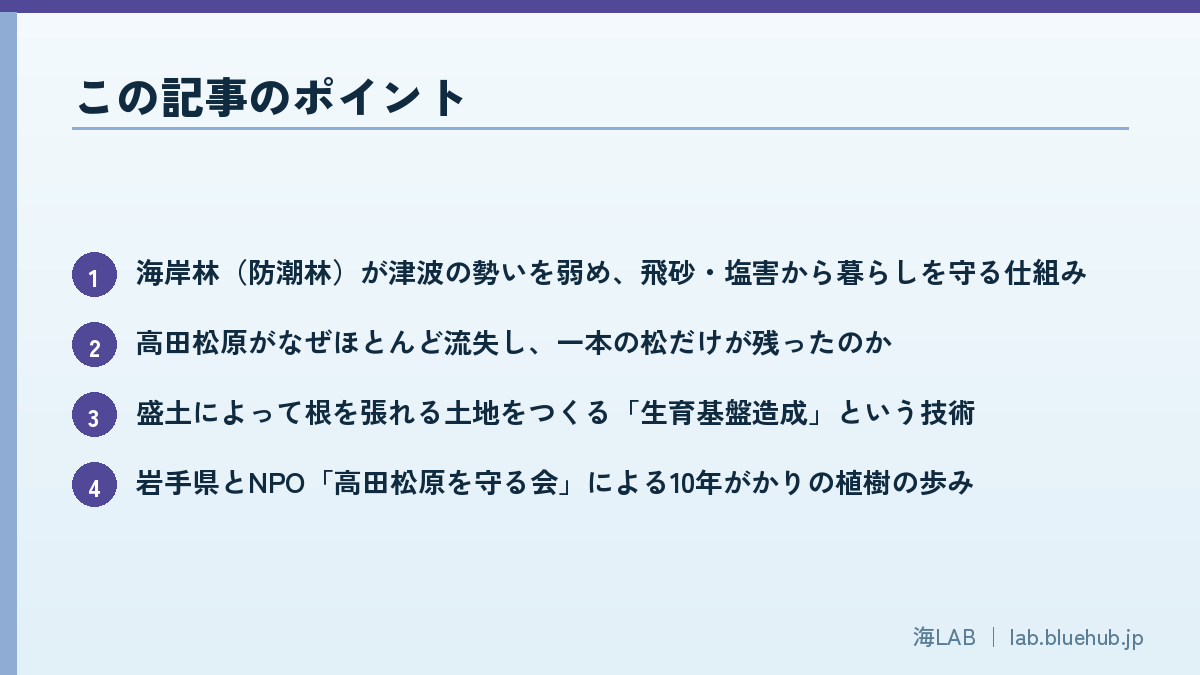
- How coastal forests reduce tsunami force and protect life from blown sand and salt damage
- Why almost all of Takata Matsubara was washed away, leaving only a single pine
- The "growing-base earthwork" technique that creates ground where roots can take hold
- The decade-long tree-planting effort by Iwate Prefecture and the NPO "Takata Matsubara Preservation Society"
- Progress on coastal protection forest recovery nationwide, and Miyagi Prefecture's restoration guidelines
- How the Takata Matsubara Tsunami Recovery Memorial Park today balances disaster prevention, remembrance, and tourism
Takata Matsubara as a coastal forest — 350 years of history and its pre-disaster form
Takata Matsubara is a coastal forest said to have been first planted in the mid-17th century (the Keian era of the Edo period) by local merchant Suganō Mokunosuke and others, and nurtured by the local community for more than 350 years since. Before the disaster, it stretched roughly 2 km east–west with a maximum width of 200 m and an area of about 21 ha, home to some 70,000 black pines that served as a coastal forest protecting the town of Rikuzentakata and its farmland from salt damage, blown sand, and storm surges.
To understand why this pine grove was sustained for so long, one has to go back to Edo-period thinking about disaster prevention. At the time, the area around Rikuzentakata suffered from strong sea winds and blowing sand that damaged farmland and hindered rice cultivation. To address this, Suganō Mokunosuke and others are said to have funded a large-scale project, planting black pines on the sand dunes at their own expense. Planting trees was not mere greening — it was, in effect, a survival strategy for the region.
A scenic spot of white sand and green pines
Rikuzentakata is also home to local landscaping professionals and forestry workers who inherited forest-management skills across generations — practical knowledge of pruning and thinning timing, and early detection of pests and disease, passed down through oral tradition and hands-on work. Many of these skilled practitioners were themselves affected by the disaster, but the knowledge of those who survived has played an important role in shaping the post-disaster restoration plans.
The scenery of white sand and green pines, known as "hakusha-seishō," was ranked among Japan's Hundred Scenic Spots and Places of Scenic Beauty, and was a symbol of Rikuzentakata that drew many tourists. Loved as a beach as well, it was said to bustle with families enjoying the sea and the pine grove in summer. Walking paths and campgrounds were built within the forest, making it a place of everyday leisure for local residents.
Maintenance of the pine grove was not left to forestry professionals alone; local elementary and junior high schools and neighborhood associations were also involved, with residents collectively taking on tasks such as clearing undergrowth and patrolling for pine wilt disease. This "a pine grove we all raise together" mindset, rooted well before the disaster, is said to have provided fertile ground for the restoration effort to get moving relatively quickly afterward.
A pine grove that had repeatedly held back tsunamis
Takata Matsubara was not just a tourist spot — it is said that during the Meiji Sanriku earthquake tsunami (1896) and the Showa Sanriku earthquake tsunami (1933), the roots and trunks of the pines absorbed some of the tsunami's energy, softening the extent of damage further inland. The accumulation of this experience nurtured a shared local understanding that "a coastal forest is disaster-prevention infrastructure."
That said, it's important to note that the scale of those past tsunamis was entirely different from that of the Great East Japan Earthquake. The Meiji- and Showa-era Sanriku tsunamis reached wave heights of several to a little over ten meters in some areas, but damage was often localized — disasters of a scale the coastal forest could largely "hold back." The 2011 tsunami, by contrast, was extremely large in both scale and extent, and later analysis made clear that it was physically impossible for a coastal forest alone to prevent the damage.
What is a coastal forest (tsunami-buffer forest)?
A belt of forest maintained along the shoreline that is expected to prevent blowing sand, reduce salt damage from sea winds, block wind, and to some degree reduce the kinetic energy of a tsunami. Because black pine tolerates salty, alkaline soil and dry sandy ground, it has long been planted nationwide as the primary species in coastal forests.
What happened in the Great East Japan Earthquake — why the Miracle Lone Pine survived
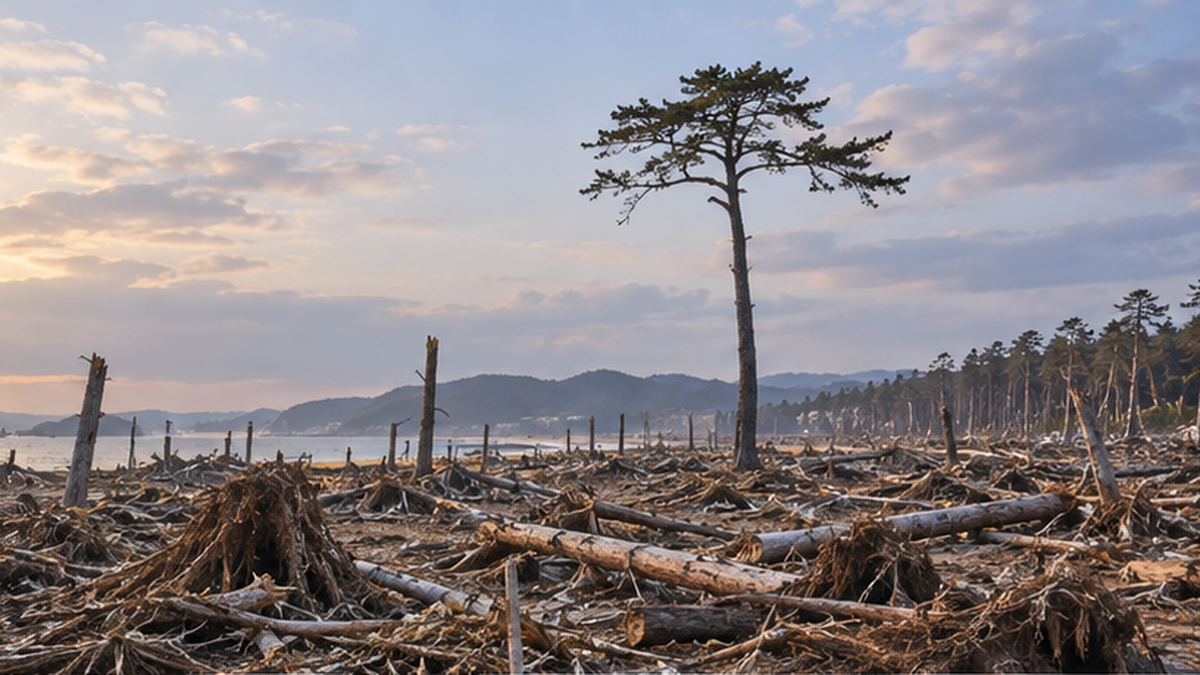
The tsunami triggered by the March 11, 2011 Great East Japan Earthquake struck Rikuzentakata City at a maximum height of over ten meters, knocking down nearly every pine in Takata Matsubara. Surging in from the sea, it snapped trunks, tore trees out by the roots, and swept away buildings and homes throughout the town.
Why only one tree remained
The surviving pine is believed to have stood further inland and toward the western edge of the grove, and experts consider its survival the result of several overlapping factors — the effect of the ground and surrounding buildings in reducing tsunami force, the way its roots had spread, and more. Analyses point to a combination of conditions rather than any single decisive cause.
Post-disaster surveys found that even this lone pine had absorbed large amounts of saltwater through its roots, and that despite remaining upright, it was suffering serious internal salt damage and root rot. Despite dedicated efforts by specialists to save it, its death was confirmed in 2012. The pine's story holds both truths at once: that it "miraculously survived," and that "its vitality ultimately could not be saved."
What the "Miracle Lone Pine" came to symbolize
From immediately after the disaster, this lone pine became a symbol of hope for recovery, both for the disaster area and for people across the country. After preservation techniques were used to maintain the tree despite its salt-damaged condition, it was preserved as a disaster relic in 2013, and today stands within the park as a monument conveying the memory of the disaster.
The preservation process involved hollowing out the trunk's interior, applying anti-rot and anti-corrosion treatment, inserting a metal core rod, and covering the exterior with a replica cast from the tree's real bark — a large-scale conservation and restoration project. The cost was covered by donations and corporate sponsorship, with reports of more than 150 million yen raised in support from across the country. Few examples in the history of disaster recovery show so many people devoting such effort to "keeping" a single tree.
Where the Lone Pine stands today
- After its death, the trunk's interior was reinforced with resin, and the exterior finished with a replica of the real bark for preservation
- The base was engineered with a foundation designed to withstand tsunamis
- Lit up at night, it is cherished as a symbol of mourning and recovery
The damage to Rikuzentakata City was extremely severe, with most of the urban area destroyed and many lives lost. The loss of Takata Matsubara is just one facet of that enormous damage, but it became a symbolic event — repeatedly covered in news nationwide — that made visible the reality that "the scenery that once existed is gone." The damage to the coastal forest was not merely the loss of woodland; it was also a microcosm of the loss of the community's memory and daily life.
How coastal forests protect life — the mechanics of a tsunami-buffer forest
The disaster-prevention functions of a coastal forest can broadly be organized into three: "blowing-sand prevention," "windbreak / salt-damage prevention," and "tsunami energy reduction." None of these happen overnight — they are functions that emerge only as trees spend decades sending down roots and thickening their trunks.
| Function | How it works | Rough time until the effect appears |
|---|---|---|
| Blowing-sand prevention | Branches and foliage stop dune sand from blowing inland on the wind | 5–10 years after planting |
| Windbreak / salt-damage prevention | Weakens sea winds carrying salt | 10–20 years after planting |
| Tsunami energy reduction | Trunks and roots slow tsunami flow speed and catch debris | 30+ years after planting, once trunks thicken |
Not "stopping" a tsunami, but "reducing" it
It's important to understand that, unlike a seawall, a coastal forest is not a structure designed to completely stop a tsunami. It plays a "damage-mitigation" role — somewhat slowing the tsunami's flow speed and energy and catching floating debris. It is positioned as one layer of a multi-layered defense, combined with seawalls.
Under the approach set out by the Ministry of Land, Infrastructure, Transport and Tourism and the Forestry Agency, seawalls are primarily meant to handle "Level 1" tsunamis — those expected roughly once every few decades to over a century — while coastal forests are expected to play a complementary role against the largest-class "Level 2" tsunamis that exceed that threshold: buying evacuation time to save lives, and reducing floating debris. It's worth keeping in mind that this is not the simple idea that "having a coastal forest means safety," but rather one part of comprehensive disaster prevention combined with seawalls, evacuation routes, and land-use regulation.
Why black pine is chosen as the primary species
Japanese black pine tolerates salty sea winds and sandy, salt-laden ground, and has long been planted nationwide as the primary species of coastal forests thanks to its deep, wide-spreading root system. In recent years, efforts have also grown to breed pine-wilt-resistant black pine and to mix in broadleaf trees, as a countermeasure against pine wilt damage caused by the pine wood nematode.
Resistant black pine refers to strains selected for relatively strong tolerance to the pine wood nematode — the cause of pine wilt disease — and propagated as seedlings. In post-disaster planting, prioritizing these resistant seedlings has helped reduce the risk that a newly restored pine forest will once again suffer pine wilt damage. Alongside black pine, partial mixed planting of broadleaf species such as Machilus thunbergii and Rhaphiolepis indica is also being adopted in various locations as a way to diversify tree species and spread the risk from pests, disease, and climate change.
A design philosophy revised in light of the disaster's lessons
Many coastal forests before the disaster were designed mainly to counter blowing sand, wind, and salt damage, without necessarily focusing on resilience against a large-scale tsunami. Since the disaster, designs have been revised with tsunami countermeasures more explicitly in mind — widening the forest belt to enhance tsunami-reducing effects, planting in multiple rows, and preparing ground where root systems can take firm hold. This is one example of a long-term policy shift that reflects the lessons of past disasters in the design of next-generation disaster-prevention infrastructure.
Raised earthworks and growing-base construction — building ground where roots can take hold
The first challenge faced in restoring coastal protection forests after the disaster was how to create an environment where trees could be planted, given that the ground itself had subsided from the tsunami and the remaining soil was laced with salt and rubble. The answer adopted was a technique called "growing-base earthwork" (seiiku-kiban morido).
What is growing-base earthwork?
In terms of construction process, the old ground and rubble swept up by the tsunami are first removed and leveled, a drainage layer is laid down, and quality mountain sand and other growing-base material is then built up to the planned height. Insufficient compaction of the raised earthwork can lead to ground subsidence or leaning seedlings years later, so quality control during construction is a critical factor in whether the restoration succeeds.
This is a method of raising the ground roughly 1–2 m with quality soil such as mountain sand, then planting black pine and other seedlings on top. By newly securing soil deep enough for roots to grow healthily, it avoids the influence of the old ground that had absorbed tsunami salt, and aims to reduce the future risk of wind damage or toppling. In some cases, tsunami sediment or construction spoil that meets salinity standards is reused as fill material, an approach that also helps hold down the cost and environmental impact of sourcing large volumes of new soil.
The height and width of the raised earthwork are not uniform — they are designed site by site according to the conditions of nearby settlements and farmland and the scale of tsunami anticipated. Where a wide forest belt can be secured, a gentler mound closer to the natural terrain is used; where residential areas are close by, a thicker mound is used to further support root development. Careful, site-specific design is required throughout.
Miyagi Prefecture's restoration guidelines
Following recommendations from its "Council on the Restoration of Coastal Protection Forests Related to the Great East Japan Earthquake," Miyagi Prefecture drew up the "Miyagi Prefecture Coastal Protection Forest Restoration Guidelines," setting standard design policies covering construction width, mound height, planted species, and planting density. The guidelines call for securing an adequate forest-belt width and combining broadleaf trees with black pine.
The guidelines also incorporate a "multi-layered defense" concept: by building a supplementary mound behind the forest belt, damage to the settlement behind it can be limited even if the front-line pine forest is knocked down. Rather than relying on a single forest belt for disaster-prevention function, the idea is to layer multiple elements — earthworks, forest belt, seawall, evacuation routes — to lower overall risk.
Nationwide recovery led by the Forestry Agency and the Ministry of Land, Infrastructure, Transport and Tourism
According to the Forestry Agency, of the coastal protection forests damaged in the Great East Japan Earthquake, about 164 km required restoration nationwide, and as of the end of March 2021, planting and related work had been completed along roughly 145 km of that. The national government originally set out a plan to finish ground preparation for planting in about five years, and the planting itself in about ten years.
A notable feature of this effort is that erosion-control work overseen by the Forestry Agency and the coastal protection facilities (seawalls, parapets, etc.) overseen by the Ministry of Land, Infrastructure, Transport and Tourism and prefectural governments were considered together from the planning stage. In the disaster-hit areas, forestry administration and river/coastal administration — historically prone to working in silos — had more opportunities to discuss design at the same table, which is said to have helped strengthen the practical effectiveness of the multi-layered defense.
The tree-planting journey — a decade with Iwate Prefecture and the NPO "Takata Matsubara Preservation Society"
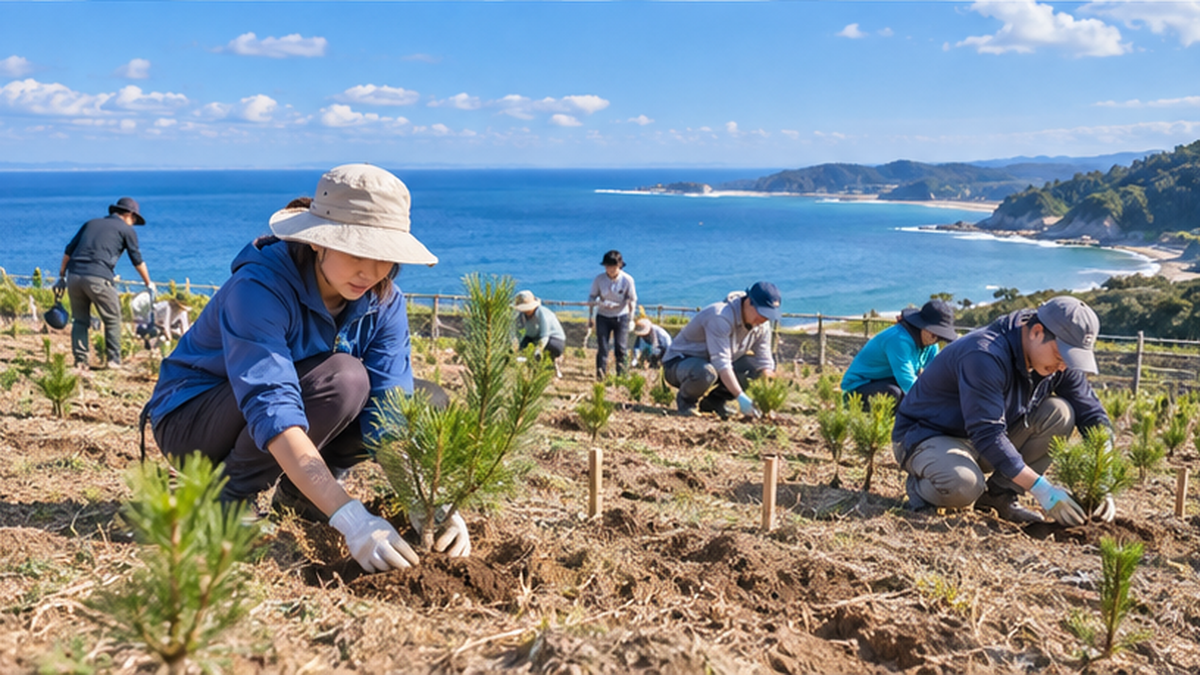
At Takata Matsubara, while Iwate Prefecture advanced earthworks and planting as a nationally subsidized project, the local NPO "Takata Matsubara Preservation Society" independently raised seedlings — including local native varieties and strains resistant to the pine wood nematode — and continued tree-planting activities of its own.
Restoration that began with preserving seeds
A notable feature of the Preservation Society's activities is that it had collected and stored pine cones (seeds) from the grove before the disaster. This made it possible, in post-disaster restoration, to raise seedlings carrying on the genetic lineage native to Takata Matsubara. Rather than simply "planting some pine trees," the idea of "returning to this land the lineage of pine that grew here for 350 years" was considered important for preserving the local pine grove's identity.
2017: full-scale planting begins
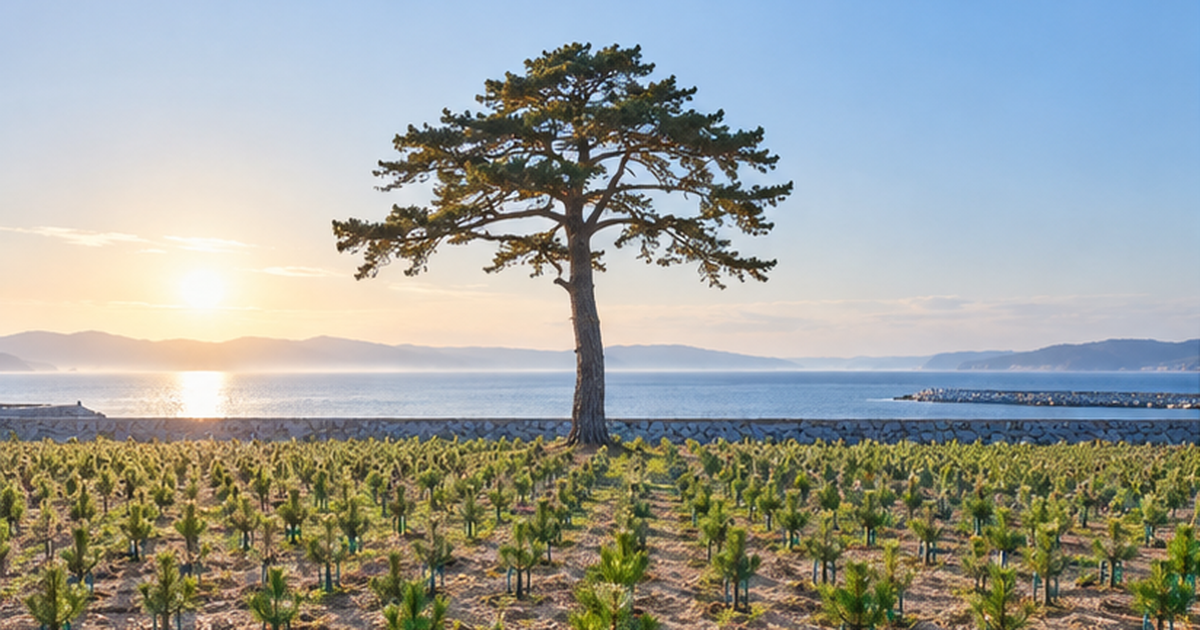
As construction of the growing-base earthworks progressed, full-scale planting began in May 2017. The Takata Matsubara Preservation Society raised roughly 7,000 seedlings in total — from seeds collected and preserved locally before the disaster, and from black pine resistant to pine wilt disease — advancing planting in step with the prefectural project.
2021: planting completed
Iwate Prefecture completed planting at three coastal protection forest sites, including Takata Matsubara, by May 2021, and a planting event hosted by the Preservation Society was also held that month. This marked a visible milestone in the restoration, coinciding with the ten-year anniversary of the disaster. Even so, "planting completed" does not mean the pine forest itself is complete. It is expected to take several more decades — potentially close to a century — for the seedlings to grow into a large pine grove like the one that existed before the disaster.
Coastal plants returning naturally
As seawall and revetment work has progressed, there are also reports that native coastal plants such as beach pea and Japanese beach morning glory are beginning to return to their natural habitat. Alongside the pines' recovery, it appears the original ecosystem of the coastal sand dunes is gradually recovering as well. These herbaceous plants also help stabilize sand and reduce blowing sand, indirectly supporting the environment in which young black pines grow.
Takata Matsubara's road to recovery (overview)
- March 2011: Tsunami sweeps away nearly all the pines; only the lone pine remains
- 2012: Death of the lone pine confirmed
- 2013: Lone pine preserved as a disaster relic
- May 2017: Full-scale planting begins as growing-base earthwork is completed
- September 2019: Takata Matsubara Tsunami Recovery Memorial Park partially opens
- April 2021: Great East Japan Earthquake and Tsunami Memorial Museum opens
- May 2021: Planting by Iwate Prefecture and the Preservation Society completed
- December 2021: Recovery memorial park fully opens
Local elementary and junior high school students and families visiting from within and outside the prefecture have taken part in planting events, offering the next generation an experience they can carry forward — the sense that "the pine I planted with my own hands might one day grow into a grove like the one before the disaster." Some organizations record the locations of planted seedlings so their growth can be tracked over time, an effort to make sure the impact isn't limited to a one-off event.
Coastal protection forest recovery nationwide — the spread of citizen-participation projects
Beyond Takata Matsubara, coastal forest restoration projects combining government efforts with citizen groups have been carried out across the Tohoku Pacific coast. A leading example is the "Kuromatsu Otasuketai" (Black Pine Rescue Squad) — the Great East Japan Earthquake Recovery Coastal Forest Restoration Project run by the public-interest foundation OISCA since 2012.
A "ten-year plan" that starts from seed
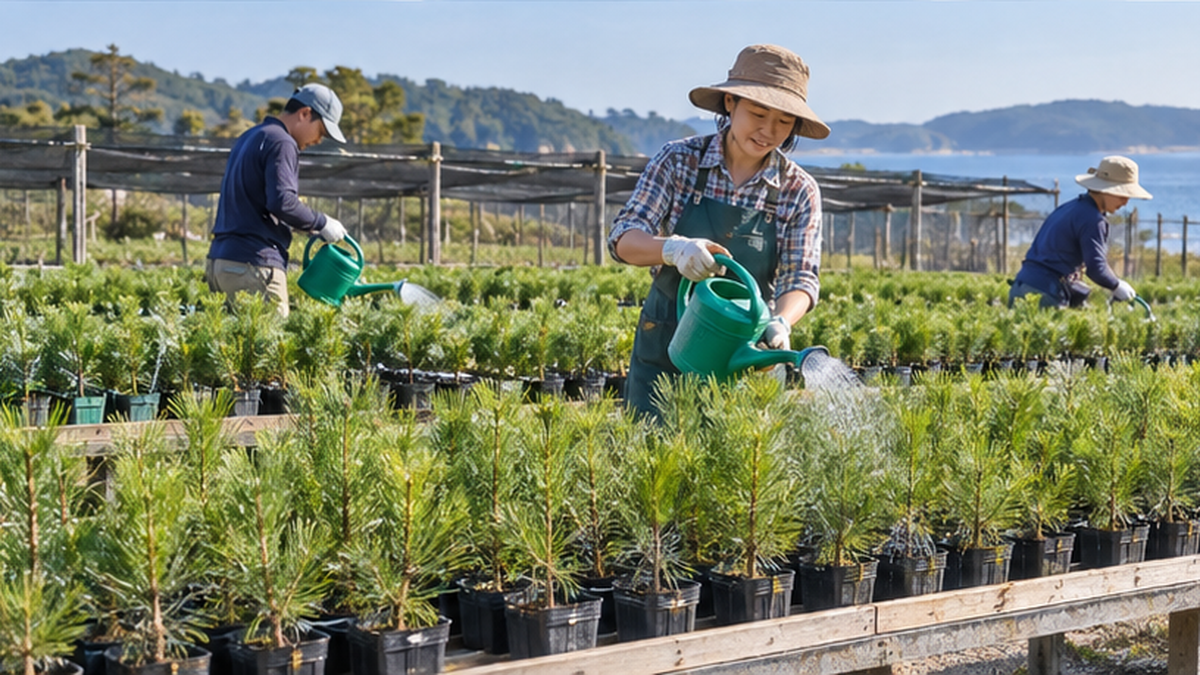
OISCA's project is a long-running effort centered on Natori City, Miyagi Prefecture, starting from seed-sowing in 2012 and raising seedlings over several years before planting. In 2014, about 350 participants planted roughly 5,000 seedlings over about 1 ha in a single event, and the project has gradually expanded its planted area with the help of volunteers gathered from across the country.
A distinctive feature of this project is that volunteers can be involved from the "raising seedlings from seed" stage, not just planting. Seeds are collected from pine cones, germinated in the nursery, and grown for two to three years until they are large enough to plant. Corporate employee training programs and school field trips also take part in nursery work, and the project plays a role in broadening the long-term "related population" supporting disaster recovery.
Monitoring doesn't stop once trees are planted
Planted seedlings are vulnerable to typhoons and sea winds, making continuous observation essential to confirm survival rates. Since its 2014 planting, OISCA has set up multiple monitoring plots to track growth conditions and continues maintenance such as replanting and weeding as needed. This activity was also recognized by the Ministry of the Environment's Good Life Award in 2015.
Coastal forest restoration's growing base of supporters
Beyond Takata Matsubara and Natori City, a diverse range of groups — local forestry cooperatives, fisheries cooperatives, schools, and corporate volunteers — are involved in coastal forest restoration all along the Sendai Bay coast down to Fukushima Prefecture. Large-scale infrastructure work by the government (earthworks and planting) is being combined with fine-grained maintenance by citizen groups (clearing undergrowth, patrols, replanting) to build a system that secures long-term maintenance support.
- Seed collection and nursery raising (years 1–2): Collecting cones native to the area and growing seedlings in the nursery
- Planting (years 3–5): Planting on raised earthwork sites together with volunteers
- Clearing and replanting (years 5–10): Cutting weeds and replacing dead seedlings
- Monitoring (ongoing): Tracking survival rates and growth at fixed observation points
Coastal forests look different from place to place
Coastal forest restoration is underway all across Tohoku, but it doesn't look the same everywhere — terrain, land use, and how quickly residents reach consensus all shape the outcome. The combination of seawalls, coastal forests, and raised land also varies by area, with each region searching for a design suited to its own conditions.
| Area | Main effort | Characteristics |
|---|---|---|
| Rikuzentakata City (Takata Matsubara) | Prefectural project + planting by the Takata Matsubara Preservation Society | Restoration using seedlings carrying on the pre-disaster lineage, integrated with the memorial park |
| Natori City (Sendai Bay coast) | OISCA's "Kuromatsu Otasuketai" ten-year plan | Citizen-participation project including nursery-raising from seed |
| Iwanuma City | Earthwork and planting at the "Hill of Hope for a Thousand Years" | Multi-layered defense combining an artificial mound built from rubble with coastal forest |
| Kesennuma City / Minamisanriku Town | Coastal forest restoration linked to seawalls and land-raising | Planned together with the rebuilding of fishing communities |
Iwanuma City's "Hill of Hope for a Thousand Years," for example, is known for combining an artificial mound built from disaster rubble with a coastal forest and seawall, aiming to reduce tsunami force and secure evacuation space at the same time. Some restoration efforts, like Takata Matsubara's, carry forward the lineage of a historic pine grove, while others rebuild the land from an entirely new concept prompted by the disaster — the Tohoku coastline now features a diverse array of "coastal forest restoration models."
What these various regional efforts have in common is the recognition that coastal forest restoration cannot be sustained by government alone, or by volunteers alone. Large-scale earthworks and construction require public-works budgets and technical expertise, while the fine, everyday work of clearing, patrolling, and seed preservation cannot be maintained without the continued involvement of local and national volunteers. Building a system in which government and civil society share roles to sustain a decades-long undertaking is the key to the future of coastal forest restoration.
The road ahead for coastal forest restoration — challenges and a long-term view
Completing planting does not mean coastal forest restoration is "finished." If anything, those involved say this is where the real work begins. It will take several more decades — potentially close to a century — along with continuous care, before the young seedlings grow into a thick pine forest like the one that existed before the disaster.
An aging volunteer base and generational succession
Day-to-day maintenance such as clearing, replanting, and patrolling for pine wilt disease is an area where securing workers is becoming harder as local populations age. Volunteers gathered easily from across the country immediately after the disaster, but as time passes since the disaster, public attention fades, and securing a continuous flow of participants has become a common challenge for every organization involved. Efforts continue — through partnerships with schools and online activity reports — to interest younger generations who have no direct memory of the disaster.
Climate change and the future coastline
The effects of climate change, such as sea-level rise and intensifying typhoons, are also a factor in planning the future of coastal forests. Some point out the need to consider how the coastline might change decades from now when deciding the position and width of the forest belt and the height of the earthworks — the question is not simply restoring the past appearance, but how to design a "next-generation coastal forest" that also accounts for future climate conditions.
A long fight against pine wilt disease
Even with resistant black pine seedlings, the risk of pine wilt disease caused by the pine wood nematode cannot be reduced to zero. Coastal forests nationwide continue efforts that combine regular removal of affected trees, pesticide application, and species diversification to maintain pine forests over the long term. At Takata Matsubara too, similar monitoring and countermeasures are planned to protect the young, restored pine forest into the future.
"Restored" does not mean "complete"
Figures such as the number of trees planted or the length of coastline restored serve as useful benchmarks, but it will take several more decades of maintenance before the coastal forest's disaster-prevention function approaches pre-disaster levels. It's important to understand both the short-term news of "completion" and the longer-term reality that growth is still "in progress."
Financial sustainability is another challenge. Immediately after the disaster, donations and grants poured in from Japan and abroad, but as is common across disaster-recovery projects in general, public interest tends to fade over time, making fundraising harder. Maintaining a coastal forest requires ongoing funding, and organizations are exploring ways to combine government erosion-control budgets with diverse funding sources such as corporate CSR activities and crowdfunding.
Takata Matsubara Tsunami Recovery Memorial Park — balancing disaster prevention, remembrance, and tourism
The site of the coastal forest's restoration has been developed as the national/prefectural "Takata Matsubara Tsunami Recovery Memorial Park." Covering a total area of about 130 ha, part of the park opened ahead of schedule in September 2019, the Great East Japan Earthquake and Tsunami Memorial Museum (Iwate TSUNAMI Memorial) opened in April 2021, and all facilities were completed and fully opened that December.
The park's development was planned as a joint project shared among the national government (the Tohoku Regional Development Bureau of the Ministry of Land, Infrastructure, Transport and Tourism), Iwate Prefecture, and Rikuzentakata City, with the national government developing the core area and the prefecture and city each developing the areas under their jurisdiction. It stands as one of the largest projects among the disaster-recovery efforts, with development spanning more than a decade.
The "Axis of Prayer" and the "Axis of Recovery"
The park is organized around two axes: the "Axis of Prayer," lined with disaster relics such as the Miracle Lone Pine and the former Kesen Junior High School building, and the "Axis of Recovery," home to the Takata Matsubara roadside station and the memorial museum. Visitors can experience both the relics that convey the threat of the tsunami and the community's journey rising up from it.
The overall design of the park integrates seawalls, raised land created by earthworks, the coastal forest, and disaster relics so that visitors can physically sense "the change in ground elevation" and "the difference in terrain before and after the disaster." Rather than simply arranging facilities, the design philosophy — where the terrain itself conveys the memory of the disaster and lessons in disaster prevention — is shared with recovery parks in other disaster-affected areas.
A coastal forest is also a tourism resource
The restored coastal forest serves not only a disaster-prevention function but also a role as an educational and tourism resource conveying the memory of the disaster. Visitors to the park can walk through the young black pine forest and feel, layered together, both the 350-year history of the pine grove and the story of its post-disaster restoration.
Rikuzentakata City is also working to connect park visitors with other tourism and experience spots in the city, strengthening the sense of the area as a "disaster-prevention tourism" destination that combines disaster-prevention education with tourism that conveys the community's recovery. Over the decades it takes the coastal forest to grow, the scenery of a "new pine grove" will gradually accumulate in the memories of everyone who visits this land.
The pines of Takata Matsubara will again, over the centuries to come, become a landscape passed down to the next generation.
— From the mission statement of the Takata Matsubara Preservation Society
What you can do
- Visit the Takata Matsubara Tsunami Recovery Memorial Park and its roadside station to learn about the memory of the disaster and the journey of restoration
- Check volunteer recruitment updates from organizations such as OISCA and the Takata Matsubara Preservation Society for planting and seedling-raising activities
- Share your understanding of coastal forests and pine wilt countermeasures with the people around you
References and sources
- Forestry Agency, "Chapter 5: Recovery from the Great East Japan Earthquake" (FY2020 Annual Report on Forest and Forestry) – Coastal protection forest restoration length and progress
- Iwate Prefecture, "Restoration of Takata Matsubara and Other Coastal Protection Forests" – Explanation of the restoration project by the Iwate Prefecture Coastal Regional Promotion Bureau
- Takata Matsubara Tsunami Recovery Memorial Park official site – Park layout, facilities, and opening information
- Takata Matsubara Preservation Society – Local NPO's planting and conservation activities
- OISCA, "Great East Japan Earthquake Recovery Coastal Forest Restoration Project: Kuromatsu Otasuketai" – Citizen-participation tree-planting project in Natori City, Miyagi Prefecture
- Ministry of the Environment, Good Life Award, "Kuromatsu Otasuketai! Ten-Year Coastal Forest Restoration Plan" – Evaluation and overview of the activity
- Miyagi Prefecture, "Status of Restoration of Erosion-Control Facilities (Coastal Seawalls and Protection Forests) Damaged by the Great East Japan Earthquake" – Restoration status including the Miyagi Prefecture Coastal Protection Forest Restoration Guidelines
- Forestry Agency, Tohoku Regional Forest Office, "Restoration of the Sendai Bay Coastal Protection Forest" – History of the restoration project along the Sendai Bay coast
- Association for the Conservation of the National Treasure Forest, "Hakusha-Seishō Takata Matsubara — The Coastal Pine Forest That Held Back a Tsunami" – History of Takata Matsubara and its pre-disaster form
※ Listed in order of reliability: government / academic institutions > peer-reviewed papers > specialist organizations > reputable media