⚡ In short
Corals live not only with symbiotic algae but with countless bacteria, as a "holobiont". This article explains what the microbiome does for nutrient cycling and pathogen defence, what happens when it breaks down, and where coral probiotic research stands, from a 40-point gain in survival to the first in-situ trial in the Red Sea.
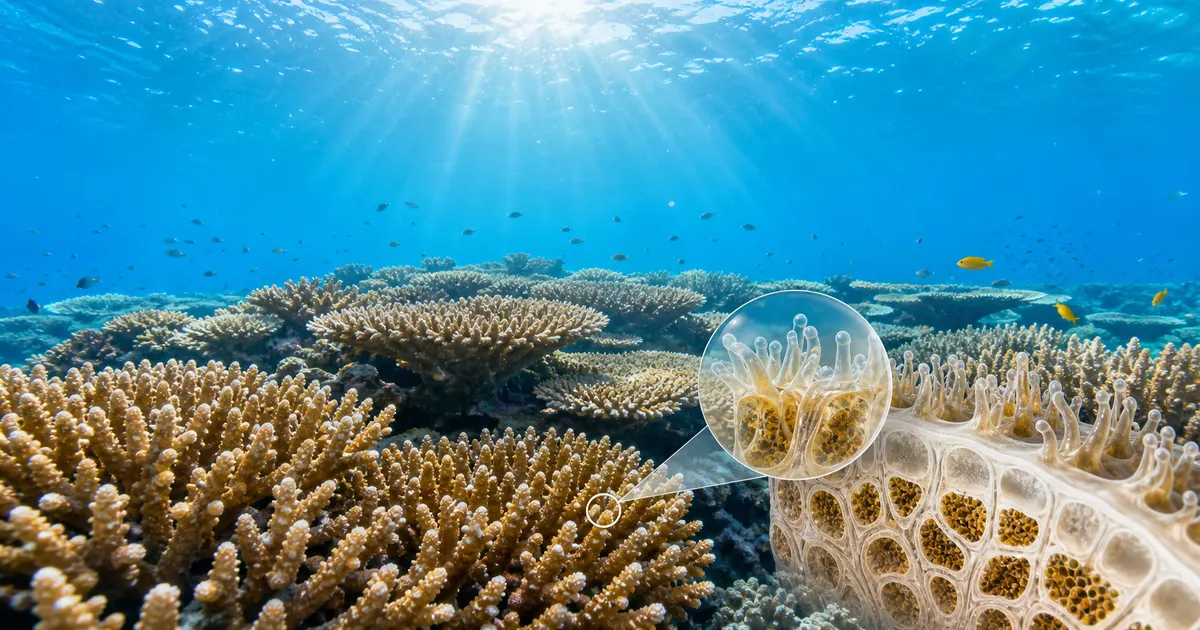
Most people picture a coral as a single animal. Researchers, however, treat it as a holobiont: a working community of the host animal, its symbiotic algae (zooxanthellae), and countless bacteria, archaea, fungi and viruses. Just as gut flora shapes human health, the microbiome living in coral tissue, mucus and skeleton governs nutrient cycling, pathogen defence, and even tolerance to high water temperature.
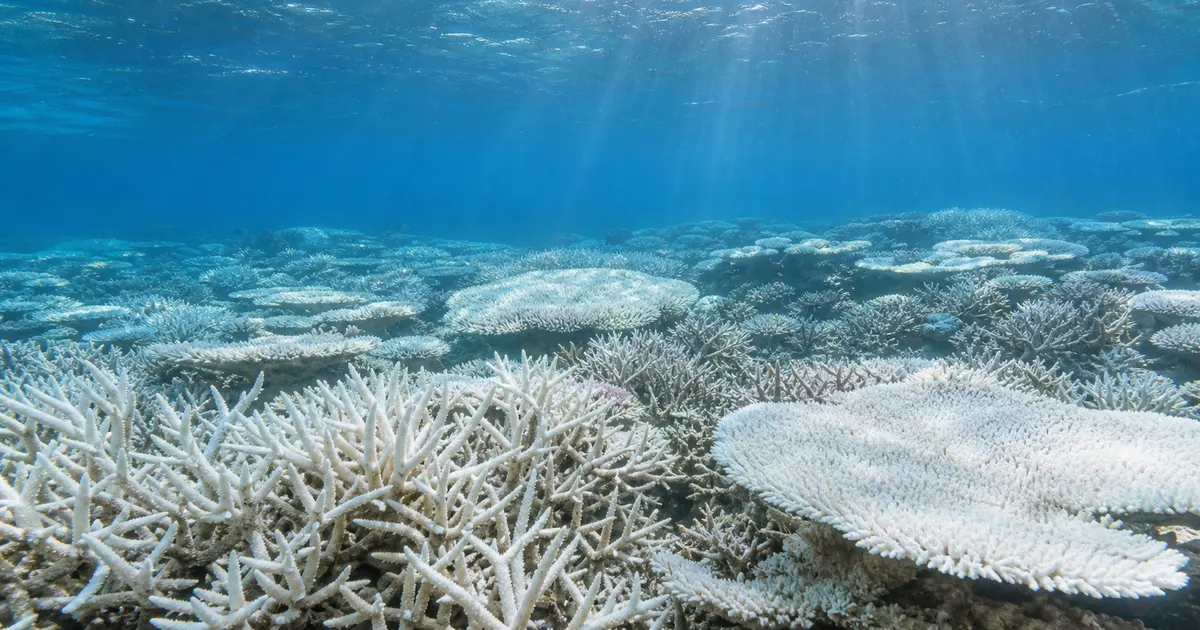
This perspective matters because the crisis is severe. The US National Oceanic and Atmospheric Administration (NOAA) reported that during the fourth global bleaching event, which ran from early 2023 to mid-2025, 84% of the world's coral reef area was exposed to bleaching-level heat stress, with impacts in at least 83 countries and territories. Since ocean temperatures cannot be lowered overnight, the practical question has become how to raise corals' own resilience.
That is where an idea borrowed from human gut health comes in: giving corals probiotics. It may sound far-fetched, yet aquarium experiments have already eased bleaching and improved survival, and by 2024 trials had moved to living corals on a real reef in the Red Sea. This article traces the field from the basics of what the coral microbiome does to where probiotic research stands today, limits included.
この記事で学べること
- The idea of coral as a "holobiont" made up of host, symbiotic algae, bacteria and viruses
- Four jobs the microbiome does: nitrogen and sulfur cycling, DMSP metabolism, vitamin supply and pathogen exclusion
- Why Endozoicomonas, the dominant resident bacterium, is called a barometer of coral health
- How dysbiosis links to coral disease and bleaching, and why SCTLD is the worst coral epidemic on record
- Selection criteria for BMCs (Beneficial Microorganisms for Corals), from lab tests to in-situ trials in the Red Sea
- The pigmented bacteria that shield symbiotic algae from light, discovered by a Japanese research team, and the current state of Sekisei Lagoon
A coral is not a single organism: the holobiont view
Reef-building corals are cnidarians, like sea anemones and jellyfish. Look at their bodies under a microscope, though, and the host is far from alone. Photosynthetic zooxanthellae (family Symbiodiniaceae) pack the cells, while the mucus coating the surface and the pores of the skeleton host bacteria estimated to number in the thousands of species. Add archaea, fungi and the viruses that infect bacteria, and researchers treat the whole assemblage as a single biological unit. That is the holobiont concept.
The reason this matters is that coral health cannot be explained by host genes alone. Even corals of the same species with similar genetic backgrounds carry very different microbial line-ups depending on where they live and what temperatures they have experienced. Different line-ups mean different responses to heat stress and pathogens.
The four kinds of residents
The main members of the holobiont and their roles break down as follows. A useful image: the host erects the building, the algae run the power plant, and the bacteria handle plumbing and security.
| Member | What it is | Main role |
|---|---|---|
| Host (the coral itself) | Colonial cnidarian polyps | Builds the calcium carbonate skeleton, captures prey, mounts immune responses |
| Zooxanthellae | Dinoflagellate algae (family Symbiodiniaceae) | Supply sugars through photosynthesis, covering most of the host's energy needs |
| Bacteria and archaea | Diverse prokaryotes in mucus, tissue and skeleton | Cycle nitrogen and sulfur, supply vitamins, exclude pathogens |
| Viruses and fungi | Phages, endophytic fungi and others | Modulate the bacterial community; their roles are still being worked out |
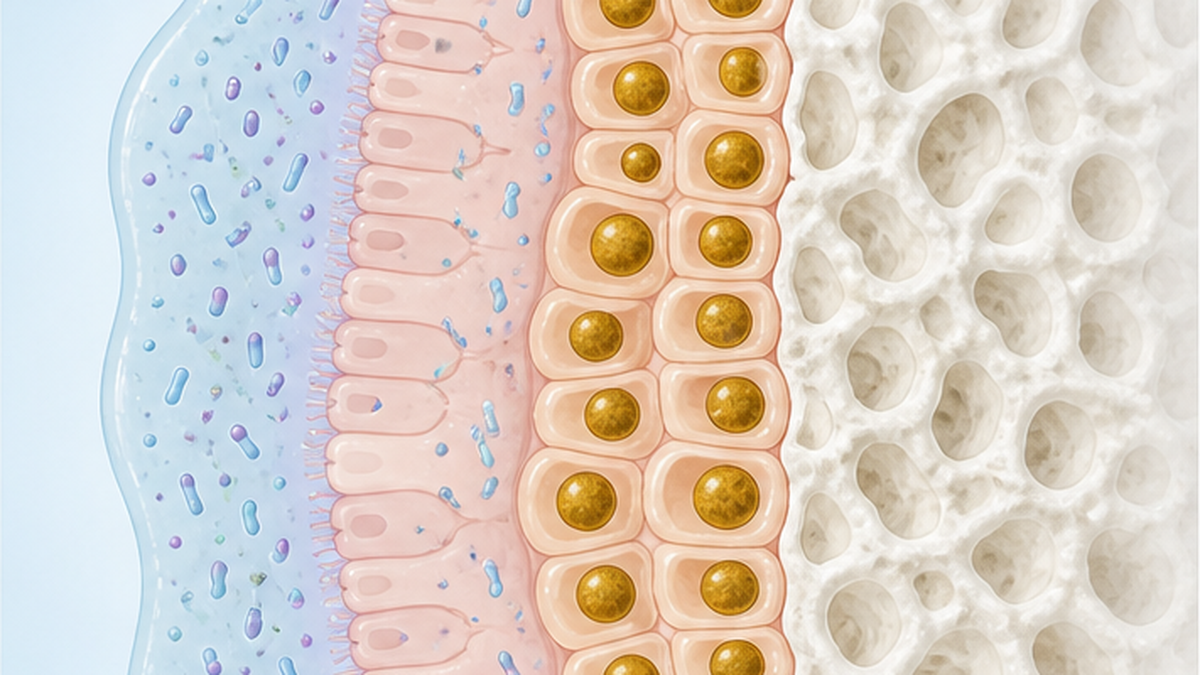
Mucus: a vast culture medium
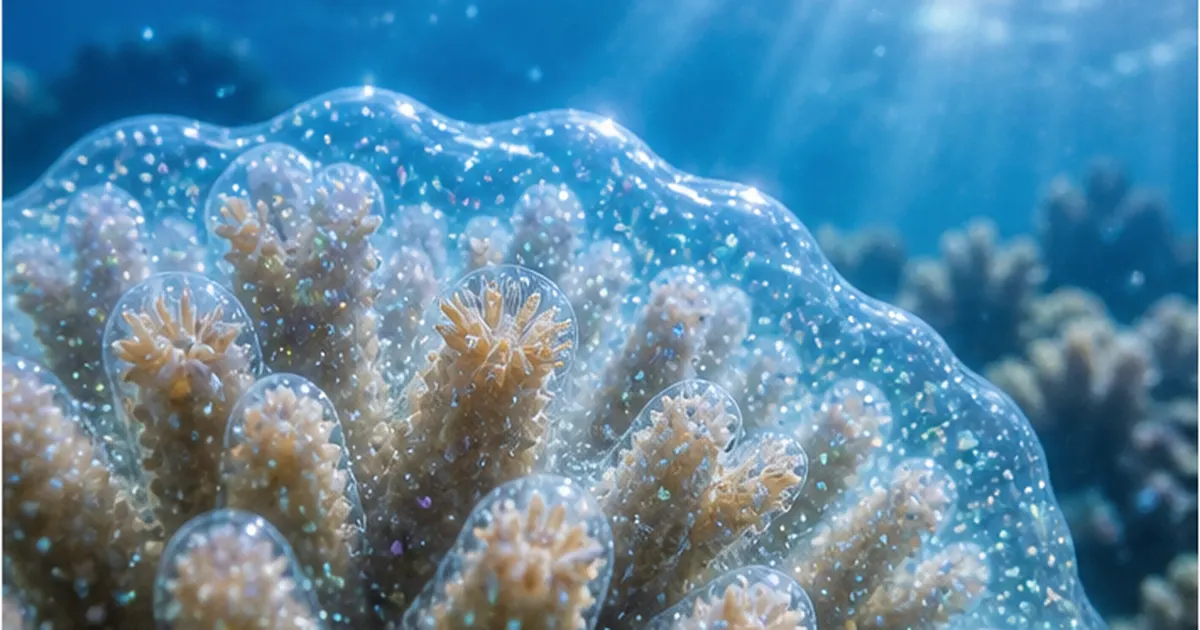
Corals continuously secrete mucus from their surface. It is a cleaning mechanism that traps sand and sediment and sloughs them off, and at the same time a rich culture medium for microbes, loaded with sugars and proteins. Bacterial densities in the mucus layer have repeatedly been reported to be orders of magnitude higher than in the seawater right next to it.
Crucially, this layer is not simply dirt: it is the front line of defence separating the outside world from the coral's body. When resident bacteria have already claimed the space and nutrients, invading pathogens find no foothold. Conversely, if the mucus changes character or residents thin out, opportunistic pathogens gain room to multiply. The logic is exactly the same as for human skin and gut flora.
One more thing not to overlook is the role mucus plays in the wider ecosystem. Mucus released by corals drifts through the water, is consumed as organic matter by microbes and small animals, and feeds into the reef's food web. The coral microbiome sits not only at the heart of an individual colony's health but at the entrance to the reef's material cycle.
The starting point
- Coral health depends not only on host genes but on which microbes the coral lives with
- The mucus layer is both a culture medium for microbes and the first barrier against pathogens
- Hence the idea: if you can manipulate the microbiome, you may be able to change the coral's condition
What the microbiome actually does inside a coral
Saying they "live in symbiosis" gets us nowhere unless we can say what the microbes actually provide. Thanks to genomics and metabolite measurements, the work of coral-associated bacteria can now be described at the level of specific genes. Here are four representative functions.
Cycling nitrogen and sulfur
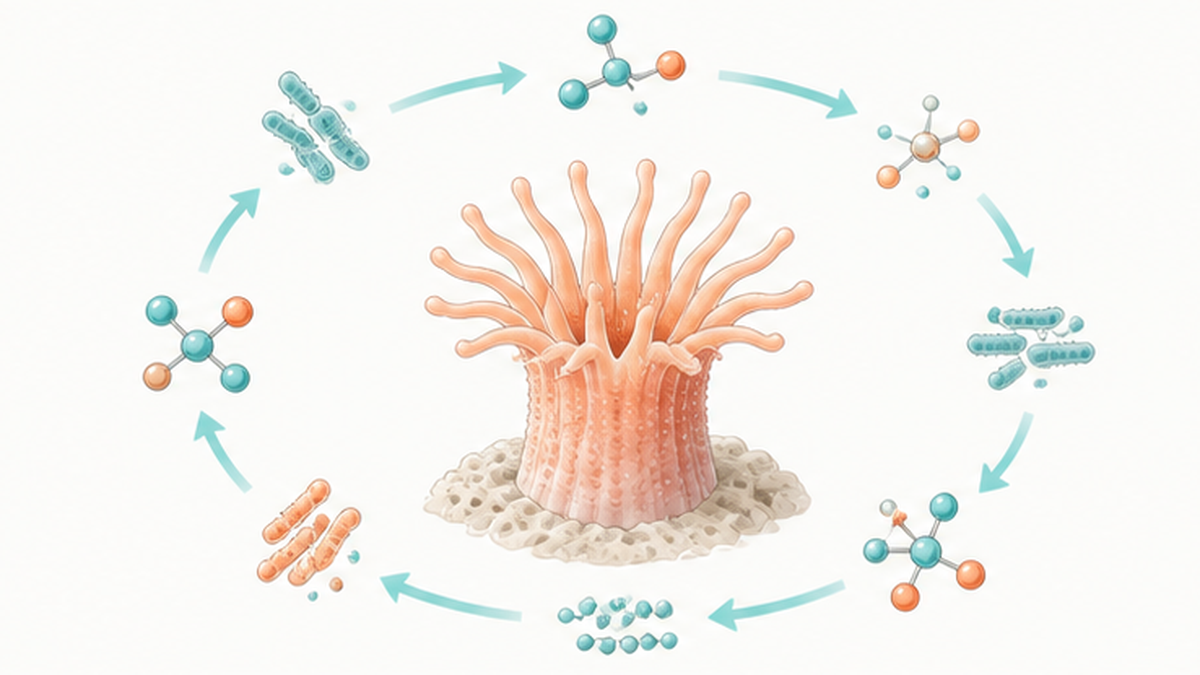
Coral reefs are called oases in a nutrient-poor sea. The surrounding water holds almost no nutrients, yet reefs support overwhelming biomass, because the few available elements are recycled relentlessly inside the system. Bacteria drive that cycle. Those carrying nitrogen fixation genes (nifH) convert atmospheric nitrogen into forms the holobiont can use, while bacteria with denitrification genes (nirK) release surplus nitrogen back out of the system.
The latter may look wasteful, but it is decisive. An excess of nitrogen lets the zooxanthellae alone proliferate, upsetting the balance with the host. Bacteria do not just supply nutrients; they also turn down the tap so that supply does not run away.
Breaking down DMSP and quenching reactive oxygen
Corals and their algae produce large amounts of a sulfur compound called dimethylsulfoniopropionate (DMSP), which serves both in osmotic regulation and as an antioxidant. Some symbiotic bacteria carry a DMSP degradation gene (dmdA) and regulate the flow of this compound.
Antioxidant capacity is a lifeline for corals. Under high temperature and intense light, the algal photosynthetic apparatus breaks down and reactive oxygen species (ROS) leak out. Damage from these species to host cells is thought to be one trigger of bleaching (see Why does coral bleaching happen?). If bacteria carrying catalase and other ROS-scavenging enzymes are nearby, they can shoulder part of that load, and this is one of the theoretical pillars of probiotic research.
Supplying vitamins and shutting pathogens out
Genomes of bacteria selected as candidate beneficials share a common feature: pathways for synthesising vitamins B2 (riboflavin), B7 (biotin) and B9 (folate). They supply coenzymes that neither the host nor the algae can make. Many candidates also produce antimicrobial compounds that suppress the growth of other bacteria.
- Nutrient supply: nitrogen fixation, B-vitamin synthesis, breakdown and reuse of organic matter
- Stress relief: scavenging reactive oxygen, DMSP metabolism, synthesis of protective compounds such as ectoine
- Infection defence: producing antimicrobials and occupying space and nutrients in the mucus (competitive exclusion)
- Environmental response: reshuffling community composition as temperature and water quality change, adapting faster than the host can
| Function | Example genes or compounds | What it means for the coral |
|---|---|---|
| Nitrogen fixation | nifH | Secures nitrogen in a nutrient-poor sea |
| Denitrification | nirK | Prevents nitrogen excess from unbalancing the symbiosis |
| DMSP degradation | dmdA | Regulates sulfur cycling and antioxidant capacity |
| Scavenging reactive oxygen | Catalase, superoxide dismutase | Reduces cell damage under heat and intense light |
| Vitamin synthesis | Pathways for vitamins B2, B7 and B9 | Supplies coenzymes the host and algae cannot make |
| Antimicrobial activity | Various antimicrobial compounds | Suppresses colonisation and growth of pathogens |
The lead resident: Endozoicomonas
Sequence the coral microbiome using the 16S rRNA gene and one genus turns up as dominant again and again, in corals around the world: Endozoicomonas. The name means "one that lives inside an animal", and it is found not only in corals but in sponges, sea squirts and a wide range of marine invertebrates.
Why it is considered beneficial
Endozoicomonas has an unusual lifestyle: it forms cell aggregates inside coral tissue and settles there stably, which few other bacteria do. Genomic analyses show that the genus carries DMSP degradation, sugar metabolism (glycolysis) and several other pathways thought to benefit the host.
- Settles stably inside coral tissue, leaving less room for outsiders to move in
- Degrades DMSP and takes part in sulfur cycling
- Very likely provides nutrients and metabolites in forms the host can use
- Dominant in healthy corals, but tends to decline in relative abundance in bleached or diseased individuals
Declining with heat: using it as a health barometer
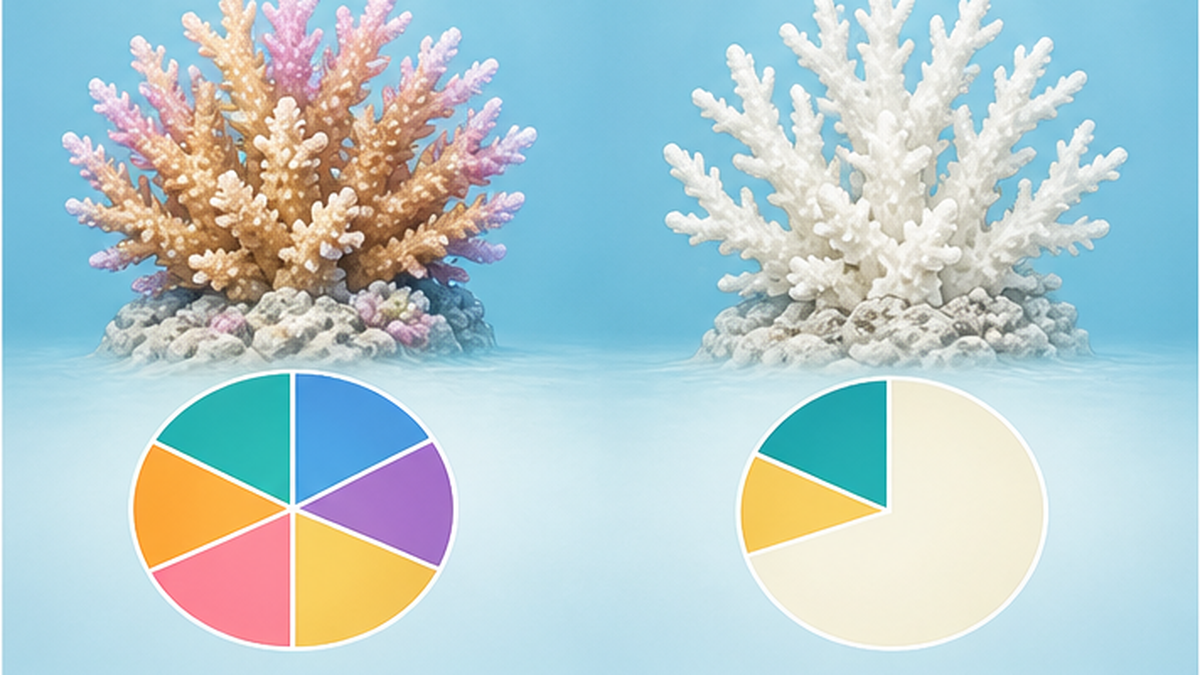
What emerges from the accumulated research is a tendency for the relative abundance of Endozoicomonas to rise and fall roughly in step with the abundance of zooxanthellae. As heat stress drives bleaching, many studies report Endozoicomonas declining in time with the loss of algae.
The story is not that simple, though. In Pocillopora verrucosa in the Red Sea, Endozoicomonas remained dominant even as colonies bleached and died, showing that the flexibility of the microbiome differs completely between species. Some corals reshuffle their microbiome to cope with environmental change; others stay with the same partners to the end. That distinction is an important clue to which corals probiotics are most likely to help.
How the analysis is done: 16S rRNA and metagenomics
All of this rests on genetic techniques that let researchers study microbes without culturing them. Microbiology once dealt only with organisms that would grow in a dish. Most marine bacteria will not, and coral-associated bacteria are no exception.
The mainstream approach today reads part of the 16S rRNA gene, which all bacteria carry, and infers from the sequence patterns which types are present and in what proportions. Sequencing all the DNA in a sample, known as metagenomics, goes further and reveals not just who is present but what functional genes the community holds. Being able to talk about the presence of nifH or dmdA at all is a product of this technology.
A caveat is in order. What 16S rRNA analysis shows is relative proportions, not absolute abundance. A result such as "the share of Endozoicomonas fell in bleached corals" may mean the bacterium declined, or merely that another taxon surged and pushed its share down. Interpretation calls for care.
Microbes can change faster than the host
For a coral to acquire heat tolerance genetically takes generations, meaning decades to centuries. Bacteria, by contrast, turn over in hours to days, and community composition can shift within a short window. Being able to change the properties of the whole holobiont without waiting for the host to evolve is the single biggest reason microbiome research attracts so much attention.
When the balance breaks: dysbiosis and disease
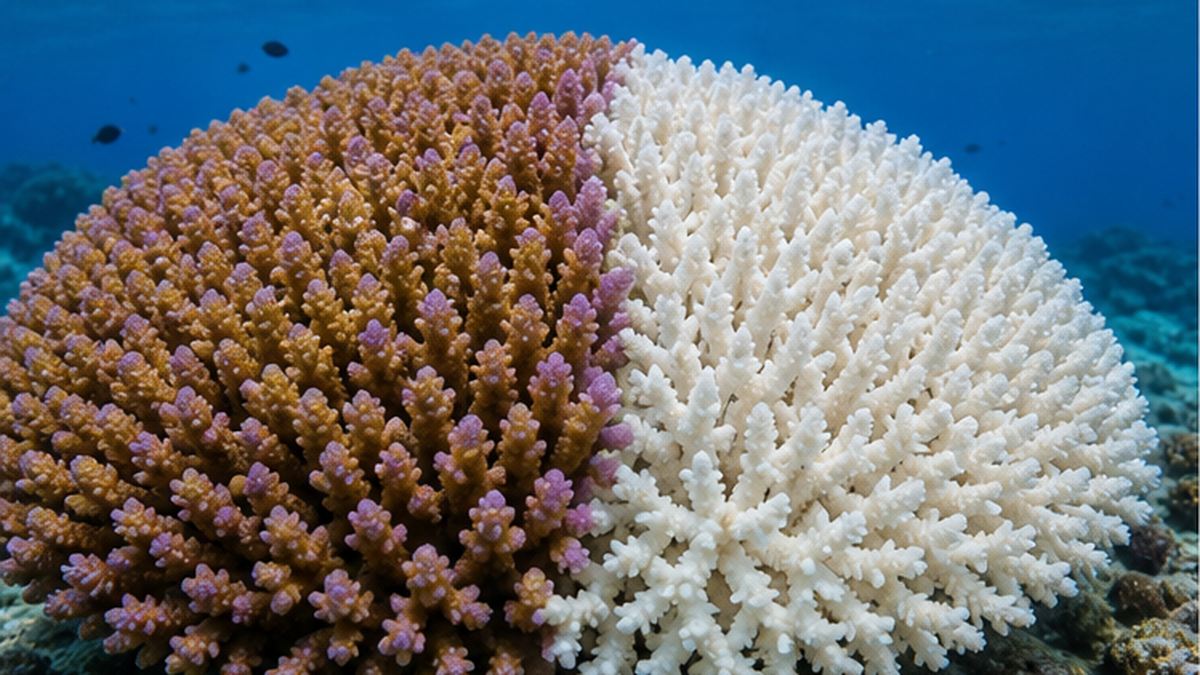
A microbiome that has lost its healthy balance is described, borrowing a term from medicine, as being in dysbiosis. In corals, this disturbance is observed without exception wherever bleaching or disease occurs. Telling whether the disturbance caused the illness or the illness caused the disturbance, however, is harder than it sounds.
"Is bleaching caused by bacteria?" A twenty-year debate
In the late 1990s, research reporting that bleaching in the Mediterranean coral Oculina patagonica was caused by a bacterium, Vibrio shiloi, drew wide attention, because it offered an infectious-disease explanation in place of the conventional heat-stress account. That finding became the direct foundation for the later coral probiotic hypothesis.
In 2007, however, a study of the same coral published in The ISME Journal argued that bacteria were not the primary cause of bleaching, and the debate returned to square one. The current understanding runs roughly as follows: high water temperature is the primary cause of bleaching, but a disturbed microbiome worsens it and strongly influences recovery and mortality afterwards. Bacteria are less the trigger than a factor shaping how events unfold.
Vibrio coralliilyticus, which bares its teeth above 26C
One organism that makes the temperature-virulence link explicit is the bacterium Vibrio coralliilyticus. Experiments showed that in the coral Pocillopora damicornis it causes bleaching at around 25C, and that above 26C it produces a potent metalloproteinase that dissolves the tissue itself. The same bacterium shifts from an agent of bleaching to an agent of death depending on water temperature.
During a marine heatwave, corals weaken at the same moment that pathogens become more active. This double effect is thought to be one reason disease spreads explosively in hot periods (see also What are marine heatwaves?).
The worst epidemic on record: SCTLD
The relationship between microbes and corals appears in its most dramatic form in SCTLD (Stony Coral Tissue Loss Disease). First reported off Florida in 2014, it spread rapidly across the Caribbean.
- Infects more than 20 species of reef-building coral (some sources put the figure closer to 30), an exceptionally broad host range
- Confirmed in 18 to 28 Caribbean countries and territories, a geographic spread without precedent
- Lesions consume tissue at 5 to 40 square centimetres per day, and whole colonies can die within weeks
- Thought to travel from reef to reef on particles carried by currents, though the causative pathogen has still not been identified
The limits of antibiotics as first aid
In the field, pastes containing amoxicillin are applied to lesions with some success. Yet this risks breeding antibiotic-resistant bacteria, and the cost is enormous because divers must treat colonies one by one by hand. This dead end is why the idea of using beneficial bacteria instead of antibiotics began to be taken seriously.
The idea of giving corals probiotics
Taking lactic acid bacteria to improve gut health is familiar enough. Coral probiotic research carries that idea into the sea. It looks outlandish at first, but the grounding goes back to a single paper published twenty years ago.
The coral probiotic hypothesis (2006)
In 2006, Reshef and colleagues published "The Coral Probiotic Hypothesis" in Environmental Microbiology. Its core claim is that the relationship between corals and their symbiotic microbes is not fixed, and the most advantageous combination is selected according to environmental conditions.
Three lines of evidence were offered: first, that coral mucus and tissue contain a large and diverse bacterial population; second, that the bacterial community changes rapidly when conditions change; and third, that corals, which lack an adaptive immune system, can nonetheless develop resistance to pathogens. The third point is especially important. If a coral that cannot make antibodies can still become resistant to disease, then something else must carry that immune memory, and symbiotic microbes are the obvious candidate. On that reading, introducing beneficial bacteria from outside to raise resistance is a logical intervention.
A dynamic relationship exists between corals and their symbiotic microorganisms, so that as environmental conditions change, the most advantageous holobiont is selected.
― Summarised from the abstract of Reshef et al. (2006), The Coral Probiotic Hypothesis, Environmental Microbiology
BMC: a framework for choosing beneficial microbes (2017)
What moved the hypothesis towards practice was the BMC (Beneficial Microorganisms for Corals) framework proposed by Peixoto and colleagues in 2017. Just as "probiotics" has a definition and criteria in human food science, this framework defined what counts as beneficial for corals in functional terms.
BMC candidates are selected from bacteria isolated from corals on the basis of traits such as those below. The key point is that they are chosen for function, not merely because they came from a coral.
- Carries nitrogen fixation (nifH) or denitrification (nirK) genes and contributes to nutrient cycling
- Carries a DMSP degradation gene (dmdA) and participates in sulfur compound metabolism
- Can scavenge reactive oxygen through catalase activity and similar mechanisms
- Can synthesise coenzymes such as vitamins B2, B7 and B9
- Shows antagonistic antimicrobial activity against known coral pathogens such as Vibrio species
- Has no harmful properties, such as toxin production or runaway growth, for the coral or the surrounding environment
Why beneficial bacteria rather than antibiotics
Antibiotic treatment of diseased corals is already carried out in the field and does work to a degree. The centre of gravity in research has nevertheless shifted towards probiotics, because antibiotics have three structural weaknesses.
First, they risk breeding resistant bacteria. Second, they wipe out not only pathogens but beneficial residents, so the microbiome can end up less stable after treatment than before. Third, the effect lasts only as long as the dose. Indeed, studies report that removing coral bacteria with antibiotics can make microbial disturbance under heat stress worse rather than better.
Probiotics differ on one decisive point: if the introduced bacteria establish themselves, the effect persists. Rather than killing residents, you increase the good ones and deny pathogens a place to live. The same shift in thinking that reshaped views of the human gut is now happening for corals.
| Genus | Why it is selected | How it is used in research |
|---|---|---|
| Pseudoalteromonas | Strong antimicrobial activity that suppresses pathogens | Core of BMC consortia; the SCTLD treatment candidate McH1-7 belongs to this genus |
| Halomonas | Highly salt-tolerant and involved in nutrient cycling | Establishment confirmed in in-situ trials in the Red Sea |
| Cobetia | Coral-derived and highly tolerant of environmental stress | Included in early BMC consortia |
| Ruegeria | Carries DMSP metabolism and antimicrobial activity | Observed to increase naturally after treatment, a welcome side effect |
| Endozoicomonas | Resident bacterium dominant in healthy corals | Promising but hard to culture, which raises the bar for practical use |
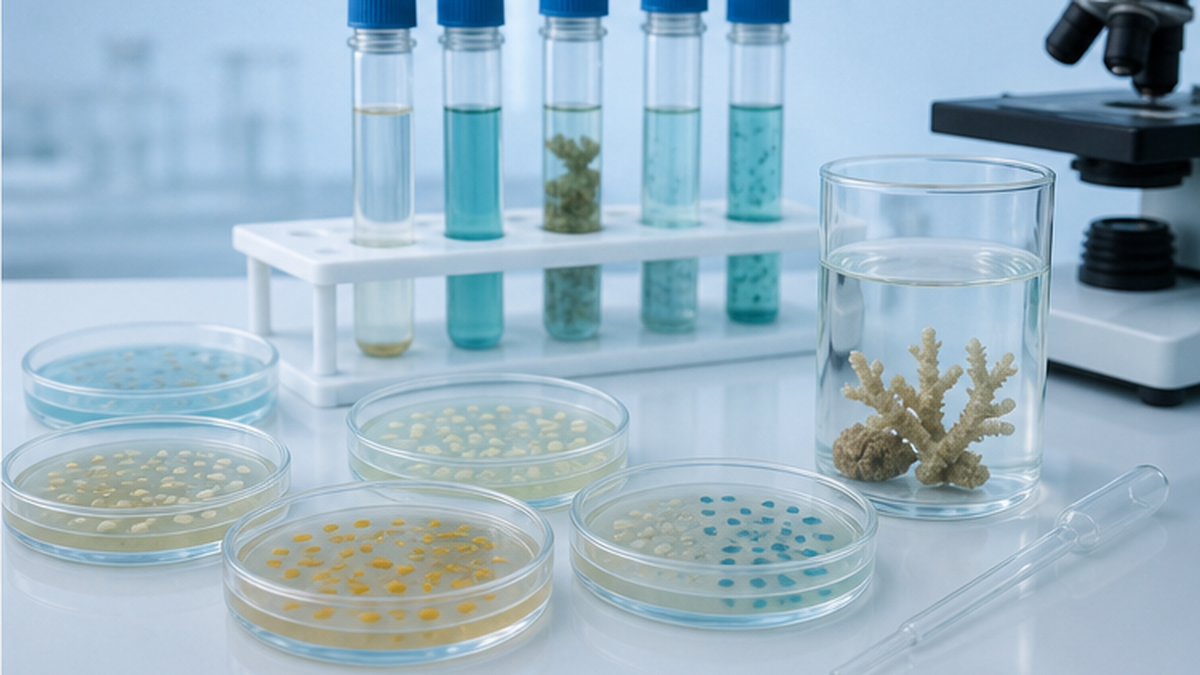
From the laboratory to the sea: studies that showed results
Now for the actual findings. Twelve years passed between the hypothesis and its experimental demonstration, and another six before the work moved from aquaria to the open sea. Here is that progression in order.
2018: the first experiment to ease bleaching
Rosado and colleagues gave the coral Pocillopora damicornis a BMC consortium of seven strains: five Pseudoalteromonas species, one Halomonas taeanensis and one Cobetia marina-related species. They then inoculated the pathogen Vibrio coralliilyticus and compared outcomes at 26C and 30C.
The result was unambiguous. In the 30C treatment given only the pathogen, the maximum quantum yield (Fv/Fm), an index of photosynthetic health in the algae, fell by 54%. Where BMCs were applied alongside the pathogen, there was no decline at all; the value rose slightly (+6%) and stayed 56% higher than in the pathogen-only treatment. Published in The ISME Journal in 2019, this was the first experimental demonstration that probiotics work in corals.
2021: survival improved by 40 points
The next milestone was a long-term mesocosm experiment by Santoro and colleagues in Science Advances. They exposed Mussismilia hispida, a coral endemic to Brazil, to bleaching conditions and compared a BMC-treated group with a placebo group given only saline.
Heat stress affected both groups, but what followed diverged. Every fragment in the BMC group survived, while survival in the placebo group was 60%, a difference of 40 percentage points. Transcriptome analysis showed that in the BMC group, expression of genes for cellular repair, stress protection and immunity had been reorganised, and DMSP degradation and lipid maintenance were preserved. The value of the study lies in going beyond "they seemed healthier" to describe what happened at the molecular level.
2024: the first in-situ application, in the Red Sea
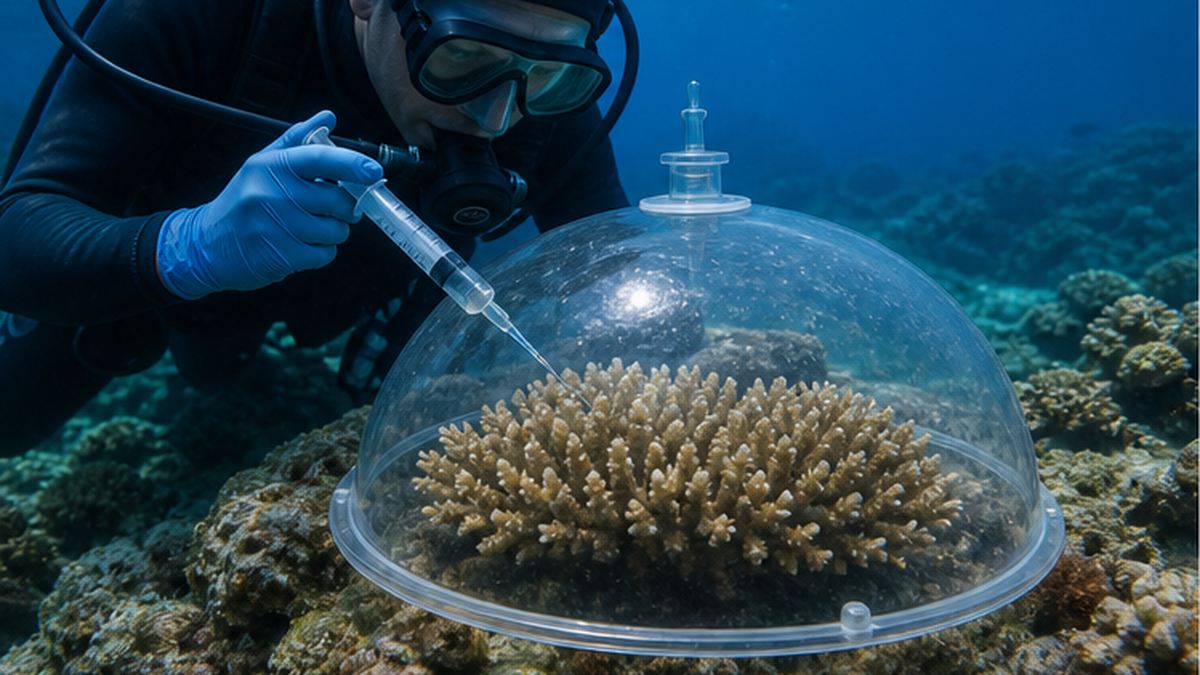
Working in an aquarium is no guarantee of working in the sea, and releasing bacteria into the ocean raises an obvious concern about effects on the surrounding ecosystem. A team centred on King Abdullah University of Science and Technology (KAUST) in Saudi Arabia addressed that question head-on in Communications Biology.
Healthy colonies of Pocillopora verrucosa in the Red Sea received beneficial bacteria delivered underwater three times a week for three months. The inoculated genera Halomonas and Pseudoalteromonas were significantly enriched in the coral microbiome, beneficial groups such as Ruegeria also increased, and potentially pathogenic Vibrio declined. Most importantly, no detectable change was found in the bacterial communities of the surrounding seawater and sediment. It was the first field demonstration that you can change the target coral, and only the target coral.
A bacterium that stops disease: McH1-7
There has been progress on treatment as well. Ushijima and colleagues isolated Pseudoalteromonas sp. strain McH1-7 from the microbiome of an individual of Montastraea cavernosa, a species highly susceptible to SCTLD, that did not develop the disease. The strain showed broad-spectrum antibacterial activity and, in laboratory trials, halted or slowed disease progression in 62% of colonies.
Subsequent field trials tested two delivery methods, injecting a bacterial suspension into a weighted bag placed over the whole colony and applying a sodium alginate paste directly to lesions, with colonies tracked by three-dimensional photogrammetry for two and a half years. Prophylactic application suppressed disease onset, and spread to untreated colonies near treated ones was slowed.
| Year | Study | Main result |
|---|---|---|
| 2006 | The coral probiotic hypothesis proposed | Introduced the idea of adaptation mediated by the microbiome |
| 2017 | BMC framework proposed | Defined beneficial microbes functionally and set selection criteria |
| 2018-2019 | Application experiment on Pocillopora damicornis (ISME J) | Avoided the drop in photosynthetic efficiency under pathogen plus heat |
| 2021 | Long-term mesocosm experiment on Mussismilia hispida (Science Advances) | Survival improved by 40 points; gene expression reorganised |
| 2023-2025 | Laboratory and field trials of the SCTLD strain McH1-7 | Effective in 62% of colonies in the lab; progression also curbed in the field |
| 2024 | In-situ application in the Red Sea (Communications Biology) | Only the coral microbiome changed; no effect on the surrounding environment |
What can be said so far
- Coral probiotics have moved past "it might work": several experiments have quantified the effect
- Benefits extend beyond preventing bleaching to post-bleaching survival and slowing disease
- In-situ application produced no detectable effect on surrounding seawater or sediment
- But all of this covers tens to hundreds of colonies. Nobody has yet demonstrated application at reef scale
Research in Japan: pigmented bacteria that shield symbiotic algae
Japanese research has made important contributions in this field. On 18 January 2023, a collaborative group centred on Assistant Professor Toshiyuki Takagi and Professor Koji Inoue of the Atmosphere and Ocean Research Institute at the University of Tokyo, together with the University of the Ryukyus and Osaka Metropolitan University, published their findings in Microbiology Spectrum.
Maribacter and Roseivirga on the surface of zooxanthellae
The group used antibiotics to remove bacteria from zooxanthellae cultures and from coral tissue. What they found was that pigmented bacteria that synthesise carotenoids survived particularly strongly. Two genera were identified: Maribacter and Roseivirga.
What these bacteria produce is zeaxanthin, a carotenoid pigment with photoprotective and antioxidant properties. Strains whose bacterial community had been manipulated maintained significantly higher photosynthetic capacity under 14 days of high-light stress. In other words, bacteria living on the surface of zooxanthellae appear to shield the algae from intense light, like sunscreen.
Bleaching begins when high temperature and strong light together break down the algal photosynthetic apparatus (explained in detail in What is the symbiosis between corals and zooxanthellae?). If bacteria can soften that very first step, the targets for intervention widen beyond the host coral to the algae and their own resident bacteria. It is a promising foundation for probiotic research based in Japan.
The reality at Sekisei Lagoon
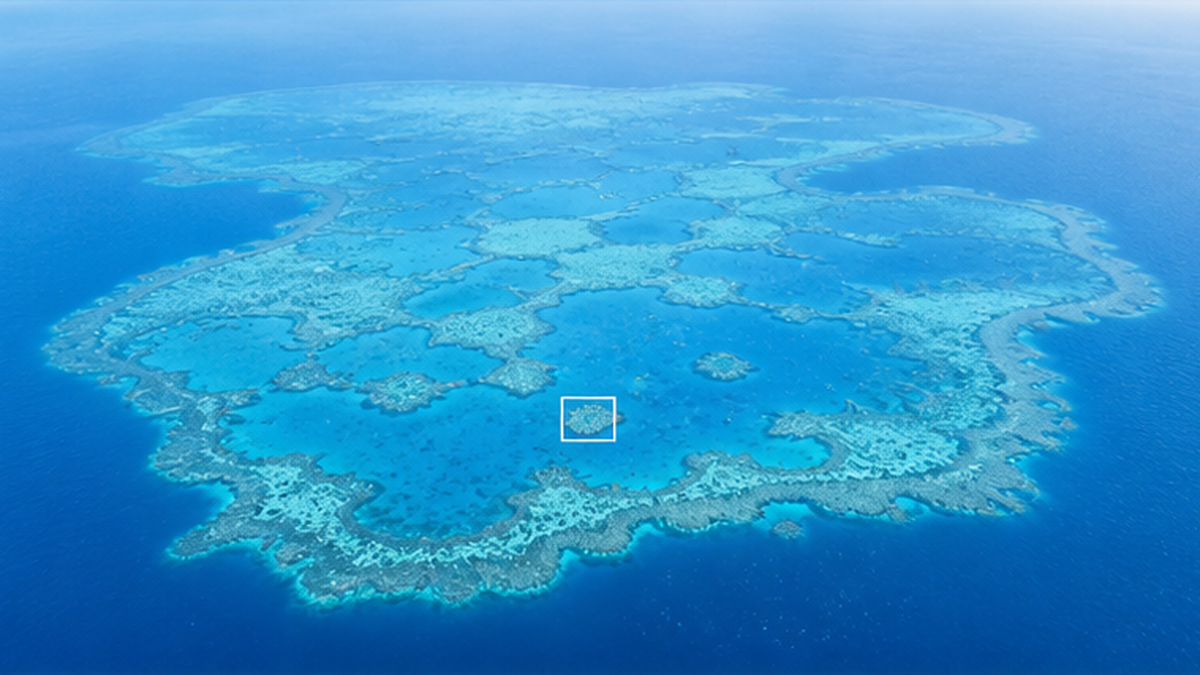
Conditions on Japan's reefs, meanwhile, are growing harsher. According to surveys by the Ministry of the Environment's Okinawa and Amami Nature Conservation Office, at Sekisei Lagoon between Ishigaki and Iriomote islands in Okinawa, Japan's largest coral reef, the average bleaching rate across all 31 survey sites reached 84.0% in the September 2024 survey.
A follow-up survey from 1 to 6 December the same year found the average bleaching rate down to 65.5%, confirming that some colonies were recovering. But the breakdown tells a harder story: 34.5% healthy, 38.1% pale, 1.8% bleached, and 25.5% dead. Average coral cover fell from 17.4% in September to 13.7%, a drop of 3.7 points. Some colonies recovered from bleaching, but more died than recovered.
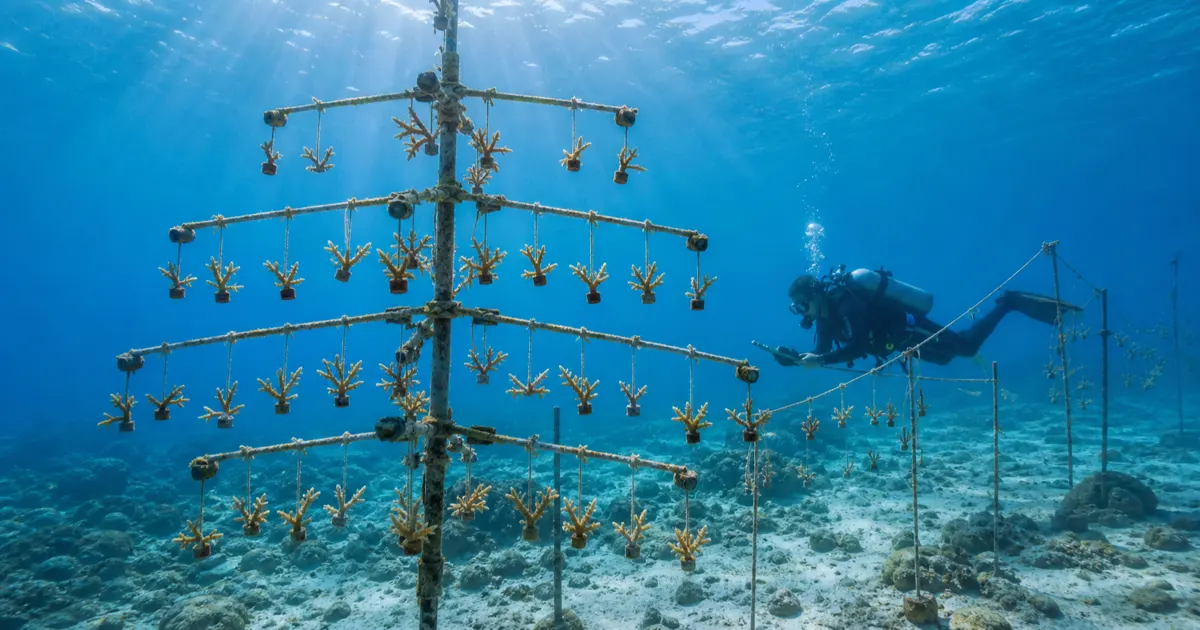
The Ministry of the Environment's Action Plan for the Conservation of Coral Reef Ecosystems 2022-2030 makes establishing coral restoration methods at Sekisei Lagoon and sustaining monitoring a priority. The question is whether microbes can be added as a new option alongside existing approaches such as transplantation and nursery culture (see Coral nursery culture and transplantation).
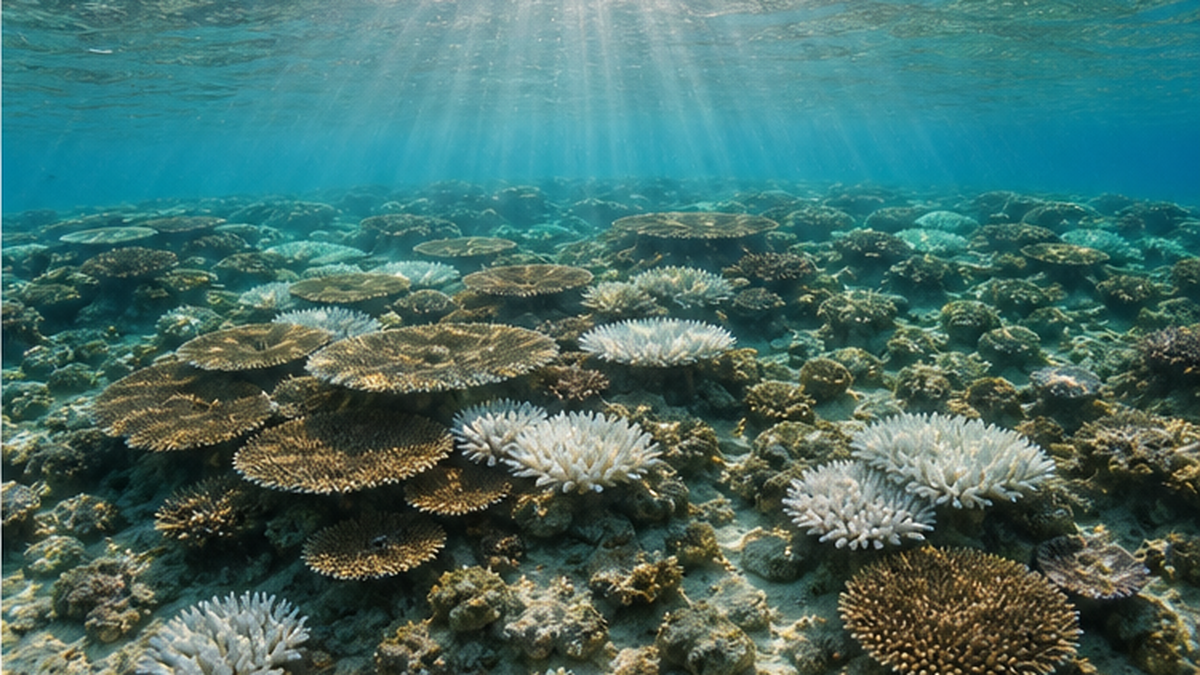
The microbial lens also offers a new way of reading these field numbers. Colonies exposed to the same temperature can either recover from bleaching or die. If the state of the microbiome shapes that outcome, then the indicators worth monitoring extend beyond cover and bleaching rate. In time, it may become possible to assess a colony's microbiome, predict its chances of recovery, and prioritise which individuals to protect.
What we can do
- Do not touch, stand on or break corals when swimming or diving; wounds are entry points for pathogens
- Help reduce red-soil runoff and domestic wastewater; excess nutrients upset the microbial balance
- Choose sunscreens free of ingredients such as oxybenzone that have been flagged as harmful to corals
- Support local survey and conservation groups through monitoring, donations or citizen science
Challenges and outlook: working is not enough
Read this far and probiotics may look like a silver bullet for coral reefs. Researchers themselves are the most cautious of all. Between success in the laboratory and the restoration of a reef stand several large walls.
The wall of scale
Scale is the biggest problem. The world's coral reefs cover roughly 280,000 square kilometres, and the number of colonies is estimated in the billions to tens of billions. Field trials so far have covered tens to hundreds of colonies. Maintaining a dosing schedule of three times a week for three months at reef scale is not realistic.
Proposed solutions run in three directions: slow-release capsules or pastes that cut the number of applications; establishing beneficial bacteria at the stage when coral larvae settle; and concentrating treatment on a small number of colonies that matter most for conservation, such as parent corals or genetically valuable lineages. The thinking is shifting from saving everything to preserving the core a species needs to survive.
Ecological risk, regulation and ethics
Releasing microbes into the sea demands careful assessment. The Red Sea trial detected no effect on the surrounding environment, but that result holds for a particular area, particular strains and a three-month window.
- Provenance: is it acceptable to take bacteria from corals in one region and release them in another?
- Long-term effects: how do you assess community changes over years that a few months of observation cannot reveal?
- Regulatory gap: no international framework yet governs the deliberate release of microbes into the ocean
- Moral hazard: the belief that technology will fix it may weaken the effort to cut emissions
Combining with microbiome transplantation and heat-tolerant strains
Working only with culturable bacteria has its limits, which is why coral microbiome transplantation (CMT) is attracting interest. Following the same logic as faecal microbiota transplantation in humans, tissue from heat-tolerant donor colonies is homogenised and inoculated into heat-susceptible recipients.
A study published in Microbiome in 2021 applied the method to two genera, Pocillopora and Porites, and reported that recipients bleached less than controls under short-term heat stress at 34C. 16S rRNA analysis found 112 donor-specific bacterial species established in Pocillopora recipients and 16 in Porites. The strength of the approach is that it transfers the whole community, including bacteria that cannot be cultured.
For practical deployment, betting on microbes alone would be a mistake. Selective breeding for heat-tolerant lineages (see Can we breed corals that withstand heat?), introducing more thermally tolerant algae, and physical measures such as shading and water circulation all need to work together before meaningful effects can be expected.
And still, the root fix is lowering the temperature
What researchers stress over and over is that probiotics buy time; they do not address the cause. Apply BMCs all you like, and if sea temperatures keep climbing the limit will arrive. A 40-point gain in survival is a fine result, but it is an improvement conditional on bleaching happening in the first place.
Assessments such as those of the IPCC project that tropical coral reefs will decline substantially even if warming is held to 1.5C. What probiotics and restoration techniques can offer is to flatten that curve and act as a bridge, carrying species and genetic diversity through the decades until temperatures stabilise. Building the far side of that bridge still depends on cutting greenhouse gas emissions.
Summary of this article
- A coral is a holobiont of host, symbiotic algae and microbes, and its health depends heavily on the microbiome
- Symbiotic bacteria handle nitrogen and sulfur cycling, DMSP metabolism, reactive oxygen scavenging, vitamin supply and pathogen exclusion
- A disturbed microbiome worsens disease and bleaching; SCTLD is the largest coral epidemic on record
- Applying beneficial microorganisms curbed the loss of photosynthetic efficiency and improved survival by 40 points in one experiment
- In 2024, the first in-situ application in the Red Sea changed the microbiome without affecting the surrounding environment
- In Japan, pigmented bacteria that shield algae from intense light have been discovered, laying a foundation for applied research
- Scale, ecological risk and regulatory gaps remain large, so this is positioned as buying time until warming is addressed
参考文献・出典
- Ministry of the Environment, Okinawa and Amami Nature Conservation Office – Results of the December 2024 survey of coral bleaching in Sekisei Lagoon, Iriomote-Ishigaki National Park
- Ministry of the Environment, Japan – Action Plan for the Conservation of Coral Reef Ecosystems 2022-2030
- NOAA NESDIS – World's Fourth Mass Coral Bleaching Event Likely Ended in 2025
- Atmosphere and Ocean Research Institute, University of Tokyo – Discovery of pigmented bacteria with photoprotective function on the surface of symbiotic algae (press release, 18 January 2023)
- University of the Ryukyus – Are bacteria involved in coral bleaching susceptibility? (press release)
- Peixoto et al. (2017), Frontiers in Microbiology – Beneficial Microorganisms for Corals (BMC): Proposed Mechanisms for Coral Health and Resilience
- Rosado et al. (2019), The ISME Journal – Marine probiotics: increasing coral resistance to bleaching through microbiome manipulation
- Santoro et al. (2021), Science Advances – Coral microbiome manipulation elicits metabolic and genetic restructuring to mitigate heat stress and evade mortality
- Delgadillo-Ordonez et al. (2024), Communications Biology – Probiotics reshape the coral microbiome in situ without detectable off-target effects in the surrounding environment
- NOAA Coral Disease & Health Consortium – Stony Coral Tissue Loss Disease (SCTLD): overview and distribution
※ 信頼性の高い順に配列:政府機関・学術機関 > 査読済み論文 > 専門機関 > 信頼できるメディア