⚡ In short
Japan is home to roughly 200 dragonfly species — so familiar that the land was anciently called "Akitsushima," the Island of Dragonflies. Rice paddies and irrigation ponds sustain that diversity. From the underwater life of nymphs to the red dragonfly's thousandfold crash, this article explores the deep bond between dragonflies and Japan.
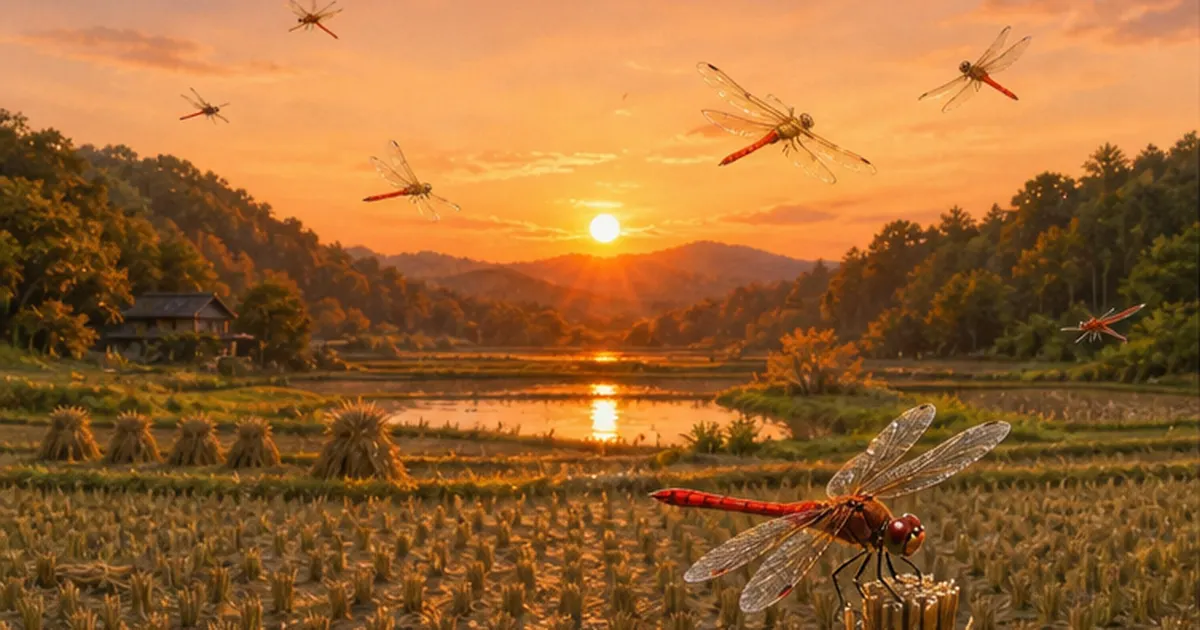
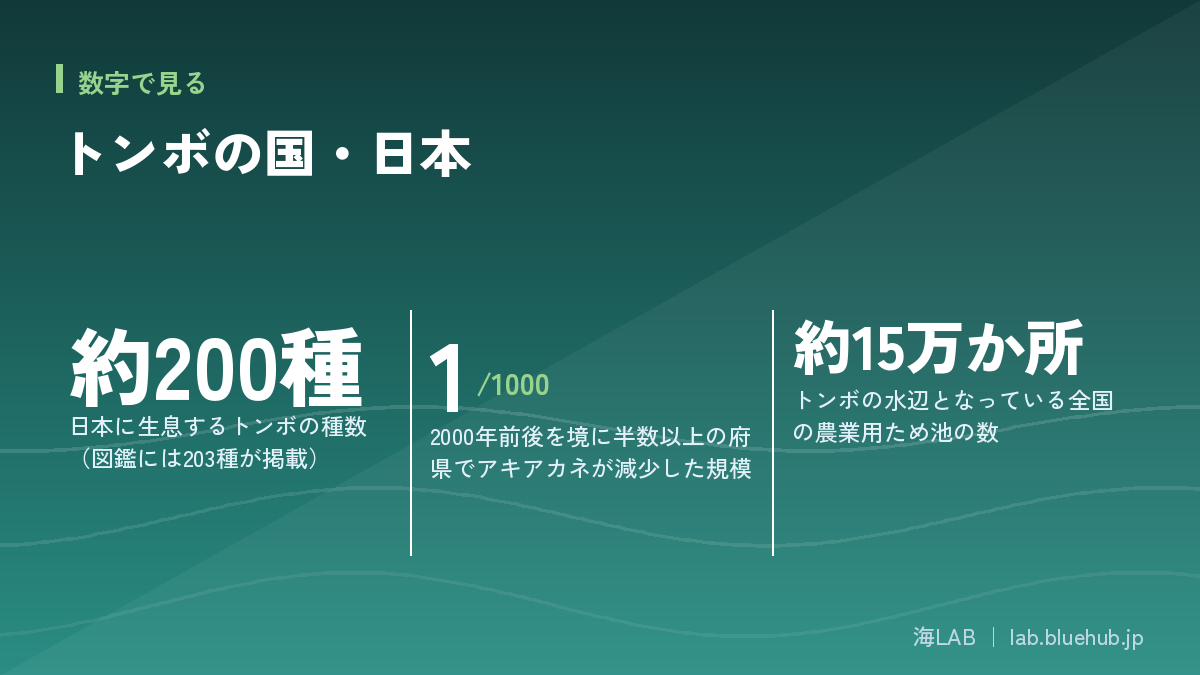
At dusk in autumn, a swarm of red dragonflies glides over rice paddies after the harvest — a scene every Japanese person can picture. It is, in fact, remarkably special by world standards. Japan is home to roughly 200 species of dragonflies, and many of them have sustained their lives in human-made waters: rice paddies and irrigation ponds.
In ancient times, the Japanese called their own land "Akitsushima" — the Island of Dragonflies. "Akitsu" is the old Japanese word for dragonfly. Japan has been, by its own proud admission, a dragonfly nation since antiquity. Yet today, its most iconic species, the red dragonfly known as the Autumn Darter (Sympetrum frequens), has crashed in some regions by an astonishing factor of one thousand, according to researchers' surveys.
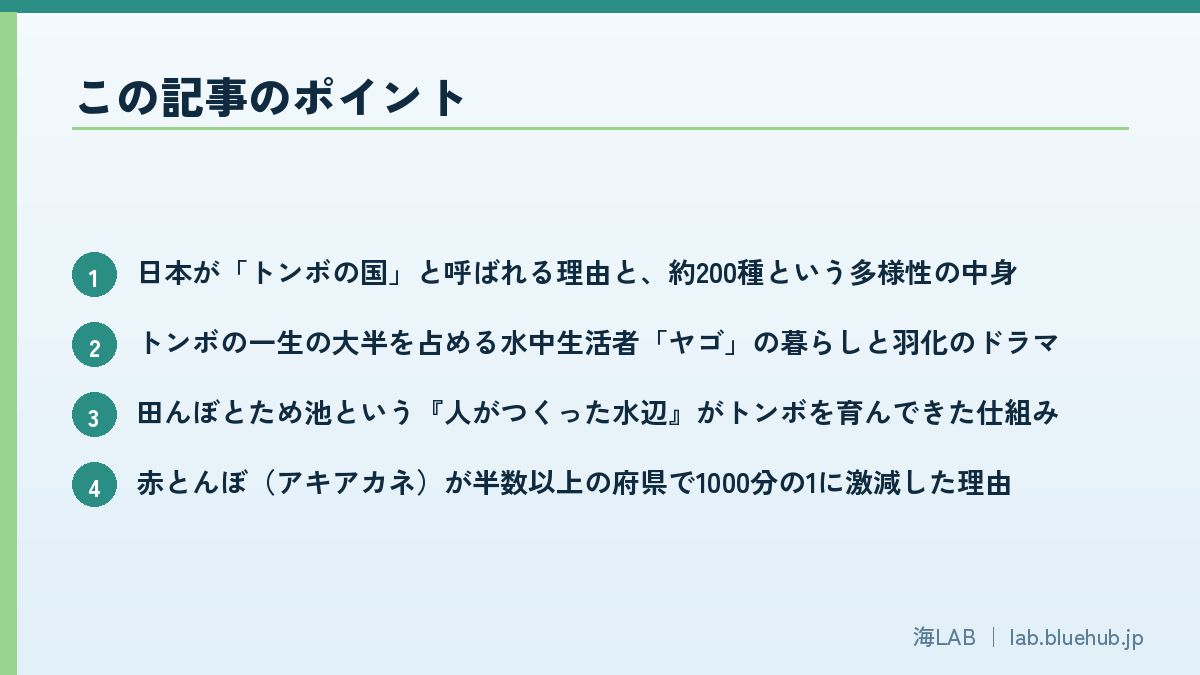
This article traces where Japan's dragonfly diversity comes from, the hidden underwater life of dragonfly nymphs, and the deep relationship between dragonflies, rice paddies, and irrigation ponds — drawing on primary sources from the Ministry of the Environment, the Ministry of Agriculture, Forestry and Fisheries, and the National Institute for Environmental Studies. By the end, autumn's red dragonflies should look a little different to you.
What you will learn in this article
- Why Japan is called "the dragonfly nation," and what its roughly 200 species look like
- The life of the "yago" — the aquatic nymph stage that fills most of a dragonfly's lifetime — and the drama of emergence
- How rice paddies and irrigation ponds, waters made by human hands, have nurtured dragonflies
- Why the Autumn Darter declined a thousandfold in more than half of Japan's prefectures
- The plight of the endangered Bekko Tombo (Libellula angelina) and conservation efforts underway
- How to start observing and supporting dragonflies today
Why Is Japan a "Dragonfly Nation"? — A Diversity of Some 200 Species
More than about 5,000 species of dragonflies and damselflies (order Odonata) are known worldwide, and roughly 200 species have been recorded in Japan. The specialist field guide "Dragonflies of Japan" lists 203 species. For its land area, Japan is one of the world's most dragonfly-rich countries.
From Damselflies to the Golden-ringed Dragonfly — Two Great Groups
The order Odonata splits into two broad groups. One is the Zygoptera — the damselflies: slender-bodied insects whose fore and hind wings are nearly identical in shape, most of which fold their wings shut when perched. The other is the Anisoptera — the true dragonflies and hawkers: sturdily built, with hind wings broader than the forewings, and they keep their wings spread flat even at rest.
Masters of Aerial Combat — Dragonfly Flight
The single greatest reason dragonflies have survived largely unchanged for over 200 million years is their overwhelming flying ability. A dragonfly can move each of its four wings independently, allowing it to hover, turn sharply, and even fly backwards. It is well known that helicopter and drone engineers study the structure of dragonfly wings — they are a classic model for "biomimetics," the art of borrowing nature's designs for technology.
The compound eyes that dominate the head are clusters of tiny facets — said to number anywhere from 10,000 to 30,000 — giving nearly 360-degree vision. Their ability to track moving objects is among the best in the insect world, and some studies report that their success rate when catching small insects in mid-air exceeds 90 percent. For all their elegance, dragonflies are apex hunters of the sky.
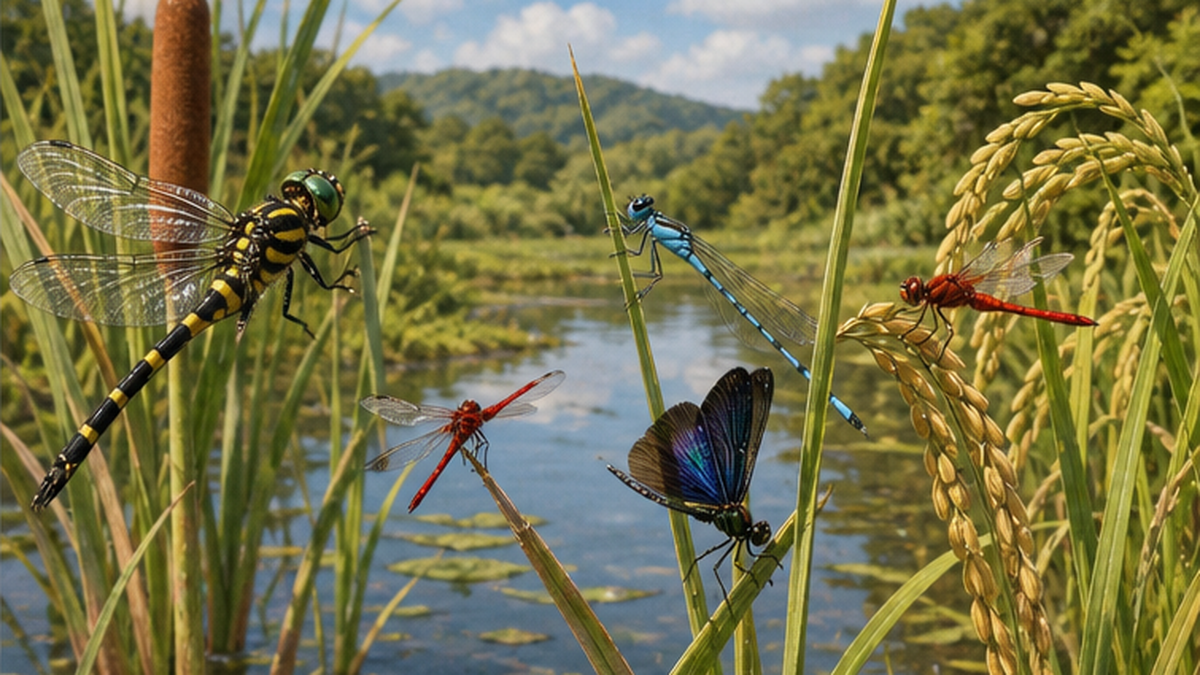
- Japan's largest is the Golden-ringed Dragonfly (Anotogaster sieboldii), reaching 9–11 cm in length — a powerful hunter that preys even on hornets
- Japan's smallest is the Scarlet Dwarf (Nannophya pygmaea), about 2 cm long — small enough to fit on a one-yen coin, and among the smallest dragonflies in the world
- The cast is astonishingly varied: the red dragonflies such as the Autumn Darter and Summer Darter, damselflies that gleam jewel-blue, and the Butterfly Dragonfly that flutters like a butterfly
A Country Named After Dragonflies
The ancient chronicles Nihon Shoki and Kojiki refer to the Japanese islands as "Akitsushima." "Akitsu" is the old word for dragonfly, and legend holds that the shape of the land was likened to one. Dragonflies were the "guardian deities of the rice fields," devouring insect pests of rice, and because they fly only forward and never retreat, samurai prized them as the "victory insect," working their image into helmets and sword fittings. The dragonfly is woven deep into Japanese culture.
Dragonflies are regulars in literature, too. In haiku, "tombo" (dragonfly) is a season word for autumn. The children's song "Aka-tombo" ("Red Dragonfly," lyrics by Rofu Miki, music by Kosaku Yamada) — which overlays memories of one's hometown onto red dragonflies in the sunset sky — has been sung for nearly a century. Few countries in the world have made the dragonfly a symbol of the landscape one longs to return to.
| Type of waterside | Representative dragonflies | Characteristics |
|---|---|---|
| Rice paddies and shallow wetlands | Autumn Darter, Summer Darter, White-tailed Skimmer | Adapted to seasonally flooded habitats; emerge quickly |
| Irrigation ponds and still waters | Lesser Emperor, Butterfly Dragonfly, damselflies | Year-round water; favor banks thick with aquatic plants |
| Streams and mountain brooks | Golden-ringed Dragonfly, broad-winged damselflies, clubtails | Need clean flow and sandy-muddy beds; many have long nymph stages |
| Bogs and spring-fed marshes | Scarlet Dwarf, Morton's Bluet | Very shallow water and low grass; vulnerable to development, declining nationwide |
| Urban parks and pools | Wandering Glider, White-tailed Skimmer | Hardy species that can grow even in familiar puddles |
Why Japan's dragonflies are so diverse
- A landmass stretching 3,000 km north to south spans subtropical to subarctic climates, each with its own species
- Watersides come in many forms: mountain streams, bogs, lowland ponds, and rice paddies
- More than 2,000 years of rice farming have supplied vast areas of shallow, warm "artificial wetland"
A Dragonfly's Life — Mostly Spent Underwater as a Nymph
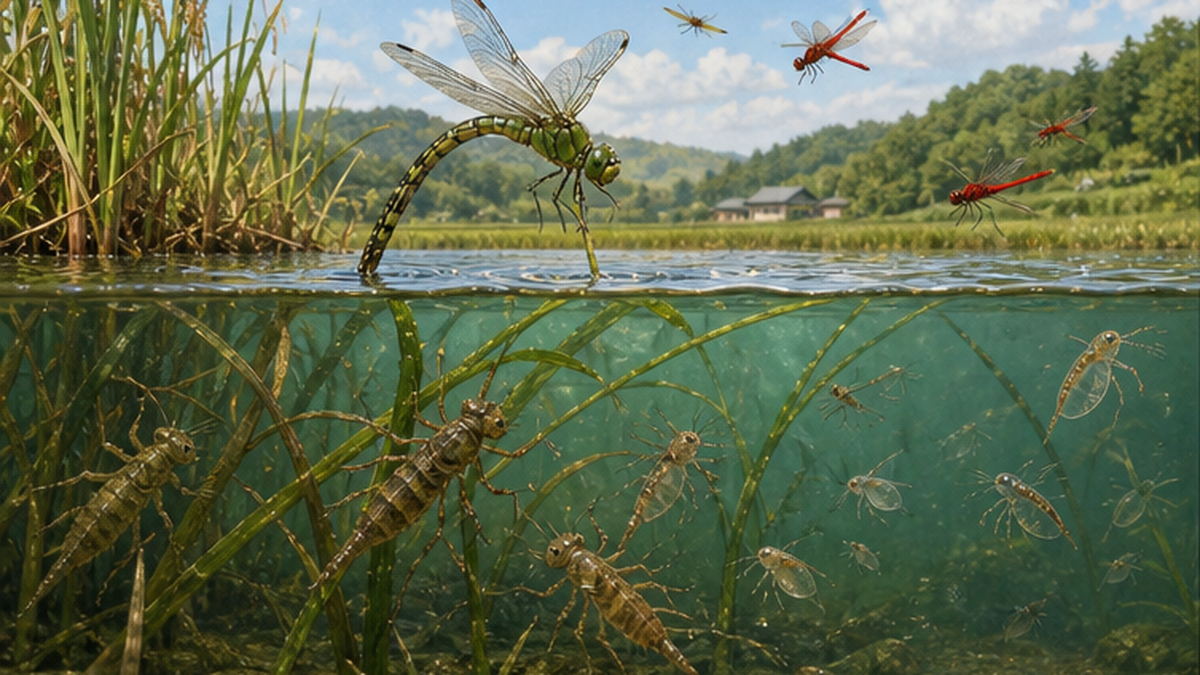
Dragonflies rule the air, yet they spend most of their lives underwater. The larva, called a "yago" in Japanese, lives and grows on the bottom for anywhere from a few months to several years, depending on the species. To know dragonflies is to know the waters where their nymphs live.
The Yago — A Little Hunter Underwater
Nymphs are carnivores, preying on midge larvae (bloodworms), water fleas, and even small tadpoles and fish. Their weapon is a folding arm called the "labium" — an extendable lower lip. It stays tucked beneath the jaw until prey comes within range, then shoots out in an instant to seize it. Repeating this hunt, the nymph molts around ten times, growing a little larger each time.
The nymph stage varies greatly by species. Some are "fast developers," like the Wandering Glider, which emerges in about one to two months; others are "slow growers," like the Golden-ringed Dragonfly, which takes several years to emerge. Unless a stable stream or pond persists for years on end, large species like the Golden-ringed Dragonfly cannot complete their generations.
Nymph bodies carry astonishing adaptations to underwater life. The nymphs of dragonflies and hawkers breathe through "rectal gills" inside the abdomen, and in emergencies they can jet away by forcefully expelling water from the rear. Damselfly nymphs, by contrast, carry three leaf-like "caudal gills" at the tip of the abdomen to take in oxygen. Even within the same order, their underwater anatomy is utterly different.
Egg-laying — Each Species Chooses Its Waters Differently
Dragonfly egg-laying is astonishingly varied. The red dragonflies drop their eggs while flying, tapping the water surface or mud with the tip of the abdomen. The Lesser Emperor and the damselflies cut slits into the stems of aquatic plants and embed their eggs in the tissue. The Golden-ringed Dragonfly hovers upright over shallow flows, repeatedly stabbing its abdomen into the sandy mud to lay. Every method is a strategy for choosing exactly the right water for its offspring — which means that when that kind of water disappears, so does that dragonfly.
Emergence — A Transformation That Risks Everything
When fully grown, the nymph leaves the water on an early-summer morning, climbs a rice stalk or a post, and its back splits open to reveal the adult. This transformation, called emergence, takes several hours, and until the wings extend and harden, the insect cannot flee from enemies — the most defenseless moment of its life. Only those that succeed in their maiden flight on soft, fresh wings earn residence in the world of the sky.
Adult Life — Territories, Tandem Flight, and Turning Red
Life after taking to the air is just as full of spectacle. Males of many species hold territories at the waterside, patrolling to drive off intruders and waiting for females. After mating, the male clasps the female by the neck and the pair flies linked together — the "tandem flight" — a behavior that guards the female from rival males while she lays eggs. Many dragonflies also change color as they mature: male White-tailed Skimmers develop a powdery white bloom, and the "red" of red dragonflies is likewise a badge of maturity. A newly emerged Autumn Darter is yellowish-brown, turning vivid red by the time it returns to the lowlands in autumn.
Adults live longer than you might think: an Autumn Darter lives roughly four to five months as an adult, from emergence in early summer until it finishes laying eggs in late autumn. The dragonfly's life may seem fleeting, but counted from the egg it spans about a year — including a summer retreat in the mountains, a remarkably well-planned year for so small a body.
| Species | Nymph period | Main habitat |
|---|---|---|
| Wandering Glider | About 1–2 months | Pools, puddles, irrigation ponds |
| Autumn Darter (red dragonfly) | Overwinters as egg; about 2–3 months from spring | Rice paddies, shallow wetlands |
| White-tailed Skimmer | Several months to about a year | Ponds, irrigation ponds, paddies |
| Lesser Emperor | Several months to about a year | Ponds, irrigation ponds |
| Golden-ringed Dragonfly | Several years | Streams and spring-fed flows |
Nymphs are a barometer of water quality and habitat continuity
A nymph needs everything a waterside offers: prey underwater, stems for emergence, and egg-laying habitat for returning adults. That is why waters rich in dragonflies are rich in life overall — dragonflies are "indicator insects" that give the waterside a health check.
Rice Paddies Are Human-made Wetlands — The Autumn Darter's Year
No account of Japan's dragonfly diversity is complete without the rice paddy. Japan's paddies cover about 2.3 million hectares (Ministry of Agriculture, Forestry and Fisheries, 2025 Cultivated Land Area Statistics). Flooded in spring, thick with rice in summer, dry in autumn — dragonflies have adapted brilliantly to the rhythm of this warm, shallow "seasonal wetland."
Japan's lowlands were once covered with natural wetlands created by flooding rivers. But according to surveys by the Geospatial Information Authority of Japan, the country's wetland area has shrunk by roughly 60 percent compared with the Meiji and Taisho eras. As reclamation and urbanization erased natural wetlands, rice paddies stepped into the role. Flooded on schedule every year, the paddy has functioned as a "wetland maintained by people" for dragonflies, frogs, and aquatic insects.
Indeed, one survey counted more than 5,000 species of living things in the paddy environment, including its ditches, levees, and ponds. Within that web of life, the dragonfly stands at the very center of the food chain — as a nymph it eats aquatic insects, as an adult it eats flying ones, and it in turn feeds birds, frogs, and spiders. A paddy with dragonflies wheeling overhead is proof that a great engine of life is turning below.
The Red Dragonfly's Year Follows the Farming Calendar
- Autumn: Female Autumn Darters lay eggs in the damp mud and puddles of harvested paddies
- Winter: The eggs overwinter in the paddy soil
- Spring: When the fields are flooded for planting, the eggs hatch and the nymphs grow underwater
- Early summer: They climb the rice stalks and emerge; the young adults migrate to cool mountains to escape the heat
- Autumn: The adults, now colored red, return to the lowlands to mate, lay eggs in the paddies, and end their lives
The Autumn Darter's life history is almost perfectly synchronized with the farming calendar. Japan's rice agriculture — planting and harvesting repeated for more than 2,000 years — was the very cradle that raised the great swarms of red dragonflies. For more on the paddy's living world, see our field guide to rice paddy life.
Repaying the Paddies — Dragonflies as Natural Pest Hunters
Dragonflies are not merely raised by the paddies — they give back. Adults catch and eat rice pests in mid-air: planthoppers, leafhoppers, and moths. Underwater, the nymphs feed readily on mosquito larvae, which is why it was long said that "a village with many dragonflies has few mosquitoes." In the age before pesticides, the dragonfly that kept the field's insects in check truly was the "guardian deity of the rice fields" — people cherished dragonflies, and dragonflies multiplied in the paddies. That mutual arrangement endured in this country for centuries.
Midsummer Drainage and the Nymphs' Timing
Modern rice farming, however, brings trials for the nymphs. "Nakaboshi" — draining the paddy before midsummer — is an important practice that strengthens the rice roots, but for nymphs not yet emerged it is a matter of life and death. Agricultural research in Fukui Prefecture and elsewhere reports that simply delaying the drainage a little, or leaving a puddle in one corner of the field, dramatically changes how many nymphs survive to emerge. Small adjustments by farmers are deciding the numbers of red dragonflies.
The "Winter-flooded Paddy" Alternative
In recent years, "winter flooding" — keeping water in the paddies after harvest — has been spreading across the country. Winter paddies become resting grounds for waterbirds and habitat for aquatic life, and the practice is also expected to suppress weeds as aquatic worms multiply: a two-birds-one-stone method of farming. In some cases, such as the paddies around Kabukuri-numa in Miyagi Prefecture, the rice fields themselves have been designated as Ramsar wetlands. For dragonflies too, a longer wet season means a wider world to live in.
150,000 Ponds Nationwide — Irrigation Ponds as Dragonfly Paradise
The other waterside that has supported dragonflies alongside the paddies is the irrigation pond (tameike). According to the Ministry of Agriculture, Forestry and Fisheries, Japan has about 150,000 agricultural ponds, concentrated in western Japan where rainfall is scarce and large rivers are few. Most were built before the Edo period — historic waters that have held their water for centuries.
Their history runs deep: Manno-ike on the Sanuki Plain (Kagawa Prefecture), one of Japan's largest irrigation ponds, is said to have been repaired under the direction of the monk Kukai (Kobo Daishi) in the Heian period. The prefecture with the most ponds is Hyogo, where more than 20,000 are still in service. In ponds that have held water for centuries live ecosystems that only that much time can grow — diverse aquatic plants, shellfish, fish, and communities of dragonflies.
Why Dragonflies Love Irrigation Ponds
- Unlike paddies, they hold water all year — species whose nymph stage exceeds a year can live there
- The banks are shallow and thick with aquatic plants and reeds — egg-laying sites and emergence perches in one place
- They have been tended by human hands along with farming — not too deep, with relatively gentle pressure from fish
- They connect to paddies, ditches, and village woods — feeding and refuge grounds for adults are right next door
A Crisis for Ponds Is a Crisis for Dragonflies
But the outlook for these ponds is darkening. As farmers dwindle, more ponds go unmanaged, and landfilling and decommissioning due to age are advancing. Worse, when invasive species such as the red swamp crayfish and largemouth bass get in, the waterweeds are mown down and nymphs are eaten outright — a complete transformation of the dragonfly fauna reported at sites across the country. For more on pond ecosystems themselves, see our article on the ecology of irrigation ponds.
"Kaibori" — The Traditional Wisdom of Draining the Pond
Ponds have a traditional management practice called "kaibori" — draining the pond dry. In winter the water is let out, the bottom is exposed to the sun, accumulated mud is removed, and fish are harvested. This work, continued for centuries, turned out to be superb ecosystem maintenance: it purifies the water, clears out invasive fish, and lets light reach the seeds of aquatic plants to trigger germination. In recent years, the kaibori at Tokyo's Inokashira Park famously revived its waterweeds, and "kaibori for wildlife" is being revived around the country. Some nature endures precisely because people keep tending it — the irrigation pond is the prime example.
Headwinds facing ponds and their dragonflies
- With too few caretakers, mowing and mud-clearing lapse and the waterside grows derelict
- More ponds are being filled in or decommissioned for disaster-prevention reasons or land conversion
- Invasive species such as the red swamp crayfish devour nymphs and waterweeds
Why Did the Red Dragonflies Vanish? — The Thousandfold Shock
"The sky used to turn red with them — now I hardly see one." That feeling is not an illusion. Nationwide surveys by dragonfly researchers, including Tetsuyuki Ueda of Ishikawa Prefectural University, have shown that around the year 2000 the Autumn Darter crashed to roughly one-thousandth of its former numbers in more than half of Japan's prefectures.
The Suspect: Insecticides in Rice Nursery Boxes
The timing of the crash coincided with the spread of systemic insecticides applied in advance to rice nursery boxes ("box treatments"). In Japan, imidacloprid (a neonicotinoid) has been shipped since 1993 and fipronil (a phenylpyrazole) since 1996. Carried into the paddies with the seedlings, they dissolve into the very water where the nymphs live.
"Systemic" means the chemical is absorbed into the plant and spreads to every stem and leaf. It is a convenient mechanism — any pest that bites the rice is controlled — but part of the chemical also leaches into the paddy water. Creatures like dragonfly nymphs, which live in that water for months, are exposed for long periods. And the harm is not always instant death: experiments show it can act gradually, thinning out the small aquatic animals the nymphs feed on, or slowing growth until emergence fails.
In trials at experimental paddies built to mimic real rice fields, the National Institute for Environmental Studies (published 2016) found a stark result: in plots treated with fipronil, the number of emerging dragonflies such as the Autumn Darter fell to nearly zero. In 2017 the Ministry of the Environment published the findings of its expert panel on pesticide impacts on insects, acknowledging that fipronil-based box treatments can be one factor in the decline of dragonflies.
Not Just Pesticides — Compounding Factors
- More consolidated, fast-draining paddies — the damp autumn fields where eggs were laid have diminished
- More abandoned farmland — a paddy that is never flooded might as well not exist for a dragonfly
- Thorough midsummer drainage and early drawdown — the water disappears before the nymphs can emerge
- Reconstruction or loss of ponds and ditches — concrete revetments suit neither egg-laying nor emergence
The dragonfly's decline is not only Japan's story. International review studies warn that about 40 percent of the world's insect species are in decline, and aquatic insects, dragonflies among them, are considered especially vulnerable. Fewer flying insects mean fewer swallows and other birds that eat them — insect decline is the first link in a chain that shakes the whole ecosystem.
| Cause of decline | Impact on dragonflies | Possible countermeasures |
|---|---|---|
| Systemic insecticides in nursery boxes | Nymph mortality, food shortage, failed emergence | Switch to ingredients with less impact on dragonflies; review usage |
| Dry-field conversion and early drainage | Autumn egg-laying sites and pre-emergence water disappear | Adjust drainage timing; preserve puddles on the field |
| Farmland abandonment and shrinking paddy area | Fewer places are flooded at all | Maintain farmland; support wildlife-friendly agriculture |
| Concrete lining of ponds and ditches | Loss of egg-laying sites and emergence perches | Nature-oriented revetments; preserve beds of aquatic plants |
There is hope, however. Since the ministry's panel report, switches to chemicals with less impact on dragonflies and reviews of usage have begun to spread, region by region and co-op by co-op. In rice-growing areas committed to wildlife-conscious farming, paddy surveys have reported red dragonflies recovering. Choosing such rice as a consumer also, in the end, moves the dragonflies' numbers. Knowing the cause means we have moves to make.
The number of emerging Autumn Darters fell to about 30 percent of conventional levels in paddies treated with neonicotinoid insecticides, and to nearly zero in paddies treated with fipronil.
― National Institute for Environmental Studies, "Evaluating pesticide impacts on biodiversity using experimental paddies" (summarized from findings published in 2016)
The movement to bring back the red dragonflies
- Researchers, farmers, and agricultural co-ops are teaming up, and some regions are switching to pest control with less impact on dragonflies
- Water-management adjustments — delaying drainage, keeping puddles on the field — can greatly raise nymph survival
- Choosing rice grown with care for living things is a vote for the paddies that raise dragonflies
Dragonflies on the Brink — The Bekko Tombo and Frontline Conservation
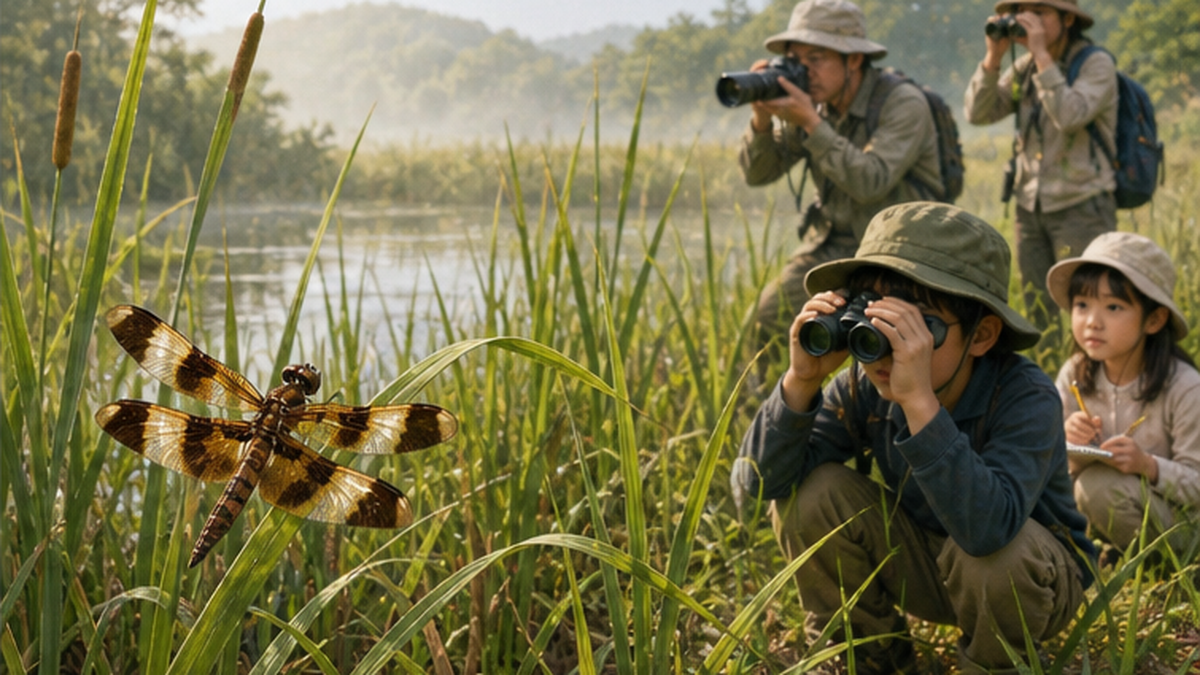
The Ministry of the Environment's Red List 2020 records 3,675 threatened species in Japan, and several dragonflies are on it. Their emblem is the Bekko Tombo (Libellula angelina) — a beautiful dragonfly whose wings carry tortoiseshell-like brown patches. It is classed as Critically Endangered (CR: extremely high risk of extinction in the wild in the near future) and protected under the Act on Conservation of Endangered Species, which prohibits even capturing it.
How the Bekko Tombo Was Driven to the Edge
The Bekko Tombo favors old lowland ponds fringed with reeds — waters that overlap squarely with human living space. Landfill and revetment works erased its habitat outright; abrupt water-level changes and worsening water quality piled on; and invasive species such as the red swamp crayfish prey on its nymphs. According to the Ministry of the Environment, its remaining sites in Japan are now limited to a handful of places in Shizuoka, Yamaguchi, and parts of Kyushu.
Conservation Efforts Advancing Across Japan
Okegaya-numa in Iwata City, Shizuoka Prefecture, is known as one of Japan's foremost habitats of the Bekko Tombo. Designated a prefectural nature conservation area, it receives constant care: water-level management, removal of invasive species, and upkeep of its reed beds. The Ministry of the Environment runs a conservation and propagation program there, and with local volunteers and schools taking part, it has become a model of "waters protected by everyone." For a story of recovery from the brink, see also the Crested Ibis and Sado Island — a comeback carried by the paddies' living creatures.
There is even a park built for dragonflies. The Tombo Nature Park ("Dragonfly Kingdom") in Shimanto City, Kochi Prefecture, opened in 1985 and is known as the world's first dragonfly sanctuary. Citizens bought up abandoned wet paddies and restored them into dragonfly-friendly wetland; dozens of species have been recorded there since. For more than thirty years it has kept proving that conservation can not only "protect" but "call back."
By the Sea and in the Hills — The Bekko Tombo Is Not Alone
The Bekko Tombo is not the only dragonfly on the Red List. The Hinuma damselfly (Mortonagrion hirosei), discovered in 1971 at Lake Hinuma in Ibaraki Prefecture, is a globally rare damselfly that lives only in brackish reed beds where seawater and freshwater mix. Every time estuary development erases a reed bed, a habitat vanishes, and the species is listed as threatened on the ministry's Red List. The bog-dwelling Scarlet Dwarf, too, is disappearing region by region as spring-fed marshes are developed or dry out. In the dragonfly world, where every type of waterside has its own specialist, losing one kind of water can mean losing one kind of dragonfly.
Dragonfly conservation works by area, not by points
Dragonflies need both the water (for nymphs) and the greenery on land (feeding and resting grounds for adults). Protecting the pond alone is not enough if the surrounding grassland and woods are lost. Habitat conservation therefore treats the waterside and its surroundings as one connected environment.
The Dragonfly That Crosses Oceans — The Wandering Glider's Journey of Thousands of Kilometers
Japan's dragonfly story also has a protagonist of oceanic scale. The Wandering Glider (Pantala flavescens) is known as one of the longest-distance migrants among insects, with swarms reported crossing the Indian Ocean between continents. Thin, light wings that ride the air currents, gliding with hardly a wingbeat — that body plan is what makes such flights possible.
How Does It Keep Flying Over the Open Sea?
How does an insect about 5 cm long cross open ocean with nowhere to land? The key is a wing area, relative to body weight, that stands out even among dragonflies. Riding the currents like a glider, it can stay aloft almost without flapping. It drifts high on monsoon winds and updrafts, then breeds explosively in the puddles of wherever the rainy season has just arrived — the Indian Ocean swarms are thought to shuttle between Africa and India on the monsoon. Written into those small wings is a flight plan that reads the planet's winds and rains.
A One-way Journey from the South to Japan, Every Year
Every spring, Wandering Gliders cross the sea from the south to Japan, then push north, breeding generation after generation in paddies, pools, and puddles. With a nymph stage of only one to two months, they can reach Hokkaido by summer's end. But they cannot stand the cold: when winter comes, they die out across almost all of Japan, surviving only in parts of the southwestern islands. And the next year, a new generation arrives from the south again — a grand "one-way ticket" journey repeated annually.
Because they swarm around the Obon season, they are also called "shoryo tombo" — spirit dragonflies — cherished as the insects that carry ancestors' souls home. A globe-trotting traveler of sea and sky has become a fixture of the Japanese summer.
Citizen Science Chasing the Mystery
When and how far north the Wandering Glider travels each year is, in fact, a mystery not yet fully solved. In Japan, a nationwide Wandering Glider survey run jointly by researchers and citizens continues to map the advancing front of arrivals, as participants across the country report first-sighting dates and numbers. It is a fine example of citizen science: a survey anyone can join, supporting research at the frontier.
Climate change, too, has begun to move dragonfly ranges. Southern species such as the sail-winged clubtail Ictinogomphus pertinax have been observed extending their ranges northward across Japan, and dragonflies are drawing attention as "living thermometers" that register the progress of warming. Changes in the familiar cast of dragonflies are also signals of planetary change.
The wonder of the Wandering Glider's journey
- Among the longest migrations of any insect — including famed crossings of the Indian Ocean
- A nymph stage of only 1–2 months means lightning growth and instant generational turnover on arrival
- One of the world's most widespread dragonflies, found across nearly all tropical and temperate regions
Meeting Dragonflies — and Becoming Their Ally
The joy of dragonflies is that no special equipment is needed to meet them. The neighborhood park pond, the ditch beside a rice field, the school pool — nymphs and adults live right beside us. Meeting one, and learning a single name, is the doorway to thinking about the watery environments around you.
Tips for Observation
- Season: The leading cast rotates — damselflies and hawkers in early summer, Wandering Gliders at midsummer, red dragonflies in autumn
- Time of day: They are most active in the warm morning hours; to see an emergence, visit the waterside at dawn in early summer
- Place: Shallow banks thick with waterweeds are prime real estate; males patrol their territories, so wait and they will come back around
- Watch how they perch: Wings folded shut means a damselfly; wings held open means a dragonfly — the quickest first distinction
Just one point of etiquette. Some species, like the Bekko Tombo, are protected by law from capture, and some places restrict collecting by local ordinance. When you meet a rare dragonfly, today's way to enjoy it is with photos and records, not a net. Report your records to citizen surveys and they become data for research and conservation. Systems like "Ikimono Log," run by the Ministry of the Environment, let you register sightings in a national database — your walk's records become one more brushstroke on the map of Japan's dragonflies.
The "Great Yago Rescue" in School Pools
An unexpected dragonfly nursery is the school swimming pool. Unused from autumn to spring, pools are perfect egg-laying sites for Wandering Gliders and darters. When the water is drained for early-summer cleaning, masses of nymphs would be washed away — so before the cleaning, schoolchildren scoop up the nymphs and move them to nearby ponds, or raise them in the classroom until they emerge. This "yago rescue operation" is practiced at elementary schools across Japan. Finding hundreds or even thousands of nymphs in a single pool is not unusual, and the rescue has taken root as a lesson in both life observation and the environment.
Everyday Ways to Help
- Join a local dragonfly observation event, a pond conservation workday, or a wildlife survey
- Set a small water basin (biotope) in the garden or on the balcony — nymphs often grow in them
- Choose farm products grown to coexist with wildlife, such as wildlife-branded rice, to support dragonfly-raising paddies
- Record the dragonflies you find and report them to citizen-science surveys
Akitsushima — the Island of Dragonflies. That old name points to the very character of this country, where watersides and human life have always been folded together. Paddies are flooded, ponds are tended, nymphs grow. As long as that work continues, the red dragonflies will keep returning to the autumn sky. The next time you see one, pause a moment — and see off that small traveler.
Summary of this article
- Japan hosts roughly 200 dragonfly species, and the land itself was anciently called "Akitsushima" — the Island of Dragonflies
- Most of a dragonfly's life is the aquatic nymph stage; rice paddies and some 150,000 irrigation ponds have sustained it
- Around 2000, the Autumn Darter crashed a thousandfold in more than half of Japan's prefectures; research points to nursery-box insecticides
- The Bekko Tombo is Critically Endangered; habitat conservation and invasive-species control continue
- Observation, making watersides, and supporting wildlife-friendly farming — familiar actions connect to the dragonflies' future
References and Sources
- Ministry of the Environment, Japan – Bekko Tombo (conservation and propagation program)
- Ministry of the Environment, Japan – Red List and Red Data Book
- Ministry of the Environment, Japan – Impacts of pesticides on dragonflies and wild bees in Japan (expert panel report, 2017)
- National Institute for Environmental Studies – Evaluating pesticide impacts on biodiversity using experimental paddies: effects of systemic insecticides on dragonflies
- Ministry of Agriculture, Forestry and Fisheries – Overview of agricultural irrigation ponds
- Ministry of Agriculture, Forestry and Fisheries – Cultivated land area 2025 (as of July 15)
- Nature Conservation Society of Japan (NACS-J) – The Autumn Darter's nationwide crash
- Fukui Prefecture – Pesticide and water-management techniques friendly to dragonflies and fireflies (FY2017 extension guide)
※ Ordered by reliability: government and academic institutions > peer-reviewed papers > specialist organizations > trusted media