⚡ In short
"Ghost gear" that keeps fishing after it is lost at sea is estimated to make up as much as a tenth of ocean plastic waste by weight. Since 2025, the EU has been ramping up Extended Producer Responsibility (EPR) schemes that require fishing gear manufacturers to handle collection and recycling. This article draws on primary sources to explain how the scheme works, where Japan stands, and the key points of debate.
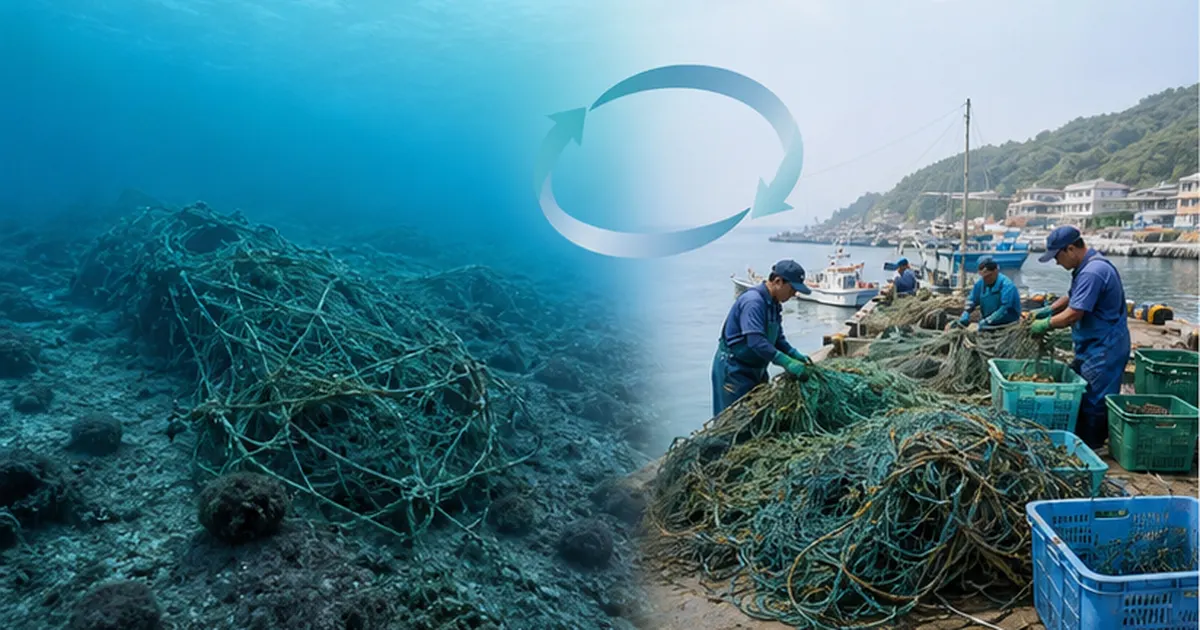
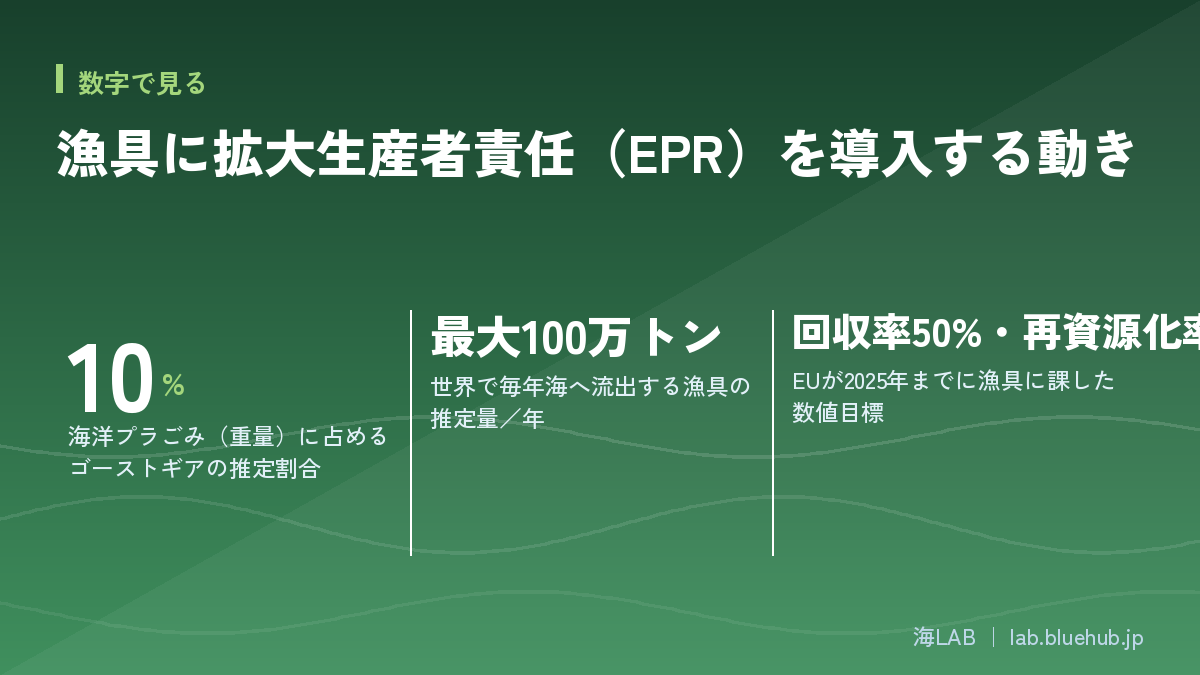
A fishing net sunk in the sea keeps catching marine life for years even though no one is operating it. This phenomenon, known as "ghost gear," is estimated to account for up to a tenth of ocean plastic waste by weight — and, by some estimates, close to 70-90% within offshore ocean gyres.
A growing response to this problem is the idea of Extended Producer Responsibility (EPR). Under this approach, the manufacturers who made the nets and ropes bear responsibility for collecting and recycling gear once it has served its purpose. Under its Single-Use Plastics Directive, the EU has required fishing gear manufacturers to meet specific numerical targets by 2025.
Japan, on the other hand, still has no EPR scheme specific to fishing gear. The Fisheries Agency has advanced measures such as gear marking, a waste-processing guideline, and collection-cost subsidies, but has not gone as far as imposing legal responsibility on producers. This article organizes the substance of EPR schemes, global developments, Japan's current situation and points of debate, and examples of fishing-net recycling already underway domestically, all drawn from primary sources.
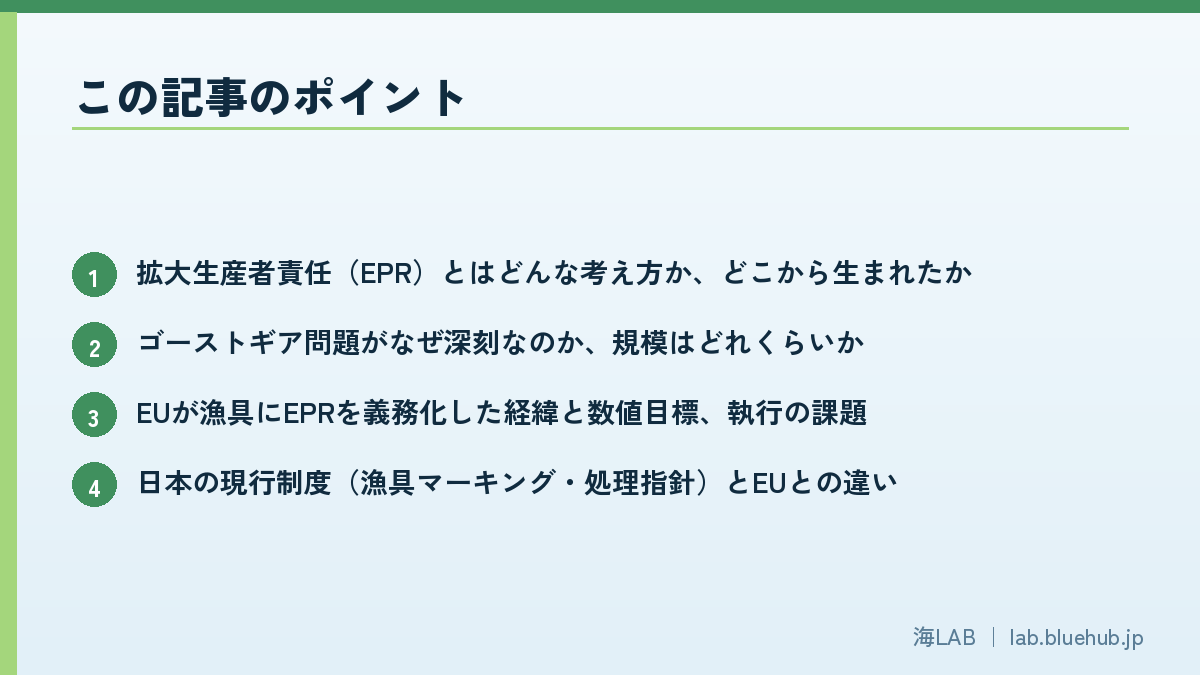
What you'll learn in this article
- What Extended Producer Responsibility (EPR) is and where it came from
- Why the ghost gear problem is so serious, and how large it is
- How and why the EU made fishing gear EPR mandatory, its numerical targets, and enforcement challenges
- Japan's current system (gear marking, processing guidelines) and how it differs from the EU's
- What changes for fishers and manufacturers once EPR is introduced, and who bears the cost
- Examples of fishing-net recycling already underway in Japan and abroad
What Is Extended Producer Responsibility (EPR)?
Extended Producer Responsibility (EPR) is a policy idea that holds the manufacturers who design and make a product responsible for its collection, recycling, and disposal once it has reached the end of its useful life. It can be described as an application of the "polluter pays principle," widely used in waste management, to a product's entire life cycle. In recent years it has been adopted across a wide range of fields — home appliances, automobiles, batteries, packaging — and has become one of the main tools of waste policy.
An idea that spread from 1990s Sweden
The concept of EPR is said to trace back to 1990, when Swedish researcher Dr. Thomas Lindhqvist coined the term. Its underlying premise: if manufacturers remain responsible for a product even after it is used, environmentally conscious design and collection will advance — a response to the ongoing production of environmentally burdensome goods. The Organisation for Economic Co-operation and Development (OECD) then took up the issue from 1994, and its 2001 publication of a guidance manual for national governments helped EPR spread worldwide as a policy tool.
From "made, done" to "responsible until disposal"
Traditional waste management centered on municipalities and consumers bearing the cost of processing. EPR shifts some or all of that burden onto producers, aiming for two effects: (1) internalizing waste-processing costs into product prices, and (2) prompting manufacturers themselves to shift toward designs that are easier to recycle. When processing costs are built into prices, it becomes easier for decisions at every stage — production, consumption, disposal — to factor in environmental impact.
Already widespread in home appliances and packaging
Japan already has several systems that incorporate EPR thinking, including the Home Appliance Recycling Law, the Containers and Packaging Recycling Law, the Automobile Recycling Law, and the Small Appliance Recycling Law. However, these mainly target household products; plastic items used in fishing — nets, ropes, buoys, traps, floats — fall outside these legal frameworks. Fishing gear, used at sea and lost at sea, simply sits outside the existing framework of land-based recycling systems.
Although legal frameworks differ by country and region, the idea of EPR itself is increasingly shared among developed countries. For a product like fishing gear that crosses borders in use, a single country's system has its limits — international coordination and shared guidelines are key to improving effectiveness.
The particular difficulty of fishing gear
Unlike a television or a refrigerator, fishing gear is used in the hard-to-manage environment of the open sea, and can be unintentionally "lost" through storms or gear becoming entangled with other gear. There are also questions of whose jurisdiction should apply to gear used by vessels operating across national boundaries, when the owner is hard to identify. Applying existing EPR frameworks directly to fishing gear is not straightforward.
Three effects EPR aims for
- Making producers bear processing costs, reflected in product prices (internalization)
- Encouraging manufacturers toward designs and materials that are easier to recycle
- Correcting the current imbalance in which municipalities and consumers alone bear the burden
Why Fishing Gear Needs EPR — The Scale of the Ghost Gear Problem
Sources of ocean plastic waste that draw attention tend to be land-based items like plastic bottles and shopping bags, but the volume of gear leaking from fishing activity itself is far from negligible. The causes are varied: loss in storms, entanglement between different pieces of gear, and the deliberate discarding of worn-out gear.
"Ghost gear" makes up a tenth of ocean plastic waste
A 2009 estimate compiled by the United Nations Environment Programme (UNEP) put abandoned, lost, or discarded fishing gear ("ghost gear") at roughly 10% of the world's ocean litter by weight. Several studies conducted between 2017 and 2022 further suggest that, limited to large plastic debris accumulating in offshore ocean gyres, ghost gear may account for 70-86% of that weight. The fact that the breakdown differs so sharply between near-coastal waters and offshore gyres is important to understanding how this problem is distributed.
Up to a million tonnes enter the sea every year
According to estimates from ocean conservation organizations, at least 640,000 tonnes of plastic waste enters the ocean worldwide every year, of which fishing gear is thought to account for 500,000 to 1 million tonnes annually. Given the scale of global fishing activity, this figure is far from an exaggeration.
Waters near Japan are no exception. The Fisheries Agency continuously investigates how plastic waste from fishing affects coastal ecosystems, compiling an annual "Survey on the Impact of Fisheries-Related Marine Plastics." The ghost gear problem is not confined to particular sea areas — it is directly relevant to fishing operations in Japan as well.
Why fishing gear keeps drifting for so long
Nylon and polyethylene, the main materials used in nets and ropes, are built for durability and so do not degrade easily even in seawater. Analyses by the World Wide Fund for Nature (WWF) and others suggest that such materials may take centuries under natural conditions before they even begin to fragment. Once left in the sea, a net can continue "ghost fishing" for decades, entangling fish, seabirds, sea turtles, and marine mammals. The reality of this harm is discussed in detail in our article What Is Ghost Gear? The Fishing Nets Still Catching Fish in the Ocean, and What's Being Done.
Research reveals the extent of the harm
Case collections compiled by GGGI and WWF report incidents from around the world of marine mammals — seals, dolphins, whales — becoming entangled in gear and unable to move freely. Animals entangled while still alive are often gradually strangled as the rope or netting cuts in as they grow, and are said to frequently die after prolonged weakening.
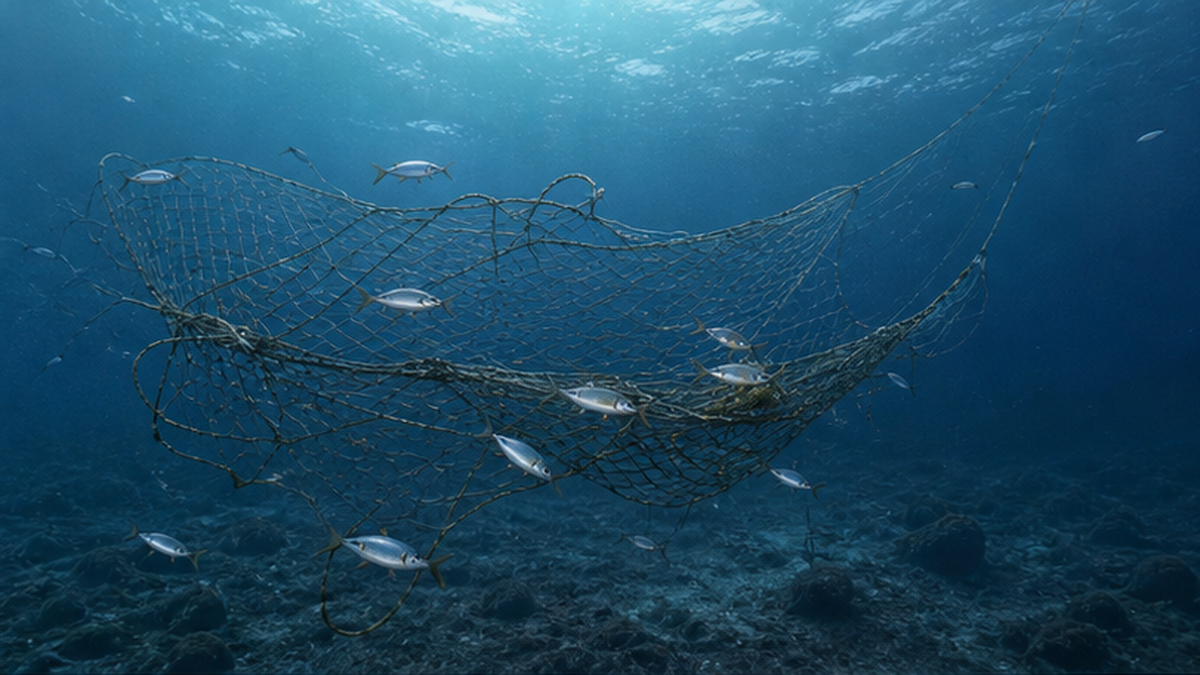
Harm caused by ghost gear
- Bycatch, suffocation, and death by exhaustion of fish, seabirds, sea turtles, and marine mammals
- Physical destruction of seafloor ecosystems such as coral reefs
- "Ghost fishing" — gear that keeps unintentionally catching fishery resources
- A chain of hazards to ship navigation and to fisheries from drifting and beached gear
How the EU Made Fishing Gear EPR Mandatory
Given the scale of this harm, the EU has moved furthest toward concrete regulation, building a framework ahead of other regions that imposes legal collection and recycling responsibility on fishing gear manufacturers.
The Single-Use Plastics Directive (Directive (EU) 2019/904)
In its Single-Use Plastics Directive, adopted in 2019, the EU required member states to establish Extended Producer Responsibility schemes for fishing gear containing plastic. Based on Articles 8 and 8a of Directive 2008/98/EC (the Waste Framework Directive), the directive places on fishing gear manufacturers the responsibility to collect and properly dispose of used gear — including broken and end-of-life gear, as well as lost gear retrieved during fishing operations.
A 50% collection rate, 15% recycling rate target
The directive requires member states with marine waters to set a minimum annual national collection rate for waste fishing gear containing plastic, imposing the specific target of a 50% collection rate and a 15% recycling rate by 2025. Member states are obligated to report implementation status to the EU, and this is seen as laying the groundwork for binding EU-wide collection targets in the future.
Who pays as the "producer"?
Under the directive, "producer" includes not only fishing gear manufacturers but also importers who place gear on the market within the EU. Many member states have adopted "eco-modulation" — adjusting fees according to how recyclable a product is — so that gear made of materials or structures that are harder to recycle carries a heavier burden for the producer.
An approach of "enforcing responsibility," not banning
Notably, while the Single-Use Plastics Directive bans the sale of certain plastic items outright — straws and cutlery among them — it takes a different approach for fishing gear, mandating collection and recycling through EPR rather than a ban. Because fishing gear is hard to substitute and carries high requirements for safety and performance, the chosen design was one of "making producers responsible after the fact" rather than "banning production."
The enforcement wall — a reality not yet fully realized
That said, a scheme existing and a scheme being effective are two different things. A question submitted to the European Parliament in 2026 pointed to enforcement of fishing gear EPR, and to remediation of gear left in the sea from the past ("legacy waste"), as areas where progress has lagged. The formal deadline for member states to report data is 2027, and at present efforts appear to vary considerably from country to country.
Fishing Gear in the UN Plastics Treaty Negotiations
Discussion of fishing gear EPR is not limited to the EU or individual national laws. Fishing gear is also one of the central issues in the negotiations, underway at the United Nations, for an international treaty on plastic pollution.
What is the INC (Intergovernmental Negotiating Committee)?
Under the United Nations Environment Programme (UNEP), an Intergovernmental Negotiating Committee (INC) aiming to draft a legally binding international treaty has met since 2022. Negotiations have proven difficult given diverging national positions, and even a resumed session (INC5.3) held in Geneva in February 2026 saw no substantive negotiation of treaty text, concluding only with the election of Chile's Ambassador Julio Cordano as the new INC Chair. The date and venue of the next session remained undetermined at the time of writing.
The debate over a standalone article on fishing gear
In draft negotiating text, an article covering the entire life cycle of fishing and aquaculture gear has emerged as one focal point. Negotiators are debating whether to include, as a standalone article, elements such as gear design, marking, loss reporting, and end-of-life management and retrieval. Organizations such as Ocean Conservancy are calling for stronger traceability for fishing gear, mandatory no-fault gear-loss reporting systems, and the inclusion of plastic fishing and aquaculture gear under all of the treaty's provisions.
Japan's position — joining the High Ambition Coalition
The Japanese government has announced its participation in the "High Ambition Coalition to End Plastic Pollution (HAC)" in the treaty negotiations. Japan has argued in negotiations that the treaty should aim to end plastic pollution with the ambition of achieving zero additional pollution by 2040, and has supported measures to curb pollution at every stage of the plastics life cycle. A coalition of Japanese companies has also formed domestically, calling on the government to help realize an ambitious international treaty. How far specific measures like fishing gear EPR are written into the treaty will depend on how the negotiations proceed.
Bringing the treaty into force will require ratification by individual countries, and even once negotiations conclude, building the necessary domestic legislation is expected to take considerable time. How far specific measures such as fishing gear EPR end up included is something that will need to be watched alongside the course of the negotiations.
Key points of the international treaty negotiations
- The INC, launched in 2022, is still negotiating a legally binding treaty (ongoing as of 2026)
- Whether to treat fishing and aquaculture gear as a standalone article is a central question
- Whether to cover design, marking, loss reporting, and collection is contested
Proposals and Support Frameworks Spreading Worldwide
Beyond the EU, international organizations and conservation groups are also pushing for fishing gear EPR and the traceability measures that underpin it.
FAO's guidelines on fishing gear marking
The Food and Agriculture Organization of the United Nations (FAO) adopted its "Voluntary Guidelines on the Marking of Fishing Gear" in 2018. Attaching identifying information to gear is meant to make it easier to trace and recover when lost, clarifying responsibility. A system capable of identifying gear owners is a foundation not only for tackling ghost gear but also for making EPR schemes function. Japan's own gear-marking efforts are one example of an initiative in line with this FAO guideline.
IUCN's policy recommendation
In a position paper published in 2021, the International Union for Conservation of Nature (IUCN) clearly recommends introducing EPR for fishing gear and ropes. It argues that when producers bear responsibility for the entire product life cycle, it becomes possible to reduce gear loss and abandonment and to advance a shift toward recyclable materials.
WWF's points on EPR design
In a 2024 report, the conservation group WWF sets out design requirements needed to make fishing gear EPR effective — clear collection targets, transparent cost sharing, and collection points that are convenient for fishers to use, among others. It notes that simply creating a scheme is not enough; the key is designing a system that makes it genuinely easy for fishers on the ground to bring back used gear.
The key to making an EPR scheme work is not the legislation itself, but whether collection points can be established that make it genuinely convenient for fishers to bring back their used gear.
— WWF, "Extended Producer Responsibility for Fishing Gear" (2024)
Norway's pioneering example — Nofir and a deposit-scheme pilot
Norway has pursued its own efforts even before EU membership was relevant. Founded in 2008, Nofir built a nationwide system for collecting and recycling used fishing nets and ropes, with a structure in place to collect and recycle gear even when the owner cannot be identified. Norway's Fisheries and Aquaculture Industry Research Fund (FHF) is also backing a pilot "deposit" scheme that gives fishers a monetary return for bringing back unwanted gear such as lobster traps, testing whether a financial incentive can raise the rate at which gear is brought ashore.
The role of the Global Ghost Gear Initiative (GGGI)
Led by Ocean Conservancy, the Global Ghost Gear Initiative (GGGI) runs pilot collection and recycling projects for fishing gear around the world, supporting the creation of mechanisms to receive gear that has reached the end of its life. Building both an EPR scheme and on-the-ground collection infrastructure together is what will determine how effective ghost gear countermeasures ultimately are.
Japan's Current State — Collection Exists, but "Producer Responsibility" Does Not Yet
So what is the situation in Japan? There is no legal EPR scheme like the EU's yet, but several measures are already in motion.
Ensuring traceability through fishing gear marking
The Fisheries Agency carries out "fishing gear marking," which makes it easier to identify the owner of abandoned or lost gear, across 468 fishery types in all 40 coastal prefectures nationwide. Attaching identifying information to gear is intended to clarify who is responsible for recovery when gear is lost. This aligns with the FAO guideline mentioned above, and could serve as a foundation for considering an EPR-type scheme in the future.
In practice, this involves methods such as attaching tags recording a vessel's name or permit number to gear, or branding it, making it easier to identify the original user if the gear is lost.
The foundation of the "Guideline for Planned Processing of Fisheries Waste"
In May 2020, the Fisheries Agency formulated the "Guideline for the Planned Processing of Fisheries Waste" to advance systematic processing of used fishing gear. It also includes support for developing and improving gear made from environmentally friendly materials, such as biodegradable plastics, to curb leakage into the ocean. At present, however, the reality is that biodegradable gear that is practical in terms of cost, strength, and durability remains limited.
The current system of collection-cost subsidies for municipalities
Under the current system, the national government subsidizes municipalities, up to a maximum of 10 million yen per year, for the cost of processing waste that fishers voluntarily collect at sea during operations. This, however, is support for "collection and processing after the fact," differing in character from the EU's EPR, which places responsibility on manufacturers from the manufacturing stage onward. Receiving the subsidy requires an application and administrative structure on the municipality's part, which has been flagged as a challenge, since it tends to create uneven levels of engagement across regions.
The Fisheries Agency's direction on resource circulation
In its "Future Approach to the Problem of Plastic Resource Circulation in Fisheries," the Fisheries Agency sets a direction asking fishing gear manufacturers and raw-material suppliers to pursue sustainable gear manufacturing that anticipates collection from production through disposal. This, however, is not a legally binding EPR scheme like the EU's, but remains positioned as encouraging voluntary efforts by businesses.
Voluntary collection efforts spreading among local cooperatives and municipalities
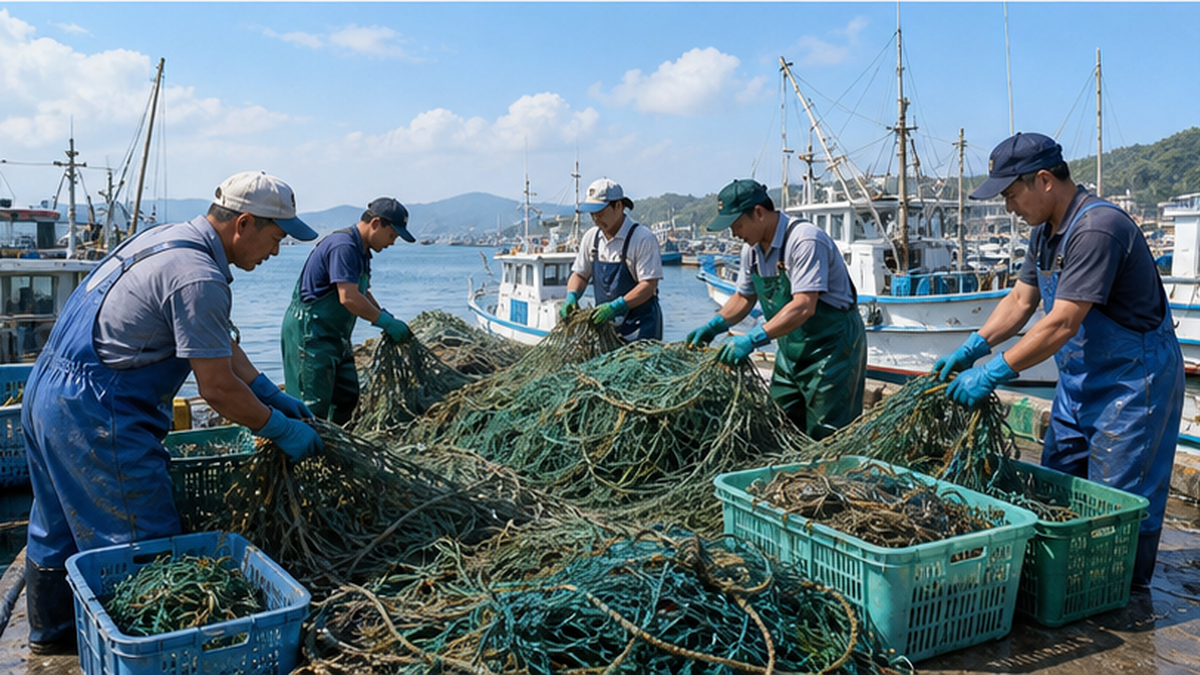
Without waiting for legislation, local fishing cooperatives and municipalities in various areas have set up their own collection points and are handing used gear over to recycling operators. Such grassroots practice could become the foundation of collection infrastructure if an EPR-type scheme is introduced in the future.
| Item | EU | Japan |
|---|---|---|
| Legal basis | Single-Use Plastics Directive, Directive (EU) 2019/904 | No legal EPR scheme (mainly administrative guidance, subsidies, and guidelines) |
| Scope | Fishing gear containing plastic in general | Fishery types covered by gear marking; municipalities eligible for collection-cost subsidies |
| Numerical targets | 50% collection, 15% recycling (to be achieved by 2025) | No statutory numerical targets |
| Who bears the cost | Fishing gear manufacturers (producers) | Municipalities (using national subsidies) |
| Related system | Eco-modulation (environmentally adjusted fees) | Guideline for Planned Processing of Fisheries Waste (2020) |
The essential difference between Japan and the EU
- EU: legal collection and recycling obligations and numerical targets for fishing gear manufacturers
- Japan: measures centered on fishers and municipalities, with producers' legal responsibility not yet in place
- Common ground: both share the foundation of ensuring traceability through fishing gear marking
What Changes with EPR — Points of Debate
If fishing gear EPR is fully introduced, it will bring change to fishing operations on the ground and to how manufacturers design their products. At the same time, points of debate remain to be resolved.
How to hold down the cost burden on fishers and small manufacturers
The cost of fishing gear EPR is likely to be passed on, in the end, to gear prices. For fishers and small gear manufacturers with limited financial resources in particular, rising costs could squeeze their operations. In the EU's own system design, leveling out the cost burden and phasing in the rules gradually have been debated as points of concern.
Shifting toward gear designed to be recycled
If EPR functions as intended, manufacturers will begin to factor "ease of collection and recycling" into product design from the outset. This could drive change in fishing gear itself — moving toward single-material construction, structures that are easier to take apart, and greater use of biodegradable materials.
Developing biodegradable gear — the example of Eco-FADs
Since fiscal year 2018, the Fisheries Agency's Research and Development Center has designed "Eco-FADs" — fish aggregating devices made of biodegradable material with a structure that reduces entanglement of sharks, sea turtles, and other marine life — and has been conducting release trials in the eastern Indian Ocean and the central-western tropical Pacific. If a scheme such as EPR gives producers an incentive toward environmentally conscious design, such technology development could be further encouraged.
Japan's Home Appliance Recycling Law has been in operation for over two decades since its enactment in 1998, and has built up a track record of operational challenges and improvements — how recycling fees are collected, measures against illegal dumping, and so on. In considering fishing gear EPR, this experience from an existing field — transparency in fee-setting, ease of access to collection points, effective enforcement measures for violations, and more — could serve as a useful reference.
Who bears the cost, and how
Establishing collection points, and covering transport, sorting, and reprocessing, all carry real costs. How costs and roles are divided among producers, fishers, municipalities, and the national government sits at the core of scheme design.
Winning the understanding and cooperation of fishers
For a scheme to be effective, it also matters whether fishers themselves perceive a benefit. Without accessible collection points for gear brought ashore, and some form of incentive design tied to collection, on-the-ground behavior is unlikely to change through legislation alone. WWF's report likewise stresses the importance of building a system that can win fishers' cooperation.
Questions raised by scheme design
- Consideration for the cost burden on small fishers and manufacturers
- Whether collection points can be set up close to the field, at fishing ports
- How to encourage a shift toward materials and structures that are easier to recycle
- The cost and durability barriers to putting biodegradable materials into practical use
From the Front Lines of Fishing Net Recycling
Even before a scheme such as EPR is in place, efforts to regenerate discarded fishing nets as a resource are already underway within Japan.
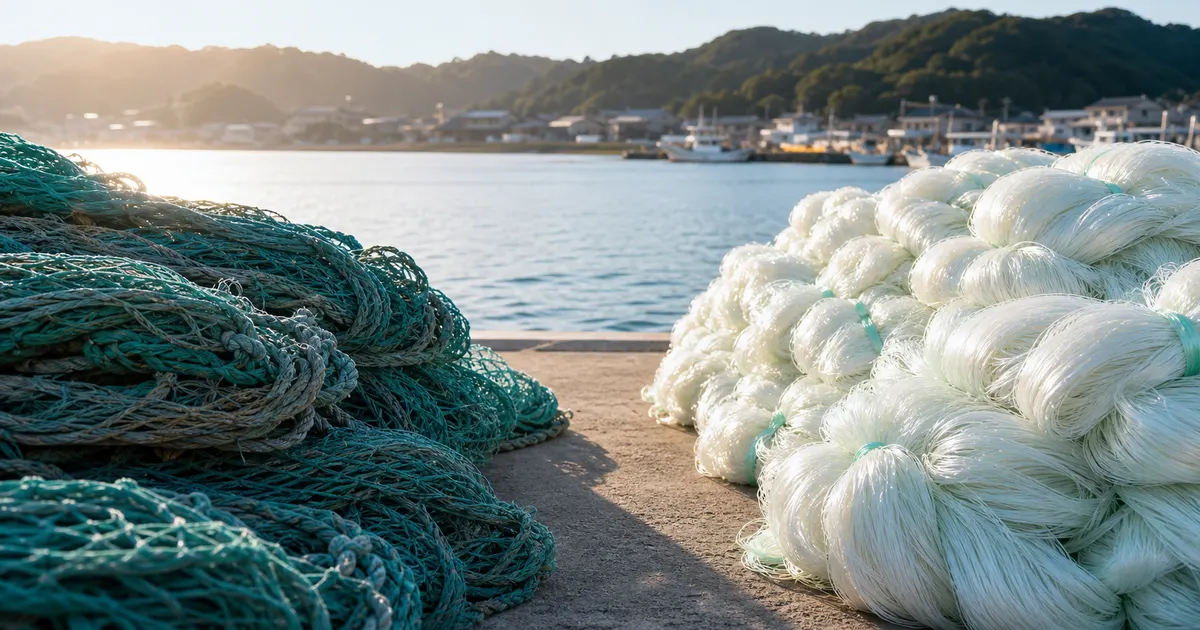
Recycled nylon born from discarded fishing nets
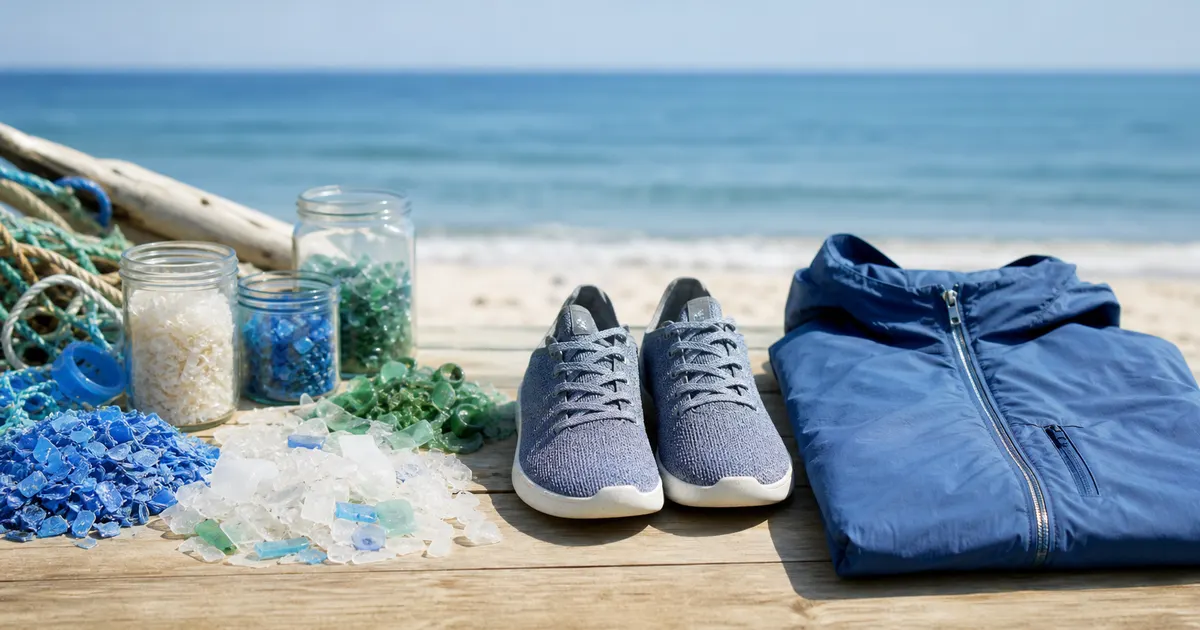
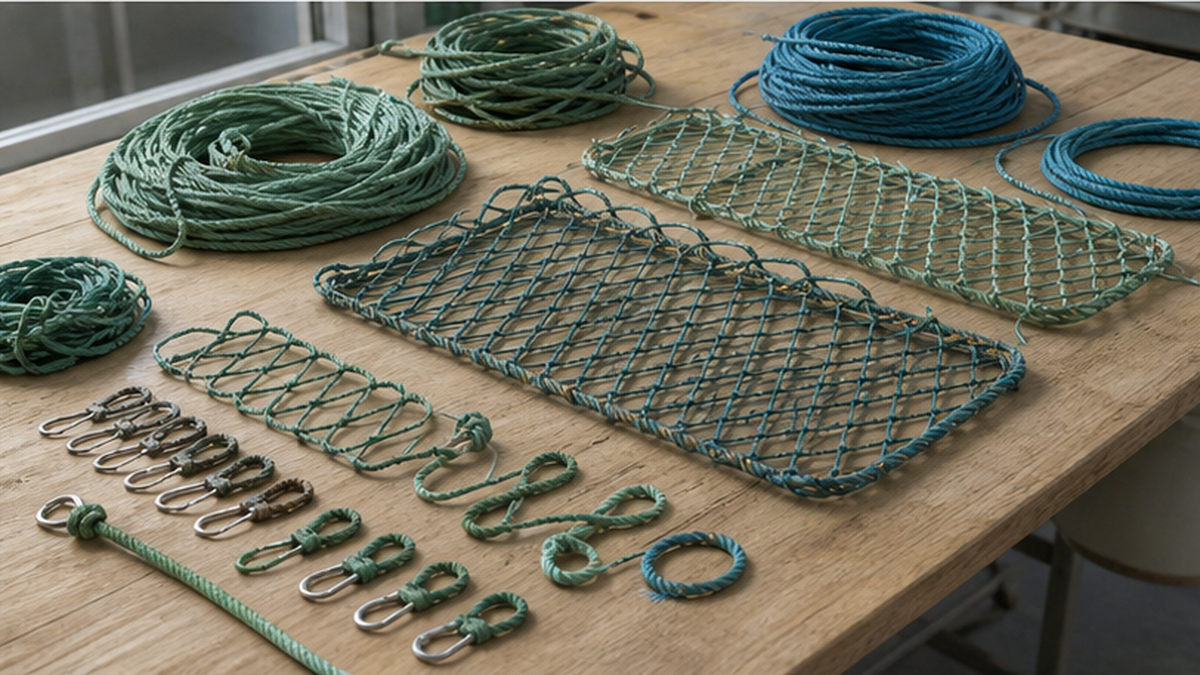
Refinverse Inc., a resource-recycling company, uses proprietary technology to wash and refine discarded fishing nets into recycled nylon resin called "REAMIDE." According to the company, recycled nylon derived from used fishing nets can cut CO2 emissions by about 85% compared with virgin material. The recycled nylon resin it produces is also supplied to Toray Industries, and its use is spreading into apparel materials such as buttons.
Fishing-net recycled materials spreading into furniture too
Okamura, a major office furniture maker, is developing products under its "Renet" line using recycled material sourced from discarded fishing nets. Its effort to reuse nets — once treated simply as waste — as components in chairs and partitions shows that fishing-gear recycling is expanding beyond textiles and apparel into furniture and building materials as well.
Fishing-net recycled materials spreading overseas too
Looking abroad, Bureo, based in California, collects discarded fishing nets directly from fishing communities in Chile and processes them into a recycled nylon material called "NetPlus®." The company markets its material as 100% post-consumer recycled and 100% traceable, supplying it for use in sunglasses, skateboards, and Patagonia apparel products, among others. For more, see A Close Look at Patagonia's NetPlus: How Discarded Fishing Nets Become Hats and Jackets.
More on fishing net recycling
For the detailed process by which discarded fishing nets are transformed into clothing and automotive parts, see our Complete Guide to Used Fishing Net Recycling: The Cutting Edge of Recycled Nylon and Ghost-Gear Countermeasures. If a scheme like EPR leads to a stable supply of recyclable material, such businesses' efforts stand to expand further.
Recycled materials spreading, and feedback into design
Fishing-net recycling efforts like these are also being explored for uses beyond textiles, apparel, and furniture — extending into automotive parts and everyday goods. If the quality and supply volume of recycled material becomes stable, gear manufacturers will find it easier to move toward designs that anticipate recycling from the start, creating a mutually reinforcing relationship between EPR-type schemes and technology development.
What We Can Do — And What Lies Ahead
Fishing gear EPR may look like an issue for fishers, manufacturers, and government, but it involves consumers too. There are things we can do right now, without waiting for a scheme to be put in place.
Choosing products made from recycled materials
Choosing apparel, accessories, and furniture made from recycled nylon and other materials derived from discarded fishing nets helps sustain demand in the recycled-materials market, keeping the collection-and-reprocessing cycle turning.
Reducing washed-up gear through beach cleanups
Taking part in efforts to collect gear that has washed up on shore is also a direct way to reduce the harm caused by ghost gear. The idea of the circular economy is also a useful reference when thinking about the resource circulation of fishing gear.
What municipalities and local businesses can do
It is not only individual action that matters — municipalities and local fisheries-related businesses can play a major role too. Setting up collection points at fishing ports, and securing processing routes in partnership with local fishing cooperatives, are steps that can begin even before a legal EPR scheme is in place. Municipalities already making use of national subsidy programs offer useful reference points for other regions starting out.
Building mechanisms to expand such local-level practice more widely — sharing successful examples, subsidizing initial costs — will also matter alongside the legislative debate.
Keeping an eye on where the system is headed
In Japan too, fishing gear EPR could well be taken up in future policy discussions related to the circular economy. How the EU's scheme performs in practice should serve as an important reference point when Japan considers its own system design. Given the existing foundations of gear marking and processing guidelines, development toward a legal EPR scheme is by no means unrealistic.
Summary of this article
- Ghost gear is estimated to account for up to a tenth of ocean plastic waste by weight, and by some estimates as much as 86% in offshore waters
- The EU has introduced an EPR scheme requiring a 50% collection rate and 15% recycling rate for fishing gear by 2025
- Japan's efforts center on gear marking, processing guidelines, and collection-cost subsidies, with no legal EPR scheme yet
- Gear designed to be recycled, and businesses that reprocess discarded fishing nets, are already advancing domestically
References and sources
- Fisheries Agency of Japan, "Measures Against Marine Plastic Waste (Fisheries Sector Efforts)" – Overview of Japan's measures, including gear marking and collection-cost subsidies
- Fisheries Agency of Japan, "The Situation and Measures Concerning Ocean Plastic Waste in Fisheries" – Data on the actual state of fisheries-related plastic waste and countermeasures (May 2025)
- EUR-Lex, "Directive (EU) 2019/904" (Single-Use Plastics Directive) – The treaty text establishing EPR for fishing gear
- European Parliament, "Enforcement of EPR for fishing gear and remediation of legacy waste" – A 2026 question on enforcement status
- IUCN, "Position paper: Advocating Extended Producer Responsibility for fishing gear" – A policy document advocating EPR for fishing gear and ropes
- WWF, "Extended Producer Responsibility for Fishing Gear" (2024) – A report organizing the design questions around EPR schemes
- Ocean Conservancy, "New Report Offers Policy Solutions for … Ghost Gear" – A policy report on ghost gear countermeasures
- atpress, "Refinverse begins supplying Toray with recycled nylon resin" – An example of a recycled-nylon business built on discarded fishing nets
- Ministry of the Environment, Japan, "Treaty on Measures Against Plastic Pollution, Including Ocean Plastic Pollution" – Information on the Japanese government's negotiating stance and its participation in the High Ambition Coalition
- National Institute for Environmental Studies, "The Introduction and Development of Extended Producer Responsibility (EPR) — the OECD's New Guidance Manual" – An explanation of the origin of EPR and the OECD guidance manual
- UNEP, "Intergovernmental Negotiating Committee on Plastic Pollution" – The official information page for the UN plastics treaty negotiations (INC)
- World Fishing & Aquaculture, "Norway's fishing gear clean-up breaks records" – Norway's Nofir and its fishing-gear collection and recycling efforts
※ Listed in order of reliability: government and academic institutions > peer-reviewed papers > specialist organizations > trusted media