⚡ In short
Offshore green hydrogen is made by using offshore wind power to electrolyze seawater. We explain how Power-to-Gas works, global demonstrations, the cost hurdle, and Japan's policy targets with the latest data.
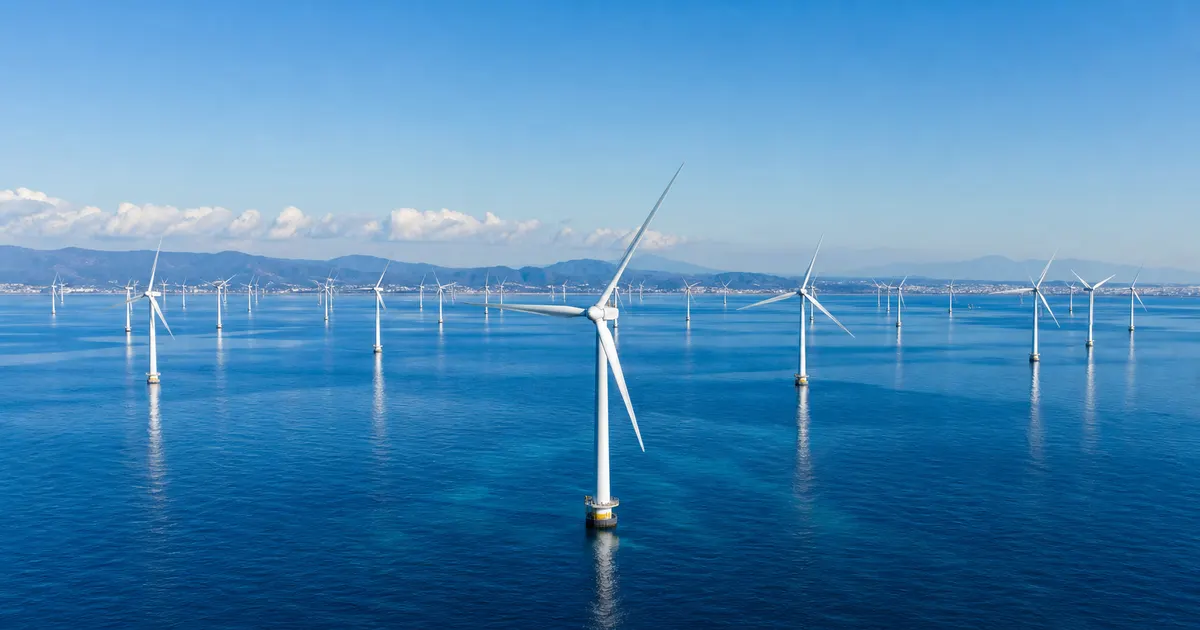
Instead of sending the electricity from rows of offshore wind turbines straight down a transmission cable, what if you split seawater into hydrogen right there on the spot? That is the idea behind "offshore green hydrogen," a concept now entering the demonstration stage off the coasts of the North Sea and elsewhere in Europe.
Behind the idea lies a familiar renewable-energy headache: what to do with electricity you cannot easily use. The best sites for offshore wind tend to be shallow, windy waters that are often far from the onshore grid. Rather than laying cable after undersea cable, it can make more sense to convert the power into hydrogen — an energy carrier that can actually be transported — right at the source. This is the logic behind Power-to-Gas (technology that converts electricity into a gaseous fuel), and offshore green hydrogen is essentially its ocean-going version.
This article lays out how offshore green hydrogen works, why it is drawing attention, where demonstration projects around the world and in Japan currently stand, and the biggest obstacle of all — cost — based on public-sector documents and the latest pilot projects.
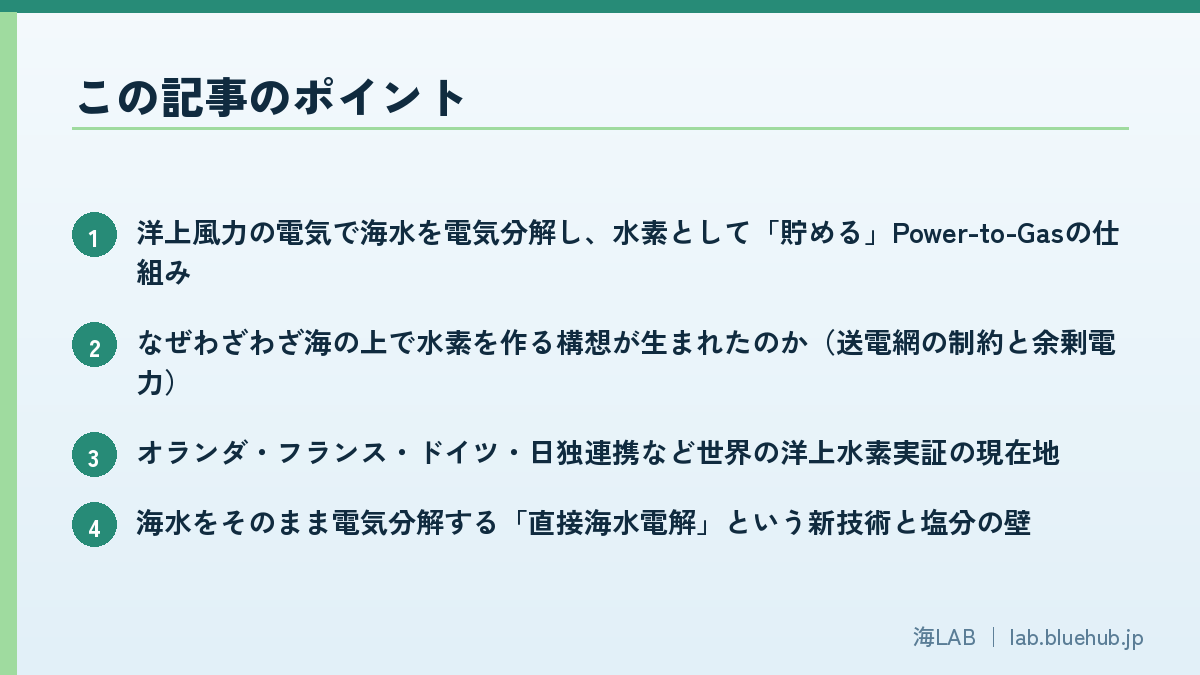
What you'll learn from this article
- How offshore wind power can be used to split seawater into hydrogen and "store" it through Power-to-Gas
- Why anyone would bother making hydrogen out at sea in the first place (grid constraints and surplus power)
- Where offshore hydrogen demonstrations stand today in the Netherlands, France, Germany, and a Japan-Germany partnership
- Direct seawater electrolysis, a new technology that skips desalination, and the salt problem it must solve
- The cost targets in Japan's Basic Hydrogen Strategy versus the cost levels seen in practice
- The infrastructure, cost, and regulatory hurdles that remain before this can go mainstream
What Is Offshore Green Hydrogen?
"Green hydrogen" is hydrogen produced by electrolyzing water using electricity from renewable sources such as solar and wind. Because no CO2 is emitted during production, it is distinguished from "grey hydrogen" made by reforming fossil fuels, and from "blue hydrogen," in which the CO2 released during that reforming process is captured.
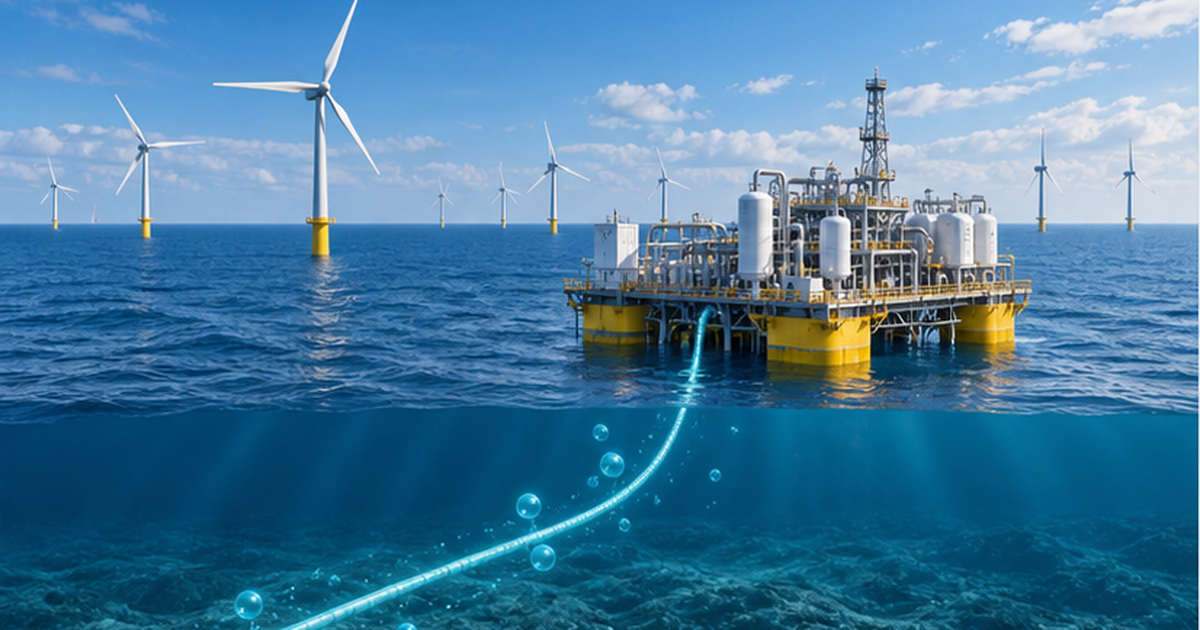
"Offshore green hydrogen" refers to the idea of carrying out this electrolysis not on land but out at sea, right next to offshore wind turbines. Instead of carrying the electricity generated by the turbines to shore by cable, it is fed on the spot to an electrolyzer installed on an offshore platform and converted into hydrogen. The hydrogen produced is stored in tanks and then carried ashore by ship or pipeline.
The Power-to-Gas Idea
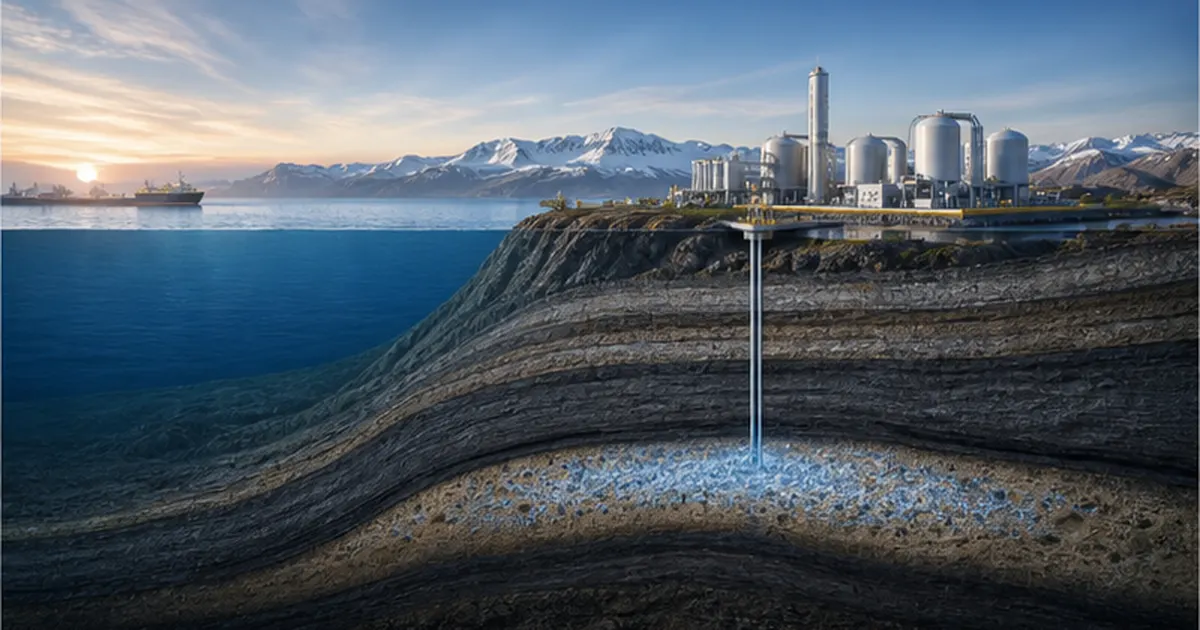
Technology that converts electricity into a gaseous fuel for storage and transport is collectively known as "Power-to-Gas" (P2G). Electricity is an energy form that is hard to store in bulk, but once converted into hydrogen gas it can be stored and transported in tanks or pipelines, then used later in fuel cells, thermal power generation, or as an industrial heat source. Offshore green hydrogen is an attempt to complete this Power-to-Gas process right at the "front line" of renewable power generation — out at sea.
Three Main Types of Water Electrolysis
There are several types of electrolyzer used to split water, each with its own strengths. Which type gets installed on an offshore platform depends on cost, durability, and how well it can track the fluctuating output of wind power.
| Type | Characteristics | Role in offshore use |
|---|---|---|
| Alkaline electrolysis | Long track record, low cost, no need for precious-metal catalysts, and highly durable | Easy to scale up with a strong track record, though response speed is somewhat slow |
| PEM electrolysis (polymer electrolyte membrane) | Easy to make compact and responds quickly to fluctuating wind output | Widely adopted in offshore demonstrations such as Sealhyfe |
| SOEC (solid oxide electrolysis cell) | Splits steam at 700-800°C, giving high conversion efficiency | Highly efficient but needs a source of waste heat; still rarely demonstrated offshore |
A Natural Fit with Floating Offshore Wind
Part of what is driving interest in offshore green hydrogen is that offshore wind itself is expanding from "fixed-bottom" turbines to "floating" ones. Fixed-bottom turbines, anchored to the seabed, are generally limited to water depths of around 50 meters, whereas floating turbines can be installed in much deeper water further offshore, where stronger, steadier winds are easier to find. But the further offshore a site is, the higher the transmission cost — so as floating wind expands, so does the case for converting that power into hydrogen on the spot.
Grey, Blue, and Green Hydrogen: What's the Difference?
- Grey hydrogen: made by reforming natural gas and similar feedstocks; emits CO2 (roughly $1-2/kg)
- Blue hydrogen: grey hydrogen production with the resulting CO2 captured and stored (roughly $1.5-3/kg)
- Green hydrogen: made by electrolysis powered by renewable electricity; zero CO2 emissions (roughly $3-8/kg)
Why Make Hydrogen "Offshore" at All?
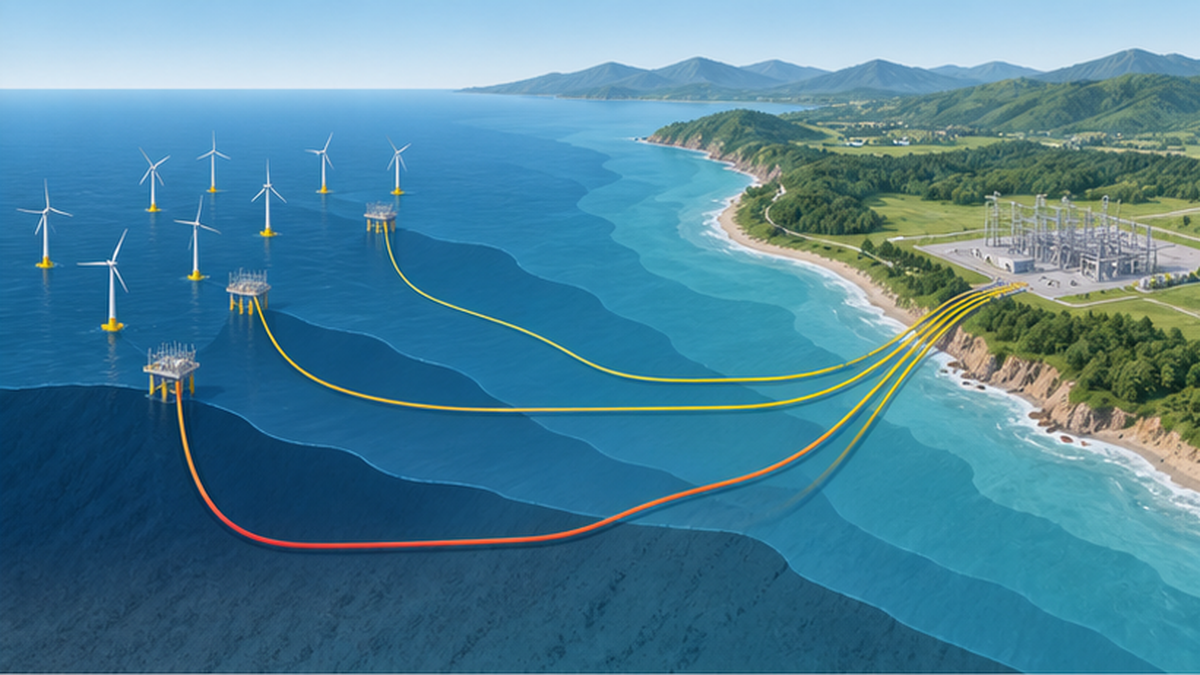
The shallow, windy waters best suited to offshore wind are often far from where the power is actually needed. Getting that electricity to shore requires subsea cables and substations, which are among the costliest parts of any offshore wind project — and the further offshore and deeper the water, the higher the cost and technical difficulty of laying cable becomes.
The Wall of Grid Capacity Constraints
In Japan too, prime offshore wind sites off Hokkaido and Tohoku are often far from the major cities where power demand is concentrated. A lack of spare capacity on the transmission grid — known as a "grid constraint" — has become a bottleneck to expansion: a wind farm can generate power only to find the lines already full, or face years of waiting for new transmission capacity to be built.
The Real Cost of Subsea Cables
Offshore wind subsea transmission cables are said to cost roughly ¥100-200 million per kilometer including installation, and at the offshore wind farm off Noshiro, Akita Prefecture, cable-related costs alone reportedly accounted for 10-20% of the entire project budget. Much of the seabed around Japan is far more rugged than typical European sites, and some projects have seen costs run more than 30% over initial estimates. The fact that cost figures from overseas do not simply transfer to Japan is one reason offshore green hydrogen is being studied domestically.
Hydrogen Opens Up More Ways to Move Energy
Converting power into hydrogen instead of sending it as electricity opens up options that do not depend on transmission lines — repurposing an existing subsea pipeline, or shipping it by tanker or truck. Hydrogen can also serve as a feedstock for chemicals and ammonia, giving it a broader range of uses than electricity alone. Being able to store "surplus power" — generated when strong winds push output above demand — as hydrogen instead of discarding it is also valued as a tool for balancing supply and demand on the grid.
In fact, solar and wind farms across Japan are already routinely subject to "output curtailment," in which generation is forcibly reduced once it exceeds demand. This effectively means throwing away renewable power that has already been generated — a waste from the grid's point of view. Offshore green hydrogen is also positioned as a way to capture this potentially curtailed surplus power as hydrogen instead of wasting it.
Direct Seawater Electrolysis: Splitting Seawater As-Is
Electrolyzing water has traditionally required fresh water with impurities removed. Seawater contains large amounts of sodium and chloride ions, and electrolyzing it directly tends to corrode electrodes and produce toxic chlorine gas as a byproduct. Most offshore hydrogen concepts to date have therefore first desalinated seawater into fresh water before electrolyzing it.
Research into Skipping Desalination
Research into skipping the desalination step altogether and electrolyzing seawater directly — known as "direct seawater electrolysis" — is underway around the world. The focus is on developing electrode surface treatments, improved membranes, and catalyst materials that suppress chlorine formation and resist corrosion. If it succeeds, desalination equipment becomes unnecessary altogether, allowing for a more compact offshore platform — though much of the technology remains at the laboratory or small-scale demonstration stage.
Non-Precious-Metal Catalysts Under Development in Japan
Electrolyzing seawater directly at the anode produces not just oxygen but also chlorine gas and hypochlorous acid derived from chloride ions. To avoid this, expensive precious-metal electrodes made of platinum or iridium have traditionally been used, but a research group at Yamaguchi University has announced a non-precious-metal catalyst that extracts only oxygen and hydrogen without generating chlorine. Groups at Nagoya University and the University of Tsukuba have likewise reported developing durable base-metal alloy electrodes capable of producing hydrogen from seawater, adding to a body of domestic research aimed at seawater electrolysis that does not rely on costly precious metals.
The Harsh Reality of a Rolling Sea
Water chemistry is not the only offshore challenge. Platforms are constantly rocked by waves and currents, making it harder than on land to separate gas from liquid inside the electrolyzer. Resistance to typhoons and high waves, along with ease of remote monitoring and maintenance, remain design challenges that land-based plants simply do not face, and research continues on all of them.
Desalination Also Raises an Environmental Question: Brine
The currently dominant approach — desalinate first, then electrolyze — raises a separate environmental question. Desalinating seawater with reverse-osmosis (RO) membranes and similar methods produces large volumes of concentrated wastewater, or "brine," that is saltier and warmer than ordinary seawater. Marine life can struggle to survive near discharge points, and chemicals such as scale inhibitors and anti-fouling agents contained in the brine have been flagged as a potential threat to the surrounding marine ecosystem. More than 16,000 desalination plants are already estimated to be operating worldwide, and as offshore green hydrogen expands, attention will need to be paid to how brine is dispersed and diluted and to the ecosystems near discharge sites. If direct seawater electrolysis becomes practical, it would eliminate the desalination step altogether, offering one potential solution to the brine problem.
Mitigation measures already being pursued elsewhere include diluting brine with large volumes of seawater before release, and combining desalination itself with solar or wind power in what is called "green desalination." Because offshore green hydrogen is powered primarily by renewable energy to begin with, it is a natural fit with this kind of green desalination.
Offshore Green Hydrogen Demonstration Projects Around the World
Centered on the North Sea coast of Europe, several offshore green hydrogen demonstration projects are already underway.
PosHYdon (Netherlands)
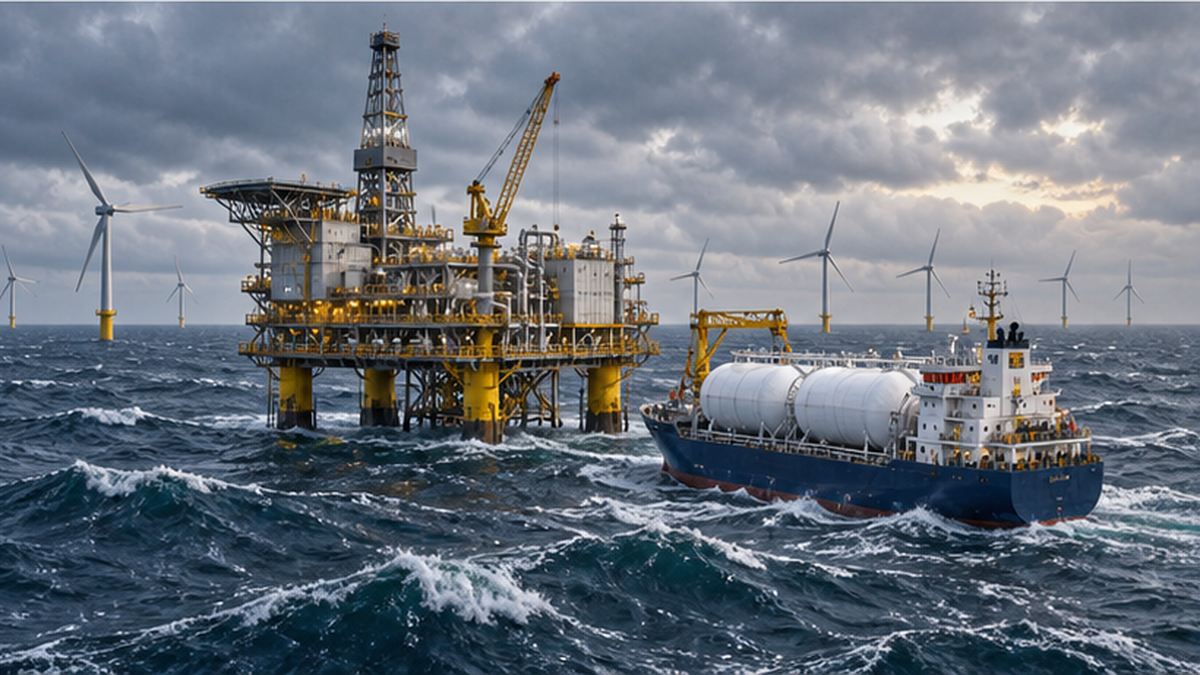
PosHYdon is a demonstration project that installs an electrolyzer on Eni's existing "Q13a" platform, more than 10 km off the coast of The Hague in the North Sea, to produce green hydrogen from wind and solar power. Reusing existing offshore infrastructure is one of its distinguishing features, keeping down the cost of building large new facilities from scratch. The Dutch government has gone a step further, requiring bidders in North Sea offshore wind tenders to include a 500 MW offshore electrolyzer.
Sealhyfe (France)
Sealhyfe, a floating demonstration project in France, mounts a 1 MW-class PEM (polymer electrolyte membrane) electrolyzer made by Plug on an offshore platform, with a capacity of up to 400 kg of hydrogen per day. It began offshore operation in 2022 and has been accumulating operating data in real sea conditions with waves and currents. Lhyfe, the French company running the project, has said that building on lessons from this trial, it plans to roll out larger offshore and onshore sites with a green hydrogen production capacity of 22 tonnes per day by the end of 2024 and 80 tonnes per day by 2026.
Germany's Designated Zones and a Japan-Germany Partnership
The German government has already designated zones within its own North Sea territorial waters for green hydrogen projects as large as 1 GW, securing sea space at the national level to push forward the commercialization of offshore hydrogen. On the Japanese side, trading company Zenei Shoji (Setagaya, Tokyo) has reportedly partnered with the German company Cuxhaven Offshore, working together with Kyushu University, the Hamburg University of Technology, and the Friedrich-Alexander University Erlangen-Nuremberg to set up a joint venture in 2026. The plan applies floating offshore wind technology, collecting hydrogen produced by seawater electrolysis by ship, with commercial operation targeted for the early 2030s following demonstration trials in Europe.
Japan's Own Trial: Making Hydrogen While Under Sail with "WindHunter"
Japan has its own distinctive trial for making green hydrogen from offshore wind. Mitsui O.S.K. Lines' "WindHunter Project" uses wind power to propel a vessel while an underwater turbine generates electricity, which then electrolyzes purified water derived from seawater to produce hydrogen; the hydrogen is further reacted with toluene to form methylcyclohexane (MCH), a liquid that is easy to handle at room temperature. Following trials in Omura Bay, Nagasaki Prefecture (fiscal 2021-2023), the demonstration vessel "Winds Maru" moved its operations to Tokyo Bay, and in March 2025 the project announced what it called the world's first supply to shore of green hydrogen produced aboard a ship while underway. In June 2025 it was also selected for a NEDO subsidy program.
Separately, off the Goto Islands in Nagasaki Prefecture, a Ministry of the Environment floating offshore wind demonstration project in fiscal 2014-2015 already carried out trials of producing, storing, and transporting hydrogen using power from wind turbines. In the same waters, an industry consortium including Toda Corporation, ENEOS, Osaka Gas, and INPEX is pursuing the expansion of floating offshore wind, and is also examining a future concept for a hub that would carry hydrogen made from the generated electricity ashore.
Interest Spreading to Asia and North America
The interest is not confined to Europe and Japan. In South Korea, major builder Hyundai Engineering & Construction has partnered with Germany's RWE on a green hydrogen production project that combines its own water electrolysis technology with RWE's expertise in hydrogen. The South Korean government itself has set a target of 24 GW of offshore wind by 2036 and in 2024 launched clean-hydrogen institutions — a clean hydrogen certification scheme and a clean hydrogen power auction — to go alongside it. In the United States, the National Renewable Energy Laboratory (NREL) and others have been studying the cost of producing hydrogen from offshore wind off the New York Bight on the East Coast, reporting that shallower, windier sites offer the best economics.
Key Points to Remember
- PosHYdon (Netherlands) reuses an existing offshore platform for its demonstration
- Sealhyfe (France) is a floating 1 MW-class electrolysis plant producing 400 kg of hydrogen a day
- Germany has designated a 1 GW-scale zone in its North Sea waters for green hydrogen
- In Japan, Zenei Shoji and Germany's Cuxhaven Offshore plan to set up a joint venture in 2026
Japan's Basic Hydrogen Strategy and Offshore Wind Targets
In June 2023 the Japanese government revised its "Basic Hydrogen Strategy," setting a target of introducing 12 million tonnes of hydrogen annually by 2040. It also set cost targets for production, aiming to cut the price of hydrogen — currently around ¥100/Nm³ — to ¥30/Nm³ by 2030 and ¥20/Nm³ by 2050.
An Onshore Precedent: The Fukushima Hydrogen Energy Research Field
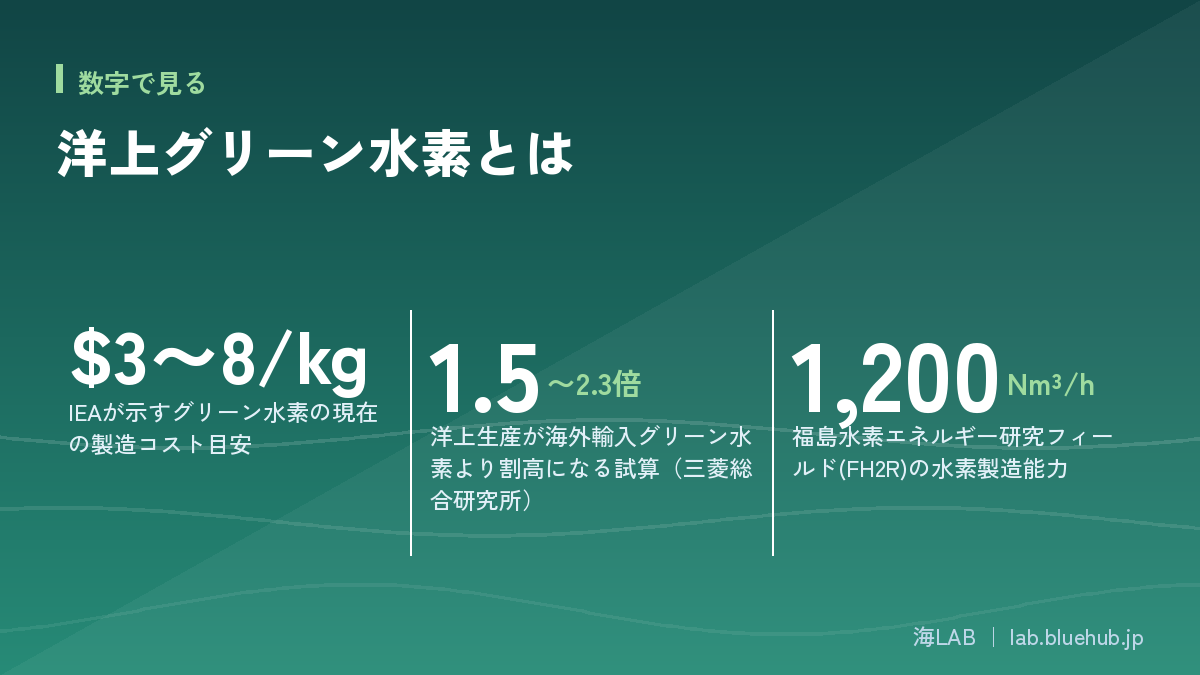
Although not offshore, Japan's leading precedent for renewable-hydrogen production is the "Fukushima Hydrogen Energy Research Field (FH2R)" in Namie, Fukushima Prefecture. Brought online in 2020 by NEDO, Toshiba Energy Systems, Tohoku Electric Power, and Iwatani Corporation, the facility pairs a 20 MW solar array with a 10 MW electrolyzer and can produce 1,200 Nm³ of hydrogen an hour at rated output, making it, at the time, one of the world's largest renewable-hydrogen production sites. It was also built to test an operating model that balances hydrogen production and storage with grid supply and demand using hydrogen alone, without batteries.
The Overlap with Offshore Wind Deployment Targets
Japan has also set a government target of forming 30-45 GW worth of offshore wind projects by 2040 (see our article on the difference between fixed-bottom and floating turbines and Japan's deployment targets for more detail), with demonstrations of floating turbines for deeper waters proceeding alongside fixed-bottom projects. Offshore green hydrogen is positioned within this context — as a way to make good use of the power generated once floating offshore wind expands into remote waters further from shore.
Overlap with "Offshore Wind Promotion Zones"
Under Japan's Act on Utilization of Sea Areas for Development of Marine Renewable Energy Power Generation Facilities, the government has already designated several sea areas — including waters off Goto in Nagasaki Prefecture, off Akita Prefecture, and off Choshi in Chiba Prefecture — as "offshore wind promotion zones" and is soliciting operators to build there. Offshore hydrogen demonstrations, too, tend to be considered in and around these promotion zones, or in waters where the Ministry of the Environment or the Ministry of Economy, Trade and Industry have already run past demonstration projects, since areas with existing wind infrastructure and a track record of coordination with fishing communities present a relatively lower hurdle for bringing in new hydrogen equipment.
How Japan's Targets Compare Abroad
Looking abroad, the EU's 2022 "REPowerEU" plan set a target of 10 million tonnes of renewable hydrogen produced within the EU plus 10 million tonnes imported by 2030 — 20 million tonnes in total. The European Commission estimates that the domestic-production portion alone would require around 500 TWh of renewable electricity, with North Sea offshore wind positioned as a major supply source. Compared with Japan's 2040 target of 12 million tonnes, the global race to secure renewable hydrogen, offshore production included, looks set to intensify.
The Biggest Obstacle Is Cost
Many analyses suggest that the biggest hurdle facing offshore green hydrogen is cost rather than the technology itself. According to the International Energy Agency's (IEA) "Global Hydrogen Review," most green hydrogen projects that have reached a final investment decision fall in the range of roughly $3-8 per kilogram — still more expensive than fossil-fuel-based grey hydrogen (around $1-2/kg) or blue hydrogen with CO2 capture (around $1.5-3/kg). The IEA once projected that green hydrogen could cost as little as $1.6/kg by 2030 under the best conditions, but has since revised that outlook upward in the face of higher-than-expected construction and equipment costs.
Offshore Production Tends to Be Even More Expensive
A 2026 report by the Mitsubishi Research Institute, "The Potential of Domestic Green Hydrogen from Offshore Wind," estimates that hydrogen produced using offshore wind within Japan would cost 1.5 to 2.3 times as much as imported green hydrogen. That gap reflects the high cost of building and maintaining equipment at sea, the still-immature state of direct seawater electrolysis technology, and the manufacturing cost of the electrolyzers themselves. At the same time, the report notes that this needs to be weighed against the value of reducing import dependence from an energy-security and economic-security standpoint.
Betting on Mass Production to Cut Electrolyzer Costs
Under NEDO's Green Innovation Fund program, targets have been set to bring electrolyzer equipment costs down to ¥52,000/kW for alkaline systems and ¥65,000/kW for PEM systems by 2030, with demonstrations proceeding on 100 MW-class large systems. As mass production and scale-up of the equipment itself progress, the overall cost of green hydrogen — offshore and onshore alike — is expected to fall.
How It Compares with Simply Storing Electricity
Besides converting surplus renewable power into hydrogen, another option is to store it as electricity in batteries. Batteries can charge and discharge electricity with relatively little conversion loss, but storing large amounts for long periods tends to be costly. Hydrogen, though it loses some energy in the conversion process, can be stored for long periods in tanks or underground caverns and used for industrial purposes beyond power generation. Neither option is a silver bullet on its own — the emerging consensus is to choose, or combine, whichever fits the storage duration and intended use.
A National Price-Gap Support Scheme Helps Too
In Japan, the Hydrogen Society Promotion Act (formally, the Act on the Promotion of Supply and Use of Low-Carbon Hydrogen and Similar Products for a Smooth Transition to a Decarbonized Growth-Oriented Economic Structure), enacted in May 2024 and effective from October 2024, has launched a "price-gap support" scheme under which the government subsidizes the price difference between existing fossil fuels and low-carbon hydrogen. Support covers not only domestic production costs but also the cost of shipping hydrogen produced overseas by sea, with funding provided to certified operators who jointly file a supply plan as a supplier and a user. For a technology as costly as offshore green hydrogen, this kind of public support matters a great deal on the road to commercialization.
To qualify, a supplier and a user must jointly have their plan certified by the competent minister, committing to a continuous supply of low-carbon hydrogen over a set period. In other words, lining up a committed user in advance, and building a joint business plan around them, is the fastest route for a new supply source like offshore green hydrogen to secure support and reach commercialization sooner.
| Hydrogen type | Production method | Approximate cost (per kg) |
|---|---|---|
| Grey hydrogen | Reforming natural gas, etc. | $1-2 |
| Blue hydrogen | Reforming plus CO2 capture and storage | $1.5-3 |
| Green hydrogen (onshore) | Electrolysis using renewable electricity | $3-8 |
| Green hydrogen (offshore) | Offshore wind plus seawater electrolysis | Even higher than onshore green hydrogen (estimated 1.5-2.3x) |
Who Would Actually Use It: Industrial Uses and New Power Demand
The main uses envisioned for offshore green hydrogen include "hydrogen-based direct reduction" steelmaking (using hydrogen instead of coke as the reducing agent to sharply cut CO2 emissions), feedstock for ammonia and methanol in the chemical industry, and fuel for fuel-cell vehicles and forklifts. All are fields where electrification alone struggles to cut CO2, making hydrogen a viable alternative.
A New Source of Demand: AI Data Centers
One newly prominent source of demand is the rapidly growing electricity appetite of data centers driven by the spread of generative AI. AI-focused data centers are said to have entered a "gigawatt era," with a single facility sometimes requiring as much power as a nuclear reactor, and the world faces a growing shortage of power sources that can supply that scale reliably and without carbon emissions. Some see green hydrogen from offshore wind, used in fuel cells or hydrogen power generation, as a way to meet all three requirements — reliability, decarbonization, and scale. Tractebel, the Belgian arm of French energy major Engie, is reportedly exploring the commercialization of offshore hydrogen on the U.S. East Coast and in Europe, and using hydrogen to power data centers is emerging as one of its more important future applications.
| Field of use | Example application |
|---|---|
| Steel | Used in place of coke in hydrogen-based direct reduction to cut blast-furnace CO2 |
| Chemicals | Feedstock for chemical products such as ammonia and methanol |
| Transport | Fuel for fuel-cell vehicles (FCVs), fuel-cell forklifts, and ships |
| Power / data centers | Large-scale, stable power supply via hydrogen power generation and fuel cells |
The Next Challenge: Storage and Transport Infrastructure
Even if hydrogen can be produced offshore, it will not become practical unless there is a safe, efficient way to get it ashore. Three main transport methods are being considered for offshore green hydrogen.
- Repurposing and upgrading existing subsea pipelines for hydrogen transport
- Collecting compressed or liquefied hydrogen periodically by tanker or supply vessel
- Converting hydrogen into a "carrier" such as ammonia or methylcyclohexane (MCH) for transport at close to room temperature and pressure
The Hurdle of Repurposing Pipelines
Research into repurposing existing natural gas pipelines for hydrogen transport is underway in Europe. The "European Hydrogen Backbone (EHB)" concept, proposed by a European industry group, aims to build a hydrogen pipeline network as large as 28,000 km by 2030 and roughly 53,000 km by 2040, with about 60% of that coming from repurposed natural gas pipelines. However, because hydrogen molecules are small and can embrittle metal (hydrogen embrittlement), the material and joint durability of existing pipes must be checked and, where necessary, upgraded — not every pipeline can simply be repurposed as-is.
Hydrogen Carriers as an Alternative
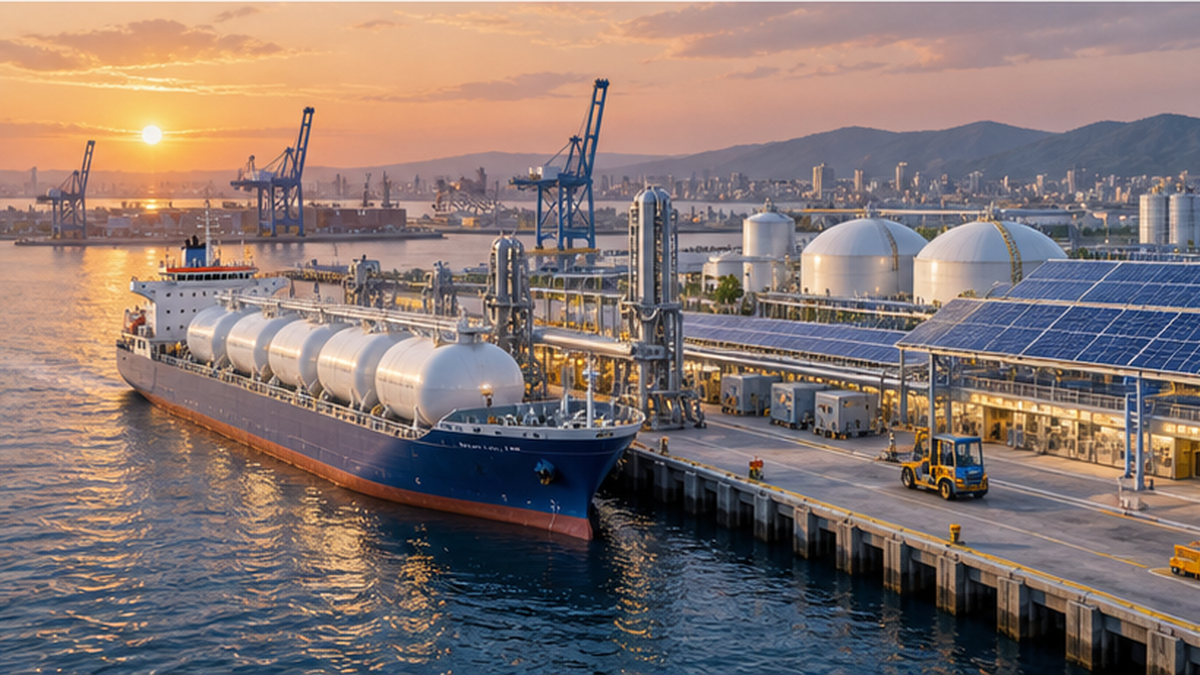
Compressing or liquefying hydrogen for transport requires low-temperature, high-pressure equipment that drives up cost, so development is also proceeding in parallel on "hydrogen carrier" technology, which chemically converts hydrogen into another substance for transport at close to room temperature and pressure, then converts it back to hydrogen at the receiving end. Ammonia, which also appears in the shift to low-carbon fuel for international shipping, is one substance expected to play this hydrogen-carrier role. MCH (methylcyclohexane), used by Mitsui O.S.K. Lines' WindHunter Project mentioned earlier, is likewise a type of hydrogen carrier that can be handled as a liquid at close to room temperature and pressure. Building out receiving hubs after unloading — such as carbon-neutral ports being developed as hydrogen and ammonia fuel hubs — will also be essential.
| Transport method | Advantages | Challenges |
|---|---|---|
| Repurposed pipeline | Well suited to large volumes at low transport cost | Existing pipes need upgrading to address hydrogen embrittlement |
| Tanker/supply vessel (compressed or liquefied hydrogen) | Can build on existing shipping infrastructure | Low-temperature, high-pressure equipment is costly |
| Hydrogen carrier (ammonia, MCH, etc.) | Easy to handle and transport near room temperature and pressure | Requires separate conversion equipment to extract hydrogen after unloading |
The Road to Commercialization, and What Comes Next
Technically, offshore green hydrogen has already reached the stage where overseas demonstration projects have shown that it can, in fact, be made. What remains is bringing cost down to a practical level, building out storage and transport infrastructure, and designing a regulatory framework that lets it work as a business.
The 2030s as the Likely Turning Point
Much as the Japan-Germany partnership project is targeting commercial operation in the early 2030s, many in the field see the 2030s as the phase in which offshore green hydrogen moves toward practical use. In the years leading up to that, demonstration of underlying technologies such as direct seawater electrolysis, cost reduction through mass-produced electrolyzers, and the build-out of transport infrastructure are all expected to advance in parallel.
What This Means for Japan
For Japan, which imports the vast majority of its energy resources, offshore green hydrogen — making the most of its position as a country surrounded by sea — could become one option for reducing dependence on imported hydrogen. On the cost side, it is likely to remain at a disadvantage compared with imported green hydrogen for some time, but research and development is expected to continue as a way to avoid wasting renewable power from remote, grid-constrained waters, and for reasons of economic security.
- Cost: reducing it through mass production and scale-up of electrolyzers, and by tapping the price-gap support scheme
- Technology: commercializing direct seawater electrolysis and more durable catalysts and electrodes
- Infrastructure: building out transport options such as repurposed pipelines and hydrogen carriers
- Regulation and environmental care: establishing rules for sea-area use and addressing environmental impacts such as brine
As nimble "make it offshore, carry it ashore right away" demonstrations like Mitsui O.S.K. Lines' WindHunter Project proceed alongside "large-scale platform, mass production" concepts like PosHYdon and Germany's designated zones, offshore green hydrogen looks set to gradually shift its center of gravity from experimentation to practical use over roughly the next decade.
References and Sources
- Ministry of Economy, Trade and Industry / Agency for Natural Resources and Energy – Basic Hydrogen Strategy (revised June 6, 2023)
- NEDO Green Innovation Fund – Japan's largest water-electrolysis hydrogen production hub comes online (Fukushima Hydrogen Energy Research Field)
- Agency for Natural Resources and Energy – Current state of hydrogen policy in Japan and abroad (September 2024)
- Nikkei – Offshore wind power to produce green hydrogen: a Japan-Germany academic-industry partnership electrolyzes seawater
- TNO (Netherlands Organisation for Applied Scientific Research) – PosHYdon: an offshore green hydrogen demonstration in the North Sea
- IEEE Spectrum – Wind-to-Hydrogen Production Reaches Deep Water
- JOGMEC Journal – Reading the state and challenges of low-carbon hydrogen projects from the IEA's Global Hydrogen Review 2025
- Yamaguchi University – Developing a non-precious-metal catalyst that avoids chlorine generation in seawater electrolysis
- Mitsui O.S.K. Lines – World's first supply to shore of green hydrogen produced aboard a ship (WindHunter Project)
- Agency for Natural Resources and Energy – About the Hydrogen Society Promotion Act
- NREL (National Renewable Energy Laboratory) – Offshore Wind Turbines Offer Path for Clean Hydrogen Production
- Nikkei xTECH – Could offshore wind's green hydrogen be the savior of data centers' power shortage?
*Listed in order of reliability: government and academic institutions > peer-reviewed papers > specialist organizations > trusted media